Category Archives: NZ poetry

Ah poem bliss: Summer Noelle is giving poetry a little spot in the sun

Summer Noelle has invited a number of New Zealand poets to talk about and read a poem they wish they had written.

I have just pre-recorded my choice with Noelle (you will have to wait until summer to find out which poem!)

What a treat to have a conversation with someone who has read and loved the poem too with such enthusiasm. After I finished, I realised I spend a lot of my time writing poems, and writing abut poems, but very rarely having conversations about poems. Ha! It is such a pleasure.

Maybe I need to invent a poetry book club.

Bravo Summer Noelle and RNZ!


A taster of what’s to come:

Bill Manhire’s kicking us off plus Paula Green, Michele Leggot, Ashleigh Young, Joan Fleming, Airini Beautrais, Elizabeth Smither.  Plus many more to come.

Serie Barford’s book launch

Screen shot 2015-11-07 at 7.35.41 AM

Kia ora koutou,

You are warmly invited to the launch of Serie Barford’s poetry and short story collection, Entangled Islands, published by Anahera Press, and held in conjunction with Poetry Live. With music by Brendan and Alison Turner, and readings from the book by Serie. MC-ed by Kiri Piahana-Wong. Entangled Islands will be launched by Karlo Mila. Food and drink available from the bar. Thanks to Creative New Zealand for supporting the publication of this book.

8 pm: Brendan and Alison Turner (folk/blues duo)
8.45 pm: Book launch
9.15 pm: Poetry Live resumes with open mic – all welcome to read

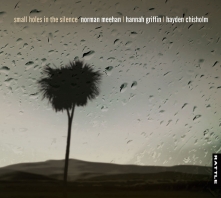
I have had this new CD on repeat: Small Holes in the Silence


Small_Holes_in_t_55beb4afb57d4_222x198      Small_Holes_in_t_55beb4afb57d4_222x198

Small Holes in the Silence Rattle VUP

The CD looks good with its striking cover but what matters is that this CD sounds spectacular. Norman Meehan on piano, Hannah Griffin on voice and Hayden Chisholm on saxophone have taken a number of New Zealand poems (terrific poems) and transformed them into song.

For example: Hone Tuwhare’s ‘Rain’, Bill Manhire’s ‘Ballad of the Hurting Girl,’ James K Baxter’s ‘High Country Weather,’ Alistair Campbell’s ‘Blue Rain,’ Eileen Duggan’s ‘Frost,’ David Mitchell’s ‘Yellow Room.’

Tricky stiff — translating poetry into song when the new score might muffle the internal music to such an extent the poetry suffers. How does word meet external melody?

In this case, the poem becomes something different, a wonderful different that almost needs a new word to signal its poetry/music status. Word becomes music and music becomes word. Like a yin yang kind of thing. Two sides of the one cloth.

I loved the enticing interplay between silence, chord, harmony, counterpoint, key, movement and word. The arcing melody of instrument and voice step out from a word or phrase. Lightly. Surprisingly. Beautifully.

And the voice. The glorious voice that makes hairs stand on end. Hannah takes a word and savours it in her mouth. The word itself becomes aural poem with its dips, lifts and extensions.

Ah. Poetry becomes melody, melody slips into the pores of your skin and when you return to the poem on the page there is this haunting refrain. The voice, the piano, the saxophone — secret aural undercurrents as you read.

Plus there is a great introduction by Bill Manhire. I especially agree with this: ‘The music doesn’t overpower the words; but neither does it defer to them.’


I highly recommend this!

Poem Friday: Anna Jackson’s ‘Scenes from the photographer’s childhood: wardrobe’ — Within that silent beat, poetry blooms


Scenes from the photographer’s childhood: wardrobe


She kneels in the red light of her wardrobe, leaning

over one tub of chemicals to pull out the dripping

sheet from the one in the far corner, the space so

small, the smell so sharp, the image not that

of her mother, poking her amused face

around the bathroom door as she heaved

it open, pushing across the floor the barricade

set up to keep her out, nor of her own fury, still

sharp days later, but the shot she had taken

seconds earlier of her body, her legs

half shaven, still half dressed in foam.

Every night, without fail, whatever

time she takes her bath, within minutes

her mother suddenly just has to wash

her hands. It is this, even more than the

ruined image, that makes her scream

when her mother opens the wardrobe now,

an extended scream that the exhausted

mother next door, in her faded blue thrift

shop dress, covered in spilt milk, thinks will

never end, and so joins in, even though

it will wake the baby, which it does: and now

they are all screaming, the girl in B, the neighbour

in G, and the baby in F, a long, tense chord

of such helpless rage, almost a panic, it seems

it must rise up, it will ruin them all, there

can never be any release, their throats, all three,

scraped raw, the scream continuing, the

exhausted mother holding, perfectly, her note

of G, as the baby drops to E, the photographer

rising to C, holding for four beats and then

stopping, just as the baby stops, and so

the mother stops too and for the long moment

before the baby starts again, stands rapt

in the most perfect silence

she has ever known and will ever know

again, milk all through her dress, blue

jug in pieces on the floor,

exactly at the midpoint of her life.

© Anna Jackson 2015


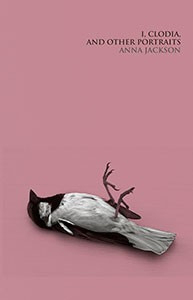
Author bio: Anna is the Programme Director in the English Department at Victoria University. She has published five poetry collections, including Thicket, which was shortlisted for the New Zealand Post Book Awards in 2011. Her latest collection  I, Clodia, and Other Portraits was published by Auckland University Press in  2014 (my review here). Anna is currently organising a Ruapehu Writer’s Festival with Helen Rickerby to be held in Ohakune, March 2016 (Facebook page here).

Paula’s note: This surprising poem, holds narrative in its palm, a sharp moment that reverberates  with implication. I get to the end and I am pulled back to the beginning, again and again. The musical chord that holds the moment together (and thus the poem)  jars, unsettles — until that moment of silence and it feels like time has iced over. Within that silent beat, poetry blooms. Ha! I need to get to work but this poem keeps distracting me. I adore the power of poetry to do just that.


1415925155755    1415925155755


Auckland University page

New Zealand Book Council page

Anna Jackson’s poem, ‘Afraid of falls?’ on Poetry Shelf.

Anna Jackson’s interview on Poetry Shelf


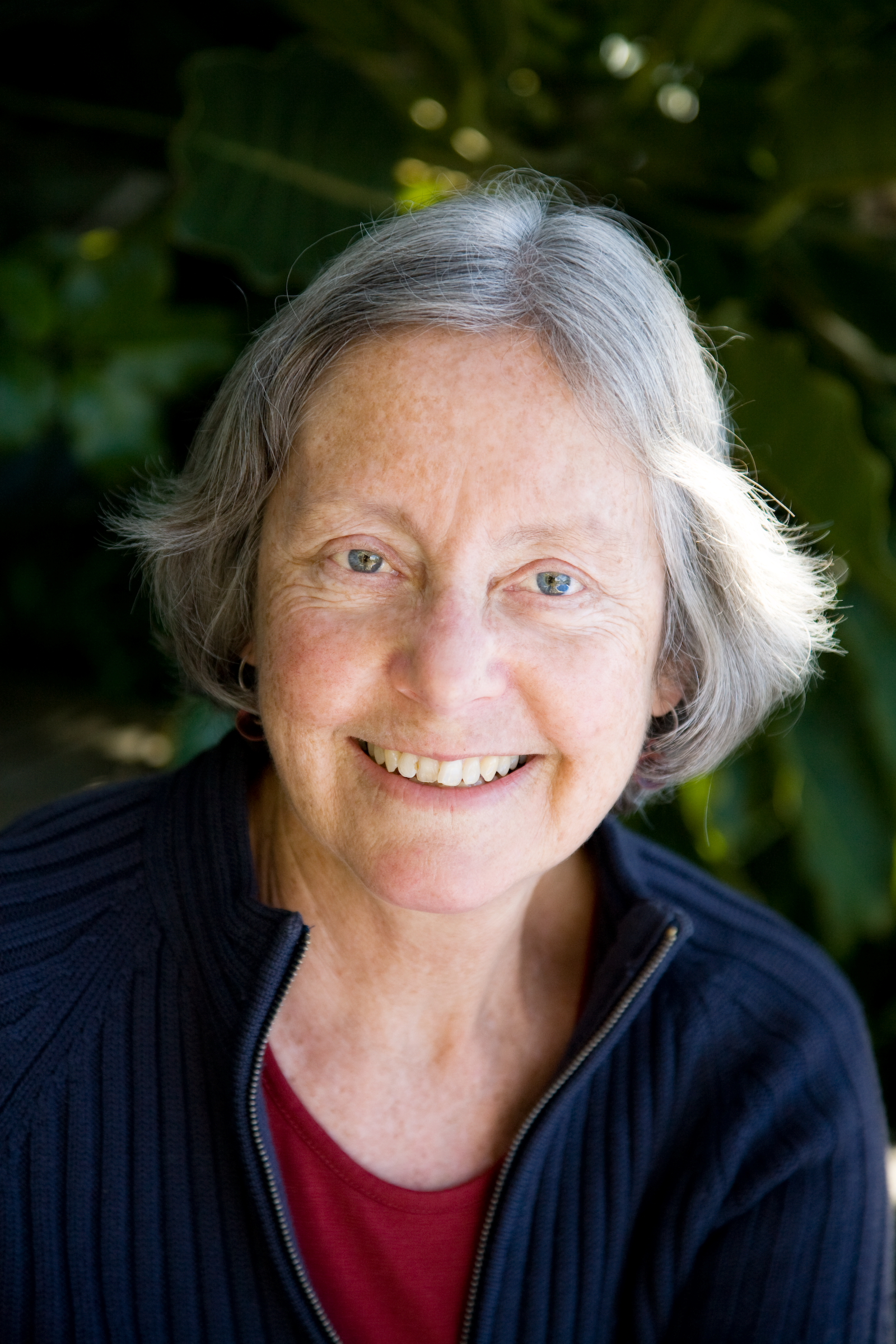
Poetry Shelf interviews Dinah Hawken — ‘any attempt to mirror the natural world is about relationship’

_MG_3288c52510c0-ccf5-4568-88dc-14eed8f6eafe


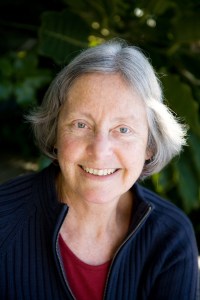
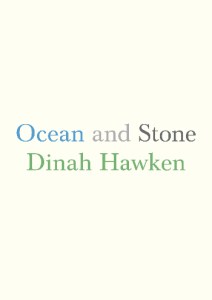
Dinah Hawken is one of New Zealand’s most critically acclaimed poets. Born in Hawera in 1943, she trained as a physiotherapist, psychotherapist and social worker in New Zealand and the United States. Most of the poems in her award-winning first collection It Has No Sound and Is Blue (1987) were written in New York in the mid-1980s while she was studying at Brooklyn College and working with the homeless and mentally ill. Her two most recent books, One Shapely Thing: Poems and Journals (2006) and The Leaf-Ride (2011), were both shortlisted for the New Zealand Book Awards. Dinah was named the 2007 winner of the biennial Lauris Edmond Award for Distinguished Contribution to Poetry in New Zealand. She lives in Paekakariki. Victoria University Press has just released a new collection of poems, Ocean and Stone.


Did your childhood shape you as a poet?

Yes I’m sure it did. One of my favourite memories as a child is my father reading A.A.Milne – the poems – to me when he came home from the farm. We didn’t have a lot of children’s books in those days (40’s and 50’s) and so he read them over and over again and we knew them by heart. Sometimes my younger brother and I would act a poem out: ‘Sir Hugh was singing hand on hip/when something sudden came along …’. What I loved, looking back, was the way my father and his voice changed when he read these poems. Suddenly he was a changed man, a more mysterious and musical man, and the poems had somehow changed him.

There was one poem that had a profound, perhaps lasting, effect on me psychologically. ‘The Dormouse and the Doctor’ – do you remember it? The dormouse was living happily ‘in a bed of dephiniums (blue) and geraniums (red)’ when the Dr came hurrying around and prescribed instead a bed of chrysanthemums (yellow and white). When ‘they took out their spades and dug up the bed/of delphiniums (blue) and geraniums (red),’ I was devastated at the injustice and imposition of it. They didn’t understand that ‘much the most answering things that he knew/were geraniums (red) and delphiniums (blue)’. I was worried by this story – the powerlessness of the small, the arrogance of grown ups – but at the same time I was impressed with the dormouse’s solution of imagination: ‘I’ll pretend the chrysanthemums turn to a bed/of delphiniums (blue) and geraniums(red).’ It made me determined to fight to remain myself, to hold onto my ideas and attractions even if I was misunderstood. Like the dormouse I was a dreamy child, but also an active one – a tomboy, keen on sports and outside a lot with bare feet. I thought of myself as a reader not a writer.


As a young adult, were there any poets in particular to which you were drawn?

When I went to Dunedin as a school leaver, to study Physiotherapy, James K. Baxter was living there and I went to some of his poetry readings and lectures. He was the first NZ poet I had ever heard or read and The Rock Woman (selected poems) was the first book of poetry (besides A Pageant of English Verse) that I had ever owned. I’ve just taken it off the shelf and it is one of the most worn books in my poetry collection. I felt the emotion and music in those poems, the power of ‘the best words in the best order’, and the sense of being understood as a human being who lives in this place, this landscape. Existential questions were in the air for me at 18 or 19 and one poem, ‘The Cold Hub’ gave me a strong sense of fellow-feeling and therefore consolation. Poetry as consolation became important for me.

The next year in Palmerston North was significant for me in terms of poetry too. I had a boyfriend who not only liked poetry (a rare find) but who really loved Baxter and who introduced me to e.e. cummings and Yevtushenko. Both mind-opening in their own ways. What’s more, in Palmerston North, I also made a close friend, Phillappa, a nurse, who read poetry and wrote it. She showed me it was possible even though I didn’t start writing seriously – though secretly – till I was in my late 30’s. She was the first person I showed my poems to at that time. And a couple of years later I applied for Bill Manhire’s undergraduate creative writing course.


Your new collection, Ocean and Stone, is one of your best yet. At times, the poems lead me to a place and point of contemplation (outside urban bedlam). The poems remind me of the way I go down to the beach in the morning and all is the same (sand sea sky), yet there is always a pull of shifting nuances. Do you ever see your poems as a way of translating relations with the natural world, both private and nourishing?

Yes I do. Moments and experiences in the natural world give me such pleasure and uplift that I do have an urge to record and share them even though words so often fail the actual experience. But the attempt feels important. And I’m glad you used the word ‘relations’ because any attempt to mirror the natural world is about relationship. I’m a person who wonders a lot and the world around me is one of the most ‘answering things’ that I know.


And wanders in that wondering. That’s what hooks me as a reader. I find your poems are often things of beauty, yet there is a political edge here. It is as though we can no long view the ocean, for example, solely through the exquisite lens of its moods and bounty. Do you see yourself as a political poet? Overtly so or in more subtle ways?

As time has gone on I realize that I am both a nature poet and a political poet though I don’t set out to be. And I hope not exclusively. A poem usually begins with a phrase, a word, an image or a feeling that has a grip on me in some way. It can be a light and friendly grip or an intense, even painful, grip. The poem develops from that and, because of my interests and preoccupations, political concerns or the landscape, often become a part.

In Ocean and stone there is a poem called ‘The uprising’ that was a commission for Lloyd Jones’s issue of the Griffith Review called Pacific Highways. I began the poem thinking about the Pacific, with no conscious intention of writing a political poem. But I’d just read a book about the state of the world’s oceans and the facts in that book, and my feelings in relation to them, naturally flowed into the poem.

But it’s a balancing act to write a political poem and I sense that many poets might disapprove of my attempts – on the grounds of didacticism, emotionality etc. I’m naturally a direct person and I’ve had to learn more indirect and layered ways of expressing myself in poetry. But I’m also willing to be direct about strong personal feelings – a political poem is also a personal poem.


No matter how many times you write a stone poem, Dinah, you have the ability to replenish the subject (I posted one of my favourites from your new collection here). Do you have other motifs to which you are drawn?

Isn’t it amazing how stirring a small stone, like a blank page, can be? I’ve just looked up that famous poem ‘Pebble’ by Zbigniew Herbert where he writes that the pebble ‘is a perfect creature/ equal to itself’ that ‘does not frighten anything away.’ That seems so true to me.

As far as other motifs go, I don’t know. Water, its fluency? Leaf, its green, its growth? ‘The child’? I find myself thinking a lot at the moment about ‘the stranger’.


Yes definitely water! And the child. The grandchildren poems add a different layer to the collection. They remind me of the way women are often keepers of the family archives (scrapbooks, photo albums, treasure boxes). Do  you feel these poems are as much a gift to the family as they are for the reader?

Definitely. I did write them as a kind of scrapbook, a record of my grandchildren’s early development, trying to ‘hold’ some of the delight and moments of discovery that babies and toddlers go through. I started, in my last book, with Elsa from new-born to 16 months and then carried on with Nate from about that age to two and a half. Such an extraordinary time, as a child meets the world. And as a parent you are often too busy to stand back and see it happening.

I’m about to put all the grandchildren poems together in a small volume for the family – and perhaps for other parents of small children as well.


The untitled fragments throughout the book (that ‘stem from the epigraph which is a found poem from The Unsettling of America by Wendell Berry’) are so fertile. I particularly loved: ‘a blank page has limits// and no limits.’ What kind of limits do you bump against as a writer?

I no longer have the external limits of time and stress and children and work that many younger writers have – I feel very lucky in that respect. I love writing without pressure – but on the other hand I do have the limits of older age; lack of energy, poorer memory, uncertain health. I find it harder to find words, I seem to have less access to dreams that were a great resource earlier in my life. Many of the poems in the second part of Ocean and Stone are about living with various kinds of decline.

There’s a difference between limits and limitations and so I also have to live within my inherent limitations as a writer. It seems important at this stage to try and see clearly what they are, whether they have any give in them, and to thrive within them. Limits and limitations have a bad name but I see them as the boundaries within which we can have the most ease and can be the most creative.


I love that dichotomy. Is doubt a key part of the writing process along with an elusive horizon of where you are satisfied with a poem?

Another way of considering the contradiction of ‘limits// and no limits’ is to think about faith and doubt in the writing process. They both seem to be essential: faith to believe that something can come from nothing; and doubt to be always willing to question what comes. When I began writing I would lurch, often painfully, between one and the other, now (fingers crossed) it’s more like quietly shifting weight. But you can’t write, can you, without doubt? You can only try to hold confidence and uncertainty in some kind of balance as you go.

I often have an intuitive idea of when a poem is finished in terms of content and length but the editing and re-arrangement inside it can go on for months. Leaving it for a good length of time helps me a lot – to free up and be less attached to what’s there. I don’t have poet friends, or a group, to share this process with at the moment but have in the past found feedback from others invaluable. It was great to have Fergus and Ashleigh at VUP look carefully at my manuscript for Ocean and Stone.


What poets have mattered to you over the last year?

The two most important books for me in the last year or so – both as a reader and a writer – are The Great Enigma by Tomas Transtromer and Faithful and Virtuous Night by Louise Glück. I’ve been attached to Louise Glück’s poetry in the past and was thrilled to discover this one (Carcanet 2014) and find it so impressive. Without your question I mightn’t have noticed that these two books, though different, have the same attraction for me. Both poets use accessible language and strong short sentences developing a narrative that is clear but at the same time mysterious. I love that. They have quite different tones; Glück’s intense, sometimes threatening, Transtromer’s lighter, more surprising. I was strongly aware of Transtromer while writing the first sequence in my book ‘The lake, the bloke and the bike’ but I’m not sure if, or how, his poems might have influenced mine.


What activities enrich your writing life?

Almost everything I do has the potential I expect, but when I think of Ocean and Stone, I see how it reflects a number of my non-writing activities. For example, babysitting grandchildren, gardening, friends, walking on the beach, Tai Chi Chuan. The last sequence in Ocean and Stone , though triggered by the McCahon painting, has a number of the names of Tai Chi postures in it and I wanted the poem to be a kind of Tai Chi sequence even if the reader doesn’t recognize it at all.

There’s no doubt that I’m a poet whose material comes from her own world but in Ocean and Stone I enjoyed very much re-telling the Sumerian myths, forgetting myself, and entering stories from another time and place. Yet stories that have relevance still.


Victoria University Press page

NZ Book Council page

Back home and I discover Bernadette Hall receives Prime Minister’s Award for Poetry – I am doing a little poetry jig of joy


img_1396

I have been a fan of Bernadette Hall’s poetry for a long time so was delighted to see she has received this honour. I missed the initial release when I was walking the beauty of Stewart Island. This is well deserved. A little dance of poetry joy ensues! Reading a book by Bernadette is poetry pleasure. Utterly satisfying for ear, eye, heart and mind.

You can see the full achievements of Bernadette as both poet and teacher here on the Creative NZ press release here.

My review of Bernadette’s most recent collection Life & Customs here.

Bernadette talks to Poetry Shelf here.


Victoria University Press page

New Zealand Book Council page

New Zealand Electronic Poetry Centre page

Canterbury University Press page

Best NZ Poems edited by Bernadette Hall here

My review of The Lustre Jug in The NZ Herald

Poem Friday – Carolyn McCurdie’s ‘A Potato Sonnet: Jersey Bennes for Christmas’ – each word gleams in the light bright space of the page


A Potato Sonnet: Jersey Bennes for Christmas


They gleam in the black

crumbled earth;


steady, as if candles

glow through layers of silk,


underpin the season’s quick

shifts of tinselled light


and the brisk heel-tap, chatter

of crowds in the street.


This is old, wondrous

as moon-rise,


mundane

as the maternal voice


that calls, come in

to the table.


© Carolyn McCurdie Bones in the Octagon  Mākaro Press 2015


Author Bio:  Carolyn McCurdie is a Dunedin writer. She won the Lilian Ida Smith Award in 1998 for short stories and a collection of stories — Albatross was published in 2014 by e-book publisher Rosa Mira Books. A children’s novel, The Unquiet, was published in 2006 by Longacre Press. She was the winner of the 2013 NZ Poetry Society International Poetry Competition and her first poetry collection, Bones in the Octagon, was published in 2015 by Mākaro Press as part of their Hoopla series. Carolyn is active in Dunedin’s live poetry scene, where she is a member of the Octagon Poets Collective.

Paula’s note: The potato is comfort food, but this particular potato hooks you to the extended  family table where the sun is blazing down and family stories circulate. Christmas. Ah. Reading the poem, each word gleams in the light bright space of the page along with the deep pit of personal memory. Each word is so perfectly placed for ear and eye. This is the first poem I read in Carolyn’s debut collection (the title lured me in — especially the idea of a sonnet meeting up with potatoes). There is a quietness, an attentiveness, delicious overlaps of meaning and propulsion. I can’t wait to settle back into the book and discover more.


Mākaro Press author page


Other books in 2015 Hoopla series:

Mr Clean & the Junkie by Jennifer Compton (I reviewed this here)
Native Bird by Bryan Walpert

Poetry Shelf interviews Sarah Jane Barnett — writing is an act of contemplation for me

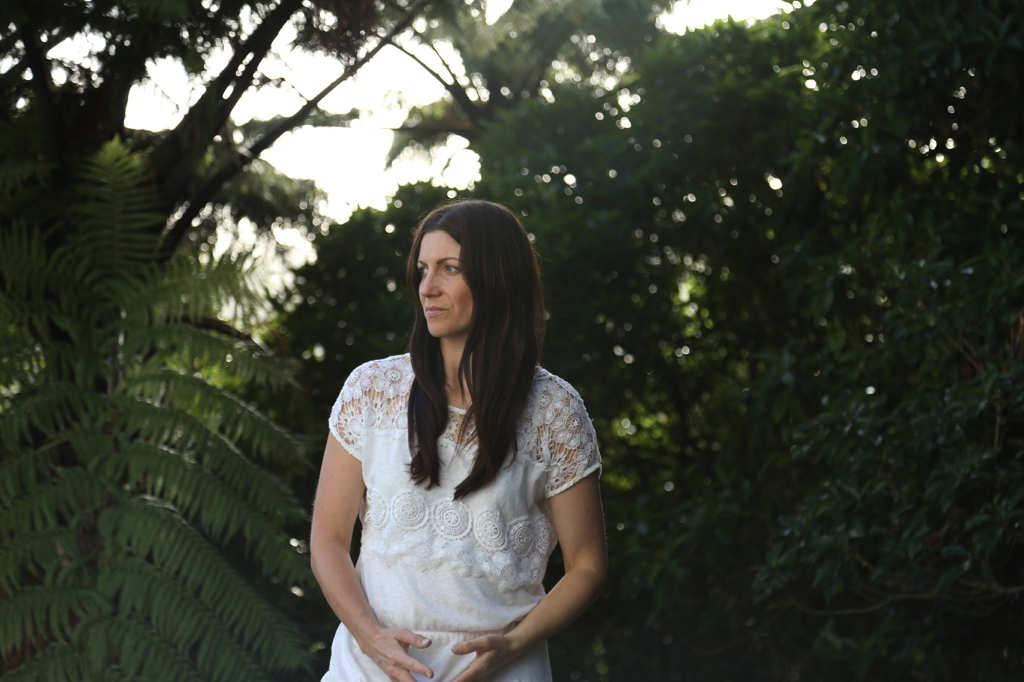
WORK_author_photo

Photo credit: Matt Bialostocki


Sarah Jane Barnett has an MA in Creative Writing from Victoria University and a PhD from Massey University. Her poetry has been published in New Zealand, Australia, and the US, and anthologised in Best New Zealand Poems, Dear Heart: 150 New Zealand Love Poems (Godwit), and Essential New Zealand Poems: Facing the Empty Page (Random House). Her debut collection A Man Runs into a Woman (Hue & Cry Press, 2012) was a finalist in the 2013 New Zealand Post Book Awards. Sarah was the recipient of the Louis Johnson New Writers’ Bursary and the Estate Phoebe Maunsell Scholarship. Her second collection WORK has just been launched by Hue & Cry Press. Sarah teaches creative writing at Massey University.

To coincide with the arrival of WORK, Sarah agreed to do an interview with Poetry Shelf.


Did your childhood shape you as a poet? Did you write as a child?

I’ve written for my whole life, in one way or another. I remember entering a poetry competition as a kid, and at primary school we’d illustrate poems. I also remember going for walks as a kid and making up silly poems in my head. I never thought I’d be a writer, though. My undergrad is in Fine Arts and then I studied Museum Studies, so I spent many years working in the public sector and writing on the side. I couldn’t look at my writing full on, in case it was truly awful (and some of it was). It was as though I was teaching myself to write behind my own back!

Something changed around the time I wrote the death row poems for my first collection. There was an inescapable humanity about the material. I had to fully engage with the work in order to respect the stories of the inmates and their victims. After that I quit my job and did a PhD at Massey. Now I’m overqualified so there’s no going back.


Your new collection, Work, lifted me off the page into realms of delicious contemplation – particularly in view of character and narrative. It grew in me. You say ‘these poems are works of fiction that draw on real people’ and that you ‘worked hard to be faithful to the facts while also allowing room for the poem.’ That poetic room is a fertile space (I want to write about it in my new book!) engendering countless fascinating relations. Were you aiming for particular kinds of poetic activity?

I like that you’ve used the word contemplation, because writing is an act of contemplation for me, and I hope my poems spark contemplation in a reader. I’m not sure that’s the same as ‘poetic activity.’ I know that I wanted the poems to be realistic, so set in the real world, with the sun rising at a real time and the flora and fauna being factual to a real landscape that any reader could visit. That was my way of honouring the people whose stories I drew from, and the landscapes they dwelt in, by making them as round and beautiful and burnished as I could.

But I also wanted the poem to be more than that – for it to be a fictional construction that explored what it is to be human. For each poem to be knowing that it was this imagined thing, created from language. In that sense each poem’s ‘realness’ is in being a poem. The main character in ‘Addis Ababa’ is a translator for this reason. Not only is it a nice metaphor for how he ‘translates’ his life from one country to another, but it was a way for me to explore how different languages, in his case Amharic and English, shape experience. It also points to how the poet ‘translates’ the world into poetry. I’m not sure where this preoccupation comes from, but I’m intrigued by the liminal space between fact and fiction (and, for that matter, poetry and prose). We all have stories that we tell ourselves in the on-going narrative of our life and identity. I think there’s value in questioning those stories.


I also loved ‘Glaciers’ and its multiple levels, overlaps and smudgings. It is a mysterious poem, a haunting poem – yet it embraces something utterly fundamental. Notions of family. I loved the different reactions that the poem drew from me; I was moved, perplexed and delighted in the myriad cryptic hinges. As I read the poem, and navigated the potent maternal traces, I wondered how being a mother affects your writing. Does it?

On a very practical level I have less time to write. At the start it was very difficult as he was a baby and I was finishing my PhD. There were some black days during that time (which is partially what ‘Glaciers’ is about). That said, having Sam actually helped my writing. I’ve had to learn how to stop the critical voice that fuels procrastination because he’s only in childcare 24 hours a week. That’s all I get! There’s no time to do it later.

At the moment I use the Pomodoro technique to get started. I set a timer for 25 minutes and write without stopping or editing. Then I have a five minute break (I write at home so usually I make a coffee or do the vacuuming or hang out the washing – such glamour!). That’s one ‘pomodoro’ and you’re meant to do four in a row before taking a 30 minute break. By the time I’m into my third pomodoro I’m away and can generally write for four hours at a stretch. So having Sam has been good for developing a stable and on-going writing practice. Also, and I’m going to get soppy here, he’s the most joyous and glorious human. He’s totally and entirely himself without reservation. Being around him makes me brave, which makes my writing brave as well.


What writers have mattered to you? Some may have mattered as a reader and others may have been crucial in your development as a writer.

That’s such a hard question to answer. So many of my friends are writers, and talking to them often feels like one long amazing master class! I also have a super writer’s group which has been going since 2007 when we had a studio in an old zipper factory on Tennyson Street.

That said, WORK is dedicated to my doctoral supervisors Bryan Walpert and Jack Ross, and to my publisher Chloe Lane. So those three – they’re all writers alongside the other hats they wear – have been mentors to me in different but crucial ways. Bryan especially; he has mentored me for the last six years, first as a teacher at Massey, and then as an academic and a poet during my PhD. You need to be tough to work with Bryan. He knew I could go further with my work, but like most writers I had self doubt and a lack of clarity about what I wanted to say. He kept on pushing and pushing until I stepped up. He will hate me saying this because he dislikes gushiness and sentimentality, but he’s a brilliant mind and an outstanding teacher. I’ve learned more about poetry from him than anyone else. It’s also why I’ve continued to teach at Massey. I want to be able to do that for other writers.

In terms of poets, Robert Hass and Anne Kennedy have both had a huge influence on my work. I wrote my doctorate on Hass, and while I know he’s not to everyone’s taste, I’m still deeply moved by his work. I’m in a life long relationship with his first four collections! Anne Kennedy’s The Time of the Giants was one of those collections that shifted my world. She’s simply amazing. It was my first introduction to contemporary long form poetry and now I can’t stop.


Hue & Cry Press author page

Sarah’s blog

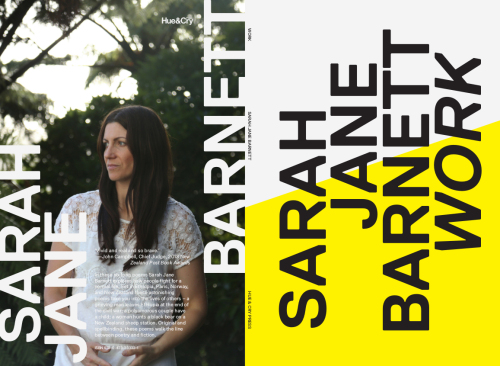
work_full-cover


Poetry Shelf review: Murray Edmond’s Shaggy Magpie Songs – I pictured I was sitting in a dark room, listening to a bit of blues or folk or jazz, a spotlight picking up a pianist whose fingers were freewheeling,


1439758465392   1439758465392

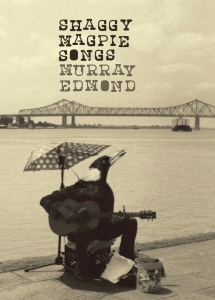
Murray Edmond, Shaggy Magpie Songs Auckland University Press 2015


On the back of his new collection of poems, Murray Edmond writes, ‘Songs are poems that are incomplete without their music, so I think of these poems as all wanting to get off the page and start singing and dancing. The magpies of Aotearoa are silly (and slightly dangerous) birds who have given rise to the most profound line in the New Zealand poetry canon: Quardle oodle ardle wardle doodle …. I like to think the poems are the kind of songs that magpies might sing if they were into making up words: a little bubbly, a little bitter, a little absurd, and echoing with the sound of laughter: songs with shaggy tales to tell.’

Murray’s musings are the perfect gateway to a collection that relishes sound, a sense of humour and pocket-book anecdotes. Not far into the collection, I pictured I was sitting in a dark room, listening to a bit of blues or folk or jazz, a spotlight picking up a pianist whose fingers were freewheeling, bodies were swaying, feet tapping, voices saying, Yeah! Aah! Mmm! These poems make you move because these poems make music before they do anything else. Your ear picks out melody, aural chords, infectious rhythms and shifty rhyme, so often rhyme. Rhyme has multiple effects but initially it taps into that deep-buried allure that rhyme holds for the child. With Murray’s fingers flicking along the scale of rhyme though, rhyme is surprising, it makes you laugh out loud when it hits the mark, it drives the poem, it sidetracks the poem, it celebrates the utter joy of electric aural connections. The music is never constrained. Always on the move. Consonants shuffle to make little bridges for your ear. The rhythm, jaunty, jittery, smooth.


Here is one example from ‘The Poet Returns to New York’


Frank O’Hara strolls on by in pyjamas

a knowing smile disposes the inelegant aftermath of dramas

that might otherwise threaten to alarm us

because this morning there is nothing that can harm us

and Tennessee has bought us tickets to the Bahamas


Here is another sample from ‘Snap Snap’:


addicted to your pictures

a picture ain’t a fixture

conjure hocus-pocus

turn me soft like focus

nail me with a frame

sign me with a name


The collection is divided into four sections (Praise, Nonsense, Blues, Pop) with no Endnotes (the poem is the thing!) and there is much traffic between. Murray sings the praises of colleagues, fellow poets. Stories are delivered in pieces, sung into pieces with those melodic arches. There is almost a cheekiness in the loping, looping sounds. Splinters of nonsense might tilt the praise. Maybe there is autobiography skimming between the lines, hiding in the flicks of wit. Or a madcap flow of stream-of-consciousness. Or a keen mind jamming facts and fiction.


Some samples. This from ‘Tongatapu Dream Choruses”


thar she

blows

blow hole

blow mind

blow wind

blow whale

blow horn

blow me

down


from ‘National Standards’


Please step out of the poem slowly

stand by your word with hands on your head

the dogs will sniff you an officer will

frisk you please enjoy the experience


The collection is contoured in terms of pitch and tone. One of my favourite poems in the collection, ‘The Letter from Rilke,’ is like an onion. It is the poem that I keep returning to because each time I peel off a layer I get a different reaction. The visual and aural links are sumptuous (I have posted this poem). I am also drawn to ‘Kiss the Impossible Good Night,’ a poem for Kendrick Smithyman. After suggesting that the poem might work, a question is asked: ‘but can you/ get it to do anything? It is a poem with surreal kinks as you read, but it gets to the heart of writing. Murray’s poetry wears the look of play: a musician at play, a wordsmith at play, the wit of play, yet this playfulness belies the craft that steers the pen.


kiss

the impossible good night

before your very eyes

the poem appears


to work


it might work but can you

get it to do anything?)


If poets have recurring motifs, I claim the moon for Murray. His previous collection was entitled Fool Moon, and the moon features in a number of his poems. The motif is stamped here like a lunar signature — mysterious, mesmerising, moody, and is like a tether to poems of the past. Reading the new poems, through the folds and unfoldings, is to listen to different keys, yet whichever key you hit, these poems are sung into being out of a joy of words. Wonderful.


Auckland University Press page