Category Archives: NZ poems

Poetry conversation on a Madrid rooftop – Carolyn McCurdie

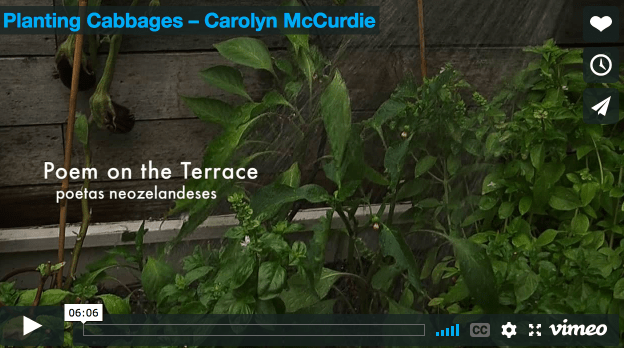
Poem on the Terrace – Planting Cabbages de Carolyn McCurdie

‘Poem on the Terrace – poetas neozelandeses’. Una serie para dar a conocer la poesía de las antípodas de España. Los neozelandeses, Charles Olsen y Anna Borrie, recitan y comentan un poema en una agradable terraza de Madrid.

En este capítulo leen ‘Planting Cabbages’ de Carolyn McCurdie. Pueden leer más sobre la autora, y leer su poema en castellano, en Palabras Prestadas.

We present ‘Poem on the Terrace – New Zealand Poets’, where we introduce kiwi poets to a Spanish audience. Charles Olsen and Anna Borrie recite and discuss a poem on a relaxed Madrid roof terrace.

In this chapter they read ‘Planting Cabbages’ by Carolyn McCurdie. Find out more about the author at the Otago Writers Network.

Listen here.
Screen Shot 2017-10-15 at 10.20.33 AM.png

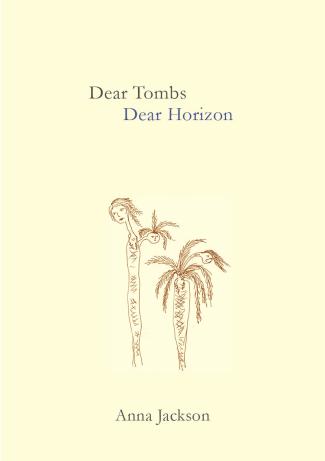
Anna Jackson’s Dear Tombs, Dear Horizon launching with Last Stop Before Insomnia / Dernier Arrêt Avant l’Insomnie

From Seraph Press:

We hope you can join us to celebrate the launch of these two exciting new chapbooks with a French connection, both of which grew out of Anna Jackson’s time as Katherine Mansfield Fellow in 2016.


When: Thursday 26 October 2017, 5.30 pm
Where: Vic Books, Easterfield Building, Kelburn Parade, Wellington

All welcome.

About the books:

efff497f-97fc-4f59-bdbd-26a25f2ac45b.jpg
Dear Tombs, Dear Horizon
by Anna Jackson

In 2016, while the Katherine Mansfield Fellow in Menton, France, Anna Jackson began recording some of her thoughts and impressions in a notebook. Over the three months of her tenure this grew into a lively and charming poetic essay, which weaves her own experiences with her engagement with other writers and texts, including her predecessor Katherine Mansfield.


d111481b-2dc0-4e6e-b053-d50013eac3ef-1.jpg


Last Stop Before Insomnia / Dernier Arrêt Avant l’Insomnie

by Marlene Tissot, translated by translated by Anna Jackson and Geneviève Chevallier
Seraph Press Translation Series No. 3

This bi-lingual taster of deliciously playful poetry by French poet Marlene Tissot takes you on a wild ride through the existential, the sensual and the sleep-deprived.
To find out more about the books, or to buy them online, visit here. seraphpress.co.nz.

Trish Harris’s My Wide White Bed to be launched on Saturday

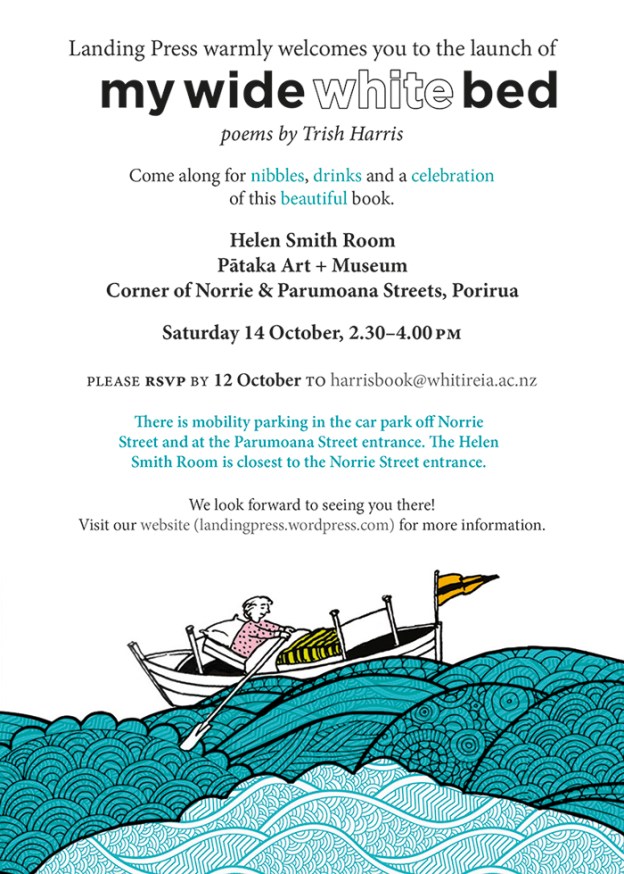
Next Saturday, Landing Press will be launching their newest collection of poetry – My wide white bed by Trish Harris.

My wide white bed, Trish’s first collection of poetry, is inspired by her long stay in an orthopaedic ward. Navigating daily hospital life and the path to recovery, the poems capture a unique view of hospital life from a patient’s point of view and demonstrates, as Glenn Colquhoun puts it in his endorsement of the book, ‘how crucial imagination is to being well’.

At a time when health care is a much talked-about issue, this book contributes to the conversation in an insightful way with measure and hopefulness.

The launch will be held at Pātaka Art + Museum in Porirua, Wellington from 2.30pm.


Here is a clip of Trish reading a poem from the book.

My wide white bed - Launch invite small.jpg

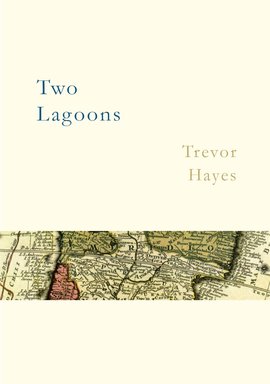
Trevor Hayes’s excellent Two Lagoons – a wee review and a poem


two-lagoons-front-cover.jpg


Two Lagoons, Trevor Hayes, Seraph Press, 2017


‘I have invented

myself this morning.


These lines

I have not imagined.’


from ‘Ash Song’


Trevor Haye’s Two Lagoons offers various resonant pools to sink into—forgive the pun, I rather like the idea of a poem as lagoon—and then establishes myriad links between. There is a here to there shimmer; from the South Island’s West Coast to South America; from a lived world, physically detailed and sensually lifted, to abstract movements, imaginings, sidesteps. The poems – there are 12 – are like surprise pockets: luminous with fizzing alchemy, grace, agility and rich layerings.  The placement of this next to that, of the 19 letters in the mailbox alongside the milkman’s history, of the ‘trickery of phrasal verbs’ next to ‘the benefits of good manners’ is akin to sparks on the line. It’s a delight to read and I look forward to the next book.


Going Nowhere


I pack my suitcase lightly.

I have a toothbrush and floss,

as even nowhere is better


with healthy gums. I have some

reading material: a guide

to the extinct flora and fauna


and a book that translates silence.

I intend to visit the empty museums

and the vacant parking lots.


I’ll be able to take photos of nothing

but the wind. It seems unlikely

I will meet anybody there, as recent


political developments and negative

coverage by news media have discouraged

the travelling public.


©Trevor Hayes from Two Lagoons


Picture

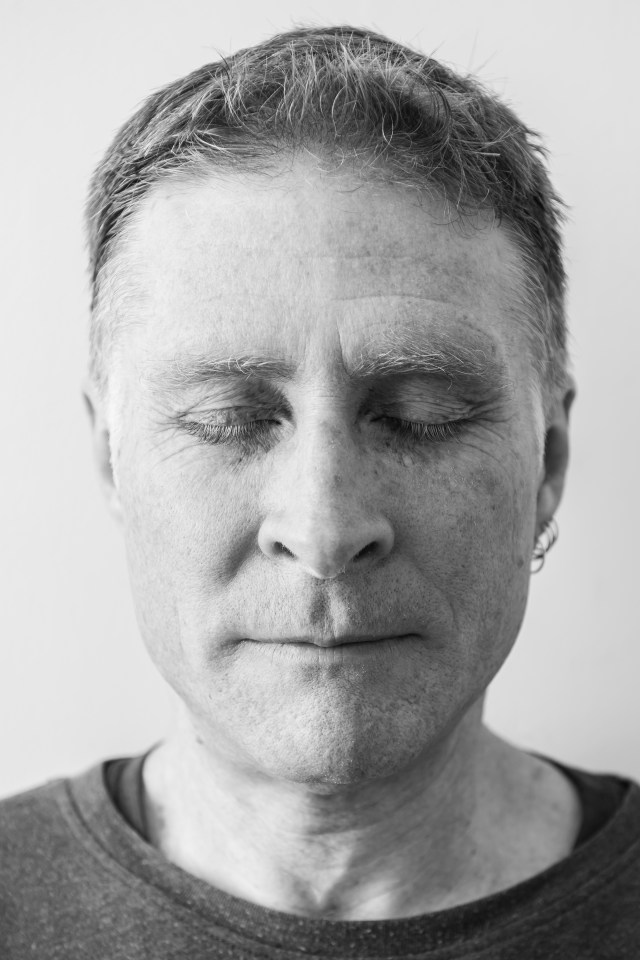
Photo by Richard Arlidge
​Trevor Hayes has an MA in creative writing and a BA in Spanish and English Literature from Victoria University of Wellington. In his adventures around the world he has taught English in Spain, been a gardener in Ireland, a store-man in Australia and a grill chef in the USA. He now lives near Punakaiki on the West Coast.


A poem from James Brown’s dazzling Floods Another Chamber and Gregory O’Brien’s launch speech (the envy of all poets!)

large_9781776561599.jpg


Postmodernism Explained

You’re dreaming. In the
dream you fall asleep and dream
you’re writing. If to

write is to reflect
what you’ve already read, and
thus to reread, to

read is also to
rewrite. What are you saying?
Wake up, you tell me.

©James Brown 2017
And for an extra sample you can read the magnificent ‘Janet and John Go to the Book Launch’ here


Brown_017 bw.jpg


The launch speech:


James Brown comes from Palmerston North

There are numerous questions that arise, like a lowland mist, from this collection, as from all of James Brown’s books: For a start, why did he ever leave his home-town of Palmerston North, to which he is so manifestly linked. Or maybe he did never leave? Or when is he due back there?

Taking this, Brown’s sixth poetry collection, as a kind of provocation, two Fridays ago I drove north to Palmerston North and checked in for the night at the Hotel Coachman, a neo-Tudor confection on Fitzherbert Avenue. Not far from ground zero—the address where Brown spent his formative years—I had decided to read this new collection on its home turf—on the south side of ‘the bustling go-ahead city at the heart of the Manawatu Plains’ as Brown once memorably wrote.

According to the Palmerston North Creative Giants website:

‘Of all Palmerston North’s Creative Giants, poet and short fiction writer James Brown stands out…’ Expectations of the new book were, accordingly, running very high in Room 102 of the Hotel Coachman. In the company of an increasing platoon of sopping tea-bags and an intermittently boiling kettle, I lay down and made my way across the flat, bicycle-friendly territory of Floods Another Chamber. . .

Despite the fact she appears in Brown’s new collection a much-remarked-upon four times, Jenny Bornholdt had earlier in the day declined the invitation to accompany me northwards on this hyper-literary excursion. . . Alone, I was consigned to my carpark-facing double room—$160 the night, which included breakfast in a rowdy dining area filled with travelling salesmen and at least one sports team. While the scrambled eggs resembled a Manawatu wetland and the spread, generally, was lacklustre, I was up to my ears in Brown’s book by breakfast time, which made it all not so bad. In fact it was as if James Brown had scripted the whole thing.

Later I drove past the Palmerston North Public Hospital, where the poet was born at 12.40am on April the 1st, 1966; a moment’s respectful silence, also, near the birthplace of Sarah Laing and the childhood home of Karl Maughan—and on Broadway Avenue where painter Pat Hanly, aged 15, was an apprentice hairdresser at Bert Pratt Limited.

The early things in life determine how we evolve. In Brown’s villanelles and quatrains, I can detect the orderly grid of the Palmerston North street plan, and the inspirational, idiot wind that crosses it. This is the place where, as Brown writes in ‘Childhood’, the days ‘inched by… Glue, glitter, galaxies. Things shone. Broke. You laughed / until you cried. There was no escape.’

While James Brown delights in poetic constraints, and is dazzling within them, he can also blast away and, like the late night motorists on Fitzherbert St, has been known to throw beer-cans and drop donuts, or their literary equivalent. . . On the subject of provincial psychology, ‘Erotic Snowdome’, from the new book, contains possibly the best, rudest line in all of New Zealand verse—or first-equal with Hera Lindsay Bird. (You’ll have to read the poem to discover this for yourselves.)

Brown is the New Zealand poet laureate of torpor, resignation and exhaustion (or maybe loss of interest), with intermittent bouts of fanatical bicycle riding. The miracle is that he can make it all so interesting and darkly humorous and weirdly moving. The poems are characterised by a process of subtle inversion whereby the personal is rendered impersonal and the impersonal becomes personal. The end result is a poetry that is simultaneously lop-sided and true. At times, it’s like L=A=N=G=U=A=G=E poetry, but definitely, to use a word from Brown’s book, funner. . .

Like the hometown, the poetry gains a certain intensity through its sprawl, pragmatism, volubility and absence of long term planning. . . Just as Palmerston North has its New Zealand Rugby Museum, Brown embraces the sacred paddock and has written the odd rugby poem (most recently ‘True Blood’ in Warm Auditorium). For such a flat place, Palmerston North casts a long shadow. Echoing the city’s single Beds R Us outlet—at 133 Rangitikei St—Floods Another Chamber includes a similarly stocked poem titled ‘Beds R Us’. . . With its conference centre, in-house training and local dialect, the Museum of New Zealand Te Papa Tongarewa—Brown’s recent long-term place of employment—configures in much of his poetry as a kind of rehash of Palmerston North, but on three or four levels.

Not surprisingly, perhaps, there are a great many poems in Floods Another Chamber about the other place, Wellington, but as any true son or daughter of Palmerston North will tell you, Wellington is only the southernmost suburb of Palmy—a feeder city or satellite. All roads, as indeed all bike lanes, lead to the one true Square.

After giving a talk at the Palmerston North art gallery—which was the other reason for my trip north two weeks ago—I fell into a conversation with a member of the audience, a district planner. When I put it to him that Palmerston North was just a theme park based on James Brown’s poetry, he appeared not to hear me and proceeded to outline, in some detail, the myriad cycle lanes that the council was now investing in—riverside bike trails, designated lanes, scenic diversions. . .  According to my new friend, the place would soon be like Copenhagen—although with Fonterra and DB in the ’hood, and the Manawatu River rolling through and occasionally flooding everything. Having just read James Brown’s new book, it was crystal clear to me that the city was preparing itself for the imminent return of its most illustrious son, its cyclist-poet laureate.

Floods Another Chamber is our latest, biggest chance to bask in the life and work of a genuine Creative Giant of Palmerston North and of everywhere in the world that does not call itself Palmerston North. The overnight trip to Palmy is an optional extra. In some very fundamental ways, this indispensable collection will take you there anyway.

Gregory O’Brien October 2017


James Brown’s previous poetry collections include Go Round Power Please (1995), which won the Jessie Mackay Best First Book Award, Lemon (1999), Favourite Monsters (2002), The Year of the Bicycle (2006), and Warm Auditorium (2012), as well as the useful nonfiction booklet Instructions for Poetry Readings (2005). He edited The Nature of Things: Poems from the New Zealand Landscape (Craig Potton Publishing, 2005), the literary magazine Sport from 1993 to 2000, and the online anthology Best New Zealand Poems 2008. James teaches the Poetry Workshop at Victoria University’s International Institute of Modern Letters.


IMG_7711


Ora Nui 3 – a symphonic treat of art and writing


1727982512-Cover_OraNui-3_front.png


Ora Nui is a journal edited by Anton Blank devoted to Māori experimental literature;  writing that pushes the borders of identity as much if not more than it pushes the ‘how’ of writing. The latest issue draws upon issues of identity, nationhood and migration and includes a diversity voice.  Amy Leigh Wicks and Jan Kemp, for example, place European perspectives alongside those of Vaughan Rapatahana, Reihana Robinson, Robert Sullivan, Jacqueline Carter, Apirana Taylor and Marino Blank.

I think Ora Nui takes apart the whole notion of experimental and transforms it; I am thinking of writing that is testing something out, that might be tethered or prompted by experience, that doesn’t necessarily demolish stylistic traditions, and might have productive talks with them. Experimental writing is often aligned with the avantgarde, however this journal refreshes the experimental page. The journal promotes conversation that tests who and how we are and gives space for voices – some with traditions of marginalisation – to speak from the local and converse with the global. Anton Blank writes: This collection is a glorious celebration of diversity and change.

The cover showcases an image from from Lisa Reihana’s astonishing art installation, Pursuit of Venus (she has assured me we will get to see this again in New Zealand). I have propped the journal on a shelf so I can fall back into her mesmerising work. The image is the perfect gateway into writing that navigates questions of identity and belonging from multiple vantage points.


What I love about this journal though is the utter feast of voices and sumptuous artworks –  I cannot think of anything that has challenged, inspired or awed me in such diverse and distinctive ways. The poetry is symphonic in its reach and shifting keys. Here is a small sample of some of the poetry treats – I am till reading! I have just flicked to the back and got hooked on the lines of Robert Sullivan’s fruit poem, Reihana Robinson, Apirana Taylor, Briar Wood …. and then still sipping breakfast coffee, back to the dazzling currents of Reihana (especially ‘What is a nation?’).  I just bought a book of Reihana’s poetry – I am so hoping there is more in the pipeline.


Jacqueline Carter‘s  poetry often tenders a political edge. The poems included here underline her ability to get you rethinking things. These poems dig deep and resonate on so many levels.


‘The paepae

of the city’s children


is littered

with waewae tapu


people

who haven’t


been welcomed  on


people

in fact


who aren’t welcome at all’


from ‘Aotea Square’ (you just have to read the whole poem!!)


Rangi Faith pays homage to Janet Frame as he imagines the seat she sits in on a train; I have never read a portrait of Janet quite like this, and I love it.


‘When I was six years old

& running around the backyard

of our brick house in King Street,

a train steamed across the old airport

between us and the sea

carrying Janet Frame the poet.’


from ‘Janet Frame Passes through Saltwater Creek’


Rangi moves further south to pull Hone Tuwhare into a luminous rendering of place.


‘this place was always good for a waiata

to sing softly, or loudly if you preferred,

andto drum your tokotoko in time

to the incoming tide

on the earth’s Jurassic skin.’


from ‘To Hone at Kaka Point Seven Years On’


This is my first encounter with Teoti Jardine‘s poetry and I am struck by its clarity, its fluidity, its striking images.


.My Great Great Grandmother

wove her korowai with clouds.

and braided bull kelp lines

to hold the tide.’


from ‘Kuihi’


Kiri Piahana-Wong ‘s lyrical poetry holds the personal close, with both movement and stillness, little pockets of thought. I was drawn to her recounting Hinerangi’s broken heart and death.


‘On the day I died

it rained. Not just any rain,

but rain accompanied by

a sapping, brutal wind

from the southwest, the

kind that wrenches doors

from their hinges,

breaks down trees

and fences.’


from ‘On the day I died’


Two essays really struck a chord with me:

Dr. Carla Houkamau’s  ‘Māori identity and personal perspective’

Paula Morris’s ‘Of All Places: A Polemic on “International Book Prizes”‘


This is a substantial journal, a necessary journal, a must-read issue, and I have still so much left to savour. Bravo, Anton Blank for getting  this writing and this artmaking out where we can see it. I wish I could linger and share my engagement with every piece but must get back to writing my big book. I now have some new women to bring into my writing house. Thank you.


Poetry Dollar Mix – A Wellington Reading


Screen Shot 2017-10-03 at 9.18.06 AM.png


Screen Shot 2017-10-03 at 9.18.19 AM.png

Poetry Shelf reviews Mimicry 3 – a cracking good mix


Mimicy 3 is edited by Carolyn DeCarlo and Jackson Nieuwland, is published by Holly Hunter and features a cracking good mix of poetry, prose and images.

Find Mimicry at Unity Auckland, Time Out, University Bookshop Auckland, Unity Wellington, Vic Books, Volume (Nelson), Scorpio Books (Christchurch) and University Bookshop Otago, or order online with dirt-cheap NZ postage.

I love the way you can’t pin the mix of voices, sometimes young, sometimes a tad older, sometimes familiar, sometimes not, sometimes widely published, sometimes just emerging, sometimes lyrical, sometimes not, into a singular style.

As usual I read my way through the poems before slipping elsewhere (bar the arresting red pages ‘Tear sheet – Red’).


I am simply going to give you a taste of the poetry static that this suite of poems generates by quoting you the first lines of the poems (you can track the prose and images yourself).

This is the kind of journal that just makes you want to write.


A very fine first-line sampler from Mimicry 3


Stacy Teague from ‘ko au te awa, ko te awa ko au / i am the river, the river is me’

you could love wide-open / against the natural framework  / of this forever


Ruby Mae Hinepunui Solly from ‘Custard’

When I was smaller than the family dog


Aimee Smith from  ‘This is where first-year friendships come to die’

Aro Valley is haunted by ghosts,


Holly Childs from ‘Closing websites’

She said I said, ‘I can’t store energy inside me, can’t retain it, so it makes sense I’


Rachel O’Neill from ‘The good bastard’

I hope Mother and Father buzz around me till Kingdom Come.


Chris Stewart from ‘fluff’

I used to lick damp fluff


Nina Powles from ‘Dialectal’

this dialect has no written form / only hands feeling for the sound / only wings


Nina Powles from ‘Yellow notebook fragments’

#5c85d2 | smoke blue made of melting clouds


Annelyse Gelman from ‘Excerpts from Heck Land, a series of centos culled from William Burroughs’s Naked Lunch [note it’s cut and paste]

I can feel the heat closing in And I luuuuuuuuve it !


Courtney Sina Meredith from ‘eye’

drove to your house            parked across the road        ‘m n town


Courtney Sina Meredith from ‘the night sky is an immigrant coming from somewhere unknown’

half the group went into the past


Joan Fleming from ‘The optimism of our generation’

Dear X. Ruin porn


Eleanor Rose King Merton from ‘narcissus’

on a beach which is the edge of another planet


Eleanor Rose King Merton from ‘this is also how ownership is indicated’

why not just welt me up and vacate the area with a pillar of salt in each of my corners


Helen Rickerby from ‘Time and I’

The thing is, I have problems with time. Time and I, we just


Maria McMillan from ‘Snow, the reflective properties of’

You grow up, the city you grew up in and left,


Briana Jamieson from ‘Light’

Sun seeped into the van


Amy Leigh Wicks from ‘Log no. 1’

There is no blanket of fog. I am running through the woods today. Last night,


Anna Jackson from ‘Surprising news about your hairstyle’

Is it possible to sail through the air out


Anna Jackson from ‘Hurricane lamp’

Erin invites me to supper (thank you) and the heat


Caroline Shepherd from ‘fog girl’s diary’

how to tell my mother that yes, I did say that I could that thing and


Caroline Shepherd from ‘love lies’

my friends all had grand ambitions of love filling


Freya Daly Sadgrove and Hera Lindsay Bird from ‘Big time talk show with Freya and Hera’

Life is like a sad bucket, old men

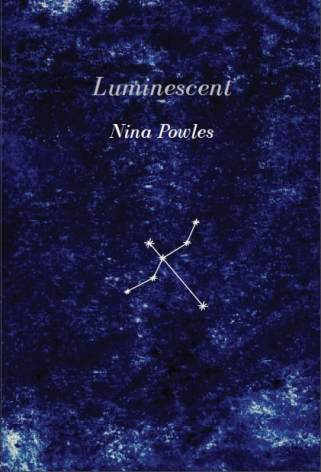
Poetry Shelf reviews Nina Powles’s Luminescent – Every poem is a jewel of a thing


luminescent-cover-low-res_1_orig.jpg

Luminescent, Nina Powles, Seraph Press, 2017


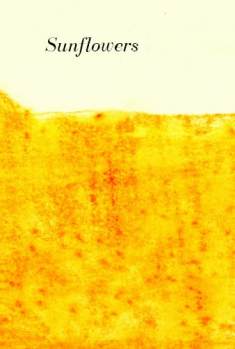
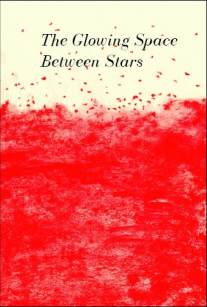
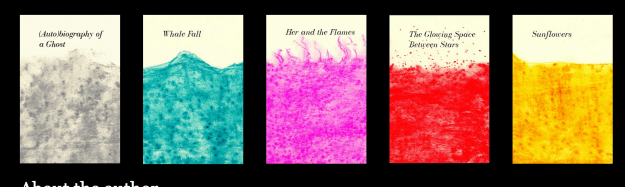
Nina Powles’s debut poetry collection, Luminescent, is a set of five slender chapbooks in a night-sky sleeve. Each book is like a constellation, with a particular woman, its luminosity. (Auto)biography of Ghost catches a ghost who was said to haunted Queen Margaret College’s bell tower where she fell to her death; Sunflowers becomes a conversation and an homage to Katherine Mansfield; Whale Fall imagines the world of Betty Guard, perhaps the first Pākehā woman to have lived in the South Island; Her and the Flames draws upon Phyllis Porter who died at 19 when her costume caught alight in a theatrical performance; The Glowing Space Between the Stars turns to Beatrice Tinsley, a New Zealand cosmologist. There are notes in the back of each booklet that background each woman.


I love the way the poems talk to each other within each booklet and between booklets.


The poetry extends itself in imaginings, yet grounds itself in the light of an autobiographical presence and research. Motifs such as dust, moths, ghosts and dreams are like connecting lacework that render a sense of ethereal wholeness to the set. The poems accumulate exquisitely textured voice; confident and idiosyncratic, searching and still, melodic and spare, intricate and warm. Every poem is a jewel of a thing.
 

katherine-low-res_1_orig.jpg


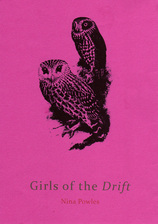
Sunflowers takes several Mansfield experiences as starting points for poems: she burnt all her letters and journals when she was in her early turbulent twenties; she wrote about a writing epiphany after seeing a Van Gogh painting for the first time; she recorded a dream after her brother’s death. In an early chapbook, Girls of the Drift, Nina put New Zealand poets, Jessie Mackay and Blanch Baughan together in poetry. The poems offered surprising pathways into our first women poets in print alongside a young contemporary poet forging her own poetic trails. With the Mansfield poems, I feel like I am sitting in a room in the South of France, and each poem resembles an aperture in the wall that pulls me into a Mansfield dreaming.

‘Fever dream’ is without punctuation, a slim short-lined poem that sizzles with ‘s’ alliterations that cut into the feverish night. In the midst of the hissing heat (stinging scorching nerves skin simmers inside struck bones sky she rising), two words cut into the fevered skin (teeth cracking). The poem is visually alert with its storm inflected sky. What stamps the poem indelibly is the final image:


bones cracking under

a New Zealand sky

and she is the wave

rising to meet it


‘She’ is Mansfield, and in that wave of fevered self, I am hooked into Mansfield musings.

The poems tap nostalgia, calling upon the senses to electrify the page. ‘Silver dream’ is set in a London garden in 1915, where Katherine bites into the pear her brother hands her:

It tastes like jam sandwiches

and sunshine on her mother’s hair.


After physical details that light the scene, the poem shifts to dream again, to the ghost-like vein that runs through all the poems, and it’s a surprising nudge. The pear leads us to ‘where everything is silver/ and he is alive again’, and the idyllic setting shifts. We are also lead to the collection’s title, as the whole poem glows with ache and loss in subtle overlaps:


Later she plants a pear tree

in one of her stories,


makes it glow in the window,

makes it touch the moon.


Several booklets feature erasure poems, where blocks of ghostly grey enable certain words to shine out as a poem. That we can see the journal entry in ‘Lucid dream’, through the grey veil, adds to the dream-like state of shiver and float. I pictured the whole journal translated into grey-veil poems. The lines that lift up feel so apt: ‘Time/ was shaken/ out of me.’ The final word, ‘violet’, pulls back to sweet-scented earth, to that nostalgic hunt for elsewhere places and elsewhere memories.


I love this set of poetry booklets, because we still need light shining on the shadows to recover the women who did extraordinary things, or everyday things, so they form a constellation, a suite of coordinates that might shift our contemporary means of navigation.
 

beatrice-low-res_1_orig.jpg


The Glowing Space Between Stars again links to the collection’s title, and underlines the idea that poetry can light up things, experiences, relations, ideas, feelings, memory. Beatrice, the cosmologist, shows how the space between things is the domain of curiosity. And for me, that feeds back into the way poetry is also curious about the gaps between. When you enter the poem gap, you enter a luminous field that so often surprises or delights or upturns.

Nina lists things in Beatrice’s childhood room; out of these things grew the adult curiosity (did anyone do this for Einstein or Newton?). She imagines the girl at 16:


then rushing home immediately

to write down what she’s seen,

noting especially

the glowing space between stars,

how it seems to have changed

since the night before.


Nina is making poems and she is making biographies, the one coming out of the other, and it is as though she is not tied to the rules of one or the rules of the other but can imagine and detour and intrude. In ‘Minutes’, the poet moves behind the galaxy facts, and the ongoing discoveries, to reveal the hiding narratives, the domestic underlay:


The light emitted by distant galaxies

takes billions of years to reach us.

It comes from a far younger universe,

somewhere where no one ever worried

about ironing their husband’s shirts

or arranging after-school childcare

because there were no ironing boards

and no children and no husbands


Five glowing booklets of poems that shine beyond the individual poems to gather a necessary and inventive, a lyrical and seismic, view of five very different women. I love this collection with its feminist energy, its poetic agility and its warm heart.


This, too, was the perfect time

to measure things in infinities.


from ‘Red (ii)’


Nina Powles, half Malasian-Chinese and half Pākehā, is from Wellington where she graduated with an MA in Creative Writing from Victoria University. There, she won the 2015 Biggs Family Prize for Poetry for Luminescent’s first draft. She writes poetry, non-fiction and makes poetry zines. Her chapbook, Girls of the Drift, was published by Seraph Press in 2014.


Seraph Press page

Nina Powles web page
Screen Shot 2017-09-30 at 12.56.14 PM.png


8854932.jpg