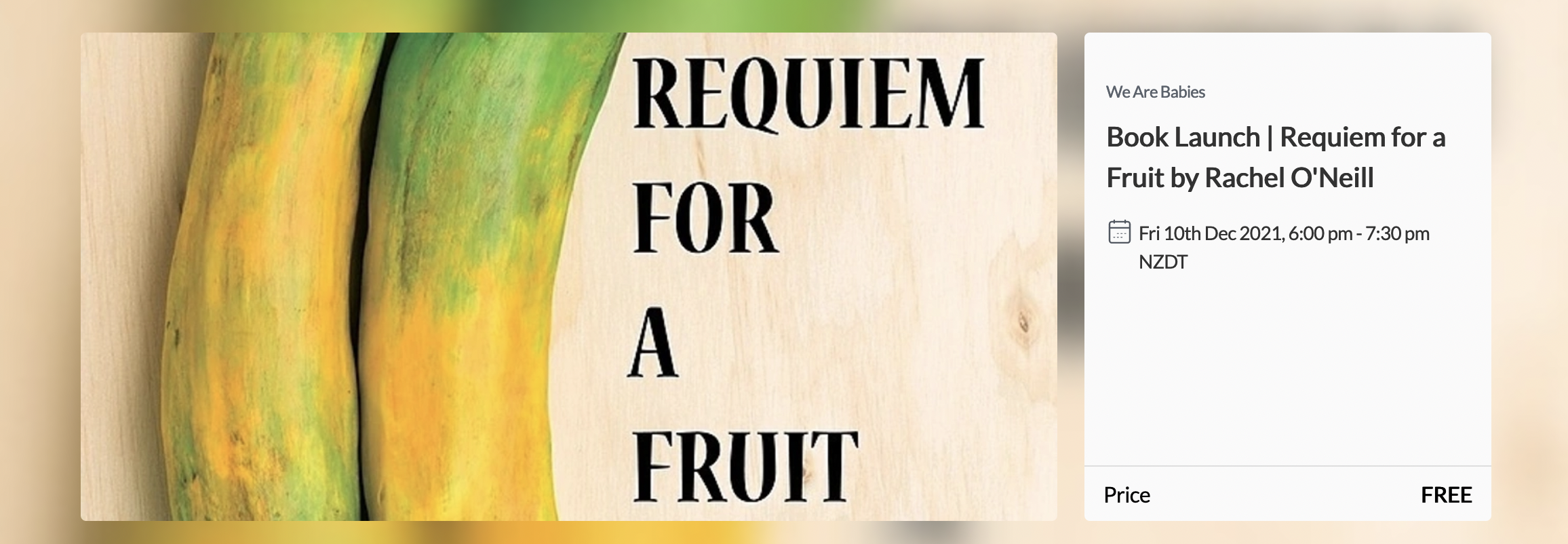
We Are Babies and Jhana Millers Gallery would like to welcome you to the launch of Rachel O’Neill’s second poetry collection, Requiem for a Fruit.
Requiem for a Fruit continues Rachel’s exploration of the form of prose poetry, to astonishing results. The poems in this book cast a slant lens on the everyday, opening up a world of possibilities and curious characters. With imagined and real dialogue, these characters converse and live as fully on the page as they would in the known world. O’Neill covers topics from love to interstellar travel, from the domestic to the absurd. Here are dowagers and dogs, a robot mother, husbands hiding behind fire trucks, and families made of stone. The landscape they populate is without reason, yet full of fruit.
Registration for this event is required so please register here for a free ticket. Our capacity for safe distancing is 40 people. Vaccine passes will be required. You can enter from 6pm, we will check your ticket at the gallery entrance and you will be asked to sanitize your hands and scan the QR code. Manual contact tracing also available. There will be copies for sale before and after the speeches and Rachel will be happy to sign them for you. There will be no food or drinks available under current alert level restrictions.
This pill little light blue moon tasting of rosewater
the night in lines through black dust of the blind
pines manuscript architecture smashed and torn off places
morning light when orange falls six weeks a year that way.
But the darkness? The one behind my eyes? In the cavities of this responsible body? No.
When I saw the tow truck I thought it was carrying a crucifix.
Let’s start with that.
Kate Camp
Kate Camp’s most recent book is How To Be Happy Though Human, published by Victoria University Press and in Canada by House of Anansi Press. Her memoir, You probably thing this song is about you, will be published by Victoria University Press in 2022.
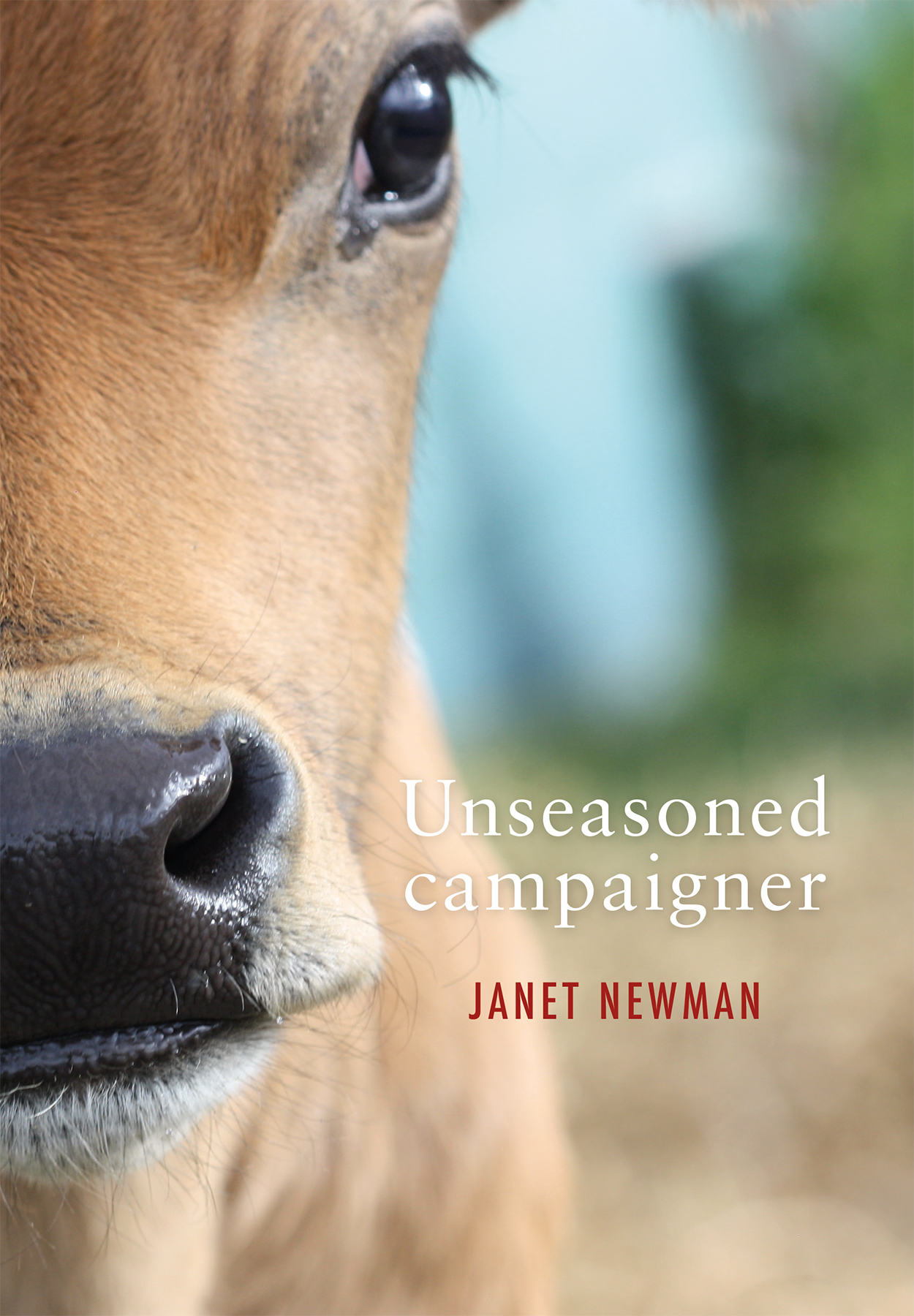
Unseasoned Campaigner, Janet Newman, Otago University Press, 2021
Poet Janet Newman lives at Koputaroa in Horowhenua, where she farms beef. Her debut collection, Unseasoned Campaigner, is nourished beyond description of scenic beauty to a deep love and engagement with the land and farming. Women writing the land is not without precedent. Ruth Dallas comes to mind initially. She spent time as a Herd Recording Officer during WWII and found cities restrictive and dull afterwards. When she was living in Dunedin in later years, writing enabled returns to her beloved rural settings. Janet dedicates several poems to her. The second poet that springs to mind is Marty Smith, whose rural background has featured in her poetry, and who is also unafraid of over and underlaying an idyllic landscape with the grit and reality of farming life.
Janet’s first section, ‘How now?’, places the reader one hundred percent in rural experience: managing livestock, a diarrhea-soaked calf that doesn’t make it, drenching, the slaughter house in graphic detail, blood and sweat. There are water restrictions, water anxiety, drought. A dead river. More dead stock. Horses led to shade and grass. Scenic routes and beauty spots are off the menu.
I applaud this revised view but it is the people who hold my attention to a significant degree. While farmers are currently under scrutiny for diverse reasons, particularly climate change, some are speaking out about how tough it is. Listening to RNZ National’s excellent Country Life, it is clear there is no hold-all definition for the contemporary farmer and their diverse practices. In the book’s middle and final sections, Janet also opens up what “farmer” means, and that adds significant and poignant layers to the first poems.
In the second section, ‘Tender’, Janet draws us to close to a father, and I am assuming her father. He was a complicated, multifaceted human being: a farmer, father, husband, war veteran. He was a man of few words and myriad actions, toil and more toil. He cursed war on television and kept a belt by the door. He is memory, because he has passed, and he fills the speaker with mourning. The poems are vividly detailed with the physicality of daily life, and it is through his presence farming is made prismatic, beyond stereotype. When I pivot on the word “tender”, I see the poems as an offering to both mother and father, to us as readers. I see too the tenderness in the care of animals, and tender as the sore spot that is parental absence, maternal and paternal memory.
His language is electric rhythm of pump and wire, gush of couplets from the artesian bore,
a flighty heifer enjambed with a low rail,
stanza of cloud over the back paddock threatening rain,
the fuck, fuck, fuck of a dead bull in the drain.
from ‘Man of few words’
The mother is an equally haunting presence with her preserves, her baking and her plums. She too is drawn close through a focus on the physical detail of everyday actions. She is mourned and, in dying first, is an unbearable hole in the father’s life. The parental poems scratch the surface of my skin. Preserving, for example, brings back my own pungent memories. And preserving is also the tool of the poet, poems are stored in sweet and salty brine, held out to be savoured by both poet and reader.
Preserving
Red plums give up round plump bodies when I cut out their stones. I hear my mother’s long-ago voice: ‘Don’t overdo it.’ The boiling and much else. In the photograph she is smiling behind glass, my memory of her steeped in absence. Now, even that faithless call sounds sweet as in preserving jars sour plums surrender to sugar syrup.
The third section, “Ruahine”, moves and adjusts to loss. It also finds footing on scenic routes. In the final poems, the poet is out driving and absorbing the birds and trees, mesmerising hills, the land bereft of vegetation. The landscapes have widened further to carry farm practices, daily challenges, connections to the land and to making a living. But of course it is not as though the farmer is blind to beauty. The final cluster of poems become song, act as sweet refrain, where upon in each return to a view, the view shifts in nuance. Just like poetry. Just like the way life is nuanced and resists deadening dichotomies. ‘Beach’ catches the elusiveness of what we sometimes see and feel so exquisitely:
Some days the clouds disappear on the drive to the coast
the way the things you wanted to say evaporate when you get there.
Sentences float to the pencil-line horizon between sky that is nothing but blue
and sea that is as blue as … but words fail you,
smudge like fishing boats in the distance without your binoculars
from ‘Beach’
Janet writes with poise, each line fluent in rhythm and accent, and in doing so achieves a collection that matches heart with sharp and bold eye. Her collection belongs alongside the very best of Marty Smith and Ruth Dallas, a fine addition to how we write the land, whoever and wherever we are.
Janet Newman was born in Levin. She won the 2015 New Zealand Poetry Society International Competition, the 2017 Kathleen Grattan Prize for a Sequence of Poems and was a runner-up in the 2019 Kathleen Grattan Awards. Her essays about the sonnets of Michele Leggott and the ecopoetry of Dinah Hawken won the Journal of New Zealand Literature Prize for New Zealand Literary Studies in 2014 and 2016. She has worked as a journalist in New Zealand and Australia, and a bicycle courier in London. She has three adult children and lives with her partner at Koputaroa in Horowhenua, where she farms beef cattle.
entering the silence that is not a silence remains of a shoe by the mouth of a shaft rusted boiler at a fork in the creek pond of eels where the dredge dismantled ended its song in a valley of tailings entering the silence that is not a silence
enter a silence that never was the wheels of a lokie sprouting fern a railway signpost clothed in lichen the sign to a mine where the dead still linger lost to lovers dear to mothers enter a silence that never was
enter then the world without knocking digging drilling sluicing felling fishing farming ploughing a dream hauling an island from the constellations into the glare of an alien reign enter then the world without knocking
enter the silence enter the dark enter the hive of the invitation enter the majesty enter the wine enter the wilderness while you may enter with flags and enter with instruments enter the silence enter enter
Jeffrey Paparoa Holman
Paula: I recently reviewed Jeffrey’s new poetry collection for Kete Books. In conclusion I wrote: “Holman writes with a measured step, with distinctive and diverse musical keys, with an ear attuned to the everyday and to a refreshing uplift of language. Repetition is a useful device, appearing like a refrain in a book of song, as a subterranean reminder that history repeats itself. Death, ruination, love, joy. This is a collection of poetry that will echo and nourish as we move through uncertain days.”
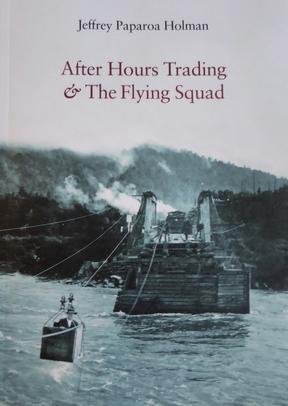
After Hours Trading & The Flying Squad, Jeffrey Paparoa Holman, Carbide Press, 2021
“The handpiece” for Jack Gilbert
“when the mobile library comes”
“Grinding the gear, 1969”
Jeffrey Paparoa Holman is a Christchurch poet and non-fiction writer. His collection, Blood Ties: selected poems, 1963-2016 was published by Canterbury University Press in 2017. A memoir, Now When It Rains came out from Steele Roberts in 2018. The most recent collection – After Hours Trading & The Flying Squad – has just been released by Carbide Press, his own imprint (29 October 2021).
Recent work has also appeared in Poetry New Zealand Yearbook 2021, an essay on prison reform, and poetry; his work has also been included in The Cuba Press anthology, More Favourable Waters – Aotearoa Poets respond to Dante’s Purgatory (2021).
He makes his living as a stay-at-home puppy wrangler for Hari, a Jack Russell-Fox Terrier cross. Hari ensures that little writing takes place, while psychogeography and excavating parks happens daily.
After Hours Trading & The Flying Squad, Jeffrey Paparoa Holman, Carbide Press, 2021, ISBN 9780473584047
Jeffrey in conversation with Lynn Freeman Standing Room Only RNZ National
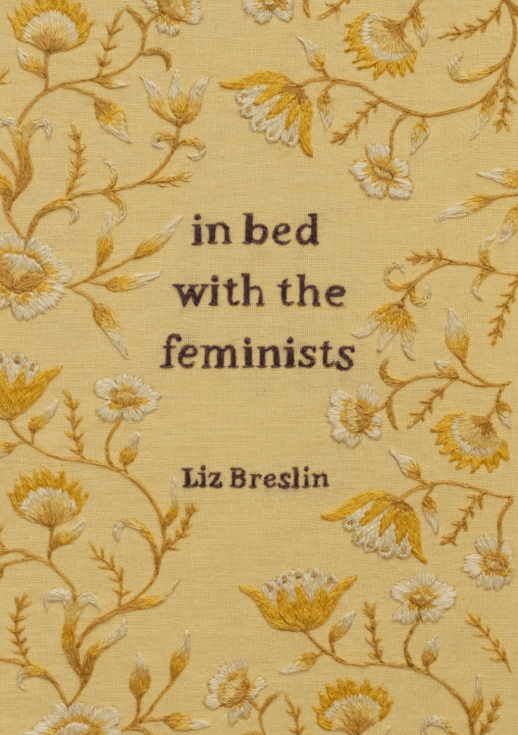
in bed with the feminists, Liz Breslin, Dead Bird Books, 2021
I prefer barefoot I prefer paper maps I prefer flowers in the ground but first, I prefer coffee
I prefer lunch I prefer savoury conversation I prefer to sit at the children’s table I prefer time off without good behaviour
from ‘Possibilities’
Liz Brezlin’s debut poetry collection Alzheimer’s and a Spoonhooked me on so many levels. Her second collection, in bed with the feminists, is politically, poetically and personally active. I love that. The stellar opening poem, ‘the things she carries’ (you can read a version here), is like a mini performance of the book. The things a book carries. The things a poem carries. Everything from lightness to weight. Hidden and on view. The poems carry you along everyday tracks, with myriad opinions and musical riffs, routine and reverie, complaint and consternation. Love.
it’s not just the rain keeping me awake its insistent game of getting in the cracks
it’s the drip drip down of can’t change that
it’s the drip drip down of can’t change that
from ‘out of bed with the feminists’
There is the steady beat of the word feminism, a wide-reaching fuel of a word that refuses to be pinned down to single options or compartments. The speaker is in bed with the feminists, going to museums, on a road trip, stepping off from power-struggle sites, marching. There are maternal poems, colours running in the wash, the negotiation of waste in supermarket aisles. There are sturdy threads leading to a matrix of other women writing: Hélène Cixous, Virginia Woolf, Anne Kennedy. The body, the maternal ink, the writing both inside and outside a room of one’s own, perceptions under question, rampant consumerism. I particularly love a poem that steps off from Anne Kennedy’s ‘I was a feminist in the eighties’, with a nod to Helen Reddy (you can read Anne’s poem and Liz’s appraisal of it here).
I was a feminist, trapped in a lion gutted and ruined, I had a good cry
buttoned my coat way up to my chin wanted the me back who started this game
thought I could escape through the jaws of the beast starved myself pretty, slipped through his teeth
from Liz’s ‘Then a lion came prowling out of the jungle and ate the feminist all up’
Liz’s poetry collection offers a rewarding language experience: lines where words get fractured, dashed apart, piled up one against the other, as though we can’t take meaning and fluency for granted. There are honey currents and there are judder bars in the roads and sidetracks of reading. This is life. This is thinking. This is critiquing. This is poetry.
The book took me back to my doctoral thesis where I spent a number of years considering what drove the ink in the pen of Italian women writing. The ink pot was full and unexpected as it brimmed over with a thousand things, until in the end, I decided the woman writing was opening up and out, and her ink was open, and and was the key word. A hinge, a connection. That’s how I feel about this book. It is alive with hinges and connections. I love the effect of in bed with the feminists, so full of complicated invigorating necessary life.
at the funeral with the feminists
there are times not to think about sex Catholic school will teach you this although if in the middle of life there is death
today is far more than tears and shibboleths desire is pulsing persisting lips there are times it is hard not to think about sex
demure, buttoned, ruffled, pressed lashes to lashes, busting tits middle to middle, in life we are dead
already unless we remember, lest we forget sadness, egg sandwiches, sniffling kids yes, there are times not to think about sex
think sobering snowdrops on unfrozen earth the priest, droning, the week’s shopping list how always, in the middle of life, there is death
we are warm for such a short time at best maybe the true crime is to try to resist there’s no time like all time to think about sex what else is life but sex and death?
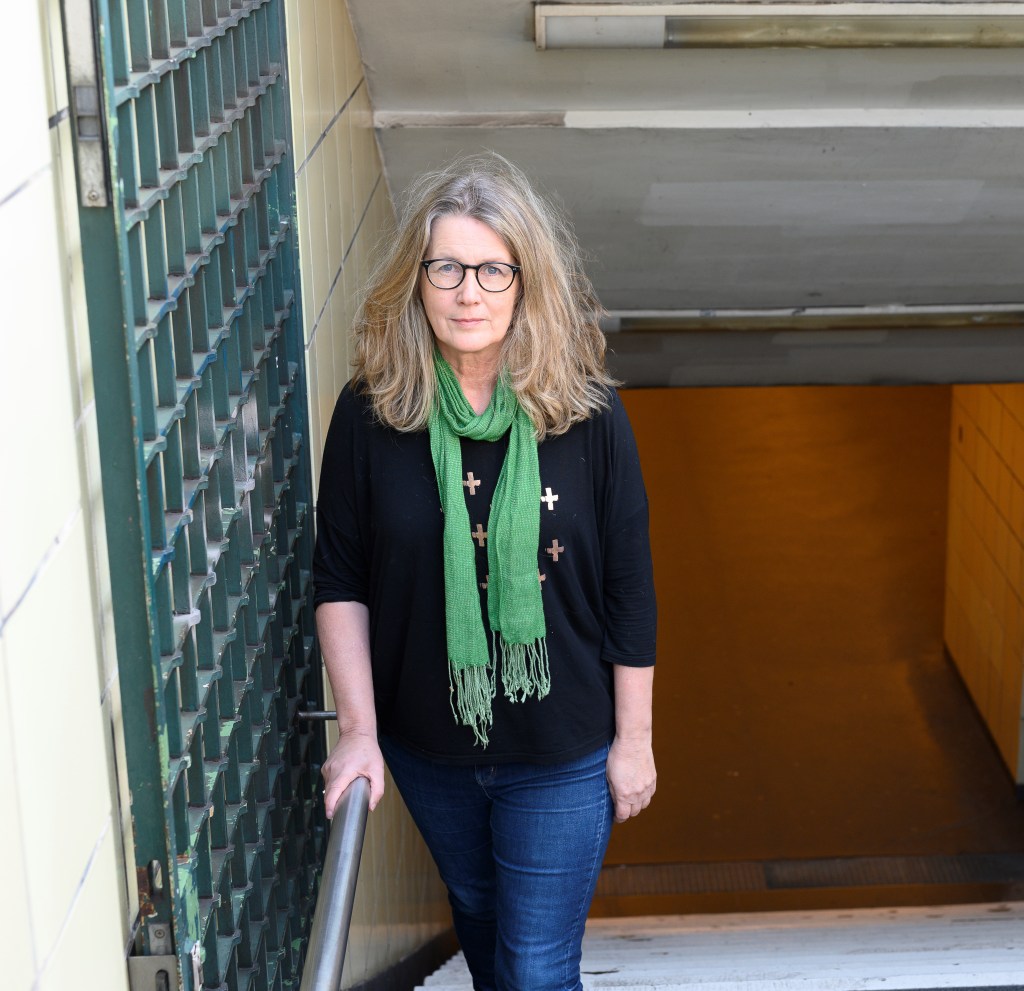
In bed with the feminists is Liz Breslin’s second poem collection, part of which won the 2020 Kathleen Grattan Prize for a Sequence of Poems. Her first collection, Alzheimer’s and a spoon, was listed as one in the NZ Listener’s Top 100 Books of 2017. Liz was a virtual resident at the National Centre for Writing, UK, in February 2021, where she documented life through the peregrine webcam on Norwich Cathedral in a collection called Nothing to see here. In April 2020 she co-created The Possibilities Project with Dunedin UNESCO City of Literature.
Liz’s website Deadbird Books page Liz reads from in bed with the feminists Landfall Review Online by Jordan Hamel
PS For someone one with minor visual impairment and reading glasses that broke at start of lockdown the font was a struggle, pale and small.
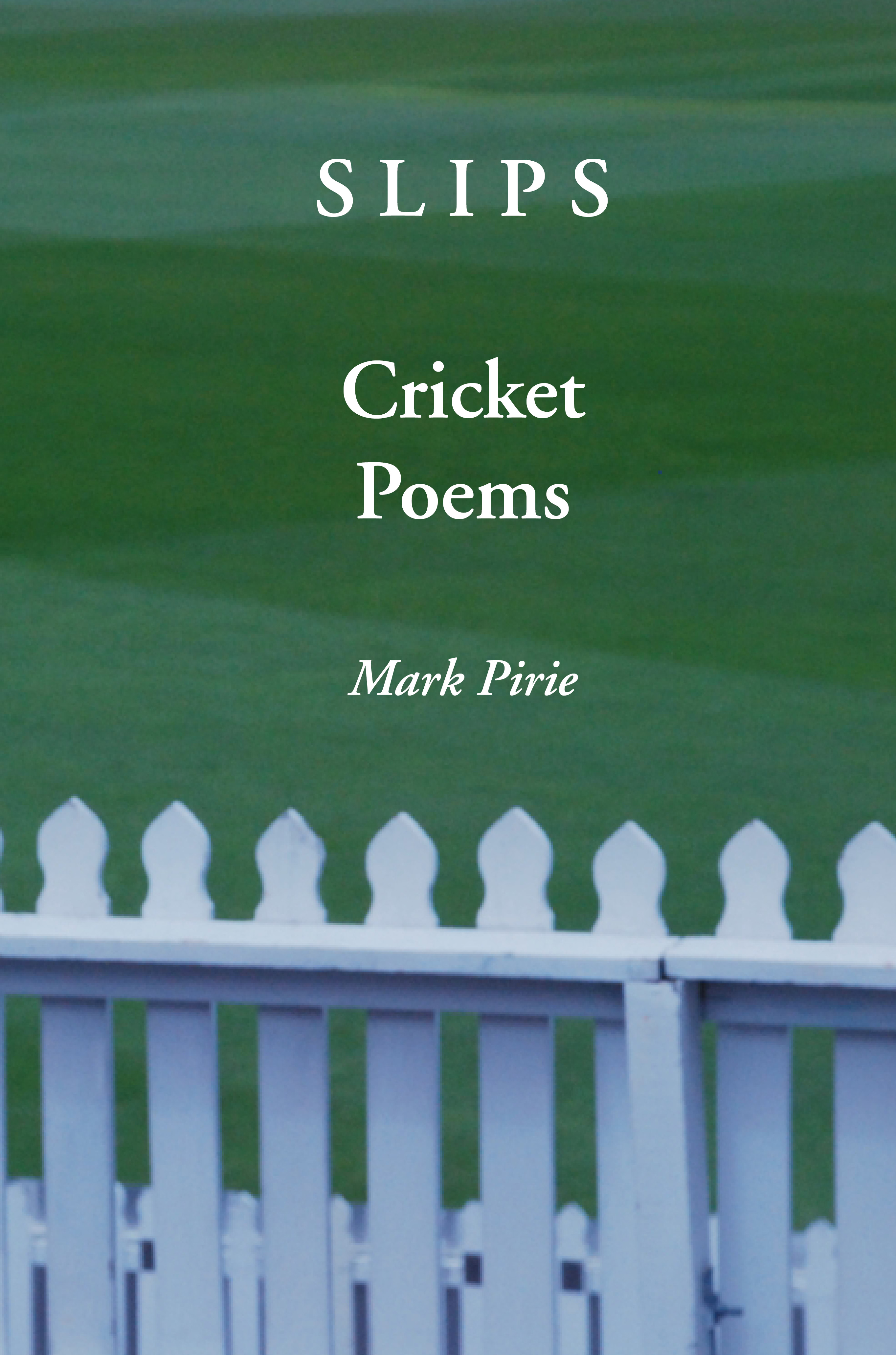
Mark Pirie has been writing cricket poems for a number of years. He published a booklet of cricket poems in 2008 and has now gathered a whole book together. If you are a cricket fan like me, you will be drawn to a collection that celebrates a game that captivates in both its slowness (the tests) and its speed (the T20s), its intricacies, elegance and skill. The poems consider specific matches, offer odes or tributes to beloved players, sing the praises of a sweep, swinging ball or one-handed boundary catch. There is a reflective gaze back, as memory is trawled for standout moments. Remember when. Remember how. I found myself trawling though my own cricket memories and revisiting Vivian Richards at Lord’s, listening to cricket on the transistor radio as a child, watching Richard Hadlee take one wicket after another, Martin Crowe bat.
But the joy in reading these poems is how life infuses cricket and cricket infuses life. The delight is also in how playing cricket can be aligned to writing a poem. How you might go out for a duck but it is a love of playing/ writing that matters. I read this book for the pleasure of cricket, the pleasure of poetry, and a myriad reactions animating the bridge between the one and the other.
Lost
Driving back from a book fair whites on a green field
remind me of a love now lost. It’s a while since I played.
I long for that Saturday field, can smell the whiff of leather,
the feel of stitch and seam. At the fair I’d looked at old
cricket books. They all knew. And when I arrive home, my bat
lies in the corner propped against the dresser, hidden by shadow.
November 2010
Mark Pirie was born in Wellington, New Zealand, in 1974. He is the Managing Editor for HeadworX, a small press publisher of poetry/fiction. His poems have been published in India, New Zealand, Australia, Croatia, the US, Canada, Singapore, Iraq, France, Germany, and the UK. In 1998 University of Otago Press published his anthology of ‘Generation X’ New Zealand writing, The NeXt Wave. He was managing editor of, and co-edited, JAAM literary journal (New Zealand) from 1995-2005, and currently edits broadsheet: new new zealand poetry. In 2003, Salt Publishing, Cambridge, England, published his new and selected poems, Gallery: A Selection. In 2016, a new selection of his poems Rock and Roll appeared from Bareknuckle Books in Australia.
HeadworX page Mark Pirie website Poetry Shelf: Mark Pirie reads from Slip
The Auckland Writers Festival is a strong supporter of poetry in Aotearoa, hosting a variety of events that feature poets from across generations, locations, styles, genres. You will find poets in conversation, in performance, on mixed panels, in outdoor street settings. Poetry is such a key part of many our literary festivals, I was delighted when Kasandra Hart-Kuamoana and Bridget van de Zijpp from the the Auckland’s literary festival agreed to pick some poems.
Hotel Emergencies, Bill Manhire
I love the way Bill Manhire’s poem, Hotel Emergencies, starts off with a gentle playfulness and a mild sense of internal panic and then spirals out to something much darker and concerned about state of the world. I once saw Bill reading it, saying he was inspired by a notice in a Copenhagen hotel room, and it stuck with me so firmly that forever after whenever I saw a badly translated notice near the door of a hotel room I would think of this poem. (Bridget)
When they ask you where you are really from, Mohamed Hassan
I was overseas when the mosque shootings occurred and from so far away I had only glimpses of how the tragedy was opening up a new dialogue here about racism and belonging. Then, on returning home, I picked up Mohamed Hassan’s collection, National Anthem, and was so moved by the profound intelligence of it, and the way he quietly breaks hearts with his beautiful way of expressing both resistance and recognition, and also tenderness and yearning, warmth and defiance. His reading of ‘When they ask you where you are really from’, which can be found online, is transfixing. (Bridget)
High Country Weather, James K Baxter
Is an Ockham’s razor for lockdown frustration and fatigue. Considered a Kiwi classic by many, and it’s no wonder. Baxter’s call to conquer anger and frustrations, to weather the storm, and to “surrender to the sky / your heart of anger” reads so much like incantation. It takes me down memory lanes of high-country alps, and my home region – through Waitomo Caves, to Rangitoto and Wharepapa South. The speaker recognises the value in never losing sight of the briefest semblance of beauty. The speaker also considers this practice to be an imperative, a survival technique. Where the very act of choosing to “yet see the red-gold cirrus / over snow mountain shine” seems like the utmost act of defiance. I celebrate this and a handful of Baxter’s other early works for their covert rebellion. Their giant phlex of negative capability. (Kasandra)
Eulogy, Ruby Solly
To me, the poem reads like whakatauki on the powerful nature of father and daughter – made even more powerful when explored in this form, and so poignantly. Its voice tends to me. Telling me to walk in both worlds. To grapple with internal conflicts and harness understanding through the wielding of ink and paper, mind and memory – within the external world. It sings of a journey toward catharsis, an accomplishment of the same, and I love that it reminds us how powerful the act and gift of writing is for the pursuit of understanding and reconciliation. (Kasandra)
Ruth Dallas, ‘Pioneer Women with Ferrets’
I use this poem to draw strength from days of old. From three or four, or more, generations ago. See the vignettes of daily life, and the fortitude of pioneers versus now. Be inspired. Let the old photographs that fill your mind with the roads of the road builders, and the hunt and the huntsmen and women, and the strife and the weather worn clothes, trickle into your spirit. Remember that once-upon-a-time tradies never used to have Tough Hands or WorkSafe! This poem stares with stark, steadfast eyes. An urging for my overdue stocktake of my whakahautanga (self-mastery), I use this poem in times of disillusionment to fortify, survive, and soldier on. (Kasandra)
The poems
Pioneer Woman with Ferrets
Preserved in film As under glass, Her waist nipped in, Skirt and sleeves To ankle, wrist, Voluminous In the wind, Hat to protect Her Victorian complexion, Large in the tussock She looms, Startling as a moa. Unfocused, Her children Fasten wire-netting Round close-set warrens, And savage grasses That bristle in a beard From the rabbit-bitten hills. She is monumental In the treeless landscape. Nonchalantly swings In her left hand A rabbit, Bloodynose down. In her right hand a club.
Ruth Dallas
from Walking on the Snow, Caxton Press, 1976. Published with kind permission from the Ruth Dallas Estate
High Country Weather
Alone we are born And die alone Yet see the red-gold cirrus Over snow-mountain shine
Upon the upland road Ride easy, stranger: Surrender to the sky Your heart of anger.
James K Baxter
from Blow, Wind of Fruitfulness, Caxton Press,1948. Also appears in numerous Baxter anthologies including Collected Poems, ed JE Weir, Oxford University Press, 1980, 1981, 1988, 1995). Published with kind permission of the James K Baxter Estate.
When they ask you where you are really from
Tell them you are an unrequited pilgrim two parallel lives that never touch a whisper or a window to what your country could be if only it opened its arms and took you whole
Tell them about the moon how she eats at your skin watches you pray and fast and cry while the world sleeps how she gives birth to herself and dies and you wish upon her children
How you wander her night plant cardamom in your friends’ eyes cumin in their teeth zaatar on their brow lick the rest off your fingertips it tastes of visa-on-entry heaven with no random checks
Round the iftar table everyone speaks of politics and God trans rights and colonialism we forget we didn’t speak the empire’s tongue
once
When they ask you why you speak so well for an immigrant:
Tell them about your grandmother’s laugh how you never quite knew whether she was story or myth the upper lip in your conviction or a song ringing in your bones drifting through the kitchen window with the fried shrimp and newspaper voodoo dolls
Tell them how you have always been a voodoo doll your feet licking the flames the stove top eye a television screen a news bulletin an open casket the needle pushing and pulling through your skin every puncture a question played by an accusation every bullet hole an answer you have to fill
with silence with religion with Xanax and daytime television
And when the muazzen calls you to pray on the radio you will wrap your limbs in cotton sheets walk through the crowd with your hands in your mouth waiting for the gun.
Mohamed Hassan
from National Anthem, Dead Bird Books, 2020.You watch Mohamed read the poem here.
Eulogy
As a child Whenever I was angry, Inconsolable, My father would tell me to write a eulogy To the person who had caused me pain. He said that by the end of it I would see That even those who cause us pain Are precious to the world
My father was an exceptional man, He was blessed With a gentle soul. He walking in step With the many animals he adores And he treaded lightly on this earth.
He taught To tread as he did And to leave the world as you found it. Ideally, improve it.
One day I will read this to a room of faces I barely recognize. I will look out on a world No different with him gone As it was With him here.
Ruby Solly
from Tōku Pāpā, Victoria University Press, 2021
Hotel Emergencies
The fire alarm sound: is given as a howling sound. Do not use the lifts. The optimism sound: is given as the sound of a man brushing his teeth. Do not go to bed. The respectability sound: is given as a familiar honking sound. Do not run, do not sing. The dearly-departed sound: is given as a rumble in the bones. Do not enter the coffin. The afterlife sound: is given as the music of the spheres. It will not reconstruct. The bordello sound: is given as a small child screaming. Do not turn on the light. The accident sound: is given as an ambulance sound. You can hear it coming closer, do not crowd the footpaths. The execution sound: is given as the sound of prayer. Oh be cautious, do not stand too near
or you will surely hear: the machinegun sound, the weeping mother sound, the agony sound, the dying child sound: whose voice is already drowned by the approaching helicopter sound: which is given as the dead flower sound, the warlord sound, the hunting and fleeing and clattering sound, the amputation sound, the bloodbath sound, the sound of the President quietly addressing his dinner; now he places his knife and fork together (a polite and tidy sound) before addressing the nation
and making a just and necessary war sound: which is given as a freedom sound (do not cherish memory): which is given as a security sound: which is given as a prisoner sound: which is given again as a war sound: which is a torture sound and a watchtower sound and a firing sound: which is given as a Timor sound: which is given as a decapitation sound (do not think you will not gasp tomorrow): which is given as a Darfur sound: which is given as a Dachau sound: which is given as a dry river-bed sound, as a wind in the poplars sound: which is given again as an angry god sound:
which is here as a Muslim sound: which is here as a Christian sound: which is here as a Jewish sound: which is here as a merciful god sound: which is here as a praying sound; which is here as a kneeling sound: which is here as a scripture sound: which is here as a black-wing sound: as a dark-cloud sound: as a black-ash sound: which is given as a howling sound: which is given as a fire alarm sound:
which is given late at night, calling you from your bed (do not use the lifts): which is given as a burning sound, no, as a human sound, as a heartbeat sound: which is given as a sound beyond sound: which is given as the sound of many weeping: which is given as an entirely familiar sound, a sound like no other, up there high in the smoke above the stars
Bill Manhire
from Lifted, Victoria University Press, 2005. You can hear Bill read the poem at Poetry Archives.
Born and bred in the heart of Te Awamutu-King Country, Kasandra M. Hart-Kaumoana (Ngāti Maniapoto, Ngāti Hikairo) completed her BA at Victoria University as a VUW-Foundation Scholar in Film, English, and Philosophy in 2019 – and Creative Writing at the IIML. She has since published two original pieces in Matatuhi Taranaki: A Bilingual Journal of Literature. Kasandra is kept busy full-time coordinating the Auckland Writers Festival and relishes the bona fide westie lifestyle in her newfound home, Waitakere.
Bridget van der Zijpp is the author of three novels: Misconduct (VUP, 2008), In the Neighbourhood of Fame (VUP, 2015), and the recently released I Laugh Me Broken (VUP, September 2021). Bridget returned to Auckland in March 2020 after living in Berlin for a few years and is now the Programme Manager at the Auckland Writers Festival.
James K Baxter (1926 – 1972), poet, dramatist, literary critic and social commentator, was born in Dunedin. He was Burns Fellow at the University of Otago (1966-7). He published numerous plays and books of poetry and criticism during his life time, while several anthologies have been published posthumously. He lived in Tāmaki Makaurau, Auckland, Te Whanganui-a-Tara Wellington and Hiruharama Jerusalem. An extensive bio is available at ReadNZ.
Ruth Dallas (Ruth Minnie Mumford) (1919 – 2008) was born in Invercargill and lived in Dunedin from 1954. An award-winning poet and children’s author, she won the Poetry category of the New Zealand Book Awards in 1977 for her fifth collection, Walking on the Snow. She wrote over 20 books. During the 1960s, she assisted Charles Brasch with Landfall. She was awarded a CBE for Services to Literature, was the Burns Fellow at the University of Otago (1968) and received an honorary doctorate from there a decade later.
Mohamed Hassan is an award-winning journalist and writer from Auckland and Cairo. He was the winner of the 2015 NZ National Poetry Slam, a TEDx fellow and recipient of the Gold Trophy at the 2017 New York Radio Awards. His poetry has been watched and shared widely online and taught in schools internationally. His 2020 poetry collection National Anthem was shortlisted for the Ockham New Zealand Book Awards (2021).
Bill Manhire founded the creative writing programme at Victoria University of Wellington, which a little over 20 years ago became the International Institute of Modern Letters. His new book Wow is published by Victoria University Press in New Zealand and Carcanet in the UK.
Ruby Solly (Kāi Tahu, Waitaha, Kāti Māmoe) is a writer, musician and taonga pūoro practitioner living in Pōneke. She has been published in journals such as Landfall, Starling and Sport among others. In 2020 she released her debut album, Pōneke, which looks at the soundscapes of Wellington’s past, present and future through the use of taonga pūoro, cello, and environmental sounds. She is currently completing a PhD in public health, focusing on the use of taonga pūoro in hauora Māori. Tōku Pāpā is her first book.
Poetry Shelf Spring Season
Tara Black picks poems Victor Rodger picks poems Peter Ireland picks poems Emma Espiner picks poems Claire Mabey (VERB) picks poems Sally Blundell picks poems Frances Cooke picks poems We Are Babies pick poems
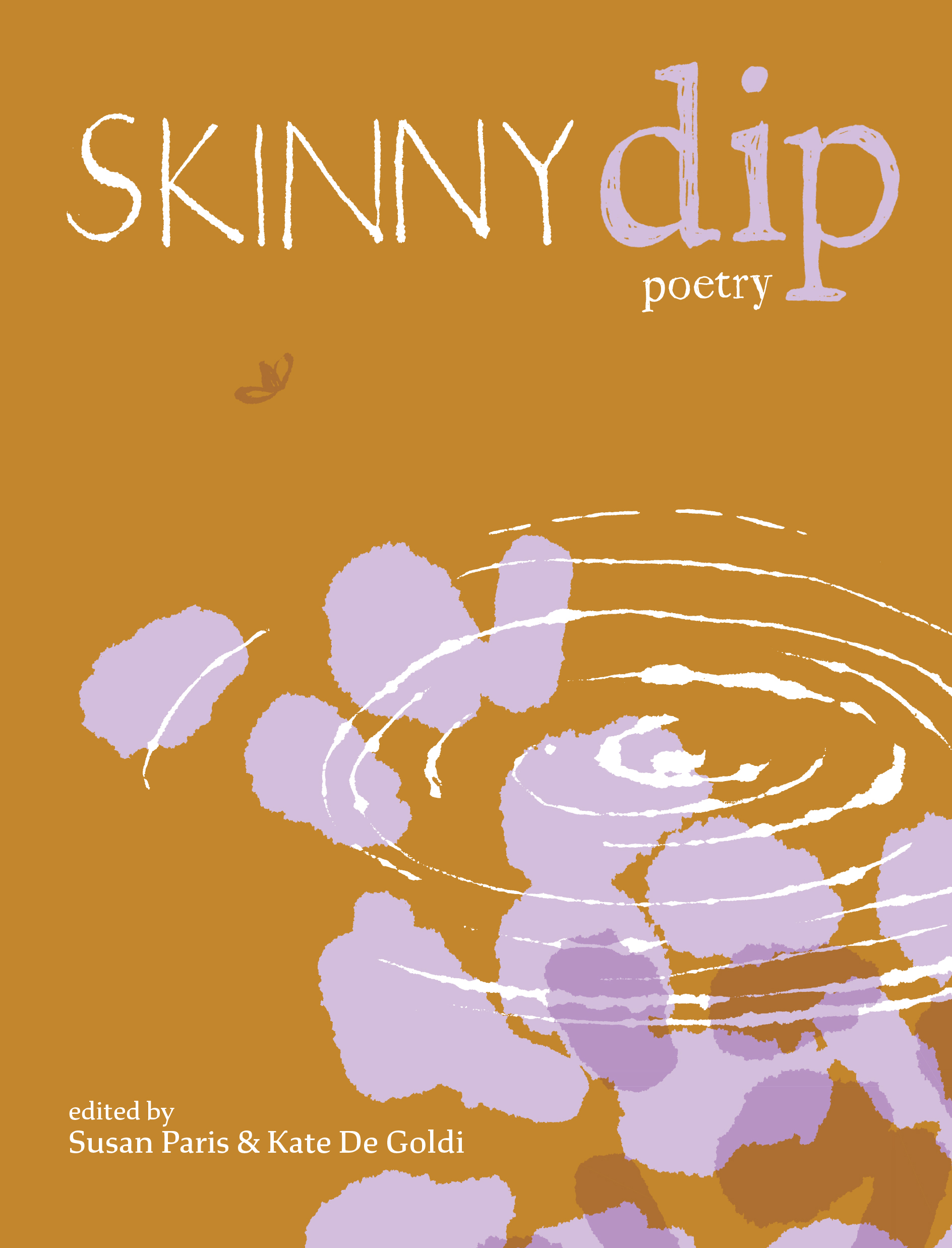
Skinny Dip: Poems, eds Susan Paris & Kate De Goldi, illustrations by Amy van Luijk, Massey University Press (Annual Ink), 2021
Kate De Goldi and Susan Paris, editors of the popular and best-selling Annuals, have edited a lively, much-needed, and altogether stunning anthology of poems for middle and older readers. Kate and Susan commissioned ‘original, and sometimes rowdy poetry’ from a selection of well-known Aotearoa poets. The poems are pitched at Y7 to Y10 readers, but will catch the attention of a range of readers. The collection is shaped like a school year, with four terms, and with the poets both recalling and imagining school days. The subjects shift and spark. The moods and tones never stay still. Some of the poems are free verse (no rules) and some are written according to the rules of specific poetic forms. There is a useful glossary detailing some of the forms at the back of the book (rondel, tanka, haiku, ode, cinquain, rondel, sestina, villanelle, acrostic, pantoum). There are also found, prose, strike-out and dialogue poems. A genius idea for a book that shows how you can follow poetry rules, break poetry rules, play with poetry rules.
The editors invited poems from a glorious group of Aotearoa poets: Sam Duckor-Jones, essa may ranapiri, Bill Manhire, Anahera Gildea, Amy McDaid, Kōtuku Nuttall, Ben Brown, Ashleigh Young, Rata Gordon, Dinah Hawken, Oscar Upperton, James Brown, Victor Rodger, Tim Upperton, Lynley Edmeades, Freya Daly Sadgrove, Nina Mingya Powles, Renee Liang and Nick Ascroft.
Through doing my poetry blogs, schools visits and author tours over decades, I have witnessed poetry simmering and bubbling, somersaulting and sizzling, the length and breadth of Aotearoa. Poetry in my experience can excite the reluctant writer, advance the sophisticated wordsmith, and captivate all those writers in between, both in primary and secondary schools. Poetic forms are fun, and can stretch the imagination, electrify moods and music. Send your writing pen in refreshing and surprising directions.
Poem anthologies for younger and middle readers are as rare as hen’s teeth in Aotearoa, so it is a special day when a new one hits our library and bookshop shelves. Kate and Susan have curated a selection of poems that will fit ranging moods, and perhaps inspire you to write a poem of your own, however old you are!
I have celebrated Skinny Dip on Poetry Box with four readings (Ben Brown, James Brown, Lynley Edmeades and Ashleigh Young). My November challenge on Poetry Box is inspired by Skinny Dip (for Y1 – Y8), so do invite keen young poetry fans to give it a go. For Poetry Shelf, I am featuring two glorious readings by Amber Asau and Sam Duckor-Jones, and including a challenge for secondary students.
I decided Skinny Dip is so good it deserves a feast of celebrations! Let me raise my glass to a fabulous project.
A popUP poetry challenge for secondary school students in Year 9 and 10:
Choose one of the poetry forms mentioned above and write a poem. You can stick to the rules or you can play with the rules. Send to paulajoygreen@gmail.com by November 14th. Include your name, age, year and name of school. Deadline: November 11th. I will post some on Poetry Shelf on November 16th. Write Skinny Dip in subject line so I don’t miss your email. I will have a copy of the book to give away.
two readings
Amber Esau reads ‘Street Fighter’
Sam Duckor-Jones reads ‘Please excuse my strange behaviour’
Amber Esau is a Sā-māo-rish writer (Ngāpuhi / Manase) born and raised in Tāmaki Makaurau. She is a poet, storyteller, and amateur astrologer. Her work has been published both in print and online.
Sam Duckor-Jones lives in Wellington. He has published two collections of poems: People from the Pit Stand Up and Party Legend (VUP).
Massey University Press (Annual Ink) page Kate De Goldi & Susan Paris talk to Kim Hill Read an extract at the The Spinoff ReadNZ Q & A with Kate & Susan
I need to write to this guy Jeremy, a poet who I met in New York. Every six months or so Jeremy writes to say hello and provide an update on his latest book which, to be honest, I don’t want to hear about but that’s beside the point; I liked Jeremy and I will get a copy.
I need to write to my other friend, my old friend, who I have not written or spoken to for a long time.
Whenever I hear from Jeremy I think about this poetry reading we both did in Brooklyn, October 2017. At the reading, a mania seized me and I went on for too long. Maybe I wouldn’t remember this now if it weren’t for the fact that the great American poet Eileen Myles was waiting for me to finish reading so that they could read, and when I finally finished and sat down, they stood up and cleared their throat and set a timer on their phone.
Whenever I hear from Jeremy I think of that reading and my arms and legs spasm in shame, as if I’ve been hit by an arrow. It was an outdoor event with rows of those white marquees that undulate violently when the wind blows. People were walking, walking, all through the afternoon, in that miraculous way that people just walk around on the other side of the planet.
Why did I read so long? Why didn’t Jeremy stop me?
If I had stopped reading sooner, there would be more time in the world.
Those three to four minutes would be snowballing off in some other direction accumulating whole hours, days. Maybe my friend and I would still be talking.
The days might be growing longer, not shorter. And all of a sudden we’ve made it through winter together. From the apartment we look down onto the street and decide there is enough light left to go out walking.
Ashleigh Young
Ashleigh Young’s most recent book is How I Get Ready (Victoria University Press, 2019).
We Are Babies is made up of Carolyn DeCarlo, Jackson Nieuwland, Stacey Teague, Ash Davida Jane, Nat-Lîm Kado, and Ya-Wen Ho. Our kaupapa is to create a space for writing and writers that might not be able to find a home elsewhere. We are focused on publishing work by LGBTQIA+, disabled, Māori, Pasifika, BIPOC, and otherwise marginalised writers. We also have a particular interest in works in translation, debut and out-of-print books, and experimental writing. We are open to works of poetry, fiction, non-fiction, and hybrid forms.
We Are Babies is in its first season. In November/December, we are publishing Whai by Nicole Titihuia Hawkins and Requiem for a Fruit by Rachel O’Neill. These books are currently available for pre-order at wearebabies.net. In March, we will be publishing Anomalia by Cadence Chung and We’re All Made of Lightning by Khadro Mohamed. We chose the following poems as representative of what these collections have on offer. We hope you enjoy their work as much as we have been.
On Nicole’s poem:
This poem was the inspiration for the cover of Nicole’s book, which is taken from a photograph of a multi-coloured piupiu made by Rita Baker (aka Flaxworx), a contemporary artist working in the Far North. This poem describes Nicole’s grandmother, whose legendary rainbow piupiu lends itself to the title of the poem. The tone Nicole uses here is so encapsulating of this collection as a whole–pride in kōrero o mua, a kind of nostalgia for things she didn’t get to experience, and the process of affirming of her heritage. These poems are heart-wrenchingly personal, but written in a way that brings the reader along on her journey. So much aroha.– Carolyn DeCarlo
On Rachel’s poem:
I’ve been a fan of Rachel O’Neill’s writing for almost a decade now and this might be my favourite poem of hers I’ve come across in all those years. I remember hearing her perform it at a reading at our house. She had the audience in convulsions. I was so glad to come across this poem again when Rachel submitted her manuscript. It brings a grin to my face every time I reread it. It might just be my raison d’être. – Jackson Nieuwland
On Cadence’s poem:
This poem is one of many gems from Cadence’s forthcoming collection, with language so lush it drips with imagery. As a teaser for what’s to come, the poet takes herself apart piece by piece, and puts herself under the microscope. It reminds me of the old nursery rhyme that says girls are made of ‘sugar and spice, and everything nice’, only Cadence turns the question back on itself and reveals the process of dissection, slightly gruesome and certainly not nice. – Ash Davida Jane
On Khadro’s poem:
I’m really lucky to be editing Khadro’s manuscript, there are so many magical moments contained within it, and this poem is a perfect example. Its rich and beautiful language builds a bridge between Aotearoa and Africa. It reads as a love letter to her homeland and herself. – Stacey Teague
The poems
Rainbow Piupiu
I don’t know enough about the tipuna I’m named after but when I read she was a weaver I feel her stitching tāniko into the bodice of my insides
She says it doesn’t hurt that much When I breathe in hundreds of tiny holes expand but her pattern holds its place like the ocean holds the stars that got us here
I don’t know anything about kākahu but when I hear she made cloaks from juicy kererū I can feel her weaving muka into my shoulder blades
She says to hold still When I breathe out they move in rhythm rows on rows of feathers align like the tides with the winds that carried us here
I’ve never heard of a Rainbow Piupiu but when I’m told she made one I can feel her binding the cords around my soft waist
She says she had ten babies by my age When I swirl my hips the piupiu dances each dyed band melts into another colour like her blood into the salt that brought us here
Nicole Titihuia Hawkins
A reason for everything
One day there is a reason for everything. Except, the following morning there are no reasons, only raisins, just like the philosopher warned you. The next day you go to work and your colleague asks, ‘What’s your raisin, though?’ You hand your colleague a bit of paper. On it you have written, ‘What if there is no raisin?’ Your colleague can’t handle the implication that all men walking the earth are without a single raisin, that even the smallest of raisins is missing. That night you can’t sleep. Being unconscious and prone and partially paralysed for up to eight hours without a raisin no longer seems sensible. If only there was one good raisin left in the world, you think. If only it could be found.
Rachel O’Neill
anatomy
i am made from milk teeth, not yet weaned from this world though it may try to pull itself from my wet pink gums
i will hang on to its grit for a moment and a moment and a moment longer. i am made of dandelion fluff
spinning like spokes into living rooms and kitchens and trying to find a home somewhere, a place to seed
and stay. all i want is for someone to divide me into neat parts and lay them all out, so i can see
the pesky veins that cause my blood to swim, the blushing heart that tries to love more than it can chew through
o, silly organs of mine, i would say you fools of longing, lust and time hot and carnal and really nothing like
a seed or petal—o to be made of pretty white taffeta or downy petals instead of such heavy instruments
that weigh me down. o to have people take out their tweezers and glasses to have them examine me and pull
me apart, marvelling at each lovely piece that comes out—the heart the spleen, the liver, the brain
sparkling like jewels crisp as bug wings and with just as much glister
Cadence Chung
IF I GO BACK
//
if I ‘go back to where I came from’ I will take everything with me. my mason jars with fireflies, my golden bangles, my morning coffee. I will take my earth, my horned melons and stories of cleopatra I will take that rug, the one you love so much, with the golden tassels and delicately picked butterfly wings. I will take my turmeric
my henna, my lemongrass and my acacia leaves. I will take my language, heavy and soft in the palms of my hands I will tuck my afrobeats and hip-hop in my back pocket I will carry the moon in my bindle, my chocolate in a zip-lock bag
I will carry my baobab and the cash you owe me in my backpack and then you’ll be left with naked kings and queens with concave bellies and hollow, scooped out eyes because their fancy fabric, thin sclera and jewelled crowns belong to me too.
Ama Ata Adioo once said ‘what would the world be without Africa?’ and I think I know now. it would no longer grow roses, it would be void of lyrical words and sweet orange pulp that melt on my tongue the earth would be scaly and dry, the wind would not whistle. there would be a dent in the air every time you took a breath. there would be no myriad of reds and purples dancing across the sky.
Khadro Mohamed
The poets
Cadence Chung is a poet, musician, and student at Wellington High School. She has been writing poetry since she was at primary school, and since then has loved writing, whether it be songs, short stories, or poems. Outside of poetry, she draws inspiration from classic literature, Tumblr text posts, and roaming antique stores.
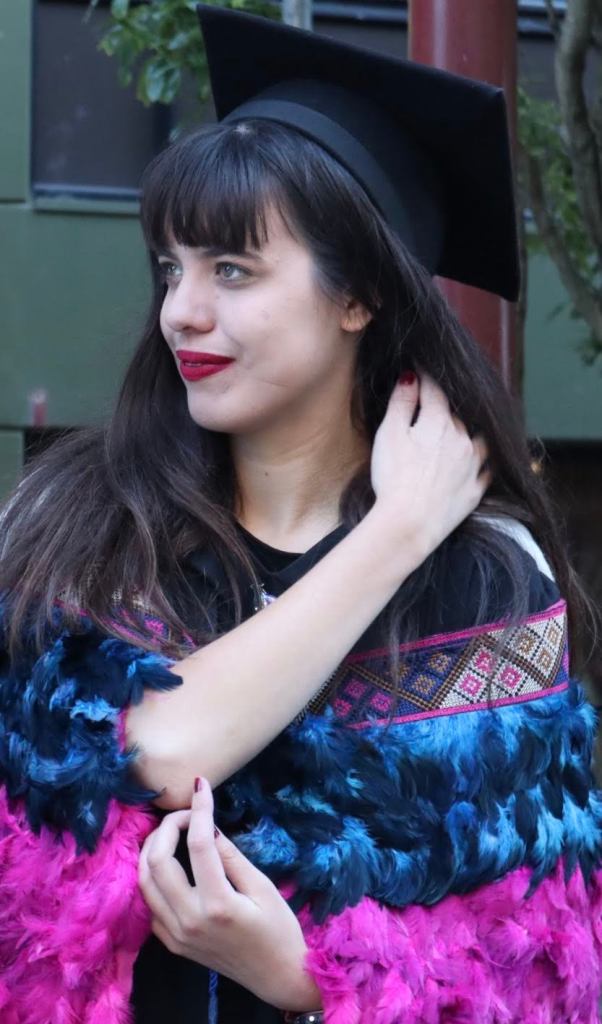
Nicole Titihuia Hawkins (Ngāti Kahungunu ki te Wairoa, Ngāti Pāhauwera) is a novice writer, avid home-baker and proud aunt. She lives in Pōneke and works at a local high school teaching English, Social Studies and tikanga Māori. Nicole is also involved in pastoral care and facilitates Kapa Haka. Nicole has collaborated with other writers to host ‘Coffee with Brownies’, which are open mic events for people of colour to share their work in safe spaces. She co-hosted ‘Rhyme Time’, a regional youth event, with Poetry in Motion, to encourage a diverse range of youth to perform their incredible poetry. Nicole has work published by Overland, Capital Magazine, Blackmail Press and The Spinoff Ātea and credits her courageous students with inspiring her to write.
Khadro Mohamed is a 20-something year old poet residing on the shores of Te Whanganui-a-Tara. She’s a tea lover, a photo enthusiast, an occasional poet… and that’s pretty much it. You can find bits of her writing floating around Newtown in Food Court Books and online.
Rachel O’Neill is a Pākehā storyteller who was raised in the Waikato and currently lives and works in Te Whanganui-a-Tara/Kāpiti Coast. Rachel enjoys collaborating with writers, artists and filmmakers on publications, exhibitions and works for screen, and they are a founding member of the four-artist collaborative group, All the Cunning Stunts. A graduate of Elam School of Fine Arts (BA/BFA) and the International Institute of Modern Letters (MA), Rachel was selected for the 2017 Aotearoa Short Film Lab, received a 2018 SEED Grant (NZWG/NZFC) for feature film development, and held a 2019 Emerging Writers Residency at the Michael King Writers Centre. Their debut book, One Human in Height (Hue & Cry Press) was published in 2013. As a queer non-binary storyteller Rachel strives to represent the longing for connection and the humour and strangeness that characterise human experience.


 NZ Poetry Shelf