Category Archives: NZ poems

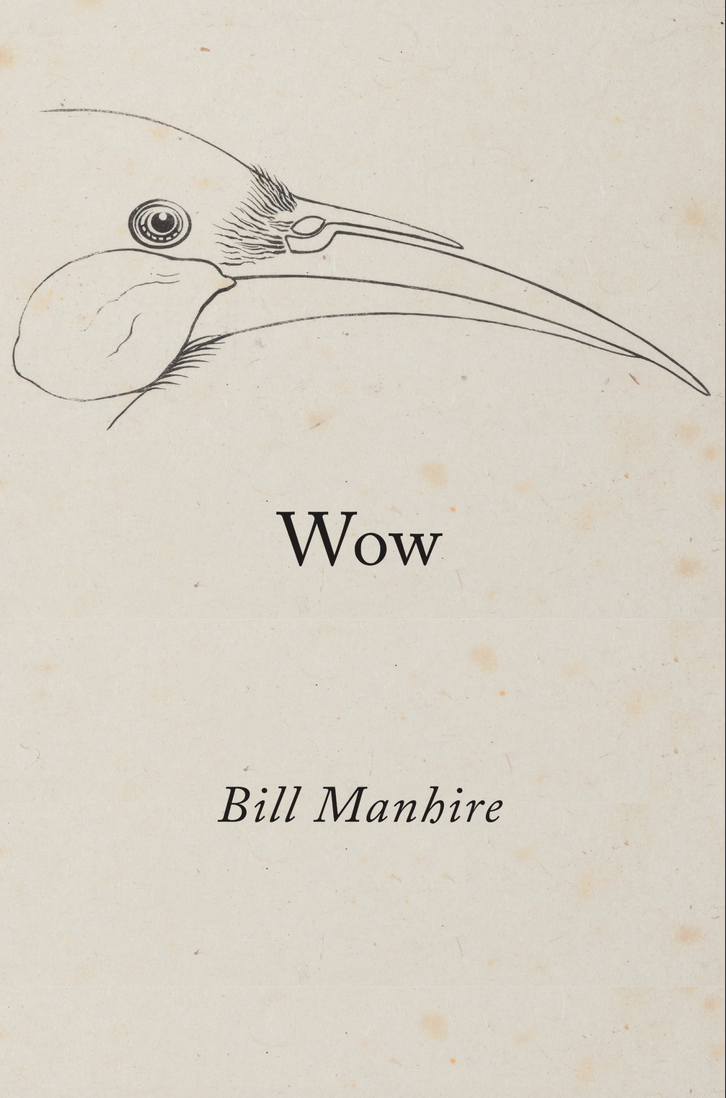
Poetry Shelf celebrates Ockham NZ Book Award Poetry Longlist: A Bill Manhire poem and audio link

Someone was Burning the Forest

We did not know why the child was crying,
nor why he stood bare-shouldered at the window.
How had he come by those skimpy feathers?
The mother had fallen from the tower
a moment after she began to answer. I looked around
and there were many towers, also other bodies.
Now I was on the ground myself. I could hear
the child but no longer see him. Perhaps
he was still aloft. The towers were dissolving
yet surely there were trees. It was dark now
but I knew there must be many bodies.
I would need to climb to see where we might go.

Bill Manhire, Wow Victoria University Press, 2020

Have a listen: For the first Stress Test of 2021, Rough Trade Books welcomed special guest Bill Manhire to join them for music and poems.

Bill Manhire’s most recent books include Some Things to Place in a Coffin (2017), Tell Me My Name (with Hannah Griffin and Norman Meehan, 2017) and The Stories of Bill Manhire (2015). He was New Zealand’s inaugural poet laureate, and founded and until recently directed the International Institute of Modern Letters at Victoria University of Wellington. He has edited major anthologies, including, with Marion McLeod, the now classic Some Other Country: New Zealand’s Best Short Stories (1984).

Victoria University Press page

Poetry Shelf review

ANZL review (Anna Jackson)

Chris Tse reviews Wow on Nine to Noon, Radio NZ National

‘Huia’ Poem of the Week in the Guardian

Bill Wows the crowd at WORD

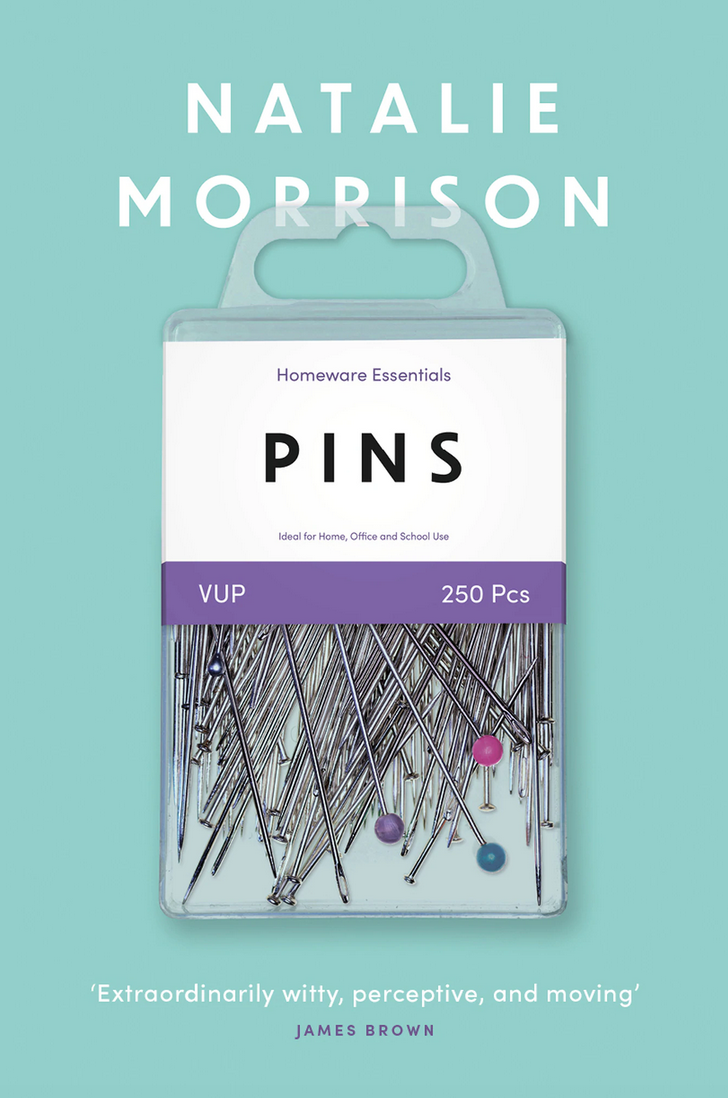
Poetry Shelf celebrates the Ockham NZ Book Awards Poetry Longlist: Natalie Morrison reads from Pins

Natalie Morrison reads from Pins, Victoria University Press, 2020

Natalie Morrison has an MA in Creative Writing from the International Institute of Modern Letters, where she received the Biggs Family Prize for Poetry in 2016. She lives and works in Wellington. Pins is her first book and is on the Ockham New Zealand Book Awards Poetry Category longlist. 

Victoria University Press page

Poetry Shelf launch of Pins

Poetry Shelf interviews Natalie

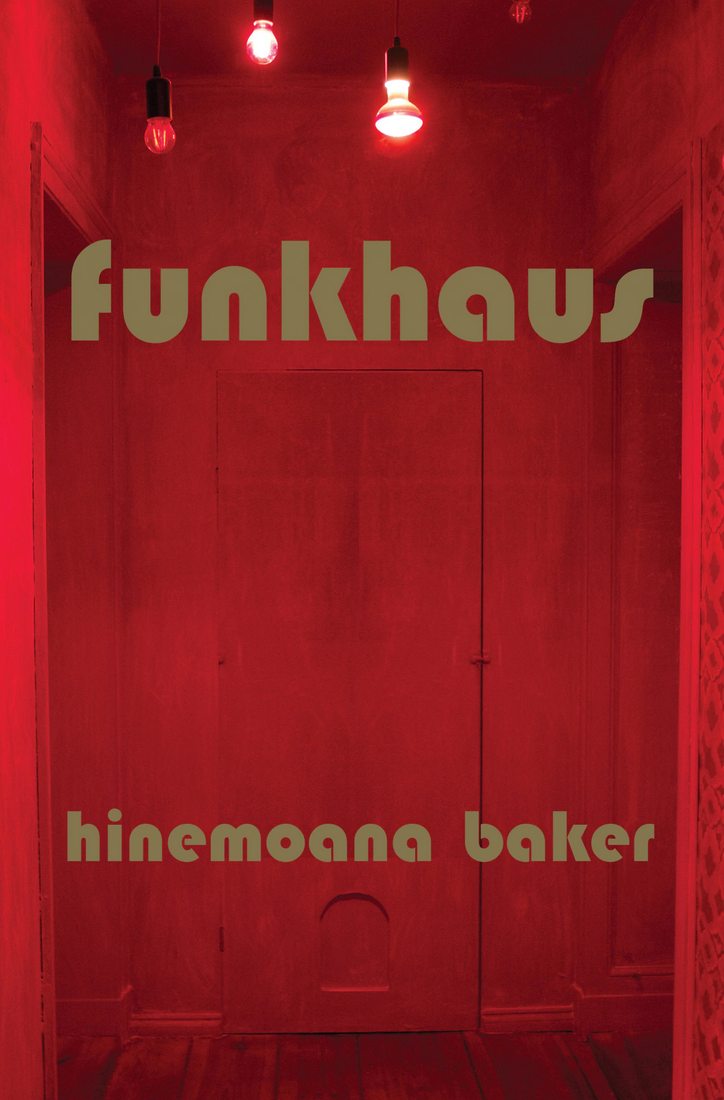
Poetry Shelf review: Hinemoana Baker’s funkhaus

Hinemoana Baker funkhaus Victoria University Press, 2020

A woman carries in her arms

a heavy rectangle of sky –

roofs and treetops.

She places it in the back seat

of her car to calm down.

You and I sit

like separate circles

of a Venn diagram

unaware of the fabled

tasting zones of the tongue.

from ‘flomarkt’

Hinemoana Baker’s new poetry collection is peppery, salty, sweet. The poems form a bridge between two homes, Aotearoa and Berlin, and the overall effect is a book you want to keep reading. Again and again and again. I have been reading funkhaus since it arrived in my postbox May last year. Some books are like this. The German word ‘funken’, we learn in the blurb, is ‘to send a radio signal’. I love the idea that poetry becomes a form of broadcast. I love being an antenna, picking up the static, the silences, the connections across eight months.

funkhaus is on the Poetry category longlist of the Ockham New Zealand Book Awards. The shortlist will be announced on March 3rd.

Hinemoana has always achieved a stop-you-in-your-tracks fluency, maybe because she is a musician and her ear is attentive to the sound of the line, regardless of the subject matter, the personal admissions, the political acumen, the light along with the biting dark. I am listening to funkhaus and admiring the pared back melodies, both the acoustic and the electric.

Pepper blacks the pan so never

Shake it near me, wait

For the flagrant animation

In my bed base

In mountain situations

Sleep swaddled, wake ecstatic

from ‘Narcissist advice column’

What has gripped me more than anything – and maybe this particularly matters in these Covid times – is the way most poems are peopled. Yes there is a mesmerising view out the window where the birds are flying in formation. Yes there is a new vacuum cleaner. Yes there is the question of whether extinct species might be revived. But touch the beating pulse of this collection and you will feel people. Unlike the camera that gravitates towards the people-emptied landscape, Hinemoana draws people in close. Think loved ones, friends, family, passersby. Sometimes a poem is infused in the surreal and you imbibe a scene that tilts and sticks. This is is the start of ‘friday night’, a little beauty of a poem:

Way down south

in the south

of the  south island of himself

over greyscale trees.

Eagles and meteorites are not.

On other occasions the poem is grounded in the personal. There is always the gap, the quavery silence, the unnamed pronouns (I, we, you, he, she, they), the spiky detail that fascinates, the heart of experiencing, of imagining, of replaying. I especially love ‘aunties’, a poem Hinemoana read for Poetry Shelf (2019). This glorious tour de force of a poem makes people (aunties) utterly, movingly, wittily, wincingly, gorgeously present.

We had a marching auntie and an eyelash-curler aunty, a

headscarves one, a lavender talcum powder aunty and a satin

running shorts one. We had an aunty who was laid out on the

sheepskin rug by that uncle when she was six, and seven and

eight. These might be the same aunties. We had an aunty who

died on the same day as her own sister and turned into that

white horse on the green hill. A drawn-on-eyebrows aunty who

said I don’t care how good they are at yodelling they’re giving

country music a bad name those girls.

Ah but I also love ‘mother’, ‘waitangi day’, ‘if i had to sing’, waiata tangi’. Find the book. Find your own clearings.

Hinemoana crafts poetry as flourishing movement. In part as melodic flow but also in the way poems come into being in surprising ways. The unexpected paths and sideturns. The underlays and overlays. The semantic chords and the visual alerts. In ‘fox’, an animal is spotted outside in the snow (‘The most powerful things / are the ones we simply come across’). The poem entrances as you move from this sweet epiphany to loss of appetite, your own child dying, to the skin as kidney to:

Climbing into the air outside your door

a tufty plant grows from a cobblestone.

And there –

there is the sandwich board with pictures of fruit

and words you don’t understand

which make nothing happen.

Another sublime example is ‘flohmarkt’, the poem I quoted from at the start of the review. Here we move from the striking opening image of woman and sky to tongue myths to dog and bike owners, and then to chairs. This is how poetry can move. It is gap and it is breathtakingly resonant. Here is the end of the poem:

I live with a surplus

of chairs, mostly empty.

My one, with its smooth

wooden arms and your one

if you were here.

The kind of chair you never want

to get up out of

the kind of chair for which

prepositions were invented.

Maybe this sounds old-fashioned but for me Hinemoana’s poetry gets down to the essence of things. There is an addictive economy that opens out into lush and surprising fields of reading. Like a yin and yang effect. Like poetry as a basket of essential oils that you flick on your wrist and carry all day. That work for each of us differently. That sustain and delight, that get you moving and thinking. That change as you wear them over the course of eight months. Poetry as essential. Poetry as skin tingling essential. It feels essential to Hinemona – to be writing poems, to be travelling across the poetry bridge, that arc of static and connection between Berlin home and Aotearoa home, to be grounded in her friends and whānau, her writing support crew. She acknowledges the vital support of those who have offered aroha and wisdom, publication and recording opportunities, reviews, translations, festival invitations in her endnotes. I offer a small thank you to Hinemoana – each book is a gift and we are all the better for residing within your latest one.

HINEMOANA BAKER is a poet, musician and creative writing teacher. She traces her ancestry from Ngāti Raukawa, Ngāti Toa Rangatira, Te Āti Awa and Ngāi Tahu, as well as from England and Germany (Oberammergau in Bayern). She is the author of the poetry collections Funkhaus (VUP, 2020), waha | mouth (VUP, 2014), kōiwi kōiwi (VUP, 2010), and mātuhi | needle (co-published in 2004 by Victoria University Press and Perceval Press).

Hinemoana has edited several online and print anthologies and released several albums of original music and more experimental sound art. She works in English, Māori and more recently German, the latter in collaboration with German poet and sound performer Ulrike Almut Sandig. She is currently living in Berlin, where she was 2016 Creative New Zealand Berlin Writer in Residence, and completing a PhD at Potsdam University.

Victoria University Press page

The Spin Off review (Elizabeth Heritage)

Pantograph Punch review (Arihia Latham)

NZLA review (Kiri Piahana-Wong)

Poetry Shelf celebrates Ockham NZ Book Award poetry long list: Rhian Gallagher reads from Far-Flung

Rhian Gallagher reads from Far-Flung (Auckland University Press, 2020)

Rhian Gallagher‘s first poetry book Salt Water Creek (Enitharmon Press, 2003) was shortlisted for the Forward Prize for First Collection. In 2007 Gallagher won a Canterbury History Foundation Award, which led to the publication of her book Feeling for Daylight: The Photographs of Jack Adamson (South Canterbury Museum, 2010). She also received the 2008 Janet Frame Literary Trust Award. Gallagher’s Shift (AUP, 2011) won the 2012 New Zealand Post Book Award for Poetry. In 2018, she held the University of Otago Robert Burns Fellowship.

Auckland University Press page

Poetry Shelf review of Far-Flung

Poetry Shelf celebrates the Ockham NZ Book Awards poetry longlist: Chris Holdaway’s poem for Jackson Nieuwland

Greetings cards for Jackson Nieuwland

I light a candle and vines of blood

Run down in place of wax as if

The experience of transubstantiation

Were being drawn towards the grave

Centre of the earth by the weight of

Your own iron content. Ever found

Yourself on a throne whose arms

And legs are wired to crosses like

A marionette? You’re no puppet and

It’s all the universe in a pocketwatch

I’m afraid. My heart on fire under

A bell jar and that’s just how it’ll stay.

Getting into keeping fish as a hobby

Hoping to use my own body as a tank

Until so filled with water I gain imm-

Unity to drowning and companionship

All at once. The deeper I go the more I

Feel as though falling from great heights.

My open palm broad enough to form

Plains on which tornadoes arise like

Spring clockwork before the lines turn

To river deltas so blue I can’t imagine

Ever having had veins in my hand.

Amongst the sunflowers the scarecrow

Is king. I have the first successful mono

-culture fields of carnivorous plants

That eat every new seed right as you

Sow it. Knock off and pitch a ladder

Against the clouds to paint them like

A weatherboard house or chip away at

An ice sculpture. Lay down on the Gulf

Stream like Michelangelo on scaffolding

Painting the dogmatic ceiling. As if

The compass woven into paper maps

Could spring to life like a computer.

I woke inside a lightbulb holding

A candle slowly consuming all the air

Like the sweetest dream of being a star

Calculating orbits in the different twists

Of screw and bayonet fittings the kind

Of knowledge that can never survive

A trip to the store. An alley so dark I

Instantly become an orphan and have

The shadow of a wolf in passing head

-lights. Fallen leaves and playing cards

And receipts curl into being on the wind

And take a hike into rolling hills.

Chris Holdayway

Chris Holdaway’s Compound Press was established in 2013. It publishes poetry, other writings along with Minarets, a journal of poetry and poetics. The books are printed and bound in their Auckland workshop. Jackson Niuewland’s I am a human being (2020) is longlisted in the Poetry Category of the Ockham New Zealand Book Awards. Last year they also published A bathful of kawakawa and hot water, a selection of writings by Hana Pera Aoake.

Poetry Shelf Monday poem: Tim Upperton’s ‘Television’

Television

Inside the television the tiny people

are moving and talking. Some of them

are falling in love. Some of them are dying

in exciting ways. The cartoon people

who fall off a cliff or are hit by a train

get up again, scowling but unharmed.

There are also tiny animals.

They live in documentaries.

They hunt and fall in love and die.

They do not get up again.

At night the television is turned off

and all the people and all the animals

lie down and go to sleep.

The people sleep in tiny houses.

The animals sleep in and under tiny trees.

It is crowded inside the television,

but they are all used to it

and they make do, they settle down

under their tiny night sky,

with its tiny stars.

Who would not wish

to join them there?

A young woman with wet hair

climbs out of the television

into a living room,

her long hair and sodden dress

are dripping water on the floor,

and that is a horror movie.

But more and more of us

are going into the television,

and the young woman will soon

be alone in the world.

She wanders from empty house

to empty house, testing the abandoned

appliances. She picks up the remote

and switches the television on,

but then she is bored

and switches it off.

There is nothing to be afraid of

inside the television. It’s quite all right.

Good night, we tiny people

say to each other.

Good night, the tiny animals

growl and squeak and purr.

The television is dark now.

Good night.

Tim Upperton (an earlier version of this poe appeared in takahē 98)

Tim Upperton lives in Palmerston North. His second poetry collection, The Night We Ate The Baby, was an Ockham New Zealand Book Awards finalist in 2016, and he won the Caselberg International Poetry Prize in 2012, 2013 and 2020. His poems have been published in many magazines including Agni, Poetry, Shenandoah, Sport, Landfall and Takahē, and are anthologised in The Best of Best New Zealand Poems (2011), Villanelles (2012), Essential New Zealand Poems (2014), and Obsession: Sestinas in the Twenty-First Century (2014). His poem “The truth about Palmerston North” was recently recorded by Sam Neill here.

Poetry Shelf review: Karlo Mila’s Goddess Muscle

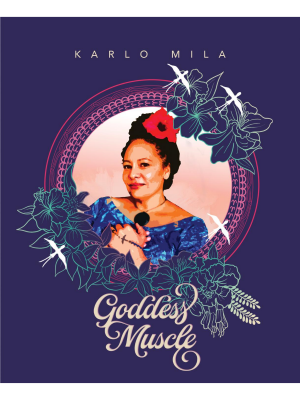
Karlo Mila, Goddess Muscle, Huia Publishers, 2020


Paintbrushes in our hands

drafting our dreams,

remembering the chants,

writing the poems,

relearning the language

composing the chants,

cooking the dinners,

carrying the children,

paying the bills,

fighting the fight,

with our tax-paying,

car-driving hands.


A collective of artists

narrating a story

we can bear to live in.

Creating an image

of ourselves

we can love

to look at:


from ‘Our Generation : ‘Āina Aloha’


Karlo Mila’s new poetry book is the most gorgeously produced collection I have held in ages. It feels good. It looks good. It is a pleasing shape. It has abandoned the reigning tradition of black ink upon white page in favour of a wider colour palette for both font and background. Sometimes I have to peer in close to read as though the physical act of reading is as important as cerebral connections and heart boosts. It continues to matter to me as addicted poetry reader at the moment: the effects a poetry collection has upon you as you read and as you move away. How satisfying when poetry uplifts heart and stimulates brain, soothes tired bodies and sets us swaying.

Several artists contributed work for the book and, as the acknowledgement page underlines, these vibrant works are personal: Delicia Samero’s portraits of Karlo, a collaborative mural Aloha ‘Āina and Naomi Maraea’s depiction of Hikule‘o.

I adored the 2021 poetry longlist for the Ockham New Zealand Book Awards having been so affected by the eight books I had read and reviewed. And now I can add a ninth sublime read: Karlo’s Goddess Muscle. The collection ignites every reading muscle: from heart to mind to breathing to memory to pulse. Karlo engages with light and dark, fragility and strength, relationships, family, sisterhoods, writing mentors, life mentors, political issues. Her words meet the line, create the lines like a movement of water, lap lapping in your ear, across your skin, with ebb and tide, the words in debt to water fluency as they flow gentle and honeyed, or hit sands, rocks, obstacles. Such sweet flowing lyrical currents. Always audible, always mesmerising. This is poetic craft at its most agile.

Dark, lovely cowrie-shell eyes,

who’d expect the lies,

unless you flipped that fragile shell over

to the serrated crack

of the backside,

where the sea slugs reside,

that weak pink flesh on the inside.

Everyone’s got a living surprise,

the part that they hide.


from ‘The Tale of Hine and Sinilau’

The book begins with a gathering, a gathering of lineage, ancestors, relations. This becomes place, somewhere to write from and to and because of. The gathering involves balance, re-orientation. The gathering (both noun and verb) becomes writing and this is what writing can do.

It is their

soft singing,

cellular love songs,

the chanting lyric of bloodlines,

accompanying you

all the way

through the lonely.


from ‘Your People Will Gather Around You: Love After Love’

The ocean is paramount, not just in the water fluency of the lines, but in the recurring motifs and the personal attachment. “Oceania’ is an ocean homage, image, self-defining: ‘I call on the memory of water’.

Karlo acknowledges writers and loved ones who have sustained her, who are the essential oils of writing. She lights a candle for Teresia Teaiwa in ‘For Teresia Teaiwa’. I am moved to tears as I read this loving tribute to poet who affected and inspired so many others.

I will light this candle.

The spendy kind,

cradled in glass,

that burns for days

smelling of coconut and vanilla

and I will say prayers for you

even though my prayers

are like bad poems

and are often wordless.


I hope,

at the least,

you will feel the

long-burning

flame of my intent,

warming the space

between us.

The tribute poem to JC Sturm cuts to the bone of reading, sidestepping Baxter and his sickening offences, Karlo taking a road trip to Jerusalem with her own broken heart and her mother, moving under his over-present lines to Jacquie. How I love this poem, this mihi: ‘But moving under all that surface skimming / was you.’ The poem to Hone Tuwhare is pure delight. The sonic torque (can I say that, think sounds spinning on word axes) is sensational.

You boilermaker,

fabricating lyrical weld

from blast furnace

of sun,

slowed,

stopped and

set

on white horizon

of page.


from ‘A Conversation with Hone Tuwhare’

Karlo’s love poems have always gripped me and I favoured them in Wild Honey’s ‘Love’ section. This collection faces broken love, longings, touch, loneliness, attachment with shifting intensities, hues, admissions. There is someone at the end of the poem, an addressee, a beloved, a lover lost, a lover found, and Karlo never forgets that. The poems are layered, intimate, deeply personal. I am still held in their grip.

Goddess Muscle is crafted like a symphony, an experience of shifting life seasons and subject matter, so as you read the effects are wide reaching. Karlo faces significant political issues: climate change, the Commonwealth, colonialism, racism, Ihumātao, ‘the daily politics of being a woman, partner and mother’. She faces these global and individual challenges without flinching. The resulting poems are essential reading, never losing touch with song and heart, always insisting in poetic form how we can do better. How we can be a better world, recharge humanity. I would like to see these poems read in secondary school.  You can read ‘Moemoeā: (composed for poets for Ihumātao)’ here.

Goddess Muscle is a gift. I can barely account for how it will stretch your reading muscles, your beating heart, your enquiring mind, your compassion, your music cravings, your empathy. Karlo has extended her own poetic muscle and offered poetry that is wisdom, strength, refreshed humaneness. Thank you. Thank you.

If we were truly to reorient

to life as relatives,

commonwealth

would mean more

than what we might cling to

in the face of a dangerous

and uncertain future.


Let us not

use the word ‘commonwealth’

to try and insulate fate

with the soft fur of fine-feathered friends.


No,

let us spread our wings

to a much wider vision than that.

It may be the end of the world as we know it

but let us not fear

the remaking of another one.


To the young people I say,

there may be no jobs

but there is plenty of work to be done.


So let us harness our collective wisdoms:

divers, different and divergent.

Let us create an atmosphere

of kindness and love

for even the air we breathe,

fresh water, trees, people, ocean.

Let us create a dream house,

a great place to raise a family.


For therein lies the fate

of an extraordinary family of relatives.


Where what we have in common

is all of us.


from ‘Poem for the Commonwealth, 2018’

Dr Karlo Mila is a New Zealand-born poet of Tongan and Pākehā descent with ancestral connections to Samoa. She is currently Programme Director of Mana Moana, Leadership New Zealand. This leadership programme is based on her postdoctoral research on harnessing indigenous language and ancestral knowledge from the Pacific to use in contemporary leadership contexts. Karlo received an MNZM in 2019 for services to the Pacific community and as a poet, received a Creative New Zealand Contemporary Pacific Artist Award in 2016, and was selected for a Creative New Zealand Fulbright Pacific Writer’s Residency in Hawaii in 2015.

Goddess Muscle is Karlo’s third book of poetry and has been longlisted for the Ockham New Zealand Book Awards 2021. Her first, Dream Fish Floating, won NZSA Jessie Mackay Best First Book of Poetry Award at the Montana New Zealand Book Awards in 2006. In 2008, Karlo collaborated with German-born artist Delicia Sampero to produce A Well Written Body.

Huia Publishers author page

Poetry Shelf – poets on their own poems: Karlo Mila reads ‘For Tamir Rice with Love from Aotearoa’

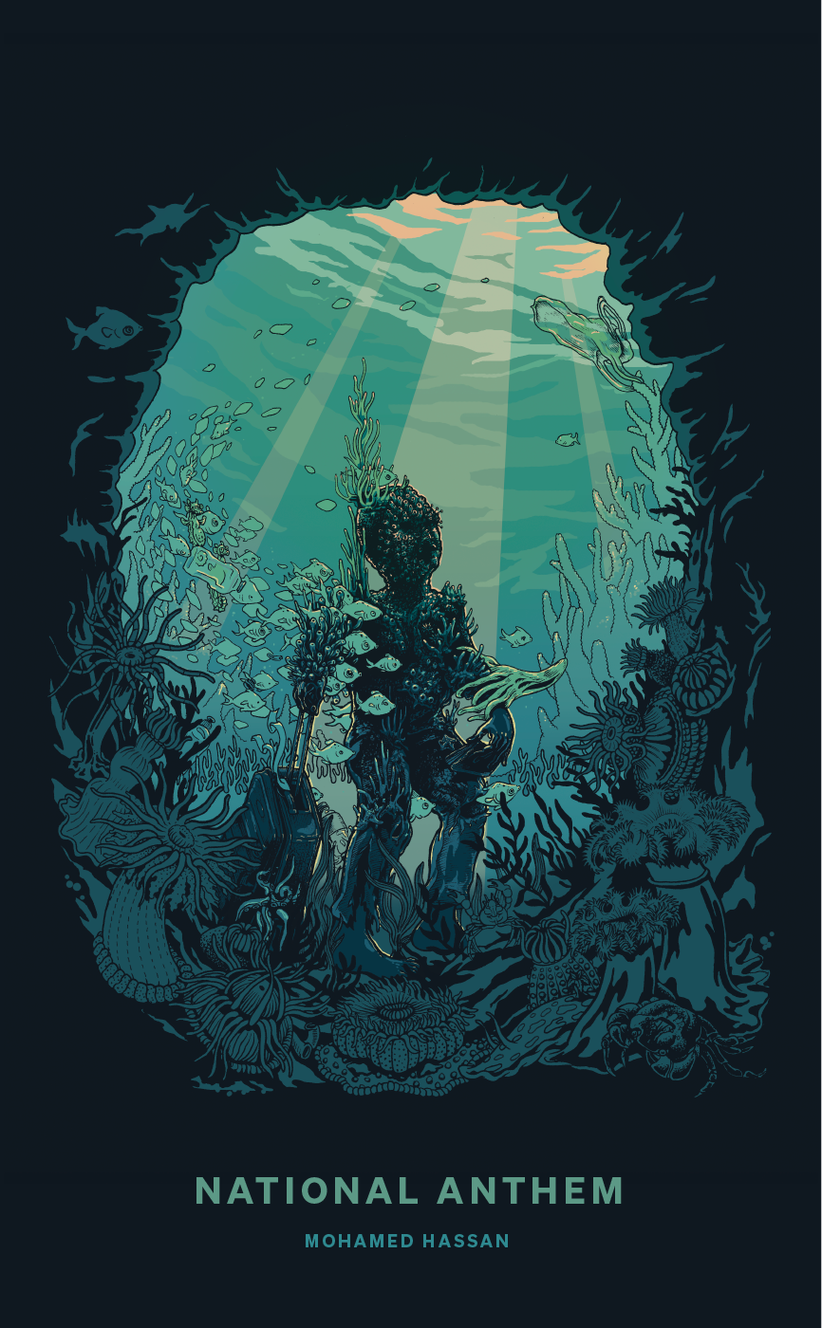
Poetry Shelf celebrates the Ockham NZ Book Awards poetry longlist: Mohamed Hassan reads from National Anthem

Mohamed Hassan, National Anthem, Dead Bird Books, 2020

Mohamed reads a few poems from National Anthem

Mohamed Hassan is an award-winning journalist and writer who has lived in Egypt, Aotearoa and Turkey. He was the winner of the 2015 NZ National Poetry Slam, a TEDx fellow and recipient of the Gold Trophy at the 2017 New York Radio Awards. His poetry has been watched and shared widely online and taught in schools internationally. His collection, National Anthem, is longlisted for the Ockham New Zealand Book Awards, poetry category.

Dead Bird Books page

Ockham NZ Book Award page

Poetry Shelf review

Poetry Shelf Monday Poem: Sam Duckor-Jones’s ‘The Embryo, Repeated’

The Embryo, Repeated

I know that I look the same / but I have manifested a lion

ripe & pumping giddily

I know that I look the same / but I have manifested a lion

present & unasked & ready

I know that I look the same / but I have manifested a lion    

precise as mathematics

I know that I look the same / but I have manifested a lion

shoulders up against the wind

I know that I look the same / but I have manifested a lion

peace be upon the lion

I know that I look the same / but I have manifested a lion

& everyone always says how glamorous

I know that I look the same / but I have manifested a lion

as a prize

I know that I look the same / but I have manifested a lion

& how is this manifestation distinguished from all the other animals?

I know that I look the same / but I have manifested a lion

I said how is this lion distinguished from all the other animals?

I know that I look the same / but I have manifested a lion

a toll, a shimmer, a serious cloud, valuable, brief

I know that I look the same / but I have manifested a lion

behold, my lion

I know that I look the same / but I have manifested a lion

l’chayim     l’chayim

I know that I look the same / but I have manifested a lion

it is beloved

I know that I look the same / but I have manifested a lion

in the kitchen

I know that I look the same / but I have manifested a lion

ah thunder!

I know that I look the same / but I have manifested a lion

& the urge for daylight is real

I know that I look the same / but I have manifested a lion

& a stag rutting in a meadow

I know that I look the same / but I have manifested a lion

a rare nocturnal lion

I know that I look the same / but I have manifested a lion

ta for noting how this lion is distinguished from the other animals

I have popped it into a segmented tray

I have left it to set at optimal temp

*

& bloody etcetera!

gawd

I owe Cath a letter

she wrote in April & now

it’s almost September

I should phone Pam too

phone Pam write to Cath

tell them I’m moving

to latch back onto the hopeless dresses of

Sde Boker with my goy ex, or

to Whanganui, maybe

What is the time?

Sam Duckor-Jones

Sam is an artist and writer from Wellington. His first poetry collection People From The Pit Stand Up was published in 2018 (VUP) and his second Party Legend will be published in June 2021 (VUP). He has exhibited widely and is represented by Bowen Galleries. In 2020 he bought a church near Greymouth that he is turning into a sculpture.