Category Archives: NZ author

E Wen Wong’s ‘Whakatū Wāhine’: A poem, a card and we hold hands


IMG_0567_.jpg


‘Whakatū Wāhine’ by E Wen Wong


E Wen Wong is a Year 11 Student at Burnside High School in Christchurch. E Wen began writing poetry when she was ten years old and was one of the very first fans of Poetry Box. Now, six years later, her poems have made their way into Rattle, Starling and Meniscus journals, among others.

E Wen was an early fan of my blog when I was feeling my way as a blogger. I got to watch her poems develop over the years as she tried my challenges and we exchanged letters. I recognised a passionate writer who was willing to try new things. I met her when she performed in my Hot Spot Poetry Tour in Christchurch and I felt a little sad when she moved on to secondary school (Poetry Box is for Y1 – Y8)! How delighted I was when I discovered her recent poem at Starling, an online literary magazine dedicated to writers under 25.  Last week E Wen sent me a gorgeous card and this ‘Whakatū Wāhine’ to celebrate Suffragette 125. I felt so moved that in this celebratory year we have reached out, in the media and personally,  to acknowledge the women, young and old, who have inspired us, backed us, engaged with and challenged us. Thank you E Wen.


The next word poetry exhibition video


Screen Shot 2018-10-04 at 1.19.40 PM.png

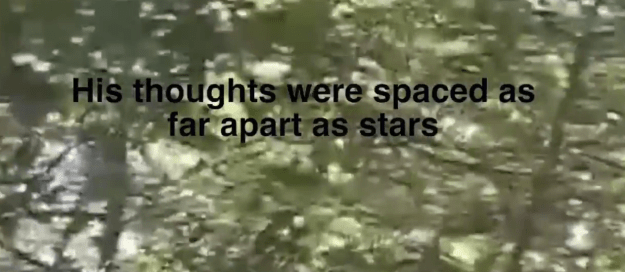
a Joan Fleming line


Check out this glorious video made for The next word poetry exhibition at the National Library, curated by Hannah Mettner and Brendan O’Brien. Video by Hana Aoake.

View here. It’s mesmerising!


Poetry Shelf Audio Poem: Simone Kaho’s ‘UFO’


185870_192461794120533_5708862_n.jpg


Simone Kaho is a graduate of the International Institute of Modern Letters (IIML) in Wellington. She’s noted for her powerful stage presence and is an MC at Poetry Live, the 38-year-old weekly open mic event in Auckland. Simone’s first book, Lucky Punch, was launched in November 2016 to a warm reception from Metro, The Herald, Pantograph Punch and Landfall.


A gorgeous trio of poetry reviews by Anahera Gildea at Landfall Review Online

‘He waka eke noa: we’re all in this together’


Go here to read 3 divinely crafted reviews of new poetry collections from

Tayi Tibble, Sam Duckor-Jones and Jan Fitzgerald.  Best review treat in an age.


A taste of Sam’s review:

If the waka analogy holds, then Duckor-Jones’s waka is his tribe, his allied kinship group, and in this case his golems. ‘Bloodwork’ is easily the most arresting piece. It’s a sequence of 20 poems that speak to the ‘making of a man’. Throughout his work, the poet evokes tropes of masculinity like lovers: dandies, brutes, pools boys, dudes, blokes, Jeff and more. These crowd his pages, but it’s the hoard of clay men that affix in my mind, along with the keen instructions on creation:

to wield the tools

to make an eight-foot man

to make him look like he’d sweat


Poetry Shelf Monday Poem: Lynn Jenner’s ‘On joy and other obligations’


On joy and other obligations [1]


If you open a book that has been closed for forty-four years, if dust floats in the sunlight, if the book sold in 1969 for $1.60, and you buy it second-hand for $10, that might be your good fortune. If there is a tiny segmented weevil in the dusty space between the binding and the cover, if the worm lifts its head, if you raise your hand to kill the worm but pause instead, that might also be your good fortune. There is no such thing as a life that means nothing, the worm says in its airy voice.

I see that I disgust you, the worm says. Do what you must. But in the blood, the blood, the stream, the river, I am you and you are also me. Every life contains the memory of countless other lives; lives we knew, deaths we mourn and those behind the door. Perhaps, after all, a cosmos binds and holds us all together, whatever death may report?

Bend your neck, pause long enough to say your own name, and raise your head again. In the presence of the river, of pieces of bone, fish hooks and the skeletons of tiny glassy fish, this movement is required of you. Also, near towns where your ancestors died, take off your sandals so that mud and blood and salt water will soak your skin.

Light will slowly fade as winter comes. Clouds will cover the moon. Winter of earth, winter of sky, winter of hope, winter of loss, winter of exile, winter of silence, winter of anger. Winter of such faint light, winter of waiting, winter of longing. In these short days, people will travel together for safety but will be beaten down by soldiers and armies of words. There is no forgiveness. Rain never stops, rivers run to flood, run underground and swell the sea. To endure is the thing.

Ah, but joy has a new shoot. In the bush, cabbage trees flower and a breeze blows their sweet pink perfume along your path. Someone of ninety makes marmalade, there is a yellow bowl of persimmons and three blackbirds on the table outside. It doesn’t always come back to you, Rilke says, Brasch says, the worm says. Leaves of giant flax rattle and clack. Green is dark and wild. Joy is a single tūī, two fantails, a cloud like a child’s drawing. On your last day, you may see a vermillion sky.

Speak like Auden of human kind in all its endeavours, of all its want and weakness, speak when it seems there may be a new war and everything is advertising and resignation. Pain and love through dark glasses, that is your business. Or, like Blake, go inside the vault of your head to where the visions start. Walk with the dead, hold their hands, dance until you cannot tell them from yourself. Record an image, a young woman stepping down from a bus. Can you call her back? To name, to try, to do, is the thing.


©Lynn Jenner


[1] This poem was inspired by and borrows significantly from poems in Charles Brasch’s collection Not Far Off, Caxton Press (1969), especially ‘A Closed Book’. ‘O lucky man’ and ‘Homage to Rilke’ from Riemke Ensing’s 2009 poetry collection O Lucky Man, poems for Charles Brasch, Otakou Press (2009) and Ruth Dallas’s poem ‘Last Letter, for Charles Brasch, 1909-1973’, in Ruth Dallas Collected Poems, Otago University press (1987), have also left their mark.

‘On joy and other obligations’ is from PEAT, Lynn’s forthcoming book.


Lynn Jenner’s new book Peat, a collection of essays, prose poems and glossaries about the poet Charles Brasch and the Kāpiti Expressway, will be published by Otago University Press in 2019. Lynn’s first book Dear Sweet Harry (AUP 2010) won the NZSA Jessie MacKay prize for the best first book of poetry. Her second book, Lost and Gone Away (AUP 2015), was a finalist in the non-fiction section of the Ockham New Zealand Book Awards in 2016. Lynn has a PhD from the International Institute of Modern Letters. She teaches creative writing and mentors writers. Lynn’s author website


Launch: Anne Kennedy’s The Ice Shelf


42828337_10155586587717301_6125235521489731584_n.jpg

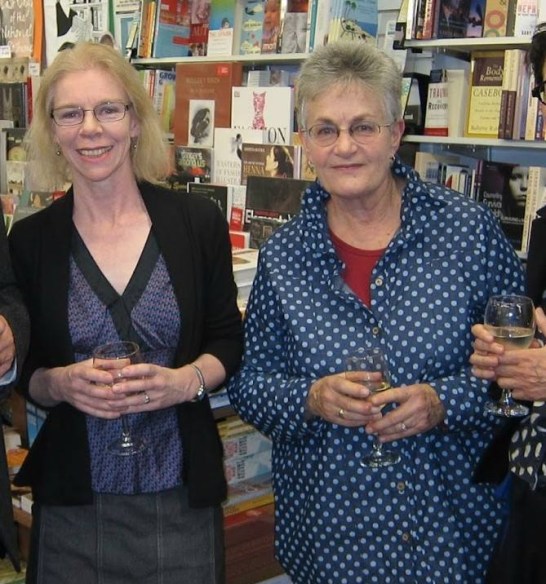
Anne Kennedy with Carole Beu

Tuesday October 16th, 6 pm – 7.30pm
The Women’s Bookshop, 105 Ponsonby Road, Auckland
Please join us for the launch of Anne Kennedy’s novel The Ice Shelf (Victoria University Press) – a satirical look at love, life, writing and winning awards. Anne, an award winning poet, has just released her second novel – hear her read from and talk about the ideas behind this amusing story. All welcome.
see here

Poetry Shelf audio spot: Sugar Magnolia Wilson’s ‘Betty as a Boy’

image1.jpeg


Sugar Magnolia Wilson is from the Far North of New Zealand and has been living in Wellington for six years. She has recently had work published in Turbine | Kapohau and Landfall. She co-edits Sweet Mammalian, a journal of New Zealand poetry, along with Hannah Mettner and Morgan Bach. Her first full-length collection of poetry, Because a woman’s heart is like a needle at the bottom of the ocean, will be published by AUP in March 2019.


Poetry Shelf in conversation with Alice Miller


IMG_4840.jpg


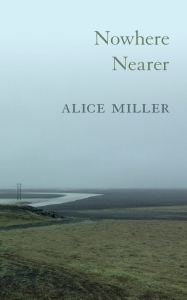
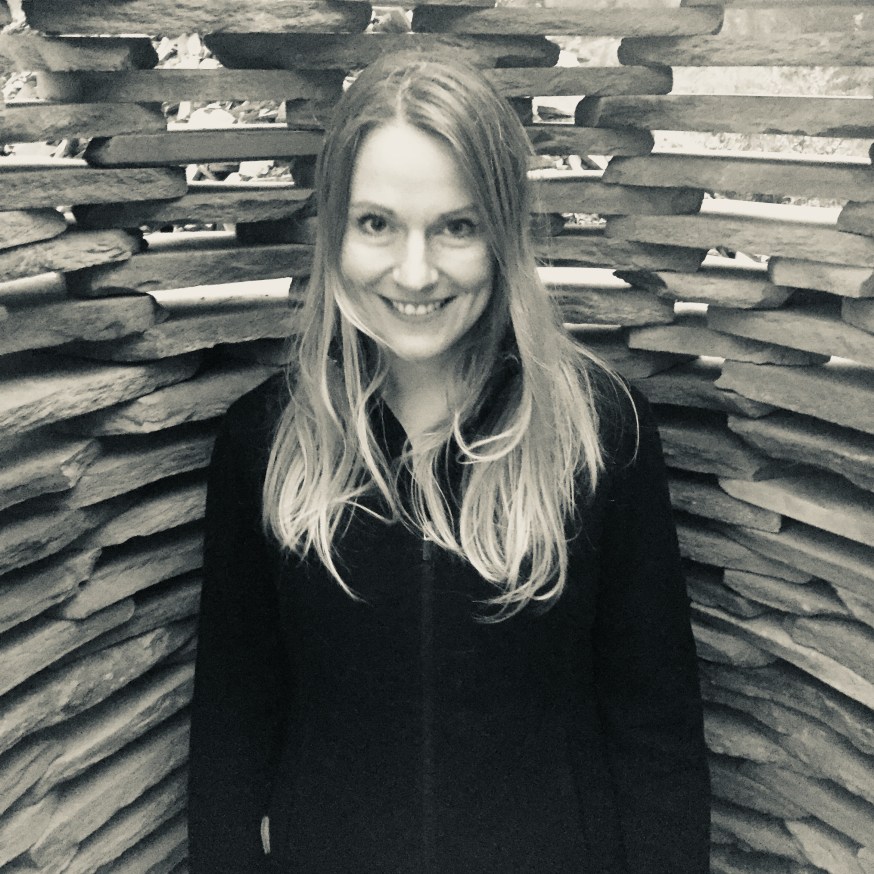
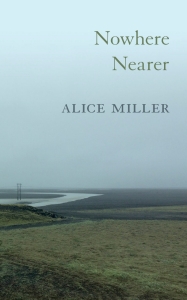
Alice Miller’s debut collection, The Limits was published in 2014. She has also published Blaue Stunde (2016), an English/German edition of poems which features letters with the Pakistani author Bilal Tanweer. A graduate of the Iowa Writers’ Workshop and the International Institute of Modern Letters, Alice was recently a fellow at the Akademie Schloss Solitude. She now lives in Berlin where she is on the faculty for the Creating Writing MFA programme at Cedar Crest College. Her latest poetry book, Nowhere Nearer, was published in 2018 by Auckland University Press and Liverpool University Press. It is a UK Poetry Book Society Recommendation.

Nowhere Nearer is kaleidoscopic in its reach for heart and mind; silence matters as much as a delight in words and linguistic connections. You move between countries, ideas, memories, hauntings, loss. The past makes way for the future and the future makes way for the past. It is a joy to read, and a joy to read again. To celebrate its arrival in the world Alice and I undertook an email conversation over the course of a month or so.
 

1536809939795-2.jpg  1536809939795-2.jpg  1536809939795-2.jpg


Epilogue


I’m not here to repair the world.

No one here’s here for much, except

perhaps these high windows boasting sky.

My friend says love is easier the less

you know a person. The more you know

the less you love. I say love’s

an exhausted word, used for everything.

I turn the tap on, cold, the stream smooth,

and I can’t remember why in Hell

I should turn it off.

Doesn’t language get tired?

Doesn’t it get sick of

lulling us into believing

all the **** we say? In the Prater a willow dips herself

into water and stirs her own image, and

in the lake her leaves retract, refuse to repair.

Isn’t love also the kind of cruelty

you give to someone because you can’t hold

all that cruelty in your own hands?

All I know’s I’m overflowing.

All I know’s I’m overflowing and I’m not sure

how much of me the world can hold.


©Alice Miller, from Nowhere Nearer


Paula: I have just finished reading your new book of poems, a collection that is lucid on the line and bright with ideas. The attentiveness to a peopled and physical world as well as preoccupations of the mind struck me. This is a book of musings unlike any other. The title of the book, Nowhere Nearer, and an early poem, ‘Out of this World’, underline the cerebral movements. Do you feel these titles speak of human existence but also the very process of writing poetry?

Alice: Absolutely. Poetry is a form of rescue for me. I’m terrified of death, and poetry is the closest I come to feeling comfortable about my relationship with it. I can be in dialogue with it; I can dislodge it with music. I can call it “it.” In life I have no power over death, but in poetry I have a little. I feel as though something is happening between us. So yes, for me writing occurs “nowhere” but also gives this sense that we’re getting closer.

The book’s title also leans towards other things. One is not knowing where you belong (that weird thing that happens when you live away for a few years, during which time you describe yourself as a proud citizen of Aotearoa New Zealand, but when you return to NZ the locals say “but where’re you really from?”). Another is that absurd tendency we all have of striving towards a goal, that, once it’s achieved or abandoned, is immediately replaced with a new, different goal. In a secular world, what does it mean to get nearer? And where the hell is nowhere?


Paula: I have carried a thought from the French feminist author, Julia Kristeva with me: that writing postpones death. I guess with a history of illness and accident it resonated. I wonder if death affects other writers?


                                 (..) This morning

inside other mornings, as the city nests

inside other towns, the sun steps in

to blast the snow back

so my eyes must shut,

see only blood.


from ‘Outside Vienna’


Notions of belonging – of here and elsewhere – form such vital and various threads in the collection. I am thinking of cities (Vienna in particular) to begin with and the way you can be both inside and outside place. I was reminded of Italo Calvino’s Invisible Cities where the sequence of cities is in fact the shifting facades, interiors and intricacies of Venice. Have Vienna and Berlin changed things for you as a poet? Does a poem form a provisional self-anchor in a particular city?


Alice: The first time I read Invisible Cities, I felt like I was waking from an old world – I was filled with a vast awe and also a strange envy, that it was exactly the kind of book I’d wanted to write. What it captures is rather like that Éluard quote, There is another world but it is in this one. In this sense, perhaps everywhere I go is the hill above Mahina Bay where I used to walk around as a kid, taking myself awfully seriously, and failing to find my way out of thinking.

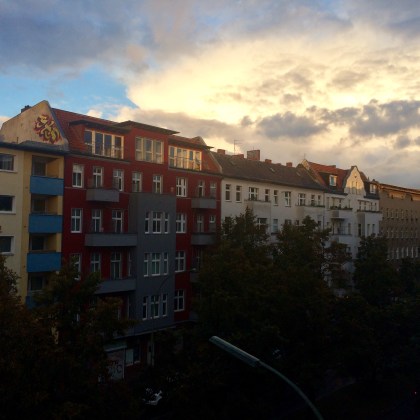
On the other hand, Vienna and Berlin are not just stage sets, because we live in time – in 2018 – which is exhibiting noisy echoes of another moment in the 20th century, in which Vienna and Berlin were central. My grandmother, a German Jew, had to leave Germany in the 1930s, and eventually ended up in Wellington. I spent time looking after her at the end of her life, when I was sixteen and she had lost much of her memory. All this seems connected to me in ways that can’t be approached directly. Once more Europe – and the world – feels precarious, and part of this must be tackled in prose, and part of it can’t be. Poetry’s music gets at a different slant of it, something fixed and floating and true.
 

IMG_3527.jpg


Paula: I am thinking too of the way your collection represents the lure and float of home. Home is the playful musing in ‘The Roof’:


(…)  When a psychoanalyst

says adults have no notion of home, a

nomadic woman says rubbish

and in America rubbish perches on gutters

and won’t wash down. A gull has a sense of home?

A bumblebee is bumbling home?

We bumble but we do not gull, only

cull our belongings as we wait to board

     our next plane out. In our bold age. In our bumble back

         to riches and our gull back to rags.


In ‘Fourteen Mistakes’ the traveller cannot be admitted home until ‘we have re-mapped our own insides’. The poem, ‘Maker’, is equally powerful: ‘Home’s far and grown old.’

What are the key navigation points as you write this moving attention to home? The discoveries that surprise or unsettle or soothe?

Alice: Home! I stumbled on this question because there are so many ways to tackle it. Home is not one thing. On the most obvious level for me, Aotearoa NZ is most obviously my home; I have a strong physical reaction to the bush and the ocean, my entire family live there, I love it with a fierceness – but oddly I’m most easily at home right now, day-to-day, in Berlin, which is noisy and dirty and unfinished (and gentrifying with wild rapidity) and is also where a couple of the people I love most in the world live.

I like music as a metaphor here; in a Western tonal tradition, we are dragged towards the home key, we know what the resolution is. We yearn for it and feel it in our body when we hear it – and yet we can also distrust its perfection, its cleanness. When we did piano exams as kids they’d play a few bars on the piano and you had to say whether it was a “plagal,” “interrupted,” or “perfect” cadence. I always thought “plagal” meant related to plague; it was infected somehow, imperfect. I think home is all three of these things, perfect, plagal, interrupted. For that matter, so is poetry, making it perhaps the perfect (and plagal, and interrupted) vehicle to carry a sense of home.


Paula: I love bringing that trio to both home and poetry. Silence becomes a form of interruption in your poetry; a feature of its exquisite musicality. Occasionally there are long gaps between stanzas like pauses for thought as though the writing process is slow paced. Or the unsaid is paramount. What attracts you to the white space of poetry?


The hold I have’s not one I want to lose

though it’s caught in the flick of the clock through this blood

which knows it can’t gulp down tides, can’t tear out time,

needs a rest from the world I have wrinkled

in fingers, questions, musics. I try to teach my breath a new north,

      new east


from ‘The Hold I Have’


Alice: Poetry is all about gaps, about what’s conjured, what’s beyond definition. I’ve always been fascinated (and occasionally paralysed) by the swirling counterfactual possibilities inherent in all our decisions. In a way this book could be described as an attempt to let our counterfactual existences live: to forge those counter-narratives – our seemingly false futures – into an essential strand of the story.


Paula: Oh I love that way of approaching your collection. Such an idea generates all manner of movements. There is the movement between remembering and forgetting, between the adequacy of telling and an inadequacy. Are you plagued with doubt as a writer? With forgetting? Was there a poem that was particularly difficult to write?


How today in a haunted town

the rain is patient

and windows promise

to split our faces

How today in a hunting ground

we tell our stories in the only

wayward inadequate way

anyone knows how


from ‘How to Forget’


Alice: I’m plagued with doubt as a person! I am plagued by fears of death and failure and shame. But I believe I need that doubt and fear to push through what’s easy and get to the mystery. So I’m happy to be an anxious, stubborn, stumbling person who takes a long time to finish a book. There’s also a very strange disconnect between the luminous space where you are alone playing words like an instrument, and the bit where you have a book in your hands and you’re supposed to thrust it upon people. The object of the book has such a distant relationship to the luminous space. And the luminous space is why we do what we do.

After my first book came out, I thought every time a book of mine was published I would feel a kind of shame. But it was different with the small book I published in Germany a couple of years ago, and again with Nowhere Nearer. I feel extremely lucky that I can point to this new book and say it’s mine without feeling completely mortified. I can see that people might not like the book, but that’s okay with me. At the moment it’s the best answer I have for how to live in what James Wright called “this scurvy/ And disastrous place.” And I know I write for the luminous space, and what comes after is beyond me.


Paula: Did you read any poetry books that stuck with you as you wrote this book? Any other books that stuck or affected your writing?

Alice: Elizabeth Bishop is always somewhere nearby, and she’s the best on that idea of home, too: the line “Should we have stayed at home/ wherever that may be?” appears a simple question, but while keeping this idea of staying home, it also rips away the very notion, questioning whether it exists at all. The title Nowhere Nearer is also a hat-tip to her abstract, geographical book titles: North and South, Geography III, Questions of Travel. She is so skilled at control and the lack of it: her seemingly distant tone tries to control the emotion that she also lets you glimpse.


Paula: Are there one or two poems in your collection that have really worked for you? Where the subject matters profoundly and/or the making of the poem just fell into place and it sang for you.

Alice: They’re all songs! An example follows. And I want to say thank you so much for this conversation, which has been lovely — and thank you for the extraordinary amount you do for poetry in Aotearoa. I’m definitely not the only person who is extremely grateful for everything that you’ve done, and continue to do.


Born Breathing


Because I have never quite caught the moment when you

stand and breathe on top of a mountain in a country where

you were born, and


because I have never been trapped in an underground cavern

with a single candle and no water, and


because a man I was once in love with just sent me a

photograph from Colorado of a famous man’s baby booties

and his gold death mask,


and because he was so gentle I had to push him away,


and because because means by cause of, and causes multiply as

a matter of course, and because our arguments come to us like

breath,


I am trying to keep the seconds still, in this bed overlooking a

window blasted white by mist


while I look on the dark web for a definition of the seconds

after a wisdomflash, where


you re-see each tip of tree, each gasping leaf, each scrape of

thin snow, when


your naked, foolish self can’t be argued with, and


your death mask is, for that second, wiped clean.


©Alice Miller, from Nowhere Nearer


Auckland University Press page

Liverpool University Press page

Poetry Book Society recommendation


Liverpool University Press edition:
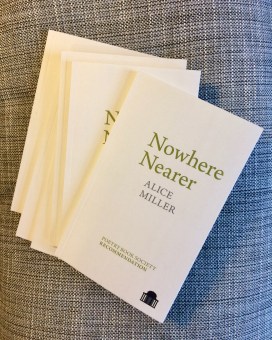
Nowhere Nearer .jpg


Poetry Shelf Monday Poem: an extract from Lee Posna


The problem, everybody’s problem, is myself. Which is neither mine, nor self, but what of that? (I have no self-control: there’s nothing to control.) The more I work at it, the deeper it gets. In this it’s like a hole or a painting. It being me. There’s no law that binds depth to beauty. Some bind it to horror, they shadow me like imperial clouds. Mom’s the concubine. The sky’s like a painting over a hole in which one finds an empty vault steelier than angels. ‘The sky is blue, no?’

The problem gets deeper. I stare at a bald patch of lawn where a black seething mass resists my visual cortex. I bend down toblindside emerge ants = fire. I put out the fire. Then everything’s made of fire (not the logic of a bad dream, but the truth of an ancient fancy). The garrigue burns, the house burns, the urethra burns, the universe pounds with voids so cold they burn like ice on flesh. The twitter of a chaffinch burns in the olive.

I’m calm now. I can reason. The scream barrelled like a train through a dead station. Another won’t be long. Its echo pulls my face a bit, I’m calm now. I can reason. I can reason a little way. I stack my reason upon its twin till it starts to gain some ground from the dust. I’m always screwing around in the dust. This is how all babels are made, one stone upon another. They stretch across the peneplains of hidden hominid. The sky has room enough for every end.

The problem is the solution (like divine speech): death. Not to take the shortest path to it, but rather to fight against traffic up the road leading from it. Just as the litter-bearers of a certain dying pope did summer of ‘64, working toward the holy land:

Pius II set out for Ancona to rouse a late crusade, 200 years after the age burnt out. Deserters filled the road overlapping like ghosts. His men drew the litter’s heavy damask curtains despite the violent heat to spare their swimming head the heartless tableau. He arrived in time to see the late Venetian fleet dock, and soon after died.

A good solution to a bad problem, which always already contained defeat. Defeat is part of the larger plan. What kind of plan is this? Not the right one. And worse, not the wrong.

See how this plays out for a planet, a people, a family, another? A little shoot squeezes through some barren peneplain; the shoot grows into a forest; the forest into a house; the house into fire; the fire into words; the words into swords; the sword like a clock’s hand never stops turning; the clock like a star’s engine–.

While I am my blind spot: for myself I can only infer its operation, as one infers the presence of dark matter. I believe in my defeat – I feel it happening, I see it in my beard, under my eyes, in my way, that is my pattern, in my work, which increases order, a kind of order, whose growth is outpaced by disorder – which makes my reality, giving ground for belief: an elegant feedback loop. What do I believe? What I’m forced to.

I see the end of my life many years from now, or else two, or it may be six weeks from Monday. In the manner of light, which illuminates, but hardly penetrates (at most it reaches a thousand metres into the sea), I see from one end of the universe to the other. I see and note the faces of all who have never lived, and will one day remain unborn, from Eve’s aborted sister until the end of time. I smell the rock, and paint the rock’s sex, and paint the nude’s sky, and render great walls of galaxies to hide your eyes. The matter is limited, and it contains defeat.

He’s not me. The Provencale painter, not me. What is true for you in your private heart is true for all men (thank you 19th century). I bow to the 19th century, I crawl into the 19th century as into my mother’s slack womb, as this fully unfurled genotype starting to decay. I burrow into pillows in the corner of this warm room. I squeeze them to force the door of innocence, to strangle Adam and ride him into the brane of myth. This is neither his voice nor mine, I like to think it’s both (though it’s neither). I make no space for his spicy fire, voice, temper – I’ll tell you about that soon, it’s part of this hateful experiment. I like to think I can undo a gross of years, expiate the omnipotent violence of ‘it was’ and animate Cezanne at thirty-something, year of the hanged man. There’s his corpse, thirty-something years before the decay begins in earnest. He’s sleeping, an empty bottle of Cairanne at the foot of his easel. I slither along the floorboards (we’re in his atelier), shoeless, shirtless, sweating in moonlight. My underwear stinks. The crickets swell the night thick with rosemary. Crouching next to his crumpled beard (where’s his pillow?), his face turned toward me, the miasma of wine, fougasse, tobacco clouds me in rank heat: corruption enters the saint. And so I solemnly open his mouth, which makes a sticky sound, allowing the corpse to speak. That is, my corpse.


©Lee Posna from ‘Completely Supportless Blue’


Lee Posna lives in Wellington and works at Pegasus Books. Books he’s recently enjoyed include Hill by Jean Giono and Difficult Loves by Italo Calvino.


An addition to the 2018 Writers on Mondays series: Kate Camp: Menton, memoir and me

8th Oct 2018 12:15pm to 8th Oct 2018 1:15pm

Soundings Theatre, Te Papa

The International Institute of Modern Letters (IIML) is delighted to announce the addition of this special event to the 2018 Writers on Mondays series.

Kate Camp: Menton, memoir and me:

When poet Kate Camp took up the Katherine Mansfield Menton Fellowship in 2017, it was to write memoir, not poetry.

Memoir writing raises interesting questions – of fact and fiction, ethics and ego, what one remembers, and what one chooses to reveal. In this lecture, Kate Camp examines a more difficult and profound question – who cares? Who could possibly give a damn about the details of someone else’s life?

Drawing on her own work and that of other New Zealand writers, Camp’s lecture is an entertaining, insightful, and at times deeply personal exploration of the ‘point’ of writing memoir.

Originally delivered September as the Frank Sargeson Memorial Lecture, initiated by Waikato University with the support of the Friends of Hamilton Library.

FREE EVENT