Category Archives: NZ author

Poetry Shelf Monday Poem: Jessie Mackay’s ‘Scotland Unfree’


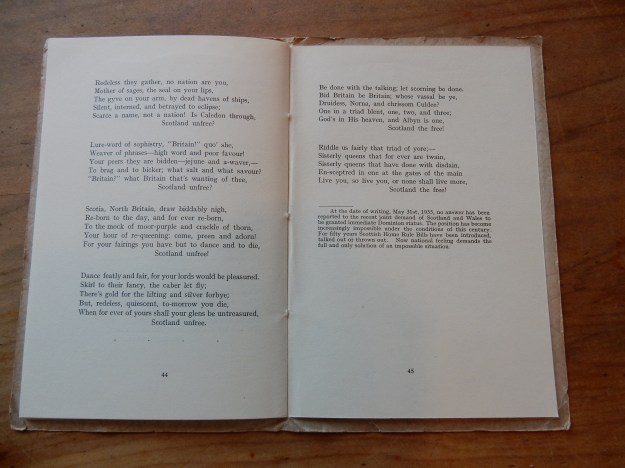
Scotland Unfree


Two hundred long winters and thirty forbye

Have narrowed to nought since you first were unqueened, —

When cold, cunning usury made you the teind*

To Empery’s coffer, black treason unweened,

Undreamed of where yonder your mightiest lie,

Scotland unfree.


But they hear, but they heave, blessed mounds on the heath,

That house their true clay for you, mourner and mother,

Mounded for God and for you, not another,

Hear the moor-sloganing, brother to brother,

Hear it from Orkney to Tweed and to Leith,

Scotland unfree!


Mother of martyrs, now hear ye the living;

Mother of makers, world-marches away,

Who set your high mark, in their bold hodden gray,

On masterless wild and blue, bounteous bay, —

Palms for your honour, brave air, but, the giving,

Scotland unfree!


Hear you the living that fare never forth

From your guerdonless thrift in the halted out-flowing.

Too long your life-river, all-hoping, unknowing,

Gold-ribboned the seas from the dawn to down-going

Of sums that had set for your cradling North.

Scotland unfree.


Gold ribbons you gave to the seas of the west.

The world had your best of divine discontent.

Your parasites battened; despoiled and forspent,

‘Twas the babes of your breast, ’twas your children that went;

No steading in life, and no anchor of rest,

Scotland unfree!


What now and what more, when the world is at halt? —

When winds of all destinies clash in the blue?

The gadflies of battles are stinging anew,

Meanly to risk, or unhallowedly rue,

The redeless old nations in fear and at fault,

Scotland unfree.


Redeless they gather, no nation are you,

Mother of sages, the seal on your lips,

The gyve on your arm, by dead havens of ships,

Silent, interned, and betrayed to eclipse;

Scarce a name, not a nation! Is Caledon through,

Scotland unfree?


Lure-word of sophistry, “Britain!” quo’ she,

Weaver of phrases—high word and poor favour!

Your peers they are bidden—jejune and a-waver,—

To brag and to bicker; what salt and what savour?

“Britain?” what Britain that’s wanting of thee,

Scotland unfree!


Scotia, North Britain, draw biddably nigh,

Re-born to the day, and for ever re-born,

To the mock of moor-purple and crackle of thorn,

Your hour of re-queening: come, preen and adorn!

For your fairings you have but to dance and to die,

Scotland unfree!


Dance featly and fair, for your lords would be pleasured.

Skirl to their fancy, the caber let fly;

There’s gold for the lifting and silver forbye;

But, redeless, quiescent, to-morrow you die,

When for ever of yours shall your glens be untreasured,

Scotalnd unfree.


Be done with the talking, let scorning be done.

Bid Britain be Britain; whose vassal be ye,

Druidess, Norna, and chrissom Culdee?

One in a triad blent, one, two, and three;

God’s in His heaven, and Albyn is one,

Scotland the free!


Riddle us fairly that triad of yore;—

Sisterly queens that for ever are twain,

Sisterly queens that have done with disdain,

En-sceptred in one at the gates of the main

Live you, so live you, or none shall live more,

Scotland the free!


* Tribute

Note from Jessie: At the date of writing, May 31st, 1935, no answer has been reported to the recent joint demand of Scotland and Wales to be granted immediate Dominion status. The position has become increasingly impossible under the conditions of this century. For fifty years Scottish Home Rule Bills have been introduced, talked out or thrown out. Now national feeling demands the full and only solution of an impossible situation.


Jessie Mackay,  Vigil and Other Poems, Whitcombe & Tombs, 1935


DSCN9617.jpg


DSCN9618.jpg

‘Scotland Unfree’ is the final poem in Jessie Mackay’s final book, Vigil and Other Poems.


Jessie Mackay (1864 – 1938)  We have a poetry prize honouring Jessie Mackay’s legacy: the Jessie Mackay Best First Book Award for Poetry in our national book awards.  Jessie was born in Rakaia, Canterbury and grew up on several remote sheep stations. She trained as a teacher, taught briefly and then devoted her life to politics and poetry. Jessie wrote countless letters to newspapers and articles on issues such as the plight of women, the vote for women, prohibition, ending the war and Scottish Home Rule. The latter affected her deeply as her Scottish parents spoke of their beloved homeland and the cruel land clearances. Perhaps this is why she revealed such a concern for Māori issues in a number of poems: the fact that land, language, stories and culture make a people. To take them away is to dispossess them. Cruelly. Unforgivably. Pākehā might write poems differently now, after decades of interrogating colonialism; perhaps less likely to borrow myth but, like Jessie, many poets are showing history in a new light  (such as Parihaka).  Jessie often drew us to the women’s point of view.

Towards the end of her life over 300 admirers presented Jessie with a testimonial letter that praised her outstanding humanitarian work and contributions to New Zealand literature. On her death the media sung her praises yet you are hard pressed to find her work in anthologies and we have no Jessie Mackay in print. When I first started reading her work it felt like a foreign country but the more time I spent in the archives, and the more time I spent with her writing, the more she moved me.

The first chapter in my forthcoming book, Wild Honey: Reading New Zealand Women’s Poetry, seeks to draw Jessie’s poetry closer. I am moved by her political stamina and by her battle to be heard as a woman writing. I have picked one of her Scottish poems to post as it feels very timely. What would she think? What would she think about Brexit and our own local tragedies? She would be weeping with her feet in the southern stream, and she would be speaking out. She would be writing poetry.

My book is out in August with Massey University Press.

This year’s poetry finalists in the Ockham New Zealand Book Awards will be appearing at the Auckland Writers Festival Award event: Tuesday 14 May, 7 pm- 8.30 pm, ASB Theatre, Aotea Centre.

The finalists: Helen Heath, Therese Lloyd, Erik Kennedy, Tay Tibble


Screen Shot 2019-05-05 at 9.31.56 AM.png  dscn9615-e1557006520698.jpg

Poetry Shelf poses a question to poets: Why write poetry?


This is an occasional series where I invite a group of poets to respond to the same question. First up: Why write poetry? I selected this question because a number of writers have mused upon the place of poetry when facing catastrophes that devastate our human roots. I pondered that question. I then asked myself why I have written poetry for decades regardless of whether it is published or applauded. It is what I love to do. It is my way of making music and feeling and translating and being happy no matter the life challenges. I also feel poetry is thriving in Aotearoa; at all ages, in multiple forms and in myriad places, many of us are drawn to write poems.


Albert Wendt

I write poetry because I can’t stop doing it: it demands that I do it, and it is ‘language’ that I feel most passionately about. When I’ve deliberately tried not to write poetry, I’ve ended up feeling unfinished, incomplete. When the poetry is shaping itself well in my tongue and throat, I feel healed, and healing.


Emer Lyons

I talk too much. A male Irish poet visited last year and said my poetry had none of the “jerkiness” of my personality. In writing poetry I find silence and the ability to give that silence space. After drinks with two men from the university last week, the one I had just met sent me a message on Twitter to ask me if I, like him, had Borderline Personality Disorder. Speaking in non sequiturs is not nearly as convincing as writing in them. As women, there are expectations about how we should speak, how we should take up space, how we should be more silent, more stable. Writing poetry is a minor release from social constraints, and the voluntary application of others. I can bind my breasts and write sonnets. On the page, I can be enough.


Erik Kennedy

I write poetry for the same reason that architects draw up concepts for floating cities: 1) to see what a better future might look like before it is possible, 2) to make the blueprints of progress public so that others can avoid making the mistakes that I have.


Therese Lloyd

Poetry remains mysterious to me. It’s such a strange beast and to be honest, sometimes I wish I had been bitten by the fiction bug instead. But I’ve been writing poetry for a long time. I think the first poem I ever wrote was when I was about 6. The poem was about fireworks and I remember the last line was “beautiful but dangerous”. Even at 6 years old I had a dark turn of mind! It may be a total cliché, but for me, poetry is a way to figure out how I feel about something. Writing poetry, especially that first thrilling draft, is an exercise in bravery. I love the feeling of having only the slightest inkling of what might appear on the page, and then to be surprised (sometimes pleasantly) by the string of lines that emerge.

Why write poetry? Because it’s confounding and liberating in turn. Because, as Anne Carson so famously says:

It is the task of a lifetime. You can never know enough, never work enough, never use the infinitives and participles oddly enough, never impede the movement harshly enough, never leave the mind quickly enough.


Michele Leggott

Why write poetry? To sound distance and make coastal profiles, to travel light and lift darkness. I go back to what I wrote about these and other calibrations: A family is a series of intersecting arcs, some boat-shaped, others vaults or canopies, still others vapour trails behind a mountain or light refracted through water. None is enclosed, all are in motion, springing away from one another or folding themselves around some spectral inverse of the shape they make against sea or sky.


essa may ranapiri

I write poetry because I love what poetry can be and can do. With poetry you can create these rather dense language objects that have the ability to confront many realities very quickly without sacrificing complexity. It is a space where I feel the English language can be at its most decolonised and queer and wonderful. And it also a space I feel most comfortable exploring the language of my tīpuna te reo Māori, a language I have only really just started learning. Poetry’s capacity for fragmentation and error, gives me permission to try out who I am and who I want to be. It also encourages in me a radical imagination about the society we live in and the societies that we could live in. A poem can be built in a day and take years to understand, it can both encapsulate and be the moment. A poem can give people who are marginalised a space to really embody their voice, make the air vibrate with their wairua, and in so doing provide an opportunity for community for those that struggle to find it wherever they are.


Bernadette Hall:

Why write poetry? Why not write poetry? Why should a poem choose you to be its vehicle? ‘Poetry is a terminal activity, taking place out near the end of things’ wrote John Berryman in a review article in 1959. I feel a great excitement when I read his words. An enchantment.  Since childhood, I have been immersed in language that’s not my own. In fact it’s dead. Or so the old school rhymes used to say about it, about Latin. And every now and then, a kind of ‘speech’ would emerge, in my native tongue, English, well out of the range of my everyday talking, things I would write down on paper. Secrets. Janet Frame has been quoted apparently as saying that her writing wasn’t her. Which would give you a huge amount of freedom, wouldn’t it, that embracing and distancing at the same time.  Berryman went on to say of poetry, ‘And it aims …at the reformation of the poet, as prayer does.’  The re-formation. No wonder I’m hooked.


Cilla McQueen

It seems healthy for thoughts to have an outlet into the real world.

Thinking is in the poem and is the poem.

You attend to the material and the spiritual. You perceive humanity, see inside yourself and other people, listen to the language of insight, catch words from the deep layers of consciousness.

Writing something down in concentrated form is mental exercise. The elastic syntax inside language asks for attention and skill so that it can be used with subtlety, to contain many shades of meaning and feeling.

Writing is a pleasure. Whether it ends up as a poem or not doesn’t really matter.

Words can unblock. The complete absorption in writing, in silent concentration, can provide a psychic release. A poem both releases energy and generates it.

The act of writing can be a refuge and comfort, also a way of talking things out in order to understand. The page is always listening, a patient companion in times of solitude or loneliness.

Don’t know what I’d do without it. I’ve spent most of my writing life thinking about poetry, but am still wary of defining it (this is part of its charm).


Albert Wendt has published many novels, collections of poetry and short stories, and edited numerous anthologies. In 2018, along with four others, he was recognised as a New Zealand Icon at a medallion ceremony for his significant contribution to the Arts.

Emer Lyons is an Irish writer who has had poetry and fiction published in journals such as TurbineLondon GripThe New Zealand Poetry Society AnthologySouthwordThe Spinoff and Queen Mob’s Tea House. She has appeared on shortlists for the Fish Poetry Competition, the Bridport Poetry Prize, the takahé short story competition, The Collinson’s short story prize and her chapbook Throwing Shapes was long-listed for the Munster Literature Fool For Poetry competition in 2017. Last year she was the recipient of the inaugural University of Otago City of Literature scholarship and is a creative/critical PhD candidate in contemporary queer poetry.

Erik Kennedy is the author of Twenty-Six Factitions (Cold Hub Press, 2017) and There’s No Place Like the Internet in Springtime (Victoria University Press, 2018), and he selected the poetry for Queen Mob’s Teahouse: Teh Book (Dostoyevsky Wannabe, 2019). Originally from New Jersey, he lives in Christchurch, New Zealand. There’s No Place Like the Internet in Springtime is shortlisted for the 2019 Ockham and New Zealand Book Awards – he will be appearing at the Auckland Writers Festival in May.

Therese Lloyd is the author of the chapbook many things happened (Pania Press, 2006), Other Animals (VUP, 2013) and The Facts (VUP, 2018). The Facts has been shortlisted for the 2019 Ockham New Zealand Book Awards and she will be appearing at the Auckland Writers Festival in May.

Michele Leggott has published eight collections of poetry, most recently Vanishing Points (Auckland University Press) and has edited and co-edited a number of anthologies including the poetry of Robin Hyde.She was the inaugural Poet Laureate (2007-9) under National Library administration and in 2013 received the Prime Minister’s Award for Poetry. She founded the New Zealand Electronic zPoetry Centre and is professor of English at the University of Auckland. She recently contributed the introduction to Verses, a collection of poetry by Lola Ridge (Quale Press).

essa may ranapiri is a poet from kirikiriroa, Aotearoa and are part of the local writing group Puku. rir |Liv.id. They have been published in many journals in print and online, most recently in Best New Zealand Poems 2018. Their first collection of poetry ransack is being published by Victoria University Press in July 2019.

Bernadette Hall lives in a renovated bach at Amberley Beach in the Hurunui, North Canterbury. She has published ten collections of poetry, the most recent being Life & Customs (VUP 2013) and Maukatere, floating mountain (Seraph Press 2016). In 2015 shereceived the Prime Minister’s Award for Literary Achievement in Poetry. In 2016 she was invested as a Member of the New Zealand Order of Merit for services to literature.  In 2017 she joined with three other Christchurch writers to inaugurate He Kōrero Pukapuka, a book club which meets weekly at the Christchurch Men’s Prison.

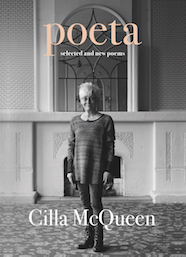
Cilla McQueen is a poet, teacher and artist; her multiple honours and awards include a Fulbright Visiting Writer’s Fellowship 1985,three New Zealand Book Awards 1983, 1989, 1991; an Hon.LittD Otago 2008, and the Prime Minister’s Award for Literary Achievement in Poetry 2010. She was the National Library New Zealand Poet Laureate 2009 -11.  Recent works include The Radio Room (Otago University Press 2010), In A Slant Light (Otago University Press, 2016), and poeta: selected and new poems (Otago University Press, 2018).


Poetry Shelf classic poem: Lynley Edmeades picks Lauris Edmond’s ‘Epiphany’


Many years ago I was working two jobs to save to go overseas. One of these two jobs was an early morning shift in a coffee cart, just off Courtenay Place in Wellington, outside a building that housed corporates of many kinds. I worked at the coffee at cart with Jenny, who became a good friend.

Jenny was everything I thought going overseas would make me: effortless artistic, politically informed, culturally savvy. Her parents were both artists, and her uncle was once a Labour Prime Minister. Unlike me, she didn’t need to go overseas; she already knew about the world. In fact, when I told her I was saving to go to India, she just shrugged and said, sweet. No bravado, no interest in impressing. The opposite to me.

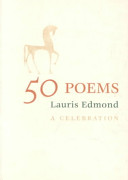
Jenny knew I was interested in poetry and that I’d been trying to write for a while. She knew I’d been reading people like Simone de Beauviour and Anaïs Nin, and that I carried this deep-seated belief that real life happened beyond these shores. Probably in France in the 1960s, but that didn’t stop me from going in search of it. Instead of challenging me on this warped idea, she simply slipped a beautiful cream paperback into my hands the day before I set sail; a parting gift. The book was 50 Poems: A Celebration, by Lauris Edmond. As if to say, there might just be some life here too.

I took Edmond with me in my rucksack, and together we would travel through India, Nepal, Bangladesh, and later, onto the UK, where I met up with Jenny in Glasgow some years later. I never said anything to Jenny, but even now, twenty or so years later, as I write this from my home in Dunedin, I still think about that parting gift and what it taught me.

There are several poems from this book that I have continued to come back to over the years. Including this one:


Epiphany

for Bruce Mason


I saw a woman singing in a car

opening her mouth as wide as the sky,

cigarette burning down in her hand

– even the lights didn’t interrupt her

though that’s how I know the car

was high-toned cream, and sleek:

it is harder for a rich woman…


Of course the world went on

fucking itself up just the same –

and I hate the very idea of stabbing at

poems as though they are flatfish,

but how can you ignore a perfect lyric

in a navy blue blouse, carolling away

as though it’s got two minutes

out of the whole of eternity, just

to the corner of Wakefield Street –

which after all is a very long life

for pure ecstasy to be given.


Lauris Edmond


Who was Bruce Mason, and why was Lauris Edmond writing a poem for him? More importantly, who was Lauris Edmond, and how could she write a poem that had the lines “the world went on/fucking itself up just the same,” in such close proximity to “Wakefield Street”? In my extraordinary naïvety, this poem took me by the hand and said: see, there are people here that think. Here was the poet, looking and noticing, thinking carefully, trying to understand, playing, slowing reality down a little … There was a form of existential enquiry happening in New Zealand, right under my nose — I’d just been too ignorant and ill-informed (and religiously adhering to a stereotype) to take notice. Which seems to me the whole point of the poem — there is stuff happening right in front of us all the time, we’re just too egotistic or preoccupied to see or hear it.

Lynley Edmeades


‘Epiphany’ is from 50 Poems: A Celebration (Bridget William Books, 1999) and was originally published in New & Selected Poems (Oxford University Press, 1991) and is posted with kind permission from the Lauris Edmond Estate.


content.jpg


Lauris Edmond (1924-2000) completed an MA in English Literature with First Class Honours at Victoria University. She wrote poetry, novels, short stories, stage plays, autobiography and edited several books, including ARD Fairburn letters. She received multiple awards including the Katherine Mansfield Menton Fellowship (1981), an OBE for Services to Poetry and Literature (1986) and an Honorary DLitt from Massey University (1988). Edmond was a founder of New Zealand Books. The Lauris Edmond Memorial Award was established in her name. Her daughter, Frances Edmond, and poet, Sue Fitchett, published Night Burns with a White Fire: The Essential Lauris Edmond, a selection of her poems, in 2017.

Lynley Edmeades is the author of As the Verb Tenses (Otago University Press, 2016), and her second poetry collection, Listening In, will be published in September this year (with Otago University Press). She is also a scholar and essayist, and currently teaches on the English program at the University of Otago. Her writing has been published widely, in NZ, the US, the UK and Australia.


Poetry Shelf in conversation with Gregory Kan

GK_BWIMG_4290.jpg

Photo credit: Time Out Bookstore


Gregory Kan’s poetry has featured in various literary journals including Atalanta Review, Cordite, Jacket, Landfall, The Listener and Sport, in the annual Best New Zealand Poems, and in art exhibitions, journals and catalogues. His debut collection, This Paper Boat (Auckland University Press, 2016) was shortlisted for the Ockham New Zealand Book Awards. His new collection, Under Glass, has gripped me as much as his debut. While his first book was unified by themes – he contemplated the poet Robin Hyde, his family, ghosts – Under Glass is also unified by form. A dialogue develops between a sequence of prose poems and a sequence of verse poems. The former features a protagonist moving through a strange and at times estranging landscape with its blazing sun. The latter establishes an interior landscape where the speaker struggles to make sense of things in a glorious interplay of gaps, knots, silence, physical things, ideas, yearnings, dream, hinges, contact, light, dark. The title underlines the way everything trembles and meaning is both prolific and unstable. The glass is a barrier, a way through, transparent, a longing to see, breakable, dangerous, a distortion, a view finder. I loved this book, this poetry haunting, and set about an email conversation with Gregory over nine weeks with pleasure.


1552353128013.jpg   1552353128013.jpg

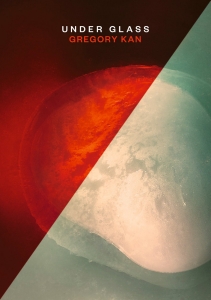
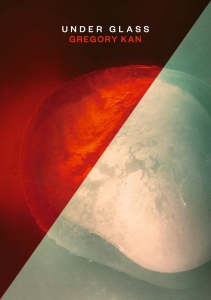
Gregory Kan, Under Glass, Auckland University Press, 2019


Screen Shot 2019-04-29 at 7.40.21 PM.png


Paula: Your new book is beautiful,  mysterious and haunting, I really like the idea of skirting its edges rather than breaking through the ‘glass door’ of its making. What psychological, physical and heart states did its writing place upon you?

Gregory: Writing the book was a process of discovery from start to finish. For me, writing poetry involves a set of transactions or exchanges with the unknown. It is a fragile but ecstatic space to inhabit. I was privileged enough to be on the Grimshaw-Sargeson Fellowship when I wrote the bulk of it. I bounced a lot between our place in Wellington and the Sargeson Centre in Auckland. Perhaps that complemented the liminal, the interstitial states that come to characterise a good portion of my work: in-between, incomplete, on-the-edge-of, peripheral, fragmentary, perforated with holes. Radically finite. Distant but not disconnected. The Sargeson Centre is a beautiful but haunting place in and of itself. There’s a long bookcase in the apartment lined with portrait photos of all the previous fellows. At night there is nobody around except for passers-by and the occasional reveller in Albert Park. Ghosts everywhere. There is sometimes nothing more haunting than the process of writing, and the artefacts of writing. The overwhelming sense of the past in the present meant that my sense of linear time dissolved severely. I went looking for things to see if I could escape them.


Paula: Hmm. I wonder if all writer’s residences are like this? I had a similar experience at the Robert Lord cottage in Dunedin.

As I read the various hauntings in your collection three motifs stood out: the map, the mouth, the maze: ‘I started marking the walls with my knife / so I’d know where I’d been.’

The reading of the poetry took me into a maze of sea, land and self. I got ‘lost’ in reading. And that was a joy. The unconventional ‘maps’ were the navigational points. I am reminded of the blurb on Hinemoana Baker’s book, waha | mouth: ‘I’d like to think that opening this book to read is like standing at the mouth of a cave, or a river, or a grave, with a candle in your hand.’ So much for skirting the edges! Here I am drawing in close on a stanza like this:


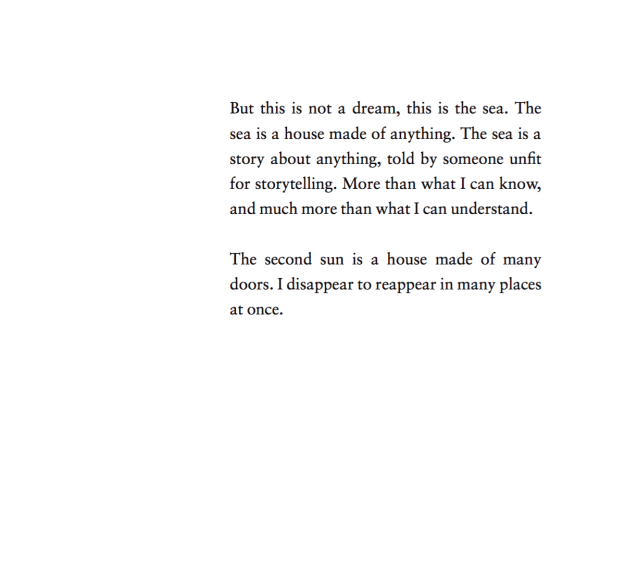
Today the world overwhelms me.

I feel a garden

growing in my mouth

and eventually touch stone.

I am afraid of appearing sentimental about sentimental things.


Was the mouth also important as you wrote? Along with the maze and the map?

Gregory: Thanks for sharing that image from Hinemoana Baker’s book/blurb. I love it. Yes, I suppose the mouth marks several interrelated ideas for me: gap/hole/gate, threshold/limit, transition/passage, entry vs. exit, inside vs. outside, private vs. public, and a lot more. Someone, I can’t remember who, writes about the mouth being a place where the soft inside opens up to meet the outside. At the same time, I should qualify that this wasn’t part of any conscious or conceptual intent when I was writing the book. It’s something that I can see in hindsight. On the other hand, the map and the labyrinth were both entities I was conscious of letting loose in the strange game of writing the book. In retrospect, I think of all these entities constitute the problem-space of finite agents, with finite resources and knowledge, trying to understand a volatile and alien world.

It’s always fascinating to me, the differences between what one anticipates, speculates and discovers, when writing. I look forward to hearing about what other people notice when they read the book!


You think I don’t know you anymore

and I never read your emails

but I wonder if we have the same nightmare

about some final thing

for which there is no forgiveness.


Paula: I think the movement between the unconscious and conscious that a poet leaves in a poem contributes to the way a poem is both fertile and open. And that is exactly why Under Glass is a joy to read; mysterious yes, musical yes, multilayered yes. The movement is also heightened by the open pronouns. Who speaks? Who is playing? Who hides? In your last collection you engaged in self-revelations by way of Robin Hyde. Do you do so here by way of ambiguous pronouns? Or are the speaking characters both porous and invented?

Gregory: Yes, the “I” and “you” in the book are varying mixtures of real, imagined and abstract. I’ve been interested in the fragility of the address and of the self for a long time.

Both the “I” and “you” in the book are fluctuating identities. Some of the poems involve addressing real individuals in my life to begin with, but then depart from them. Sometimes they are completely abstract and/or imaginary addressees. The “I” also shifts within and from each poem. In all these ways (and many others besides), there is an intense fragility to the transmission of information and intent. I wanted to challenge the transparency of the lyric poem and the lyric “I” and “you” in this particular way. I wanted to push it to a kind of limit, to de-privatize the self. I wanted something both incredibly personal and incredibly abstract.


Paula: Such movement, such uncertainty, fluctuations, flickers. Reading this has sent me back to the book to follow those tremors. Conversely, do you think a poem or a line or even a word can offer a temporary but comfort-rich anchor? For me: ‘Every day the coast looks the same, as/ though I haven’t moved’.

Gregory: In order to write, I need to believe so. I need to believe that hope and overcoming are as universal as hardship. We have seen how a single event can completely rewrite the way we see the past, and the future. Despite such an event, some good things persist, and some new good things can even grow. While a lot of my poems imply a world of flux and uncertainty, where little can be taken for granted, I hope they can also provide a sense of solace, of possibility. The exceeding of limits and thresholds. The possibility of change and doing some good. The strength of being together and moving with others. The relief from pain.

In an idealised model of the world, there is an answer to every question. There is a reason for every event. Things can always be explained, if not anticipated. Everything is as it seems. But this is not the world I know. I think many of us experience a world far in excess of this idealisation. Flux and stability, pain and comfort, despair and hope, uncertainty and understanding – they walk together. The book is in a constant dialectic between entrapment and escape.


Paula: Indeed. The event in Christchurch tilted us at such a human level. I am a great believer in hinges as opposed to confrontation, connections rather than disconnections.  For me that is what marks the pleasure of my reading experiences, such as your book. What poetry books have offered you solace or connection or breathtaking possibilities over the past year or so, but at any point in your life?

Gregory: I agree. The world can be seen in terms of its disconnections, animosities – its radical otherness. But I see that as the enabling space for bridges, for empathy and understanding. This is the condition for knowledge and for being together with others, for the grasping mindsoul looking for an island to rest on, awash in a dizzying ocean.

As for poetry books, there are so many! Since we’ve been talking about my book, I’ll use that as my constraint. Reading and writing are almost indistinguishable for me (you gotta eat to live), and these books were absolute pillars when I was writing Under Glass

Tusiata Avia’s Fale Aitu | Spirit House. Soul-slaying. I often lament the lack of action and politics in New Zealand poetry. I sense a general sentiment that politics in poetry is “too prescriptive” or “ham-fisted” but I think that’s a cop-out. Those are not reasons to remain silent. My opinion is that our poetry community needs to speak up more, to do more work, to not be lost in the complacency of this privileged bubble of liberal high (and white) culture. Race, class, gender – they’re all here, beautifully woven into Tusiata Avia’s work. She’s not fucking around.

Anne Carson’s Nox. A sparse and fragmented work. Grief and memory. Love. Such a beautiful object, too. What she makes of the scant traces of her brother.

Raul Zurita’s Dreams for Kurosawa. Otherworldly. Heartbreaking. A very strange combination of elements: traces of trauma under the Pinochet dictatorship in Chile, homage to Akira Kurosawa’s Dreams, and ghosts everywhere.

Mary Burger’s Sonny. This book has been very influential to me – even since my first book, This Paper Boat – in form, in diction, in tone, in subject matter. I think it was Zarah Butcher-McGunnigle who recommended it to me. It showed me the power of plain prose and diction, and the power of arrangement and organisation. Like me, Burger is invested in interrogating and pushing the limits of the writing of selves. Like me, she is also invested in interrogating the conditions and limits of knowledge. The writing about her past collides with that of J. Robert Oppenheimer, the American physicist who was credited for being the “father” of the atomic bomb.


Paula: This is a terrific list. Thank you. I have been thinking about the fingertip traces your book has left on on me – that sometimes act as tiny questions and that sometimes resemble little melodies. Did writing this book raise a question for you – large or small? In the process of writing or upon completion?

Gregory: All kinds of questions. A lot of self-centred ones, especially if I’m in an anxious mood. Will people accept this book as poetry? Is it even any good? Did I do my best? What constitutes success for this book, and for myself? What does my poetry mean to me? These are questions that have no real answers, and I’ll be taking them to my therapist, ha.

And some bigger, more difficult questions, after the book’s release and after Christchurch. What are the possible functions of poetry in our contemporary world? At one of its lowest points, poetry, for me, is so often an institutional and institutionalised form of nostalgia and conservatism. Why is it so enamoured with its own past? I don’t know if I’ve encountered another medium that is as hell-bent on dogmatically validating itself based on historical precedents and norms. At another low point, poetry is a site of postmodern whimsy, irony and impotence. If I were being charitable, I can understand that perhaps this is driven by the belief that almost everything can be and is subsumed under the totality of capitalism, and that resistance involves finding the most non-utilitarian, non-functional gesture possible. At other times, I think that this is simply a sneering cynicism. And I find that to be incredibly lazy and dispiriting. When our world is confronted by planetary annihilation and the increasing visibility of fascism and white supremacism, these attitudes are unacceptable to me. So what does it mean for poetry to adapt, and move forward?

What should the New Zealand poetry community be asking itself? I am afraid of particular kinds of silence. The silence of grief and shock, and the impossibility of witness and testimony, is of course understandable. But why do I also have the sense that there is also the silence of privileged complacency and passivity? The roots of colonialism – and the conditions of white supremacism – run deep, and I believe it’s our responsibility to start digging in our own backyards. It is a necessary labour for all of us.


Paula: I utterly agree. A necessary labour for all of us.

What do you like to do as a counterbalance to poetry?

Gregory: I work as a programmer and that offers me a world with a lot more certainty. There is still a lot of creativity and imagination involved in programming, especially in how you approach a problem. There is a caricature of programming that implies there is always a correct way to do things but that isn’t accurate. There are many possible solutions to any one problem. However, in the context of my work, the ends of programming are often certain – the problem itself is usually fairly determinate. What you are trying to get out of the program is usually fairly determinate. With poetry, utility and ends are always in question, and I may never know ultimately what “purpose” or function a poem serves. So having this kind of existential stability in my working world as a programmer can be a real comfort, as a point of difference. At the same time, there is such a thing as speculative programming, but I don’t yet have the intent, vision or skill to get there. In saying all of that, sometimes programming and poetry can feel very similar to me, both language-driven, both world-building. From that perspective my escapes become more recreational and indulgent ones. I love hanging out with my partner and watching Netflix. I love playing video games. I love watching trashy horror movies. Also activities that involve my body to a greater degree than the mind – swimming, cooking, listening to music, playing with the cat, eating, sleeping!



Screen Shot 2019-04-29 at 7.39.38 PM.png


Screen Shot 2019-04-29 at 7.39.24 PM.png


Auckland University Press page


Poetry Shelf Monday poem: Mere Taito’s ‘Reception Frame’


Reception frame


the goose waddles

down the cobbled

sidewalk that leads

to the bath with

glass wings


it washes its pigeon

English and swallows

its honk to cluck like

a creole chicken


only the goose God

understands this


the rest of us

be silent.

stop gawking.

wait patiently.


light a warm fire

when the goose

is done


Mere Taito


Mere Taito is a Rotuman Islander poet and flash fiction writer living in Hamilton with her partner Neil and nephew Lapuke. She is the author of the illustrated chapbook of poetry titled, The Light and Dark in Our Stuff.


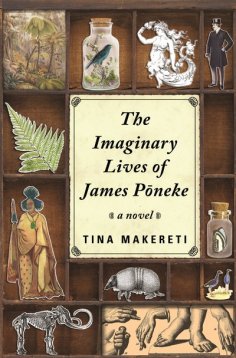
Poetry Shelf 2018 Fiction Bouquet: Tina Makereti’s The Imaginary Lives of James Pōneke

9780143771562.jpg

Tina Makereti, The Imaginary Lives of James Pōneke, Penguin 2018


Tina Makereti, Ngāti Tūwharetoa, Te Ati Awa, Ngāti Rangatahi and Pākehā descent, writes fiction that has always captivated me and her most recent novel, The Imaginary Lives of James Pōneke, is no exception. Published last year, and longlisted for the Ockham New Zealand Book Awards, I am awarding it my 2018 Fiction Bouquet.

I have invented this award to underline the supreme reading pleasures Tina’s novel gifted me. I begin with the language and the way her sentences are so exquisitely crafted. They carry story, character, setting and significant issues with ease and fluidity, as though they work behind the scenes giving life to the narrative features. Yet I am acutely aware of the writing. The way a particular word choice makes a sentence sing, the way voice gives flesh and feeling to James to the point he is utterly real to me.


James Pōneke was orphaned as young boy. His mother and sister were killed in a massacre, his father, a chief, left him with missionaries and was later killed. James became fluent in English and hungered for books and knowledge, but the ways of his people became more and more distant as he became more and more uncomfortable living in the mission. The book starts with a life- and trauma-worn James in London, confined to bed and aching to tell his story, to the maid, to the Artist’s sister and upon the paper he was given.

Through James’s eyes and voice we travel along the arc from orphaned boy to bedridden man. He places himself on show just as the Artist who brought him to London placed him on a show; a curiosity, an exhibit to accompany the paintings of Māori that the unnamed Artist had produced in New Zealand. James was a spectacle for the curious and disdainful spectator in the great British museum, but he turns the viewfinder and scrutinises them; not just as they watch him in the museum setting but out in streets that bear riches alongside aching poverty.

One reading track is the abundance of wonder and awe as James absorbs London on diverse settings. He admits he watches like a wide-eyed child or a wiser elder but mainly from the pitfalls of youth. Questions abound and those questions then unsettle any possibility of a ‘tidy’ and misrepresented past, particularly colonial.

A second reading track is the prevalence of cages and containments. There are the animals in London Zoo, the way the Mission upbringing, despite little kindnesses, forced James to break away and travel with another tribe. The London houses felt like cages after the New Zealand landscape where the largest and most beautiful things were trees. There is also the self-containment that was dictated by London social mores, and the way a cultural stereotype is a form of imprisonment. Reading this book I was reminded of Selina Tusitala Marsh’s reception when she performed her poem, ‘Unity ‘ at Westminster Abbey for the Queen for the Commonwealth Observance Day (2016). The disdain and rudeness of the distinguished guest seated next to her reduced Selina to an object in my view rather than an honoured international poet. Selina wrote of this experience in ‘Pussy Cat’  (both poems appear in Tightrope, Auckland University Press, 2017).

Perhaps the most important track is the way the telling becomes a remembering, the way the lost and faded self comes to light as James speaks to the past, the present and the future, to his imagined mokopuna. For me imagination, these imaginary stories, becomes a way of adjusting the viewfinder so that we may unsettle master narratives and engage with a different point of view. We get to see James as an acutely intelligent person who struggles with his own crises and trauma and who experiences his own joy and epiphanies. The book is a timely read. As we learn to make connections with respect and empathy, in a world that has privileged hierarchies and conflict, Tina’s novel is a welcome handbook on how to listen. It affected me deeply, at the level of both heart and mind.

Tina, please accept my 2018 Fiction Bouquet, with love, Paula.


Penguin author page

An extract


Poetry Shelf ANZAC poem: celebrating Lorna Staveley Anker, NZ’s first woman war poet


Ellen’s Vigil


Benjamin Isaac Tom

Passchendaele Ypres and Somme

        three ovals float

        on the cold wall

plastered whiter

         than their bones,

young, khaki’d

         their bud-tender eyes

         premonition filled.


Ellen,

Her three boys gone,

      transplanted seventy years

      from Lurgan’s linen

no longer counts crops

      in season

but digs diligently, delicately,

      digs down

              further down

      her spade searching

              her garden for

      three lost sons

      Thomas Isaac and Ben.


Lorna Staveley Anker


from Ellen’s Vigil Griffin Press, 1996

(The poem also appeared in The Judas Tree, 2013 and is published with kind permission from the Lorna Staveley Anker Estate)


I discovered the poetry of Lorna Staveley Anker in The Judas Tree, a selection edited by Bernadette Hall  (2013, Canterbury University Press). The collection claims Lorna as New Zealand’s first woman war poet. She was born in Ōtautahi, Christchurch in 1914 and died in 2000. Her father died of throat cancer when she was two and her mother took in boarders to survive. Three of Lorna’s uncles were killed in WWI and her mother, Elizabeth suffered terribly. From childhood Lorna endured a lifetime of crippling nightmares, night terrors. She married Ralph Price Anker, a student she met at teachers’ college; they had four children and adopted a fifth. Lorna began writing and publishing in the 1960s, but her first collection, My Streetlamp Dances, did not appear until 1986. Two further collections appeared in her lifetime: From a Particular Stave (1993) and Ellen’s Vigil (1996). I so loved the posthumous volume, The Judas Tree, I reviewed the book on my blog. 

Shortly after the review appeared, Lorna’s daughter, Denny, sent me a copy of Ellen’s Vigil and again the poetry resonated. Much later I found myself in the Turnbull Library doing research for Wild Honey and listening to various audio tapes. I was completely captivated by an interview between Lorna and Susan Fowke (from the Gaylene Preston Productions Women in World War Two oral history archive managed by Judith Fyfe).

There were many occasions when I was profoundly moved in the Turnbull and this was one of them. I was writing a book that engaged with the work of almost 200 poets and that required a very different focus to a book that considered a single poet or perhaps even ten. However sometimes a particular poet held my attention; I got lost in the maze and astonishments of unpublished writing, letters, interviews, diaries, scrapbooks. In Lorna’s case, to hear the poet speak was a special thing indeed. Gaylene has kindly given me permission to share some gems from Lorna on being a poet but I do encourage you to explore the oral history archive Gaylene has helped assemble.


Lorna’s father sometimes wrote poetry, ‘particularly couplets’ for her mother and her mother ‘s meals ‘were a poem’: ‘she’d pickle nasturtiums and we’d have caper sauce with our mutton’. I can just picture the kitchen: ‘The shelves in the pantry would be shiny with rows and rows of goods.’

The poem ‘Ellen’s Vigil’ stems from the time Lorna’s grandmother went digging for her war-dead sons in her garden. Lorna said in the interview that her grandmother was ‘grandmother to all mothers and wives who had lost their beloved men – she was a symbol for me.’ Knowing this amplifies the ‘buried’ grief. Lorna had lived with her grandmother and grandfather for a period from 1921; her grandmother, we hear, had favoured imagination rather than ‘strict discipline techniques’.

Lorna suffered from an eye defect which hindered her reading but at the age of 52 she began writing: she said it was strange to have a slim reading history when then, at the age of 52, ‘out burst all this language and poetry’. In her introduction to The Judas Tree Bernadette muses on events that perhaps prompted Lorna’s poetry writing in the 1960s (the death of her son Staveley aged 21 and the fact his daughter was adopted out by the birth mother) and the way she began publishing after the death of her beloved husband (1983).

She recounts an incident where her poetry was rejected as middle-class rubbish: ‘I came home and I wrote out of indignation and rejection, passion, fury, disbelief, and it was the mildest poem the most restrained tender poignant poem about the death of affection’. Writing was often a physical thing for Lorna: ‘a fusing in my head’, ‘a rush of blood’.

Lorna shared a number of things on being a poet that stuck with me. She didn’t call herself poetic ‘but being poetic means you have a different print out’, and when you write poetry ‘your mind is going sideways’.

Lorna’s family helped publish her collections while Pat White, David Howard and james Norcliffe offered help and assistance with her debut collection. Two of her poems were published in Kiwi & Emu (1989) while Lauris Edmond selected her essay, ‘Has the Kaiser Won?’ for Women in Wartime (1986).

I recommend taking timeout in the archives and listening to the interview, tracking down Lorna’s individual collections and perusing the book that Bernadette assembled with such love and care. To return to the poetry with her autobiography, to remember the impact of war upon her well being and later her writing, to consider the way words flooded out when she was older rather than younger, is to enrich reading pathways through her work.


From my review of The Judas Tree

Lorna’s poems reflect a mind that engaged with the world acutely, wittily, compassionately. There is a plainness to the language in that similes and metaphors are sidestepped for nouns and verbs. These are poems of observation, attention, reaction, opinion, experience. The starting point might be the most slender of moments — and the poetry opens out from there, surprisingly, wonderfully.

In the first section (and indeed the largest section), war makes its presence felt; from the pain of departures, to the pain of the wounded, to the ache of loss. At times Lorna filters a poem through the eyes of her young self (for example, trying to make sense of Armistice Day). At times a concrete detail makes the poem more poignant (‘her spade searching/ her garden for/ her three lost sons’). In ‘Arie’s Tale’ the detail that renders the pain sharper is the ‘tyreless rims.’ In this poem the dead are carried away on a bicycle that makes such a clatter it is the hardest thing to bear (‘He felt it wasn’t respectful/ to his customers’). Lorna’s war poems stretch in all directions — they never forget the life that goes on and they never forget the heartbreak and loss that are etched indelibly. One of my favourite poems, ‘V.E.Day … and Neenish Tarts,’ moves beautifully between these two opposing but entwined forces. From the darkness of battle (now over), the poem moves to the grandmother dancing on the bed (as warm flesh weaves/ pink circles/ under a nightgown’; and from there to ‘Let’s have Neenish tarts for tea’ (this is cause for celebration). This first section of the book is a terrific addition to New Zealand war poetry because it casts a light on women at war (even when they remain in the kitchen).


‘Vision of Escape’, a poem by Lorna

Canterbury University Press author page


Poetry Shelf guest spot: Rhian Gallagher selects Cilla McQueen’s ‘Low Tide, Aramoana’


Low Tide, Aramoana


Sky with blurred pebbles

a ruffle on water


sky with long stripes

straight lines of ripples


sky-mirror full of

sand and long pools


I step into the sky

the clouds shiver and disappear


thin waterskin over underfoot cockles here and there old timber

and iron orange and purple barnacled crab shells snails green

karengo small holes


I look up from walking at

a shy grey heron on

the point of flight.


oystercatchers whistle stilts and big gulls eye my quiet

stepping over shells and seaweed towards the biggest farthest

cockles out by the channel beacon at dead low tide


It’s still going out.

I tell by the moving

of fine weeds in

underwater breeze.


takes a time to gather these rust and barnacle coloured  whole

sweet mouthfuls


Low.

and

there’s a sudden


wait


for the moment

of precise

solstice: the whole sea

hills and sky

wait


and everything

stops.


high gulls hang seaweed is arrested the water’s skin

tightens we all stand still. even the wind evaporates

leaving a scent of salt.


I snap out start back get moving before the new tide back

over cockle beds through clouds underfoot laying creamy

furrows over furrowed sand over flats arched above and below

with blue and yellow and green reflection and counter reflection


look  back to

ripples

begun again.


Cilla McQueen


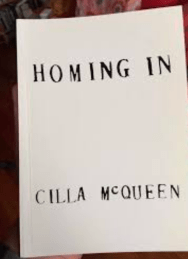
from Homing In  (McIndoe, 1982), also published in poeta: selected and new poems (Otago University Press, 2018)


From Rhian Gallagher

Sometime in the early 1980s I heard Cilla read ‘Low Tide, Aramoana’ on TV. I was utterly spellbound.

Cilla does not so much read her poems as enact them. They seem written to a music score, a sound choreography. Her work is also very visual and ‘Low Tide, Aramoana’ is a big canvas.

Whatever expectations the title sets up are given a tilt at the outset. For it is not the tide that is encountered but the sky. It is a simple notion, the sky being reflected in the water, but I experience it in the poem as if it were a brand new thing and

‘I (too) step into the sky’

In more than one way ‘I step into the sky’. The tides are a condundrum, taking place on earth yet the movement is being conducted by the moon and sun. The spaciousness of the poem on the page has me feeling this mystery all over again — my mind is up there with the moon and the sun.

The meditative opening lines are followed by a hurried, heaped-up rhythm, detailing forms and life-forms encountered on the sand flats:

‘thin waterskin over underfoot cockles here & there old timber/& iron orange & purple barnacled crab shells snails green karengo small holes’

This alternating rhythmn shapes the poem. It is a movement from a contemplative interior to the external world and back again, flowing in and out, almost as a tide itself.

On one level this is a foraging poem: going ‘out to the channel beacon at dead low tide’ for ‘the biggest farthest/cockles’. Foraging is also a metaphor for the making of the poem: the gathering is going on right from the first footstep onto the sandflats and the poem is, indeed, made of ‘whole/sweet mouthfuls’.

Some decades past before I heard Cilla read this poem again, at the Dunedin Writers Festival. It was almost eerie. The poem has a tipping point. It takes us there, way out to the edge – a brink of change, when something amazing (or horrendous) is about to happen. That moment when ‘we all stand still’.

I may risk overloading the achieved simplicity of the poem. The environment it brings to life, the multiple invocations it sets going in me, is why it has stayed close. Cilla’s pared-down language and accessibility belies an underlying multi-layered sophistication. ‘Low Tide, Aramoana’ has never given up all its secrets.


Rhian Gallagher


Rhian Gallagher‘s debut poetry collection Salt Water Creek (Enitharmon Press, 2003) was shortlisted for the Forward Prize for First Collection while her second collection Shift, ( 2011/ 2012) won the 2012 New Zealand Post Book Award for Poetry. Gallagher’s most recent work Freda: Freda Du Faur, Southern Alps, 1909-1913 was produced in collaboration with printer Sarah M. Smith and printmaker Lynn Taylor (Otakou Press 2016). Rhian was awarded the Robert Burns Fellowship in 2018.

Cilla McQueen is a poet, teacher and artist; her multiple honours and awards include a Fulbright Visiting Writer’s Fellowship 1985,three New Zealand Book Awards 1983, 1989, 1991; an Hon.LittD Otago 2008, and the Prime Minister’s Award for Literary Achievement in Poetry 2010. She was the National Library New Zealand Poet Laureate 2009 -11.  Recent works include The Radio Room (Otago University Press 2010), In A Slant Light (Otago University Press, 2016), and poeta: selected and new poems (Otago University Press, 2018).


otago693326-1.jpg   Screen Shot 2019-04-23 at 3.33.19 PM.png


Poetry Shelf review: Lynn Davidson’s Islander

Islander__83638.1547675687.jpg


Lynn Davidson Islander Victoria University Press 2019


Time goes slower in the sea

and faster in the mountains.

Physics has taken over

where poetry left off.


from ‘Pearls’


Lynn Davidson’s terrific new poetry collection, Islander, travels between Scotland and New Zealand, between the place she grew up (Kapiti, Wellington) and the place she now lives (Edinburgh). Divided into five parts the poems move amidst light, fire and earth. Like Dinah Hawken, Lynn pays close attention to the world about her, the physical world, the inhabited world, a world buffeted by weather, seasons, time. Her poems are layered and fluent and measured.

The opening poem, ‘My stair’, sees the speaker (the poet?) looking out, in an eerie night light, from her second-floor window onto the bus depot. She evokes a scene through pitch perfect detail and a surprising simile (‘buses lightly lumber / into the yellow depot / like bubbles back / into solution’). But the surprise for me, the point of ruffle and ripple, is the mention of the father:


My father’s heart is failing, he fills up


with fluid (like an empty bus fills up with light?)

I look for flights.


One of the pleasures of this collection is the eclectic movement. There is movement born from departure, from the sway between presence and absence, birds in flight, the ripple of water, the movement of a musing and contemplative mind. A number of poems struck me. ‘A hillside of houses leave’ is mysterious, magical and rich in movement. Like many of the poems, there is a link to birds that might be symbolic but that is always physical.


Steeped in old weather the wooden houses

remember their bird-selves and unfold

barely-jointed wings.


The poem holds the conundrum of life – its impermanence, its fragility and the little anchors, the necessary bones.


People curl inside

the bones that keep them

that will not keep them long.


The presence of birds is fitting in a collection that navigates islands – the birds might signal the ocean’s presence, the multiple flights, the multiple nests, the bird on the poet’s sight line, the bird carried by heart, the bird house and the bird lungs.

I began to see the collection as a poetry chain; where this poem rubs against that poem and that poem rubs against this. Here the light of this day touches the light of that day which touches the light of the day before all the way back to ancient times. Dinah has a poem dedicated to her and I am reminded of Dinah’s ability to evoke the spare and the luminous within a cluster of lines that then open out with absorbing richness. Lynn is similarly dexterous. This from Lynn’s ‘Bonfire’:


The mainland is rendered down

silvers and is gone.


My heart is green and raw – a pea not a heart –

front to the fire back to the wind.


The groan of stone on stone unsettles

me as I unsettle them.


Islands is also inhabited with daily lives, with anecdote and incident, thus rendering landscape humane as well as wild and beautiful. At times it made me laugh out loud as in ‘Lineage’:


I was nine months pregnant, and waiting, when the man in the

Taranaki airport shop snapped this isn’t a library you know,


and when I turned my great belly full of fingernails and teeth-in-bud

towards him he asked (hotly) if I was actually going to buy anything.


The baby made exclamation marks with its soft bones,

glared with its wide open eyes – two Os. No I said I won’t buy


my news from you.


Lynn traces family, the children who leave, the children who make home solid, the unnamed boy who names home hame, the children half a hemisphere away. This from ‘Leaving Wellington’:


Hours go by and elements still gather.

Each day my waking children, just by naming

assembled all the solid things of world:

the bath, stove, chair, the bed, the window,

the shoe, the dinosaur, the door, the wall.

Then in a kind of via negativa

they composed two empty rooms by leaving home.


I said it was an anchor but it’s not.

It’s a shadow roughly like a kiss.


This is a book to slow down with – just as you slow down when you walk the perimeter of an island – gazing into a shifting sky vista and towards the unreachable but alluring horizon line  –letting your own thoughts cascade and catch. It is a book where the view of a poem never settles but keeps revealing new lights, new joys, new surprises. I love this considered pace, this sharp revelation, this anchored heart. I love this book.


Victoria University Press author page


Lynn Davidson is the author of four collections of poetry, most recently How to Live by the Sea (2009, VUP) and a novel, Ghost Net, along with essays and short stories. She grew up in Kāpiti, Wellington and currently lives in Edinburgh.


Poetry Shelf Monday poem: Simone Kaho’s ‘Tour’


Tour

The crows will be her friends.
They are waiting on powerlines in the rain.
It’s exciting to be in another country with different birds even if they’re black and mawkish, and it’s only England, so kind of coming home.
‘Do they think dark thoughts?’
He comes back from training and through unspoken agreement she holds him at bay, at first.
Later, he says – ‘You held me off just the right amount’.
It’s the only kind thing he says all day.
She watches British bunnies run across the green British lawn in the British mist, into a British hedge.
That evening New Zealand loses.
Someone has scrawled a rude note for him on a napkin, he sees her looking and says
‘You’re laughing’.
She’s not.
She wishes she could.
I don’t wonder how he is doing she thinks ‘Now’.
It doesn’t even creak.
Her heart pulp; memories.
The overwhelming smell of little old ladies’ heads at mass at the Vatican.
Crouching down between acres of knees.
Him lifting her onto his shoulders, in fresh air above the churchgoers, with her battered face and oversized sunglasses.
Pope John Paul passing so close in his glass cartoon car, she could have reached out and left a fingerprint.
Her queen wave.
The ornate courtesy of him helping little old ladies over the barricades.
His beaming, bashful, face, which had gotten battered too.
Him walking straight into the Vatican while a two-mile line formed behind.
Both kneeling before the Michelangelo, not noticing marble Mary was the same age as Jesus.
Noticing nothing but the stillness of her chest
until he shifts beside her
and she wants to take it all back,
the gravel in her face,
the gravel in his.
The bottles she threw at the hostel, his blazed green eyes on the bottom bunk as the cops knocked.
The contrite blowjob in the church graveyard behind the homestay.
I can’t help being helpless, your contempt is not helping me.
She rolls her eyes as he slaps her.
That vein in his forehead is pulsing again and in a way, it has something to say and no one knows any better and
she wishes he hadn’t thrown stones at her window
and she hadn’t opened it
and he hadn’t climbed in
and she wishes she had knees instead of jelly and
she wishes she could put her heart out of her body and
let it live wild in the bush


Simone Kaho


Simone Kaho is a New Zealand poet of Tongan descent. She was born in Auckland and received an MA in creative writing from the International Institute of Modern Letters at Victoria University of Wellington.