Category Archives: NZ author

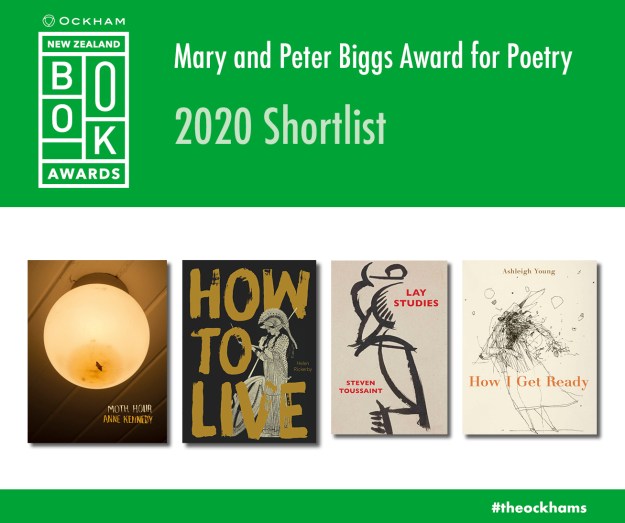
Poetry Shelf noticeboard: The Ockham NZ Book Award for Poetry 2020 shortlist


2020 Ockhams Shortlist_Poetry_web.jpg


Ah, I have loved so many poetry books published in 2019, so many of which could easily have made this shortlist ( I have no interest in hammering on about who is not here), but I felt a warm poetry glow that these four were picked. I spent a long time with each of these collections because they do what poetry does so well. They make you feel things, ponder the world, walk new tracks, make your body sway, refresh versions of the world, little and large.

I raise my poetry glass to Anne Kennedy, Helen Rickerby, Steven Toussaint and Ashleigh Young. Yep, this is a very fine shortlist.


Anne Kennedy


The thing in the jar

always dies!

The rice cooker steams

so the sun goes down

Deep in the house

sepia gathers

The pencil has eaten

the fragile book


from ‘Thirty-Three Transformations on a Theme of Philip’


I first read Anne Kennedy’s new collection Moth Hour (Auckland University Press) as a piece of music that traces the contours of grief. Words form little melodies, solo instruments sound out, there is echo, overlap, loop and patterning. Above all there is a syncopated beat that leaves room for breath, an intake of pain, an out-sigh of grief, an intake of observation, an out-breath of recognition. There is the fragile word-dance to the light.

Moth Hour responds to a family tragedy; in 1973, at the age of twenty-two, Anne’s brother, Philip, accidentally fell to his death. Anne, her seven siblings (she was the youngest and aged fourteen) and parents now lived with unbearable grief and loss, separately, diversely, as a family.

Like a mesmerising, lung-like piece of music, Moth Hour is a book of return-listening. Every time you place the poetry on the turntable of your reading you will hear something different. It blisters your skin. It touches you. But above all Moth Hour fills you with the variation and joy of what a lithe poet can do.

My full piece here

Auckland University Press author page

Anne Kennedy is a writer of fiction, film scripts and poetry. Her debut poetry collection Sing-song was named Poetry Book of the Year at the 2004 Montana New Zealand Book Awards. The Time of the Giants was shortlisted for the same award in 2006, and The Darling North won the 2013 NZ Post Book Award for Poetry. Her novels include The Last Days of the National Costume, shortlisted for the NZ Post Book Award for Fiction in 2014, and The Ice Shelf longlisted in the 2019 Ockham NZ Book Awards. She lives in Auckland.


Helen Rickerby


I slept my way into silence

through the afternoon, after days

of too many words and not enough words

to make the map she needs

to find her way from here

I wake, too late, with a headache

and she, in the garden wakes up shivering


from ‘Navigating by the stars’


Helen Rickerby’s latest poetry collection How to Live (Auckland University Press) is a joy to read. She brings her title question to the lives of women, in shifting forms and across diverse lengths, with both wit and acumen. Like many contemporary poets she is cracking open poetic forms – widening what a poem can do – as though taking a cue from art and its ability both to make art from anything and in any way imaginable.

Reading this book invigorates me. Two longer poems are particularly magnetic: ‘Notes on the unsilent woman’ and ‘George Eliot: a life’. Both function as fascination assemblages. They allow the reader to absorb lyrical phrases, humour, biography, autobiography, insistent questions. Biography is enlivened by such an approach, as is poetry.

‘How to live’ is a question equally open to interpretation as it ripples through the poems; and it makes poetry a significant part of the myriad answers. I haven’t read a book quite like this and I love that. The writing is lucid, uplifting, provocative, revealing, acidic, groundbreaking. The subject matter offers breadth and depth, illuminations, little anchors, liberations, shadows. I am all the better for having read this book. I just love it.

My full piece here


Poetry Shelf Audio Spot: Helen reads ‘How to live through this’

Poetry Shelf Monday Poem: Helen’s “Mr Anderson, you heartbreaker you’

Anna Jackson’s launch speech for How to Live


Helen Rickerby is the author of four collections of poetry, most recently How to Live (Auckland University Press, 2019). She likes questions even more than answers. Since 2004 she has single-handedly run boutique publishing company Seraph Press, an increasingly important publisher of New Zealand literature, focusing on poetry. Helen lives in a cliff-top tower in Aro Valley, and works as an editor.


Steven Toussaint


abide more tritone idle mode

the dominant’s a leaky still

for quiet divination

for every thought

a finger on

the fret-

board’s shifting centre

where nothing dearer

than the pure heart’s

purring minor

requires demonstration

from ‘Aevum Measures’


Steven’s Lay Studies (Victoria University Press) entrances on multiple levels; initially through the exquisite musical pitch and counterpoints, and then in the way heart and mind are both engaged. His sumptuous poetic terrain is physical, elusive, stretching, kinetic, mysterious, difficult, beautiful. Hearing the poetry read aloud is utterly transporting. An extract from our interview:

Paula: When I listen to the ‘regular pulse’ of ‘Aevum Measures’, I am not dissecting its craft, I am feeling its craft like I feel music before I react to other features. The reading experience might be viewed as transcendental – an uplift from the physical world and from routine. I am suggesting I let myself go in the poem. Does this make sense? And is it, on another level, a way of being spiritual in a ransacked world?

Steven: It makes a lot of sense, and I am gratified to hear that you could lose yourself in the music of the poem. What you describe sounds somewhat like Keats’ notion of ‘negative capability.’ That is to say, if the sonic architecture of the poem is doing its job, then the reader is ‘capable of being in uncertainties, Mysteries, doubts, without any irritable reaching after fact and reason’ at the semantic level. Not that the semantic level – what the poem is literally ‘about’ – is insignificant. The music would be thin and feeble without varied syntax, rich diction, logical continuity and metaphor. And yet, the poem’s semantic sense is ‘heightened,’ elevated out of the ‘horizontal’ realm of mere communication, information, or transaction by its participation in ‘vertical’ patterns of sound whose ‘meaning’ is intuitively felt, as a kind of felicity, but cannot be rationally reduced or summarised away.

And you hit the nail on the head when you point to the spiritual implications of this phenomenon. Walter Pater said that all art ‘aspires to the condition of music.’ Over the past several years, I’ve come around to a different a view. While writing Lay Studies, I fell under the influence of a number of Christian theologians of an Augustinian-Thomistic persuasion, especially Catherine Pickstock, to whom one of the poems in the book is dedicated. She suggests that liturgical doxology is the art toward which all others strive, a gesamtkunstwerk performing the narrative of salvation history. As such, the worshipper willingly submits herself to a mode of expression, praise, that is both recollective and anticipatory. The rhythm of liturgy – interpreted as a gratuitous gift, contoured by procession, repetition, and return – offers an implicit critique of the violence, entropy, and fatal self-enclosedness of historical time. I believe poetry can approach liturgy by analogy. A training in prosody might help us to see the world, ourselves, and our speech-acts sacramentally, as vertically conditioned by grace.

Steven in conversation with Karyn Hay RNZ National

Poetry Shelf Audio Spot: Steven reads ‘Aevum Measures’

Victoria University author page


Steven Toussaint, born in Chicago, immigrated to New Zealand in 2011. He has studied poetry at the Iowa Writers’ Workshop, the International Institute of Modern Letters and philosophical theology at the University of Cambridge. He has published a chapbook of poems, Fiddlehead (Compound Press, 2014), and a debut collection, The Bellfounder (The Cultural Study Society, 2015). His writing has also recently appeared in Poetry, Commonweal, The Spinoff, Sport, and The Winter Anthology. He has been recognised in the past few years by residencies at The University of Waikato, the Michael King Writers’ Centre and with a Grimshaw Sargeson Fellowship. He is currently pursuing graduate study in philosophical theology at Emmanuel College, Cambridge. Victoria University Press recently published his second full poetry collection, Lay Studies.


Ashleigh Young


If a waterfall no longer has water, it is a groove

that suggests a falling motion, just as this trail

suggests a walking motion

but if a person keeps walking until there is no more walk to take

they will no longer look forward to it, so will turn back.


from ‘Guide’


I have written about How I Get Ready (Victoria University Press) in Wild Honey so have tried not to repeat myself (in my review) or even refer to the poems I picked to talk about in the book! But Ashleigh became one of my sky poets for all kinds of reasons.

I like the shape of this book – this matters with poetry – because when a poetry book is good to hold it makes you want to linger even more, to stall upon a page. The book looks good, the paper feels good, and the cover drawing by Sam Duckor-Jones is a perfect fit. His idiosyncratic artwork moves in and out of reality, a person tilted by anxiety, the wind, both exposed and screened. A little like the poems inside the book. This is a collection of waiting, breathing, of curious things, anxieties, anecdotes, lists, found things, recycled words; little starts in your head as you read.

Every poem catches me! Some books you pick up, scan a few pages and then put down because you just can’t traverse the bridge into the poems. Not this one. It is as exhilarating as riding a bicycle into terrain that is both intensely familiar and breathtaking not. The speaker is both screened and exposed. The writing feels like it comes out of slow gestation and astutely measured craft. I say this because I have read this andante, at a snail’s pace. Glorious!


Poetry Shelf Monday Poem: Ashleigh’s ‘If so how’

Victoria University page

Ashleigh Young lives in Wellington and works as an editor at Victoria University Press. She is the author of Magnificent Moon (poems), Can You Tolerate This? (essays), and How I Get Ready (poems). She writes a fortnightly column in Canvas magazine and is the poetry editor at The Spinoff.


Full Ockham NZ Book Awards shortlists.


I am so chuffed (another warm word!) Wild Honey: Reading NZ Women’s Poetry has been shortlisted in the general nonfiction category. Never have any expectations when it comes to awards – just see it as a time to celebrate some of the great books we publish each year.
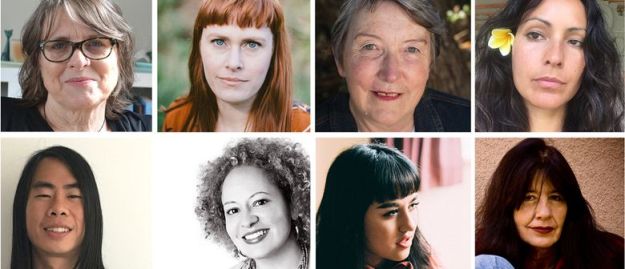



Some questions for poets reading at Paula Green’s Poetry Shelf Live (Wellington)


1389048-612125-34-1.jpg

Paula Green with Jane Arthur, Lynn Jenner, Simone Kaho, Gregory Kan, Karlo Mila, Tayi Tibble and and special guest, US Poet Laureate Joy Harjo.


Prompted by the arrival of Wild Honey, Claire Mabey (Verb Wellington) invited me to curate a session for NZ Festival of the Arts Writers programme. It morphed into a Poetry Shelf Live session at Claire’s suggestion. I have always wanted to do this and would love to curate seasons of Poetry Shelf Live in other places, even my hometown Auckland! But I am a big fan of the poetry verve in our capital city, and have multiple Wellington attachments, having lived there twice in my life (I started school at Petone Central way back when).

So am delighted to be hosting this session!

Picking just a handful of poets was hard as there are so many recent poetry collections that I have adored, along with poets whose work has inspired me for a long time. And it’s something special to have American Poet Laureate Joy Harjo read with us.

As a prelude to the reading, a few of the poets answered some poetry questions.


Why write poetry?

Gregory Kan: Poetry is a way for me to process the world and also to build new worlds.

Simone Kaho: My mother used to read me and my brothers and sister bedtime stories, and we all loved reading growing up. When I first came across poetry at school, I saw how much energy there was in it. It seemed to me, to be a wild and condensed version of stories in books. I was drawn to the way a poem could tell a story, or create powerful emotion with very few words. I liked how much the writer collaborates with the reader to create meaning. It looked like magic to me and I had to try and see if I had some in me.

Jane Arthur: I think it’s because my brain suits short, intense bursts of thoughts and words, thinking about poem-sized ideas and doing poetry-shaped crafting. Which is why it’s bizarre and terrifying that I am working on a children’s novel right now.

Lynn Jenner: 

Because poetry is an arrow.

Because it can also be  as wide as a sea.


What  attracts you in a poem as a reader?

Gregory Kan: Leaps of the mind, eye and imagination.

Simone Kaho: I like poetry that is dark and funny, but in any poetry I’m looking for the moments where you have to stop and look away from the page, to savour what the poem has said or done. I find in many poems, times where there’s a feeling of spiritual connection. What the poem is saying becomes so true for you it’s like you are experiencing it yourself, you suddenly blend with the poet and understand, deeply, something they are saying or feeling. This can happen in any type of poetry, but for me, it’s probably more likely to happen in poetry that is slightly narrative, or grounded in the real world.

Lynn Jenner: I like the poet to tell me about what they know and what they have learned in their life. I like politics in poems. Other than that, I probably like what everyone likes; surprising language, some building up of themes and some swing and lurch in the rhythm and cadence.


What matters to you in a poem as a writer?

Gregory Kan: Movement beyond what I know.

Lynn Jenner:It is important to feel that the poem has done enough, that it has brought something into the light and examined it quite a bit. Because of this, I tend to write long-ish poems! I also aspire to write poems that have an emotional punch to them.

Jane Arthur: Authenticity, voice, surprise.

Simone Kaho: When a poem works, to me, it’s like it holds it’s own energy. You can read it back and see things you didn’t necessarily intend at the time of writing, and it communicates new things back to you. It feels a bit distant – like a memory of being in that moment.


I just hosted a festival of tree poems on Poetry Shelf – do you have recurring things in your poems?

Lynn Jenner: Trees, actually, and people dying. Also people talking.

Gregory Kan: Funny you should mention the tree poems – trees!

Jane Arthur: There’s a constant oscillation between rage and apathy. At least, those were the two states I found myself in while writing Craven, and I can still sense them when I read it now.

Simone Kaho: Yes, trees is a recurring them in my poems. Also family, the natural environment generally, and how it feels to be human. Lately, I’ve been writing poetry that is perhaps more overtly political – it’s talking about gender dynamics and trauma.


Name 3 to 5 books that you have loved at different points in your life.

Lynn Jenner: Seamus Deane,  Reading in the Dark;  Amos Oz, Tales of Love and Darkness; Leo Tolstoy, Hadji Murad; H.G. Sebald, The Emmigrants

Gregory Kan: Nox by Anne Carson, Sonny by Mary Burger, Dreams for Kurosawa by Raul Zurita, Penury by Myung Mi Kim. Just off the top of my head. But really there are so many.

Simone Kaho:  Huckleberry Finn – Mark Twain, In the line of Beauty – Alan Hollinghurst, Bunny – Selima Hill, All of Tusiata Avia’s books, The Book of the Black Star – Albert Wendt


If you were to host a festival poetry session with poets from any time and any place who would you include?

Lynn Jenner: Adrienne Rich, Bill Manhire, Yevgeny Yevtushenko, Leonard Cohen, Paul Muldoon, Seamus Heaney, Rumi

Gregory Kan: I don’t know!

Simone Kaho: The poets in this reading definitely. Selima Hill, Tusiata Avia, Albert Wendt, essa may ranapiri, Hone Tuwhare, Jacquie Sturm, Maya Angelou, Staceyann Chin. I could go on to include 100’s but these would be my first picks.


Screen Shot 2020-02-28 at 11.18.48 AM.png


Poetry Shelf Monday poem: Murray Edmond’s ‘The Chocolate for the Ants’


THE CHOCOLATE FOR THE ANTS


It was the ants who taught you pathos.

Your oldest aunt the only one not living

in Australia stern Methodist that she was

loved you best of all her many nephews

so when you had eaten all your dinner up

gave you a piece of chocolate which you

with your grasp of the Methodist ethic of

delayed gratification placed on the bedside

table when you had been tucked up in

your narrow bed so that the pleasure

to be taken on awaking in the morning

would be all the greater than had that

chocolate been eaten when it was received

except those ants had their own wayward

thoughts and there they were exercising

their own ideas when you woke. So thickly

did they coat that chocolate piece the pathos

was you could not see the chocolate for the ants.


Murray Edmond


Murray Edmond’s recent books include Back Before You Know (2019, Longlisted for the Ockham NZ Book Awards) and Shaggy Magpie Songs (2015), two poetry volumes; Then It Was Now Again: Selected Critical Writing (2014); and Strait Men and Other Tales (2015), fictions. He is the editor of Ka Mate Ka Ora: A New Zealand Journal of Poetry and Poetics; and works as a dramaturge – Jacob Rajan and Justin Lewis’s Mrs Krishnan’s Party (2017) and Welcome to the Murder House (2018) and Naomi Bartley’s Te Waka Huia (2017/ 2018). Also directed Len Lye: the Opera (2012).


Poetry Shelf poem festival: Wonder


IMG_4404.jpg


Gregory Kan wrote a terrific article for Verb Festival on writing his book-length poem Under Glass (longlisted for 2020 Ockham New Book Awards). It prompted me to choose ‘wonder’ for my February poem festival. I love Under Glass and picked Gregory to read at my Poetry Live Session at the Wellington Writers Festival in March. He talked about writing trauma yet resisting the need to make a spectacle of it. He also spoke of  ‘an increasing drive and demand for the narratives of women, Queer and Trans people, people of colour, immigrants, refugees, etc., etc.’ but that we don’t need tokenism. Pronouns and symbols, things, the paths we follow as readers, wonder, love, empathy – these are open, mobile, able to be reformed, replenished in the form of a poem. Alienness and alienated are two different experiences:


I think everyone experiences alienness, i.e. encountering something in the world that one finds alien. To me, alienness is the experience and feeling of one’s internal models of reality being exceeded and/or disrupted. And I don’t think alienness always needs to be framed negatively. It is also a condition of the most beautiful things in the world, such as empathy, love and wonder. All these experiences that begin in the encounter of the unknown. Impossible gaps and impossible bridges. The beauty and terror and noise of being in a jungle.

But not everyone experiences being alienated. Those who are particularly privileged stand at the centre of their respective worlds, and may not often experience what it’s like to be on the other side of those borders. I wanted the text to be able to invoke, at times, the sensation of being outside, even in the places that we find most comfortable and familiar.

Gregory Kan


Poetry is wonder. So is science, dance, music, mathematics, sport, growing things, cooking things, the landscape, sky, crashing ocean, having a family, breathing clean air and watching the sun rise.  These things fill me with awe, they challenge, raise questions, leave me lost for words, curious. I witness beauty and I marvel. But I also witness tragedy ignorance violence hatred greed and I wonder. I wonder at humanity. Poetry is a place of retreat when I don’t quite understand, when something puzzles, when something astonishes. Poems set me wandering, with skin pricking, with uplift. Reading and writing poems can be transcendental, like experiencing a rush of utter well being. I completely agree with Reihana Robinson that poetry can fill children with wonder – and that that carries on to adulthood!


A festival of poems: wonder


Their own mind was a kind of wunderkammer, and they kept themselves in the smallest box of all. A parrot with a bird’s keen eye for colour and flash, its memory of jungle and the blue infinite. How eloquently they decorated the tiny space, a slow but relentless process of removal. First one object disappeared and then another. But they were still there, the last to leave, curating their beautiful absence.


*A place where a collection of curiosities or rarities is exhibited


Alison Glenny


I think the beginning of anything

is always a secret.

I love myself when my mind is fucking the hinges of events.


Gregory Kan


The Houses  II


On the asphalt a gas light pools: a child looks out

Swinging against the slotted fence and grey,

And eats the three nasturtium seeds: all day

She kept them in her pocket for the doubt

They might be poison, as her sisters say.

But now their delicate, dubious taste can sting

Her tongue curled: snails’ horns curl: they drop and cling

On round nasturtium leaves, green-saucered here.


Now she has evening all her own; the hot

Cream scent of cabbage palms, trying to flood out

Like man’s love, or the Blessed Sacrament:

Sunset peaks over her, a copper net,

Wind like God’s breath goes past her in a shout:

Behind this street shine houses that are not,

Playmates she loves, or loved: but then forgot.


Robin Hyde

from ‘The Houses’ in Houses by the Sea and the Later Poems of Robin Hyde, ed Gloria Rawlinson, Caxton Press 1952


Poem to my nearest galaxy


Yes, I had forsaken curiosity, let it

dull. Now, a most delicate bell,

it chimes as if a monk at meditation’s

end gently tapped the brass, a call


to wake. Stirred. Beguiled.

Not simply interested. Agog. The stars

above (if they’re above) recede

in an ever expanding universe


and here by your side at midnight

I’m startled childish by wonder.

Galaxies? Infinite question, red-shift

reply. But you, you helped me remember.


Sue Wootton

from The Yield  (Otago University Press, 2017)


Wonder


Is one

of my core values.


It sits in the twelfth

House of Soul Growth

and the Unconscious.


Wonder might end

the marriage.


Wonder is the Shotover

Moonlight mountain

marathon trail


each step pushed

on by the destiny

toe edging its way

along the barren

ridge line

and what the Bible knows:


That mountains

and marriages

are earthed scaffolding

for Atua

seeded in the lava ash

of Pouliuli

sown in the rays

of Ra

grown under

the cratered cracks

of Mahina

where thigh-splitting

Va lies supine

between us

watching the woman

coming to the end

of herself

at 2000 metres elevation

at the 41st kilometre

after the seventh and final

water station


when each step

is a leap

towards or away from

an infinite love.


Selina Tusitala Marsh


                                                Dance of Sina


You are a tiny flutter, a marigold on water

flung out calling the dead. You are the Tūī

across four winds, an armour of feathers

bone and light soaring over mountains

climbing the day.


You are the core, spilling seeds deepest

blue, head first into soul. You are blood

woven into silk piercing night to sun. You

are a child. A child at sea anchored on your

mother’s lips.


Coral holding the shore, fingers caressing Tāmaki

river. Young girl breaking into woman unfurling

on the Waitematā. You are Sina, sung from

the bones of ancestors, always swimming

towards the sun.


Kim Meredith


What to say and how to be *

Lively eyes lively eyes lively eyes
Square as a box white hair on top
Darrin is thinking HARD about Hiroshima

His teacher has set an
Assignment. It is August 6 three days
until Fat Man dropped on Nagasaki

History is such a funny idea

The fact of men and maybe women men and
maybe women in tiny offices and laboratories
scattered in some other continent
scheme a burning up of people
A burning up of people

And so Darrin writes

All Japan is waiting for
WONDER WOMAN
in your star tights

She is craven she is the last twig
on the cliff-face the last air before
going under that final fast car of rescue
Get away get away sinking wreck
punctured lifeboat wretched sickness

Her grace betraying comic perfection

as if a child could stroke her arm
and be imbued with safety and love

Darrin is wishing for WONDER WOMAN
in her star tights

to catch the falling weapon
in her saving arms like a baby
an infant who is truly a Little Boy

To save all children from

a brief but never-ending childhood
To save schools and satchels and bentos
and laces from ashes more ashes

To save shy smiles and perfectly
folded ‘kerchiefs
Ah! The etching of dark shadows

Shadows fall on Darrin’s classroom

35 small years after Enola Gay rose up
from Tinian amid floodlights and cameras
to fly into history

this funny thing called history
counting a quiet 43 seconds

Tick tock tick tock tick tock tick tock tick tock tick tock tick tock tick tock tick tock tick tock tick tock tick tock tick tock tick tock tick tock tick tock tick tock tick tock tick tock tick tock tick tock tick


* As a teacher of 11 to 13 years olds at one period in my life I loved the way poetry exploded in the hands and hearts of children who otherwise may have been overlooked in classroom chaos.


Reihana Robinson

(First published as ‘After the fall or the power of reading’
in Cha: An Asian Literary Journal Hong Kong)


Fireflies


Last summer I sat amongst a swarm of fireflies while night fell into place around me. I wanted to know if one firefly could ever fly far enough from the rest to see the pulse of their collective light. But there was no one to ask. I raised my arm and held my fingers outstretched towards them but the movement caused them to disappear in a flickering panic—

just as I imagine she might have walked every night to a spot in the bush, not far from the house, where there is a mossy bank riddled with holes and crevices and inside those crevices there are clusters of glow worms, pinpricks of bluegreen light, brightening as her eyes adjust to the dark. She reaches out to touch them and the lights extinguish so suddenly she is not sure they were even there at all.


Nina Mingya Powles

from Whale Fall a chapbook in Luminescent (Seraph Press, 2017). This chapbook focuses on Betty Guard (1814 – 1870) who arrived in Aotearoa as a 15 year-old-bride and was the first Pākehā woman to settle in the South Island.


Cambridge Trilogy


KETTLE’S YARD


The kingdom will have its own colours,

and the unfashioned light will let itself be mastered

in a bottomless, Brancusi pool.

Metal refined by its own thinking force

retains that mercury peril,

continues

to reflect the furious pleasure

of a man being listened to, the one who explains,

art become epiphenomenon of explanation,

a nuclear residue cheaper to tame,

grace nostalgia

strident, even here

where the Gaudier-Brzeska

holds the uncomfortable end of her posture,

sinews bright in the light nursery,

and light in the pits

and mistakes.


JESUS GREEN


The kingdom will have its own spices

whose fore-scent is the privilege of a retriever

lifting her nose at last from the carcass.

When assorted corvids take her place

I will not whisper any of their names

to the tutelar of the college.

The blue

roman candle advance of liberated students,

crossing the moat, appear from this distance

to embarrass the jogger,

the avenue

of plane trees a parlour

for homeless

who paddle through bugs like playing a harp,

plucking and smoking at once,

labour given lightness by caution.

I follow the sun down the darkening aisles

as if it were criminal.

The wind is animal with cannabis.


ST. MARY THE LESS


The kingdom will have its own currency.

I cannot see any from the pew,

but I know the rivers of this country

sing with cancelled sterling.

Like silver under water

mercy

will flicker through the feeling

of the reader

infinitesimally warming the air

until all of our salvos begin with forgive me.

We pray today

in a national rope

for the brokenness of what we do

here

in memory, pray

the discordances

of an amateur choir perform that brokenness better

than harmony, pray like the nonagenarians

cough

and infants bray

from the back

the Angelus domini.


Steven Toussaint

from Lay Studies Victoria University Press, 2019


The Good Husbandwoman’s Alphabet 


When people fall in love with love

they fling themselves in the abyss

Marina Tsvetaeva (translated by. Elaine Feinstein)  


(Animals)


Languages we never learn to speak,

although in books they taught us how to read:

tiger, tapir, timber wolf—T was all of these—

each a name in which I find myself again,

I, who see him coming from the hill.

Now I turn the barbecue to ‘full’.


(Bridle)


These words: throat-lash, brow-band, bit—

how a horse gets broken in.

Each night I am unbridled.

Never try to understand a marriage.

It’s beyond the wonder of all but the finest

gentlemen: how the bridle’s said to fit the bride.


(Cattle)


Heedless ones who never knew

their names, the oxen were unyoked in

Happy Valley, where the years will pass

easy as eels in a creek. I was of the alphabet they made,

slipping across the wet grass at night—

eel among the cattle, gone in a scribble of water.
(Dog)


No one knows but the dog—

dog-sense, dog’s-chance, dog’s life.

So why should I care if he has changed

His name—for if he reads, he must read backwards.

I is what I am. No more or less. So, go on,

say what you will—but go and spread the word.


(Earth)


Consider the earth he works up rich beneath the plough,

or a tilth of crumbly soil—

didn’t Virgil say these were best for corn?

‘Earth yields to us its bread, each cartload

drawn into the barn by slow-

moving oxen.’


(Fires)


Even when the fire was lit, I knew that

sex would never be the thing.

Say that this is true—

an alphabet of husbandry might burn in other ways.

G would be for glimpses of this,

even as he flared beneath my skin.


(Glimpse)


I will make myself absolutely clear—

whatever glimpses you gain of me,

as string of letters, or random word, it was

nothing would ever be easy. Believe me when I say,

to be the good husbandwoman, I tried at every turn

to turn myself into any other thing.


(Husbandry)


Only when he’d love and

care for all the animals on this, my farm;

only when he could name and

number all the cravings of my body—only in such

fidelity would he learn to play their song, though

even then, I’d keep an eye on him.


(Information)


Something’s trying to tell me that

something’s going on. Oh yes.

This morning at sunrise he woke me with his

‘old ways’—then laid them on the floor.

He placed them where the sun’s first beams would alight

on them and opened the blue window.


(Jump-cut)


Whenever he wanted anything,

I recited this, my alphabet to him.

Fevers of words fastened in the needy

evening of his brow, a projection of

letters that flicker in this jump-cut to his eyes,

lifting his eyelids silent as a rose.


(Knowing)


In the first glimmer of knowing that

nothing will come of nothing,

life was all we could make

of those swiftly passing days: I was the golden

violin that he would touch into

echoes­, as the echoes gathered us in.


(Lovers)


Whisper it once more in my ear. Oh, that

I would have you hold me still,

tenderly touching me into my skin:

how is it that we render our souls to

love’s fine place, in the rivery light of this:

oh, the pillow and the kiss.


(Money)


Vouchsafe for me these days of

eminence, though in my bag lies nothing but

a worn-out empty purse. Oh,

nothing will come of the nothing that

declines with each transaction. Oh,

I stared back at the checkout girl. And oh I


(Nothing)


waited for the earth to take me in,

as though this were the

nub of it all, the rub of the nothing

that plies between the echo and its

testament to what I pledge to you,

out of the hills, and echoing over again.


(Over)


My name is this: the day that passeth over.

Ancient in the making, now it will be broken over.

Keepsake, my heart, oh will you ever make it over?

Easeful now, I wake when the night is over.

Ashes in the wind: and then its fragrances blew over.

Carry me, sir, carry me on, into the going over.


(Providence)


Apple-blossom drifting down the creek.

Still the rooster wants to crow, though

evening’s almost here.

Forgo these things, though fate or commonplace

ordain us with this dream—our conveyance into

rapture, or the idea that provides.


(Quotidian)


As though this were the remedy for everything—

delight indeed will arise

unto these indigo-tinted skies;

latitude will restore us to the brightness of

the sun, to the spindle of this dreaming

earth that turns for everyone.


(Release)


Release me into the somewhere of the dream—

you will remember where, when you were

brother to me.

Unhook me from the steely world of

tractors, sheep-shit, shearing shed—

I am the one who has already gone into the giddy now.


(Sky)


Cherish the way you held me in your arms—you, he . . .

as usual I confuse the one with the other,

nattering my way through the rain, seeking out

the tarradiddle, the silver-tongue that touched

me once with truth: my good husband was

a pillar whose love could hold earth and sky apart.


(Tarantella)


Knowledge is this, with the heart in mind:

everything you ever did can always be undone.

Absolution never is never quite complete.

Cast yourself in the spider’s web:

a day would come and then the dust would settle.

Some days we would dance the wildest dance.


(Underworld)


Easier by far to see where the stars let out.

Friday. And then he said he really came from

Orion’s belt, the buckle star: Epsilon Orionis.

Riding in the hills that afternoon, he declared another name—

Alnilam . . . O you of the three Maries, I said. And then,

declare that name again . . .


(Vespers)


Usually at around this time it comes to this:

leaves in the poplars start to rustle,

the Empyrean gives forth its heron to the roost.

Except for this, the evenings are ordinary.

Round here they say the poplars are a kind of a people, too.

You’ll believe it when you hear the heron speak.


(Whisper)


It was thus that I came to quietude.

Came into the silence

and the redress of the mind. For

no one thinks to ask

of me what the horses say,

nor guide them on the way, although . . .


(Exhale)


Let me take you back to when

you first could take this in, this breath that is

my husbandman and this my

alphabet—and I, oh I whose breathing

knew of each his suck and sigh of life, each eddy in the

ebb and flow, wherein I now exhale.


(Yet)


a day would come when he would be gone.

Commend to me to these last things: a rustic table,

a bowl of fruit, the music-box that sang

‘Sally is my sweetest heart’. As though the mountains might

exalt his name, even as he flees through

falling shadows and the warbler’s plaintive voice.


(Zero)


Oh and only when the last of words is

ruled and underlined, only when you see the

love that learns itself again,

only when you find the text that declines into the

vertical, will you read in its acrostic that

everything is this: the sweetest of the nothings that are love.


Cliff Fell  (Last Leaf Press, 2014)


The contributors


Cliff Fell is the author of three books of poetry. The Good Husbandwoman’s Alphabet came out in 2014, published as a chapbook by Last Leaf Press, with illustrations by Fiona Johnstone and photographs by Ivan Rogers.

Alison Glenny‘s Antarctic-themed collection of prose poems and fragments, The Farewell Tourist, was published by Otago University Press in 2018. In 2019 she was, with Lawrence Patchett, a recipient of an Ursula Bethell writing residency at the University of Canterbury. She currently lives in Kāpiti.

Robin Hyde (Iris Guiver Wilkinson) (1906–1939) was born in Cape Town, South Africa, and moved to Wellington with her family in 1907. She was a poet, novelist and journalist. She worked for the Dominion before becoming Lady Editor at the Wanganui Chronicle, and subsequently the New Zealand Observer. She published three poetry collections (and one posthumously), along with two anthologies of her work (edited by Lydia Wevers and subsequently Michele Leggott).

Gregory Kan’s latest collection Under Glass was longlisted for the Ockham NZ Book Awards 2020.

Selina Tusitala Marsh (ONZM, FNZRS), former NZ Poet Laureate, is a Pasifika Poet-Scholar and graphic mini-memoirist. She is an Associate Professor at the University of Auckland and lives on Waiheke Island.

Kim Meredith (Samoan, Tokelauan, and Portuguese descent). Her poetry and short stories are founded on reclaiming space for the female narrative and have been published in Aotearoa, Hawaii and Mexico. She has collaborated extensively with partner Kingsley Spargo performing to audiences in New Zealand and China. She is co-producing an upcoming album on spoken word and soundscapes ‘Swimming Toward the Sun’ due for release later this year.

‘Dance of Sina’ was written for her daughter Courtney Sina. Courtney was named after her maternal grandmother Rita Sina. Rita Sina was named after her paternal grandmother Sina le pua (Sina the flower). There was a sense of awe and wonder about Sina, continuing her journey down the family line. This beautiful and incredible creature daring to push boundaries and seeking out her own path.

Reihana Robinson:  2019 highlights included poetry readings for Mākaro Press with Jo Thorpe and Elizabeth Welsh (including Poetry Live in Auckland and the Fringe in Wellington), as well as reading at Lounge Poetry at Auckland University and with the remarkable Bob Orr at Carson’s in Thames. Reihana is working on her next collection tentatively titled ‘Grassfire’ but may end up with the title ‘NO’.

Steven Toussaint is a graduate of the Iowa Writers’ Workshop and the IIML and is currently studying philosophical theology at Cambridge. He has been a Grimshaw Sargeson Fellow and is the author of poetry collection The Bellfounder and the chapbook Fiddlehead. His new collection, Lay Studies, is longlisted for the 2020 Ockham New Zealand Book Awards.

Sue Wootton lives in Dunedin. Her most recent publications are her novel, Strip, which was longlisted in the 2017 Ockham NZ Book Awards, and her poetry collection, The Yield, which was a finalist in these awards in 2018. She will travel to Menton, France, later this year as the 2020 Katherine Mansfield Menton Fellow.

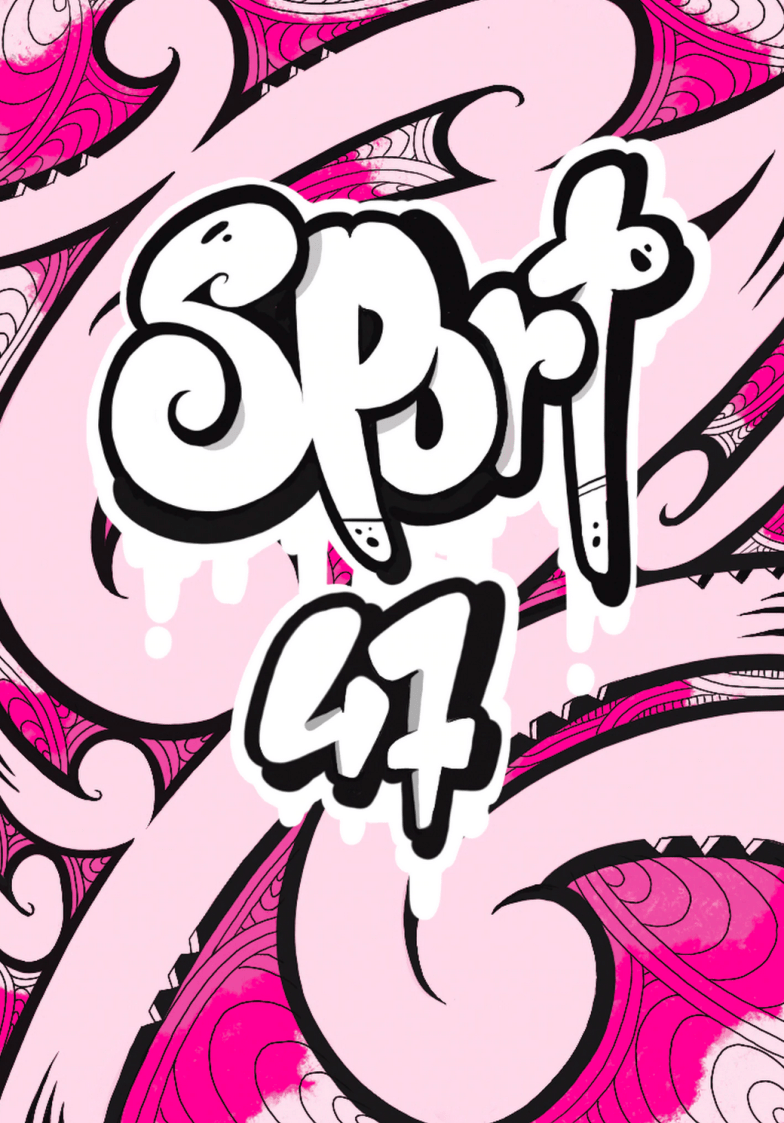
Poetry Shelf summer reading: Sport 47


I’m not angry—I’m just writing

a new book, thrusting my hands

into the dying earth

until I have enough coffins to burn

for warmth. I finger the jars of teeth

buried for luck. I pocket the coins.


Chris Tse from ‘It’s a metaphor’


Hard to believe we are moving into a change of season and here I am still celebrating books from 2019 in my summer reading. Sport 47 appeared last year and was much loved on social media. I can see why.

The editor is Tayi Tibble – her debut collection Pōukahangatus won the Jessie Mackay Award for Best First Book of Poetry in the 2019 Ockham NZ Book Awards. Apparently this is her debut in Sport, it’s as editor and she has done a cracking job. The eye-popping cover by Miriama Grace-Smith is the perfect hook for the ear-popping, heart-sizzling, mind-flipping content. I love the different effects on me as reader. It’s a shake-up, it’s balm, music, politics, self exposure, and I love love love it.

So many poets thrilled (I want to follow up on some of these that are new to me): Aimee-Jane Anderson-O’Connor, Hana Pera Aoake, Airini Beautrais, Vanessa Crofskey, Sam Duckor-Jones, Eliana Gray, Rebecca Hawkes, Nicole Titihuia Hawkins, Joy Holley, Talia Marshall, Fardowsa Mohamed, Aiwa Pooamorn, Meg Prasad, Ruby Solly, Anne Marie Te Whiu, Chris Tse, Eefa Yasir Jauhary.

Apart from the exquisite blast of poetry, two other features stood out: Tayi’s introduction and Anahera Gildea’s conversation with Patricia Grace.

Reading Tayi’s deeply personal intro reminded me there are neither wrongs nor rights when it comes to poetry. Heart and mind are active ingredients, writing and speaking from one’s experience and choices will never be redundant. It is ok to embrace confidence. I was especially moved by the importance Tayi gifted the writers and mentors that preceded her. In Tayi’s case: ‘a wise tohunga (my mum)’. And women writers, especially and above all Māori writers. If you haven’t yet read this glorious piece of writing, hunt it down now. Hold it to your heart.

The second treasure is the warm, generous, insightful conversation between Anahera and Patricia. It travels deep into reading and writing, into reading, writing and facing challenges and epiphanies (and everything in between) as a writer who is Māori. If you haven’t yet read this glorious piece of writing, hunt it down now. Hold it to your heart.

essa may ranapiri’s tribute to their kuia is luminous with love.

There is a blinding scene (excuse the pun as blinds do get spotted) in Anne-Marie Te Whiu’s ‘hood/ie’. I held my breath as I read.

Ash Davida Jane’s ‘hot bodies’ is poetry with the thermostat turned up. Wow!

Sam Duckor-Jones’s ‘Night’ and ‘Gut Health’ and are visual and sound triumphs.

I can’t get the last line of Eliana Gray’s poem (which is a version of the title) out of my head: ‘You’ve got to write like your life depends on it.’ That’s exactly how I feel sometimes.

The whole book is just glorious.

We are all the better for Sport 47 arriving in the world. Sport 48 must be just around the corner!


VUP Sport 47 page


Screen Shot 2020-02-27 at 3.57.37 PM.png


Poetry Shelf audio spot: Jordan Hamel reads ‘Tammy the Briscoes Lady Plans my Funeral’


9780995122932.jpg


Jordan Hamel reads ‘Tammy the Briscoes Lady Plans my Funeral’ (published in the Poetry NZ Yearbook 2020)


Jordan Hamel is a Pōneke-based poet and performer. He was the 2018 New Zealand Poetry Slam champion and competed at the World Poetry Slam Championships in 2019. He has poems published or forthcoming in Sport, takahē, Poetry NZ Yearbook 2020, Mimicry, Mayhem, Queen Mob’s Teahouse and elsewhere.


Poetry NZ 2020


Poetry Shelf Monday poem: Airini Beautrais’s ‘Soldier’s buttons’


Soldier’s buttons


Saw a man             supine on a bench

thought maybe needs help             recognised your shoes

thought maybe acute grief             or just resting


best left alone. Walked in the other direction.

How have I been so long out of sunlight,

how have I not known down here


there are these round yellow flowers

pushed up out of the river mud.

Or maybe I knew them and forgot.


Picked some, and daises, buttercups,

willow twigs, grass flowers, a madwoman’s posy.

So many ways to be out of one’s tree.


Walked back through the park. All year we’ve sat adjacent

in private losses                   individual lack of sleep

which has manifested as a shared engagement


in mutual insults                and off colour jokes

Oi what are these flowers               That’s no way to greet me

Like a common prostitute              (Me? Or you?)


You tell me soldier’s buttons. Makes sense,

dropped at the water’s edge. I look them up.

Cotula: little cup. Bachelor’s buttons, yellow buttons,


water buttons, brass buttons, buttonweed.

Gondwanan flower that’s scattered the world.

Makes sense, strewn                           like indiscriminate histories


coins shining on shut eyelids, minutes, millennia.

Anyway, we should treat sex workers with respect.

But don’t lift bullshit when under it’s


more shit and under that more painful

than can be looked at. Little cup, can’t fill it.

Goes on flowering like a useless need.


Airini Beautrais


Airini Beautrais is a writer and teacher based in Whanganui. She writes poetry, short fiction, essays and criticism. Her work has appeared in a range of journals and anthologies in NZ and elsewhere. Her first book Secret Heart was named Best First Book of Poetry in the Montana New Zealand Book Awards 2007; it was followed by Western Line (2001), Dear Neil Roberts (2013) and Flow: Whanganui River Poems (2017).


Poetry Shelf questions poets: Do poetry communities matter to you?

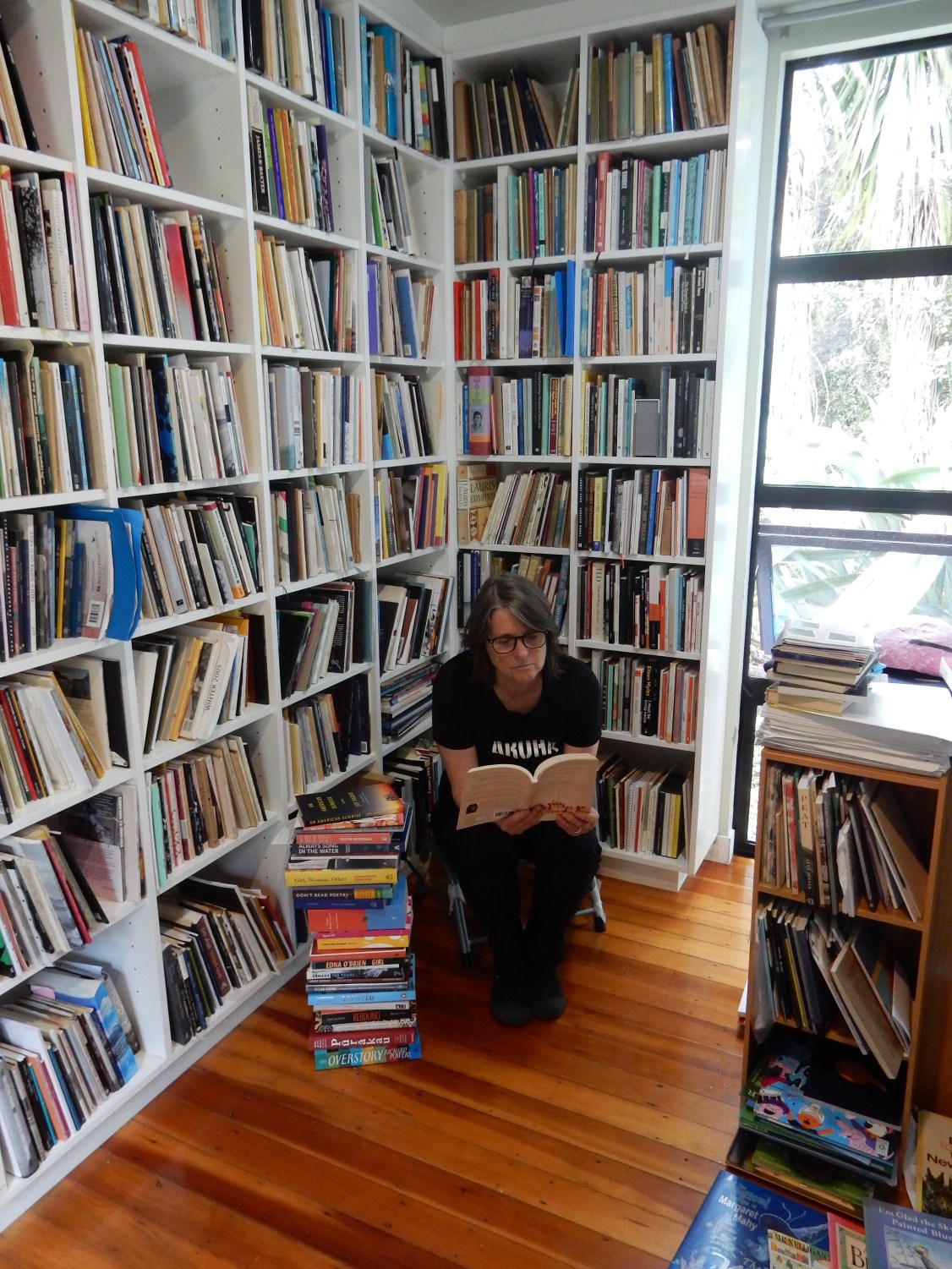
DSCN9858.jpg


Part of my aim with Poetry Shelf is to build bridges between diverse poetry communities and in doing so create a hub for sharing poems, interviews, news, anecdotes, ideas, interviews, audio, podcasts, reviews, new books, old books and so on. I want to engage with and showcase a diversity of voices.

I live on the outskirts of Auckland on the west coast, with dodgy internet, mobile reception and power, and at the moment scarce water (!) and I don’t get into the city that often. So I am dependent on the books I am sent, and my communications with as many poets as possible. I feel both inside and outside communities, belonging not-belonging.

Researching and writing Wild Honey took me into all manner of communities – past and present. Utterly fascinating. Always surpising. I found goodwill, bitchiness, support and aroha in the archives. Connections between women poets seemed vital, especially when women were writing in the shadows. The 2019 Wild Honey events were something special – and got me thinking about connectedness and bridges and how belonging to one community is not enough. Listening hard counts. I agree with Louise Wallace – kindness,  generosity and diversity – are crucial. I see this in what she is doing with The Starling.

Poetry Shelf is my made-up and constantly evolving community and includes best friends, people whose poetry I have admired for a long time, people whom I have never met, new discoveries. Why do I do this crazy thing that takes up so much time and operates outside the currency of money? Because no matter how tired or challenged or doubt-smashed I feel, in its drive to celebrate, question, and connect, Poetry Shelf is a necessary form of nourishment. It is like a huge loving poetry family with a truckload of goodwill and support. It constantly surprises and delights me. Do keep in touch. Do let me know of new discoveries.


Louise Wallace:
Poetry communities matter and have mattered to me immensely. Writing is of course a solitary act, but what’s the fun in doing the rest of it alone? A common misconception seems to be that the NZ poetry community is bitchy or competitive. I have found the opposite to be true. I am grateful for the opportunities I have received, often sent my way by other writers. Poetry communities can fulfil different needs at different times. As a young writer I really valued being surrounded by my peers who were on the same journey as me, and the help and guidance offered to me by senior writers. As a new mum last year I was physically isolated, unable to attend many literary events. Online communities filled that gap as a way to stay connected and still feel myself – I listened to poetry podcasts while out walking my son in his pram, I kept up with NZ poetry news on twitter whenever I could check my phone. Community to me means creating space for others. It means making sure there is room for as many different voices as we can imagine. It means generosity and kindness: lifting each other up. If there’s a window, fill it with someone else’s name.


Jordan Hamel:

I spent a long time figuring out how to answer this. Obviously the answer is yes, but I didn’t know how to articulate what poetry communities to me, ironically it took me to until last minute to ask other people for their opinions, my friend Sara gave me a great analogy. There’s an old classroom trust-building exercise where a bunch of kids sit in a circle and two kids in the middle are blindfolded and try to beat each other with rolled-up newspaper. They have to rely on the voices of the circle to tell them where to swing and gently push them in the right direction. What an apt metaphor, almost too on the nose. Sincerity is awful and I apologise in advance but strap yourself in because here we go.

When I first started writing, like most people I felt like the blindfolded kid swinging the newspaper, never sure if I was hitting anything. In the past couple of years I’ve found a circle, well circles plural, different, intersecting, amorphous circles, some occupy physical spaces like readings, writers groups and open mics, others digital and less tangible, all are so important to me and my poetry. I think the great thing about the metaphor is, in poetry communities you aren’t always the one in the middle wildly swinging, you’re also in the circle guiding others as they go through the same thing, sometimes you’re the one who created the circle in the first place, but as wholesome as this extended metaphor is, poetry communities in NZ aren’t perfect, we could all take a look at our circles and think how we can make them bigger, more inclusive, flexible, every so often we can turn around and try to see who’s outside the circle, blindly stumbling and swinging on their own, or who’s too nervous to even ask to join in. I’ve been lucky enough to find people who will let me play even though most of the time I still feel like a blindfolded kid swatting at darkness, but I think everyone feels that way and everyone needs those voices.


Sugar Magnolia Wilson:

This is such a good question for me right now. The answer is very much yes, poetry communities do matter to me, but also, no, not as much as they used to in the way that they used to.

Before 2012 my poetry community was just myself. I wrote and wrote, for years, in creative isolation and it was awesome, but I didn’t know any different so it wasn’t really anything. It was just the way it was. Come 2012 and I got accepted into the IIML masters course. It changed my life. My views were challenged, my writing grew, and I had such an amazing time being part of the Wellington writing community. The book launches. Amazing writer friends with the same writerly bullshit struggles. The support and lots of love and wine. So much creative generosity and oh boy is Wellington good at that. Without that kind of hothouse scenario, my book wouldn’t have happened, and I wouldn’t have turned my writing into a craft. But … like all good things, it needed to have its own little death.

I started, last year some time, to feel a bit sad about the whole thing. The launch of Wild Honey really defined what a poetry community should look like for me; big, wise, loving, many-voiced, multi-generational. I can’t really explain it, other than I felt like my IIML year had gone on for eight years instead of one, and that I was really and truly ready to graduate and throw my cap off and leave it in the rain. I realised that in order for my writing to survive beyond one book, that I needed to go it alone, to figuratively and literally move away, to let go of all the stuff and the scene and sort of competitive element than can start to creep in. I’m not interested in that stuff and I don’t want to be defined by my success on the Unity Books Bestsellers list. No shade to Unity wot wot.

Anyway, now I live in the bush and it’s nice, and I’m eternally grateful for poetry communities. I am hoping that over time a new kind of one will grow. Something wild and sweet that lets me grown in new ways.


Eliana Gray

Yes!!!! Where would I be, where would any of us be without community? Community to me is the bedrock and the impetus for everything. Why do we write if not to communicate with others? Why do we communicate if not to build community? I feel that almost every – if not all – human action has community building at its base.
We would be very little without community, isolated ghosts. I don’t think that sounds very fun. Other humans are one of the key ways we define our existence. I just can’t imagine life without it. Communities make me a happier person, a better writer, more accountable, more empathetic, a smarter person, harder, better, faster, stronger, all of it. Thank you to everyone in my poetry communities. I am still alive because you make life very appealing.


Vana Manasiadis:

I tried to answer this question before I fell down a metaphor hole grabbing at definitions all the way. What do I think a [poetry] community is, does, has? I like these community values: respect, agency, meaningful participation, collaboration, integrity, inclusion. When I’ve had poetry community experiences that have included lots of these things – kōrero, voices, tautoko – they are like blood transfusions. Like actual substance, and substantiveness. Like: I don’t have to long-walk/talk-listen-disagree-agree-eat-drink-stay late with my poetry community every day and night (though that’s the dream) but I do need more than brief SM broadcasts. (And clearly I’m saying this as a judgmental SM recluse who has swallowed the hard self-inflicted pill of not being part of a/the poetry community online; and who spends way too much time wondering whether it’s even possible to be in the same community as folks who’ve super-active-online-selves). But. Anyway. In my wider-panning poetry community (see above) – which really, really matters to me (see blood) – aside from curation there’s also accident, mess, aporía, and slow time. And now I think of it, I’m in a small but ecstatic community of poets who write long and languorous emails to each other. I should say epistles obviously.


Emer Lyons:

I was working on Heather McPherson’s poem ‘stein song for the blue house’ this month and I was drawn back to a quote from Starhawk’s book Spiral Dance: The Rebirth of The Ancient Religion of The Great Goddess:

And Goddess religion is lived in community. Its primary focus is not individual salvation or enlightenment or enrichment but the growth and transformation that comes through intimate interactions and common struggles. Community includes not only people but also the animals, plants, soil, air and water and energy systems that support our lives. Community is personal­—one’s closest friends, relatives, and lovers, those to whom we are accountable. But in a time of global communications, catastrophes, and potential violence, community must also be seen as reaching out to include all the earth (1999, 22).

Poetry communities are rife with nepotism, can become insular, and elitist, and benchmarks in people’s minds for what is deemed good or bad poetry, rather than the focus being on the sharing of “intimate interactions and common struggles.” The poet Fatimah Asghar says, “I work in the medium of community,” and I feel that, but only as far as community is a place from which I can question, include, and remain accountable.


Kiri Piahana-Wong:

Yes! Poetry communities matter, and they matter to me. I love how people who write in different styles and perform in different modes can find their poetry ‘home’ in different communities of poets. For many years my poetry community was Poetry Live. Attending the event every week somehow kept me grounded in poetry, and the friends I made there were endlessly encouraging of my poetry attempts. It made me feel strongly that poetry was not a niche hobby but rather an art form to take seriously. I’m grateful for the years that Poetry Live was my second home, and I’m also not the first person to meet their husband/future husband or wife/future wife there!


Olivia Macassey:

To begin my answer at the shallow end, writing poetry can feel like a bit of a strange compulsion, so there’s camaraderie involved in being with others who are just as crazy. I vividly remember my astonishment and joy when, as a teenager, I first encountered a bunch of poets en masse (in 90s Auckland at the Shakespeare tavern), and realized how not-alone I was. There’s a solidarity involved in this, which can be supportive and nurturing, and that matters to me. In recent years I’ve been involved in projects in the Northland community, led by Piet Nieuwland, and appreciate the wider perspective of seeing how poetry communities and other communities overlap and weave together and strengthen one another. Shared experiences, interests, kaupapa are essentially about similarity, but there’s also an important dimension that is about difference, mutual discovery and renewal: the way we encounter new ways of seeing and thinking and writing, spark off one another aesthetically, conceptually, politically, or in terms of practice.

Another important type of community is the kind of imagined communities we inhabit as writers. In a narrow sense I see this in, say, different people who may be connected through a particular publisher or publication (such as brief or this blog) – poets I may have read a lot, but not necessarily met or interacted with – but in a wider sense, it’s about ‘finding your people’ outside the constraints of time and place. An imagined community can centralize marginal poetics; social class, disability, sexuality. In my youth, I think without a sense of structures of feeling beyond the mainstream paradigms, or some connection to other poetic genealogies, I would have felt lost, and these communities continue to matter to me. At the deepest level though, for me, the act of writing always already anticipates community because a poem is a priori an act of communication, of reciprocity; its very existence implies a shared world. I write because I have found you: I write in order to find you.


James Norcliffe:

Writing poetry is a solitary act and in adolescence, when poetry began for me, it had a solitary audience as well. There was often an idealised, intended audience, but I was never brave enough to show my poems to her.

Later, though, craving a larger audience, it became apparent that other people wrote poetry too, and while the practice wasn’t as arcane as clog dancing or synchronised swimming (although it was up there) it  was clearly rarefied. Still, reading and submitting to magazines and attending the odd reading, made me aware that these people had names. Moreover some of them were local and, in time, I got to know them.

I’m not entirely sure what a ‘poetry community’ is. I’m pleased the question put community in the plural as it suggests a variety of communities of different sizes, purposes and flavours.

I belong to several. Firstly there is a small core of very close friends I’ve made through poetry and whom I number among my nearest and dearest. We meet regularly, eat together, occasionally holiday together and generally have a great time. We read and support each other’s work (and often launch it), but we’ve moved beyond the shallows of writing and into the warmer, deeper sea of friendship.

Secondly, there’s a closely-knit of poets of about half a dozen poets whom I meet with monthly, a group David Gregory once laughingly called the ‘poots’ groop’ and so the name remains. The p.g. has a shifting population with a fairly stable core and we meet to share and critique each other’s poems. It has been going probably about twenty years and one or two of the first group are part of this as well. I’m off to a meeting tonight feeling a little fraught as I need to find something to take. Even, if I don’t find anything I know I’ll have a great time and that among the laughs there’ll be a lot of close reading and penetrating thought. Just lovely.

Thirdly there’s the wider group of Christchurch writers I’ve been associated with for well over thirty years: the Canterbury Poets’ Collective. This highly active group organises an annual series of readings, bringing poets from beyond the city to a relatively large Christchurch audience. There are eight readings a season – now in Spring – involving over twenty four guest readers and large numbers of b.y.o. people. The CPC also occasionally organises one off readings and events, typically National Poetry Day celebrations. I suppose it involves two communities: the organising committee who are a dedicated set who mix a common goal with fellowship, and the wider collective who come along to support the readings, a large number of whom take part.

Finally, there’s the wider national poetry community of poets I’ve got to know over the years through the magazine and book editing I’ve done. A number of these I’ve only corresponded with, but most I’ve eventually met in real life and many have become firm friends.

All of these communities are hugely important to me. Writers are assumed to have monstrous egos and are supposed to be fiercely competitive. This has not been my experience. I’ve treasured the warmth, encouragement and critical support of people within all of these groups, particularly the more intimate ones. I have never been especially confident in my person or sure of my work although I pretend otherwise. It has been so good to have been nurtured by these communities and so satisfying to have nurtured others who are part of them


Hebe Kearney:

The Titirangi Poets group meets once every month in the Titirangi library, surrounded by bush and chickens, which roam the library car park in gangs. When poetry happens, it happens in a circle. Each person reads in turn like a set of dominoes, one following the other. A ‘round robin’ format.

Just knowing that they are there, in the clean and the library quiet, taking a few hours just for the sake of words, makes me feel better about waking and walking in this world. When I had the privilege of reading there I experienced it as a circle of support, everyone had a kind word to say, a suggestion to give me about honing the sound of my voice and words.

Poetry communities like this matter because everywhere there is poetry there are words living, words breathing and growing in power. Virginia Woolf once described poetry as ‘a voice answering a voice’ – poetry is always communal in that it is always a communication, a reaching of one person towards another and back. Poetry communities not only matter, but poetry communities are themselves part of the act of poetry.

Personally, I have tended to write quietly and hold my words close to myself. It is only recently I have begun learning to let my words free, and to really acknowledge the part of poetry that is the voice listening and the voice answering back. And it is through poetry communities that this interaction of voice and voice can be facilitated.

So I am bursting with appreciation and gratitude for poetry communities. They make space in a busy world for the simple beauty of words, and remind those of us with a penchant for hiding of the reciprocity at the heart of poetry. The way that, in essence, it is all about sharing.


The contributors:


Eliana Gray is a poet from Ōtepoti. They like queer subtext in teen comedies and not much else. They have had words in: SPORT, Mimicry, Minarets, Mayhem and others. Their debut collection, Eager to Break, was published by Girls On Key Press (2019) and they are the 2020 writer in residence at Villa Sarkia, Finland. It is very very snowy and they love it.

Jordan Hamel is a Pōneke-based poet and performer. He was the 2018 New Zealand Poetry Slam champion and competed at the World Poetry Slam Championships in 2019. He has poems published or forthcoming in Sport, takahē, Poetry NZ Yearbook 2020, Mimicry, Mayhem, Queen Mob’s Teahouse and elsewhere.

Hebe Kearney is from Christchurch but now calls Auckland her home. She currently studying to complete her Honours in Classics at the University of Auckland. Her work has appeared in Starling, The Three Lamps and Oscen.

Emer Lyons is an Irish, lesbian writer in her final year as a creative/critical PhD candidate in the English programme at the University of Otago, Dunedin.

Olivia Macassey’s poetry has appeared in Rabbit, Poetry New Zealand, Otoliths, Takahē, Landfall and other places. She is the author of two books, edits brief and co-edits Fast Fibres.

Vana Manasiadis is a Greek-New Zealand poet, translator and creative writing teacher who has been moving between Aotearoa and Greece, and is now living in Tāmaki Makaurau/Auckland. She is the co-editor of the Seraph Press Translation Series, and was the editor and translator of Ναυάγια/Καταφύγια: Shipwrecks/Shelters: Six Contemporary Greek Poets (2016) and co-editor, with Maraea Rakuraku, of Tātai Whetū: Seven Māori Women Poets in Translation. Her second poetry collection The Grief Almanac: A Sequel appeared in 2019 (Seraph Press).

James Norcliffe is a poet, editor and children’s author. He has published ten collections of poetry, most recently Deadpan (OUP, 2019). In 2010 he took part in the XX International Poetry Festival in Medellin, Colombia and in 2011 the Trois Rivieres International Poetry Festival in Quebec. With Jo Preston he co-edited Leaving the Red Zone, a collection of poems prompted by the Canterbury earthquakes and, with Michelle Elvy and Frankie McMillan, Bonsai (CUP) New Zealand’s first major collection of flash and short fiction. A new anthology co-edited with Michelle Elvy and Paula Morris  Ko Tātou Aotearoa | We Are New Zealand celebrating Aotearoa / NZ diversity is to be published this year.

Kiri Piahana-Wong is a poet and editor, and she is the publisher at Anahera Press.

Louise Wallace is the author of three collections of poetry published by Victoria University Press, most recently Bad Things. She is the founder and editor of Starling. Louise lives in Dunedin with her husband and their young son, and is currently working on a PhD in Creative Writing, focussing on contemporary long-form narrative poetry by women.

Sugar Magnolia Wilson lives in Fern Flat, a valley in the far North. In 2012 she completed her MA in creative writing at the International Institute of Modern Letters at Victoria University of Wellington. Her work has appeared in a number of journals, both in New Zealand and overseas, and she co-founded the journal, Sweet Mammalian, with Morgan Bach and Hannah Mettner, which is now run by poet, Rebecca Hawkes. Auckland University Press launched Magnolia’s debut collection, cecause a Woman’s Heart is Like a Needle at the Bottom of the Ocean in 2019; it is longlisted for the Ockham NZ Book Awards.


Poetry Shelf poem archives: Liz Breslin celebrates Anne Kennedy’s ‘I was a feminist in the eighties’


I was a feminist in the eighties


To be a feminist you need to have
a good night’s sleep.

To be a feminist you need to
have your consciousness raised
and have a good night’s sleep.

To be a feminist you need to
have regard for your personal well-being
have your consciousness raised
and have a good night’s sleep.

To be a feminist you need to
have a crack at financial independence
have regard for your personal well-being
have your consciousness raised
and have a good night’s sleep.

To be a feminist you need to
champion women, have a crack at
financial independence, have regard
for your personal well-being
have your consciousness raised and
have a good night’s sleep.

To be a feminist you need to do the
childminding, washing, shopping, cooking and cleaning
while your mind is on higher matters
and champion women, have a crack
at financial independence, have regard
for your personal well-being
have your consciousness raised
and have a good
night’s sleep.

To be a feminist you need to button
your coat thoughtfully, do the childminding
washing, shopping, cooking and cleaning
while your mind is on higher matters
and champion women, have a crack at
financial independence, have regard for
your personal well-being, have your
consciousness raised and have
a good night’s
sleep.

To be a feminist you need to
engage in mature dialogue with
your spouse on matters of domestic
equality, button your coat thoughtfully
do the childminding, washing, shopping, cooking and cleaning
while your mind is on higher matters
and champion women, have a crack at
financial independence, have regard
for your personal well-being, have
your consciousness raised and
have a good
night’s
sleep.

Then a lion came prowling out of the jungle
and ate the feminist all up.


Anne Kennedy

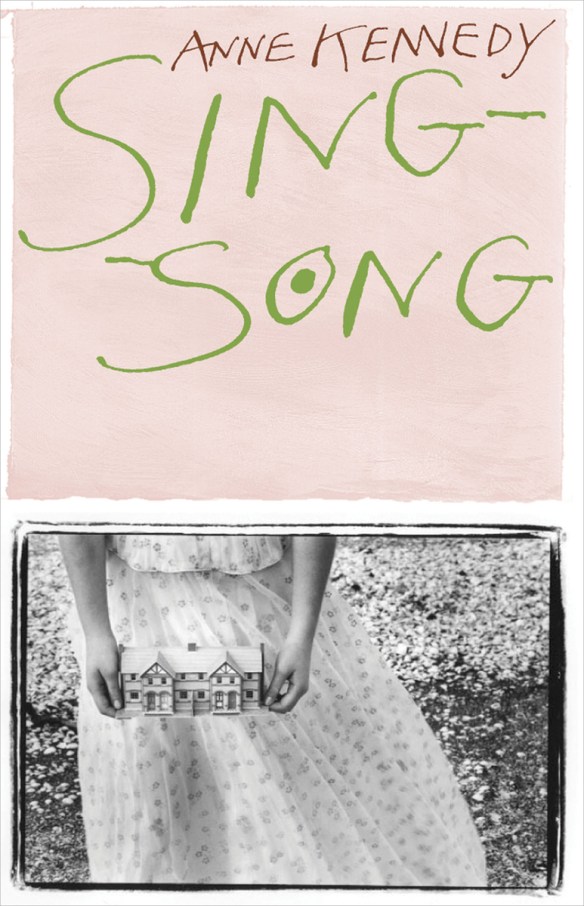
from Sing-Song (Auckland University Press, 2003)


This poem comes from Anne Kennedy’s 2003 book Sing-Song, though I found it browsing Best New Zealand Poems when I was a feminist in the early 2000s and it totally called me on my shit-heaping of perfection on expectation on repeat. It made me laugh and then it got me thinking. All those aspirations. I love how the list builds seemingly statically, and then the subtle rejigging of the line breaks: how the washing, shopping, cooking and cleaning stick out uncomfortably, the unsettled promise of the good night’s sleep. I love the truth in it, and the futility. Serious grappling in a sing-song frame. And what a killer ending. Fucking lion. Also, fucking buttons. Just saying.

Liz Breslin


Liz Breslin is a feminist in the 2020s as well as other things including a writer and editor. She’s working on poems, a play and lyrics for The Vegan Karate Club Band.

Anne Kennedy is a poet, fiction writer, screenplay editor and teacher. Her latest book is Moth Hour (AUP), long-listed in the 2020 Ockham Book Awards. The Ice Shelf (VUP), a novel, appeared in 2018. Awards and residencies include the NZ Post Book Award for Poetry, the Montana Book Award for Poetry, the University of Iowa International Writers’ Program (2017), and the IIML Writers’ Residency (2016).

Auckland University Press page


singsong-kennedy__06504.1552609614.jpg


Poetry Shelf interviews Nikki-Lee Birdsey


Screen Shot 2020-02-15 at 9.56.09 AM.png

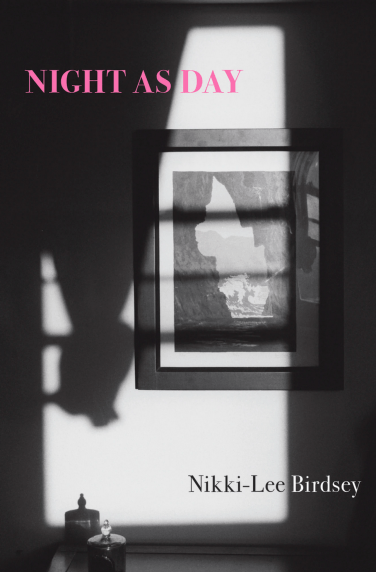
Night as Day, Nikki-Lee Birdsey, Victoria University Press, 2019


All the words I could write for you,

the darkness rising through darkness

the gleam-rich sea, a movie theatre

we went to.


from ‘The Long Nineteenth Century’


Nikki-Lee Birdsey’s poetry has appeared in a number of local and international journals, she holds a MFA from Iowa Writers’ Workshop and a BA from New York University. In 2015 she was a visiting faculty fellow at the International Institute of Modern Letters at Victoria University of Wellington where she is now a PhD candidate. Victoria University Press published her debut collection Night as Day last year.

Night as Day struck multiple chords with me, particularly in the way poetry can inhabit the present tense, build sumptuous layers of feelings, ideas, things, relationships and buried secrets. Movement accumulates between places that both unsettles and anchors. Self exposure is tested, how we make poems is equally so. Pronouns are open homes: ‘you’ could be anyone. It is the kind of book that settles deep inside through its complexity, its quietness and its subterranean questions. I adore it.

We have spent perhaps a year conversing and I feel I have barely scraped the surface in what I want to talk about. And that is good – it shows the rich reading experience this poet offers.


(…)   As I drive

through the valleys, silky plumes of smoke rise

from the trees at random intervals, different rooms,

and I, frantic at the moment’s undoing.


The wind always working against us

and the scattered remainders, the past’s

shallow artefacts; somewhere whole cities

covered in ash, that legacy of fire and burning.


It just means someone’s home.

Your birthplace perhaps the only

kind of destiny. To know where you begin

and where you return.


from ‘The Great Western Hotel’


Screen Shot 2020-02-18 at 8.59.47 AM.png


Paula: As my introduction makes clear, your debut collection Night as Day was a rich reading experience for me. When did you first begin writing poetry? Was it as far back as childhood? What compelled you? Did any poets influence you?


Nikki-Lee: Thank you so much Paula. That’s a great question—compelled is a good way to describe writing.

I first began writing poetry in high school two years after I moved from Piha to a town thirty minutes outside of New York City. Growing up, I was moved around a lot and was never given a lot of information about what was happening to me. Reading was an escape, but also I can remember this early compulsion of note-taking, of trying to learn and order the information. I don’t remember reading or learning anything in schools in New Zealand. I’m not sure if it was because I moved a lot or was a terrible student or the schools were terrible. I remember being bored, nervous, and acting out because we didn’t seem to do anything. But I read on my own from books from the library. As a kid, and a girl-kid, I read monster and magic and fairy books in New Zealand. Like a lot of kids I read Harry Potter, and I would reread and reread to get lost in it. The idea that there was a magical world you couldn’t see that could choose you and take you away from what was happening to you. It was very appealing. I didn’t care about sentences, and I wasn’t taught any skills about identifying what’s a good sentence. I don’t have a lot of clear memories as a child because when you deal with instability, discontinuity, trauma you forget stuff out of necessity.

I was talking to a friend recently about this—the early love of fantasy. I remember as a girl I thought if I could just be a were-witch or a werewolf or a faerie-king or a freaking animorph! Anything to explain this incredible power I felt while reading—it felt like a hawk soaring if you can try to imagine what that feels like, and I did a lot—and this powerlessness I felt all the time as a child. I don’t read fantasy anymore but I think I should. I had to let that go in American high school to make room for algebra and bio and history. But dark, Victorian-like stories of the fallen still hold their sway.

When I got to a New Jersey public school I became conscious of the first thing: September 11 happened and the school was evacuated. I’m just now at the end of my twenties understanding how that affected me, not just moving countries with no explanation, but that sense of danger; words like terrorism, war, entering my vocabulary but not understanding really what they meant. The second thing I became conscious of in high school was the system of knowledge was completely different. I took all of these required subjects like American/ Colonial history, European/ Colonial history, Algebra, AP bio, AP physics, but the classes where I didn’t feel the burning anxiety of knowing nothing and feeling like a fraud, or an idiot, or an interloper were English classes. Books I were familiar with. So even though I was reading for the first time the very western canon, I was open to it: Shakespeare, Arthur Miller, Hawthorne, Hardy, August Wilson, Harper Lee, Milton, Melville. Stuff you would find in a high school English class. It was a lot of information but I was kind of learning my own world through those worlds in the books, i.e. making sense of what the mid-west is, this is what Dean Moriarty means by Colorado and here it is on the map and that is in the country I now live in, etc. And I had a teacher who taught a poetry class and that was it for me, I was off!

Poetry for me was fragmented in a way, like how I saw the world, in pieces, trying to make sense of it, and so I felt weirdly that it understood me and I understood it. It was also a way for me to not really express myself but express that I was there when I felt this sense of incoherence as my New Zealand past was disappearing. By the end of high school at 17 I had caught up, but while I closed this big gap in knowledge I knew there was so much more, and during this time too I figured out how to sit the SATs and applied to college and financial aid applications and buried a parent and so on.

I read a lot of Keats, Hardy, Brontes, Plath, as I would Animporphs. That sense of transformation. In university, I had to repeat the process of high school but with a lot more reading and working in bars to pay rent and then the Global Financial Crisis/ Great Recession happened by the time I graduated in New York in 2010. I think now, as I finish my PhD once again in the institution, the world in crisis, how much those big early events like 9/11, the Great Recession, really influenced my personality. Man, how child and teen years and your early self-becoming years are radioactive; they are so so crucial. It was like I was there but I was too close to it so I couldn’t see it, or if I looked at it directly it might swallow me up, as it did many people, and it was affecting me in all these ways physically and emotionally. How I handle stress and a sort of constant anxiety and nervousness, etc.

I’m just now getting more time to read separate from my doctorate, even though it’s not done yet but I have the sense of an ending, and for instance I’m writing this at 7:13 a.m. and I’ve been up since 3 a.m. reading Rilke for actually no reason other than I saw it on the bookshelf lit by the full moon, shadow journaling, thinking maybe this is who I am, this is who I’ve always been ha. It’s finally light enough to make a cup of tea without waking anyone.


Paula: Reading this is like reading a miniature and evocative biography where books and learning have shaped a life. I am full to the brim with questions! Your debut collection Night As Day embodies writing and subsequently reading as a way of existing, just for that provisional moment. As your title suggests: in the dark of night and light of day, and in the light of night and dark of day. What attracts you to writing? Does it make a difference if it is poetry, academic writing or something else altogether?

Nikki-Lee: What a lovely reading of Night as Day! Writing is a part of me, I think, one of the most consistent parts, my long-time companion. I came to writing as a teen in dark times, like many people. I’d write in diaries, which actually turned out to be long catalogues of what I was reading at the time. I don’t know why I did this. I also wrote these long “dictionary lists”. Oh man. But writing in diaries or in notebooks is very different to writing poems. When I first went to graduate school in Iowa I got really overwhelmed with composition. I was getting paid to write and learn but I was in a competitive environment, and younger than I am now and full of self-loathing and a lack of confidence. So I spent a lot of time burying my impulses with writing and then finding them again towards the end of my time there. And then I first came to Wellington shortly after Iowa and discovered another deep lack of confidence: not being New Zealander (for lack of a better word) enough.

So I wrote Night as Day in an academic environment, but then sort of just said fuck it. If people want to know what “Conedison” means or what I mean by “100s” I’m going to annotate these poems and I’m sure they won’t like that either. But readers responded to the biographical (poem-ographical?) end notes, and also the tone of them, I just tried to be as earnest as possible even if being earnest isn’t necessarily interesting. So in a way it does matter if it’s poetry or academic or something else but if it feels right to me then it is always me—contains that part of me that is shaped by writing continually, ever-changingly, through my life. The insistence on writing that for me says: I am here, I am new here, and tries to refuse that displaced self that is untethered to place.

Also, when I’m not writing I feel like shit. But I can’t force it. I’ve heard this is a common problem.

Is it ok to swear in this interview? Sorry.


I have no idea how you see me.

I think about this a lot tonight

in the purple-dark sky, the sun

falling suddenly, broken up

 by hills. I’m in the office

scrawling over the whiteboard

impossible notes and perambulations.

We never look at just one thing.

I throw my phone in the bin

too many images—

it’s just a piece of junk aglint

in the plastic folds of the liner.


from ‘Objects 7’


Paula: YES! And you can choose whether to read the annotations. I like the way they provide different illuminations and send me back rereading. Reading your collection, I felt like I was inhabiting a moment, a provisional glorious moment that was shaped by me and affected so deeply by the poems. Every time I inhabit the poem it is different. How does poetry affect as you reader and / or as writer?

Nikki-Lee: I love the idea of inhabiting a moment in a poem. What I love about poetry is that if you respond to it as the reader, you are shaping the poem. Poetry can make you give something of yourself to the poem, if just for a second. But that is such a gift. When you’re reading a poem, and you feel like it sees you, that’s the goal, the hope of the poet. One of the many reasons why it’s so vital to have different writers represented in literature.


Paula: Do you have key motifs, themes, symbols that you can’t get away from, that you simple love?

Nikki-Lee: I have always loved the colour of the sky and how it changes. The light of the day subsiding, the day rising. And a million other things.


Paula: Ah I love the appearance of sky in poems too for all kinds for reasons. Poetry is a form of wonder in all its connotations. I also love the way you take us outside the poem to the wider context of its own making. How important is this?

Nikki-Lee: I wanted to draw attention to the moment, or act, of writing the poem as a way to open the poem up. I think there should be multiple ways into a poem, why not? There are no rules. I spend so much time thinking about this. There are literally no rules, less is not more, more is not less. You just do everything you can to make connections, to reach a hand out, to make anything — maybe even especially the thing that is most painful — beautiful.


She said, ‘I believe in being a poet

in all moments of life.’ She wrote

of machine guns planted in courtyard gardens,

of the breaths of silk-tasselled acacias,

and she asked if she would dance

once more on wine glasses. Her repeated

phrase an echo, ‘Why should I stop?

Why should I stop?’

She divorced her husband,

she bore a bright son

and I think she loved her mother.

Is it obvious that she was beautiful?

Her books were banned

and she said, ‘Being a poet means

being human.’


from ‘Objects 9’


(a composite biography of Iranian poet, Forugh Farrokhzad, 1935 – 1967)


Paula: I totally agree. Poetry equals no rules. Multiple pathways. I find your poems to be pitch perfect on the line (I would love an audio version of the book), while the arrival of detail adds texture to feeling, ideas, storytelling. What matters when you write a poem?

Nikki-Lee: Wow thank you! What matters when I write a poem? I dunno. I left my life in New York City in my mid twenties to move back here and write this book Night as Day. Write a book about the place I’m from. Sometimes writing feels like the thing that keeps me going, keeps me alive. I know it sounds maybe over the top but this is a dramatic, consequential year. So I’m feeling it a lot.


Look, I’ll show you around

this condensed symbol of a place.

It’s true, its everything

and nothing specific,

and everything to me

and always specific.

It’s impossible to understand

how we got from there to here.

One place after another.

You come close

to a home.


from ‘Objects 12’


Paula: Do you have tension between reserve and admission?

Nikki-Lee: Yeah, considering the answer to the last question ha. I’m all tension. Constantly wondering if I’ll regret being open. People don’t like that always — I get that vibe here more than in other places I’ve lived. Hey Nikki-Lee how’s it going?

Me: Let me talk to you about how we have the highest homelessness rate in the OECD.


Paula: Yes! To what degree do we put the filter on when we write or go out in public. Is it something that keeps poets awake at night I wonder.

Is there a poem in the collection that particularly resonates with you? I am particularly drawn to the object poems, ‘The Blue Hour’, the notes at the back!

Nikki-Lee: They’re all a snapshot of me at a certain time. You gotta learn to love the past versions of yourself (I’m writing like I wrote this book years ago as opposed to finishing it last year and publishing it a few months later but it’s early and I have to catch the bus to work, sorry!). In Night as Day I’m working through a lot of difficult memories, things that were spurred by moving back here, and other stuff.

The poem ‘The Blue Hour’ is one people talk to me about. I’m proud because I was so afraid writing that poem and I want people who might read it to think it’s okay to have parents who can be toxic and that reject you. It’s nothing to do with you. There’s this really privileged tyrannical notion of upholding this family ideal when the people who are your parents, who are supposed to protect you, are, like, annihilating you with their generational greed.


You need a human to love in this awful

human endeavour. You look at all the

sad, dark things I can write long after his death.


You are reading this introduction

to my life now, I wish it were closer

to happiness, but then it wouldn’t be


close to me.

That light most

like New Zealand—


even I couldn’t tell the difference—

the blue hour lit up her piano

that she never played in front of us,


just as her mother never did, whom she

loathed and then nursed. I do not want

to loathe and then nurse.


Mum, please, don’t hate this,


I love you.


from ‘The Blue Hour’


Paula: Ah ‘The Blue Hour’ really affected me and seems connected to a maternal undercurrent hiding in the book. All the poems in this section map a life (and as you say in the whole book) and in this example the mother-daughter relationship is in the foreground. The poem’s larger indents on the first lines of stanzas are like breath intakes, the writer’s hiccups, hesitancies, with a filter at work and the fertility of pause.

You were born in Piha – I live near Te Henga on the West Coast and it anchors and lightens me in so many ways. How does your birthplace matter?

Nikki-Lee: It’s a place that both anchors and unmoors. It stands in for the flood of the past when you’re trying and failing and living a life where your past doesn’t have to define you. And then I go back there and I stand at the cliffs at the end of the road and I want to scream but I also know how that place is always a part of me. How honoured I am to be in that place. To have been taken so far away, and then to find my way back.


You craved the sea so long

but this is the first time you

look at it for a long time. You

wonder at the names of boats.


from ‘The Undergraduate’


Paula: What other activities enhance your life as writer?

Nikki-Lee: Occasionally crying while working out. Saunas. Skincare. Cardi B. Asking politicians at events about how’s it possible we have so many people living in poverty in a wealthy country with no tax on wealth.


The Blue Hour

  It’s the blue hour of an August

five o’clock, unlike any other I’ve seen.

I’ve made worse this worst time of year


for me, haven’t spoken to my mother

in a whole year. Longer? Words

compound, then run away from you.


That’s a cliché, but so is everything.

How many times I could barely

look to see the light streaming through


the windows of her New Jersey apartment.

No difference between the filmy curtains

and gauzy air. She’d bring me broccoli soup


from Panera Bread™, she’d say one can

never understand the sadness of you,

which explains not all, but some, of our problems.


From the rooftop garden

I would focus on the peak of the church

steeple across the street, and the early summer


moon just behind it, while the cat Lily,

deceased recently, slunk over to my deck chair

sunk in the faux-grass. My mother says


you need an animal to love,

but in that garden state I could see only

the ordered treetops, below the brown bees


swarming the dirt in the revolutionary war

cemetery. I walked through their hum once

and found four in my shoes; couldn’t tell the graves


from the broken headstones;

didn’t feel the sting till much later.

What do you put on bee stings? She asked,


I think vinegar, I said. She, beautiful

and smaller, somehow, walking out

of the bathroom wrapped in a purple sarong,


make-upless, wet hair made her

more definite; the light on her gold curls

a real halo, slight smile, curve of a tiny hand.


She was so beautiful I didn’t

think I could ever be beautiful because

some beautiful mothers never tell


            their daughters in time. I built myself

from the ground to that rooftop, waking in my spot

amongst the trees, the spotted leaves.


You need a human to love in this awful

human endeavour. You look at all the

sad, dark things I can write long after his death.


You are reading this introduction

to my life now, I wish it were closer

to happiness, but then it wouldn’t be


close to me.

That light most

like New Zealand—


even I couldn’t tell the difference—

the blue hour lit up her piano

that she never played in front of us,


just as her mother never did, whom she

loathed and then nursed. I do not want

to loathe and then nurse.


            Mum, please, don’t hate this,


I love you.


Nikki-Lee Birdsey


Victoria University Press author page

Poetry Shelf audio: Nikki-Lee reads ‘Foreign and Domestic’

Poetry Shelf poem festival (trees):  ‘Objects 4’

Best NZ Poems 2018: ‘Mutuwhenua