We swim like foster children, our necks held high, we swim with open arms knowing water will always want us back, we swim like brides with beautiful feet, we swim like Russian thoughts.
We swim in caravans of water, we swim amongst floating chairs, a toaster, we swim with a lampshade on our heads and when the current surges west, we swim out into the open with the eels.
We swim like we are missed, we swim like we are bridled, we swim under bridges and when the boats come calling, we swim low, through scum, through ropes, we swim like rich people, always laughing.
Frankie McMillan
Frankie McMillan is a poet and short story writer who spends her time between Ōtautahi/ Christchurch and Golden Bay. Her poetry collection, There are no horses in heaven, was published by Canterbury University Press. Recent work appears in Best Microfictions 2021 (Pelekinesis) Best Small Fictions 2021 (Sonder Press), the New Zealand Year Book of Poetry ( Massey University), New World Writing and Atticus Review.
Vaughan Rapatahana begins many of his poems with a whakataukī. He is reading English versions of his poems that are then read in Spanish, but I love the way he brings in te reo Māori. Words say so much that are lost in translation, especially in poetry where each word is a rich vessel – words such as karakia and whanaunga. Vaughan’s poems consider death, place, whānau, significant issues such as global warming, the treatment of Māori. One poem particularly moved me: ‘Talking to my son in a funeral home’. Vaughan wondered why he keeps writing poems about and for his son who committed suicide 16 years ago. He shares his recent epiphany: that he writes of his son to keep his son alive. Later he reads a second poem, ‘The Zephyr’, a list poem, that is equally compelling (‘The zephyr that is my lost son still frisks me’). Ah. Ah. Ah. He reads a love poem he has written in te reo Māori to his wife, because he says he finds it easier to write how he feels in his first language.
To hear this coming together of te reo Māori, English and Spanish – a poetry meeting where words are held across distance to draw upon depth and intimacy – is a rare and glorious treat. Thank you.
Vaughan Rapatahana (Te Ātiawa) commutes between homes in Hong Kong, Philippines, and Aotearoa New Zealand. He is widely published across several genre in both his main languages, te reo Māori and English and his work has been translated into Bahasa Malaysia, Italian, French, Mandarin, Romanian, Spanish. Additionally, he has lived and worked for several years in the Republic of Nauru, PR China, Brunei Darussalam, and the Middle East.
from one spark: Skylla draws the planet as three lippy women
the planet as Klytaemnestra
don’t shove you everywhere the tail yours don’t sear you the fish to the lips my like the fish out of water δεν τρέμω the fish stinks from the head like the fish σαν out of water won’t cut I the throat my το ψάρι won’t lower I the tail my won’t shake like the fish I
the planet as Medea
show I the teeth my squeeze I the teeth my armed until the teeth fight I with nails and with teeth talk I inside from the teeth talk I outside from the teeth if don’t you have teeth can’t you to bite you can’t dodge this δράκου δόντι να’χεις δεν γλιτώνεις not even with a dragon’s tooth
the planet as Antigone
from one spark grows a bushfire put I the hand to the fire from one spark είμαι grows a bushfire am I lava and fire the eyes my throw sparks fall I φωτιά to the fire the eyes my throw sparks grab I the fire και put I the hand λάβρα to the fire grab I the fire am I lava lava am I and fire and fire
Vana Manasiadis
Vana Manasiadis is a Greek-New Zealand poet and translator born in Te Whanganui-a-Tara and based in Tāmaki Makaurau after many years living in Kirihi Greece. She is 2021 Ursula Bethell Writer-in-Residence at Te Whare Wanaga o Waitaha Canterbury University. Her most recent book was The Grief Almanac: A Sequel (Seraph Press).
All Tito’s Children, Tim Grgec, Victoria University Press, 2021
An intro:
Tim reads ‘Infectious Divides’:
Tim reads ‘Lost Tendencies’:
Tim Grgec was the 2018 recipient of the Biggs Family Prize for Poetry. Having failed to achieve his childhood dream of playing for the Black Caps, he now has delusions of becoming a great writer. His first book, All Tito’s Children, is out now with Victoria University Press.
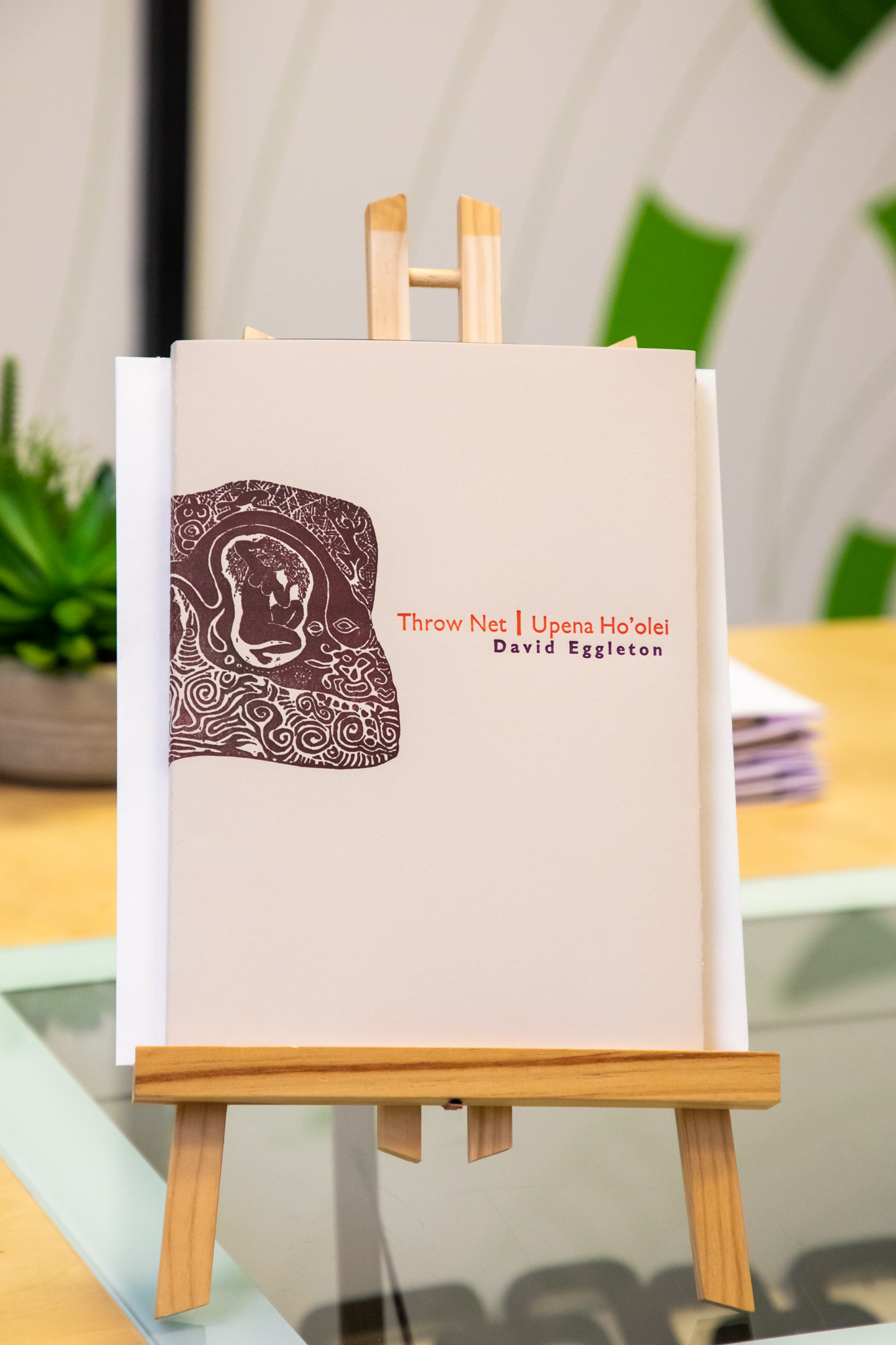
Throw Net | Upena Ho’olei, David Eggleton, artwork by Tonu Shane Eggleton, National Library / Fernbank Studios, 2021
I’m mesmerised by the sunshine’s sheen, and every minute particular feels mine.
The sea disgorges its catalogue of shells on the white page of sand for no-one.
On my hotel bed, I dream and sail.
from ‘Tourist Island’
Our current Poet Laureate, David Eggleton, has published a handset, hand-bound collection of poetry with artwork (woodblock prints) by his brother Tonu Shane Eggleton. Brendan O’Brien, beautiful-book craftsman extraordinaire, has produced an edition of 100 at his Fernbank Studios. The book is exquisite. I run my hand over the rough edged paper (Kerkall, plus Stonehenge for the covers). It is book joy. Holding this book. Holding this beauty. The artwork is an evocative sheen on the page.
The National Library, which has administered the New Zealand Poet Laureate Award since 2007, published the book. The award was established by Bill Manhire and winemaker John Buck as the Te Mata Poet Laureate Award n 1996. Throw Net | Upena Ho’olei is fittingly dedicated to John.
In 2018 David spent three months at the University of Hawai’i’s Moana Campus, as the Fulbright-Creative New Zealand Pacific Writer Resident. The poems began in notebooks while he was there, and were completed upon his return.
Throw Net | Upena Ho’olei, with nine poems and a scattering of artworks, is the perfect place to sojourn.
This is poetry that celebrates the moment. It feels like the poet is inhabiting a particular place, at a particular time, and slowly breathes in the experience. The poem establishes a heightened relationship with place, a translation of experience within measure poetic form. The treasured details offer sound and visual explosions to the point I am imbibing a poetry feast, a delectable banquet. I am unashamedly drawn to food metaphors because poetry is a form of nourishment on the tongue, in the heart, in the lungs. This is poetry that is so very nourishing.
There is quietness, there is melody, there are shifting keys and multiple forms. I am breathing in salt and ocean, and undulating voyage. I am lingering over vignette and anecdote. In this time of limited travel and strict local borders, poetry is a travel plan, an itinerary of respite and joy. You might swim with turtles and hear the church bells ring out. There is ‘the chop of waves’ and ‘ukelele strums’. Expect mountains and lava and sun, much much sun. I am feeling skin glazed as I spend a whole Saturday drifting in and out of these poems. Pleasure crafts. Such honeyed vessels.
I love this lovingly crafted chapbook. Such economy, such fluidity, such reach. I dream and I set sail.
The snores of a sleeper on a beach towel recite genealogy under volcano’s glow. A sunken raft of manta rays stirs after dark.
Hands hula-hula, shaping sandwiches into islands; mechanically, a shark takes a bite out of the moonlight.
Someone slings a hammock between trees. Each wave is a line; each line is breaking; and even the mountains are setting sail.
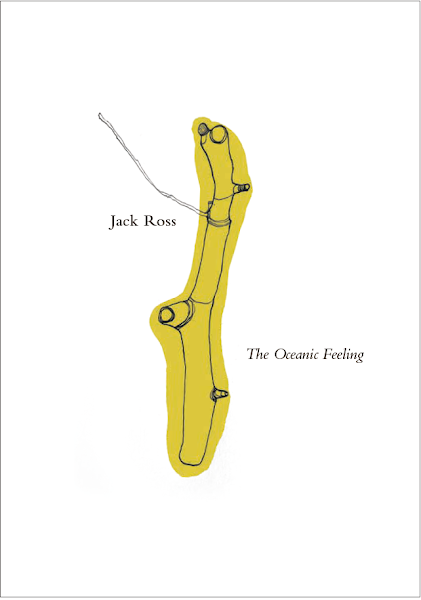
The Oceanic Feeling, Jack Ross, Salt and Greyboy Press, 2021
Here I go reviewing a book again with the subterranean feeling I experienced last March, barely articulated, drenched in uncertainty, fearing for the well being of Aotearoa, fearing for the well being of our frontline workers, fearing for our understaffed hospitals, fearing that supermarkets will deal with aggressive behaviour from some shoppers, yet full of gratitude for our Government’s swift response, for everyone choosing to stay at home and wear a mask. The subterranean Covid effect saw me drifting around the house yesterday with Jack Ross’s new poetry collection, The Oceanic Feeling, in my hand. Not writing a word. Word-drifitng in and out of countless books. Worrying about Afghanistan. Listening to Reb Fountain. Worrying about Haiti. Sydney. All the people living alone. The homeless.
The title is so fitting. The oceanic feeling.
Layer it up. Stand by the ocean and get an intake of ocean beauty. Sit at my kitchen table looking onto the tail end of the Waitākere ranges and my potential for worry is oceanic. Below the surface in my blood and bones. Above the surface in those intruding thoughts that I try not to let settle at the station.
I love this title. This beautifully produced book with its white cover and striking image holds an ocean of feeling. Add in the white space, the unsaid. Add in the physical, the images that glint and hold your attention.
The cover drawing is by Swiss-New Zealand artist Katharina Jaeger, and is part of the suite of images included in the collection. Bronwyn Lloyd’s afterword explores the connections between the drawings and the poetry. Katharina was inspired by her father’s manic pruning, and rather than use the the pile of clippings as prunings, drew them instead. Bronwyn makes a vital link between prunings and the skeletons in the artist’s closets, in the poet’s closet, and by extension in our closets.
Poetry is both pruning and planting and, at times, opening the closet door is to shine a light on the tough, the difficult, the surprising.
Jack’s terrific new collection does just this. The poetry seeks perspective in the corrugations and felicities of the everyday. In the little and larger events that shape and have shaped life. That nurture love, that spark a sense of humour, that trigger contemplation. The poems occupy the present but they also recuperate the past. I am moved by this.
The book is essentially in two sections, like two halves of a heart, with ‘Family Plot’ alongside ‘Ice Road Trucker’. Family poems alongside poems that consider the academy, poetry journals, travel, public art, reading, thinking. There is also a tiny cluster of small poems and of translations.
The poetry peers into the mist, and swivels to embrace the clearly sighted.
A sublime example is ‘What to do till the sentinels come’. The poet’s mother (I am making this assumption) has forgotten to feed Zero the cat when they are away. The cat hides in the garden shed, unfed. Here is the mist and the close at hand. The poem as the pruned twig.
it’s not that my mother neglected her task on purpose she’d written in her diary
FEED THE CAT! it’s just that her mind now fills in blanks with certainties
not doubts there was a slight pause before that “fine” all I know is our cat
left alone in the storm my mother alone in the fog of her brain
In the opening poem, ‘Lone Pine’, a tree crew are pruning the pines. The physical scene unfolds, and in reaching the visual impact of the tallest tree with its branches stripped bare, the loss doubles back. This is the pruned branch laid on the page: ‘standing bare / just like my father at the end’.
2021 is the season of memoirs. Long form and all revealing.
And yes, The Oceanic Feeling is a form of memoir. Fragmented. Selective. Revealing. It is also a form of engagement with both ideas and feelings. Poetry as a way of discovering chords between here and there, this and that, now and then. So many layers. So many connections. ‘Family skeletons’ does this. The sister with her suicidal thoughts, witnessed throwing a rope over a tree, who later succeeds with pills, is both presence and absence. Again I am picking up a branch laid upon the page and I am feeling it deeply.
Ah, I am moving in so many directions, as I read Jack’s collection, from the cars loved and then replaced, to bookshelves and superstitions, to wrangling over the colours of a graduation hood, to a university department lovingly built up over time, to be faced with cutbacks.
What makes this book resonate so deeply with me is movement. Physical and emotional movement. Not on a grand over-the-top flare of sentimentality but in small measured steps that favour contiguity. I relish the shift between what is easily witnessed in the everyday and what is much harder to fathom, what is retrieved in glimmers and shards across time. it is a collection that warrants a prolonged sojourn. Glorious.
I am going to leave you with ‘What do you want?’. The poet is in a Feilding library, having driven down for a function. The poem swerves and I am utterly affected.
What do you want?
said the librarian in Friendly Feilding to come in from the cold was my reply
we’re closing an hour early for a function the function I’d driven down for I walked away
he’s crying but he doesn’t know why he’s crying said my sister
to the primer one teacher who wanted to know why I guess I do too I guess I do
I was small and afraid of a brand-new place so many people but what remains
is kindness my sister trying to help unavailingly
Jack Ross
Jack Ross works as a senior lecturer in creative writing at Massey University. He is the author of five poetry collections and eight works of fiction, most recently Ghost Stories (Lasavia Publishing, 2019) and The Oceanic Feeling (Salt & Greyboy Press, 2021). He blogs here
Sea-light, Dinah Hawken, Victoria University Press, 2021
Cover: Breaker Bay, Looking South, Gerda Leenards, 2007
Dinah Hawken reads ‘Haze’, ‘The sea’ and ‘Faith’ from Sea-light
Dinah Hawken is one of New Zealand’s most celebrated poets. She was born in Hāwera in 1943 and now lives in Paekākāriki. Sea-light is her ninth collection of poetry.
Few writers have the skill to return to the land and the sea with such originality and genuine knowing as Hawken.’ —Sarah Jane Barnett, NZ Booksellers
‘As a poet she utilises economy on the line to build richness above, between and beyond. That plainness of talking makes the impact even stronger, deeper, wider.’ —Paula Green, NZ Poetry Shelf
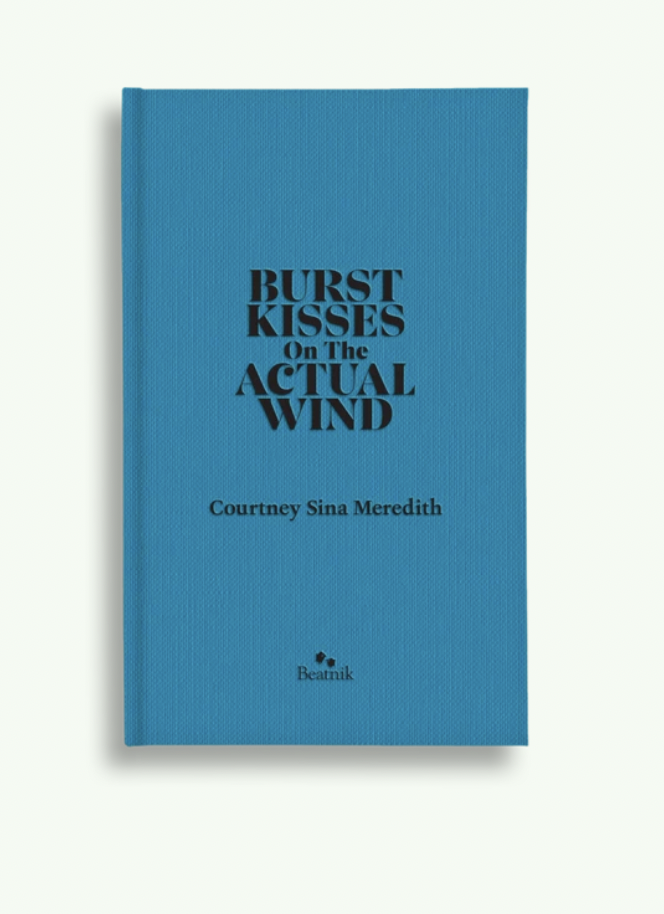
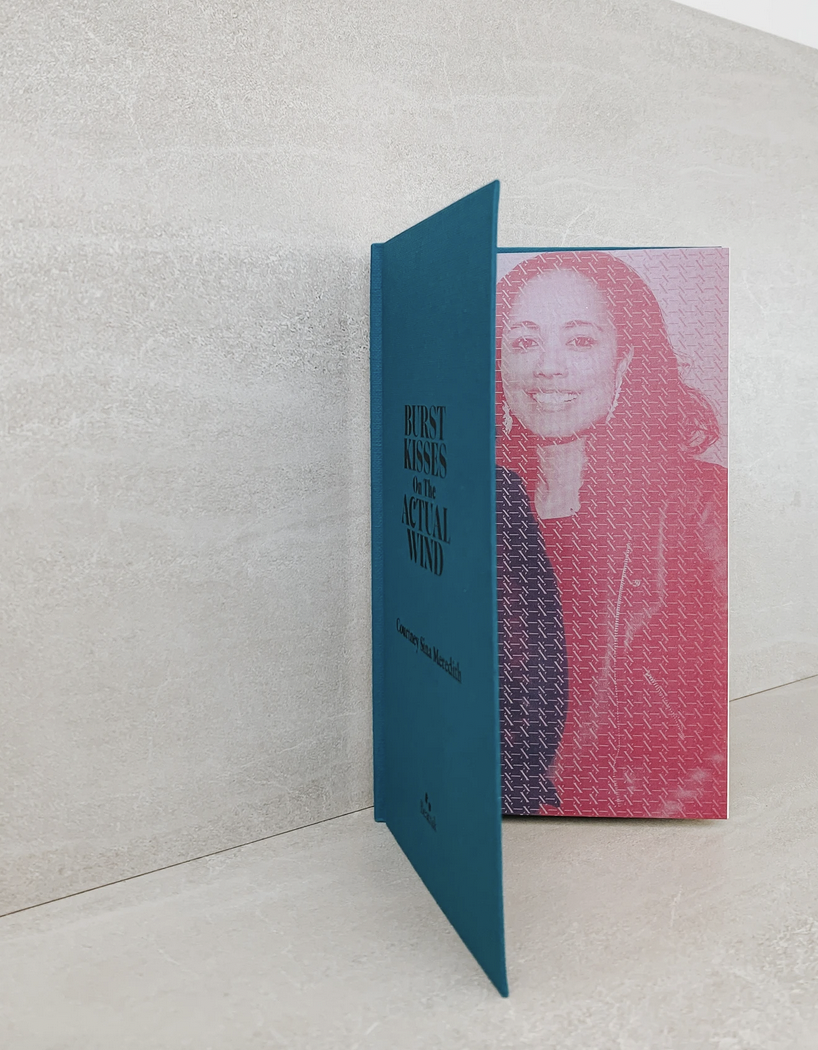
Burst Kisses on the Actual Wind, Courtney Sina Meredith, Beatnik Books, 2021
Courtney Sina Meredith’s mother, poet Kim Meredith, has edited Courtney’s new collection and has written a moving introduction. I love this. And I love the gratitude list at the back, where thanks is offered to her editor, publisher, true love, village and children. It infuses the book with love.
This is a book of love.
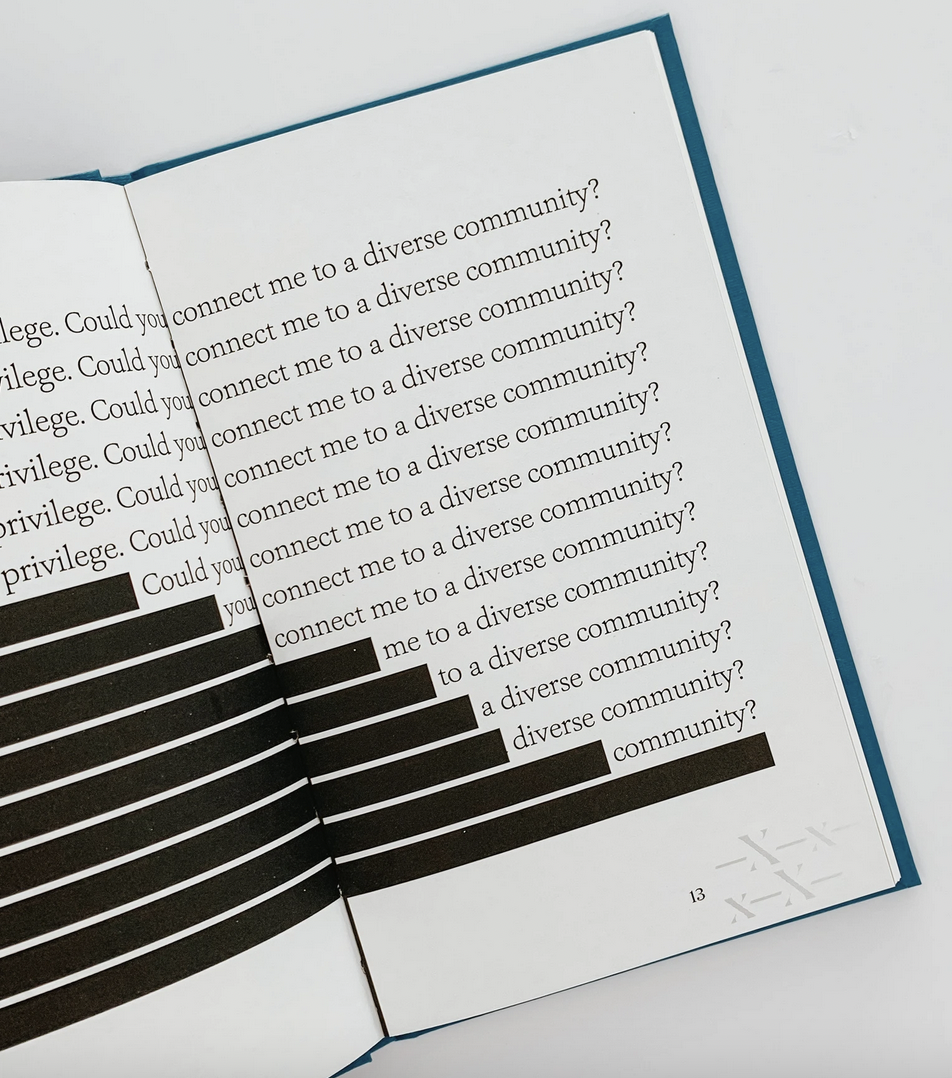
The opening poem is like a staircase, with the opening line (‘I am aware of my privilege. Could you connect me to my community?’) dropping a word, one by one, to become ‘community’. For me this collection is the incandescent, life-affirming bridge between ‘I’ and ‘community’.
And if the collection is a poem bridge, it is built with diverse material, every time you shift your eye it shifts form, becomes visually distinct. The love and themes that hold the collection together are a constant; think love, travel, dailiness, mother, daughter, lover. Self and community. I adore this fluctuation between constancy and a mobility of form. The mind and heart go flying. The mind and heart are grounded.
This is a book of self.
One poem resembles a vessel, a mouth, a self container. The opening and closing lines (‘How about being a woman?’) move, one extra word at a time, to the fullness of the middle line (‘How about being a young brown queer single educated professional creative woman?’). It is a song, a chant, a plea, a mantra. It resonates thorough the connection as a whole.
A second poem, ‘eye’, removes the letter ‘i’, and enacts missing self, elusiveness, restless, regret, arrival, departure. The peppery gaps are signposting the vagabond ‘I’, so full of possibilities.
This is a book of travel.
Foreign cities, physical travel away from home, charting the distractions and attractions of elsewhere (New York, London, Mexico City, Iowa, maybe Chicago). Yet the travel is also internal, inscribing the pathways home, to an interior home. Coming home to self. Poetry is most definitely a sublime means of travel.
This is a book of the matter of fact and this is a book of the intensely moving.
I made a big curry for all of my friends. One of them gave me Twenty Love Poems and a Song of Despair.
My cousin went to see another friend at a bar. A guy asked them for a threesome. They said no.
I read about Nelson when everybody left.
from ‘Aso fanau’
I have stolen away into the secret room
mothers build inside their daughters
I am feeding on a dowry centuries old
the bones sucked dry
a feast of bright quiet.
My mother’s dreams are here
beside the red gold river
born of shame and laughter
the shifting bank won’t hold.
from ‘I have stolen away into the secret room’
Courtney’s poetry is so lovingly crafted, the silence as potent as the kinetic line, the evocation of the physical, the need to feel the word and the day and the vital connections. In Burst Kisses on the Actual Wind, the poems open out, gloriously, and as readers we are invited to step in. My only misgiving is the smaller font is a challenge for the visually impaired. But this is a joy to read. A beautiful object thanks to Beatnik. In the final poem, ‘Avondale Heights’, the poet is home, and in the final line, ‘The horizon is vast’, the possibilities of life stretch wide. And that includes poetry. Sublime.
Courtney Sina Meredithis a distinguished poet, playwright, fiction writer, performer, children’s author and essayist, with her works being translated and published around the world. A leading figure in the New Zealand arts sector, Courtney is the Director of Tautai Contemporary Pacific Arts Trust, an organisation committed to championing Oceanic arts and artists. Courtney’s award-winning works include her play Rushing Dolls, poetry Brown Girls in Bright Red Lipstick, short stories Tail of the Taniwha and children’s book The Adventures of Tupaia. Burst Kisses On The Actual Wind is Courtney’s new collection of poetry, the book was released in 2021 by Beatnik Books.
Ah. Love is my final theme. My seventeenth gathering. I chose love because love is the ink in my pen, it drives the pencil filling my notebooks. It’s the reason I keep two blogs running when, at times, it seems impossible. There is the love of reading and writing stretching back to childhood. Love poetry can embrace many subjects, moods, objects, experiences, relationships. So many poetry books in Aotearoa are steeped in love. In what is written and, just as importantly, in the infectious love poets feel for the power of words. For the possibility of the line, silence, music, physical detail. As readers, writers, publishers, reviewers, booksellers of poetry, we are connected through a shared and invigorating love of poetry. Ah.
To celebrate the end of my theme season I have ten copies of Wild Honey: Reading New Zealand Women’s Poetry to give away. I will sign one for you or for a friend. You can leave a comment on the blog, on FB or Twitter: Which theme resonated for you? What theme do you suggest if I should ever do this again? Or just email me if you have my address.
Grateful thanks and aroha to all the poets, publishers and readers who have supported my season of themes. I so loved doing this!
The poems
Poem
So far it has worked by imagining you in all the places I would like you to be
*
this is the one I love. he is not here but the air is still warm from where he might have been
*
we have spent hours circling each other with words-thinly vowelled embraces
*
how to translate these words into silences or the silences into words
*
when I cannot fix you behind my eyes I carry your absence like stars on the blue roof
Jenny Bornholdt
from Selected Poems, Victoria University Press, 2016
Catch
Two sitting at a table two at a table sitting two and two a table in the grass in the grass a table and on the table empty almost with a little a little empty almost but with a little water there sits a jar for love on the table a jar for love not a fresh jar every day fresh every day nothing in the jar that lasts always fresh they are sitting sitting at the table looking they are looking at the jar at the table at each other they are sitting looking sitting at the table at the jar looking looking sitting now is nearly the day the day is nearly now now go to sleep go to love go to jar go to look look looking look sit sitting catch that catch two sitting at a table two at table sitting two and two and two a table in the grass
Murray Edmond
from Fool Moon, Auckland University Press, 2004
Because of you
(for Darae)
My Son,
in you I see the shape of the heart all poets try to explain
you, the greatest poem I could never pen
how blessed I am to mother a son to exercise hope and love when everything else is absent
Son, your are a gift to men because of you I pray for men still love men hold hope for me, for you.
Grace Iwashita-Taylor
from Full Broken Bloom, Ala Press, 2017
The wind has shaken everything out of the quince tree. Behold the bony gullets of fledglings as yellow as the towers of rock that arise in Wyoming. ‘Stop blocking the gangway,’ the old woman used to say, cutting away long roils of yellow clay with her spade, hell bent on re-configuring a brand new version of genetically modified melancholy. ‘Never forget how the old ones arrived from Dubh Linn, the Place of the Dark Pool, formed from the union of the River Liffey and the River Poddle. Never forget that we are arisen from a line of proud people.’ And here I am, holding onto my end of the string and I know, my love, that you are holding onto the other.
Bernadette Hall
Aroha Mai
Aroha mai I was trying to get to you but the wind kept changing direction
Aroha atu she hates it when institutions use Te Reo in their signatures she hates it when my wet hair drips all over the bedsheets
Aroha mai I couldn’t see you this time I was down a rabbit hole along the coast beside the point
Aroha atu love given love received there isn’t enough room in this house to house our love the brick square flat beneath a rectangle sky
Aroha mai your baby finally came the angels found your address submerged in yesterday’s current and she’s clapping in every photo
Aroha atu my feet don’t touch the ground these days take the stairs to stay fit I keep my car full of gas it is easy to recycle the past
Aroha mai my ghost is in town and I don’t know if I should email her back
Aroha atu already the skeleton wings of this year are casting long shadows we don’t know what’s for dinner but next door’s Tui keeps singing all the buried bones to life
and you’re opening every can of beans in the cupboard to feed the tired warrior in my arms
Courtney Sina Meredith
from Burnt Kisses on the Actual Wind, Beatnik Publishing, 2021
Helping my father remember
My father is in the business of transmissions. A radio technician, the basic premise being that a message is sent out, then received. Except something’s gone wrong with the wiring, and he didn’t teach me how to fix it. I see him, standing at the kitchen bench, his hand hovering over an orange and paring knife; trying to think what he had planned.
*
There is evidence that sound helps restore memory: the sound of a cricket ball colliding with tin fence; lemonade meeting beer in a shandy; sticks smouldering in the air, when pulled from a camp fire. The doctor says depression, my sister says stress, my father says stop being so bloody dramatic.
*
They say I am the most like you, and that we are like your mother. I am following you through tall grasses, as high as my head. You’re in your angling gear. It’s summer, I can hear the cicadas. There’s a wind up, but its warm. We’re heading to the river. You find Nana, and I’ll find you. We won’t be lost if we’re together.
I haven’t read a single new book since I’ve been with you. I’ve been so busy peering into your eyes where I can see dark passages & feinting canaries & gold & mine mine mine mine
Plus I’ve been preoccupied with the joy of sex the science of living the interpretation of dreams & my undiscovered self.
So today I read a love poem.
But when I looked at it, it just said your name.
It was very repetitive. It just kept skipping over itself. Skipping to the important bits. Slipping into something more comfortable.
I looked away for a second & when I looked back the love poem had filled the whole room. It was thrusting against the ceiling & had burst through the open window pushing the vase of sunflowers right out.
I tried to call to you to come & look but the love poem was so big that it caught in my throat. There were fainting canaries everywhere like the fallen petals of sunflowers gasping yours yours yours yours
Hannah Mettner
from Fully Clothed and So Forgetful, Victoria University Press, 2017
Strummer Summer
All that summer we kissed outside because we had nowhere inside to be alone. We had matching Clash t-shirts and black outlooks. After my shifts at Seafood Sam’s I would pick you up in my Dad’s ute and we’d drive to the river
so I could swim off the chip grease. I’d light a fire while you showed me the riffs you’d learned that day on your unplugged Fender. /I’ve been beat up, I’ve been thrown out,/ /But I’m not down, No I’m not down./ I requested Blondie but you said it was chick-music.
Poking the fire with a stick, the tinny twang of your dead strings. We thought we had it pretty bad. Your Dad didn’t like me because I was “the wrong flavour”. I craved city life. Packed my army bag and left home, but not before I withdrew half my chip money and bought you an amp.
Helen Lehndorf
from The Comforter, Seraph Press, 2011
The library
The library is full of people looking for love. At the sound of footsteps approaching, a boy turns around with a meaningful glance, and casually slips a pencil behind his ear. Girls pause on the landings, clutching armfuls of books to their breasts. Sometimes, you feel sorry for these people. You wish this wasn’t happening. All you want is a book, and all the shelves are filled with eyes of longing.
Airini Beautrais
from Secret Heart, Victoria University Press, 2006
Always on Waking
Always, on waking, I look out into treetops: I lie beside you in the shimmering room Where, whether summer morning, shell of dawn Or dazed moonlight patterns leaves on walls I wake to wide sky and the movement of treetops.
As the leaves flicker (thin scimitars of opaque Dull green the eucalyptus bundles over her bark strips) They become lucent; leaves lined with sunlight With moonlight are no longer drab But seem scimitars shining, are not now opaque.
While you are there I am nested among leaves; As sparrows come each morning for breadcrumbs So I look for your still face beside me; Without your calm in the face of what wild storm I am no longer nested, but desolate among these leaves.
Ruth France
from No Traveller Returns: The poems of Ruth France, Cold Hub Press, 2020
Honey
It was manuka honey, the best kind, in a big, white plastic bucket, given to you by someone with bees, because you’d been helpful, so much honey, it looked like it might last a lifetime and you being you, and maybe why I love you, you spooned it out into carefully washed jars and gave it to your uncle, your mother, your brothers, our friend with the little boy, your mother’s neighbour who had the birthday, so much honey, and after all that you gave away, there was still so much left for us.
Janis Freegard
from Meowing Part 1 (the Meow Gurrrls zine).
Is It Hard to Follow Your Heart When You Have Three?
(on the story of the giant octopus from Aelian’s De Natura Animalium)
is it hard to follow your heart when you have three?
one for circulation two for breathing
i am the stone jar of pickled fish you are the giant octopus
i wait in the dark for you you crawl up the sewer for me
we cast our votes two are for breathing
Claudia Jardine
from The Starling 9
Toikupu aroha 1
I waited all night for you to come home to plant kihikihi into your cupped palms
now as you sleep I glide my fingers memorising the tracks that led me here
to this chest – arms – manawa with such vastness and proximity
I lean down taking in the entirety of your pulse and there my hā quickens
above lifelines grooved with spacious and honest certainty.
Iona Winter
from Gaps in the Light, Ad Hoc Fiction, 2021
For Baukis
There are four extant poems written by the ancient Greek poet Erinna. Three of these concern the death of her childhood friend, Baukis.
you lost her, didn’t you? the one that made it worthwhile to be underneath the sun and breathing
you remembered her, didn’t you? the days you played chasing the tortoise topsy turvy, falling from all the white horses
you missed her, didn’t you? when marriage came like a thief and snatched her away the ribbon of your world
you mourned her, didn’t you? when the ribbon was torn the bright eyes empty, the breath stilled
you cried for her, didn’t you? raw, with it heaving out the wet thick language of snot and tears
you loved her, didn’t you? even more than a friend, the closest companion the only one
you wrote for her, didn’t you? wove her memory through hexameters to stave off oblivion
and, now, for her we read.
Hebe Kearney
When the Person You Love Leaves You in the Night
When the person you love leaves you in the night, it is only natural to get out of bed and follow them. It is also only natural for your pyjamas to be all crumpled and your hair sticking up at the back. It is only natural to feel confused, and alone.
Nine times out of ten, a light will be on and you will walk into the living room, squinting. The person you love will probably be making human body parts out of plasticine, or playing video games. They will look up and say ‘Hello’ and smile at you like you’re some kind of lost baby animal. You will feel a little bit found.
If there is no light on in the house, it is important that you check the garden. If there is no garden, check the balcony. The person you love will be out there, staring at the moon and not crying. You are the one who cries. Except that one time… and the other. Don’t ask them if they’re okay because they will just say ‘Yeah’. Besides, you are the one who was left alone in the night.
Just look at them in the moonlight, and let them look at you. Stay very still. Then take their hand in slow motion and walk to the kitchen. The person you love will follow you, and so will the moon. Pour some milk into a pan and simmer gently. You will see a quivering white circle. The moon will be in there somewhere. Slice cheese onto bread and turn on the grill.
When you have two pieces of cheese-on-toast, put them on a plate. Pour half the milk into the mug with Peter Rabbit on it and half into the souvenir mug from Sweden. There will be sugar on the floor and it will stick to your feet. Swing yourself up onto the kitchen bench. You and the person you love will sit with your feet dangling side by side. The sugar will fall without a sound. You will drink your milk. The person you love will eat their grilled cheese, with sips of milk in-between. Peter Rabbit will eat his radishes.
Congratulate yourselves for drinking calcium. Sit at opposite ends of the couch with your legs tossed over their legs. Talk until you wake up the birds.
It is important that at some point during the night the person you love reminds you that you are the person they love. It is also important that they thank you for the grilled cheese. If they don’t, give them a pen and a piece of cardboard. Drop them on the side of the road. Tell them, ‘You can hitchhike from here.’
Joy Holley
from Starling 4
Love Poem with Seagull
I wish I’d seen it from your side of the table when the horrid gull attacked my fish and chips, the springy baton of haddock in my hand a signal for the post-saurian psycho to swoop at my talon-less fingers as they moved toward my mouth in their classically dithering mammalian way, because if I’d had the privilege to see the stress-warped, flexuous face behind my bat-like ultrasonic shrieks of shock as I fought off the bird unsuccessfully then I’d have some idea of what it means for you to love me, the sort of person who manages to always look like this or feel like this regardless of how much easier being normal is.
Erik Kennedy
from There’s No Place Like the Internet in Springtime, Victoria University Press, 2018
Found Again
our love is a tracking device more sure than any global positioning system
just carve us into wooden tablets then imprint us on opposite corners of a mighty length of siapo and watch tusili’i spring forth
making bridges to connect us over rock-bound starfish scampering centipedes and the footprints of bemused birds
we have many stories of losing and finding each orther
of getting lost and losing others
but today all is well
I lie beneath the old mango tree smothered with coconut oil embellished with wild flowers and droplets of your sweat
your aging shoulders still fling back proud
and I still arch towards you like a young sweetheart
you have whispered in my hair
found again
and we both know this is our final harbour
Serie Barford
from Tapa Talk, Huia Press, 2007
Everything
This morning when I looked out my window they were the first thing I noticed. I saw them flocking outside my house. I like to look at them from my window. I get the sun there. I’ll go out and stroke them. I wonder what they think of me. Some people don’t have anything much but if you put a hen on their knee they start looking. I’m not fast on my feet. I have bother with my eyes. I’ve got friends that can’t get out. Everything goes downhill. I would go back to when I was younger. I love the first things. When you’re young you’ve only a future. I’ve made no plans for dying. I haven’t paid for anything. I’d be terrified if they made a mistake. I do love everything about living though. I love being able to see. I like to look out my windows and see the leaves like a blanket on the ground. I love the autumn. I love the hens in the autumn. They’re beautiful. I couldn’t imagine my life without them. They’re everything to me.
Ashleigh Young
from How I get Ready, Victoria University Press, 2019
The poets
Serie Barford was born in Aotearoa to a German-Samoan mother and a Palagi father. She was the recipient of a 2018 Pasifika Residency at the Michael King Writers’ Centre. Serie promoted her collections Tapa Talk and Entangled Islands at the 2019 International Arsenal Book Festival in Kiev. She collaborated with filmmaker Anna Marbrook to produce a short film, Te Ara Kanohi, for Going West 2021. Her latest poetry collection, Sleeping With Stones, will be launched during Matariki 2021.
Airini Beautrais lives in Whanganui and is the author of four poetry collections and a collection of short fiction. Her most recent poetry collection is Flow: Whanganui River Poems (VUP 2017). Bug Week and Other Stories recently won the Ockham NZ Book Fiction Award 2021.
Jenny Bornholdt is the author of many celebrated collections of poems, including The Rocky Shore (Montana New Zealand Book Award for Poetry, 2009) and Selected Poems (2016), and editor of several notable anthologies, including Short Poems of New Zealand (2018). In 2005 she became the fifth Te Mata Estate Poet Laureate, during which time she wrote Mrs Winter’s Jump (2007). In 2010 she was the Creative New Zealand Victoria University Writer in Residence. In 2013 she was appointed a Member of the New Zealand Order of Merit for services to literature. In 2016 she edited the online anthology Ōrongohau | Best New Zealand Poems. Jenny’s most recent collection is Lost and Somewhere Else (2019).
Murray Edmond, b. Kirikiriroa 1949, lives in Glen Eden. 14 books of poetry (Shaggy Magpie Songs, 2015, and Back Before You Know, 2019 most recent); book of novellas (Strait Men and Other Tales, 2015); Then It Was Now Again: Selected Critical Writing (2014); editor, Ka Mate Ka Ora (http://www.nzepc.auckland.ac.nz/kmko/); dramaturge for Indian Ink Theatre. Forthcoming: Time to Make a Song and Dance: Cultural Revolt in Auckland in the 1960s, from Atuanui Press in May, 2021.
Ruth France (1913–68) published two novels: The Race (1958), which won the New Zealand Literary Fund’s Award for Achievement, and Ice Cold River (1961); and two volumes of poetry: Unwilling Pilgrim (1955) and The Halting Place (1961), under the pseudonym Paul Henderson. Poems from a third collection, which remained in manuscript at the time of her death, are published as No Traveller Returns: The Selected poems of Ruth France (Cold Hub Press, 2020).
Janis Freegard is the author of several poetry collections, most recently Reading the Signs (The Cuba Press), and a novel, The Year of Falling. She lives in Wellington. website
Bernadette Hall lives in the Hurunui, North Canterbury. She retired from high-school teaching in 2005 in order to embrace a writing life. Fancy Dancing is her eleventh collection of poetry (VUP, 2020). In 2015 she was awarded the Prime Minister’s Award for literary achievement in poetry and in 2017 she was made a Member of the New Zealand Order of Merit for services to literature in Aotearoa New Zealand.
Joy Holley lives in Wellington and has recently completed her Masters in fiction at the International Institute of Modern Letters. Her writing has been published in Starling, Sport,Stasis and other journals.
Claudia Jardine (she/her) is a poet and musician based in Ōtautahi/Christchurch. In 2020 she published her first chapbook, The Temple of Your Girl, with Auckland University Press in AUPNew Poets 7 alongside Rhys Feeney and Ria Masae. For the winter of 2021 Jardine will be one of the Arts Four Creative Residents in The Arts Centre Te Matatiki Toi Ora, where she will be working on a collection of poems.
Hebe Kearney is a queer poet who lives in Tāmaki Makaurau. Their work has appeared in The Three Lamps, Starling, Oscen, Forest and Bird, a fine line, and Poetry New Zealand Yearbook 2021.
Erik Kennedy is the author of There’s No Place Like the Internet in Springtime (Victoria University Press, 2018), and he is co-editing a book of climate change poetry from Aotearoa New Zealand and the Pacific forthcoming from Auckland University Press later in 2021. His second book of poems is due out in 2022. His poems, stories, and criticism have been published in places like FENCE, Hobart, Maudlin House, Poetry, Poetry Ireland Review, the TLS, and Western Humanities Review. Originally from New Jersey, he lives in Christchurch, New Zealand.
Helen Lehndorf’s book, The Comforter, made the New Zealand Listener’s ‘Best 100 Books of 2012′ list. Her second book, Write to the Centre, is a nonfiction book about the practice of keeping a journal. She writes poetry and non-fiction, and has been published in Sport, Landfall, JAAM, and many other publications and anthologies. Recently, she co-created an performance piece The 4410 to the 4412 for the Papaoiea Festival of the Arts with fellow Manawatū writers Maroly Krasner and Charlie Pearson. A conversation between the artists and Pip Adam can be heard on the Better Off Read podcast here
Courtney Sina Meredith is a distinguished poet, playwright, fiction writer, performer, children’s author and essayist, with her works being translated and published around the world. A leading figure in the New Zealand arts sector, Courtney is the Director of Tautai Contemporary Pacific Arts Trust, an organisation committed to championing Oceanic arts and artists. Courtney’s award-winning works include her play Rushing Dolls, poetry Brown Girls in Bright Red Lipstick, short stories Tail of the Taniwha and children’s book The Adventures of Tupaia. Burst Kisses On The Actual Wind is Courtney’s new collection of poetry, the book was released just this month.
Hannah Mettner (she/her) is a Wellington writer who still calls Tairāwhiti home. Her first collection of poetry, Fully Clothed and So Forgetful, was published by Victoria University Press in 2017, and won the Jessie Mackay Award for best first book of poetry at the 2018 Ockham New Zealand Book Awards. She is one of the founding editors of the online journal Sweet Mammalian, with Sugar Magnolia Wilson and Morgan Bach.
Grace Iwashita-Taylor, breathing bloodlines of Samoa, England and Japan. An artist of upu/words led her to the world of performing arts. Dedicated to carving, elevating and holding spaces for storytellers of Te Moana nui a Kiwa. Recipient of the CNZ Emerging Pacific Artist 2014 and the Auckland Mayoral Writers Grant 2016. Highlights include holding the visiting international writer in residence at the University of Hawaii 2018, Co-Founder of the first youth poetry slam in Aoteroa, Rising Voices (2011 – 2016) and the South Auckland Poets Collective and published collections Afakasi Speaks (2013) & Full Broken Bloom (2017) with ala press. Writer of MY OWN DARLING commissioned by Auckland Theatre Company (2015, 2017, 2019) and Curator of UPU (Auckland Arts Festival 2020 & Kia Mau Festival 2021). Currently working on next body of work WATER MEMORIES.
Louise Wallace is the author of three collections of poetry published by Victoria University Press, most recently Bad Things. She is the founder and editor of Starling, and is currently working on a PhD in Creative Writing at the University of Otago.
Iona Winter (Waitaha/Kāi Tahu) lives in Ōtepoti Dunedin. Her hybrid work is widely published and anthologised in literary journals internationally. Iona creates work to be performed, relishing cross-modality collaboration, and holds a Master of Creative Writing. She has authored three collections, Gaps in the Light (2021), Te Hau Kāika (2019), and then the wind came (2018). Skilled at giving voice to difficult topics, she often draws on her deep connection to land, place and whenua.
Ashleigh Young is the author of Magnificent Moon, Can You Tolerate This?, and How I Get Ready (Victoria University Press). She works as an editor at VUP.
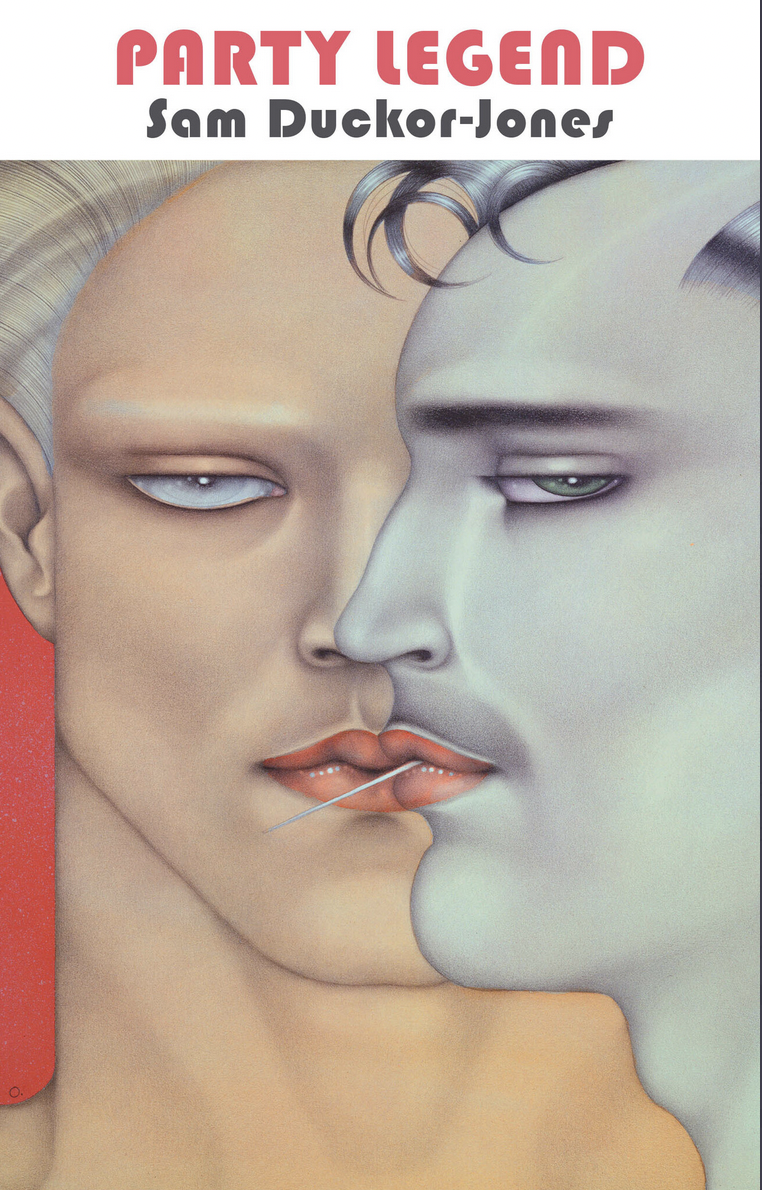
Party Legend, Sam Duckor-Jones, Victoria University Press, 2021
Dedications
To Anita: complete with scissors and buttons For Donovan: a lesson To Christopher: humming a little tune For Neil: we tried To Jack: a pasture of hens For my grandfather: the standard question For Amy: empty nutshells To Janet: harder than quartz
Sam Duckor-Jones
Some poetry books offer a sweet flowing current, other books twist and spin with connections, disconnections, changing hues. I love both. I love a fluency of voice, and I love it when voice cracks and reforms afresh. Sam Duckor-Jones’s second collection, Party Legend, is utterly inventive as it redirects the current, swaps over form, upholds fluency, surprises you at each turn of the page.
First love: the sequence of fascinating epigraphs that hold the collection together. I am reminded of a leaf skeleton. Look though the weathered mesh and you enter the realm of existence. This is an epigraph fest: Dorian Corey, Ken Bolton, Charles Darwin, Bernadette Bassenger, Karen Kamensek, Sophie Zawistowski, Dr Ruth-Anne Tibbets.
And then the beating heart of the book, a long sequence, ‘The Embryo Repeats’, a sequence to luxuriate in, a God alphabet of making and breaking and coveting, and a what-the-heck God, and God is everywhere, think anecdotes and silence and chuckles. An alphabet of arrivals. Desire dissatisfaction curiosity.
Switch currents, and the ‘Allemande’ poems transpose Bach’s lettered notes in the same order of his Cello Suites. Well yes. The lexicon is lush and elbowed. Expect fêtes and golden fools and dick. Genius.
Take time out for Sam’s refreshment of the found poem. Has to be the best salt-and-pepper cluster of found poems I have encountered in a long time. There is the ha! moment when you discover the poem is found language. The ha! moment at the revelation of source. The way you go back to the poem and it spins like enriched dough in your head and the poem rises and lifts, and is more than our immunity to the language we encounter daily. It is a trapdoor into reverie. Musing on existence. Little thoughts. Big thoughts. Sam borrows from the dedications and final lines in a book he found in a BnB (poem above), from emails about Talmund with his mother, an overheard conversation in a bookshop, RNZ reportage of the Kaikoura earthquake. And!! a complete list of Israeli prime ministers mashed up with Mary Holmes interviews on RNZ National. Genius, again, genius.
The poetry of Sam Duckor-Jones is a refreshing gust in my head. It’s audacious and funny and real. It’s mind-roaming, and heart-attaching, and blisteringly good.
Sam Duckor-Jones is a sculptor and poet. In 2017 he won the Biggs Poetry Prize from the International Institute of Modern Letters at Victoria University of Wellington. His first book was People from the Pit Stand Up (VUP, 2018).



 NZ Poetry Shelf