Author Archives: Paula Green

September 21st: Selina Tusitala Marsh’s Lounge Reading list

MEGA-READING AT OGH LOUNGE 21 September, 5.30-7 PM
ALL WELCOME!

LOUNGE #52 Wednesday 21 September
Old Government House Lounge, UoA City Campus, Princes St and Waterloo Quadrant, 5.30-7 pm

MC Selina Tusitala Marsh
Helen Sword
Caitlin Smith
Lanicia Chang
Gina Cole
Fiona Stevens
Faga Tuigamala
Ken Arkind
Tusiata and Sepela Avia
MIT Spoken Word Students
Alys Longley and the Eleventeen Collective

Free entry. Food and drinks for sale in the Buttery. Information Michele Leggott  m.leggott@auckland.ac.nz  or 09 373 7599 ext. 87342. Poster: http://www.nzepc.auckland.ac.nz/events/lounge52_poster.pdf

The LOUNGE readings are a continuing project of the New Zealand Electronic Poetry Centre (nzepc), Auckland University Press and Auckland University English, Drama and Writing Studies,  in association with the Staff Common Room Club at Old Government House.

LOUNGE READINGS #51-53: 10 August, 21 September, 19 October 2016

Double pass for Sunday’s session of Going West up for grab

(Sue Orr, Paula Green, Renee Liang, Himali McInnes, & Giovanni Tiso will be there along with Roger Shepherd & John Campbell and more)

WIN A DOUBLE PASS FOR SUNDAY! Comment on the Facebook post and tag a friend you’d like to bring with you. We’ll draw the winner from a hat on Friday night. From migrant fiction to women’s history, poetry to the future of journalism, and ending with a bang – Flying Nun & craft beer – Sunday will be filled with intellectual and sensory delights!

Books & Writers Weekend September 2016 Sunday 11th

2017 Ockham New Zealand Book Awards judges announced

ockhamThe 2017 Ockham New Zealand Book Awards will be judged by 12 eminent academics, writers, journalists, librarians, curators, commentators and booksellers from around New Zealand, it is announced today.

For the first time, an international judge has also been invited to take a seat at the fiction ‘table,’ assisting the local judges of the Acorn Foundation Literary Award and taking the total number of judges to 13. The name of the international judge will be revealed early next year.

There are four Awards categories: The Acorn Foundation Literary Award (for Fiction), Poetry, General Non-Fiction and Illustrated Non-Fiction. The judges will also award a Best First Book Award in each category. A Māori language adviser will judge the Māori Language Award.

The judges will announce their longlist on November 22, 2016, and their shortlist on March 07 2017.

New Zealand Book Awards Trust chairwoman Nicola Legat says “the experience and range of our 13 judges is superb, and we look forward to their longlist decisions.”

The $50,000 Acorn Foundation Literary Award will be judged by the yet-to-be-named international judge; former Director of the Auckland Writers Festival and Creative New Zealand literature adviser Jill Rawnsley; highly-regarded bookseller from UBS Otago Bronwyn Wylie-Gibb; and esteemed writer and co-founder of the Auckland Writers Festival Peter Wells.

The Poetry Prize will be judged by eminent Wellington poet and Professor at Victoria University Harry Ricketts; Chicago-born poet and 2016 Writer in Residence at The University of Waikato Steven Toussaint; and poet, playwright and fiction writer Vivienne Plumb.

The General Non-Fiction Prize will be judged by Metro books editor and former bookseller Susanna Andrew; writer and academic Professor Tom Brooking of the University of Otago; and Wellington writer, commentator and trade unionist Morgan Godfery.

The Illustrated Non-Fiction Prize will be judged by writer, historian and Curator Mäori at the Alexander Turnbull Library Paul Diamond; Associate Professor and Director of the Centre for Art Studies at the University of Auckland Linda Tyler; and Bronwyn Labrum, Head of New Zealand and Pacific Cultures at the Museum of New Zealand Te Papa Tongarewa and 2016 Ockham New Zealand Book Awards finalist for Real Modern.

“Judging these prestigious and significant awards is a major commitment,” says Nicola Legat. “We are hugely appreciative of the time and expertise these busy people bring to the judging process. We look forward to their longlist, shortlist and winner selections being announced.”

The winners will be announced on May 16 2017, at the opening night event of the Auckland Writers Festival.

Entries to the 2017 Ockham New Zealand Book Awards can be made via here. Books published between 1 January 2016 and 31 December 2016 are eligible for entry.

Mimicry – a new journal for friends

13582111_855436247934556_6405324545644315713_o      13582111_855436247934556_6405324545644315713_o


Holly Hunter has edited a new journal of work by her friends. Mimicry includes poetry, prose, art and nonfiction (and more!). In her preface, Holly declares this issue is an act of nepotism because the contributors are her ‘incredibly talented and creatively driven friends.’ She says : ‘I wanted to collect them like Weet-Bix trading cards and publish them, so here we are.’

Bravo! I love this idea.  I do hope another poet decides to come up with a collection based on his or her own friendships and biases. Most names I don’t recognise (what a treat!) but Nina Powles and Hera Lindsay Bird jumped out at me.

This is a good read. Yes! Holly Hunter I am ‘walking away cradling something far more than I paid for it.’


from ( a new and wonderful discovery) Russell Coldicutt’s ‘Translators’ Note’


‘These worms are glowworms hanging from the roofs

of our mouths, and we can never really be sure

if they light up when out lips seal them in.’


I especially love Nina Powles’s prose piece, ‘Hungry girls’:

‘I’ve been learning Chinese for three years now but there are still many days when language fails me, when it feels like food is all that ties me to this home my family brought to me from far away.’


And Jake Arthur’s  ‘He in the harp’:


‘I watch him play his sad instrument.

It feels wrong to play a harp in the garage.’


Or Miriam Looij’s ‘Premonition’


‘I don’t think its that cool to like Ginsburg anymore, but I’m still jealous of him.’


And a taste of Hera Lindsay Bird’s twitchety prose piece:

‘Every time I have my heart broken I become stupid and tolerable. I look at plants and animals and cry. To be honest, it’s a relief. When I am in a relationship I forget how to be a person. I stand around asking people how they are, like a lonely bank teller.’


Mimicry details here

You can purchase here

or at Vic Books and Unity Books in Wellington

Great! Gregory O’Brien talks to Kim Hill about Hera Lindsay Bird


ca5ff196-de28-4704-a12b-2d6a1292d767


Some people really love it -some people really hate it

The book might appeal to spinsters

Average age at her launch … 22


The average age at Writers and Readers … 60


There’s hyperbole going on

They’re very literary and very relaxed

She goes to town with similes


There’s a charm to it and an anarchy to it

These poems can be quite shocking

There’s lots of sex and death

Lots more sex than death


Makes me think of Frank O’Hara

Is this just theatre, is this just writing

It’s amazing to read cover to cover

because it’s so full of shots/shocks


Here’s the one where she goes insane

With the similes

Some are fairly genius


She is a great maker of imagery

Sometimes you feel like it might have been flung

at her from the internet


She seems to have taken people by the scruff

of the neck, she’s come out of nowhere


Here’s poetry making a dramatic

and high octane comeback


Listen here

(plus Hera reading a few poems -her voice melodic, soft, soothing – whatever the subject matter)


Laurence Fearnley’s new novel – a taste of my review

1472600468959-2.jpg


The Quiet Spectacular
Laurence Fearnley
Penguin, $38

‘Laurence Fearnley’s new novel is a lovely read, a moving read.

Three women are the heart of the book: Loretta, Chance and Riva. We meet them individually, but their lives overlap and begin to knot together. It is a novel of so many things — friendship, dangerous women, smothering mothers, dutiful daughters, undutiful daughters, land care, books.

It is a novel of ideas and it is a novel of empathy.’


My review is published today in the Press and The Dominion. For my complete review go here.

I love this book. I love its slowness and its penetrating heart. The title is a perfect fit.

This morning when I was shedding glumness, I decided a daily dose of the quiet spectacular is a necessary balm. Just looking out at the rolling sea mist and the tail of the Waitakere ranges and the spiky nikau. That will do. Or a novel like this.

Interview on Standing Room Only.

New Voices, Emerging Poets Results 2016

mchotewinner.jpgivasm.jpg

Michelle and Iva, winning emerging poets

This event, steered by Siobhan Harvey, has become an annual event in Auckland on National Poetry Day. Check out the winning poems by following the link. Both terrific!


The 2016 Divine Muses XIII : evening of poetry was this year MC’d by Linda Tyler, Director of the Centre for Art Studies at The University of Auckland. The University’s Gus Fisher Gallery with its beautiful stainglass dome provided the wonderful venue for the readings.

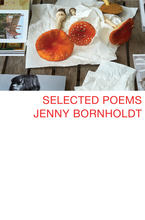
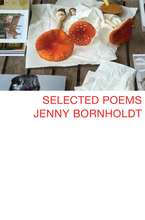
Linda Tyler welcomed and invited this year’s stellar line up of poets to read from a selection of their own poems. Vivienne Plumb, current writer in residence at the Michael King centre in Devonport, read first; followed by Riemke Ensing, Maris O’Rourke, Siobhan Harvey, Jenny Bornholdt, and Gregory O’Brien.

At the close of readings the winners of the 2016 NEW VOICES – Emerging Poets Competition were announced by judge Vana Manasiadi. Michelle Chote and Iva Vemic then read their winning poems. Unity Books of High Street kindly donated the book prizes for this year’s winners.

The last event of the evening was the launch of two new letterpress broadsheets. Limited Poetry Broadsheets were introduced last year by the organisers to help raise funds to support New Voices. The two new broadsheets were printed by Wellington letterpress printer Brendan O’Brien of Fernbank Studio. They featured poems by Gregory O’Brien and Jenny Bornholdt. Click here for further details

The winner is  Michelle Chote and runner up is Iva Vemic.


New Voices, Emerging Poets Judge’s Report, 2016 (Vana Manasiadis)

I loved reading the entries for this year’s competition; it was an honour and a privilege to be entrusted with voices that took me to places as diverse as K road, Jerusalem, Santiago, Pike river, Prague and Kakamatua; and allow me presence during conversations with New Zealand poet elders, Denis Glover, Lauris Edmond; and American, Marge Piercy, Susan Howe. In all the poems I read, there was a magic and transport, and for me that is always the most important thing. I looked forward to reading the entries while I was still in Crete trying to find the threads myself, the connections in my case between words in different languages. And I thought about the words ‘language’ and ‘translation’ a lot – and certainly poetry contains a multiplicity of languages: of image, of sound, of turn, of contact. So when I finally got my hands on the entries, I looked for these different languages and their relationships to each other; and ultimately, to the translations. How was lonliness, love, loss being translated, sculpted and crafted and being offered to me, the reader, as something transformed? Water was a recurrring theme in this year’s entries, as was journey, and moving relationships with the dead and the living. So, fluidity, and arrival. I read the entries many times until I arrived myself at the shortlisted ten which succeeded particularly well in translating ideas of arrival, journey, surprise; and which showed deft use of the many languages of poetry. And I especially congratulate these poets tonight.

Highly Commended: I chose three highly commended poems this year, and the first of these is ‘Poppa’s Boat’, by Christel Jeffs, for the moving way themes of loss (of a beloved person, of childhood) and love, are evoked via turn and meticulous crafting. All five senses are alerted in this poem to memorable effect, the voice is authentic and assured, and it tells a story of presence, absence, presence in absence that is relateable, and felt true.

The second highly commended is ‘Home Thoughts, after Denis Glover’s poem’, by Annabel Wilson, a poem that insisted itself upon me. There’s a quiet confidence in the poem, a humility and ability to step back and let the images do the talking, that impressed me. The sustained image of the line drew me in and kept replenishing itself, and the implied dialogue with the poem’s inspiration, Glover’s ‘Home Thoughts’ pointed to the something bigger in poetry, to the community of voices.

The third highly commended is ‘Shoe Pads’, by Linda Lew, which was both delicate and dynamic in its treatment of the grandmother protagonist. The camera here pans wide and close in turns, as enormous historic events are checked by the grandmother’s quiet acts of love and shielding. I walked alongside her as she walked through decades of change, from Beijing to New Zealand. Always direct, never sentimental, she was kind and sturdy company.

Finalist: The second place goes to ‘A poem a day’, by Iva Vemich which, with its pace, choric repetitions, and surprising leaps of imagination made for memorable reading. I read this poem as a poem-essay, a poem that asks a question and shows its workings – in this case, ‘will poetry rescue’ (the poet, the community going about its daily business)? The responses – wry and perhaps a little ironic, but in a good way – were unexpected and evocative, and I was thrilled by many of the line breaks, and stream of consciousness connections.

Winner of the 2016 New Voices Competition:  The winning entry tonight is ‘A colonised woman speaks’ by Michelle Chote. This was one of the first poems I read, and it absolutely refused to slip away quietly. It kept calling with its layers of polemicism and consonant crash. In this poem, expression is not the means to an ends, but the thing itself – the syllables and the hollows a body allows us. So tongue, air, taste and belly establish the organic imagery, embody fury and revolt in lines like ‘dash dipthongs at the drop of a beret’. Listen for the ending which is a perfect coming together of sense and sound. Having read the poem aloud several times in an effort to absorb the sound effects, I’m particularly excited to hear this powerful poem read tonight in this beautiful space, as the winner of this year’s competition.

Vana Manasiadis

Emma Neale’s very lovely thank you speech at the launch of Billy Bird

Cover

So looking forward to this book – and to hearing Emma Neale at Going West and the Ladies Litera-Tea this year. Good to see Harriet Allen, one of our champions of New Zealand fiction, getting applauded. Here is a taste of Emma’s launch speech just posted on her blog.

…. although this is the bit about losing the launch speech – something we all blanche at the thought of …


Last night, my elbow must have hit an invisible delete button in the space-time continuum. I stapled and folded my launch speech, put it in my handbag, patted it to make sure it was in there safe and happy, and arrived at the University Book Store without my launch speech. Cue panic. Cue rushing back to the car, scrambling around to look under seats. No speech. And at home later that night: still no speech. It’s spooky. 

I had to extemporise, with my hands shaking, and I’m pretty sure I forgot something. So by way apology, I’m posting the original here. People who did attend can spot the difference! (The first one is that I forgot to say my quadra-lingual greeting.)

Tena koutou katoa, talofa lava, bonsoir, good evening, thank you so much for coming.

I’m very aware that it gets uncomfortable holding still and being quiet for a long time, especially if you are age six or under. Or maybe even if you’ve ever been six and under. My own six-year-old wrote to his headmaster recently to ask if he could incorporate exercises into assembly, because keeping still and quiet was very difficult if you have a busy mind and legs that tingle. So I wonder if, before I say all my thank yous, Zac would like to lead us all in a short game of Simon Says.


For the full speech go here

Fiona Oliver writes on poetry for The National Library blog: ‘The Library has avidly gathered and looked after this nation’s poetry (and that of Pacific nations) since it opened almost 100 years ago.’

I am up to my elbows in poetry research and am very grateful for access to the poetry taonga at the Alexander Turnbull Library.

To celebrate National Poetry Day, Fiona Oliver (Curator, NZ & Pacific Published Collections) posted this terrific piece:

‘If you were to take all the poetry books in the Turnbull Library and lay them end to end, they’d circle the earth at one-and-a-half times.

Ok, that was a fabrication; no one has any idea how far they’d stretch, except that, given the sheer number (more than several thousand), they’d go a very long way.

Maybe I was getting confused and had been thinking of intestines, which apparently are extraordinarily long. But then, aren’t poetry and intestines not that dissimilar – poetry being, metaphorically speaking (and poetry is nothing if not metaphorical), a spilling of guts, a venting of spleen, a digesting of experience, a laying-out of ideas and feelings and insights end to end in order to make sense of what it means to think or feel or see?’


I especially liked reading this:

‘The Library has avidly gathered and looked after this nation’s poetry (and that of Pacific nations) since it opened almost 100 years ago, in 1920. It’s all here as our documentary heritage.

We’re not censorious, but try to be comprehensive. You’ll find the old and forgotten, the newly minted, the famous, fine or rare, the transcendent and the truly awful. We care for the poetry of this country so all the people of New Zealand can read it, enjoy and use it.’

For the rest of the piece see here