Author Archives: Paula Green

Elizabeth Morton’s Wolf: ‘Wolf goes to suburbia’

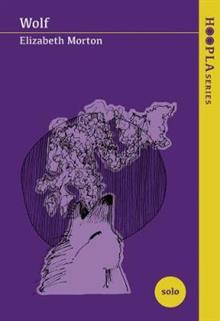
9780994137821.jpg

Wolf, Elizabeth Morton, Mākaro Press, 2017


Elizabeth Morton’s debut collection is a mysterious, eye-catching, sound-catching read, with piquant detail and a poetic net that catches all manner of things – the light and the shade. I was particularly drawn to the opening sequence of poems featuring Wolf. Wolf is ‘a critter of humanity’; he is an outsider, an outcast, living on the edge and off scraps. The writing is assured, pungent and rich in atmosphere. I love the way Elizabeth deliberately slows things down, like a raconteur, so the art of the storyteller infuses the poetic line. As a reader, you pay attention to the amassing detail that startles and shines. I also like the way the lower-case letters that precede full stops is like a little hiccup or start on the line. It shifts the fluency and is akin to looking at a view where things pop in the corner of your eye.


Wolf goes to suburbia

rubbish bags hunch in
deathrow orange. yogurt pots
tickle the gutter pit.
newspapers suck asphalt.

like everything else,
Wolf is a shambles –

hide all a-scab with
the nippings of fleas.
skull abuzz with the
echoes of home-

the belchings of elk,
the titterings of muskrats.

today Wolf is a critter
of humanity.

where gophers whistled
trucks now vroom.
where hornets rattled
traffic lights now click

into the emerald of his
mother-world.

Wolf mouths his way
into a rubbish bag.

the yellow night
covers him like a rash.


© Elizabeth Morton 2017


Elizabeth Morton is a poet, fiction writer, and reviewer from Auckland. Her poetry and prose are published in New Zealand, UK, USA, Australia, Canada and online. She is the feature poet in the Poetry New Zealand Yearbook 2017. Her own poetry collection, Wolf, was published by Mākaro Press (2017). In 2013 she was winner of the New Voices Emerging Poets competition. She was shortlisted for the Kathleen Grattan Award (2015) and was, twice, 2nd place in the Sunday Star-Times Short Story Competition (2015, 2016). Her flash fiction was selected for the international anthology, The Best Small Fictions 2016.

Side-projects include: collecting obscure words, penning bad rap music, studying the brain, and exploring the coastal rock pools. She likes to write about broken things, and things with teeth.


Mākaro Press page

Emma Shi’s review at The Booksellers

Liz Breslin on poetry in ODT: Alzheimer’s and a Spoon out next week

“They’re not really a way of making sense of the world as such, more of poking at it and mining it … My family tells me that my writing is not therapeutic or meditative because I am not very peaceful in the doing of it or the aftermath, but it is a total necessity for me.”

Breslin is in a celebratory mood, keenly awaiting the publication of her first collection of poetry, Alzheimer’s and a Spoon, which will be launched in Dunedin and Wanaka next week.

The collection’s title, and various works within it, directly references the dementia she witnessed in her Polish grandmother (or “babcia”), as well as delving more widely into the notion of memory, relationships and how events take on different meanings depending on a person’s viewpoint.


Full piece here

from E-Tangata: Paula Morris in excellent conversation with Dale Husband

Paula Morris: Our Māori writers are free to write whatever they want


I suppose there’s the question of what constitutes a Māori story. And whether a Pākehā can write a Māori story.

Generally, when I talk about Māori literature, I’m talking about writers who are Māori. To me, if you’re a Māori writer, you’re part of Māori literature — no matter what you’re writing. Overseas, people understand that. If Ernest Hemingway is writing a book in Spain — he’s still an American writer. If Graham Greene is writing a book set in Haiti or Cuba — he’s still a British writer.

Here, sometimes I think that, because our literature is younger and a bit more anxious, we worry about who’s in and who’s out. I do think really good Pākehā writers can write a Māori story if they really understand what they’re writing — and if they have the empathy, imagination, and skills, and if they’ve done their research. Then, yes. Absolutely.

And, of course, Māori writers can write about whatever the hell they want to. So Kelly Ana Morey can write about a racehorse in a book largely set in Australia — and still be part of Māori literature because she is a Māori writer. Our national literature is like other art. It’s to do with the painters or the sculptors themselves. It’s not to do with the actual work having to fit a particular theme or subject.


Full interview here

Sarah Jane Barnett’s Home essay

home-cvr-final.jpg

Suffering is Optional

In this moving essay, Sarah Jane Barnett writes about womanhood, grief, and how running allows her to feel at home in her body.


I started running in my twenties. I’d never done any regular exercise, so my first attempt involved running the distance between two lampposts, and then walking to the next. The route I took on those first few runs was a loop starting from my parents’ house and out around the suburbs of my childhood. At the time I was essentially homeless. I was staying with my parents after my first marriage had ended, after my husband calmly said on the phone, ‘I don’t desire you any more.’ Looking back, I don’t blame him. I didn’t desire myself either. Dragging my body through the dark streets was the only way to numb the public humiliation of being discarded, to ease the shame and grief.


Full essay here. It is so very good. Excellent lure to get the book: Home: New Writing, published by Massey University Press, 2017.

PS If you break your foot on Queen Charlotte track and then walk on it for six hours to get out and then get back to running too soon and too fast – ah it all goes haywire, so watch for that. Walking is just not the same! Love your essay, Sarah!

the writers (3!) residencies at the Surrey Hotel in Auckland courtesy of The SpinOff

Calling all New Zealand writers! Apply now for the writers residency at the Surrey Hotel in Auckland.

New Zealand literature’s coolest writing residency is up and running again. The fabulous Surrey Hotel – named the Best Hotel in Auckland by a well-known writer in the New Zealand Herald – has once again agreed to offer a writers residency award in association with The Spinoff.

The winner of the second annual Surrey Hotel Steve Braunias Memorial Writers Residency In Association With The Spinoff Award will be given a week’s free accommodation at the Surrey in Grey Lynn, along with free breakfast and free wifi. They will also pocket a cool $500 from The Spinoff.

There is also be a second and third prize with less nights and less money but the same thrill.


Full details and photos here

Kathleen Grattan Poetry Award entries close end of July

Kathleen Grattan Poetry Award

Kathleen GrattanAuckland poet Kathleen Grattan, a journalist and former editor of the New Zealand Woman’s Weekly, died in 1990. A member of the Titirangi Poets, her work was published in Landfall and other volumes including Premier Poets, a collection from the World Poetry Society. Her daughter Jocelyn Grattan, who also worked for the New Zealand Woman’s Weekly, shared her mother’s love of literature. She has generously left Landfall a bequest with which to establish an award in memory of Kathleen Grattan.

About the award

This biennial award is for an original collection of poems, or one long poem, by a New Zealand or Pacific permanent resident or citizen. Individual poems in the collection can have been previously published, but the collection as a whole should be unpublished. Entries are accepted until 31 July of the award year and must be either received or postmarked by this date. The result will be announced in the November issue of Landfall, and the winner will receive $10,000 and a year’s subscription to Landfall.

Entries to the 2017 Kathleen Grattan Poetry Award are now open and close on 31 July 2017.
The winner will be announced in Landfall 234, published November 2017.
The judge of the 2017 award is prize-winning New Zealand poet and fiction writer Bill Manhire. Manhire has won several New Zealand Book Awards, a number of significant fellowships, and he was the 1997/1998 New Zealand Te Mata Estate Poet Laureate. He was also honoured with the Prime Minister’s Award for Literary Achievement in 2007.
The award will next be granted in 2019.

Conditions of entry (go here)

  • Entries will be a collection of poems or one long poem.
  • Minimum submission length is 20 pages. Formatting, font size etc is your choice.
  • Entries will be unpublished, original work. Note, it is the collection as a whole that should not have been previously published. Individual poems in the collection can have been published previously.
  • Entrants will be New Zealand or Pacific permanent residents or citizens.
  • Only one entry per person will be accepted.
  • The judging panel will assess the merits of submissions and reserves the right not to award a prize.
  • No correspondence with the judges will be entered into.
  • Landfall/Otago University Press reserves the right of first publication of the winning entry. Any other entries may be considered for publication.
  • The name and photograph of the winning writer may be used by Landfall and/or its publishers for publicity purposes.
  • No present employees of Otago University Press or present editors of Landfall are eligible to enter.

How to enter

  • Submit two hard copies of your manuscript (your name is NOT to appear on these). Your copies will not be returned.
  • Include a cover letter with your personal contact details: name, postal address, email address and telephone number.
  • Please ensure the title of the submission is on both the cover letter and on the manuscript itself.
  • Please include notes on which poems have been previously published and where in the cover letter, but NOT within the manuscript itself.

Mail entries to

The Kathleen Grattan Award
Otago University Press
PO Box 56
Dunedin 9054
New Zealand

Courier entries to

Otago University Press
Level 1
398 Cumberland St
Dunedin 9054
New Zealand

Further information

Tel 64 3 479 4155
Email landfall@otago.ac.nz

Flow: Whanganui River Poems – Airini Beautrais’s poetry launch

Nau mai, haere mai. Come and help celebrate the launch of Airini Beautrais’s new collection, Flow: Whanganui River Poems.
Featuring stories from the catchment, river and town.
Shipwrecks, floods, soldier-settlers, surveyors, missionaries, protests, poets, petrolheads, deviants, sly-groggers, environmentalists, heroes, anti-heroes and complicated characters.

With readings by Airini, Maria McMillan, and special guests.

All welcome. Drinks and nibbles will be served (in adjacent space as food and drink can’t be consumed in the museum. Please do not bring these items).

Screen Shot 2017-07-05 at 12.51.24 PM.png