You are warmly invited to the launch of
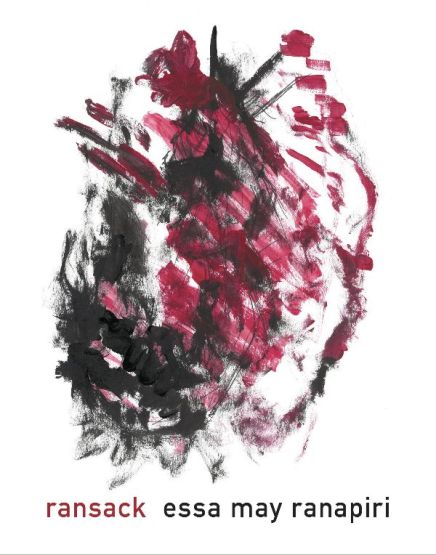
Ransack
by essa may ranapiri
on Thursday 18 July, 5.30pm–7pm
at Poppies, Hamilton, 307 Barton St.
All welcome.
p/b, $25

You are warmly invited to the launch of
Ransack
by essa may ranapiri
on Thursday 18 July, 5.30pm–7pm
at Poppies, Hamilton, 307 Barton St.
All welcome.
p/b, $25
full piece here
I have barely touched on all the women poets I loved in these 10 Qs – it took a fair chunk of pages in Wild Honey and even then I didn’t have enough room. When I went to university I longed for an essay with enough room to go deep and wide so I stayed until I could write a PhD thesis. Now it is time for little tiny secret things.
I am so delighted to be celebrating the book with some of the poets at events in August and September. Watch this space!
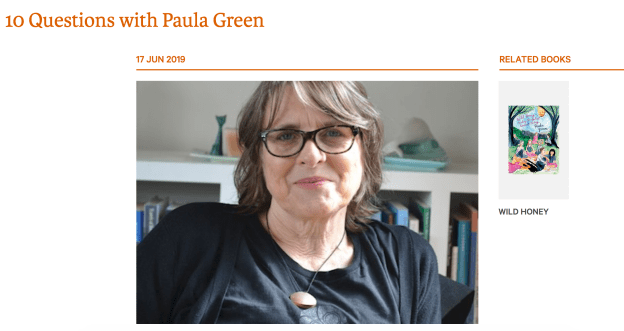
Q1: Now that Wild Honey is off to print, are you feeling proud of it?
Yes, a thousand times yes. But also a tad anxious.
Q2: It’s a huge book and it’s been a monster project. Where did the idea for it first come from?
My university degrees considered Italian women writers, but when I left university I focused on my own poetry. I carried the Wild Honey seed from those days because New Zealand women poets felt like an unwritten story. All roads — my university life and my poetry life — led to Wild Honey.
Q3: How long has it taken you?
Four years writing and researching, but decades germinating.
Q4: It must have been a massive process of discovery. Tell us about one poet you are pleased to have come across and to have shone a spotlight on?
There were so many discoveries. Familiar poets appeared in surprising new lights as I lingered over their work, such as Fleur Adcock, Robin Hyde, Ursula Bethell, Nina Mingya Powles, Karlo Mila, Hinemoana Baker, Tusiata Avia, Alison Wong, Fiona Kidman, Emma Neale, Anna Jackson. I wanted to write whole books about each poet. I loved the work of Evelyn Patuawa-Nathan, unfamiliar to me, but was disappointed I could find only one book published in 1978. I wanted more!
Shining a light on Blanche Baughan was a delight. At first her poetry felt impenetrable, but then as I spent time in the archives, and her biography unfolded, her poems sang for me. She wrote from both heart and intellect, daring and empathy. Her extraordinary life story hides in traces in her poems as do her strong political ideas.
Summer
I have eyes for the cake
rising slowly in the oven.
The sweet smell of vanilla
escaping, but there is talk
about the pond teeming
with Goldfish. Go see the fish.
Every visit goes like this.
Now my mother joins my
aunt, looking back and forth
to her sister and the gaggle
of us, her head nodding toward
the kitchen door that leads out
to the lush garden and pond.
On the steps I hear the kettle
whistling over my aunt laughing
as the two relax, swapping secrets
of forbidden love. Our ears deaf to
their native tongue.
Outside amongst the hedges we
reach between branches of Camellias
searching for treasure. The winner –
the first to hold up a fist with a cicada
singing for release.
The clouds move at great pace
animals drift in and out of view.
In the distance the wind carries
the sound of intermittent sobbing.
I cock my head to the left and
hear only the cicadas singing
freely on the wind.
Kim Meredith
Kim Meredith was raised in Glen Innes, Auckland; her works have appeared in journals and collections. She has collaborated with artists in New Zealand and overseas. A multi-media artist she is part of Auckland duo Marvellous with Kingsley Melhuish performing poetry and music, their compositions narrate urban sketches of New Zealand life. She is a businesswoman and also teaches at a Music Tertiary School.


My bookshelves are like an autobiography because books, like albums, flag key points in my life.
To pick only three poetry books that have mattered at different points in your life is a tall order but these poets have sent me chasing collectons and composing my own list.
Featured poets: Fiona Kidman, Joan Fleming, Hannah Mettner, David Eggleton, Sam Duckor-Jones, Amy Leigh-Wicks and Murray Edmond.
Fiona Kidman
I was team teaching a creative writing group with my dear late friend, the poet Lauris Edmond, when she read Elizabeth Bishop’s poem, “The Fish”. I remember the electricity in the air, as the dazzling images tumbled out, wonderfully read by Lauris. And then there is the moment where the caught fish is released back into the wild. I trembled when I heard the poem, the first I knew of Bishop’s work. This was in the late 1970s. Later, I bought Elizabeth Bishop The Complete Poems 1927 -1979, and discovered her inimitable Nova Scotian poems. I was working towards a novel partly set in Nova Scotia, and I carried the book with me – there, and on all my travels for years afterwards. I had a habit of pressing wildflowers collected along the way, and eventually, I realised that I was a danger to myself at the New Zealand border if I was to continue carrying them. I read the poems at home now.
Another book I have read and re-read many times, is Marguerite Duras’s last book (I think) Practicalities (published in 1993). I had been influenced by her fiction as a young woman. But this was a tiny book of essays, fragments, interior monologues, about desire, housekeeping, her struggles with alcohol, domestic lists of important things to have in the house, reflections on death.
And one more. On the bedside table I keep Seamus Heaney’s Opened Ground: Poems 1966-1996. I came late to Heaney’s work, but late is good, because I’m still making discoveries, there are still pleasures in store from the great Irish Nobel Prize winning writer. It’s like tracing my finger through language and feeling my own Irish blood singing its way through my veins. The collection contains, incidentally, a poem about Katherine Mansfield.
Joan Fleming
Anne Carson’s Autobiography of Red was a gift from Amy Brown on my 23rd birthday. It blew my head off. It is the best and strangest failed love poem I have ever read. But more than that, it showed me how a book could perform an argument, and at the same time, exquisitely fracture the foundations of the kind of thought that makes argument possible.
Jordan Abel’s book The Place of Scraps is an erasure poem and a series of prose reflections, which explode and complicate the work of ethnographer Marius Barbeau. I had been searching for poetry that could do this mode of critical work all through my PhD, and discovered The Place of Scraps very late in the journey, on the recommendation of the dear and brilliant Brian Blanchfield. The book is a stunning example of a new kind of ethnopoetics – or, perhaps, counter-ethnopoetics. I was needing and seeking it, and its sensibility has offered me a kind of permission for my own work.
I wonder if all writers read as opportunistically as this? Maybe we’re all like exploration geologists, searching for those forms and sensibilities that we can mine for our own nefarious compositional purposes. The latest book of this ilk for me has been Rachel Zucker’s Mothers. What gets me about this book is the collage essay form, the candid revelations, and the way Zucker’s poetics walk the line between sentimentality and the rejection of sentimentality. I’m completely charged by the possibilities of this book’s form. Watch this space, I guess.
Hannah Mettner
Every birthday when I was a girl, my parents would get me an obligatory book. This wasn’t a problem, as I liked reading, but the choices were a bit hit or miss, and I was often far more thrilled by other gifts. One year though, they got me The Door in the Air and other stories by Margaret Mahy, and it has become my enduring favourite book, certainly the book I’ve re-read most. My current favourite story (it changes all the time) is about a woman who bakes her grown-up son a birthday cake, ices it, and leaves it in a glass dome for the month leading up to his birthday (I presume it’s a fruit cake, otherwise, ew). In a hilarious twist, the cake becomes the next big thing in art, when it’s “discovered” by two gallery owners. I think it’s the perfect take-down of the art scene, and I often wonder what had happened in Mahy’s life that had inspired this gentle trashing of “taste-makers”. It’s also a really beautiful allegory for women’s work, which is so often un-recognised and un-celebrated: by elevating a cake, made with love by the light of a new moon, Mahy draws our attention to how little we do recognise this work, in the usual course of things. In the end, much to the chagrin of the gallery owners, who are considering taking the cake on an international art tour, the cake is eaten when the son comes home for his birthday, as intended. And all the stories in the book are these complicated, magical-realism, gently humorous, domestic, relationship-centred stories that do so much in such a short space.
My current favourite book of poems is Morgan Parker’s There are more Beautiful Things than Beyoncé, which I bought for its provocative title. It is the perfect mix of pop culture, politics and outrageously beautiful lines of poetry. It’s the kind of book that you can’t read all at once because each poem slays you. One of the poems, ‘The Gospel According to Her’ opens with this couplet:
What to a slave is the fourth of July
What to a woman is a vote
I mean! Wow! I’m so tired of the kind of ‘flippant cool’ and ‘awkward funny’ poetic voice that’s been popular for a bit now, and this book feels like such an antidote to that. It’s really important writing about the intersections of race, gender, class and pop culture in America, and it feels fiercely genuine.
And obviously one of my all-time favourite books of poems is Mags’ (Sugar Magnolia Wilson’s) new collectiom Because a Woman’s Heart is like a Needle at the Bottom of the Ocean. I’ve been waiting for this book since I first met Mags in our MA course in 2012, and, though I’d seen (I think) all of the poems in it before it was published, having them gathered together in one place makes them all seem to glow a bit brighter. It possesses some of the magical realism that brings me back time and again to the Mahy, with a slightly darker, more grown-up edge. It feels like a book that has already lived a thousand lives, and lived them richly, and has picked up scraps and talismans along the way to adorn its stories, like the bower birds in the poem ‘Glamour’. It does what the best poetry does, which is to offer you something beautiful and immediate on the surface, but with more and more layers of meaning to unpick as you make repeat visits. I think what it has to say on how we define ourselves in relation to other people is genuinely complex and profound.
David Eggleton
The Walled Garden by Russell Haley, published in 1972 by The Mandrake Root, was one of the first poetry books I ever bought, and I bought it in order to read it over and over and internalise it. Its verses I found visionary, oneiric, hallucinatory. I had seen it displayed in Auckland’s University Book Shop, which was then in the Student Quad on campus. I picked it up off the shelf, began idly flicking through and became immediately ensnared by its strange chanting lines:
Invest the real with moths of dream
white paper is a time machine
and
six inches of semantic dust cover the carpet
he drew with his fingers
new maps of home
Grafton Road and Carlton Gore …
As I was living in Grafton Road at the time, just along the bustling hippie encampments in the grand old villas near Carlton Gore Road, my brain began to hum. I bought the book and it immediately became my guide to a certain state of mind a celebration of another, more phantasmal, Auckland in the decade of the 1970s:
Gagarin is finding a new way to walk
both the rock and the lion are starting to talk …
Russell Haley was a British migrant who grew up in the north of England and then served in the R.A. F. in Iraq in the 1950s, at a time when the oil wells of Middle East were relatively untroubled by the meddling of the United States, and archeological expeditions to the Fertile Crescent were proceeding in an orderly fashion, and Persian poetry was being celebrated as the ne plus ultra of the Islamic Golden Age. In Haley’s The Walled Garden, still to me a wondrous book, I was attracted to the private mythology, the prophetic quality, the dream-like imagery, the air of premonition, of the circularity of history he was invoking: a sense of time of time regained out of a kind of colourful rubble — the bric a brac of twentieth century international modernism — which seemed to me at the time seductively exotic. Moreover, he managed to make tenets of Sufi mysticism rhyme and chime with kite-flying in the small hours on Bethells Beach:
3.30 am …
There are two voices —
the first is that of the man
holding the kite string —
he says everything and yet nothing.
The second is the deep hum of the rope
linking the man and the kite —
this voice says nothing and yet everything
(from night flying with hanly)
Published in Auckland by Stephen Chan’s Association of Orientally Flavoured Syndics in 1972, David Mitchell’s first, and for several decades his only poetry collection, Pipe Dreams in Ponsonby, was reprinted in a second edition in 1975 by Caveman Press, whose publisher was Trevor Reeves. That is the edition, acquired second-hand years later, that I have in my possession, knocked out by Tablet Print in Dunedin and, though in a similar thin black cardboard jacket, not quite as elegant and well-printed as the earlier one. Yet it still conveys the magic, the mojo, of a poet who celebrated the poem as spoken word. For me, David Mitchell is an exemplar of the shaman able to take a poem off the page and make it into something performative, transcendent, on a stage. In Auckland in 1980, David Mitchell established the Globe Hotel weekly poetry readings which became inspirational. Mitchell was a poet of the primal, one who had an ability to suggest and conjure up the electric atmosphere of raw improvisation. A master of syllabics, the man with the golden ear, he was actually all craft. He worked with silence, building up cadences out of short phrases and using the pregnant pause to create resonance. He was intent on emphasising the evanescence of the moment; with the use of subtle intonation and enunciation, seeking to establish an authentic encounter with the poem he was reciting, its mood, its music.
Kendrick Smithyman was another early enthusiasm of mine, in particular his 1972 collection Earthquake Weather in its drab olive green cover, containing the poem ‘Hail’ whose last lines give the book its resonantly memorable title: ‘We call this earthquake weather. We may not be wrong.’
But it is his later epic 1997 poem Atua Wera that spun my compass round as an example of what a truly ambitious New Zealand poem could be. Atua Wera, is a poem glued together out of bits and bobs. It muses on historical hearsay, folklore, museological keepsakes, and intertextual chunks of letters and journals. It requires you to latch onto the poet’s rhythms of thought, his oblique way of saying things as he tells the story of Papahurihia, a Northland Māori millennial prophet who was a tohunga descended from tohunga.
In this verse biography, Smithyman is a prose Browning, up to his elbows in the old colonial dust, breaking up journalistic reportage into cryptic fragments, into crabbed lines scattered across the page, except that where Robert Browning embroidered endlessly in his epic The Ring and the Book on a story that, as Thomas Carlyle said, might have been told in ten lines and were better forgotten, Smithyman’s effort is a superb revivification of an amazing chapter in New Zealand colonial history.
A master-ventriloquist, like his subject, Smithyman uses James Busby, Thomas Kendall and Frederic Maning to tell us about Yankee sailors encountering Moriori voodoo, and about the Garden of Eden snake in Genesis being transformed into a lizard, then a dragon, then ‘a fiery flying serpent’ who turns out to be Te Atau Wera himself, the shape-shifter. Atua Wera is itself a shape-shifting poem of ghost-riders and end-of-world portents, of the phantom canoe on Lake Tarawera before the eruption, and of a light in the sky which turns out to be a TV repeater mast. It’s a book which is a palimpest, a treasure trove, a landmark, a beacon.
Sam Duckor-Jones
DIFFERENT DANCES / SHEL SILVERSTEIN
This is a large coffee table book of drawings of naked men and women fucking and sucking and being impaled in various ways. There is straight sex, queer sex, and not-so-subtle nods towards fun things like necrophilia! incest! bestiality! We loved this book when we were kids, we poured over it wide eyed, impatient, tingling and desirous and competitively appalled or nonchalant, depending. A little later, ie adolescence, when my friends and I started liking boys but had no language or real world models with which to express it, we drew: cousins rutting in basements, fey teachers with debased secrets, musclemen kissing in pantries… Different Dances was my manual for lusty expression: put it on the page. To this day I still prefer a pen and paper to real life, sigh.
DEAR PRUDENCE / DAVID TRINIDAD
David Trinidad has this long prose poem called ‘Mothers’ in which he remembers all the mothers from his childhood neighbourhoods. It’s intimate and cinematic and filled with satisfyingly stifling pastels and veneers of conformity and simmering desperations and a serious deluge of kitsch, moving from comic portrait to heartbreaking confession. I read it in 2016 and immediately made David Trinidad one of my favourite poets and Dear Prudence one of my most frequently thumbed books. David Trinidad constructs his poems from celebrity interviews, soap opera scripts, trashy novels, idol infatuations, all with a serious wash of queer love and it’s associated traumas. He takes plain language and wrings it with tight margins til it becomes something crystalized. I love him.
BLISS / PETER CAREY
When I lived in Auckland I was a bad employee. I worked in a number of cafes, briefly. I was scared of the customers and didn’t have the cahones for kitchen trash talk. All I wanted to do was read and draw, why was this not allowed? On a lunch break at a Ponsonby spot where I was the lame FOH, I read Bliss in the upstairs staffroom. The barista came and sat beside me and talked and talked and would not stop talking so I picked up my book and climbed right out the window. I ran along the awnings and shimmied down a drainpipe, stormed righteously to Grey Lynn park, finished my chapter. Caught the next train home to Wellington. Ever since, Bliss has represented a real particular sort of escape to me, and is a reminder that a good book is worth it.
Amy Leigh Wicks
I came across Jack Kerouac’s On the Road in university. I resonated with his ability to articulate the insatiable longings of the human heart. The novel wasn’t the best written thing I’d read, but the timing of it, the casual language paired with a desperate feeling of urgency coincided perfectly with my itch for travel and spiritual discovery. Kerouac said in a later interview that the book was really just about two catholic boys in search of God. I think a lot of people might have trouble seeing it because of all the Benzedrine and riotous living, but it hit me in the guts as true.
I was in my early twenties when I read Edna St. Vincent Millay’s Collected Poems. Her sonnets continue to be one great sources of inspiration and reflection. From Sonnet XXX which begins, ‘Love is not all,’ and ends in a surprising turn, to her sonnet What lips my lips have kissed and where and why, which appeared in Vanity Fair in 1920, but reads to me as if it were written now, her poems are delicious, layered, and precisely crafted.
I started studying James K. Baxter while I was working on my Masters in New York, and found a very hard time finding his books. When I moved to New Zealand and came across New Selected Poems: James K. Baxter edited by Paul Millar, I felt I had struck gold. I carry it with me in my purse most days, as it is not cumbersome, and it has a selection of poetry from all of Baxter’s books as well as a selection of previously unpublished works. I find myself coming back to Farmhand, where ‘He has his awkward hopes, his envious dreams to yarn to […]’ to later in his life, the bittersweet but undeniably beautiful He Waiata mo Te Kare where he says, ‘Nobody would have given tuppence for our chances,/ Yet our love did not turn to hate.’
Murray Edmond
Plants of New Zealand by R.M.Laing and E.W.Blackwell (Whitcombe and Tombs , 1906)
Shanties by the Way: a selection of New Zealand Popular Songs and Ballads collected and edited by Rona Baily and Herbert Roth (Whitcombe and Tombs, 1967)
Hidden Camera by Zoran Zivkovic, trans. Alice Copple-Tosic, (London: Dalkey Archive, 2008)
I think I was given ‘Laing and Blackwell’ (as it was always called) for my 12th birthday, at the end of 1961. I would have asked for it. I had recently joined the Hamilton Junior Naturalists Club and had begun to discover ‘another world’ in the flora of Aotearoa, which was to be a gateway for understanding many other things about the country I lived in that no one had yet mentioned. Robert Laing and Ellen Blackwell’s Plants of New Zealand was the first serious, semi-populist, reasonably comprehensive book on New Zealand plants. Ellen Blackwell, an amateur botanist in her late thirties, had met Robert Laing, Christchurch school teacher, graduate of Canterbury University College, and botanist with a special interest in marine algae, on a ship heading for New Zealand in 1903. Laing was returning from an overseas trip, Blackwell was visiting her brother Frank at Pahi in the northern Kaipara, her first (and only!) visit to New Zealand. The fruit of this meeting was the publication of the evergreen ‘Laing and Blackwell’ in 1906, with Ellen contributing photos (along with brother Frank) and much of the northern botanical information. The sixth edition I received had been published in 1957. It’s a strange old hodge-podge of a book, with reliable basic botanical coverage, mixed with Maori ‘lore’ on plant use, plus some poetical diversions to William Pember Reeves and Alfred Domett. Pretty soon us budding naturalists had graduated to Lucy Moore and H.H.Allan’s properly scientific Flora of New Zealand, but we never forgot our Laing and Blackwell. Ellen Blackwell returned to England after three years in New Zealand, never to return, but she left a little gem behind her. I wrote a poem called ‘Te Ngahere’ (‘The Bush’), using my new discoveries, and next year, 1963, my first year at high school, it was published in the school magazine.
I bought Rona Bailey and Bert Roth’s anthology Shanties by the Way, when I was a first year student at Auckland University in 1968. It might be my favourite New Zealand poetry anthology. Of the 85 songs, ballads, chants, rhymes, jingles, ditties, shanties, broadsides, protests, burlesques, etc. 21 are by the illustrious Anon. It’s a history book and a poetry book at the same time, a collection of voices, registers and, indeed, languages of Aotearoa. When Russell Haley and I wrote our satire, Progress in the Dark, on the sordid history of Auckland city, for the Living Theatre Troupe in 1971, I raided the prohibition section of the anthology for our play:
I am a young teetotaller
And though but six years old,
Within my little breast there beats
A heart as true as gold.
Bert Roth, socialist, Viennese Jew, escapee from Hitler’s Austria, declared ‘enemy alien’ by the New Zealand Government, became the historian of the Union movement in New Zealand; Rona Bailey, physical education teacher, dancer, communist, activist, had studied modern dance and the collecting of folk dance and song in the USA just before World War Two. Together these two created a rich record in verse and song of the story of Aotearoa – read it, sing it, and you’ll get the picture!
Lisa Samuels gave me Zoran Zivkovic’s novel Hidden Camera not so long ago. It’s a scary, funny, dark, narratively powerful and hauntingly intoxicating tale that makes you question the very reality around you as you read. Zivkovic, who wrote his masters’ thesis at Belgrade University on Arthur C. Clarke, and latterly taught there for many years, knows his Lem, his Kafka, his Bulgakov and his Gogol. Perhaps his work evokes what a Robert Louis Stevenson thriller or a Henry James ghost story in the 21st century might read like. Aren’t we all being recorded, all the time? Are the narratives of us that are recorded more real than the lives we think we are living? Zivkovic is a writer who makes me want to record narratives myself, if only to fight back against the capture of ourselves, to escape the horror of the prisons we have built for ourselves.
Contributors
Sam Duckor-Jones is a sculptor and poet who lives in Featherston. In 2017 he won the Biggs Poetry Prize from the International Institute of Modern Letters at Victoria University of Wellington. Victoria University press published his debut collection People from the Pit Stand Up in 2018. His website.
Murray Edmond is a playwright, poet and fiction writer; he has worked as an editor, critic and dramaturge. Several of his poetry collections have been finalists in the New Zealand Book Awards: Letters and Paragraphs, Fool Moon and Shaggy Magpie Songs. He has worked extensively in theatre including twenty years with Indian Ink on the creation of all the company’s scripts. His latest poetry collection Back Before You Know was published by Compound Press in 2019.
David Eggleton is a Dunedin-based poet and writer, who was formerly the editor of Landfall. He is working on a number of projects, including a new poetry collection.
Joan Fleming is a poet, teacher, and researcher. She is the author of two books of poetry, The Same as Yes and Failed Love Poems (both with Victoria University Press), and her third book is forthcoming with Cordite Books. She has recently completed a PhD in ethnopoetics at Monash University, a project which arose out of deep family ties and ongoing relationships with Warlpiri families in Central Australia. She is the New Zealand/Aotearoa Commissioning Editor for Cordite Poetry Review and teaches creative writing from Madrid, where she currently lives. She recently performed and served as Impresario for the Unamuno Author Series Festival in Madrid, and in 2020 she will travel to Honduras for the Our Little Roses Poetry Teaching Fellowship.
Fiona Kidman has published over 30 books including novels, poetry, memoir and a play. She has received a number of awards and honours including a DNZM, OBE and the French Legion of Honour. Her most recent book This Mortal Boy won the Acorn Foundation Fiction Prize at the Ockham Book Awards 2019. She has published a number of poetry collections; her debut Honey and Bitters appeared in 1975 while her more recent collections were published by Random House: Where Your Left Hand Rests (2010) and This Change in the Light (2016).
Amy Leigh Wicks is the author of The Dangerous Country of Love and Marriage (Auckland University Press 2019) and Orange Juice and Rooftops.
Hannah Mettner is a Wellington-based poet from Gisborne. Her first collection, Fully Clothed and so Forgetful (VUP 2017), was longlisted for the 2018 Ockham New Zealand Book Awards, and won the Jessie Mackay Award for best first book of poetry. She is co-editor with Morgan Bach and Sugar Magnolia Wilson of Sweet Mammalian, an online poetry journal launched in 2014.
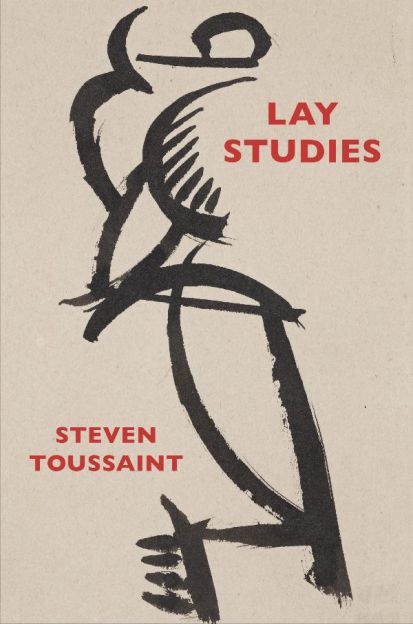
You are warmly invited to the launch of
Lay Studies
by Steven Toussaint
on Thursday 11 July, 6pm–7.30pm
at Unity Books, 57 Willis St, Wellington.
Lay Studies will be launched by John Dennison.
Lisa Samuels reads two poetry increments from a developing poetry manuscript called Livestream: ‘The Other Instinct’ and ‘Like Big Noise’.
Lisa Samuels is a transnational (US/NZ) poet whose recent works include a film version of her book Tomorrowland (2017, director Wes Tank), the anthology A Transpacific Poetics (2017, principal editor; co-editor Sawako Nakayasu), the poetry books Symphony for Human Transport (a Guardian top ten poetry book of 2017) and Foreign Native (2018), and visual art at Studio One Toi Tū (2019). Lisa is Professor of English and Drama at the University of Auckland.