Yearly Archives: 2018

Poetry Shelf interviews Chris Tse


Chris Tse - October 2017 - 01x - Photo by Rebecca McMillan.jpg


Chris Tse is a poet, actor and musician whose poetry first appeared in AUP Poets 4. His award-winning debut collection, How to be Dead in a Year of Snakes, responds to a moment in history – a 1905 murder – not so much by narrating that history but by installing a chorus of voices. I loved the book as you will see here.

I consumed Chris Tse’s new poetry collection, He’s so MASC, in one sitting, because I was caught in its grip. The knottiness belies the grace and fluidity of writing, but the tangle of self – the laying on the line and the holding in reserve – haunted me. It feels utterly exposing, playful, inventive and daring. It is warm, vulnerable, strong. I began to fear a review might appear heavy-footed alongside its lithe connections; like a delicately balanced house of cards, a review might miss the point and topple it over. Instead I have opted for an unfolding email conversation.

Chris made a deeply personal speech at his launch, acknowledging heartfelt gratitude to his friends and family. His tears, in hoping his friends and family were proud of him, moved me to tears. He told us that, for the first time in his poetry, ‘the speaker is one hundred percent me’.  This is the book that matters. Chris also hoped the book might find its way into the hands of people who might ‘see themselves in it’.
 

      1517533295117.jpg   1517533295117.jpg

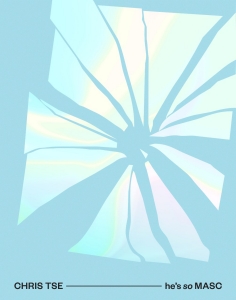
Chris Tse, He’s So MASC, Auckland University Press, 2018


Paula: Are you hesitant to answer questions about this book? I am hesitant to ask them! In the first poem we meet wolves. The wolf is also there in the last poem and makes a number of appearances in between, with teeth and claws and transformations. They can never settle to a single trope or behaviour or ache. I don’t want to explain the wolf. I just want to say they were a subterranean sharpness that clawed me. I can’t stop talking about the wolf. They are plot device, semantic undercurrent, emotional barometer, love infected, unreliable protagonist, hidden key. Ah, there is that glorious knottiness. Can you say anything about the wolf?


The wolves are closing in

on the ballroom while the band members

look out and brace themselves

for the conflict to come. Shit just got real.

They pick up their instruments

and clear their throats.

from ‘Intro’


Chris: For me, a big part of getting this book ready for publication was figuring out how I’m going to talk about it. With Snakes, it was like there was a safe following distance between me as author and the book as a literary/historical object. With this book, I don’t feel the safety of that distance given its themes and content, and honestly that’s a little terrifying. I work in communications and part of my job is to train our staff in how to deal with the media and select committees. We drill them on all the possible questions they could be asked and the best ways to answer them so that nothing throws them. I’ve been feeling I need to do that for myself for this book just to make me feel less anxious about it!

I like to think of each of the poems in this book being a single wolf roaming the terrain of my personal history. The first wolf poem I wrote for the book was ‘Lupine’, but it began life as a poem about my brother and I. Eventually, as the poem begin to take shape, it was clear that my brother had nothing to do with what I was trying to say in the poem. From there on, the image of the wolf and its association with transformation and masculinity felt like a good fit for what I wanted to explore, and so wolves began to pop up in other poems. I love how you’ve described the wolves as an ’emotional barometer’ – that’s a really apt description of what I wanted them to do in the book. They seem to have a habit of popping up in poems where I’m feeling uncertain, heartbroken, or angry.


Paula: I think the diverse self exposures is one reason why this book has affected me so much – and the sway between distance and intimacy. Things are at a distance and things keep disappearing. Presence is handlocked with vanishings, and not just the speaker in the poem. That flitting in and out of view intensifies the emotional impact for me, the unspoken. I am wondering too if distance is also coupled with masquerades and masks?


I can almost run my fingers through

the sun-streaked strands of those days


when I was nothing but a silhouette

disappearing into fog—just a sketch.


I could step into a crowd and never

resurface. No one would suspect anything.


from ‘Belated backstory’


Chris: The masquerades and masks are definitely there for distance. I’ve been performing my entire life – in public and private – so it was essential that this book, as unflinchingly open and true to my experiences as it is, also acknowledged the masks I’ve worn to protect, to give myself confidence, and to play. Those masks have been an important tool of survival and a way to make sense of the mess that sometimes builds up in my head. It’s also in part a response to having a somewhat public life now and the expectations that some people have of me as a Chinese New Zealand writer, especially given how few there are of us. I’ve talked at length in the past about being piegeon-holed, so I won’t go into all of that again, but sometimes I do feel like I’m performing the part of a Chinese New Zealand writer to appease others and meet a certain need. I can’t and won’t ever deny that side of me, but this book was a chance to draw from the intersectionalities of who I am.


Paula: Yes! The Chinese New Zealand part surfaces here and there – I was thinking like little teeth marks teeth to carry on the Wolf presence:


I’ll go to my next grave                     wondering

whether I pushed them hard enough to never settle

for being the token Asian in a crowd scene or

the Asian acquaintance in an ethnically diverse television series

from ‘Punctum’

I like the way intersectionalities of self are so important. The ‘coming out as a poet’ poems feel high risk when masks and arm’s lengths are dropped or reduced. I found these poems witty and raw and touching a chord. Yet there is also the nerve-ending intersections with coming out sexually. The one standing in for the other.


There’s no such thing as the perfect time or the best way to tell loved

ones about your poetry inclinations. You need to muster up every

ounce of courage in your being and just say it: I am a poet. You could

say ‘I write poetry’, but there’s something non-committal about

that phrasing, like you only dabble now and then and would prefer

not to attach labels to your preferences. Prepare yourself for a full

spectrum of emotional reactions, from ‘You’re still the same person

to me’ to ‘I can’t be friends with a poet’.

from ‘I was a self-loathing poet’


Paula: Is this an example of letting the poetry do the talking?


Chris: Absolutely. And not just letting it talk, but also letting it have the last laugh, so to speak. It was important to me that a poem like that (which dealt with something that I don’t exactly fondly look back upon!) had a healthy dose of humour in it to soften some of the emotional barbs for me as a writer. It’s not that I’m trying to run from the memory of that moment in my life or downplaying its significance. Rather, I see it as a way to embrace it for what it is while still being able to continuously learn from it and move forward.

Those intersectionalities of the self are important, and possibly even more so for readers who are trying to find someone they can identify with. On the flip side, those intersectionalities can be so easily carved up and used as labels to make someone or something appear more palatable or accessible. Even I’ve been guilty of this: as this book was coming together I would joke with my friends that this was “the gay book”, but it could just as easily have been “the break-up book” or “the pop music book”.


Paula: Sometimes poetry books should come with playlists at the back! This was what I was listening to at the time.

Is there a poem that particularly resonates with you – where everything has fallen into place and it just works or it matters in other ways? For me it is ‘Release’. I gasped when I read this. Maybe it is feeling that is both intense and restrained. I love this poem. Then again I like the surprise and momentum of ‘The saddest song’. I also adored ‘Wolf Spirit —Fade’, the last poem, but readers have to discover this poem for themselves.


Chris: Well, being the mix tape/playlist geek that I am, I’ve made two playlists for this book: Side A and Side B! They feature songs and artists that inspired the poems or feature in the poems themselves.


I can fit the saddest song in the world in my carry-on.

I can fit the saddest song in the world in my right-side brain.

But I can’t fit it in my lungs or hold on to it with confidence

when underwater.               And I can’t fit the saddest song

on one side of a 90-minute cassette tape without

an uncomfortable interlude cutting into its breath.

from ‘The saddest song in the world’


‘The saddest song in the world’ is the poem that resonates the most for me – I consider it the heart and soul of the book. Writing ‘Release’ was a very confronting experience. I read that poem now and I feel so vulnerable, but it was important to me that it had a place in the collection. Every time I had to revise what was in or out, I fought for it to be in, even though it feels like a ‘selfish’ inclusion because of its personal significance, so I’m glad it resonated with you as a reader! I’ve never performed it and I don’t know if I ever could. ‘Punctum’ and ‘Performance—Part 2’ were the last two poems written for the collection, after my publisher had already seen a final-ish version of the manuscript. They were both based on two separate lines that I’d been holding on to for a long time but just didn’t want to play with any of the other poems. When those two poems were finished it felt like I’d clocked a video game – those two lines were the things I needed to complete my quest!


Paula: One of the great attractions in the collection is movement. There are vital points (themes, events, revelations, states of being) that shine out, that repeat and overlap, a bit like a constellation. But it is the movement between that creates the knottiness I first mentioned, and I am not thinking of an ugly mess of a knot, just intricacies and complications.

What attracts you in the the poetry of others. Did you read any books that got under your skin while you were writing this?


Chris: I can’t pinpoint what attracts me to a particular poet or type of poetry – keeping an open mind is essential – but lately I have been drawn to poets and books that aren’t afraid to be sassy, funny or messy.

Unsurprisingly, I read a lot of poetry by gay male poets while writing this book: D.A. Powell, Richard Siken, Stephen S Mills, Ocean Vuong, Saeed Jones, Danez Smith, Andrew McMillan and Mark Doty, to name but a few. D.A. Powell was one of the first contemporary gay poets that I remember reading while I was an undergraduate and being absolutely shaken by his syntax and the emotional intensity of his writing.

Reading Hera Lindsay Bird’s first book was a revelation – a real YES! moment that in its own little way gave me the confidence to carry on with the types of poems I wanted to write for the book. Maggie Nelson’s The Argonauts and Bluets have also had a profound effect on me recently. Her work is often described variously as memoir, essay or genre hybrid. It’s all drawn from her personal experiences, which are then filtered through many layers of what interests and excites her. That, to me, is poetry. The way she’s able to draw in so many threads to weave a net of support over a single narrative is fascinating to experience as a reader.


Paula: Finally, I love the title. It feels like a little challenge. You are opening the space of masculinity – stretching poems wide open to its possibilities. As our conversation so clearly shows your book challenges us as much as it challenges you. I am really intrigued how certain books, such as this one, matter so much to me – often it is because they anchor themselves in human experience in distinctive ways. This seems like a scary, tricky question but what do you love about your book?


Chris: That is a scary question! It’s apt that you’ve mentioned the title because that is what I would pick. For the longest time – even before Snakes was published – I thought I knew what the title of this book would be. But somewhere along the way it became clear that my working title wasn’t going to cut it, and this book needed something spikier with loads more character. HE’S SO MASC instantly felt right – it’s cheeky, it’s a little irreverent and there’s a pop music connection (Cyndi Lauper’s She’s So Unusual). And I love what Greg Simpson, the cover designer, has done with it too – the dash drawing my name into the title, the italicised ‘so’. In a way the title is a challenge – the word ‘MASC’ is so loaded in gay culture and I wanted to turn that on its head. It’s my way of pushing back on everything I’ve ever been told that made me feel like I wasn’t enough or didn’t fit in.


Auckland University page

Chris Tse website

Friday poem at the SpinOff



The Ockham New Zealand Book Awards Poetry shortlist


NZ-book-awards-trust_logo@2x.png

All shortlists here

Book awards draw attention to books that hook judges for any number of reasons. Hopefully the awards attract new readers and generate new conversations. Check out reactions at The Spin Off to all four lists. In 2017, and I seem to say this every year, New Zealand published an astonishing array of poetry from a diverse range of presses. I loved so much of it, I would have turned down an invitation to judge an award. Yes there were books I utterly loved that didn’t make the long list. Yes there were books from the long list that I utterly loved that didn’t make the short list.

I am really familiar with three of the books on the short list, while the fourth is a pleasing discovery. Each of these books contain poems that gave me goosebumps. So in the spirit of generosity I celebrate the judges’ choices.

What do these poets have in common? Attentiveness!


1497223465774.jpg

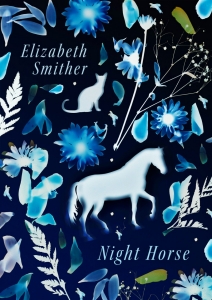
Elizabeth Smither’s Night Horse   (Auckland University Press)

Last year I read through the captivating stretch of Elizabeth Smither’s poetry: from Here Come the Clouds published in 1975, to the new collection, Night Horse. I was drawn into melodious lines, pocket anecdotes, bright images and enviable movement. Harry Ricketts talked about the transformative quality of Elizabeth’s poems in an interview with Kathryn Ryan, and I agree. As you follow reading paths from the opening line of the first poem — ‘Once, near nightfall, I drove past my mother’s house’—there is always  some form of transformation. The poetry, from debut until now, is meditative, andante, beautiful.

I see a continued poetic attentiveness and an ability to assemble detail that both stalls and surprises the reader. I was thinking the poems are like little jackets that can be worn inside out, and outside in, because Elizabeth offers stillness in movement, and in movement stillness. She generates musicality in plainness, and in plainness there is music. In the strange, there is the ordinary, and in the ordinary, there is strangeness.

Elizabeth so often slows down the pace of her poems so we may linger upon an image, a word, an anecdote, a side-thought to see what surfaces.

I especially love the ongoing friendship and granddaughter poems, but I particularly love the first poem, ‘My mother’s house.’ Kate Camp and I heard Elizabeth read this at the National Library’s Circle of Laureates last year and were so moved and uplifted that we asked for copies! In the poem, unseen, Elizabeth observes her mother move through the house from the street (she told us this autobiographical fact) and sees her in shifting lights. The moment is breathtaking; are we are at our truest self when we are not observed? There is characteristic Smither movement through the poem, slow and attentive, to the point of tilt and surprise. The final lines reverberate and alter the pitch of looking: ‘but she who made it/who would soon walk into the last room/of her life and go to sleep in it.’


It was all those unseen moments we do not see

the best of a friend, the best of a mother

competent and gracious in her solitude


from ‘My mother’s house’


TheYield-360-360x530.jpg


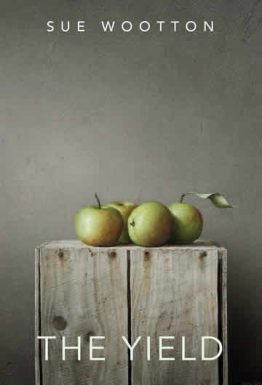
Sue Wootton’s The Yield  (Otago University Press)

Sue Wootton’s shortlisted collection is a sumptuous read, a read that sparks in new directions, while clearly in debt to everything she has written to date. You enter a sumptuous feast of sound and image amongst other glorious things. Several poems feature knitting, and knitting is a perfect analogy for the way Sue’s poems interlace the aural and the visual to produce sensual patterns. The poems have enviable texture and that texture engages both mind and heart.

As I read, the poetry of David Eggleton and Michele Leggott comes to mind.  They both write out of their own skin in ways that are quite unlike the local trend to write conversational poetry. I can see a similar idiosyncratic pulse driving Yield poems as though Sue is pushing boundaries, resisting models, playing and challenging what she can do as a poet.

I am also struck by the heightened musical effects. Sue has always had an attentive ear, but this collection almost feels baroque in the leapfrogging alliteration, assonance and sweet chords. There are traces of the personal in the poems—deaths, a family picnic, illness, a declaration to live life to the utmost, friendship—but I would suggest Sue hides in the crevices. Some of the poems (‘The needlework, the polishing,’ ‘Pray,’ ‘Priest in a coffee shop,’ ‘Graveyard poem,’ ‘Poem to my nearest galaxy’) engage with some kind of spirituality, either through a church building or prayer.

So many poems in the collection stand out for me (and indeed there are a number of award-winning poems here). I especially love ‘Calling,’ ‘Wild,’ ‘Lunch poem for Larry,’ ‘Admission,’ ‘Picnic,’ ‘Unspooling,’ ‘Strange monster,’ ‘A treatise on the benefits of moonbathing,’ ‘The crop,’ ‘Daffodils.’ Ha! Quite a list of poems that matter.

The alluring cover befits the allure of the poems within.


Measure my wild. Down to my last leaf,

my furled, my desicated. This deciduousness,

this bloom. Calculate my xylem levels,

my spore count, fungal, scarlet

in a bluebell glade. Whoosh,

where the foliage closes on a great cat.


from ‘Wild’


Rawahi-Front-Cover_high-res.jpg


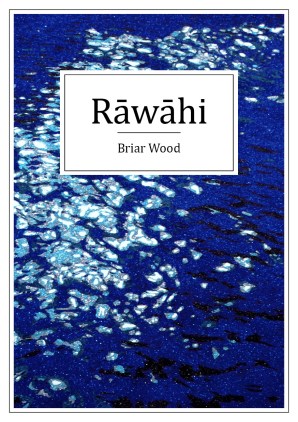
Briar Wood Rāwāhi   (Anahera Press)

Briar Wood’s poetry collection gathers, with a wide embrace, details of travel and living, and as the lived-in world grows on the page, the poems set up all manner of conversations. This book draws upon whakapapa, love, relations, ecology, the past and the present. Its warmth and its empathy are infectious.

Briar offers poetry that is both spare in delivery and rich in connection because people and places matter. The book cover glitters white on blue – and for me that is a treat of reading within. Words shine out like little gold nuggets on the line, layering and overlapping, and never losing sight of what matters deeply to the poet.

Poetry can be a way of laying down roots and setting up home in the poem, and on these occasions, it is as though Briar sings home in to being.


The sea at night is blacklit,

kikorangi, kōura, topazerine, pango,

a haul of images pouring from nets,

darker than oil underground


from ‘Paewai o Te Moana’


9780473411046.jpg


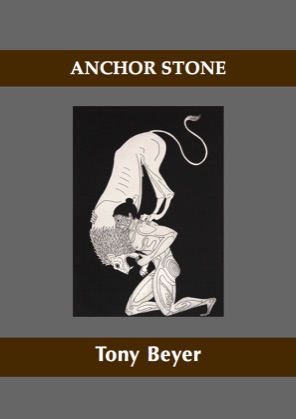
Tony Beyer’s Anchor Stone (Cold Hub Press)

Tony Beyer was such a discovery for me, I now need to track down his back list. Anchor Stone offers a distinctive voice with each poem judiciously layering detail that animates people, places and events. I am drawn to the measured pace, the slow and steady revelations that beguile and compound. The mix of economy, surprise, wit and physicality is glorious. You get linguistic agility, askew slides and a touch of daring.

No subject is redundant when it comes to poetry – think the land, friendship, trees and stones –  as Tony underlines. ‘Paths’ demonstrates such poetic fluidity, in a sequence of 100 small poems that furnish the outbreath and the inbreath of writing. It is as though each little poem walks its way into thought. Contemplation. The title suggest that these poems are miniature anchors but they are also kite-like in their imaginings and renditions and our need to attend to the physical world we inhabit.

Poetry can embrace beauty, flawed or otherwise, along with ways of belonging.


there is someone

everywhere in this house

living or

having lived here

their presence preserved

by a window fastening

the way a door

closes or partly closes


from  ‘Paths’


Each of these collections generates distinctive and diverse poetry pleasures. A big hug to the poets and big hug to all those who missed out on either list. Poetry awards can be tough times when you write, especially when exceptional books don’t make lists, long or short. But for these deserving four poets, it is time to crack open the bubbles and celebrate.


At Pantograph Punch: A fabulous Nina Powles letter from Shanghai


luminescent-cover-low-res_1_orig.jpg     8854932.jpg


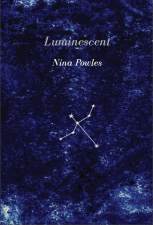
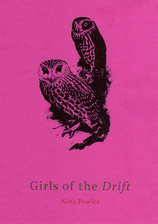
Nina Powles – the author of one my favourite 2017 poetry reads (Luminescent) –  writes of her experience living in Shanghai and two New Zealand authors who preceded her: Agnes Moncrieff and Robin Hyde. I also recommend Nina’s little chapbook, Girls of the Drift, that invents a letter conversation between Jessie Mackay and Blanche Baughan.

See the Pantograph Punch feature here.


‘The way I write about home changes when I’m away. The sea gets bluer, the hills become sun-drenched. But our ideas of ‘home’ and ‘away from home’ are becoming increasingly less fixed; they are no longer polar opposites but different, parallel ways of feeling and being. I am one of a growing number of New Zealanders who feels at home in two different cultures and in multiple places in the world. Writing to and about home from somewhere else is more than just an act of maintaining connection or keeping a record. For those of us who identify as mixed race, we are trying to keep hold of something, to tether ourselves to somewhere familiar while we go off in search of other homes, both old and new. ‘

Nina Powles


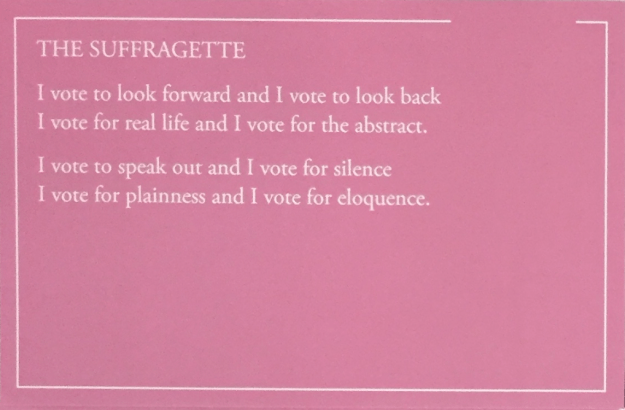
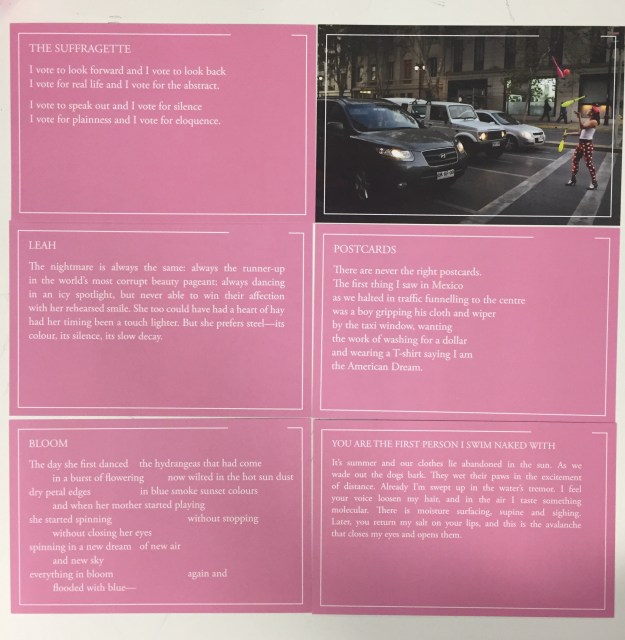
Celebrating a hundred years of women’s votes: ‘The Suffragette’


Screen Shot 2018-03-03 at 9.12.50 AM.png


Paula Green, The Baker’s Thumbprint, Seraph Press, 2013

Post card from The Next Word exhibition at Alexander Turnbull Library


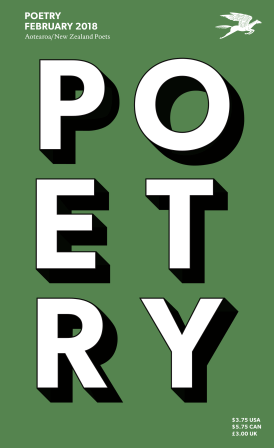
The NZ edition of Poetry


feb2018-front-cover.png


I know I find it hard to listen.

I read too much. I often need a drink.

It isn’t the world that makes us think,

it’s words that we can’t come up with.

Sure, I can work up fresh examples

and send them off to the committee.

But the poetry is in the bird. And in the pretty.


Bill Manhire, from ‘Polly’


International poetry traffic is so often dependent upon fortuitous connections. The degree of familiarity with poetry from elsewhere is utterly paltry compared with the degree of familiarity I have with local writing. Yes I have studied American and British poetry but I am more aware of the luminous stars in these poetry constellations than the grassroot outings.

On the other hand, we are no longer dependent upon ocean voyages and the constraints of distance, but to what degree does our poetry travel (compared say with fiction)? Or our poetry conversations extend beyond our lapping tidelines.

I am acutely aware of my impoverished relations with contemporary Australian poetry. Perhaps Joan Fleming and Amy Brown could guest edit a local journal with an Australian focus? But then again our journals are often annual and offer vital but scant opportunities for local poets.

This is not the first time an overseas journal has showcased New Zealand poetry, but it is perhaps the example I am most excited by. The editors – Stephanie Burt (USA), Paul Millar (NZ) and Chris Price (NZ) – have worked hard to present a distinctive and diverse overview of our current poetry. The selected poets cross all manner of borders: age, geographical location, style, university affiliation, gender, ethnicity. This matters if we want to move beyond the legacy of white male predomination, urban bias and privileged poetry models. I cannot name a NZ journal that has achieved such movement.

Yes the five books Daisy Fried reviewed – from the fifteen 2017 publications she was sent – were all Victoria University Press. Her selection certainly does not reflect the contours of that year, and we can all stand on the sidelines and shout (or sing) about the books we loved, but I have no issue with reviews reflecting individual taste. However I do take issue that a short intro and five VUP books can respond to her opening question: ‘How to characterise a national poetry?’ Why would you even try! It is a personal take on five excellent books.

The rest of the journal is an altogether different joy. The effect of reading is symphonic in the different hues and chords. Every single poem lifts off the page and catches both ear and eye. Such freshness, such lightness, darkness, musicality, room to breathe, surprising arcs and links and undercurrents. I keep swaying between Anna Jackson’s glorious bee poem and the flickering titles that coalesce in Nina Powles’s offering or the infectious wit of James Brown, Ashleigh Young and Tim Upperton.  I am pulled into the bite of Anahera Gildea, Chris Tse and then Tayi Tibble and stop in the tracks of reading. Travelling with Janet Charman and the revelatory suite makes me weep. Switching to Anne Kennedy and the momentum coils and overlaps and poetry transforms a starting point into elasticity on the line. Bill Manhire flips me over into the second stanza, and the lacework of reading – intricate yet full of holes – offers mystery, surprise, wit, curious things.


The time of breathing into clasped hands

hovering over a lighter to make a flame


not knowing

that an angry man threw his eyes into the night


the belly of his shattered father

weeping rain for separation of earth and sky


Jessie Puru from ‘Matariki’


The editors did not feel beholden to poetry that targets versions of New Zealand/ Aotearoa; our poetry might do this and then again it might not. The poems have the freedom to do and be anything whether they spring from spoken-word rhythms or  talkiness or thinginess or anecdotal revelations or sumptuous Baroque-detail or story or slanted humour or cutting political edges.

The poets: Anna Jackson, Kate Camp, Michele Leggott, Therese Lloyd, Jessie Puru, Essa Ranapiri, Tayi Tibble, Robert Sullivan, Kerrin P. Sharpe, Hera Lindsay Bird, Dylan Horrocks, James Brown, Murray Edmond, Jenny Bornholdt, Anne Kennedy, Bill Manhire, Nina Powles, Janet Charman, Anahera Gildea, Bernadette Hall, Vincent O’Sullivan, Courtney Sina Meredith, C.K. Stead, Chris Tse, Tim Upperton, Gregory O’Brien and John Pule, Faith Wilson, Ashleigh Young, Albert Wendt, Steven Toussaint, Erik Kennedy

This issue is a cause for celebration – I absolutely love it – and my celebration will take  the form of a subscription. New Zealand poetry has been well served – congratulations!


Poetry here


everything I never asked my grandmother

I can understand but I can’t speak

no one has played that piano since

New Zealand is so far away from here

let me translate for you the poem on the wall


Nina Powles from ‘Some titles for my childhood memoir’

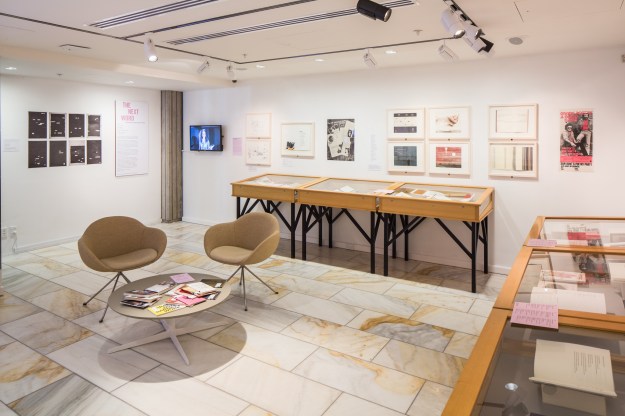
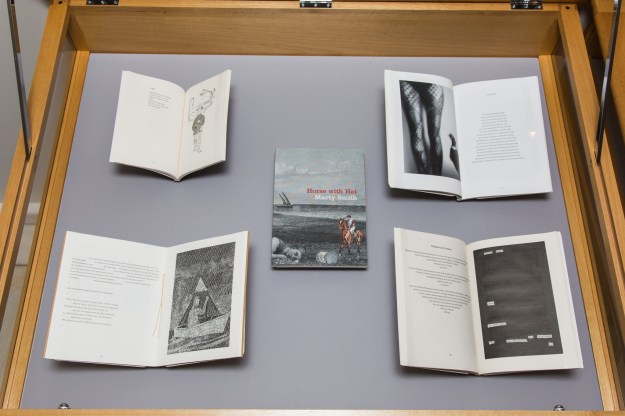
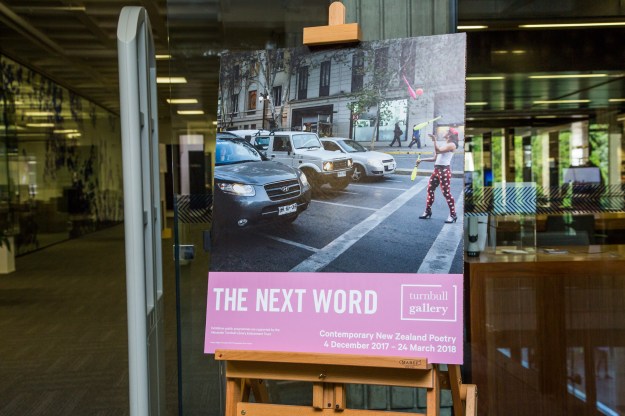
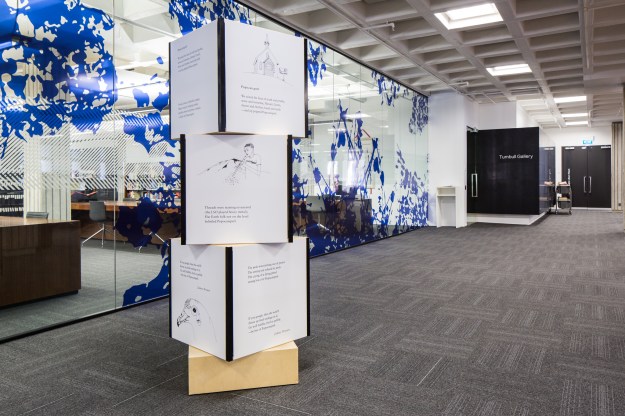
The Next Word at the Alexander Turnbull Library is a poem oasis

20171208_ATL_TG_Next_Word_005.jpg

All photo credits:  Imaging Services, Turnbull Library


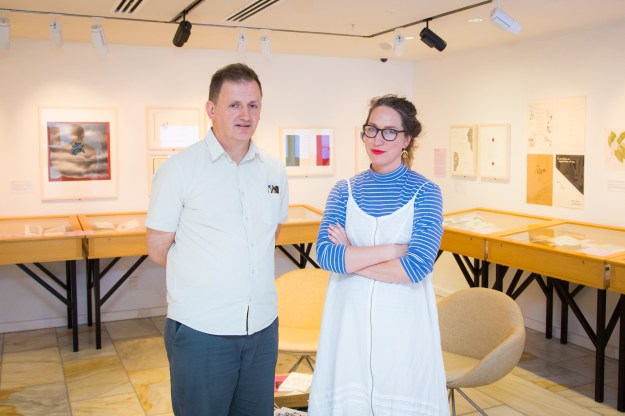
Hannah Metttner and Brendan O’Brien have curated an exhibition of contemporary poetry at the Alexander Turnbull Library. The key aim is to offer an overview of the past thirty years in various spots in the gallery. There is an art video put together by Hana Pera Aoake and and a carousel showcasing a James Brown poem on the ground floor.

The little reading room is a poetry treat.

The curators have drawn from the poetry riches of the Alexander Turnbull Library to set up reading pathways between poems and poets, in the books on display, yet the eye is also drawn to poetry as visual object. You land upon a poem and alight upon an exquisite image. There are countless possibilities for travel: politics, aesthetics, music, confession, place, time, edge, rebellion, love.

Poetry is lovingly tended.

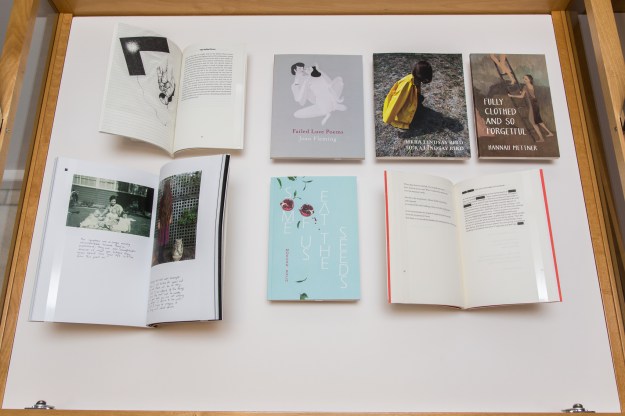
I am reminded that our poetry families are distinctive and diverse with many connections and necessary bridges. Nina Powles’s set of booklets, Luminescent, was a 2017 highlight for me; then again I am struck by the way so many of these books have glowed (Morgan Bach, Hinemoana Baker, Hera Lindsay Bird, Hannah Mettner, Chris Price, Joan Fleming, Bernadette Hall with Rachel O’Neill).

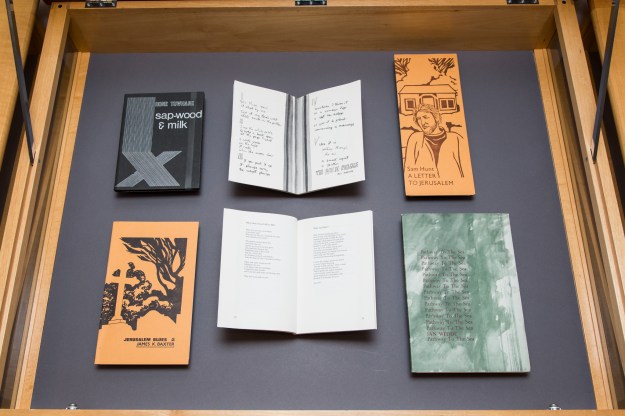
I love the way a book falls open at a poem in the glass case and we must stall on that to give a single poem devoted attention.

There are posters and prints and trips back in time (Sam Hunt, Ian Wedde, Hone Tuwhare, James k Baxter).

I went into the room after doing my final book checks at the library and it felt like an oasis, a place of retreat where the joy of poetry is the joy of stalling and savouring.

I highly recommend a visit before it closes on March 24th.

There is a lunchtime reading (12:15-1) on March 22nd with Chris Tse, Therese Lloyd, Anna Jackson, Gem Wilder and Sugar Magnolia Wilson. I am tempted to fly down!

There also some postcards on offer including my Suffragette poem.

One visit is not enough! I plan to loiter there before our Call Me Royal event next week.


20171205_ATL_TG_Next_Word_021.jpg


20171205_ATL_TG_Next_Word_022.jpg

20171205_ATL_TG_Next_Word_025.jpg


20171205_ATL_TG_Next_Word_026.jpg


20171205_ATL_TG_Next_Word_027.jpg


20171205_ATL_TG_Next_Word_028.jpg


20171205_ATL_TG_Next_Word_001.jpg


IMG_8767.jpg

Applications open today for 2018 Shanghai International Writers’ programme

Applications open today for 2018 Shanghai International Writers’ programme


New Zealand’s literary exchange with China continues with the call for applications from New Zealand writers to attend the international writers programme run by the Shanghai Writers’ Association for eight weeks in September and October 2018.

The successful writer will receive free accommodation in an inner-city apartment, a small stipend

for living expenses and return economy class air travel.

This opportunity is available through a partnership between the New Zealand China Friendship

Society, the Michael King Writers’ Centre, the Shanghai Writers’ Association, and Shanghai People’s

Association for Friendship with Foreign Countries.

Writers are invited to take part in discussions and literary events and are required to write an

article on a nominated theme before the residency starts. Apart from that obligation, the writers

are able to work on a project of their choice.

Up to seven writers from all over the world are in the programme each year. Many celebrated writers

have taken part over the years.

New Zealand applications close on Friday 30th March at 5pm and should be emailed to the Michael

King Writers’ Centre. Application details can be found on the MKWC website: www.writerscentre.org.nz

The selection will be managed by a panel appointed by the Michael King Writers’ Centre and the NZ

China Friendship Society.

For further information, please contact:

Jan McEwen

Michael King Writers’ Centre, PO Box 32-629, Devonport, Auckland 0744

Ph: (09) 445 8451

Mobile: 0274 811 567

The shortlist for the 2018 Peter Porter Poetry Prize includes Tracey Slaughter


Screen Shot 2018-02-27 at 10.18.30 AM.pngExciting news – I was such a big fan of her short story collection so heartfelt congratulations Tracey Slaughter !
 

Australian Book Review is delighted to announce the shortlist for the 2018 Peter Porter Poetry Prize. First presented in 2005, the Porter Prize is one of the world’s leading prizes for a new poem. It is worth a total of $8,500.

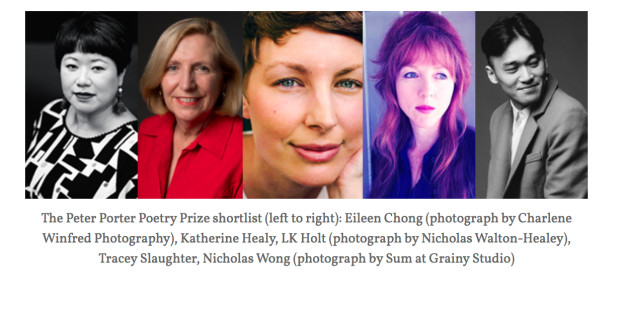
This year, our indefatigable judges – John Hawke (chair of the panel, and Poetry Editor of ABR), Jen Webb, and Bill Manhire – had almost 1,000 poems to assess before choosing the shortlist. It was our largest field to date. Five poems have been shortlisted, and the field reflects the international nature of this ABR competition. The shortlisted poets are Eileen Chong (Sydney), Katherine Healy (Adelaide), LK Holt (Melbourne), Tracey Slaughter (New Zealand), and Nicholas Wong (Hong Kong).

Full details here


Tracey Slaughter is a poet and short story writer from Cambridge, New Zealand. Her work has received numerous awards, including the international Bridport Prize (2014), shortlistings for the Manchester Prize in both Poetry (2014) and Fiction (2015), and two Katherine Mansfield Awards. Her latest work, the short story collection deleted scenes for lovers (Victoria University Press) was published to critical acclaim in 2016, and was longlisted for the Ockham NZ Book Awards. She is currently putting the finishing touches to a poetry collection entitled ‘conventional weapons’. She teaches at the University of Waikato, where she edits the literary journal Mayhem.


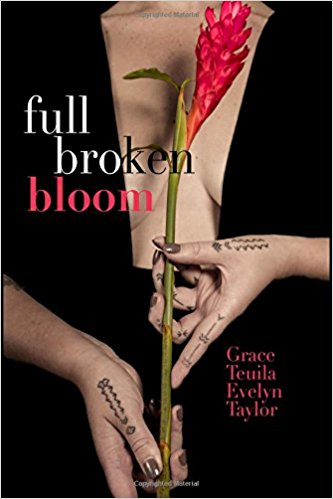
Summer Postcard: Grace Teuila Evelyn Taylor’s Full Broken Bloom


41Fr+rwwxCL._SX331_BO1,204,203,200_.jpg


Full Broken Bloom, Grace Teuila Evelyn Taylor,Ala Press, 2017


I have unpacked my eyes

and have seen the sharks.

Licked their wounds

while they gnawed stars into my neck.

They exchanged no promises

only letters forming words.


from ‘sharks as lovers’


Grace Taylor, of Samoan, English and Japanese descent, has been writing poems since 14 and performing spoken-word poetry since 2008. Her second collection, Full Broken Bloom, is a gift for her son and a gift for herself. The son is between the seams of writing – the beloved to write from and towards.

The collection is a gift for self as it is steered by crucial turning points: by a decision not to be defined in relation to, or by men, and to nourish ways of being in the world. This is not a teaching handbook or poetry as lesson – on how to be a strong woman – but an acute and goose-bump reflection on scars and wounds (broken) and healing and self-recognition (bloom).

The collection marks the slowing down of the performance beat, an awareness of body, and ability to love self. Words scatter across the page, in various tonal hues, breathless and breath-taking because much is at stake here. Form is fractured and then drawn together in glorious little cohesions.

Poems navigate relations with men, gods and goddesses.  As Grace travels through the complexity of living and loving, with the overriding current of ‘bloom’ and ‘broken’ – we enter a rich poetry space that is all heart and feeling and revelation. I am very moved by this book.


I drag stars over the bones of the ocean

a necessity to one

and a grave to another

both created myths of me.


from ‘moon pulls the tide


It is fortunate

my jawline is not strong

lessons have made it malleable

a supple bone

that can flex her teeth

or bend to the kiss.

That can hold her tongue

and not destroy a man,

but allow him to fall into his own reckoning

a monument

no longer.


from ‘water: desert