Tag Archives: Victoria University Press

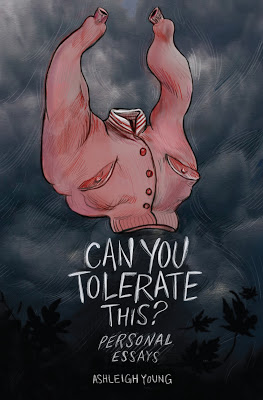
Ashleigh Young’s Can You Tolerate This? – Perhaps it’s all to do with a mind that likes to roam and fossick


Can_You_Tolerate_This__31811.1464841060.220.220.jpg  Can_You_Tolerate_This__31811.1464841060.220.220.jpg  Can_You_Tolerate_This__31811.1464841060.220.220.jpg  Can_You_Tolerate_This__31811.1464841060.220.220.jpg


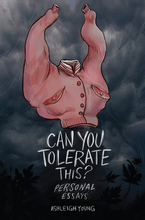
Can You Tolerate This? Personal Essays,  Ashleigh Young, Victoria University Press, 2016

The other day I was on a plane about to fly to New Plymouth to go to the Ronald Hugh Morrieson Literary Award ceremony in Hawera. It was tight timing. I was going to jump off the plane into a car, drive for an hour, and walk into the function in the nick of time. But the plane’s lights kept switching on and off, the engine sounds rising and falling. It was faint-inducing heat. Babies were screaming, a high pitch of chat drowned out the safety talk. I had Ashleigh Young’s book of essays on my lap to finish on the plane. In my head I shouted, I just want to get off this place. Seconds later as though my wish made it true, we were told the plane had been cancelled and we needed to get another. I was right down the back of the plane and still not up to running in my foot-recovery regime but knew I really really wanted to do my job as judge. So I started running towards the ticket counter, foot alarmed.

I am running like an elephant or our duck-waddle cat. I can hear all these other flights that have been cancelled due to engineering problems. Everyone is running and scrambling and agonising. Three-quarters there and I hear our plane has now switched to delayed. I limp back to the regional cafe and start reading Ashleigh Young to blot out the panic. She is on an aeroplane. She is sitting next to a woman who tells her life story and her life story is extravagant. We hardly know what to trust – and that is what makes it such a gem. I can’t focus though. I can’t pick another story now with my skewy focus so hobble back to the ticket counter and hear all sorts of rumours. Our new plane was the cancelled Taupo plane. Everyone else is being bussed. I keep thinking about the woman with her extravagant stories and it reminded me of an Italian author Gianni Celati who collected the stories of others where the feather line between real and unreal is flighty. I am in the muddlewash of queues when a woman calls out asking if anyone needs special assistance. I ask for a wheelchair. I am being wheeled. I am back on the new plane next to the same young woman. She is studying physiotherapy.  I could embroider my life.The fact I even tell her where I am going is like a little character warpslip as usually I don’t say a word on planes. We talk about injuries and homes. I have two of Ashleigh’s stories to go. I don’t get to read them. I walk into the ceremony 40 minutes late.

Asleigh Young’s collection of personal essays is an addictive read, but it is the kind of book I wanted to eek out (I read the last two stories on the plane home!). What would fill the gap? What would deliver the same sustaining mix of wit, revelation and aromatic detail. Ashleigh gathers in stories from her own life and replays them in sentences that flow so sweetly. Each essay is like a musical composition but it is the content that offers the reader gold. I love the shift in perception from child to adult, in reflecting back. I love the way stories harness what is intimate and personal but also venture out into the world, a world filtered through reading and the experiences of others, fascinating or strange.  Perhaps it is all to do with a wry and agile mind that likes to roam and fossick.


Here’s a tasting plate of things I loved

Now and then you fall upon the way story comes into being. This one is especially good. It’s in in a terrific essay on her brother, JP:

‘My enthusiasm for the story was such that I felt it would write itself. The story was virtually already made. All I needed to do was grab hold of one end and pull the rest up behind it like an electric wire out of the ground.’   from ‘Big Red’

In the same essay this gem:

‘Just as JP was abandoning fashion, Neil and I were finding it, and fashion equipped us with new ways of being embarrassed.’

Still in the same essay, Ashleigh gets thinking about story again when she thinks about her film-making brother Neil:

Write your way towards an understanding, a tutor told me in a creative writing class. But what if you went backwards and wrote yourself away from the understanding?’

This strikes me as the kind of thing a Chinese philosopher might say in that going backwards is in fact your way forwards; in not knowing what you know, in knowing you don’t know.

One of the poems in New York Pocket Book picks up on Frank O’Hara’s accent. I loved reading the Frank O’Hara segue (pp70-71).

‘I returned to his lines over and over.’

Reading Frank’s lines from ‘Adieu to Norman, Bonjour to Joan and Jean-Paul,’ got Ashleigh thinking about continuity:

‘I fixated on these lines because they made me think about ways in which to continue, and what continuing meant. Getting up in the morning was one way. Getting dressed, facing the people around you–these were ways of continuing that kept your life open to possibility. But there was another way of continuing, and this was the continuing of silence. Our family had always continued to continue through events that we did not know how to speak of to one another.’


This from the plane story ‘Window Seat’:

‘I made my mind up to not decide there and then whether she was telling the truth. I wanted to stay open for as long as I could. I was wide awake when she said with resolve, ” Now, I’m going to tell you about you.”‘

I found this story moved me on so many surprising levels. The woman and her extravagant tongue. Especially the portrait of Ashleigh. I was holding the book on a plane and squirming. Squirming too at the way we reveal ourselves in shards that might embarrass. The  book made me laugh out loud. Or just smile at that coiling thought. Or the deep-seated warmth of family, whatever the ups and downs. I thought the last essay, ‘Lark,’ an essay in which Ashleigh’s mother is encouraged to write, was the perfect ending. The mother rode her bike alongside them on the way to school, she used jackhammers and stripped paint off furniture. I adored the shadowy overlap between mother and daughter. Here is the gorgeous last paragraph of both book and essay:

‘A wine glass with tidal marks is on the table beside Julia’s father’s desk lamp. The lamp is doubled over like something in pain. From our desk inside the house where we are studying, we can see her through the caravan’s oblong window. Tonight she is at work on the book. She is trying to remember things. It is like practising another sort of language. It leads her to herself and it leads her away. Sometimes it unsteadies her until she finds another small friend to hold on to. A moonish light comes from her window. Her cloudy head bends over the table as she writes.’


This is a fabulous, symphonic collection. Ashleigh dares to imagine as much as she dares to admit. She has no doubt prompted us, from Cape Reinga to Rakiura, to get out pen and paper and write our way backwards, pulling electric cables, making room for extravagant tongues and familial love. I cannot recommend this collection highly enough.


Victoria University Press author page
 

DSCN6060

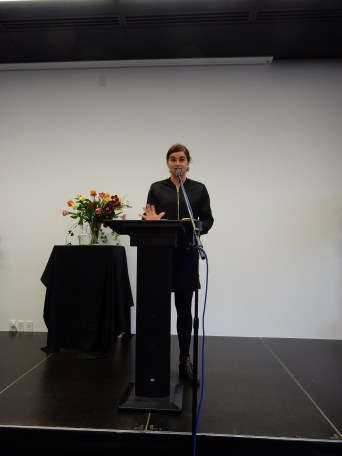
National Poetry Day event at the National Library in Wellington this year. Ashleigh is also appearing at the Ladies Litera-tea event in Auckland on October 3oth (sold out!).
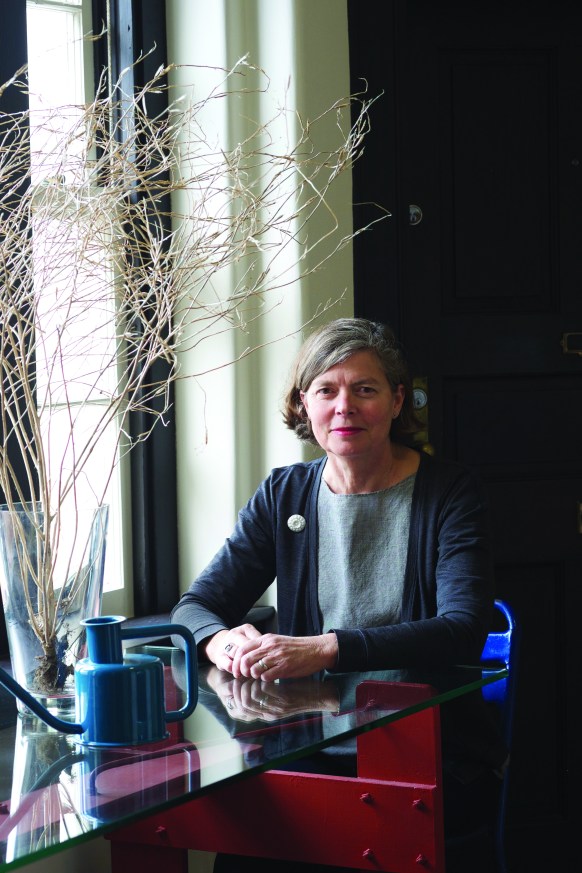
Poetry Shelf interviews Jenny Bornholdt: ‘There’s always a feeling, a kind of charge, when a poem is making itself known’


Jenny Bornholdt (Deborah Smith 2016).jpg

Photo credit: Deborah Smith


‘The moon came up

and all our thinking

went sideways.’


from ‘Full Moon’


Jenny Bornholdt is one of my favourite New Zealand poets, so a new Selected Poems is an occasion worth marking. Her poetry traverses decades; her poems never lose sight of the world at hand, are unafraid of the personal or little ripples of strangeness, and underscore a mind both roving and attentive. There is an ease of writing that might belie slow craft but Jenny’s poetry is exquisitely shaped from line to form. Returning to the early poems, I was taken once again by their enduring freshness. A lightness of touch, honeyed lines. As poet, Jenny harvests little patches of the world and transforms them into poems. Patches that might be ordinary or everyday, offbeat or linked to feeling something – patches that stall me as reader. I love that. When I read the poems, I get access to a glorious poetry flow yet there are these luminous pauses. If I were writing an essay, it might explore the poetics of pause and currents.

When I was editing Dear Heart, I pictured a little chapbook of Jenny Bornholdt love poems because she has written some of my favourites whether for husband, father or child (‘A love poem has very long sentences,’ ‘Poem,’ ‘Pastoral,’ ‘Mrs Winter’s Jump,’ ‘The inner life’ ‘Full Moon’ for starters).

To have this new book is a gift. Thanks Jenny for the interview.


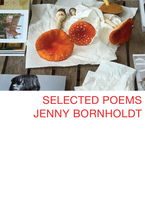
selected_poems_jenny_bornholdtrgbweb__66924-1464840641-220-220   selected_poems_jenny_bornholdtrgbweb__66924-1464840641-220-220   selected_poems_jenny_bornholdtrgbweb__66924-1464840641-220-220

Selected Poems Jenny Bornholdt, Victoria University Press, 2016


Did your childhood shape you as a poet? What did you like to read? Did you write as a child? What else did you like to do?

Yes, I think it did. I was one of those kids who read a lot – anything that was going. I loved the Readers Digest. My mother took us to the library every week and I got out four books, which was the limit then. I also spent a lot of time outside – we had kids our age next door and over the road and we spent most of our time with them.


When you started writing poems as a young adult, were there any poets in particular that you were drawn to?

I didn’t write any poems til I was about 18. I read a lot of novels and if I thought about being any kind of writer it’d would’ve been a novelist, or journalist, which is the direction I headed in.  I’d read some of the Mersey poets when I was younger and I remember liking Roger McGough’s casual, ‘talky’ style.


Did university life transform your poetry writing? New discoveries or directions?

University was where I discovered poetry. I really had no idea about anything before I went there.  Everything was exciting – from Middle English to contemporary American poetry. And I did the ‘Original Composition’ course, which changed everything.


‘So careless the trees—

having remembered their leaves

they forget them again

so they fall on us, big

as hands.’


from ‘ Autumn’


Your poetry reflects a quiet absorption of the world that surprises, moves and astonishes. Sometimes it feels as though you tilt the world slightly for us to see. What are key things for you when you write a poem?

Each poem is different, but there’s always a feeling, a kind of charge, when a poem is making itself known. It’s a matter of trusting yourself and following the direction of the poem.


Reading your new Selected Poems sent me back to the original collections with admiration and delight. It is fascinating reading across the arc of decades—gathering echoes, favoured motifs, shifting melodies. Do you think your poetry has changed over time? Did you spot points of return such as leaves, the garden, or baking?

There are many points of return. One thing that surprised me was the number of tea towels in my poems.

It was really interesting making the selection for this book – there seemed to be such a strong sense of continuity. I can see changes, though, and that’s good. I think I’m writing better poems – they seem stronger to me. Over time I think I’ve let myself get a bit weirder.


Ha! I love the idea of tea towels. I never spotted them. I think I need to send you a poetry tea towel to celebrate. I am always drawn to the conversational tone that is both of the everyday and rises beyond it in your poems. How do you see your poems working as conversation?

They’re probably a conversation with myself. Me saying things out loud to see what happens.


Some of your most moving poems document illness. Do you think illness made your writing life more difficult or did writing give you solace and energy? Or something altogether different?

Illness definitely made my writing life difficult. I was out of action for a year with bad hip pain and didn’t write anything. I could barely get out of bed. Then, after surgery, I spent a year recovering and during that time my writing life began to surface and I found enormous solace in it. Writing gave me a way of processing what had happened – of making it into something else. It was like turning the awfulness around and sending it off in another direction.


‘For six weeks now I’ve been outside of weather

and of reading. Outside of myself.’


from ‘Along way from home’


The result for the reader is a cluster of poems that draw you into that experience of illness, then lead you in so many other directions. You have never been afraid of a longer poem, of longer lines and and a slow unfolding of subject matter like a storyteller holding a listener in the delicious grip of attention. Do you have one that particularly resonates for you?

I love all the poems in The Rocky Shore. You’re probably not meant to say that about your own work, but there you are. Those poems resonate because they’re so much about my life and what’s important in it. Those poems really found their form.


I love the Rocky Shore too. I agree they have found just the right form and within that form a perfect alchemy of ingredients. It is on my shelf of classic NZ poetry books. When you were putting the selection together was there an older poem that surprised you – like coming across a long-lost friend?

I was surprised by ‘Waiting Shelter.’ I think that one’s still got something.


‘How you remember people. To remember

them as well as they remember you.

To remember them with abandon. To


abandon remembering them. Which is

better? or worse? Rooms and rooms

and always people moving in


and out of them. Love,

love, a knock on the door. A

heart murmur to remember you by.’


from ‘Waiting shelter’


What poets have mattered to you over the past year? Some may have mattered as a reader and others may have affected you as a writer.

I’ve read and re-read Mary Ruefle’s book of essays Madness, Rack, and Honey – it makes me want to write. I find prose writers often affect me strongly – I’ve just read by Elizabeth Strout, for the third time this year. It’s one of the most affecting books I’ve ever read. Alice Oswald’s new book of poems Falling Awake is a marvellous, strange thing.


What New Zealand poets have you been drawn to over time?

Dinah Hawken, Bill Manhire, Andrew Johnston, James Brown, Mary Ursula Bethell, Geoff Cochrane.


Michele Leggott has talked about a matrix of early women poets in New Zealand who supported each other. Have you sustained a vital conversation with poet friends on your own work and on the whole business of writing poetry?

Greg (O’Brien) and I talk about poetry a lot – it helps to live with someone who does the same thing you do. And I often talk to friends (some of them writers) about writing and reading. It’s so much a part of my life that I can’t imagine not talking about it.


Some poets argue that there are no rules in poetry and all rules are to be broken. Do you agree? Do you have cardinal rules? Do you have rules you particularly like to break?

I think it’s more that there are conventions and, as in any art form, these can be done away with as long as what happens ‘works’. Poems are strange things – they have their own logic and find their own forms.


‘This poem was always going to end there, with Frankie

and the toast. That image has been the engine


of the poem, but then

more happened.’


from ‘Big minty nose’


The constant mantra to be a better writer is to write, write, write and read read read. You also need to live! What activities enrich your writing life?

Most things, except doing my tax return.


Finally if you were to be trapped for hours (in a waiting room, on a mountain, inside on a rainy day) what poetry book would you read?

Elizabeth Bishop’s Compete Poems.


51yTZd+toIL._SX319_BO1,204,203,200_.jpg     9780393285284_300.jpg    25893709


Victoria University Press author page


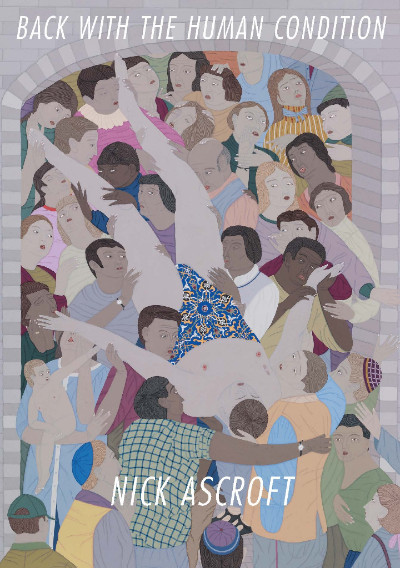
‘Daffodils Lip Sync’: A new poem in a new book by Nick Ascroft

Back+with+the+Human+Condition.jpg


Daffodils Lip Sync


I wandered longwise as a crab

that floats a ‘hi’ and flaps a claw

when on the wall I spied a tap

and hosed a golden Labrador.


* *


I wandered Langley with a cold,

like drones on high that veil the ill.

Vanilla white, we spies of old

would roast a cold in Benadryl.


* *


A squalid mauve miasmic cloud,

whose frozen height in ladles spills

one awful stench that flies enshroud:

your nose is blown, it’s daffodils.


©Nick Ascroft, Back with the Human Condition, Victoria University Press, 2016

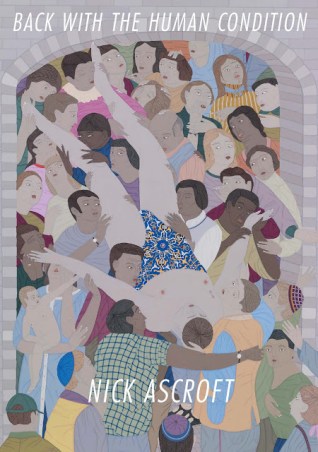
Nick Ascroft’s new collection is in four parts: Love, Money, Complaints, Death. He exhibits an enviable linguistic palette with words on the lines languid, sideways darting, playful, ever playful, wriggling and exquisitely calm. You see all that in the ‘The Tide.’ Ascroft’s poems will sound good when read aloud; the poet resisting monotone, shifting then settling in surprising places, catching love and humour. I adored ‘A Hill’  – glorious in its slow contemplation, tender detail compounding. And ‘The Sad Goose,’ a concrete poem stamping the shape of a goose on the page. This book is a treasure trove of poetry delight; one to savour slowly to get the full dance of flavour on the tongue (or in the ear).

Nick and VUP have kindly granted permission to post ‘Daffodils Lip Sync.’ I love the idea of a poem in skewed lip sync with its predecessor. I laughed out loud, mesmerised next step by the word play, and the madcap images that buffet/buff the original.

After this brief sample, I recommend you get the book and read poems in altogether different but equally satisfying keys.


Book Launch: My Father’s Island: A Memoir by Adam Dudding


74b02a7e-38ba-401e-a36d-6c4f93c3c35f.jpg

Victoria University Press warmly invites you to the launch of

My Father’s Island: A Memoir
by Adam Dudding

on Thursday 10 November, 6pm–7.30pm
at Time Out Bookstore
432 Mt Eden Rd, Mt Eden Village, Auckland

paperback, $35

Nick Ascroft and VUP launching Back with the Human Condition – dips so far, very tasty!

0b3bedb4-eac1-4441-a2e8-44cd666aa290.jpg

Victoria University Press warmly invite you to the launch of

Back with the Human Condition

by Nick Ascroft

on Monday 10 October, 6pm–7.30pm
at The Guest Room, Southern Cross Bar
39 Abel Smith St, Te Aro, Wellington.

Books will be available for purchase courtesy of Vic Books. p/b, $25.

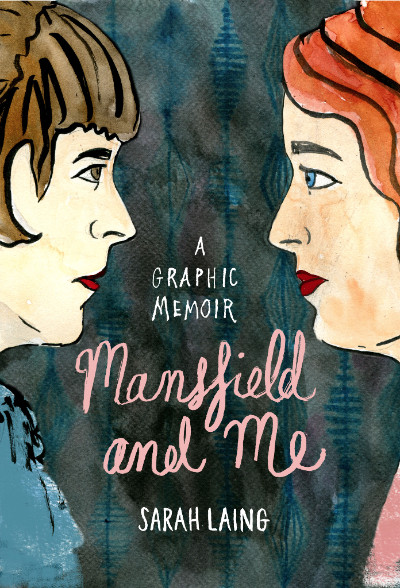
A must-go book launch: Sarah Laing’s Mansfield and Me

58259589-4613-48dd-b8db-36a95a091c62.jpg


Victoria University Press warmly invites you to the launch of
Sarah Laing’s new graphic memoir

Mansfield and Me

on Thursday 6 October, 6pm–7.30pm
at Unity Books, 57 Willis St, Wellington

All welcome!
About Mansfield and Me

These Rough Notes – Damien Wilkins Interview


Damien+Wilkins+2016+WEB+small+by+Grant+Maiden+Photography.jpg


I heard I rumour you wrote this book in a matter of weeks? How did you do that? What influence did this rapid writing have on the shape of the book?

If I knew how I did it, I’d do it all the time. At the moment I’m not sure if it was a lightning strike or a working method. But let me just praise speed for a moment. I teach creative writing and one of the themes of that world is that it’s very hard to write a book. You’re working with people for whom writing is new. They struggle. You struggle with their struggle. I believe in that struggle. But there are other ways to go about things. I was impressed that César Aira says he never revises. He’s published something like eighty books. The other thing on my mind was the work of painter Euan Macleod. I’d written a piece for Art New Zealand on his big retrospective show. One thing amazed me: the speed of his composition. I really envy painters their brushes and their splatter, their approximateness. Language isn’t paint. It’s a world of care and creeping along. But what would it be like to run ahead instead of go my usual sideways?


For the rest of the interview go here

These Rough Notes: Ashleigh Young

Can+You+Tolerate+This.jpg


Can You Tolerate This? Personal Essays by Ashleigh Young.

Release date: 11 August. Paperback, $30.


With her new collection of essays to be launched by VUP on August 11th, Ashleigh Young answered a few questions for These Rough Notes.

Five questions and answers here

Here’s a sample:

This book has been a long time in the making – from when you won the Adam Prize in 2009 with a portfolio of essays, to now, 2016. How does it feel to finally be publishing your essays in a book form? How much has the work evolved in the time between your MA portfolio and the published book?

That’s a long time! I feel glad and a bit nervous, but mostly tired because I’ve been so busy avoiding this book for seven years. I know all the avoidance tricks now. I could probably organise a special conference on avoidance, or a festival. My favourite trick for avoiding this book – because it was full of problems that I didn’t want to think about yet – was to write things that weren’t this book. So I finished writing a book of poetry and started writing a blog. The blog allowed me to write my way into things I probably wouldn’t have written otherwise – cycling, odd encounters, mental health, phrases and gestures, friendships, members of my family, inner voice … Sometimes the posts were intensely personal and sometimes detached.


The launch:

Victoria University Press warmly invites you to the launch of

Selected Poems
by Jenny Bornholdt

&

Can You Tolerate This? Personal Essays
by Ashleigh Young

6.00pm–7.30pm, Thursday 11 August
at Unity Books
57 Willis St, Wellington.
All welcome.

Buy both books on the night for only $60 (normally $70).
This offer applies at the Unity Books launch only.

Is Hera Lindsay Bird a flash in the pan?

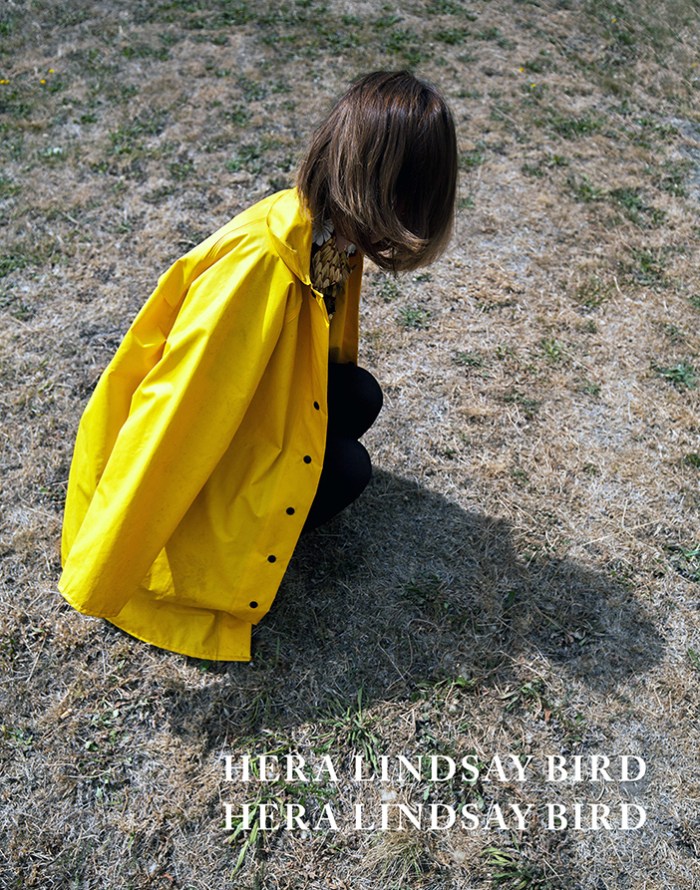
ca5ff196-de28-4704-a12b-2d6a1292d767.jpg


‘All I care about is looking at things and naming them’

‘I love life’

Hera Lindsay Bird Hera Lindsay Bird, Victoria University Press, 2016


For the past week or so, after visits to our key research libraries,  I have been writing about Jessie Mackay, a founding mother of New Zealand poetry. What I am writing is under wraps but my relationship with both the woman and her poetry is not clear cut. She moves me, she astonishes me, she irritates me, but I am always filled with admiration. One question bubbling away is: how different is it for women writing over a hundred years later?  Sure, contemporary poems are like a foreign country, we have changed so much. But what of our behaviour as poets? Our reception? What feeds us? What renders us vulnerable and what makes us strong?

I want to draw a pencil line from Jessie Mackay to Hera Lindsay Bird and see what I can peg on it. But I want to save these thoughts for my book.

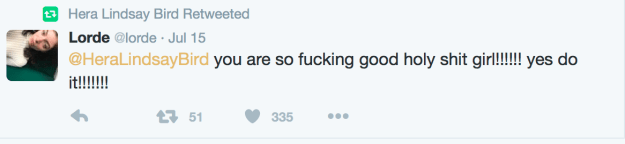
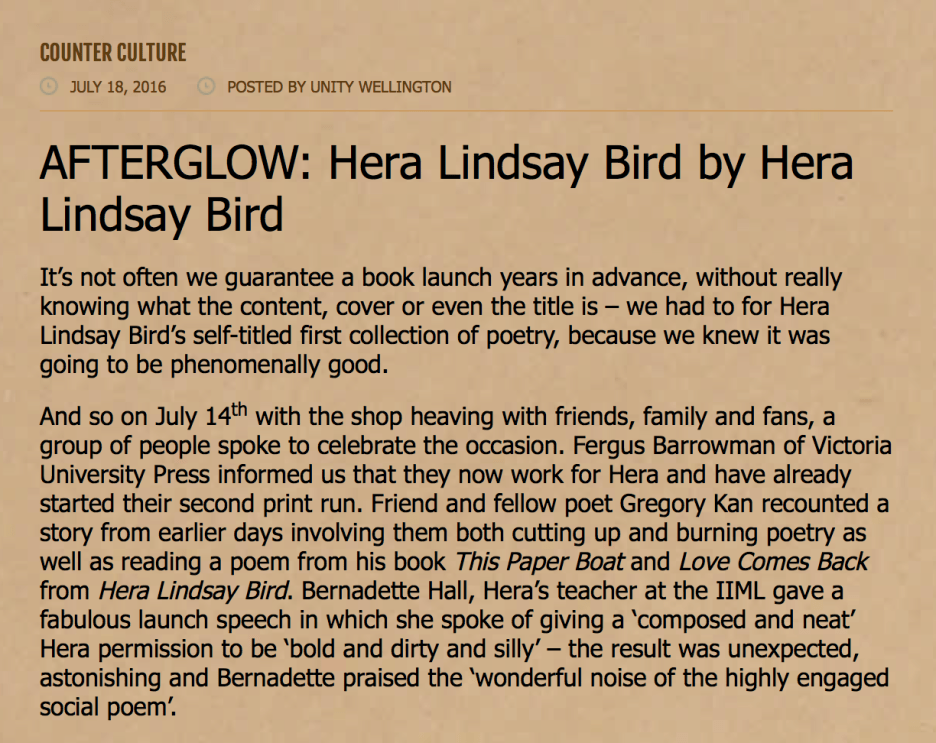
Hera Lindsay Bird has attracted the biggest hoo-ha with a poetry book I can recall. It felt like I was witnessing the birth of a cult object. Images of the book cover on the side of a bus or a building (photoshopped?!?!) created a little Twitter buzz. Lorde tweeted. Anika Moa tweeted. Tim Upperton reviewed it on launch day on National Radio. Interviews flamed the fan base on The Spin Off, The Wireless and Pantograph Punch. The interviews promoted a debut poet that is hip and hot and essential reading. Poems posted have attracted long comment trails that apparently included downright vitriol (I haven’t read these and I think just applied to one poem). The Spin Off cites this as one of a number of factors in the shutting down of all comments on their site. The launch was jam packed, the book sold out, and took the number one spot on the bestseller list. Hera is a poet with attitude. Well, all poets have attitude, but there is a degree of provocation in what she says and writes. Maybe it’s a mix of bite and daring and vulnerability. Just like it is with JM, Hera’s poetry moves, astonishes and irritates me, but most importantly, it gets me thinking/feeling/reacting and prompts admiration.


A few thoughts on Hera Lindsay Bird by Hera Lindsay Bird


This book is like rebooting self. Each poem reloads Hera. Click click whirr.

At first you might think the book is like the mohawk of a rebellious punk who doesn’t mind hate or kicking stones at glass windows or saying fuck at the drop of a hat.

The word love is in at least two thirds of the poems. It catches you at times with the most surprising, perfect image:

‘when we first fell in love

the heart like a trick candle

on an ancient, moss-dark birthday cake’


‘it’s love that plummets you

back down the elevator shaft’


You could think of this book as a handbook to love because Hera doesn’t just write love poems, she riffs on notions of love:

‘It’s like falling in love for the first time for the last time’

or: ‘What is there to say about love that hasn’t already been’


Some lines are meant to shock you out of reading lethargy:

‘I feel a lot of hate for people’

or: ‘My friend says it’s bad poetry to write a book’

or: ‘Some people are meant to hate forever’


or:

‘It’s a bad crime to say poetry in poetry

It’s a bad, adorable crime

Like robbing a bank with a mini-hairdryer’


Hera reads other poets and uses them as springboards to write from: Mary Ruefle, Bernadette Mayer, Mary Oliver, Chelsey Minnis, Emily Dickinson.

Sometimes the book feels like a confessional board. Poetry as confession. It hurts. There is pain. There is always love.

This poetry is personal. Poems (like little characters) interrupt the personal or the chantlike list or the nettle opinion the honey opinion as though they want a say and need to reflect back on their own making, if not maker.

Love hate sex girlfriends life death: it is not what you write but how you write it that makes a difference, that is the flash in the pan, not to mention the pan itself.

Hera writes in a conversational tone, sometimes loud, sometimes quiet, as though we are in a cafe together and some things get drowned out but the words are electric and we all listen spellbound.


She uses excellent similes. On poetry:

‘This is like an encore to an empty auditorium

It’s a swarm of hornets rising out of the piano’


‘Neither our love nor our failures will save us

all our memories

like tin cans on a wedding car

throwing up sparks’


‘I can only look at you

Like you are a slow-burning planet

And I am pouring water through a telescope.’


Hera likes to talk about bad poems; like the wry punk attitude that says look at my bad style. I am not convinced that there is much in the way of bad poetry here unless you are talking about a vein of impoliteness. It kind of feels like a set of Russian dolls – inside the bad poetry good poetry and inside that the bad and then good and so on and so forth. There is always craft and the ears have been working without fail.

One favourite poem in the book is ‘Mirror Traps’ but I am saving that for the Jessie Mackay pencil line.

Hera’s sumptuous book comes out of a very long tradition of poets busting apart poetic decorum, ideals and displays of self. It’s a while since we have witnessed such provocation on our local poetry scene. What I like about this scintillating writing is that each poem manifests such a love of and agility with words — no matter how bad it tries to be. It is addictive reading. Yes there is a flash that half blinds you and spits searing fat along your forearms, but you get to taste the sizzling halloumi with peppery rocket and citrus dressing.


‘I love to feel this bad because it reminds me of being human

I love this life too

Every day something new happens and I think

so this the way things are now’


PS I adore the cover!

Hera Lindsay Bird has an MA in poetry from Victoria University where she won the 2011 Adam Prize for best folio. She was the 2009 winner of the Story! Inc. Prize for Poetry and the Maurice Gee Prize in Children’s Writing. She lives in Wellington with her girlfriend and collection of Agatha Christie video games.


Poem: ‘Everything Is Wrong


Screen Shot 2016-07-23 at 1.40.53 PM.png


Screen Shot 2016-07-23 at 1.40.12 PM.png


Screen Shot 2016-07-23 at 1.42.56 PM.png


Screen Shot 2016-07-23 at 1.41.59 PM.png

Screen Shot 2016-07-25 at 3.42.24 PM.png

mxb160714-HLB06D0134-1024x683.jpg

1779473_722846587735015_2139168024_n1.jpg


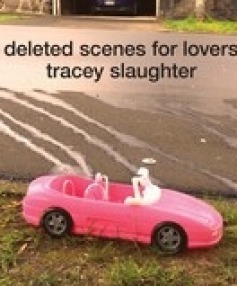
Deleted Scenes for Lovers
Tracey Slaughter
Victoria University Press, $30

Tracey Slaughter’s daring short fiction deposits you on a rollercoaster, hoists you in the air, puts you in a dank, dark cupboard to eavesdrop, spins you round and round, makes you feel things to the nth degree.

Her short fiction has won awards, attracted widespread admiration in journals for years; Deleted Scenes for Lovers is her second collection.

Tracey Slaughter   1467844665073.jpg

photo by Catherine Chidgey


She teaches creative writing at the University of Waikato. If the quality and originality of writing is a yardstick for the quality and originality of a creative writing teacher, then students should flock to Slaughter’s courses. This book is something special.


for the rest of my review in SST see here