Tag Archives: Te Herenga Waka University Press

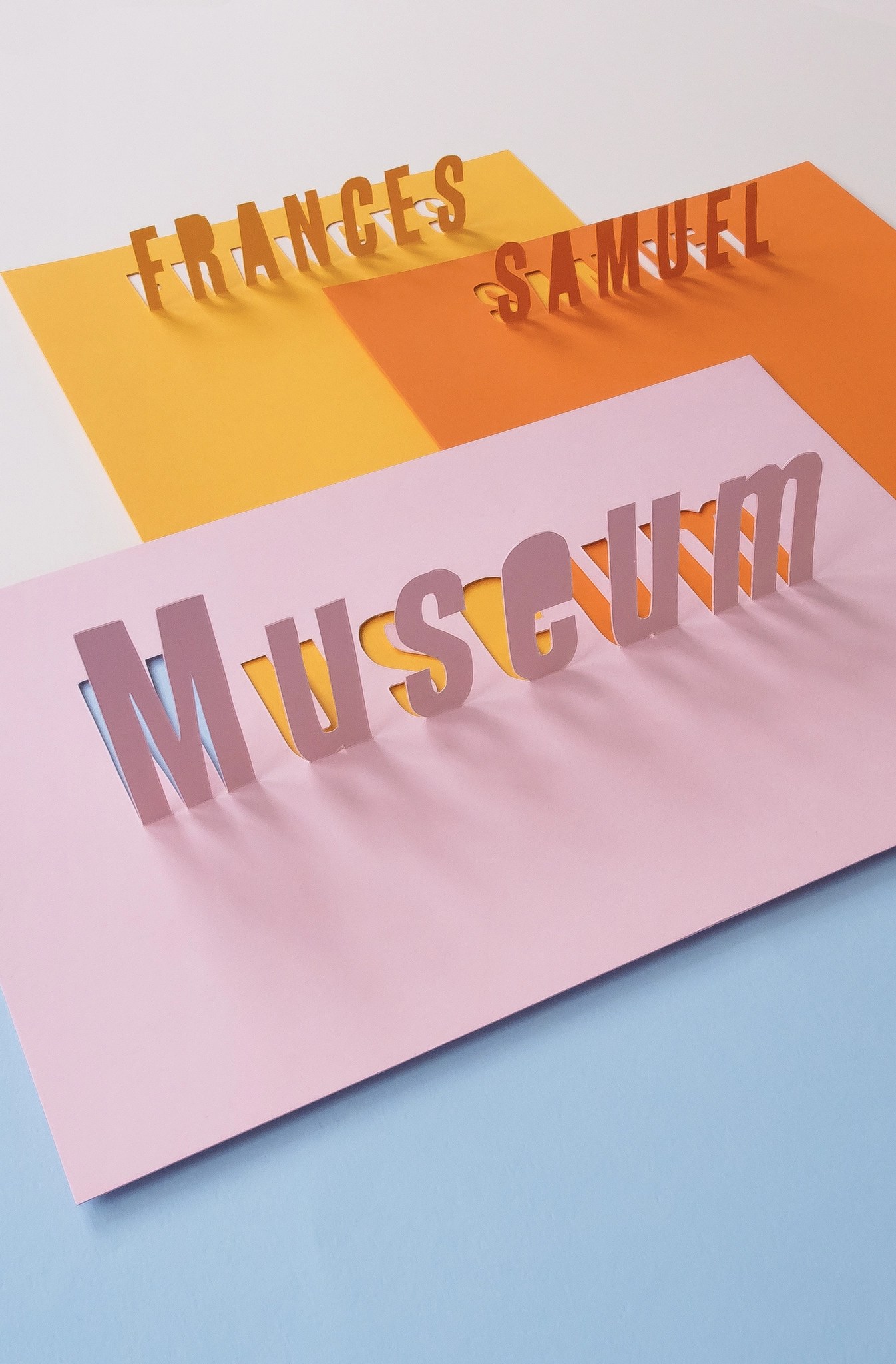
Poetry Shelf review: Frances Samuel’s Museum

Museum, Frances Samuel, Te Herenga Waka University Press, 2022

Up here in the thin green air,
I’m feeling the wind on my face
with the joy of a dog on a family car trip,
head out of the window.

from ‘Exhibition (DNA)’

Frances Samuel worked in a museum writing texts for exhibitions for many years. For me, museums are an endless source of fascination and marvel. I wrote about the intoxicating thrill of museums in New York Pocketbook. Standing, for example, before a pair of child’s boots in Ellis Island’s Immigration Centre or moving with the wonders of the Natural History Museum. Or the roll call of museums that fed my Italian degrees. There are the hungry gaps of the past that you seek to fill by studying scuffed toes, wrinkled leather, the uncanny emptiness, the child that once ran or skipped or hid. In my self-imposed lockdown, picking up Frances’s new collection felt like a trip to a museum and, as happens on the threshold of any museum space, I felt a heady mix of anticipation, joy, curiosity. Where would this book take me?

I pass through the book’s opening poem, ‘Exhibition (Security)’, and then move through three exhibitions: ‘SUPER(NATURAL) WORLD’, ‘(IM)MATERIAL WORLD’ and ‘OBJECT LESSONS’. I am following the poet, the museum maker, but the museum on offer is porous. It reaches out beyond walls and still life into the air we breathe, and with each poem I track twist unfold pursue peruse fold untwist. Just like I do on Ellis Island. Or in Roma. It is discovery and it is magical.

The poem ‘Climate Change’ proposes a change in perspective. Inventive in its start:

Since we are all made up of atoms and vibrations,
let’s rearrange ourselves.
You be a bird and I’ll be a buffalo,
stand on my back and off we go, carefully
stepping over our discard clothes

And utterly moving, when you reach the final stanza. I keep bouncing back to the poem’s title, just as I might switch and flick between museum diorama, museum label and someone else’s shoes:

From above, we watch travellers on the trails
tying and retying their loads to donkeys’ backs.
They take a few steps and the load slips again.
Over and over again, agreement can only come
when the bird in me bleats
to the buffalo in you.

Frances writes lightfootedly. It’s not just a matter of weight but a matter of luminosity. If the poems were written in ink, the ink would be imbued with a wonder that slips in and out of view. You need to read each poem whole to get the effect of fitting together, but certain lines stand out and settle on you, little talismans, little points of fascinations.

‘Rain is hole-punching its way in.’ from ‘Moonhopppers’

‘My friend wears a grass jumpsuit / teeming with ants and worms.’ from ‘Fashion’

‘A poet explodes at a kitchen table / taking everything else with her.’ from ‘Pottery’

‘The words are falling from him like seeds.’ from ‘Fast Forest’

‘If one hundred thousand leaves / can make a clean break every day / then what are you waiting for?’ from ‘Seed/Leaf/Tree’

In the first section/exhibition, you enter forests, mountains, deserts, fields, physical exhibition spaces. In the second section/exhibition space, the immaterial shifts my view on existence. Ghosts and trees jangle eyes. Things leap off the page, the canvas, out of the shadows, or from the anecdote, to gain provisional flesh, and you are back in the invigorating and mysterious air of the world.

And suddenly it’s a good thing
you extinguished your shoes
because now you are walking on air.
And when you are walking on air
you can go anywhere.

from ‘Exhibition (Shoes)

And then poet becomes mother, and the maternal role, reframed time and fatigue, chores and the tendering, are made visible. The mother is still of course poet, and the third section/exhibition refuses to keep the world confined in glass cases. The domestic enters and still the writing mind roves and creates and muses. In such an airy space, the wonder and discovery expands. For both reader and writer. In ‘Coin Rubbings’, the speaker finds buried civilisations and buried self elusive, so she tries this:

(…) So maybe it’s as easy
as placing the paper over your own face
and rubbing to see what impression
you are making on the world.

In each section/exhibition space, you turn upon notions of perspective, ways of absorbing and reacting, seeing and feeling. Your place(s) in the world comes into question, or into view, or dissolves, and you turn the page and keep reading. This sublime stanza appears in ‘The Kindness of Giants’ and appears in other guises or translations throughout the book.

Your feet are shod in cruise ships, and your eyes
look though spectacles made of frozen lakes.
Trapped fish obscure your vision.

When I first visited foreign museums in my twenties, I found them dead. Nothing jumped out and poked me in the eye or heart. Yet all these decades later, both poetry and museums are alive to me. I get to carry bits of humanity, song, epiphany, storytelling, dread, mystery, roadmaps, possibility atlases, the real, the unreal. The power of words, in both locations, along with the power of objects, get to sing in heart and mind. I finished France’s new collection and, how can I explain it, I was bursting with gladness and sadness. Maybe because instead of listening to the 11 am announcement on Covid changes yesterday, I read the book. I reread the collection today, writing this on one breath, on the wire of living, on the lightning rod of uncertain times, and as I put the book on my shelf, I am busting up with joy. That is what poetry can do. Read this book.

Inside your heart, a museum
and not the free-entry kind,
not the kind with a rollercoaster
and a cafe and a shop.

from ‘Museum Without an End’

Frances Samuel‘s first book was Sleeping on Horseback (VUP, 2014). Her poems have appeared in many print and online publications, including Sport, Best New Zealand Poems, Short Poems of New Zealand, and the National Library exhibition The Next Word: Contemporary New Zealand Poetry.

Te Herenga Waka University Press page
Poetry Shelf celebrates: Ursula Bethell Collected Poems

Today is International Women’s Day. At breakfast, I read NZ Supreme Court Judge Susan Glazebrook’s terrific story about her ongoing ZOOM efforts to help get women Judges out of Afghanistan last year (with the help the International Association of Women Judges). The story is in the February issue of North & South and it is unmissable. It feels like we are living and breathing under such a blanket of darkness at the moment. We know the list: the pandemic and its ripple effects, misguided protests, impending war, human suffering under despots across the globe, misguided journalism, mis-and-disinformation, poverty, greed. At times it is too much. I switch off social media, the radio, the papers to avoid toxic voices creeping in with their destructive influences influencing the vulnerable and the disenfranchised. But here I am reading a magazine presenting good journalism under Rachel Morris’s astute editorship. Rachel is stepping back now from the role, but I am grateful for the issues she has presented (not forgetting worthy attention to books in Aotearoa).

It seems an eon since Wild Honey appeared in the world, yet it was only last year I was doing the online Ockham NZ Book Award celebration for it. But it is fitting to remember this project of love – I set out to celebrate and retrieve women poets in Aotearoa. The younger generations of women poets are vibrant, inspiring, active, revealing, political, personal, edgy, lyrical, path-forging and it is a joy to read them. To write about their work on Poetry Shelf. But I don’t write out of a vacuum. I write out of the women poets who preceded me. Who also wrote with vigour, with various connections to the personal and the political. And so to celebrate International Women’s Day, to celebrate women’s poetry in Aotearoa, I draw your attention to Te Herenga Waka University Press’s reissue of Ursula Bethell’s Collected Poems.

I have several copies of Wild Honey to give away. Email or DM or leave a comment if you would like a copy.

Let’s shine lights this week on all the wonderful things women are doing – but hey, not just women, everyone. Let’s shine lights on humanity’s goodness.

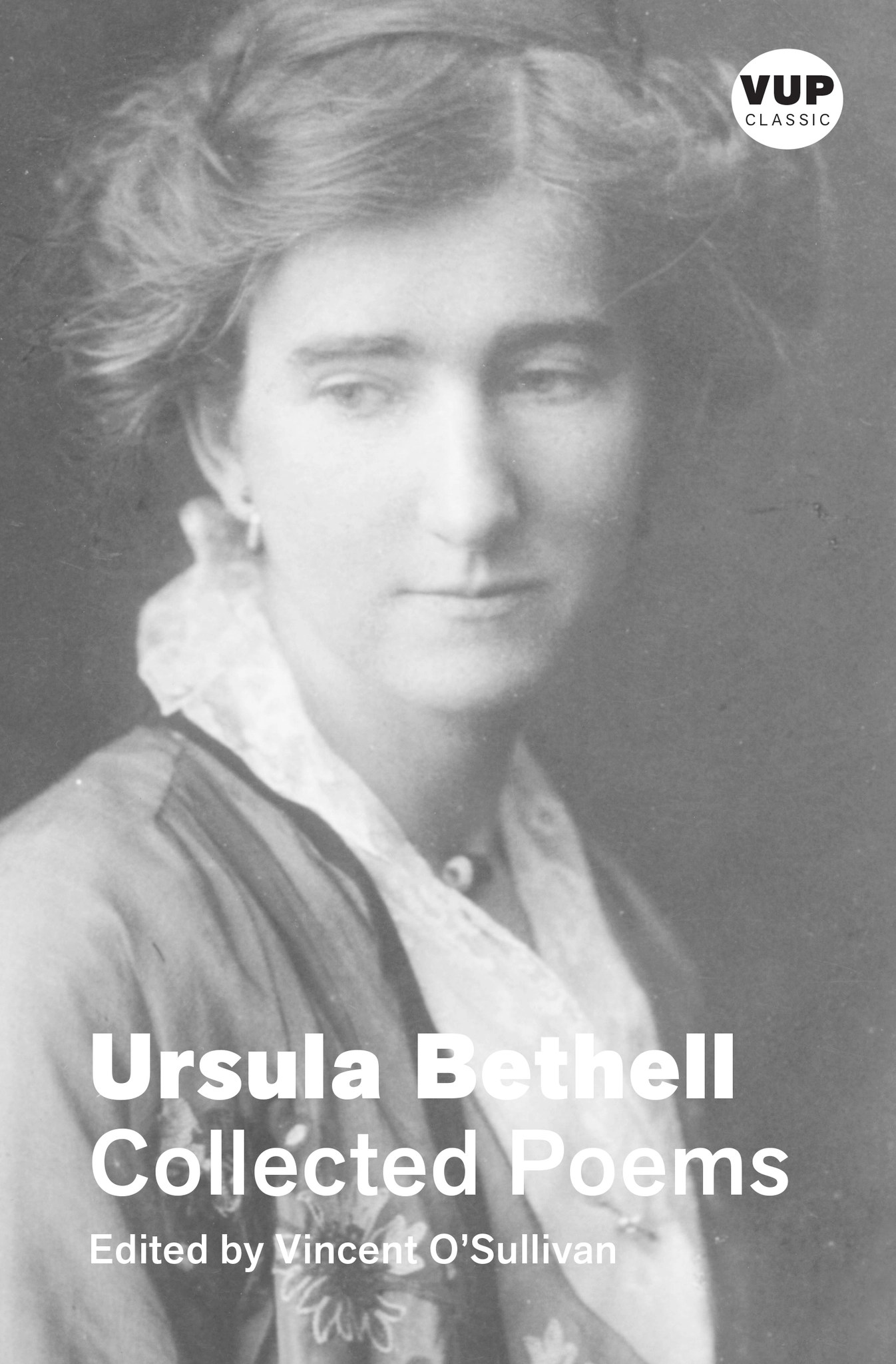
Ursula Bethell Collected Poems, ed Vincent O’Sullian, VUP Classic, 2021

Detail

My garage is a structure of excessive plainness.
it springs from a dry bank in the back garden.
It is made of corrugated iron,
And painted all over with brick-red.

But beside it I have planted a green Bay-tree
— A sweet Bay, an Olive and a Turkey Fig,
— A Fig, an Olive, and a Bay.

Ursula Bethell, From a Garden in the Antipodes, 1929

Ursula Bethell is the kind of poet I turn to when I want uplift, when I crave the poetic line as transport beyond ongoing despair at this sad-sack world. Ursula Bethell’s reissued Collective Poems is now a member of the VUP Classic series. Oxford University Press originally published the collection in 1985, and it was reissued in 1997 with corrections and a new introduction by editor Vincent O’Sullivan.

I utterly loved engaging with Ursula’s poetry in Wild Honey. I considered it in three parts:

“I want to approach her poetry as three distinctive garden plots with a memorial garden to the side: From a Garden in the Antipodes (1929), Time and Place (1936) and Day and Night (1939) and ‘Six Memorials’. You could consider the debut collection as poem bouquets for friends, the second as a poetry posy handpicked for Pollen after her death, while the final collection, a late harvest from the same ground, almost like a consolation bouquet for self. The memorial poems were penned annually on the anniversary, or thereabouts, of Pollen’s death.”


I wrote in my Wild Honey notebooks:

Bethell published three collections of poetry in her lifetime, all anonymously, with the poems chiefly drawn from a decade she devoted to writing, gardening and her cherished companion, Effie Pollen. For ten years, the two women lived in Rise Cottage in the Cashmere Hills, until Pollen’s premature death, at which point Bethell’s life was ripped to unbearable shreds.  The more I read Bethell’s poetry and letters, and the more I muse beyond her characteristic reserve, I feel as though this is the woman to whom I would devote an entire book. She is a knotty collision of reticence, acute intellect, acerbic advice, crippling heartbreak and poetic dexterity. Bethell rightly counters the claim that she ‘knows no school mistress but her garden’, with the point that the garden was ‘a brief episode in a life otherwise spent’. Yet her gardening decade was the most joyous of her life, responsible for the bulk of her poetry, and a period she could not relinquish in letters and the grief that endured until her death. She moved back into the city with ‘no cottage, no garden, no car, no cat, no view of mountains’, no dearest companion and an impaired ability or desire to write poetry.


I was uplifted by individual poems and by the threads and luminosity as a whole:

“How can poetry ever match the joy and beauty a garden offers? Bethell brings us to the pleasure of words, the way words bloom and bristle. For Ruth Mayhew, a close friend to whom she dedicated a number of poems, Bethell builds her green garden symphony in ‘Verdure’: an abundant foliage of lemon, myrtle, rosemary, mimosa, macrocarpa. Without these variations, Bethell confesses she ‘should have, not a pleasaunce, not a garden/ But a heterogeneous botanical garden display’. The word, ‘pleasaunce’, is the spicy fertiliser waiting to explode the poem into new richness. Bethell favours flowers over produce, a pleasure enticement for the senses over fruit and vegetables for the kitchen (‘I find vegetables fatiguing/ And would rather buy them in a shop’. Her poetry ferments as a form of pleasaunce where the ‘plausible’, easily digested details of domestic routine, the house interior, daily conversations, intimate preferences and relations are sidestepped for words that provoke sensual and intellectual variegation in an outside setting.” from my Wild Honey notebook


To re-enter Ursula’s poetry is an act of restoration, just for a blissful moment, because it’s a way of feeling the warmth of the ground, the warmth of humanity (as opposed to its cruelty and ignorance). It is reminder that our literature offers so many rewards, on so many levels, and it is at times like these, poetry can be such necessary solace, respite, prismatic viewfinders, idea boosters. I am toasting the poetry of Ursula Bethell with thanks to Te Herenga Waka University Press.

Vincent O’Sullivan is the author of the novels Let the River Stand, Believers to the Bright Coast, and most recently All This by Chance. He has written many plays and collections of short stories and poems, was joint editor of the five-volume Letters of Katherine Mansfield, has edited a number of major anthologies, and is the author of acclaimed biographies of John Mulgan and Ralph Hotere.

Ursula (Mary) Bethell (1874-1945) was born in England, raised in New Zealand, educated in England and moved back to Christchurch in the 1920s. Bethell published three poetry collections in her lifetime (From a Garden in the Antipodes, 1929; Time and Place, 1936; Day and Night, 1939). She did not begin writing until she was fifty, and was part of Christchurch’s active art and literary scene in the 1930s. A Collected Poems appeared posthumously (1950). Her productive decade of writing was at Rise Cottage in the Cashmere Hills, but after the death of her companion, Effie Pollen, she wrote very little. Vincent O’Sullivan edited a collection of her poetry in 1977 (1985).   

Te Herenga Waka University Press page

Poetry Shelf review: A Game of Two Halves: The Best of Sport 2005 – 2019

A Game of Two halves: The Best of Sport 2005 – 2019, ed Fergus Barrowman
Victoria University Press, 2021

This book looks back through the fifteen issues of Sport from 2005 to 2019. In 600 pages it presents fiction, poetry, essays and oddities by 100 of our best writers, from leading lights like Bill Manhire, Ashleigh Young and Elizabeth Knox, to emerging glow worms like Tayi Tibble, Ruby Solly and Eamonn Marra. (Blurb)

Reviewing A Game of two Halves is a sad glad day for me. I have loved reading my way through old favourites but I am also sad that this is a farewell. I can remember how excited I was when the first issue of Sport hit the bookstands. It was fresh, exciting, unmissable. I am pretty sure I have every copy stacked on my study shelves. On the blurb, I read that editor Fergus Barrowman’s A Game of two Halves selection is a mix of ‘leading lights and glow worms’, the established and the emerging. Light is such a good analogy because I often find myself using the word ‘incandescent’ to describe writing I love. Writing lights me the reader, the world at large and in miniature, the present, future, past, the miraculous things words can do. Even when the subject matter is dark, shadows and weirdness loom, writing still lifts. Sets me alight. This is what literary journals can do. This is what Sport has done.

All those clothes it turned and churned, the lint
that trapped in its door. I once thought
many things would make my life happier
and now one by one I will let them go.

Rachel Bush from ‘All my feelings would have been of common things’

Confession – I haven’t read the whole volume yet but I can’t wait to do that to share. I am so engaged, I want you to place A Game of Two Halves on your summer reading pile as a go-to source of luminous writing. Last ‘light’ analogy I promise. Reading the poetry (I always start with the poetry) is like tuning into a Spotify playlist where individual tracks resonate and then send you back to the albums. Rachel Bush’s sublime ‘Thought Horses’ sent me back to that collection. Michele Amas’ equally sublime ‘Daughter’ sent me back to After the Dance. Herein lies the first joy of Fergus’s playlist. I am reconnected with poems that have registered as all time favourites. Read Angela Andrews’ ‘White Saris’. Bill Manhire’s ‘The Schoolbus’. Read Ruby Solly, Esther Dischereit, Rebecca Hawkes, Ash Davida Jane, essa may ranapiri, Tayi Tibble, Michael Krüger, Jane Arthur, Chris Tse, Freya Daly Sadgrove, Emma Neale. Read Amy Brown’s ‘Jeff Magnum’. Ashleigh Young. Louise Wallace.

This is the place where the schoolbus turns.
The driver backs and snuffles, backs and goes.
It is always winter on these roads: high bridges
and birds in flight above you all the way.
The heart can hardly stay. The heart implodes.

Bill Manhire from ‘The Schoolbus’

Perhaps the biggest gleam is from Tina Makereti’s prose piece, ‘An Englishman, an Irishman and a Welshman walk into a Pā’. I am such a fan of her novels, rereading this reminds me of the power and craft of Tina’s writing.

This is the way of it. Before I have memorised her in a way that will last forever, my mother is gone. If someone asks me to recite my first memory, which consists of chickens in a yard and an old farmhouse and an outside toilet, it will contain this absence. For the rest of my childhood, I don’t think it matters.

Tina Makereti from ‘An Englishman, an Irishman and a Welshman walk into a Pā’

In his introduction, Fergus tracks the development of Sport, the almost demises, and the decision to close (with regrets!). He mentions the vibrancy of the issue Tayi Tibble recently edited (Sport 47, not just the cover but also the contents) and ‘whether it made sense to go on reinventing Sport every year?’ I have appreciated the move to showcase Aotearoa writers beyond the traditional Pākehā set in recent years. To always draw upon the inspired writing of new generations. Fergus closes off his introduction by mentioning a couple of other anthologies VUP / THWUP are doing and then offers this: ‘And after that? You tell us? Send us your ideas. Send us your work.’ Exciting prospect.

I raise my glass to toast what has been an important venue for new and established voices. I will miss Sport. I will really miss Sport. Thank you Fergus and Victoria University Press / Te Herenga Waka University Press for dedicating time and love to a vital space for readers and writers. I look forward to what comes next.

It has been a long time
since I last spoke to you.
When we were children, our fathers
wanted to be mountains
our mothers were the sky.
So here I am, the dry hands,
steady in fog, waiting by the not-there
trees, the holes birds make
in the air.

Jenny Bornholdt from ‘It Has Been a Long Time Since I last Spoke to You, So Here I Am’

the air is thick with depression
even the flies   fly very slowly

Freya Daly Sadgrove from ‘Pool Noodle’

I worry about whakamā and imposter syndrome paralysing our people, making them too afraid or inhibited to really live their best lives or at least the best lives they can under the hellskies of capitalism and party politics. I’m all about people, and I’m all about the best lives.

Tayi Tibble from ‘Diary of a (L)it Girl or, Frankenstein’s Ghost Pig’


Fergus Barrowman has been the Publisher of Victoria University of Wellington Press since 1985, and founded Sport along with Nigel Cox, Elizabeth Knox and Damien Wilkins in 1988. He edited the Picador Book of Contemporary New Zealand Fiction in 1996.

Victoria University Press / Te Herenga Waka University Press page