
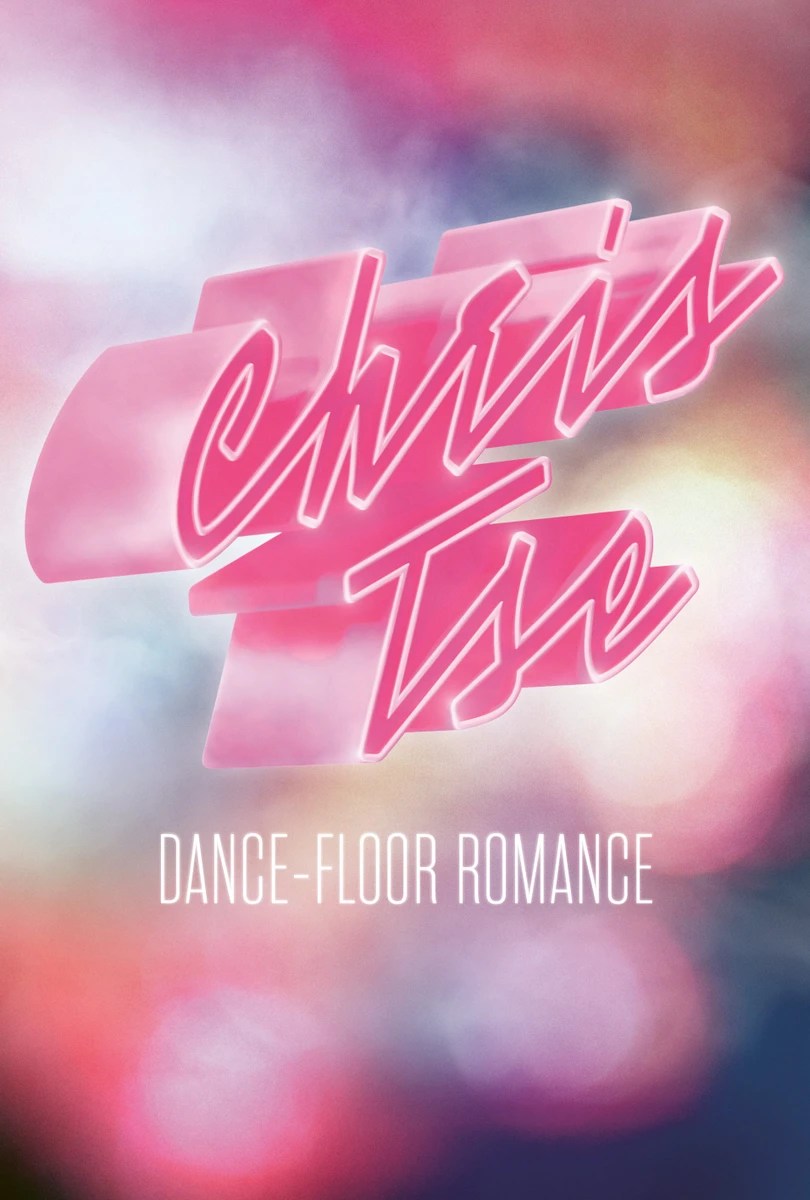
Dance-Floor Romance, Chris Tse
Auckland University Press, 2026
AUP page
“Let the poem approach you first. Don’t point; don’t scare it.”
from ‘How to edit a poem‘
Chris Tse’s new collection of poetry, Dance-Floor Romance, sets me musing on the sublime reach of what poetry can do. It makes me feel. It makes me think. Laugh. Tingle. Dance with joy. To celebrate this sublime arrival, Chris and I had a poetry conversation. Honestly I am bursting with the connective and connecting joy of poetry.
Plot a lifetime of joy.
Begin with a niece discovering how to dance;
end with a poet weeping happy tears
next to water.
from ‘On joy’
Paula: I pick up a book, put it down, pick it up again when the mood is right, find myself navigating multiple paths and reaping multiple poetry rewards. This is what happened when I picked up Dance-Floor Romance and, from the first line, held the poetry to my heart. The opening poem, ‘On joy’, unfolds from a notion of joy, and this notion epitomised my reading experience. It was one of joy, a word that drives my blogs and my own writing. Before we talk about your extraordinary book, does poetry joy resonate with you?
Chris: Absolutely – poetry has always been a major source of joy because of all the opportunities and experiences it’s created for me. It helped me find a community of poets and writers who inspire me and have become incredible friends and collaborators. That’s why joy became the foundation of how I carried out my duties as Poet Laureate and the conversations I had with different people during my term. Joy became a really useful way to frame poetry and challenge the stigma attached to it (that it’s complicated, or boring, or irrelevant). Asking people to begin from a place of joy can do wonders to change their perceptions. It’s been amazing to witness ecstatic audience responses at poetry slams and events like Show Ponies or Love At First Line (the poetry dating show I curated at WORD Christchurch), which have had people cheering and laughing – such a great reminder of the many ways that poetry create joy for others.
Paula: You were a fabulous Poet Laureate Chris. And yes you spread poetry joy across Aotearoa. What matters to you when you write a poetry book? When you write a poem?
Chris: Over the years I’ve given myself more permission to trust my instincts and to not get caught up in what I think other people expect from me, so the thing that matters most when I’m writing is remaining true to myself – that is, saying what I want to say, honouring my fears and insecurities, or letting myself lean into silliness. I want that sense of curiosity and play to come through for the reader. Writing each of my books has been a chance to challenge my creative practice, so if I can surprise myself, it feels like that means I’m on the right track.
Paula: And what is important to you when you read a poem by someone else? What poetry books have travelled with you, vitally, essentially?
Chris: For me, it’s about that moment of pause a poem or a book can create – for you to laugh, gasp, or sit and ponder. I like it when a poem creates space to imagine, so the ones that stick with me are usually the ones that offer a moment of hope, even if it comes with a side of discomfort.
In terms of vital and essential books, Jenny Bornholdt’s These Days is a perennial touchstone, as is Richard Siken’s Crush, which I’ve talked about before in other interviews. They’re quite different books, but I like how each one creates layers of detail to move between the ordinary and the extraordinary.
During my term I kept a few anthologies nearby like talismans: An Anthology of New Zealand Poetry in English, which was a set text for the undergrad poetry workshop at the IIML back in the day; A Clear Dawn: New Asian Voices from Aotearoa New Zealand; and No Other Place To Stand An Anthology of Climate Change Poetry from Aotearoa New Zealand.
Paula: Did anything in particular spark the arrival of this collection?
Chris: Essentially it was being appointed Poet Laureate! Super Model Minority had just been published a few months before the appointment, so I was planning to take a bit of a break from working on a book-length project, or perhaps even dip my feet into another genre like fiction. However, the Poet Laureate role required me to write new poems and I received a lot of commissions, so I began to accumulate a lot of new material. However, a finished book wasn’t top of mind as I was writing them.
In some ways this is the first book I’ve published where I didn’t set out with a particular structure or concept in mind, but things started to fall into place when I landed on the title Dance-Floor Romance. The theme of ‘joy’ is probably the closest I had to a north star as I was writing, and as I sifted through the poems I could see that there were recurring themes or interests – legacy, nostalgia, desire – that I was thinking about a lot over the past few years for various reasons. I spent a lot of time figuring out how all the poems I wrote could fit together in a collection – the sequencing was the hardest part of the process this time around.
We make the world with what’s left
to us after fire claims its share. Songs
of praise run their course and ink fades
on letters never sent, their secret joys
& pleasures left to cool with no one
to fulfill them. Bury it all in the sky.
from ‘2024 & Other Poems’
Paula: I love the glorious multifariousness of the collection, whether I am thinking of form or musicality or themes. I am thinking of friendship, music, dance, desire, taking photographs, memory, being gay, getting high, getting low, the difficulties of the world. Yet everything feeds into the collection’s pulsating core. For me, and I could be widely off the mark here, this is a book of self. Incredibly moving in its personal ebb and flow, its tremble between failure and loneliness and epiphany, the opting for glitter shower rather than screams pitched at alarmist headlines. Does this collection feel deeply personal to you?
Chris: Nicholas Reid had a similar observation in his review of the book in The Listener, noting that the majority of the poems are written in the first person and could be seen as ‘autobiographical divulgences’. It’s not what I set out to do, but perhaps it was inevitable that it ended up where it did because becoming Poet Laureate did bring up a lot of existential questions.
It feels like each subsequent book I write is an act of peeling off another layer to reveal the self within. After HE’S SO MASC I didn’t think I’d ever get super personal again but this latest book feels somewhat more vulnerable and personal in a different way – perhaps because I don’t feel the need to hide behind personas and other voices like I did in HE’S SO MASC and to some extent Super Model Minority. I like to think there’s some hard-earned wisdom in these newer poems, even if I’m still learning to feel comfortable in my own skin and in this world. I’ve been asked to write a memoir by multiple people but to me it feels like the poems are the memoir because there’s so much of me in them already.
Paula: I like to put a favourite album on repeat and that is how I am with your book. This a book I want on repeat, and music is a key ingredient, whether the lyricism in your ink or the musicians you reference, the lines you borrow and riff on. How does music drive you as a poet?
Chris: People who have followed my work or read any of my interviews will know how important music is to me and my creative process. I can’t imagine being a poet without music – it’s a major source of inspiration, particularly when I’m trying to figure out the mood or vibe of a poem. There have been many poems I’ve written where I’ve tried to emulate the rhythm or structure of a favourite song. Also, I’ve always been fascinated about the function and universality of dance and pop music, particularly in the queer community. There’s something so magical about how songs or albums can capture a particular moment or period of time in your life and therefore can be used to access those memories and emotions. Also, I love how there are some songs that transcend language and generational barriers to bring people together on the dance floor. Perhaps deep down I’d love to see poetry be able to do the same thing, and in some ways it does. (As I’ve done for my previous books, I’ve made a playlist for Dance-Floor Romance.)
My hopeful poems wait in the wings—my highlights &
golden hours are no match for our collective whiplash.
Make a wish before we knot this year & let it slip out
of our hands as another lesson we fail to learn. Is it
enough to summon the star that once called us home?
from ‘2023 & Other Poems‘
Paula: I am also drawn to the weave of ideas, like mantras simmering above and below the surface. I love how poetry can walk hand in hand with philosophy. So many I want to share but any idea arrivals delight and surprise you in particular? [i will quote my picks from a poem or two]
Chris: This is a very interesting question, because sometimes I start a poem with an idea clearly in my mind, but then the writing process nudges me in a completely different direction. It’s so hard to explain how this happens – it just feels like my brain is set to ‘and then…?’ mode as I write, pulling in other ideas and going on tangents that I then have to figure out how to string together.
Early in the writing of this book I was working on a series of ‘theories’ about joy and beauty, fragments of which eventually became the poems ‘On joy’, ‘The monument’ and ‘Long exposure’. What surprised me about these poems was how the ideas I had about joy and beauty evolved into explorations of how art is used to (re)shape narratives or memorialise universal experiences. This in turn began to influence some of the other poems I was writing. When I was assembling the manuscript and figuring out what to keep and what to cut, I found myself leaving out some of the overtly political or polemic poems, even though they shared similar ideas and themes with the other poems. I guess it’s because I was guided more by the tone of the book I was trying to make, rather than getting fixated on ideas per se.
Must be the way a poem kick-starts a world into being that
alters how time leans into itself. The rise & fall of oceans
never felt so slow or sticky on your skin, salt crusting between
heartbeats.
from ‘Number 13‘
Paula: Another exquisite love is how the collection offers a manifestation of and on and because of poetry – and I don’t want to straightjacket this into the term manifesto. I scrawled so many things in my notebook on writing poetry. It leads us back to my opening question on why poetry matters. Did any thought arrivals on poetry surprise and delight you?
Chris: I reckon manifesto is actually a pretty apt word for this particular book, more so than any of my other collections. The book’s interrogation of poetry and why it matters is another symptom of being Poet Laureate. Unsurprisingly, people wanted me to have opinions and ideas about poetry, so I had to quickly distil decades of contemplation into tidy soundbites that would be accessible to multiple audiences. I was so immersed in poetry for those three years that it’s no wonder all of this thinking about it found its way into the poems and eventually the book. To be honest, I still don’t have the perfect answer, but in some ways it’s been useful to have those conversations and go through that process to see how it feeds into my own creative practice.
When I was in the Netherlands last year I was asked to take part in a bookclub-esque discussion about Juliana Spahrs’ Ars Poetica, which asks the big question of “why poetry?”. I’ve been returning to this book a lot since then – it’s a really beautiful exploration of the purpose of poetry at a time of ecological crisis and political upheaval.
For eleven years I took a photograph a day—an exercise in handing
myself over to ritual & its hidden potential. A quiet joy buried in
the sobriety of routine where life unfurls out of the ordinary, like
seeds planted to bloom in some distant spring.
from ‘Long exposure‘
Paula: One poem sees the speaker taking a photograph a day for eleven years and it got me musing on the connections between taking photographs and creating poems. I am picturing a box of poems, a poem as a vessel for memory, a scene, a situation. What do you make of the relationship between poetry and photography?
Chris: It occurred to me as I was rereading my previous books that photography does pop up a lot in my work. I’ve always had an affinity for image-based art, which led me to study film at university and develop an interest in photography. I guess poetry and photography share an ability to capture a moment or distil an idea into something quite singular. The challenge and practice of taking a photograph every day for 11 years was a good training ground for me as a poet to pay close attention to my surroundings, and to interrogate why certain things felt important (or not) to record and remember.
Paula: I keep asking poets this question and it seems especially vital alongside your book. What matters to you in this ravaged and tilted world with its precious glints of hope?
Chris: Community. This book was written during a beautiful and unforgettable time in my life when I got to travel Aotearoa and the world, reading alongside legendary poets and getting to share my love of poetry with new audiences. I got to see all the incredible ways poetry is celebrated in different cities and countries, from writing clubs at schools to huge, well-attended festivals. And all of these are driven by people who are passionate about poetry and creating these communities for others to bring people together and create joy. Dance-Floor Romance would not exist without all the people who supported me during my term.
Paula: Choose a poem from the collection for the reader of our conversation to linger on. Why this poem?
Chris: I think it has to be ‘The last poem’, which brings the themes and ideas of the book together in one poem. I wrote it to be read at Poetry International in Rotterdam to close out one night of the festival, a humble offering to shepherd the festival attendees into the night after a day of words and conversations. In the poem, I describe a piano being dismantled on the street after it has been left out in the rain, then unceremoniously chucked into the back of a rubbish truck. There was something both tragic and poetic about the piano being stripped for parts and discarded. One one hand, someone was taking what they needed from it to perhaps create something new; on the other hand, how could we be so callous with a beautiful instrument that just a few days ago had been entertaining an enraptured crowd? And even though the destruction of the piano is a sad image, the poem itself reminds me of a very happy and creative time in my last few months as Poet Laureate, so it felt like a fitting poem to end the collection (and this conversation) with.
The last poem
Life gives me wishes.
I tuck them under the lemons
in a fruit bowl that isn’t a fruit bowl.
Every vessel is versatile, after all.
Both whole & empty. Both host & guest.
Holds the present as much as it
holds a whisper of the future.
I save my wishes like a child
afraid of ruining a brand-new art set.
Watercolours untouched for decades.
So many rainy days spent in boredom.
But of all the wishes rotting under lemons
the one I want to use the most is
to see him in every room I walk into
from now until our last night’s last poem.
These days I wish for love more than ever,
now that I’m attuned to its give & take.
On an in-between night in Amsterdam
I stand on a bridge & watch the water turn
from passage to mirror & back again.
I’ve seen water change like this before
when it was too tired to continue carrying
the wishes of a broken world. Too clear
to protect us from what happens
at the end of joy. It’s summer &
I’m rewiring myself in this new city—
one that doesn’t judge
what you wish for selfishly. Desire
will be granted in return for patience.
Outside my apartment a man dismantles
a piano soaked by overnight rain.
The wires shriek & the instrument’s cavity
frees its final notes. The city moans along.
Keys & little hammers piled up
on the pavement like abandoned poems.
So many ends & new tides lately
it’s got me turning to water
for direction. Something to wild the urge
to be settled for this version of now.
Life is good when you let yourself be taken
by new joys that don’t yet have a name.
Here, over a canal, I weep. Life is good.
Chris Tse
readings
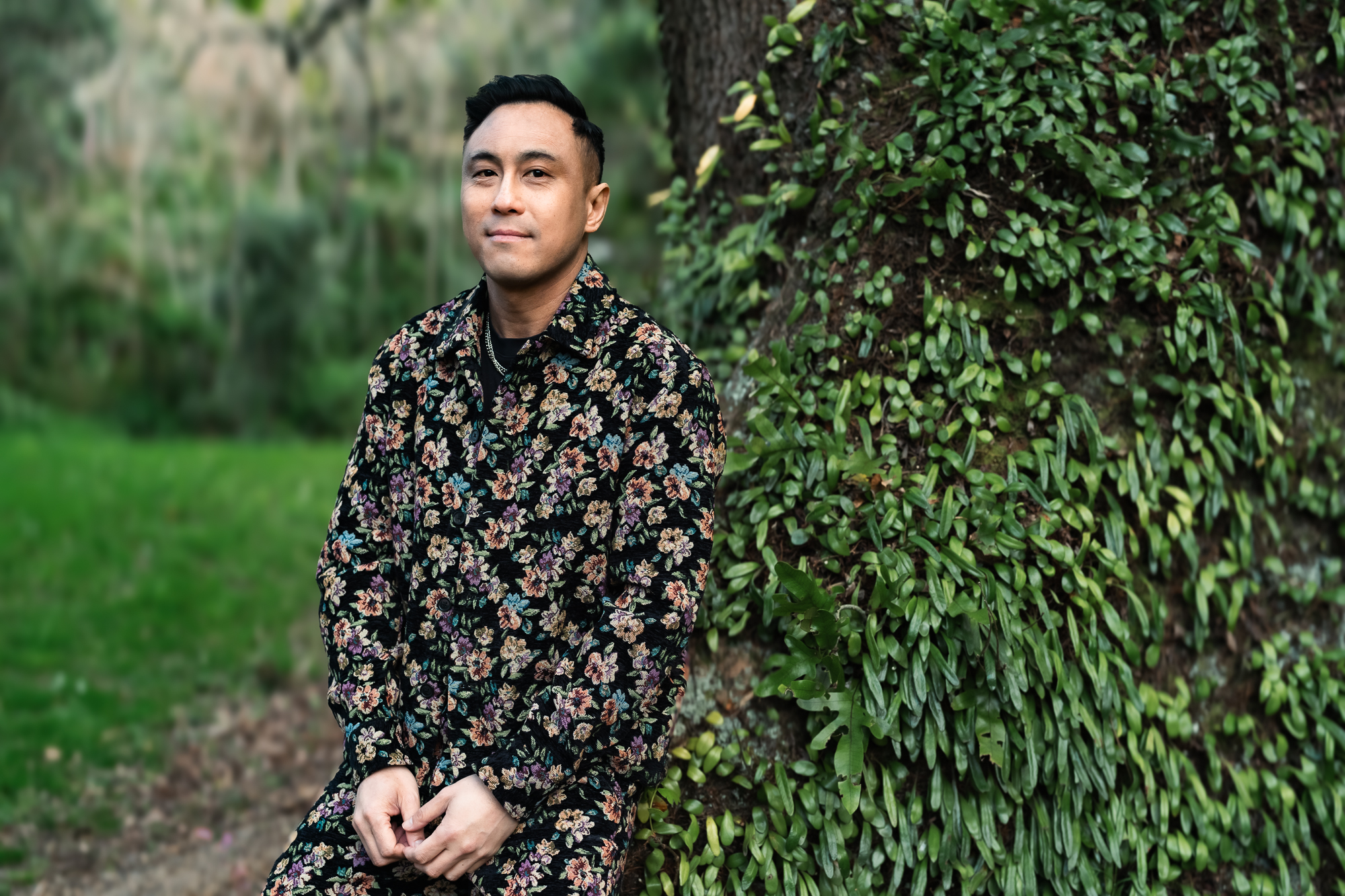
Photo credit: Rebecca McMillan Photography
2022 & Other Poems
Dance-floor romance
Your uncle’s story
Chris Tse is a poet and editor based in Wellington. He is the author of four poetry collections published by Auckland University Press, including Super Model Minority (a Lambda Literary Award finalist for Best Gay Poetry) and Dance-Floor Romance. He and Emma Barnes edited Out Here: An Anthology of Takatāpui and LGBTQIA+ Writers from Aotearoa. Chris was New Zealand’s Poet Laureate from 2022-25.

