Tag Archives: massey university press

Poetry Shelf review: Dick Frizzell’s Gow Langsford Gallery show and boyhood memoir

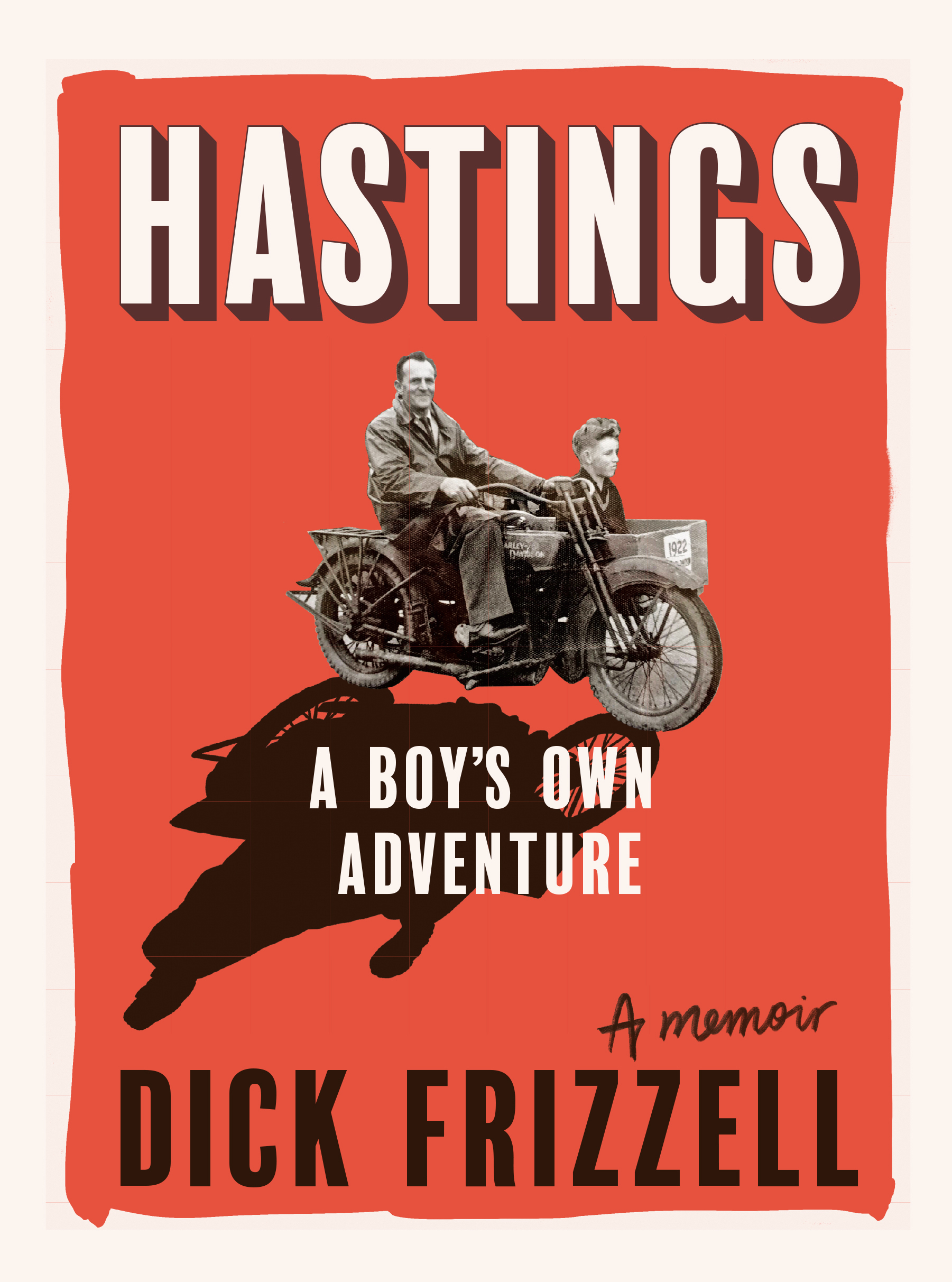
Hastings: A Boy’s Own Adventure, Dick Frizzell
Massey University Press, 2025

I purposefully saved Dick Frizzell’s new memoir, Hastings: A Boy’s Own Adventure, to read when Gow Langsford exhibition, ‘The Weight of the World’, was on. It’s not very often you get to inhabit an artist’s childhood and their latest work in the same viewing/reading. I am fascinated how the past can shine multiple lights on the present, and how the present can open fertile windows on the past.

Let me say from the outset, I adored the book and I adored the show. Dick begins his memoir with a key question: “How, or how not, to write a memoir? I’m slowly coming to the conclusion that there’s no right way to do it.” He opts to draw upon both truth and fiction: “a little memory, a little licence and a lot of humour”. He lays down a story frame guided by real life then fills in the gaps guided by imagination and wit. The result is an utterly readable voice, infused with an enthusiasm for life, for writing and for making art. An infectious voice, a voice that nails the rhythm of writing, speaking, revealing.

Dick was born in Auckland, moved to Hastings as a young boy, where he suggests living In Hastings, Napier, Clive and the Heretaunga plains felt like living at the centre of universe. It was a locus of escapades, delights and fascinations, with a drawcard library housing metaphorical and literal alleyways of ‘head-spinning’ books. There was the attraction to comics and a desire to copy them, the first encounter with paint on a tin roof, the school art room a beloved hideaway, shooting fish in a barrel, siblings galore, including a temporary stand-in brother.

There is a brilliant series of children’s books (Little Books, Big Dreams) published in the UK that offer miniature biographies of inspirational figures across time (Bob Marley, Virginia Woolf, Leo Messi, Frida Kahlo, Salvador Dali, David Attenborough to name a few). What I love about them, especially in these out-of-kilter times, is how they focus on childhood, on how sparks were ignited and seeds planted, often against all odds, and how the dreams of the child were allowed to find flight and anchor, and how the child could roam and delve and discover.

Reading Dick’s memoir I absorb a fascinating portrait of a time and place, within the shifting tides and trends of the 1950s and 1960s and, within that, the genesis of an artist. I am utterly moved by the portrait of Dick’s mother, a woman who was drawn to arts and craft, as so many women were of her generation, how a “she went to art school but was no bohemian”, stocked the house to the brim with art hobbies, played in skiffle bands, favoured the full glass of happiness. When Dick was in hospital after appendix surgery, his mum brought him art materials and everyone wanted him to draw them something. Wow!

Voice carries family, Robert Sullivan once said. Well voice carries memoir, and this memoir nails voice. It’s in the rhythm, it’s in the wit and detail, it’s in the grey areas (“Yes I know she was my mother, but who the hell was she?”). More than anything, it’s in the multiple dirt roads of boyhood that make an exhibition of landscape paintings even richer viewing.
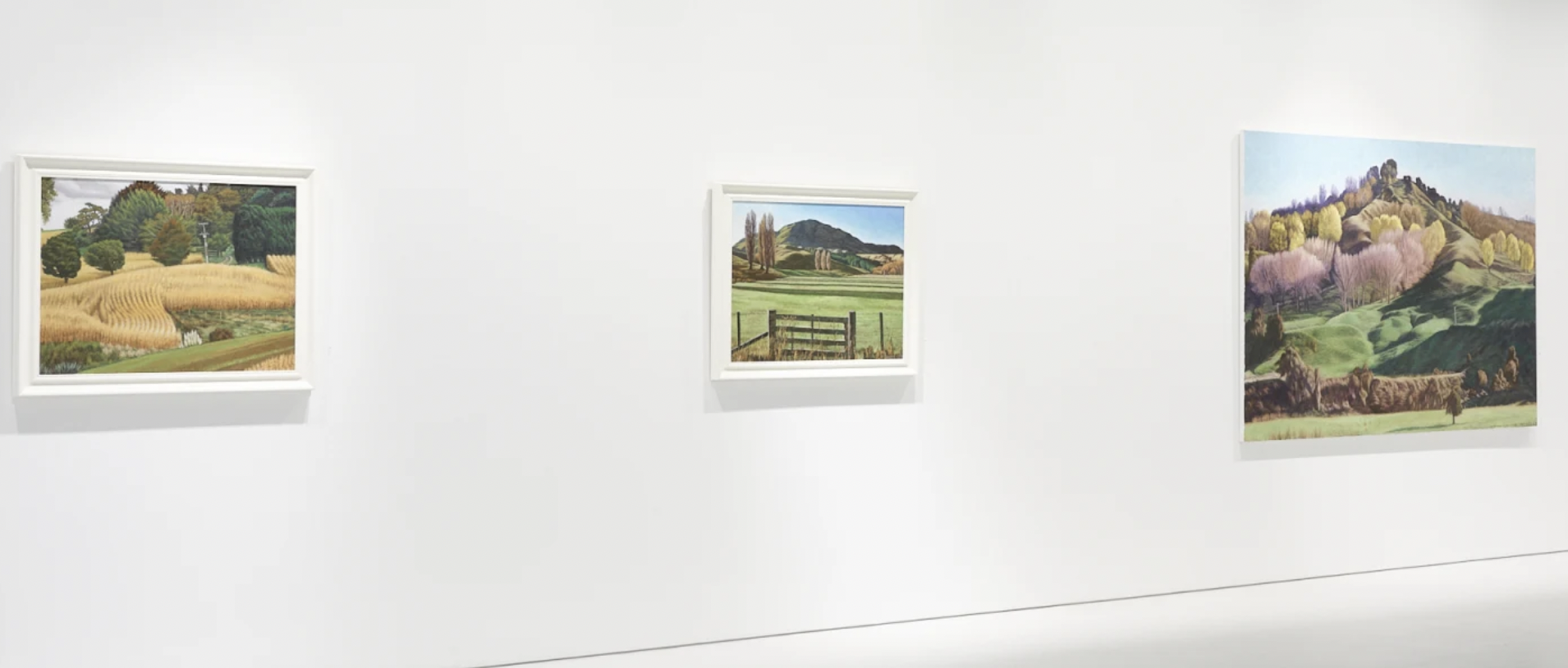
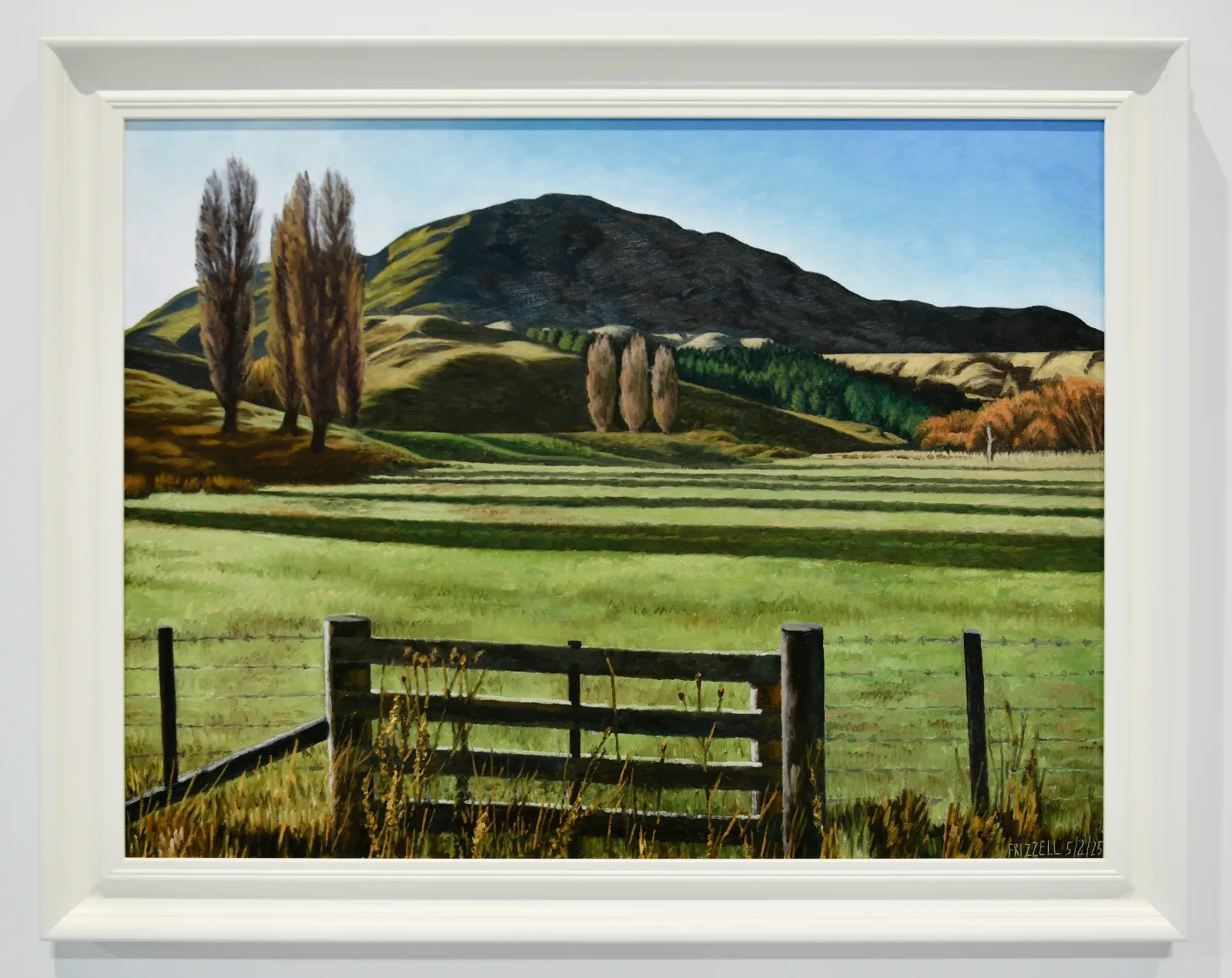
Gate, 2025, oil on canvas, 700 mm x 900 mm

I am standing in the middle of Dick’s show, mesmerised. An opening chapter of the memoir places a map on Hastings, and this feels like a painterly map on experienced landscapes. How will I navigate my way through hills and sky and vegetation? Viewing art, like reading poetry, offers many trails, eye-catching vantage points, vital epiphanies. On this occasion, I am drawn into the familiar, a palette that is both restrained and vibrant, with shifting lights, the shimmer of brush upon hill and tree (especially trees!). I move from the intensified blue of a sky to shadows that loom across a wet paddock, loitering by a gate that invites (or forbids?) entry, almost feeling feet crunch into the texture of the dirt roads.

Why do I love this show so much? It’s not just standing within a nose-breath of the rural vistas, but finger-tapping lines of nostalgia. It’s admiring the visibility of brush stokes and painterly movement, and it’s the way each work is a repository for story. Where does this painting transport me? I get an extra taste of viewing uplift when I am at the show, sharing the space with a number of other captivated viewers. People are talking about the work nonstop, talking art, memory, story, place. One minute I am thinking the painting ‘Corn’ carries a whiff of Van Gogh and the next minute, a couple further along are saying the same thing. Everyone is talking paint and sky, tree and memory, and I wish Dick could witness it.
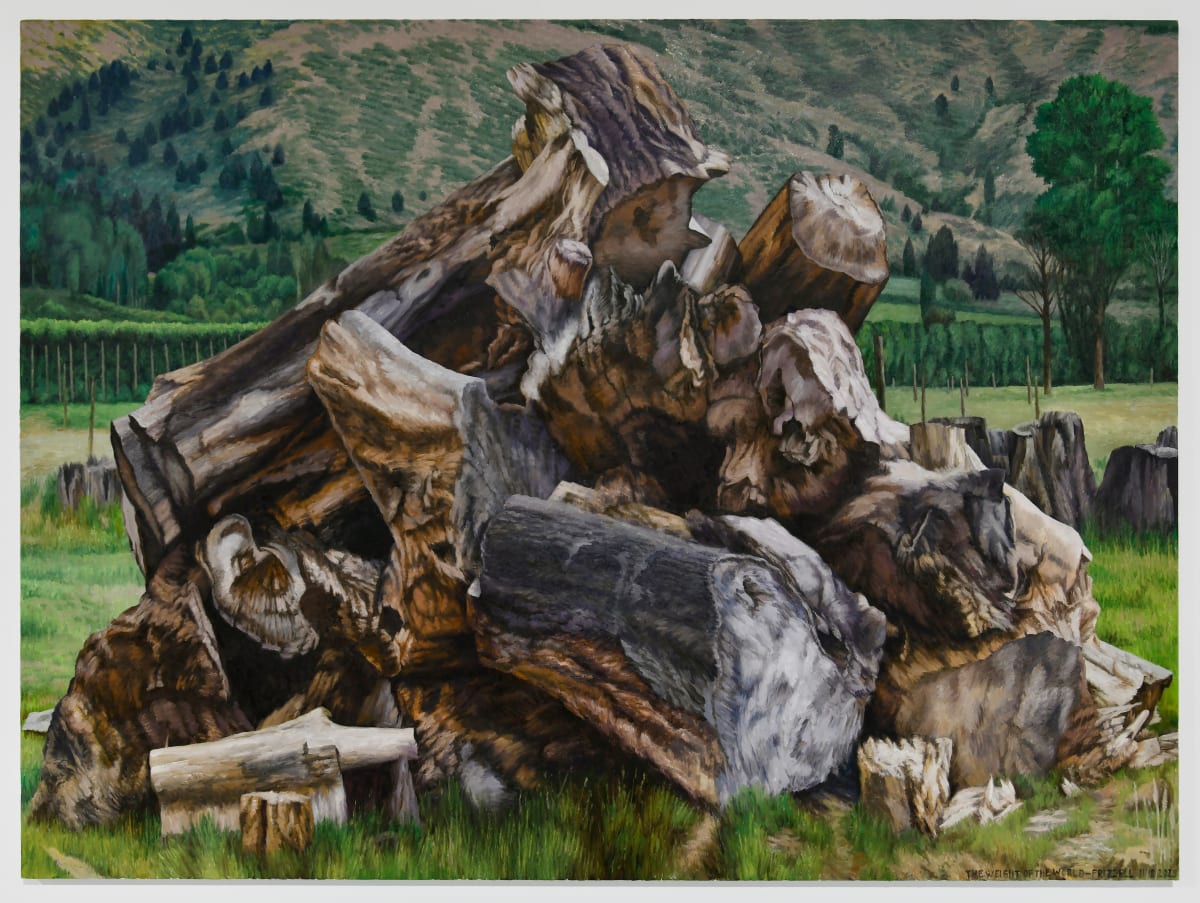
The Weight of the World, 2025, oil on canvas, 1800 mm x 2400 mm

I come back to the title of the show, which is also the title of a work. The painting features a huge stack of hacked tree stumps that block out the wider view and light, the everyday and the beauty that we see in the other paintings. This tree stump mound might be symbol or politics or personal anecdotes. Or simply cue the viewer to the visual attraction of gnarly muscular bark in a gnarly muscular pattern, that is taking visual delight in detail at a distance from postcard beauty. Yet couple the work’s title with one of the largest works in the show, ‘Milling Whakaangiangi’ (2025), it is impossible not to be reminded of the contentious deforestation of the land with its subsequent impact on soil and climate. The weight of the world indeed.

As reader, writer and spectator, I am boosted by art and poetry that gets me thinking, feeling, sidetracking. Heart mind eye, maybe even skin. Take ‘Sea View Castlepoint’, where the thin gap on the thin dirt road between the bulging trees affords a thin sea view, and there I go, sinking into the thin view as I widen it into the light of the world.
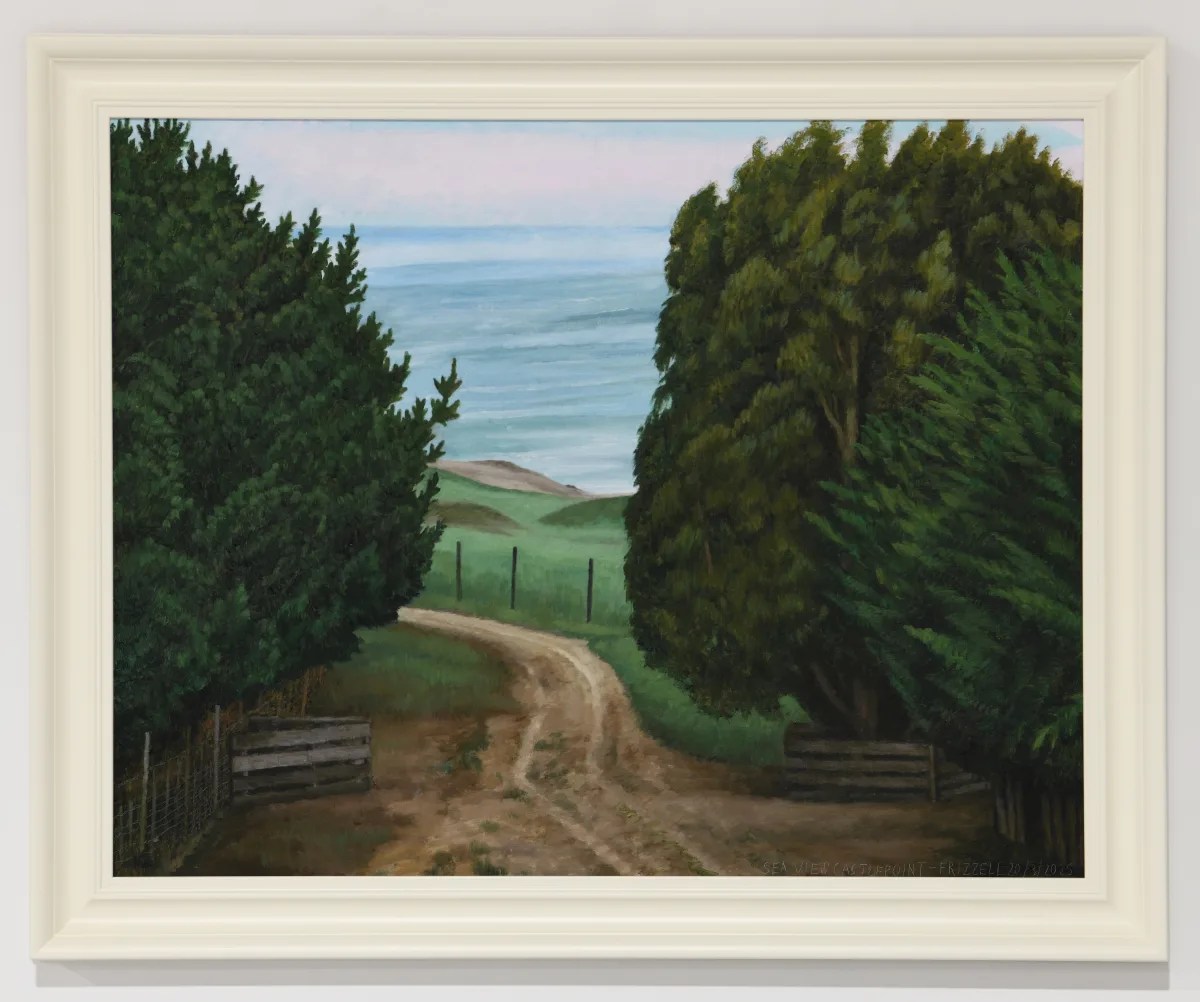
Sea View Castlepoint, 2025, oil on canvas, 700 mm x 900 mm

I am midway through Dick’s memoir as I view the show, and it feels like his paintings frame the landscape with a hint of the roving and fascinated eye of the child and his burgeoning creativity. Stop and view the trimmed hedge, the dark poplars, the whitebaiter’s huts, the dirt road, the wind swept tree, another dark tree. How easily I might become immune to my local landscape, the view out the car window, the paddocks up the road, but standing in the gallery space, absorbing the initial impact of light, colour and texture, I am immeasurably moved by the points of view, the way the gravel road hums with both journey and destination, the way an enthusiasm for comic books as a young boy, grew into myriad enthusiasms and, how on this occasion, an enthusiasm for patterns and detail in these experienced landscapes, in the quotidian and the physical, is utterly contagious. Wow!
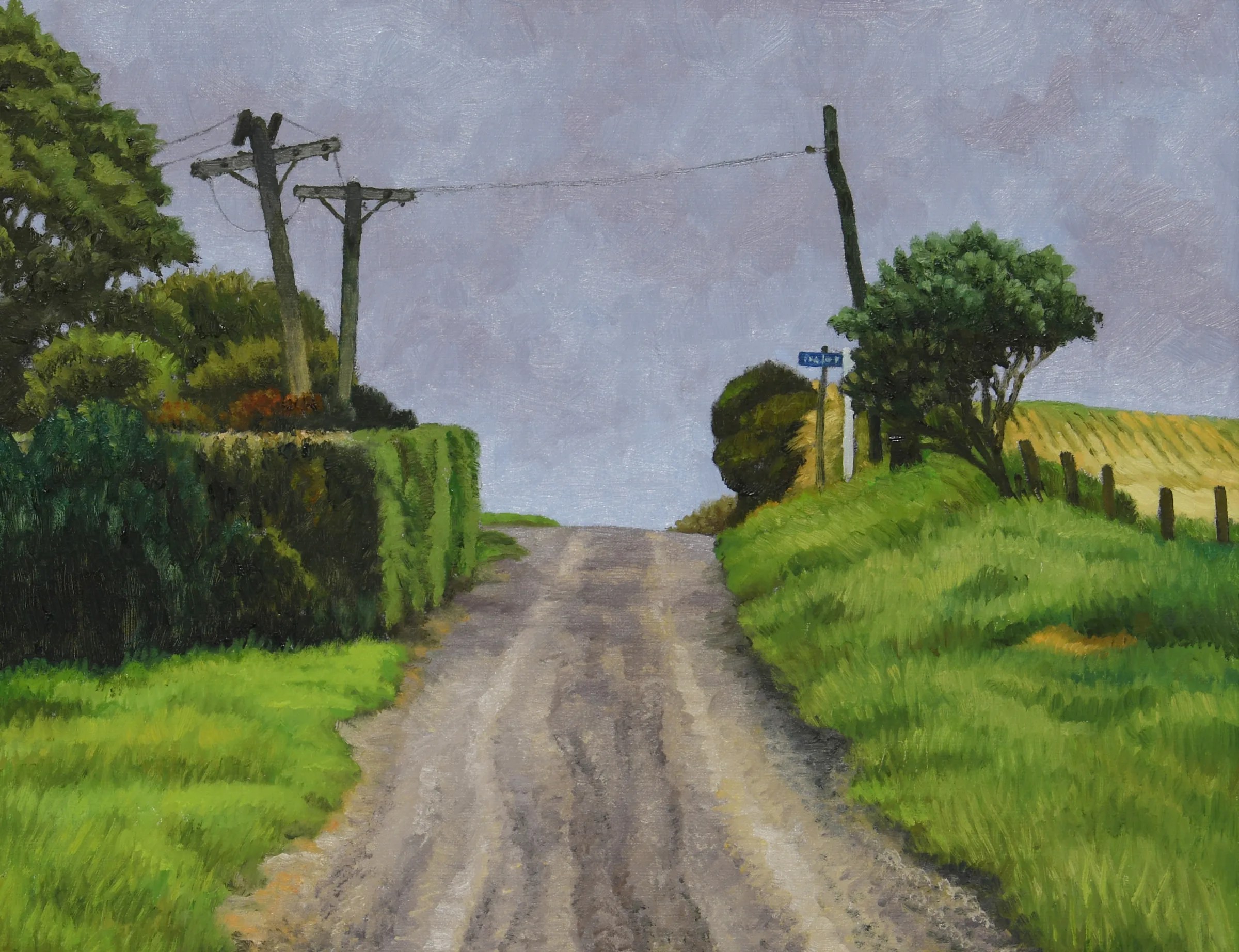
Trimmed Hedge, 2024, oil on canvas, 400 mm x 500 mm

Massey University Press website
Gow Langsford Gallery website

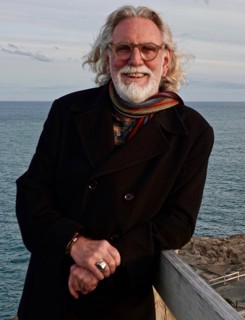
Dick Frizzell MNZM is one of New Zealand’s best-known painters. He studied at the Ilam School of Fine Arts at the University of Canterbury from 1960 to 1963 and then had a long career in advertising. Alongside his career as a painter, Frizzell is also the highly sought-after designer of a range of products from toys to wine. He is the author of Dick Frizzell: The Painter (Random House, 2009), It’s All About the Image (Random House, 2011) Me, According to the History of Art (Massey University Press, 2020) and The Sun Is A Star (Massey University Press, 2021). Dick exhibits regularly and often works in collaborations with writers and other artists. He lives in Auckland with his wife, Jude.
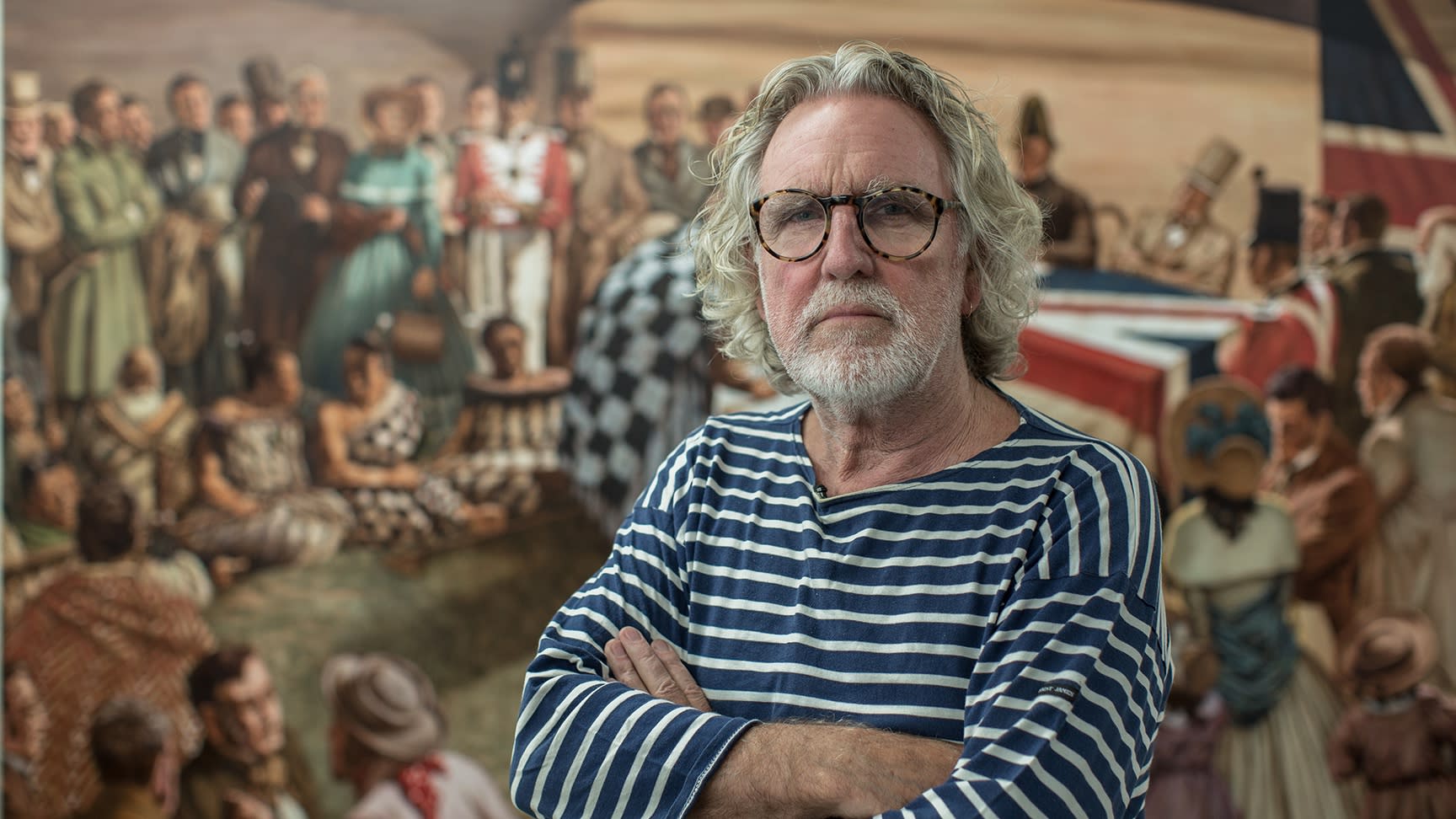
Dick Frizzell

With a remarkably diverse repertoire of imagery and styles, Dick has created a unique body of work. His output includes works of landscape, cartoonish portraits, works of homage to notable artists including Picasso and McCahon, pointedly kitsch kiwiana, text-based artworks, abstract paintings, and much more. He has exhibited extensively, with career highlights that include the major travelling retrospective Dick Frizzell: Portrait of a Serious Artiste (City Gallery, Wellington, 1997), his residency in Antarctica as part of the Invitational Artist Programme (2005) and the publication of the monograph Dick Frizzell: The Painter (Random House NZ, 2009). His work is now held in collections throughout the country, most notably Christchurch Art Gallery, The Chartwell Collection, Auckland Art Gallery and Te Papa, Museum of New Zealand.
Poetry Shelf review: You Are Here by Whiti Hereaka and Peata Larkin

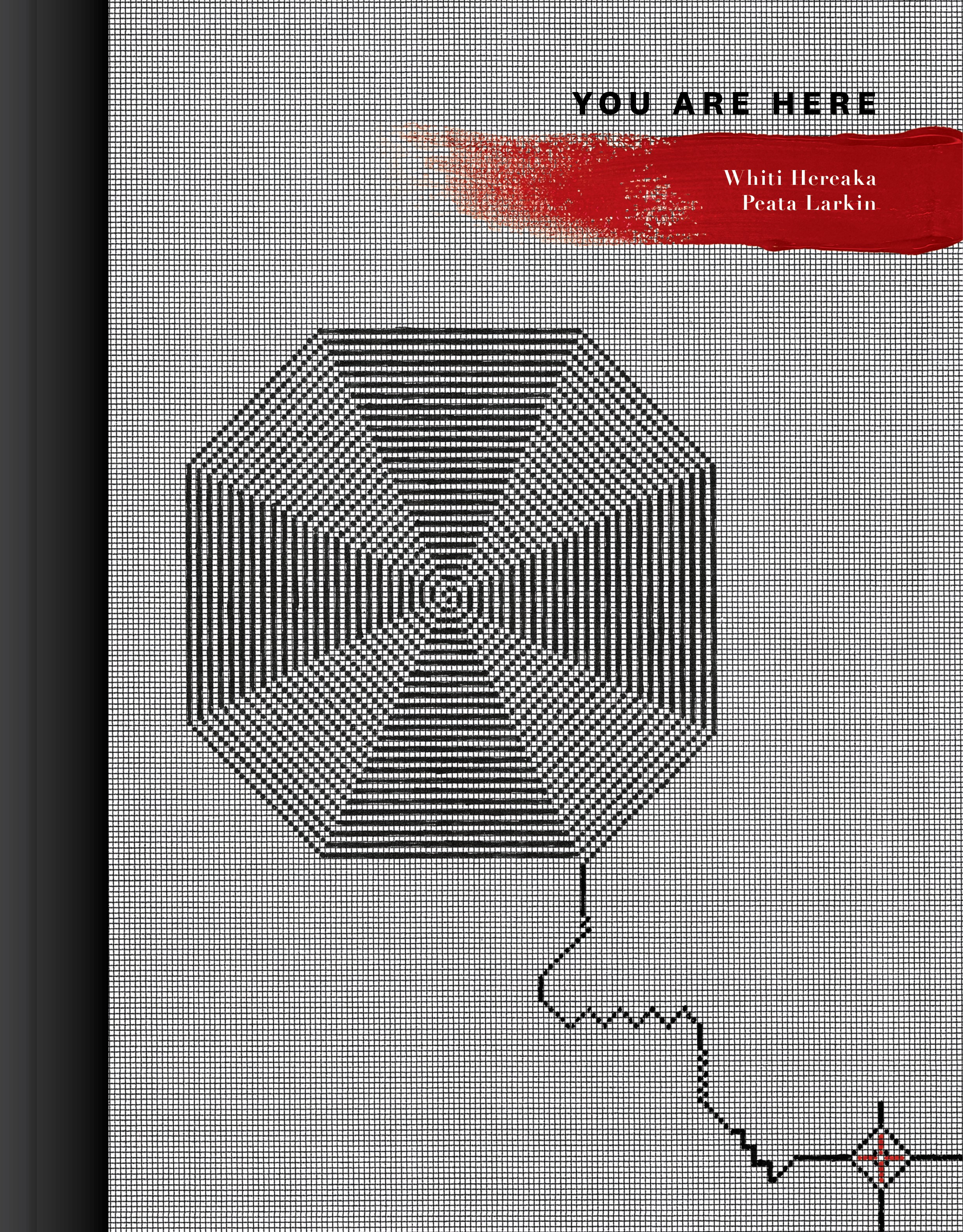
You Are Here, Whiti Hereaka and Peata Larkin
Massey University Press, 2025

The map of your mind can be redrawn; there is no need to keep to the narrows of an old-world view. You can be expansive. You can make new pathways; you can broaden the old ones you already have. You can delight in the kupu shaping your mouth, the physicality of language: tongue and teeth and breath and throat. You hope that one day you will connect it all: sight, sound, meaning.


Whiti Hereaka

Massey University Press’s kōrero project invites collaborations “between two different kinds of artistic intelligence to work away at a shared topic”. You Are Here , by author Whiti Hereaka and artist Peata Larkin, is the sixth volume in the terrific series.

In her endnote, Whiti talks abut their shared topic, the Fibonacci sequence – how the book adopts a spiral structure, and how she has been drawn to the spiral as a way of creating stories. She muses upon the influence of DNA and the double helix on Peata’s earlier work, and lingers over patterns in both tāniko and whakairo. She embraces te takarangi the double spiral’s shape, and the unfurling connections between knowledge and wairua.

And here we are as reader, here, at a resonant starting point, in this beautifully designed book, ready to enter a spiralness of reading, with a fecundity of movement, exposures, insight. I think of here as a pivot and then find myself likening it to home, to home as a fulcrum: a physical location, state of mind, an intellectual axis. Think of the way tendrils reach out from here, drawing upon past present future, feeding upon epiphany and challenge.

I am entering the infectious spiral of Whiti’s writing and it is to enter an opening of self, with room for anxiety, doubt, with fragility alongside recognition, navigation and strength. There is so much to draw close to in this unfurling spiral: the way the bone of telling is fleshed out with experience, contemplation, questioning. How we might depart from here, but how here may never leave us. And how an opening of self might be personal but it might also be political. How, for example, the children punished in an education system that privileged one language, one knowledge, one limiting set of customs, are speaking here. How you can be both a stranger and estranged with feet in your own soil, upon your own land.

What draws me deep into the heart, and yes this writing is heart fuelled, is a primacy of connections, recognitions, feelings, expansions, mappings. Begin with the bloodline connections between Whiti and Peata, the two cousins, the writer and the artist.

Breath. A recurring motif. We will breathe in. We will breathe out. We will pause and find multiple ways to absorb and travel through the book. Breath a fundamental ingredient as we read and write.

In her endnote, Peata reveals her media: ink pens, a transparent medium and pure pigments, a lightbox, embroidered silk, acrylic paint. Her artworks, as captivating as the text, offer drawing as a form of navigation, embroidery, cross stitch, kinetic pattern making with multiple textures. It’s like a visual viewfinder with shifting settings that send me freewheeling down the diagonal and retracing the diamond. Glorious. Addictive. I am moving from honeycomb to marshmallow pink, from smudgy cloud to abstract mountain.

Why do I love this collaboration so much? I love its prismatic openness (is that such a thing?), its myriad relations enhancing myriad things, its ability to question, return, reclaim, expand bridges between here and here, to strengthen self-nourishment. In her endnote, Whiti invites us to create our own unfurling spiral (“by forming your thoughts into a group of three words, then five, then eight . . . “), so I did exactly that as the morning light lifted upon a world on the knife-edge of catastrophe. This gorgeous book, unfolding. This fragility, this strength, this succulence, this openness.

Unfurling

the morning fog
onions pumpkin harissa ginger simmering
there’s a new notebook in my miracle lap
a pīwakawaka tūī bush soundtrack
the dawning light

Paula Green
21 June 2025

Whiti Hereaka (Ngāti Tūwharetoa, Te Arawa) is a playwright, novelist, screenwriter and a barrister and solicitor. Her fourth novel, Kurangaituku, won the Jann Medlicott Acorn Prize for Fiction at the 2022 Ockham New Zealand Book Awards.

Peata Larkin (Ngāti Whakaue, Ngāti Tūwharetoa, and Ngāti Tuhourangi) graduated with a Master of Fine Art from RMIT, Melbourne, in 2009 and has a BFA from the Elam School of Fine Arts, University of Auckland.

Massey University Press page

Poetry Shelf review: Robin Morrison’s The South Island of New Zealand – From the Road

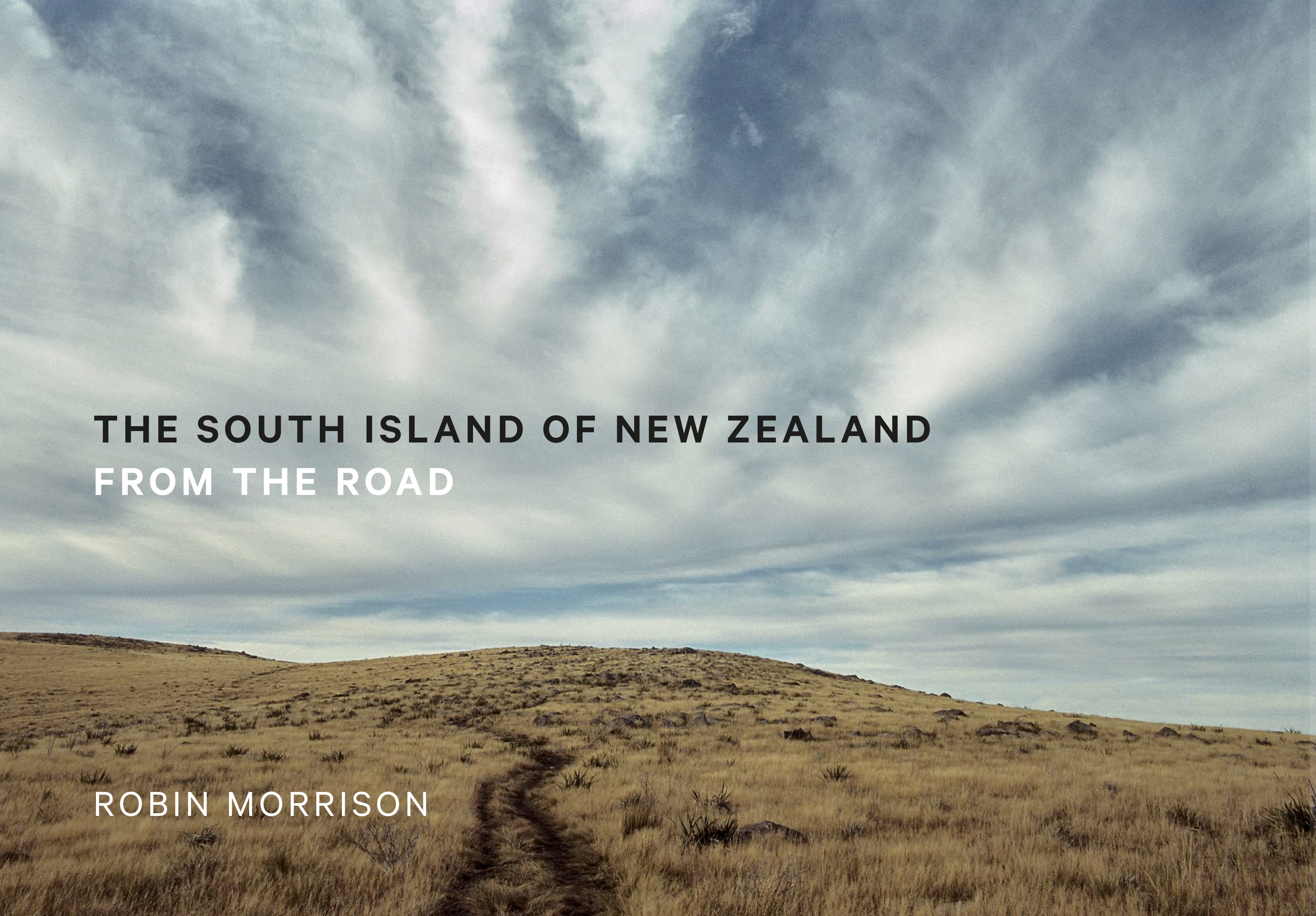
The South Island of New Zealand – From the Road, Robin Morrison
Massey University Press, 2023

Road trips take many forms. You can load up the car, check the map (or not), and head off into adventure and discovery, epiphany and delight. Who knows what beauty and mishap will unfold? Road travel is joy. Or you can do the kind of road trip where you swap a novel or an artwork or a photograph for the lure of a physical itinerary. That too offers adventure and discovery, epiphany and delight. Robin Morrison’s The South Island – From the Road offers the reader multifarious travel, retracing physical roads and then setting you within and beyond the photograph frame.

The documentary photographs of Robin Morrison (1944 – 1993) represent New Zealand land and townscapes with varying degrees of human traces and everyday settings. Like the movies of Vincent Ward and Jane Campion, the poetry of Bill Manhire and Anna Jackson, the songs of Aldous Harding and Tiny Ruins, the novels of Catherine Chidgey and Elizabeth Knox, Robin’s photographs have stuck light and dark, the physical and the ethereal, to my heart from the first encounter. To stand before a Robin Morrison photograph is to absorb the transcendental – to be both of the work and beyond the work. It is traversing the ordinary and gatecrashing the extraordinary. You enter the unsayable: how can I convey the uncanny feeling that sits next to flashes of recognition?

In his preface, Robin claims the 1979 project as a ‘personal view of the South Island’: ‘I travelled 18,000 miles with my family into most corners of the South Island but concentrated more on areas that held my eye – in particular Central Otago. We stayed in the holiday houses of friends and enjoyed the sense of space and sense of being on the edge that we so rarely have in the closeness of a city.’

This project resonates on so many levels, especially as I have lived with an artist for over three decades. We travelled much of the South Island as a family, as he searched for beehive ‘paintings’ on the landscape. Our physical road trips, affording beauty views along with the fascinating pull of found objects on the land, have instilled an ongoing relationship with space, the natural world, an inhabited world, the magnetism of elsewhere.

Thus to take road trips courtesy of The South Island – From the Road is both a reawakening of old itineraries and an ignition of the new. It is a form of travelling though time and place where the white bulging cloud hanging over the grey streaked ocean is as important as a reflection in the Post Office window or a snow dusted mountain. It is what the artist/documenter chooses to frame, the light he attends, the colours that have fallen into view, the trust he builds in the people photographed. Herein lies an alchemy of looking where composition meets colour meets light meets hidden narratives. Weather makes a difference. The general absence of people makes a difference. The pervasive presence of people makes a difference. The beekeeping couple standing outside their wooden villa in Blackball. The women with cream handbags at the race track. Traces of human endeavour and architecture make a difference. Interiors make a difference. The tea trolley with lace doilies and a cut glass vase resonates like a poem, the elderly couple framed by knickknacks, the family mementos. Shadows on walls or hills beguile, track marks on paddock or mountain passes divert.

Does it make a difference that Robin harnessed natural light to take the photographs, that he worked without filters and generally used Kodachrome film stock? I am no expert but for me it does. I have no interest in expanding upon what is missing from these South Island photographs – critics have mentioned grit and grime, a Māori presence, the new industries such as vineyards and hydro power stations, or the hubbub of the cities, dwellings that don’t adhere to Art Deco chic or colour palettes. The stream of thought as you look is paramount. I move from the nostalgic to old hierarchies to hand-knitted jerseys and socks on the line, from the kettle on the wood-fired stove to women in aprons and men in gumboots. Beer and cigarettes. Goats and dogs. To what is missing and missed, to what is missing and not at all missed.

To sit and gaze into the width and depth of Robin’s South Island photographs is to stockpile wonder. It is falling upon beauty in the everyday and the accruing stories. It is falling upon the everyday in beauty, and expanding on the way objects and human interventions fade from view, return to view, raise questions. I keep holding a page out to my family and starting up a conversation. We are road-tripping along an itinerary of anecdote, memory, visual images, affecting colours, mood enhancing light courtesy of Robin Morrison’s mesmerising photography. This elegant book is a treasure. No question. It is an extremely diverting road trip.

The South Island of New Zealand – From the Road was originally published by Alistair Taylor in 1981. After a long period out of print, the much loved book has been lovingly re-presented in a new edition by Massey University Press in association with Tāmaki Paenga Hira Auckland War Memorial Museum. The original Kodachrome slides have been digitised using up-to-date technology. There is also a comprehensive essay by Louise Callan, Robin’s friend and fellow journalist, with recollections by Robin White, Laurence Aberhart, Grahame Sydney, Owen Marshall, Ron Brownson, Dick Frizzell, Alistair Guthrie and Sara McIntyre.

Robin Morrison (1944–1993) was one of New Zealand‘s most significant documentary photographers.

Massey University Press page

Poetry Shelf review: Lynley Edmeades and Saskia Leek’s Bordering on the Miraculous

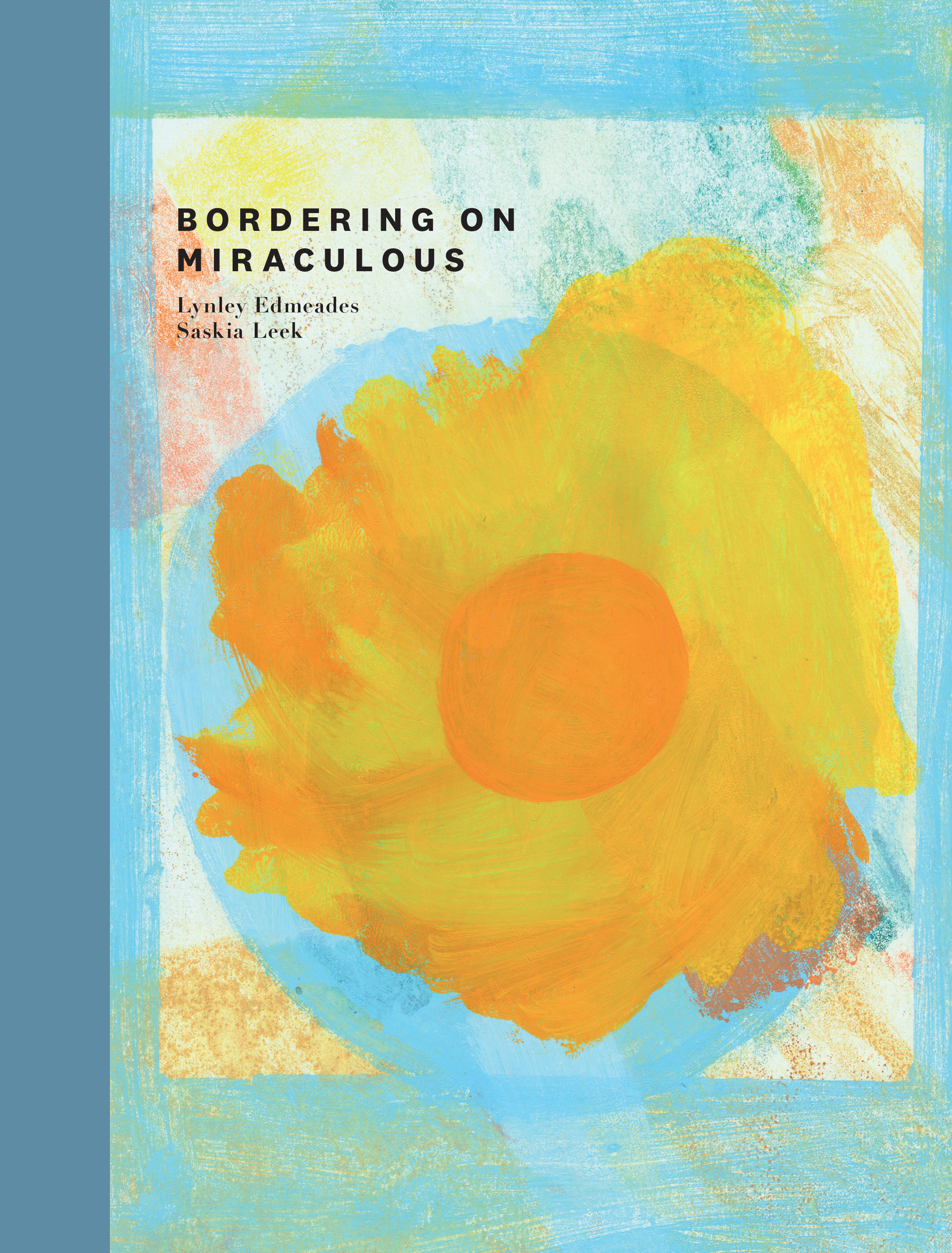
Bordering on the Miraculous, Lynley Edmeades and Saskia Leek, Mssey University Press, 2022

The delight of shining—
the slow melt of general
warmth and how the sun
often comes to be the centre.
The reaching suggests a casual
spreading with a few
nostalgic licks of brown.
The circle is the centre
is the place of insistence.
It calmly asks: what if
yellow is the thing?
What if it’s okay to sleep
with the baby in the bed?


Lynley Edmeades from Bordering on the Miraculous


Great title, inviting cover! Bordering on the Miraculous is the fourth contribution to Lloyd Jones’ Kōrero series. He invites ‘two different kinds of artistic intelligence to work away at a shared topic. In each previous collaboration I have admired the individual contributions separately, and then pondered the hinges that connect them. Each volume has been lovingly produced by Massey University Press, and designed by Gary Stewart.

Lynley Edmeades has published two poetry collections, has a PhD in English from the University of Otago and is the current editor of Landfall. Saskia Leek has an MFA from Auckland’s Elam School of Fine Arts, was nominated for the Walter’s Prize in 2010 for Yellow is the Putty of the World, and is the subject of Desk Collection, a touring exhibition that features two decades of her work.

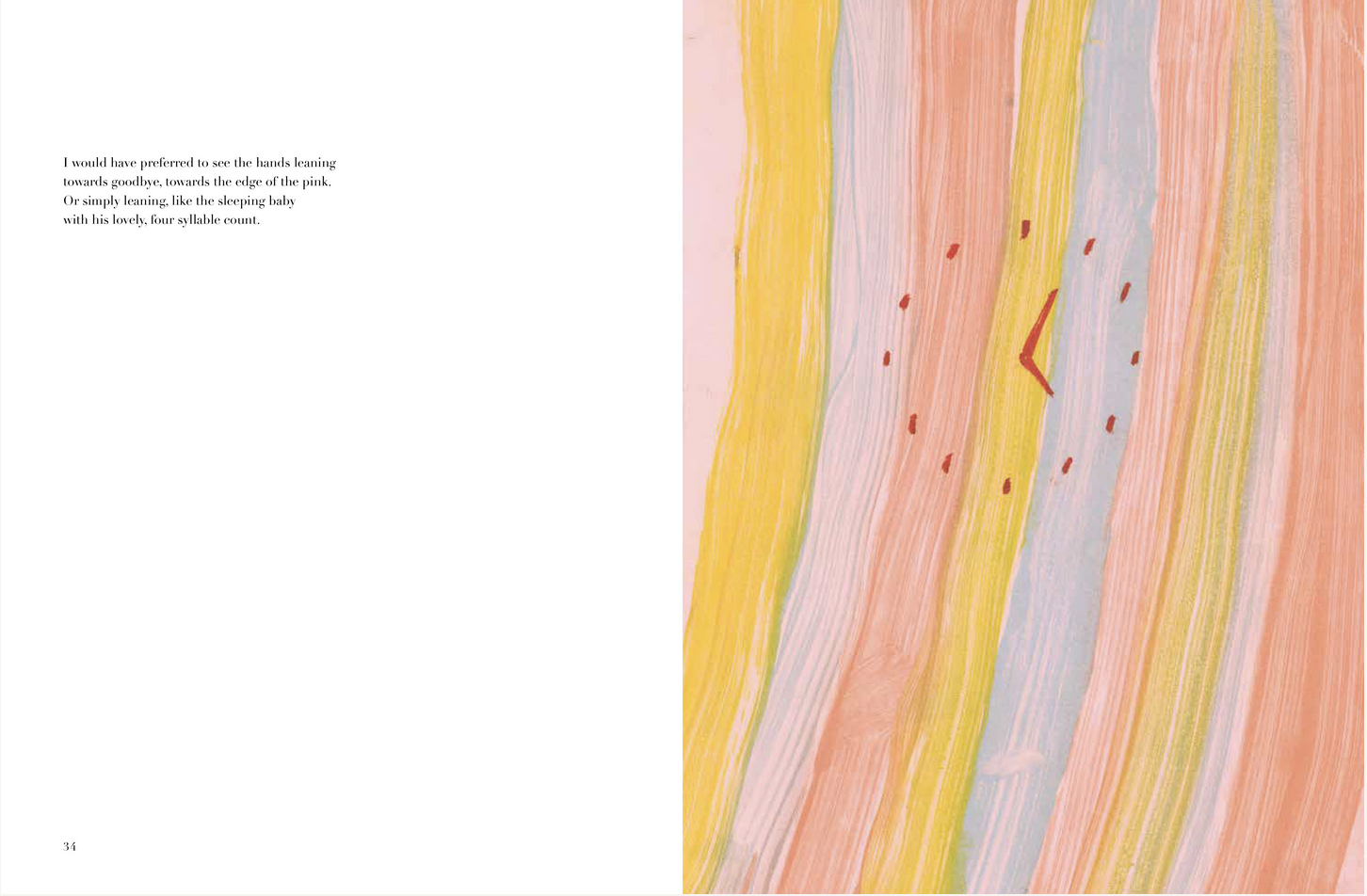
Lynley’s poems sit alongside Saskia’s monoprints. I was curious to see the latter named as illustrations, and got musing on what an ‘illustration’ is. So often, the illustration is the support act, an enhancement, sometimes representing additional and even sidetracking visual points of view and narratives. I finally left my ‘illustration’ maze, and thought of both poem and image as illumination, the one illuminating the other, each an individual luminosity. Particularly apt with the miracle theme.

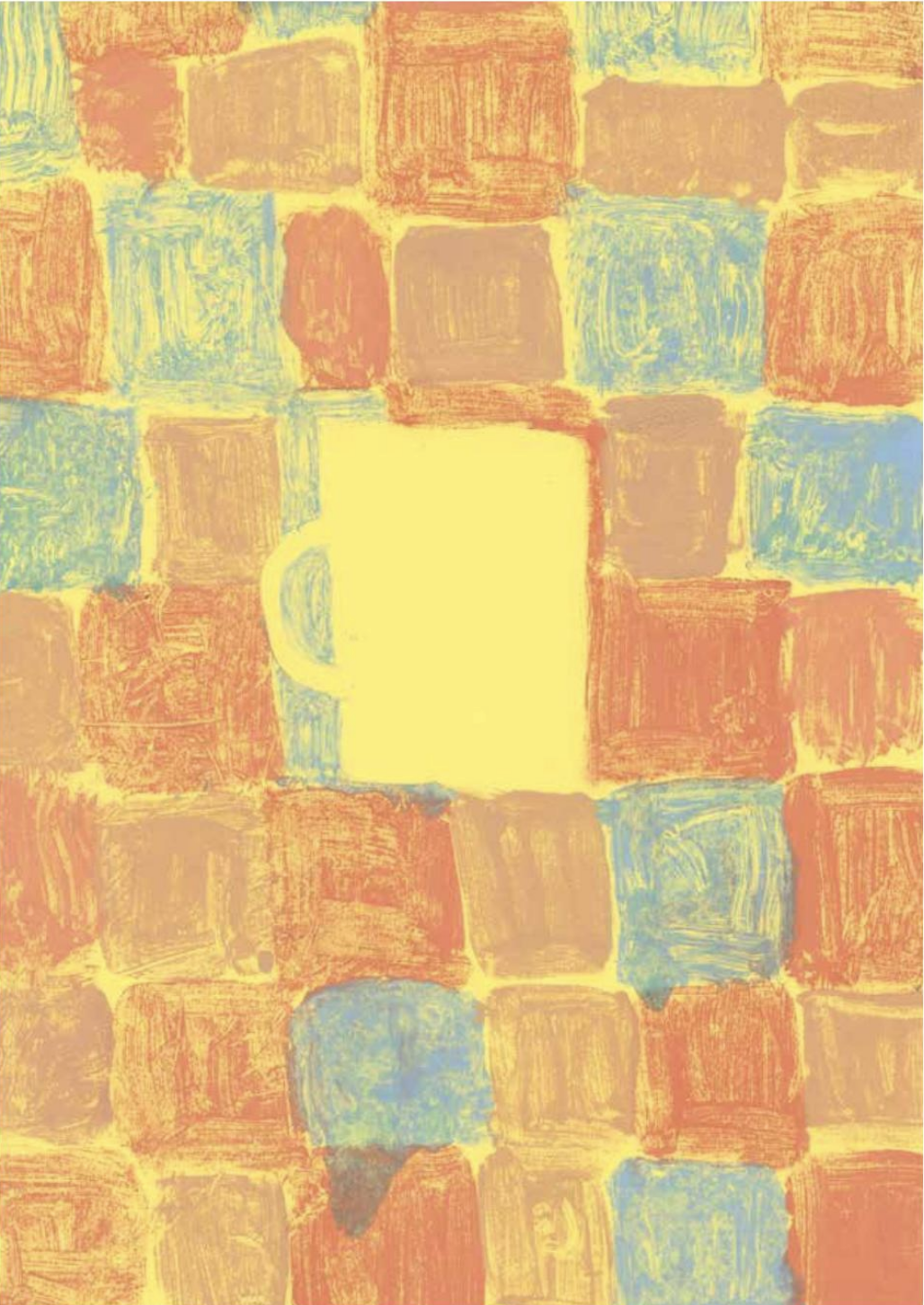
The first words that come to mind when I meditate upon Saskia’s images: texture, palette ranging from muted to bolder, gesture, restraint, focal point. Without the presence of the poem – both its physicality and its mystery – I am embedded in body-tingling warmth. Saturated in delectable colour that triggers feeling, ideas, memory, pocket-sized narratives. It is the transcendental uplift of the abstract, the satisfying texture of the physical. I might be traversing backdrop or foreground: curtain, field, tabletop, wall, sky. I am drawn to the alluring focal point: a cup, fruit, an outline, a fried egg, a clock face. Yet nothing is certain, sun might become flower, mandarin might become sun. Printer’s ink becomes gesture, gesture becomes pattern, pattern becomes internal echo. And the process of looking becomes deep satisfying contemplation. Illumination.

The first words that come to mind when I sink into Lynley’s poems: lyrical, surprising, mysterious, physical. Each poem – and I am thinking poetic piece that contributes to a thread, a sequence – holds out co-ordinates and it is over to me to trace a path. It is poetry as gathering, keen-eyed observation, daily living. The accumulation of motifs resembles the music of return: sun, cup, borders, leakage, clock, island, fruit, circles, containment. It is physical but it is also abstract. It is entry into a philosophical realm and then return to a daily world where a baby must be fed or soothed or bathed. Ideas encroach on domestic borders, the domestic infuses contemplation. Nothing is certain. Everything is certain. An island might become slice of toast, a border may be single or many, collapsing or reinforcement. And the process of reading becomes deep satisfying contemplation. Illumination.

The miraculous may small, immense, intangible, a fleeting moment. A baby held. A mountain. The moment you sit at the kitchen window, tasting tea on the tongue, warm cup in hand, a bulging sun hovering.

Lingering with this book reminds me of the miracle of a moment. A need – let’s say an insistence – to fine-tune senses to any number of borders and miracles that arrive in a day. To resist immunity to the miraculous and its myriad borders.

In Bordering on the Miraculous, the bridge between image and word might connect you to the outline of an island, to cups, fruit bowls, the sun. How does it change when you look at a cup shaped by either word or colour? On one page spread you read a poem that offers a list, lying on a bench, of everyday synonyms, and the list includes: ‘like cup / and banana / and purple’. Saskia’s image is gestured in pale purple with a steaming mug and a windowed moon that wobbles and becomes yellow banana cup. The ink gestures like finger painting, the kitchen bench signals physical chores and routines. Drinking the moon. Windowing the mood. Listing the pattern of living.

Bordering on the Miraculous is a perfect retreat when you crave entry into a neighbourhood of warmth, luminosity, wonder. Think dailiness, think mystery. It is an aide to contemplation, and internal calm. It is a book to gift and a book to keep, because it is simply and utterly glorious.

The cup holds some quietness
in the way that some edges hold
roundness. Bring it to your lips
and consider the cinch and slide
of your mouth on its edge.
Even the word has a cupness to it,
surrounded as it is with its
palatable plosives: cup cup.


Lynley Edmeades from Bordering on the Miraculous


Saskia Leek from Bordering on the Miraculous

Massey University Press page

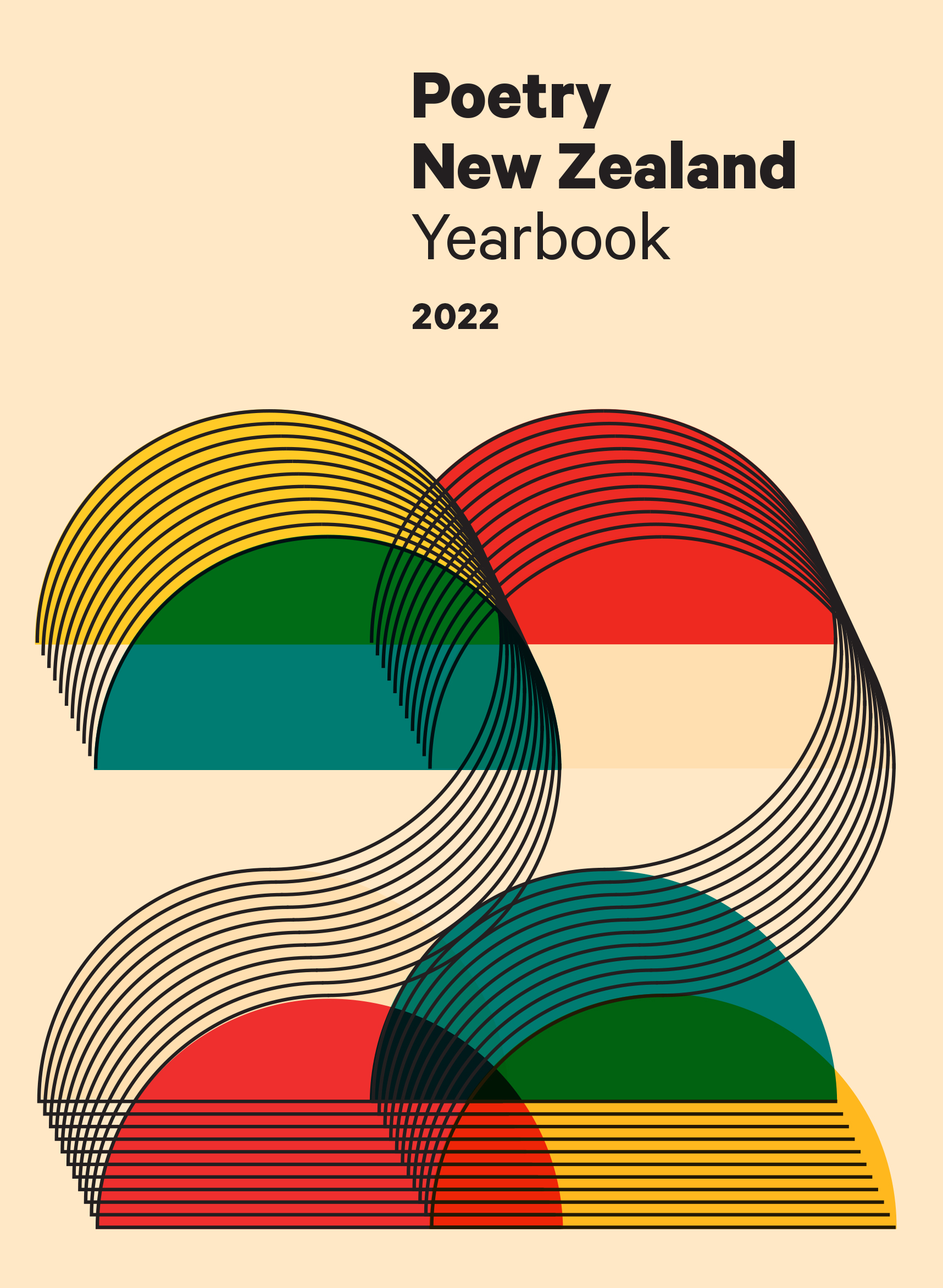
Poetry Shelf: Poetry New Zealand Yearbook 2022

Poetry New Zealand Yearbook is now edited by Tracey Slaughter, supported by the University of Waikato and published by Massey University Press. The latest issue continues to showcase poetry, essays, reviews and a feature poet. It also runs an annual poetry competition for secondary students.

Tracey Slaughter’s introduction sidesteps the traditional literary journal’s editorial ‘opening’ and riffs on the theme of breakage. I adore it! The end of a line provides infinite fascinations: either as a rest stop or an open valve, but Tracey draws us to the way the line itself may be punctured with white space. It is not just the visual hit, prolonged breath or a shift in rhythm, it’s ‘Switch your senses on’. Tracey’s editorial is an invigorating piece on reading and writing poetry. It’s a rush to the senses, and inspired me to to create my second Paragraph Room (coming up soon!).

As an electrified proposition on reading poetry, it also applies to our entry into Poetry New Zealand 2022:

‘Bring it all. Waste nothing. Use everything you are to open the poems in this book.’

Celebration time: there is a succulent and diverse wave of young poets in Aotearoa New Zealand. You meet them on Starling, on social media, in the IIML secondary school poetry competition, and through publishers such as We Are Babies. Holding an annual competition for secondary school students in Aotearoa, PNZYB adds to the increased visibility of emerging voices.

The four First Prize winners (from Y11 to Y13) are nestled in the alphabetical order of the contributors. Good to see them sit alongside the selected poets rather than as a competition adjunct. Unlike most writing competitions, there is no judge’s report. Were there common themes, styles? Leanings towards politics or the personal or both? What the four published poems underline is these new writers are an unmissable destination. You get heart, you get garden-fresh, breathtaking music, thunderbolt surprise, word nimbleness. The names to watch: Ocean Jade, Caitlin Jenkins, Sarah-Kate Simons and Jade Wilson. I am lost for words … these poets are so darn good.

get some air. the haze of summer is ripe and all i could ever want
is to rest my head into its shoulder, rendered to its shallow fever
until i can find a warmth to keep safe. for now,
my head is tilted north through your slack-jawed window
with patient wind threading into my skin

Ocean Jade from ‘Route Back Home’

when the world wants our faces to kiss the concrete
we’ll still be safe in the arms of papatūānuku
cause when things go south —
we’ll deal with them like south —
with the love our roots nourish us in …
bronze skin mona lisa

Caitlin Jenkins from ‘South’

Wes Lee is the featured poet. Her most recent collection is By the Lapels (Steele Roberts, 2019). She was a finalist for the Sarah Broom Poetry Prize (2018) and was awarded the Poetry New Zealand Prize the following year. Tracey provides two terrific paragraphs as entry points into both the poems and an interview she has with Wes. Wes’s poems leave her in awe: ‘accosted, exhilarated, struck’. Tracey writes: ‘The scenes glimpsed within a Wes Lee poem are often low-key, incidental, domestic, yet under the surreal pressure of the poet’s eye the ordinary detonates and homely details seethe and seize.’ Indeed. The poems walk on a precarious edge of living. They scratch and lash, they tilt you as read. You body surf on currents of memory, trauma, the personal.

A highlight for me is reading the essay of poet and journalist, Maryana Garcia’s ‘A Clearer Dawning”. Maryana writes of being selected for the AUP antholgy A Clear Dawn: New Asian Voices from Aotearoa New Zealand, and on standing in the wings about to read at the book launch at the Auckland Writers Festival. The essay is sorting buttons, reciting vowels and diphthongs, a moving ledger of plus and minuses in the family’s move to New Zealand several decades ago (bomb checks v Lola’s cloth cupboard, smog v the best mangoes in the world). It is self doubt as a poet. We should all have a folder marked ‘Dietritus’! It is the way memory is hooked when you least expect it (by the fabric feel of the anthology’s cover). More than anything, it is in keeping with A Clear Dawn‘s stated aim: that Asian poets, like all poets, write about anything in a thousand inspiring ways.

I stared at my poetry folder, asked myself which poems I felt at home with. The answer was: none. Tabs closed. Tabs opened. I blinked again. Then I clicked on a folder I’d called, in a fit of creative frustration, Dietritus.

Maryana Garcia from ‘A Clearer Dawning’

Derek Schulz’s essay steps off from a brilliant Alice Oswald quotation (‘poetry is the great unsettler’) to opening windows on Emily Dickinson’s poetry. I kept arguing and agreeing with the essay which is far more satisfying than skim reading and moving onto the next page.

Sometimes you fall upon a piece of writing at exactly the right time. Sue Wootton’s extraordinary ‘This Damned Helplessness’ chimes so deeply when I am currently equating 2022 to climbing Mt Everest, when I am in training for a high risk adventure and not at all sure what views I will see. Caught in the gap between so many things. Sue considers climbing a first mountain and a second mountain, each with different views, and then perhaps imaginary mountains (Dream, Day, Night, Fact, fiction, Science, Culture, Body, Soul). More importantly, she traverses (connects with) how to exist, survive, flourish in the space between disparate things. Say Science and Culture. The first mountain view and the second mountain view. What is said and what is misheard. She uses her past experience as a physiotherapist to consider storytelling, gap navigation, treating pain, broken self narratives, bridges, patient involvement, re-composition. I am barely scratching the surface of this intricate tapestry of thought. It’s a satisfying neighbourhood of quotations and responses to other writers, physicians, thinkers, patients. Beautifully written, supremely thought provoking, it’s an empathetic plea to speak from both mountains. Yes, extraordinary, humble writing.

My issue of Poetry New Zealand Yearbook 2022 is already well thumbed as I lily-pad hop the poems (one poem per poet) along with the continued solid devotion to reviewing poetry books published in Aotearoa. This is a journal I am drawing out over months not days. To savour and sidestoke in. There are unfamiliar names and recognisable favourites. Under Tracey’s inspired editorship, Poetry New Zealand Yearbook is something I look forward to. Rejuvenating. Rejuvenating. Rejuvenating.

take this night
quickly like a pill / the pull
of space cracking / ankle joints
from the stretch up
in its dark belly
gurgling acid starlight

Hebe Kearney from ‘night comes on’

she lay on the pavement
squinting at clouds
and never made out
my father roosting
in cranes and carillons
even her dress    pressed
with paintings of the domes
of Budapest  made
her giddy sun downing
giddy      this way
                               and that

Kerrin P. Sharpe from ‘the scaffolding of wings’

didn’t matter that our Chinese faces
spoke white/all of us knew the routineness
of string/mā má mǎ  mà/knotted our xīn
into snake bites/left our tongues parched/
dead nailed until the bell rang three.

Wen-Juenn Lee from ‘chinese class’

Massey University Press page
10 Questions with Tracey Slaughter

Tracey Slaughter teaches creative writing at the University of Waikato, where she edits the journals Mayhem and Poetry New Zealand Yearbook.

Poetry Shelf celebrates new books with an audio: Amber Esau and Sam Duckor-Jones read from Skinny Dip – Poems

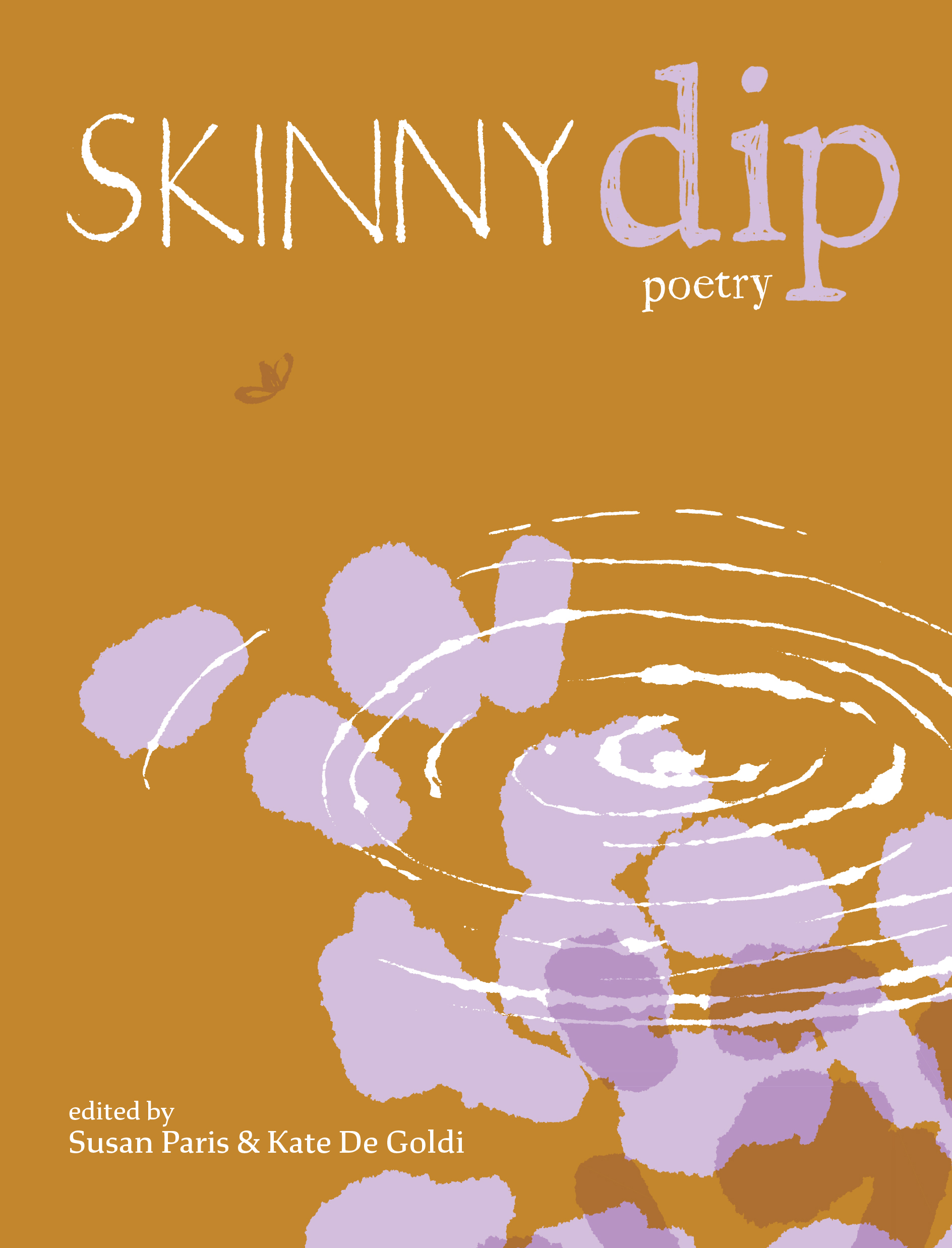
Skinny Dip: Poems, eds Susan Paris & Kate De Goldi, illustrations by Amy van Luijk, Massey University Press (Annual Ink), 2021

Kate De Goldi and Susan Paris, editors of the popular and best-selling Annuals, have edited a lively, much-needed, and altogether stunning anthology of poems for middle and older readers. Kate and Susan commissioned ‘original, and sometimes rowdy poetry’ from a selection of well-known Aotearoa poets. The poems are pitched at Y7 to Y10 readers, but will catch the attention of a range of readers. The collection is shaped like a school year, with four terms, and with the poets both recalling and imagining school days. The subjects shift and spark. The moods and tones never stay still. Some of the poems are free verse (no rules) and some are written according to the rules of specific poetic forms. There is a useful glossary detailing some of the forms at the back of the book (rondel, tanka, haiku, ode, cinquain, rondel, sestina, villanelle, acrostic, pantoum). There are also found, prose, strike-out and dialogue poems. A genius idea for a book that shows how you can follow poetry rules, break poetry rules, play with poetry rules.

The editors invited poems from a glorious group of Aotearoa poets: Sam Duckor-Jones, essa may ranapiri, Bill Manhire, Anahera Gildea, Amy McDaid, Kōtuku Nuttall, Ben Brown, Ashleigh Young, Rata Gordon, Dinah Hawken, Oscar Upperton, James Brown, Victor Rodger, Tim Upperton, Lynley Edmeades, Freya Daly Sadgrove, Nina Mingya Powles, Renee Liang and Nick Ascroft.

Through doing my poetry blogs, schools visits and author tours over decades, I have witnessed poetry simmering and bubbling, somersaulting and sizzling, the length and breadth of Aotearoa. Poetry in my experience can excite the reluctant writer, advance the sophisticated wordsmith, and captivate all those writers in between, both in primary and secondary schools. Poetic forms are fun, and can stretch the imagination, electrify moods and music. Send your writing pen in refreshing and surprising directions.

Poem anthologies for younger and middle readers are as rare as hen’s teeth in Aotearoa, so it is a special day when a new one hits our library and bookshop shelves. Kate and Susan have curated a selection of poems that will fit ranging moods, and perhaps inspire you to write a poem of your own, however old you are!

I have celebrated Skinny Dip on Poetry Box with four readings (Ben Brown, James Brown, Lynley Edmeades and Ashleigh Young). My November challenge on Poetry Box is inspired by Skinny Dip (for Y1 – Y8), so do invite keen young poetry fans to give it a go. For Poetry Shelf, I am featuring two glorious readings by Amber Asau and Sam Duckor-Jones, and including a challenge for secondary students.

I decided Skinny Dip is so good it deserves a feast of celebrations! Let me raise my glass to a fabulous project.

A popUP poetry challenge for secondary school students in Year 9 and 10:

Choose one of the poetry forms mentioned above and write a poem. You can stick to the rules or you can play with the rules. Send to paulajoygreen@gmail.com by November 14th. Include your name, age, year and name of school. Deadline: November 11th. I will post some on Poetry Shelf on November 16th. Write Skinny Dip in subject line so I don’t miss your email. I will have a copy of the book to give away.

two readings

Amber Esau reads ‘Street Fighter’

Sam Duckor-Jones reads ‘Please excuse my strange behaviour’

Amber Esau is a Sā-māo-rish writer (Ngāpuhi / Manase) born and raised in Tāmaki Makaurau. She is a poet, storyteller, and amateur astrologer. Her work has been published both in print and online.  

Sam Duckor-Jones lives in Wellington. He has published two collections of poems: People from the Pit Stand Up and Party Legend (VUP).

Massey University Press (Annual Ink) page
Kate De Goldi & Susan Paris talk to Kim Hill
Read an extract at the The Spinoff
ReadNZ Q & A with Kate & Susan


Poetry Shelf celebrates new books: Chris Price and Bruce Foster’s The Lobster’s Tale, photographs and audio

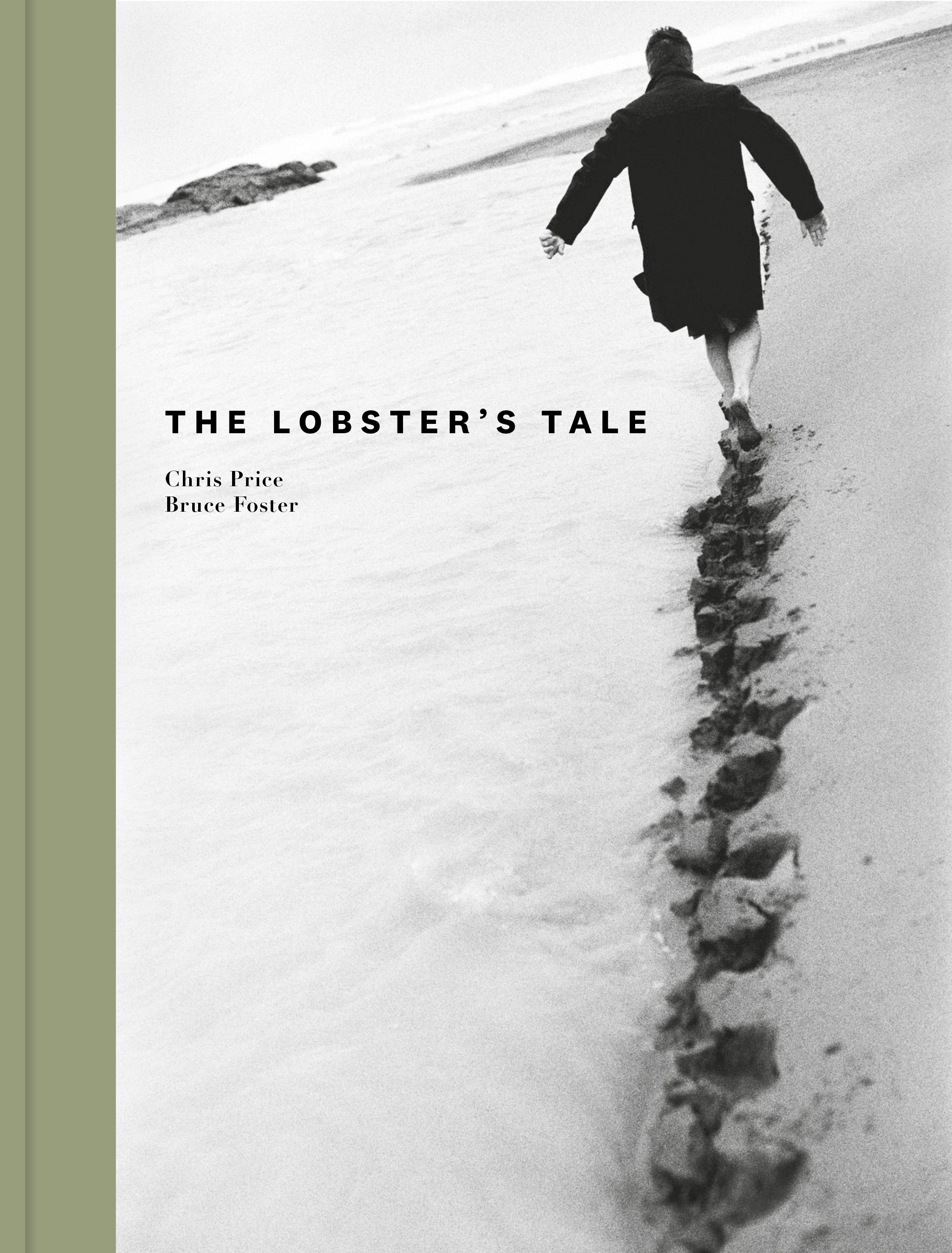
The Lobster’s Tale, Chris Price and Bruce Foster, Massey University Press, 2021

Lloyd Jones’ Kōrero series invites a collaboration between ‘two different kinds of artist intelligence’ on a specific topic. The first two books were a triumph of image, text and design: Lloyd Jones and Euan Macleod (High Wire); Paula Morris and Haru Sameshima (Shining Land). The third book The Lobster’s Tale brings together photographer Bruce Foster and writer Chris Price. A sentence threads along the bottom of the page, there are Bruce’s photographs and there is Chris’s text. The photographs track sky water land, imprints of existence. The paragraphs draw upon multiple voices that also navigate questions of being. The final and fascinating leg of the journey is the conversation that emanates from photographs, text and sentence thread.

The sentence thread running along the bottom of the pages, is described by Chris as a paragraph, a ribbon. A paragraph ribbon that is a poetic and fascinating accretion. An at-times borrowed thread that draws upon the words of Ursula LeGuin and William Beebe. As you turn the page, the paper rustle breaks into the stream of reading, a tiny rupture, visually and aurally. Which is how I read the book as a whole. Ideas arrive and I pause. The thread is an itinerary, full of pit stops and bridges and, as with any voyage, I can only hold it in pieces. I grasp the damaged earth, weather, diverse terrain, the air we breathe, definable time, indefinable time.

I travel with the paragraphs next, and each paragraph, reminiscent of poetry, expands in generous frames of white space. The writing is both intricate and plain. Complex issues of ‘being’ come to the foreground. ‘Being’ becomes notated existence, whether lobster or human, whether voyage or longing, repleteness or hunger, plunder or plenitude. Suicide is a linking echo. Albert Camus, Tupaia, Jonathan Franzan, Ursula Le Guin, David Foster Wallace, among others, make appearances. Yes, lobster is a starting point, from which reading and research radiate. Fascinating lobster facts and anecdotes reside alongside philosophical nuggets. I am attracted to these nuggets gleaming in the oceanic dark, like landmarks on my voyage into the unknown. The writing is both of and beyond the lobster. The writing is a means of becoming. ‘A profound thought,’ says Camus, ‘is in a constant state of becoming’.

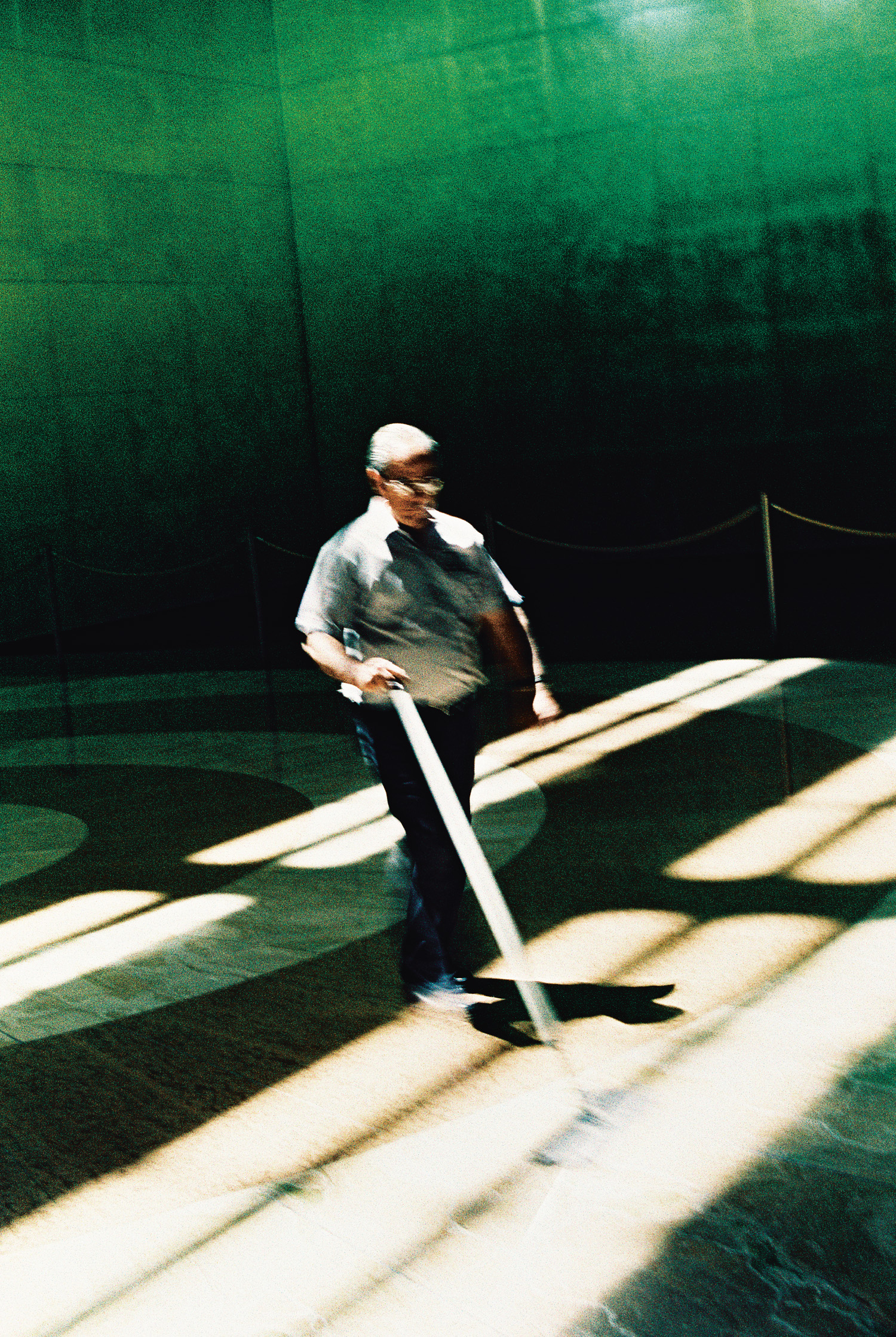
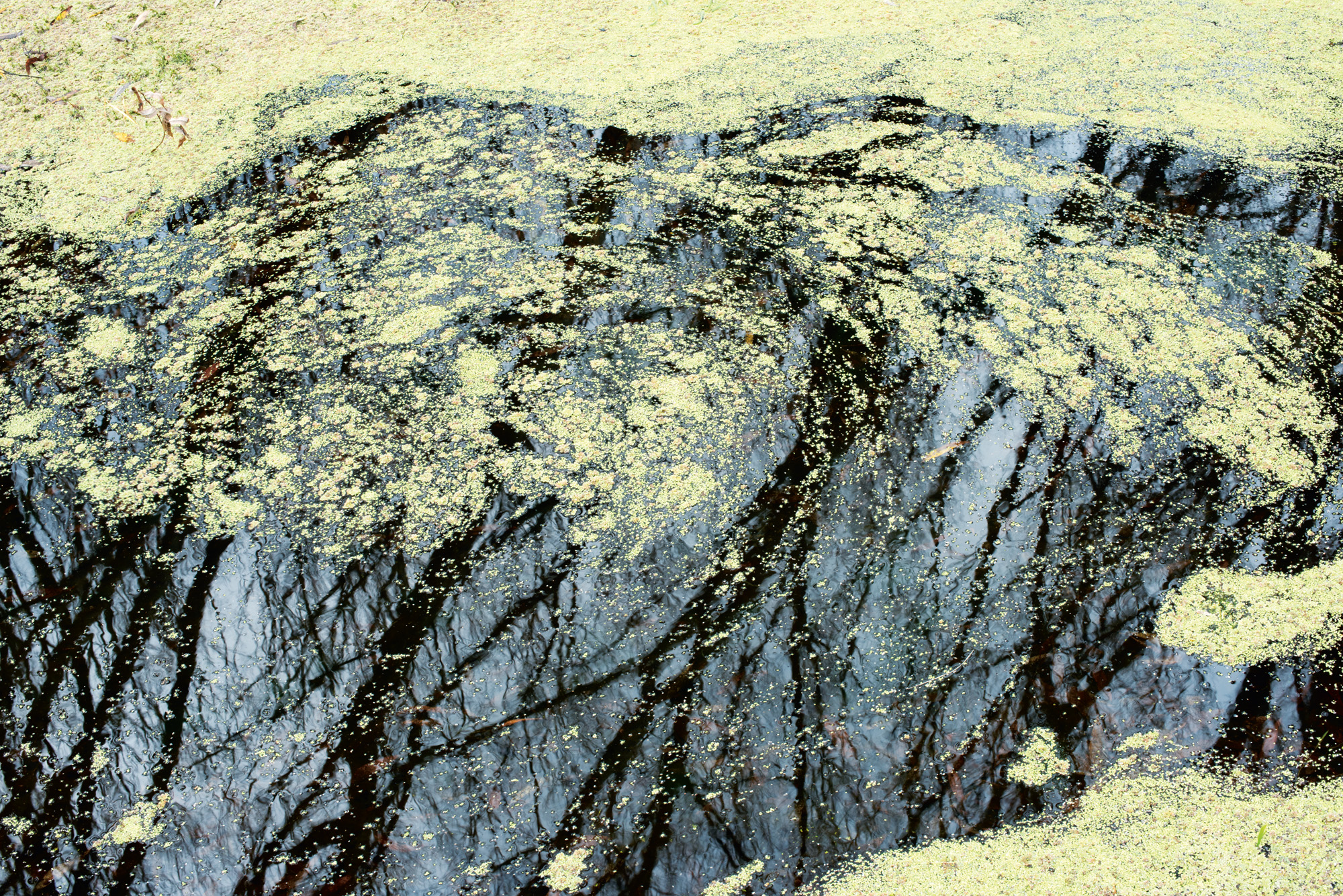
The photographs register as loading bays for contemplation: secret-holders, blurred, still, even stiller, shimmering, creased and folded, abstract, political, sequences of trails, debris, impacts, light, land, water. The photograph is a means of breathing in the light. Facing our fragile future. The sequence itself offers its own haunting itinerary, a voyage that is more about the getting there than the destination. I join the other spectators, my back to the lens, gazing spellbound at the horizon, the infinite pull of water.

And then I pivot, and view the sentence thread and the paragraphs also as creased and folded, as shimmering talk, as sequences of trails and debris.

To read The Lobster Tale in the time of Covid is to refresh the voyage. It becomes imperative, in the face of difficulty and uncertainty, to acknowledge that everything is intensely personal, elusive and far away. Writing reviews is tough. I need voyage. I need anchors. And I need books, so lovingly crafted as this one has been, books that matter. I look forward to the next collaboration/conversation in the Kōrero series.

Chris Price reads an extract ‘below-the-waterline’ text from The Lobster’s Tale

Chris Price is the author of three poetry collections and the hybrid ‘biographical dictionary’ Brief Lives. She has also collaborated with NZ physicists (in Are Angels Ok?), and with German poets (in the bilingual anthology Transit of Venus Venustransit). Chris convenes the MA Workshop in Poetry and Creative Nonfiction at the International Institute of Modern Letters.

Bruce Foster’s current photographs consider the impacts on nature of political decisions and corporate actions. Recent touring  exhibitions that include his work are: the ‘Kermadec Project: Lines Across the Ocean’, an initiative articulating the issues facing one of the few pristine ocean sites left on the planet; ‘Wai, the Water Project’, an exploration of the cultural, conceptual and imaginative aspects of waterways and the existential threats they face; and ‘Toitū Te Whenua – The Land Will Always Remain’.

The photographs in this book were made between 1996 and 2020. For more information

Massey University Press page

RNZ Saturday Morning interview interview

Ian Wedde review Academy of NZ Literature

Bruce Foster and Chris Price in conversation Read NZ

Poetry Shelf review: Anne Noble’s Conversātiō – in the company of bees

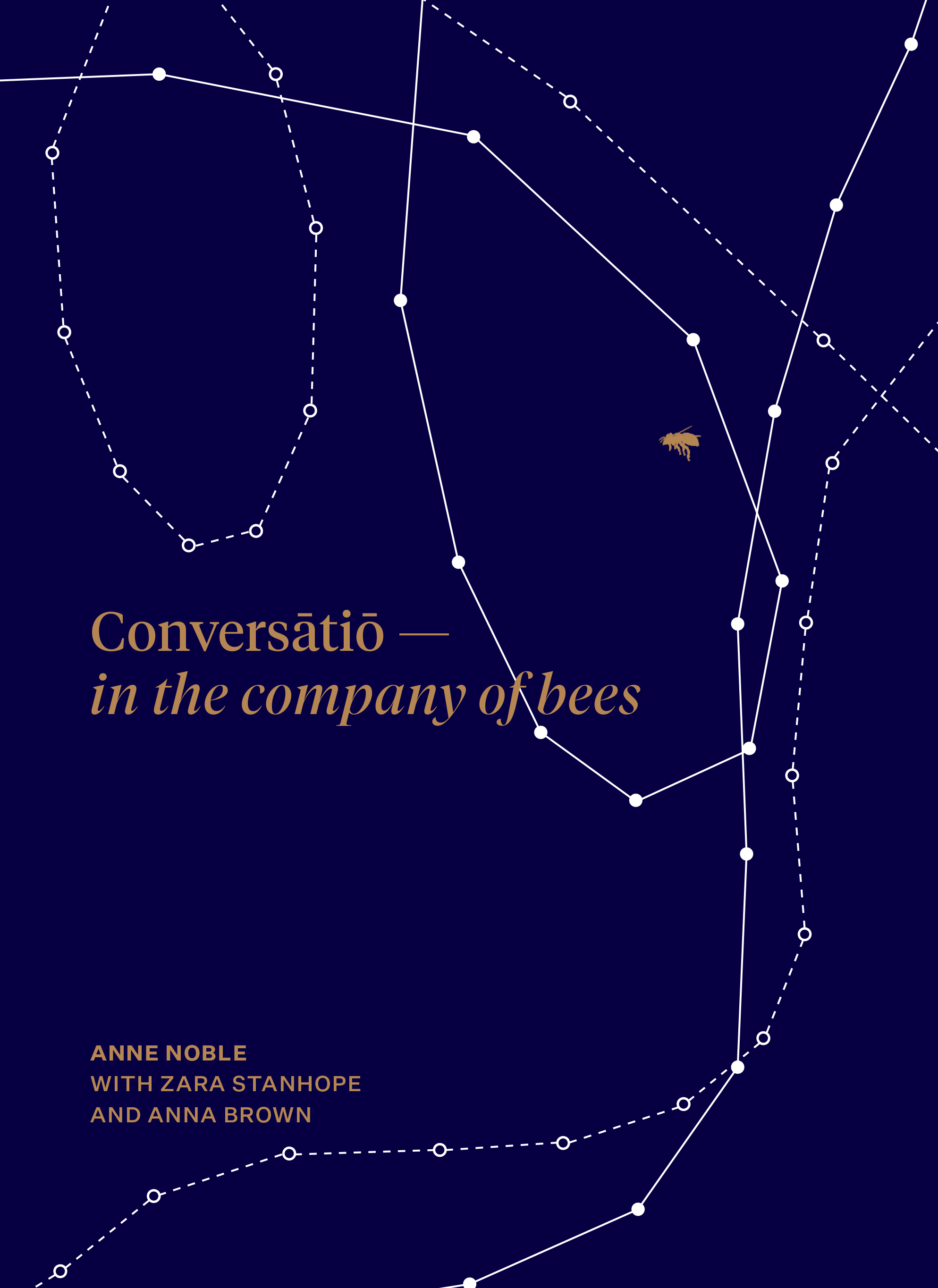
Conversātiō – in the company of bees, Anne Noble with Zara Stanhope and Anna Brown, Massey University Press, 2021

each morning in the bright window she’s there

on the tip of your tongue her bees working

the red flowers that take you from vine to fire

as she contemplates another shift in the pronouns

Michele Leggott

from ‘Blue Irises’, from DIA, Auckland University Press, 1994

Anne Noble’s Conversātiō – in the company of bees is a precious object with its luxurious velveteen cover, generous serving of images, handbound look, luxuriant paper stock. The book as art work. An artwork as book. There are conversations, essays and a smattering of bee-related writings from Xenophon of Athens (c. 430 – 350 BCE) through to Emily Dickinson (1830 -1886), Carl Jung (1875 – 1961), Karl Marx (1818 – 1883), Dante Alighieri (1265 – 1321), Sylvia Plath (1932 – 1963), and many more.

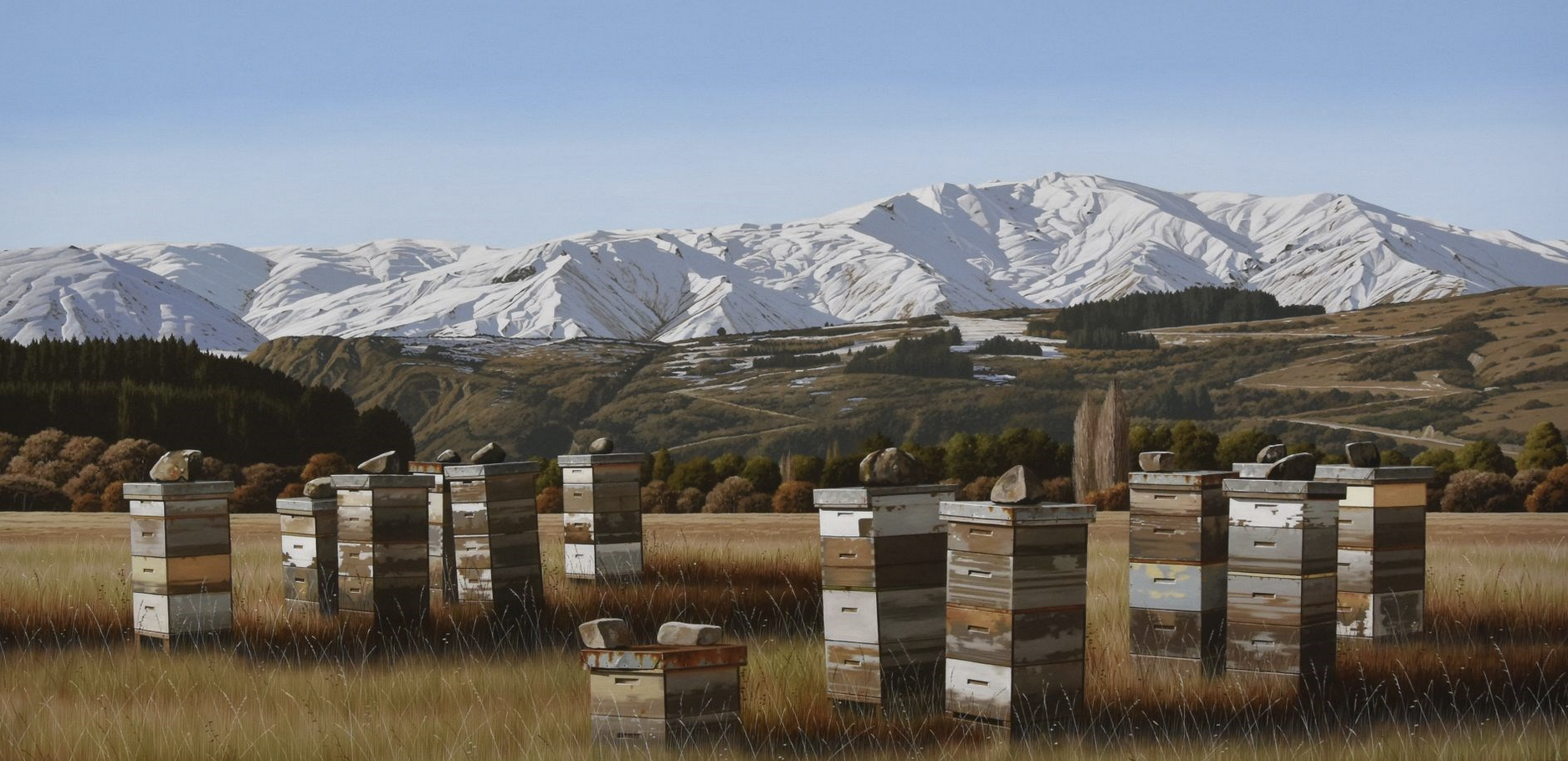
I was drawn to this book because for over 35 years I have lived with an artist known for his beehive paintings, who views the hive on the landscape as a found object, as a site of transformation, as a sublime interplay of light and dark. As a family we have travelled the South Island roads taking photographs. We have smelt linseed oil and paint for decades, even watched a honeybee land on a painted hive. We have a beehive work hanging on the lounge wall that is my point of uplift, my transcendental device, my place to restore balance. Outside, honeybees dart in the manukā, land on flowers in the vegetable patches. The bees, and the beehive paintings, are a source of interior glow as I sit still and watch and reboot. The bees are doing what bees do, and it feels good. It is of the greatest comfort.

Anne’s bee-thicket book (it is of course a collective project) will offer the reader many sidetrack diversions, parallel lines of thought and feeling. I am catapaulted back into the honey-rich poetry of Michele Leggott, the dulcet threads and motifs. Find me a collection of hers where the honeybee does not make an appearance, and I will be surprised. Across centuries the bee has pollinated the poetic line with sweetness, fostering a delight in connectivity, awe, the miraculous. As a motif it fertilises a poem with the visual, the sensual, the unsayable, with patterns, transformations. This is what Michele’s poetry does for me.

Looking at one of Michael’s paintings, reading Michele’s poems or glimpsing the bee in our vegetable gardens, I am filled with life-sustaining joy. And how that matters. This is what the bee does for me.

Pick up Conversātiō, this sumptuous book, with its title demanding attentiveness, and you will fall into Anne’s close-up photographs of bees at work, how the collective labour is paramount. You will read of the mystery of the bee’s flight patterns and interpretations of their dances. You will read of the miracle of survival, the need for bee survival, the tending of hives, the harvesting of honey.

How you travel through this book is open. It is over to you. It feels like a thicket with interlocking paths, rich in images and ideas, possibilities. It is a beauty of a book. It is a book of beauty.

Massey University Press page

‘A journey of discovery into the life of bees’ — John Daly-Peoples, New Zealand Arts Review
‘A remarkable and beautifully produced book’ — Peter Simpson, Kete
‘Another sumptuous book from Massey University Press’ — David Hill, RNZ
‘A fascinating hybrid work, formed by the streams of art, science, poetry and philosophical thinking that flow into it’ — Landfall Review Online
Anne Noble talks to Lynn Freeman on RNZ
Anne Noble is interviewed by Woman magazine
Anne Noble talks to Stuff

‘Crown Range’, Michael Hight, 2017

Poetry Shelf celebrates new books with readings: Ten poets read from Poetry New Zealand Yearbook 2021

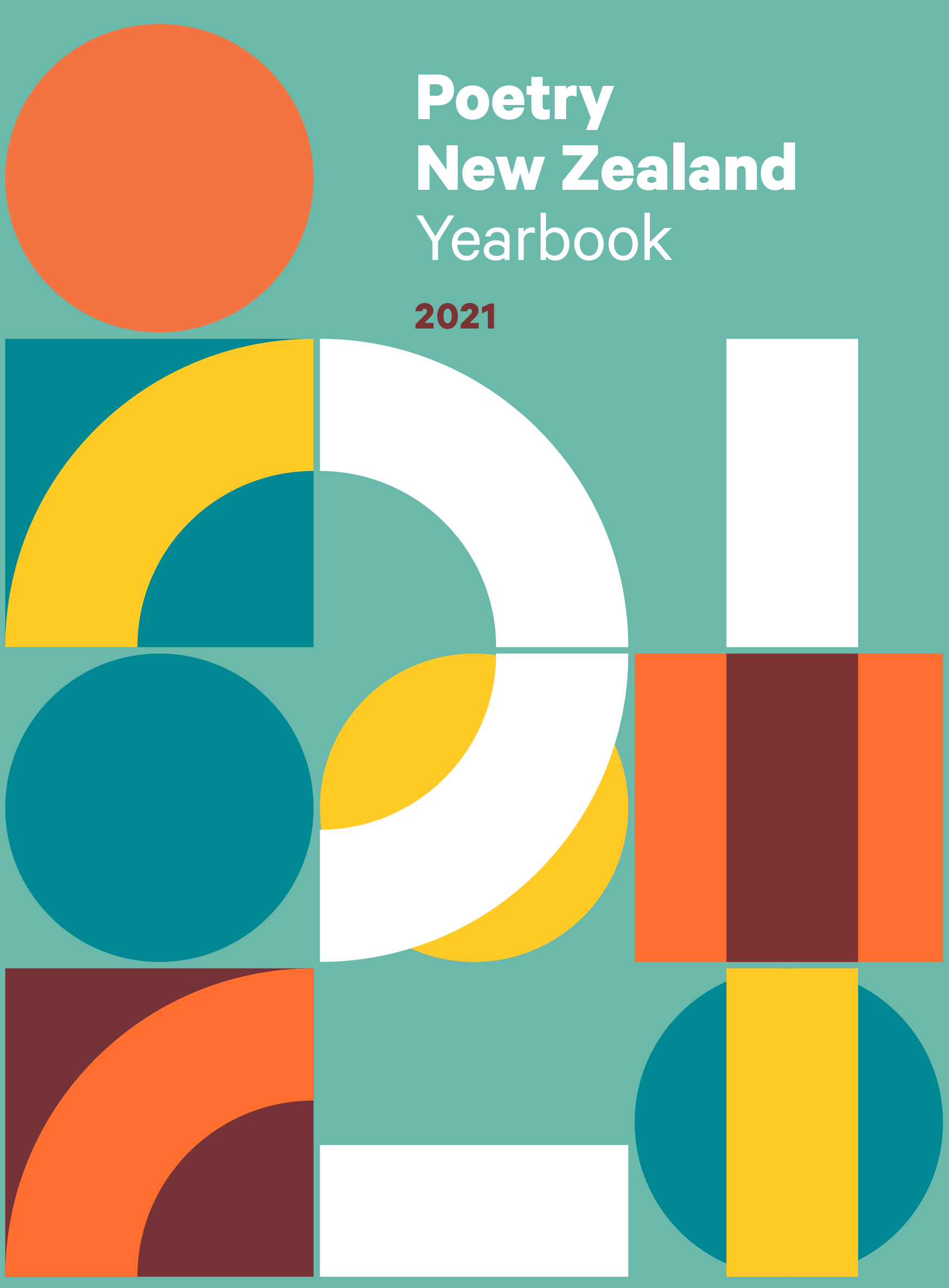
Poetry New Zealand Yearbook 2021, ed Tracey Slaughter, Massey University Press

Poetry New Zealand is our longest running poetry magazine – it features essays and reviews, along with substantial room for poems. Tracey Slaughter has taken over the editorial role with the 2021 issue, a wide-ranging treat. A poet and fiction writer, she teaches creative writing at the University of Waikato. Her new collection of short stories, Devil’s Trumpet, has just been released by Victoria University Press.

Winners of the Poetry New Zealand Poetry Prize and the Poetry New Zealand Yearbook Student Poetry Competition are included. Aimee-Jane Anderson-O’Connor is the featured poet. To celebrate the arrival of the new issue – with 182 poems by 129 poets – I invited a few to read.

Cadence Chung reads ‘Hey Girls’ (First Prize, Year 12, Poetry New Zealand Yearbook Student Poetry Competition)

Brecon Dobbie reads ‘Diaspora Overboard’

Nida Fiazi reads ‘the other side of the chain-link fence’

Lily Holloway reads ‘The road to the hill is closed’

Michele Leggott reads ‘Dark Emily’

Aimee-Jane Anderson-O’Connnor reads ‘Cat’ and ‘If the heart is meat made electric’

Kiri Piahana-Wong reads ‘Before’

essa may ranapiri reads ‘Hineraukatauri & Her Lover’ (for Ruby Solly)

Jack Ross reads ‘Terrorist or Theorist’. Listen here

Michael Steven reads ‘The Gold Plains’

Cadence Chung is a student at Wellington High School. She first started writing poetry during a particularly boring maths lesson when she was nine. Outside of poetry, she enjoys singing, reading old books, and perusing antique stores.

Brecon Dobbie recently graduated from the University of Auckland with a BA in English and Psychology. She is currently writing as much as possible and trying to navigate her place in the world. Some of her work has appeared in Minarets JournalHowling Press and Love in the time of COVID Chronicle

Nida Fiazi is a poet and an editor at The Sapling NZ. She is an Afghan Muslim, a former refugee, and an advocate for better representation in literature, particularly for children. Her work has appeared in Issue 6 ofMayhem Literary Journal and in the anthology Ko Aotearoa Tātou | We Are New Zealand.”

Lily Holloway (born in 1998, she/they) is a forever-queer English postgraduate student. Her creative writing has been published in StarlingScumThe Pantograph Punch, Landfall and other various nooks and crannies (see a full list at lilyholloway.co.nz/cv).  She is an executive editor of Interesting Journal and has a chapbook forthcoming in AUP New Poets 8. Lily is based in Tāmaki Makaurau, is a hopeless romantic and probably wants to be your penpal!

Michele Leggott was the New Zealand Poet Laureate 2007-09 and received the Prime Minister’s Award for Literary Achievement in Poetry in 2013. Recent collections include  Vanishing Points (2017) and Mezzaluna: Selected Poems (2020). Michele coordinates the New Zealand Electronic Poetry Centre (nzepc) with colleagues at the University of Auckland. In 2017 she was elected a Fellow of the Royal Society of New Zealand.
Aimee-Jane Anderson-O’Connor writes thanks to the support of some of the best people on this big watery rock.

Kiri Piahana-Wong (Ngāti Ranginui) is a poet and editor, and she is the publisher at Anahera Press. Her poems have appeared in over forty journals and anthologies, most recently in tātai whetū: seven Māori women poets in translation,Solid Air: Australian and New Zealand Spoken Word and Set Me on Fire(Doubleday, UK). Her first poetry collection, Night Swimming, was released in 2013; a second book, Give Me An Ordinary Day (formerly Tidelines), is due out soon. Kiri lives in Auckland with her family. 

essa may ranapiri / tainui / tararua / ootaki / maungatautari / waikato / guinnich / cuan a tuath / highgate / thames / takataapui / dirt / dust / whenua / there is water moving through bones / there are birds nesting in the cavities

Jack Ross works as a senior lecturer in creative writing at Massey University. To date he’s published three novels, three novellas, three short story collections, and six poetry collections, most recently The Oceanic Feeling (Salt & Greyboy Press, 2021). He was the managing editor of Poetry New Zealand Yearbook from 2014-2019, and has edited numerous other books, anthologies, and literary journals. He blogs here

Michael Steven was born in 1977. He is an Auckland poet.

Poetry Shelf noticeboard: My review of Johanna Emeney’s Felt at Kete Books

Full review here