This is a story about your mother, Louise Wallace Te Herenga Waka University Press, 2023
Think of something you know about me. Something you know for sure. Step on it with both feet. Make sure it can hold your weight in water. Make sure it can hold you for a long time.
from ‘Vessel’
I adore poetry books that exude a love of poetry and what words can do. I also adore poetry books that get me thinking. Poetry can generate so much as you read, whether you enter roadmaps of experience, imagination, or combinations of both. For decades I have been fascinated by how the ink in our pens (or pencils or keyboards) is infused with the personal, the recalled, the scavenged, the political, writing trends, writing regulations, societal trends, societal regulations, hierarchies, biases, ideology that circulates immunity, open challenges, open hearts and roving minds.
Louise Wallace’s new collection, This is a story about your mother, gets me thinking. I am in awe of what her poems can do, the way we might delight in a poem for the sake of its poemness. I am also personally stitched into the weave of poetry that places motherhood and pregnancy, the anticipation and the actuality, centre stage. It is to be back in the thick and thrill and fatigue, the endless questions and precious epiphanies, the physicality of both becoming and being a mother.
Some critics continue to denigrate writing that favours a domestic focus, yet I continue to argue it is an enduring and rewarding subject for poetry with its multiple rhythms and rhymes, its myriad melodies and repetitions. It might be personal, political, physical, nurturing, mood or idea-generating, fortifying.
Louise’s collection begins with the poem ‘fact’, a sequence of declarations that are rich in possibilities. Already I am hooked. Read the phrase, “life is not a bed”, and hit the pause button, savour the sweet gap on the line. I want to put ofroses in the gap but I make the poem’s leap to “of white paper”. Then I spin and spiral on the “bed of white paper”, the reverberating rose. Ah. I keep reading the poem’s punctuated flow, leaping over the spaces on the line to the next fact, the next rose.
I am breaking up with difficult poetry using a comprehensive guide to my biggest childhood crushes then & now thanks people
life is not a bed of white paper don’t forget to stop and smell a white piece of paper by any other name
Begin with pregnancy, the mystery and miracle of birth and new babies, the how to put into words such experience. The larger section of the book is entitled ‘like a heart’, while the second slender section, ‘vessel’ contains a single poem, an epistolary poem, like a gift addressed to the baby, whether still in the womb or out in the world.
Questions permeate. How to be a mother? How to be mother lover writer woman? How to negotiate the bombardment of images and ideas that promote an ideal woman – the ideal body image, the ideal mother, partner, writer. Louise performs a resistance through her writing – there is no singular maternal rhythm or composition or thread or place to stand or sleep.
it’s hard to be completely yourself while being beaten around the ears with leafy greens. you can see freedom swinging further away as you try to relax daily and not lift heavy things, blitzing vegetables and exposing your mood, poking out your chin and the no-good nose, your hair constantly increasing in volume so that everything feels like it might do you harm.
from ‘cumbersome repetitions with friends’
I hold this glorious book out to you as an example of poetry as hinge. Poems offer continuity and flow but they also create invent juxtapose. The richness of the poetic hinge establishes connection, the pause, the gap. Louise uses numerous “hinges” that affect visual and aural effects as you read. A poem might be fractured and conversely connected by the use of an x, a blank space, a comma, a full stop, or slash /.
The opening poem ‘fact’ compiles a series of ands. Writing becomes a way of measuring and marking a life, the time, the day, what we must to do, what we might do. There are echoes and there are repetitions, but each arrival is nuanced. A word might be a musical note, a gesture, a thought, a feeling – it might be different keys, a chord, a swelling, a gathering, a recognition. There might be connection and there might be disruption.
Ah. The title of the collection offers us entry points. A way into the comfort of lists. A way into joy and pain. Ah yes. The way mothers might be invisible. The way self-doubt is a plague and the burnt chop is mother’s choice.
this is the sound of waves / of no preference / of low-fuss mothering / or working and staying reputable / the sound of being undercover / this is what it sounds like to be secretly terrified / and this is the sound of washing / drying flatly / in heat / the sound of a booster seat / being installed / this is sound of intent / of planning / and preparation / for something for which you can’t prepare / this is the sound of size / the sound of a guarantee / and of hope / this is the sound / found / in a library / this is the sound of a screen / in the dark / the sound of
from ‘talk you your baby’
When I reach the final poem, the long gift letter to the baby, it feels as though I am trespassing on something utterly intimate, so exquisitely private. But how this poem resonates; the way motherhood is both familiar and unfamiliar, with recognitions and misrecognitions. It is the most breathtaking sequence I have read from a mother’s point of view in ages.
There are many different scales of pain. Some are songs. Some linen
with white lace trim.
As you read, you enter a realm where poetry is “like a heart” and like “vessel”. Where poetry is a sublime rendition of what poems can be, where poetry pulsates, and poetry holds. Such is the glorious terrain of This is a story about your mother.
There are some things you cannot know. There are some places I cannot go.
from ‘Vessel’
Louise Wallace is the author of three previous collections of poems. She is the founder and editor of Starling, an online journal publishing the work of young writers from Aotearoa, and the editor of Ōrongohau | Best New Zealand Poems 2022. She completed an MA in Creative Writing at the International Institute of Modern Letters in 2008, winning the Biggs Prize for Poetry, and was the Robert Burns Fellow at the University of Otago, Dunedin in 2015. She grew up in Gisborne and now lives on the Otago Peninsula in Ōtepoti with her husband and their young son.
Te Herenga Waka University Press page Louise reads at Poetry Shelf Chris Tse launch speech for Louise Wallace and Jane Arthur at Good Books
Putting this collection together, I tried to group some of my all-time and recent favourite poems in ways where they sat comfortably next to one another – my little poetry playlist/mixtape for Poetry Shelf. Many thanks to Paula for inviting me to put it together, and to all the poets who agreed to be included (and apologies all my favourites that I couldn’t fit in – I was already pushing the limit!).
Alistair Te Ariki Campbell is one of my very favourite writers, especially his love poems. I feel like people often get self-conscious or apologetic about writing love poems – less of this, please! ‘The Fall’ is one of the reasons why it’s so good when a great poet absolutely gets in their feelings – a small, exquisite moment of tenderness, along with useful health & safety advice.
Sophie van Waardenberg is one of the people following in Alistair’s tradition as a great NZ love poet – she’s been slowly building up a collection of wonderful, open-hearted love poems across different journals over the last few years. ‘schön’ is the first of these that I read, a cascade of details and slightly askew metaphors that accumulate into something wonderful.
Cadence Chung’s ‘Hey Girls’ is similar to Sophie’s cascade of moments and images, building into a torrent – it’s one of a series of long, wild poems that have been part of Cadence’s rampage across NZ literary journals over the past two years (see also ‘Girls just wanna have fun’ in The Spinoff, ‘fight scene’ in Food Court, ‘that’s why they call me missus farenheit’ in Landfall, and much more). I’m very excited for her first book, arriving from We Are Babies press next year, giving her just enough time to finish high school in the interim.
I am a very easy touch for any poem that makes me laugh, and Caroline Shepherd is one of the funniest out there – she’s a master at telling jokes as a way to communicate something honest and sincere and sometimes painful. ‘MH370’ was a poem that I remember reading (in Mimicry journal, much loved and missed) and wanting to tell everyone about immediately. (Note: if you want to keep the theme of love poems going rather than pivoting to air disasters, feel free to substitute in Caroline’s equally great ‘Crush Poem!’ here).
I had the same response to ‘Children are the orgasm of the world’, which was the first Hera Lindsay Bird poem I ever read, and wanted to shout from the rooftops about for weeks afterwards (although I think I mostly settled for reading it loudly to my flatmates). I still think about it every time I see a bag with a cheerful affirmation on it.
Hannah Mettner’s ‘Birth Control’ is a recent favourite, one that knocked me down when I first read it in Sweet Mammalian, and then did so again when I heard her read it at Unity Books a few months ago. I love long, exploratory poems like this – something with the time and scope to tell you something new about art history and biblical studies on the way to its conclusion.
Sinead Overbye’s ‘Wormhole’ is another big, wide-ranging poem – I love Sinead’s writing in this form (see also her ‘The River’, ‘Hinemoana’ and more). She always uses her experimentations with the layout of her poem to structure and guide the reader to something deeply felt – she’s another very open-hearted writer. This was originally part of an exquisite corpse experiment for the Digital Writers Festival in Australia where it was paired with music from Ruby Solly (as well as video and coding from two Australian artists, Veronica Charmont and Ruby Quail), and I highly recommend reading it with Ruby’s accompaniment.
Chris Tse and Louise Wallace are both two of my favourite poets and favourite people, so I picked favourites by them that I think read well next to one another. ‘Spanner–A Toast’ and ‘Why we need a reunion’ are both quiet, reflective poems that still hit me hard, years after first reading them. I remember Bill Manhire once described one of Louise’s poems as being like a pebble dropped in the centre of a lake – at first it might seem small, but the ripples keep spreading further and further in your mind after you’ve read it. I think both of these poems do that.
Tayi Tibble’s ‘Karakia 4 a Humble Skux’ is the most recent poem I’ve read that stopped me in my tracks, so it’s the last poem here. It comes towards the end of her new book, Rangikura, and after all of the turbulence in that collection is an incredible moment of calm and transformation – Tayi is always shifting and surprising me as a reader, and she does it again here.
The poems
The Fall
for Meg
I had been painting the blue sky a brighter blue. I had been higher than I thought possible. When I fell, the sun wheeled spokes of light about my head
I make no excuses for my fall – anyone that aims at such heights must take the necessary precautions. He must take care to lean his ladder against a fixed object, preferably a star.
O love, knowing your constancy, how did I fail to lean it against your heart?
Alistair Te Ariki Campbell
from It’s Love, Isn’t It? The Love Poems, Alistair Te Ariki Campbell and Meg Campbell HeadworX, 2008
schön
my girl watered her cacti until they drowned my girl filled my house with flowers until the house coughed and fell down
my girl ties yellow ribbons to my hair with her cold hands and calls me beautiful in swooping german and my girl laughs
when my girl laughs she cuts my life in two and two again where she kisses me there is love fizzing from my cheeks to the car windows
and we walk into the supermarket at midnight when the lilies have gone quiet and hold hands past the eggs and milk and cut-price easter bunnies
when my girl wakes up she looks at me close and still smiles my girl nearest to me in the world plucks her eyebrows and frowns and proves her face
my girl and I, here we are, refusing to decide what to feed each other in the crumbed kitchen with the lights off
my girl and I spill our egg yolks on wednesday’s astrology forget that we are paper boats pushed out to sea by wistful hands
my girl forgets with me the drycleaning ticket my girl forgets with me the breakfast cost
my girl becomes a calendar and I curl up inside her my girl becomes a tongue twister and I curl up inside her
my girl lets the spring in through her hands she puts her hands over my ears and I remember how it feels
it is nice and nice and nice
Sophie van Waardenberg
from Mimicry 4, 2018
Hey girls
Hey girls could we dance in the glister of a winter night could we hum along to the hazy beat of jazz? We could be neon
we could be starlets eyeliner like slits in our skin holding that little 20s powder compact in the shape of a gun (with a matching bullet-shaped lipstick).
God, girls I’d love to glow as green as radium glassware, discarded in the night like a ghost’s banquet, all the dead dames and dandies
sipping toxic wine, listening to the click of the Geiger counter getting louder louder louder, girls, there are graves that still hum with radiation, that you
can’t stand too close to or your cells will go haywire split, swirl, divide oh girls I’d paint my lips fluorescent green just to poison for 24,000 years longer.
Hey ladies if the jazz gets too much then how about we listen to the slow descent into tragedy that Chopin always reminds me of like the blood
crusted onto a stale knife with lapis, emerald, ruby on the hilt. We could waltz far too close at the ball cause a scandal come home with
our petticoats swapped around and smelling like each other, so much so that the swallows would change their paths, mix up their routes confused
with the exchange of souls and lace, and love. My girls, I could be the humble gardener with crooked teeth and dirt down my nails you could be the fair dame
who never accepts marriage proposals and spends all her time planting violets to coat in coarse sugar make the bitter petals sweet. Girls, we could dance
in the dry-throated-heart-thumping mess of waiting backstage before a show, listen to the crowd shout louder than the glaring stars. We could wear huge
plastic earrings, so heavy they can only be worn once a year. Girls, let’s tie the ends of our button-down blouses and make them into crop-tops wear sunglasses on
our heads, but never let them blind us to our brightness. Hey hey hey girls if flowers bloom on my grave then I hope they have disco lights on their stamens
so people never forget the sweat-slicked thumpthumpthump of my past; the statues of the Greeks were once painted and were hideously gaudy, but we forget that things were not always
just bronze, marble, and plaster. We forget the click from the gravestones, growing louder every day. Ticktickticktick tick, the ground is growing heavy from the weight of such
blistering souls it carries. Tickticktickticktick, girls, before it’s too late let us paint ourselves with the brightest pigment and burn our kisses into history books ‒ xoxoxo.
Cadence Chung
from Poetry New Zealand Yearbook, Massey University Press, 2021. The poem was the winner of the 2021 Poetry New Zealand Yearbook Student Competition, Year 12 division.
MH370
A whole ass plane disappeared five years ago and we still Take the bins out and get Thai takeaway
Turn on the news and they’re talking about the print on the royal baby’s bib and I feel like dragging a really large wine glass into somewhere crowded and politely drowning in it to force the point that an ENTIRE plane disappeared OUT OF THE SKY and it isn’t the first thing the Prime News guy opens with like
“Kia ora good evening, I’m Eric Young, an entire fucking plane disappeared 1825 days ago, and this is prime news”
I am no expert in planes or in flight or in anything I am silly and stupid and stuck on this, unattractively, like a mad child
but: an airplane, gone, vanished that flushed, roaring engine 227 passengers, 10 flight attendants, 2 pilots and a snack cart
And the world continues, which I guess is what it does But I want to place a formal compliant to whoever is in charge of this kind of thing that cornflakes shouldn’t go on special when a plane is missing, or at the very least milk should also go on special at the same time
A plane leaves and we look for it and when we don’t find it, we go on. We let the world get away with being this big. Worse- we know it’s this big and we don’t spend all our time afraid. That is the point. Sorry it took so long to say so. Something should not be so large and unforgiving
Caroline Shepherd
from Mimicry 5, 2019
Children are the Orgasm of the World
This morning on the bus there was a woman carrying a bag with inspirational sayings and positive affirmations which I was reading because I’m a fan of inspirational sayings and positive affirmations. I also like clothing that gives you advice. What’s better than the glittered baseball cap of a stranger telling you what to strive for? It’s like living in a world of endless therapists. The inspirational bag of the woman on the bus said a bunch of stuff like ‘live in the moment’ and ‘remember to breathe,’ but it also said ‘children are the orgasm of the world.’ Are children the orgasm of the world like orgasms are the orgasms of sex? Are children the orgasm of anything? Children are the orgasm of the world like hovercraft are the orgasm of the future or silence is the orgasm of the telephone or shit is the orgasm of the lasagne. You could even say sheep are the orgasm of lonely pastures, which are the orgasm of modern farming practices which are the orgasm of the industrial revolution. And then I thought why not? I like comparing stuff to other stuff too. Like sometimes when we’re having sex and you look like a helicopter in a low budget movie, disappearing behind a cloud to explode. Or an athlete winning a prestigious international sporting tournament at the exact same moment he discovers his wife has just been kidnapped. For the most part, orgasms are the orgasms of the world. Like slam dunking a glass basketball. Or executing a perfect dive into a swimming pool full of oh my god. Or travelling into the past to forgive yourself and creating a time paradox so beautiful it forces all of human history to reboot, stranding you naked on some distant and rocky outcrop, looking up at the sunset from a world so new looking up hasn’t even been invented yet.
Hera Lindsay Bird
from Hera Lindsay Bird, Victoria University Press, 2016
Birth control
We begin with the viral video of the anaconda in New England giving birth to her exact genetic copies because she’s never even seen a male snake in all her eight years behind glass.
The headlines are calling it a virgin birth.
I watched the video this morning— now everywhere I turn, a Madonna, a snake. Oh, Rome, how you worship your silk-hipped mothers!
You heap your offerings of smoke and ash, your hard heels of bread. This church is just another Santa Maria with an old woman in a shawl and a takeaway coffee cup shaking outside.
*
At the Vatican yesterday, I wondered if he-who-sees-everything could see the small t-shaped thing inside me. I walked through the metal detectors and bag-check and had the surreal thought that the Pope might sweep down to deny me entry like Jesus in The Last Judgment.
When I first had it inserted, I bled for a month and ruined all the underwear I owned, even though I rinsed them in cold water first the way my mother taught me. Every day I’d think it’d stopped, but it kept coming— Mary’s stigmata, Eve’s—relentless like the blood after birth— uterus closing like a fist with nails cutting into the palm.
In the Vatican there is so much art, so much wealth, but what I notice is the absence of Madonnas. Every wall in Rome is frescoed with Marys except here, the holy centre.
*
At home, my daughter, who has grown so tall so quickly it looks like someone has grabbed her at either end and pulled, starts taking the pill to manage her bleeding.
Six months ago she was innocent as grass. Seems like every initiation into womanhood is an initiation into pain. Into seeing the other women busying around us, bruising hips on the corners of tables, gasping in the bathroom as their stitches tear—
trying to hold back the knowledge of it, doing their best always, always rubbing honey into the wound, almond butter into the cracks in their hands, delivering us into the knowledge of blood.
*
In this church the colours are fairy floss and hayfever and bubble-gum flavoured milk but Byzantine.
The gold is so bright that we glow a bit, even though we joked about burning up as we walked in. If god made gold, it was definitely for this—to dazzle us into a submissive kind of belief.
But, later, all these churches later, what I remember is the fresco of the one woman with her arms held wide trying to call her companions to order, like Bitches, please, and that poor woman on her left with a toddler and a baby on her lap each clamouring for a breast.
Another woman seems to be resting a sandalled foot casually on the decapitated head of a man. Her robe drapes a bit in the blood, but she’s too deep in conversation to notice that. On the far side of the group the woman in blue has her arm raised to receive a raven while she whispers in her friend’s ear.
This is the pastel chaos of womanhood. And behind them all in black, a neat semicircle of men.
*
What’s helpful is to know what the line ‘Blessed be the fruit’ actually means. It’s what the serpent said to Eve just before she bit—what Eve said to Adam juice dripping down her chin.
*
In Rome, outside every church are four or five armed soldiers and a jeep, spilling ash from their cigarettes between the cobblestones, watching. Kitset boys in camouflage and blood-red berets.
I sit on the steps of the fountain and google the church— the first church in Rome dedicated to Mary, it holds the head of the virgin martyr Saint Apollonia. But before that it was a pagan temple dedicated to Carmenta — goddess of childbirth, prophecy and technical innovation. Inventor of the Latin alphabet.
And the old woman, begging outside? One of the soldiers calls her Maria and hands her a bomboloni wrapped in a paper napkin.
*
The light around the broken temple of the virgins is orange and thick. If the flame went out, the women were blamed for being unchaste. Whoever the culprit— she was buried alive with just enough apricots and milk
to make the death a low-angled wasting. What would her heart do, while her face was pulling back into its bones? She would cry, and you would too, for spending your life a servant to fire, and never knowing how it felt to burn.
*
Parthenogenesis is the ancient word for a virgin birth— not magic, but a well-documented biological process in many plants and animals. Typically, what has happened
is that if men can’t explain a thing, they call it witchcraft and destroy it. There is a hymn for everything here and this is the hymn for days made narrow through lack of sleep. This is the hymn for the good-bad gift of knowing.
Hannah Mettner
from Sweet Mammalian 7, 2020
Wormhole
Sinead Overbye
from Scum, July 2020
Spanner—A toast
To be the sun. To be locked in the care of glass. To show, then offer. To know that love is the most dangerous sting yet to still give up an arm. To wake from machines and know your hope will never be yours alone. To take to those machines as an unexpected spanner. To fill a touch with a complete backstory. To leave sugar at my door to keep you close. To crave
but not seek. To know the future and avoid it. To accept that after silk comes rain from dark, honest clouds. To lose a smile at a storied game of chance. To let the morning sweep away the last nine months. To wrong no other even when the line’s gone dead. To family and friendship. To starts, to ends, to towers we go.
Chris Tse
from He’s So MASC, Auckland University Press, 2018
Why we need a reunion
Something about long driveways, wizened trees sprawling overhead, the stew and the yeasty bread. Country comes from the stereo. I like it, I admit – but only in this house.
At the lunch table it’s the same old stories – comforting like the meal. What will you do? My family’s favourite question. I try to think of a new answer, one they might not mind.
Nana broke science. She overpowered our genes – wrestled them to the floor. Let’s forget about who got the coffee table she made from shells. But who did? Let’s forget that.
I could have used a funny uncle growing up. Call me ‘Boss’, he said, and we did, but never saw him much. Other than that, I can’t mention names – everything is touchy still. We won’t be here forever you know, the gorse will eat the hills.
Louise Wallace
from Since June, Victoria University Press, 2009
A Karakia 4 a Humble Skux
I take a bath in my body of water I take a bath in my body of water
I know I am the daughter of rangi papa tangaroa I know I am the daughter of rangi papa tangaroa
& every yung god who fucked it up before me. & every yung god who fucked it up before me.
Every day I breach the surface cleanly Every day I breach the surface cleanly
& step out dripping so hard & step out dripping so hard
ya better call a plumber. ya better call a plumber.
God I’m a flex. God I’m a flex.
I’m God’s best sex. I’m God’s best sex.
I am made in the image of God. I am made in the image of God.
I am made in the image of my mother. I am made in the image of my mother.
I am made in the image of I am made in the image of
my mountain my river my whenua
my mountain my river my whenua
Yeah I’m as fresh as my oldest tipuna. Yeah I’m as fresh as my oldest tipuna.
Even when I’m lowkey I’m loud. Even when I’m lowkey I’m loud.
Lil, but a million years old. Lil, but a million years old.
I’ve been germinating like a seed I’ve been germinating like a seed
been on my vibe like an atom been on my vibe like an atom
& I am wilder than anything & I am wilder than anything
my ancestors could have imagined. my ancestors could have imagined.
So release the parts of me that call for change So release the parts of me that call for change
but the energy is stale. but the energy is stale.
I’m switching it all up I’m switching it all up
fishing stars into the sea fishing stars into the sea
and painting the skyful of whales. and painting the skyful of whales.
Keep it humble, keep it skux. Keep it humble, keep it skux.
Keep it pushing, keep it cute. Keep it pushing, keep it cute.
I be in the marae doing the dishes I be in the marae doing the dishes
cos there’s mahi to do. cos there’s mahi to do.
Creator and Creation. Creator and Creation.
I am made of the same I am made of the same
star matter as legends. star matter as legends.
Āmene. Āmene.
Lesh go. Lesh go.
Tayi Tibble
from Rangikura, Victoria University Press, 2021
Francis Cooke is a Wellington author and co-editor (with Louise Wallace and the editorial committee of Tate Fountain, Claudia Jardine and Sinead Overbye) of Starling journal.
Hera Lindsay Bird was a poet from Wellington. She hasn’t written a poem in a long time, and no longer lives in Wellington.
Alistair Te Ariki Campbell (1925 – 2009) was born in Rarotonga and lived in Aotearoa from the age of eight. During his writing career of sixty years, he published 20 poetry collections along with novels, plays and an autobiography. His many honours and awards included a NZ Book Award for Poetry (1982), an Honorary DLitt from Victoria University of Wellington (1999), the Prime Minister’s Award for Literary Achievement (2005). He was made an Officer of NZ Order of Merit (2005).
Cadence Chung is a poet and student at Wellington High School. She has been writing poetry since she was at primary school, and draws inspiration from classic literature, Tumblr text posts, and roaming antique stores.
Hannah Mettner (she/her) is a Wellington writer who still calls Tairāwhiti home. Her first collection of poetry, Fully Clothed and So Forgetful, was published by Victoria University Press in 2017, and won the Jessie Mackay Award for best first book of poetry at the 2018 Ockham New Zealand Book Awards. She is one of the founding editors of the online journal Sweet Mammalian, with Sugar Magnolia Wilson and Morgan Bach.
Sinead Overbye (Ngāti Porou, Te Aitanga-a-Māhaki, Rongowhakaata) is a poet and fiction writer living in Wellington. In 2018 she completed her MA in creative writing at the IIML. She founded and co-edits Stasis Journal. Her work can be found in The Pantograph Punch, Tupuranga Journal, Turbine | Kapohau, Starling, and other places.
Caroline Shepherd is (still) a Victoria University student whose work has appeared in the Spinoff, Starling, and Stasis, along with some other places that do not start with S. She is based in Wellington and likes mint slices, actually.
Tayi Tibble (Te Whānau ā Apanui/Ngāti Porou) was born in 1995 and lives in Wellington. In 2017 she completed a Masters in Creative Writing from the International Institute of Modern Letters, Victoria University of Wellington, where she was the recipient of the Adam Foundation Prize. Her first book, Poūkahangatus (VUP, 2018), won the Jessie Mackay Best First Book of Poetry Award. Her second collection, Rangikura, was published in 2021.
Chris Tse is the author of two poetry collections published by Auckland University Press – How to be Dead in a Year of Snakes (winner of Best First Book of Poetry at the 2016 Ockham New Zealand Book Awards) and HE’S SO MASC – and is co-editor of the Out Here: An Anthology of Takatāpui and LGBTQIA+ Writers From Aotearoa (AUP, 2021).
Sophie van Waardenberg is a poet from Tāmaki Makaurau and a current MFA candidate at Syracuse University, where she serves as an Editor-in-Chief of Salt Hill Journal. Her first chapbook-length collection, does a potato have a heart?, was published in Auckland University Press’s New Poets 5 (2019).
Louise Wallace is the author of three collections of poetry published by Victoria University Press, most recently Bad Things. She is the founder and editor of Starling and is currently working on a PhD in Creative Writing at the University of Otago. She spent the level 4 lockdown at home with her partner and young son on the Otago Peninsula.
Poetry Shelf Spring Season
Tara Black picks poems Victor Rodger picks poems Peter Ireland picks poems Emma Espiner picks poems Claire Mabey picks poems Sally Blundell picks poems
In a book-club meet up recently I was reminded that lots of people, even extremely well read and clever people, feel like they need some kind of special knowledge or language to be able to talk about poetry. But I think what I love about poetry (and all art basically) is that you don’t have to have special anything for a poem to say something wonderful to you (or confronting, or funny, or unexpected, or thrilling). I chose these particular poems because they simply stuck with me for reasons I’m not sure of. They all contain certain images that attached themselves to the walls of my internal world and now I stroll past them on my daily rounds and they make me pause and think. I like that about poetry. Poems are like the tequila shots of the literary world: potent, dizzying, give you a buzz. And the good stuff is head and shoulders above most of the other options on the shelf.
‘Feagaiga/ Covenant’, Tusiata Avia I chose this poem because I heard Tusiata read it (I can’t remember where) and the image of siblings knitting themselves together, interlocking their pyjamas, just, I can’t explain it, it nailed me. It made me want to cry and be joyously grateful at the same time. Something about it spoke to what being a sibling is and it made me feel pain and happiness simultaneously.
‘For a Five Year Old’, Fleur Adcock This poem is one of the first I remember having to learn for Speech and Drama. S & D seems like a weird old fashioned thing these days but, actually on reflection, I think that the early lessons on poetry and making images, and appreciating words, were foundational for me. And I’ve never lost the love for this poem and its gentle severity. Of course I understand it completely differently now I am a mother.
‘The feijoas are falling from the trees’, Louise Wallace I love this poem because I love feijoas and also inherited my grandmother’s anxiety about not wasting fallen fruit. I heard Louise recite this at the Festival of Colour in Wanaka years ago and loved its domesticity and its vividenss and its humour. Like lots of Louise’s work it is plump with the understanding that the human condition is inextricable from the small comic drudgeries of daily life.
‘Spent’, Sugar Magnolia Wilson I love this poem because it feels dark and dangerous and beautiful. Sugar Magnolia Wilson’s work appeals to a certain aesthetic, and thematics, that I love to read. There is something of the fairytale, of the supernatural lurking in every line. I love the sense of the night sky mirroring the dark face full of teeth, and the rustle of the ‘wide-mouthed egg-swallowers’. Thrilling.
The poems
For a Five-Year-Old
A snail is climbing up the window-sill into your room, after a night of rain. You call me in to see, and I explain that it would be unkind to leave it there: it might crawl to the floor; we must take care that no one squashes it. You understand, and carry it outside, with careful hand, to eat a daffodil.
I see, then, that a kind of faith prevails: your gentleness is moulded still be words from me, who have trapped mice and shot wild birds, from me, who drowned your kittens, who betrayed your closest relatives, and who purveyed the harshest kind of truth to many another. But that is how things are: I am your mother, and we are kind to snails.
Fleur Adcock
from The Eye of the Hurricane, Reed, 1964. Also published in Fleur Adcock: Collected Poems, Victoria University Press, 2019.
The feijoas are falling from the trees
The feijoas are falling from the trees – a fresh bag-load every day.
Winter is on its way. I am in the kitchen shucking feijoas like oysters – filling ice-cream containers to freeze.
Won’t it be nice to eat them in July? Rory is a good man, who hates feijoas.
I see a strong gust outside and I imagine the sound of a feijoa falling. Crashing into branches on its way down, waiting to be plucked from the leaves and soil.
Winter is on its way. I try to think of how I could earn more money; work harder, get ahead. There is never enough and it would be nice to get ahead.
I write a list of all the things I need to make – stewed feijoas, feijoa crumble – another gust: feijoa cake.
Louise Wallace
from Enough, Victoria University Press, 2013
Feagaiga/ Covenant
I tell my brother about the boy at school
I make him tickle my back and every time he stops I tell him about the boy at school who can do it The Best In The World. My brother and I are Siamese twins I graft him to me his pyjama holes to my buttons and we sleep face to face. When they try to lift me out I keep my eyes shut my mother has to call for help the surgeon is delayed till morning.
Dad’s Army
Grandpa comes on Thursdays when they are at counselling he watches Dad’s Army. My brother and I eat pancakes I tell him how stupid he is how much I hate him and how I have hollowed out little caverns in the pancakes and filled them with ants.
Love Boat
At 7pm on Wednesday night when the Love Boat is on they ask me who I think should get the house. I make my brother an ice-cream sundae with secret passages for the Resistance to hide in I fill them with curry and chilli and shoe polish.
My brother goes missing
I check back-yard, front-yard, park, neighbours’ wardrobes, bathroom, toilet, wash house I know deep down he is dead and I am a bad person I even ring my mother at Weight Watchers – he turns up in the warming cupboard.
My brother doesn’t know what a magistrate is
We go to TheMuppet Movie and then Ice Castles and then Bambi (again) my brother eats too many ice castles and falls asleep. We walk back to the courthouse which is by the tearooms and I eat a custard square.
My brother goes next door
The girlfriend comes round and won’t go away and threatens to cut her wrists with the windows or mayonnaise jars. I tell my brother to go next door and stay there I tell the girlfriend to go ahead and kill herself but first , Get in the taxi, just get in the taxi.
The day we meet our other brother
At Bishopdale shopping mall we all look the same but he looks more like our father and tells us his life is fine as if we might be robbers who will break into his house and remove everything he has.
I take my friend round to my brother’s
I’m nervous about seeing him on my own but he’s hungover and gentle and shows us the tiny box of ashes. His wife gets home with a new jacket she puts the box back on its stand So you’ve shown them our son? she says and rips off all the buttons.
Tusiata Avia
first appeared at The Spinoff Review of Books 2016
Spent
The night sky is full of stars but
we are more clever than most – we know they are just burned bones.
Nothing beautiful –
not space sailors blown from their ships – the light from treasure quickly grasped in their fists
only reaching us now.
It’s a useless kind of light – unspendable.
The palm of your hand lies on my knee like a gold coin donation
trying to free up my joints
but I don’t feel like moving or shining.
And your voice has had its heartwood cut out
a woodpecker taps a hollow sound against the bark casing where
other things dwell now – rats and stoats, wide-mouthed egg-swallers too.
In the dark your face is different – you have more teeth than normal and your mouth
looks expensive.
Sugar Magnolia Wilson
from Because a Woman’s Heart is Like a Needle at the Bottom of the Ocean, Auckland University Press, 2019
Claire Mabey is founder of Verb Wellington which is an organisation dedicated to supporting Aotearoa writers and readers. Verb has a Readers & Writers Festival this year between 3 – 7 November and the programme is out now. She is also curator for the Aotearoa New Zealand Festival of the Arts’ writers programme 2022 and is mum to Charlie.
Fleur Adcock, born in Auckland in 1934, is a highly acclaimed New Zealand poet, editor and translator who resides in Britain. She has published many collections of poems, most recently Glass Wings (2013), The Land Ballot (2014), Hoard (2017) and The Mermaid’s Purse (2021). Her awards include the 1961 Festival of Wellington Poetry Award, the Jessie Mackay Prize in 1968 and 1972, the Buckland Award in 1968 and 1979, the New Zealand National Book Award in 1984, an OBE in 1986, the Queen’s Gold Medal for Poetry in 2006, and a CNZM for services to literature in 2008. In 2019 she was the recipient of a Prime Minister’s Award for Literary Achievement.
Tusiata Avia is an internationally acclaimed poet, performer and children’s author. She has published 4 collections of poetry, 3 children’s books and her play ‘Wild Dogs Under My Skirt’ had its off-Broadway debut in NYC, where it took out The Fringe Encore Series 2019 Outstanding Production of the Year. Most recently Tusiata was awarded a 2020 Arts Foundation Laureate and was made a Member of the New Zealand Order of Merit for services to poetry and the arts.
Louise Wallace is the author of three collections of poetry published by Victoria University Press, most recently Bad Things. She is the founder and editor of Starling, and is currently working on a PhD in Creative Writing at the University of Otago.
Sugar Magnolia Wilson is from the Far North of New Zealand. She completed her MA in creative writing at the International Institute of Modern Letters at Victoria University of Wellington in 2012. Her book Because a Woman’s Heart is like a Needle at the Bottom of the Ocean was longlisted for the 2020 Ockham book awards. Her work has been published in most of the usual NZ literary journals.
Ah. Love is my final theme. My seventeenth gathering. I chose love because love is the ink in my pen, it drives the pencil filling my notebooks. It’s the reason I keep two blogs running when, at times, it seems impossible. There is the love of reading and writing stretching back to childhood. Love poetry can embrace many subjects, moods, objects, experiences, relationships. So many poetry books in Aotearoa are steeped in love. In what is written and, just as importantly, in the infectious love poets feel for the power of words. For the possibility of the line, silence, music, physical detail. As readers, writers, publishers, reviewers, booksellers of poetry, we are connected through a shared and invigorating love of poetry. Ah.
To celebrate the end of my theme season I have ten copies of Wild Honey: Reading New Zealand Women’s Poetry to give away. I will sign one for you or for a friend. You can leave a comment on the blog, on FB or Twitter: Which theme resonated for you? What theme do you suggest if I should ever do this again? Or just email me if you have my address.
Grateful thanks and aroha to all the poets, publishers and readers who have supported my season of themes. I so loved doing this!
The poems
Poem
So far it has worked by imagining you in all the places I would like you to be
*
this is the one I love. he is not here but the air is still warm from where he might have been
*
we have spent hours circling each other with words-thinly vowelled embraces
*
how to translate these words into silences or the silences into words
*
when I cannot fix you behind my eyes I carry your absence like stars on the blue roof
Jenny Bornholdt
from Selected Poems, Victoria University Press, 2016
Catch
Two sitting at a table two at a table sitting two and two a table in the grass in the grass a table and on the table empty almost with a little a little empty almost but with a little water there sits a jar for love on the table a jar for love not a fresh jar every day fresh every day nothing in the jar that lasts always fresh they are sitting sitting at the table looking they are looking at the jar at the table at each other they are sitting looking sitting at the table at the jar looking looking sitting now is nearly the day the day is nearly now now go to sleep go to love go to jar go to look look looking look sit sitting catch that catch two sitting at a table two at table sitting two and two and two a table in the grass
Murray Edmond
from Fool Moon, Auckland University Press, 2004
Because of you
(for Darae)
My Son,
in you I see the shape of the heart all poets try to explain
you, the greatest poem I could never pen
how blessed I am to mother a son to exercise hope and love when everything else is absent
Son, your are a gift to men because of you I pray for men still love men hold hope for me, for you.
Grace Iwashita-Taylor
from Full Broken Bloom, Ala Press, 2017
The wind has shaken everything out of the quince tree. Behold the bony gullets of fledglings as yellow as the towers of rock that arise in Wyoming. ‘Stop blocking the gangway,’ the old woman used to say, cutting away long roils of yellow clay with her spade, hell bent on re-configuring a brand new version of genetically modified melancholy. ‘Never forget how the old ones arrived from Dubh Linn, the Place of the Dark Pool, formed from the union of the River Liffey and the River Poddle. Never forget that we are arisen from a line of proud people.’ And here I am, holding onto my end of the string and I know, my love, that you are holding onto the other.
Bernadette Hall
Aroha Mai
Aroha mai I was trying to get to you but the wind kept changing direction
Aroha atu she hates it when institutions use Te Reo in their signatures she hates it when my wet hair drips all over the bedsheets
Aroha mai I couldn’t see you this time I was down a rabbit hole along the coast beside the point
Aroha atu love given love received there isn’t enough room in this house to house our love the brick square flat beneath a rectangle sky
Aroha mai your baby finally came the angels found your address submerged in yesterday’s current and she’s clapping in every photo
Aroha atu my feet don’t touch the ground these days take the stairs to stay fit I keep my car full of gas it is easy to recycle the past
Aroha mai my ghost is in town and I don’t know if I should email her back
Aroha atu already the skeleton wings of this year are casting long shadows we don’t know what’s for dinner but next door’s Tui keeps singing all the buried bones to life
and you’re opening every can of beans in the cupboard to feed the tired warrior in my arms
Courtney Sina Meredith
from Burnt Kisses on the Actual Wind, Beatnik Publishing, 2021
Helping my father remember
My father is in the business of transmissions. A radio technician, the basic premise being that a message is sent out, then received. Except something’s gone wrong with the wiring, and he didn’t teach me how to fix it. I see him, standing at the kitchen bench, his hand hovering over an orange and paring knife; trying to think what he had planned.
*
There is evidence that sound helps restore memory: the sound of a cricket ball colliding with tin fence; lemonade meeting beer in a shandy; sticks smouldering in the air, when pulled from a camp fire. The doctor says depression, my sister says stress, my father says stop being so bloody dramatic.
*
They say I am the most like you, and that we are like your mother. I am following you through tall grasses, as high as my head. You’re in your angling gear. It’s summer, I can hear the cicadas. There’s a wind up, but its warm. We’re heading to the river. You find Nana, and I’ll find you. We won’t be lost if we’re together.
I haven’t read a single new book since I’ve been with you. I’ve been so busy peering into your eyes where I can see dark passages & feinting canaries & gold & mine mine mine mine
Plus I’ve been preoccupied with the joy of sex the science of living the interpretation of dreams & my undiscovered self.
So today I read a love poem.
But when I looked at it, it just said your name.
It was very repetitive. It just kept skipping over itself. Skipping to the important bits. Slipping into something more comfortable.
I looked away for a second & when I looked back the love poem had filled the whole room. It was thrusting against the ceiling & had burst through the open window pushing the vase of sunflowers right out.
I tried to call to you to come & look but the love poem was so big that it caught in my throat. There were fainting canaries everywhere like the fallen petals of sunflowers gasping yours yours yours yours
Hannah Mettner
from Fully Clothed and So Forgetful, Victoria University Press, 2017
Strummer Summer
All that summer we kissed outside because we had nowhere inside to be alone. We had matching Clash t-shirts and black outlooks. After my shifts at Seafood Sam’s I would pick you up in my Dad’s ute and we’d drive to the river
so I could swim off the chip grease. I’d light a fire while you showed me the riffs you’d learned that day on your unplugged Fender. /I’ve been beat up, I’ve been thrown out,/ /But I’m not down, No I’m not down./ I requested Blondie but you said it was chick-music.
Poking the fire with a stick, the tinny twang of your dead strings. We thought we had it pretty bad. Your Dad didn’t like me because I was “the wrong flavour”. I craved city life. Packed my army bag and left home, but not before I withdrew half my chip money and bought you an amp.
Helen Lehndorf
from The Comforter, Seraph Press, 2011
The library
The library is full of people looking for love. At the sound of footsteps approaching, a boy turns around with a meaningful glance, and casually slips a pencil behind his ear. Girls pause on the landings, clutching armfuls of books to their breasts. Sometimes, you feel sorry for these people. You wish this wasn’t happening. All you want is a book, and all the shelves are filled with eyes of longing.
Airini Beautrais
from Secret Heart, Victoria University Press, 2006
Always on Waking
Always, on waking, I look out into treetops: I lie beside you in the shimmering room Where, whether summer morning, shell of dawn Or dazed moonlight patterns leaves on walls I wake to wide sky and the movement of treetops.
As the leaves flicker (thin scimitars of opaque Dull green the eucalyptus bundles over her bark strips) They become lucent; leaves lined with sunlight With moonlight are no longer drab But seem scimitars shining, are not now opaque.
While you are there I am nested among leaves; As sparrows come each morning for breadcrumbs So I look for your still face beside me; Without your calm in the face of what wild storm I am no longer nested, but desolate among these leaves.
Ruth France
from No Traveller Returns: The poems of Ruth France, Cold Hub Press, 2020
Honey
It was manuka honey, the best kind, in a big, white plastic bucket, given to you by someone with bees, because you’d been helpful, so much honey, it looked like it might last a lifetime and you being you, and maybe why I love you, you spooned it out into carefully washed jars and gave it to your uncle, your mother, your brothers, our friend with the little boy, your mother’s neighbour who had the birthday, so much honey, and after all that you gave away, there was still so much left for us.
Janis Freegard
from Meowing Part 1 (the Meow Gurrrls zine).
Is It Hard to Follow Your Heart When You Have Three?
(on the story of the giant octopus from Aelian’s De Natura Animalium)
is it hard to follow your heart when you have three?
one for circulation two for breathing
i am the stone jar of pickled fish you are the giant octopus
i wait in the dark for you you crawl up the sewer for me
we cast our votes two are for breathing
Claudia Jardine
from The Starling 9
Toikupu aroha 1
I waited all night for you to come home to plant kihikihi into your cupped palms
now as you sleep I glide my fingers memorising the tracks that led me here
to this chest – arms – manawa with such vastness and proximity
I lean down taking in the entirety of your pulse and there my hā quickens
above lifelines grooved with spacious and honest certainty.
Iona Winter
from Gaps in the Light, Ad Hoc Fiction, 2021
For Baukis
There are four extant poems written by the ancient Greek poet Erinna. Three of these concern the death of her childhood friend, Baukis.
you lost her, didn’t you? the one that made it worthwhile to be underneath the sun and breathing
you remembered her, didn’t you? the days you played chasing the tortoise topsy turvy, falling from all the white horses
you missed her, didn’t you? when marriage came like a thief and snatched her away the ribbon of your world
you mourned her, didn’t you? when the ribbon was torn the bright eyes empty, the breath stilled
you cried for her, didn’t you? raw, with it heaving out the wet thick language of snot and tears
you loved her, didn’t you? even more than a friend, the closest companion the only one
you wrote for her, didn’t you? wove her memory through hexameters to stave off oblivion
and, now, for her we read.
Hebe Kearney
When the Person You Love Leaves You in the Night
When the person you love leaves you in the night, it is only natural to get out of bed and follow them. It is also only natural for your pyjamas to be all crumpled and your hair sticking up at the back. It is only natural to feel confused, and alone.
Nine times out of ten, a light will be on and you will walk into the living room, squinting. The person you love will probably be making human body parts out of plasticine, or playing video games. They will look up and say ‘Hello’ and smile at you like you’re some kind of lost baby animal. You will feel a little bit found.
If there is no light on in the house, it is important that you check the garden. If there is no garden, check the balcony. The person you love will be out there, staring at the moon and not crying. You are the one who cries. Except that one time… and the other. Don’t ask them if they’re okay because they will just say ‘Yeah’. Besides, you are the one who was left alone in the night.
Just look at them in the moonlight, and let them look at you. Stay very still. Then take their hand in slow motion and walk to the kitchen. The person you love will follow you, and so will the moon. Pour some milk into a pan and simmer gently. You will see a quivering white circle. The moon will be in there somewhere. Slice cheese onto bread and turn on the grill.
When you have two pieces of cheese-on-toast, put them on a plate. Pour half the milk into the mug with Peter Rabbit on it and half into the souvenir mug from Sweden. There will be sugar on the floor and it will stick to your feet. Swing yourself up onto the kitchen bench. You and the person you love will sit with your feet dangling side by side. The sugar will fall without a sound. You will drink your milk. The person you love will eat their grilled cheese, with sips of milk in-between. Peter Rabbit will eat his radishes.
Congratulate yourselves for drinking calcium. Sit at opposite ends of the couch with your legs tossed over their legs. Talk until you wake up the birds.
It is important that at some point during the night the person you love reminds you that you are the person they love. It is also important that they thank you for the grilled cheese. If they don’t, give them a pen and a piece of cardboard. Drop them on the side of the road. Tell them, ‘You can hitchhike from here.’
Joy Holley
from Starling 4
Love Poem with Seagull
I wish I’d seen it from your side of the table when the horrid gull attacked my fish and chips, the springy baton of haddock in my hand a signal for the post-saurian psycho to swoop at my talon-less fingers as they moved toward my mouth in their classically dithering mammalian way, because if I’d had the privilege to see the stress-warped, flexuous face behind my bat-like ultrasonic shrieks of shock as I fought off the bird unsuccessfully then I’d have some idea of what it means for you to love me, the sort of person who manages to always look like this or feel like this regardless of how much easier being normal is.
Erik Kennedy
from There’s No Place Like the Internet in Springtime, Victoria University Press, 2018
Found Again
our love is a tracking device more sure than any global positioning system
just carve us into wooden tablets then imprint us on opposite corners of a mighty length of siapo and watch tusili’i spring forth
making bridges to connect us over rock-bound starfish scampering centipedes and the footprints of bemused birds
we have many stories of losing and finding each orther
of getting lost and losing others
but today all is well
I lie beneath the old mango tree smothered with coconut oil embellished with wild flowers and droplets of your sweat
your aging shoulders still fling back proud
and I still arch towards you like a young sweetheart
you have whispered in my hair
found again
and we both know this is our final harbour
Serie Barford
from Tapa Talk, Huia Press, 2007
Everything
This morning when I looked out my window they were the first thing I noticed. I saw them flocking outside my house. I like to look at them from my window. I get the sun there. I’ll go out and stroke them. I wonder what they think of me. Some people don’t have anything much but if you put a hen on their knee they start looking. I’m not fast on my feet. I have bother with my eyes. I’ve got friends that can’t get out. Everything goes downhill. I would go back to when I was younger. I love the first things. When you’re young you’ve only a future. I’ve made no plans for dying. I haven’t paid for anything. I’d be terrified if they made a mistake. I do love everything about living though. I love being able to see. I like to look out my windows and see the leaves like a blanket on the ground. I love the autumn. I love the hens in the autumn. They’re beautiful. I couldn’t imagine my life without them. They’re everything to me.
Ashleigh Young
from How I get Ready, Victoria University Press, 2019
The poets
Serie Barford was born in Aotearoa to a German-Samoan mother and a Palagi father. She was the recipient of a 2018 Pasifika Residency at the Michael King Writers’ Centre. Serie promoted her collections Tapa Talk and Entangled Islands at the 2019 International Arsenal Book Festival in Kiev. She collaborated with filmmaker Anna Marbrook to produce a short film, Te Ara Kanohi, for Going West 2021. Her latest poetry collection, Sleeping With Stones, will be launched during Matariki 2021.
Airini Beautrais lives in Whanganui and is the author of four poetry collections and a collection of short fiction. Her most recent poetry collection is Flow: Whanganui River Poems (VUP 2017). Bug Week and Other Stories recently won the Ockham NZ Book Fiction Award 2021.
Jenny Bornholdt is the author of many celebrated collections of poems, including The Rocky Shore (Montana New Zealand Book Award for Poetry, 2009) and Selected Poems (2016), and editor of several notable anthologies, including Short Poems of New Zealand (2018). In 2005 she became the fifth Te Mata Estate Poet Laureate, during which time she wrote Mrs Winter’s Jump (2007). In 2010 she was the Creative New Zealand Victoria University Writer in Residence. In 2013 she was appointed a Member of the New Zealand Order of Merit for services to literature. In 2016 she edited the online anthology Ōrongohau | Best New Zealand Poems. Jenny’s most recent collection is Lost and Somewhere Else (2019).
Murray Edmond, b. Kirikiriroa 1949, lives in Glen Eden. 14 books of poetry (Shaggy Magpie Songs, 2015, and Back Before You Know, 2019 most recent); book of novellas (Strait Men and Other Tales, 2015); Then It Was Now Again: Selected Critical Writing (2014); editor, Ka Mate Ka Ora (http://www.nzepc.auckland.ac.nz/kmko/); dramaturge for Indian Ink Theatre. Forthcoming: Time to Make a Song and Dance: Cultural Revolt in Auckland in the 1960s, from Atuanui Press in May, 2021.
Ruth France (1913–68) published two novels: The Race (1958), which won the New Zealand Literary Fund’s Award for Achievement, and Ice Cold River (1961); and two volumes of poetry: Unwilling Pilgrim (1955) and The Halting Place (1961), under the pseudonym Paul Henderson. Poems from a third collection, which remained in manuscript at the time of her death, are published as No Traveller Returns: The Selected poems of Ruth France (Cold Hub Press, 2020).
Janis Freegard is the author of several poetry collections, most recently Reading the Signs (The Cuba Press), and a novel, The Year of Falling. She lives in Wellington. website
Bernadette Hall lives in the Hurunui, North Canterbury. She retired from high-school teaching in 2005 in order to embrace a writing life. Fancy Dancing is her eleventh collection of poetry (VUP, 2020). In 2015 she was awarded the Prime Minister’s Award for literary achievement in poetry and in 2017 she was made a Member of the New Zealand Order of Merit for services to literature in Aotearoa New Zealand.
Joy Holley lives in Wellington and has recently completed her Masters in fiction at the International Institute of Modern Letters. Her writing has been published in Starling, Sport,Stasis and other journals.
Claudia Jardine (she/her) is a poet and musician based in Ōtautahi/Christchurch. In 2020 she published her first chapbook, The Temple of Your Girl, with Auckland University Press in AUPNew Poets 7 alongside Rhys Feeney and Ria Masae. For the winter of 2021 Jardine will be one of the Arts Four Creative Residents in The Arts Centre Te Matatiki Toi Ora, where she will be working on a collection of poems.
Hebe Kearney is a queer poet who lives in Tāmaki Makaurau. Their work has appeared in The Three Lamps, Starling, Oscen, Forest and Bird, a fine line, and Poetry New Zealand Yearbook 2021.
Erik Kennedy is the author of There’s No Place Like the Internet in Springtime (Victoria University Press, 2018), and he is co-editing a book of climate change poetry from Aotearoa New Zealand and the Pacific forthcoming from Auckland University Press later in 2021. His second book of poems is due out in 2022. His poems, stories, and criticism have been published in places like FENCE, Hobart, Maudlin House, Poetry, Poetry Ireland Review, the TLS, and Western Humanities Review. Originally from New Jersey, he lives in Christchurch, New Zealand.
Helen Lehndorf’s book, The Comforter, made the New Zealand Listener’s ‘Best 100 Books of 2012′ list. Her second book, Write to the Centre, is a nonfiction book about the practice of keeping a journal. She writes poetry and non-fiction, and has been published in Sport, Landfall, JAAM, and many other publications and anthologies. Recently, she co-created an performance piece The 4410 to the 4412 for the Papaoiea Festival of the Arts with fellow Manawatū writers Maroly Krasner and Charlie Pearson. A conversation between the artists and Pip Adam can be heard on the Better Off Read podcast here
Courtney Sina Meredith is a distinguished poet, playwright, fiction writer, performer, children’s author and essayist, with her works being translated and published around the world. A leading figure in the New Zealand arts sector, Courtney is the Director of Tautai Contemporary Pacific Arts Trust, an organisation committed to championing Oceanic arts and artists. Courtney’s award-winning works include her play Rushing Dolls, poetry Brown Girls in Bright Red Lipstick, short stories Tail of the Taniwha and children’s book The Adventures of Tupaia. Burst Kisses On The Actual Wind is Courtney’s new collection of poetry, the book was released just this month.
Hannah Mettner (she/her) is a Wellington writer who still calls Tairāwhiti home. Her first collection of poetry, Fully Clothed and So Forgetful, was published by Victoria University Press in 2017, and won the Jessie Mackay Award for best first book of poetry at the 2018 Ockham New Zealand Book Awards. She is one of the founding editors of the online journal Sweet Mammalian, with Sugar Magnolia Wilson and Morgan Bach.
Grace Iwashita-Taylor, breathing bloodlines of Samoa, England and Japan. An artist of upu/words led her to the world of performing arts. Dedicated to carving, elevating and holding spaces for storytellers of Te Moana nui a Kiwa. Recipient of the CNZ Emerging Pacific Artist 2014 and the Auckland Mayoral Writers Grant 2016. Highlights include holding the visiting international writer in residence at the University of Hawaii 2018, Co-Founder of the first youth poetry slam in Aoteroa, Rising Voices (2011 – 2016) and the South Auckland Poets Collective and published collections Afakasi Speaks (2013) & Full Broken Bloom (2017) with ala press. Writer of MY OWN DARLING commissioned by Auckland Theatre Company (2015, 2017, 2019) and Curator of UPU (Auckland Arts Festival 2020 & Kia Mau Festival 2021). Currently working on next body of work WATER MEMORIES.
Louise Wallace is the author of three collections of poetry published by Victoria University Press, most recently Bad Things. She is the founder and editor of Starling, and is currently working on a PhD in Creative Writing at the University of Otago.
Iona Winter (Waitaha/Kāi Tahu) lives in Ōtepoti Dunedin. Her hybrid work is widely published and anthologised in literary journals internationally. Iona creates work to be performed, relishing cross-modality collaboration, and holds a Master of Creative Writing. She has authored three collections, Gaps in the Light (2021), Te Hau Kāika (2019), and then the wind came (2018). Skilled at giving voice to difficult topics, she often draws on her deep connection to land, place and whenua.
Ashleigh Young is the author of Magnificent Moon, Can You Tolerate This?, and How I Get Ready (Victoria University Press). She works as an editor at VUP.
Min-a-rets 10, Compound Press, editor Sarah Jane Barnett
Poetry Shelf has put me in the sublime position of receiving pretty much every poetry book and journal published in Aotearoa NZ – but I never have enough time or energy to review everything. Yes I only review books I love, but I don’t get a chance to feature all of them. There is always a hopeful pile of books and journals that have enchanted me but that I have not yet shared. I guess it is even worse this year as I have cleared space for my own writing in the mornings and I don’t want to encroach upon that. I am really grateful that most poets don’t badger me and expect superhuman efforts on a blog that runs on the currency of love and my fluctuating energy levels. I have decided to make little returns to that hopeful stack and, every now and then, share something that you might want track it down.
I sometimes pick a poetry book hoping it will offer the right dose of rescue remedy – a mix of poetic inspiration along with heart and mind sustenance. My return to Min-a-rets10 did exactly that. Poet Sarah Jane Barnett has edited an issue that is supremely satisfying. In her introduction she expresses anxiety at not being ‘cool’ or young enough to edit a journal that is to date cutting edge, experimental, younger rather older. But once she had read the 100 or so submissions, her fears were allayed. I totally agree with her summation of the Min-a-ret gathering:
In the end I had nothing to worry about. The poems I’ve selected are beautiful, painful, challenging, thought-provoking, heartbreaking and funny. They reminded me that good poems shine no matter their genre or when they were written. They make life feel intense and bright. While this issue includes mid-career poets, there’s definitely a new generation stepping forward, and I have admiration for their commitment to craft, and to sharing an authentic experience—to not conforming. That’s cool.
10 poets with art by Toyah Webb. A slender hand-bound object published by Compound Press. Within a handful of pages, the poetry prompts such diverse reactions, it is like the very best reading vacation. I laughed out loud, I stalled and mused, I felt my heart crack. Above all I felt inspired to write. That exquisite moment when you read the poetry of others that is so good you feel compelled to write a poem.
essa may ranapiri has written a counting poem from tahi to iwa, with deep-rooted personal threads that underline there are myriad ways to count self and the world and experience. Memory. Then the honeyed currents of Elizabeth Welsh’s mother poem that free floats because motherhood cannot be limited. And yes Erik Kennedy made me laugh inside and then laugh out loud as the ending took me by surprise. Aimee-Jane Anderson-O’Connor transports me from the optician leaning in to staring at strangers to probability to ‘wow’. I am so loving the little leaps that intensify the scene.
Oh the aural genius of a Louise Wallace poem, especially when she pivots upon the word ‘trying’.
Or Joan Fleming’s line ‘Some confessions stick like stove filth’. Or Travis Tate: ‘Love is the sky, pitched black, radiant dot / of white to guide young hearts to this spot’. Or Eliana Gray’s: ‘We can’t save the people we love from drowning when it / happens on sand’.
Two list poems from Jackson Nieuwland, a witty serious funny precursor to their sublime award-winning collection I am a human being (Compound Press). And finally the laugh-out loud glorious prose poem by Rachel O’Neill where reason becomes raisin: ‘If only there was one good raisin left in the world, you think.’
Read this body-jolting issue and you will surely be inspired to get a subscription.
‘A poem is / a ripple of words / on water wind-huffed’
Hone Tuwhare
from ‘Wind, Song and Rain’ in Sap-wood & Milk, Caveman Press, 1972
The ocean is my go-to salve. Before we went into level-four lockdown last year, I went to Te Henga Bethells Beach near where I live. I stood by the water’s edge as the sun was coming up. The air was clear and salty. Not a soul in sight. I breathed in and I breathed out, and I saved that sublime moment for later. Like a screen shot. Over the ensuing weeks in lockdown, I was able to return to that spot, my eyes on the water, my senses feeding on wildness and beauty. Look through my poetry collections and you will see I can’t keep the ocean out. It is always there somewhere.
Unsurprisingly there is a profusion of water poems in Aotearoa – think the ocean yes, but lakes and rivers and floods and dripping taps. This was an impossible challenge: whittling all the poems I loved down to a handful. I hadn’t factored in leaving poems out when I came up with my theme-season plan. Some poets are particularly drawn to water. Kiri Piahana-Wong’s sublime collection Night Swimming is like an ode to water. The same can be said of Lynn Davidson’s glorious collections How to Live by the Sea and The Islander. Or read your way through Apirana Taylor’s poems and you will find they are water rich – and his poetry flows like water currents. As does the poetry of Hone Tuwhare. Again water rich. And of course the poetry of Dinah Hawken, with her lyrical eye bringing the natural world closer, water a constant companion.
I have so loved this water sojourn. The poems are not so much about water but have a water presence. I am grateful to all the poets and publishers who continue to support my season of themes.
The poems
Girl from Tuvalu
girl sits on porch
back of house
feet kicking
salt water skimming
like her nation
running fast
nowhere to go
held up by
Kyoto Protocol
An Inconvenient Truth
this week her name is Siligia
next week her name will be
Girl from Tuvalu: Environmental Refugee
her face is 10,000
her land is 10 square miles
she is a dot
below someone’s accidental finger
pointing westwards
the bare-chested boys
bravado in sea spray
running on tar-seal
they are cars
they are bikes
they are fish out of water
moana waves a hand
swallows
a yellow median strip
moana laps at pole houses
in spring tide
gulping lost piglets
and flapping washing
girl sits on porch
kicking
Selina Tusitala Marsh
from Dark Sparring, Auckland University Press, 2013, picked by Amy Brown
The body began to balance itself
It started to rain
and it was not clear
if this would last a short time
or a long time
so I got my husband
and colleagues
and the librarian
and the owner of the local chip shop
and the humourless lady who failed me
on eyesight at the driver licence testing station
into a boat
though it was extremely cramped
and they rowed
out to the open ocean
and sat quiet
and waited.
Louise Wallace
from Bad Things, Victoria University Press, 2017
The Lid Slides Back
Let me open
my pencil-case made of native woods.
It is light and dark in bits and pieces.
The lid slides back.
The seven pencils are there, called Lakeland.
I could draw a sunset.
I could draw the stars.
I could draw this quiet tree beside the water.
Bill Manhire
from The Victims of Lightning, Victoria University Press, 2010
Train of thought
I thought of vitality,
I thought of course of a spring.
I thought of the give inherent
in the abiding nature of things.
I thought of the curve of a hammock
between amenable trees.
I thought of the lake beyond it
calm and inwardly fluent
and then I was thinking of you.
You appeared out of the water
like a saint appearing from nowhere
as bright as a shining cuckoo
then dripping you stood in the doorway
as delighted by friendship as water
and beaming welcomed us in.
Dinah Hawken
The lake
The ripples are small enough. The lake surface is the lake surface is the lake surface. All lakes exist in the same space of memory. Deep dark water. The scent of stones. I think of a swift angle to depth. I think of the sound when you’re underwater and the gravel shifts beneath your feet. I think of all the colours of water that look black, that look wine dark, that look like youth looking back at me. I can barely take it. I can see the lake breathing. I am the lake breathing. The lake breathes and I breathe and the depth of both of us is able to be felt by finger, by phone, by feeling. Don’t ask what you don’t want to know. I ask everything. I want to know nothing, everything, just tell it all to me. The gravel shifts again with the long-range round echo of stones underwater. I am separate parts breathing together. You say that I am a little secret. You say, as your brain seizes, that you have lost the way. Your eyes flicker and flutter under your eyelids as you try to find what’s lost, what’s gone forever. Nothing can really be found. I am never located when I want to be located the most. I am instead still that teenager on the side of the road with a cello hard case for company. I forget I exist. You forget I exist. I’ve forgotten I’ve believed I’ve not existed before. I’ve not forgotten you. Never forgotten your face. Could never. Would never. I don’t know how to communicate this with you in a way that you’ll understand. My mouth waters. I am back in the lake again. Except I’m the lake and I’m water myself.
Emma Barnes
Flow
To the stone, to the hill, to the heap, to the seep,
to the drip, to the weep, to the rock, to the rill,
to the fell, to the wash, to the splash, to the rush,
to the bush, to the creep, to the hush;
to the down, to the plain, to the green, to the drift,
to the rift, to the graft, to the shift, to the break,
to the shake, to the lift, to the fall, to the wall,
to the heft, to the cleft, to the call;
to the bend, to the wend, to the wind, to the run,
to the roam, to the rend, to the seam, to the foam,
to the scum, to the moss, to the mist, to the grist,
to the grind, to the grain, to the dust;
to the core, to the gorge, to the grove, to the cave,
to the dive, to the shore, to the grave, to the give,
to the leave, to the oar, to the spring, to the tongue,
to the ring, to the roar, to the song;
to the surge, to the flood, to the blood, to the urge
to the rage, to the rod, to the rood, to the vein,
to the chain, to the town, to the side, to the slide,
to the breadth, to the depth, to the tide;
to the neap, to the deep, to the drag, to the fog,
to the stick, to the slick, to the sweep, to the twig,
to the roll, to the tug, to the roil, to the shell,
to the swell, to the ebb, to the well, to the sea.
Airini Beautrais
from Flow, Victoria University Press, 2017, picked by Amy Brown
as the tide
i am walking the path
around hobson bay point
nasturtiums grow up the cliff face
and the pitted mud has a scattering
of thick jagged pottery, bricks
faded edam cheese packaging
and a rusty dish rack
all of the green algae
is swept in one direction
i am only aware of the blanketed crabs
when a cloud passes overhead
and they escape in unison
into their corresponding homes
claws nestling under aprons
my dad talks about my depression
as if it were the tide
he says, ‘well, you know,
the water is bound to go in and out’
and to ‘hunker down’
he’s trying to make sense of it
in a way he understands
so he can show me his working
i look out to that expanse,
bare now to the beaks of grey herons, which i realise is me
in this metaphor
Lily Holloway
Ode to the water molecule
‘Our body is a moulded river.’ Novalis
Promiscuous, by some accounts,
or simply playing the field—
indecisive, yet so decidedly
yourself, you are
all these things: ice flow,
cloud cover,
bend of a river,
crystalline structure
on an aeroplane window, fire-
bucket or drop
in the ocean, dissolver of a morning’s
tablets or
mountain range. We envy you
your irresolution,
the way you get along
with yourself, as glacier
or humidity of
an overheated afternoon. A glass
of pitch-black water
drunk at night.
Catchment and run-off. Water,
we allow you
your flat roof and rocky bed
but there are also
tricks we have taught you:
papal fountain, water
feature, liquid chandelier and
boiling jug. It is, however,
your own mind
you make up, adept as you are
—‘the universal solvent’—
at both piecing together
and tearing apart. With or
without us, you find your own
structure, an O and two H’s
in the infinity
of your three-sidedness, your
triangulation, at once trinity
and tricycle. Two oars
and a dinghy, rowed.
Colourless, but for
‘an inherent hint of blue’,
molecule in which
we are made soluble, the sum
of our water-based parts—
resourceful, exemplary friend
kindred spirit – not one to jump to
conclusions
as you would traverse a stream, but rather
as you would leap in. Fluid,
by nature—given to swimming more than
being swum—
with rain as your spokesperson,
tattooed surface of a river’s
undiluted wonder,
snowfall and drift,
you enter the flow
of each of us, turn us around
as you turn yourself around
as tears,
sustenance,
more tears.
Gregory O’Brien
first appeared (in a typeset and ‘drawn’ version) in PN Review 252, in the UK, March-April 2020.
First dusk of autumn here and i swim
through fish flicker through
little erasing tails
that rub the seafloor’s light-net out
that ink in night
down south winter warms to her task and
will arrive smelling of wet shale in
a veil of rain
bats flicker into leaves
to rub the tree-cast light-net from the grass
to ink in night
Lynn Davidson
Waiheke
You yearn so much you could be a yacht. Your mind has already set sail. It takes a few days to arrive
at island pace, but soon you are barefoot on the sand, the slim waves testing your feet
like health professionals. You toe shells, sea glass, and odd things that have drifted for years and finally washed up here.
You drop your towel and step out of your togs, ungainly, first your right foot, then
the other stepping down the sand to stand in the water.
There is no discernible difference in temperature. You breaststroke in the lazy blue.
A guy passing in a rowboat says, ‘Beautiful, isn’t it?’ And it is. Your body afloat in salt as if cured.
James Brown
from Poetry, 2018, picked by Frankie McMillan
Mere Taito
Isthmus
Write the sea in your heart, write the rain.
Only that. Words are a poor habit. Let
the wind slide under your ribs let the rain,
for no one will love you the way
you write to be loved,
and your name only a name – but the green
edge of a wave made knifish by light
or some hurtful winter clarity in the water:
a bright sheet of sky against the horizon as if
breathing, as if the air itself
is your own self, waiting. Only there.
And know how your heart is the green deep sea,
dark and clear and untame,
and its chambers are salt and the beating
of waves, and the waves breaking,
and the waves.
Olivia Macassey
from Takahē, issue 90
Deep water talk
In honour of Hone Tuwhare
& no-one knows
if your eyes are
blurred red from
the wind, too
much sun, or the
tears streaking your
face that could be
tears or just lines of
dried salt, who
can tell
& you never can tell
if you are seasick,
drunk, or just
hungover—the
symptoms are the
same
& sea and sky merge
until the horizon is
nothing but an
endless blue line
in every direction,
so that you are sailing,
not on the sea, as you
thought, but in a
perfectly blue, circular
bowl, never leaving
the centre
& you wonder who
is moving, you or
the clouds racing
by the mast-head
& you wonder if
those dark shapes
in the water are
sharks, shadows, or
nothing but old fears
chasing along behind
you
& the great mass of
land recedes, you
forget you were
a land-dweller,
feeling the pull
of ancient genes
—in every tide, your
blood sings against
the moon
& food never tasted
so good, or water
so sweet—you’ve
never conserved water
by drinking wine
before—and rum;
and coke; and rum
and coke; and can
after can of cold
beer
& your sleep is
accompanied, not
by the roar of traffic
on the highway,
but by the creaks
and twangs of your
ship as she pitches
and moans through
the dark ocean,
all alone
& you wonder—
where did that bird,
that great gull perching
on the bowsprit,
come from?
Kiri Piahana-Wong
from Night Swimming, Anahera Press, 2013
The Poets
Emma Barnes lives and writes in Pōneke / Wellington. They have just released their first book I Am In Bed With You. For the last two years they’ve been working with Chris Tse on an anthology of LGBTQIA+ and Takatāpui writing to be released this year by Auckland University Press. They work in Tech and spend a lot of time picking heavy things up and putting them back down again.
Airini Beautrais lives in Whanganui and is the author of four poetry collections and a collection of short fiction. Her most recent poetry collection is Flow: Whanganui River Poems (VUP 2017). Bug Week and Other Stories recently won the Ockham NZ Book Fiction Award 2021.
James Brown’sSelected Poems was published by VUP in 2020. He is working on a new book.
Lynn Davidson’s latest poetry collection Islander is published by Shearsman Books and Victoria University Press. She had a Hawthornden Fellowship in 2013 and a Bothy Project Residency at Inshriach Bothy in the Cairngorms in 2016. In 2011 she was Visiting Artist at Massey University. She won the Poetry New Zealand Poetry Award, 2020 and is the 2021 Randell Cottage Writer in Residence. Lynn has a doctorate in creative writing and teaches creative writing. She recently returned to New Zealand after four years living and writing in Edinburgh.
Dinah Hawken lives and writes in Paekakariki. Her ninth collection of poetry, Sea-light, will be published by Victoria University Press in August, 2021.
Lily Holloway is a queer nacho-enthusiast. She is forthcoming in AUP New Poets 8 and you can find her work here.
Olivia Macassey’s poems have appeared in Poetry New Zealand, Takahē, Landfall, Brief, Otoliths, Rabbit and other places. She is the author of two collections of poetry, Love in the Age of Mechanical Reproduction and The Burnt Hotel (Titus). Her website
Bill Manhire founded the creative writing programme at Victoria University of Wellington, which a little over 20 years ago became the International Institute of Modern Letters. His new book Wow is published by Victoria University Press in New Zealand and Carcanet in the UK.
Selina Tusitala Marsh (ONZM, FRSNZ) is the former New Zealand Poet Laureate and has performed poetry for primary schoolers and presidents (Obama), queers and Queens (HRH Elizabeth II). She has published three critically acclaimed collections of poetry, Fast Talking PI (2009), Dark Sparring (2013), Tightrope (2017) and an award-winning graphic memoir, Mophead (Auckland University Press, 2019) followed by Mophead TU (2020), dubbed as ‘colonialism 101 for kids’.
Gregory O’Brien recently completed a new collection of poems Streets and Mountains and is presently working on a monograph about artist Don Binney for AUP.
Kiri Piahana-Wong is a poet and editor, and she is the publisher at Anahera Press. She lives in Auckland.
Mere Taito is a poet living and working in Kirikiriroa. She is interested in the way poetry can be used to revitalise minority Indigenous languages like Fäeag Rotuạm ta.
Louise Wallace is the author of three collections of poetry published by Victoria University Press, most recently Bad Things. She is the founder and editor of Starling, and is currently working on a PhD in Creative Writing at the University of Otago.
Starling 10 is not long out so I decided to celebrate this fabulous issue with a wee poetry reading. Starling was founded by Louise Wallace and is co-edited by Francis Cooke. It is a meeting ground for writers in Aotearoa under 25. Long may it continue. I love the way we now have a community of Starlings bringing us poetry delight in all tones and hues. Bravissimo!
Read Starling 10 here, along with a feature on Selina Tusitala marsh and a cool interview with a bunch of Starlings.
The Starling Reading
Pippi Jean reads ‘Internet Friend’
Cerys Fletcher reads ‘I Am Scared Everyone Will Die’
Rachel Lockwood reads ‘Bish’
Caroline Shepherd reads ‘Crush Poem!’
Roman Sigley reads ‘horsegirl’
Joy Tong reads ‘My Sister Sent Me a Video About Wontons at 11pm’
The Poets
Pippi Jean is seventeen and has yet to decide on a music taste. Her work has appeared in Signals, Starling, Poetry NZ Yearbook, Overcommunicate and Toitoi. Last year she was a finalist in the National Schools Poetry Award.
Cerys Fletcher (she/her) is in her first year at Te Herenga Waka. She is in love. She can be found on instagram as @cerys_is_tired.
Rachel Lockwood is Hawke’s Bay born and bred but now living in Wellington and studying a BA at VUW. She was a 2019 National Schools Poetry Award finalist, and has previously been published in Starling.
Caroline Shepherd is a Victoria University student who has been published in Mimicry, Starling and Stasis. She studies English and Public Policy, has a really big voice, and wouldn’t go to the space even if you paid her.
Roman Sigley is non binary, a poet and honours student, an aspiring lesbian heartthrob, French-Kiwi, from Tāmaki-Makaurau. Changed their name this year. Just got published over lockdown in Stasis Journal and Starling Magazine. Finds being perceived a truly incomprehensible experience but is happy to be here.
Joy Tong is a student, writer, musician, professional cat-petter and basil plant enthusiast from Auckland. You can spot her work here and there, like in Signals, Starling and Flash Frontier. She was also the youth winner of the 2019 Sunday Star-Times short story award.
Welcome to the Poetry Shelf gathering on National Poetry Day. One of my favourite Poetry Days was in Wellington when I jumped in a taxi and went from one event to the next: Vic Books, the National Library, Unity Books, the Book Hound, Miaow. Listening to others read, reading a snippet myself or mc-ing, it felt like the best thing in the world (well right up there with early morning beach walks, and cooking meals, writing secret things, reading books for hours on end).
These days it feels good to count blessings because there is so much toxic stuff out there. I feel utterly privileged to get sent loads of poetry books published in Aotearoa, and to celebrate some of them on the blog. So many times this year I have picked up a new book and felt goosebumps as I settled into the poem thickets and clearings. You know the feeling – when the music and the mystery and the freshness, the challenges and the sensualness and the connective currents – make you feel so darn good.
I invited a handful of poets to send me an audio or video to celebrate National Poetry Day – it was over to them what they did: read their own poems, read the poems of others, share a favourite book or poet, muse on poetry. Bernadette Hall drove 30 km to hook up with Doc Drumheller and Rangiora Library staff at the band rotunda to create her video. Amy Brown did two versions, one with interruptions and a wee poem from her son Robin. I posted both for you! Student E Wen Wong recorded a poem by Cilla McQueen.
I have been getting these files as Auckland is in level 3 – and everyone else level 2 – and what a treat to listen to them. Poetry can do so much! The past few months it has been of immense comfort, and the way so many of you say yes to my requests.
As some of you know I had a melt down yesterday as WordPress has put us onto a new system that I find hard to manage yet. My daughter helped me a bit, but I had to make a few compromises, and one poet will make a future appearance. Thank you for the boosts on social media.
Happy National Poetry Day everyone. Dip and delve into this glorious and utterly special poetry gathering.
Amy Brown reads two poems of her own: ’16 August 2016′ and ‘Pacing Poem’ from Neon Daze Victoria University Press, 2019. She also reads Airini Beautrais’s ‘Flow’ from Victoria University Press, 2017. Amy sent me two versions, one with interruptions by her son Robin (he does a poem at the end) and one without Robin present. I couldn’t pick as I loved so both, so you get to choose which one to listen to. I think the Robin one is rather special.
Amy Brown reads two poems with the help of Robin
Amy Brown reads the two poems without help
David Eggleton reads ‘The Sound and the Fury’ filmed by Richard C. Wallis in Waikouaiti, North Otago, on Wednesday 19.08.20. Not his tokotoko but a walking stick. Still waiting for the tokotoko ceremony at Matahiwi marae.
Erik Kennedy reads ‘There Is a Man Dancing on the Rudder of an Enormous Cargo Ship’
Bernadette Hall reads two sonnets, one published in Aotearotica and the other in Landfall 239. Her guest Doc Drumheller reads his haiku in Landfall 239. Bernadette had travelled 30 kms to the band rotunda in Rangiora to film this reading with the help of Paula and Daniel from Rangiora Library.
Marty Smith reads ‘Agnus Dei’ from Horse with Hat, Victoria University Press, 2013
Ruby Solly reads two poems, a very early one and a very new one
Chris Tse reads ‘(Green-Nature)’
Louise Wallace reads three poems on a women/mother/daughter theme: by herself, (from Bad Things Victoria University Press, 2017), and by Naomii Seah and Modi Deng (from the latest issue of Starling).
E Wen Wong reads ‘Vegetable Garden Poem iv’ by Cilla McQueen from Axis: Poems and drawings Otago University Press 2001
The Poets
Amy Brown is a New Zealand poet, novelist and teacher, living in Melbourne. In 2012 she completed a PhD in creative writing at the University of Melbourne. She is the author of The Propaganda Poster Girl (VUP, 2008), which was shortlisted at the 2009 New Zealand Book Awards, The Odour of Sanctity (VUP, 2013), a contemporary epic poem, and Neon Daze (VUP, 2019), a verse journal of the first four months of motherhood. She is also the author of Pony Tales, a series of children’s novels.
Doc Drumheller was born in South Carolina and has lived in NZ for more than half his life. He has worked in award-winning groups for theatre and music and has published 10 collections of poetry. His poems have been translated into more than 20 languages. He lives in Oxford, where he edits and publishes the literary journal, Catalyst.
David Eggleton is a Dunedin-based poet and writer. He is the current Aotearoa New Zealand Poet Laureate. His Selected Poems is forthcoming.
Bernadette Hall is Otago born and bred. Following a long career as a high school teacher in Dunedin and Christchurch, she has now lived 17 years in a renovated bach at Amberley Beach in the Hurunui, North Canterbury where she has built up a beautiful garden. Her 12th collection of poetry, Fancy Dancing (VUP), will be launched at the WORD festival in Christchurch in November. ‘It’s as close as I’ll ever get to writing an autobiography,’ she says, laughing. And as for the wilful sonnets that explode in the final pages of this book, she wonders where on earth they came from. ‘It was such fun writing them,’ she says, ‘as if I‘d kicked down the stable doors and taken to the hills.’ In 2015 she collaborated with Robyn Webster on Matakaea, Shag Point, an art /text installation exhibited at the Ashburton ArGallery. In the same year she was awarded the Prime Minister’s Award for outstanding achievement in Poetry. In 2017 she was made a Member of the New Zealand Order of Merit for services to New Zealand literature.
Erik Kennedy is the author of There’s No Place Like the Internet in Springtime (Victoria University Press, 2018), and he is co-editing a book of climate change poetry from Aotearoa New Zealand and the Pacific forthcoming from Auckland University Press in 2021. His poems and criticism have recently been published in places like FENCE, Landfall, Poetry, Poetry Ireland Review, the TLS, and Western Humanities Review. Originally from New Jersey, he lives in Christchurch, New Zealand.
Bill Manhire Aside from publishing his own widely acclaimed poetry, Bill Manhire has edited a number of anthologies and written extensively on New Zealand literature. He was New Zealand’s first Poet Laureate. His most recent collections include Tell Me My Name and Things to Place in a Coffin. Victoria University Press are publishing his new collection Wow November 2020.
Emma Neale is the author of six novels and six collections of poetry. Her most recent novel, Billy Bird (2016) was short-listed for the Acorn Prize at the Ockham NZ Book Awards and long-listed for the Dublin International Literary Award. Emma has received a number of literary fellowships, residencies and awards, the most recent of which is the Lauris Edmond Memorial Award for 2020. Her first collection of short stories, Party Games, is due out late 2020/early 2021. Emma lives and works in Ōtepoti/Dunedin, and she is the current editor of Landfall, New Zealand’s longest-running literary journal.
Marty Smith’s Horse with hat won the 2014 Jesse Mackay award for Best First Book of Poetry. Some of the book looks at the cost to her father of not talking about the war. ‘Agnus Dei’ is a poem that crosses religion over into war, although it looks like farming. She grew up riding beside her father, hence the horse strand in Horse with hat, hence the book she is writing about the obsession of people who risk their lives to ride racehorses. She would risk her life right now to ride a racehorse, if she were allowed.
Ruby Solly is a Kai Tahu / Waitaha writer and musician from Aotearoa, New Zealand. She has had poetry and creative non-fiction published in Landfall, Sport, Poetry NZ, Starling, Mimicry, Minarets, E-Tangata, The Spinoff, and Pantograph Punch amongst others. Victoria University Press will be publishing her debut book of poetry ‘Tōku Pāpā’ in 2021. Ruby is also a scriptwriter and her film ‘Super Special’ which aims to share knowledge around traditional Māori views and practices around menstruation has been featured in film festivals within New Zealand and the US. As a musician, she has played with artists such as Yo-yo Ma as part of his Bach Project, Trinity Roots, Whirimako Black, Rikki Gooch, and Ariana Tikao. Ruby is a taonga puoro (traditional Māori musical instruments) player and therapist with a first-class master’s in music therapy where she conducted kaupapa Māori research into the use of taonga puoro in acute mental health. As a taonga puoro player and therapist, she is privileged to work around Aotearoa with people from all walks of life sharing the taonga of her ancestors. She will be beginning a PhD to further her research this year. Her first album, ‘Pōneke’, which also features poetry, is available from rubysolly.bandcamp.cpm
Chris Tse is the author of How to be Dead in a Year of Snakes and HE’S SO MASC, both published by Auckland University Press. He is a regular book reviewer on Radio New Zealand and contributor to Capital’s Re-Verse column. He is currently co-editing an anthology of queer writers from Aotearoa.
Louise Wallace is the author of three collections of poetry published by Victoria University Press, most recently Bad Things. She is the founder and editor of Starling, and is currently working on a PhD in Creative Writing at the University of Otago on women, [domestic] paralysis and poetic form.
E Wen Wong is in her final year at Burnside High School, where she is Head Girl for 2020. Last year, her poem Boston Building Blockswon first prize in the Year 12 category of the Poetry New Zealand Student Yearbook Competition.
Landfall 238 edited by Emma Neale (Otago University Press)
I am finding literary journals very satisfying at the moment. They suit my need to read in short bursts throughout the day. Landfall 238 came out last year but the gold nuggets keep me returning. Is our reading behaviour changing during lockdown? I read incredibly slowly. I read the same poem more than once over the course of a week.
Helen Llendorf’s magnificent ‘Johanna Tells Me to Make a Wish’ is a case in point. It is slow and contemplative, conversational and luminous with physical detail. She starts with chickens, she stays with chickens, she intrudes upon herself with long parentheses. It feels like a poem of now in that way slows right down to absorb what is close to home.
Landfall 238 also includes results from the Kathleen Grattan Award for Poetry 2019, with judge’s report by Jenny Bornholdt; results and winning essays from the Landfall Essay Competition 2019, with judge’s report by Emma Neale; results from the Caselberg Trust International Poetry Prize 2019, with judge’s report by Dinah Hawken.
Tobias Buck and Nina Mingya Powles’s winning essays are terrific. Two essays that in different ways, both moving and exquisitely written, show distinctive ways of feeling at home in one’s skin and navigating prejudice. Both have strong personal themes at the core but both stretch wider into other fascinations. Would love to read all the placed essays!
I also want to applaud Landfall on its ongoing commitment to reviewing local books, both in the physical book and in Landfall Review Online. Review pages whether in print or on our screens seem like an increasingly endangered species. Landfall continues to invite an eclectic group of reviewers to review a diverse range of books.
To celebrate this gold-nugget issue – I have invited a handful of poets to read one of their poems in the issue.
Make a cup of tea or a short black this morning, or pour a glass of wine this evening, and nestle into this sublime poetry gathering. I just love the contoured effects on me as I listen. I have got to hear poets I have loved for ages but also new voices that I am eager to hear and read more from.
Welcome to the Landfall 238 audio gathering!
Louise Wallace
Louise Wallace reads ‘Tired Mothers’
Louise Wallace is the author of three collections of poetry published by Victoria University Press, most recently Bad Things. She is the founder and editor of Starling, and is looking forward to resuming a PhD in Creative Writing. Her days in lockdown are filled with visits to the park, bubbles, playdough, drawing, and reading the same handful of books over and over with her young son who she loves very much.
Cerys Fletcher
Cerys reads ‘Bus Lament’
Cerys Fletcher (she/her) is in her first year at Te Herenga Waka, splitting her time between Te Whanganui-a-Tara and her home city, Ōtautahi. When possible, she frequents open mics and handmakes poetry zines. She was a finalist in the 2018 National Schools Poetry Awards and the winner of the Environment Canterbury Poems on Buses competition in 2019. She has been published in Landfall and A Fine Line. She does NOT like men who hit on you while you’re making their coffee. She is online & probably wants to talk to you (instagram: @cerys_is_tired. email: cerysfabulousfletcher@gmail.com).
Rachel O’Neill
Rachel reads ‘The place of the travelling face’
Rachel O’Neill is a writer, filmmaker and artist based in Te Whanganui-a-Tara, Aotearoa. Their debut book One Human in Height (Hue & Cry Press) was published in 2013. They were awarded a 2018 SEED Grant (NZWG/NZFC) to develop a feature film and held a 2019 Emerging Writers Residency at the Michael King Writers Centre. Recent poems appear in Sport 49, Haunts by Salty and Food Court, and Ōrongohau | Best New Zealand Poems 2019.
Peter Le Baige
Peter reads ‘what she knows’
Peter Le Baige has been writing and performing poetry since the first session of the legendary ‘Poetry Live’ weekly poetry readings in Auckland in 1981. He has published two collections of his very early work, ‘Breakers’ 1979, and ‘Street hung with daylit moon’, 1983, and whilst living abroad for 23 years, mostly in Asia and China in particular, has continued to write. He has been previously published in Landfall and was one of the cast for the ‘Pyschopomp’ poetry theatre piece at Auckland’s Fringe Festival in 2019.
Jenny Powell
Jenny reads ‘Not All Colours Are Beautiful’
Jenny Powell is a Dunedin poet. Her latest collection of poems is South D Poet Lorikeet (Cold Hub Press, 2017). She is currently working on a new collection based on New Zealand artist, Rita Angus.
Annie Villiers
Annie Villiers reads ‘Bloody Awful’
Annie Villiers is a writer and poet who works in Dunedin and lives in Central Otago. She has published three books; two in collaboration with artist John Z Robinson and a novel. She is currently working on a travel memoir and a poetry collection.
Iona Winter
Iona reads ‘Portal to the stars’
Iona Winter writes in hybrid forms exploring the landscapes between oral and written words. Her work is created to be performed, and has been widely published and anthologised. She is the author of two collections then the wind came (2018) and Te Hau Kāika (2019). Iona is of Waitaha, Kāi Tahu and Pākehā descent, and lives on the East Otago Coast.
Stacey Teague
Stacey reads ‘Kurangaituku’
Stacey Teague, Ngāti Maniapoto/Ngāpuhi, is a writer from Tamaki Makaurau currently living in Te Whanganui-a-Tara. She is the poetry editor for Scum Mag, has her Masters in Creative Writing from the International Institute of Modern Letters, and has three chapbooks: Takahē (Scrambler Books, 2015), not a casual solitude (Ghost City Press, 2017) and hoki mai (If A Leaf Falls Press, 2020). Tweets @staceteague
Mark Broatch
Mark Broatch reads ‘Already’
Mark Broatch is a writer, reviewer and the author of four books.
He is a former deputy editor at the NZ Listener and is a fiction judge
for this year’s Ockham NZ Book Awards. His poetry has been published
in Landfall and the Poetry NZ Yearbook.
Susanna Gendall
Susanna reads ‘Spring’
Susanna Gendall’s poetry and short fiction have appeared in JAAM, Takahē, Sport, Geometry, Landfall, Ambit and The Spinoff. Her debut collection, The Disinvent Movement, will be published next year (VUP).
Part of my aim with Poetry Shelf is to build bridges between diverse poetry communities and in doing so create a hub for sharing poems, interviews, news, anecdotes, ideas, interviews, audio, podcasts, reviews, new books, old books and so on. I want to engage with and showcase a diversity of voices.
I live on the outskirts of Auckland on the west coast, with dodgy internet, mobile reception and power, and at the moment scarce water (!) and I don’t get into the city that often. So I am dependent on the books I am sent, and my communications with as many poets as possible. I feel both inside and outside communities, belonging not-belonging.
Researching and writing Wild Honey took me into all manner of communities – past and present. Utterly fascinating. Always surpising. I found goodwill, bitchiness, support and aroha in the archives. Connections between women poets seemed vital, especially when women were writing in the shadows. The 2019 Wild Honey events were something special – and got me thinking about connectedness and bridges and how belonging to one community is not enough. Listening hard counts. I agree with Louise Wallace – kindness, generosity and diversity – are crucial. I see this in what she is doing with The Starling.
Poetry Shelf is my made-up and constantly evolving community and includes best friends, people whose poetry I have admired for a long time, people whom I have never met, new discoveries. Why do I do this crazy thing that takes up so much time and operates outside the currency of money? Because no matter how tired or challenged or doubt-smashed I feel, in its drive to celebrate, question, and connect, Poetry Shelf is a necessary form of nourishment. It is like a huge loving poetry family with a truckload of goodwill and support. It constantly surprises and delights me. Do keep in touch. Do let me know of new discoveries.
Louise Wallace:
Poetry communities matter and have mattered to me immensely. Writing is of course a solitary act, but what’s the fun in doing the rest of it alone? A common misconception seems to be that the NZ poetry community is bitchy or competitive. I have found the opposite to be true. I am grateful for the opportunities I have received, often sent my way by other writers. Poetry communities can fulfil different needs at different times. As a young writer I really valued being surrounded by my peers who were on the same journey as me, and the help and guidance offered to me by senior writers. As a new mum last year I was physically isolated, unable to attend many literary events. Online communities filled that gap as a way to stay connected and still feel myself – I listened to poetry podcasts while out walking my son in his pram, I kept up with NZ poetry news on twitter whenever I could check my phone. Community to me means creating space for others. It means making sure there is room for as many different voices as we can imagine. It means generosity and kindness: lifting each other up. If there’s a window, fill it with someone else’s name.
Jordan Hamel:
I spent a long time figuring out how to answer this. Obviously the answer is yes, but I didn’t know how to articulate what poetry communities to me, ironically it took me to until last minute to ask other people for their opinions, my friend Sara gave me a great analogy. There’s an old classroom trust-building exercise where a bunch of kids sit in a circle and two kids in the middle are blindfolded and try to beat each other with rolled-up newspaper. They have to rely on the voices of the circle to tell them where to swing and gently push them in the right direction. What an apt metaphor, almost too on the nose. Sincerity is awful and I apologise in advance but strap yourself in because here we go.
When I first started writing, like most people I felt like the blindfolded kid swinging the newspaper, never sure if I was hitting anything. In the past couple of years I’ve found a circle, well circles plural, different, intersecting, amorphous circles, some occupy physical spaces like readings, writers groups and open mics, others digital and less tangible, all are so important to me and my poetry. I think the great thing about the metaphor is, in poetry communities you aren’t always the one in the middle wildly swinging, you’re also in the circle guiding others as they go through the same thing, sometimes you’re the one who created the circle in the first place, but as wholesome as this extended metaphor is, poetry communities in NZ aren’t perfect, we could all take a look at our circles and think how we can make them bigger, more inclusive, flexible, every so often we can turn around and try to see who’s outside the circle, blindly stumbling and swinging on their own, or who’s too nervous to even ask to join in. I’ve been lucky enough to find people who will let me play even though most of the time I still feel like a blindfolded kid swatting at darkness, but I think everyone feels that way and everyone needs those voices.
Sugar Magnolia Wilson:
This is such a good question for me right now. The answer is very much yes, poetry communities do matter to me, but also, no, not as much as they used to in the way that they used to.
Before 2012 my poetry community was just myself. I wrote and wrote, for years, in creative isolation and it was awesome, but I didn’t know any different so it wasn’t really anything. It was just the way it was. Come 2012 and I got accepted into the IIML masters course. It changed my life. My views were challenged, my writing grew, and I had such an amazing time being part of the Wellington writing community. The book launches. Amazing writer friends with the same writerly bullshit struggles. The support and lots of love and wine. So much creative generosity and oh boy is Wellington good at that. Without that kind of hothouse scenario, my book wouldn’t have happened, and I wouldn’t have turned my writing into a craft. But … like all good things, it needed to have its own little death.
I started, last year some time, to feel a bit sad about the whole thing. The launch of Wild Honey really defined what a poetry community should look like for me; big, wise, loving, many-voiced, multi-generational. I can’t really explain it, other than I felt like my IIML year had gone on for eight years instead of one, and that I was really and truly ready to graduate and throw my cap off and leave it in the rain. I realised that in order for my writing to survive beyond one book, that I needed to go it alone, to figuratively and literally move away, to let go of all the stuff and the scene and sort of competitive element than can start to creep in. I’m not interested in that stuff and I don’t want to be defined by my success on the Unity Books Bestsellers list. No shade to Unity wot wot.
Anyway, now I live in the bush and it’s nice, and I’m eternally grateful for poetry communities. I am hoping that over time a new kind of one will grow. Something wild and sweet that lets me grown in new ways.
Eliana Gray
Yes!!!! Where would I be, where would any of us be without community? Community to me is the bedrock and the impetus for everything. Why do we write if not to communicate with others? Why do we communicate if not to build community? I feel that almost every – if not all – human action has community building at its base.
We would be very little without community, isolated ghosts. I don’t think that sounds very fun. Other humans are one of the key ways we define our existence. I just can’t imagine life without it. Communities make me a happier person, a better writer, more accountable, more empathetic, a smarter person, harder, better, faster, stronger, all of it. Thank you to everyone in my poetry communities. I am still alive because you make life very appealing.
Vana Manasiadis:
I tried to answer this question before I fell down a metaphor hole grabbing at definitions all the way. What do I think a [poetry] community is, does, has? I like these community values: respect, agency, meaningful participation, collaboration, integrity, inclusion. When I’ve had poetry community experiences that have included lots of these things – kōrero, voices, tautoko – they are like blood transfusions. Like actual substance, and substantiveness. Like: I don’t have to long-walk/talk-listen-disagree-agree-eat-drink-stay late with my poetry community every day and night (though that’s the dream) but I do need more than brief SM broadcasts. (And clearly I’m saying this as a judgmental SM recluse who has swallowed the hard self-inflicted pill of not being part of a/the poetry community online; and who spends way too much time wondering whether it’s even possible to be in the same community as folks who’ve super-active-online-selves). But. Anyway. In my wider-panning poetry community (see above) – which really, really matters to me (see blood) – aside from curation there’s also accident, mess, aporía, and slow time. And now I think of it, I’m in a small but ecstatic community of poets who write long and languorous emails to each other. I should say epistles obviously.
Emer Lyons:
I was working on Heather McPherson’s poem ‘stein song for the blue house’ this month and I was drawn back to a quote from Starhawk’s book Spiral Dance: The Rebirth of The Ancient Religion of The Great Goddess:
And Goddess religion is lived in community. Its primary focus is not individual salvation or enlightenment or enrichment but the growth and transformation that comes through intimate interactions and common struggles. Community includes not only people but also the animals, plants, soil, air and water and energy systems that support our lives. Community is personal—one’s closest friends, relatives, and lovers, those to whom we are accountable. But in a time of global communications, catastrophes, and potential violence, community must also be seen as reaching out to include all the earth (1999, 22).
Poetry communities are rife with nepotism, can become insular, and elitist, and benchmarks in people’s minds for what is deemed good or bad poetry, rather than the focus being on the sharing of “intimate interactions and common struggles.” The poet Fatimah Asghar says, “I work in the medium of community,” and I feel that, but only as far as community is a place from which I can question, include, and remain accountable.
Kiri Piahana-Wong:
Yes! Poetry communities matter, and they matter to me. I love how people who write in different styles and perform in different modes can find their poetry ‘home’ in different communities of poets. For many years my poetry community was Poetry Live. Attending the event every week somehow kept me grounded in poetry, and the friends I made there were endlessly encouraging of my poetry attempts. It made me feel strongly that poetry was not a niche hobby but rather an art form to take seriously. I’m grateful for the years that Poetry Live was my second home, and I’m also not the first person to meet their husband/future husband or wife/future wife there!
Olivia Macassey:
To begin my answer at the shallow end, writing poetry can feel like a bit of a strange compulsion, so there’s camaraderie involved in being with others who are just as crazy. I vividly remember my astonishment and joy when, as a teenager, I first encountered a bunch of poets en masse (in 90s Auckland at the Shakespeare tavern), and realized how not-alone I was. There’s a solidarity involved in this, which can be supportive and nurturing, and that matters to me. In recent years I’ve been involved in projects in the Northland community, led by Piet Nieuwland, and appreciate the wider perspective of seeing how poetry communities and other communities overlap and weave together and strengthen one another. Shared experiences, interests, kaupapa are essentially about similarity, but there’s also an important dimension that is about difference, mutual discovery and renewal: the way we encounter new ways of seeing and thinking and writing, spark off one another aesthetically, conceptually, politically, or in terms of practice.
Another important type of community is the kind of imagined communities we inhabit as writers. In a narrow sense I see this in, say, different people who may be connected through a particular publisher or publication (such as brief or this blog) – poets I may have read a lot, but not necessarily met or interacted with – but in a wider sense, it’s about ‘finding your people’ outside the constraints of time and place. An imagined community can centralize marginal poetics; social class, disability, sexuality. In my youth, I think without a sense of structures of feeling beyond the mainstream paradigms, or some connection to other poetic genealogies, I would have felt lost, and these communities continue to matter to me. At the deepest level though, for me, the act of writing always already anticipates community because a poem is a priori an act of communication, of reciprocity; its very existence implies a shared world. I write because I have found you: I write in order to find you.
James Norcliffe:
Writing poetry is a solitary act and in adolescence, when poetry began for me, it had a solitary audience as well. There was often an idealised, intended audience, but I was never brave enough to show my poems to her.
Later, though, craving a larger audience, it became apparent that other people wrote poetry too, and while the practice wasn’t as arcane as clog dancing or synchronised swimming (although it was up there) it was clearly rarefied. Still, reading and submitting to magazines and attending the odd reading, made me aware that these people had names. Moreover some of them were local and, in time, I got to know them.
I’m not entirely sure what a ‘poetry community’ is. I’m pleased the question put community in the plural as it suggests a variety of communities of different sizes, purposes and flavours.
I belong to several. Firstly there is a small core of very close friends I’ve made through poetry and whom I number among my nearest and dearest. We meet regularly, eat together, occasionally holiday together and generally have a great time. We read and support each other’s work (and often launch it), but we’ve moved beyond the shallows of writing and into the warmer, deeper sea of friendship.
Secondly, there’s a closely-knit of poets of about half a dozen poets whom I meet with monthly, a group David Gregory once laughingly called the ‘poots’ groop’ and so the name remains. The p.g. has a shifting population with a fairly stable core and we meet to share and critique each other’s poems. It has been going probably about twenty years and one or two of the first group are part of this as well. I’m off to a meeting tonight feeling a little fraught as I need to find something to take. Even, if I don’t find anything I know I’ll have a great time and that among the laughs there’ll be a lot of close reading and penetrating thought. Just lovely.
Thirdly there’s the wider group of Christchurch writers I’ve been associated with for well over thirty years: the Canterbury Poets’ Collective. This highly active group organises an annual series of readings, bringing poets from beyond the city to a relatively large Christchurch audience. There are eight readings a season – now in Spring – involving over twenty four guest readers and large numbers of b.y.o. people. The CPC also occasionally organises one off readings and events, typically National Poetry Day celebrations. I suppose it involves two communities: the organising committee who are a dedicated set who mix a common goal with fellowship, and the wider collective who come along to support the readings, a large number of whom take part.
Finally, there’s the wider national poetry community of poets I’ve got to know over the years through the magazine and book editing I’ve done. A number of these I’ve only corresponded with, but most I’ve eventually met in real life and many have become firm friends.
All of these communities are hugely important to me. Writers are assumed to have monstrous egos and are supposed to be fiercely competitive. This has not been my experience. I’ve treasured the warmth, encouragement and critical support of people within all of these groups, particularly the more intimate ones. I have never been especially confident in my person or sure of my work although I pretend otherwise. It has been so good to have been nurtured by these communities and so satisfying to have nurtured others who are part of them
Hebe Kearney:
The Titirangi Poets group meets once every month in the Titirangi library, surrounded by bush and chickens, which roam the library car park in gangs. When poetry happens, it happens in a circle. Each person reads in turn like a set of dominoes, one following the other. A ‘round robin’ format.
Just knowing that they are there, in the clean and the library quiet, taking a few hours just for the sake of words, makes me feel better about waking and walking in this world. When I had the privilege of reading there I experienced it as a circle of support, everyone had a kind word to say, a suggestion to give me about honing the sound of my voice and words.
Poetry communities like this matter because everywhere there is poetry there are words living, words breathing and growing in power. Virginia Woolf once described poetry as ‘a voice answering a voice’ – poetry is always communal in that it is always a communication, a reaching of one person towards another and back. Poetry communities not only matter, but poetry communities are themselves part of the act of poetry.
Personally, I have tended to write quietly and hold my words close to myself. It is only recently I have begun learning to let my words free, and to really acknowledge the part of poetry that is the voice listening and the voice answering back. And it is through poetry communities that this interaction of voice and voice can be facilitated.
So I am bursting with appreciation and gratitude for poetry communities. They make space in a busy world for the simple beauty of words, and remind those of us with a penchant for hiding of the reciprocity at the heart of poetry. The way that, in essence, it is all about sharing.
The contributors:
Eliana Gray is a poet from Ōtepoti. They like queer subtext in teen comedies and not much else. They have had words in: SPORT, Mimicry, Minarets, Mayhem and others. Their debut collection, Eager to Break, was published by Girls On Key Press (2019) and they are the 2020 writer in residence at Villa Sarkia, Finland. It is very very snowy and they love it.
Jordan Hamel is a Pōneke-based poet and performer. He was the 2018 New Zealand Poetry Slam champion and competed at the World Poetry Slam Championships in 2019. He has poems published or forthcoming in Sport, takahē, Poetry NZ Yearbook 2020, Mimicry, Mayhem, Queen Mob’s Teahouse and elsewhere.
Hebe Kearney is from Christchurch but now calls Auckland her home. She currently studying to complete her Honours in Classics at the University of Auckland. Her work has appeared in Starling, The Three Lamps and Oscen.
Emer Lyons is an Irish, lesbian writer in her final year as a creative/critical PhD candidate in the English programme at the University of Otago, Dunedin.
Olivia Macassey’s poetry has appeared in Rabbit, Poetry New Zealand, Otoliths, Takahē, Landfall and other places. She is the author of two books, edits brief and co-edits Fast Fibres.
James Norcliffe is a poet, editor and children’s author. He has published ten collections of poetry, most recently Deadpan (OUP, 2019). In 2010 he took part in the XX International Poetry Festival in Medellin, Colombia and in 2011 the Trois Rivieres International Poetry Festival in Quebec. With Jo Preston he co-edited Leaving the Red Zone, a collection of poems prompted by the Canterbury earthquakes and, with Michelle Elvy and Frankie McMillan, Bonsai (CUP) New Zealand’s first major collection of flash and short fiction. A new anthology co-edited with Michelle Elvy and Paula Morris Ko Tātou Aotearoa | We Are New Zealand celebrating Aotearoa / NZ diversity is to be published this year.
Kiri Piahana-Wong is a poet and editor, and she is the publisher at Anahera Press.
Louise Wallace is the author of three collections of poetry published by Victoria University Press, most recently Bad Things. She is the founder and editor of Starling. Louise lives in Dunedin with her husband and their young son, and is currently working on a PhD in Creative Writing, focussing on contemporary long-form narrative poetry by women.
Sugar Magnolia Wilson lives in Fern Flat, a valley in the far North. In 2012 she completed her MA in creative writing at the International Institute of Modern Letters at Victoria University of Wellington. Her work has appeared in a number of journals, both in New Zealand and overseas, and she co-founded the journal, Sweet Mammalian, with Morgan Bach and Hannah Mettner, which is now run by poet, Rebecca Hawkes. Auckland University Press launched Magnolia’s debut collection, cecause a Woman’s Heart is Like a Needle at the Bottom of the Ocean in 2019; it is longlisted for the Ockham NZ Book Awards.


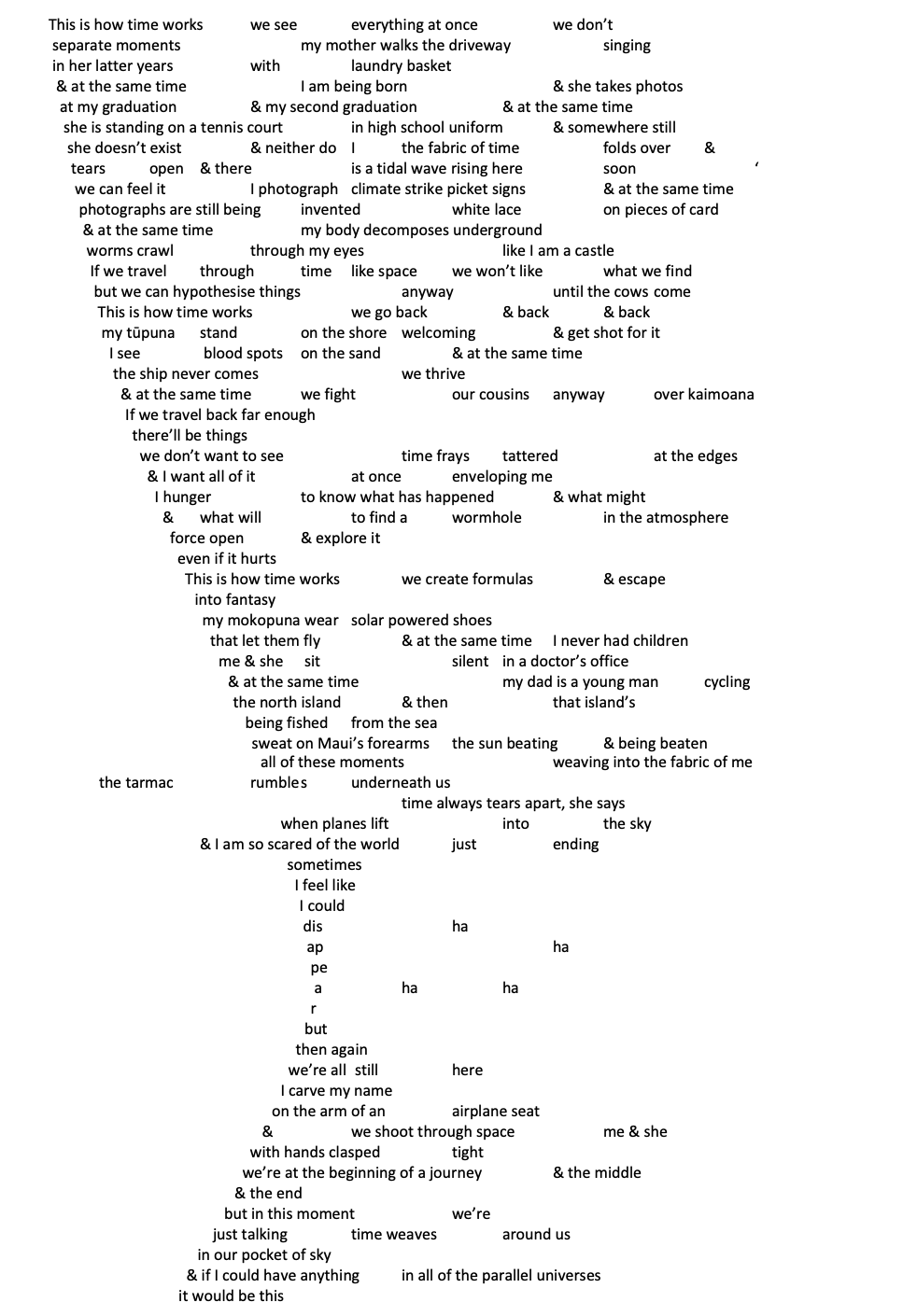


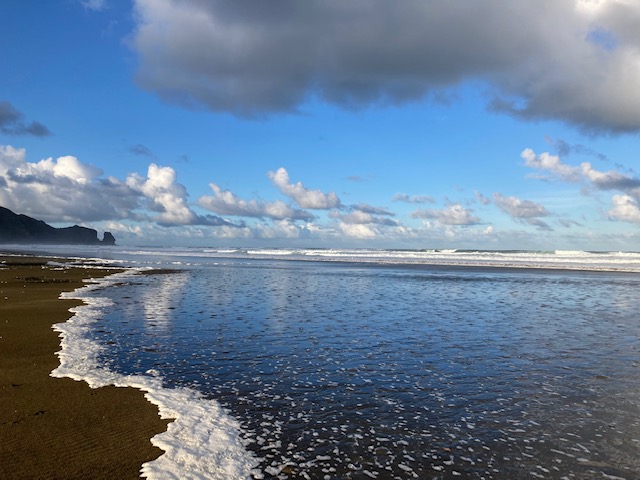
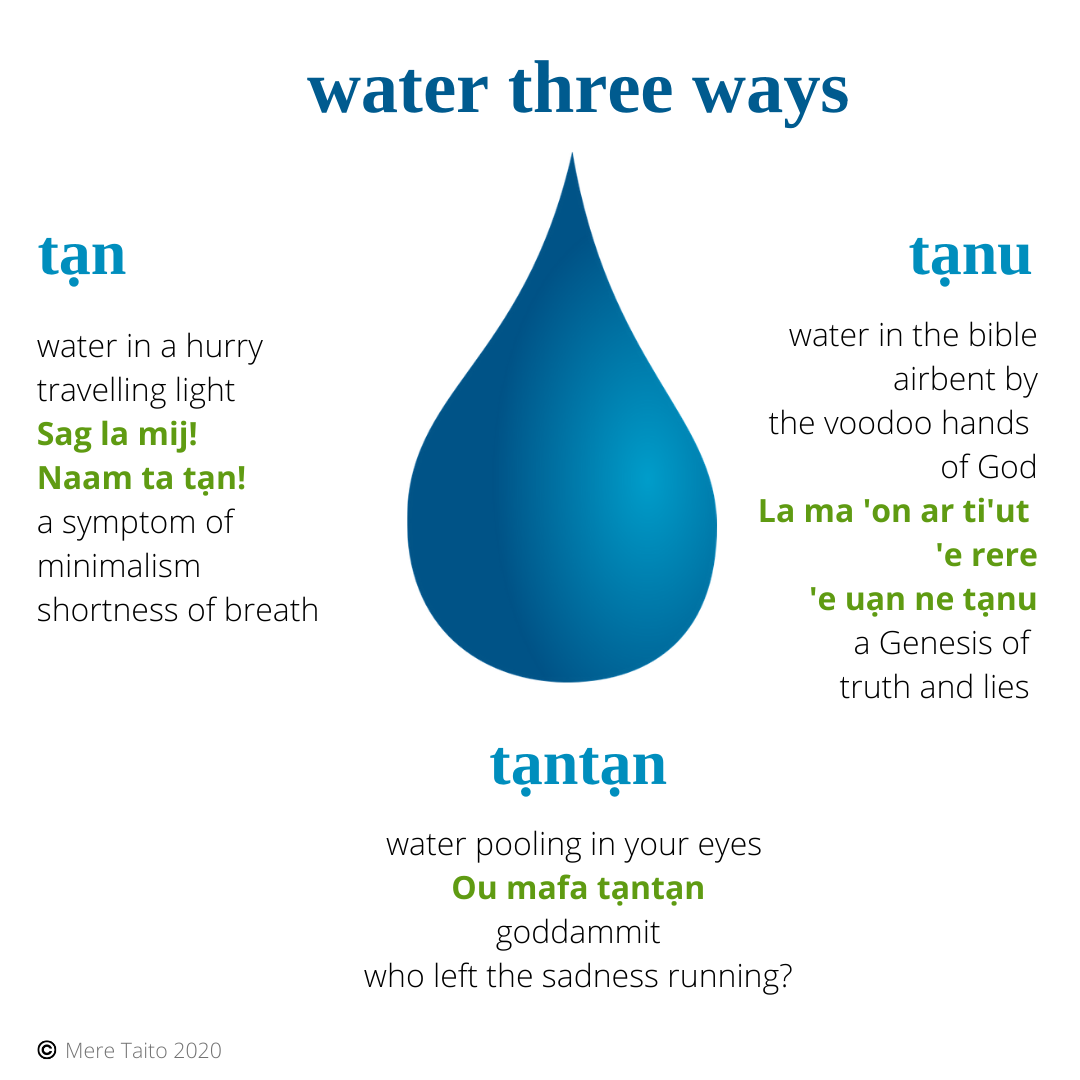
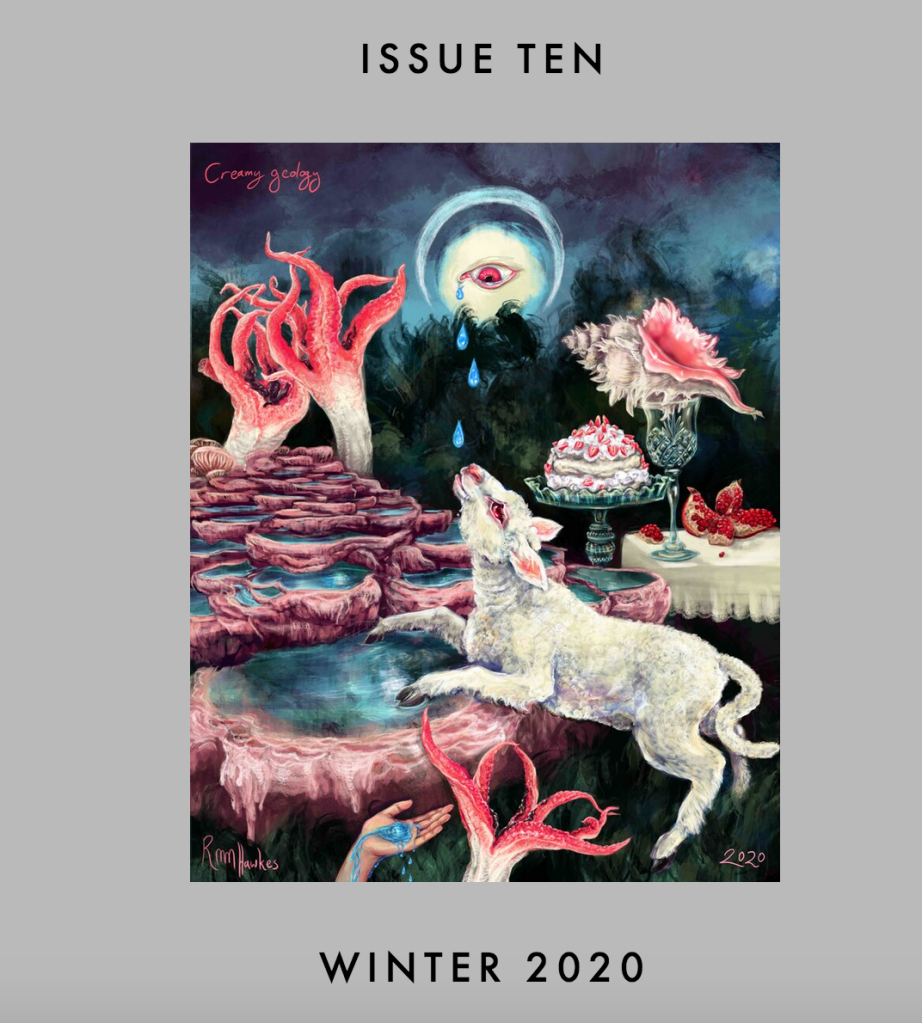


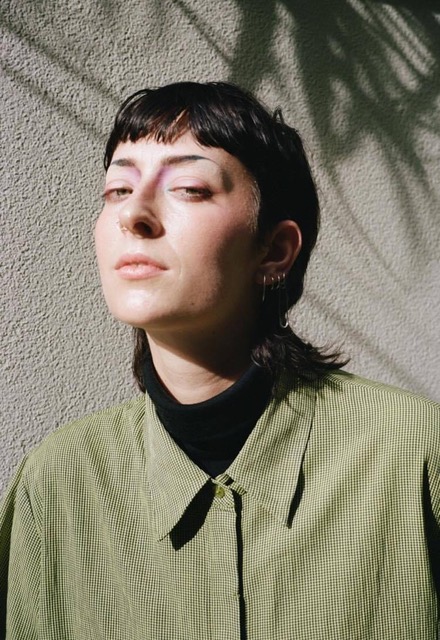
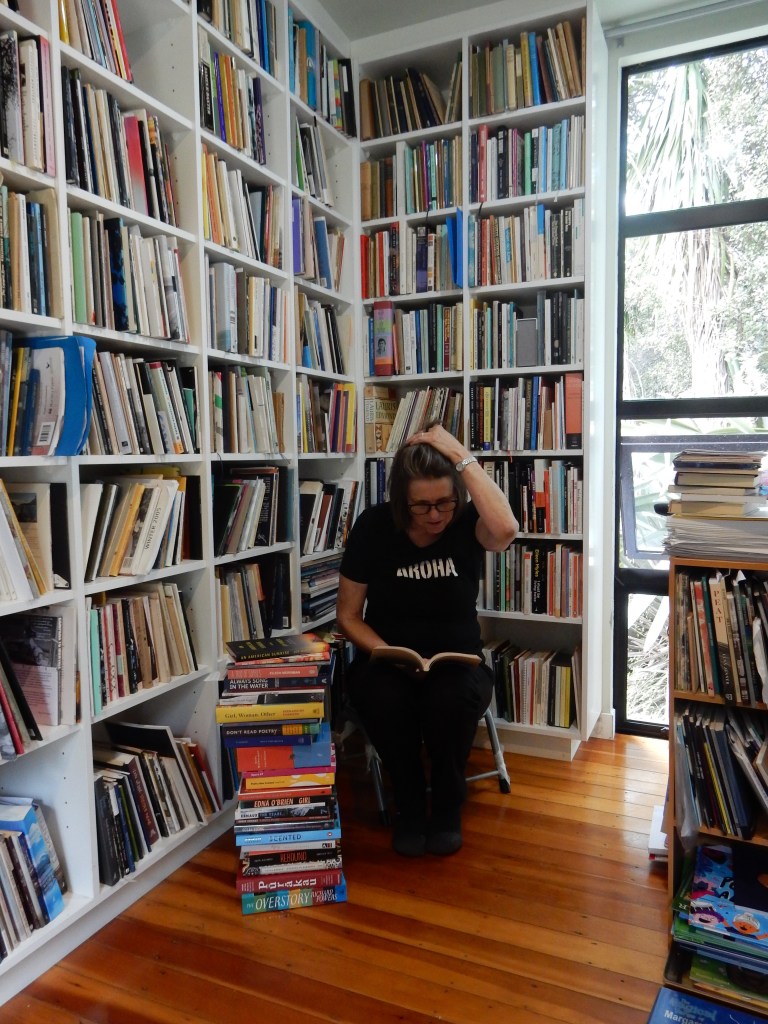
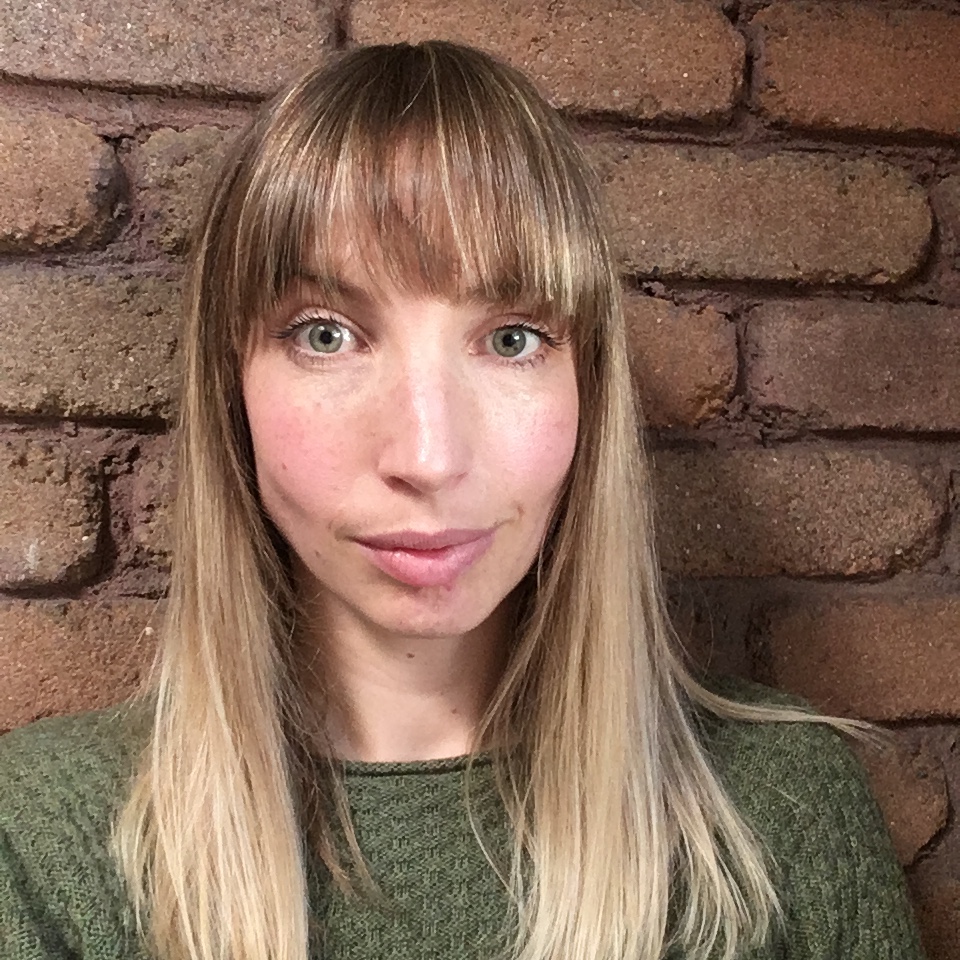
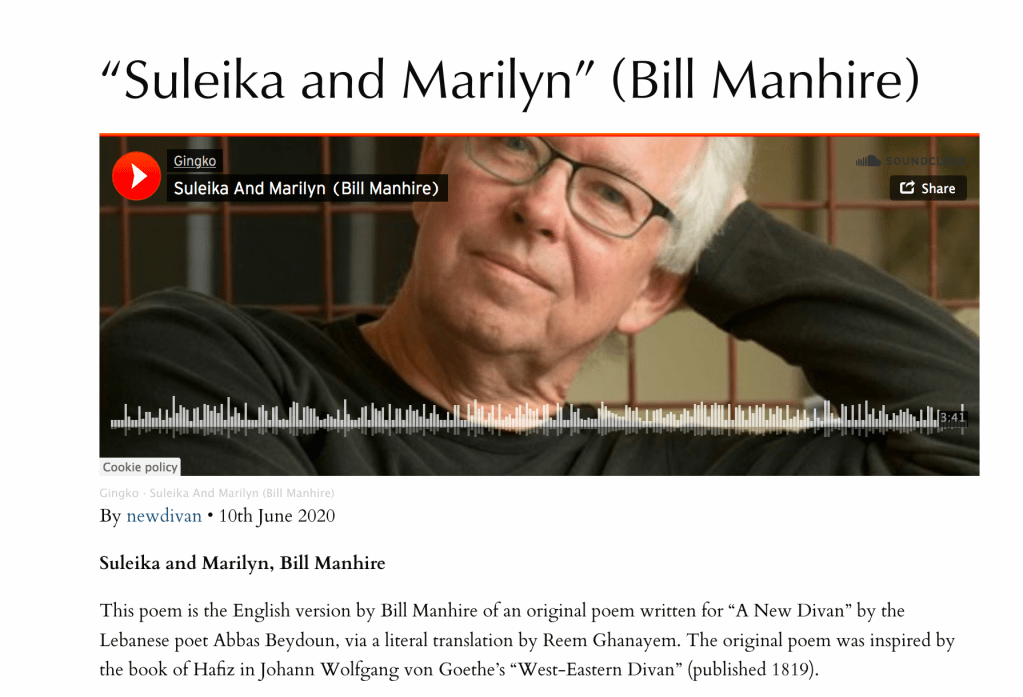
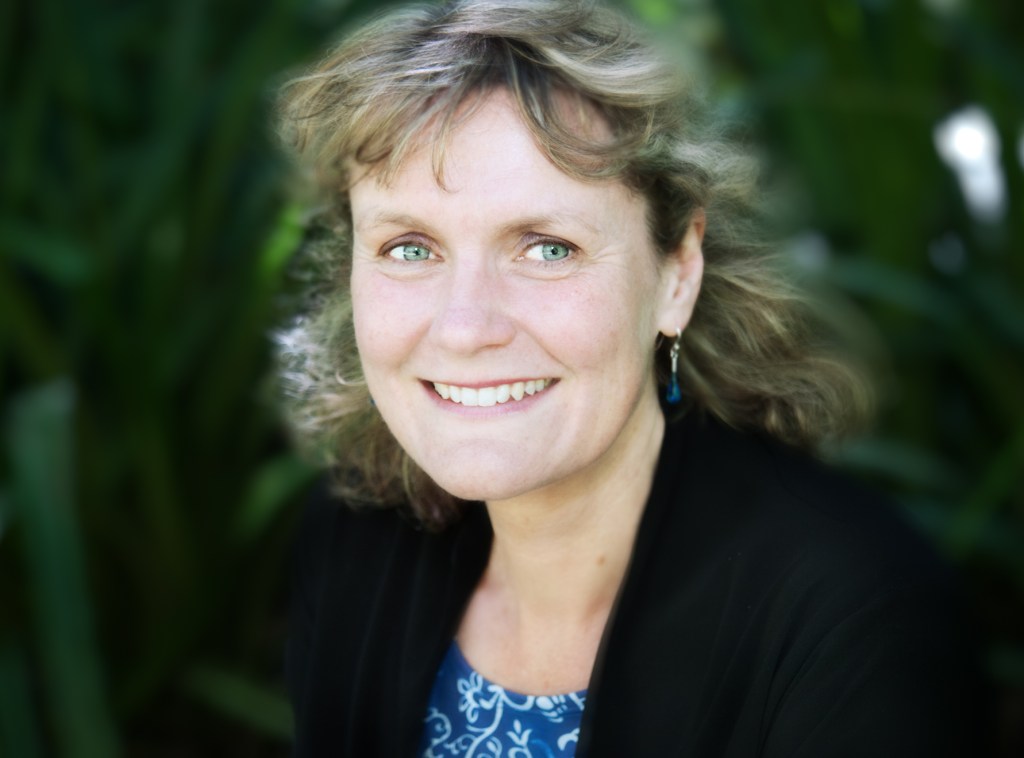
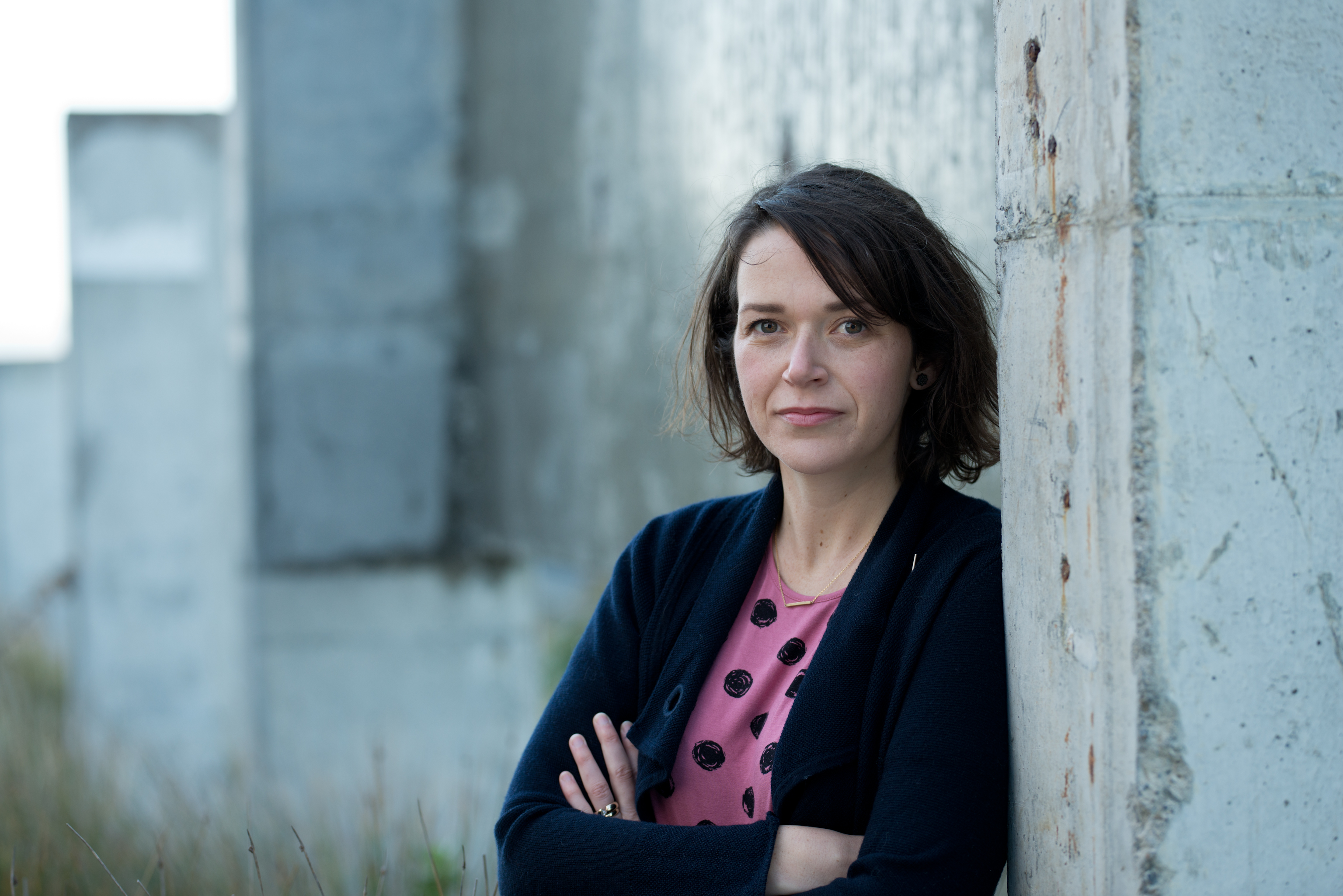
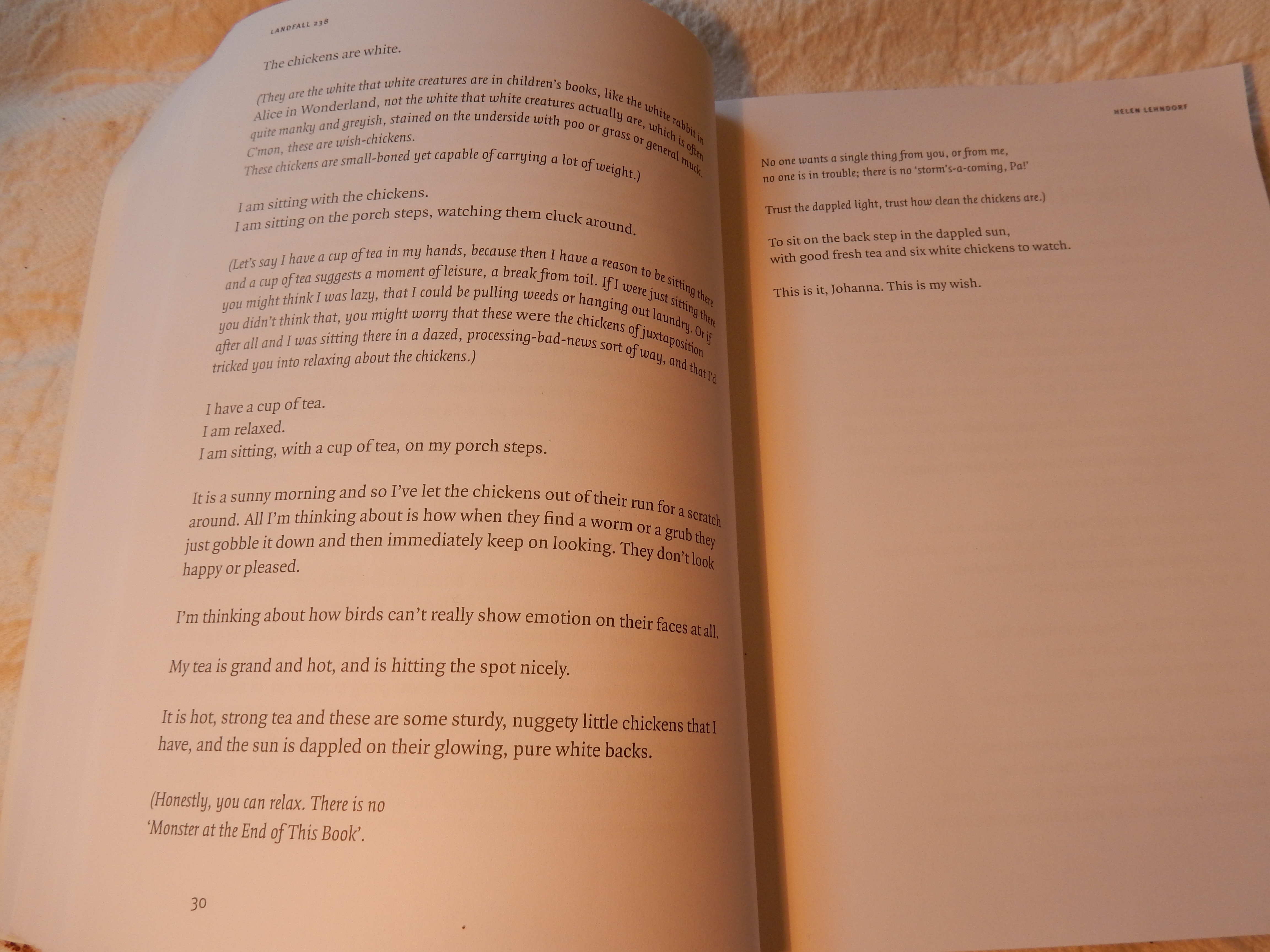
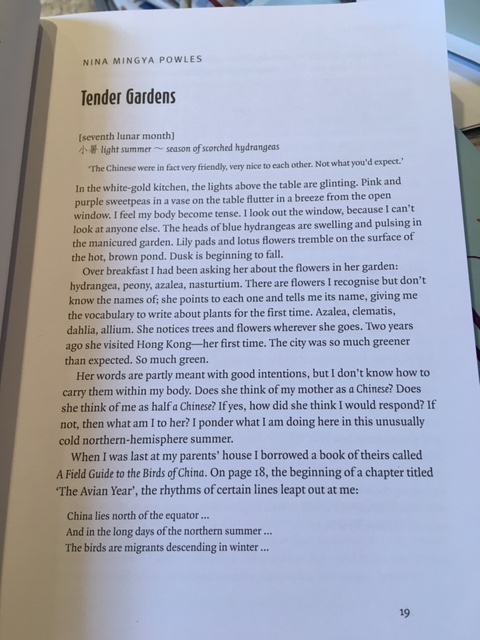
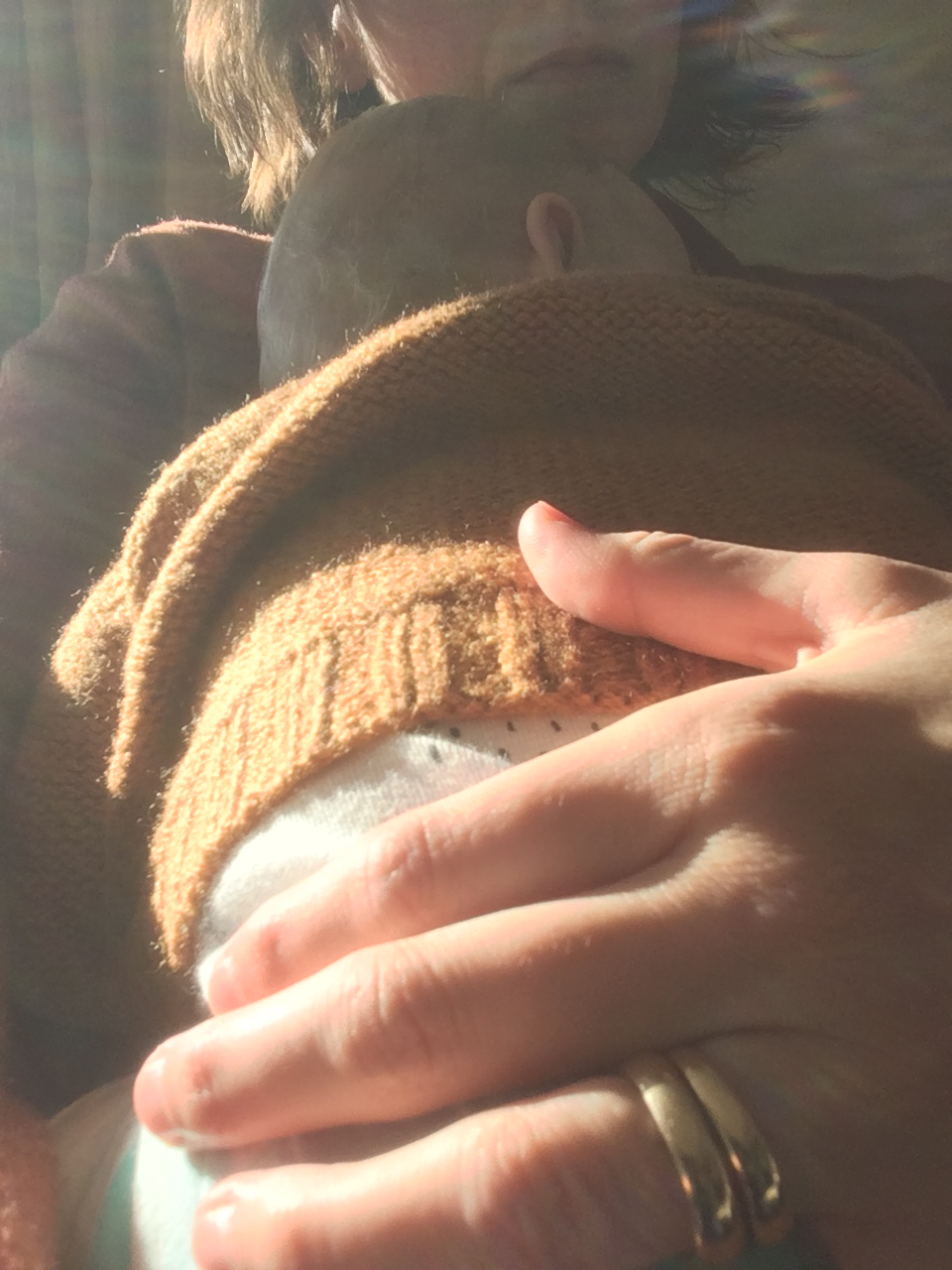
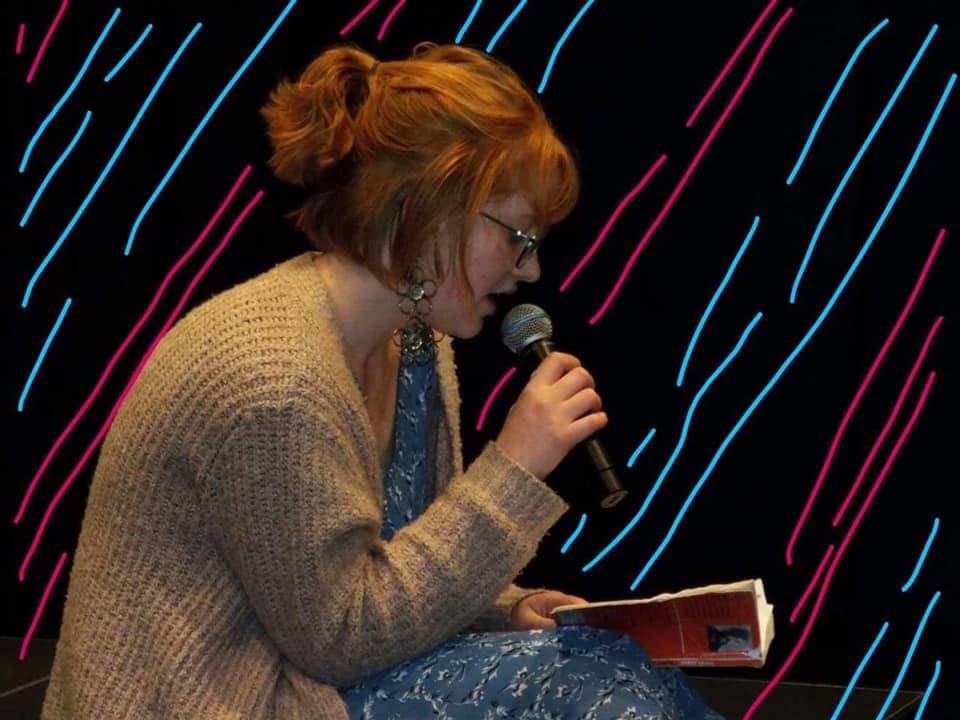
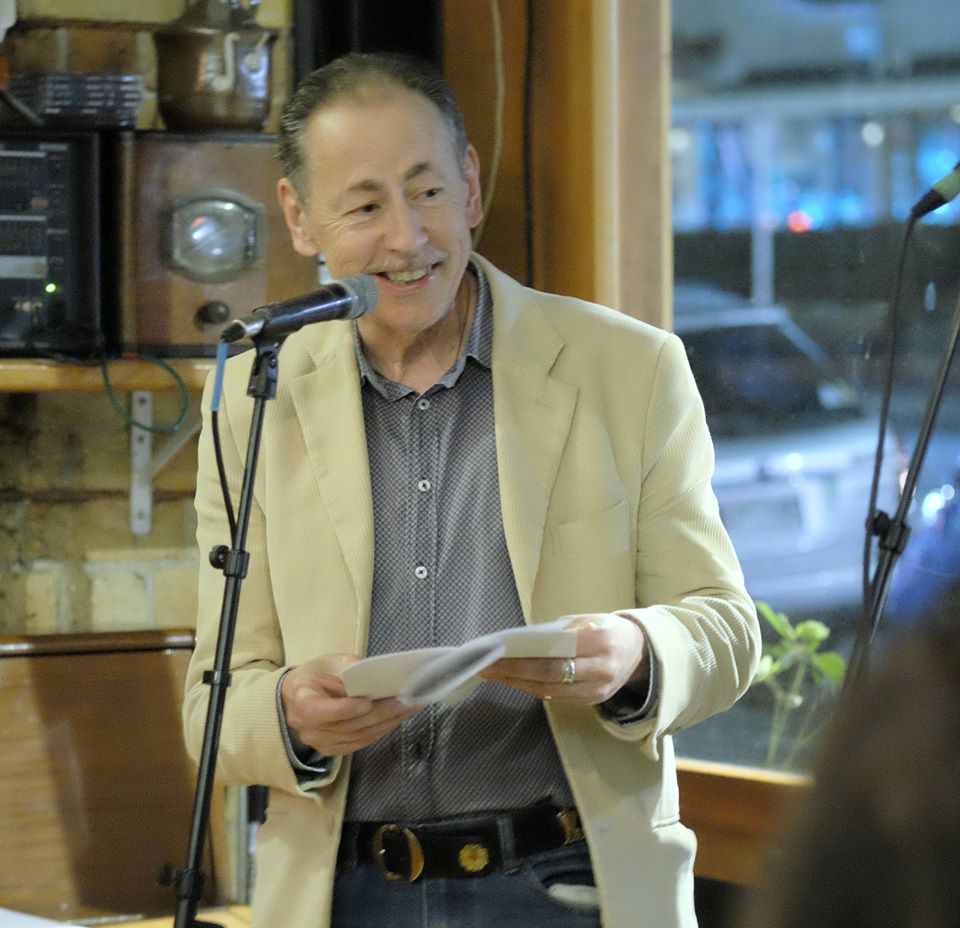
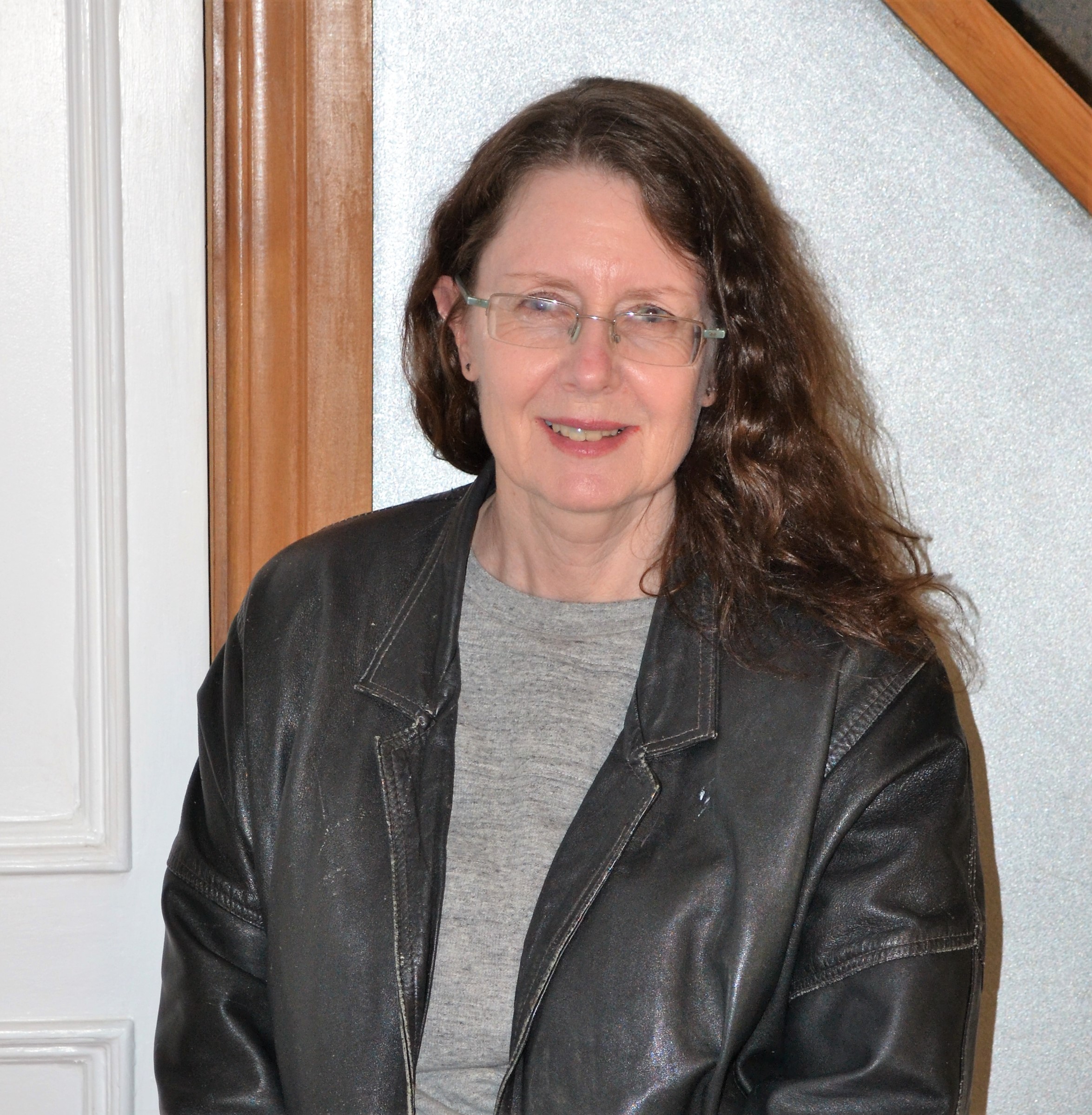
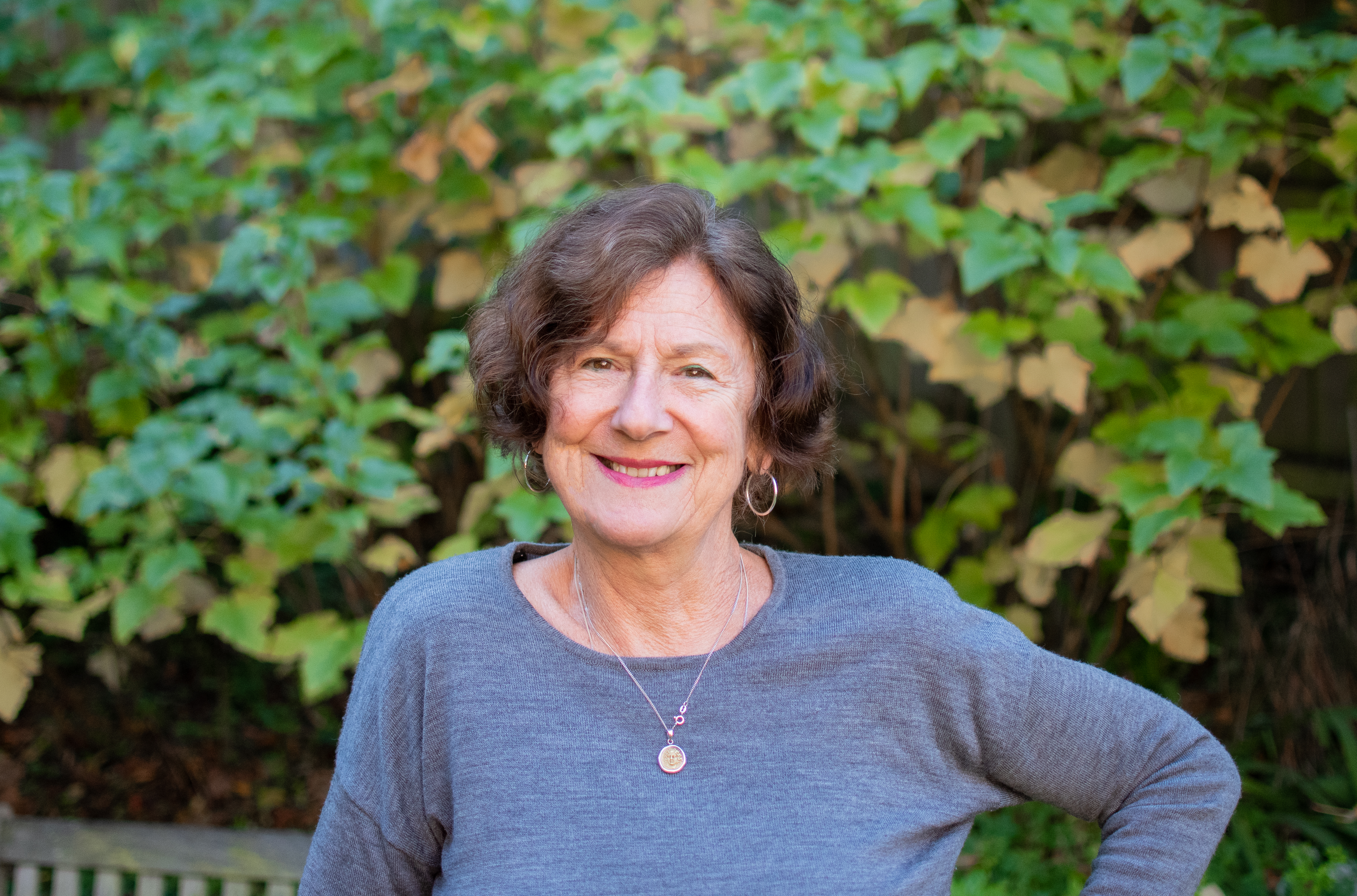
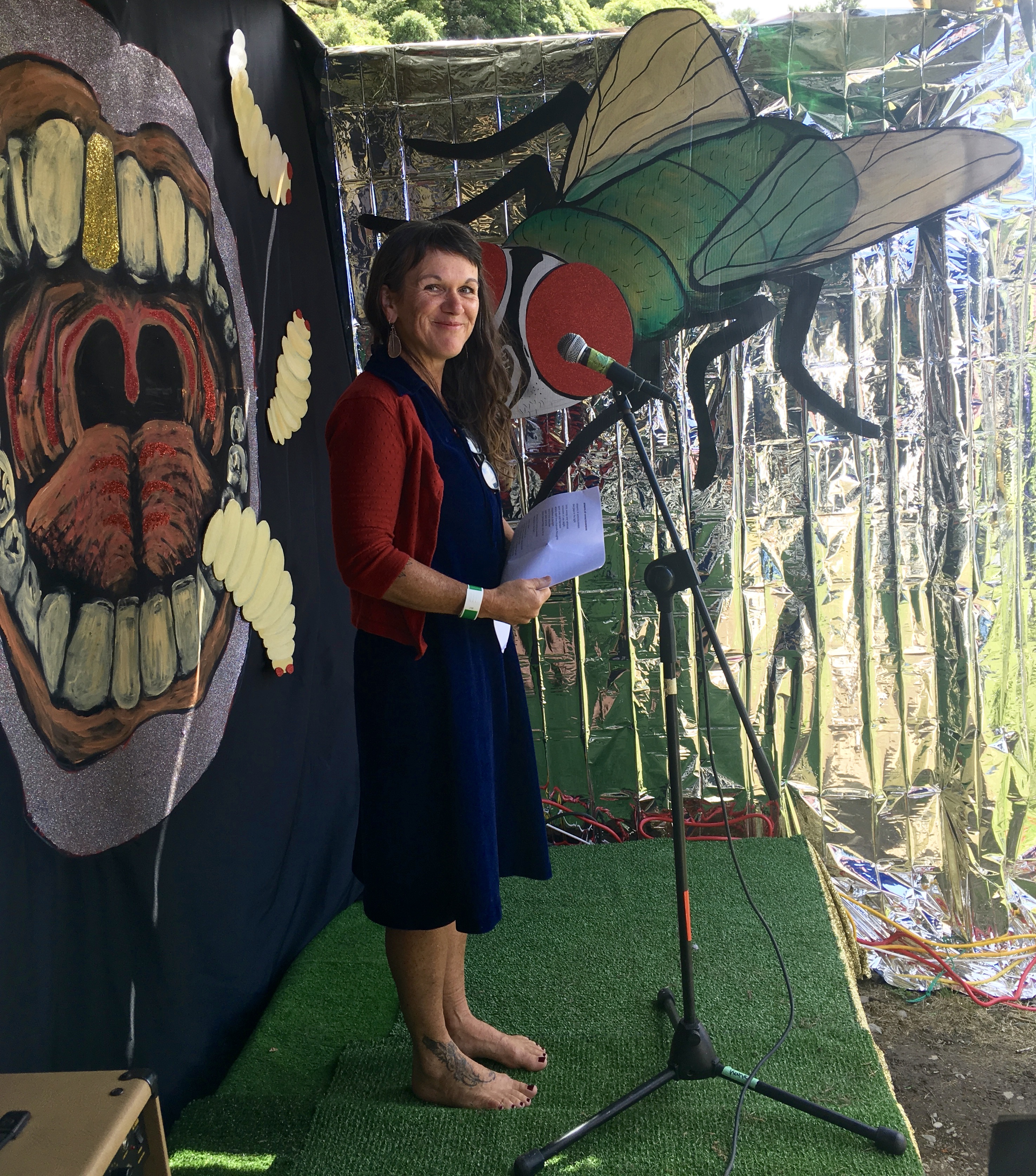


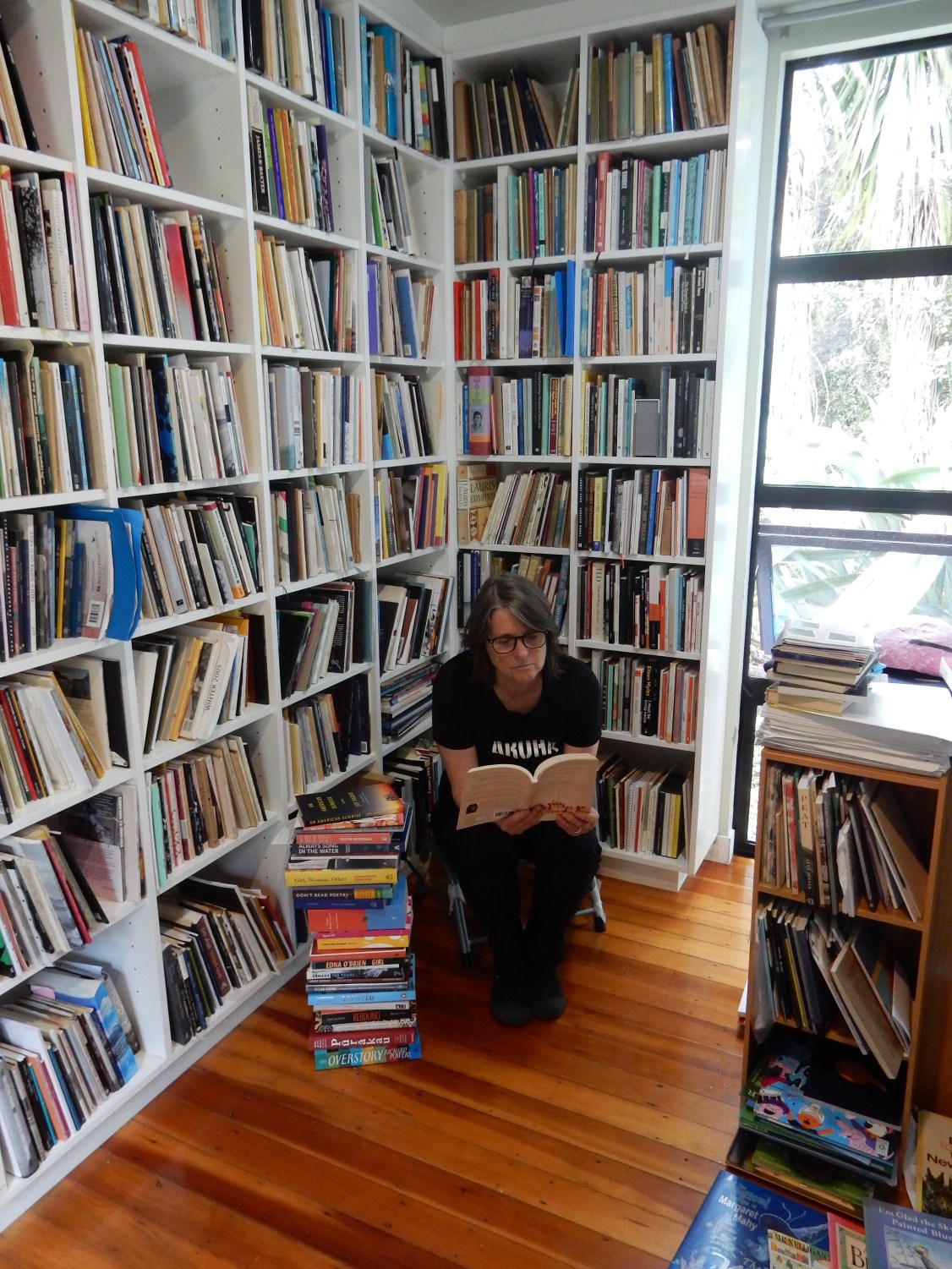
 NZ Poetry Shelf