Poetry Shelf has invited poets to choose a poem from their longlisted collections and to write a few comments on the poem and poetry. Today Erik Kennedy:
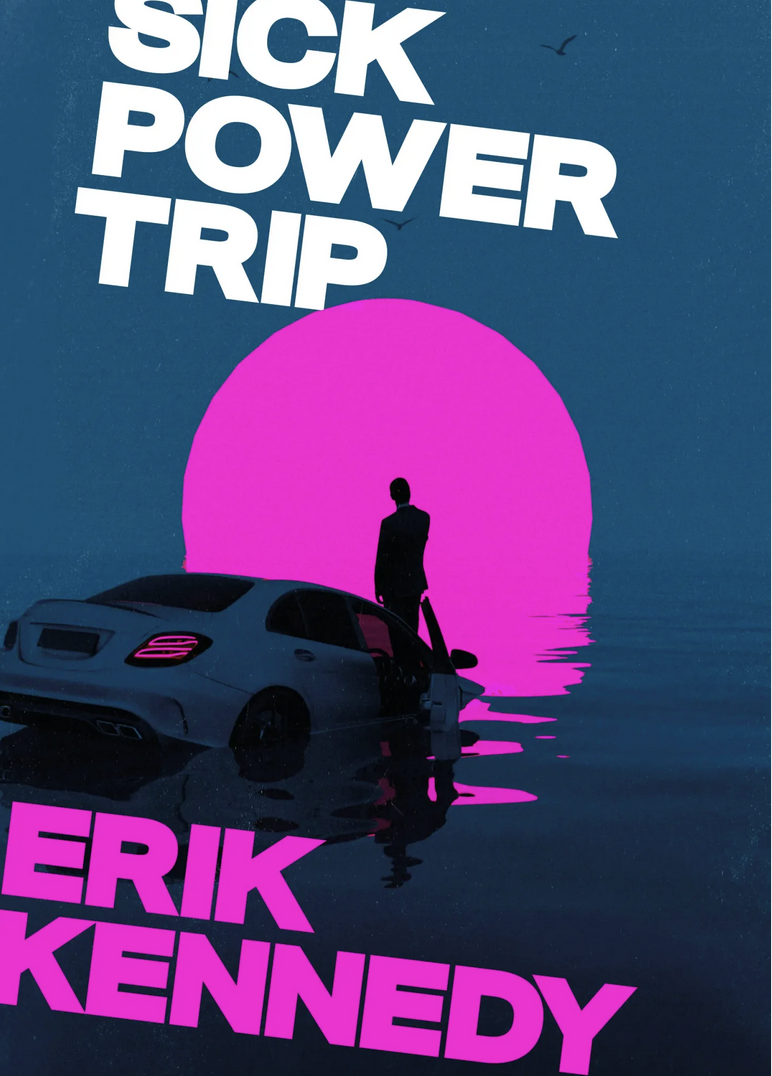
Sick Power Trip, Erik Kennedy Te Herenga Waka University Press, 2025
Animals on Leads
We entered the town and the first thing we saw was a woman taking her ferret for a walk. ‘Nice day for it,’ I said significantly. The ferret was going everywhere at once, an absolute possibility engine
producing the energy of a ten-man brawl in a two-man toilet. And us, should we visit the town’s oldest church with its medieval eagle lectern and greensand voussoirs, or should we ramble to the squinty, stony seafront, walled in
by white gin-palace-style hotels? Let’s let the twitchy ferret be our compass needle, straining against its bonds, the confident quadrupedal scamperer pulling its minder along until she’s going north and south, finding nothing and God.
Erik Kennedy
‘Animals on Leads’ is perhaps not a typical Sick Power Trip poem. It doesn’t lean into the collection’s preoccupations with things like illness and politics and war. It is explicitly not set in Aotearoa. And there is barely any glumness to it; it is almost chipper. But I like it a lot because I like poems that tell true stories, and I wish I had more of them. (The problem is that I don’t lead an interesting enough life to generate reams of fascinating ‘true story poems’.)
The setting of the poem is Eastbourne, East Sussex. There are two solid clues as to the location. ‘The town’s oldest church / with its medieval eagle lectern and greensand voussoirs’ is St Mary the Virgin, which is an absolutely stonking Grade I listed building. I lifted the language in that second line directly from the leaflet about the church’s architecture. And ‘the squinty, stony seafront, walled in // by white gin-palace-style hotels’ is a feature of Eastbourne more than any other South Coast resort town. I rate Eastbourne surprisingly highly. On looks it is at least an 8 out of 10. On culture it is becoming more like Brighton. The sea itself is pretty clean, which is a luxury in twenty-first-century England. And it has a wonderful collection of Eric Ravilious works at the Towner gallery.
And of course a third way we know the poem is not set here is the presence of a pet ferret. A ferret is an animal that certainly doesn’t belong in New Zealand, given that its great passion in life is eating birds and eggs. But in England, being walked on a lead, a ferret is a different proposition altogether. It stands for chaotic exuberance. The lines ‘The ferret / was going everywhere at once, an absolute possibility engine // producing the energy of a ten-man brawl in a two-man toilet’ have probably earned me more compliments for their deranged splendidness than any other lines I have ever written. Something in this image speaks to people.
It might be obvious to say this, but the ferret is not the only animal ‘on a lead’ in the poem. The owner of the ferret, dragged about according to her mad mustelid’s whims, is in my view also an animal on a lead. I mean, we all are, in one way or another. A lead always connects two animals, and the hierarchical relationship between them may not be what you would expect. I think there is some joy in the serendipitous meanderings of creatures without meaningful plans. Quite a lot of joy, in fact. When I said ‘Nice day for it’ to the woman in line 3 of the poem, I really meant it.
Erik Kennedy
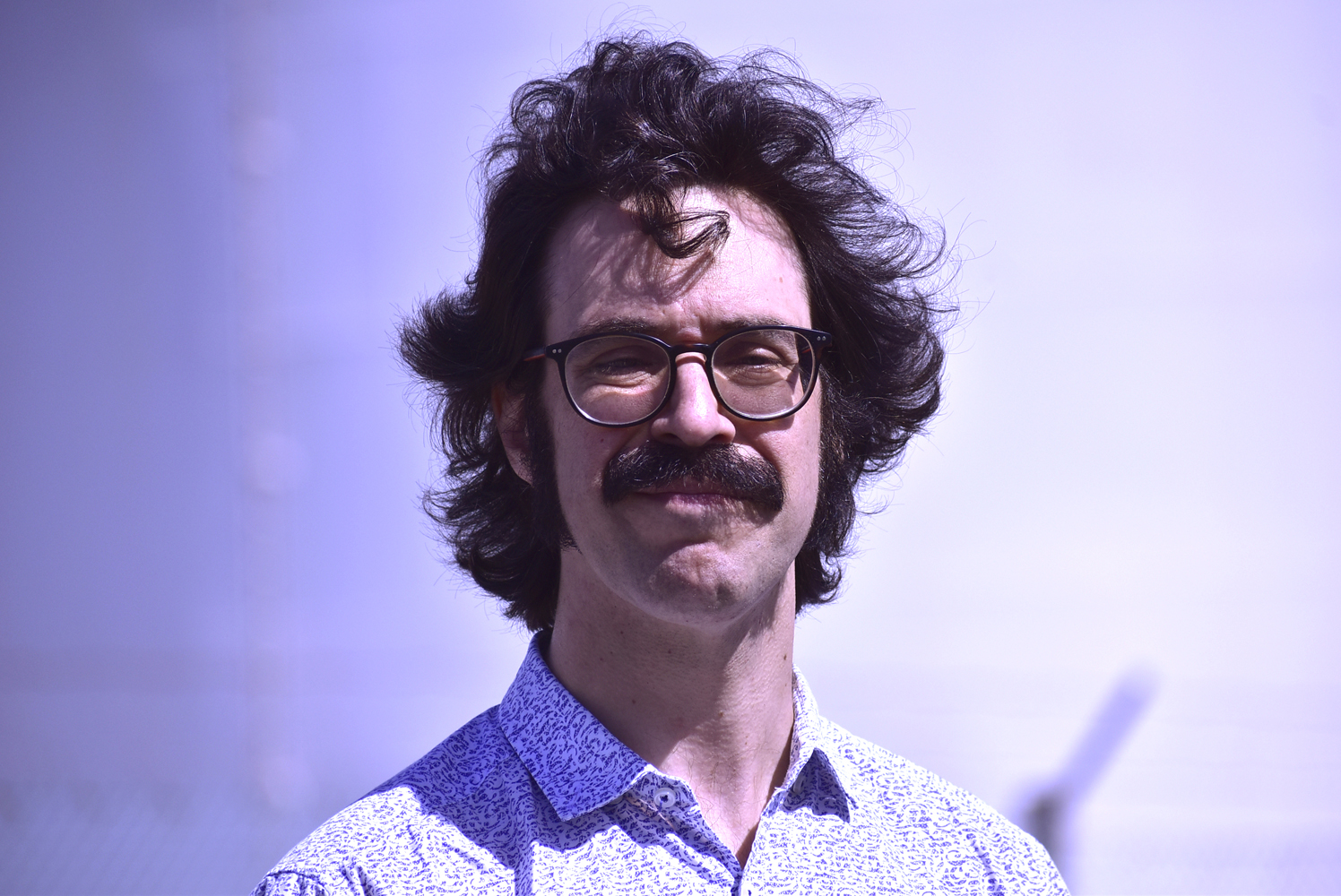
Erik Kennedy (he/him) is the author of the poetry collections Another Beautiful Day Indoors (2022) and There’s No Place Like the Internet in Springtime (2018), both with Te Herenga Waka University Press, and he co-edited No Other Place to Stand, a book of climate change poetry from New Zealand and the Pacific (Auckland University Press, 2022). His poems, stories, and criticism have been published in places like berlin lit, FENCE, The Florida Review, Los Angeles Review of Books, Poetry, Poetry Ireland Review, the TLS, and Western Humanities Review. Originally from New Jersey, he lives in Ōtautahi Christchurch.
From Poetry Shelf review: “Erik’s collection has stuck with me for a number of reasons. I have never read a collection quite like it and I love that. It feels like there are two significant settings. Firstly, an extraordinary band of wit and humour, with unexpected scenarios, shifting angles and points of view. Secondly, the necessary and imperative knottiness of humanity, from exposed self to a wider global reach. Not an either or view, but an incredible shifting light on how to live and how to survive. A poetic prism on the contemporary world that might be sharp, jagged, wise, personal.” Full review here and reading by Erik here
Sick Power Trip, Erik Kennedy Te Herenga Waka University Press, 2025
Mujaddara
I know. I know what’s happening elsewhere. While I mess around with my kitchenware.from
‘Autumn Couplets’
Every time I review a new poetry collection, it feels like I am holding poetry itself to the light, discovering things about how poems might work, what they might deliver, what they might spark in a reader.
Erik Kennedy’s sublime new collection, Sick Power Trip, got me musing on how poetry might stand as a prism. A poem might be held to get a view, then swivelled to get a different view, and then another, and then again. Each time I turn a page in Sick Power Trip, it’s a prismatic surprise. Unexpected. Utterly fertile. I love it.
Erik’s collection has stuck with me for a number of reasons. I have never read a collection quite like it and I love that. It feels like there are two significant settings. Firstly, an extraordinary band of wit and humour, with unexpected scenarios, shifting angles and points of view. Secondly, the necessary and imperative knottiness of humanity, from exposed self to a wider global reach. Not an either or view, but an incredible shifting light on how to live and how to survive. A poetic prism on the contemporary world that might be sharp, jagged, wise, personal.
Even the pronouns, particularly the ‘I’ and the ‘you’ are multi-tendrilled. The voice speaking is prismatic, drawing us into a stretching field of possibilities, vulnerabilities, recognitions. Nothing is set concrete here. I love this.
Let me shift the prism again for you, in a collection that reveals both the positives and negatives of situations, poetry that is mindful of an impulse to decipher, to muse upon sides, to navigate the good and the bad and the inbetween. There’s involvement and not involvement. Darkness and lightness splintering, merging, resisting clear borders.
And always, let me underline this, there is always the ripple of surprise, in turning each page, within the poem itself. I love this. For example, going shopping after illness:
I thought about the things that are abut me.
And I went to look for the aisle where they keep the fully realised lives, doubtless alongside the wax food wraps and the fancy vinegars.
from ‘Shop Floor Layout Algorithm’
Another stunning example, the notion (or experience) of consolation. Wit and wisdom again refracting. Self fragility and collective strength. The poet holds the prism poem along the degree to which one can understand what someone is going through. Here is the final stanza, it resonates so deeply:
That’s why I can picture it but can’t imagine what it feels like to be a phone, delicately poised on the arm of a chair, that gets one message too many and vibrates onto the floor.
from ‘Consolations’ 73
I want to share so many of the poems in the book with you, so you too can experience the glorious settings. I like how a word or idea might pose like a mise en abyme – inside this thought (word) another thought (word), inside this light refracting, another light that surprises startles delights. Take the poem offering an analogy on thinking, poised on the moment in a fable when the thorn pulled from a lion’s paw turns out to be a little lion, and the whole progression and stability and expectation of thought or story is in jeopardy.
And then, most importantly, how to deliver and absorb the poem prism in a time when the world is so damn awry. I keep swearing I won’t mention this in a review, but it’s the monster in my kitchen. As I read, I pick up on how doing is in partnership with thinking, how in one poem protest might be deflating tyres of SVUs and in another poem caring might be hugging trees like a 70s hippy. Again the vital oscillation. I am thinking this. Writing poems might be a form of protesting, sharp insistent necessary protesting (listen to the three poems below), but it is also a form of caring. I love this. I love this so very much.
On multiple occasions, a single poem stalls (shadows?) me with its prismatic effects. Surprise turns alongside shards of wisdom alongside physical detail alongside acute global and local concern, with every effect housed within writing that is sublimely fluent. Read ‘How a Year Ends’ for example. This poem. This magnificent poem. Try this stanza:
A year is a road that ends at the sea in an afterthought of a town, just a few weatherbeaten houses, some indifferent trees, a small picnic area, and a one-eyed cat wandering around proprietorially. You drive here because it is here.
from ‘How a Year Ends’
Maybe reading this collection is akin to a snow globe effect. Every time I hold a poem to the light and dark of my reading, and let the poetry shake and settle in my mind, I feel the sharp sweet delight of surprise and wonder. On the back of the book (always the last thing I read), it states “Kennedy reminds us that some things remain true and vital: self-care, empathy and solidarity”. And that is exactly why I love this collection so very much. Let us put these words in our pockets and carry them over close the coming months: self-care, empathy, solidarity.
I went out into the day with my symptoms. The sun made the swans look like harps. I appreciated the silhouettes of buildings. I scrumped apples from over a fence. My symptoms were still with me but also not with me. I was loving them. I was setting them free.
from ‘Self-Affirming Mantra’
a reading
Erik reads: ‘Bildungsroman’, ‘I Like Rich People, but I Couldn’t Eat a Whole One Myself’ and ‘The $6 Pepper Song’
Erik Kennedy is the author of two previous books of poems, both with Te Herenga Waka University Press: the Ockham-shortlisted There’s No Place Like the Internet in Springtime (2018) and Another Beautiful Day Indoors (2022). Originally from New Jersey, he lives in Ōtautahi Christchurch.
Cover design: Todd Atticus Te Herenga Waka University Press page
Later in the year I want to launch a series of Poetry Shelf Live events around the country because I want to get back out in the world, and work offline as much as I do online. In the meantime, assembling poetry readings on Poetry Shelf gives us all a chance to hear poetry off the page. I will be doing more of this over the coming months!
To celebrate National Poetry Day, I offer you a suite of nine readings, not quite the same as being in a cafe or bookshop and getting a live poetry experience, but hearing poets read is such a heart-nourishing treat.
Poetry Shelf offers heartfelt congratulations to our new National Poet Laureate, Robert Sullivan. Robert is a terrific choice. His debut collection Star Waka (1999) was a groundbreaking arrival and the subsequent collections have added extraordinary threads, light and aroha to our poetry kete. Robert is also an anthologist, editor, festival participant in Aotearoa and overseas, currently President of the New Zealand Poetry Society / Te Rōpū Toikupu o Aotearoa and is Associate Professor in Creative Writing at Massey University Te Kunenga ki Pūrehuroa. He belongs to Ngāpuhi Nui Tonu (Ngāti Hau, and Ngāti Manu), and Kai Tahu (Kāti Huirapa ki Puketeraki), with affiliations to Ngāti Raukawa, and Ngāi Tai, and is also of Irish, Scottish and English descent. He lives in Oāmaru on the coastline known as Te Tai o Āraiteuru.
This news is the poetry cream on our national poetry celebrations.
Happy Poetry Day to poetry readers and writers across Aotearoa!
excerpts from Some Helpful Models of Grief (Compound Press, 2025)
Xiaole Zhan
‘{Untitled}’ and ‘Learning the character for soul (靈) contains the character for rain (雨)’
Jackson McCarthy
Three Southern Songs: ‘Punatapu’ ‘Arrowtown’, ‘Kawarau’. Then ‘Happiness’, ‘Song’
Sophie van Waardenberg
‘Self-Portrait as Adolescent Covered in Flour’, ‘Hymn to the Insomniac in Fool’s Spring’ from No Good (Auckland University Press, 2025)
Nadezhda Macey
‘Uranga’, ‘Syntax’ (from Starling Issue 18), ‘Victoria Park’, ‘Capsicum is a New Zealand Word?’
Josiah Morgan
three untitled poems from ‘act three’, in i’m still growing, Dead Bird Books, 2025
Erik Kennedy
‘Individualistic Societies’, ‘Notes Towards a Theory of Fun’ and ‘We’ve All Been There’ from Sick Power Trip, Te Herenga Waka University Press, 2025
Grace Yee
‘with two black dates for sweetness’ and ‘my father was not a gardener’ from Joss: a History, Giramondo Poetry, 2025
Anne Kennedy
‘The Black Drop: My History of Ugly’, from The Sea Walks into a Wall (AUP, 2021)
The poets
Hana Pera Aoake (Ngāti Mahuta, Ngāti Hinerangi, Tainui/Waikato) is an artist, writer, and sweaty milf from Aotearoa. Hana’s first book, a bathful of kawakawa and hot water, was published with Compound Press in 2020. Their second book, Blame it on the rain was published in 2025 with no more poetry (Australia). They just released a third book, Some helpful models of grief with compound press and are also publishing a fourth book of essays, On how to be with Discipline (Australia) in 2026. Hana is edging through a PhD at Auckland University of Technology.
Xiaole Zhan (詹小乐) is a Chinese-Aotearoa writer and composer based in Naarm. Their work features in Auckland University Press’s New Poets 11. They are a 2025 Creative New Zealand Fellowship recipient, a 2025 Red Room Poetry Varuna Fellowship recipient, the 2024 Kat Muscat Fellow, as well as the winner of the 2023 Kill Your Darlings Non-Fiction Prize. Their name in Chinese means ‘Little Happy’, but can also be read as ‘Little Music’.
Jackson McCarthy is a poet and musician from Auckland currently studying in Wellington. He is of mixed Māori, Lebanese, and Pākehā descent. His work has been published in Ōrongohau | Best New Zealand Poems, Landfall, Starling, The Spinoff, and elsewhere, and he serves as an editor at Symposia. You can read more of his work at https://linktr.ee/jacksonmccarthy.
Sophie van Waardenberg is a writer from Tāmaki Makaurau. Her work can be found in Cordite, Starling, Ōrongohau | Best New Zealand Poems, Takahē and elsewhere. Her debut poetry collection is No Good (AUP, 2025).
Nadezhda Macey (she/her) is a student of English Literature and French at Te Herenga Waka. She is also a poet and artist, you can find more @nadezhda.4rt, and in magazines starting with ‘S’: Starling, Salient, and Symposia.
Josiah Morgan (Kāi Tahu, Ngāti Maniapoto) is an interdisciplinary artist based in Ōtautahi. His latest book i’m still growing is out with Dead Bird Books now in all good bookstores. His other books were all released in the United States, including his hybrid text The Texas Chainsaw Massacre, which was performed as a six-hour-long performance artwork in Auckland Pride 2024. He believes in magic and the power of words to transform. He is currently working on a chapbook called Black Window, a new full-length book, and a theatrical adaptation of Faust in collaboration with Hagley Theatre School.
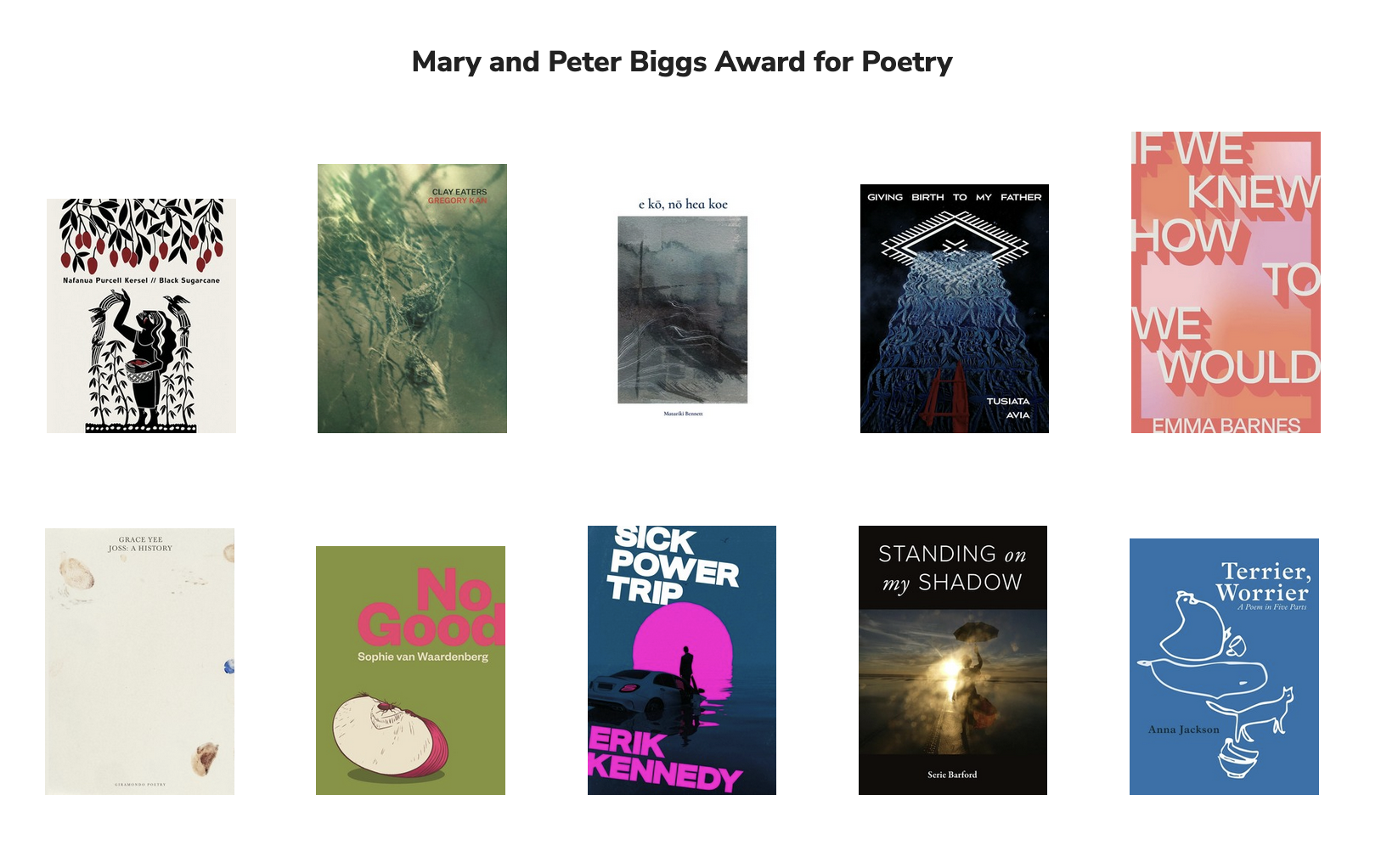
Grace Yee is the author of Chinese Fish (Giramondo), which won the Victorian Prize for Literature in Australia, and the Mary and Peter Biggs Award for Poetry at the Ockham New Zealand Book Awards. Chinese Fish will be published by Akoya in the UK in 2026. Her second book Joss: A History (also Giramondo) was released in June 2025. She lives in Melbourne, on Wurundjeri Land.
Anne Kennedy is a Tāmaki Makaurau poet, novelist and teacher. Awards include the Prime Minister’s Award for Poetry, the NZ Post Book Award for Poetry. Recent books are The Sea Walks into a Wall, The Ice Shelf and, as editor, Remember Me: Poems to Learn by Heart from Aotearoa New Zealand. Anne is the current editor of AUP’s New Poets series.
The Venetian Blind Poems, Paula Green, The Cuba Press, 2025
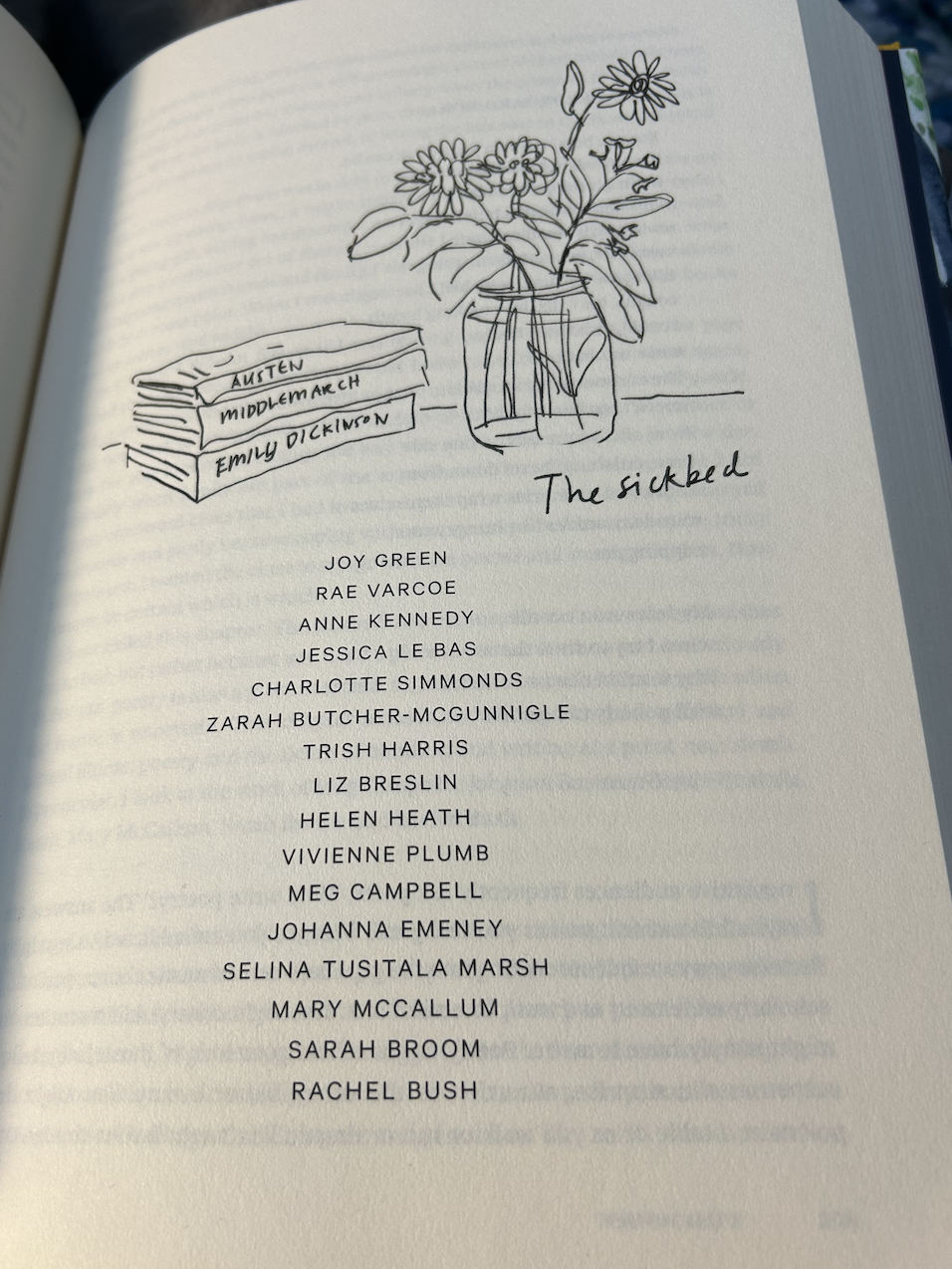
When I wrote Wild Honey: Reading New Zealand Women’s Poetry (MUP, 2019), I built a house, dividing the book into rooms, and then moving through open doors and windows to the wider world. The book was neither a formal history nor a theoretical overview of New Zealand’s women’s poetry but a way of collecting, building recouping valuing the poetic voices of women in Aotearoa. As I moved through the rooms in the house the themes accumulated: politics, poetics, love, the domestic, self, relations, illness, death, location, the maternal, home, voice.
The book came out in 2019, not that long ago, and I was interested to read ‘The sickbed’ chapter again. I began the chapter by saying inquisitive audiences often ask, ‘Why write poetry?’. I still claim the answers are myriad: it makes us feel good, we are addicted to wordplay, we can squeeze writing a poem in between domestic chores, parenting, scholarly endeavour, work commitments. We might crave public attention, awards, good reviews. We might simply have to write. Our poetry might reflect a love of music, storytelling, suspense, wit, surprise, attraction to the unsayable or beauty. We might write poems at the kitchen table, in our head as we walk, run, dream or dillydally. We might favour condensation and pocket size writing or expansion and long sequences. We might write from a sick bed.
My collection Slipstream (AUP, 2010) came out of my breast cancer experience. I refer to it in Wild Honey: ‘poetry was an energy boost, a way to enhance my sense of wellbeing’. As I wrote, at least a year after the experience, I did not feel I was writing poems – nothing on the page earned the label ‘poem’ in my view — but I was conscious that the white space, the juxtapositions, the assembled lists and the melody were reaching for the poetic. I did not want to summon the dark, middle of the night slumps, but rather to show illness can change the way you see the day as well as live the day.
The Venetian Blind Poems is a little different in that I wrote it in the moment, in hospital and then back home on the recovery road. But I recognised similar motivations to write.
My new collection has been out in the world for a fortnight now, and it feels so very special. To be in Motutapu Ward and the Day Stay Ward this week, signing copies for nurses, hearing them read fragments aloud, reminded me that poetry is an incredible way of connecting. I am still in a thicket of appointments as I fine tune the road ahead, but this fortnight feels like like my time in hospital, when so many poets sent me a poem in a card. The emails you have sent me these past two weeks, so thoughtful and caring, have shone fresh light on how and why poetry is a gift. On why we write and sometimes publish poetry. I will treasure your emails for a long time (and reply soon)!
More than anything, The Venetian Blind Poems is a way of saying thank you to the doctors and nurses who have given, and are giving so much. I offer an enormous bouquet of thanks to Mary McCallum and Paul Stewart at The Cuba Press, for the beautiful book, and for inviting such terrific responses to post on social media by poets who have read it.
Now its back to normal transmission! I have new ideas for Poetry Shelf bubbling like my sour dough starter, manuscripts to finish, a treasury of books to review, emails to answer, a few more appointments, and most excitingly, I am ready to get my secret seedling idea off the ground: Poetry Shelf Goes Live. Yes! Soon I will be back in the world organising live poetry events around the country.
A cluster of illness poems
The waiting game
begins with someone calling your name before you wait to have your blood taken in a windowless room. Wait for the stultifying thoughts of red and disease to pass. Wait for the phone call, for relief to wash over you. And while you are waiting I recommend you dance like the memory of sweat easing down his throat; roll open like the drum beat of your limbs in sync; tear through your wildest nights, still lit in hopeful neon; cry like the Christmas you lost your last grandparent; and sing like the forgotten violin slowly coming undone in your muscle memory. If you do not allow yourself to sleep in peace with your worries, you will find yourself awake at the bottom of a very deep, very secret lake.
Chris Tse Turbine, 2014
A Final Warning
I walked past the stars the silence of grandfathers
I was going somewhere but where
I went left at first then right then way off course then back to somewhere
near the middle did this mean I was ready to die
well they’ve been testing me for everything I think I’ve got the lot
Bill Manhire from Honk Honk, The Anchorstone Press, 2022
The Night Shift
I wake on the ward, afloat on ketamine, fentanyl, see sky-blue morphine swifts roost nearby in pleated paper thimbles
and some uneasy instinct tugs my gaze to a scuff mark on the lino floor. Coal-dark, it smolders. I stall.
A voice reassures me it’s just a graze left by the wheel of some routine machine: IV, PCA line, heart monitor screen.
Yet as I ease deep-cut core and leaden legs over the distant side of the high bed I can’t shake this need to stare
not quite in fear: not quite.
For last night, creatures came. They arrived en masse, nodded, swayed, pressed into each dimmed cubicle,
their copper eyes bright-candled, lips pouched over strong, proud teeth, their heads bowed in silent inspection;
marmalade lions with oxen feet, crested birds with antlers, candy-pink teats, all crowded, crowded round each bed
as the window in time was fast contracting, and they wanted us to see before our minds sealed tough with the fibers of logic, denial.
Their fur packed tight as green florets on catkins. Their horns, colossal black spikes, gleamed like grand pianos. Such mass and strength in their embedded weaponry,
yet still, they withheld their crush and maim.
The breath and bunt of their herded skulls said we are the unbroken in you, don’t be afraid, and I saw through the seep of dawn
that soon like guardians they will gather each one of us, our failing forms absorbed into their warm, strong-walled veins
until we too watch each figure on the bed as something invisible shifts in the intricate balance of matter and spirit.
So it is awe, not dread, that asks me to leave the ground undisturbed where they gathered, to skirt carefully the sign one left like a scorched hoof print as if they had stood in fire to show they bear time’s pyre for us,
our wild sentries, our wild sentries.
Emma Neale from Liar, Liar, Lick, Spit, Otago University Press, 2024
(A lifetime of sentences)
Soon, I could leave my body without prompts. The artist’s concept of the birth of a star, or I broke my name until the fibres separated and lost their coats. My thirst for windows kept me indoors. My gaze wandered across the suburbs of childhood, faces stammering with shyness, bodies masquerading as furniture. Initial mass and luminosity determine duration, but my sensibility comes to require an object. Here, the word “system” implies a level of certainty that is unwarranted. Some of those memories were not written by me, so they are memos, at home on my desk, but still authoritative. Now, instead of a pupil, there’s a screensaver. It was late. The room was empty. A lifetime of sentences which at first glance seem superfluous, but whose value is later understood. One thing leads to a mother. Soon enough, a flock of children came running and tapped on the glass. When I reached the bottom of the stares, I looked up.
Zarah Butcher-McGunnigle selected by Kiri Pianaha Wong and was published a fine line and also Best NZ Poems 2011
it is a wedding cavalcade in which I take your day of birth and marry it with ten pink tulips to mine look, behind us on the road sadness and unutterable joy leaping over the rocks how we were those people in the crowd unmindful of everything except stepping along together under our parasols what’s wrong with that? see, the road is still there still ahead and behind losing its mind and leaping over the rocks with its train of clowns who are careless careless careless and will never behave any differently believing themselves arm in arm with all they need to sustain life on a distant planet choogaloo, this is all you need tulips and a parasol to keep off the bigger bits of debris falling out of the sky don’t be sad there is every chance we are just now resident in two minds regarding each other tenderly, quizzically, uproariously as a wedding cavalcade
Michele Leggot from Milk & Honey, Auckland University Press, 2005
What’s the time, Mr Wolff-Parkinson-White?
Press palm against skin feel its breathless sprinting
count 230 beats in a minute count six sibling arguments count four gecko squawks
gulp two glasses of water phone the absent dad three times return to the couch
count 194 beats—and whoah with the flutter of a moth it slows down to a jog
steady rhythm of 75
Fire heart Sea heart Earth heart
Calm waters as a child now more fire than earth chased by a white wolf
Want to feed my child ruby corn raspberries red meat cherry tomatoes pomegranate bursts sugar and acid enough to woo a rebel
The heart heals itself between beats, reassures Elizabeth Smither
Mikaela Nyman
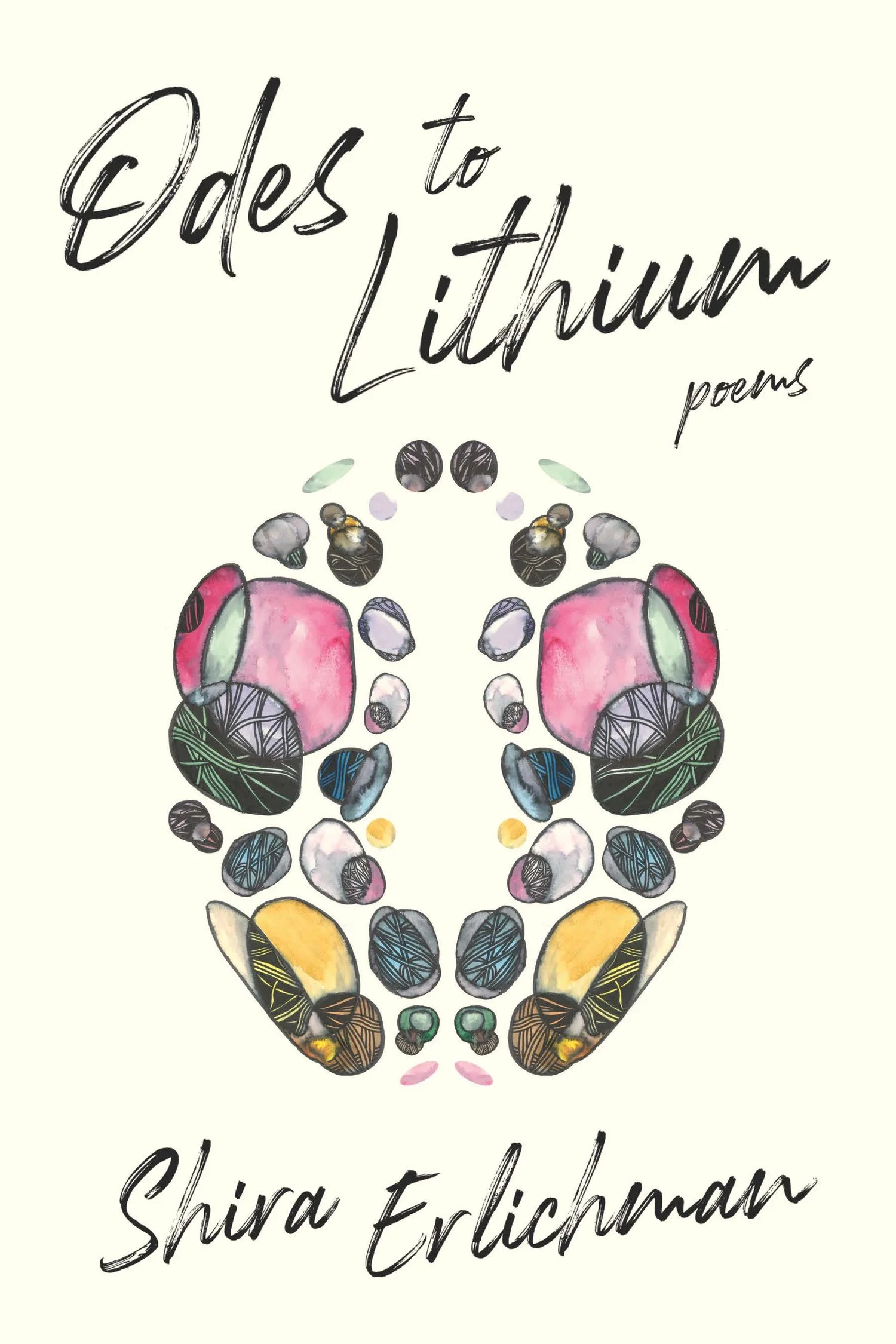
Amy Marguerite picked a poem from Shira Erlichman’s Odes to Lithium, a book I now have on order! But sadly I didn’t manage to get permission to post the poem but you can listen to Shira read it here.
Self-Affirming Mantra
I was searching my symptoms online. Disturbed sleep led to fatigue which led to post-viral condition and also to alcohol abuse and liver disease and unthinkable cancers which all led to conclusions about society and how one operates in it, how someone can be rational and maladaptive at the same time, how resilience is just a word in a PowerPoint, how years of work go into the manufacture of one unit of anxiety (a person), and how each unit, although similar to others in many ways, is unique, the product of a freakish and golden permutation of inputs, which led me back to my usual searches for wars and politicians and racing drivers and recipes and animals and islands and colours.
I went out into the day with my symptoms. The sun made the swans look like harps. I appreciated the silhouettes of buildings. I scrumped apples from over a fence. My symptoms were still with me but also not with me. I was loving them. I was setting them free.
Erik Kennedy from Poto | Short (Te Herenga Waka University Press, 2025)
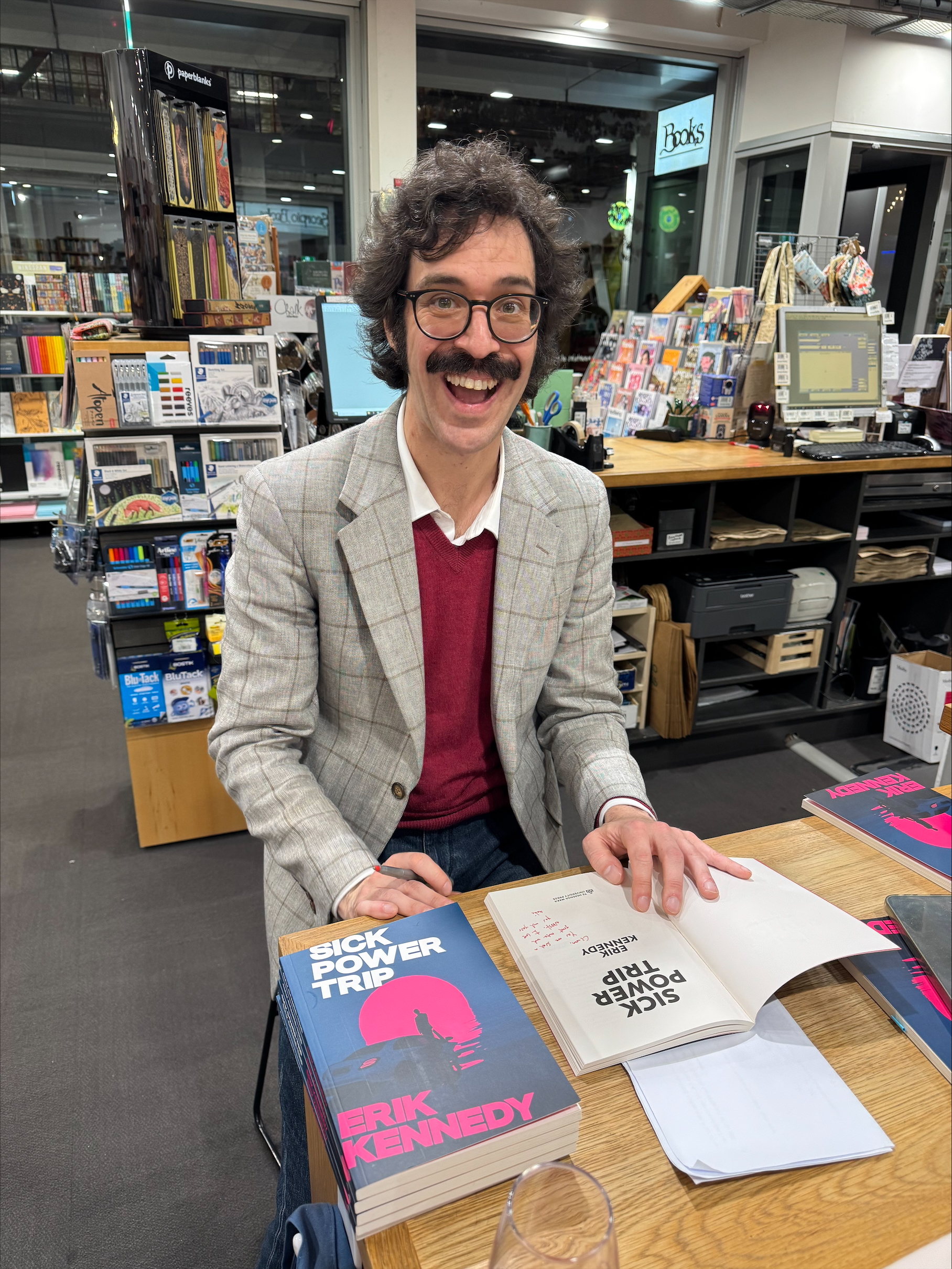
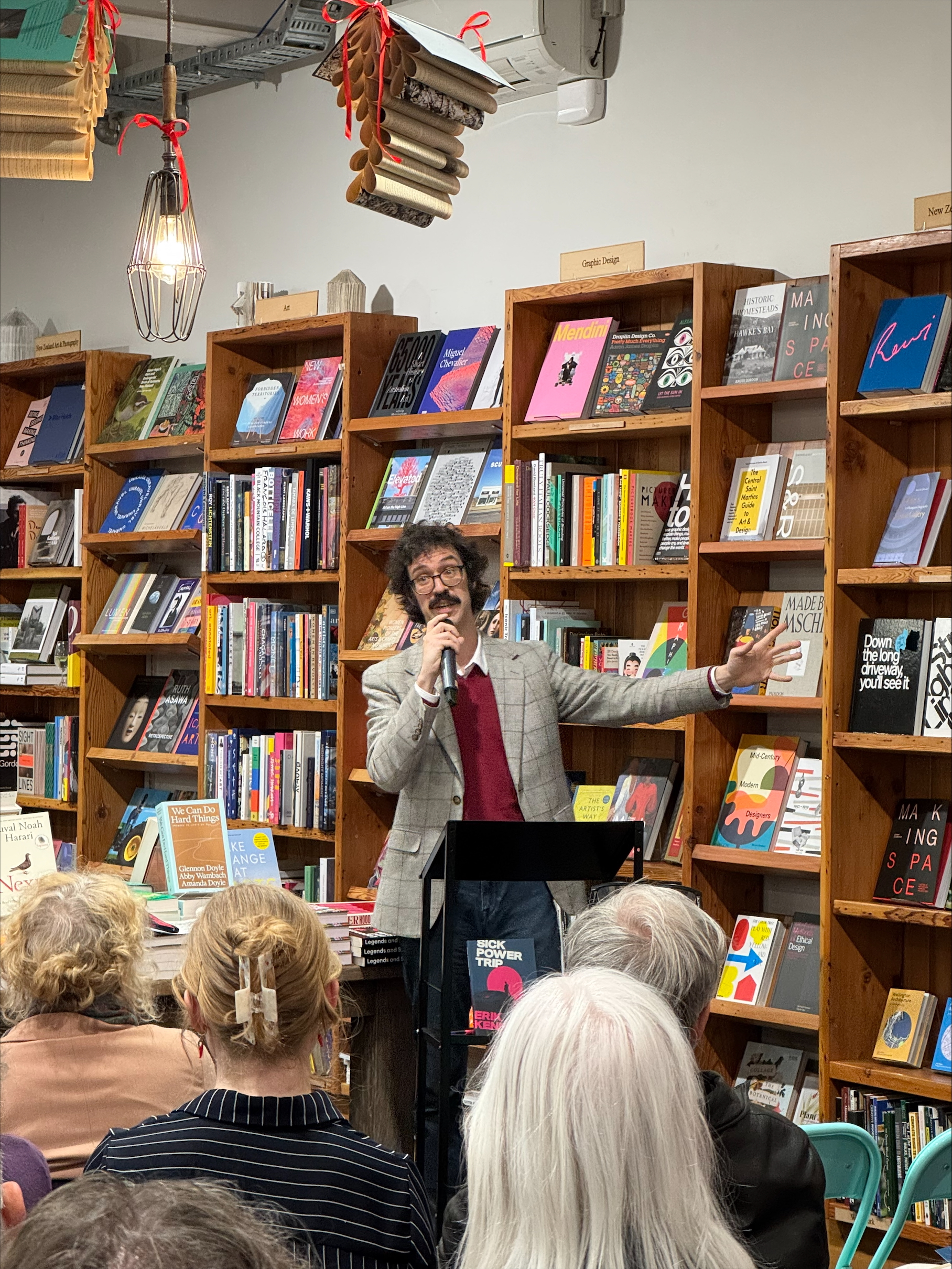
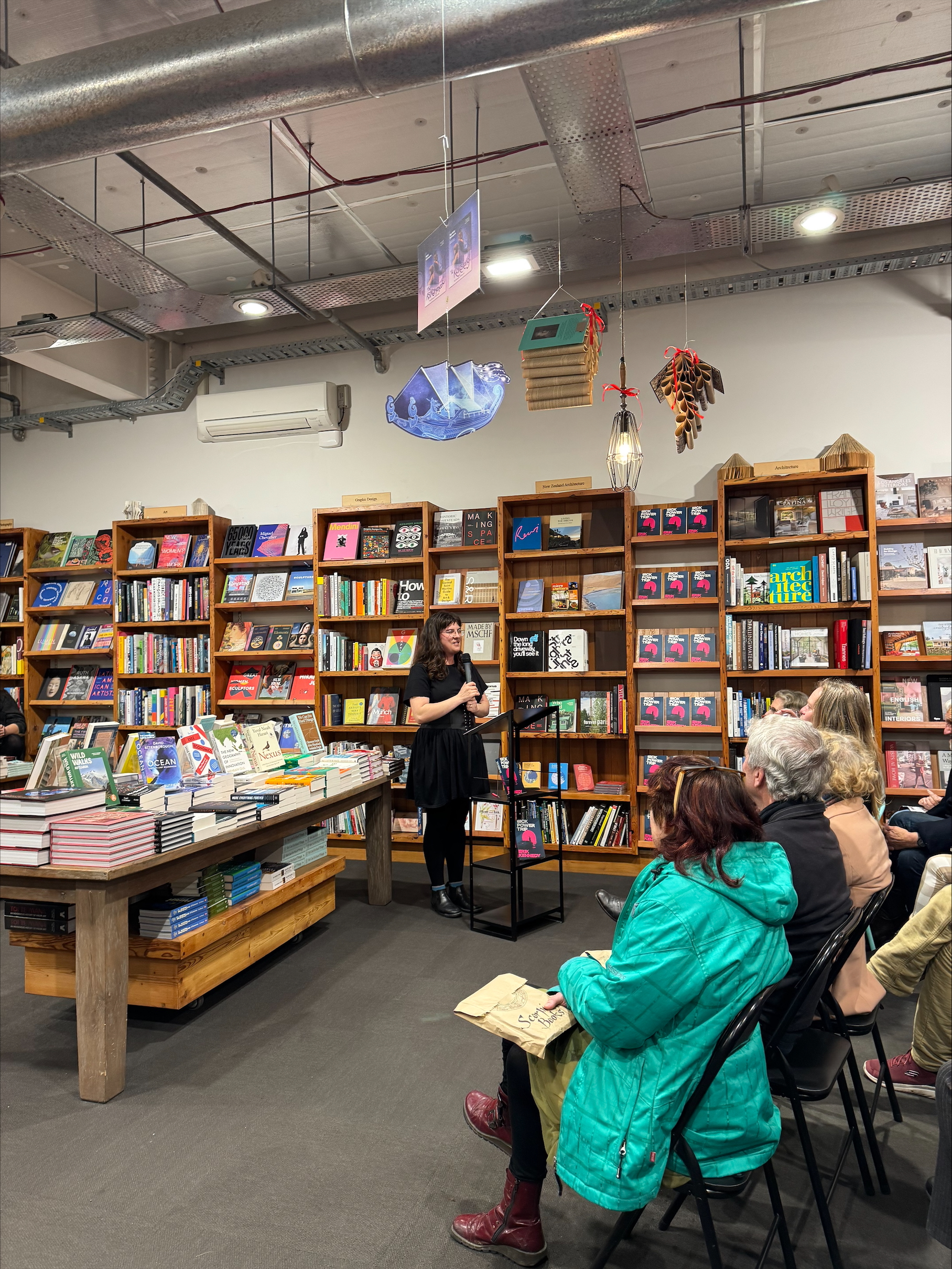
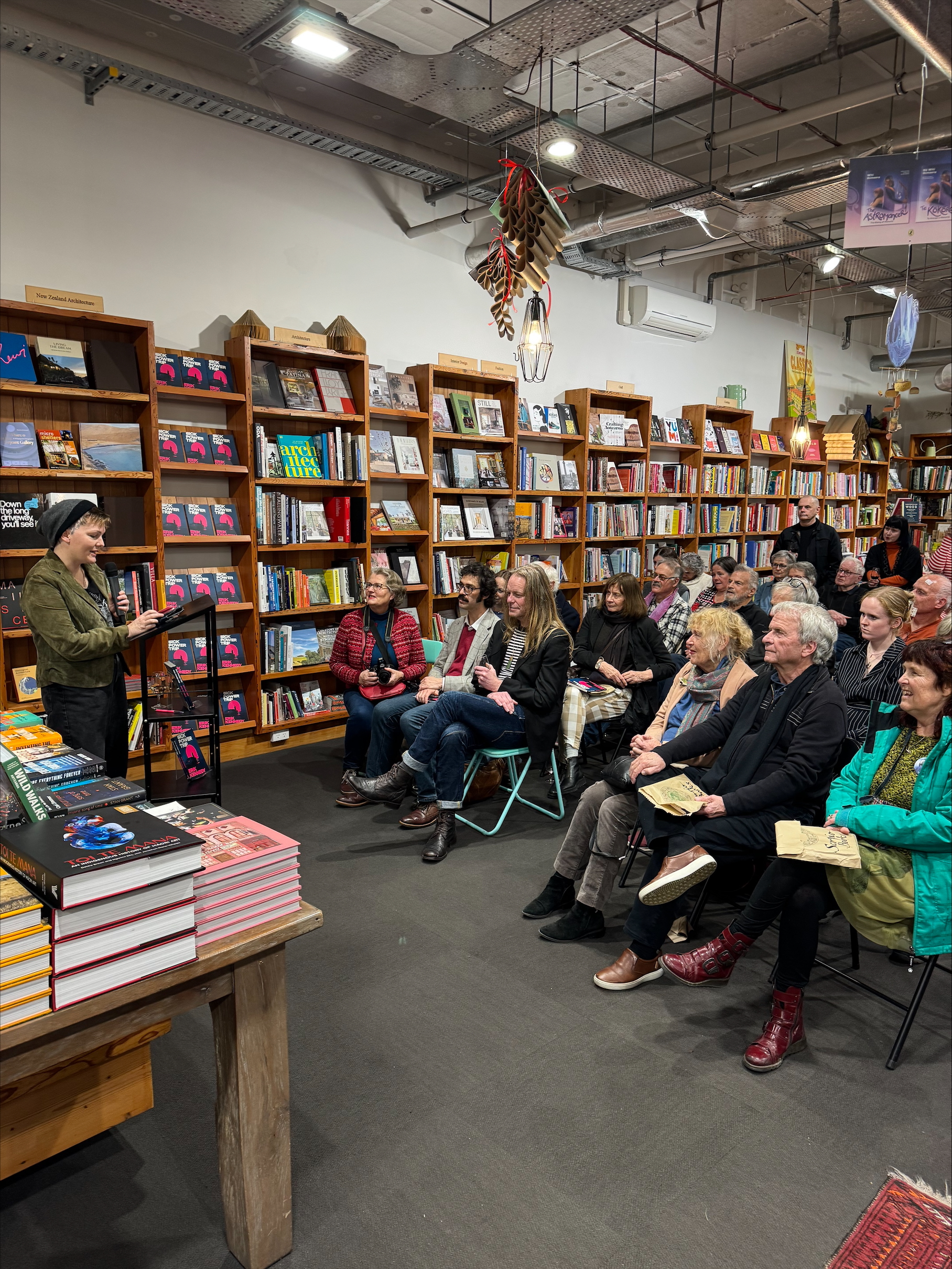
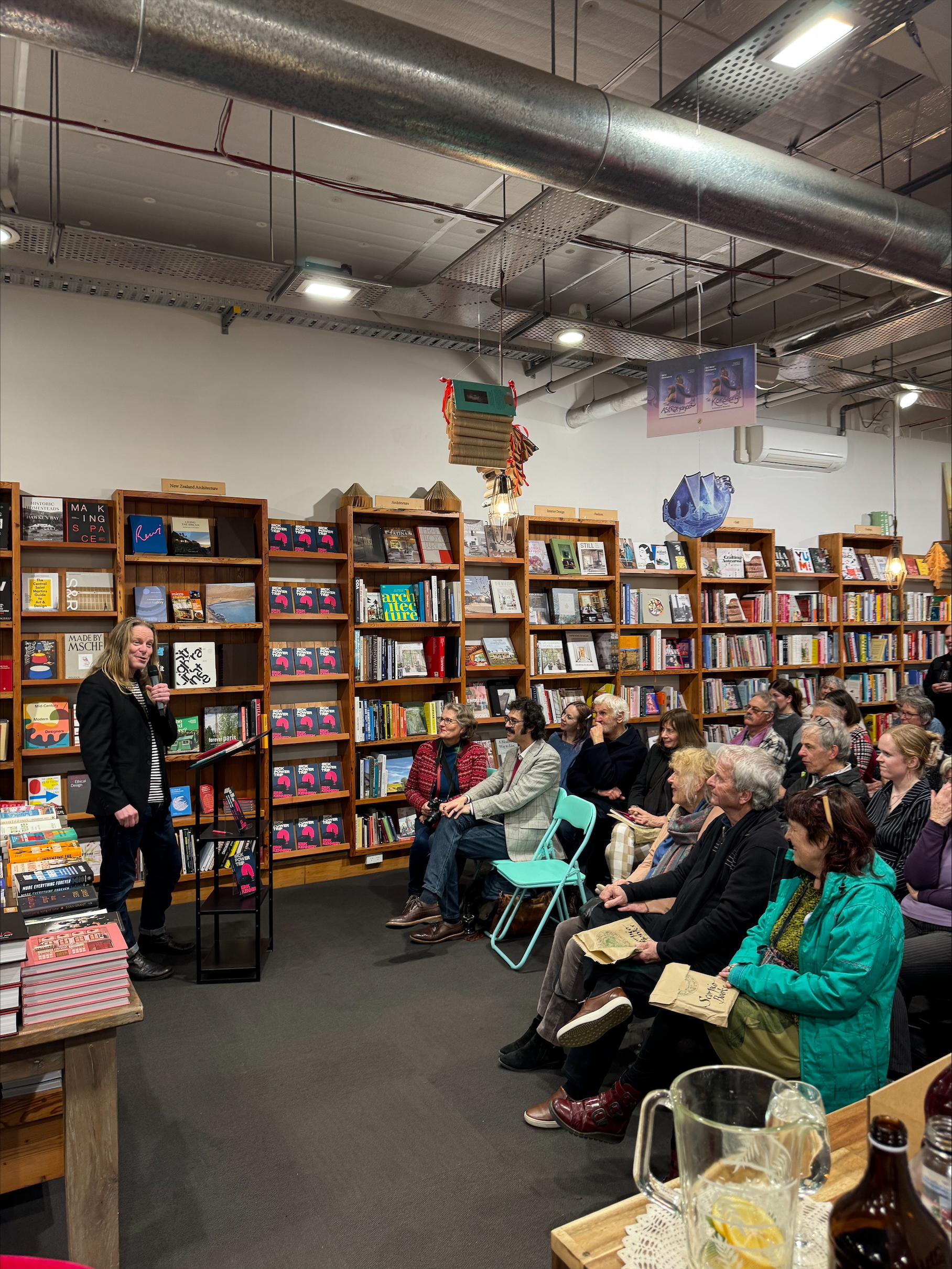
Sick Power Trip, Erik Kennedy, Te Herenga Waka University Press, 2025 (photos courtesy of Scorpio Books)
Tēnā koutou katoa. Ki ngā mate, haere, haere, haere atu rā. E mihi ana ki te iwi e tau nei, Ngāi Tūāhuriri, tēnā koutou. Ki a tātou e tau nei, kia ora koutou. Nō Mīere me Ingarangi ōku tīpuna. Kei te noho au ki Ōtautahi. Kei kaituhituhi ahau e mahi ana. Ko Claudia Herz Jardine tōku ingoa. Tēnā koutou katoa.
Hello, everyone. Thank you for coming. A caveat that these things aren’t expressed so gracefully in reo Pākehā; with my opening remarks I acknowledge the deceased, notably the poet John Allison; I recognise Ngāi Tūāhuriri, our local iwi and tangata whenua; I welcome you all here, in Scorpio Books, to this celebration of Erik Kennedy’s pukapuka Sick Power Trip.
My name is Claudia Herz Jardine. My ancestors, like Erik’s, came from far away- and, also like Erik, I call Ōtautahi Christchurch home and am prepared to defend it from further environmental assault with my life, my poems and my needle-nose pliers.
The first image of Sick Power Trip that wedged itself in my head was the “absolute possibility engine”- a ferret on a leash as observed in the poem ‘Animals On Leads’. At the time, my brother-in-law had his girlfriend’s dearly beloved and deceased pet ferret in his freezer as they waited for the cost of taxidermy to go down – this going down in price could be enabled by free market conditions, or the death of another ferret i.e. taxidermy at a quantity discount. All the ferrets in my life were distinctly lacking in possibilities, and then Erik came along to our critical writing group with his poem. I didn’t have much critical feedback for Erik- I only recall scrawling, “love ‘the energy of a ten-man brawl in a two-man toilet’.” A phrase that feels like it has the same amount of plosive consonants as a ferret should have claws.
Many months later Erik mentioned he had a manuscript ready. He emailed it to me. I made approximately five suggestions. My email sign-off was: “It’s a stacked deck! A pack of heavyweights! An all-star team!!” This ratio of suggestions to compliments bodes well for Erik. I read it all in one sitting, and by standing before you all tonight, I declare that me and my poetic sensibilities were wholeheartedly entertained and intrigued by this book.
To make some hazy, summative stabs at the book now, Sick Power Trip is a sort of wealth redistribution weathervane. The poems in this book, together, seem to say- if you have THIS much money, can you please do the decent thing and use it to make THESE lives better? Though the poems are stacked with ‘I’ statements, the ‘I’ is always asking; why aren’t we kinder to each other? Why do the people with the most get away with caring about others the least?
We live in an age in which any possible friction in our daily lives is viewed by Big Tech Companies as a money-maker. We have computers in our hands, a supermarket monopoly willing to visit us at home, and apps that write small talk and argumentative rebuttals for us. The narrator of ‘Individualistic Societies’ (page 11) states: “I fixed every problem I ever had until I couldn’t, at which point I became the problem.” For as long as we are encouraged to remove friction from our lives by paying money, the environment and its indigenous populations will be exploited. Skip ahead to page 93, ‘Someone Put an Ancient Burial Ground Right Where a Hotel Needs to Go,’ and an archaeological worker has a vision of excavated bones filling the city- “One day this project will be done and the building that even / its designer’s mother doesn’t love will spend its seasons here… What is allowed to endure is sometimes a second-choice thing / and the ones choosing are as likely to be thinking about the weather / as the future. Is it going to rain? Is the smart oven set?”
Yes, these poems are fringed with scathing, cynical Erik-ness. They also serve as an untraditional curriculum vitae for why, in the end times, Erik Kennedy will be on the shortlist for holding the newly-designed flag while jumping up and down on top of the bunkers as we sweep through Central Otago, shelling billionaires from their boltholes. This will be a pointy time, and unlike the narrator of ‘Notes Towards a Theory of Fun’ (page 50), no one will be getting arrested for kidnapping fossil fuel executives and shouting (quote) “Imma rubber-band this motherfucker up like a bunch of kale.”
Some notes on craft; Erik knows when to end a line, use an adverb, when to turn up the dial on the presence of the narrator and how to get out of the way. Erik and I share a love of whittling the pointy end of the poem first and then making the grip as comfortable as we see fit. So, watch as he casually wraps serious themes in humour to make the weight a little easier to bear- you could “die in a hail of 5-inch shells / or mild social disapproval,” you were either “raised by scorpions,” or you can care about the people of Gaza, you can be sad and lonely, or you can get involved in your local dogging group- just get out there and network!
Importantly, these are poems about thinking and caring. Erik cares about us. Erik cares about all animals. Erik cares about the planet. And Erik, in his day-to-day ways, turns up for other poets and throws his support behind our scene. When Erik had long Covid and stayed home, we missed him, and it was nice of him to invent the word “wonkening” while he was away.
Thank you all for listening to my speech. Congratulations, Erik, on another fantastic volume of poems. Can we all give him a big round of applause?
A warm thank you to Te Herenga Waka University Press and our speakers for this evening – and please join me again in congratulating Erik Kennedy.
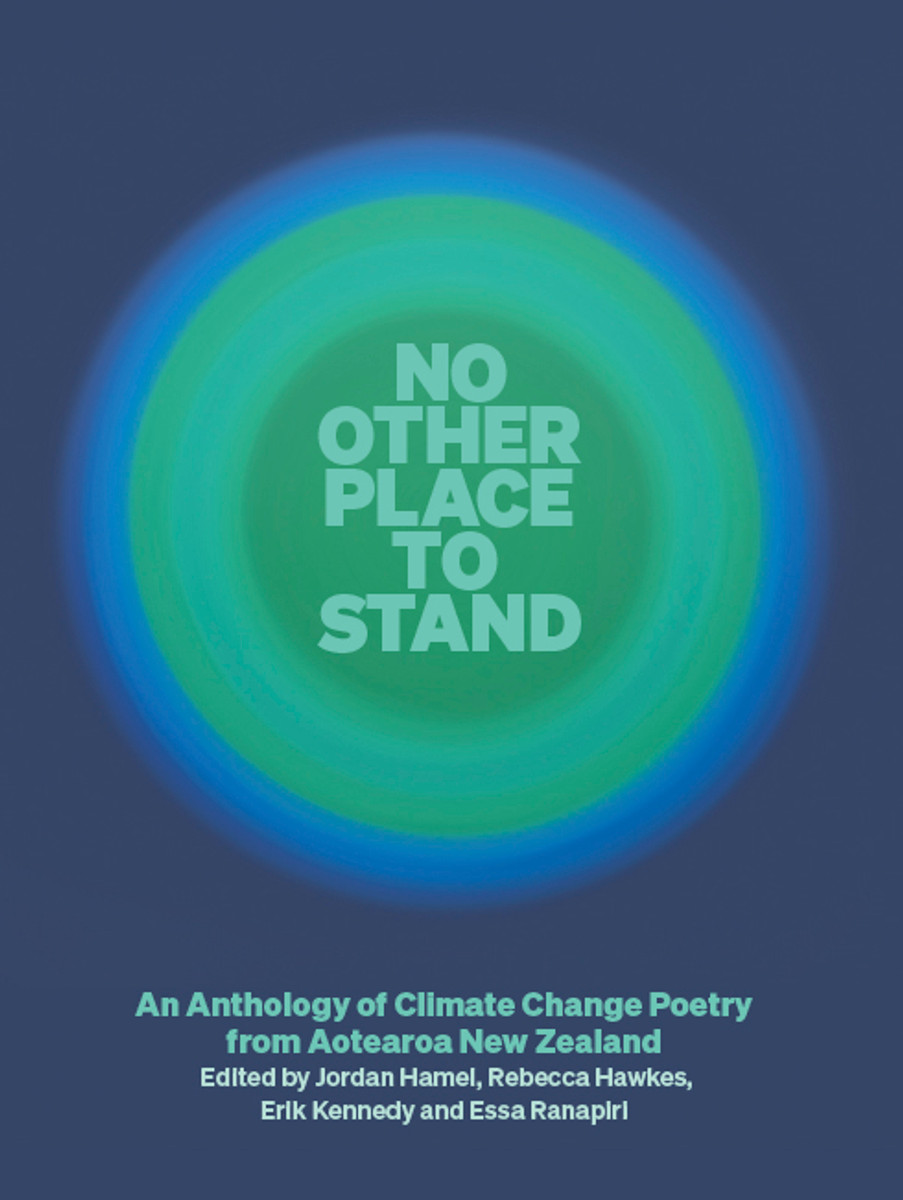
No Other Place to Stand: An Anthology of Climate Change Poetry from Aotearoa New Zealand, Jordan Hamel, Rebecca Hawkes, Erik Kennedy and Essa Ranapiri, Auckland University Press, 2022
Auckland University Press is to be celebrated for its stellar poetry anthologies. No Other Place to Stand: An Anthology of Climate Change Poetry from Aotearoa New Zealand offers an eclectic, and indeed electrifying, selection of climate change poetry. The editors, Jordan Hamel, Rebecca Hawkes, Erik Kennedy and Essa Ranapiri, are all frontline poets themselves.
The dedication resonates and stalls your entry into the book because it is so apt: “To those fighting for our future / and those who will live it.”
A terrific foreword by Alice Te Punga Somerville establishes a perfect gateway into the collection. Alice wonders, when climate change is such a mammoth issue, “about the value of the particular, the specific, the local, the here, the now”. What difference will reading and writing make when the world demands action? Alice writes: “Every single poem in this anthology speaks to the relationship between words and worlds.” That in itself is enough of a spur to get a copy of the book, and open up trails of reading, wonder and challenge.
I am spinning on the title. I am turning the word ‘stand’ over and over in my mind like a talisman, a pun, a hook. I am thinking we stand and we speak out, I am thinking we stand because we no longer bear it, and I am thinking we stand together.
The poems selected are both previously published and unpublished. The sources underline the variety and depth of print and online journals currently publishing poetry in Aotearoa: Minarets, Starling, Spin Off, Mayhem, Pantograph Punch, Poetry NZ, Blackmail Press, Overland, Sweet Mammalian, Turbine | Kapohau, Takahē, Stasis, Landfall.
No Other Place to Stand is an essential volume. You can locate its essence, the governing theme, ‘climate change poetry’, yet the writing traverses multiple terrains, with distinctive voices, styles, focal points. I fall into wonder again and again, but there is the music, the political, the personal, the heart stoking, the message sharing. There is the overt and there is the nuanced. There is loud and there is soft. There is clarity and there is enigma. You will encounter a magnificent upsurge of younger emerging voices alongside the presence of our writing elders. This matters. This degree of bridge and connection.
Dinah Hawken has long drawn my eye and heart to the world we inhabit, to the world of sea and bush and mountain, stones, leaves, water, birds. Reading one of her collections is like standing in the heart of the bush or next to the ocean’s ebb and flow. It is message and it is transcendental balm. Her long sublime poem, ‘The uprising’, after presenting gleams and glints of our beloved natural world, responds to the wail that rises in us as we feel so helpless.
6.a.
But all I can do is rise: both before and after I fall. All I can do is rally,
all I can do is write – I can try to see and mark where and how we are.
All I can do is plant, all I can do is vote for the fish, the canoe, the ocean
to survive the rise and fall. All I can do is plead, all I can do is call . . .
from ‘The uprising’
I am reading the rich-veined ancestor currents of Tayi Tibble’s ‘Tohunga’, the luminosity of Chris Tse’s ‘Photogenesis’, the impassioned, connecting cries of Selina Tusitala Marsh’s ‘Unity’ and Karlo Mila’s ‘Poem for the Commonwealth, 2018’. Daily routines alongside a child’s unsettling question catch me in Emma Neale’s ‘Wanting to believe in the butterfly effect’. I am carried in the embrace of Vaughan Rapatahana’s ‘he mōteatea: huringa āhuarangi’ with its vital, plain speaking call in both te reo Māori and English.
Take this heart-charged handbook and read a poem a day over the next ninety days. Be challenged; speak, ask, do. I thank the editors and Auckland University Press for this significant anthology, this gift.
Jordan Hamel is a Pōneke-based poet and performer. He was the 2018 New Zealand Poetry Slam champion. He uses poetry and performance to create awareness and discourse about environmental and political issues. He is the co-editor of Stasis Journal and his debut poetry collection Everyone is everyone except you was published by Dead Bird Books in 2022.
Rebecca Hawkes is a poet/painter from Canterbury, living in Te Whanganui-a-Tara. Her chapbook ‘Softcore coldsores’ was published in AUP New Poets 5 in 2019. Her first full-length poetry collection, Meat Lovers, was recently unleashed by Auckland University Press. Rebecca edits Sweet Mammalian and is a founding member of popstar poets’ posse Show Ponies.
Erik Kennedy is the author of Another Beautiful Day Indoors (Te Herenga Waka University Press, 2022) and There’s No Place Like the Internet in Springtime (Victoria University Press, 2018), which was shortlisted for best book of poems at the 2019 Ockham New Zealand Book Awards. He lives in Ōtautahi Christchurch.
Essa Ranapiri (Ngāti Wehi Wehi / Ngāti Takatāpui / Clan Gunn) is a poet from Kirikiriroa. They are part of puku.riri, a local writing group. Their book ransack was published by Victoria University Press in 2019. Give the land back. It’s the only way to fix this mess. They will write until they’re dead. And after that, sing.
There is the possible world in which, having no safety net to fall into, I killed myself.
There is the world in which acclaim came early with a book called something like Sex Owls of the Sun, and the effects of success jaded me, so I stopped pursuing the art that I loved.
And there is also the world that was a succession of cool, forgettable evenings spent among canapés and loud friends, in which we aged so slowly that we hardly noticed it, until it blurred our vision like damp creeping into a camera.
Erik Kennedy
Erik Kennedy is the author of the poetry collections There’s No Place Like the Internet in Springtime (2018) and Another Beautiful Day Indoors (2022), both with Victoria University Press, and he has co-edited No Other Place to Stand, a book of climate change poetry from Aotearoa New Zealand and the Pacific forthcoming from Auckland University Press in 2022. His poems, stories, and criticism have been published in places like FENCE, Hobart, Maudlin House, Poetry, Poetry Ireland Review, the TLS, and Western Humanities Review. Originally from New Jersey, he lives in Ōtautahi Christchurch.
Ah. Love is my final theme. My seventeenth gathering. I chose love because love is the ink in my pen, it drives the pencil filling my notebooks. It’s the reason I keep two blogs running when, at times, it seems impossible. There is the love of reading and writing stretching back to childhood. Love poetry can embrace many subjects, moods, objects, experiences, relationships. So many poetry books in Aotearoa are steeped in love. In what is written and, just as importantly, in the infectious love poets feel for the power of words. For the possibility of the line, silence, music, physical detail. As readers, writers, publishers, reviewers, booksellers of poetry, we are connected through a shared and invigorating love of poetry. Ah.
To celebrate the end of my theme season I have ten copies of Wild Honey: Reading New Zealand Women’s Poetry to give away. I will sign one for you or for a friend. You can leave a comment on the blog, on FB or Twitter: Which theme resonated for you? What theme do you suggest if I should ever do this again? Or just email me if you have my address.
Grateful thanks and aroha to all the poets, publishers and readers who have supported my season of themes. I so loved doing this!
The poems
Poem
So far it has worked by imagining you in all the places I would like you to be
*
this is the one I love. he is not here but the air is still warm from where he might have been
*
we have spent hours circling each other with words-thinly vowelled embraces
*
how to translate these words into silences or the silences into words
*
when I cannot fix you behind my eyes I carry your absence like stars on the blue roof
Jenny Bornholdt
from Selected Poems, Victoria University Press, 2016
Catch
Two sitting at a table two at a table sitting two and two a table in the grass in the grass a table and on the table empty almost with a little a little empty almost but with a little water there sits a jar for love on the table a jar for love not a fresh jar every day fresh every day nothing in the jar that lasts always fresh they are sitting sitting at the table looking they are looking at the jar at the table at each other they are sitting looking sitting at the table at the jar looking looking sitting now is nearly the day the day is nearly now now go to sleep go to love go to jar go to look look looking look sit sitting catch that catch two sitting at a table two at table sitting two and two and two a table in the grass
Murray Edmond
from Fool Moon, Auckland University Press, 2004
Because of you
(for Darae)
My Son,
in you I see the shape of the heart all poets try to explain
you, the greatest poem I could never pen
how blessed I am to mother a son to exercise hope and love when everything else is absent
Son, your are a gift to men because of you I pray for men still love men hold hope for me, for you.
Grace Iwashita-Taylor
from Full Broken Bloom, Ala Press, 2017
The wind has shaken everything out of the quince tree. Behold the bony gullets of fledglings as yellow as the towers of rock that arise in Wyoming. ‘Stop blocking the gangway,’ the old woman used to say, cutting away long roils of yellow clay with her spade, hell bent on re-configuring a brand new version of genetically modified melancholy. ‘Never forget how the old ones arrived from Dubh Linn, the Place of the Dark Pool, formed from the union of the River Liffey and the River Poddle. Never forget that we are arisen from a line of proud people.’ And here I am, holding onto my end of the string and I know, my love, that you are holding onto the other.
Bernadette Hall
Aroha Mai
Aroha mai I was trying to get to you but the wind kept changing direction
Aroha atu she hates it when institutions use Te Reo in their signatures she hates it when my wet hair drips all over the bedsheets
Aroha mai I couldn’t see you this time I was down a rabbit hole along the coast beside the point
Aroha atu love given love received there isn’t enough room in this house to house our love the brick square flat beneath a rectangle sky
Aroha mai your baby finally came the angels found your address submerged in yesterday’s current and she’s clapping in every photo
Aroha atu my feet don’t touch the ground these days take the stairs to stay fit I keep my car full of gas it is easy to recycle the past
Aroha mai my ghost is in town and I don’t know if I should email her back
Aroha atu already the skeleton wings of this year are casting long shadows we don’t know what’s for dinner but next door’s Tui keeps singing all the buried bones to life
and you’re opening every can of beans in the cupboard to feed the tired warrior in my arms
Courtney Sina Meredith
from Burnt Kisses on the Actual Wind, Beatnik Publishing, 2021
Helping my father remember
My father is in the business of transmissions. A radio technician, the basic premise being that a message is sent out, then received. Except something’s gone wrong with the wiring, and he didn’t teach me how to fix it. I see him, standing at the kitchen bench, his hand hovering over an orange and paring knife; trying to think what he had planned.
*
There is evidence that sound helps restore memory: the sound of a cricket ball colliding with tin fence; lemonade meeting beer in a shandy; sticks smouldering in the air, when pulled from a camp fire. The doctor says depression, my sister says stress, my father says stop being so bloody dramatic.
*
They say I am the most like you, and that we are like your mother. I am following you through tall grasses, as high as my head. You’re in your angling gear. It’s summer, I can hear the cicadas. There’s a wind up, but its warm. We’re heading to the river. You find Nana, and I’ll find you. We won’t be lost if we’re together.
I haven’t read a single new book since I’ve been with you. I’ve been so busy peering into your eyes where I can see dark passages & feinting canaries & gold & mine mine mine mine
Plus I’ve been preoccupied with the joy of sex the science of living the interpretation of dreams & my undiscovered self.
So today I read a love poem.
But when I looked at it, it just said your name.
It was very repetitive. It just kept skipping over itself. Skipping to the important bits. Slipping into something more comfortable.
I looked away for a second & when I looked back the love poem had filled the whole room. It was thrusting against the ceiling & had burst through the open window pushing the vase of sunflowers right out.
I tried to call to you to come & look but the love poem was so big that it caught in my throat. There were fainting canaries everywhere like the fallen petals of sunflowers gasping yours yours yours yours
Hannah Mettner
from Fully Clothed and So Forgetful, Victoria University Press, 2017
Strummer Summer
All that summer we kissed outside because we had nowhere inside to be alone. We had matching Clash t-shirts and black outlooks. After my shifts at Seafood Sam’s I would pick you up in my Dad’s ute and we’d drive to the river
so I could swim off the chip grease. I’d light a fire while you showed me the riffs you’d learned that day on your unplugged Fender. /I’ve been beat up, I’ve been thrown out,/ /But I’m not down, No I’m not down./ I requested Blondie but you said it was chick-music.
Poking the fire with a stick, the tinny twang of your dead strings. We thought we had it pretty bad. Your Dad didn’t like me because I was “the wrong flavour”. I craved city life. Packed my army bag and left home, but not before I withdrew half my chip money and bought you an amp.
Helen Lehndorf
from The Comforter, Seraph Press, 2011
The library
The library is full of people looking for love. At the sound of footsteps approaching, a boy turns around with a meaningful glance, and casually slips a pencil behind his ear. Girls pause on the landings, clutching armfuls of books to their breasts. Sometimes, you feel sorry for these people. You wish this wasn’t happening. All you want is a book, and all the shelves are filled with eyes of longing.
Airini Beautrais
from Secret Heart, Victoria University Press, 2006
Always on Waking
Always, on waking, I look out into treetops: I lie beside you in the shimmering room Where, whether summer morning, shell of dawn Or dazed moonlight patterns leaves on walls I wake to wide sky and the movement of treetops.
As the leaves flicker (thin scimitars of opaque Dull green the eucalyptus bundles over her bark strips) They become lucent; leaves lined with sunlight With moonlight are no longer drab But seem scimitars shining, are not now opaque.
While you are there I am nested among leaves; As sparrows come each morning for breadcrumbs So I look for your still face beside me; Without your calm in the face of what wild storm I am no longer nested, but desolate among these leaves.
Ruth France
from No Traveller Returns: The poems of Ruth France, Cold Hub Press, 2020
Honey
It was manuka honey, the best kind, in a big, white plastic bucket, given to you by someone with bees, because you’d been helpful, so much honey, it looked like it might last a lifetime and you being you, and maybe why I love you, you spooned it out into carefully washed jars and gave it to your uncle, your mother, your brothers, our friend with the little boy, your mother’s neighbour who had the birthday, so much honey, and after all that you gave away, there was still so much left for us.
Janis Freegard
from Meowing Part 1 (the Meow Gurrrls zine).
Is It Hard to Follow Your Heart When You Have Three?
(on the story of the giant octopus from Aelian’s De Natura Animalium)
is it hard to follow your heart when you have three?
one for circulation two for breathing
i am the stone jar of pickled fish you are the giant octopus
i wait in the dark for you you crawl up the sewer for me
we cast our votes two are for breathing
Claudia Jardine
from The Starling 9
Toikupu aroha 1
I waited all night for you to come home to plant kihikihi into your cupped palms
now as you sleep I glide my fingers memorising the tracks that led me here
to this chest – arms – manawa with such vastness and proximity
I lean down taking in the entirety of your pulse and there my hā quickens
above lifelines grooved with spacious and honest certainty.
Iona Winter
from Gaps in the Light, Ad Hoc Fiction, 2021
For Baukis
There are four extant poems written by the ancient Greek poet Erinna. Three of these concern the death of her childhood friend, Baukis.
you lost her, didn’t you? the one that made it worthwhile to be underneath the sun and breathing
you remembered her, didn’t you? the days you played chasing the tortoise topsy turvy, falling from all the white horses
you missed her, didn’t you? when marriage came like a thief and snatched her away the ribbon of your world
you mourned her, didn’t you? when the ribbon was torn the bright eyes empty, the breath stilled
you cried for her, didn’t you? raw, with it heaving out the wet thick language of snot and tears
you loved her, didn’t you? even more than a friend, the closest companion the only one
you wrote for her, didn’t you? wove her memory through hexameters to stave off oblivion
and, now, for her we read.
Hebe Kearney
When the Person You Love Leaves You in the Night
When the person you love leaves you in the night, it is only natural to get out of bed and follow them. It is also only natural for your pyjamas to be all crumpled and your hair sticking up at the back. It is only natural to feel confused, and alone.
Nine times out of ten, a light will be on and you will walk into the living room, squinting. The person you love will probably be making human body parts out of plasticine, or playing video games. They will look up and say ‘Hello’ and smile at you like you’re some kind of lost baby animal. You will feel a little bit found.
If there is no light on in the house, it is important that you check the garden. If there is no garden, check the balcony. The person you love will be out there, staring at the moon and not crying. You are the one who cries. Except that one time… and the other. Don’t ask them if they’re okay because they will just say ‘Yeah’. Besides, you are the one who was left alone in the night.
Just look at them in the moonlight, and let them look at you. Stay very still. Then take their hand in slow motion and walk to the kitchen. The person you love will follow you, and so will the moon. Pour some milk into a pan and simmer gently. You will see a quivering white circle. The moon will be in there somewhere. Slice cheese onto bread and turn on the grill.
When you have two pieces of cheese-on-toast, put them on a plate. Pour half the milk into the mug with Peter Rabbit on it and half into the souvenir mug from Sweden. There will be sugar on the floor and it will stick to your feet. Swing yourself up onto the kitchen bench. You and the person you love will sit with your feet dangling side by side. The sugar will fall without a sound. You will drink your milk. The person you love will eat their grilled cheese, with sips of milk in-between. Peter Rabbit will eat his radishes.
Congratulate yourselves for drinking calcium. Sit at opposite ends of the couch with your legs tossed over their legs. Talk until you wake up the birds.
It is important that at some point during the night the person you love reminds you that you are the person they love. It is also important that they thank you for the grilled cheese. If they don’t, give them a pen and a piece of cardboard. Drop them on the side of the road. Tell them, ‘You can hitchhike from here.’
Joy Holley
from Starling 4
Love Poem with Seagull
I wish I’d seen it from your side of the table when the horrid gull attacked my fish and chips, the springy baton of haddock in my hand a signal for the post-saurian psycho to swoop at my talon-less fingers as they moved toward my mouth in their classically dithering mammalian way, because if I’d had the privilege to see the stress-warped, flexuous face behind my bat-like ultrasonic shrieks of shock as I fought off the bird unsuccessfully then I’d have some idea of what it means for you to love me, the sort of person who manages to always look like this or feel like this regardless of how much easier being normal is.
Erik Kennedy
from There’s No Place Like the Internet in Springtime, Victoria University Press, 2018
Found Again
our love is a tracking device more sure than any global positioning system
just carve us into wooden tablets then imprint us on opposite corners of a mighty length of siapo and watch tusili’i spring forth
making bridges to connect us over rock-bound starfish scampering centipedes and the footprints of bemused birds
we have many stories of losing and finding each orther
of getting lost and losing others
but today all is well
I lie beneath the old mango tree smothered with coconut oil embellished with wild flowers and droplets of your sweat
your aging shoulders still fling back proud
and I still arch towards you like a young sweetheart
you have whispered in my hair
found again
and we both know this is our final harbour
Serie Barford
from Tapa Talk, Huia Press, 2007
Everything
This morning when I looked out my window they were the first thing I noticed. I saw them flocking outside my house. I like to look at them from my window. I get the sun there. I’ll go out and stroke them. I wonder what they think of me. Some people don’t have anything much but if you put a hen on their knee they start looking. I’m not fast on my feet. I have bother with my eyes. I’ve got friends that can’t get out. Everything goes downhill. I would go back to when I was younger. I love the first things. When you’re young you’ve only a future. I’ve made no plans for dying. I haven’t paid for anything. I’d be terrified if they made a mistake. I do love everything about living though. I love being able to see. I like to look out my windows and see the leaves like a blanket on the ground. I love the autumn. I love the hens in the autumn. They’re beautiful. I couldn’t imagine my life without them. They’re everything to me.
Ashleigh Young
from How I get Ready, Victoria University Press, 2019
The poets
Serie Barford was born in Aotearoa to a German-Samoan mother and a Palagi father. She was the recipient of a 2018 Pasifika Residency at the Michael King Writers’ Centre. Serie promoted her collections Tapa Talk and Entangled Islands at the 2019 International Arsenal Book Festival in Kiev. She collaborated with filmmaker Anna Marbrook to produce a short film, Te Ara Kanohi, for Going West 2021. Her latest poetry collection, Sleeping With Stones, will be launched during Matariki 2021.
Airini Beautrais lives in Whanganui and is the author of four poetry collections and a collection of short fiction. Her most recent poetry collection is Flow: Whanganui River Poems (VUP 2017). Bug Week and Other Stories recently won the Ockham NZ Book Fiction Award 2021.
Jenny Bornholdt is the author of many celebrated collections of poems, including The Rocky Shore (Montana New Zealand Book Award for Poetry, 2009) and Selected Poems (2016), and editor of several notable anthologies, including Short Poems of New Zealand (2018). In 2005 she became the fifth Te Mata Estate Poet Laureate, during which time she wrote Mrs Winter’s Jump (2007). In 2010 she was the Creative New Zealand Victoria University Writer in Residence. In 2013 she was appointed a Member of the New Zealand Order of Merit for services to literature. In 2016 she edited the online anthology Ōrongohau | Best New Zealand Poems. Jenny’s most recent collection is Lost and Somewhere Else (2019).
Murray Edmond, b. Kirikiriroa 1949, lives in Glen Eden. 14 books of poetry (Shaggy Magpie Songs, 2015, and Back Before You Know, 2019 most recent); book of novellas (Strait Men and Other Tales, 2015); Then It Was Now Again: Selected Critical Writing (2014); editor, Ka Mate Ka Ora (http://www.nzepc.auckland.ac.nz/kmko/); dramaturge for Indian Ink Theatre. Forthcoming: Time to Make a Song and Dance: Cultural Revolt in Auckland in the 1960s, from Atuanui Press in May, 2021.
Ruth France (1913–68) published two novels: The Race (1958), which won the New Zealand Literary Fund’s Award for Achievement, and Ice Cold River (1961); and two volumes of poetry: Unwilling Pilgrim (1955) and The Halting Place (1961), under the pseudonym Paul Henderson. Poems from a third collection, which remained in manuscript at the time of her death, are published as No Traveller Returns: The Selected poems of Ruth France (Cold Hub Press, 2020).
Janis Freegard is the author of several poetry collections, most recently Reading the Signs (The Cuba Press), and a novel, The Year of Falling. She lives in Wellington. website
Bernadette Hall lives in the Hurunui, North Canterbury. She retired from high-school teaching in 2005 in order to embrace a writing life. Fancy Dancing is her eleventh collection of poetry (VUP, 2020). In 2015 she was awarded the Prime Minister’s Award for literary achievement in poetry and in 2017 she was made a Member of the New Zealand Order of Merit for services to literature in Aotearoa New Zealand.
Joy Holley lives in Wellington and has recently completed her Masters in fiction at the International Institute of Modern Letters. Her writing has been published in Starling, Sport,Stasis and other journals.
Claudia Jardine (she/her) is a poet and musician based in Ōtautahi/Christchurch. In 2020 she published her first chapbook, The Temple of Your Girl, with Auckland University Press in AUPNew Poets 7 alongside Rhys Feeney and Ria Masae. For the winter of 2021 Jardine will be one of the Arts Four Creative Residents in The Arts Centre Te Matatiki Toi Ora, where she will be working on a collection of poems.
Hebe Kearney is a queer poet who lives in Tāmaki Makaurau. Their work has appeared in The Three Lamps, Starling, Oscen, Forest and Bird, a fine line, and Poetry New Zealand Yearbook 2021.
Erik Kennedy is the author of There’s No Place Like the Internet in Springtime (Victoria University Press, 2018), and he is co-editing a book of climate change poetry from Aotearoa New Zealand and the Pacific forthcoming from Auckland University Press later in 2021. His second book of poems is due out in 2022. His poems, stories, and criticism have been published in places like FENCE, Hobart, Maudlin House, Poetry, Poetry Ireland Review, the TLS, and Western Humanities Review. Originally from New Jersey, he lives in Christchurch, New Zealand.
Helen Lehndorf’s book, The Comforter, made the New Zealand Listener’s ‘Best 100 Books of 2012′ list. Her second book, Write to the Centre, is a nonfiction book about the practice of keeping a journal. She writes poetry and non-fiction, and has been published in Sport, Landfall, JAAM, and many other publications and anthologies. Recently, she co-created an performance piece The 4410 to the 4412 for the Papaoiea Festival of the Arts with fellow Manawatū writers Maroly Krasner and Charlie Pearson. A conversation between the artists and Pip Adam can be heard on the Better Off Read podcast here
Courtney Sina Meredith is a distinguished poet, playwright, fiction writer, performer, children’s author and essayist, with her works being translated and published around the world. A leading figure in the New Zealand arts sector, Courtney is the Director of Tautai Contemporary Pacific Arts Trust, an organisation committed to championing Oceanic arts and artists. Courtney’s award-winning works include her play Rushing Dolls, poetry Brown Girls in Bright Red Lipstick, short stories Tail of the Taniwha and children’s book The Adventures of Tupaia. Burst Kisses On The Actual Wind is Courtney’s new collection of poetry, the book was released just this month.
Hannah Mettner (she/her) is a Wellington writer who still calls Tairāwhiti home. Her first collection of poetry, Fully Clothed and So Forgetful, was published by Victoria University Press in 2017, and won the Jessie Mackay Award for best first book of poetry at the 2018 Ockham New Zealand Book Awards. She is one of the founding editors of the online journal Sweet Mammalian, with Sugar Magnolia Wilson and Morgan Bach.
Grace Iwashita-Taylor, breathing bloodlines of Samoa, England and Japan. An artist of upu/words led her to the world of performing arts. Dedicated to carving, elevating and holding spaces for storytellers of Te Moana nui a Kiwa. Recipient of the CNZ Emerging Pacific Artist 2014 and the Auckland Mayoral Writers Grant 2016. Highlights include holding the visiting international writer in residence at the University of Hawaii 2018, Co-Founder of the first youth poetry slam in Aoteroa, Rising Voices (2011 – 2016) and the South Auckland Poets Collective and published collections Afakasi Speaks (2013) & Full Broken Bloom (2017) with ala press. Writer of MY OWN DARLING commissioned by Auckland Theatre Company (2015, 2017, 2019) and Curator of UPU (Auckland Arts Festival 2020 & Kia Mau Festival 2021). Currently working on next body of work WATER MEMORIES.
Louise Wallace is the author of three collections of poetry published by Victoria University Press, most recently Bad Things. She is the founder and editor of Starling, and is currently working on a PhD in Creative Writing at the University of Otago.
Iona Winter (Waitaha/Kāi Tahu) lives in Ōtepoti Dunedin. Her hybrid work is widely published and anthologised in literary journals internationally. Iona creates work to be performed, relishing cross-modality collaboration, and holds a Master of Creative Writing. She has authored three collections, Gaps in the Light (2021), Te Hau Kāika (2019), and then the wind came (2018). Skilled at giving voice to difficult topics, she often draws on her deep connection to land, place and whenua.
Ashleigh Young is the author of Magnificent Moon, Can You Tolerate This?, and How I Get Ready (Victoria University Press). She works as an editor at VUP.
Min-a-rets 10, Compound Press, editor Sarah Jane Barnett
Poetry Shelf has put me in the sublime position of receiving pretty much every poetry book and journal published in Aotearoa NZ – but I never have enough time or energy to review everything. Yes I only review books I love, but I don’t get a chance to feature all of them. There is always a hopeful pile of books and journals that have enchanted me but that I have not yet shared. I guess it is even worse this year as I have cleared space for my own writing in the mornings and I don’t want to encroach upon that. I am really grateful that most poets don’t badger me and expect superhuman efforts on a blog that runs on the currency of love and my fluctuating energy levels. I have decided to make little returns to that hopeful stack and, every now and then, share something that you might want track it down.
I sometimes pick a poetry book hoping it will offer the right dose of rescue remedy – a mix of poetic inspiration along with heart and mind sustenance. My return to Min-a-rets10 did exactly that. Poet Sarah Jane Barnett has edited an issue that is supremely satisfying. In her introduction she expresses anxiety at not being ‘cool’ or young enough to edit a journal that is to date cutting edge, experimental, younger rather older. But once she had read the 100 or so submissions, her fears were allayed. I totally agree with her summation of the Min-a-ret gathering:
In the end I had nothing to worry about. The poems I’ve selected are beautiful, painful, challenging, thought-provoking, heartbreaking and funny. They reminded me that good poems shine no matter their genre or when they were written. They make life feel intense and bright. While this issue includes mid-career poets, there’s definitely a new generation stepping forward, and I have admiration for their commitment to craft, and to sharing an authentic experience—to not conforming. That’s cool.
10 poets with art by Toyah Webb. A slender hand-bound object published by Compound Press. Within a handful of pages, the poetry prompts such diverse reactions, it is like the very best reading vacation. I laughed out loud, I stalled and mused, I felt my heart crack. Above all I felt inspired to write. That exquisite moment when you read the poetry of others that is so good you feel compelled to write a poem.
essa may ranapiri has written a counting poem from tahi to iwa, with deep-rooted personal threads that underline there are myriad ways to count self and the world and experience. Memory. Then the honeyed currents of Elizabeth Welsh’s mother poem that free floats because motherhood cannot be limited. And yes Erik Kennedy made me laugh inside and then laugh out loud as the ending took me by surprise. Aimee-Jane Anderson-O’Connor transports me from the optician leaning in to staring at strangers to probability to ‘wow’. I am so loving the little leaps that intensify the scene.
Oh the aural genius of a Louise Wallace poem, especially when she pivots upon the word ‘trying’.
Or Joan Fleming’s line ‘Some confessions stick like stove filth’. Or Travis Tate: ‘Love is the sky, pitched black, radiant dot / of white to guide young hearts to this spot’. Or Eliana Gray’s: ‘We can’t save the people we love from drowning when it / happens on sand’.
Two list poems from Jackson Nieuwland, a witty serious funny precursor to their sublime award-winning collection I am a human being (Compound Press). And finally the laugh-out loud glorious prose poem by Rachel O’Neill where reason becomes raisin: ‘If only there was one good raisin left in the world, you think.’
Read this body-jolting issue and you will surely be inspired to get a subscription.
like signing a birthday card at work or volunteering
to clean a beach. In the geography of care
the grieving city is bright, busy, sensitive
to extraordinary needs, able to flex and soothe.
It’s one of a series of temporary truths,
a glimpse of something not quite representative
that we wish could stay once it’s there.
We wish we couldn’t see it disappearing
into routine, because we were desolately happy because
we were nice to each other after the trauma.
Erik Kennedy
Erik Kennedy is the author of There’s No Place Like the Internet in Springtime (Victoria University Press, 2018), and he is co-editing a book of climate change poetry from Aotearoa New Zealand and the Pacific forthcoming from Auckland University Press later in 2021. His poems, stories, and criticism have recently been published in places like FENCE, Hobart, Maudlin House, Poetry, Poetry Ireland Review, the TLS, and Western Humanities Review. Originally from New Jersey, he lives in Christchurch, New Zealand.






 NZ Poetry Shelf