Tag Archives: Dinah Hawken

Poetry Shelf Spring Season’s poetry fans: Nicola Strawbridge picks Dinah Hawken


Screen Shot 2017-10-14 at 1.31.02 PM.png


Screen Shot 2017-10-14 at 1.32.00 PM.png

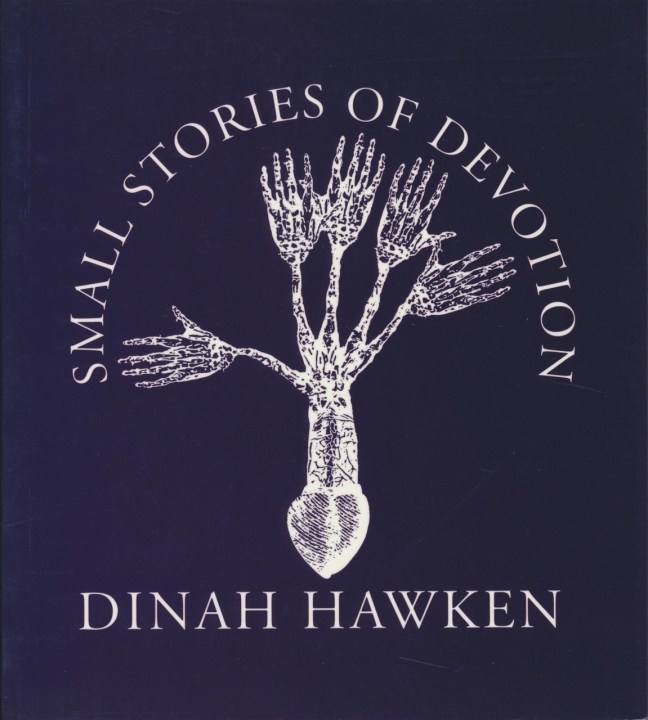
©Dinah Hawken Small Stories of Devotion Victoria University Press, 1991


Small_Stories_of_Devotion__14354.1401159901.jpg

Note from Nicola:

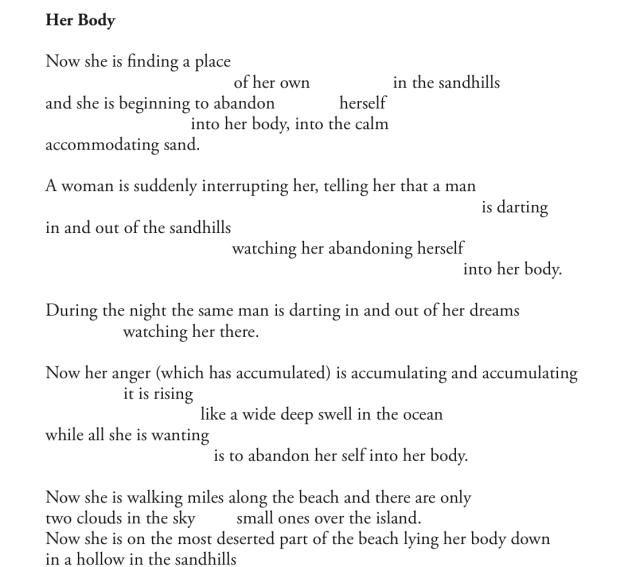
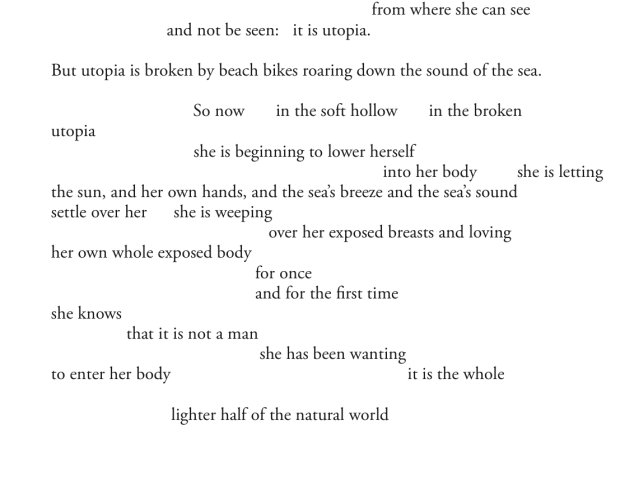
Dinah Hawkin’s Small Stories of Devotion was the first collection of contemporary NZ poems that had a big impact on me as a young woman. The collection was published the year I went flatting for the first time.  My flatmate had a copy, and I was attracted to this beautiful small blue book and it’s pocket-sized format. I hadn’t been exposed to much contemporary poetry, and it was a revelation to find work that spoke to me so directly. ‘Her Body’ is all tangled up with that time in my life where I was emerging and coming into myself as an adult. A time when I was encountering lots of new ideas about how to live, how to be in myself and in my body. This poem in particular spoke to those themes, as well as being a gateway into the world of NZ poetry. Now I read it and appreciate a layer of memory folded into its mix including a fondness for that younger woman and her questioning self. I love the poem’s rhythm, the place of the poem playing itself out, that long beach, those sandhills, the island and its two clouds. It surges and retreats, echoing the waves and the words lapping up the beach and across the page.

I enjoyed its anger (“accumulating & accumulating”), its passion and release.  I was spending a lot of time myself walking on beaches while having big existential conversations with my new friends about the world we wanted to live in, and about our sexuality and gender politics in particular. ‘Her Body’ encapsulated that exploration and the feminism that was so often at the heart of our conversations. I was she, the powerful sensual voice of the poem, the woman abandoning herself into her body. And alongside all that, entwined, the natural world, informing everything, settling on everything. A potent combination and one I’ve continued to enjoy in Dinah’s work.


Nicola Strawbridge is Programme Director of the Going West Books & Writers Festival.

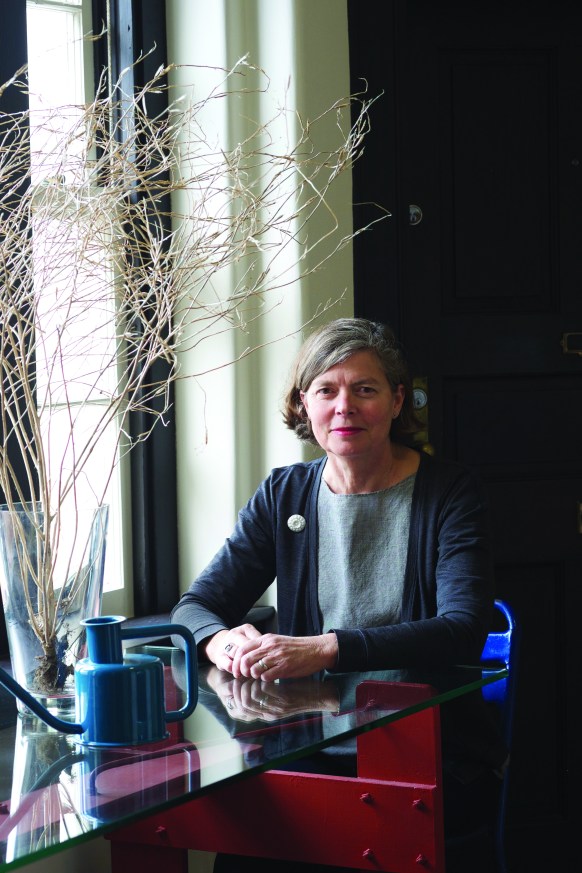
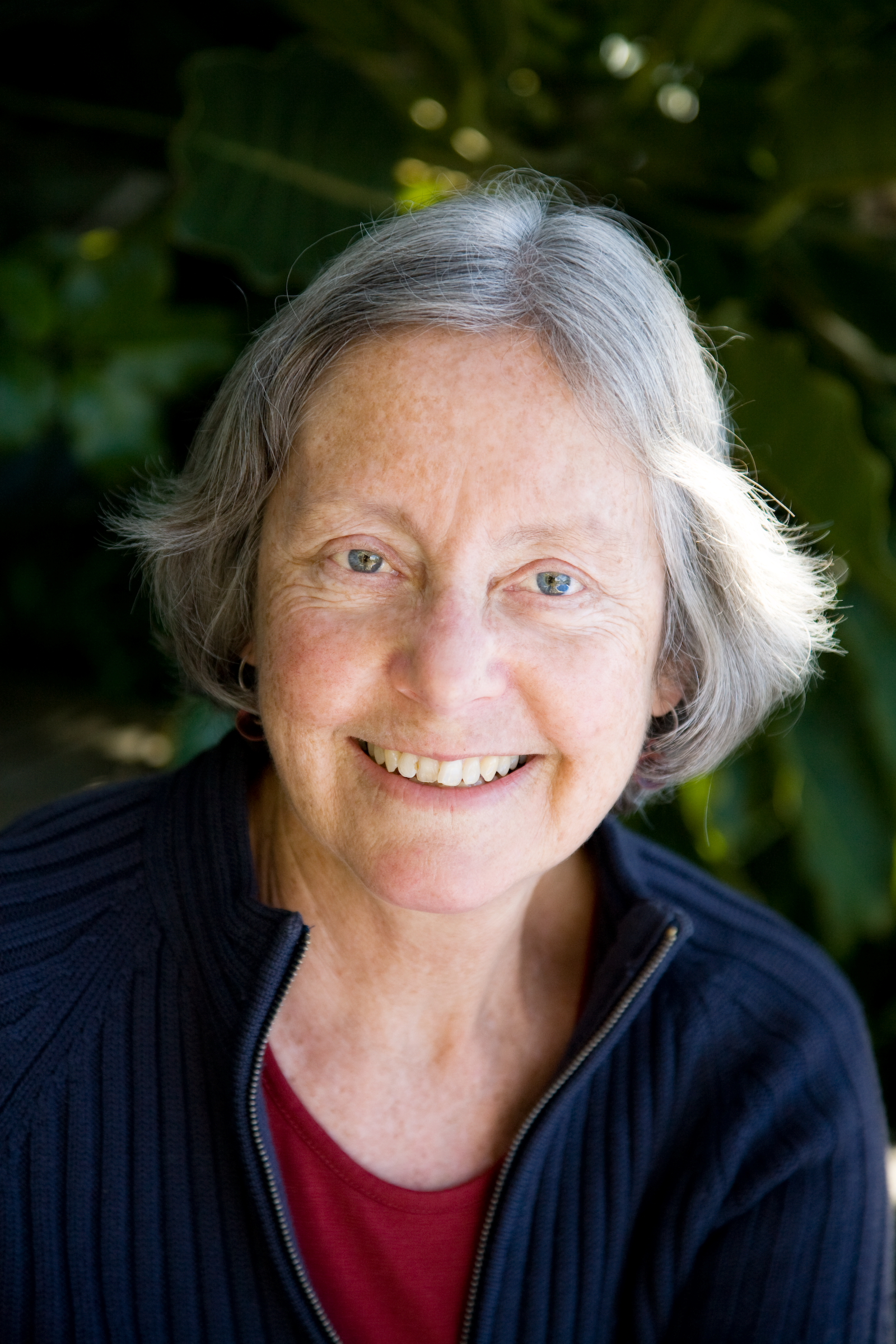
Dinah Hawken is a poet who lives in Paekakariki on the Kapiti Coast. Her seventh collection of poems, Ocean and Stone, was published by Victoria University Press in 2015.


Poetry Shelf interviews Jenny Bornholdt: ‘There’s always a feeling, a kind of charge, when a poem is making itself known’


Jenny Bornholdt (Deborah Smith 2016).jpg

Photo credit: Deborah Smith


‘The moon came up

and all our thinking

went sideways.’


from ‘Full Moon’


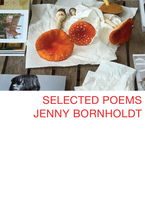
Jenny Bornholdt is one of my favourite New Zealand poets, so a new Selected Poems is an occasion worth marking. Her poetry traverses decades; her poems never lose sight of the world at hand, are unafraid of the personal or little ripples of strangeness, and underscore a mind both roving and attentive. There is an ease of writing that might belie slow craft but Jenny’s poetry is exquisitely shaped from line to form. Returning to the early poems, I was taken once again by their enduring freshness. A lightness of touch, honeyed lines. As poet, Jenny harvests little patches of the world and transforms them into poems. Patches that might be ordinary or everyday, offbeat or linked to feeling something – patches that stall me as reader. I love that. When I read the poems, I get access to a glorious poetry flow yet there are these luminous pauses. If I were writing an essay, it might explore the poetics of pause and currents.

When I was editing Dear Heart, I pictured a little chapbook of Jenny Bornholdt love poems because she has written some of my favourites whether for husband, father or child (‘A love poem has very long sentences,’ ‘Poem,’ ‘Pastoral,’ ‘Mrs Winter’s Jump,’ ‘The inner life’ ‘Full Moon’ for starters).

To have this new book is a gift. Thanks Jenny for the interview.


selected_poems_jenny_bornholdtrgbweb__66924-1464840641-220-220   selected_poems_jenny_bornholdtrgbweb__66924-1464840641-220-220   selected_poems_jenny_bornholdtrgbweb__66924-1464840641-220-220

Selected Poems Jenny Bornholdt, Victoria University Press, 2016


Did your childhood shape you as a poet? What did you like to read? Did you write as a child? What else did you like to do?

Yes, I think it did. I was one of those kids who read a lot – anything that was going. I loved the Readers Digest. My mother took us to the library every week and I got out four books, which was the limit then. I also spent a lot of time outside – we had kids our age next door and over the road and we spent most of our time with them.


When you started writing poems as a young adult, were there any poets in particular that you were drawn to?

I didn’t write any poems til I was about 18. I read a lot of novels and if I thought about being any kind of writer it’d would’ve been a novelist, or journalist, which is the direction I headed in.  I’d read some of the Mersey poets when I was younger and I remember liking Roger McGough’s casual, ‘talky’ style.


Did university life transform your poetry writing? New discoveries or directions?

University was where I discovered poetry. I really had no idea about anything before I went there.  Everything was exciting – from Middle English to contemporary American poetry. And I did the ‘Original Composition’ course, which changed everything.


‘So careless the trees—

having remembered their leaves

they forget them again

so they fall on us, big

as hands.’


from ‘ Autumn’


Your poetry reflects a quiet absorption of the world that surprises, moves and astonishes. Sometimes it feels as though you tilt the world slightly for us to see. What are key things for you when you write a poem?

Each poem is different, but there’s always a feeling, a kind of charge, when a poem is making itself known. It’s a matter of trusting yourself and following the direction of the poem.


Reading your new Selected Poems sent me back to the original collections with admiration and delight. It is fascinating reading across the arc of decades—gathering echoes, favoured motifs, shifting melodies. Do you think your poetry has changed over time? Did you spot points of return such as leaves, the garden, or baking?

There are many points of return. One thing that surprised me was the number of tea towels in my poems.

It was really interesting making the selection for this book – there seemed to be such a strong sense of continuity. I can see changes, though, and that’s good. I think I’m writing better poems – they seem stronger to me. Over time I think I’ve let myself get a bit weirder.


Ha! I love the idea of tea towels. I never spotted them. I think I need to send you a poetry tea towel to celebrate. I am always drawn to the conversational tone that is both of the everyday and rises beyond it in your poems. How do you see your poems working as conversation?

They’re probably a conversation with myself. Me saying things out loud to see what happens.


Some of your most moving poems document illness. Do you think illness made your writing life more difficult or did writing give you solace and energy? Or something altogether different?

Illness definitely made my writing life difficult. I was out of action for a year with bad hip pain and didn’t write anything. I could barely get out of bed. Then, after surgery, I spent a year recovering and during that time my writing life began to surface and I found enormous solace in it. Writing gave me a way of processing what had happened – of making it into something else. It was like turning the awfulness around and sending it off in another direction.


‘For six weeks now I’ve been outside of weather

and of reading. Outside of myself.’


from ‘Along way from home’


The result for the reader is a cluster of poems that draw you into that experience of illness, then lead you in so many other directions. You have never been afraid of a longer poem, of longer lines and and a slow unfolding of subject matter like a storyteller holding a listener in the delicious grip of attention. Do you have one that particularly resonates for you?

I love all the poems in The Rocky Shore. You’re probably not meant to say that about your own work, but there you are. Those poems resonate because they’re so much about my life and what’s important in it. Those poems really found their form.


I love the Rocky Shore too. I agree they have found just the right form and within that form a perfect alchemy of ingredients. It is on my shelf of classic NZ poetry books. When you were putting the selection together was there an older poem that surprised you – like coming across a long-lost friend?

I was surprised by ‘Waiting Shelter.’ I think that one’s still got something.


‘How you remember people. To remember

them as well as they remember you.

To remember them with abandon. To


abandon remembering them. Which is

better? or worse? Rooms and rooms

and always people moving in


and out of them. Love,

love, a knock on the door. A

heart murmur to remember you by.’


from ‘Waiting shelter’


What poets have mattered to you over the past year? Some may have mattered as a reader and others may have affected you as a writer.

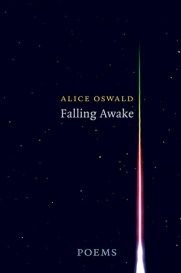
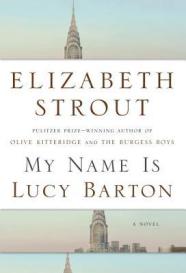
I’ve read and re-read Mary Ruefle’s book of essays Madness, Rack, and Honey – it makes me want to write. I find prose writers often affect me strongly – I’ve just read by Elizabeth Strout, for the third time this year. It’s one of the most affecting books I’ve ever read. Alice Oswald’s new book of poems Falling Awake is a marvellous, strange thing.


What New Zealand poets have you been drawn to over time?

Dinah Hawken, Bill Manhire, Andrew Johnston, James Brown, Mary Ursula Bethell, Geoff Cochrane.


Michele Leggott has talked about a matrix of early women poets in New Zealand who supported each other. Have you sustained a vital conversation with poet friends on your own work and on the whole business of writing poetry?

Greg (O’Brien) and I talk about poetry a lot – it helps to live with someone who does the same thing you do. And I often talk to friends (some of them writers) about writing and reading. It’s so much a part of my life that I can’t imagine not talking about it.


Some poets argue that there are no rules in poetry and all rules are to be broken. Do you agree? Do you have cardinal rules? Do you have rules you particularly like to break?

I think it’s more that there are conventions and, as in any art form, these can be done away with as long as what happens ‘works’. Poems are strange things – they have their own logic and find their own forms.


‘This poem was always going to end there, with Frankie

and the toast. That image has been the engine


of the poem, but then

more happened.’


from ‘Big minty nose’


The constant mantra to be a better writer is to write, write, write and read read read. You also need to live! What activities enrich your writing life?

Most things, except doing my tax return.


Finally if you were to be trapped for hours (in a waiting room, on a mountain, inside on a rainy day) what poetry book would you read?

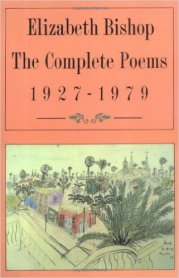
Elizabeth Bishop’s Compete Poems.


51yTZd+toIL._SX319_BO1,204,203,200_.jpg     9780393285284_300.jpg    25893709


Victoria University Press author page


Landfall Review Online showcases great writing (reviewer and the poets): Elizabeth Morton on Joan Fleming Dinah Hawken Claire Orchard

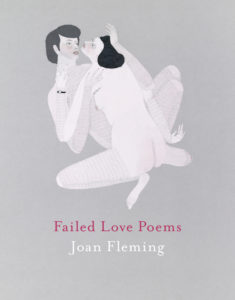
failed_love_poems_fleming-235x300


Full review here

On Joan Fleming: Failure makes lemonade; slams one door only to shake others open – sometimes. Failure has a knack of forcing its protagonist down substitute alleyways, leaving one to navigate unorthodox routes in pitch black. Joan Fleming’s latest collection, Failed Love Poems, is about Love, but more so, it is about a lengthy, howling procession of Loves gone kaput. There is love clinging on by tooth-strings, love in absentia, love as apology, love treading on eggshells, love cemented in verse, and love that ebbs in spite of itself.

My two poetry readings to launch my new book feature some of my favourite poets

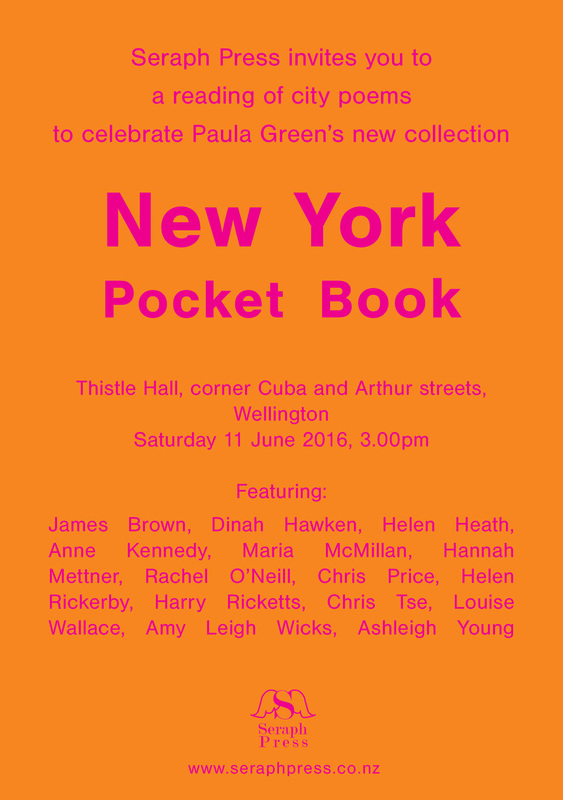
Like so many poets, I loathe people making speeches about me or my work. Much better to stage a poetry reading and celebrate the pull of cities.

My new poetry collection comes out of ten exceptional days I spent in New York with my family awhile ago. So I have invited a bunch of poets I love to read city poems by themselves and others. Big line-ups but it will free flow and leave time for wine and nibbles.

Once I got to fifteen I realised what poetry wealth we have in these places. I could have hosted another 15  in each place easily. That was so reassuring.

If I had time and money, I would have staged similar events in Christchurch and Dunedin where there bundles of poets I love too.

Please share if you have the inclination.

And you are ALL warmly invited!

Auckland:


7601147_orig.jpg


Wellington:


Auckland:2434463_orig.jpg

Maria McMillan on Wordsongs


Wordsongs, St Peters Hall, Paekākāriki, 3rd March 2016


I go partly because there’s like a major poetry type gig in Paekākāriki and I’m a Paekākāriki poet and it feels a bit rude not to go. Imagine, I think, if there’s only six people there without me and they decide never to have anything poetry related in our village ever again. Yes, we call it a village and I needn’t have worried. Having scoffed down as much of a delicious fried-rice concoction as I possibly could in 94 seconds  I arrive three minutes late and take the Very Last Seat. It’s an actual excited crowd, in carefully arranged tiers. They’ve turned St Peters Hall around so we face the direction of the sea and one long side of the hall with its cool house-shaped wooden-window shutter things. The huge red velvet curtain hangs over the stage to our left and the doors to the village main street to our right.

I love this hall but truthfully, I’m a bit wary of poetry set to music. It’s the puritanical killjoy in me which says, honey, you need to decide, music or poetry. Just get away with your weird, not very interesting bongo drumming interspersed with a man saying two words usually something like organic tomatoes in  a quiet yet loud, yet well modulated, yet with working-class-solidarity voice and then pausing a full minute while making eye contact with every member of the audience before saying wet. But I know it’s kind of prudish of me and I need to open myself to new experiences so I am willing and here and listening.

Local poet, Dinah Hawken, who starts us off, makes me feel very comfortable. She reads her poetry sans music, the way it should be (sorry) and she starts with a good long poem about environmental catastrophe. The poem earns its length and I enjoy Hawken’s meditative delivery. She reads slowly and thoughtfully and the poem turns from lament to challenge to conversation. I feel like I’m hearing more and more poetry like this, laced with planet grief and helplessness and wonder. I’m glad it’s being written.

The main act is  Bill Manhire with singer Hannah Griffen, pianist Norman Meehan and Hayden Chisholm on saxophone and clarinet. To begin with I think Chisholm is tuning up, his sax is breathy and rough and understated and there’s no clear strong notes but then I realise this is part of it all. He’s throat clearing and then the other clear notes come, but through the set I see this replication of human noises, and also the absorbing of other sounds and instruments. I hear reverb and the plucking of a guitar, slow growling, didgeridoo and the noise of traffic all through his instruments.

In this first song, an interpretation of Baxter’s High Country Weather, the piano and singing come in beside the brass and I’m startled by how much action, how much sound can be produced by just three people. Griffin’s voice is like some really good jazz club singer. I get that vibe through the night. I want to be sitting at a small lamped table having intimate conversations. She sings big, beautiful and clear, high and low.  Next Bill, congenial and with charming anecdotes that thrill the poetry nerd in me, reads Rain by Hone Tuwhare and then the three musicians play it back to us. I get it now. I can listen to the poems read as poems, and listen to the music as music. No bongo drums. No organic tomatoes and soulful stares. It’s a relief. And when I hear Rain sung I’m struck by how lineation changes with the music, the words become split and lumped in different way. We can hear hidden rhymes and rhythms which may be a subtle backbone to verse on the page but in music are drawn out and played with. Cool.

Meehan tells us the set is pretty much the album Small holes in the silence, featuring versions of  Manhire and other poets’ work as songs. We hear interpretations of Alistair Te Ariki Campbell, Manhire, David Mitchell, and my favourite piece, two poems by Eileen Duggan. I can’t actually hear the words as Griffin sings so perfectly in tune with the sax, so my liking this all the same proves how thoroughly mature I’ve become about the whole poetry and music mash up. What I love in this song is the way the sax more than ever takes the role of a voice; for a moment the sax and the singer are a duet and in a kind of heady triumph. After that the two seem to swap places; Griffin no longer singing words but sounds become another instrument and the saxophone becomes a human voice. It’s a meandering interesting work. I also love Manhire’s stories about and poem for Cornish poet Charles Causley. The evening ended with a spoken and then musical interpretation of Manhire’s rhyming list poem ‘1950s.’ The crowd loved it, they threw flowers, they cheered, they stomped. Well, they didn’t but I’m sure if they thought of it they would have. They applauded long and hard. I wander out into the Paekākāriki night. Now the traffic sounds like a saxophone. The crossing signals go off. A train, windows bright, rumbles past us on its way to Waikanae. I wave.

Maria McMillan


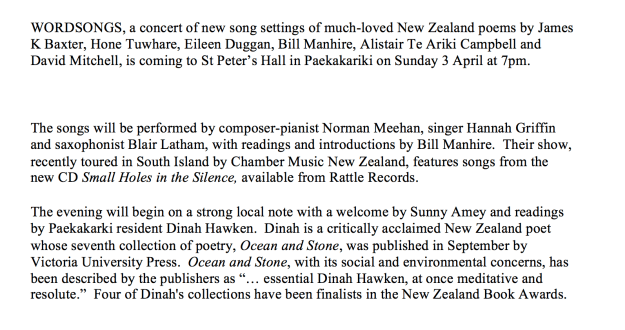
Dinah Hawken to open WORDSONGS

I seem to have been a roving poetry reporter these past few weeks but time to shut the hatches and stay at home. This event will be good – I judge this on my experience of hearing Hannah sing Bill at the AWF a few years ago. Transcendental experience.

I urge you to check this poetry event out and would love a wee response from a poetry patron to post on the blog.


Screen Shot 2016-03-23 at 10.12.24 AM.png


Screen Shot 2016-03-22 at 6.28.24 PM.png


Tickets $20 from Eventfinder or Darcey’s Fruit Shop.  Limited door sales at $25.

QUERIES: Gilbert Haisman.  Tel 04 904 8428 or 022 0122 103. Email: thewordshop@paradise.net.nz

Some photos and thoughts on The Lauris Edmond Memorial Poetry Award

This award was launched by the Canterbury Poets’ Collective and The NZ Poetry Society in 2003. Five poets read in a festival slot and one poet gets the award. Originally the event was staged during the Christchurch Writers’ Festival but, after the earthquake, it moved to Wellington (with one brief return).

This year Dinah Hawken, Bob Orr, Claire Orchard, Chris Tse and Harry Ricketts read. The festival as a whole seems to short change poetry somewhat, so I welcomed the opportunity to hear this group. Ultra small venue which was full to max. Would there be an audience to fill something a little bigger?

But smallness is intimate and the readings were a treat. I was especially keen to hear Claire Orchard read as I have her debut book next on my pile to read and already have a strong relationship with the work of the other poets. I loved her reading.

The winner: Bob Orr. It feels like this award casts light on a poet who deserves a little more attention. Bob has the ability to take you to all four corners of the world and show you a vital snapshot. Something that gets to the very heart of place, of people, of experience. His poetry comes out of strong attachment to home but is wide in its reach. Wonderful!

Bob thought he had just come to read a couple of poems  so was quite surprised to get the package with a cheque.

A few years ago I was delighted to launch a collection of Bob’s at the Grey Lynn Library. It was packed to the rafters with poetry fans of all ages. So seldom do I see such a turn out. The warmth and affection for Bob and his poetry in that room was exactly why he deserved this award.

Congratulations!

Poetry Shelf, Poet’s Choice: Rachel Bush makes her pick

c52510c0-ccf5-4568-88dc-14eed8f6eafe     c52510c0-ccf5-4568-88dc-14eed8f6eafe


I was hooked by the couplet that begins the first poem in Ocean and Stone by Dinah Hawken (Victoria University Press 2015).

‘Here I am an old woman, sitting alone / on an outside chair in Maoriland,’ she writes. I am captivated by this concise and evocative sketch of herself. That word ‘Maoriland’ with all its nuances and baggage still turns over and over in my mind.

Dinah  writes beautifully about children, particularly in this book  about her grandchildren. There is none of the cuteness that can mar writing about little children. Hers are tiny in stature, but total and convincingly human beings.

She can be very funny, for instance when she writes about ‘the bloke’ who disrupts the lake and everyone peacefully round it by tuning a loud speed boat for hours on end. We all know him, alas.

She writes particularly well about the natural world. I find it difficult to say without sounding as though I am attributing to her some wise conventional pieties. And the very last thing she does is write things that sound good and ‘nice’. If I had to pick a favourite poem, today  I might choose ‘A screen is a screen’. Partly it’s a poem about climate change, but there is no hefty lecturing about it. The ubiquity of screens in our daily lives is countered with the strength and vitality of one bare tree, and with a the way a sense of community and family can  enrich our lives.

Rachel Bush

Poetry Shelf interviews Dinah Hawken — ‘any attempt to mirror the natural world is about relationship’

_MG_3288c52510c0-ccf5-4568-88dc-14eed8f6eafe


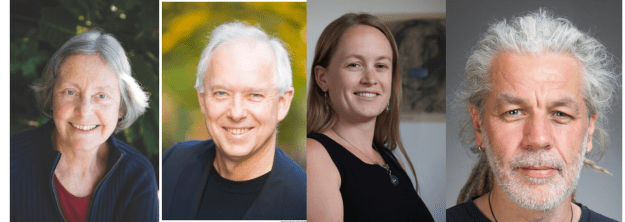
Dinah Hawken is one of New Zealand’s most critically acclaimed poets. Born in Hawera in 1943, she trained as a physiotherapist, psychotherapist and social worker in New Zealand and the United States. Most of the poems in her award-winning first collection It Has No Sound and Is Blue (1987) were written in New York in the mid-1980s while she was studying at Brooklyn College and working with the homeless and mentally ill. Her two most recent books, One Shapely Thing: Poems and Journals (2006) and The Leaf-Ride (2011), were both shortlisted for the New Zealand Book Awards. Dinah was named the 2007 winner of the biennial Lauris Edmond Award for Distinguished Contribution to Poetry in New Zealand. She lives in Paekakariki. Victoria University Press has just released a new collection of poems, Ocean and Stone.


Did your childhood shape you as a poet?

Yes I’m sure it did. One of my favourite memories as a child is my father reading A.A.Milne – the poems – to me when he came home from the farm. We didn’t have a lot of children’s books in those days (40’s and 50’s) and so he read them over and over again and we knew them by heart. Sometimes my younger brother and I would act a poem out: ‘Sir Hugh was singing hand on hip/when something sudden came along …’. What I loved, looking back, was the way my father and his voice changed when he read these poems. Suddenly he was a changed man, a more mysterious and musical man, and the poems had somehow changed him.

There was one poem that had a profound, perhaps lasting, effect on me psychologically. ‘The Dormouse and the Doctor’ – do you remember it? The dormouse was living happily ‘in a bed of dephiniums (blue) and geraniums (red)’ when the Dr came hurrying around and prescribed instead a bed of chrysanthemums (yellow and white). When ‘they took out their spades and dug up the bed/of delphiniums (blue) and geraniums (red),’ I was devastated at the injustice and imposition of it. They didn’t understand that ‘much the most answering things that he knew/were geraniums (red) and delphiniums (blue)’. I was worried by this story – the powerlessness of the small, the arrogance of grown ups – but at the same time I was impressed with the dormouse’s solution of imagination: ‘I’ll pretend the chrysanthemums turn to a bed/of delphiniums (blue) and geraniums(red).’ It made me determined to fight to remain myself, to hold onto my ideas and attractions even if I was misunderstood. Like the dormouse I was a dreamy child, but also an active one – a tomboy, keen on sports and outside a lot with bare feet. I thought of myself as a reader not a writer.


As a young adult, were there any poets in particular to which you were drawn?

When I went to Dunedin as a school leaver, to study Physiotherapy, James K. Baxter was living there and I went to some of his poetry readings and lectures. He was the first NZ poet I had ever heard or read and The Rock Woman (selected poems) was the first book of poetry (besides A Pageant of English Verse) that I had ever owned. I’ve just taken it off the shelf and it is one of the most worn books in my poetry collection. I felt the emotion and music in those poems, the power of ‘the best words in the best order’, and the sense of being understood as a human being who lives in this place, this landscape. Existential questions were in the air for me at 18 or 19 and one poem, ‘The Cold Hub’ gave me a strong sense of fellow-feeling and therefore consolation. Poetry as consolation became important for me.

The next year in Palmerston North was significant for me in terms of poetry too. I had a boyfriend who not only liked poetry (a rare find) but who really loved Baxter and who introduced me to e.e. cummings and Yevtushenko. Both mind-opening in their own ways. What’s more, in Palmerston North, I also made a close friend, Phillappa, a nurse, who read poetry and wrote it. She showed me it was possible even though I didn’t start writing seriously – though secretly – till I was in my late 30’s. She was the first person I showed my poems to at that time. And a couple of years later I applied for Bill Manhire’s undergraduate creative writing course.


Your new collection, Ocean and Stone, is one of your best yet. At times, the poems lead me to a place and point of contemplation (outside urban bedlam). The poems remind me of the way I go down to the beach in the morning and all is the same (sand sea sky), yet there is always a pull of shifting nuances. Do you ever see your poems as a way of translating relations with the natural world, both private and nourishing?

Yes I do. Moments and experiences in the natural world give me such pleasure and uplift that I do have an urge to record and share them even though words so often fail the actual experience. But the attempt feels important. And I’m glad you used the word ‘relations’ because any attempt to mirror the natural world is about relationship. I’m a person who wonders a lot and the world around me is one of the most ‘answering things’ that I know.


And wanders in that wondering. That’s what hooks me as a reader. I find your poems are often things of beauty, yet there is a political edge here. It is as though we can no long view the ocean, for example, solely through the exquisite lens of its moods and bounty. Do you see yourself as a political poet? Overtly so or in more subtle ways?

As time has gone on I realize that I am both a nature poet and a political poet though I don’t set out to be. And I hope not exclusively. A poem usually begins with a phrase, a word, an image or a feeling that has a grip on me in some way. It can be a light and friendly grip or an intense, even painful, grip. The poem develops from that and, because of my interests and preoccupations, political concerns or the landscape, often become a part.

In Ocean and stone there is a poem called ‘The uprising’ that was a commission for Lloyd Jones’s issue of the Griffith Review called Pacific Highways. I began the poem thinking about the Pacific, with no conscious intention of writing a political poem. But I’d just read a book about the state of the world’s oceans and the facts in that book, and my feelings in relation to them, naturally flowed into the poem.

But it’s a balancing act to write a political poem and I sense that many poets might disapprove of my attempts – on the grounds of didacticism, emotionality etc. I’m naturally a direct person and I’ve had to learn more indirect and layered ways of expressing myself in poetry. But I’m also willing to be direct about strong personal feelings – a political poem is also a personal poem.


No matter how many times you write a stone poem, Dinah, you have the ability to replenish the subject (I posted one of my favourites from your new collection here). Do you have other motifs to which you are drawn?

Isn’t it amazing how stirring a small stone, like a blank page, can be? I’ve just looked up that famous poem ‘Pebble’ by Zbigniew Herbert where he writes that the pebble ‘is a perfect creature/ equal to itself’ that ‘does not frighten anything away.’ That seems so true to me.

As far as other motifs go, I don’t know. Water, its fluency? Leaf, its green, its growth? ‘The child’? I find myself thinking a lot at the moment about ‘the stranger’.


Yes definitely water! And the child. The grandchildren poems add a different layer to the collection. They remind me of the way women are often keepers of the family archives (scrapbooks, photo albums, treasure boxes). Do  you feel these poems are as much a gift to the family as they are for the reader?

Definitely. I did write them as a kind of scrapbook, a record of my grandchildren’s early development, trying to ‘hold’ some of the delight and moments of discovery that babies and toddlers go through. I started, in my last book, with Elsa from new-born to 16 months and then carried on with Nate from about that age to two and a half. Such an extraordinary time, as a child meets the world. And as a parent you are often too busy to stand back and see it happening.

I’m about to put all the grandchildren poems together in a small volume for the family – and perhaps for other parents of small children as well.


The untitled fragments throughout the book (that ‘stem from the epigraph which is a found poem from The Unsettling of America by Wendell Berry’) are so fertile. I particularly loved: ‘a blank page has limits// and no limits.’ What kind of limits do you bump against as a writer?

I no longer have the external limits of time and stress and children and work that many younger writers have – I feel very lucky in that respect. I love writing without pressure – but on the other hand I do have the limits of older age; lack of energy, poorer memory, uncertain health. I find it harder to find words, I seem to have less access to dreams that were a great resource earlier in my life. Many of the poems in the second part of Ocean and Stone are about living with various kinds of decline.

There’s a difference between limits and limitations and so I also have to live within my inherent limitations as a writer. It seems important at this stage to try and see clearly what they are, whether they have any give in them, and to thrive within them. Limits and limitations have a bad name but I see them as the boundaries within which we can have the most ease and can be the most creative.


I love that dichotomy. Is doubt a key part of the writing process along with an elusive horizon of where you are satisfied with a poem?

Another way of considering the contradiction of ‘limits// and no limits’ is to think about faith and doubt in the writing process. They both seem to be essential: faith to believe that something can come from nothing; and doubt to be always willing to question what comes. When I began writing I would lurch, often painfully, between one and the other, now (fingers crossed) it’s more like quietly shifting weight. But you can’t write, can you, without doubt? You can only try to hold confidence and uncertainty in some kind of balance as you go.

I often have an intuitive idea of when a poem is finished in terms of content and length but the editing and re-arrangement inside it can go on for months. Leaving it for a good length of time helps me a lot – to free up and be less attached to what’s there. I don’t have poet friends, or a group, to share this process with at the moment but have in the past found feedback from others invaluable. It was great to have Fergus and Ashleigh at VUP look carefully at my manuscript for Ocean and Stone.


What poets have mattered to you over the last year?

The two most important books for me in the last year or so – both as a reader and a writer – are The Great Enigma by Tomas Transtromer and Faithful and Virtuous Night by Louise Glück. I’ve been attached to Louise Glück’s poetry in the past and was thrilled to discover this one (Carcanet 2014) and find it so impressive. Without your question I mightn’t have noticed that these two books, though different, have the same attraction for me. Both poets use accessible language and strong short sentences developing a narrative that is clear but at the same time mysterious. I love that. They have quite different tones; Glück’s intense, sometimes threatening, Transtromer’s lighter, more surprising. I was strongly aware of Transtromer while writing the first sequence in my book ‘The lake, the bloke and the bike’ but I’m not sure if, or how, his poems might have influenced mine.


What activities enrich your writing life?

Almost everything I do has the potential I expect, but when I think of Ocean and Stone, I see how it reflects a number of my non-writing activities. For example, babysitting grandchildren, gardening, friends, walking on the beach, Tai Chi Chuan. The last sequence in Ocean and Stone , though triggered by the McCahon painting, has a number of the names of Tai Chi postures in it and I wanted the poem to be a kind of Tai Chi sequence even if the reader doesn’t recognize it at all.

There’s no doubt that I’m a poet whose material comes from her own world but in Ocean and Stone I enjoyed very much re-telling the Sumerian myths, forgetting myself, and entering stories from another time and place. Yet stories that have relevance still.


Victoria University Press page

NZ Book Council page

Poem Friday: Dinah Hawken’s ‘Stone’ – Its window catches any number of lights


Stone


Stony this, stony that. They are cold

today, these stones on the desk.

Stone cold. Stone blind. Stone deaf.

Heart, reception, stare, silence.

They remember the slingshot.


It is said he is a man to reckon with.

He hasn’t spoken to his son for years.

It is said that words will never hurt you.

‘To be hard in hard times,’ he announces,

‘we must build an expressway like an arrow


through the quiet heart

of your coastal town.’ Cold facts

say one thing, cold politics another.

We remember the ballistic missile.

The falling debris and the striking edge.


© Dinah Hawken Ocean and Stone Victoria University Press, 2015


Author bio: Dinah Hawken is one of New Zealand’s most critically acclaimed poets. Born in Hawera in 1943, she trained as a physiotherapist, psychotherapist and social worker in New Zealand and the United States. Most of the poems in her award-winning first collection It Has No Sound and Is Blue (1987) were written in New York in the mid-1980s while she was studying at Brooklyn College and working with the homeless and mentally ill. Her two most recent books, One Shapely Thing: Poems and Journals (2006) and The Leaf-Ride (2011), were both shortlisted for the New Zealand Book Awards. Dinah was named the 2007 winner of the biennial Lauris Edmond Award for Distinguished Contribution to Poetry in New Zealand. She lives in Paekakariki.


Note from Paula: This poem is in Dinah’s new collection just out from Victoria University Press. It is an utterly beautiful book in every detail (the feel of the pages, the choice of font, the simplicity of the cover and of course the billowing beauty of the poems themselves. I have been a Dinah-Hawken fan for a long time. I remember the pleasure of writing a long essay on Small Stories of Devotion as part of my Masters degree. There has been a sustaining chord between Dinah’s work and my writing since those far-off days. In part it is to do with the grace, the elegance, the economy, the lyricism. In part it is to do with the sumptuous view that settles as you open the window of the poem. In part it is the curious self that questions the world and the way we do things.

This poem is a thing of beauty, and it draws upon all the things I have detailed above. There is the lyricism that builds out of stress, meter and repetition (‘Stone cold. Stone blind. Stone deaf.’) There is the way a thing (stone) shakes with life and possibility. There is the way, with that small frame of the window ajar, we fall upon the beauty of an object (a stone) and then fall away to the hurt we inflict upon each other — at the level of the individual, the level of a town, the level of a nation. It really is the kind of poem that needs to speak for itself, to shimmer on the page in its own marvelous way. Its window catches any number of lights.


Victoria University Press page

NZ Book Council page