
Subscribe to continue reading
Subscribe to get access to the rest of this post and other subscriber-only content.

Subscribe to get access to the rest of this post and other subscriber-only content.
Written yesterday
It’s Valentine’s Day at this far edge of the Pacific
Clouds hang heavy, obscuring the shape of the land
Cook never made it here
But, according to Wikipedia, he made all of this possible:
I now live in the most livable city in the world
Named after a man who, they say, died in obscurity
One Of Those White Men whose names are all most of us know
about places they barely touched
Vancouver
Vancouver
Vancouver
Whose names have become lines we are forced to repeat to repent of our sins
Vancouver who was born in Norfolk
(Pauline soaks aute on an Armidale afternoon –
her work and her veins tying her family via Norfolk Island
via Pitkern
to Tahiti)
Vancouver who forty years later died in Petersham
(my Sydneysider Ngāpuhi friend Carleen
lived near Petersham
on Gadigal country)
which is in Surrey
there’s a Surrey here too –
home of the fourth largest Indo-Fijian community in the world)
Vancouver mapped this Eastern edge of Oceania,
Becoming one of those white men who will never be obscure or forgotten
From here, when I look back towards home,
Hawai’i is in the middle distance –
Those complex supple islands where I repaired my waka
the other time I fled from home
Those staunch expansive islands
where love put Cook where he belonged
It’s already the fifteenth of February in Aotearoa
And the annual jokes about Cookery and love for Hawaiians
are day-old tweets
While here, today, it’s still the fourteenth –
The day to march downtown for lives and deaths of Indigenous women
But we’ve moved too recently with a daughter
too young to be kept safe in a pandemic
(As if this colony has ever been safe for Indigenous girls)
So I sit, scrolling, in a hired car and read
that New Zealand’s sixth highest mountain
is also called Vancouver.
I am trying to guess which maunga his name has smothered
and for how long,
I am undone, again –
By how much I have yet to learn about the place I am from
And how much I have yet to learn about this lovely drizzly place
With all these names that hang heavy,
obscuring the shape of the land.
Alice Te Punga Somerville
Alice Te Punga Somerville (Te Āti Awa, Taranaki) is a scholar, poet and irredentist. She researches and teaches Māori, Pacific and Indigenous texts in order to centre Indigenous expansiveness and de-centre colonialism. Alice is a professor in the Department of English Language and Literatures and the Institute for Critical Indigenous Studies at the University of British Columbia. She studied at the University of Auckland, earned a PhD at Cornell University, is a Fulbright scholar and Marsden recipient and has held academic appointments in New Zealand, Canada, Hawai‘i and Australia. Her first book Once Were Pacific: Māori Connections to Oceania (University of Minnesota Press, 2012) won Best First Book from the Native American & Indigenous Studies Association. A recent book is Two Hundred and Fifty Ways to Start an Essay about Captain Cook (BWB, 2020). Alice’s debut poetry collection, Always Italicise: How to Write While Colonised (Auckland University Press), is shortlisted for the 2023 Ockham NZ Book Awards.

Always Italicise: how to write while colonised, Alice Te Punga Somerville, Auckland University Press, 2022
And then you skype with me late one afternoon to practise your speech
which begins with your pepeha as if that is the most ordinary way to start
when you’re eleven years old.
How were we to know – even to guess – that this language would be your weapon
Your strategy
Your bullet-proof vest
from ‘Anchor’
Alice Te Punga Somerville’s new collection offers four vital sections: reo / invisible ink / mahi / aroha. Sections in their own right but the discrete boundaries blur as movement and connections abound. The categories strike a chord, deep seated, poignant, as though this exquisitely designed book becomes a register of life – how we speak, how we are unseen and unspoken, how we work, and how we love. Importantly, how we become.
Alice was once told foreign words need to be italicised, to be rendered apart from standard English. This alienating process includes te reo Māori. Yet some words are adopted by English and slip off tongues without e-strange-ment: think pizza, pasta, cappuccino. Think haka and marae. Inconsistent. Alice puts the shoe on the other foot and italicises the English language leaving te reo Māori as notforeign. It is poem performance yes, but more importantly it is action.
The overturned italics convention, carried across the length of a book, is an insistence. It is personal, it is political and it is ancestral. We are what and how and why and where and who we speak. The historical and contemporary silencing, the historical and contemporary othering of language is inexcusable.
Alice’s poems are writing on the breath, breathpoetry, utterly fluid; it is writing on the breath of memory, story, change, ideas, feeling. Her poems carry the rhythm of life – of reo, invisible ink, mahi, aroha. There is the rhythm of prayer and the rhythm of waiata. The poetic rhythms and crafted fluencies carry the reader across eclectic subject matter.
Alice is spotlighting indigenous worlds, an indigenous presence, replying to colonised worlds. She is building a poem space and a poetry home. Many poems are dedicated to other people, underlying the idea we write within nourishing communities of readers, writers, thinkers, mentors. And for Alice, this includes the academic, acknowledging her poetry is in debt to her life as an academic. The academy is joy but it is also challenge, with settings that are racist, privileged, biased.
Books reach us at different times and in different ways. As readers we establish myriad travel routes through a book, we bring our own experience close or hold at a vulnerable distance. Books are my life rafts at the moment. With the road ahead still bumpy, still uncertain, I hold language and love close, I work and take little steps each day. I see Alice’s glorious, ground-establishing poetry collection as her mahi, her aroha. It is a book spiked with anger and it is a book stitched with love. It has made me smile and it has gripped my heart. It is the most affecting book I have read this year.
Pick up coffee cup and printed pages, open the screen door, walk back inside.
My eyes take longer to arrive than the rest of me:
they’re still adjusted for the brightness outside;
I bump into things, blind, while I wait for my whole self to arrive,
and realise this is the only worthwhile way to proceed anyway –
All of me, all at once:
anger, frustration, cynicism, hope
and, in the centre as well as the outer reaches, love.
from ‘Too’
Alice Te Punga Somerville, Te Āti Awa, Taranaki, is a scholar, poet and irredentist. She researches and teaches Māori, Pacific and Indigenous texts in order to centre Indigenous expansiveness and de-centre colonialism. Alice is a professor in the Department of English Language and Literatures and the Institute for Critical Indigenous Studies at the University of British Columbia. She studied at the University of Auckland, earned a PhD at Cornell University, is a Fulbright scholar and Marsden recipient and has held academic appointments in New Zealand, Canada, Hawai‘i and Australia. Her first book Once Were Pacific: Māori Connections to Oceania (University of Minnesota Press, 2012) won Best First Book from the Native American & Indigenous Studies Association. Her most recent book is Two Hundred and Fifty Ways to Start an Essay about Captain Cook (BWB, 2020).
Auckland University Press page
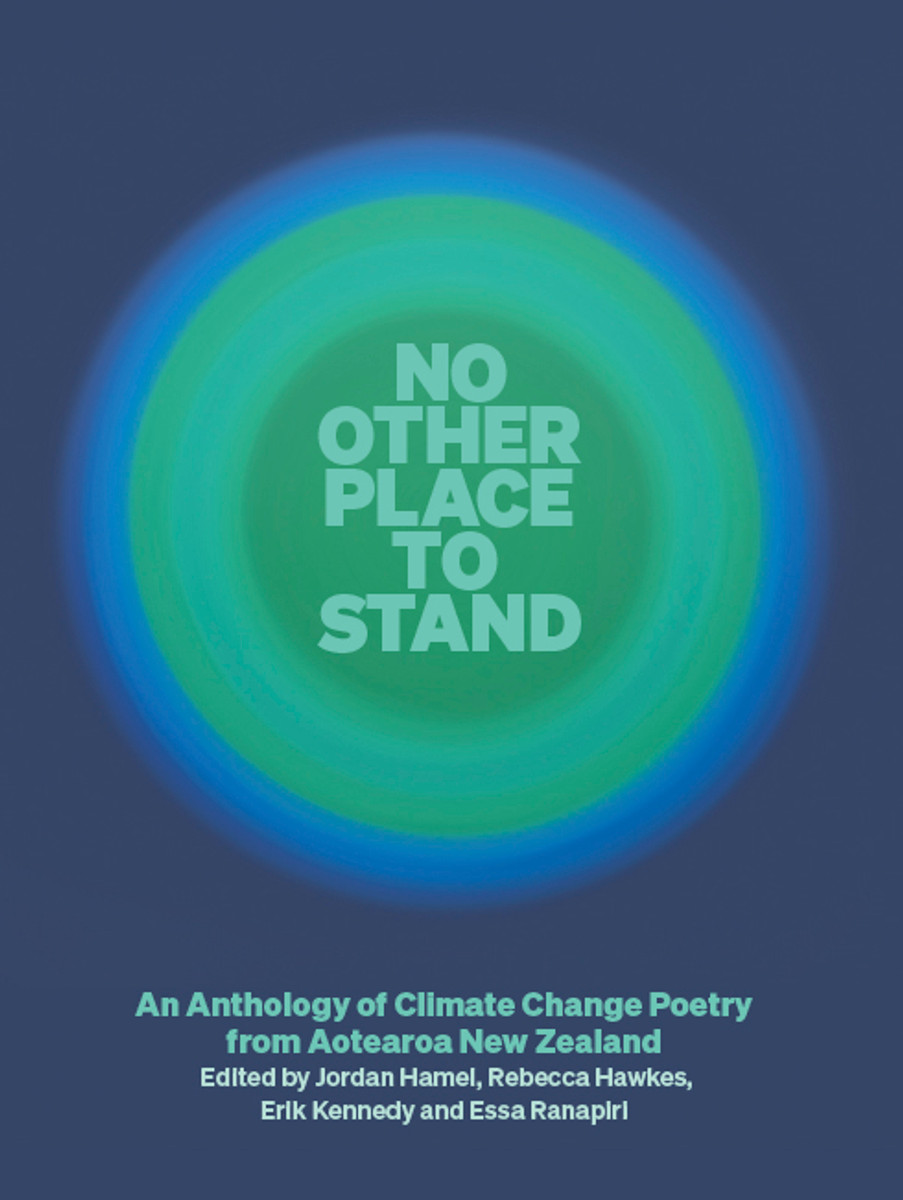
No Other Place to Stand: An Anthology of Climate Change Poetry from Aotearoa New Zealand, Jordan Hamel, Rebecca Hawkes, Erik Kennedy and Essa Ranapiri, Auckland University Press, 2022
Auckland University Press is to be celebrated for its stellar poetry anthologies. No Other Place to Stand: An Anthology of Climate Change Poetry from Aotearoa New Zealand offers an eclectic, and indeed electrifying, selection of climate change poetry. The editors, Jordan Hamel, Rebecca Hawkes, Erik Kennedy and Essa Ranapiri, are all frontline poets themselves.
The dedication resonates and stalls your entry into the book because it is so apt: “To those fighting for our future / and those who will live it.”
A terrific foreword by Alice Te Punga Somerville establishes a perfect gateway into the collection. Alice wonders, when climate change is such a mammoth issue, “about the value of the particular, the specific, the local, the here, the now”. What difference will reading and writing make when the world demands action? Alice writes: “Every single poem in this anthology speaks to the relationship between words and worlds.” That in itself is enough of a spur to get a copy of the book, and open up trails of reading, wonder and challenge.
I am spinning on the title. I am turning the word ‘stand’ over and over in my mind like a talisman, a pun, a hook. I am thinking we stand and we speak out, I am thinking we stand because we no longer bear it, and I am thinking we stand together.
The poems selected are both previously published and unpublished. The sources underline the variety and depth of print and online journals currently publishing poetry in Aotearoa: Minarets, Starling, Spin Off, Mayhem, Pantograph Punch, Poetry NZ, Blackmail Press, Overland, Sweet Mammalian, Turbine | Kapohau, Takahē, Stasis, Landfall.
No Other Place to Stand is an essential volume. You can locate its essence, the governing theme, ‘climate change poetry’, yet the writing traverses multiple terrains, with distinctive voices, styles, focal points. I fall into wonder again and again, but there is the music, the political, the personal, the heart stoking, the message sharing. There is the overt and there is the nuanced. There is loud and there is soft. There is clarity and there is enigma. You will encounter a magnificent upsurge of younger emerging voices alongside the presence of our writing elders. This matters. This degree of bridge and connection.
Dinah Hawken has long drawn my eye and heart to the world we inhabit, to the world of sea and bush and mountain, stones, leaves, water, birds. Reading one of her collections is like standing in the heart of the bush or next to the ocean’s ebb and flow. It is message and it is transcendental balm. Her long sublime poem, ‘The uprising’, after presenting gleams and glints of our beloved natural world, responds to the wail that rises in us as we feel so helpless.
6.a.
But all I can do is rise:
both before and after I fall.
All I can do is rally,
all I can do is write
– I can try to see and mark
where and how we are.
All I can do is plant,
all I can do is vote
for the fish, the canoe, the ocean
to survive the rise and fall.
All I can do is plead,
all I can do is call . . .
from ‘The uprising’
I am reading the rich-veined ancestor currents of Tayi Tibble’s ‘Tohunga’, the luminosity of Chris Tse’s ‘Photogenesis’, the impassioned, connecting cries of Selina Tusitala Marsh’s ‘Unity’ and Karlo Mila’s ‘Poem for the Commonwealth, 2018’. Daily routines alongside a child’s unsettling question catch me in Emma Neale’s ‘Wanting to believe in the butterfly effect’. I am carried in the embrace of Vaughan Rapatahana’s ‘he mōteatea: huringa āhuarangi’ with its vital, plain speaking call in both te reo Māori and English.
Take this heart-charged handbook and read a poem a day over the next ninety days. Be challenged; speak, ask, do. I thank the editors and Auckland University Press for this significant anthology, this gift.
Auckland University press page
Jordan Hamel is a Pōneke-based poet and performer. He was the 2018 New Zealand Poetry Slam champion. He uses poetry and performance to create awareness and discourse about environmental and political issues. He is the co-editor of Stasis Journal and his debut poetry collection Everyone is everyone except you was published by Dead Bird Books in 2022.
Rebecca Hawkes is a poet/painter from Canterbury, living in Te Whanganui-a-Tara. Her chapbook ‘Softcore coldsores’ was published in AUP New Poets 5 in 2019. Her first full-length poetry collection, Meat Lovers, was recently unleashed by Auckland University Press. Rebecca edits Sweet Mammalian and is a founding member of popstar poets’ posse Show Ponies.
Erik Kennedy is the author of Another Beautiful Day Indoors (Te Herenga Waka University Press, 2022) and There’s No Place Like the Internet in Springtime (Victoria University Press, 2018), which was shortlisted for best book of poems at the 2019 Ockham New Zealand Book Awards. He lives in Ōtautahi Christchurch.
Essa Ranapiri (Ngāti Wehi Wehi / Ngāti Takatāpui / Clan Gunn) is a poet from Kirikiriroa. They are part of puku.riri, a local writing group. Their book ransack was published by Victoria University Press in 2019. Give the land back. It’s the only way to fix this mess. They will write until they’re dead. And after that, sing.
How to live through this
We will make sure we get a good night’s sleep. We will eat a decent breakfast, probably involving eggs and bacon. We will make sure we drink enough water. We will go for a walk, preferably in the sunshine. We will gently inhale lungsful of air. We will try to not gulp in the lungsful of air. We will go to the sea. We will watch the waves. We will phone our mothers. We will phone our fathers. We will phone our friends. We will sit on the couch with our friends. We will hold hands with our friends while sitting on the couch. We will cry on the couch with our friends. We will watch movies without tension – comedies or concert movies – on the couch with our friends while holding hands and crying. We will think about running away and hiding. We will think about fighting, both metaphorically and actually. We will consider bricks. We will buy a sturdy padlock. We will lock the gate with the sturdy padlock, even though the gate isn’t really high enough. We will lock our doors. We will screen our calls. We will unlist our phone numbers. We will wait. We will make appointments with our doctors. We will make sure to eat our vegetables. We will read comforting books before bedtime. We will make sure our sheets are clean. We will make sure our room is aired. We will make plans. We will talk around it and talk through it and talk it out. We will try to be grateful. We will be grateful. We will make sure we get a good night’s sleep.
Helen Rickerby, from How to Live
I am stuck at home, not doing author trips, not catching up with friends in person, never hanging out in cafes, so I’ve been doing email conversations with poets whose work I have loved. A couple have sublime new books out, but with others it was an excuse to revisit writing I have carried with me.
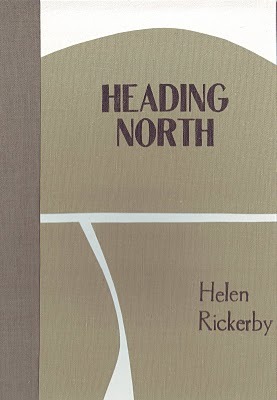
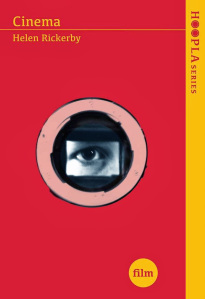
Last up in this series is Helen Rickerby. Helen is a writer, editor and publisher. She has published a number of poetry collections, including Cinema (Mākaro Press, 2014) and How to Live, which won the 2020 Ockham New Zealand Book Awards – Mary and Peter Biggs Award for Poetry (Auckland University Press, 2019). Helen was co-managing editor of the literary journal JAAM from 2005–2015 and single-handedly runs Seraph Press, the boutique poetry press.
I have been a fan of Helen’s poetry for a long time, but she has also published a number of my own collections (The Baker’s Thumbprint 2013, New York Pocket Book 2016 and The Track 2019). I have loved working on each book with her.
Seraph Press’s list of publications include some of my favourite poets in Aotearoa: Anna Jackson, Bernadette Hall, Nina Mingya Powles, Anahera Gildea, Vana Manasiadis, Helen Llendorf, Maria McMillan, Johanna Aitchison, Vivienne Plumb – plus the terrific anthology, Tātai Whetū: Seven Māori Poets in Translation (2018).
It has been such a pleasure to touch base with books and poetry in email conversations..
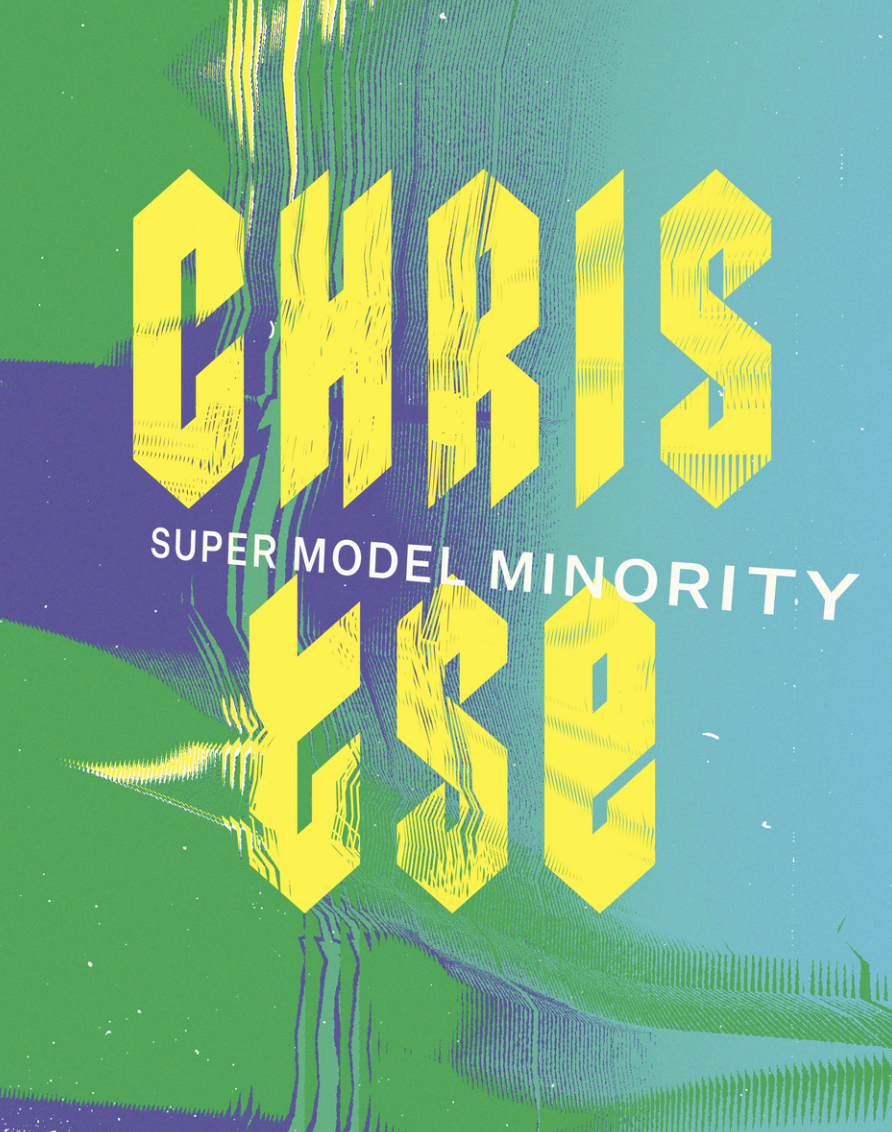
Paula: In these tilted and jagged times diversions are so important. For me, reading and secret writing projects are essential. So many sublime books are being published in Aotearoa and around the world at the moment, of all genres. What has helped you? Any books that have lifted or anchored or transported you? I can so identify with your words in Chris Tse’s new Auckland University Press book, Super Model Minority (‘these poems cut my heart before warming it’).
Helen: Yes, I’m also sticking pretty close to home just now, and while I am still seeing my friends, mostly in our own homes, I am also needing to find my joys near at hand. Over the last week while I’ve been finding a lot of comfort and joy, and also a bit of challenge, in creative non-fiction – particularly in books that could loosely be described as memoir, but which are much more. There’s something about the mixture of narrative, life, ideas and poetic writing (if not actual poetry) that’s my thing right now. Recent highlights include Joan Didion’s The Year of Magical Thinking and Blue Nights, Daniel Mendelsohn’s An Odyssey: A Father, a Son, and an Epic, Patricia Grace’s From the Centre and especially Deborah Levy’s autobiographical trilogy.
During last year’s lockdown a friend left a care package of books in my letterbox. One of the books was Real Estate, the third (red) volume in Deborah Levy’s trilogy. It’s kind of about her making a new life for herself after her daughters leave home, but it’s so much more than a memoir, as are the other two books in the trilogy. It’s poetic and philosophical and, collage-like, full of quotes from other works of literature that she’s having conversations with – I felt an affinity, it felt allied with what I’ve been doing in poetry in recent years. I read my way backwards through the trilogy, borrowing the second (yellow) volume, The Cost of Living, from a friend who lives downstairs and, as soon as we got to Level 3, buying the first (blue) book, Things I Don’t Want to Know, from the lovely Volume bookshop in Nelson (because no Wellington bookshops had it and I knew Volume could get it to me quickly, and I needed it immediately). And then when I finished that, I started reading them all again, forwards this time. I found them so calming, like the eye of a storm. I was finding everything a bit hard at the time, mainly in my head, and I would just take a little bit of time with these books and I could feel myself calming down. Even though her experiences were very different to mine, I loved the way in these books she kind of rises up above her life and looks down on it, and writes about it, from a calm height. It made me feel like I could do the same.
I confess to being someone who is looking for quite a lot of comfort in life and literature, but I also know that growth doesn’t usually come from comfort, and a bit of discomfort is really important. Super Model Minority is a fabulous book, and one that did at times make me feel uncomfortable. Some of the things he’s writing about are uncomfortable and even painful, and there’s definitely anger. But the poems make you think, and make you see and appreciate, and in the midst of it all there’s humour and hope and beauty. I’m always keen on some humour and hope and beauty.
Paula: Ah – now I am dead keen to read the Levy trilogy. And yes! That’s exactly what Chris’s collection does. And you do come away with the word hope.
I want to talk about how I love your poetry, but first, which poets would you choose to have conversations with (let’s say dead or alive, home or abroad). Poets who have affected your travels and engagements as a writer and a reader.
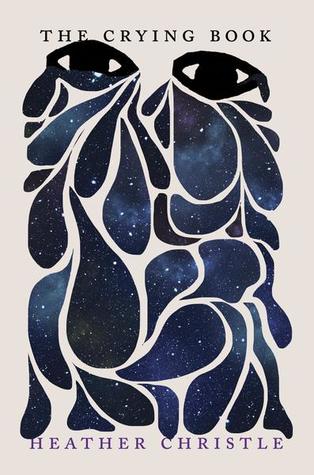
Helen: Hmmm, that’s a tricky question. I have a bit of a fear of meeting my heroes, in case it’s terribly disappointing, or they don’t like me (or I don’t like them), or we had a mediocre conversation. So much pressure! Also, quite a few of my heroes are women I don’t think I would get along with very well: Katherine Mansfield, Sylvia Plath, Virginia Woolf, George Eliot, etc… I also feel that if I really love someone’s work, I don’t necessarily want to talk to them about it, I wouldn’t want to break the magic. So I would be very nervous to talk to Anne Carson, for example, even though her work has been very important and inspiring to me in showing the breadth of what poetry can do. I was reminded today of the wonderful book-length poem Memorial by Alice Oswald today, and I would be interested in talking to her about that. While it was Heather Cristle’s The Crying Book, which is not strictly speaking poetry, that really got me, she is a poet I might risk talking to. I have had great conversations about poetry with poets who are my actual friends, perhaps particularly with Anna Jackson, who I’ve run a few conferences with, though we talk about other things too. From the past, Sappho would be very interesting to converse with, though we’d need to use some kind of translator. I would be intrigued to meet Byron, but it might not be poetry we’d talk about.
Paula: Ha! I never thought of that. Yes, I feel nervous when I review a book as that feels like a conversation that could go terribly wrong on my part. I want to navigate the paths, corridors, alcoves, wide open windows of a book and make discoveries. No interest in listing all the things a poetry collection doesn’t do.
What matters to you when you write a poem? What do you want your poem to do or be or feel or activate (I keep coming up with more and more verbs)?
Helen: I probably have as many answers to that question as poems I’ve written – possibly more! And what matters to me changes over time, and maybe changes back. But some things that come to mind are to capture something – a thought, a feeling, an experience, the thinking through of an idea, an image, a memory. I want to communicate, but not too clearly or simply, I want to create layers and textures and possibly contradictions. I want the reader to get something out of my poem, but I don’t want them to necessarily be able to decode the whole poem. I don’t want to be able to decode the whole poem. I want the sound and language to feel right for the poem, and I want the words to be beautiful, even if only ugly beautiful. I want it to feel fresh to me and/or the reader, but I want it to feel true to them in some way, which is not the same thing as factual. I want the poem to be more than the sum of its parts, and I want the poem to be a bit bigger than me, maybe wiser? I want to open some doors or windows in my own head, and the heads of at least some of my readers. I want to feel like the poem doesn’t have too much, or too little – I have a bit of a thing for a long, spacious poem, when appropriate. I want to feel that it’s a bit worthwhile, in some or other way. I don’t want to reread it and think ‘Yeah, and so?’ I want to have learned something, through writing the poem, even if only about myself. I’m not sure I can do all of these things at once!
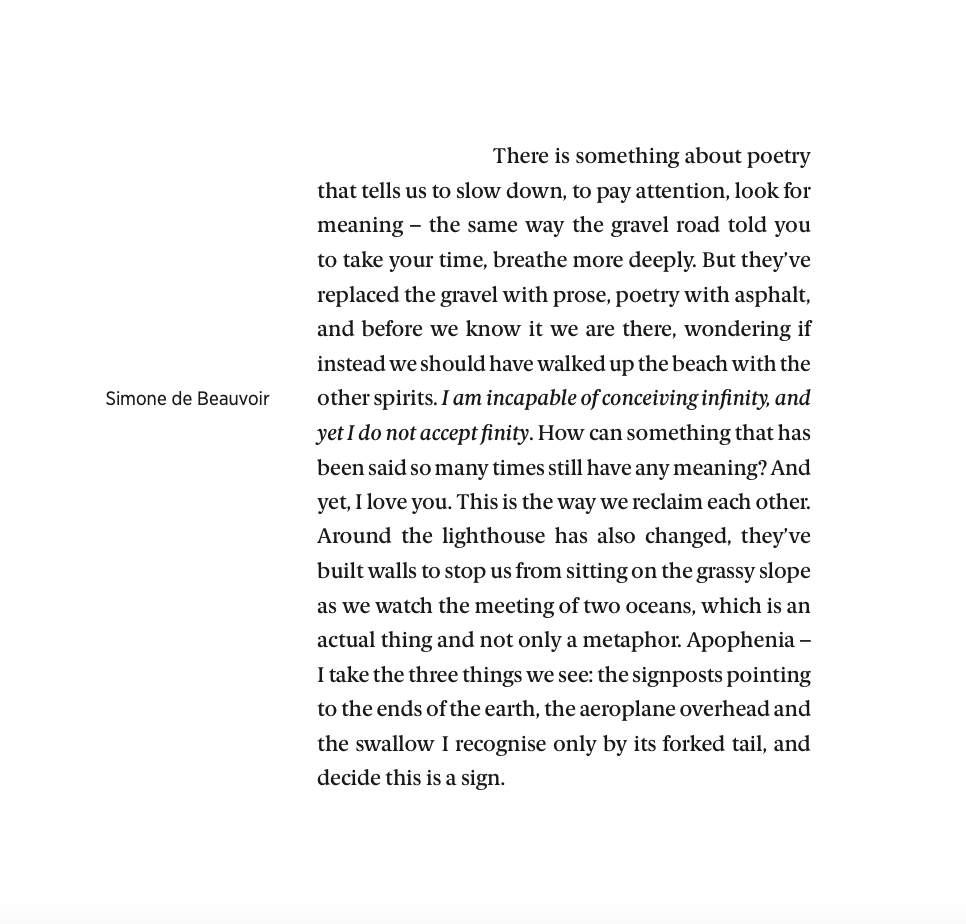
from ‘How to Live’, in How to Live
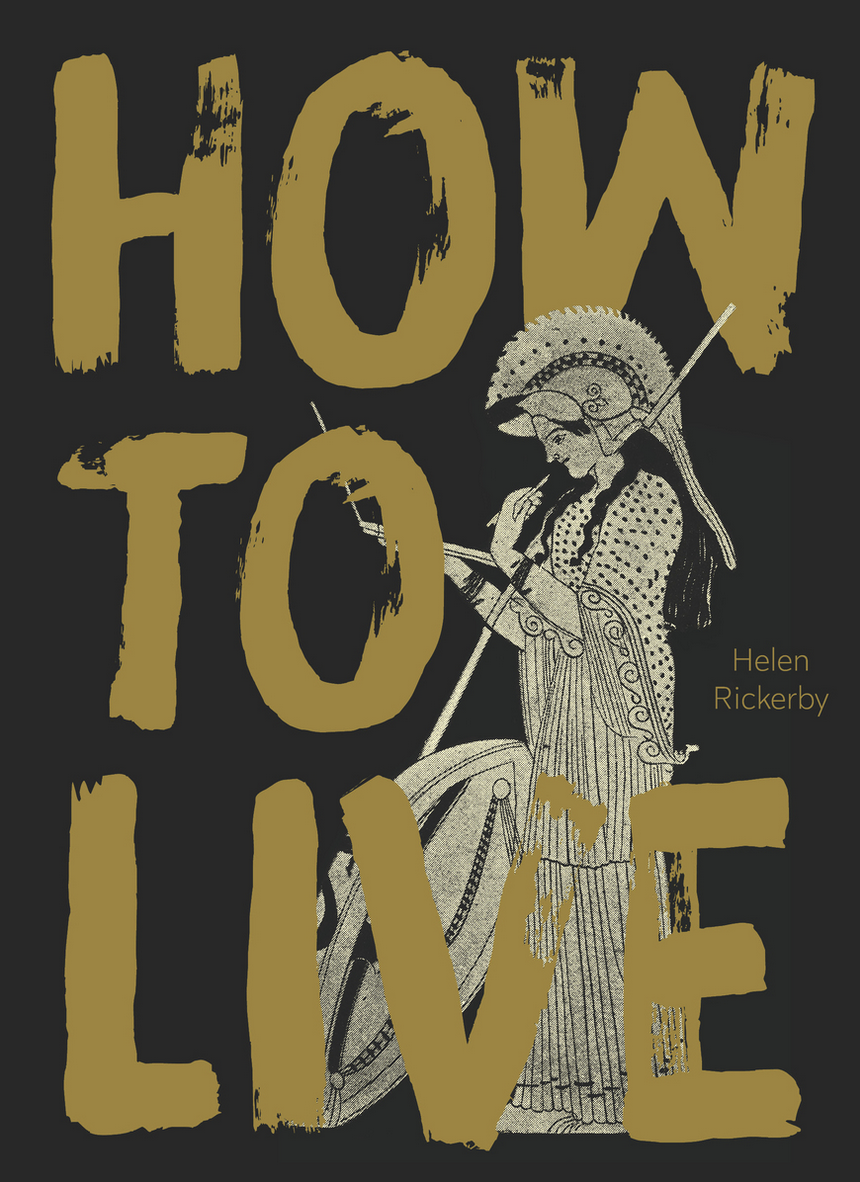
Paula: How to Live (Auckland University Press, 2019) is one of my all time favourite poetry collections. It is a book I am taking to hospital with me. I so loved reviewing it on Poetry Shelf. Like many contemporary poets you are cracking open poetic forms – widening what a poem can do – as though taking a cue from art and its ability both to make art from anything and in any way imaginable. So richly layered. In fact everything you say above!
‘How to live’ is a question open to interpretation as it ripples through the poems; and it makes poetry a significant part of the myriad answers. I haven’t read a book quite like this and I love that. The writing is lucid, uplifting, provocative, revealing, acidic, groundbreaking. The subject matter offers breadth and depth, illuminations, little anchors, liberations, shadows. I am all the better for having read this book. I just love it. (Poetry Shelf)
If windows and doors open in your head as you write a poem they open in mine as I read the collection. Particularly in view of the presence of women. What did you discover writing this book?
Helen: Aww, thank you Paula! I learned a lot while writing this book, though I finished it more than three years ago, and so have forgotten a lot! It was definitely a book of thinking through – and feeling through – and making connections. So there’s a lot of me in there, and my own thoughts and experiences and attempts at figuring things out, but there’s also a lot of research. I learned quite a bit about philosophy and about philosophers, and that got me thinking about why I didn’t really know of many, if any, women philosophers. Turns out the main reason is the same reason we don’t know about a lot of women from the past: because they’ve been erased and forgotten. I am always quite delighted to discover women from the past who have done cool things – there are lots of them. It was also while writing this book that I started thinking about the way my poetry, and the work of other poets that I’d been noticing, was crossing over with essay, and I got quite excited about that. I’m really interested in poetry that explores and thinks through ideas – that journey – I’m probably less interested in the destination. I love the way poetry can leap over gaps and fragments, happily hold contradictions and layers and non-binaries. Both/And.
Palimpsest is a word I have to look up every time
A palimpsest is a parchment from which the words have been scraped off so it could be used again
but the old words still show through
Earth / late summer
This is the place of intersection your life
my life
my time
and the little I know about yours the little I know about mine
the little I know
from ‘Ban Zhao’
Paula: I so love the title and the poem it references. I am wondering if poetry so often responds to this question, overtly or opaquely. It made me want to write my own version, borrowing your title. Did anything in particular prompt the poem?
Helen: It’s a question I think we all need to keep asking ourselves all the time, for our whole lives. There’s no one answer, and the answer for each of us keeps changing, but in order to be a good person in society and a happy person in our own lives, I think we need to think about this, and also to act. Everyone could write a book of this title, and I would love to read yours! Multiple books probably – I have continued developing my ideas about how to live since I finished writing this book. They now involve more fun and dancing.
My original idea for this book was quite different, but with the same title. About a decade ago Sean, my husband, was diagnosed with cancer. It turned out to be of a very treatable kind, which was very fortunate, but the whole dealing with the medical system, let alone mortality, was a bit of a thing. I was also becoming increasingly aware that I was no longer a youth, and of the finiteness of time, and wanting to make the most of that time. During all of this, especially during Sean’s treatment and recovery, I was writing poems about this experience and exploring the idea of living as in not dying, and living as in really living. These poems weren’t entirely successful, but they had something in them, and I ended up cutting them up and using them as the basis of the long title poem, which explores these same ideas, as well considering ideas about what poetry is, and, you know, everything!
Paula: Is there a poem (or two) which has fallen into charismatic place for you? Two longer poems are particularly magnetic: ‘Notes on the unsilent woman’ and ‘George Eliot: a life’. Both function as fascination assemblages. They allow the reader to absorb lyrical phrases, humour, biography, autobiography, insistent questions. Biography is enlivened by such an approach, as is poetry. Ah, really the whole collection, magnetic, eclectic, electrifying.
Helen: I’m not quite sure what you mean by this question. Of my own work? This might not be what you mean, but I had a similar experience with both the first poem in the book ‘Notes on the unsilent woman’ (which was the last poem I wrote for the book) and the last poem in the book ‘How to live’, where I had this idea of what I wanted to do in the poem, and I had all these fragments, but I didn’t know how to make the poem I wanted it to be. But with each, while feeling like I would NEVER get there, I had a kind of epiphany about the form, which gave me the tone, which made everything else fall into place. I have found this encouraging since – that you can feel completely hopeless, but if you keep on going you might be quite close to creating the thing you want to. I think this recent tweet by Heather Cristle evokes this beautifully: ‘I love it when form writes the book for you. It is like you are trying to screw something together and form is watching you impatiently until it says ‘just give it to me’ and you do and form puts everything together so fast while you lie down admiring its movement and shape.’
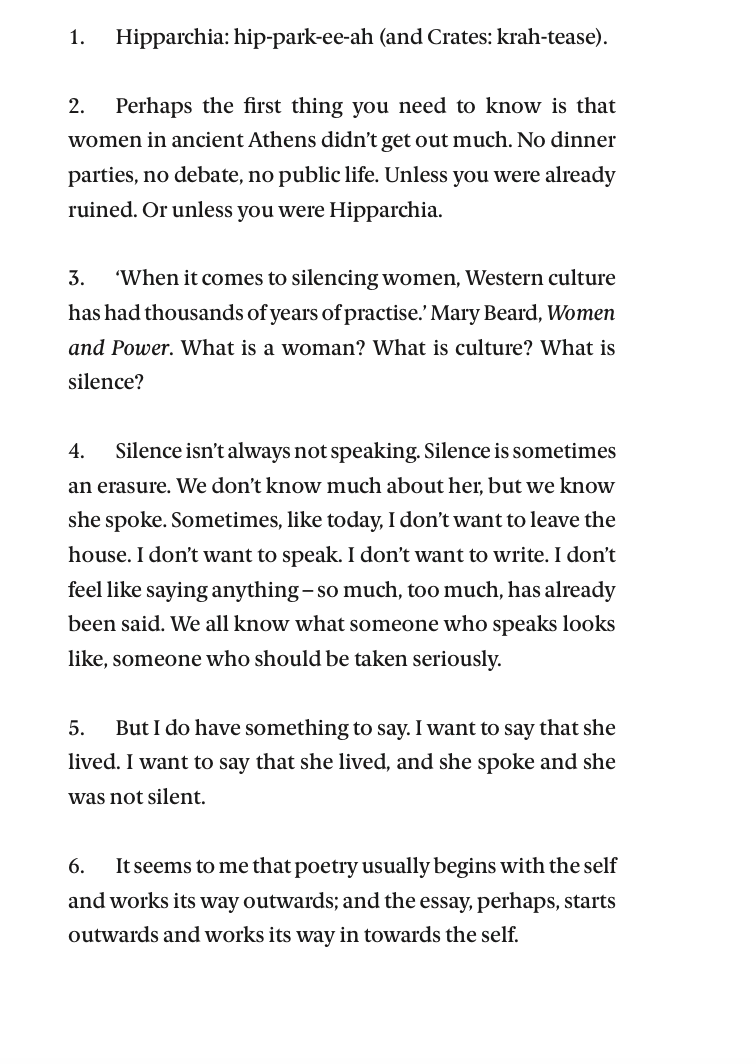
from ‘Notes on the unsilent woman‘ Hipparchia of Maroneia c. 350–c. 280 BC
Paula: I was over the moon when it won the 2020 Ockham New Zealand Book Awards – Mary and Peter Biggs Award for Poetry. Did the judges recognise something in the book you hadn’t seen? I love it when that happens – when you look through the open windows of a poem and things surprise you. And how was it winning the award?
Helen: It was all a bit of a blur! Google photos tells me it was two years ago this week. It was also at the end of the first lockdown – quite a nice way to end it. I was in complete shock – I was pretty certain that Anne Kennedy would win, and when they said my name there was quite a lot of screaming (and a little bit of swearing) at my house. Book awards are weird things. I’m fully aware that they’re never an objective ranking, which isn’t even possible, but are just what those three judges managed to agree on at that time, but it was still very lovely that it was my book they agreed on. I don’t think there was anything the judges said about my book that surprised me, but I appreciated that they got what I was exploring. And winning meant that more people sought out my book, which was also lovely.
Paula: I find myself drawn to poems of all lengths – for a while I favoured the long poem as I could carry it in my pocket and keep adding to it as I mothered and worked and cooked. Now I quite like small poems, sweet mouthfuls that are verging on stream of consciousness. What do you like about the long poem?
Helen: There is something nice about a little gem of a poem, but I do love a good long poem the most. I love the way it has space to breathe and move and meander and be a bit messy. To look at things from a bunch of angles and maybe not favour any of them. I have come to accept that I’m a digressive conversationalist, perhaps a digressive person in pretty much everything except my day job (I’m an editor/technical writer, which is all about plain-language, clear structure, unambiguity – basically the opposite of poetry), and I really enjoy interesting digression in what I’m reading, and what I’m writing. Though, it won’t be entirely a digression, because it will almost certainly connect to everything else in some kind of way. A long poem has enough time to set up resonances within itself, it can tell stories rather than just capture moments. Not that I don’t love a great poem that just captures a moment! And because I’ve been interested in the essay poem, longer poems have more space for the essaying, the thinking through, the exploration. And I guess they have the space to be about several things at once, and about the connections between those things. Probably I should give some examples, but I’m immediately struck by everything I would miss out! Possibly my all-time favourite long poem, and all-time favourite poem, is ‘The Glass Essay’ by Anne Carson, which isn’t quite book length (it comes in at 45 pages), but which manages to be about the end of a relationship, Emily Brontë, Wuthering Heights, a visit to the narrator’s mother, and the decline of a father with dementia, and some other stuff, and is all beautifully written.
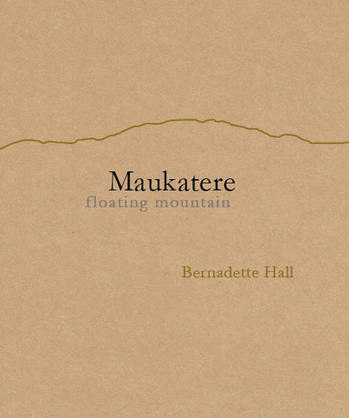
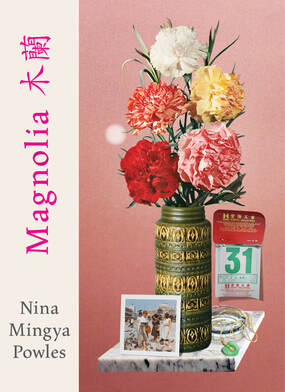
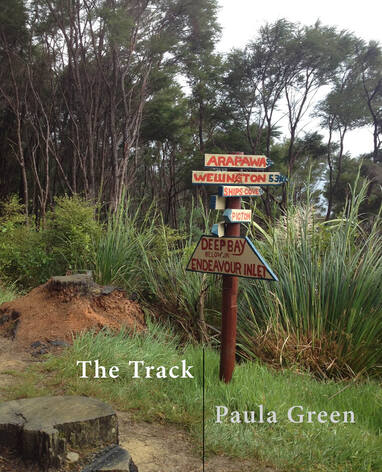
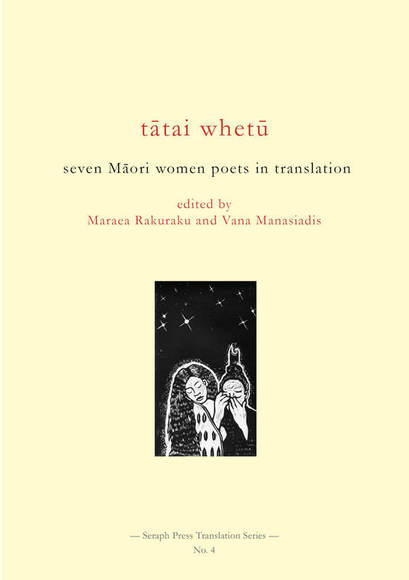
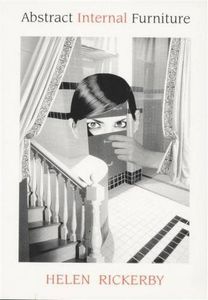
Paula: I am delighted to see so many boutique presses springing up – bringing us such a wider range of voices. You have published a number of my poetry collections though Seraph Press, and it has been a special relationship. I have loved the look of each book, am grateful for your editing. The collections are all so different. I love that! And I discovered Nina Mingya Powles through you! How does publishing the work of poetry impact on your own writing? You put so much love in to the books you published. What matters to you when you make the book of someone else? [do you think publishing is something you are moving away from now to give more time to your own work?]
Helen: I do love making books, both as collections of words and ideas, and also as physical objects. And I have loved working with different writers to get their words out into the world. Some of them, like you, were fully formed poets when I started working with you, while others – such as Nina, who was only 21 when I published her first chapbook containing some of the very first poems she’d written – were just beginning and I’ve got to see them bloom in close quarters. I have made some great connections and am really proud of making books that I think are beautiful and worthwhile. I try to work with each author so we’re both happy with what we’re putting out, and happy with how it looks. Because it’s something that I do in my own time and almost entirely with my own money, I have had to basically be in love with the books to make it worthwhile. It has taken a bit of a toll on my own writing sometimes, because when I’m working on someone else’s book, that has obligations and deadlines, whereas my own writing doesn’t and gets pushed back. Especially as I’m not an especially great multi-tasker, am usually also working a day job or two, and am by nature quite lazy and so my inclination is generally to just muck around instead. As much as I love publishing, or rather some aspects of publishing (because I do pretty much everything, there are definitely things I’m less interested in and less skilled at – like marketing, for example), after getting a bit burned out I am having a hiatus on the publishing front, and focusing on my own writing, and my own life, for a while. I’m sure I haven’t published my last book though!
Meanwhile, I’m really excited to see the new publishers coming through, doing things their own way, getting important work out there, and increasingly being noticed by mainstream awards. This not at all an exhaustive list, but I’m thinking right now of Anahera Press, Compound Press, We Are Babies and new kid on the block Taraheke | Bushlawyer. Exciting times!
Paula: Indeed – so exciting to see the new presses supporting terrific new voices. I feel like we have had a very long lunch, with the most delicious food and roving conversation. It means a lot, to be part of wide stretching poetry communities.
Helen reads ‘How to Live Through This’
Poetry Shelf Monday Poem: Helen Rickerby’s ‘Mr Anderson, you heartbreaker you’
Poem ‘How to die’ at the Spin Off
Auckland University Press page
Mākaro Press page
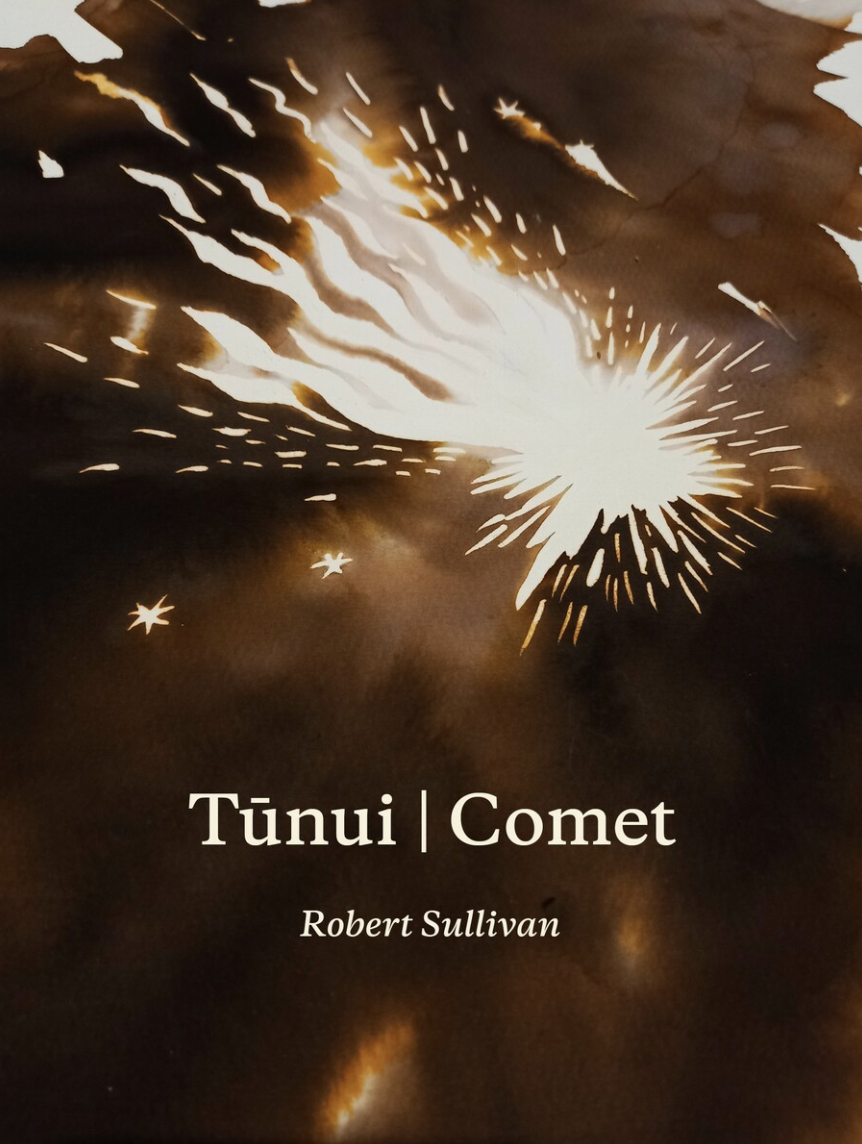
Tūnui | Comet, Robert Sullivan, Auckland University Press, 2022
6.
I’d written ‘Decolonisation Wiki Entries’
because it reminded me of buses in Honolulu
at the airport and Waikiki. The open-air buses
aren’t like decolonisation though. Decolonisation
is not worrying about cultural identity,
and not translating and not having to explain
things like a family and hapū do such as wānanga
because the wānanga is the explanation
or learning mōteatea by our ancestors,
or prophecies of our spiritual tūpuna, or sadness
at the fighting on the other side. These
decolonisations make up life.
from ‘Te Tāhuhu Nui’
Robert Sullivan belongs to the iwi Ngāpuhi Nui Tonu and Kāi Tahu. His debut collection, Star Waka (Auckland University Press, 1999), marked the arrival of a significant poet, and has been numerously reprinted. Robert has published a number of collections since, and with Reina Whaitiri edited Puna wai Kōrero, an anthology of Māori poetry, and with Reina and Albert Wendt, Whetu Moana and Mauri Ola, anthologies of Polynesian poetry in English.
Robert’s new collection, Tūnui | Comet, stands on the shoulders (hearts, lungs, mind) of everything he has written and edited to date. Voice has carried his poetry, his family, his whakapapa. Voice is the weave that remembers the touchstones of his previous collections: Tāmaki Makaura, the Far North, colonisation, Cook, family. I have never forgotten his premise that voice carries us. And voices carries this collection, all that it holds close, all that it challenges. It is there in ‘Kawe Reo / Voices Carry’:
Voice carries us from the foot of Rangipuke / Sky Hill / Albert Park
to the Wai Horotiu stream chuckling down Queen Street carrying
a hii-haa-hii story—from prams and seats with names and rhymes,
words from books and kitchen tables.
In writing poetry, Robert is speaking to for with from. He is conversing and he is voyaging, and his writing is the river flowing, the currency of water and air vital. Each poem sits in generous space on the page, each poem given ample room in which to breathe, in an open font, allowing space for the reader to pause and reflect.
The collection weaves in past, present, and future – who he is, was and will be – mythologies, histories. There is the drive to write in te reo Māori, to nourish the language’s roots, to write poems without English translations, to insist upon a need to speak and grow with his own language.
Robert acknowledges he writes within a community of poets who have shaped him. He carries a history of reading, of considering the work of others, particularly Māori and Pasifika poets. There’s a homage to Alistair Te Ariki Campbell. An imagined barbecue with Hone Tuwhare. A reminder the notDeclaration of Independence was actually yes, an assertion of mana by the rangatira (for Moana Jackson). There’s walking on Moeraki sand to remember Keri Hulme’s place names.
Voicing: colonisation decolonisation. The poem ‘Decolonisation Wiki Entries’ reminded me of the caution I bring to facts and figures, to encyclopaedic entries, to the way statistics can be hijacked, research findings manipulated. I am reminded of the hidden narratives, the misrepresented experiences, the sidelined voices.
2. Ruapekapeka
I have visited once and seen a hilly field
from memory—hard to take the scene in
without props. There was a church service
and worshippers fled out beyond. Never
swarmed the bunkers and trenches.
Flicked between ancestor Wynyard
and out neighbouring great chief Kawiti.
I do not know the buried knives. We gathered
in this hill of ash, dead bees and pollen.
We left carvings in the earth and flowers there.
from ‘Decolonisation Wiki Entries’
Tūnui | Comet is poetry of acknowledgement. It is poetry of challenge. And it is profoundly moving. In ‘A.O.U’, the poem sings a mihi for Ihumātao. In ‘Feather’s’, the speaker is wearing blood and mud splattered trousers at Parihaka (‘we’re a little band of brothers /marching hundreds strong’) and the feather is in flight:
Whiteness
of the mountain
the ploughs
and feathers
the children’s
singing
witness
I say challenge, do I mean voice? Voicing different versions. Wanting to wrap Old Government House in Treaty pages and lavalavas and knock on the door and ‘say open sesame’. Or stepping back into the sailing boots of Captain James Cook and twisting the eyeglass to imagine afresh the what if.
Or what if I stayed in Aotearoa
and shared our science,
our medical knowledge,
our carpentry and animal husbandry,
our love of books
and conservation values?
What if we had gained the friendship,
love and trust of the Natives,
and returned that equally
at the time, not needing
to constantly gaslight
and to make amends?
from ‘Cooking with Gas’
Reading Robert’s intricate, sweetly crafted poetry affects me on so many levels. There is aroha in the pen’s ink, there is fortitude and insight, there is history and there is future. There is uplift, and the need to refresh the eyeglass, the mouthpiece. Read the excellent reviews of Anton Blank and David Eggleton (links below); they celebrate the arrival of a new book by a significant poet in multiple ways, and how it inspires on so many levels. My head is all over the show now, and reviews are getting harder and harder to write, but I hold this book out to you. It is a beacon of light on the horizon, and I am grateful for its presence.
Auckland University Press page
Anton Blank review at ANZL
David Eggleton review at Kete Books

The arrival of a new Chris Tse poetry collection is always a moment to celebrate.
Paula: In 2022 I am running a few email conversations with poets whose work has affected me over time. I have loved your poetry since your appearance in AUP New Poets 4 (2004). Your new book, Super Model Minority, strengthens my enduring relationship with your writing. The collection is an explosion inside me, but first I want to touch upon the spiky times we live in. What helps you? I am finding books keep repairing me, sending me on extraordinary package holidays, depositing me in the sky to drift and dream, to think. All genres. What are books doing for you at the moment?
Chris: Books have been such a comfort for me these past few years. Emma Barnes and I were still up to our necks in reading for Out Here when we went into lockdown in March 2020, so there was plenty to keep me busy and distracted. Things did get a bit more difficult when we couldn’t access some older and out-of-print books, but we made it work. I’m not a very fast reader so I do tend to take my time with several books on the go at any given time. Books have always made me happy – I was always happiest hunched over a book while my family watched rugby or played mahjong in the background. These days a big part of that happiness is the thrill I get seeing friends getting published and receiving well-earned praise for their amazing work. It’s such an exciting time to be a reader and a writer – to be able to experience the world through the poetry of essa may ranapiri and Rebecca Hawkes, or to have your brain recharged by the essays of Megan Dunn and Lana Lopesi. Aside from a few small projects I have no plans to start writing a new book, so I’m just hungry for stories and ideas right now to see where that might take me next. I want to read as much as I can for pleasure while I can.
Paula: Out Here gripped me on every human level imaginable, yet I never considered how Covid might prevent access to the archives. That was such a joy for me researching for Wild Honey. With Emma, you have gathered something special. Wide ranging and vital. It is how I feel about the younger generation of poets. I fall upon brittle, vulnerable, edgy, risky, exposed heart, potent – and I am grateful to Starling and The Spinoff’s Friday Poems for representing these wide-ranging voices. I am decades older than you, but how is the new generation affecting you?
Chris: For me, it’s such an exciting time to be a poetry reader right now with so many young poets producing ground-breaking and challenging work. Also, they’re voices and perspectives that we’ve been sorely lacking for such a long time – poets like Cadence Chung, Khadro Mohamed, Lily Holloway and Ruby Solly are all redefining what ‘New Zealand poetry’ means in their own ways. If I look back at what it was like to be a poet at their age, the playing field has shifted a lot because of journals like Starling and Stasis, and publishers like We Are Babies Press. I find their energy so infectious and inspiring – it certainly makes me want to keep pushing myself as a writer.
Paula: Exactly how I feel! But I also have poets I have carried across the decades since my debut collection in the 1990s. Bill Manhire, Michele Leggot, Bernadette Hall, Dinah Hawken, JC Sturm, Hone Tuwhare. Poets that helped me become a writer in so many ways. Particularly as I didn’t do any creative writing courses. Were there poets from the past or the present that were writing aides for you? In person or on paper?
Chris: My exposure to New Zealand poetry was sorely lacking as a high school student, so I’m really grateful that the papers and creative writing workshops I did at university introduced me to the canon and more contemporary writers. Jenny Bornholdt, Stephanie de Montalk, Bill Manhire and Alison Wong are poets whose work played a huge role in shaping my fumblings as a young poet. My poetry world was further expanded when I started to stumble across contemporary US poets like D.A. Powell, Frank Bidart, Cole Swensen and Richard Siken, whose first collection Crush I have written and spoken a lot about. It really is one of those life-changing books that set me on my current path. For Super Model Minority specifically, I turned to Chen Chen, Ocean Vuong, Danez Smith, Tusiata Avia, Nina Mingya Powles and Sam Duckor-Jones for comfort and inspiration. Their work feels so vital during these times of change and uncertainty.
Super Model Minority, Chris Tse, Auckland University Press, 2022
Paula: Inspired and comforted seem crucial for both readers and writers. Your new collection is body shattering and heart repairing. And yes, both inspiring and of comfort. The book includes the best endorsements ever (Nina Mingya Powles, Helen Rickerby, Rose Lu). They catch how the reading experience affected me perfectly. Would you couch the writing experience in similar terms?
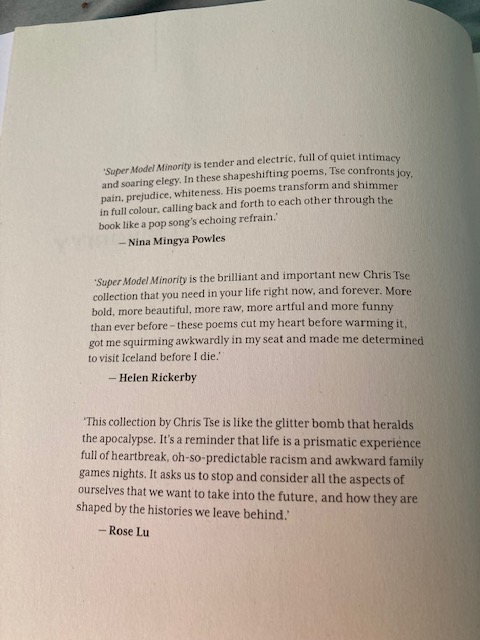
Chris: Writing this book caught me off-guard, in a number of ways. First, I didn’t think I’d have a manuscript ready so soon after HE’S SO MASC – I was happy to take my time with the next book. Then a few things happened that set off something in me – an urgency to write and respond: the pro-democracy protests in Hong Kong, the aftermath of the Christchurch mosque attacks, and the rise of anti-Asian sentiment as a result of the Covid-19 pandemic. These events all triggered powerful emotions, but the overriding frustration I felt was that things seem to stay the same no matter how much we push for societal change and equality. I was overcome by anger, sadness, and helplessness, so I decided to write myself out of that state and turn it into energy. The poems kept coming and I found myself confronting a lot that I’ve left unspoken for so long – some of it out of guilt, some of it out of fear. Overall, the writing process taught me a lot about myself because of these responses and the realisation that it’s important to hold on to hope throughout the dark times – I’m not as nihilistic as I thought I once was, even if that’s how it may come across in the book!
Paula: I am coming across a number of poets who are re-examining a drive to write poetry in a world that is overwhelming, disheartening. Gregory O’Brien muses on poetry expectations: ‘If the times are dark, oppressive, tunnel-like – as they seem presently – maybe poetry can be a lantern?’ For me it’s Covid and impinging greedy powers. Shattered everyday lives in Hong Kong, Syria, Afghanistan, Ukraine. And it’s like you say – despite waves of resistance, critique, standing up and speaking out – a world free of sexism, racism, poverty, classism, homophobia can feel impossible. And yet … poetry can be essential at an individual level. It seems so, for you and I, as both readers and writers.
I will use my tongue for good. I say I will
because this book needs to start with the future even though the future
has always scared me with its metallic fingernails poking through
the metaphysical portal come-hithering. Aspiration—and the threat
of what we have awakened from the salty ashes of a world gone mad—
aspiration will bolster my stretch goals. I will use my tongue to taste
utopia, and share its delights with my minority brothers and sisters
before the unmarked vans arrive to usher me back in time.
from ‘Utopia? BIG MOOD!’
The first poem ‘Utopia? BIG MOOD!’ is an inspired entry to the book. The opening line gives me goose bumps. I want it tattooed on my skin. Heck just reading it make me want to cry, stand up and getting going. It implicates the writing of poetry in the world and the world in the writing of poetry. It gives me hope reading this. You say it all in the poem but do you carry utopia in your heart? Despite your sadness and anger and helplessness?
Chris: That’s such a lovely quote from Greg – it sums up exactly how I feel as a poet and when I’m reading submissions for the Friday Poem. I’ve definitely noticed that recently poets are using poetry to light the way, even if we’re not sure where a particular path is leading us. Better to walk in light than stumble in darkness I suppose. I’m so glad that the first line resonates for you in that way. Here’s the thing – the first lines of all three of my books are a thread that ties them together. (I won’t presume that anyone is reading my work that closely to spot it!) All three books open with a reference to speech or being heard. In Snakes, it’s “No one asked me to speak…”; in HE’S SO MASC I wanted the flipside so the first line is “Shut the fuck up”. I knew I wanted the first line in Super Model Minority to echo the first two books – “I will use my tongue for good” felt like the best way to open this book about confrontation and working towards a brighter future. So, to answer your question, I do carry some form of utopia in my heart because without it I’d be resigning myself to a future that is ruled by sadness and anger. If there’s a conclusion that I come to in the book, it’s that utopia will always be out of reach because we’ll never agree on a singular utopia – the version we carry in each of us is built upon our own desires and subjective perspectives of the world around us.
Paula: Ah it gives me hope to imagine our world no longer governed by despair and anger. I loved your review of Janet Charman’s new collection with Kathryn Ryan on RNZ National ((The Pistils, OUP). I haven’t read the book yet but I got the sense it was personal, intricate, political. The same words apply to your collection. Each poem opens up in the process of reading, and then lingers long after you put the book down. It feels so deeply personal. The way you reassess vital things: the past, the importance of names (your name), speaking more than one language, your parents, relationships, being gay. And in this personal exposure and self-navigation, there are the politics that feed and shape who you are. Inseparable. It feels like a landmark book to me. Is that placing too much on its shoulders?
Chris: It feels like a landmark book for me personally in terms how far I’ve come as a writer over the last decade. I look at my three books side by side and even though there are things I would change in the first two (and I’m sure I may have similar feelings about some of the poems in Super Model Minority in a few years!) I’m really proud of this body of work I’ve created. HE’S SO MASC has those early flourishes of the personal and the political, and I remember being so worried about how it would be received because it was so different in tone and outlook than Snakes. All of my books to date have required a lot of self-reflection and self-critique to get to a place where I’m not only comfortable writing about these topics, but also to be able to share them. Even though the work is personal I hope people can see themselves in it too, or can see why some of the things I write about are a big deal for me and the queer and POC communities.
Paula: Would you see yourself then as a hermit poet, a social poet where you share what you are writing along the way, or something in between?
Chris: I’ve got a small group of trusted writers who I send works in progress to if I’m stuck on something, but this time around I did hold a lot back until it was ready in manuscript form because I wanted to work on trusting my own instincts. However, when it comes to sending work out into the world for publication, I’d say I’m more on the social side, although there were a few poems from Super Model Minority that I chose not to submit anywhere because I felt like they needed to be read in the context of the collection as a whole.
Paula: Is there a poem (or two) that really hits the mark. Whatever that mark might be! That surprised you even.
when asked to explain the lines that lead to now, you describe /
the shape of your body as it hits water / the shape of cold water
shocking muscle / the shape of fleshy chambers forced to loosen
and acquiesce / the shape of your grandparents in their coffins /
the shape of coffins that are too small to contain entire lifetimes /
the soft and hard moments we can’t forget no matter how often we
turn our backs to the light / [you write this poem out of love / but
even love can be a blindfold] / the shape of you and your parents
standing in your grandparents’ driveway / after being kicked out
for talking to your aunty’s white boyfriend / your hand reaching
out to someone you don’t recognise in a dream /
from ‘Identikit’
Chris: I’m really proud of ‘Identikit’ in this collection – finishing that one felt like a fist-in-the-air moment. I think it’s because it covers a lot of historical and emotional terrain that I’ve wanted to write about but had struggled to find a way to balance the pain with moments of joy. Same with ‘Love theme for the end of the world’, which is the slightly more optimistic and hopeful sibling to ‘Identikit’. In fact, the way the “…for the end of the world” poems revealed themselves as I wrote them was surprising to me, because they felt like a valve had ruptured and all this pent up pressure was being spilled out onto the page.
Paula: I wrote down ‘a bath bomb effect’ in my notebook as I was reading. The whole book really. A slow release of effervescence. The kind of poetry that you think and feel. That inspires and comforts! This comes through when you perform or record your poetry. The poems you recorded from the book for Poetry Shelf. Your performances with the Show Ponies. Your readings have got a whole lot of love on the blog. Mesmerising! Does it affect the writing? The future performances in the air?
Chris: Sometimes I’ll have a feeling as I’m writing as to whether or not a poem will be one suited for performances. ‘The Magician’, ‘What’s fun until it gets weird?’ and ‘Poetry to make boys cry’ were written to be performed at particular events so I was conscious about how they flow and build during a performance. Having that embedded into the poem really helps me when it comes to performing it, and hopefully that effect comes across on the page when others are reading it. Reading my work out loud, either at home or to a crowd, has become a much more integral part of my writing and revision process in recent years, even if it isn’t necessarily a poem that I think will make it into high rotation as a ‘live’ poem. This wasn’t really a major consideration when I was writing Snakes because the thought of sharing my work in that way wasn’t really front of mind, although I do love the opportunities that book presents when I’m asked to do a long set and have the chance to read a substantial selection from it.
Paula: I agree that what you write must be a big deal for the queer and POC communities. I am heartened by an increased visibility of Asian writers not just as poets but as editors. But at times I am also disheartened. How do you feel?
Chris: It really is heartening to see so many POC and queer writers getting published and stepping into editing and leadership roles, but there’s still a long way to go to undo decades of erasure and disengagement with the industry, and to not feel like we exist only to be a tick in the diversity box. When it feels like we’re not getting anywhere, I hold on to as many moments of joy as I can and celebrate our achievements. I’ll never forget being on the bus home after the last event at Verb 2019 and being overwhelmed with emotion after spending the weekend attending events featuring so many Asian authors. It felt like such a turning point to have so many writers I could consider contemporaries, and to be graced by the presence of US poet Chen Chen, who has been a major inspiration. The other time I’ve had the same feeling was while rehearsing for a staged reading of Nathan Joe’s play Scenes from a Yellow Peril – the entire cast and crew were Asian. It’s the dual power of being seen and finding your people! When I started writing, the concept of ‘a Chinese New Zealand writer’ felt so murky and out of reach, and I also wasn’t even sure if it was a role I particularly wanted to inhabit. The word ‘whakama’ comes to mind when I think about who I was at that time, and it’s taken me literally decades to push back against that shame and unpack the effect of racism on my life to understand why I need to be loud and proud about who I am.
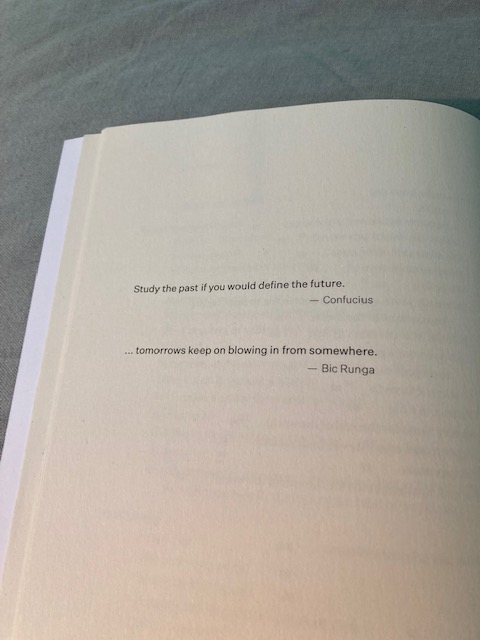
Paula: Your epigraphs signpost both past and future. This is important. Both in view of poetry and life. Like I have already said, many poets are examining the place and practice of poetry in our overwhelming and uncertain world. Are you writing poems? What do you hope for poetry, as either reader or writer, as editor of The Friday Poem?
Chris: It’s been wonderful seeing more people read and engage with poetry over the last few years both on the page or in person. I think a lot of this is a result of people not relying on old structures and established means of production, and just getting on with getting their work out there through new channels, or putting on innovative events and festivals and mixing poetry with other artforms. It’s proof that we can continue to challenge people’s perceptions of poetry and to find ways to introduce it into people’s everyday lives. But it’s more than just poetry being ‘cool’ again – a lot of work still needs to be done to address diversity, equity and accessibility. From my perspective as a writer, reader and editor, the future looks bright – and isn’t that what we want poetry to do? To show us the power of possibility and give us reasons to be hopeful.
I guess there’s always the pull of more to do—flags to fly and
words to scratch into the world’s longest stretch of concrete.
I guess what I’m saying is—I am not done with snakes and wolves;
I am not done with feathers or glitter on the roof of my mouth.
This is me begging for a fountain to taker all my wishes.
This is me speaking a storm into my every day.
from ‘Wish list—Permadeath’
Chris Tse was born and raised in Lower Hutt. He studied English literature and film at Victoria University of Wellington, where he also completed an MA in Creative Writing at the International Institute of Modern Letters. Tse was one of three poets featured in AUP New Poets 4 (2011), and his work has appeared in publications in New Zealand and overseas. His first collection How to be Dead in a Year of Snakes (2014) won the Jessie Mackay Award for Best First Book of Poetry, and his second book HE’S SO MASC was published to critical acclaim in 2018. He is co-editor of AUP’s Out Here: An Anthology of Takatāpui and LGBTQIA+ Writers from Aotearoa, published in 2021.
Poetry Shelf: Chris Tse reads from Super Model Minority
Poetry Shelf: Chris Tse’s ‘Identikit‘
Auckland University Press page
Chris Tse website
Standing Room Only interview RNZ National
Naomii Seah review at The Spin Off
Interview at NZBook Lovers
The Friday Poem at The Spin Off (April 8 2022, Majella Cullinane)
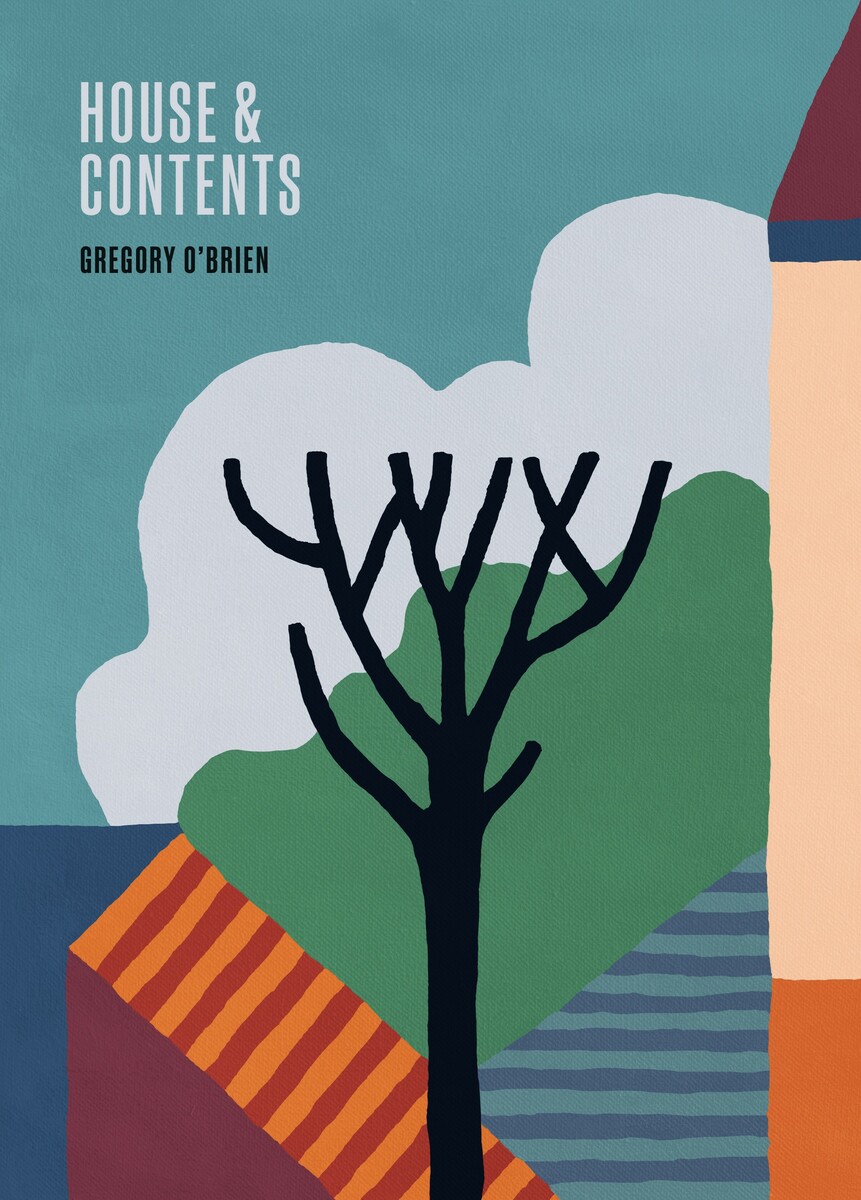
House & Contents Gregory O’Brien, Auckland University Press, 2022
What is this particular brightness we expect of poetry? And on what or whose account? If the times are dark, oppressive, tunnel-like – as they seem presently – maybe poetry can be a lantern. Or a firefly, or the glowing bud of a cigarette on a dark night. But for poetry to be these things it can’t simply reflect its times – it has to radiate on its own terms, within and beyond that darkness. It is poetry’s job to flicker and glow and, with luck, emit some mysterious luminescence. At times I feel those are its only real criteria.
Gregory O’Brien ‘Notes to Accompany the Poems and Paintings’
I love coming to a new book with no idea what the book is about. And here am I about to share some responses to Gregory O’Brien’s magnificent collection House & Contents with you. I have had the book sitting on my desk for a month and every time I walk past, I stall on the title and the cover. The skeletal tree, the blocks of cloud, sky, hill and roof. The nod to insurance policies, and an expectation the collection might transform ‘house’ into home, ‘contents’ into Gregory’s ability to amass fascinating detail.
In the endnote, Gregory talks about how in the past he has used paintings to shed light on the poetry, and poetry to converse with the artwork. In this collection however, where there is a substantial presence of both image and word, he wanted the artwork and the poem to have a ‘co-equal’ relationship.
One poem, ‘House & contents’, acts as a fractured faultline of the collection. It records experiencing an earthquake in Wellington Te Whanganui-a-Tara – a poem in pieces over the course of a day, over the course of the book, little interruptions. It lays a thread of uncertainty, a stave of different sounds, and shifts how I view the title and cover.
The artwork, with motifs repeating like embers on the canvas, like lamplight, like mysterious tugs and echos, is magnetic. No question. You bend in and become hooked on the light and dark. Full of questions. Breathing in the mysterious because there is anchor but there is also instability. Hill might be corrugated boat might be corrugated house might be hill. The echo of chimney smoke might be that from a volcano. I think of the cigarette butt glowing in the dark. Bend down into these paintings and you are wrapped in mystery – the bed outside might be resting on the hills or in the sky or driving a dreamscape. Words loom small not large, and might be bookshelf or textured wall or miniature poem. There is a brick red burnt umber hue signalling earth, and there are the infinite possibilities of blue.
The poetry is an equal compendium of fascinations, an accumulation of rich motifs and hues, knots and splices. The wading birds by a Canterbury river are the poet’s acupuncture. The world is an open book, where streets and mountains, sky and weather, are busy reading each other. Nothing exists in isolation. A library floor might catch a waterfall or flood of books. The poet tracks an interior world and then stitches it to a physical realm, whether present or mourned. The intensely real might collide with the surreal – ‘coins dance / in an upturned hat’. At times I am reading like a chant – both hidden and out-in-the-open lists that make music, that beckon heart and drifting mind. You can’t skim read, you need to enter the alleyways with a flask of tea, and set up camp for ages.
A poem that particularly stuck with my heart is ‘For Jen at Three O’Clock’, the final poem in the collection, a love poem, a luminous list, an ember glow upon the stretching canvas of life. Here are the opening lines:
With us, ice melt and low land
fog, creaking thornbush,
sandarac and walnut lawn. With us
towers and minarets
of the asparagus field, each blink
and muffled cough, each
recitation and
resuscitation, mountain
torrent and gasping stream.
Glorious. That is the word for House & Contents. No question. The light will flicker and gleam in artworks and poetry. Reading this collection is retreat and vacation and epiphany.
Gregory O’Brien is an independent writer, painter and art curator. He has written many books of poetry, fiction, essays and commentary. His books include A Micronaut in the Wide World: The Imaginative Life and Times of Graham Percy (Auckland University Press, 2011) and the multi-award-winning introductions to art for the young and curious: Welcome to the South Seas (Auckland University Press, 2004) and Back and Beyond (Auckland University Press, 2008), which both won the Non-Fiction Prize at the New Zealand Post Book Awards for Children and Young Adults. His book Always Song in the Water: An Oceanic Sketchbook was published in 2019, and a major work on the artist Don Binney will appear in 2023. Gregory O’Brien became an Arts Foundation Laureate and won the Prime Minister’s Award for Literary Achievement in 2012, and in 2017 became a Member of the New Zealand Order of Merit and received an honorary doctorate from Victoria University of Wellington.
Auckland University Press page
Poetry Shelf: ‘Streets and mountains’
Conversation with Lynne Freeman on Standing Room Only, RNZ National
NZ Booklovers interview
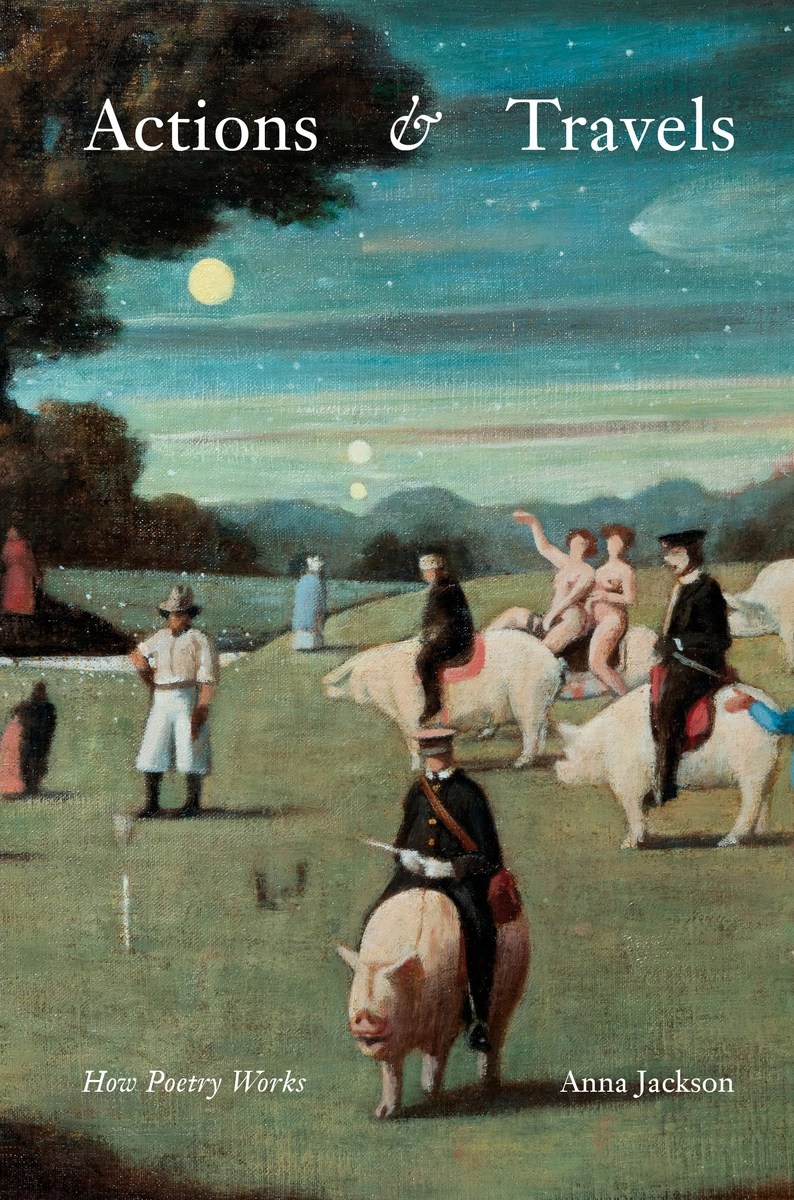
In 2022 I aim to have email conversations with poets whose work has inspired me over time. First up, Anna Jackson. Very apt, as Anna’s new book, Actions & Travels: How Poetry Works, is published by Auckland University Press today.
Right from the start Anna’s poetry has touched a chord with me. In the early poems, the litheness on the line, the measured wit, the roving curiosity captivate, as in AUP New Poets 1 and The Long Road to Teatime (2000). In The Gas Leak (2006) Anna steps into narrative, but family remains in acute focus. There is a humaneness at work, little wisdoms, a playful yet serious pushing at familial boundaries. When Pasture and Flock: New & selected poems arrived in 2018, I admired the new growth, myriad viewpoints, shelter and flight. We discussed poetry and the Selected Poems in a Poetry Shelf interview.
Paula: Not long after my debut poetry collection Cookhouse appeared (1997) you popped a note in my pigeon hole at the University of Auckland inviting me to afternoon tea. We meet up for the first time and have been sharing afternoon tea ever since, exchanging thoughts on poetry, what we read and write, the world at large and the world close at hand.
To celebrate the arrival of your book Actions & Travels: How Poetry Works, I thought a slowly unfolding email conversation as I read the book would be perfect.
I love the title because it underlines the way poetry is full of movement. I also like the open-spirited ‘how poetry works’. I started listing verbs under the umbrella word, ‘works’: sings, captivates, challenges, narrates, mystifies, dreams, soothes, astonishes, functions. Was it hard settling upon a title?
Anna: I still love Cookhouse, I used to carry around my copy of it so I could read an afternoon tea poem wherever I was in the day. Yes, movement is exactly what I love in poetry, movement and pace. The title comes from a quote I love by Anne Carson, from an interview with her, in which she calls a poem ‘an action of the mind captured on the page’, an action that the reader has to enter into, and move through – so that reading poetry is a form of travelling. Actions and Travels was my working title for the book from the start, but I did try to come up with something that would be a bit less obscure. Instead, the subtitle has had to make it clear that this is a book about poetry. ‘Works’ is a very functional sort of word, less poetic than sings, or mystifies. But when I’m writing poetry myself that is what I am looking for, whether the poem is working or not.
After I’d finished the book, and was editing the final chapter for the last time, a chapter about the poet’s invisibility, and a poem’s flights, I thought Flight and Invisibility could have made a good title for the book. But I like the more prosaic quality of Actions and Travels too.
Paula: Before I move onto the book, is there a poetry book (or two) you have carried with you in the past few months or so?
Anna: Oh, there is, actually – Anne Kennedy’s The Sea Walks into a Wall (AUP). It is a collection that fits different spaces of time, with some shorter poems and some longer poems, so I am quite often picking it up again, and the longer poems in particular I return to at different times. They repay rereading and the collection as a whole also gains in substance and resonance with rereading. It has been a good summer book, and a good counterweight to the Knausgaard novels that have been my other summer obsession.
Paula: I am fascinated how a poetry collection reaches us in different ways over a period of time. In the introduction to Actions and Travels, you discuss John Keats’ brilliant short poem and the hand reaching out: ‘I hold it towards you’. This is poetry. I always think of the bridge I cross as I enter a book. So many ways of crossing, sometimes impossible, so many different bridges. I am thinking of the Bridge of Wonder. The Bridge of Knots. The Bridge of Song. Heaven forbid The Bridge of Dead Ends. What matters to you as you enter a poetry book?
Anna: Different things matter according to the book – I suppose it depends on what mattered to the poet. Wonder, knots and song – those are all things that might draw me in. I was talking to artist/curator Nathan Pohio about the importance of grit in writing and thinking – it was what he was working to include in his own writing – and I thought this was such a good word, something that slows you down and maybe even hurts a little bit, something that makes you need to bring something of yourself to the experience. Grit rather than a dead end – something that invites collaboration and involvement rather than shutting you out. But not something too smooth, either – not something you are forgetting as you read it.
Paula: Collaboration seems important. Openings for the reader rather than closures. When you first came up with the idea for Actions and Travels, what sort of things did you hope it would do. From my early stage of reading, I am finding it a source of openings and inspiration. It prompts me to action as a writer and travels as a reader, and vice versa.
Anna: I hoped it would allow readers to take some time over some poems I love, some of which they might already know, some of which may be new discoveries for them. A lot of people I talk to don’t read poetry but read novels or non-fiction, books they can be immersed in. Part of what I love about poetry is what a quick reading hit it can give you, how you can come across it on social media, in magazines or on posters and be instantly transported. And poetry is reaching more and more readers this way. But Actions and Travels offers a slower reading experience for readers who want to follow my own responses to the poems I read. I hope readers will also want to stop and think about their own responses to the poem and be interested in any differences there might be between their own initial responses and my own. I hope slowing down the reading, and returning to some poems that might already be familiar, will also make space for the poems to resonate deeply, and maybe continue to haunt the reader after the book is finished.
Paula: I was thinking similar things when I wrote Wild Honey. I love the way poetry can fit in small moments, in a pocket, a bag, or while you drink morning coffee. Long poems are immensely pleasurable, but short poems equally so. Bill Manhire sent me a poem he recently had published in PNReview, and I haven’t stopped thinking about it. It’s musical, enigmatic, physical, a haunting Covid snapshot. Tell me a short poem you have read recently that has lingered in your mind.
Anna: Yes, I loved the way Wild Honey gave us time with each of the poems you discussed, and with the poets too – I loved the way it brought the poets into the picture with biographical details. Actions and Travels doesn’t have the same scope but I hope it does open space up in a way that is a little bit similar. As for a short poem, for brilliance with brevity my favourite poet would have to be Lydia Davis, and the short poem of hers I think of most often is ‘Improving my German’, which goes like this:
All my life I have been trying to improve my German.
At last my German is better
—but now I am old and ill and don’t have long to live.
Soon I will be dead,
with better German.
And the poem I’ve been talking most about lately is Erin Scudder’s Jewel Box. It is definitely the best poem about grit I can think of. It can be found in Sweet Mammalian Issue 8.
Paula: I love ‘Jewel Box’. It has got me thinking of poems in this way. Yes as jewel boxes, but also the grit that rubs against you. There’s the ‘peach meat’ and there’s the grit. Glorious. As I said long poems are equally rewarding. I wrote long poems when I was doing my Doctorate and my daughters were young, as I felt I could fit something big in small moments. Your long-poem chapter is entitled ‘Sprawl’ and that is so fitting. I am thinking of the way your ‘I, Clodia’ sequence (can I call this a long poem?) both sprawls and concentrates on small poems. Clodia’s voice is the connective tissue. And I am also thinking of The Gas Leak. I see grit and peach meat in both these projects. What draws you to the long poem? Do you like writing them?
Anna: I think of ‘I, Clodia’ and ‘The Gas Leak’ in terms of sequence rather than sprawl, because of the concentration, as you say, in each of the small poems. Every poem of those sequences I think of as quite tightly wound. I did love having the space that the sequence gave to build narrative and to develop ideas over its course. That is what sprawl offers too but I think of the sprawling poem as having more looseness and more fluidity to it, so it can be very relaxed, open and looping. I don’t think I’ve ever really written a sprawling poem though I would like to try. I love your ‘Letter to Anne Kennedy’ which I include as an example of sprawl for the way it unfolds so loosely and easily across the pages. There are patterns too, an intricate architecture of departures and returns, repetitions and echoes, and shifts in perspective, but they are very unobtrusive.
Paula: ‘Tightly wound’ is apt – and it also resonates with wound/ injured. ‘Resonates’ is a word you explore in ‘Simplicity & resonance’. If the stars align in a poem for a reader, it resonates – as in the examples you navigate. I find I am reading the book at a snail’s pace because of the interior resonances. The way I stall on a poem, and then want to read more of Emily Brontë, Robert Frost, Bill Manhire, Rebecca Gayle Howell, Eileen Duggan, William Butler Yeats (or return to). Yet I am also compelled to keep reading – as I might with a detective novel -regardless of what else needs to be done. Did you find this book a challenge to write? It seems to be a book written out of deep love for the subject matter and that shows.
Anna: Resonance is interesting to think about because as you say it depends on the relation between the reader and the poem – what resonates for one reader may not be what resonates for another – but also on how the poem sets up the possibilities for resonance. So it is both internal to the poem and external to it – the way the thought of a wound or injury is suggested by the word wound as in wound up, but is not actually present in the phrase tightly wound. I wondered at the time, actually, about writing “wound up” instead of tightly wound, because I didn’t particularly want the association with injury to come into play, but then I thought, tightly wound is better – it is how you might describe a person, a mood, whereas wound up suggests clockwork, something more mechanical, and something wound up in order to then do something else. And I thought, after all, there is also some kind of injury or wound at the heart of each of those narratives.
Language is complicated! And part of the beauty of poetry is how the poet works with all those complications and manages the interplay of associations. That is what I loved most about writing the book, the close attention it made me pay to all these sorts of details in the poems I was reading. So yes, the writing was totally driven by my love of the poetry.
Paula: It shows. Your sentences are exquisitely crafted. There is a fluency about the book that invites the reader in. I like the way the footnotes are not evident until you see the notes at the back. This is a book of ideas but it resists academic jargon and theory speak. What were your thoughts on how you would write it?
Anna: I loved it when you said, earlier, that you were reading it like a detective novel! It doesn’t have a lot of plot or suspense but I did want readers to be able to follow my thinking and my reading. So yes, instead of footnotes there are notes at the back you only need to refer to if you want to know where a quote comes from. For the same reason, I cut back on references to other critics, so that each chapter would just be shaped by my own thinking and observations. There are times when another critic’s reading really helps me make a point of my own. I give Edward Hirsh’s account of his childhood reading of the Emily Bronte poem because it is such a good example of how resonance can come both from inside and outside the poem – the experience he brought to it, the idea that his grandfather was talking to him through the poem, was his own experience, but the ways the poem allowed that sense of being haunted and the ways it conveyed the exact sense of loss he felt are very specific to the poem, with its stormy scenery, insistent rhythms and echoing rhymes. So some critics are referenced but it is mostly just my own voice, talking my way through the poetry, as the discussion of one poem leads to the introduction of the next, to develop an idea about the political work a poem can do, for instance, or what is going on when poets translate or rework poetry from the past.
Paula: I love the way you weave in the voices of other critics. To me these appearances service connection and building rather than dismantling and disconnection. If as poets we write on the shoulders of the poems and ideas that have preceded us, we also write within the ‘fire’ of the present and the urgency of the future (as you explore). We reach out to the established poets and we listen intently to the new and younger voices. I found I had to leave things out of Wild Honey and it kept me awake at night (chapters, poets, poems). Did you have similar struggles and pain?
Anna: Yes, I did, although Actions and Travels is a very different book. Wild Honey is so inclusive and so wide-ranging and comprehensive an account of women’s writing in New Zealand, you can include so many more poets than I had the space for, and write about their work in so much depth and detail, but even though the book is so inclusive I know how much you agonised over the limits even to so large a book. In some ways it is harder, when a book is so inclusive, to leave any particular poet out. Actions and Travels is so much smaller and it covers poetry from the US and UK as well as New Zealand, and goes back to the sixteenth century and even earlier, much earlier in the case of Sappho. So there was no way I could include every poet who is important to me, or even all my most absolute favourite poems. There are absolute touchstone poets I left out, like Stevie Smith, Anne Kennedy, Lydia Davis, Seamus Heaney, Robert Sullivan, to name just a few, and poems I often return to that are not in the book at all, or are mentioned briefly in passing, like Gerard Manly Hopkins’ ‘Oh, the mind, the mind has mountains’.
I did begin with an idea of some of the poems I wanted to include, but I allowed the readings in each chapter to suggest connections between poems, and I wanted observations to be able to develop into arguments or extended thoughts on how poetry can sustain the particular qualities I was finding in it, so often the poems are chosen for how well they illustrate an idea I am exploring, or how well they fit in the chapter between two other poems. It isn’t a canon-building or a curatorial exercise, just a free-flowing discussion of poetry and ideas. Having said that, I do love every one of the poems that I have included, and I do think they make a beautiful collection together in the book.
Paula: I love the addition of writing prompts linked to each chapter at the back. I really like: ‘Find the words that resonate with you – at a paint shop? In a fabric shop? In a knitting pattern? Put one or more of these words in the centre of a short poem.’ Have you tried any of your prompts?
Anna: The poetry prompts are meant to be taken lightly, tried out to see if anything comes of them. They are a way of setting the writer on a different course of thought than they might have been on. If you write with a loose grip on the instructions and let the writing go wherever it wants to, it will probably arrive at some concern or obsession of your own or draw on something of your own life, but coming at it from a different angle may lift your own story into something both stranger and perhaps more universal. Some of the poetry prompts are based on how I wrote some of the poems I’ve written – describing a physical action in such detail it becomes metaphysical (‘Evelyn, after apple-picking’), adding the word ‘Dear’ to turn a poem into a letter (‘Dear Tombs’), adding rhyme to turn free verse into terza rima (‘Dear Tombs’ again, and ‘Eleanor at the beach’), adding in elements to the scenario in Sappho’s love triangle poem (‘Being a poet’), some of the others too. But I haven’t actually started with any of my own prompts, to generate a new poem. I really should try them out.
Paula: I am particularly drawn to the ‘Poetry in a house on fire’ section as it seems apt for the difficult times we share – what with pandemic, protest, looming war, poverty, despair. Locally, globally. You turn to the poetry of younger writers such as Ash Davida Jane and Tayi Tibble (and yes, more established writers), and it excites me. I take heart from these younger poetry voices. I find poetry is so important at the moment. I want Poetry Shelf to be a place of connection and celebration. The edgy grit along with the soothe. What gives you solace at the moment? How does poetry fit into this ‘house on fire’?
Anna: Yes I think poetry is particularly important in turbulent times, both as solace and as a kind of resistance. Poets are writing more politically now I think than when I began publishing poetry, maybe because social media is already bringing together the personal and the political, maybe because these are such turbulent, politically charged times, though I also love, too, the way poets like Tayi Tibble and Ash Davida Jane are so funny even when they are at their most political. The poems that I find most soothing when events in the world are most overwhelming are poems of quiet but implacable resistance or refusal, there’s a kind of humour but it is very astringent. There was a time I wanted to read Robert Lax’s 1966 poem ‘The port was longing’ over and over again, as a kind of meditation, not of acceptance but of refusal. At the moment, Ilya Kaminsky’s ‘We lived happily during the war’ has a terrible resonance. His reading of it is extraordinarily powerful. It certainly isn’t soothing, it is terribly disquieting, raising such a difficult question of how to live in times of crisis. Does happiness become immoral? Poetry insists not only on an ethical but on an emotional response to such a question. I don’t think we ever want to let go of feeling.
Anna Jackson is a New Zealand poet who grew up in Auckland and now lives in Island Bay, Wellington. She has a DPhil from Oxford and is an associate professor in English literature at Victoria University of Wellington.
Anna made her poetry debut in AUP New Poets 1 before publishing six collections with Auckland University Press. Her most recent book, Pasture and Flock: New and Selected Poems, gathers work from her previous collections as well as twenty-five new poems. The book includes poems from Catullus for Children and I, Clodia, the two collections that engage with the work of Catullus, as well as poems about badminton, billiards, salty hair, takahē, head lice, indexing, proof-reading, hens, truth and beauty.
As a scholar, Anna Jackson is the author of Diary Poetics: Form and Style in Writers’ Diaries 1915–1962 (Routledge, 2010) and, with Charles Ferrall, Juvenile Literature and British Society, 1850–1950: The Age of Adolescence (Routledge, 2009).
Auckland University Press page
Anna Jackson website
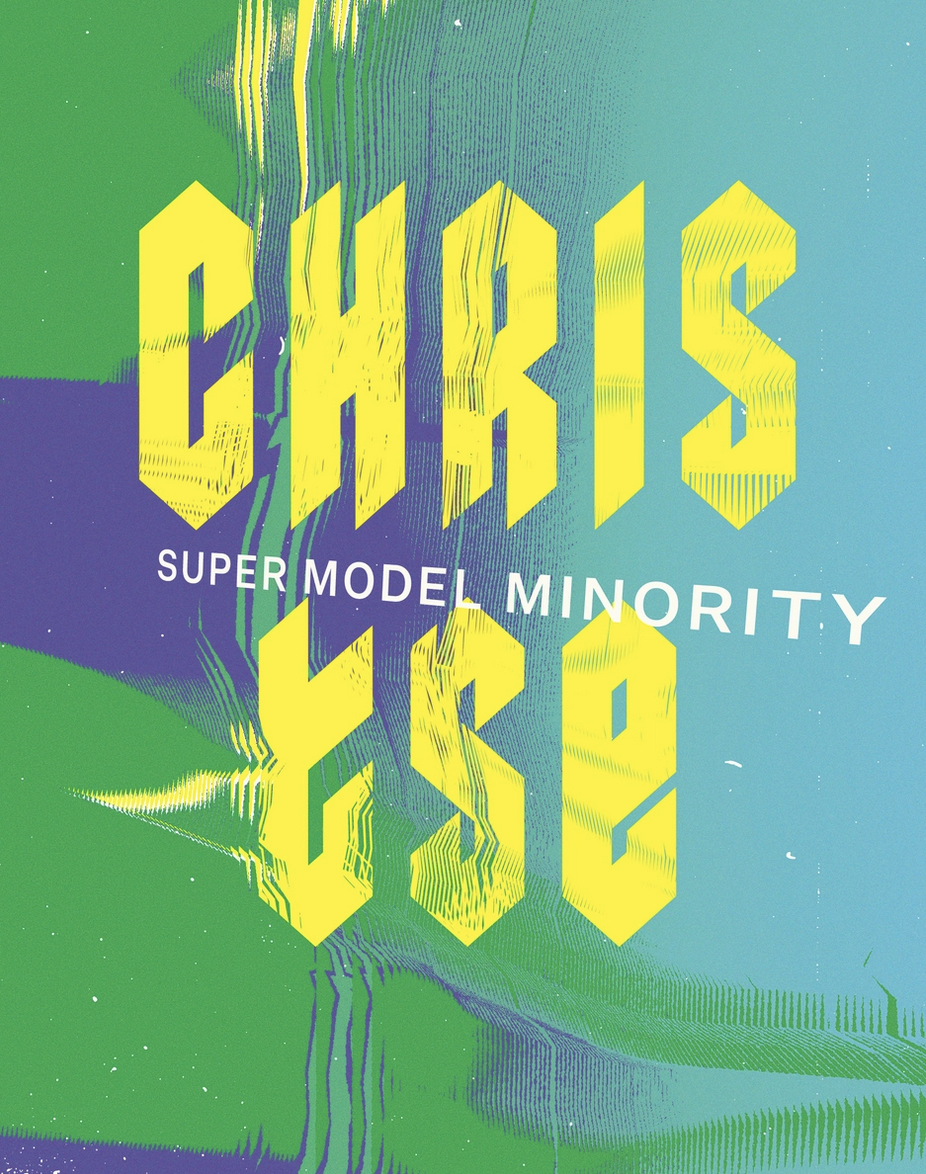
Super Model Minority, Chris Tse, Auckland University Press, 2022
Chris reads ‘Tomorrow, and tomorrow, and tomorrow’
Chris reads ‘BOY OH BOY OH BOY OH BOY’
Chris Tse is the author of three poetry collections published by Auckland University Press: How to be Dead in a Year of Snakes (winner of Best First Book of Poetry at the 2016 Ockham New Zealand Book Awards), HE’S SO MASC and Super Model Minority. He and Emma Barnes are the co-editors of Out Here: An anthology of Takatāpui and LGBTQIA+ writers from Aotearoa.
 NZ Poetry Shelf