Tag Archives: Ashleigh Young

On editing – Sarah Jane Barnett interviews Ashleigh Young

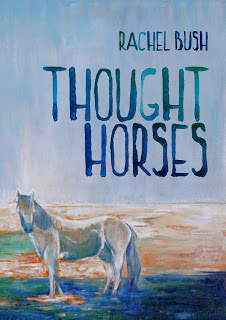
img_7235    Thought+Horses+cover

A new post at The Red Room:


I like to read and review New Zealand poetry, and because I live in Wellington quite a few of these collections come from Victoria University Press. When Ashleigh Young began working as their editor, I began to notice her careful hand on the collections. I asked Ashleigh a few questions about being an editor.

Sarah Jane Barnett: I was watching the show Comedians in Cars Getting Coffee and Jerry Seinfeld asked Barack Obama, ‘If politics was a sport, what sport would it be?’ So, if editing was a sport, what sport would it be?

Ashleigh Young: I was about to say cricket – long bouts of brooding interrupted by sudden bouts of high-speed action and head-clutching – but you can say that about almost anything. About life. I wonder if maybe editing is a bit like tenpin bowling. Every bit of editorial interference is a small act of violence, essentially trying to knock things down – but there’s this attempt at elegance, at the graceful flourish. And then there’s the stubborn beauty of the pins that remain standing. Also, tenpin bowling is the sport of grudging office team-building that ends up being quite fun.

Just contradicting myself, though, I think there’s something intrinsically un-sporty about editing. The writer and the editor shouldn’t feel like they’re adversaries grappling for ultimate power. No one should be spraying champagne around if they ‘win’. They can do that at the book launch.


For the rest of the interview go to Sarah’s blog: here

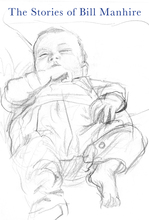
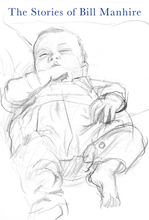
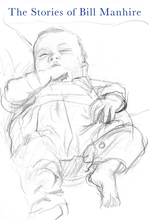
The Stories of Bill Manhire – a wee review and a wee interview – ‘I think that by and large I’ve written against rules’

bill_front_jacket__25142.1439156427.220.220.jpg  bill_front_jacket__25142.1439156427.220.220.jpg  bill_front_jacket__25142.1439156427.220.220.jpg

Bill Manhire occupies a significant position in our literary landscape — as both a poet and as founder of the International Institute of Modern Letters. As poet he is lauded on an international stage and at home was recognised  as our inaugural Te Mata Poet Laureate. As teacher and mentor at Victoria University, his outstanding contribution to our writing communities was honoured by the naming of the Bill Manhire House at IIML (April 2016). I have read Bill when he is not writing poems and have admired his clarity and elasticity of thought, but I had not read the early fiction in his recently released The Stories of Bill Manhire (VUP). Things escape us for all kinds of reason. In the 1990s, I focused on all things Italian as I wrote my doctoral thesis and missed too many local things. What a loss!

Amongst so many books I have loved, three books have really got under my reading skin in the last month: Cilla McQueen’s memoir, In Slanted Light, Tusiata Avia’s Fale Aitu, and Bill’s short stories.

Each of these books took me by surprise. Like little thunderbolts where you can feel your heart rate pick up as you read. Bill’s book didn’t cleave me apart like Kafka’s axe to the head or heart (he says the frozen sea within) but felt like the utterly satisfying thirst-quenching intake of sparkling water.  Writing that is effervescent, clear, restorative. I guess that is doing something miraculous to your parched state (a different kind of frozen sea). This is what words can do.

To celebrate this book – a short review from me and an interview with Bill.


A wee review:

The stories in this collection are gathered from The New Land: A Picture Book, South Pacific and Songs of My Life. There are previously unpublished stories, The Brain of Katherine Mansfield where you choose your own adventure, and the memoir, Under the Influence.

The writing is inventive, refreshing, surprising, on its feet skipping kicking doing little jumps.

How can I underline how good it is? As I read my way into days of reading pleasure, I squirmed cringed gasped laughed out loud sighed did wry grins wriggled on the spot leapt over the gaps laughed out loud again and felt little stabs that moved.

The stories highlight place and character, become nostalgic with detail that glints of when we were young (well for me anyway). You might move from the Queen’s visit and telling jokes to a dog named Fairburn, to a sci-fi keepsake on the tongue, to questions and answers on writing, to a dead-end job. Yes, the subjects are captivating but it is not so much what the stories pick as a starting point but how they travel. Take any story and it is a rejuvenating read. ‘Nonchalance’ for example, is like a series of postcards, travel or writing tips; or arrival tips with love and broken heart, soldiers, soldiers’ wives and the locals. You enter a realm of first things and floating elements. The readerly effects are kaleidoscopic.

To give you a taste of the book (I hope this doesn’t ruin things for you), here are some of the first and last lines. So important in a short story – these just nail it.


First lines:

Some critics write me off as just another ghost character activist, whereas I think I add up to a lot more than that.

The bishops come ashore.

Through here?

You are just an ordinary New Zealander.

The poet looks at the poet’s wife and says: You are my best poem.

He says: ‘Give me something significant.’

A slight scraggy moustache.

There are many tricks I have used repeatedly throughout my career to date, and others that I have done only really as one-offs.


Last lines:

Like a gasping in the chest.

The paddocks are left grey, stretching out to the edge of the frame.

Clouds pour across the sky and my lungs fill with air as though they might be sails.

No.

But jokes are too difficult: I’m getting someone else for that.

God bless him, and all the other poets.

That is how it is, adventure and regret, there is no getting away from it, we live in the broad Pacific, meeting and parting shake us, meeting and parting shake us, it is always touch and go.


The ‘Ghost Who talks’ made me laugh out loud with all its literary references alongside or inside the tricky business of getting ‘you’ and ‘I’ active in a story. Ha! It felt like the pronoun ghost out stalking. Then again the playful absurdities in ‘Kuki the Krazy Kea’ made me squirm with its dry wryness. Or the magician’s performance tips. Head back to the stories at the start of the book and the bits that taste a little different:  details of a nuclear winter, Ghandi’s funeral pyre, the melancholy of an empty pool, a mother colour-tinting photographs at the kitchen table. Bill enters the story to give writing tips here and there, to tilt the world a touch so you have to steady your reading feet (where next! What next!), to frame a judicious amount of missing bits, to be a little bit cheeky, to catch something provocative or lovely or poignant. This is a book I will recommend to friends.


A wee interview:


What satisfies you about writing a story?   

Pretty much what satisfies me about writing a fully-functioning poem.  There’s pleasure in the mix of surprise and inevitability, which needn’t be plot and character based. Sometimes it can just be a sense of musical completion.

I also like it if readers are given room to move and even a little work to do, and they end up feeling pleased about this, rather than grumpy. Maybe that’s explicit in The Brain of Katherine Mansfield, which is my shot at a choose-your-own-adventure story. But the best writing always invites readers to make choices as they go along. I’ve always liked Whitman’s take on the text-reader relationship: “I seek less to state or display any theme or thought, and more to bring you, reader, into the atmosphere of the theme or thought—there to pursue your own flight.”


Were there any rules you wanted your stories to obey? Or disregard? I love the way some of the stories sneak in instructions for start-out writers.

I think that by and large I’ve written against rules and tried to avoid what’s sometimes called the beige short story, of which the great exemplar is probably Joyce’s ‘The Dead’.  Glorious stuff, but . . . well, Joyce didn’t want to go on doing it, did he? Mark Haddon was writing about beige stories in the Guardian recently: ‘modest, melancholic stories, not arcs with beginnings, middles and ends, so much as moments and turning points.’  I’m a big fan of melancholy, but you read too many stories like that in a row, quiet epiphany after quiet epiphany, and the whole world starts to feel a bit insipid.

I suppose those instructions for beginning writers represent a complaint against the formulaic. What I mean is this sort of advice, which comes from a New Zealand book called How to Write and Sell Short Stories published back in the 1958:


PLOTS TO AVOID

(a)  Plots with a sex motif.

(b)  Where religion plays a dominating role.

(c)  Plots where sadism or brutality appear.

(d)  Plots with a basis of divorce.

(e)  Plots where illness or disease must be emphasised.

(f)  Plots dealing with harrowing experiences of children.

(g)  Plots dealing with politics.


And so on. Remove plots like those, and it’s hard to see what’s left.  I’m generally quite troubled by short story writing manuals, and by creative writing workshops that behave like short story manuals.


I also love the detail that catapults the reader to specific times and places  — how much did that sort of thing matter to you?

Getting the voice right in each case felt like the most important thing, and of course details are a crucial part of that.  Quite a few of the stories are really dramatic monologues, opportunities to try out some other voice or personality. That’s most obvious when they’re written in first person, but also in a strange way it’s also there in close third person.  The story called “Highlights” is third-person but it comes across in a flat, somewhat affectless voice – because it’s about a rather passive person. Anyway, the voice thing mattered to me, and I found myself trying on a range of idioms. I don’t think in general it’s a good idea to read a lot of short stories in a row, especially if they’re by the same writer, but I hope there’s quite a variety of narrating voices in the book.


Can you recommend some short-story writers?

There’s so much I haven’t read, but I’d go for Grace Paley every time.  Also Donald Barthelme and Lydia Davis. Gogol is my greatest favourite, especially “The Nose”, which I was once able to read in Russian. Early Sargeson.  Some of Ashleigh Young’s personal essays feel to me like beautifully told short stories – they just happen to be true, or true-ish. And the best of Barbara Anderson’s stories go on being brilliant – full of such sudden things. William Brandt’s collection, Alpha Male, has rather dropped out of sight, but it’s pretty fantastic – he does these wonderfully indignant, damaged narrators.


Do you have a favourite in the collection?

Probably “The Days of Sail”, though that may be because I know the back-story – it’s prompted by a covered-up assassination attempt on the Queen in Dunedin during the 1981 Royal tour.  A 17-year-old took a potshot at her from the top of a Med School building in Great King Street. Imagine if it had been successful! Dunedin would be totally on the map! Anyway, I built a rather cranky story around that fact.  There’s a nice radio adaptation that used be in the RNZ archive that I’d quite like to hear again.  It ends with a children’s choir singing “God Defend New Zealand”.


Do you find endings difficult (I have to say I loved the endings!)?    

Yes, they’re the hardest things.  I think I manage to get them right most of the time – except maybe for “The Death of Robert Louis Stevenson”, which of course is obliged to end with his death.  Not exactly a twist in the tail. Maybe the best ending is in “The Brain of Katherine Mansfield”.  Or, I should say, endings. I’ve met people who feel quite put out by the apparently brutal instruction, “Close the Book”, which comes at the close of several of the plot strands.

But “The Brain” is also about white middle-class complacency and its right-wing tendencies – so there is a “real” ending, too.  I won’t quote it, but anyone who wants to see what I mean can try to get to section 50 online, courtesy of Richard Easther and Jolisa Gracewood:   I’d also advise readers to pause on Greg O’Brien’s illustrated section headings.  There are lots of good visual arts jokes, along with a couple of depictions of C K Stead as a mad Nazi brain surgeon.


Victoria University Press page

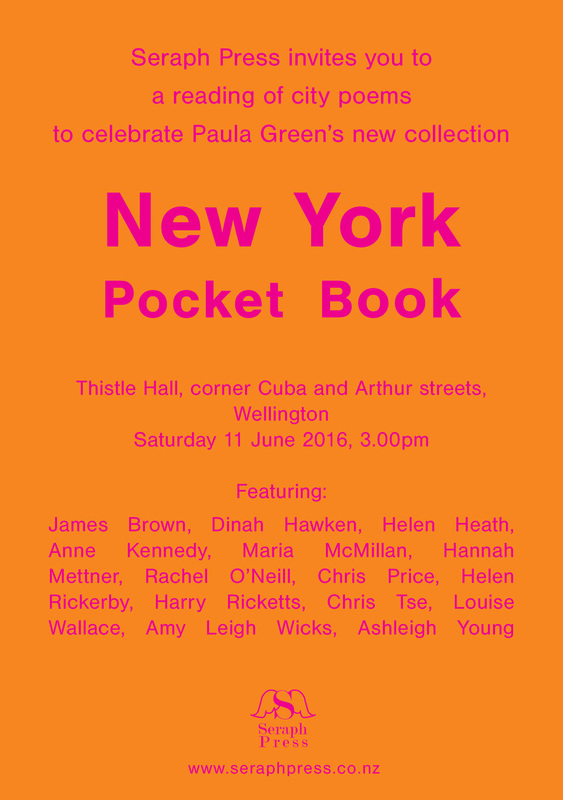
My two poetry readings to launch my new book feature some of my favourite poets

Like so many poets, I loathe people making speeches about me or my work. Much better to stage a poetry reading and celebrate the pull of cities.

My new poetry collection comes out of ten exceptional days I spent in New York with my family awhile ago. So I have invited a bunch of poets I love to read city poems by themselves and others. Big line-ups but it will free flow and leave time for wine and nibbles.

Once I got to fifteen I realised what poetry wealth we have in these places. I could have hosted another 15  in each place easily. That was so reassuring.

If I had time and money, I would have staged similar events in Christchurch and Dunedin where there bundles of poets I love too.

Please share if you have the inclination.

And you are ALL warmly invited!

Auckland:


7601147_orig.jpg


Wellington:


Auckland:2434463_orig.jpg

Kirsten McDougall kickstarts a great new interview series

img_7235


This is a great start to Kirsten McDougall’s new interview series on what people do. Kirsten begins with a terrific interview with Ashleigh Young (VUP editor).

‘My job at VUP is the first job I’ve felt I can be my true self, whatever that is, on the whole. It took a while to get used to. The time I have to put on the armour is at book launches and other literary events. If I am giving a speech I always wear so much armour you can practically hear me clanking about.’

I know this feeling! I sometimes feel I need a clone to go out and do the public stuff as though the real me, the hermit, is happiest off the beaten track out west.


A very small sample:

Interviewer

Does your job have title?

Ashleigh Young

Yes, I am an Editor at Victoria University Press (VUP). It feels nice to have a title. For half of the year I am also a Tutor in Science Writing, but that’s a whole other can of worms so I’m going to focus on my main day-to-day job.

Interviewer

Can you describe the things you do in your job?

Ashleigh Young

I work with a lot of writers to help them get their books ready to go out in the world. I edit books of poetry, short story collections, some nonfiction (mostly the memoir sort of nonfiction), and the odd novel. I’ve just finished editing Danyl McLauchlan’s second novel, Mysterious Mysteries of the Aro Valley, which was one of the most fun novels I’ve ever edited.

Alongside the editing I try to be supportive and encouraging, especially for first-time authors who are still getting their heads around the whole process. I like editing to be a conversation, a process of suggestion and refinement, rather than me tearing bits off someone’s work and scolding them for using too many adverbs or semicolons or whatever.

I typeset the books and sometimes help find a cover image or commission one from an illustrator. I write a few back-cover blurbs. I have a bit of a fixation with a good blurb. A well-done blurb is such a thing of beauty. My journey in blurbs is really only just beginning.

For the complete interview see here

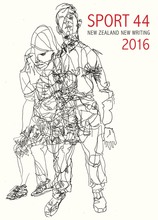
Reading Sport 44 on a wet Sunday keeps the blues away

Sport_44_Cover__64545.1456369674.220.220.jpg Sport_44_Cover__64545.1456369674.220.220Sport_44_Cover__64545.1456369674.220.220

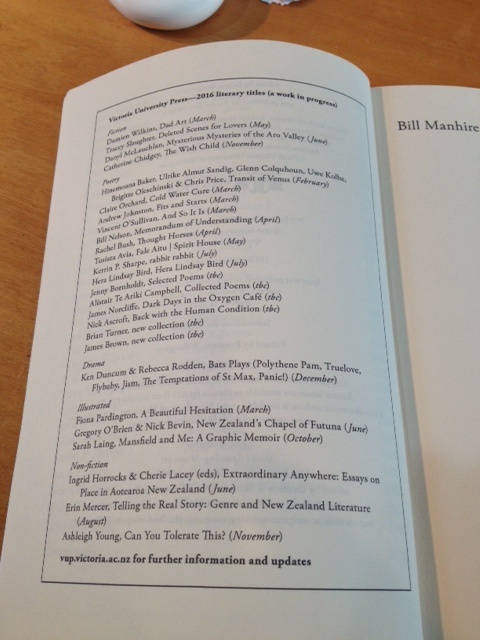
The new edition of Sport includes 8 essays along with the usual spread of poetry and fiction. At the start of the book is an impressive advertisement for Victoria University Press’s forthcoming publications. This Press is a consistent and exemplary supporter of New Zealand writing whether poetry, fiction or non-fiction.


Why I am singing VUP’s praises:

There are 15 poetry collections in the offing (okay some might not appear until next year, but still!). We are going to see books by Tusiata Avia and Hera Lindsay Bird over the next few months.

Sarah Laing‘s new book is out in October (Mansfield and me: A Graphic Memoir).

There are 4 works of fiction (Catherine Chidgey has a new novel out in November!)

And I am looking forward to the collection of essays Ingrid Horrocks co-edited having tasted some in Ruapehu and Ashleigh Young‘s essays (November).


Sport 44

some preliminary highlights:

Usually, I read all the poems first but this time I was in the mood for a bite of fiction so I dove straight into Kirsten McDougall‘s ‘A Visitation.’ The story responds to the collapse of the internet and the arrival of Clarice Lispector to make a batch of eggs to tempt an indifferent palate. I adored this story so much it made me want to take up writing short fiction. It is sweet writing; warm, witty, funny, thoughtful, polemical. I do hope there is a new collection in the pipelines. I read this on a plane with two hours sleep and it was such an uplift. ‘I saw anew the detritus in the house I had allowed to build up like a plaque to the heart.’

The journal always puts in me in touch with writers I am unfamiliar with. This time a glorious suite by Oscar Upperton: ‘The ship is a sort of dark undoing.’

And Philip Armstrong‘s utterly inventive narrative, ‘Life of Clay,’ which keeps you on your toes as you read: ‘I can tell you it began with nothing/ but the wide white bare and empty endless plain/ but there was something there already there.’

I have already posted some of Rachel Bush‘s poems here.  Movingly, achingly beautiful. Written when life has fingertips against death.

Jenny Bornholdt‘s exquisite haiku: ‘It is eight degrees/and the Thorndon outdoor pool/ is swimming with leaves.’

Ashleigh Young‘s ‘Process’ which is sad and happy and a little bit witty and a little bit true: ‘On this day our city is a perfect haircut, its losses gently layered/ and what is left, falling gracefully.’ Oh word shivers!

Tusiata Avia‘s ‘Gaza’ which brings heart and politics together and rips your easy Sunday slumbering with poetic teeth: ‘I cannot write a poem about Gaza because I cannot eat a whole desert.’

The stillness, the extraordinary image, the enigmatic bridge between title and poem in Louise Wallace‘s ‘The body began to balance itself’. You just have to read the whole thing!

Hannah Mettner‘s ‘The day Amy died’ that takes a moment that pricks with sharp detail and pricks even deeper when the moment is declared and time and noise go haywire.

Maria McMillan‘s ‘The Ski Flier’ is a whoosh of a poem that sucks you up into story and music and is so evocative: ‘And/ there is a moment when they pass,/ the snow and the ski flier,/ each taking on the character of the other.’

Harry Rickett‘s ’14A Esmonde Road’ exudes the mood of place, that historic property where Janet and Frank lived; and you can just feel the phantoms stalking the poem until you get to the perfect ending.

The first poem, ‘Falseweed,’ is by Bill Manhire and was published as a little pamphlet by Egg Box Publishing in Norwich. It has a different feel to some of Bill’s recent poems. The words are scattered like seeds on the expanse of white page. Or pebbles. But I like the idea of seed as they are so fertile. I can see the roots and buds bursting out. There is linguistic inventiveness that boosts both music and image, particularly in compound words:

leafcandle  pencilheart  wintertwig  scribblegrass  anchorwhite  tongue-true.

I felt like I was following a dandelion kiss and pausing to see where it landed. The poem is about childhood and writing and a mind floating, roaming. Words floating, roaming. It is beautiful and mesmerising: ‘I began to recall/ how the words came knocking.’ ‘Oh pencilheart –/ oh smudge of lead.’


And still much to read; more poems, more fiction and the bundle of essays. This is a terrific issue.

The VUP ad:

IMG_3295


Why I loved the Ruapehu Writers Festival


‘Memoir is a place to illuminate, not seek revenge.’ Elizabeth Knox

‘The Villa is a book of 100 tiny pieces. That’s how my brain was. Everything had fallen to pieces. I was writing in a state of shock.’ Fiona Farrell

‘I am a product of socialism and feminism.’ Fiona Farrell

‘We are not just a who or a what we are also a here.’ Martin Edmond

‘Archives are as questionable as memory.’ Martin Edmond

‘Poems have tended to ambush me every few decades.’ Fiona Kidman


[ I   k e e p   r e m e m b e r i n g

t h i n g s  a n d    a d d i n g     b i t s]


Yesterday there was a flurry of writers on social media suggesting the Ruapehu Writers Festival was the best festival ever. I have loved the richness and discoveries of so many other festivals, along with the family warmth of Going West. Yet this festival was special. The best ever.

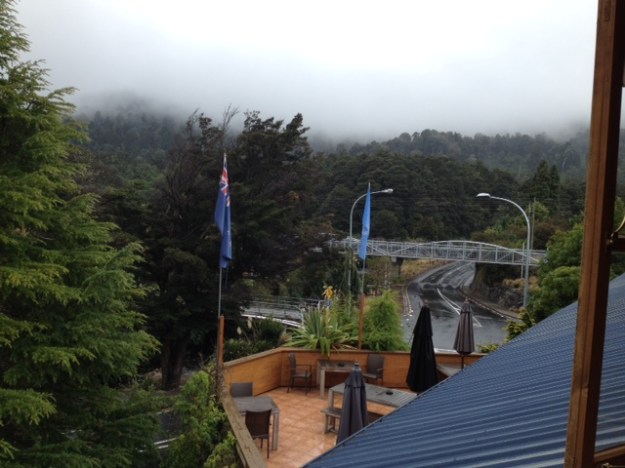
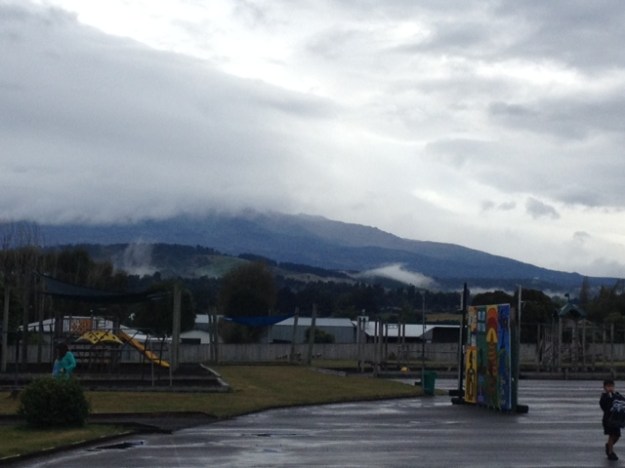
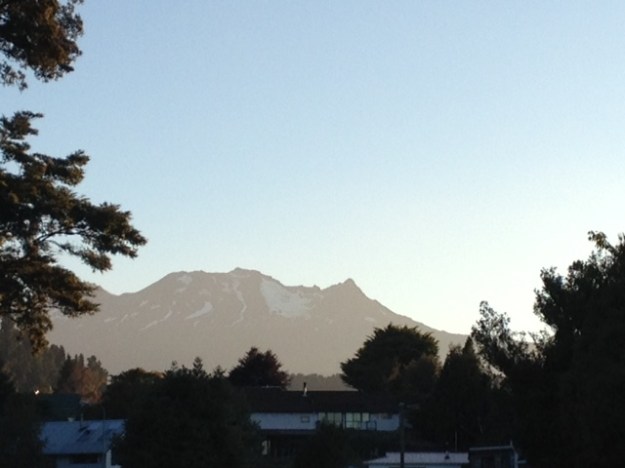
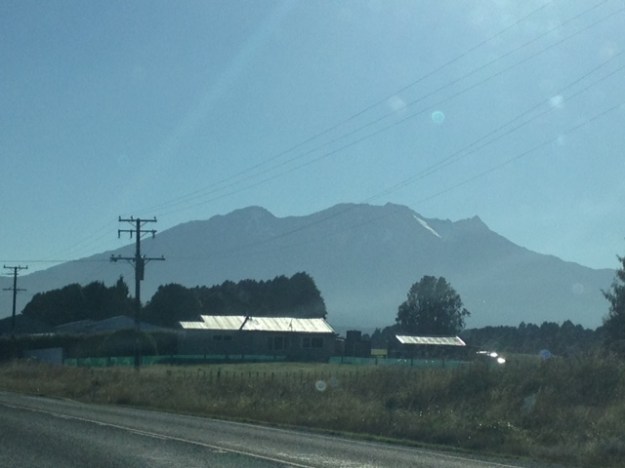
The setting: The mountain to the north loomed large out of clouds, and on some days into bright blue sky. The mountain stream babbled past like a soothing mountain soundtrack. The trains punctuated sessions and we all stopped and listened to the comforting sound of travel.

The writers: The writers came from far and wide (Martin Edmond, Fiona Farrell). Bigger publishers were represented (Penguin Random House, Auckland University Press, Victoria University Press) and so too were the boutique Presses (Seraph Press, Anahera Press, Mākaro Press, Cat & Spaghetti Press, Hue & Cry – to name a few).


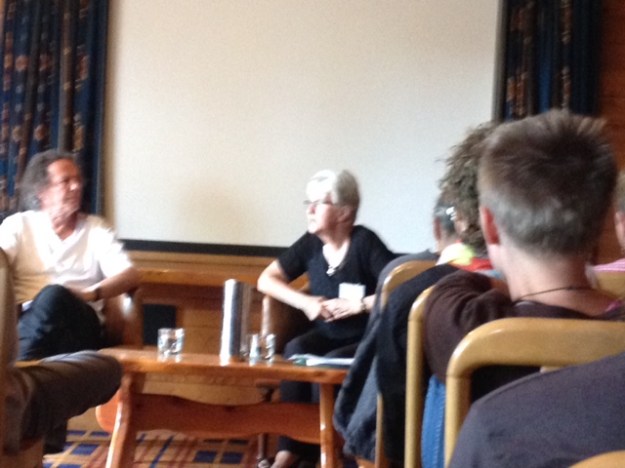
The sessions: Not a single dud. Just smorgasbord of highlights. I do want to pick out a couple of presentations that struck a chord with me.

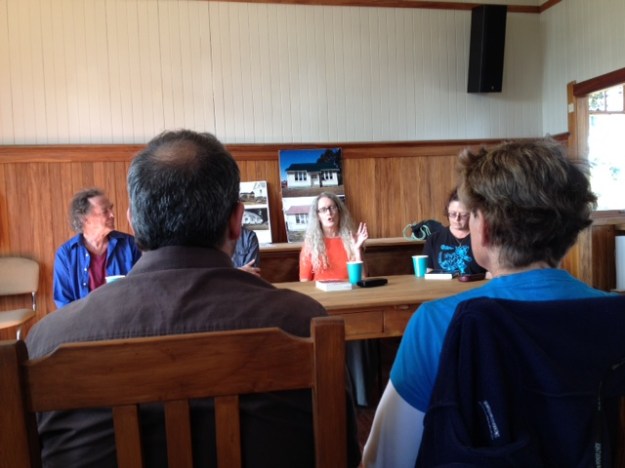
Merrilyn George shared Ohakune stories with Martin Edmond. Wow! I wish the whole country could have squeezed in to hear the way the local matters. Has mattered, does matter and will matter. It was Martin’s session too, but he let Merrilyn take centre stage with his little anecdotal prompts.

The fluency of my good friend Sue Orr when she got talking about place as character.

Three writers musing on the Desert Road: Fiona Kidman, Ingrid Horrocks and Fergus Barrowman (standing in for Nigel Cox). The conversation just flowed and the extracts were riveting. I have tracked down Ingrid’s essay, ‘A Small Town Event,’ in Sport 43. The sample stuck with me so I need to read the whole thing.

Elizabeth Knox‘s festival lecture, ‘On Doubt, Doubtingly,’  explored the implications and means of building memoir. Particularly in view of multiple selves, and the multiple reception and behaviour of selves. Elizabeth showed the way ideas can move, stimulate and challenge. Deliciously complicated and moving.

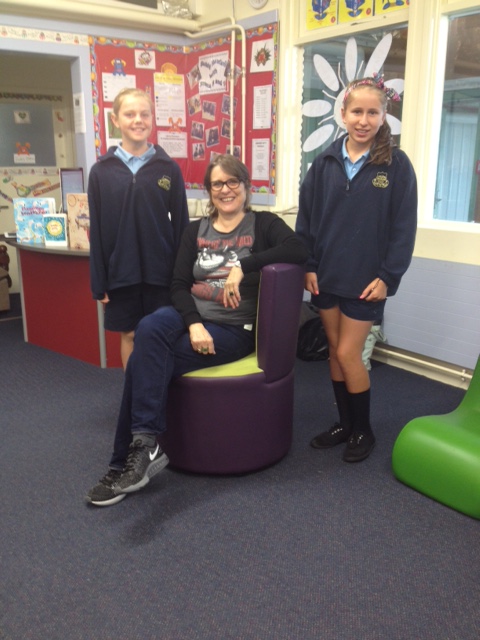
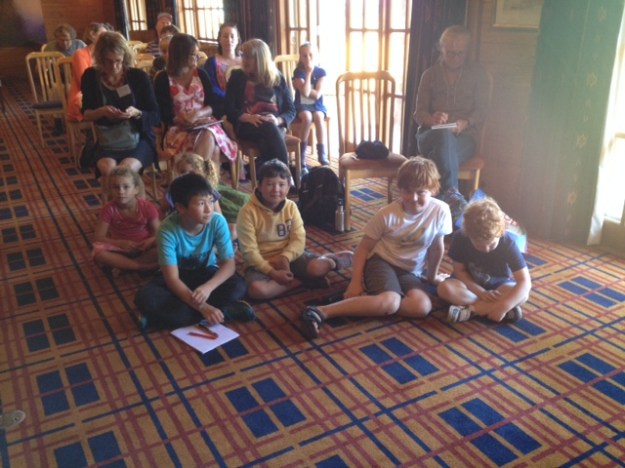
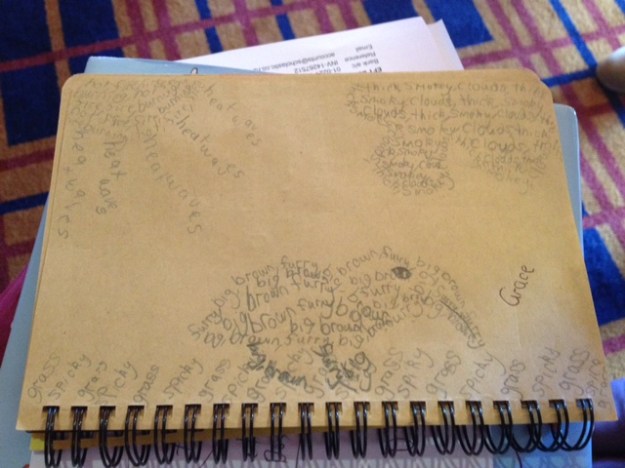
The children who came to my poetry session. Some as a result of my visit to Ohakune Primary School on the Thursday. I had an outstanding time there. This is a school where the teachers have already sown the fertile seeds of poetry. PS Jenny and Laughton Patrick did a great job getting the whole room singing!

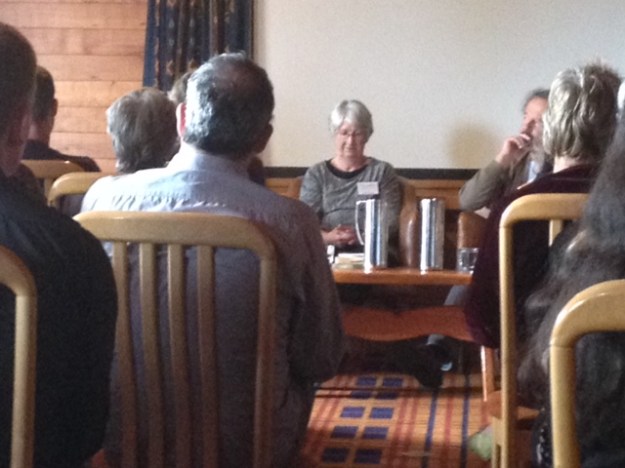
Three writers talk on structure: Pip Adams, Emily Perkins and Fiona Farrell. This session got on National Radio because Fiona let her guard down and moved most of us to tears. I thought I was going to start sobbing out loud. Listening to Fiona read from The Villa at the End of the Empire — a book shortlisted in the nonfiction section of the Ockham NZ Book Awards — was extraordinary. Yet the session was this and was more than this. It embraced two other terrific readings and generated a conversation on structure that made me want to get writing.

Six writers read from Extraordinary Elsewhere: Essays on Place from Aotearoa New Zealand (forthcoming VUP). Ashleigh Young‘s detail kept ringing in my ear, along with the moving circularity of Harry Rickett‘s essay and the philosophical nuggets of Martin Edmond (which I tweeted throughout the session).

I was quite taken with the response of Tim Corballis and Thom Conroy (chair) in my session on POV. I just loved the way Tim proposed the leaf on the boy’s shoe acted as a transcendental point of view. Ha! Thom was an excellent chair.

The final session of poets was a perfect way to end. I discovered the poetry of Hannah Mettner and will go hunting for it in issues of Turbine. I loved hearing Fiona Kidman read from her new book (out next week) and Vana Manasiadis from her old. Magnolia Wilson was also a new find off the page (I had loved her foldout poems). A local poet and ex-librarian, Helen Reynolds read her poems in the quietest of quiet voices. We stretched forward, further and further into her reading. It felt like I was bending forward into the end/ear of the festival.


The atmosphere: Warm, intimate, stimulating, generous. The festival had the family flavour of Going West but in a mountain setting. At four thirty each day we spilled into the bar for a glass of wine and platters of gratis nibbles before the final sessions. We shared conversation and that conversation was infused with a common love of books. And an infectious engagement with ideas.

The chance(ish) encounters: Hearing Amy Leigh Wicks read poetry for the first time and having lunch with her. I am itching to write about her poems on the blog. Sitting under the cool of a tree and talking women’s poetry with Sarah Jane Barnett (she was there as reader, as were other writers!). Eating breakfast with the very lovely Fiona Kidman and talking about women’s poetry in the seventies. Meeting a man who lived next to Eileen Duggan but not getting to follow that revelation up (ah! rue!). Drinking coffee with Fiona Farrell and talking about how something in the air or on the page prompted us to let our guard down. Just a tad. Meeting old friends.

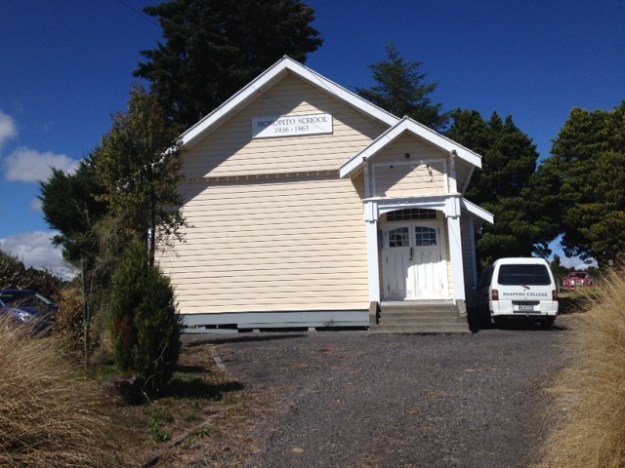
The special features: A band of writers cycled back from Horopito Hall with James Brown after hearing a session on cycling and poetry (ok Ashleigh Young where can I read a version of your lost-things poem?). A local kaumatua guided at least forty readers and writers up to a waterfall and back (around two hours). Stacy Gregg led some fans on a horse trek.

The audiences: Most sessions were full to the brim.

The chairs: I especially loved Fergus Barrowman (he did zillions with just the right degree of input), Nick Ascroft (he was hilarious) and Thom Conroy (astute listener!).

The organisers: Anna Jackson, Helen Rickerby and Simon Edmonds built a festival out of nothing yet when I reflect upon this daring, I realise it was out of something. The festival grew out of the hard labour and inventive thinking of these three. It also grew out of the good will these three can harness: from the locals, the venue, the schools, the publishers and the out-of-town readers and writers. It might sound corny but it also grew out of the physical location and its beauty. The festival always bore this mind.

It was really good to hear Anna and Helen read and share ideas. I loved too the way they sat in the front row in every shared and listened so intently. I could see the joy of the occasion on their faces. You don’t usually see festival organisers with freedom to sit in the front row and listen. Yet another sign of what made this occasion special.

Place matters.

I think if I were to ask all writers and readers to join me in a huge pakipaki for Anna, Helen and Simon we would drown out the mountain stream and the passing train. Just for a moment. We are in debt to you. Thank you.


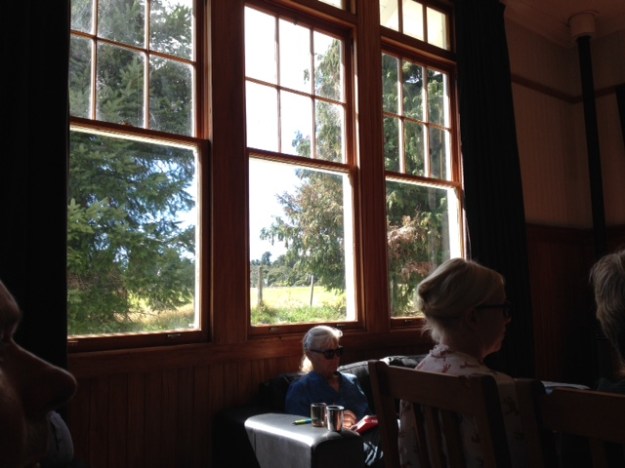
Excuse my phone photos!

IMG_3156IMG_3157IMG_3137IMG_3140IMG_3142IMG_3145IMG_3146IMG_3151IMG_3152IMG_3154IMG_3161IMG_3162IMG_3164IMG_3166IMG_3168IMG_3169IMG_3170IMG_3171IMG_3173IMG_3174IMG_3175IMG_3176IMG_3177IMG_3178


do like this poem by Ashleigh Young posted on The Spin Off’s Friday Poem

a regular feature at The Spin Off  … Friday is Poetry Day!

Ashleigh’s poem here

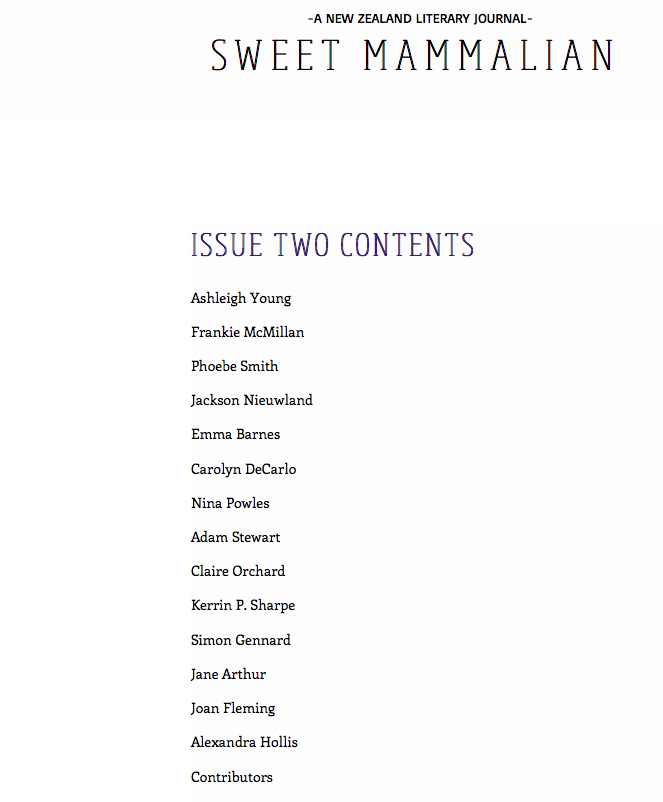
Sweet Mammalian #2 is sweet indeed – Where do I start? Every click comes up poetry trumps


The journal is here

Screen shot 2015-06-01 at 1.08.57 PM

Poem Friday: Ashleigh Young’s ‘Become road’ clung to me like a poetry limpet as I left the room

Become road

When the car stops we are beginning already to become road.
A little taken apart and buried, the way birds, leaves
become road. Become road beneath
the burying of cars. All become driven over,
all become under. Even weather is taken
a little apart and buried. That we have been hit tonight
is relief; we no longer need to wonder when. Pain becomes
a story we will tell you years from now.
Sound becomes the dream you’ll nurse us from.
For now we are a passenger belted in
to the happening, looking back
at our tame furred moon. On our way home
the night had been too pleasant: rows and rows
of blue glass jars like the BFG’s jars
of dreams: the night was too pleasant
for what we had done. As we cycled uphill
the person we once were was cycling downhill
and each exhalation pushed us further apart.
Before we got hit we saw the shadows of trees
become road. Then the trees. A woman walking
a dachshund through the trees become road.
We saw the dog’s eyes glinting in the road.
The shine of his leash, caught in the road.
We heard voices in the trees become road, and the sound
of someone’s phone ringing in the trees become road.
As traffic clears, the road softens and takes us
deep in its arms, which though hard, accommodate
everyone. Early morning, as the road begins
its upward surge we hear footsteps nearing
from somewhere inside the road, as if
we have been recognised.

© Ashleigh Young


Note from Paula: This was one of the poems that Ashleigh read out at the Auckland Writers Festival in the session for the Sarah Broom Poetry Award. Ashleigh was a finalist in the award along with  Alice Miller (I was her stand in)  and Diana Bridge (winner). This poem really struck a chord with me, clung to me like a poetry limpet as I left the room. Curiously, as I listened, it was a little hallucinogenic — time slowed down, the world stretched out to a state of dissolve and all that mattered was the elongated moment of the poem. Everything inside the poem seemed bright, shining, crystal clear yet simultaneously unreal, mysterious, out of reach. Disconcerting. Strange and estranging. The words so perfectly catching the momentum of anecdote yet lilting sideways, looping back like a Zen master as everything becomes road and time laps back upon itself (‘As we cycled uphill/ the person we once were were was cycling downhill’). Really, that state I had to snap out of as I sat on stage in front of the packed audience is the state embedded in the poem — when catastrophe strikes. The world stretches like chewing gum to become so real it is unreal. This is what poetry can do; it can take those unfathomable, unspeakable moments and cast them within a poetic frame that recasts you. You get to see and feel and shift a bit. Thank you Asheigh Young, thank you.


Sarah Broom Poetry Award judge’s comments (Vona Groarke) on Ashleigh here.

On reading Sport 43

Sometimes a literary journal is just the ticket for rainy-day blues, diversion, or the need to put a finger on a literary pulse. Ha! The notion of a literary pulse is where debate ensues. Each finger will be sensitive to different nuances, different implications.  I strongly believe that national anthologies that claim to represent a wide group ( New Zealand, for example) must be challenged if gender, ethnicity, age or geographic-location biases fuel significant blind spots. For decades, women were the blind spot in anthologies and journals, and now, at times it seems there is token representation of  work by Māori, Pasifika and Asian authors. Literary journals, however, are often the bloodline of a place, a niche, a literary disposition, and nearly always reveal the predilections of the editor. Sport comes out of Wellington, and it is to a great degree of Wellington (not in subject matter, but in terms of authors selected). It is a celebration of the writing by both established and emerging writers that have some connection with the city, often through Victoria University or its Press.  I have no problem with this.  I most definitely have no problem with this when the work included catches my attention and sends me in directions both familiar and unfamiliar.

The latest issue worked a treat for my rainy-day blues.

Seven essays are sprinkled through the selection of poetry and fiction, and if this is a new feature, it is a feature I applaud in this climate of idea-sharing in creative and stimulating forms. Long may it continue.

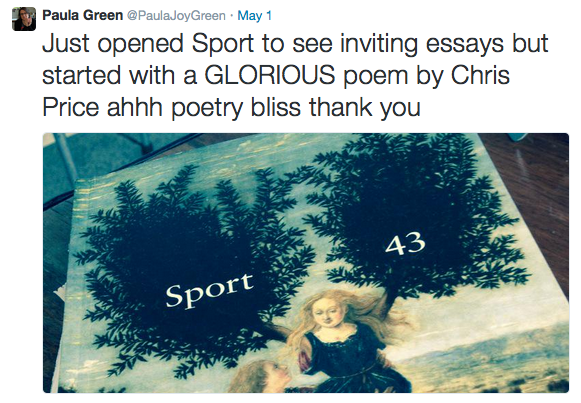
When I first picked up the book, I went straight to Chris Price (out of longing for a new collection perhaps) and immediately did a tweet review. Tucked away at the back of the book, it felt like the best had been saved for last with the playful, audacious flick and flash of words that catch your ear and send you flying to a nursery rhyme or Murphy’s Law or cheeky wit or the subtle twist and let’s-be-serious of the last word, ‘unspoken.’

Screen shot 2015-05-12 at 10.14.03 AM

This time I went to an unfamiliar name first, ‘Ruth Upperton,’ and what a discovery. Think I must have yearning for the comfort and absolute pleasure of poetic musicality (why I like the poems of Michele Leggott and Bill Manhire so much). Ruth has appeared in other journals, has just finished a law degree and lives in Palmerston North. Her five poems are different, the one from the other, but are linked by gorgeous rhyming (off, aslant, sliding), infectious repetitions, aural chords, sumptuous words. There is poetry out of sentences and there is poetry out of curiosity. You shift between comfort and strangeness.


from ‘The lonely crow’

Nothing sadder than a lonely river.

Nothing darker than a single crow.

Shiver at the strong’s surrender.

Play a tune on your June piano.


James Brown’s terrific poem, ‘Mercy,’ made me hungry for a new James Brown collection.

Anna Jackson’s three cooking-show poems suggest she is just getting better and better ( I am working my way through Catallus so I can review her new collection soon). I love the way the ingredients (excuse the pun) in these poems shift and flicker from one poem to the next, and in their new baking dishes taste a little different. The sort of poems that evoke a steady engagement at the level of sound and narrative.

Sarah Jane Barnett’s sequence of poems, Addis Ababa,’ caught me by surprise. They take me to an elsewhere, the elsewhere of  displacement, of otherness, of immigrants. The poems step up from everything Sarah has previously written, and then take another step into risk, empathy, inquiry, experience. What a combination.


Rachel Bush’s ‘Long and short,’ is a poem that moved me with its exquisite detail and revelation, a family story (true or false) that catches in the throat. The poetic glue: the baked bread.


So many things accumulate. They weigh us

off balance. We struggle to stay upright,

we lurch and are precarious. Our feet are flat

and sudden. It was easier when we had

a mum and dad. Easily we could blame them

when we were less than we desired.


Still most essays and fiction to read, but started here: Damien Wilkinson’s lecture/essay navigates a subset of the ‘ought’ and ‘ought not’ of narrative: the way it ought/ ought not represent some kind of personal change (character based). Fascinating following the thread of argument. Is this a requisite ingredient in poetry? That poems ought to navigate some kind of change? I raise this because, and I am shifting tack a little here, I am fond of poems that exhibit some kind of movement (and movement may be zen-like and hold change within its sameness and vice-versa). Poetic movement need not be on a grand, spectacular scale. It might be miniature shivers in the poem, sweet little movements that you catch out of the corner of your eye, or a flicker in your ear, or a faint tremble of your heart, or the tug of an idea that is itching to confound, challenge and pull you elsewhere. That is what I felt when I read, ‘She cannot work,’ Ashleigh Young’s foray into fiction. It is what I felt reading this issue of Sport, a catalogue of movements that displaced my state of fatigue.


Sport: miniature shivers in the writing, sweet little movements that you catch out of the corner of your eye, or a flicker in your ear, or a faint tremble of your heart, or the tug of an idea that is itching to confound, challenge and pull you elsewhere.