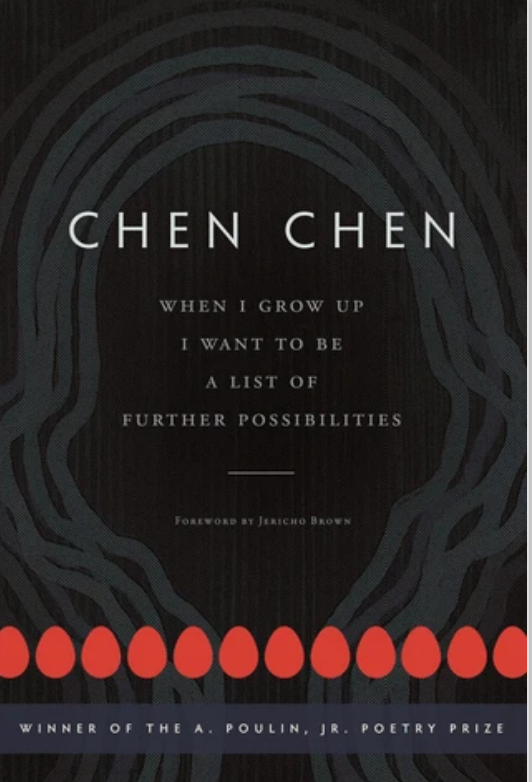
Each poem is a list of further possibilities that stretch out with such word beauty to embrace life. Love sadness mother lover constellations emigration wonder kissing winter grandmother song. There is sublime melody in the story and there is sublime story in the song. Picture a footpath incandescent after rainfall and the goosebump tattoo on your skin is what you get as you read. Lists appear; like miniature self portraits, like slow-release puffs of life, suprising, complex, stingingly real. You cannot imbibe Chen’s poems without imbibing word joy. Poetry as a meditation device, contemplation. Luminous.
I want to say, No, it’s completely different, which in many ways it is, but really I’m remembering what a writer friend once said to me, All you write about is being gay or Chinese—how I can’t get over that, & wonder if it’s true,
if everything I write is in some way an immigrant narrative or another coming out story. I recall a recent poem, featuring fishmongers in Seattle, & that makes me happy—clearly one that isn’t about being gay or Chinese.
But then I remember a significant number of Chinese immigrants live in Seattle & how I found several of the Pike Place fishmongers attractive when I visited, so I guess that poem’s about being gay
& Chinese, too. So I say to my friend, I’m not sure, & keep eating the popcorn. Thank god we chose the “family size” bag. Can’t stop the greasy handfuls, noisy mouthfuls. Can’t eat popcorn quietly.
from ‘Poem in Noisy Mouthfuls’
Chen Chen is a poet and essayist interested in Asian American histories and futures, family (bio and found), queer friendship, multilingualism, hybrid texts, humor, and pop culture. His work has appeared in two chapbooks and in such publications as Poetry, Gulf Coast, Indiana Review, Best of the Net, and The Best American Poetry. He is the recipient of fellowships from Kundiman, the Saltonstall Foundation, and Lambda Literary. He earned his BA at Hampshire College and his MFA at Syracuse University. He lives in Lubbock, Texas, where he is pursuing a PhD in English and Creative Writing at Texas Tech University. His second book of poems, Your Emergency Contact Has Experienced an Emergency, is forthcoming from BOA Editions in Sept. 2022. His first book of essays, In Cahoots with the Rabbit God, is forthcoming from Noemi Press in late 2023.
Winner of the A. POULIN, JR. POETRY PRIZE Winner of the GLCA New Writers Award Winner of the Thom Gunn Award for Gay Poetry Longlisted for the National Book Award for Poetry Finalist for the Lambda Literary Award for Gay Poetry A Barabara Gittings Literature Award Honor Book
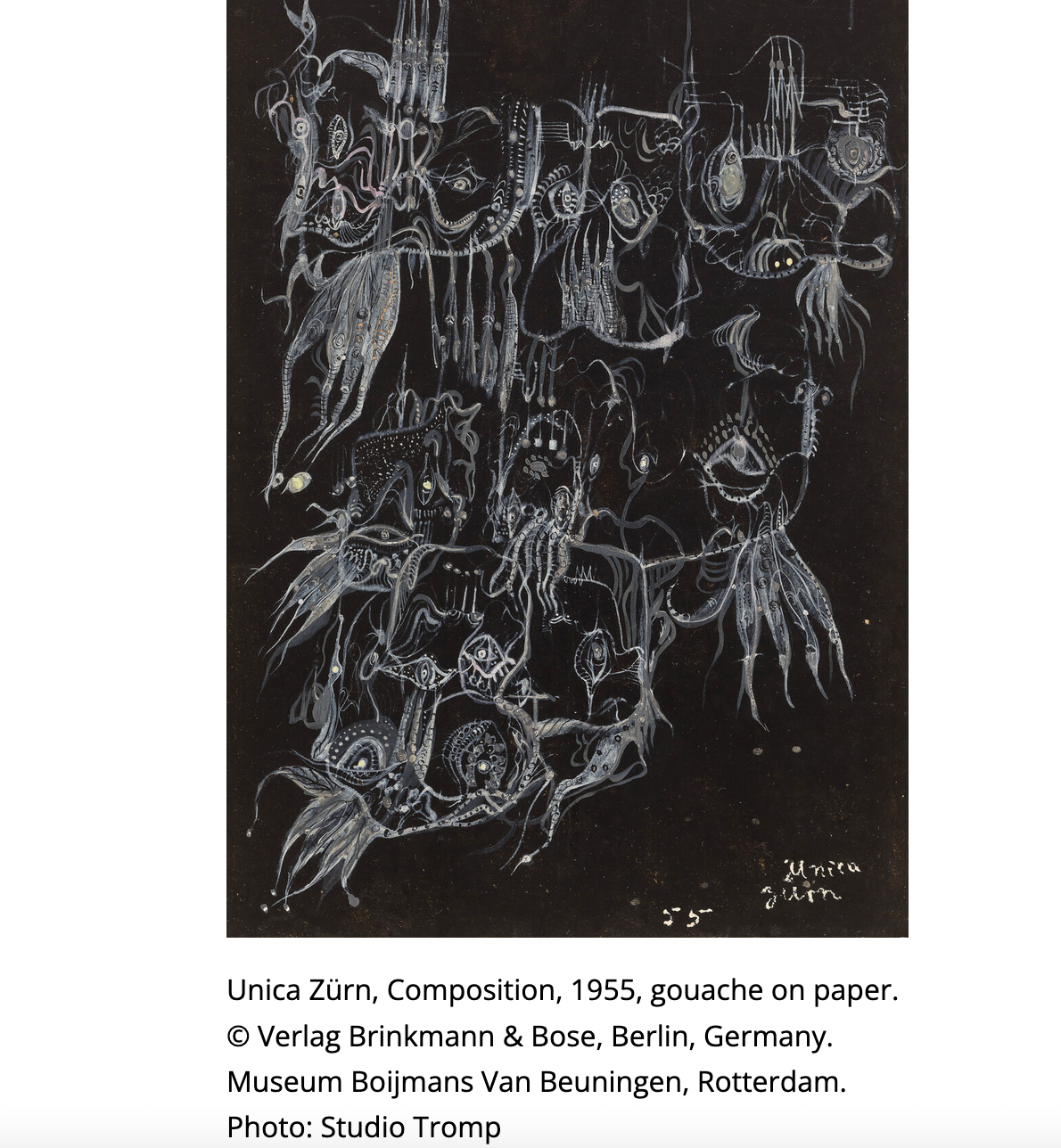
Surrealist Sisters: Writers Respond 31 October, 2pm Te Papa – Te Marae, Level 4
Free event
Verb guest curator, poet Rebecca Hawkes, has taken a gathering of writers to experience Te Papa’s latest international exhibition, Surrealist Art: Masterpieces from Museum Boijmans Van Beuningen. Each writer has crafted a written response to the exhibition: what played on their minds? What images and ideas latched on? Find out in this free event in which we’ll hear responses to the stars of surrealism shared for the first time. Featuring: Khadro Mohamed, Rebecca Hawkes, Sarah Scott, Jo Randerson and Cadence Chung. Curated by Rebecca Hawkes.
The rain is falling hard on the farm today We’ve just messaged about loving older humans How it’s true that age is just a number How we want the whole world (two people) To eat our truth. But how? At noon certain numbers make a nation Sigh in unison In the morning certain numbers make a city Take out their thickest coat At midlife certain numbers make a person Wistful for the bygone. My grandmother is watching the kārearea soar Across the valley on warm spring waves We give our lovers nicknames Like birds giving each patch of air a wing. Punching my keyboard I ask is there is a way to give without giving everything? I can’t help but think we are the kārearea Our lovers the old ones watching Us soar, somewhere, like eyelashes Licking golden cheeks Watching us watch the whole world Watch each other For the wrong kind of answer.
Rosina BaxterandAmy Marguerite
Rosina Baxter is an emerging poet and songwriter who has used written word as personal catharsis from a young age. She is a regular performer at Poetry Live on Karangahape Road, she narrates poetry and prose for Passengers Journal, and has recently been published in Tarot Magazine.
Amy Marguerite is a poet and writer of non-fiction based in Te Whanganui-a-Tara, Wellington. Her poetry has featured in a number of journals and literary magazines, most recently the Food Court S08E01 zine. She is currently working alongside Rosina toward a collaborative collection of poetry.
In a book-club meet up recently I was reminded that lots of people, even extremely well read and clever people, feel like they need some kind of special knowledge or language to be able to talk about poetry. But I think what I love about poetry (and all art basically) is that you don’t have to have special anything for a poem to say something wonderful to you (or confronting, or funny, or unexpected, or thrilling). I chose these particular poems because they simply stuck with me for reasons I’m not sure of. They all contain certain images that attached themselves to the walls of my internal world and now I stroll past them on my daily rounds and they make me pause and think. I like that about poetry. Poems are like the tequila shots of the literary world: potent, dizzying, give you a buzz. And the good stuff is head and shoulders above most of the other options on the shelf.
‘Feagaiga/ Covenant’, Tusiata Avia I chose this poem because I heard Tusiata read it (I can’t remember where) and the image of siblings knitting themselves together, interlocking their pyjamas, just, I can’t explain it, it nailed me. It made me want to cry and be joyously grateful at the same time. Something about it spoke to what being a sibling is and it made me feel pain and happiness simultaneously.
‘For a Five Year Old’, Fleur Adcock This poem is one of the first I remember having to learn for Speech and Drama. S & D seems like a weird old fashioned thing these days but, actually on reflection, I think that the early lessons on poetry and making images, and appreciating words, were foundational for me. And I’ve never lost the love for this poem and its gentle severity. Of course I understand it completely differently now I am a mother.
‘The feijoas are falling from the trees’, Louise Wallace I love this poem because I love feijoas and also inherited my grandmother’s anxiety about not wasting fallen fruit. I heard Louise recite this at the Festival of Colour in Wanaka years ago and loved its domesticity and its vividenss and its humour. Like lots of Louise’s work it is plump with the understanding that the human condition is inextricable from the small comic drudgeries of daily life.
‘Spent’, Sugar Magnolia Wilson I love this poem because it feels dark and dangerous and beautiful. Sugar Magnolia Wilson’s work appeals to a certain aesthetic, and thematics, that I love to read. There is something of the fairytale, of the supernatural lurking in every line. I love the sense of the night sky mirroring the dark face full of teeth, and the rustle of the ‘wide-mouthed egg-swallowers’. Thrilling.
The poems
For a Five-Year-Old
A snail is climbing up the window-sill into your room, after a night of rain. You call me in to see, and I explain that it would be unkind to leave it there: it might crawl to the floor; we must take care that no one squashes it. You understand, and carry it outside, with careful hand, to eat a daffodil.
I see, then, that a kind of faith prevails: your gentleness is moulded still be words from me, who have trapped mice and shot wild birds, from me, who drowned your kittens, who betrayed your closest relatives, and who purveyed the harshest kind of truth to many another. But that is how things are: I am your mother, and we are kind to snails.
Fleur Adcock
from The Eye of the Hurricane, Reed, 1964. Also published in Fleur Adcock: Collected Poems, Victoria University Press, 2019.
The feijoas are falling from the trees
The feijoas are falling from the trees – a fresh bag-load every day.
Winter is on its way. I am in the kitchen shucking feijoas like oysters – filling ice-cream containers to freeze.
Won’t it be nice to eat them in July? Rory is a good man, who hates feijoas.
I see a strong gust outside and I imagine the sound of a feijoa falling. Crashing into branches on its way down, waiting to be plucked from the leaves and soil.
Winter is on its way. I try to think of how I could earn more money; work harder, get ahead. There is never enough and it would be nice to get ahead.
I write a list of all the things I need to make – stewed feijoas, feijoa crumble – another gust: feijoa cake.
Louise Wallace
from Enough, Victoria University Press, 2013
Feagaiga/ Covenant
I tell my brother about the boy at school
I make him tickle my back and every time he stops I tell him about the boy at school who can do it The Best In The World. My brother and I are Siamese twins I graft him to me his pyjama holes to my buttons and we sleep face to face. When they try to lift me out I keep my eyes shut my mother has to call for help the surgeon is delayed till morning.
Dad’s Army
Grandpa comes on Thursdays when they are at counselling he watches Dad’s Army. My brother and I eat pancakes I tell him how stupid he is how much I hate him and how I have hollowed out little caverns in the pancakes and filled them with ants.
Love Boat
At 7pm on Wednesday night when the Love Boat is on they ask me who I think should get the house. I make my brother an ice-cream sundae with secret passages for the Resistance to hide in I fill them with curry and chilli and shoe polish.
My brother goes missing
I check back-yard, front-yard, park, neighbours’ wardrobes, bathroom, toilet, wash house I know deep down he is dead and I am a bad person I even ring my mother at Weight Watchers – he turns up in the warming cupboard.
My brother doesn’t know what a magistrate is
We go to TheMuppet Movie and then Ice Castles and then Bambi (again) my brother eats too many ice castles and falls asleep. We walk back to the courthouse which is by the tearooms and I eat a custard square.
My brother goes next door
The girlfriend comes round and won’t go away and threatens to cut her wrists with the windows or mayonnaise jars. I tell my brother to go next door and stay there I tell the girlfriend to go ahead and kill herself but first , Get in the taxi, just get in the taxi.
The day we meet our other brother
At Bishopdale shopping mall we all look the same but he looks more like our father and tells us his life is fine as if we might be robbers who will break into his house and remove everything he has.
I take my friend round to my brother’s
I’m nervous about seeing him on my own but he’s hungover and gentle and shows us the tiny box of ashes. His wife gets home with a new jacket she puts the box back on its stand So you’ve shown them our son? she says and rips off all the buttons.
Tusiata Avia
first appeared at The Spinoff Review of Books 2016
Spent
The night sky is full of stars but
we are more clever than most – we know they are just burned bones.
Nothing beautiful –
not space sailors blown from their ships – the light from treasure quickly grasped in their fists
only reaching us now.
It’s a useless kind of light – unspendable.
The palm of your hand lies on my knee like a gold coin donation
trying to free up my joints
but I don’t feel like moving or shining.
And your voice has had its heartwood cut out
a woodpecker taps a hollow sound against the bark casing where
other things dwell now – rats and stoats, wide-mouthed egg-swallers too.
In the dark your face is different – you have more teeth than normal and your mouth
looks expensive.
Sugar Magnolia Wilson
from Because a Woman’s Heart is Like a Needle at the Bottom of the Ocean, Auckland University Press, 2019
Claire Mabey is founder of Verb Wellington which is an organisation dedicated to supporting Aotearoa writers and readers. Verb has a Readers & Writers Festival this year between 3 – 7 November and the programme is out now. She is also curator for the Aotearoa New Zealand Festival of the Arts’ writers programme 2022 and is mum to Charlie.
Fleur Adcock, born in Auckland in 1934, is a highly acclaimed New Zealand poet, editor and translator who resides in Britain. She has published many collections of poems, most recently Glass Wings (2013), The Land Ballot (2014), Hoard (2017) and The Mermaid’s Purse (2021). Her awards include the 1961 Festival of Wellington Poetry Award, the Jessie Mackay Prize in 1968 and 1972, the Buckland Award in 1968 and 1979, the New Zealand National Book Award in 1984, an OBE in 1986, the Queen’s Gold Medal for Poetry in 2006, and a CNZM for services to literature in 2008. In 2019 she was the recipient of a Prime Minister’s Award for Literary Achievement.
Tusiata Avia is an internationally acclaimed poet, performer and children’s author. She has published 4 collections of poetry, 3 children’s books and her play ‘Wild Dogs Under My Skirt’ had its off-Broadway debut in NYC, where it took out The Fringe Encore Series 2019 Outstanding Production of the Year. Most recently Tusiata was awarded a 2020 Arts Foundation Laureate and was made a Member of the New Zealand Order of Merit for services to poetry and the arts.
Louise Wallace is the author of three collections of poetry published by Victoria University Press, most recently Bad Things. She is the founder and editor of Starling, and is currently working on a PhD in Creative Writing at the University of Otago.
Sugar Magnolia Wilson is from the Far North of New Zealand. She completed her MA in creative writing at the International Institute of Modern Letters at Victoria University of Wellington in 2012. Her book Because a Woman’s Heart is like a Needle at the Bottom of the Ocean was longlisted for the 2020 Ockham book awards. Her work has been published in most of the usual NZ literary journals.
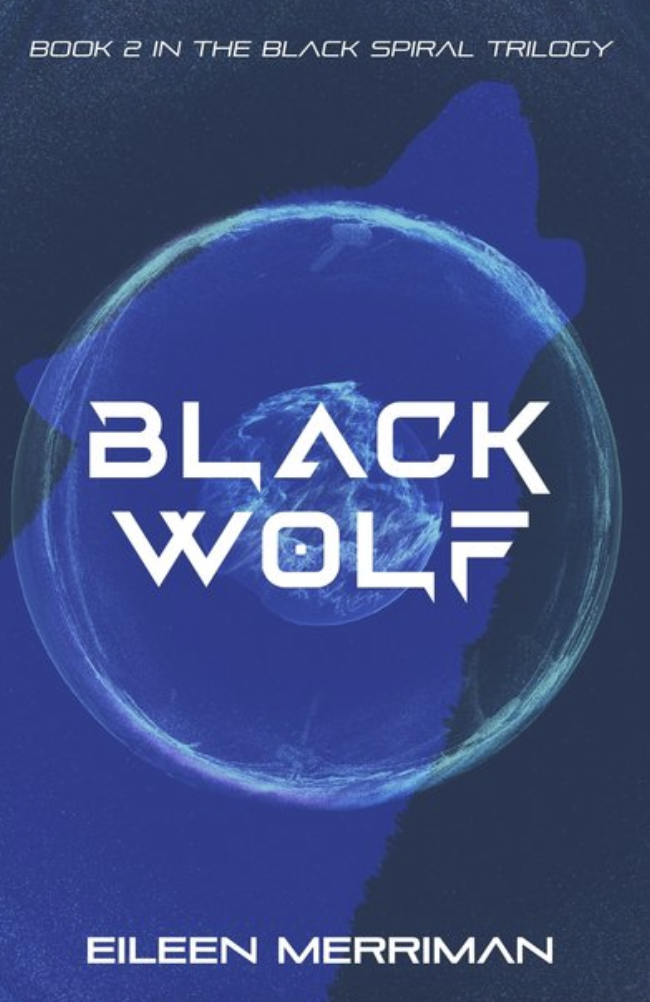
I gobbled up the first book, Violet Black, in Eileen Merriman’s The Black Spiral Trilogy, in two greedy sittings. The book has suspense, gritty characters, vital borders between good and evil, porous ethics, romance. When I closed it I felt bereft – knowing how long I had to wait to read the next volume.
Aotearoa is rich in YA writers, writers who delve into the point of view of teenagers, and who navigate contemporary circumstances that challenge both at the level of the personal and an onslaught of ideas and decision making. NZ Bookshop day is coming up this Saturday and I am dreaming that everyone who can afford it will order a local book. Wishing for this. More than ever publishers and booksellers need our support. Let’s celebrate YA fiction, such a magnificent genre.
I recommend getting hooked into Eileen’s gripping trilogy. I read the second book, Black Wolf, in two days. And again I felt bereft when it ended and, in the same breath, utterly satisfied with the rollercoaster, heart-pounding story arc. Phoenix and Violet have become experimental subjects of The Foundation after having caught a mysterious virus, M-fever. They are under the control of The Foundation because they acquired super gifts, the key one being able to communicate telepathically. The rest of the world thinks they are dead. Other subjects die or are decommissioned. They resolve to fight for what is right.
On the one hand this is a struggle of good versus evil, but even more compelling, it is the interior struggle of two teenagers wanting to make good choices, wanting to care for fellow human beings, to work for the good of the whole rather than the benefit of the greedy individual. This is not easy. Being a teenager is not always easy. There is unbearable kindness. There is sex, there are drugs, there is romance. Relationships to unravel. There is mystery. The medical issues and implications.
Eileen’s sentences flow like honey. The dialogue is pitch perfect. I care so much about the characters I woke at 2 am, after the first day’s reading, plotting what might happen next. Worried for everyone!
Reading this book lifted me out of the black hole that keeps dragging me down. So sweetly. So rewardingly. I don’t want to go giving everything away – you just need to find a comfort corner and board the exhilarating ride with its spiky twists and turns, gathering in strength, kindness, empathy. Three qualities we need in our collective response devices, in our own challenging virus-stoked times.
I toast this glorious book. It was just what I needed. Oh and the final volume is out 1 March 2022.
Eileen Merriman’s first young adult novel, Pieces of You, was published in 2017, and was a finalist in the NZ Book Awards for Children and Young Adults and a Storylines Notable Book. Since then, she has published another nine novels for adults and young adults and received huge critical praise, with one reviewer saying: ‘Merriman is an instinctive storyteller with an innate sense of timing.’ In addition to being a regular finalist in the NZ Book Awards for Children and Young Adults, Merriman was a finalist in the 2021 Ngaio Marsh Award for Best Crime Novel and Moonlight Sonata was longlisted for the Jann Medlicott Acorn Prize for Fiction 2020. Editions of some of her young adult novels have been released in Germany, Turkey and the UK and three have been optioned for film or TV, including the Black Spiral Trilogy.
Her other awards include runner-up in the 2018 Sunday Star-Times Short Story Award and third in the same award for three consecutive years previously. She works as a consultant haematologist at North Shore Hospital.
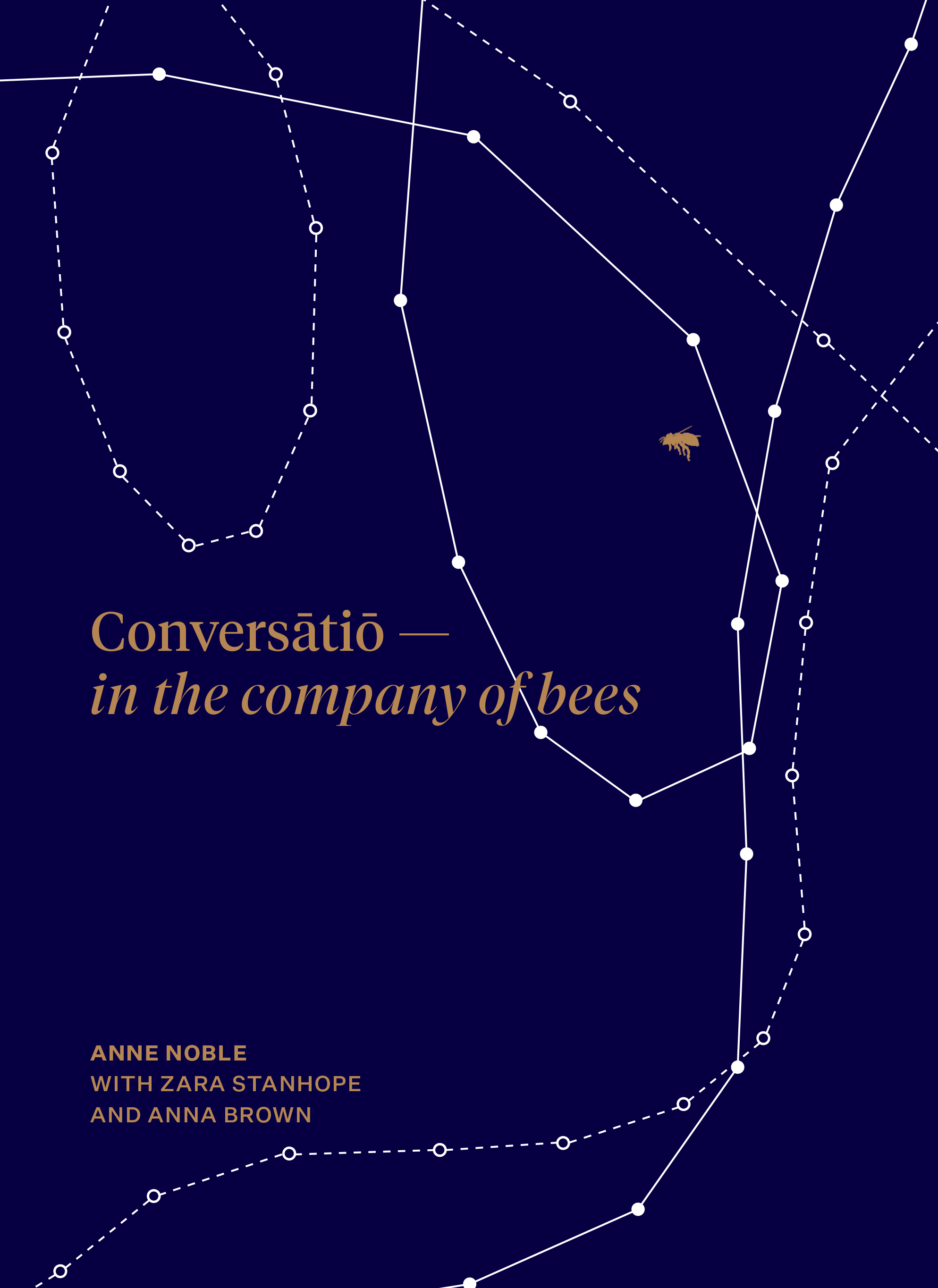
Conversātiō – in the company of bees, Anne Noble with Zara Stanhope and Anna Brown, Massey University Press, 2021
each morning in the bright window she’s there
on the tip of your tongue her bees working
the red flowers that take you from vine to fire
as she contemplates another shift in the pronouns
Michele Leggott
from ‘Blue Irises’, from DIA, Auckland University Press, 1994
Anne Noble’s Conversātiō – in the company of bees is a precious object with its luxurious velveteen cover, generous serving of images, handbound look, luxuriant paper stock. The book as art work. An artwork as book. There are conversations, essays and a smattering of bee-related writings from Xenophon of Athens (c. 430 – 350 BCE) through to Emily Dickinson (1830 -1886), Carl Jung (1875 – 1961), Karl Marx (1818 – 1883), Dante Alighieri (1265 – 1321), Sylvia Plath (1932 – 1963), and many more.
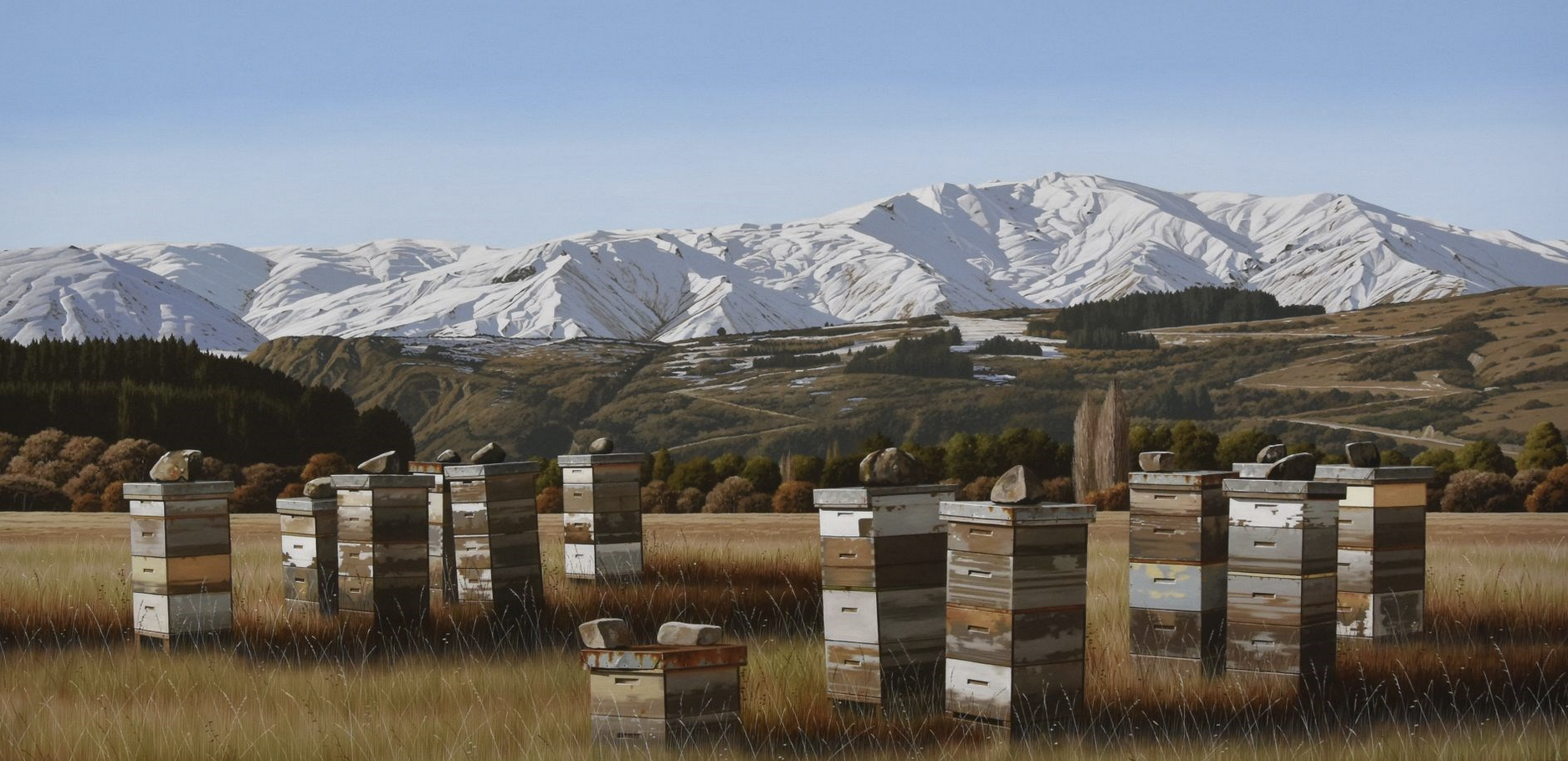
I was drawn to this book because for over 35 years I have lived with an artist known for his beehive paintings, who views the hive on the landscape as a found object, as a site of transformation, as a sublime interplay of light and dark. As a family we have travelled the South Island roads taking photographs. We have smelt linseed oil and paint for decades, even watched a honeybee land on a painted hive. We have a beehive work hanging on the lounge wall that is my point of uplift, my transcendental device, my place to restore balance. Outside, honeybees dart in the manukā, land on flowers in the vegetable patches. The bees, and the beehive paintings, are a source of interior glow as I sit still and watch and reboot. The bees are doing what bees do, and it feels good. It is of the greatest comfort.
Anne’s bee-thicket book (it is of course a collective project) will offer the reader many sidetrack diversions, parallel lines of thought and feeling. I am catapaulted back into the honey-rich poetry of Michele Leggott, the dulcet threads and motifs. Find me a collection of hers where the honeybee does not make an appearance, and I will be surprised. Across centuries the bee has pollinated the poetic line with sweetness, fostering a delight in connectivity, awe, the miraculous. As a motif it fertilises a poem with the visual, the sensual, the unsayable, with patterns, transformations. This is what Michele’s poetry does for me.
Looking at one of Michael’s paintings, reading Michele’s poems or glimpsing the bee in our vegetable gardens, I am filled with life-sustaining joy. And how that matters. This is what the bee does for me.
Pick up Conversātiō, this sumptuous book, with its title demanding attentiveness, and you will fall into Anne’s close-up photographs of bees at work, how the collective labour is paramount. You will read of the mystery of the bee’s flight patterns and interpretations of their dances. You will read of the miracle of survival, the need for bee survival, the tending of hives, the harvesting of honey.
How you travel through this book is open. It is over to you. It feels like a thicket with interlocking paths, rich in images and ideas, possibilities. It is a beauty of a book. It is a book of beauty.
‘A journey of discovery into the life of bees’ — John Daly-Peoples, New Zealand Arts Review ‘A remarkable and beautifully produced book’ — Peter Simpson, Kete ‘Another sumptuous book from Massey University Press’ — David Hill, RNZ ‘A fascinating hybrid work, formed by the streams of art, science, poetry and philosophical thinking that flow into it’ — Landfall Review Online Anne Noble talks to Lynn Freeman on RNZ Anne Noble is interviewed by Woman magazine Anne Noble talks to Stuff
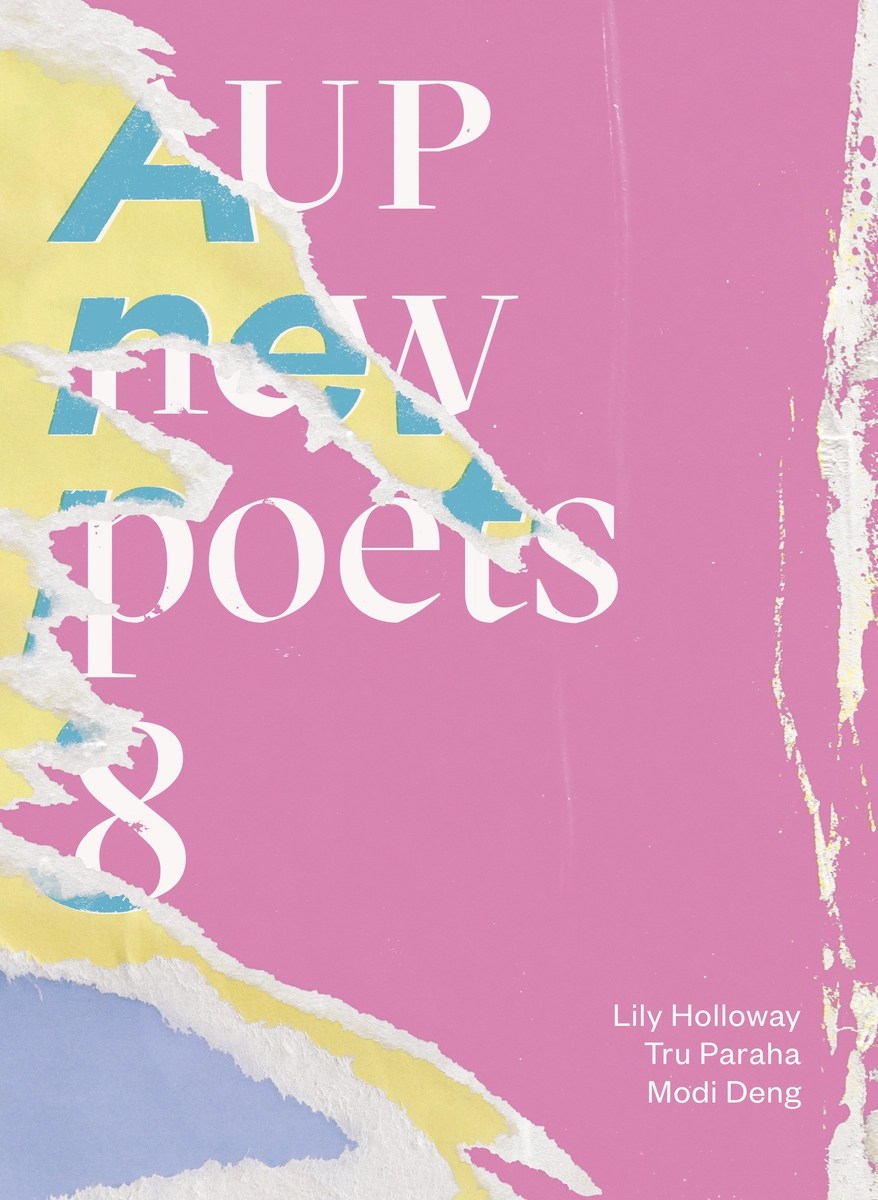
AUP New Poets 8: Lily Holloway, Tru Paraha, Modi Deng, Auckland University Press, 2021
I am loving the AUP New Poets series under the astute editorship of Anna Jackson. Each volume draws new voices into compelling view, each volume sparks essential poetry conversations. How we write. Why we write. What we write. How we write ourselves and how we write the imagined.
This on AUP New Poets 8, from my Kete Books review appearing shortly: ‘Editor Anna Jackson has selected three distinctive poets for AUP New Poets 8 and has placed them in the perfect tonal order. The title of Lily Holloway’s suite, ‘a child in that alcove’, reminds me of poetry’s alcove-like features. Poems can be miniature shelters, places of refuge, an interplay of dark and light, secret, mysterious, challenging, bulging with nooks and crannies. Reading the work is to read across myriad directions, to peer into captivating cubbyholes and, as Anna writes in her terrific foreword, to read distance and depth.’
This is an arrival to celebrate – and how better than with a suite of readings – not as good as book launch for sure – but online readings offer a lounge of returns. Make a coffee, a cup of tea, pour a glass of wine, you choose, find a sweet spot and have a listen. I raise my glass to Anna, Lily, Tru, Modi and AUP. This is essential listening (and reading!).
The readings
Lily Holloway
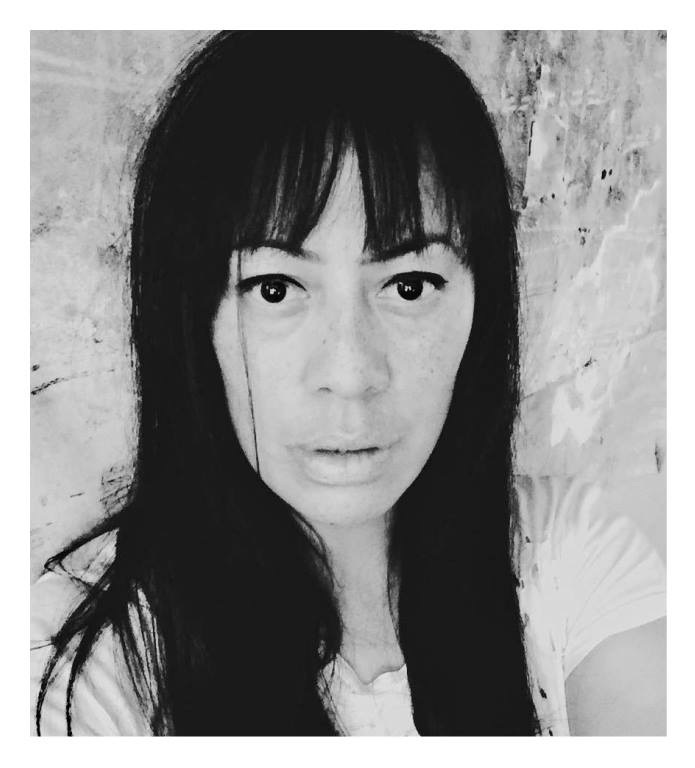
Photo credit: Angela Zhang
Lily Holloway reads ‘Reverb or Aftermath’
Lily Holloway reads ‘return again’
Tru Paraha
Tru Paraha reads ‘Paradox’
Tru Paraha reads ‘Postcard from Israel’
Modi Deng
Photo credit: Mikayla Bollen
Modi Deng reads ‘field notes on Lewis Hyde’s ‘The Gift’’
Modi Deng reads ‘unrest • an wei’
Modi Deng reads ‘now and then things come in tandem’
The poets
Lily Holloway(born in 1998, she / they) is a queer writer and postgraduate English student. While she mostly writes poetry, she has also tried her hand at non-fiction, fiction and playwriting. You can find her work in places like Starling, Midway Journal, Scum, The Pantograph Punch and The Spinoff amongst various other literary nooks and crannies. In 2020 she was honoured to receive the Shimon Weinroth Prize in Poetry, the Kendrick Smithyman Scholarship in Poetry and second place in the Charles Brasch Young Writers’ Essay Competition. In her spare time she enjoys op-shopping, letter writing, visiting small towns and collecting vintage Teletubbies paraphernalia. She is passionate about survivor advocacy and taking up space. You can find a list of her writing at lilyholloway.co.nz.
Tru Paraha resides in Tāmaki Makaurau in the suburb of Tukituki Muka (aka Herne Bay). She works as a choreographer and director, having enjoyed an extensive career in experimental dance, theatre and audio-visual arts. She is currently in the final year of a postdoctoral research fellowship in the English and Drama department at the University of Auckland. Moving between choreography, philosophy and creative writing, Tru produces live performances, artists’ pages and poems drawing on materials from deep space. She is a member of the International Dark-Sky Association and advocate for the preservation of the night sky as a world cultural heritage.
Modi Deng is a pianist based in London, currently pursuing postgraduate performance studies on a scholarship at the Royal Academy of Music. Her Chinese name 默笛 means ‘silent flute’, which her father drew from a poem by Tagore. Performances with her ensemble, the Korimako Trio, have taken her throughout the UK and her concerts have been broadcast on BBC Radio 3 and RNZ Concert. After growing up in Dunedin, she went on to complete a Master of Music with First Class Honours on a Marsden research scholarship, while completing a Bachelor of English at the University of Auckland. Modi cares deeply about literature (diaspora and poetry), music, psychology and her family.
It takes a fine level of awareness, pulling one’s weight from the house to the car, from the car to the supermarket then back inside the car, down the street to the hair salon, back into the car. Down the motorway to the Kmart, the car dealership, the brunch on the waterfront, across town back to the movie theatre, back home to dinner, heating soup and toast on the stove, climbing the stairs one by one, being pushed aside by pets passing one by one on the stairs, dragging wet noses across the chairs, the duvet cover, inserting themselves into windows, under carpets, inside closets, and springing, always springing out in varying levels of attack, grins on their faces for the joy of it, the sheer high of overturning the master, if only to shift the balance for a second.
It takes awareness to centre one’s life around the less fortunate, those with fur and claws and wet mouths whose daily glory revolves around the master. Measuring food into small bowls like party snacks, placing them at acceptable heights around the kitchen and the bedroom, vacuuming up crystals and muddy paw prints, sweeping fur across the linoleum and out the door, with the dog, ready for walkies. In a moment of trauma, the pet will hide behind the figure of the master.
A knock at the door or a dropped teacup sends the whole house scurrying back, folding in, listening in anticipation of the master’s reaction. The reality of being called the master implies an innate sense of false equality – a lack of awareness of power bordering on ignorance – an alternative so denigrating one might forget one’s own competence and begin to seek the pet for protection.
Carolyn DeCarlo
Carolyn DeCarlo is a queer writer living in Aro Valley, Te Whanganui-a-Tara, with seven other mammals. She runs Food Court Books and We Are Babies Press with her partner Jackson Nieuwland. Her chapbook-length collection ‘Winter Swimmers’ was featured in AUP New Poets 5. She also co-wrote the chapbook BOUND: an ode to falling in love (Compound Press 2014).






 NZ Poetry Shelf