Poetry Shelf Monday Poem: Kate Camp’s ‘What I would give away’

What I would give away

This pill
little light blue moon
tasting of rosewater

the night
in lines
through black dust
of the blind

pines
manuscript
architecture
smashed and torn off
places

morning light
when orange falls
six weeks a year
that way.

But the darkness?
The one behind my eyes?
In the cavities
of this responsible body? No.

When I saw the tow truck
I thought it was carrying
a crucifix.

Let’s start with that.

Kate Camp

Kate Camp’s most recent book is How To Be Happy Though Human, published by Victoria University Press and in Canada by House of Anansi Press. Her memoir, You probably thing this song is about you, will be published by Victoria University Press in 2022. 

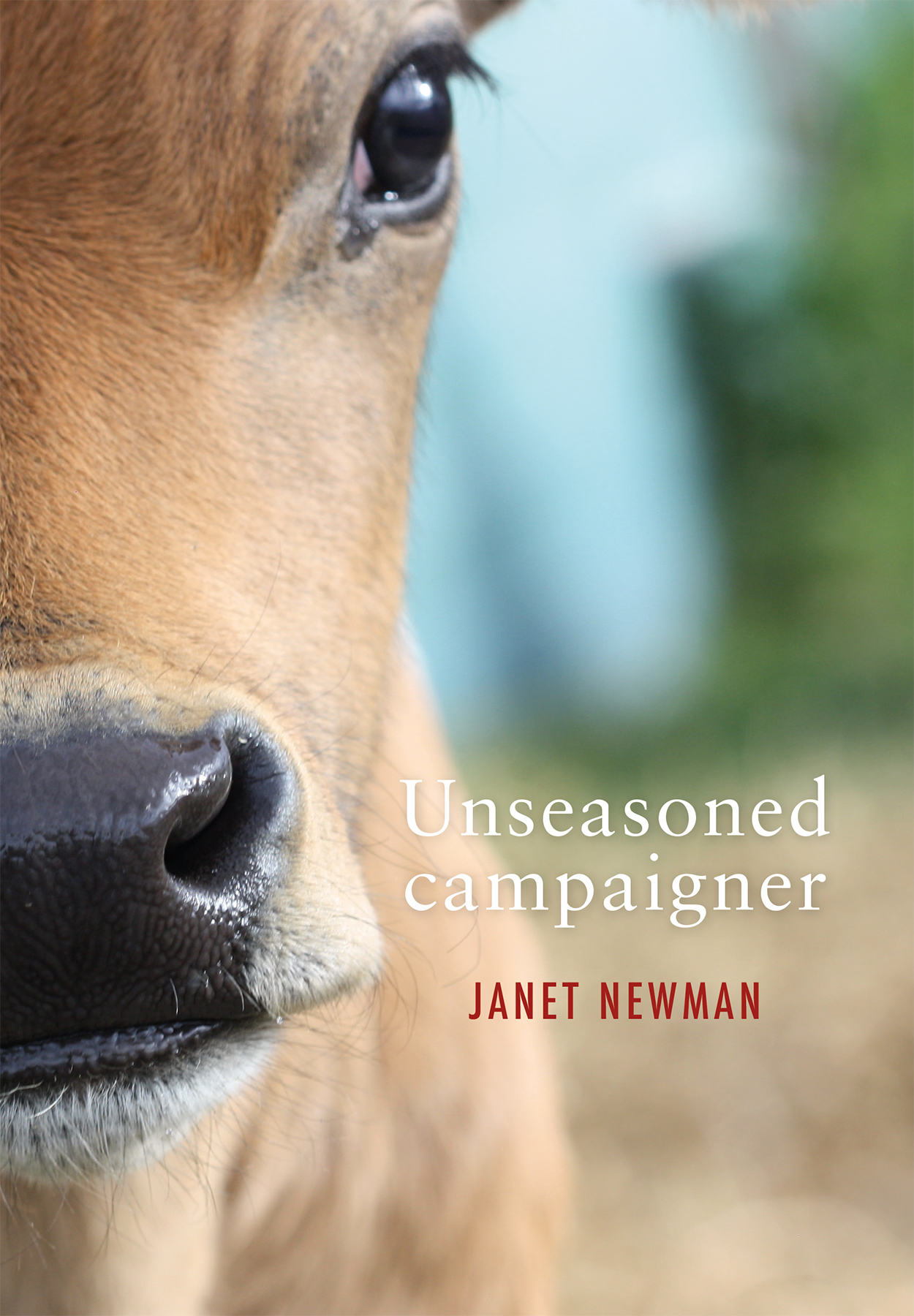
Poetry Shelf review: Janet Newman’s Unseasoned Campaigner

Unseasoned Campaigner, Janet Newman, Otago University Press, 2021

Poet Janet Newman lives at Koputaroa in Horowhenua, where she farms beef. Her debut collection, Unseasoned Campaigner, is nourished beyond description of scenic beauty to a deep love and engagement with the land and farming. Women writing the land is not without precedent. Ruth Dallas comes to mind initially. She spent time as a Herd Recording Officer during WWII and found cities restrictive and dull afterwards. When she was living in Dunedin in later years, writing enabled returns to her beloved rural settings. Janet dedicates several poems to her. The second poet that springs to mind is Marty Smith, whose rural background has featured in her poetry, and who is also unafraid of over and underlaying an idyllic landscape with the grit and reality of farming life.

Janet’s first section, ‘How now?’, places the reader one hundred percent in rural experience: managing livestock, a diarrhea-soaked calf that doesn’t make it, drenching, the slaughter house in graphic detail, blood and sweat. There are water restrictions, water anxiety, drought. A dead river. More dead stock. Horses led to shade and grass. Scenic routes and beauty spots are off the menu.

I applaud this revised view but it is the people who hold my attention to a significant degree. While farmers are currently under scrutiny for diverse reasons, particularly climate change, some are speaking out about how tough it is. Listening to RNZ National’s excellent Country Life, it is clear there is no hold-all definition for the contemporary farmer and their diverse practices. In the book’s middle and final sections, Janet also opens up what “farmer” means, and that adds significant and poignant layers to the first poems.

In the second section, ‘Tender’, Janet draws us to close to a father, and I am assuming her father. He was a complicated, multifaceted human being: a farmer, father, husband, war veteran. He was a man of few words and myriad actions, toil and more toil. He cursed war on television and kept a belt by the door. He is memory, because he has passed, and he fills the speaker with mourning. The poems are vividly detailed with the physicality of daily life, and it is through his presence farming is made prismatic, beyond stereotype. When I pivot on the word “tender”, I see the poems as an offering to both mother and father, to us as readers. I see too the tenderness in the care of animals, and tender as the sore spot that is parental absence, maternal and paternal memory.

His language is electric rhythm of pump and wire,
gush of couplets from the artesian bore,

a flighty heifer enjambed
with a low rail,

stanza of cloud over the back paddock
threatening rain,

the fuck, fuck, fuck
of a dead bull in the drain.

from ‘Man of few words’

The mother is an equally haunting presence with her preserves, her baking and her plums. She too is drawn close through a focus on the physical detail of everyday actions. She is mourned and, in dying first, is an unbearable hole in the father’s life. The parental poems scratch the surface of my skin. Preserving, for example, brings back my own pungent memories. And preserving is also the tool of the poet, poems are stored in sweet and salty brine, held out to be savoured by both poet and reader.

Preserving

Red plums give up
round plump bodies
when I cut out their stones.
I hear my mother’s long-ago voice:
‘Don’t overdo it.’ The boiling
and much else. In the photograph
she is smiling behind glass, my memory
of her steeped in absence. Now,
even that faithless call sounds sweet
as in preserving jars sour plums
surrender to sugar syrup.

The third section, “Ruahine”, moves and adjusts to loss. It also finds footing on scenic routes. In the final poems, the poet is out driving and absorbing the birds and trees, mesmerising hills, the land bereft of vegetation. The landscapes have widened further to carry farm practices, daily challenges, connections to the land and to making a living. But of course it is not as though the farmer is blind to beauty. The final cluster of poems become song, act as sweet refrain, where upon in each return to a view, the view shifts in nuance. Just like poetry. Just like the way life is nuanced and resists deadening dichotomies. ‘Beach’ catches the elusiveness of what we sometimes see and feel so exquisitely:

Some days the clouds disappear
on the drive to the coast

the way the things you wanted to say
evaporate when you get there.

Sentences float to the pencil-line horizon
between sky that is nothing but blue

and sea that is as blue as …
but words fail you,

smudge like fishing boats
in the distance without your binoculars

from ‘Beach’

Janet writes with poise, each line fluent in rhythm and accent, and in doing so achieves a collection that matches heart with sharp and bold eye. Her collection belongs alongside the very best of Marty Smith and Ruth Dallas, a fine addition to how we write the land, whoever and wherever we are.

Janet Newman was born in Levin. She won the 2015 New Zealand Poetry Society International Competition, the 2017 Kathleen Grattan Prize for a Sequence of Poems and was a runner-up in the 2019 Kathleen Grattan Awards. Her essays about the sonnets of Michele Leggott and the ecopoetry of Dinah Hawken won the Journal of New Zealand Literature Prize for New Zealand Literary Studies in 2014 and 2016. She has worked as a journalist in New Zealand and Australia, and a bicycle courier in London. She has three adult children and lives with her partner at Koputaroa in Horowhenua, where she farms beef cattle.

Otago University Press page

Review: Siobhan Harvey for The NZ Herald

Interview: Standing Room Only, RNZ

Feature: Koputaroa farmer and poet Janet Newman writes thesis on ecopoetry

Interview: Janet Newman discusses ecopoetry, RNZ

Interview: The Big Idea

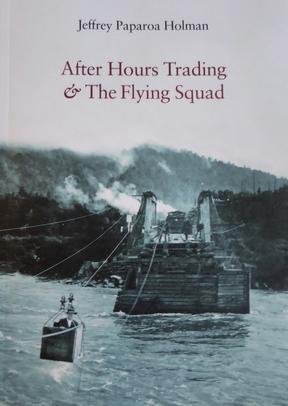
Poetry Shelf celebrates Jeffrey Paparoa Holman’s After Hours Trading & The Flying Squad with a reading and a poem

enter the silence

entering the silence that is not a silence
remains of a shoe by the mouth of a shaft
rusted boiler at a fork in the creek
pond of eels where the dredge dismantled
ended its song in a valley of tailings
entering the silence that is not a silence

enter a silence that never was
the wheels of a lokie sprouting fern
a railway signpost clothed in lichen
the sign to a mine where the dead
still linger lost to lovers dear to mothers
enter a silence that never was

enter then the world without knocking
digging drilling sluicing felling
fishing farming ploughing a dream
hauling an island from the constellations
into the glare of an alien reign
enter then the world without knocking

enter the silence enter the dark enter
the hive of the invitation   enter
the majesty   enter the wine   enter
the wilderness while you may   enter
with flags and enter with instruments
enter the silence   enter   enter

Jeffrey Paparoa Holman

Paula: I recently reviewed Jeffrey’s new poetry collection for Kete Books. In conclusion I wrote: “Holman writes with a measured step, with distinctive and diverse musical keys, with an ear attuned to the everyday and to a refreshing uplift of language. Repetition is a useful device, appearing like a refrain in a book of song, as a subterranean reminder that history repeats itself. Death, ruination, love, joy. This is a collection of poetry that will echo and nourish as we move through uncertain days.”

You can read the review here.

The reading

After Hours Trading & The Flying Squad, Jeffrey Paparoa Holman, Carbide Press, 2021

“The handpiece” for Jack Gilbert


“when the mobile library comes”

“Grinding the gear, 1969”

Jeffrey Paparoa Holman is a Christchurch poet and non-fiction writer. His collection, Blood Ties: selected poems, 1963-2016 was published by Canterbury University Press in 2017. A memoir, Now When It Rains came out from Steele Roberts in 2018. The most recent collection – After Hours Trading & The Flying Squad – has just been released by Carbide Press, his own imprint (29 October 2021).

Recent work has also appeared in Poetry New Zealand Yearbook 2021, an essay on prison reform, and poetry; his work has also been included in The Cuba Press anthology, More Favourable Waters – Aotearoa Poets respond to Dante’s Purgatory (2021).

He makes his living as a stay-at-home puppy wrangler for Hari, a Jack Russell-Fox Terrier cross. Hari ensures that little writing takes place, while psychogeography and excavating parks happens daily.

After Hours Trading & The Flying Squad, Jeffrey Paparoa Holman, Carbide Press, 2021, ISBN 9780473584047

Jeffrey in conversation with Lynn Freeman Standing Room Only RNZ National

Poetry Shelf Monday Poem: Amber Esau’s ‘Liminal’

Liminal

Parted down the middle, his sharpened cuerpo
struts out of a waspish cave in the dark

harakeke, strands bowing under a nosey Tūī
eyeing the red beaned flower that’s claw-like

in lazy light. We lock eyes in glass. Feathers
and flax. He stares from corners acting coy

but this is k’rd, bruh, a Queen will call you
out for not looking long enough. I ruffle

the curls searching silences in the glare
knowing? Not quite slow moving but watchful

the manu drops a beak at onyx arrowhead
eyes forgetting forward. Down the vague grey

he walks the tui across the winking glass
into a powdery afternoon, kicking up silent

dust behind them on the street. They swoop to the top
of St. Kevin’s perched for a second before flying off

into the blue thin as the moon of pulotu
dragging nails across the fog and Paz.

Amber Esau

Amber Esau is a Sā-māo-rish writer (Ngāpuhi / Manase) born and raised in Tāmaki Makaurau. She is a poet, storyteller, and amateur astrologer. Her work has been published both in print and online. 

Hear Amber read


Poetry Shelf celebrates Kathleen Grattan Prize for a Sequence of Poems

Robyn Maree Pickens

Robyn Maree Pickens is the 2021 winner of the Kathleen Grattan Prize for a Sequence of Poems. The annual competition is organised by Auckland based writing group, International Writers Workshop (also known as IWW.)

Vana Manasiadis judged the competition and described Robyn Maree Pickens’ winning entry, a sequence entitled “High clouds”, as “a supple, intimate, fragile and extremely powerful work. I went to places in each of the poems that I couldn’t have guessed at from the beginning, the work stranges expectation – and this is what the sublime in poetry should do, and in this case does”.

Robyn kindly gave me permission to post a poem from her winning sequence.

That gasp in your teeth

Where would we have gone with all this jää?

I learnt jää after lumi

When we crossed the bridge
you pointed at the frozen river
& said jää but I heard yar

I mean there is too much jää to press you
against a tree in the forest
spruce, larch, birch

Too much jää to unwrap
the scarf from your neck

Jää ruched around a wave particle

Pack ice jää sharded along the shore

& when we speak we say virvonta ystävä fainting willow

but we mean
you are new to me

& we ransack google / follow / request / heart

Robyn Maree Pickens

There were two runners-up: Kerrin Sharpe for her sequence, ‘Te hau o te atua/The breath of heaven, and Marie McGuigan for her hybrid sequence, “The Goose Wing”. 

Vana described Kerrin Sharpe’s sequence as “an incredible work which has continued to generate multiple layers and emotional landscapes with every read; the sculpting of its physical geography is stunning and palpable”.    

Vana described Marie McGuigan’s sequence as “an extremely rich work with breath-taking images that come together to move in all senses – into and out of form, the past, the air, language, and always deep love and leaving”.

Marie kindly gave me permission to post a poem from her winning sequence.

She is riding on a goose wing

a birdboned scapula that supports her hollow frame. Ease of
wind, rush of flight, she is empty and opened out

She has no wish
to land – to be part
of the sour land
the milk swill the
pile of piss soaked
sheets a mouse in
the knife drawer and
the fur flaked black
rim around the bath

No wish to fall
on a plate of
broken teeth
split lips and wide
shining Chevs

Stay high on the goose wing, she says and calls to her sisters. The goose will gather ganders. The sisters will emerge, shoulders clenched, skin prickled, from deep within the rock.

They will fly with her on goose wings too towards the crystal east.

Marie McGuigan

Robyn Maree Pickens is rarely seen IRL or URL as s/he is in the final stages of finishing he/r critical-creative PhD on reparative ecopoetics. That gasp in your teeth was written in early 2020 when Robyn was on a writer’s residency at Saari, in Finland.  Robyn’s website
Photos, interview and poems from Finland residency.

Marie McGuigan is a teacher, a traveller, a parent and poet. Her words are taking more space in her life now and she is beginning to value their power. A graduate of Hagley Writers Institute, she is honoured to share joint runner up of the Kathleen Gratton Sequence of Poems with her tutor Kerrin P Sharpe.

Kathleen Grattan Prize for a Sequence of Poems page

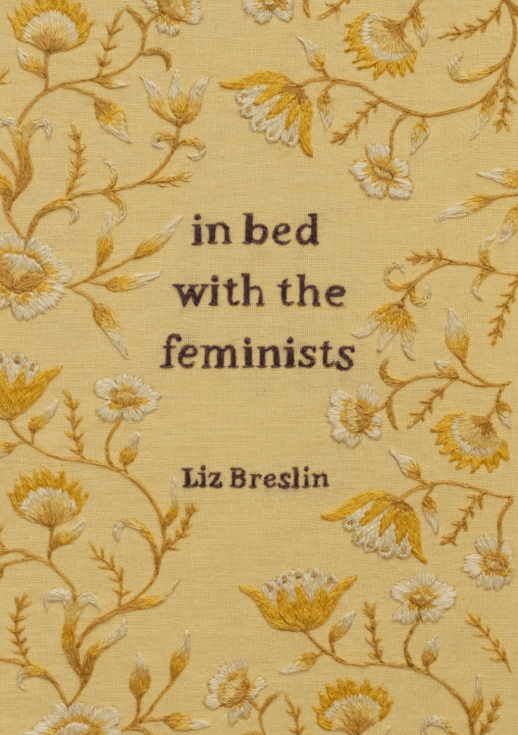
Poetry Shelf review: Liz Breslin’s in bed with the feminists

in bed with the feminists, Liz Breslin, Dead Bird Books, 2021

I prefer barefoot
I prefer paper maps
I prefer flowers in the ground
but first, I prefer coffee

I prefer lunch
I prefer savoury conversation
I prefer to sit at the children’s table
I prefer time off without good behaviour

from ‘Possibilities’

Liz Brezlin’s debut poetry collection Alzheimer’s and a Spoon hooked me on so many levels. Her second collection, in bed with the feminists, is politically, poetically and personally active. I love that. The stellar opening poem, ‘the things she carries’ (you can read a version here), is like a mini performance of the book. The things a book carries. The things a poem carries. Everything from lightness to weight. Hidden and on view. The poems carry you along everyday tracks, with myriad opinions and musical riffs, routine and reverie, complaint and consternation. Love.

it’s not just the rain keeping me awake
its insistent game of getting in the cracks

it’s the drip drip down
of can’t change that

it’s the drip drip down
of can’t change that


from ‘out of bed with the feminists’

There is the steady beat of the word feminism, a wide-reaching fuel of a word that refuses to be pinned down to single options or compartments. The speaker is in bed with the feminists, going to museums, on a road trip, stepping off from power-struggle sites, marching. There are maternal poems, colours running in the wash, the negotiation of waste in supermarket aisles. There are sturdy threads leading to a matrix of other women writing: Hélène Cixous, Virginia Woolf, Anne Kennedy. The body, the maternal ink, the writing both inside and outside a room of one’s own, perceptions under question, rampant consumerism. I particularly love a poem that steps off from Anne Kennedy’s ‘I was a feminist in the eighties’, with a nod to Helen Reddy (you can read Anne’s poem and Liz’s appraisal of it here).

I was a feminist, trapped in a lion
gutted and ruined, I had a good cry

buttoned my coat way up to my chin
wanted the me back who started this game

thought I could escape through the jaws of the beast
starved myself pretty, slipped through his teeth


from Liz’s ‘Then a lion came prowling out of the jungle and ate the feminist all up’


Liz’s poetry collection offers a rewarding language experience: lines where words get fractured, dashed apart, piled up one against the other, as though we can’t take meaning and fluency for granted. There are honey currents and there are judder bars in the roads and sidetracks of reading. This is life. This is thinking. This is critiquing. This is poetry.

The book took me back to my doctoral thesis where I spent a number of years considering what drove the ink in the pen of Italian women writing. The ink pot was full and unexpected as it brimmed over with a thousand things, until in the end, I decided the woman writing was opening up and out, and her ink was open, and and was the key word. A hinge, a connection. That’s how I feel about this book. It is alive with hinges and connections. I love the effect of in bed with the feminists, so full of complicated invigorating necessary life.

at the funeral
with the feminists


there are times not to think about sex
Catholic school will teach you this
although if in the middle of life there is death

today is far more than tears and shibboleths
desire is pulsing persisting lips
there are times it is hard not to think about sex

demure, buttoned, ruffled, pressed
lashes to lashes, busting tits
middle to middle, in life we are dead

already unless we remember, lest we forget
sadness, egg sandwiches, sniffling kids
yes, there are times not to think about sex

think sobering snowdrops on unfrozen earth
the priest, droning, the week’s shopping list
how always, in the middle of life, there is death

we are warm for such a short time at best
maybe the true crime is to try to resist
there’s no time like all time to think about sex
what else is life but sex and death?


In bed with the feminists is Liz Breslin’s second poem collection, part of which won the 2020 Kathleen Grattan Prize for a Sequence of Poems. Her first collection, Alzheimer’s and a spoon, was listed as one in the NZ Listener’s Top 100 Books of 2017. Liz was a virtual resident at the National Centre for Writing, UK, in February 2021, where she documented life through the peregrine webcam on Norwich Cathedral in a collection called Nothing to see here. In April 2020 she co-created The Possibilities Project with Dunedin UNESCO City of Literature.

Liz’s website
Deadbird Books page
Liz reads from in bed with the feminists
Landfall Review Online by Jordan Hamel

PS For someone one with minor visual impairment and reading glasses that broke at start of lockdown the font was a struggle, pale and small.

Poetry Shelf Monday Poem: Erik Kennedy’s ‘Lives of the Poets’

Lives of the Poets

There is the possible world in which,
having no safety net
to fall into, I killed myself.

There is the world in which
acclaim came early
with a book called something like
Sex Owls of the Sun,
and the effects of success jaded me,
so I stopped pursuing
the art that I loved.

And there is also the world that was
a succession of cool, forgettable evenings
spent among canapés and loud friends,
in which we aged so slowly
that we hardly noticed it,
until it blurred our vision
like damp creeping into a camera.

Erik Kennedy

Erik Kennedy is the author of the poetry collections There’s No Place Like the Internet in Springtime (2018) and Another Beautiful Day Indoors (2022), both with Victoria University Press, and he has co-edited No Other Place to Stand, a book of climate change poetry from Aotearoa New Zealand and the Pacific forthcoming from Auckland University Press in 2022. His poems, stories, and criticism have been published in places like FENCEHobartMaudlin HousePoetryPoetry Ireland Review, the TLS, and Western Humanities Review. Originally from New Jersey, he lives in Ōtautahi Christchurch.

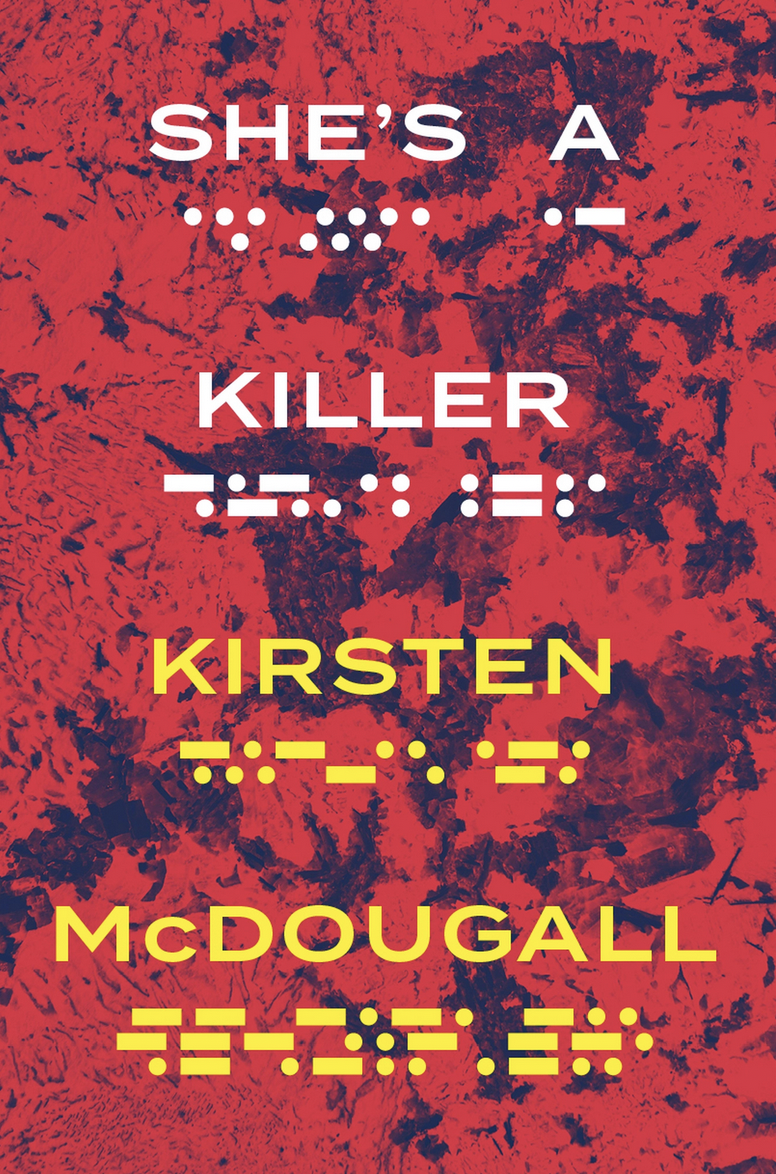
Poetry Shelf says Wow: Kirsten McDougall’s She’s a Killer

She’s a Killer, Kirsten McDougall, Victoria University Press, 2021

My late Sunday afternoon plug: Kirsten McDougall’s She’s a Killer is an astonishing book. Daring, wise, jagged, smooth. I finished it this afternoon and felt bereft. Fell asleep and then woke up discombobulated. That where am I? Who am I? What I am doing on this godforsaken planet kind of feeling. Every note in Kirsten’s novel (part eco-thriller but so much more) is pitch perfect. Every turn surprising. Every character sharp and faceted and memorable. Don’t go reading reviews that spend most of the time plot and outcome and ideas summarising. Go in fresh. Go in with senses open. It’s the perfect book to read in the time of Covid when we are experiencing all manner of societal splinters and spikes, challenges and catastrophes, goodness and hope. Elizabeth Knox said the book will make you laugh and weep. Yes. It also made me feel self-awkward and despairing, grief-struck. But more than anything, it made me feel utterly alive, and it’s a long time since a book has made me feel this. Maybe since Elizabeth’s equally tremendous The Absolute Book. Genius!

A kind friend gave me She’s a Killer (thank you!) so I’d like to return the favour and gift a copy to someone else. Nominate someone who would love a copy (yourself included).

Victoria University Press page

Kirsten McDougall’s previous novels are Tess (2017), longlisted for the Ockham NZ Book Awards, and shortlisted for the Ngaio Marsh Award, and The Invisible Rider (2012). Her stories and nonfiction have appeared in Landfall, Sport and Tell You What: Great New Zealand Non-fiction 2016, and her story ‘Walking Day’ won the 2021 Sunday Star-Times Short Story Competition. She was the recipient of the 2013 Creative New Zealand Louis Johnson New Writer’s Bursary, and a Michael King Writers Centre residency in 2019. She lives in Wellington.

Poetry Shelf celebrates Skinny Dip: Some favourite poems by secondary school students

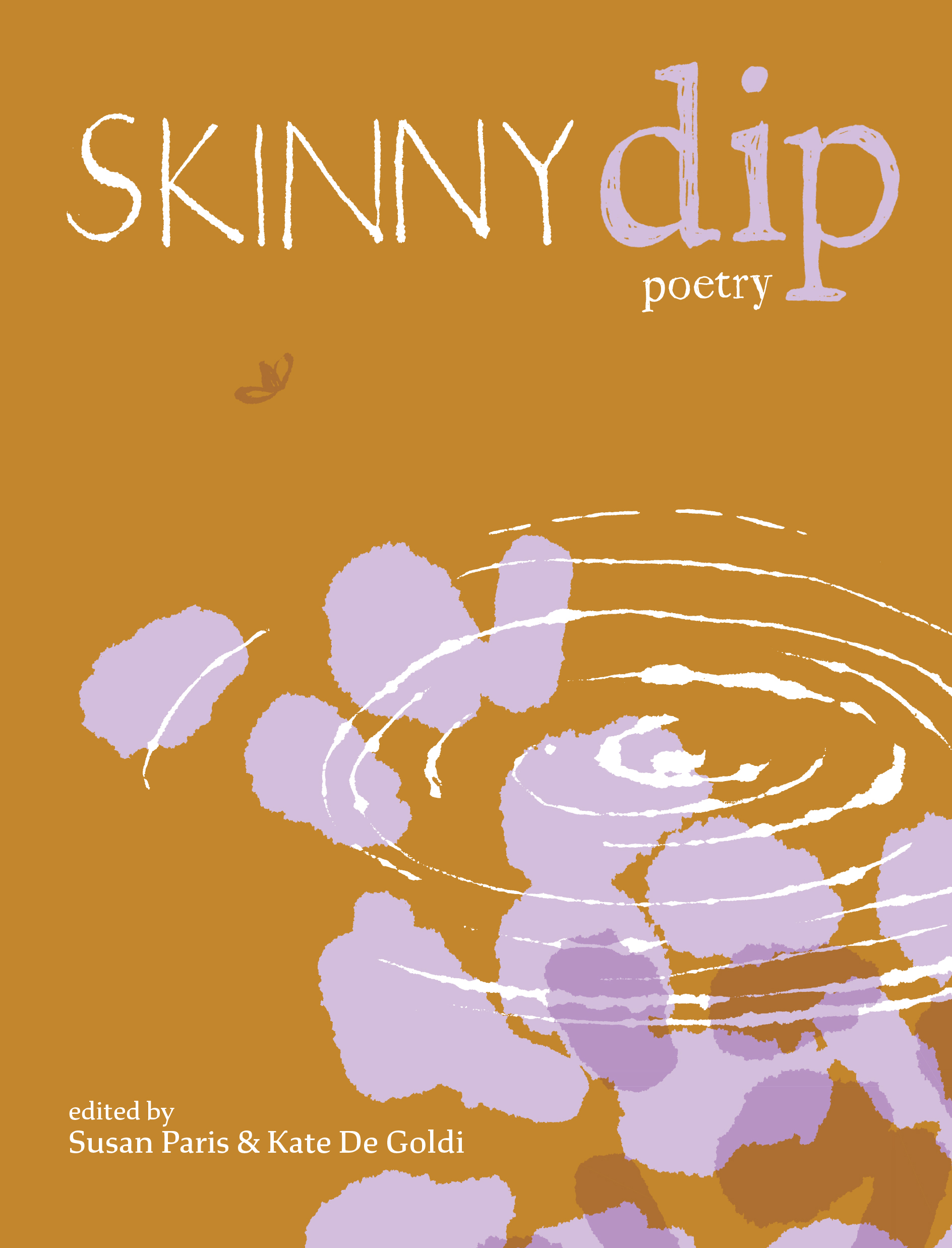
Skinny Dip: Poetry, eds Susan Paris & Kate De Goldi, illustrations by Amy van Luijk, Massey University Press (Annual Ink), 2021

Kate De Goldi and Susan Paris, editors of the popular and best-selling Annuals, have edited a lively, much-needed, and altogether stunning anthology of poems for middle and older readers. I review Skinny Dip:Poetry here, plus you can hear Amber Esau and Sam Duckor-Jones read a poem. (Skinny Dip page at Massey University Press)

I was so inspired I invited secondary school students to write a poem that plays with various poetic forms (as well as making it my November challenge on Poetry Box). Thanks for sending in all the terrific mahi! I have picked a few favourites from a bunch Year 9 students at St Andrews College in Ōtautahi Christchurch sent me. I love the wittiness in many of these poems, the acrostic poem where one line spills onto the next, a poem that reminds me of Bill Manhire’s magnificent ‘The 1950s’, an eerie scene, the way sports makes it in, how a handful of words can unfold like origami, how rhyme can be close and not exact, and how ideas are linked to dough. All of this and more! I am sending copies of Skinny Dip to Alisdair McCall and Olivia Glass.

The poems

Rowing (cinquain)

Deep breath
STAC on my chest
In and out, final beep
Digging stroke, trained, built, for right now
Deep breath

Thomas White

Look Out the Window (a haiku sequence)

Look out the window
While I’m sitting in a chair
Ideas many so

Choosing a topic
A topic to think about
What idea to pick

Shaped like it is dough
The thing which has got me here
Look out the window

Oliver Murchison

Prestigious schools love exams (acrostic)

Prestigious schools love exams
A pain in my back, an
Innocent pain that many times I’d love to hit with a bat or run over with a train, though  
Never shall I forget the pain in my back
For cry’s sake, this exam should be hit with rake
“Use your time and take a break” but all they really say is your education is at stake
Let us take a break we students say or else I might be forced to get out the rake

Jackson Evans

Pig Hunting (free verse)

Peering over the ridgeline
Intense work, getting from pig to pig
Gapping it to get to the top of the fenceline

Heavy boars on the run from dogs
Undertaking the hard task of carrying out the dead pig
Not wanting to miss the shot with everyone watching
Tactically trying to find pigs
Inhaling the fresh air from the highest point
Nervously waiting for the sound of a good bail up
Gutting out the pigs after a big day

Olley Collet

Cricket (acrostic)

Cracking on in the middle
Ready to spend 4 hours of pain
Into the action
Cooking in the boiling hot sun
Kicking of self as we drop a catch
Exhaling all voices supporting our teammates
Time to eat my sushi tray

Lachlan Grant

(cinquain)

Sweaty
Hope I’m ready
I start with some files
Then large boxes, trolleys and more
Sweaty

Max Barclay

November  (free verse)

November, not December or September. 
Its the 11th month don’t you remember. 
It’s like spring and summer put in a blender.
In terms of weather it’s the centre.

Jonty Lang

That Kid (haiku sequence)

Watch out for that kid
They got the moves got the grooves
Got the feet like hooves

Watch him bounce around
He likes to move it move it
Everywhere he goes

Watch his body go
He is the clear champion
He loves rock and roll

Kaelan Graham

(rhyme form)

My basketball,
my artistic mat,
My overalls, 
my tiny cat,
My cosy couch, 
my sharp stick,
My ankle ouch! 
My sticky ick,

My big oar, 
my shiny bike,
My best score, 
my huge hike,
My book a batch, 
my crazy catch, 
My red bump, 
my huge jump.

My cool wii,
My mid-night pee,
My bean bag,
The huge price tag,
My cuddly toys,
My aussie ois.

Alisdair McCall

The Old House

Walking round all alone
Looking through this empty home
Sitting in a creaking chair 
Broken glass everywhere

Wind blowing with a gust
Knocking everything over including us
Pushed over towards the ground 
Shivering with no one else around

Don’t know what else to do 
Lying here in this cold dark room 
Eyes open with a gust of fright
Someone looking at me 

Been a few years since this day 
Still scared to walk that way 
Person sitting at the house
Someone familiar
But can’t quite remember 

Olivia Glass

Poetry Shelf review: Mark Pirie’s Slips – Cricket Poems

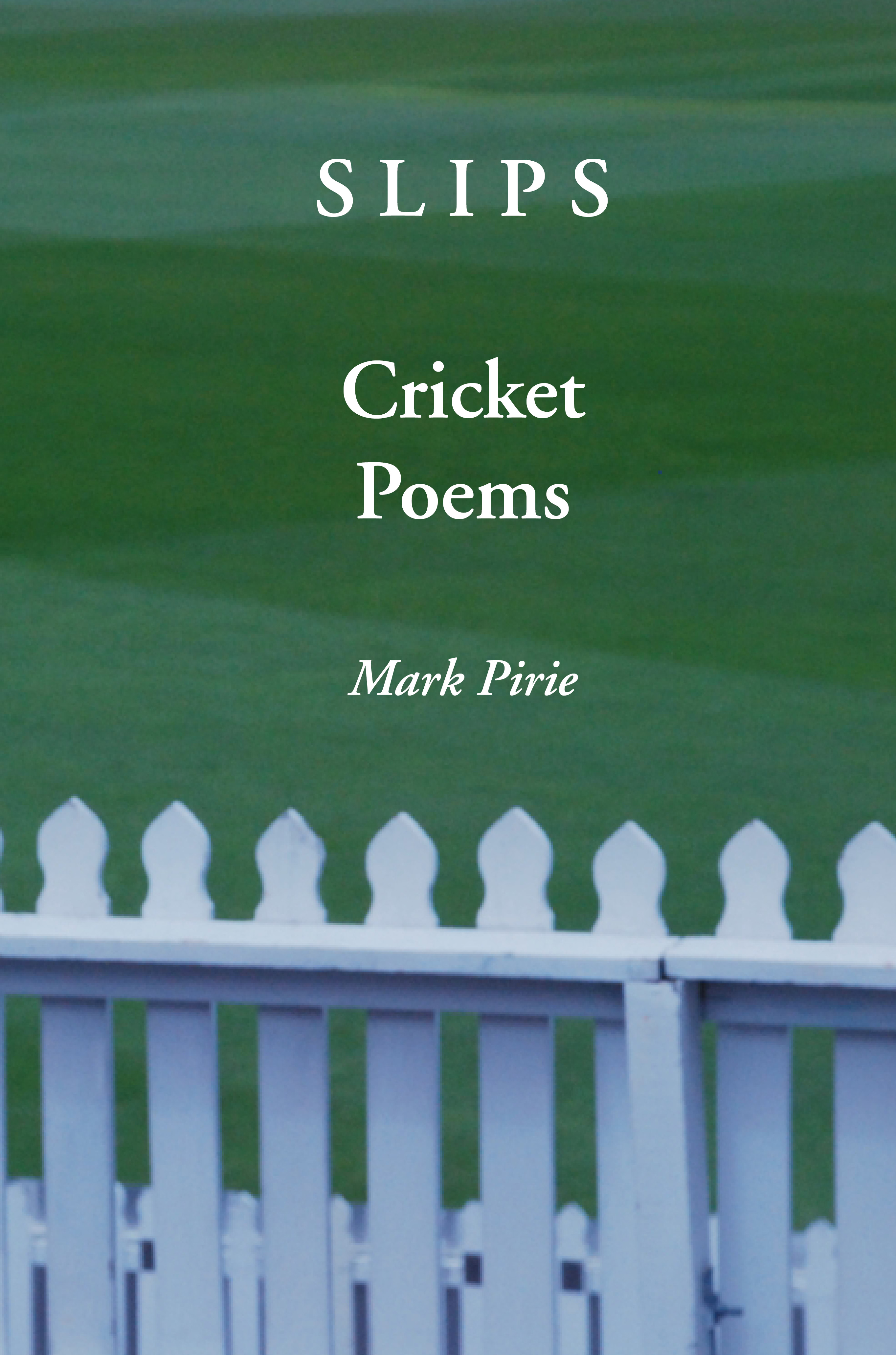
Slips: Cricket Poems, Mark Pirie, HeadworX, 2021

Summer Days

days
run
away

like
cricket
balls

to
the
fence

Mark Pirie has been writing cricket poems for a number of years. He published a booklet of cricket poems in 2008 and has now gathered a whole book together. If you are a cricket fan like me, you will be drawn to a collection that celebrates a game that captivates in both its slowness (the tests) and its speed (the T20s), its intricacies, elegance and skill. The poems consider specific matches, offer odes or tributes to beloved players, sing the praises of a sweep, swinging ball or one-handed boundary catch. There is a reflective gaze back, as memory is trawled for standout moments. Remember when. Remember how. I found myself trawling though my own cricket memories and revisiting Vivian Richards at Lord’s, listening to cricket on the transistor radio as a child, watching Richard Hadlee take one wicket after another, Martin Crowe bat.

But the joy in reading these poems is how life infuses cricket and cricket infuses life. The delight is also in how playing cricket can be aligned to writing a poem. How you might go out for a duck but it is a love of playing/ writing that matters. I read this book for the pleasure of cricket, the pleasure of poetry, and a myriad reactions animating the bridge between the one and the other.

Lost

Driving back from a book fair
whites on a green field

remind me of a love now lost.
It’s a while since I played.

I long for that Saturday field,
can smell the whiff of leather,

the feel of stitch and seam.
At the fair I’d looked at old

cricket books. They all knew.
And when I arrive home, my bat

lies in the corner propped against
the dresser, hidden by shadow.

November 2010

Mark Pirie was born in Wellington, New Zealand, in 1974. He is the Managing Editor for HeadworX, a small press publisher of poetry/fiction. His poems have been published in India, New Zealand, Australia, Croatia, the US, Canada, Singapore, Iraq, France, Germany, and the UK. In 1998 University of Otago Press published his anthology of ‘Generation X’ New Zealand writing, The NeXt Wave. He was managing editor of, and co-edited, JAAM literary journal (New Zealand) from 1995-2005, and currently edits broadsheet: new new zealand poetry. In 2003, Salt Publishing, Cambridge, England, published his new and selected poems, Gallery: A Selection. In 2016, a new selection of his poems Rock and Roll appeared from Bareknuckle Books in Australia.

HeadworX page
Mark Pirie website
Poetry Shelf: Mark Pirie reads from Slip