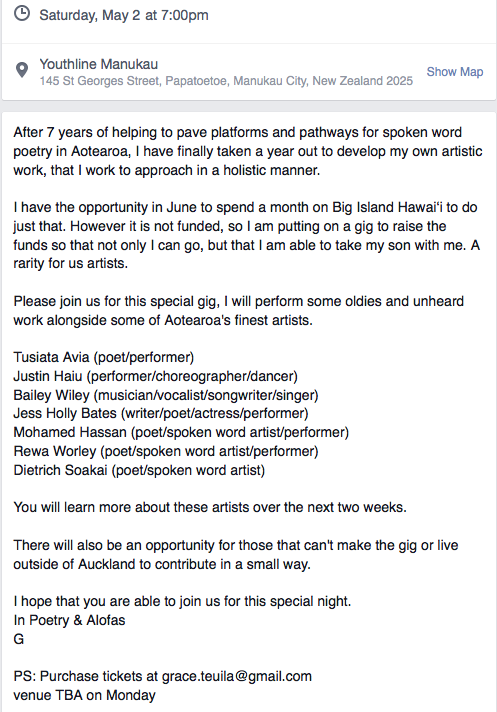
For more, ongoing information check out the Facebook page here

For more, ongoing information check out the Facebook page here
“The only way to save a rhinoceros is to save the environment in which it lives, because there’s a mutual dependency between it and millions of other species of both animals and plants.”
— David Attenborough, BBC Interview
Early in his career, Wystan Curnow was invited to give a lecture on what it meant to be a critic. “But that presented certain difficulties,” he later wrote in the Bulletin of New Zealand Art History. “For instance, I was not sure I was one.”
It was 1974 and Curnow was working at the University of Auckland’s English department. He was, by definition of his employment, regularly engaged in the business of literary criticism, but he had avoided being a critic of books by New Zealand writers. As for his other interests, he conceded he might be considered an art critic. “At least,” he wrote, “if a dozen or so notes and brief essays published over a period of fifteen years in magazines all but one of which are now defunct makes one an art critic in New Zealand.” Ruefully, he concluded, it seemed it did.
Like many others before and after him, Curnow’s hesitation stemmed from the occupational versatility our country demands from its creative practitioners. Because of how small our population is, the market for any art form is prematurely capped and its growth is precariously stunted, economically and artistically. Industries have to be propped up by public funding and philanthropy, and being able to specialise as a writer or an artist or a musician becomes either a unique luxury or a financially risky lifestyle choice.
Because of this risk, artists often end up expanding their talents horizontally, whether they want to or not. It’s remarkably and sometimes advantageously easy to do in a country with so many shoes to fill. We see musicians who are also teachers who are also music writers who are also promoters. We see actors who are also publicists who are also producers who are also casting agents. We see the rise of the cultural ambassador: people who – rather than honing a specific craft – hone the skills of an entire industry. Like plants, we grow in the direction of the sun, but here the sun shines with a hazy, erratic glow.
Not sure of the details yet of fundraising but will keep you posted.
The IIML revives the National Schools Poetry Award for 2015
How you can help
Kia ora,
In 2003 Bill Manhire set up the only national poetry competition for high school students in Aotearoa. Last year we had to cancel the Award through a lack of funds. We have just launched a fundraising campaign to help revive an important literary event for young writers which each year has attracted more than 300 poets from across the country.
We’re not starting from scratch. We already have some support from Creative New Zealand. But we still have a large shortfall. With your help we can deliver a full Award, securing the workshop which is such a vital part of the experience, and promoting poetry throughout our high schools.
The Award is about much more than a winning poem. English teachers use the award to generate excitement and activity around Creative Writing. Ten shortlisted poets are flown to Wellington for a weekend of workshops with great poets hosted by the International Institute of Modern Letters. These young writers become ambassadors for creativity when they return to their schools.
The Award has made a difference. Students who have been shortlisted in previous Poetry Awards have gone on to study Creative Writing at tertiary level, won other national writing prizes for emerging writers and have been published in national magazines and literary journals.
Ruby Solly, from Western Heights High School, Rotorua, was the 2013 runner-up: ‘After I came back from the poetry workshop I became very committed to school and writing as I had been given a taste of what it was like to be with other writers and to see what kind of course or occupation I could end up in as a poet. The workshop showed me various ways of both ‘sparking creativity’ and refining my work to make it the best that it could be. These skills helped me to achieve publication in both Minarets (literary journal) and Redraft. It was definitely a highlight of the year for me.’
Margie McLaren, who teaches at Baradene College, writes: ‘The main benefit is the new confidence instilled in the students about the value of poetry in a utilitarian world which does not always attach the significance to poetry that it deserves . . . The Award is an affirmation of the many benefits of working with and celebrating language, and the special ways in which poetry can reflect human experience. The opportunity of entering for the Award has been a very positive and rewarding experience.’
We hope you can support us!
Ngā mihi nui,
Damien Wilkins
Director
International Institute of Modern Letters
To Do in Malibu
Brush hair, brush teeth,
climb down the mind’s
soft-carpeted staircase
from sleep.
Iron the pink robe and put it on.
There are no wailing birds here –
only the sun hums
a mute, radiating
suggestion of song.
Open the vertical blinds by twirling
their thin ivory rotating wands.
Pay gentle attention
to their exhumation
of bladelike,
breathing,
slightest sound.
Polish the windows,
polish the floors,
open the patio’s sliding doors.
Polish toes with clear paint.
Stand still by the blue stone statue
in the southwest sandstone yard.
Stay still, allowing your mind
to follow the lead of the patio shadows.
Smile amenably into the weight
of the broad clean pool of hot.
Let everything be still.
Let everything be new.
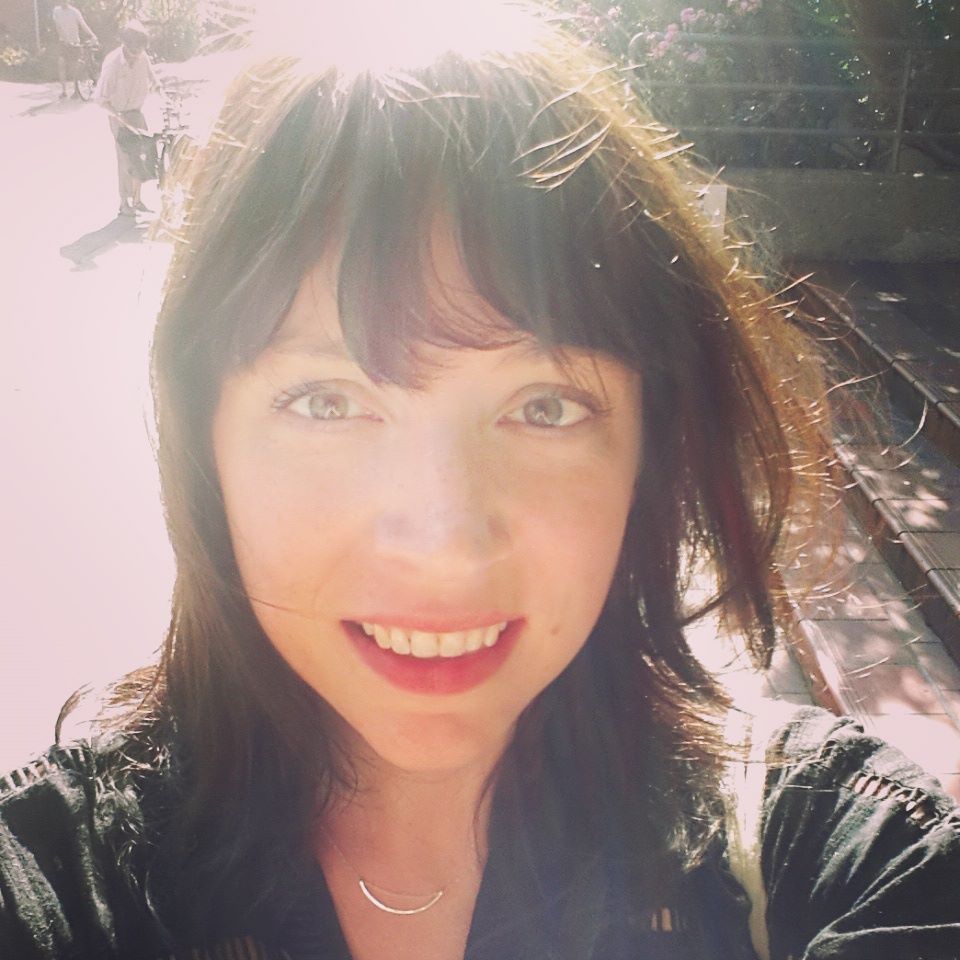
© Erin Scudder
Author’s bio: Erin is the co-author of AUP New Poets 4 and the author (under numerous pseudonyms) of Psychedomus (Fitts & Holderness, 2011). Her poetry recently appeared in Truth or Beauty (Seraph Press, 2014), and has also appeared in various Asia Pacific journals. In 2015 she hopes to publish her first solo book of poems. She holds joint Canadian / New Zealand citizenship and currently lives in Melbourne.
Author’s note: My starting point for this poem was David Hockney’s Californian painting ‘American Collectors’ (Fred and Marcia Weisman). In the painting, a woman in a pink robe or mumu stands looking out at you, half-smiling, in the sun-washed yard of a modernist bungalow. The pink cloth, brushing slightly to the side, is wonderful. I love how just looking at the plain, minimal lines of this picture is relaxing. There are a few statues, plants, and a man, also in the picture – placed here and there in an orderly but effortless kind of feng shui way. The woman’s look is very serene, very open and calm, but at the same time she has one arm crossing her body and lightly gripping the other arm – suggesting a shyness or self-consciousness. It’s as if she has an instinct towards neurosis but this is at play, is in a sort of dance, with a capacity for deep peace. I imagined her talking herself through the steps of her morning as though soothing herself, soothing her nerves, as you might soothe a child … as though she has had a trauma and needs to only do or notice one element at a time. I imagined a really nice, warm silence infusing this scene. She treats each small action and observation with reverence … I love the idea of ordinary household moments being realised as slow, sacred rituals. Her instructions to herself start out as a sort of coping mechanism but move her into meditative stillness.
Paula’s Note: This poem is as much about movement as it is about stillness. Stillness resides in the palm of its movement and movement resides in the palm of its stillness. An oxymoron, yes. It is as though you climb (ascend, scale) your way through the poem which is, in turn, climbing through a moment, with steady rhythm, an immensely satisfying measure of beat. It is like reading a mantra (how to be, to be here now), because what this poem evokes more than anything is an occupation of time and place. The finely judged detail renders the moment luminous. It reminds me of a terrific scene in The Tavianni Brothers’ movie, Padre Padrone, when the father tells the son to bend his ear to the stream in order to absorb the world about him. I love the way this poem stalls in the everyday, as if to remind us of the way our eyes become immune to the familiar. I love too the pile up of strong, single-syllable words in the final line that reenact that ultimate moment of pause, attentiveness, pleasure, both in the poem and an external place of your own making.
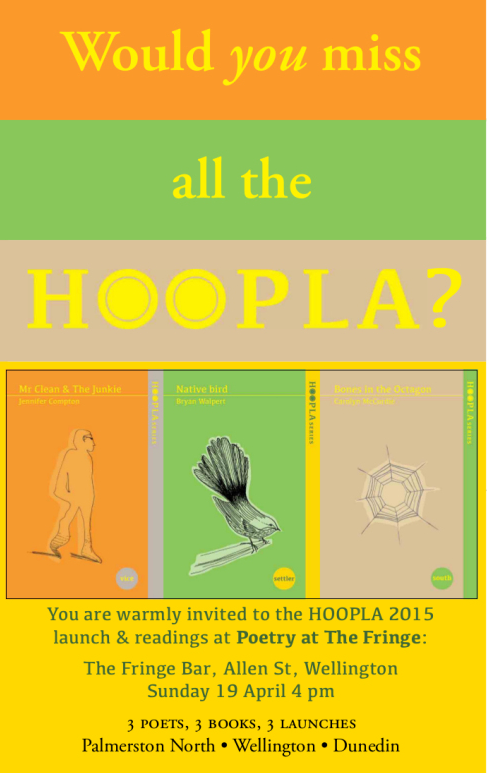
Our current NZ Poet Laureate, Vincent O’Sullivan, has edited Best NZ Poems 2014. It is an eclectic taste of why New Zealand poetry is so very very good at the moment. Congratulations!
Here is a taste of Vincent’s introduction:
“Last year I joked, more accurately than I realised, that there are now more publishing poets in New Zealand than there are commissioned officers in our armed forces. And that was before I considered the three thousand poems that turned out for inspection in 2014. There’s at least a clarity if we’re just noting numbers. But talk of poetry may quickly fall into generalisation and defence of a corner, when it comes to poems that interest us deeply. We are always reading towards the elitism of our own taste, whether or not we quite put it like that. Geoff Page, the editor of the excellent Best Australian Poems 2014, wryly picks up on this when he writes, ‘Our time on earth is finite, and we are invariably hierarchical.’ It’s not a big step from there, of course, to the necessary corrective that we are always teetering on the verge of possible error.
Inevitably then, the discomfort other editors too have felt with that title, ‘Best Poems’. I wish it weren’t called that, because I have never heard a compelling argument to take it seriously. As a philosopher might say, it is a ‘category error’. Instead, what you have are twenty-five poems that I admired when I first came on them, continue to admire as I read them again, and am fairly certain that next time round they will still attract me with the particular kind of attention they give to how something is said, or for their technical elegance, or for the finally indefinable lift that good poetry provides. But let’s not make out that anything more definitive than personal choice is going on. One reader’s shortlist may be another reader’s rejects. Yet what a privilege, and a celebratory one, to be handed the chance to invite readers, ‘Look at these, look at their variety, their elan, their vigour—isn’t that something?’”
Full introduction here
Contents here
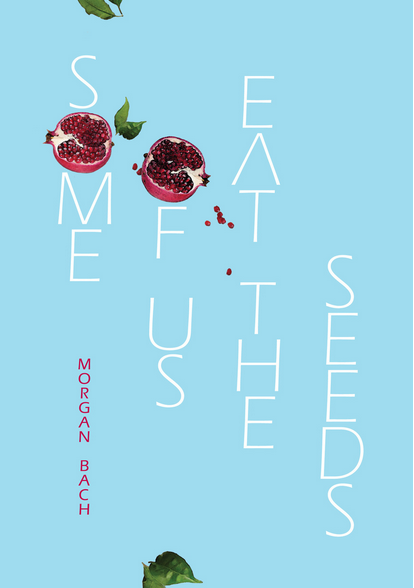
I can’t wait to read this new offering, a debut poetry collection by Morgan Bach, coming soon from Victoria University Press. What an adorable cover.
Morgan Bach’s author page is here.
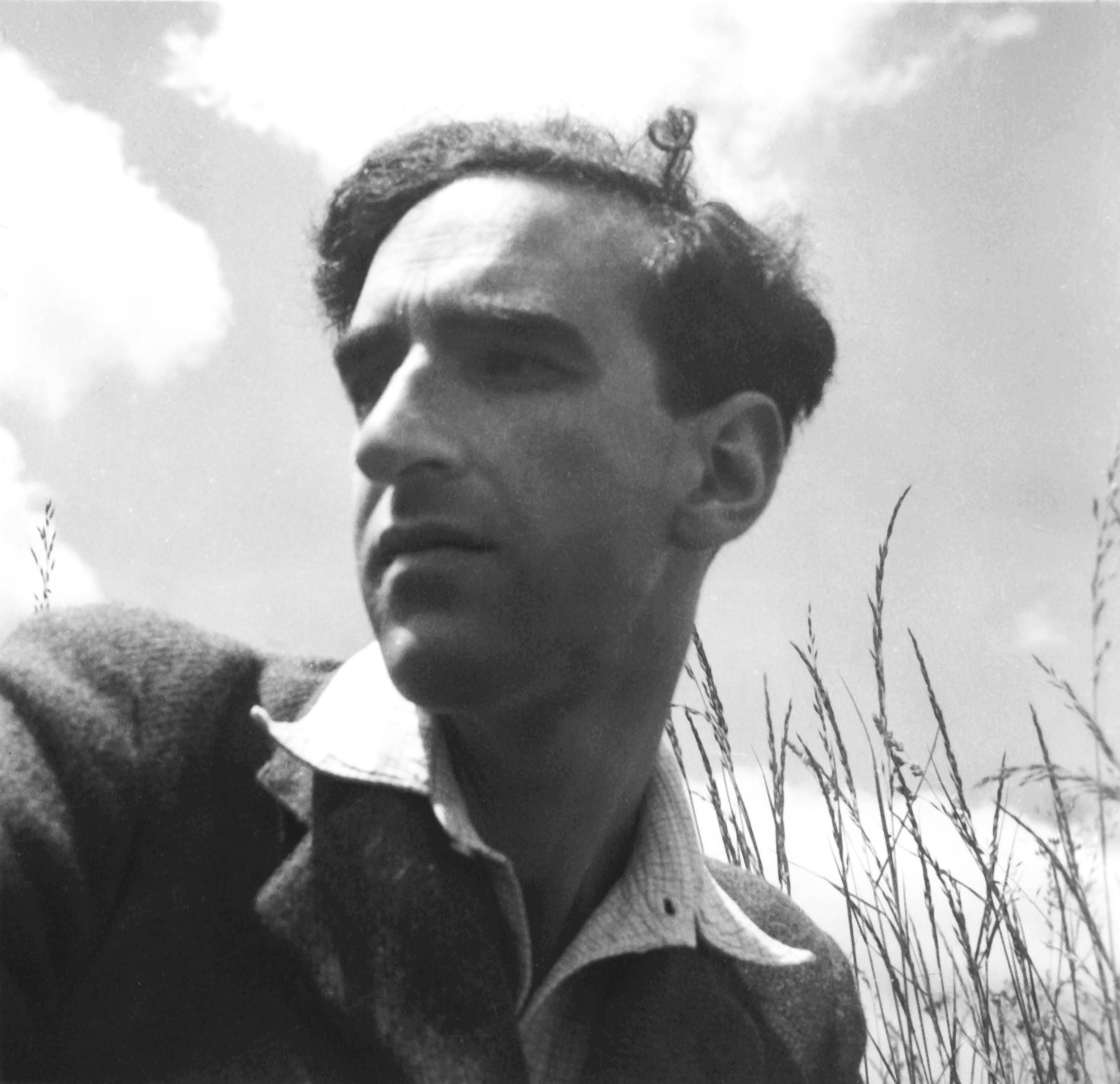
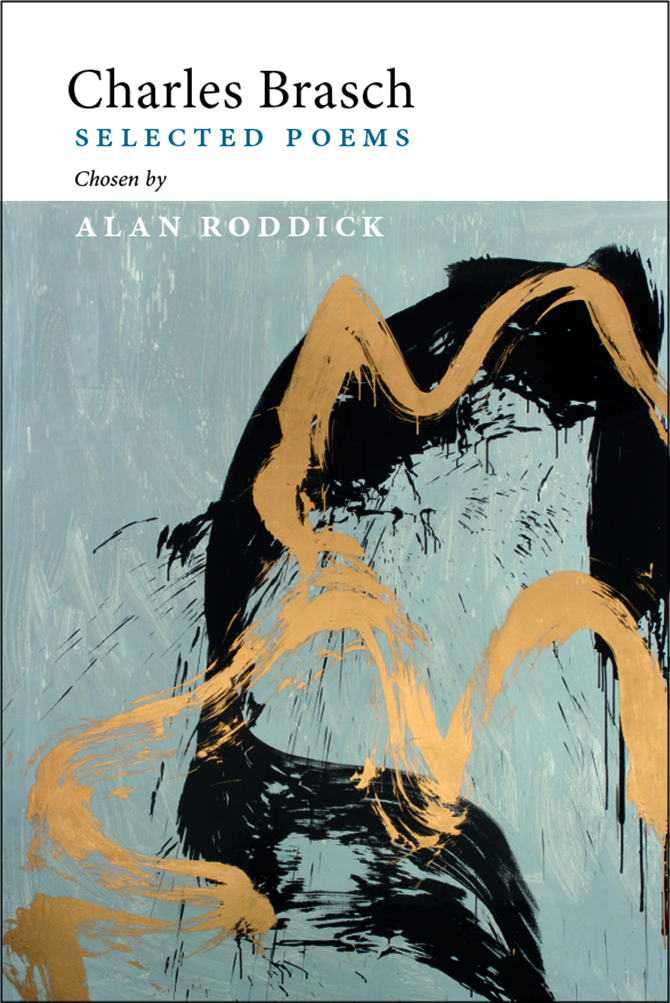
Charles Brasch: Selected Poems edited by Alan Roddick, Otago University Press, 2015
Poet and scholar, Alan Roddick previously edited Charles Brash’s posthumous collection, Home Ground (1974) and his Collected Poems (1984). Charles published a number of collections in his lifetime, mentored younger poets and was the founder and initial editor of Landfall. With his books all out-of-print, this is a timely arrival. One of New Zealand’s most influential literary journals, Landfall has represented poetic trends over decades, and continues to endure with renewed vitality (currently edited by David Eggleton), but it is interesting to step aside from this legacy and explore Brasch’s own poetry. He was a contemporary of RK Mason and ARD Fairburn and was selected by Allen Curnow for A Book of New Zealand Verse in 1951. For many poets, this was a sign of having made it. For Brasch, it knocked back some of the self doubt and sent him traversing new poetic paths. It was indeed a turning point.
One fascination of a selected poems is the way they cover the arc of a poet’s life and, in particular, writing life; the way poems reflect interior changes, and the way a changing world rubs against the process of writing. Charles’s first collection, The Land and the People, was published in 1939 with looming threats of war and world instability. He wrote with an initial attachment to the Romantics but by the 1970s his poetry was freer. The language is less tied to loftiness, to the abstract, to tight rhythms. He writes in plainer language, everyday language, yet you still see resolute connections with the subject matter of his first book: the land and the people. In many ways, the poetic arc of Alan’s selection lays its roots in Brash’s attachment to home, and the poem becomes a frame or form for a navigation of this. A homage at times. A questioning of sorts. Charles held the war at arm’s length, he held the rumpus of the 1960s at arm’s length (you don’t see him in Big Smoke, the anthology that highlights the radical poetry of the 1960s and 1970s). In his last decade or so, he is not rupturing form and content across the page in ways that SHOUT and displace. He is splitting his poems in ways that promote new revelations, new confessions whilst always maintaining his private stance. Love is there; love is struggled with and acknowledged but it is never overt, never clear.
from ‘In Your Presence’
I practise to believe,
And work towards love.
How should I see
Until I study with your eye?
He is unafraid to bare the self portrait in ‘Cry Mercy’:
Getting older, I grow more personal,
Like more, dislike more
And more intensely than ever —
People, customs, the state,
The ghastly status quo,
And myself, black-hearted crow
In the canting off-white feathers.
I was interested to discover that he worked on one of his most famous poems, ‘The Islands’ (originally published in his second book in 1948) for twenty years until he felt like he got it right. This is the poem that contains one of the most often quoted lines in New Zealand poetry:
Everywhere in light and calm the murmuring
Shadow of departure; distance looks our way;
And none knows where he will lie down at night.
The poem that has always resonated the most strongly with me is the sequence ‘Home Ground’ (from his last book, bearing that title) and a substantial part of the sequence is reproduced here. The language is sumptuous yet affords a degree of plainness. Individual lines stall and haunt you (‘I tramp my streets into recognition’). It feels open. It feels like writing this poem mattered greatly to the poet because it draws upon what matters. And within that, as with much great poetry, there is space, silence, mystery.
Silence will not let him go
Entirely; allowed a few notes
At the edge of dusk
He will be recalled before long
And folded into rock
Reassumed by the living stream.
Otago University Press have produced a terrific anthology with care taken over internal design and the cover. There is room for the poems to breathe both in terms of font choice and white space on the page. Alan’s introduction is useful but I do think there was room for more discussion of the poetry itself despite the witty inference in Charles’s ‘Pistol Point’ that poems ought to speak for themselves (‘Poems ask their own questions’). Selected Poems is a terrific introduction to Charles’s poetry; particularly to the way his poems shifted over time, on his own terms, and not at the behest of current poetic trends.
Endnote: I have a policy on this blog of using the first name of a poet. This is the first book I have reviewed by one of the key men poets who emerged in the mid-twentieth century in New Zealand, and it feels like I am transgressing a line by not using ‘Brasch.’ It feels like I have invited him into my kitchen to have a cup of tea informally. ‘Authority’ has sailed out the window.
Otago University Press page here
Gregory O’Brien’s terrific discussion with Kim Hill on the book here
NZ Book Council author page here
 NZ Poetry Shelf