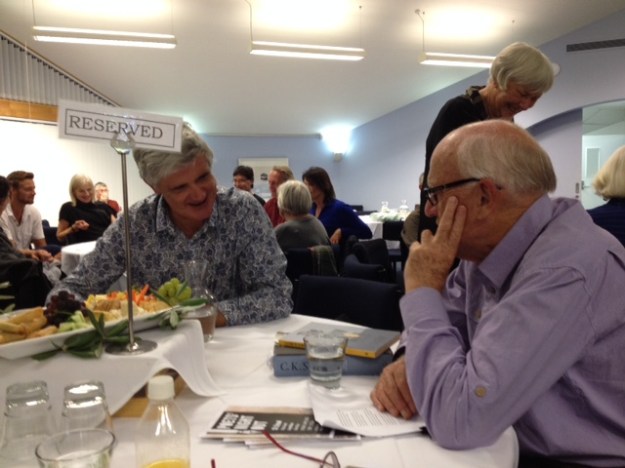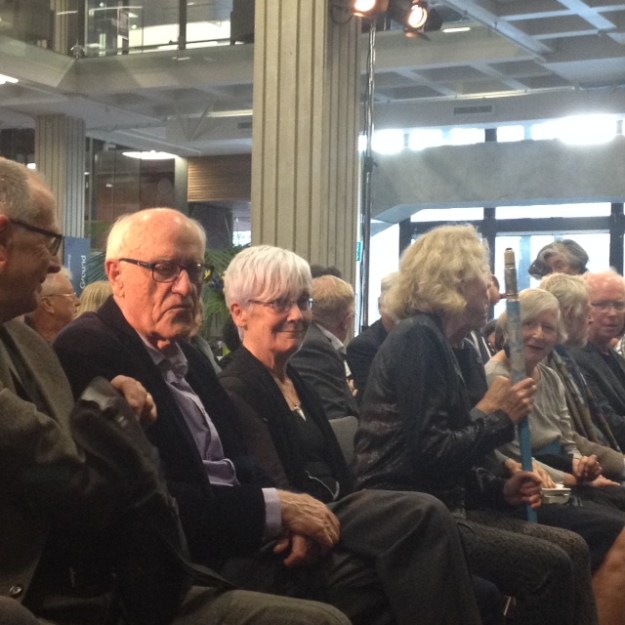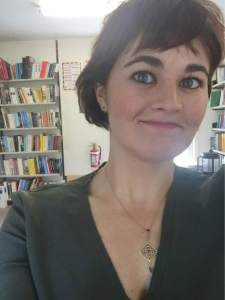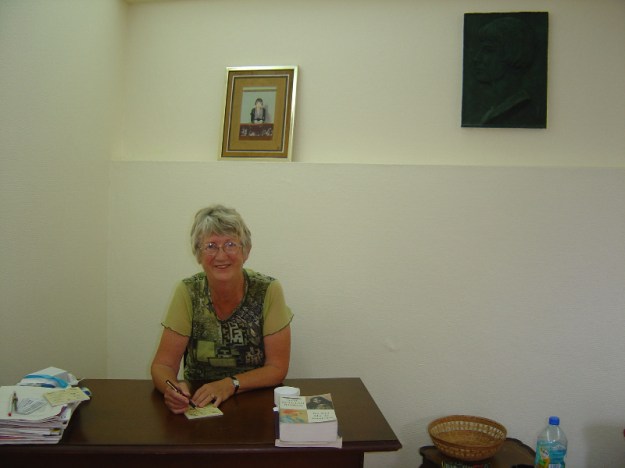
Photo credit: Ian Kidman (at Villa Isola, Menton)
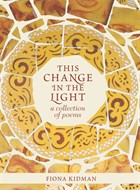
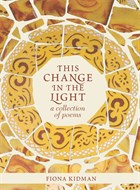
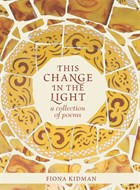
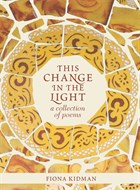
Dame Fiona Kidman has gifted much to New Zealand literature — not just in the books she has published but also in her participation within our writing communities. She has written almost thirty books and over sixty scripts for radio, film and television. Her novels are published internationally and are well loved at home. Her latest novel, The Infinite Air, features Jean Batten, and is rich with thematic layerings. It was released in the UK in March and will appear in USA, France and Germany later this year. For many of us, whether readers or writers or both, Fiona has pioneered crucial pathways for women. Her books have galvanised our shelves and lives for decades. Poetry has always been a love, with her first collection appearing in the 1970s. As a followup to the exquisitely produced Where Your Left Hand Rests, Penguin Random House has just released a new collection under the Godwit imprint: This Change in the Light: A collection of poems. Again, it is a beautiful hard-cover book to hold in the palm of your hand.
To mark the occasion, of this new book, Fiona agreed to an interview and to include the following poem.
7
There are gaps in this story. She was not
always unhappy, she grew sunflowers
and hot-headed snapdragons, bowers
of colour, love-in-a-mist, and the hot
suns warmed her face. Money arrived
from the far-away aunts, the husband came
into his own, she could look without shame
at her sisters, still childless. ‘We survived,’
she would say with pride.
But she is restless
in the bed. A woman she knows (of course
she knows her) stands at the foot, a pause
in her voice, hesitating to confess
that she had the grandchildren to gather
from school. ‘It doesn’t matter. You’re here.’
from ‘How I saw her: 10 sonnets for my mother’
Did your childhood shape you as a poet? What did you like to read? Did you write as a child? What else did you like to do?
I was indeed a child who read and wrote from an early age. I was an only child and I grew up in isolated rural areas. As it happened, I learned to both read and write when I was in a country hospital for a lengthy period: I was six. My parents were not able to visit me, and I began to read everything in the hospital library, mostly adult books. Learning to write provided me with a way to keep in touch with my parents. This isn’t meant to sound tragic. Later, I had friends at school and some remain close to this day. One of them, at Waipu DHS, was the writer Jennifer Beck. Another friend is an artist, and we undertook the creation of annual summer ‘magazines’ together. I encountered people like myself in out of the way places. I think it is easy to overlook that the New Zealand countryside is home to an amazing and diverse number of people who love books and the arts in general.
That said, there were a lot of starry skies that I watched on my own, and fishing expeditions that I took by myself. I would often slip out of the house at around 3 a.m. and walk to the river. My mother owned Palgrave’s Golden Treasury and I started to draft poems when I was about nine or ten. It all sounds a bit, odd, I know, but times have changed. The short answer is books were my lifeline to the outside world, and writing for Anne Shirley’s children’s pages in the Herald gave me an early awareness of writing and its possibilities.
When you started writing poems, were there any poets in particular that you were drawn to (poems/poets as surrogate mentors)? You began publishing in the 1970s when not many women poets were visible. How did this affect you as a writer?
Well, as I said, I had begun to write poems as a child, although that dropped off while I led a pretty average teen age life in provincial towns, reflected in my poem “The Town”. I did still read poetry. I worked as a librarian so it was there for the taking. After I was married, and a young mother, I met some poets at a women writers’ workshop at Auckland University in the late 1960s and my interest was rekindled. Some of the North American women poets caught my attention. I loved, and continue to love, the work of Elizabeth Bishop and of Louise Bogan. Bishop evoked the natural world with such exquisite precision that I read and re-read her over and again. And of course, she was raised in Nova Scotia where I have connections and friends. I refer to carrying her Selected Poems on my first visit to NS in This change in the light. Bogan is less known in New Zealand, but her slightly tough sardonic attitude to relationships belie a tenderness that runs beneath the poems. The Blue Estuaries is among my favourite books.
Did the politics of the seventies and the renewed attention to women’s issues affect your poetry?
Oh yes, definitely. I was in it up to my neck. Of course I was reading Sylvia Plath and Anne Sexton, Maya Angelou, all those women who had cries of anguish of one kind or another. It’s hard to talk about those times now, because from this distance some of it reads like ‘sorry for myself’ poetry, and I fell into the way of writing like that myself. The difference was that writers like Plath and Angelou had great command of their craft. I’m not so sure about Sexton now, I don’t return to her work with particular pleasure. And, for sure, there were issues that we all wanted to address. There was a big group of women here in New Zealand writing poetry and it was great to have that solidarity among us. A lot of us read together at various venues over the space of some years – Lauris Edmond, of course, who was my great friend, Elizabeth Smither, Rachel McAlpine, Marilyn Duckworth, Meg Campbell and others. In 1975, International Women’s Year, nine of us had books of poetry published (there had been perhaps ten by women in the previous ten years), in 1977 Riemke Ensing collected our work in Private Gardens , a landmark publication. Lauris and I had a joint launch for our first books in Wellington, at the University Club. My book was Honey & Bitters (note the ampersand!) and Lauris’s was In Middle Air. Among the several remarkable features of that very crowded launch party was Denis Glover’s now famous –or infamous, as you might choose to see it- remark about “the menstrual school of poetry.”
Do you think it makes a difference when the pen is held by a woman?
Many women have different preoccupations to men. My poems tend towards the domestic – unashamedly.
What poets have mattered to you over the past year? Some may have mattered as a reader and others may have been crucial in your development as a writer.
It’s really hard to specify poets within a time frame because there are poets who as a reader one returns to over and again. Robin Hyde was an early influence and I go back to her often. Her poem “Whangaroa Harbour” is one of the most gut wrenching New Zealand poems I know, and it’s set in the north, where I come from. “White irises” moves me in the same way:
Till single among stones I saw
The white, the ragged irises,
Cold on a sky of petals dead,
Their young cheeks roughened in the wind….
Just reading her makes me reach for my notebook.
I enjoy the work of Billy Collins – now there’s a male writer who sees a lot of the same things that I do. I like his openness to both sorrow and joy. His poems let me in to his world.
I go back to poets like Robert Frost, that quiet gravitas reminds me of where poetry can go – everywhere, really. And I’m immensely impressed by John Burnside, the British poet.
Apart from Hyde that’s a bloke’s line up, but really, I’m reading all over the place all the time, and perhaps it indicates that I’ve moved on from that exclusive world of female writing of the 1970s. There was so much I didn’t know then, and I’m still learning from people I consider to be masters of the craft.
What New Zealand poets are you drawn to now?
Vincent O’Sullivan, whose work just mines richer veins with each new book, Michael Harlow, with his singular exquisite lightness of touch, Cilla McQueen, Diana Bridges, Emma Neale. But this isn’t a talent quest, I’m drawn to a whole range of poets, and sometimes just to a particular poem. Some of the poems in Anne French’s new collection are gorgeous. Harry Ricketts read a new bracket of poems at the Wellington festival which moved me to tears. And at the Ruapehu Writers Festival which you and I have just attended, I read with some poets I’d never heard of, and I was simply bowled over: Magnolia Wilson and Hannah Mettner are poets whose work I can’t wait to experience in books. Vana Manasiadis read on that panel too, and I’ve admired the Greek influences in her work since she began writing. The poems in Elizabeth Smither’s recent collection Ruby Duby Du suggest some new direction in her work, a spontaneous combustion of grandmotherly affection, which I like very much. Mary McCallum has written some fine poems and I hope that now she is a publisher she will put modesty aside and collect some of her own work, rather than leaving them in blog form.
What about elsewhere?
Sharon Olds. Her linguistic range, her intensity and passion crunch my heart, end of story.
John Burnside, as I’ve mentioned is a favourite. Billy Collins again. Carol Anne Duffy. Jacky Kay. Anne Carson, sometimes but not always of late, she can be a bit fey for me.
Name three NZ poetry books that you have loved.
A Matter of Timing, by Lauris Edmond
Wild Honey, by Alistair Te Ariki Campbell
Cassandra’s Daughter, by Michael Harlow (well, I would say that, wouldn’t I, it’s dedicated to me, but I do indeed love it)
Any other reading areas that matter to you?
I read Maori and Polynesian work and I’m interested in the emergence of this different, more fluid and musical voice. Alistair Te Ariki Campbell, whose work I greatly admired, was one of the more influential of the earlier Polynesian voices to emerge in the 1960s and 1970s.
Your poems are written with grace, an eye for incandescent detail and an ear for the lilt of a line. As readers we are drawn into a vitality of place and human relations within each frame of the poem in ways that matter profoundly. What are some key things for you when you write a poem?
Thank you for the compliments. But that’s a hard question. Poems tend to pounce on me out of nowhere. No, that’s not strictly true, they arise out of my day-to-day life, my family, my garden – not a flash one, but bounded in a semi-circle by native trees we (Ian and I) planted more than 40 years ago, and the sea lying before us to the south. The poems are rarely planned, which is not to say that once they’re jotted down they don’t go through many re-workings. The poems actually went into hiding for something like 17 years, hard years that involved nursing others, and then in 2006 I went to Menton as the Katherine Mansfield fellow. That time of sheer joy, of rediscovering myself as a free and happy person, released some inner tension and holding back that had been going on for a long time. I started to write poems and wrote one nearly every day for the last months of my stay there.
Yes! I witnessed this joy and poetic return as I read Where Your Left Hand Rests. Do you think your poetry has changed across the decades?
Yes. I think I was a bit of a misery guts in the earlier work. I tend to write now out of a state of happiness. I’m also a lot more conscious of form than when I set out. That said, I look back and wish that I had some of the raw energy the early poems demonstrated.
Your new collection of poems, This Change in the Light, is a joy to hold: hardback, ribboned, with very fine paper stock. In some ways, it is a gift for the reader, and in other ways it is like a family heirloom. A beloved object. Do you see this collection as a gift to family?
Yes, as a matter of fact I do. In particular, it is a gift to my daughter Joanna. However, I am the real recipient of the gift, the gift of family.
As far as the book as an object is concerned, of course it wouldn’t exist were it not for Harriet Allan’s belief in my work, and the design team at Godwit she drew together to create such beautiful images. Anna Kidman’s photographs bring another dimension too. She is a granddaughter by marriage and although those pictures are black and white, she has a way of portraying light that captures the essence of the book’s title. In the opening shot she also captures our family, a country wedding, the glimmering dusk as the party begins, the figures unrecognizable unless you know who they are, my own lovely and beloved tribe.
I was particularly drawn to the mother sonnets. What were the joys and difficulties of writing this sequence (see poem above)?
Partly it comes back to these questions of craft. In my earlier work I didn’t pay as much attention to it as I should. I think one needs to know the rules before they go about breaking them. I had never written sonnets before, although I’d read them since childhood. I grew up in a fairly tightly disciplined environment – despite the freedom to explore the countryside. Although my parents and I lived in considerable hardship, table manners, proper speech, etiquette were all instilled in me on a daily basis and meals were served with the ritual of a banquet. When I came to write about my mother, it occurred to me that she needed quite a formal approach and I decided to set about this through sonnets. There were only meant to be one or two of them, but of course the life of a mother isn’t contained in just a couple of sonnets. Ten don’t do her justice, as it is. But I wanted to get as much of her down in them as I could, and that discipline of the Petrarchan sonnet was immensely challenging but satisfying as well. I must say that by the end of each one I felt as if I’d written a novel.
I’d like to add here, that in spite of the discipline, I had a very intense relationship with my mother throughout her life and she lived with us for several years towards the end, until she entered the Home of Compassion. My mother’s love for me was the nearest I will ever know to unconditional love and it has taken me many years to express that. It was important to me not to use the first person pronoun, so that she could be seen as an entity in herself
Some exquisite poems in the collection lead elsewhere. The poem that re-presents the house of Marguerite Duras gets under your skin. There is a tinge of melancholy in that emptiness. Something a little uncanny. Do you write of things immediately or let them simmer and review them across various distances?
It depends really. I keep a journal when I’m travelling and describe things to myself in fairly concrete detail. That’s where writing for television was handy training. I’m not much of a photographer, but I learned to describe what the person holding the camera should see. So there are these notes to refer back to later on. I am a long time admirer of Duras’s work and I identify with aspects of the solitude she embraced in her life. I’ve followed her footsteps in different places, including going down the Mekong River in a flat-bottomed barge in 1992, seeking the site of her Vietnamese childhood home. At Neauphle-le-Chateau I saw the abandoned house but I still had a very potent sense of her presence. I could see myself living in that house.
People are important in this collection. To me they are lovingly crafted into life. What matters to you when you draw real people into your poems?
Well, that’s hard to describe. Some of my work has been harsh towards people in the past. In this book, love, and love remembered are what count.
The collection comes out of age, out of an attentiveness to the world and the people that surround. Does your age make a difference as you write poems? I have to say I am drawn to the tender undercurrents and the thoughtful engagement.
Yes, age makes a difference. I see my immediate world in a different light, and with great gratitude for good fortune. I look, too, as in my poem “Malala Yousafzai: in tribute” to the next generation to take up the reins in the interests of our survival. I haven’t stopped battling for what I believe to be right, but I understand that we have to trust the young. I do. They are better than they are given credit for.
What satisfies you about poetry that perhaps you don’t get when writing a novel?
Each process is different, in the same way that writing a short story is different from writing a novel. There is the obvious satisfaction of being able to complete it in a relatively short time, although some of my poems have sat around for years until I’ve come back to them and decided whether there was something in them or not. There is joy in spontaneity of expression.
What do you want readers to take away from these new poems?
Oh. Hmm. A moment of recognition perhaps.
What irks you in poetry?
Shallowness
What delights you?
Openness. A sense of truthfulness.
The constant mantra to be a better writer is to write, write, write and read read read. You also need to live! What activities enrich your writing life?
The garden where I live. Travelling if I can, and that includes travelling in New Zealand. Ian and I try to get to the Hokianga every year. My family life, the movies. A great pleasure is finding a quiet time at the Penthouse in Brooklyn, a nearly empty theatre with a great big screen in front of me, and a glass of pinot gris beside me. I’m on some committees, and the Randell Cottage Writers Trust has been a big focus of my energies in the past 15 years. We have a French writer and a New Zealand writer every year, each has 6 months occupancy of the Cottage. I like live music and theatre but getting out and about in the city at nights is more challenging than in the past, so I don’t go so often these days.
Finally, if you were to be trapped for hours (in a waiting room, on a mountain, inside on a rainy day) what poetry book would you read?
Elizabeth Bishop’s Selected Poems . I always take the book on an overseas trip, planning for just such a contingency.
Thank you Fiona.
PenguinRandom House page
Fiona Kidman’s website
NZ Book Council author page
Radio NZ review of This Change in the Light with Harry Ricketts