
Eleven NZ women’s poetry books to adore and some fiction – Happy International Women’s Day!

Some_of_Us_Eat_the_Seeds_lo_res_web_RGB__56166.1434594528.220.220     7485719 front-cover   8507862 418MHC3lAEL._SX346_BO1,204,203,200_ 1415925155755

Book Award lists should promote debate. Ideas and issues should be raised. As long as judges and authors don’t come under personal attack. It is a time of celebration, let’s not forget that, but it is also a time when diverse opinions may draw attention to our healthy landscape of books.

I have just started writing a big book on poetry by New Zealand women. I have carried this project with me for a long time, and it something I care about very much indeed. It is a book I am writing with a great sense of liberation and an equal dose of love.

I bring many questions to my writing.

The shortlist for poetry and fiction in the Ockham NZ Book Awards includes 0ne woman (Patricia Grace) and seven men. There are no women poets.

This is simply a matter of choice on the part of the judges and I do not wish to undermine the quality of the books they have selected. However, in my view, it casts a disconcerting light upon what women have been producing in the past year or so.

Women  produced astonishing books in 2015. I reviewed their poetry books on this blog and praised the diligent craft, the exquisite music, the sumptuous detail, the complexities that challenge and the simplicity that soothes. I have lauded books by women that have moved me like no other, and that have contributed much to the possibilities of what a poem might do.

I am gobsmacked that not a single one made it to the shortlist.

Men have written extraordinary poetry in the past year, but so too have women.

Today is International Women’s Day. In celebration of this, here is a selection of poetry and fiction I have loved in the past year and would have been happy to award.

This list is partial. Please add to it.  Some of these women are my friends, so yes there is unconscious bias. Some of these women I would recognise in the street, some I would not.


Eleven Poetry Books by women to adore

(I have reviewed all these to some degree on Poetry Shelf or interviewed the poets)

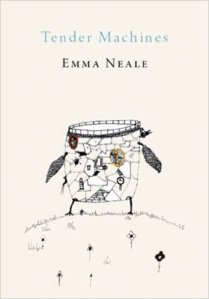
Emma Neale  Tender Machines This is a domestic book that is utterly complex. Yet it moves beyond home to become a book of the world. The music is divine. I am utterly moved. The Poetry Shelf trophy is yours Emma.

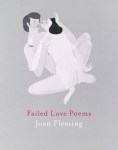
Joan Fleming Failed Love Stories Poetry that dazzles and shifts me. This book is on replay!

Holly Painter Excerpts from a Natural History Startling debut that blew me out the window and made me want to write

Sarah Jane Barnett Work Poetry that takes risks and is unafraid of ideas. Adored this.

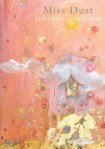
Johanna Aitchison Miss Dust Spare, strange, surprising, wonderful to read.

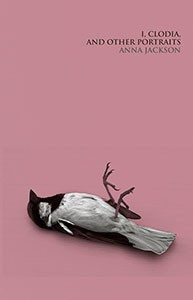
Anna Jackson I, Clodia and Other Portraits The voice gets under my skin no matter how many times I read it. So much to say about it.

Jennifer Compton My Clean & The Junkie This narrative satisfies on so many levels.

Airini Beautrais Dear Neil Roberts Risk taking at the level of politics and the personal.

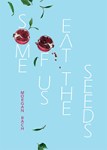
Morgan Bach Some of Us Eat the Seeds Beauty of the cover matches the surprise and beauty of the poetry within.

Hinemoana Baker waha/ mouth This poetry lit a fire in my head not sure which year it fits though. But wow!

Diane Brown Taking My Mother to the Opera This is poetry making pin pricks as it moves and gets you chewing back through your own circumstances.


…. and this is just a start. Ha! Serie Barford with her gorgeous mix of poetry and prose.

Yep I am going over board here just to show you that women have footed it with the best of the men. Whichever year you look at, a different set of judges would come up with a different mix of books. Yes let’s celebrate that worthy shortlist but let’s also remember that canon shaping only revels in and reveals part of the story.


Fiction (I haven’t read so widely here and have a wee stack to get too – Laurence Fearnley and Charlotte Grimshaw here I come!)

Anna Smaill The Chimes This book – plot character, setting, premise, events – still sticks to me. The sentences are exquisite. Some books you lose in brain mist. Not this one.

Sue Orr The Party Line I see this book becoming a NZ classic – a novel of the back blocks. The characters are what move you so profoundly. So perfectly crafted.


My thoughts: 2016 Ockham NZ Book Award Poetry short list

Congratulations to all those who make the short lists! Especially in a year that was larger than a year.

Here is the short list for poetry, see below for other categories.

Poetry
How to be Dead in a Year of Snakes, by Chris Tse (Auckland University Press)
The Night We Ate the Baby, by Tim Upperton (Haunui Press)
Song of the Ghost in the Machine, by Roger Horrocks (Victoria University Press)
The Conch Trumpet, by David Eggleton (Otago University Press)
Would this be my list? No! But that doesn’t mean a thing. Book Awards will always reflect the predilections of the judges. And there are some strong collections here that I have reviewed and loved. Great to see Chris’s debut collection make the cut.
Good to see a small press make it along with the big presses who continue to show an admiral devotion to poetry.
Whom do I mourn? Emma Neale’s extraordinary collection, Tender Machines. Ahh!
I haven’t read many of the novels that made it but how I adored Anna Smaill’s The Chimes that did not. Sorry to be a party pooper on that one.
And how good to see Fiona Farrell and Lynn Jenner make the non-fiction list. I reviewed both those books on the blog and thought they were standout examples of how we can write about the world, catastrophe, home.
Fiction plus poetry equals one woman out of eight.  No women poets. Does this mean the men wrote all the best books in the past year? No way!
Is NZ literature in fine heart? Utterly yes. Astonishing books missed the long lists in both poetry and fiction. We are publishing such quality writing it makes judging almost impossible for Book Award Judges.
For those that missed out, good books have a life beyond book awards. Astonishing books are bigger than book awards. Remember that.
For those that have been picked, enjoy the well-deserved moment, then let the white noise settle and get on with what really matters. Writing.
The 2016 Ockham New Zealand Book Awards finalists are: 
Fiction
The Back of His Head, by Patrick Evans (Victoria University Press)
Chappy, by Patricia Grace (Penguin Random House)
Coming Rain, by Stephen Daisley (Text Publishing)
The Invisible Mile, by David Coventry (Victoria University Press)
Poetry
How to be Dead in a Year of Snakes, by Chris Tse (Auckland University Press)
The Night We Ate the Baby, by Tim Upperton (Haunui Press)
Song of the Ghost in the Machine, by Roger Horrocks (Victoria University Press)
The Conch Trumpet, by David Eggleton (Otago University Press)
General Non-Fiction
Maurice Gee: Life and Work, by Rachel Barrowman (Victoria University Press)
The Villa at the Edge of the Empire: One Hundred Ways to Read a City, by Fiona Farrell (Penguin Random House)
Māori Boy: A Memoir of Childhood, by Witi Ihimaera (Penguin Random House)
Lost and Gone Away, by Lynn Jenner (Auckland University Press)
Illustrated Non-Fiction
Te Ara Puoro: A Journey into the World of Māori Music, by Richard Nunns (Potton and Burton)
New Zealand Photography Collected, by Athol McCredie (Te Papa Press)
Tangata Whenua: An Illustrated History by Atholl Anderson, Judith Binney, Aroha Harris (Bridget Williams Books)
Real Modern: Everyday New Zealand in the 1950s and 1960s, by Bronwyn Labrum (Te Papa Press)
The Fiction category is judged by distinguished writer Owen Marshall CNZM, Wellington bookseller and reviewer Tilly Lloyd, and former Director of the Auckland Writers Festival and former Creative New Zealand senior literature adviser Jill Rawnsley.
The Poetry Prize is judged by former Auckland University Press publisher Elizabeth Caffin MNZM, Dr Paul Millar, of the University of Canterbury, and poet and University of Auckland academic Dr Selina Tusitala Marsh.
The General Non-Fiction Prize is judged by Metro Editor-At-Large Simon Wilson, Professor Lydia Wevers, literary historian, critic and director of the Stout Research Centre at Victoria University of Wellington, and Dr Jarrod Gilbert, a former Book Awards winner for Patched: A History of Gangs in New Zealand, of the University of Canterbury.
The Illustrated Non-Fiction Prize is judged by former publisher Jane Connor, publisher of the magisterial The Trees of New Zealand, which won the Book of the Year award in 2012, Associate Professor Linda Tyler, Director of the Centre for Art Studies at The University of Auckland, and Leonie Hayden, the editor of Mana magazine.
The winners (including of the four Best First Book Awards) will be announced at a ceremony on Tuesday May 10 2016, held as the opening night event of the Auckland Writers Festival. The awards ceremony is open to the public for the first time. Tickets to the event can be purchased via Ticketmaster once festival bookings open on Friday 18 March.

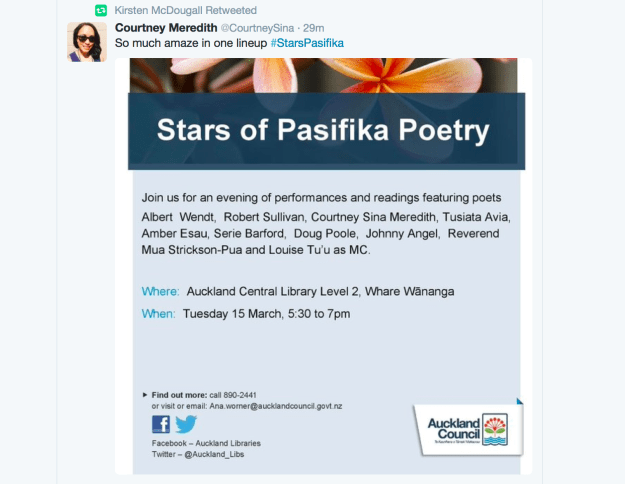
Stars of Pasifika Poetry at Auckland Library

Screen Shot 2016-03-07 at 4.59.22 PM

Word of mouth! Love the way Auckland Central Library draws in the poets.

Poetry Shelf Review: Gregory Kan’s This Paper Boat floats on an ethereal current so that poetry finds its way back to us all


1455844200262     1455844200262

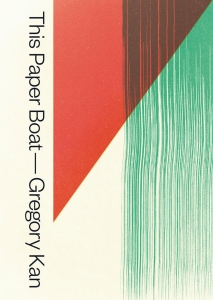
Gregory Kan This Paper Boat Auckland University Press 2016


Gregory Kan’s debut poetry collection, This Paper Boat, is a joy to read on so many levels.

Kan’s poetry has featured in a number of literary journals and an early version of the book was shortlisted for the Kathleen Grattan Poetry Prize in 2013. He lives in Auckland.

Paper Boat traces ghosts. We hold onto Kan’s coat tails as he tracks family and the spirit of poet, Robin Hyde (Iris Wilkinson). The gateway to family becomes the gateway to Iris and the gateway to Iris becomes the gateway to family. There is overlap between family and missing poet but there is also a deep channel. The channel of difficulty, hard knocks, the tough to decipher. There is the creek of foreignness. The abrasiveness of the world when the world is not singular.

Kan enters the thicket of memory as he sets out to recover the family stories. He shows the father as son fishing in the drains, the mother as daughter obedient at school. Yet while he fills his pockets with parental anecdotes, there is too, the poignant way his parents remain other, mysterious, a gap that can never be completely filled:


In the past when I thought about people my parents

were somehow

not among them. But some wound stayed


wide in all of us, and now I see in their faces

strange rivers and waterfalls, tilted over with broom.


The familial stands are immensely moving, but so too is the search for Iris. Kan untangles Iris in the traces she has left – in her poems, her writings, her letters. He stands outside the gate to Wellington house, listening hard, or beside the rock pool. There is something that sets hairs on end when you stand in the footsteps of ghosts, the exact stone, the exact spot, and at times it is though they become both audible and visible. Hyde’s poems in Houses by the Sea, are sumptuous in detail. I think of this as Kan muses on the rock-pool bounty. When he stands at her gate:


I have to hear you to keep you

here, and I have to keep you

here to keep coming back.


I think too of Michele Leggott’s plea at the back of DIA to listen hard to the lost matrix of women poets, the early poets. To find ways to bring them close.

Kan brings Iris (Robin) close. His traces. Iris becomes woman as much as she does poet and the channel of difficulty fills with her darknesses as much as it does Kan’s. There is an aching core of confinement: her pregnancy, her loss of the baby, her second pregnancy, her placement of the baby elsewhere, her mental illness. His confinement in a jungle. His great-aunt’s abandonment as a baby.


The strands of love, foreignness and of difficulty are amplified by the look of the book. The way you aren’t reading a singular river of text that conforms to some kind of pattern. A singular narrative. It is like static, like hiccups, like stutters across the width of reading. I love this. Forms change. Forms make much of the white space. A page looks beautiful, but the white space becomes a transmission point for the voices barely heard.

At one point the blocks of text resemble the silhouettes of photographs in a family album. At another point, poems masquerade as censored Facebook entries.Later still, a fable-like poem tumbles across pages in italics.

The writing is understated, graceful, fluent, visually alive.

I want to pick up Hyde again. I want to stand by that Wellington rock pool and see what I can hear. I have read this book three times and it won’t be the last.


In the final pages, as part a ritual for The Hungry Ghost Festival, Kan sends a paper boat down the river ‘to ensure// that the ghosts find their way/ back.’

The book with its heartfelt offerings is like a paper boat, floating on an ethereal current so that poetry finds its way back to us all (or Hyde, or family).


Auckland University Press page

A terrific interview with Sarah Jane Barnett

Sequence in Sport


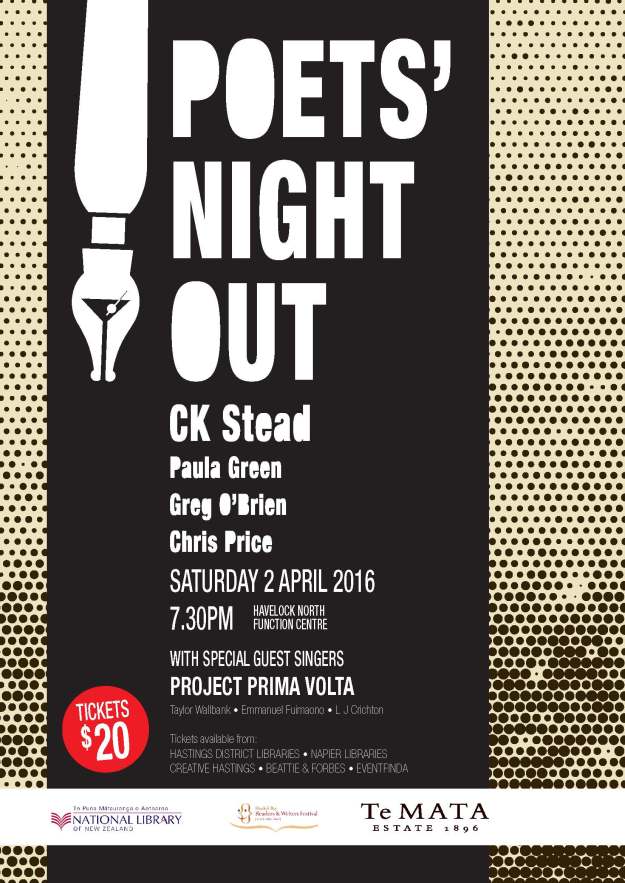
Poets’ Night Out in Havelock North with CK Stead, Paula Green, Gregory O’Brien and Chris Price

For Eventfinda tickets go here

The Poet Laureate Celebrations includes this event! Looking forward to my trip south.

HDL_poets-night-out_poster_A4_V3_PRINT

Congratulations Dr Selina Tusitala Marsh

1456791150657


In two weeks, one New Zealand woman will stand in London’s Westminster Abbey to perform a poem for the Queen on behalf of 53 countries.

Selina Tusitala Marsh, a Pasifika poet and Auckland University academic, has been commissioned to write and perform a poem at the Commonwealth Day Observance on March 14.

As well as the Queen, the service will be attended by Commonwealth Secretary-General Kamalesh Sharma, along with High Commissioners and other dignitaries from across the Commonwealth.


See the rest of the article and a video link here.

Any NZ takers for An International Poetry Day event: A Poem for Refugees

link here

Dear fellow Poets and Poetry Festival directors,

Poets Circle in Athens is organizing a world event under the title A POEM FOR REFUGEES. I am writing to you to inquire if you would like to organize a public reading on that subject on March 21, 2016, which is International Poetry Day. The purpose is to make the public vitally aware of the refugee crisis and a clear message against racism. PEN International will co-sponsor this Greek event thus it will become a world event. We are very pleased that the United Nations High Commissioner for Refugees (UNHCR) in Athens is on board. World Poetry Movement is also part of it.

Poets Circle is a non-profit literary organization with 99 Greek and 99 foreign members. In the last four years it has organized two International Poetry Festivals in Athens and more than 120 poetry events throughout Greece. On January 14, 2016, together with the Greek Authors Society, we were happy to join PEN International in a reading defending the Palestinian poet Ashraf Fayadh.

In Greece the event is scheduled in 28 cities and islands. Twenty countries are participating

I would appreciate an early reply,

Very truly yours,

Dinos Siotis
030.697.111.645

info@poetscircle.gr


Ένα ποίημα για τους πρόσφυγες / A poem for the refugees

What: Poetry reading on the refugee issue, with live music, a refugee – themed photography exhibition, in view of March 21st, World Poetry Day, and World Day Against Racism with the collaboration of PEN International (http://www.pen-international.org/) and the World Poetry Movement (http://www.wpm2011.org/)

When: Friday March 21th 2016, 19.00,

Where: Stoa tou Vivliou (downtown Athens), plus various other venues (bookstores or perhaps municipal premises) throughout Greece in 24 other cities and the islands of Lesvos, Chios, Samos, Rhodes, Kos, Thessaloniki, Patras, Chania, Kalamata, Tripoli, Nafplion, Lehaina, Volos, Larissa, Xanthi, Komotini, Trikala, Ioannina, as well as cities abroad in Cyprus, Turkey, Colombia, Norway,  India, France, Spain, Canada, USA, Ireland, Italy, etc.

A joint event of the Poets’ Circle (Greek)

Dinos Siotis and Becky Bloom (Refugees Welcome) shared ideas with UNHCR. Mr Siotis mentioned that the presence of highly respected poets and writers, as Titos Patrikios, Kiki Dimoula, Nanos Valaoritis, Yiannis Dhallas and Katerina – Aggelaki Rouk, could be assured.

A first draft schedule of the event unfolds as follows:

  • About 20 to 25 poets will read their poems. Live music will be played. The evening will be curated by well – known writer, journalist and playwright, Minas Vidiadis. During the reading of the poems, photos of the exhibition will be projected on the wall.


The co-organizers of the event will address short greetings, in-between the readings.

As far as the photography exhibition is concerned, the idea is to gather about 15 works –in total- of well – known photographers, framed in 35 by 50 cm ready frames

It was suggested that poets from Syria and perhaps Afghanistan, or Iran join the event, and will be reached perhaps through Greek Refugees Forum.

  • Poems will be uploaded to a relevant blog and facebook page which run unofficially for the time being, for easy reference and perhaps, use of them from schools. Uploading them would help spread the event’s message and gain visibility for its stakeholders, since online presence lasts.
  • Media sponsor is ERT (Greek National Broadcasting).
  • Siotis has arranged for a 30’’ TV Spot which will be prepared for the event and will air for free through Greek National Broadcasting, that can also be shared via the Internet.


BOOSTED DEADLINE EXTENDED- RUAPEHU WRITERS FESTIVAL

Screen Shot 2016-02-29 at 4.07.33 PM


Yes! I am a participant but this fledgling festival is worth supporting. Bucket loads of writers will bring stories and poems to all those who live by the mountains. Must be a first?

AN UPDATE FOR RUAPEHU WRITERS FESTIVAL BY RUAPEHU WRITERS FESTIVAL

Hi,

Thank you so much to everyone who has so generously donated to the Ruapehu Writers Festival, including all the lovely anonymous donors who we can’t thank in person – thank you to every one of you!

Our deadline has been extended by 2 days so we now have until midnight on Thursday 3rd March to reach our funding target and we are expecting a couple of pledges in and are hopeful that we can make it. Anything that you can do to spread the word would be most appreciated!

In the meantime the festival team have been hard at work making arrangements, selling tickets and generally making sure that the festival will be the best it can be. Please help us spread the word and bring this unique literary event to fruition.

Thanks again,

The festival team


Pledge your support here