The Yield, Sue Wootton, Otago University Press, 2017
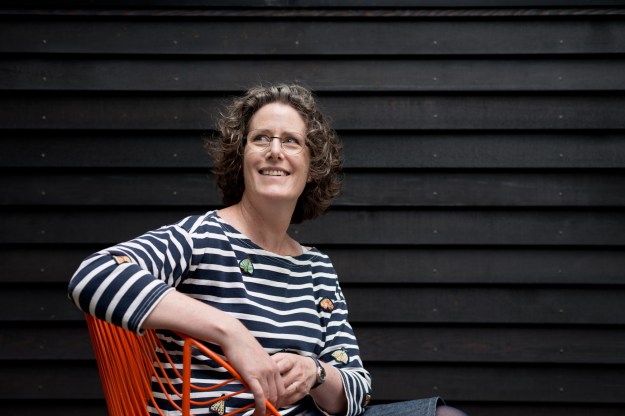
Sue Wootton’s latest collection of poetry is a sumptuous read, a read that sparks in new directions while clearly in debt to everything she has written to date. The cover is so very inviting. I have been a fan of Sue’s poetry for a long time and was delighted she agreed to share thoughts on poetry and the new book.
Sue Wootton lives in Dunedin, where she is the selecting editor for the Otago Daily Times Weekend Poem column and co-editor of the Health Humanities blog Corpus: Conversations about Medicine and Life. She is a PhD candidate at the University of Otago, researching connections between creative practice, literature, and medicine. Sue’s debut novel, Strip (Mākaro Press, 2016), was longlisted for the fiction prize of the 2017 Ockham NZ Book Awards. The Yield (Otago University Press, 2017) is her fifth collection of poetry. Sue’s website. Find Corpus here.


and you wonder if unspooling is, will ever be, your forte,
a question you will never answer since it never ends,
this casting your line on gale or water
from ‘Unspooling’
PG: Let’s begin with the world of books. What books affected when you were young and what books have affected you as an adult poet?
SW: My mother used to take us to the Whanganui library every Saturday morning to collect an armful of books for the week, and we were lucky in having a family friend who used to give books—lovely hardback illustrated books—for birthday and Christmas presents. I still have the one I received from her on my sixth birthday: Candy and the Rocking Horse by Gwyneth Mamlok. Oh Candy, how I loved your red hat, your bright pink tights, your long boots, and the way you and your dog Peppermint did everything together, just the two of you! Other beloved books included Hubert’s Hair-Raising Adventure by Bill Peat, Patrick by Quentin Blake and Horton Hatches the Egg by Dr Seuss. A little later I fell big time for Roald Dahl with Charlie and the Chocolate Factory. Ian Serraillier’s The Silver Sword made a huge impression on me, and there was a novel set in the crypt of Winchester cathedral about which I remember nothing except the sinister feelings it evoked and the grip it had on me. By then I was hooked on books that stirred my imagination, especially by describing other possible worlds. I chewed through the Narnia series and Lord of the Rings, and in my teens went through a major science fiction phase, devouring books by authors like Ursula K. Le Guin and Isaac Asimov. Poetry hit me as a force in my final year of secondary school, when we were given poems by Dylan Thomas. We studied King Lear that year, and I remember being well and truly woken up when I heard Richard Burton bring those words to life. And I discovered e e cummings around the same time, and was amazed to see what can happen when syntax and word are unpacked and put back together askew, strange, and suddenly with so much more verve than “ordinary” language.
As an adult, I would credit Harmonium by Wallace Stevens for jolting me forward in terms of realising what the ‘blue guitar’ of poetry can do: “Things as they are / are changed upon the blue guitar”; they become “A tune beyond us, yet ourselves”. There have been many other influences, too many to list in full, but probably my most thumbed volumes are by Emily Dickinson, W. B. Yeats, W. H. Auden, Czeslaw Milosz, Louise Glück and Elizabeth Bishop.
PG: Your latest collection is a sumptuous feast of sound and image amongst other things. Several poems feature knitting and I decided that knitting is a perfect analogy for the way your poems interlace the aural and the visual to produce sensual patterns. Your poems have enviable texture and that texture engages both mind and heart. What matters most when you write a poem?
SW: Thanks, interweaving and texture in a poem is an effect I love, so I’m pleased if you find it in some of my work. I can get very absorbed in the pattern-making. I like the way Glen Maxwell describes words and phrases as being capable of giving up at least four types of meaning: solar (the daytime, dictionary denotation), lunar (dream and shadow-sense), musical, and visual. Some words are particularly richly endowed with these extra layers, so they can act as portals to interlacing patterns inlaid within the poem. It’s the intertwining, the entanglement, that matters most, because it’s only through connection and relationship that we can experience life. Or, as Emily Dickinson much more succinctly wrote: “The mind lives on the heart / like any parasite”.
PG: As I read, the poetry of David Eggleton and Michele Leggott came to mind. They both write out of their own skin in ways that are quite unlike the local trend to write conversational poetry. I could see a similar idiosyncratic pulse driving your poems as though you were pushing your boundaries, resisting models, playing and challenging what you could do as a poet. I am wrong to think this?
SW: I suppose this is something to do with my sense that writing poems is an embodied process. How could a poet not write out of their own skin? It’s a matter of probing language for a response, and following what happens. And then paying attention to how that feels. Is it good on the tongue, does it sing in the ear, does it resonate in the heart and mind? Does it intrigue? Has it got heft and mass, or is it a ghostly drifter? Is it slow or swift? Is it eager or melancholy? Quiet or noisy? I can only start shaping the poem properly once I have a sense of these things.
Measure my wild. Down to my last leaf,
my furled, my desiccated. This deciduousness,
this bloom. Calculate my xylem levels,
my spore count, fungal, scarlet
in a bluebell glade. Whoosh,
where the foliage closes on a great cat.
Test me: how many tigers in my jungle,
how many lions at roam? Map my rivers,
deltas, estuaries. Mollusc, whelk, worm.
from ‘Wild’
PG: I am really struck by the heightened musical effects in these poems. You have always had an attentive ear to the way poems sound but this collection almost feels baroque in the leapfrogging alliteration, assonance and sweet chords. Was this deliberate or an unconscious progression?
SW: I’m not overly conscious of working the musicality of poems as I’m writing them, but undoubtedly I do love sound and lyrical effects in language and this seems to naturally surface in my work. Sometimes I consciously decide to use a poetic form as a template to get started on something, because it can be helpful to have an incubating frame. Whatever words I’ve got, I’ll push them around within the frame until something starts to happen. That something is a gut feeling that the gears have meshed, and things are underway. It’s about then that the poem starts to generate its own peculiar hum. I’ll find myself wanting to shape or enhance that fundamental pulse, and that seems to involve going deaf to the outside world in order to listen to the language itself, word speaking to word, image to image, sound to sound. But it’s an instinctive thing mostly—although there is also a constant back and forth between being immersed in the poem and zooming out to ‘hear’ and ‘see’ it more dispassionately.
PG: Some of the poems (‘The needlework, the polishing,’ ‘Pray,’ ‘Priest in a coffee shop,’ ‘Graveyard poem,’ ‘Poem to my nearest galaxy’) engage with the spirituality either through a church building or prayer. Do you see poetry as a vessel to explore the divine? I am also thinking of the way the landscape frames beauty and you as poet tender your version of that (‘Central,’ ‘Hawea,’ ‘A day trip to the peninsula’).
SW: I am not religious in the sense of believing in a god or gods or in cleaving to any institutionalised religious belief or practice. I resent being told what to think and I am allergic to dogma (she says dogmatically). “I like an empty church”, as I say in ‘The needlework, the polishing’. But I do think life is marvellous, in the sense that it’s a marvel, and I think that remembering to marvel at life is hugely important, and in this way I definitely consider myself to have a religious sensibility. Paying attention to nature and landscape, that’s one way to transcend the petty personal and recall the awe-fulness of being alive. In the human world, I do like buildings like churches or mosques or some art galleries and museums that have been designed to facilitate attention, reflection and reverence. Sacred spaces, if you like. And yes, some poetry can also open such a space: architectural, composed, a place of formal dignity.
PG: That’s a lovely way to think of the poetic space. To take notions of the landscape further, place does resonate strongly in the collection, particularly the allure of Central. What local poets offer sustenance when it comes to the poetry of place?
SW: I find myself thinking of poets of waterscape, actually, rather than landscape – poets like Bob Orr (especially his poem ‘The Names of Rivers’), Rhian Gallagher’s poems about creeks and rivers and salt marshes, Cilla McQueen’s poems that quietly celebrate Otago harbour and lakes, Brian Turner’s odes to rivers, and Hone Tuwhare’s Tangaroa poems.
Some words dwell in the bone, as yet
unassembled.
from ‘Lingua incognita’
The bones that lie around Black Lake are lichen spotted.
They do not gleam. They are not white.
Not the idea of bone, but bone itself, scattered, split.
from ‘Black Lake’
PG: Are there places in particular that are deep in your bones (to borrow your recurring motif) and call to be written?
SW: Going back to the water poems above, and to quote Bob Orr, there’s a creek near Whanganui that ‘runs through my life’. We used to visit it when I was a small child, and although I’ve never been there as an adult, I keep finding echoes of it elsewhere, as when I was walking along the Omarama stream in North Otago just last week. The Otago peninsula, and several beaches north and south of Dunedin are in me too. And I like the repetition of walking my Dunedin neighbourhood, how (as Charles Brasch wrote) “I walk my streets into recognition”. But it’s the water-places in my life that really haunt me and keep calling to be written.
PG: There are traces of the personal in the poems—deaths, a family picnic, illness, a declaration to live life to the utmost, friendship—but I would suggest you hide in the crevices. I am also fascinated by the way the personal does not necessarily mean self confession or family anecdote. What is your relationship with the personal when you write poetry?
SW: I hope that’s so, that the writer is hiding in the crevices and the poems are standing in the foreground. That seems the right way round to me. I feel that my task when I write a poem is to construct an artefact out of language. The results are always much more interesting if I can get my personal self out of the way of my writing self. My personal self has the usual limited preoccupations, whereas my writing self has much wider vision. I think this is because my writing self tends to be always in conversation with dead and living writers, and they often have interesting things to say, and that make me stretch my own pen beyond mere anecdote or autobiography. There’s a lot more out there to write about, things much more intriguing, more puzzling, more important. And along the way, poets are allowed to make things up. Indeed, this is a very liberating approach. For example, the picnic poem you mention describes a completely imaginary picnic. Then again, many poems in The Yield do have personal resonance, but being poems they have all been through that ‘blue guitar’, and become changed. Not false, mind. Never untrue!
PG: I was utterly delighted and moved to see you dedicated a poem to me. Thank you! In my debut book, Cookhouse, I dedicated poems to women who played a role in my writing origins. I called them my ‘afternoon-tea poems,’ because I imagined my poem stood in for this beloved ritual. Which poets, significant in your writing origins, would you invite to afternoon tea?
SW: This would need a long table and I hope it wouldn’t end in a bun fight, but let’s see: Emily Dickinson, Emily Bronte, Elizabeth Bishop, Louise Glück, Carol Anne Duffy, Adrienne Rich, Amy Clampitt, Kathleen Jamie, and a few blokes: James K Baxter, Gerard Manley Hopkins, Bob Dylan, Leonard Cohen, Hone Tuwhare and William Shakespeare.
PG: So many poems in the collection stand out for me (and indeed there are a praiseworthy number of award-winning poems here). I especially love ‘Calling,’ ‘Wild,’ ‘Lunch poem for Larry,’ ‘Admission,’ ‘Picnic,’ ‘Unspooling,’ ‘Strange monster,’ ‘A treatise on the benefits of moonbathing,’ ‘The crop,’ ‘Daffodils.’ Oh a much longer list than this – I deliberately left off most of the award winners. Do you have a favourite because of its origins? Or the way it formed itself on the page?
SW: Maybe ‘Strange monster’ because it was a surprise to me in every way—it was one that seemed to generate its own heartbeat from the get-go; it just galloped away. And ‘The crop’, for the opposite reason, because it cavilled and bitched and moaned about being written, and took years to find its final shape.
Let parasols be wrecked in soonest storm and let them drop.
Tree be tree and branch be branch. Lean, lean, into the spaces between.
from ‘Wintersight’