To journal or not to journal: Helen Lehndorf’s Write to the Centre

cropped_140_1.jpg

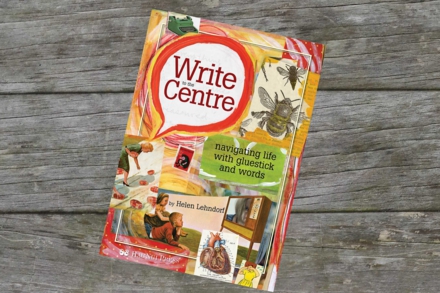
Write to the Centre, Helen Lehndorf, HauNui Press, 2016

Poet and teacher, Helen Lehndorf has kept journals for several decades. Journal keeping is essentially and at the outset an intimate and secret undertaking but then, at some point, some journals enter the public arena, raising all manner of questions about the ethics of what we share. Many writers publish journals within their lifetime; others appear posthumously. A journal is the place where you can remove the filters that work in varying degrees when you write poetry, fiction, memoir and so on.

Is a journal then writing with your greatest freedom?

What changes when you publish it?

I haven’t kept a journal since my twenties and can scarcely bear to encounter that feisty vulnerable young woman trying to live her way into the world. Altogether a writing basket that is too hard and fraught with curved balls and slippery slopes along with bursts of sweet-smelling roses.

The journals of Virginia Woolf have had a pivotal effect at different points in my life. I have always carried her mantra as a writer beholden to neither rule nor regulation: not for the sake of breaking but for the sake of creating.

Helen, however, with caution and daring, has returned to her journals to cut and paste a new version that shines bright. It is like a patchwork sample that functions as a patchwork memoir with its lift of colour and brave admissions. She is cutting open herself and we benefit. Cutting is a sharp word but a book like this represents self exposure – wounds, sutures and all. Reading it, it got me cutting into my own memories as points of recognition flashed.

Helen’s book, though, is also like a guide to journal writing because she stitches challenges for the budding writer into her patchwork. You meet the sticky questions and the practical suggestions that will set you on a writing path or help you refine and rattle the one you are already on.

There is a delicious vitality at work here – a sumptuous engagement with words and images and scraps of living that boost the writing craft. A journal, with its gorgeous hungry white space pulling you in, allows you to take risks not only in what you write but how you write. This is the private space, like a surrogate secret head that nobody gets to see, where you can make sense of things and then make nonsense of things. It might be therapy – the way every time you pick up a pen and start linking words you get a boost to  hemoglobin carrying oxygen to both brain and heart. It might be practice – like jamming with chords and scales, off-key and in harmony – in order to test what writing can do.

I love the way Write to the Centre takes you to the sensual pleasure of paper and pen held in hand. Strangely I was thinking about Poetry Box today and what I could do for children next year. I had the brain wave of gifting cool notebooks and pens to budding poets and doing a series of Notebook Challenges.

HauNui Press have excelled in their production values as this is a book clamouring to be picked up and read.

Haunui Press page

Sarah Laing blogs on Write to the Centre

proxy.jpg

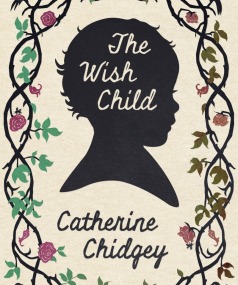
My review of The Wish Child in SST: I love this book with its subterranean mysteries and spiky issues.

1479851939319.jpg


The Wish Child
Catherine Chidgey
Victoria University Press, $30

Catherine Chidgey has a terrific writing pedigree. Her debut novel, In a Fishbone Church, won Best First Book at The New Zealand Book Awards along with the South-East Asia/South Pacific section of the Commonwealth Writer’s Prize. She has since received numerous honours and fellowships, and glowing accolades from home and abroad.

Chidgey’s latest and fourth novel, The Wish Child, was more than a decade in the making. Right from the first sentences I was caught up in the exquisite lure of the writing: musical, clear, lovingly tended. Nothing seems forced.


Full review here

Reviews of Tusiata Avia and Anne Kennedy in Geo-Lit (USA)

full review here

GEO-LIT 101: New Zealand Poets: Fale Aitu | Spirit House & The Darling North
by Tusiata Avia and Anne Kennedy

reviewed by Terese Svoboda

November 19, 2016


I first encountered Tusiata Avia’s work at the Summer Literary Seminars in St. Petersburg, Russia just after she published her first book, Wild Dogs Under My Skirt. Her mocking voice, sometimes full of mimicry, sometimes searingly sarcastic, often aims at neocolonialism and globalization. Samoan/Palagi, Avia’s mother is descended from the Europeans who first colonized New Zealand and her father, a stunt man, was among the first wave of Samoan immigrants to New Zealand in the 1950s. For seven years before Avia’s second book arrived—Bloodclot, about Nafanua, the Samoan goddess of war, who leaves the underworld to wander the earth as a half-caste girl—she traveled from Siberia to Sudan and read or performed her work in places like Moscow, Jerusalem and Vienna. Last year Avia was poet-in-residence with Simon Armitage at the International Poetry Studies Institute in Australia. This year Wild Dogs Under My Skin was adapted as a theater event for six women and received rave reviews. The recipient of a Fulbright-Creative New Zealand Pacific Writer’s Residency, the Ursula Bethel Writer in Residence at University of Canterbury, a residency at the Macmillan Brown Centre for Pacific Studies in Christchurch, she won the 2013 Janet Frame Literary Trust Award. Truly an international poet with an indigenous Pacifika frame of reference, in Fale Aitu | Spirit House, Avia writes with a visceral, political, spare and passionate authority of someone who has seen the world.

Te Papa Poetry Reading: Luci Tapahonos – the first Poet Laureate of the Navajo Nation

poet-luci-tile.jpg


A special opportunity to hear poems by Professor Luci Tapahonos, the first Poet Laureate of the Navajo Nation. The reading is followed by a Q&A session.


  • When Thu 24 Nov 2016, 1:00–2:00pm
  • Where
    Te Marae
  • Cost Free


Professor Luci Tapahonos is the inaugural Wai-te-ata Press Creator in Residence at Victoria University of Welllington.

Tapahonos was born in 1953 in Shiprock, New Mexico, where she grew up on a farm, immersed in the Navajo culture. She is the author of six books of poetry and three books for children. Tapahonos has received many awards, including the 2006 Lifetime Achievement award from the Native Writers Circle of the Americas.

This event is brought to you by the Museum of New Zealand Te Papa Tongarewa, in association with Wai-te-ata Press, Victoria University, and the Embassy of the United States of America.


Poetry critic Stephen Burt gives public masterclass in Wellington with Bill Manhire

image004.jpg

Contemporary poetry has plenty to offer new readers, and plenty more for those who already follow it. Yet its difficulty—and sheer variety—leaves many readers puzzled and overwhelmed. The critic, scholar and poet Stephen Burt sets out to help.

In Close Calls with Nonsense: How to Read New Poetry, Victoria University of Wellington’s International Institute of Modern Letters (IIML) presents a public masterclass on poetry. Steered by Victoria University Emeritus Professor Bill Manhire, Burt will guide the audience through a number of contemporary poems by writers from the United Kingdom, United States and New Zealand, illuminating their methods and unfolding their pleasures. This event aims to introduce both tentative and long-time poetry readers to the rewards of reading new poetry. Burt will also give a reading of their poems.

Burt is Professor of Poetry at Harvard University. Their influential reviews and books have made them one of the leading critics of their generation, and their enthusiasm for new writing has helped to establish the careers of younger poets, and helped audiences to appreciate their work.

Burt’s 1998 essay ‘The Elliptical Poets’ is widely credited with identifying a new school of poetry. The book that followed, Close Calls With Nonsense (2009), includes an essay on James K. Baxter among those on more recent poets.

In their new book, The Poem is You, Burt explores 60 American poems. Publisher’s Weekly wrote that: “Burt’s many ways of looking at a poem will inspire new students and accomplished poets, especially as many of his meditations circle the question of what poetry does or should do: making readers pay attention, ask questions, and experience new things.”

In 2012 a NY Times interview hailed Burt as ‘Poetry’s Cross-Dressing Kingmaker’. Burt identifies as transgender, and their poetry chapbook All-Season Stephanie (2015) explores coming of age as it might have happened for their female alter-ego. Burt prefers to use the gender-neutral pronoun ‘they’.

Close Calls With Nonsense is presented by the IIML in partnership with City Gallery Wellington. Admission is free, with all welcome. The gallery will be open prior to the event for visitors to view the exhibition Cindy Sherman (exhibition entry charges apply).

What: Close Calls With Nonsense, with Stephen Burt and Bill Manhire
When: 5.30–7pm, Monday 12 December
Where: City Gallery, Wellington

For more information contact Chris Price on chris.price@vuw.ac.nz.

Lynn Davidson’s terrific essay on Charlotte Wood’s The Natural Way of Things

Have reposted this to due to my slumber morning brain where I mixed up our poet Lynns.


full essay available here at Text Vol 20 number 2

On a single day in a wintery week I finished reading Charlotte Wood’s blazing novel The Natural Way of Things and went to the Degas exhibition at the National Gallery of Victoria. I went to the exhibition in the early afternoon instead of applying for a job – or another in the patchwork of jobs that keep a roof over my head. I needed my brain to be washed through with colour and dance and process. I wanted to remember about movement and change; things even more reliable than death and taxes.  Later that day, on a 1½-hour train journey from work, hungry for dinner, I finished Wood’s novel. I read how the main character, Verla, makes a hard and conscious decision to ‘jump off the bus’ that is taking a group of brutalized girls ‘home’ to the implied safety of a corporate, market-led world.

I teach creative writing, and now that tertiary teaching has been largely casualised, my working life is mixed: rich, stressful, and very often and very suddenly just not there. There is no continuity. So, four evenings a week I travel three hours to tutor kids for two hours at a modest hourly rate. This saves me from financial free-fall when the university semester ends (well, not quite, this job is also ‘casual’ but the holidays are shorter and the work more reliable). I give you this context because both the book and the exhibition are about work, about women’s work. So here’s another bit of context. I was a single mother who raised two children without financial support from their fathers. Any reserves of energy and time were spent on a very long battle around custody of my daughter. But those difficulties aren’t the defining things. Our little family had, and has, a good time. It’s just that I’m writing about women’s work and art, and suddenly this fact of single parenting seems important to say.
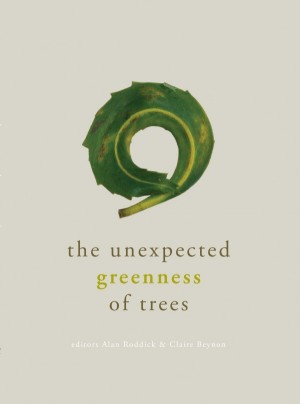
Poetry: The Unexpected Greenness of Trees

Unexpected-greeness-e1479015700984.jpg

From Caselberg Trust

Christmas is coming and what better way to celebrate it than by supporting us and purchasing a copy of our beautiful poetry book “the unexpected greenness of trees”. Celebrating 6 years of the Caselberg Trust International Poetry Prize, it includes both winning and highly commended entries, judges reports and a forward by organiser Alan Roddick. This is a wonderfully diverse collection of poetry.

If you would like a copy they are $27.00 each, with $5.00 postage within New Zealand. If you want to pick one up locally we can arrange it. Please PM me if you would like to purchase a copy, or go to our website shop.

Inaugural Poet Laureate of the Navajo Nation Luci Tapahonso in Auckland

Two free public events, 28-29 November

Writing Workshop:  Monday 28th, 12-2pm, University of Auckland, Arts 2,  Room 501, Pat Hannan Room.
Luci Tapahonso Reading: Tuesday 29th, 12-1pm, University of Auckland, Arts 1, Room 209.

All Welcome!
For more info, contact Selina Tusitala Marsh, s.marsh@auckland.ac.nz

Thanks to: University of Auckland School of Humanities, Academy of New Zealand Literature, in partnership with Wai-te-ata Press, Victoria University, and the Embassy of the United States of America.

Brief bio:

Luci Tapahonso (1953) was born in Shiprock, New Mexico, where she grew up on a farm within the Navajo culture. Tapahonso received her B.A. and M.A in 1980 and 1983 respectively from the University of New Mexico, where she was a Professor of English Literature and Language. Tapahonso has served on the Board of Directors at the Phoenix Indian Centre, was a member of the New Mexico Arts Commission Literature Panel, steering committee of Returning the Gift Writers Festival, Kansas Arts Commission Literature Panel, Phoenix Arts Commission, Telluride Institute Writers Forum Advisory Board, and commissioner of Kansas Arts Commission. She is a member of the Modern Language Association, Poets and Writers, Inc., Association of American Indian and Alaska Native Professors, and New Mexico Endowment for the Humanities. In 2013 she was named the inaugural poet laureate of the Navajo Nation. Tapahonso is the author of three children’s books and six books of poetry, including A Radiant Curve, which was awarded the Arizona Book Award for Poetry in 2009. Tapahonso’s work has appeared in many print and media productions in the U.S. and internationally. Her poems have been translated into German, Italian and French. She was featured in Rhino Records’ CDs, “In Their Own Voices: A Century of American Poetry” and “Poetry on Record: 98 American Poets Read Their Work” and in several PBS films. Tapahonso received the 2006 Lifetime Achievement award from the Native Writers Circle of the Americas and a Spirit of the Eagle Leadership Award for her key role in establishing the Indigenous Studies Graduate Studies Program at the University of Kansas. The Native Writers Circle of the Americas named Tapahonso the 1999 Storyteller of the Year. She has also received a Kansas Governor’s Art Award, and Distinguished Woman awards from the National Association of Women in Education and the Girl Scout Council of America. She was honoured as Grand Marshal for the Northern Navajo Fair Parade (1991, 1999) in her hometown of Shiprock, New Mexico.

Vaughan Rapatahana wins THE PROVERSE POETRY PRIZE

THE PROVERSE POETRY PRIZE
FOR SINGLE POEMS PREVIOUSLY UNPUBLISHED IN ENGLISH
ANNOUNCEMENT OF RESULTS
The inauguration of the international Proverse Poetry Prize (single poems)
was announced at The Proverse Publishing Parade in November 2015.
The first entries were received and judged atthe same time and by the same judging panel as the international Proverse Prize for unpublished book-length work submitted in English. Depending on the standard of the poems received in any year as entries for the international Proverse Poetry Prize (single Poems), cash prizes will be awarded to those judged first, second and up to four third winners. Selection to appear in an anthology of entries is also awarded by the judges as a prize.
The results of the inaugural (2016) competition were announced at the “Proverse Publishing Parade” held on Tuesday, 22 November, in Central Hong Kong. They are as follows:
First Prize: Vaughan Rapatahana, for ‘tin yan don’
Second Prize: Maria Elena Blanco, for ‘Temple of Chamundi, Mysore’
Third Prizes:
Joy Al-Sofi, for ‘White Water’;
Gili Haimovich, for ‘Pedestrians’ Cheer’;
Luisa Ternau, for ‘Spring in My Heart’.
Winners of a place in the Proverse Poetry Prize Anthology 2016
Aytül Akal · Joy Al-Sofi · Maria Elena Blanco ·Hei Feng · Gili Haimovich · Akin Jeje · Susan Lavender · Liv Lundberg · Marta Markoska ·Mathura (pen-name of Margus Lattik) · Glória Sofia Varela Monteiro · Keith Nunes ·Sam Powney · Vaughan Rapatahana · Angelo Rizzi · Hayley Solomon · Dong Sun ·Luisa Ternau · Carter Vance · Mavisel Yene
The Proverse Poetry Prize Anthology 2016
will be published and the cash prizes for first, second and
third place winners will be awarded at or immediately after the next Proverse event, which is expected to take place in or about April 2017.
The places of birth of the twenty writers whose work will be included in the anthology range from Scandinavia to the Far East, to the southern hemisphere; and
include Canada, Cap Verde, Cuba, Estonia, Italy, Macedonia, New Zealand, Norway, the People’s Republic of China, Turkey, the UK and the USA. Of those who live or presently live in a country other than their place of birth, one or more writers live in
Austria, Chile, Holland, Hong Kong, Israel, the Philippines, Spain and
the USA. For most of them, English is not their mother tongue. — A truly international group of talented and thoughtful people!
PRACTICAL DETAILS
Entries for the 2017 Proverse Poetry Prize will be received from 7 May 2017 until 14 July 2017.
Updated
information is available
from the free Proverse E-Newsletter, published every 4-6 weeks and also from
To be kept informed of the progress of the annual cycle of the
international Proverse Prizes, please send a request to join the mailing-list for the Proverse Hong Kong E-Newsletter, <info@proversepublishing.com>.