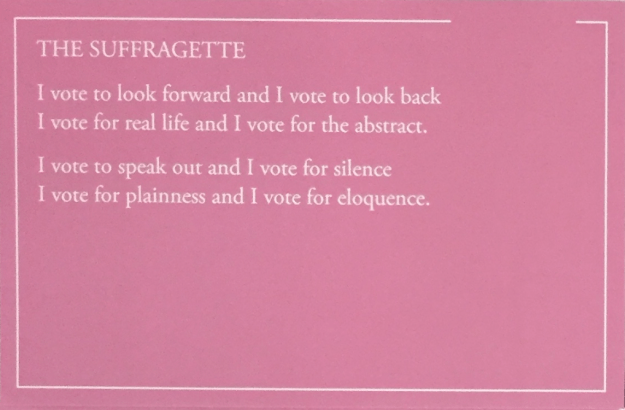
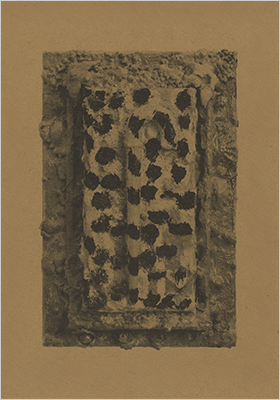
Paula Green, The Baker’s Thumbprint, Seraph Press, 2013
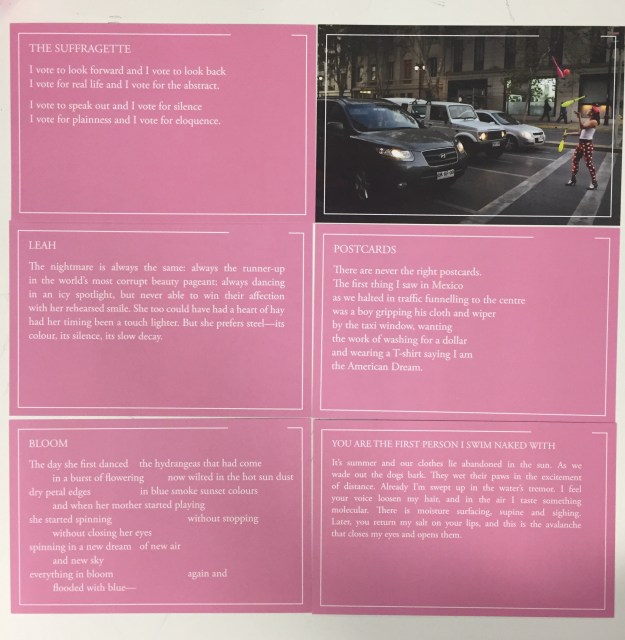
Post card from The Next Word exhibition at Alexander Turnbull Library

Paula Green, The Baker’s Thumbprint, Seraph Press, 2013
Post card from The Next Word exhibition at Alexander Turnbull Library

I know I find it hard to listen.
I read too much. I often need a drink.
It isn’t the world that makes us think,
it’s words that we can’t come up with.
Sure, I can work up fresh examples
and send them off to the committee.
But the poetry is in the bird. And in the pretty.
Bill Manhire, from ‘Polly’
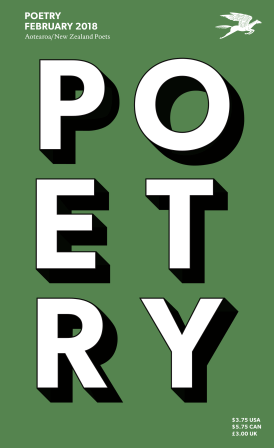
International poetry traffic is so often dependent upon fortuitous connections. The degree of familiarity with poetry from elsewhere is utterly paltry compared with the degree of familiarity I have with local writing. Yes I have studied American and British poetry but I am more aware of the luminous stars in these poetry constellations than the grassroot outings.
On the other hand, we are no longer dependent upon ocean voyages and the constraints of distance, but to what degree does our poetry travel (compared say with fiction)? Or our poetry conversations extend beyond our lapping tidelines.
I am acutely aware of my impoverished relations with contemporary Australian poetry. Perhaps Joan Fleming and Amy Brown could guest edit a local journal with an Australian focus? But then again our journals are often annual and offer vital but scant opportunities for local poets.
This is not the first time an overseas journal has showcased New Zealand poetry, but it is perhaps the example I am most excited by. The editors – Stephanie Burt (USA), Paul Millar (NZ) and Chris Price (NZ) – have worked hard to present a distinctive and diverse overview of our current poetry. The selected poets cross all manner of borders: age, geographical location, style, university affiliation, gender, ethnicity. This matters if we want to move beyond the legacy of white male predomination, urban bias and privileged poetry models. I cannot name a NZ journal that has achieved such movement.
Yes the five books Daisy Fried reviewed – from the fifteen 2017 publications she was sent – were all Victoria University Press. Her selection certainly does not reflect the contours of that year, and we can all stand on the sidelines and shout (or sing) about the books we loved, but I have no issue with reviews reflecting individual taste. However I do take issue that a short intro and five VUP books can respond to her opening question: ‘How to characterise a national poetry?’ Why would you even try! It is a personal take on five excellent books.
The rest of the journal is an altogether different joy. The effect of reading is symphonic in the different hues and chords. Every single poem lifts off the page and catches both ear and eye. Such freshness, such lightness, darkness, musicality, room to breathe, surprising arcs and links and undercurrents. I keep swaying between Anna Jackson’s glorious bee poem and the flickering titles that coalesce in Nina Powles’s offering or the infectious wit of James Brown, Ashleigh Young and Tim Upperton. I am pulled into the bite of Anahera Gildea, Chris Tse and then Tayi Tibble and stop in the tracks of reading. Travelling with Janet Charman and the revelatory suite makes me weep. Switching to Anne Kennedy and the momentum coils and overlaps and poetry transforms a starting point into elasticity on the line. Bill Manhire flips me over into the second stanza, and the lacework of reading – intricate yet full of holes – offers mystery, surprise, wit, curious things.
The time of breathing into clasped hands
hovering over a lighter to make a flame
not knowing
that an angry man threw his eyes into the night
the belly of his shattered father
weeping rain for separation of earth and sky
Jessie Puru from ‘Matariki’
The editors did not feel beholden to poetry that targets versions of New Zealand/ Aotearoa; our poetry might do this and then again it might not. The poems have the freedom to do and be anything whether they spring from spoken-word rhythms or talkiness or thinginess or anecdotal revelations or sumptuous Baroque-detail or story or slanted humour or cutting political edges.
The poets: Anna Jackson, Kate Camp, Michele Leggott, Therese Lloyd, Jessie Puru, Essa Ranapiri, Tayi Tibble, Robert Sullivan, Kerrin P. Sharpe, Hera Lindsay Bird, Dylan Horrocks, James Brown, Murray Edmond, Jenny Bornholdt, Anne Kennedy, Bill Manhire, Nina Powles, Janet Charman, Anahera Gildea, Bernadette Hall, Vincent O’Sullivan, Courtney Sina Meredith, C.K. Stead, Chris Tse, Tim Upperton, Gregory O’Brien and John Pule, Faith Wilson, Ashleigh Young, Albert Wendt, Steven Toussaint, Erik Kennedy
This issue is a cause for celebration – I absolutely love it – and my celebration will take the form of a subscription. New Zealand poetry has been well served – congratulations!
Poetry here
everything I never asked my grandmother
I can understand but I can’t speak
no one has played that piano since
New Zealand is so far away from here
let me translate for you the poem on the wall
Nina Powles from ‘Some titles for my childhood memoir’
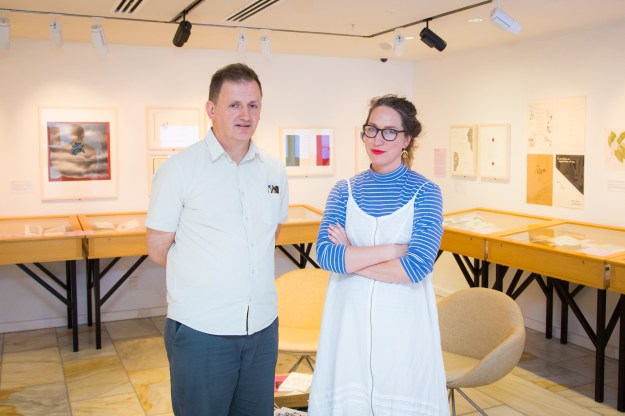
All photo credits: Imaging Services, Turnbull Library
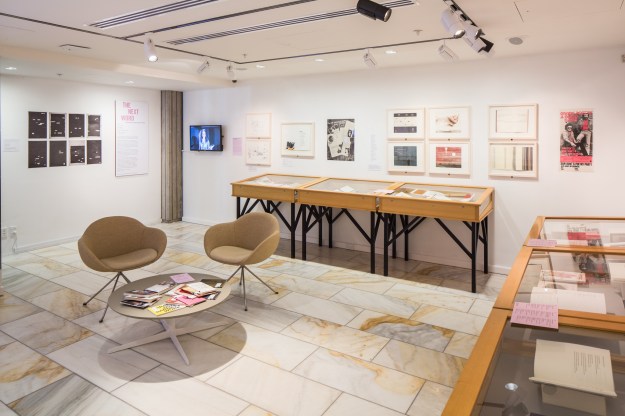
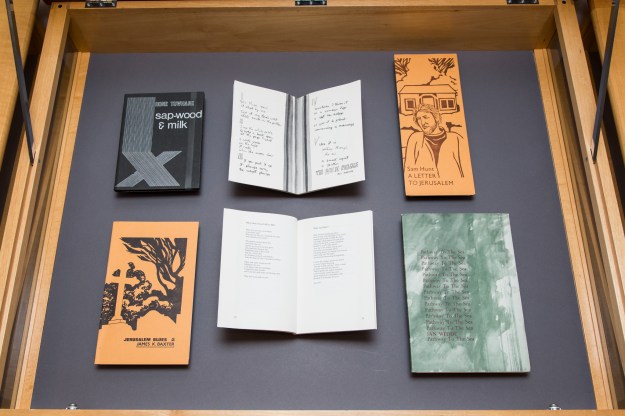
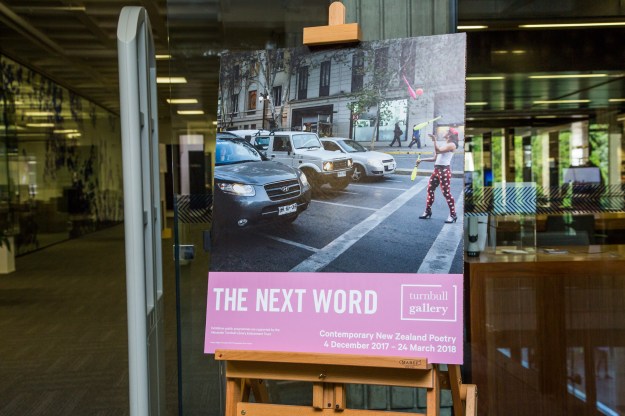
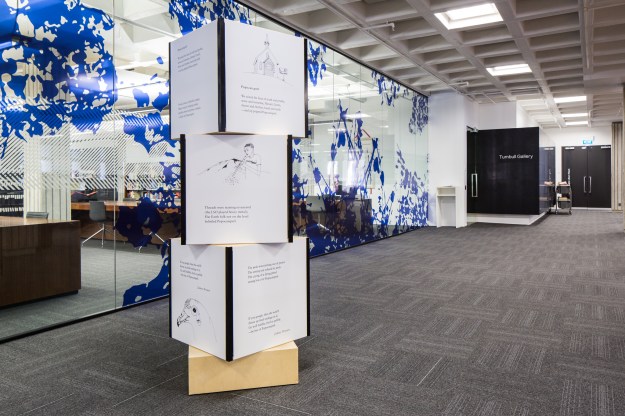
Hannah Metttner and Brendan O’Brien have curated an exhibition of contemporary poetry at the Alexander Turnbull Library. The key aim is to offer an overview of the past thirty years in various spots in the gallery. There is an art video put together by Hana Pera Aoake and and a carousel showcasing a James Brown poem on the ground floor.
The little reading room is a poetry treat.
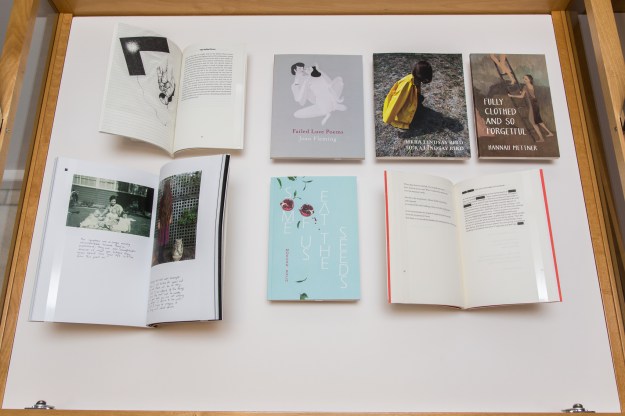
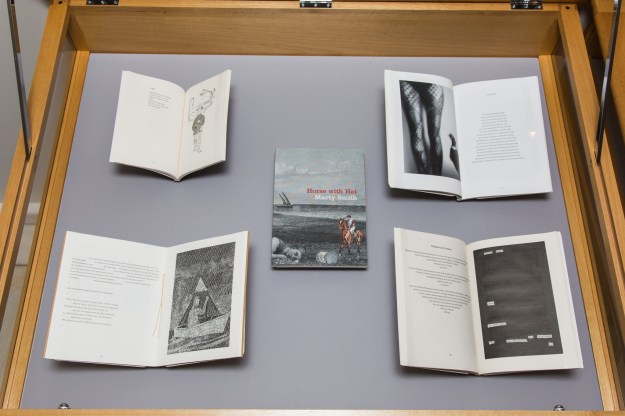
The curators have drawn from the poetry riches of the Alexander Turnbull Library to set up reading pathways between poems and poets, in the books on display, yet the eye is also drawn to poetry as visual object. You land upon a poem and alight upon an exquisite image. There are countless possibilities for travel: politics, aesthetics, music, confession, place, time, edge, rebellion, love.
Poetry is lovingly tended.
I am reminded that our poetry families are distinctive and diverse with many connections and necessary bridges. Nina Powles’s set of booklets, Luminescent, was a 2017 highlight for me; then again I am struck by the way so many of these books have glowed (Morgan Bach, Hinemoana Baker, Hera Lindsay Bird, Hannah Mettner, Chris Price, Joan Fleming, Bernadette Hall with Rachel O’Neill).
I love the way a book falls open at a poem in the glass case and we must stall on that to give a single poem devoted attention.
There are posters and prints and trips back in time (Sam Hunt, Ian Wedde, Hone Tuwhare, James k Baxter).
I went into the room after doing my final book checks at the library and it felt like an oasis, a place of retreat where the joy of poetry is the joy of stalling and savouring.
I highly recommend a visit before it closes on March 24th.
There is a lunchtime reading (12:15-1) on March 22nd with Chris Tse, Therese Lloyd, Anna Jackson, Gem Wilder and Sugar Magnolia Wilson. I am tempted to fly down!
There also some postcards on offer including my Suffragette poem.
One visit is not enough! I plan to loiter there before our Call Me Royal event next week.

|
Applications open today for 2018 Shanghai International Writers’ programme |
|
The successful writer will receive free accommodation in an inner-city apartment, a small stipend for living expenses and return economy class air travel. This opportunity is available through a partnership between the New Zealand China Friendship Society, the Michael King Writers’ Centre, the Shanghai Writers’ Association, and Shanghai People’s Association for Friendship with Foreign Countries. Writers are invited to take part in discussions and literary events and are required to write an article on a nominated theme before the residency starts. Apart from that obligation, the writers are able to work on a project of their choice. Up to seven writers from all over the world are in the programme each year. Many celebrated writers have taken part over the years. New Zealand applications close on Friday 30th March at 5pm and should be emailed to the Michael King Writers’ Centre. Application details can be found on the MKWC website: www.writerscentre.org.nz The selection will be managed by a panel appointed by the Michael King Writers’ Centre and the NZ China Friendship Society. For further information, please contact: Jan McEwen Michael King Writers’ Centre, PO Box 32-629, Devonport, Auckland 0744 Ph: (09) 445 8451 Mobile: 0274 811 567 |
 Exciting news – I was such a big fan of her short story collection so heartfelt congratulations Tracey Slaughter !
Australian Book Review is delighted to announce the shortlist for the 2018 Peter Porter Poetry Prize. First presented in 2005, the Porter Prize is one of the world’s leading prizes for a new poem. It is worth a total of $8,500.
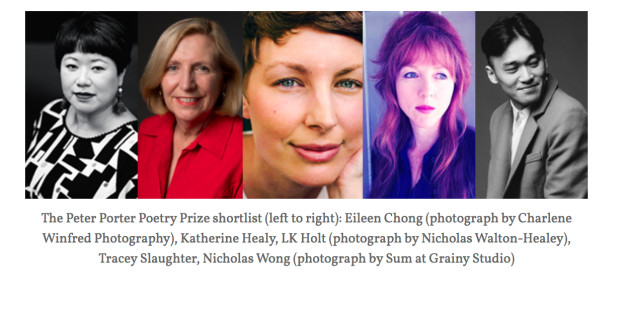
This year, our indefatigable judges – John Hawke (chair of the panel, and Poetry Editor of ABR), Jen Webb, and Bill Manhire – had almost 1,000 poems to assess before choosing the shortlist. It was our largest field to date. Five poems have been shortlisted, and the field reflects the international nature of this ABR competition. The shortlisted poets are Eileen Chong (Sydney), Katherine Healy (Adelaide), LK Holt (Melbourne), Tracey Slaughter (New Zealand), and Nicholas Wong (Hong Kong).
Full details here
Tracey Slaughter is a poet and short story writer from Cambridge, New Zealand. Her work has received numerous awards, including the international Bridport Prize (2014), shortlistings for the Manchester Prize in both Poetry (2014) and Fiction (2015), and two Katherine Mansfield Awards. Her latest work, the short story collection deleted scenes for lovers (Victoria University Press) was published to critical acclaim in 2016, and was longlisted for the Ockham NZ Book Awards. She is currently putting the finishing touches to a poetry collection entitled ‘conventional weapons’. She teaches at the University of Waikato, where she edits the literary journal Mayhem.
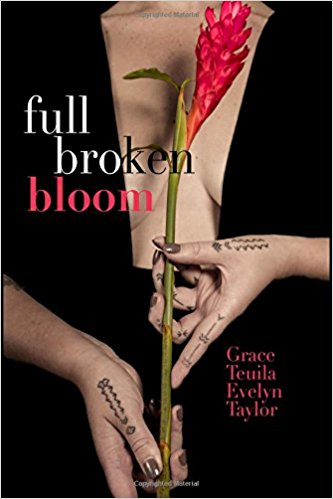
Full Broken Bloom, Grace Teuila Evelyn Taylor,Ala Press, 2017
I have unpacked my eyes
and have seen the sharks.
Licked their wounds
while they gnawed stars into my neck.
They exchanged no promises
only letters forming words.
from ‘sharks as lovers’
Grace Taylor, of Samoan, English and Japanese descent, has been writing poems since 14 and performing spoken-word poetry since 2008. Her second collection, Full Broken Bloom, is a gift for her son and a gift for herself. The son is between the seams of writing – the beloved to write from and towards.
The collection is a gift for self as it is steered by crucial turning points: by a decision not to be defined in relation to, or by men, and to nourish ways of being in the world. This is not a teaching handbook or poetry as lesson – on how to be a strong woman – but an acute and goose-bump reflection on scars and wounds (broken) and healing and self-recognition (bloom).
The collection marks the slowing down of the performance beat, an awareness of body, and ability to love self. Words scatter across the page, in various tonal hues, breathless and breath-taking because much is at stake here. Form is fractured and then drawn together in glorious little cohesions.
Poems navigate relations with men, gods and goddesses. As Grace travels through the complexity of living and loving, with the overriding current of ‘bloom’ and ‘broken’ – we enter a rich poetry space that is all heart and feeling and revelation. I am very moved by this book.
I drag stars over the bones of the ocean
a necessity to one
and a grave to another
both created myths of me.
from ‘moon pulls the tide‘
It is fortunate
my jawline is not strong
lessons have made it malleable
a supple bone
that can flex her teeth
or bend to the kiss.
That can hold her tongue
and not destroy a man,
but allow him to fall into his own reckoning
a monument
no longer.
from ‘water: desert‘


I have a swag of poetry books from 2017 that I have not yet got to – but over the next months I am flagging them through a suite of Summer Postcards.
How important is it that our poetry books get reviewed?
Poetry books get so little attention in the media these days. NZ Books still offers a handful of poetry reviews. Not sure about Takahe. There is Landfall-on-line steered by poet Emma Neale and the occasional attention in print media (Siobhan Harvey in The Herald). For members there is the quarterly NZ Poetry Society Review. There are a few reviews at The Spin Off or in The Listener. Poetry (USA) recently did a NZ cluster and you find some in the Poetry New Zealand Annual. Pantograph Punch has supported poetry, but until they can pay reviewers a decent amount, they are no longer doing reviews.
From The Pantograph Editors:
The Hardest Call
Because of these changes, we’ve made the difficult decision to hit pause on publishing reviews. It’s been one of the toughest decisions we’ve made.
During the existential crisis of 2017 (refer above) we came to the somewhat crushing realisation that in underpaying our writers (sometimes as low as $50 a review), we were contributing to a structure that systematically devalues those writers and privileges voices who can afford to write for low pay. In trying to support critical culture, we were simultaneously contributing to its decay.
It’s one of the hardest decisions because it feels so contradictory: we’re stopping doing one of the exact things we believe in the most.
We strongly believe in critical dialogue, and one of our areas of focus for 2018 is finding a way to bring reviewing back. We’re committed to creating a sustainable pathway for future critics, so one of the things we’ll be doing is creating a fund which will be dedicated to commissioning reviews. Our commitment is to be able to pay reviewers a minimum of $300 per review, and if you feel as strongly about this as we do, we invite you to donate to that fund here.
Pantograph Punch
You can read the full piece and contribute to the funding call here. They favour posting less (one a week) and building a climate of critical dialogue. This is exciting news. Bravo PP!
We are hungry for critical forums. Joan Fleming recently started a vital discussion on reviewing with her Facebook friends:
The Question of Claws
As I step into a new role at Cordite Poetry Review – that of NZ Commissioning Editor – I have been troubling my head about how critical to be of New Zealand poetry books that strike me as undeveloped. Particularly when I’ve admired a writer’s poems in journals, and am frustrated by their book; or am struck by the first few stunning poems of a collection, which then disappointingly levels out. It is tough to be honest in a poetry culture that is so intimately small. Often in our poetry reviewing, there is gentleness where I want rigour, and there is faint praise where I want productive disagreement. We are overly careful because we are reviewing friends and colleagues. We don’t want to offend. It is tricky. Do aesthetic battles push writers to better writing, or ought we to only support and encourage each other, trusting that we are all already pushing ourselves?
On the one hand, the stakes are so low: there is no money, there is no fame (except for the occasional meteoric anomaly!), and poetry is hardly a career. On the other hand, the stakes are painfully high. We are talking about our raw-edged souls on the page here. In a Facebook thread, I asked the question (provocatively worded, I suppose): “Should we be showing our claws more often?” For claws, read: Do I dare to write a thoughtful yet unfavourable review? I hope to think there is nothing in me that wants to tear down other writers because of agendas, grudges, or jealousies – but we all have our lenses and leanings, our sometimes-unconscious preferences and biases.
I, myself, am trying to thicken up my own dreadfully thin skin. A solution to this bind (and this is not an original thought – I think Ellie Catton suggested this way back) is to foster more trans-Tasman reviewing: New Zealand poets reviewing Australians, and Australians reviewing New Zealand books. At Cordite, we’re doing a little of this. We have lots of NZ books on our review list. I wonder if a New Zealand publication might take up this challenge? (Pantograph Punch: I’m looking at you!)
Joan Fleming
Last week I posted a piece on my Poetry-Shelf aims to see if it was worth keeping up the blog. Is it relevant? Does it matter that I do this? I want to post poems and do reviews, interviews, news, events, musings on local and international poetry. And at times involve other people (as I have done), but in the current drive for decent payment, how can this possibly work?
I strongly believe we need a go-to-place for NZ poetry that crosses borders of all kinds. I like the idea of a mix of reviews (long and short) so that a decent number of published books catch your attention. Ha! so there is a new James Brown out! Or Joan Fleming is reading from a new book at TimeOut (if only!).
To have a long review of your book where the reviewer has paid utmost attention is ideal. But to have no reviews and feel like your book has drifted into the ether is heartbreaking.
I posted this on Joan’s Facebook feed:
I review books on my blog that I love. My life is too short to absorb the toxic fallout of writing about books that I don’t love. I aim to celebrate and explore what a book of poetry might do.
I so often read negative reviews that incense me because the writers seems straitjacketed by a narrow reading and clear bias (I don’t like experimental poetry but here I am reviewing it kinda thing!). Or poets and reviewers who insist there are certain things a poem must do, and if it doesn’t, then it is a failure.
I am not afraid to put my claws out when an important book warrants it – as with the AUP literary omnibus. That attracted utter venom towards me on social media and affected me in all kinds of other ways – but I would still do it. My doctoral thesis (Italian) challenged the way the academy is driven to deconstruct and tear apart, rather than forge connections and produce different intellectual models of thought.
That said, in a world that continues to privilege the status of white men, we still need claws to unpick the ideas that shape us and that we so easily become immune to and accept.
Ellie Catton once used the word kindness in talking to students about writing. Our PM has used the word in view of governing a nation. I want to review out of kindness. That doesn’t mean I will say things I don’t mean when I talk about your poetry. It doesn’t mean I only say good things. It means I pay attention to the fact a human being has written it. It means I work hard to find path ways through a book that might present itself with shuttered windows on foreign pathways on a first reading.
Sometimes the bridge between the reader and a book fails. When I can’t cross that bridge, I am going to share a book where I can.
I believe we can have critical discussions and write out of state of kindness.
This may not be the majority point of view, but it is my view. I have almost finished a book that rescues some of the women from the past who have been misread, unread, muted and sidelined by men with their claws out because in their view the women were not writing poetry.
We, as women poets, have come a long way since our banishment to the shadows, but things are still not ideal. So I will continue to be part of the small (and it is SO very small) group of writers who go public on what they love (outside institutions, financial reward and so on, so beholden to nobody) because I want you (in the widest reach a pronoun is capable of) to fall in love with poetry and what a poem can do.
As I said at the Poetry & Essay conference in Wellington in December this is a matter of JOY!
This slim adorably-produced poetry journal is a treat to read and hold (my favourite looking NZ volume – who wouldn’t want a poem in here!). It is rich in voice and edges.
The editor:
Zarah Butcher-McGunnigle has brought min-a-rets to life after a three-year hiatus. She states the original aim was to champion ‘openness & intensity in poetry, with a focus on NZ, but also including a few international writers each time’. She has stuck to the same poetic impulse and she has included some Melbourne poets – she is currently based there.
The poets:
Hana Pera Aoake, Eden Bradfield, Owen Connors, Anna Crews, Craig Foltz, Rebecca Nash, Rachel O’Neill, Ursula Robinson Shaw
The poems:
I open upon Rachel’s title, ‘The sky is a wide, unmoving chest’, and then fall into a poem that is wide but full of movement, strange and supple. Three poems from Eden catch air in their double spacing, floating talk, the everyday adrift. Ursula’s ‘2 Poems’ also float on the page, but here the talk static intensifies. The fragments startle first as little pieces, and then achieve a stuttering breathfilled momentum.
Voice – the speaking surge and spurt – marks Owen’s ‘4 untitled fragments’. This is not disembodied writing but is flush with sex and disenchantment and living.
Highly recommend this. Check out the journal here
Submissions closed for the next issue at the end of January – so look forward to that!
 NZ Poetry Shelf