
Kuramārōtini
So the story goes
that trickster Kupe
cheated his friend
into diving overboard
to free the lines
then paddled rapidly away.
Some hoa.
Best to know that
legendary navigators take huge risks
and do not make the safest companions.
Ākuanei—
she asked herself—
what do I want—
home in Hawaiki
or the travelling years?
What does he want—
the waka my father gifted—
Matahourua and me?
Or maybe unhappiness
with the man she’d married
drove her to the coast.
It’s possible—
she was curious and Hoturapa wasn’t
the kind of man who liked a journey
so she chose Kupe.
Yet even an inveterate traveller
might become weary in a waka
on the open sea,
looking out for landfall.
Travelling direct to her destination—
as the future loomed towards her
she named that radiant land
on the horizon
Aotearoa.
Briar Wood from Rāwāhi (Anahera Press, 2017)
Briar Wood grew up in South Auckland, Aotearoa New Zealand. Until 2012, she lived and worked as a lecturer in Britain. Welcome Beltane (Palores Press, 2012) made poetic links between family histories and contemporary places. The most recent collection Rāwāhi (Anahera Press, 2017) is focused through a return to Northland places where her Te Hikutū ki Hokianga, Ngāpuhi Nui whakapapa resonates with ecological concerns.
With an awards fund of £5500 the Hippocrates Prize for Poetry and Medicine is one of the highest value poetry awards in the world for a single unpublished poem. The 2018 Hippocrates Prize is supported by medical charity the Fellowship of Postgraduate Medicine and the healthy heart charity the Cardiovascular Research Trust.
Entries for the 2018 Hippocrates prize were received from 37 countries and from 5 continents.
The judges – Carol Rumens from Bangor in North Wales, Peter Goldsworthy from Adelaide in Australia and Mark Doty from New York City have just agreed 4 shortlisted poets for the Health Professional Prize and a further 4 shortlisted poets for the Open Prize.
Competing for the Open Prize are Joanne Key from Crewe in England for Colony, Sarah Ann Leavesley from Droitwich in England for At breaking point, Aniqah Choudhri from Didsbury in England for Repeat Prescriptions and Raphael Dagold from Bishkek in Kyrgyzstan for Pharmacology.
In the running for the Health Professional Prize are Ashley Inez Garzaniti from Pontiac in the USA for Cranial Nerve Shadowbox, Stephen Harvey from Nashville in the USA for The Thirteenth Floor, Maria Ji from Onehunga in New Zealand for Thirteen Ways Of Looking At A Patient and Emma Storr from Leeds in England for Six Week Check.
Commendations were also agreed for entrants from Australia, Canada, New Zealand, England, Northern Ireland, Norway, Sweden and the USA – 19 in the Open category and 20 in the Health Professional Category
See more on the shortlisted and commended poets on the Hippocrates Poetry website.
The winners will be announced at the 2018 Hippocrates Awards ceremony at the Poetry Foundation in Chicago from 4pm on Friday 11th May when the Hippocrates Awards Anthology will be launched. There is also a reading at the Poetry Foundation by Mark Doty from 7pm on Thursday 10th May, an accompanying conference on poetry and medicine that morning and afternoon at Northwestern University in Chicago, and a workshop on poetry, medicine and art at Chicago Museum of Contemporary Art on Friday evening, 11th May.
Since it was launched in 2010, the Hippocrates Prize has attracted over 8000 entries from over 60 countries, from the Americas to Fiji and from Finland to Australasia.
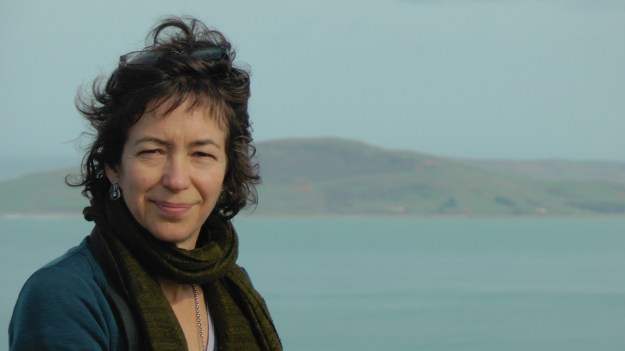
Congratulations on your short-list placing!
Thank you Paula!
What poetry books have you read in the past year?
And this is why you should always keep a reading diary … I’ll have to cobble this together from flawed memory and my messy bookcase. Here goes: most recently, a ‘slim volume’ in the Penguin Modern Poets Three series with work by Malika Booker, Sharon Olds and Warsan Shire. In contrast, also Sentenced to Life and Injury Time by Clive James. Before these: Undying by Michel Faber, the poetry collections on the Ockham longlist, Bill Manhire’s Some Things to Place in a Coffin and Tell Me My Name, Walking by a River of Light by John Gibb, South D Poet Lorikeet by Jenny Powell, Getting it Right by Alan Roddick, Alzheimer’s and a Spoon by Liz Breslin, Taking my Mother to the Opera by Diane Brown, Fracking & Hawk by Pat White, The Trials of Minnie Dean by Karen Zelas, Taking My Jacket for a Walk by Peter Olds, Wolf by Elizabeth Morton, Where the Fish Grow by Ish Doney, Family History by Johanna Emeney, Possibility of Flight by Heidi North-Bailey, Withstanding by Helen Jacobs, Conscious and Verbal and Learning Human by Les Murray, Poems New and Collected by Wistawa Szymborska, Poems 1962-2012 by Louise Glűck, and X by Vona Groarke.
I like keeping an anthology handy too, and in the past year have been dipping in and out of two: Andrew Motion’s Poetry by Heart (on the bedside table) and Carol Ann Duffy and Gillian Clarke’s The Map and the Clock (next to the sofa).
What other reading attracts you?
Oh boy, you should see the pile of books by my bed – too many to list here. I enjoy both fiction and non-fiction (especially essays, biographies or memoir). Fiction-wise, I’ve recently finished Fiona Farrell’s wonderful Decline and Fall on Savage Street and am now reading Where My Heart Used to Beat by Sebastian Faulks, and some short stories by William Trevor. I’ve recently reread Olive Kitteridge and My Name is Lucy Barton by Elizabeth Strout (I love all of Strout’s work!). Vincent O’Sullivan’s All This By Chance is standing by for Easter.
Nonfiction-wise, I’m itching to start neuroscientist Antonio Damasio’s The Strange Order of Things and Marilynne Robinson’s new essay collection What Are We Doing Here? (I love all of Robinson’s work!).
Name some key starting points (or themes) for your collection.
This is quite a hard question for me to answer because The Yield wasn’t pre-planned as The Yield – it grew very slowly into The Yield, and I only recognised that I had a coherent collection very late in the process. In hindsight I can see quite clearly that the poems are bound together by themes of give and take, love and loss, flexibility and rigidity, toil and harvest. This finally clicked into place for me after I wrote the poem called ‘The Yield’. It was only after that that I felt I had a potential collection in my hands. But most of the poems in the collection were written in the couple of years preceding that moment, and during those years I had no idea whether a book would eventuate. I had hope, but not much evidence!
Did anything surprise you as the poems come into being?
Every poem I write is a surprise to me. I can never get over that fact – it amazes me, always.
Find up to 5 individual words that pitch your book to a reader.
These words are from The Yield: haul, reach, lift, roam, home.
Which poem particularly falls into place for you?
Not sure if I can select one – they all have their place.
What matters most when you write a poem?
I like a tight synthesis of sound and sense.
What do you loathe in poetry?
Sometimes in an art gallery I stand in front of a painting I find ugly or too obvious or (conversely) too obscure – challenging, anyway, a canvas that maybe bores me or offends my personal sense of aesthetics, perhaps even my values. But still, alongside my ‘this is not one for my living room wall’ reaction, I can still respect the graft and the craft that went into making it – so long as it’s well made. Ditto, poetry. What I appreciate, above all else in poetry, is knowing that the poet has really leaned in. That’s a fundamentally appealing quality for me, even if I can’t adore the finished product. But if a poem is attentively made, and it somehow moves me – then I’m all in.
Where do you like to write poems?
In my study or on the kitchen table (though I scribble scraps in my notebook anywhere, any time).
What are strengths and lacks in our poetry scenes?
We seem to have a lively open mic scene all over the country, with a new fizz of high energy youthful involvement alongside the different – no less intense – energy of more experienced voices. I love the diversity of this, the way it opens our ears and hearts and minds to each other. It’s good, too, to see extroverted poets out there connecting with audiences, attracting media comment and generally flying the flag for poetry. But don’t forget the page! I’m a big believer that poetry is a craft learned by practice. Getting better at it is done through serving a kind of apprenticeship, learning the tools of your trade, and being supported, mentored and informed by more experienced practitioners, so for me it’s really great to see newer literary journals like Mimicry and Starling rising up (though I’m sad to see the end of JAAM).
Nothing matches the developmental push that comes from submitting work to a well-read editor to be scrutinised word by word. It’s healthy, too, to have enough possible publication places to be able to avoid only submitting work to your friends or classmates. So, I think we can do with still more editor-curated poetry publications to nourish the development of poetry in Aotearoa-New Zealand. Another lack: we need more platforms for the kind of stimulating and informative longform poetry review that critics like Lynley Edmeades, for example (in a recent Landfall Review Online), are so good at writing. But also, no one should be expected to write a seriously-considered review for nothing. Work is work, even if at the end of the day it’s not mud, but ink, on your hands. Funding, funding, funding: there’s a permanent problematic lack!
Have you seen a festival poetry session (anywhere) that has blown you off your seat (or had some other significant impact)?
I was at the 2010 Granada Poetry Festival in Nicaragua – truly a festival, a celebration of la poesia. The readings were held in parks and plazas. The Nicaraguan people have a passionate regard for poets and poetry – they turned out in their thousands to hear readings from their own and international poets. One particular event stands out for me. It was an evening reading, outside, warm and dark in the main town plaza, with about 2000 people in the audience – all ages, children, teenagers, parents, grandparents. Their listening was so attentive (most poems were voiced twice, once in the poet’s language and again in Spanish translation) – I watched face after face absolutely blossom in response to some lines. There was a feeling of us all being tapped into a high-voltage current – such power. Sheer zappery! And all from words.
If you could curate a dream poetry session at The Auckland Writers Festival which poets would be there and who would mc or chair it?
Sharon Olds, Louise Glück and Rita Dove in conversation with Carol Ann Duffy.
Still time to enter!
The 2018 National Flash Fiction Day competition runs through April 30.
Send your best 300-word story * Cash prizes
Three categories: Adult, Youth and a Te reo Māori Prize
‘Compressed forms tend to make poets of us all, because the fewer words you have to work with the more work you want each of those words to do. So yes, perhaps poets start with a bit of an advantage since they are already familiar with using distilled language and constrained form. But the ‘fiction’ aspect of flash demands a commitment to the idea of story: the passage of time, development of character, something that happens, a transformative moment. And whereas the basic building block of poetry is the line, in flash fiction it is usually the sentence. Which is a good place to suggest that Jac Jenkin’s ‘Settlement’ (2016) is a terrific example of the overlap between prose poetry and flash fiction. It’s carefully crafted with the line and the sentence in mind. It pops with concrete imagery (“one femur has a spiral crack; its neck has been gnawed by rodent teeth”), has rhythm, uses alliteration (“am I fleshed or flayed?”), and speaks as much from the white space between the words as from the words themselves.’ Sue Wootton
We are pleased to share insights from this year’s judges.
Sue Wootton and Tracey Slaughter (Adult judges)
Tim Jones and Patrick Pink (Youth judges)
Vaughan Rapatahana (Te reo Māori Prize judge)
NFFD 2018 in Auckland, Christchurch, Dunedin, Northland, Wellington
Meet the judges * share stories * celebrate the shortest form
Competition entry details here.
nationalflash.org
full article here – it is a must read!
‘When a poem uses both te reo Māori and English, references to te ao Māori are often glossed over by readers. Anahera Gildea explores why, and calls for more educated readers of Māori writing.
Ko Papatūānuku kei raro
Ko Ranginui kei runga
Ko ngā tāngata kei waenganui
Tīhei mauriora.
He uri ahau nō Ngāti Raukawa-ki-te-tonga
Ko Anahera Gildea tōku ingoa.
The feeling of my brain unfolding exponentially when I encounter an outstanding poem is the feeling of being woke. As a poet, and a hungry reader of poetry, I find there is nothing that quite matches that moment when comprehension meets complexity meets cognitive dissonance and the whole lot gallops into the glorious sublime – taking me for a ride on the splendid and wingéd uninmaginable.
You may have noticed I used the word ‘woke.’ It’s a borrowed term that’s now made its way into general usage, but originated in the African American vernacular. It gained popularity with the Black Lives Matter movement in 2013, but its modern usage is thought to have emerged from Erykah Badu’s 2008 song “Master Teacher” with the repeated refrain, “I stay woke.” Its meanings have evolved and transitioned as different communities have gotten hold of it, ranging from a decree to question the dominant paradigm, a statement of raised consciousness, a self-ascribed expression of socially conscious allyship, through to a trivialising piss-take.’
Anahera Gildea
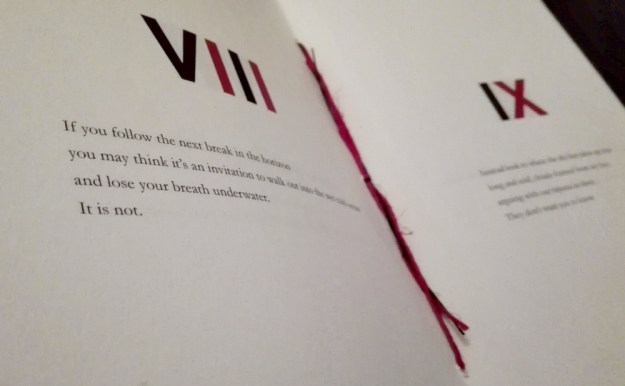
Called
(2015)
It is October in Dunedin.
Rhododendrons fan out flamenco skirts;
magnolias, magnanimous with their moon-cool glow,
light the path south so the sun stirs us early;
although the river, the creek boulders,
the city’s cinched green belt, still hold the cold
like an ice store’s packed down snow.
The days shiver with filaments
of ua kōwhai: soft rain that dampens paths,
shakes loose carpets of white stamens, yellow flowers
bruised and trodden like flimsy, foil cornets.
School holidays send out falling, silvery arcs
of children’s sky-flung laughter; our bodies drink it in
as if love’s parched ground sore needs this watering.
Yet the radio stays hunched in the kitchen corner,
hard grey clot in the light’s fine arteries
muttering its tense bulletins
and as if they sense this late spring still harbours
frost’s white wreck, or some despotic harm abroad
seeps too near, our sons more than anything want
their old games: secret codes, invisible ink, velvet cloaks;
hide ’n’ seek in public gardens’ clefts and coves—
and again, again, can we tell them again
the chapters of how they first appeared
in the long, blurred myths we are entangled in;
kingfisher-blue wells of their eyes a-gleam
as if they know how much all adults withhold.
They want us to go back deeper, to when
we both were star-spill, sea-flume, spirits,
only belatedly woman, man, climbing up from a shore
feathered in sand black and soft as ash,
driven by some gravid magnetism towards each other
in case we changed to birds, lizards, trees,
or back to sea-salt borne by wind;
an urge clear as hunger coursing the cells’ deep helix
to complete this alteration, half bury and re-germinate
the fleet molecules of self, so we could run our mortal hands
the right, kind way along the children’s plush skins,
learn, pulse on pulse, their true, human names.
Yes, we must go back and back; as if to swear
even to this dread epoch’s wild, original innocence.
©Emma Neale
Emma Neale received the inaugural NZSA/Janet Frame Memorial Award, the Kathleen Grattan Award for an unpublished poetry manuscript (The Truth Garden), the University of Otago Burns Fellowship and the NZSA/Beatson Fellowship. Her poetry has been shortlisted for the Sarah Broom Poetry Award and the Bridport Poetry Prize, and her poetry collection, Tender Machines, was long-listed in the 2016 Ockham New Zealand Book Awards. Her novel, Billy Bird, was short-listed for the Acorn Prize in the 2017 Ockham New Zealand Book Awards and long-listed for the International Dublin Literary Award. She is the current editor of Landfall.
Full post at Write into Life here
Interesting reading – especially when trouble turns up because a reader believes your fictions!
‘If you intend to be a poet and to publish your work, it’ll be a lot of fun but be prepared for three things:
That’s the deal!
I’m pretty sure that most people believe that any poem that seems to be about a real person is about a real person. And particularly if you write in a confessional style, people will naturally assume that you are confessing the truth about yourself.
This phenomenon is a mixed blessing. I’ve often been labelled a poet of the confessional school, and yes yes yes, I do want people to plunge into my poems and suspend disbelief. Sometimes my poems are true — in fact I hope they all seem that way, and that you can’t tell the difference.’
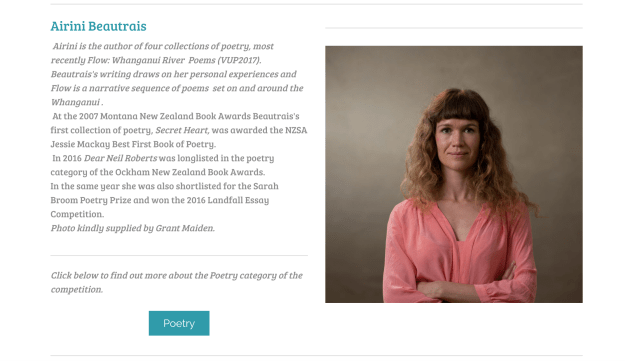
 NZ Poetry Shelf