Poetry Shelf interviews Manon Revuelta


image1.jpeg


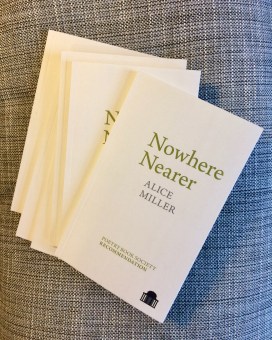
girl teeth Manon Revuelta, Hard Press, 2017


Manon Revuelta’s chapbook, girl teeth, prompted me to track her down and do an email interview over about a month. It was such a pleasurable conversation I didn’t want it to end. 


Paula: A number of years ago I picked your poem as the winner of the New Zealand Post Secondary School Poetry Competition. While I had to ponder for ages on the shortlist, your poem lifted above the rest and stuck to me with its glorious intricacies. It was a clear winner. In my speech on the night I borrowed from Ruth Padel and talked about the poem’s ‘chewiness’. All these years later I discover your chapbook, girl teeth, and am once again caught in the luminous effects of your writing. Can you build a little portrait of your writing life in the intervening years?

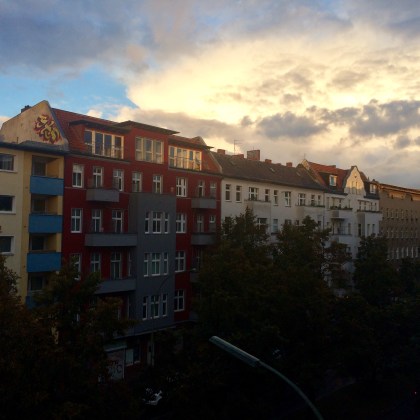
Manon: Thank you Paula, these are such kind words. It was such a lift to win that prize. That was all the way back in 2008, a whole ten years ago and my final year of high school. Since then my writing life has continued as more of an undertow, as I think it does for many. I studied English and Film in Auckland, where I took some wonderful courses with Lisa Samuels and learned all about language poetry. I also met Greg Kan, who became a good friend and as a fellow poetry nerd introduced me to some tremendous writers like Ariana Reines and Aase Berg. After university, I worked as a bookseller at Time Out Bookstore for a couple of years. That was such a blessing; I got to read a lot and organise poetry events and work amongst the most loving and inspiring group of people. I moved to London a few years ago, and when that became too exhausting and I fell in love, I moved to Berlin, which is where I am now.


IMG_9127.JPG


It’s taking a very long and occasionally dispiriting time to sort out what I’d like to do to earn a living, as I don’t think poetry is that. I’ve worked in countless subsidiary post-graduate roles from check-out girl to nanny to unpaid intern, but writing seems to be a really comforting constant in my life and all these things in their own ways have come to inform what I write and allow freedom for it. I have had poems published here and there, and last year my dear friends Anna and Owen published girl teeth, my first chapbook, with Hard Press. That was the accumulation of a couple of years of writing, and a very special project to me.


large_girljacket.jpg


Paula: I can really identify with this! London was a significant struggle and turning point for me as a writer (there were more to come though!). I find poetry fits so beautifully in the gaps of living – for me doing my degrees, being a parent, earning a living – yet it is so essential that poetry is larger than a gap. When I read your collection I am immediately struck by the right-hand pages that are uniformly devoid of text like little white pauses. It is akin to the silence after a piece of orchestral music that allows what you have heard to reverberate. The poems themselves are a satsifying mix of silences and sumptuous detail. What matters as you write a poem?

Manon: Oh London! It’s a beast. Everyone you meet seems so driven and everything is moving at such a fast pace and sometimes that means you’re inspired to seriously think about what you want and other times it means you just drown in everything you don’t want. I agree, it is important for poetry to be larger than a gap… but it’s sometimes barely possible for it to exist at all and I’m impressed that it makes its way in.

I suppose what matters to me as I write a poem is just that it at some point causes that indescribable glint? And that I can feel attuned to what that is for me, not someone else, and most importantly, enjoy the process. Poetry is my only opportunity to do strange things with language; to turn it into something elastic. For a long time I was really interested in formalism, and then swung the other way entirely, and I guess I have wanted to reconcile those… Italo Calvino quoted Paul Valery (I only seem to have read him in quotes) who said “one should be light like a bird, not like a feather”. I think that’s a great and far too quotable way of putting it, this velocity we respond to and attempt. That being said, I wouldn’t want to ever apply a rule to anything. I don’t know! You always find new ways of achieving things.


Paula: Italo Calvino is great – he is what inspired me to study Italian until there were no degrees left. I love his Six Memos for the Next Millennium. He has a lecture in there called ‘Lightness’. There is also quickness, visibility, multiplicity, and exactitude. He died before he wrote the sixth (consistency) or delivered any of them. I love your quote and fits your writing. There is both economy and agility on the line.


are poems shells

bone caves

gentle blunt beaks

lived in and left

for others to crawl into

Your first poem, ‘Shells’, is a delight. It reminded me of what Hinemoana Baker wrote on the back of her book, waha | mouth: ‘I’d like to think that opening this book to read is like standing at a mouth of a cave, or a river, or a grave, with a candle in your hand.’  Your tropes pull in multiple directions. On the one hand a poem might be held to the ear like a shell and who knows what you will hear. On the hand there is the mysterious dark space that Hinemoana draws upon. Do you ever relinquish music and mystery?


Manon: Yes that’s exactly where I got it from! The ‘Lightness’ lecture. I really love that book.

I liked posing a sort of question in that poem; I feel uncertain sometimes what poems are, what they are for. There is this intense inhabiting when writing and then they can later feel like such foreign things. Not in the sense of being possessed by some genius that flows through you; just that writing is a thing you are present in and then the written thing feels almost like a by-product. Mary Ruefle writes about a friend of hers whose poems, after time has elapsed, “look like handkerchiefs. Something I needed to blow my nose in, wipe some tears with, with a little lace at the edges and my initials in the corner. Poetry is so weird.”

That’s an incredible quote from Hinemoana; I love that image of a flame held up to illuminate a tiny part of something immense. I think the last two pieces in the chapbook, the more essayistic ones, were an effort to cast a wider light on things, to relinquish some mystery. Poems can be quite ciphered and condensed, which I love, but it felt good to write something more sprawling.


Paula:  What poets feel close to the way you write? Are there poets who write so differently to you but whom you admire?

Manon: That’s tricky… I can only look at what I like, rather than see if my work is close to it. I know some poets I’ve been reading lately are Carl Phillips, Anne Carson, Jean Valentine, Dorothea Lasky. I have always carried a torch for Paul Celan. There are of course poets who write differently to me but whom I admire greatly- perhaps someone like Alice Notley- her poems are very long! Also Hera Lindsay Bird. She makes me laugh and weep, a rare combination, at least in poetry.


Paula: I am moved by the arrival of a mother (your mother?) in the poems.


as a girl i watch my mother’s earlobe

pulled down by an earring and

the tiny hole

i can see right though and

i plant the sea there

from ‘girl teeth’


A mother (your mother?) reappears in the more essay-like longer poem, ‘Duchess’. There is such tenderness at work here, surprising in detail and revelation, it refreshes how we as adult daughters can write (our) mothers. Your Louise Bourgeois quote sets up the poem: ‘She shows herself at the very moment/ she thinks she is hiding’. Elizabeth Smither has a breathtaking poem, ‘My mother’s house’, in her latest book, Night Horses, where she watches her mother move through the house from her car.

What drew the mother, her various visibilities and invisibilities, into your poems?


Manon: Perhaps as a starting point, I have always been close with my mother; she is an incredible woman and occupies a huge space in my heart. I also think mother/daughter relationships are always to some degree complex and fraught and intense. There are so many invisible histories that make up what is visible in ourselves, our lives… I think in recent years I became fascinated by tiny signs of my mother’s influence coming through in me, and started to think about the deeper roots of my behaviour habits. A sort of psychoanalysis, I guess, which in turn led to an analysis of my mother, and of her mother, and of the ripple effects trauma can have in generations; the inheritance and expression and rectifying of those effects in and on the (particularly female) body. I was reading a lot of women who were interested in these ideas too; Louise Bourgeois’s journals, Chantal Akerman’s No Home Movie, Theresa Hak Kyung Cha. It’s also both disturbing and important to me to look at the way femininity is constructed, and so much of that for me has happened through my mother, and by her mother, and so on. It felt very right to try to map these things out in writing. Is motherhood/daughterhood something you’ve explored in your poetry?


Paula: Yes! My first book, Cookhouse was criticised for its domestic focus, as unworthy of poetic attention, but the key thread, the white-hot core, was maternal. My doctoral thesis explored the maternal as it asked whether it made a difference if the pen held by an Italian writer was a woman. I argue for hinges and connections and the power of ‘and’. I am also interested in the ripple effects that pass from mother to daughter (and daughter to mother) but that also pass through generations of women writing. We have inherited so many freedoms, as both daughters and writers, yet we still face a need to speak out on myriad issues that affect women detrimentally. I write about this in my new book within the context of reading New Zealand women’s poetry.


Breadcrumbs

What a rarity

to appear in my own map

like when

I’m watching my hands

wash each      other

or pulling a rope of my own hair

out of a drain

like its     pondweed

or even seeing the ham

chewed into something different

when I spit it into a napkin


Your poems are like lacework; they hook the personal along with intense visual detail and a delight in thought. Are you cautious about self revelation? About appearing in your own map? Do you have any taboo areas?


Manon: Well you can probably tell I like banality! I hope we are moving on from a hierarchy of ‘poetically worthy’ material … I know Lauris Edmond was really criticised for writing about domesticity and motherhood too, and she is still overlooked. I guess, I hope, all that fuels a fire and a revision. Your book sounds so wonderful.

I don’t feel cautious about self revelation, I think it would be strange to be writing poetry if that were the case. But it also isn’t really something I do on purpose. I think it feels very free and private, even though you kind of know it isn’t? It can be a bit unsettling (in a nice way) when that all gets turned inside out and you publish something, but I don’t think that makes me omit things. I love reading writing that is TMI, so that reassures me.


Paula:  Is there a poem in the collection where the stars aligned and it particularly resonates for you?

Manon: I think the essay about the week with my grandmother resonated a lot. We had only met once before and weren’t able to speak each other’s language, so it was quite an intense experience, observing the ways disconnected families connect, speaking in the absence of words, the shapes we make out of silence. There were all these things that seemed to slot in with it; going to see the ruins of a nearby castle, my reading surrounding rocks and this story of Pyrrha. It was initially conceived as a voiceover for a film – which is still in progress – so it feels like an ongoing project with things falling into place. It also resonates in the context of living in a place where I don’t speak the language properly.


Paula: I loved that poem. There is a poetic finesse that depends on fluidity, storytelling,

sharp images, slow-pitched discovery and absolute tenderness.


So: still alive. And so henceforth:

another cup of instant coffee and

toast, another bath, clothes put

on, cooked lunch, another long

afternoon nap while I go out

walking. We don’t know what to

do with each other: we sit together

at her table eating over-ripe

bananas, peeled grapes, carefully

de-pithed segments of mandarins.

The refrigerator humming. She

examines my hands in her hers.

from ‘Bec/Nid/ Vent/Rêves Beak/Nest/ Wind/Dreams’


PaulaWill Berlin slant your writing?

In my research for my book I have noticed New Zealand poets living overseas have such different relations with home in their writing (Katherine Mansfield, Fleur Adcock, Lola Ridge). Some are nostalgic and the poem becomes a surrogate home while others are almost patronising. I am intrigued to read what Hinemoana Baker produces in Berlin. Will poetry ever become a way of writing home?

Manon:  As far as writing from Berlin goes, I think I haven’t changed what I’m doing at all… at least as you say, the poem feels a surrogate home wherever one goes. The only thing is that living here allows a lot more time to write (cheaper living than NZ = working at a day job less, etc.) so I do feel I can have more of a balance.


Words open and close and open;

breathing through their sutures.

from ‘Bec/Nid/ Vent/Rêves Beak/Nest/ Wind/Dreams’


Your book is a joy to read Manon. Thank you so much for the conversation. I want everyone to race out and find a copy of the book. It is my chapbook of 2017.

Hard Press page


30768045_10156528480629645_896466916_o.jpg


At Jacket 2: Vaughan Rapatahana interviews Robert Sullivan and includes new poems

Vaughan Rapatahana’s interview here


What would you like to see more of in Aotearoa poetry from your point of view as a poet? In other words is there sufficient recognition, publishing scope, critical space given to poets who craft their work in ‘different’ ways?

I’d love to see new voices find publication from a wide range of styles and personal backgrounds so that we reflect our diverse community in terms of race, class, gender, sexuality, and beyond to be as inclusive as possible. Poets have never had greater access to media and to publishing than now, although our mainstream publishers no longer have deep pockets. It’s always a writer’s task to convince, or make curious, or satisfy, or entertain a readership, and it’s a lyric poet’s task to evoke the particulars of being and a sense of the flow state that created the feelings attached to being ‘somewhere’ at the time. A poem might be on the fridge next to a flat roster, or on the edge of a windswept cliff facing the ghosts of Kapiti Island. There are so many other kinds of poetry I wouldn’t know where to begin, except to encourage that too.


Paula: I am dead keen to see a new book of poetry – love the new ones.


Steve Braunias on Gloria Rawlinson at The Spin Off gave me goosebumps


Gloria Rawlinson. New Zealand Free Lance : Photographic prints and negatives. Ref: PAColl-6388-16. Alexander Turnbull Library


A postscript by Spinoff Review of Books literary editor, Steve Braunias

I asked Paula for her expert assessment of Gloria Rawlinson after I went to a book fair in Kumeu and picked up a copy of Rawlinson’s 1935 book The Perfume Vendor for 50 cents. It stated on the cover: “The famous young New Zealand poet.” Later, I read that her weekly mail averaged 300 letters from all over the world, including one from US President and fellow polio sufferer Franklin D Roosevelt. English poet Walter de la Mare corresponded with her and read her poetry aloud in London poetry circles; in New Zealand, her work was praised by author Jane Mander. Prime Minister Michael Joseph Savage made a surprise visit to see her one New Year’s Eve. She was a local celebrity. But when I stared at the book, I thought: who?

The cover featured a photo of a beautiful, dark-haired child who looked strangely modern, someone vibrant and alive. It said on the inside cover, “Gloria was born on an island in the Tonga group [Ha’apai] and came to New Zealand at the age of six, speaking other languages better than English. After a year at a small private school [the Melmerly Collegiate boarding school for girls, at 40 St George’s Bay Rd, in Parnell; pupils included aviatrix Jean Batten] she fell victim to a serious illness, and out of the years in hospital and lonely bedroom these verses have been penned.” The blurbology later referred to the author as “a velvet-eyed and thoughtful little occupant of a wheel-chair.”

The whole thing felt as frail and delicate as a pressed flower. Inside, the verses were brittle, full of loss and solitude and dead animals. There were fairies. There were angels. But there wasn’t anything remotely innocent or magical about them; they were more like little occupants of Hell, fragments of death, creepy shadows cast by moonlight in a graveyard. Her poem “Moths” sets it out in plain English.


For the complete postscript and my short piece on Gloria go here.

I love the attention Steve has paid to Gloria’s poetry. Having spent three years paying attention to women’s poetry that was blindsided by the canon in earlier decades and by academics using women’s poetry to support theory rather than open up poems (oh in that old fashioned sense of exploring what a poem does), the postscript gave me goosebumps.


Listen to Dora Malech read poems


from Princeton University Press blog:


In celebration of National Poetry Month, Dora Malech writes about the unique pleasure of using words to express yourself. Included below are recordings of her reading poems from her collection in the Princeton Series of Contemporary Poets series: Stet: Poems

While writing Stet, I was drawn to the work of other poets using idiosyncratic constraints to shape and speak to their materials, whether as an ongoing generative device like the anagrammatic poetry of Surrealist Unica Zürn, or as occasioned by the urgencies of a particular poem, in the case of Sylvia Plath. Stet foregrounds its formal elements, particularly the heuristic possibilities of, as Zürn called it, “the old dangerous fever of the anagram.”


Full article and recordings here

Poems from the Ockham NZ Book Award poetry shortlist: Tony Beyer’s ‘The Characters’


The Characters


a comfort to think

that in Nagano where


typewriters used to be made

they still remember


Bashō’s visit and the long-

expired snow he came to view


each snow flake

then as now unique each


fluent stroke of the brush

comprehensible but singular


© Tony Beyer from Anchor Stone


Tony Beyer was born and grew up in Auckland, and now lives in Taranaki after a career as a secondary school teacher in several parts of the North Island. His seventeen poetry titles include Jesus Hobo (Caveman Press, 1971), The Singing Ground (The Caxton Press, 1986), The Century (HeadworX, 1998), Electric Yachts (Puriri Press, 2003), Dream Boat: selected poems (HeadworX, 2007) and Anchor Stone (Cold Hub Press, 2017). His work has been widely published, anthologised and reviewed in New Zealand and elsewhere.

Poetry New Zealand Yearbook student poetry competition for National Poetry Day

Screen Shot 2018-04-16 at 2.19.38 PM.png

FIRST COMPETITION FOR 2018!
The warm up to Phantom Billstickers National Poetry Day 2018 begins:

Calling all young poets! Entries are now open in the Poetry New Zealand Yearbook student poetry competition.*

Send us your previously unpublished original poem and be in to win a copy of the 2018 Poetry New Zealand Yearbook for your school library and the 2017 edition for yourself.
Entries will be judged by Poetry New Zealand Yearbook editor Jack Ross. Entries close May 31 2018. The 12 winners will be announced on Phantom Billstickers National Poetry Day August 24 2018.

* Poems can be of any length, any style and about any subject
• When you enter please indicate whether you are a Year 11, Year 12, or year 13 student at a New Zealand school and please name your school
• Four prizes will be given in each of these three age-group categories
• Successful entrants must agree to their names and schools appearing in media and publicity for the award
• Please send your entry to editorial@masseypress.ac.nz.


Monday Poem: Emer Lyons’s ‘Poison’


Poison

After Gwendolyn Brooks and Terrance Hayes


We

take to the drink, wanting real

life to dampen our tongues, cool

the shame we are forced to we-

ar with guilt built in, all left

to us from him. Dul ar scoil

to learn the church’s rules, we

learn to shut mouths, minds, legs, lurk

close to home, wait until late

in life to start living. We

protest against them. We strike

them down like they do us, straight


*


up get wasted. Hear our we-

ary mothers try to sing

songs that might free us from sin –

A-ma-zee-ing Grace. They we-

ep for us their kin grown thin

from not giving a shite, gin

our favourite perfume. We

think to join in, feel that jazz

of life again but them June

days are made for drinking, we

mute their sound, they turn to die-

ts of rosaries, T.V. Soon


*


we join the rest like us, we-

lcomed we are into the real

darkness of the pub, scrubbed cool

colours paint the walls, but we

don’t look at the walls, eyes left

downcast for fear that some school

friend’s dad be holding up we-

t edges of a stool, lurk-

ing for some young wan’s time. Late-

r when we’ve spent our lot, we

goes to the likes a him, strike

up some talk with tits out straight


*


under their noses, they we-

ak them eejits, we be sing-

le, we’re not patrolling sin-

‘s committed by men, we

too busy with our own thin-

clad secrets, like how the gin

at home is watered down – we-

eks of stealing dat took! Jazz

oozes from the jukebox, June

fades outside the window, we

stay until it starts to die

down, already Sunday, soon


*


Mass be starting, not that we

bother anymore, found real

religion that don’t play cool –

you’ll get what you’re given. We

grab the bottle’s neck, get left

in pools of our own sick, school-

ed to mind ourselves – coz we-

‘ve no time for all dat! Lurk-

ing Larry’s hide in the late

afternoon shadows to we-

t us between the legs – strike

all ya want girls! We walk straight


*


passed them, they keep trying. We

see some other girls get sing-

led out, get pregnant, the sin

dripping off them, we look we-

ll away when they be thin-

king to look at us. Begin

to think about things that we-

‘ve been told, listen to jazz

music in our rooms with June

next door shouting how we owe

her some peace – go way and die!

Her gob shuts as the bassoon


*


roars the devil’s music. We

develop our taste buds, real-

ise wine looks classy, the cool

kids be drinking it, so we

form fists around the stems, cleft

our insides, move like a school

of fish, joined at the hip we

be, until we go home, lurk

through our own front doors, dilate-

d pupils in heads, too we-

ak to take d’mother’s strike

against our faces, lie straight


*


down on the carpet. There we

sleep dreamless until the sing-

ing birds move our bleary sin-

ged bodies to mirrors. We-

igh ourselves (no shoes on) – thin

girls don’t hang onto virgin-

ity long. The fella’s we-

dge between us, shove their jazz-

ing hands down our skirts, the June

heat hot against our heads we-

lded to the wall, us die-

hards wanting it over soon-


*


er rather than later, we

don’t look into their eyes, real-

ly we’d rather catch the cool

stares of other girls, a we-

llspring of poker faces left

to drown outside of the school

system, taught us nothing we

could use against filthy lurk-

ers, or what to do with late

periods, or how come we-

‘d never be wealthy – strike

us down for we have strayed straight


*


off the path most chosen. We

won’t marry any man, sing

children to sleep or get sin-

gled out for promotion. We

will live backed against walls, thin-

king of dreams we had of begin-

ning again, all along we

knew we’d never see a jazz

band, another clear blue June

sky or hear our mother’s we-

ak, how sweet the sound. We die

soon.


©Emer Lyons


Emer Lyons is an Irish writer who has had poetry and fiction published in journals such as TurbineLondon GripThe New Zealand Poetry Society AnthologySouthwordThe Spinoff and Queen Mob’s Tea House. She has appeared on shortlists for the Fish Poetry Competition, the Bridport Poetry Prize, the takahé short story competition, The Collinson’s short story prize and her chapbook Throwing Shapes was long-listed for the Munster Literature Fool For Poetry competition in 2017. Last year she was the recipient of the inaugural University of Otago City of Literature scholarship and is a creative/critical PhD candidate in contemporary queer poetry.


Poems from the Ockham NZ Book Award poetry shortlist: Elizabeth Smither’s ‘Tenderness’


Tenderness


                           I


A tree in the centre of a corn field

the corn rising in its ranks like braided hair

to meet the lowest branches


a tree that has replaced at least twenty

corn stalks with their divided leaves

twenty golden cobs sweetly surrendered


for this lovely grace: leaf sweep touching

leaf sweep, the whole field given by

this rising trunk, a focus


the pattern drawn from the edge of the field

to the centre where the tree

delivers a blessing.


II


The forest planation blankets hills.

Neat-ankled, swift-running

the dark pines descend


except on one little hilltop a ride

of grass begins and runs

with the trees which seem to bend


tenderly towards it: a bed from which

a child has risen and begun walking

the solicitousness of pine branches over grass.


©Elizabeth Smither from Night Horse


Elizabeth Smither’s most recent poetry collection, Night Horse, was published by Auckland University Press in 2017. She also writes novels and short stories.

IIML Creative Writing graduates showcased

Love this series. Heard the fist of these and they are excellent! – Paula


Creative Writing Master of Arts (MA) graduates from Victoria University of Wellington’s International Institute of Modern Letters (IIML) are having their work broadcast on Radio New Zealand (RNZ)’s ‘Nine to Noon’ programme, hosted by Kathryn Ryan.

This is the second year of the reading series, Page Numbers, and this time it has been extended to a fortnight to showcase more of the new writing, described by Kathryn Ryan as “remarkable for the diversity and quality”.

Page Numbers runs from April 9 – 20 and features fiction and memoir by Clare Moleta, Sudha Rao, Linda Collins, Kirsten Griffiths, Lynne Robertson, Sharon Lam, Mia Gaudin, Anthony Lapwood and Maria Samuela—all 2017 IIML Master of Arts graduates.

“We’re delighted to continue this collaboration with RNZ, and that listeners have a chance to connect with this brand new work from a range of voices,” says IIML Senior Lecturer Emily Perkins.

“Listeners will hear tales of intense loss and suppressed love, as well as hot and humorous dating instructions, and hope in unexpected places,” says Ms Perkins. “They’ll find townspeople struggling through climate catastrophe; a clone negotiating personal relationships on a mission to Mars; sex workers dealing with the streets of Wellington; and a family arriving in Dunedin from Pondicherry in 1968, among other pieces. There are stories everywhere, and these new writers have much to tell.”

Page Numbers airs on ‘Nine to Noon’ on RNZ at 10:45am weekdays.

Mon 9th April Safer by Clare Moleta
Tue 10th April Margam: And So (Pt 1) by Sudha Rao
Wed 11th April Margam: And So (Pt 2) by Sudha Rao
Thur 12th April Not Ash by Linda Collins
Fri 13th April Nostalgia by Kirsten Griffiths
Mon 16th April I Love You Darling Loretta by Lynne Robertson
Tues 17th April Potluck by Sharon Lam
Wed 18th April Volcano by Mia Gaudin
Thur 19th April Jack by Anthony Lapwood
Fri 20th April Love Rules for Island Boys by Maria Samuela

Following the initial broadcast, listeners can go online to listen to the series again.


.