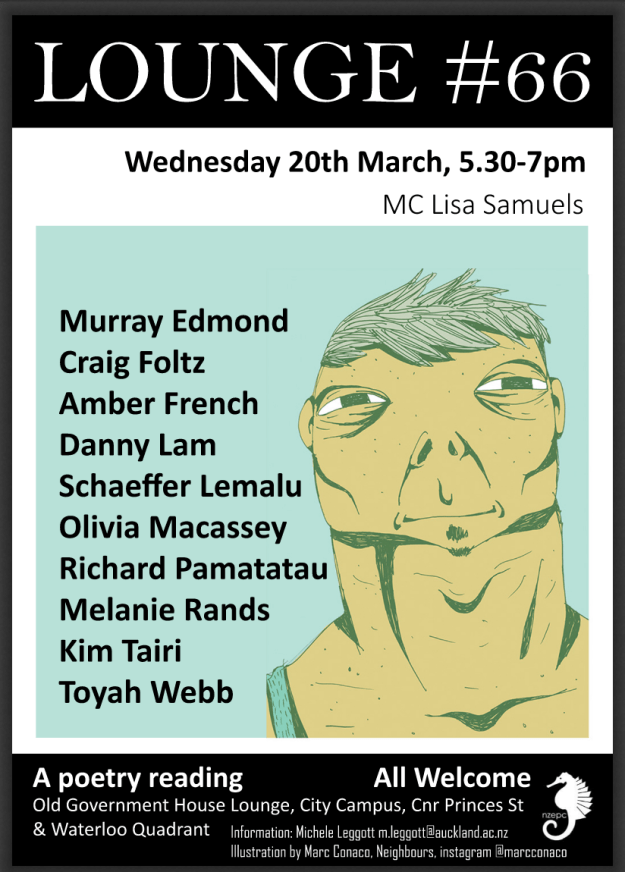
Poetry Shelf noticeboard: Anne Kennedy in conversation with Kiran Dass at Time Out

Author Talk: Anne Kennedy with Kiran Dass


Following on from our February Lit Reads Book Club, we are extremely pleased to welcome Anne Kennedy to join us to talk about her book, The Ice Shelf.

Anne Kennedy is an inventive poet and fiction writer. She has also developed scripts and worked as an editor. In her first two collections of poetry, the poems appear in sequence, and focus on female protagonists. While her first book explores domesticity and motherhood, the second is focused on a family of giants, particularly a young woman giant. Her poems and short stories have been included in anthologies and journals, and she has received several key awards. Her collection, The Darling North, won the poetry category at the 2013 New Zealand Post Book Awards.


Screen Shot 2019-03-11 at 3.36.57 PM.png


Poetry Shelf Monday Poem: essa may ranapiri


POMĪAHIAS & HIS LOVER’S GREAT ACCOMPLISHMENT

for Sam Duckor-Jones


Pomīahias is in the garage molding
little men into being
fingers slick with clay
drying gradual into dust
the light casts shadows to move
the roller door is open to let the air in

he admires all the fishing rods
his lover has hung from the wall

Maui has caught some big ones
in his day

he sits his tiny figure up on the shelf
with the others
he can see it on their faces
(scrunched fingernail detailing)
they all want something
he isn’t sure he’s allowed to give

could he be as brave to draw a world
over the horizon against its will?


©essa may ranapiri


essa may ranapiri (takatāpui; they/them/ theirs) is a poet from Kirikiriroa. They have words in Mayhem, Poetry NZ, Brief, Starling, THEM and POETRY Magazine, and their debut collection RANSACK will be published by Victoria University Press in 2019.


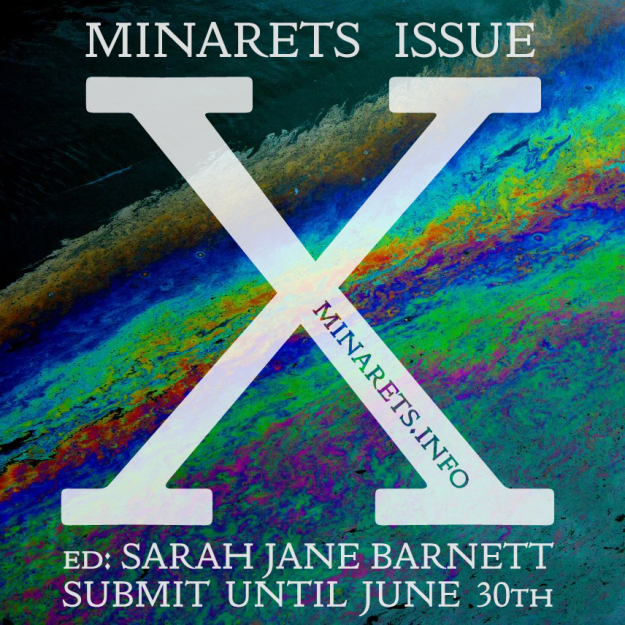
Poetry Shelf noticeboard: Starling calls for submissions

Full details here


STARLING CONSIDERS WORK FROM NEW ZEALAND WRITERS UNDER 25 YEARS OLD AT TIME OF SUBMISSION.

Material must not have been published elsewhere in any form previously, and please do not send us simultaneous submissions (material you have submitted or intend to submit to more than one journal/competition at the same time).

Starling is published twice yearly. Submissions may be made at any time to be considered for the next issue, so the best time to send your work is when you feel it is ready. The editors will read and respond to all submissions as soon as possible, and in any event no later than 8 weeks following the cut-off date for the issue. The editors are unable to enter into correspondence regarding individual submissions or selections.

Cut-off dates for work to be considered for each issue are 20 April for the July issue and 20 October for the January issue.

Poetry: send up to six poems.

Prose: Send up to two pieces, each up to a 5,000 word maximum. Prose may include short stories, creative non-fiction, personal essays or anything else you can surprise us with.


Friday Poetry Talk: Paula Green on International Women’s Day


It is International Women’s Day – the sun is barely up, I am slumbering and musing on life as a woman, on the the past century’s impact on women, on what there is to celebrate and what there is to mourn, thinking of the women poets before me who wrote against the mainstream tide, who spoke out in myriad poetic ways, on my glorious discoveries in writing a big book on women’s poetry, and thinking sideways with breaking heart to the fact women still endure family violence, sexual abuse, workplace bullying, hardship, multiple daily demands, denigration on the grounds of gender, devaluing of a mothering role, and then again I am slumbering and musing and thinking of the women who are reshaping how to lead a nation (Jacinda Ardern and her kindness model), to work in prisons (from poet Blanche Baughan decades ago to novelist Pip Adam), to work with women’s refuges (novelist Sue Orr and poet Angela Andrews)  and the women who are fiercely telling, and have told, their stories in the form of poetry in ways that shake our hearts and minds because they write and wrote from their own truths (Selina Tusitala Marsh, Tusiata Avia, Michele Leggott, Dinah Hawken, Emma Neale, Sarah Broom, Airini Beautrais, Nina Powles, Mary Stanley, Robin Hyde for a start), the women who write and wrote against the model poem and blast my head off (Alison Glenny, Elizabeth Welsh, Tayi Tibble, Joan Fleming, Amy Brown, Janet Frame, Courtney Sina Meredith, Anne Kennedy for a start), and then women who call me sister and are at the end of a phone and have my back and get me though one of the most challenging years of my life – I am slumbering and musing and thinking of you


Poetry Shelf audio spot: Elizabeth Welsh reads from ‘The mountain-daughter’s last years’


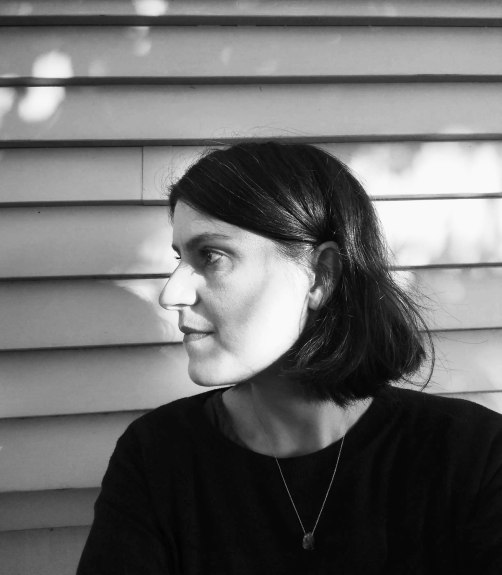
EW_Headshot_01.jpg


from ‘The mountain-daughter’s last years’ in Over There a Mountain, Hoopla Series, Mākaro Press, 2018


Elizabeth Welsh is an academic editor, poet and short fiction writer. Over There a Mountain, her debut poetry collection, was published by Mākaro Press in 2018 as part of the Hoopla series. Her poetry and short fiction have been published in journals and anthologies in both New Zealand and the United Kingdom. In 2012, she won the Auckland University Press – Divine Muses emerging poet prize. She lives in Titirangi with her husband and daughter.


Going to Wild Dogs Under My Skirt in Auckland

Screen Shot 2019-03-06 at 1.56.46 PM.png

Photo credit: Raymond Sagapolutele


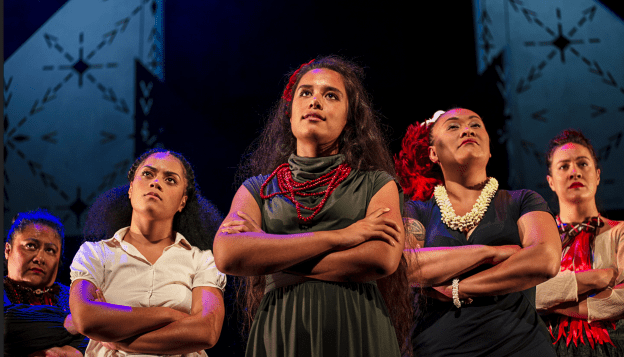
Last night I went to the opening night of Wild Dogs Under My Skirt (a Silo Theatre production) after a collision of a day (no not trucks and cars like last year) and was feeling like a wet dish rag. I had a lively poetry conversation with Vana Manasiadis as I ate tasty falafels in the Q theatre café before the show. And that felt good. My Wild Heart page proofs were back home looking amazing but demanding every inch of me for the next ten days. I was wondering where my next foot would go.

I am sitting in the dark when five women appear on stage; they sing and move and welcome us into the space and connections of their performance: the full cast (one is unable to make this season) is Vaimaila Urale Baker, Saane Green, Petmal Lam, Stacey Leilua, Joanna Mika-Toloa, Anapela Polata‘ivao. I have goosebumps. Their voices instil the room with exquisite musical harmony – a singing threshold that transports us into an hour or so of discomfort, pain, warmth and much laughter.


Tusiata Avia’s debut poetry collection, Wild Dogs Under My Skirt, has been with poetry fans since 2004; it has inspired young Pasifika women to tell their stories in poetry vessels, it has inspired poets to perform from the heart, to allow darkness and risk and edge. It has inspired us to write poetry that makes us laugh and weep at the same time. It is an Aotearoa classic and it is much loved.

The Wild Dog performance, steered by experienced and much lauded director and actor, Anapela Polata‘ivao, is simply astonishing. You are taken into the pages of a poetry book and then carried beyond, you are whisked on the lyrical echoes and gestures of a Tusiata performance and then born into the theatrical space and the wider world.


There are gods and wild dogs and the talk of sex and aunty’s advice on how to be a good Samoan girl and corned beef and chop suey and the tied up hair and the image of Jesus and always Jesus and the size of feet and a personalised alphabet and still Jesus and the palangi man and the dancing women and the dusky maidens and more sex and the women – always the women, how I love these women – poking fun and being deadly serious and strong.

We are taken into the raw and exposed and cutting and loved and beloved lives of Samoan women and for many in the audience it is a searing hit of recognition.

For me in white skin – my dish rag skin – it is a hit of pain – the influenza, the intolerable shootings, the shoddy treatment by NZ, the shame and but and and

it is also an utter uplift through the joy of words –it’s what Tusiata and the actors can do with words that transform your skin and heart and gut because they dance and they bite and they etch indelible stories on your legs and arms as though we are poetry tattooed.


Six chairs, props to a table or a church or a desiring man, become part of the poetry – for there is always poetry, intricate and moving. The live drums enlivening (Leki Jackson-Bourke), the soundtrack enlivening, the dancing bodies prompting rollercoaster emotions.

And the final piece, the fierce wild dog ending, the women growling teeth bared, cutting opening the issues that have shaped them, the love and the violence and place to call home, offering the bloodied past, the familiar home  ground, the love that binds, the love that binds women, the love that stands proud on this stage and sings out. Fiercely.


The song ‘Telesa’, composed and sung by Aivale Cole, is the end note – haunting, reverberating. Our bodies become echo chambers for every word, every gesture we have just absorbed. I feel like I have had a blood transfusion. I feel like I can take the next step.

Thank you, thank you, thank you.


You wan da Ode?

OK, I give you

Here my Ode to da life

Ia, da life is happy an perfek

Everybodys smile, everybodys laugh

Lot of food like Pisupo, Macdonal an Sapasui

Even da dog dey fat

You hear me, suga? Even da dog!


from ‘Ode to da life’

 Wild Dogs under My Skirt Victoria University Press, 2004


Screen Shot 2019-03-06 at 2.13.04 PM.png

Photo credit: Raymond Sagapolutele