Poetry Shelf Monday Poem: Sophia Wilson’s ‘Foreign’

Foreign

We have given ourselves to the westerly —

endured ferocious welcome: swoop, pound, shriek.

There are other inhabitants: thorny and bawdy, 

clutch-clambering boundary lines, colonising dreamscapes:

gorse, thistle, ragwort, broom — invasive as their forebears.

The bulk of mountain in whose lap we land —

magnificent, fresh rebellion, is both protector and destroyer;

the one on whom we depend for passage of rain-bellied clouds —

for we have settled in its rain shadow.

In summer we draw water painstakingly from

a small vein — scarce, essential source,

undergo marathons — days bent,

sweat-sewn, hack and pull, rip and carve

corridors through thorn’s terrain

to impregnate, in gorse’s womb, a softer future:

kōwhai, kānuka, shining karamū.

The toll — toil-weathered spine, skin, skeins,

old age peering through our cobwebbed pane.

Sophia Wilson

Sophia Wilson has writing recently published, or forthcoming in Love in the Time of COVID (A chronicle of a pandemic), NZ Poetry Society Anthology, Blackmail Press, Flash Frontier, Landfall, Australian Poetry Anthology, Mayhem, Intima, Poetry New Zealand, Not Very Quiet and elsewhere. She is based in Woodside, Otago.

The poem is from the sequence ‘Attempting to Land’, runner up in the 2020 Kathleen Grattan Prize for a Sequence of Poetry. Judge Siobhan Harvey’s words re the sequence: ‘Stunning. A beautifully crafted ode to migration.’

Poetry Shelf noticeboard: Anna Jackson reviews Bill Manhire’s Wow at ANZL

This is my equal favourite review of the year (along with Selina Tusitala Marsh’s review of Tusiata Avia’s The Savage Coloniser Book – also at ANZL site).

Here is a taster of Anna Jackson’s review of Wow (VUP:

This is a collection full of birds and full of song. It opens with a ballad telling the story of the huia – ‘I was the first of birds to sing / I sang to signal rain / the one I loved was singing / and singing once again’ – and the last section of the collection ends with a poem almost in prose, ‘After Surgery,’ in which ‘A small bird flies out of the body, out of a blink perhaps, / maybe out of the lungs.’ This poem is followed by the final poem in the collection, ‘Little Prayers (15 March 2019)’, which is both a lament and a hymn, and a kind of a round, in which the closing line is also the opening line. A boy and girl sing, terribly, in another poem in the collection; in another, a robot, who also has a narrative function, makes music from deep within its machinery (and poetry out of typos); omens and similes sing together in another.

Bill Manhire’s poetry is always lyrical whether the lyricism is the lyricism of the ballad or the lyricism he finds in ordinary, unmetred New Zealand conversational speech. Sometimes it seems as if you can hear a poem tuning up, finding its rhythm before it turns itself into song. As it lifts into song, it lifts, too, into meaning.

Full review here.

Poetry Shelf: 8 Poets pick favourite 2020 poetry reads

For end-of-year Poetry Shelf wraps, I have usually invited a swag of writers to pick books they have loved. It has always turned into a mammoth reading celebration, mostly of poetry, but with a little of everything else. This year I decided to invite a handful of poets, whose new books I have loved in 2020, to make a few poetry picks.

My review and interview output has been compromised this year. I still have perhaps 20 poetry books published in Aotearoa I have not yet reviewed, and I do hope to write about some of these over summer.

The 8 Poets

Among a number of other terrific poetry reads (Oscar Upperton’s New Transgender Blockbusters for example), here are eight books that struck me deep this year (with my review links). Tusiata Avia’s The Savager Coloniser (VUP) is the kind of book that tears you apart and you feel so utterly glad to have read it. Tusiata has put herself, her rage, experience, memories, loves, prayers, dreads into poems that face racism, terrorism, Covid, inequity, colonialism, being a mother and a daughter, being human. An extraordinary book. Rhian Gallagher’s Far-Flung (AUP) is a sumptuous arrival, a book of exquisite returns that slowly unfold across months. Her poetic craft includes the lyrical, the political, the personal and the contemplative in poems that reflect upon the land, experiences, relationships.

Rata Gordon‘s Second Person (VUP) is fresh, layered and utterly captivating. This is a book of birth, babies, death, the universe, love, motherhood, water, sky, wildlife. It is a book that celebrates the present tense, the way we can inhabit the now of being. Reading Mohamed Hassan’s new collection, National Anthem (Dead Bird Books), opens up what poetry can do. It widens your heart. It makes you feel. It makes you think. It gets you listening. It makes you think about things that matter. Humanity. Family. Soil. Ahh!

Bill Manhire‘s Wow (VUP) will haunt you – so many of these poems have joined my list of memorable poetry encounters. The baby in the title poem says ‘wow’ while the big brother says ‘also’. This new collection sparks both the ‘wow’ moments and the ‘also’ moments. Get lost in its glorious thickets and then find your way out to take stock of the ordinary (and out-of-the-ordinary) world about you. Like Rhian’s collection this is a book of poetry astonishments. Natalie Morrison‘s (VUP) debut collection Pins is exquisite, both melodious and tactile, economical and rich. There is both a quirkiness and a crafted musicality, resonant white space, yet perhaps a key link is that of narrative. I filled with joy as I read this book.

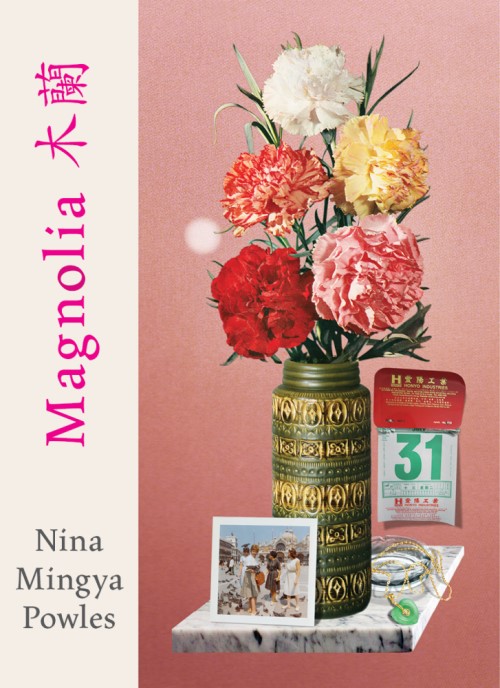
Jackson Nieuwland‘s I am a Human Being (Compound Press), so long in the making, lovingly crafted with the loving support of friends, with both doubt and with grace (think poise, fluency, adroitness), this book, in its lists and its expansions, moves beyond the need for a single self-defining word. I knew within a page or two, this book was a slow-speed read to savour with joy. Nina Powles‘s Magnolia (Seraph Press) is the book I am currently reading. I have long been a fan, from Girls of the Drift to the glorious Luminscent). Nina’s new book is so immensely satisfying as it navigates home and not-home, identity, history, myth, the lives of women – with characteristic nimbleness, heavenly phrasing, open-heart revelations, the senses on alert, the presence of food, multiple languages. Reading bliss!

The poets and their picks

Tusiata Avia

I’m a terrible book buyer. I tend to read books given to me (because I’m cheap like that) and the shopping-bag full of books my cousin, playwright, Victor Rodger, lends to me on the regular. He has the best taste! I should probably be a better reader of New Zealand poetry in particular, but I reckon I’ve got enough things to feel guilty about.

The top three on my list of books I have read this year and love:


Funkhaus by Hinemoana Baker (Victoria University Press)

I love the way Hinemoana uses language to make the ethereal and the mysterious. I’m happy to not immediately be able to pin down meaning; her language allows me to be suspended between what it does to me and what it means. Poems like the incantatory Aunties and Mother – which I think of as more ‘rooted’ – make me want to sit down immediately and write a poem. In fact that is exactly what I did do when I read this book. I love a book that makes me write.

An American Sunrise Joy Harjo (WW Norton & Co)

An American Sunrise is Joy Harjo’s most recent book of poetry. Joy is Poet Laureate of the United States. I love everything Joy Harjo has written. And I mean everything. She Had Some Horses (from an early book of the same name) is one of favourite poems of all time. Elise Paschen says of her, “ Joy Harjo is visionary and a truth sayer, and her expansive imagination sweeps time, interpolating history into the present.”. I would add to that she is taulaaitu, mouth-piece for the ancestors, gods and spirits. While you’re reading Joy Harjo’s poetry, read Crazy Brave, her wonderful autobiography. It will stay with you forever.

National Anthem by Mohamed Hassan (Dead Bird Books)

When I was looking for favourite lines in this book, I couldn’t decide, sooo many – like small poems in themselves. Mohamed speaks with an iron fist in a velvet glove. His poetry is elegant and beautiful and it tells the damn truth. Someone needs to tell the damn truth – about March 15, about being Muslim in New Zealand (and in the entire western world), about the things that happen so close to us – and inside us – that are easy (and more comfy) to avert our eyes from.

Some favourite lines from White Supremacy is a song we all know the words to but never sing out loud: ‘Please come and talk on our show tomorrow/ no don’t bring that up/…

‘This isn’t about race/ this is a time for mourning/ this is about us/ isn’t she amazing/ aren’t we all’…

‘Let us hold you and cry/ our grief into your hijabs’…

Who can tell these stories in this way but a good poet with fire in his fingers, love and pain in equal measure in his heart and feet on the battleground?

There are More Beautiful Things Than Beyonce Morgan Parker (Tin House)

I have to add, There are More Beautiful Things Than Beyonce by Morgan Parker to every list I write forever. In my opinion, no reader of poetry should miss this. If it doesn’t grab you by the shoulders, the heart, the brain, the belly – you might be dead. From the epigraph: ‘The president is black/ she black’ (Kendrick Lamar). Morgan Parker is PRESIDENT.

Rhian Gallagher

The Ecco Anthology of International Poetry (HarperCollins) edited by Ilya Kaminsky and Susan Harris features translations of 20th century poets from around the world and is packed with surprises.

Amidst all the books I have enjoyed during 2020, this is the one that I have read and re-read and continue to come back to. It was first published in 2010. I have been slow in coming to the book. 

When a poem in another language is re-cast into English, through the empathy and skill of a translator, it seems to unsettle notions of line, rhythmn, word choice and form. Translation pushes and tugs at the boundaries of the ‘rules’ and introduces a kind of strangeness. This strangeness I experience as an opening; a feeling of potential, slippery as a an eel to articulate. It recalibrates predetermined notions and generates excitement about what a poem can do or be.

There are well-known names here: Cavafy, Lorca, Akhmatova, Ritsos, Milosz, Symborska among others. There are also many poets previously unknown to me, and many whose work is either out of print or difficult to source. It’s a diverse, inspiring array of poetic voices and, as Kaminsky says in the introduction, puts us ‘in conversation with a global poetic tradition’.

Making discoveries is one of the great pleasures of anthologies. I now have a brand new ‘to read’ list.

Rata Gordon

When I’m reading something that inspires me, I have the urge to inhabit it somehow. I find that entering into a creative process by writing with, and around, another’s words helps me to absorb them into my internal landscape. This poem was created with snippets of some of the poetry I have met recently.

Soon, we are night sailing (Hunter, p. 71)

This is the closest you can get to it:

the void, the nothing,

the black lapping mouth of the sea

and the black arching back of the sky. (Hunter, p. 71)

One still maintains a little glimmer of hope

Deep down inside

A tiny light

About the size of a speck

Like a distant star

Is spotted on the horizon this dark night (Boochani, p. 26)

Swish swish swish

as quiet as a fish. (Ranger, p. 13)

… holy women

await you

on the shore –

long having practiced the art

of replacing hearts

with God

and song (Walker, p. 7)

Today you are tumbling towards her like the ocean.

… you are becoming nearer and nearer to someone other

than yourself. (Hawken, p. 49)

I have … imagined my life ending,

or simply evaporating,

by being subsumed into a tribe of blue people. (Nelson, p. 54)

The End We Start From by Megan Hunter (2017, Picador). (Not strictly poetry, but the book feels so much like a long poem to me). Line breaks added by me.

No Friend but the Mountains by Behrouz Boochani (2020, Picador).

‘Autumn Leaves’ by Laura Ranger. In A Treasury of NZ Poems for Children edited by Paula Green (2014, Random House).

Good Night, Willie Lee, I’ll See You in the Morning by Alice Walker (1975, The Women’s Press).

Small Stories of Devotion by Dinah Hawken (1991, Victoria University Press).

Bluets by Maggie Nelson (2009, Jonathan Cape). Line breaks added by me.

Mohamed Hassan

Tusiata Avia’s The Savage Coloniser Book (Victoria University Press)

A few weeks ago, I sat in the audience at a WORD Christchurch event and watched our former poet laureate Selina Tusitala Marsh read a poem from Tusiata Avia’s new collection. It began as such:

Hey James,

yeah, you

in the white wig

in that big Endeavour

sailing the blue, blue water

like a big arsehole

FUCK YOU, BITCH.

The hall fell pin silent and a heavy fog of discomfort descended from the ceiling, and I sat in the corner brimming with mischievous glee. It was a perfect moment, watching two of the country’s most celebrated poets jointly trash the country’s so-called ‘founder’ in the most spiteful way imaginable. The audience squirmed and squirmed and I grinned and grinned.

This is how Avia’s book begins, and it never lets up. As the title subtly implies with a hammer, Avia has things she wants to say, and doesn’t care how people feel about them. She delights in the spiteful, burrows down into the uncomfortable and the impolite and pulls out nuggets of painful truths with her bare hands. They are all truths that must be said bluntly and Avia drills them home.

In Massacre, Avia reflects on her youth fighting the demons of Christchurch, and asks us if our ‘this is not us’ mantra is divorced from the history carried in the land, haunted instead by the white spirits that rose to claim lives on March 15.

The book crescendos with How to be in a room full of white people, a dizzying poem that traps us in a single moment in time and forces us to witness and squirm and eventually, hopefully, understand what it is like to be the only brown body in a foreign space, in all its literal and metaphorical significance.

This has been my most cherished book this year, bringing together Tusiata Avia’s firecracker wit and her uncanny gift of conjuring worlds that feel vivid in their weight and poignancy. Abandoning all diplomacies, this is a blazing manifesto for honest and confrontational poetry that speaks with an urgency that puts me as a writer to shame, and demands more of me at once.

Bill Manhire

Jenny Lewis, Gilgamesh Retold, (Carcanet)

I love the way poetry re-visions the past, especially the deep past. I’m thinking of books like Matthew Francis’s reworking of the Welsh epic The Mabinogi and Alice Oswald’s Memorial, a book that abandons the main storyline of Homer’s Iliad in favour of narrating the death scenes of minor characters, accompanied by extra helpings of extended simile. I’d always known about the Epic of Gilgamesh, which I have owned for about 40 years in a yellow 1960 Penguin paperback. I’ve hardly opened it, but it’s one of some nine translations of the poem that Jenny Lewis has consulted for Gilgamesh Retold, published by Carcanet some four thousand years after the stories first circulated in oral form. (Her publisher at Carcanet, Michael Schmidt, has himself written a much admired book about the poem’s origins and afterlife)

Locally Dinah Hawken has worked with this ancient material, particularly writing about Inanna, the goddess of beauty and fertility and, sometimes, war, who is one of the major figures in the Gilgamesh cycle. Dinah’s feminist sense of the ancient stories accords with Jenny Lewis’s decision, as the blurb says, to relocate the poem “to its earlier oral roots in a Sumerian society where men and women were more equal, … [where] only women were allowed to brew beer and keep taverns, and women had their own language – emesal.”

It’s as well Inanna has such a significant role in Gilgamesh, for otherwise it would be a tale about male adventuring and bonding (Gilgamesh and Enkidu) and the discovery that even the greatest heroes can never overcome death. The world of Gilgamesh also gives us a Flood, which matches and in some ways outdoes the Old Testament. I love the way Jenny Lewis has retold these stories. She doesn’t try to pad them out to produce the sorts of coherence and pacing that contemporary readers and movie-goers find comfortable, while her phrasings have an unreductive clarity and a genuinely lyrical grace. The most audacious thing she has done, and has carried off brilliantly, is to use different metrical forms to reflect the ways in which a range of different custodians/retellers have voiced and revoiced the story. You admire the 21st-century poet’s craft even as she inducts you into a baffling and unfamiliar world. All stories, Gilgamesh Retold tells us, are made by many voices, and the best of them will journey on through many more.

And now I must try and summon up the courage to give the latest version of  Beowulf a go!

Natalie Morrison

Gregory Kan, Under Glass (Auckland University Press)

My esteemed colleague, with one hand around his Friday swill-bottle: ‘I hate poetry – no one cares, no one reads it anymore.’

Gregory Kan, with two suns infiltrating the long ride on the train
to Paekākāriki, illustrates otherwise: Under Glass lulls like a really disquieting guided meditation.

After lockdown, it is the first book I read outside our ‘bubble’.
Threading through an internal landscape, somehow a place I recognise.
‘Here, there are two suns. The ordinary sun is in the sky overhead. The other sun
is eating its way out from inside me.’

Certain lines, with their mystical insistence, snag on me and come back again from time to time:
‘Everything that surrounds the second sun is not part of it but nonetheless makes it what it is.’
It’s as if some lines have been dreaming of themselves. The book invites a gentle inspection. A glass bead held right up against the eye. A shutter flipped open over a stark interior.

‘When you move
a look moves inside me
and eats there what I eat.’

Once, a kind individual in Paekākāriki, their hands busy with a teapot, told me: ‘Those who know what it is,
fall on it like starving people.’

When Litcrawl comes, we make our way to some of the events. The room has sucked a crowd in.
Spells for 2020, with Rebecca Hawkes, Rata Gordon, Stacey Teague, Arihia Latham, Rachel McAlpine and Miriama Gemmell (thank you for your entrancing words), reminds me of how poetry is still something people might come in search of. Visitations of bees, airline heights and morphing walls. There is a sense of relief.

A crowd still feels like a dream, and a dream still feels like the sea. Gregory writes that ‘the sea is a house made of anything. The sea is a story about anything, told by someone unfit for storytelling. More than what I can know, and much more than I can understand.’

Under Glass, which wasn’t exactly written for this year (no ordinary year), seems to slot into it.

My steamed colleague, with one hand steadying the banister: ‘I guess Bob Dylan is okay, though.’

Note: I asked my colleague’s permission for quoting him. He said he was fine with it, as long as a mob of angry poets didn’t come knocking.

Jackson Nieuwland

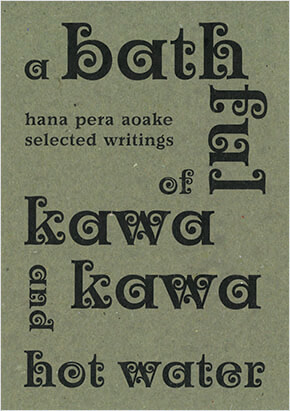
2020 was the year we finally got a book from Hana Pera Aoake (A bathful of kawakawa and hot water Compound Press). I had been waiting for this for so so long. It’s a taonga that I am incredibly grateful for. Ever since I first read Hana’s work they have been one of my favourite writers. Their writing is both clever and wise, of the moment and timeless, pop culture and fine art, Aotearoa and international.

This is a book I will be returning to over and over again for inspiration, electrification, nourishment, and comfort. I would recommend it to anyone.

Other poetry books I read and loved this year: Deaf Republic by Ilya Kaminsky, The Book of Frank by CA Conrad, hoki mai by Stacey Teague, Hello by Crispin Best, and Head Girl by Freya Daly Sadgrove.

Nina Mingya Powles

For most of this year I could only read things in fragments. I could only hold on to small parts of poems, essays, short stories in my head before they floated away. This year I sought out poetry by Indigenous writers. Of these two books, the first I read slowly, dipping in and out like testing the surface of cool water. The other I read hungrily all at once.

Postcolonial Love Poem by Natalie Diaz (Graywold Press) reminded me why I write poetry, at a time when writing anything at all felt impossible. Diaz’s heavy, melodic love poems circled around my head for days: “My lover comes to me like darkfall – long, / and through my open window.” But it is her writing about water and the body that changed me. In this book, water is always in motion, a current that passes through time, memory and history. Her long poem “The First Water of the Body” is a history of the Colorado River, a sacred river: “I mean river as a verb. A happening. It is moving with me right now.”

A bathful of kawakawa and hot water by Hana Pera Aoake (Compound Press) came to me when I needed it most, nourishing me and warming me. I haven’t yet held a copy of the book, but I read it on my laptop over two days and have carried parts of it around in my body ever since: “I speak broken French and Português into the broken yellow gloaming.” A bathful of kawakawa and hot water is a searing, lyrical work of poetry, memoir, and political and cultural commentary. Like the title suggests, it was a balm for me, but also a reminder of the ongoing fight for our collective dream of a better world, and most importantly, that “racism is not just a product of psychological malice, but a product of capitalism.”

Poetry Shelf noticeboard: takahē 100 launched

There was an important event in Ōtautahi Christchurch last night (Thurs 10th December) at the Sign of the Takahē. The 100th issue of takahē magazine was unveiled, with new poems from David Eggleton, Selina Tusitala Marsh, Bernadette Hall, James Norcliffe, Tony Beyer, Jess Fiebig, Oscar Upperton, John Allison to name a few.

Also the winners of 2020 Monica Taylor takahē poetry competition were announced, and the winner read at the launch.


Poetry editors Gail Ingram and Jeni Curtis read “Striking the pounamu”, a 100-line poem compiled of lines from 84 poets from Aotearoa, including Elizabeth Smither, Albert Wendt alongside new names.

Fiction writers include Paula Morris, Sue Wootton, Anthony Lapwood and others.

takahē website

Poetry Shelf noticeboard: Ursula Bethell Residency 2021

The writers in residence in the University of Canterbury’s (UC) College of Arts will be Vana Manasiadis and Behrouz Boochani. They will both join the University’s English department for the first half of the year.

Senior Lecturer Erin Harrington says the University’s English department is thrilled to be able to support these two talented writers. 

“They bring with them a wealth of expertise, and impressive track records that connect the local with the international. Their mutual interests in the power of language and translation, and the experiences of migrants and exiles, are an important way of demonstrating the power of the creative arts. We and our students will be lucky to have them join our community.”

Dr Harrington notes the writers have some fortuitous overlap and points of intersection in their work.

“Both writers have international connections and networks, are multilingual, and have an interest in translation – which includes making work available in other languages, and in language revitalisation. Both are interested in the stories of migrants and exiles. Both are interested in indigeneity, and Behrouz is interested particularly in the relationships of indigenous peoples globally.”

Ursula Bethell Writers in Residence 2021:

Vana Manasiadis is a New Zealand-Greek writer and translator whose collection of poetry The Grief Almanac was launched in May 2019.

For the residency, Vana’s project draws from her interest and expertise in translation, and the way that it can withhold, bridge, restrict and embody dialogue. This poetic work, like her other hybrid works, will combine poetry, prose, script and visual art, offering a series of dialogues and monologues from migrants, exiles, and voices from Aotearoa New Zealand.

Vana says: “As well as providing support and space, the residency will be contributing significantly to the community of the project – and I’m beyond thrilled”.

Award-winning author, Kurdish-Iranian journalist Behrouz Boochani, who spent six years detained by Australian authorities on Manus Island in Papua New Guinea, was granted refugee status in July 2020. He is currently a Senior Adjunct Research Fellow at the University of Canterbury’s Ngāi Tahu Research Centre.

Behrouz’s proposed work is a short story collection named Ghobad, which is the story of indigenous generations in pre-modern Kurdistan. The work will be written in the Kalhori dialect, which has been systematically suppressed and is in danger of dying out, and it will then be translated into English.

“The residency also offers precious space for exploring writing in a context outside of Manus Island,” he says.

The Ursula Bethell Residency in Creative Writing, jointly funded by the university’s College of Arts and Creative New Zealand, was established by the University of Canterbury in 1979 to provide support for New Zealand writers and foster New Zealand writing. The residency allows authors of proven merit in all areas of literary and creative activity an opportunity to work on an approved project within an academic environment.

Since the inception of the Writers Residency, UC has been home to dozens of fiction-writers, poets and dramatists, many of whom have made valuable contributions to the development of young writers studying at the university. Since 1979, UC has hosted many renowned writers, including Keri Hulme, Kevin Ireland, David Eggleton, Eleanor Catton, Owen Marshall, Fiona Farrell, Tusiata Avia, and Victor Rodger.

Poetry Shelf reading room: A. Davida Jane’s Every Dark Waning

A Davida Jane, Every Dark Waning, Platypus Press, England (2016, second edition 2018)

Platypus Press author page

I keep trying to build a dam—

I keep coming up rainstorm,

I keep coming up flood.


from ‘A Study in Restoration’

So many poetry books escape my attention, and then a trail of lucky connections leads me to a new discovery. I find the online journal The Starling is an excellent lead to poets under 25. This year I discovered the poetry of Ash Davida Jane and invited her to send me a Monday Poem (‘Undergrowth‘), write a response to a much-loved book (Paige Lewis’s excellent collection Space Struck), and muse on a poetry topic (‘An Ecopoetics of the Future’). I managed to get a copy of her debut collection, Every Dark Waning, from Unity Books in Te Whanganui-a-Tara where she works. And it filled me with poetry delight.

I especially loved the first section which pulls in the stars, sky, water, fire, breath and breathing. These poems are both dark edged and light fringed. Maybe the poet is talking from a deep secret place that misses things, that feels pain, is full of feeling. The dark core of the poems is deeply mysterious. It will grip your arm or your lungs and you will stay. There are many selves but the poet is the most present: ‘The poet is the most / honest part of me.’ (from ‘An Attempt at an Explanation’). The poet reappears in ‘Apollo 11’:

The stickiness of the

atmosphere traps in

all the words I never

wrote down, and the poet

in me flinches as I soar

into outer space.

And later, in ‘The House of Pindar’, in this book where poetry is both reticent and confessional:

You burn every house in me

but the poet’s—raze them to

the ground and salt them so

they’ll never grow back.

Only the writer remains.

Why do I love this book so much? Maybe its the sharp edges, the nightmares and the monsters, the things that are held in reserve, the way writing poetry and being a poet is so vital, life-saving perhaps, and the way my attention is directed to things I want to retain, to put away for a cloudy day. This from ‘Upturned’:

did you see me tuck the

view into the back of my

mind, putting it away for a

cloudy day when the stars

aren’t there and i can’t think

of a reason to get out of bed.

today, i needed a reason

to get out of bed, and

the moon was the only thing

that came close.

Ash Davida Jane is a poet and bookseller from Te Whanganui-a-Tara. She has a Master of Arts from the International Institute of Modern Letters. Some of her recent work can be found in Peach Mag, Turbine | Kapohau, Best New Zealand Poems, and Scum. How to Live with Mammals is due to be published by Victoria University Press in 2021.

Poetry Shelf review: Mohamed Hassan’s National anthem

Mohamed Hassan, National Anthem, Dead Bird Books, 2020

the songs I breathe to

make my bones ache

smell like mama’s deep

fried cauliflower after

a long day of diaspora


from ‘John Lennon’

Reading Mohamed Hassan’s new collection, National Anthem, opens up what poetry can do. It widens your heart. It makes you feel. It makes you think. It gets you listening. It makes you think about things that matter. Humanity. Family. Soil.

It makes me yearn for a world where divisions and privileges – based on where you come from, the colour of your skin and the language you speak – are no longer active.

The poetry I have loved this year keeps returning to the word listen. For all kinds of reasons. The way poetry is music, the way poems active with sound feed your ear. The way you listen to other voices that are distinctive and are vital chimes on human experience. I need to read these poems. I need to read these poems and listen to how tough it is when people insist on sideswiping those who do not match their own reflection and choices.

Mohamed’s poetry, amongst other things, is written in soil, with all its significance – this living breathing life-essential earth that nourishes us, hearts, minds, bodies, connections. Soil, as a living entity is so contested and so unbearably damaged by greed and ignorance. It defines where we stand and where we have stood. Mohamed writes from the soil he has left behind in Egypt and the soil of his second home Aotearoa, the soil of his travels. The ink soil in his pen carries the earth of dreams, experiences, kinship, wounds, connections. Islamophobia. Revelations. Griefs. Hopes.  

Such acutely personal poetry is sometimes filtered through other characters, whether speaking of racism, isolation, separation, love:

I am a poet who writes about my feelings but can’t open up without being in character

without the stage lights and the orange diffusers softening my face for the audience 

from ‘Grief is an expensive habit’


Family is important. The poems never lose sight or contact with family. The grandfather looms large in particular dreams and memories. He is in a humiliating childhood scene, but he is also loss:

you can’t discard a loss the way you can

a birthday gift or a broken laptop


it lives with you, sleeps in the spare room

by the laundry and occasionally eats your food


I want to never lose my parents

but find a loss like that in someone


a love that sears into your lungs and lingers

if you draw the short straw and not die first


from ‘Bury me’

The grandmother is equally important. She is there in ‘When they ask you / why you speak so well for an immigrant’, a poem that reacts to the title’s misguided and recurring compliment:

Tell them

about your grandmother’s laugh

how you never quite knew whether she was story or myth

the upper lip in your conviction

or a song ringing in your bones

drifting through the kitchen window

with the fried shrimp and newspaper voodoo dolls

National anthem layers experience, and that layered experience opens up what immigrants deal with. This cannot be underestimated. This daily erosion. The intricate and extraordinary poem, ‘Life at a distance’, recounts the family’s move to Aotearoa, the mother yearning for home, bearing the racial slurs, crying bathroom tears. Twenty years later, the educated, assimilated and beloved son moves to Istanbul with his ‘kiwiness’.

migration is its own form

of social isolation


an ocean that sits between you

and everyone else

This is the kind of poem that burrows in deep with its complications and toughness, its epiphanies and its wisdoms. I want to hear it read aloud. To hear it sung in the air. This is a son’s story and a mother’s story, a braid of realisations: ‘and you realise she is wading through / her own migration, that like her / you are a dandelion flung in the wind’. One verse depicts the mother still watching Egyptian soap operas and skyping the grandmother, but doing things and being in a country she no longer wants to leave. ‘Home’ has doubled back on itself.

she tells me she is praying

I come home


and home

by any other name


is a quarantine

you have chosen


is a field of dandelions

flung together


learning to grow

In fact this is the kind of book that burrows in deep with its deft and moving exposures. The poetry is the hand on the heart, the hand never leaving the heart, especially after the individual, societal and cultural wounds of the mosque attacks, and the cumulative stories of grief, disharmony, anxiety, uncertainty, ignorance. The personal stories. The politics. Mohamed names the terrorist because he wants the repeated name to fade to oblivion. Jacinda refuses to name the terrorist because she too wants to demolish any shard of power or presence. Mohamed is using words, shaping poems, intensely personal, searingly political, to dissipate a name and move towards healing a community.

we will say your name

until you you are no more real

until your oblivion fades


and we will have sprouted

daffodils from our pain

a forest from our eyes

a mountain

a most beautiful way to heal


and who will worship you then?


from ‘The Prime Minister will not say his name but I will’

The poems hold out hope, time and time again, in an image or a phrase, in a word such as daffodils, in the idea that arms opening wide will embrace the whole person not just what they choose, in the dissatisfaction of arm’s length, in ‘the five stages of peace’. I keep wanting to share a poem with you, to sit down with you in café and say read this, feel this, ponder this, be changed, open your arms wide and greet the whole person, the poem. I am a privileged white woman with a warm home and food in the fridge, a loving family, a long history of publication, a tertiary education, a history of travel, a place to call home. But I need to listen harder. When will these global hierarchies and inequities end?

Mohamed brings us back to a person holding a pen fuelled with ink and soil and memory and challenge. He puts himself on show (albeit in character at times) no matter the pain. Here he is at the airport, at customs where some people sail through invisibly, while some people are interrogated because of name or colour. It is the poem’s ending that gets me, that keeps reminding me – in this catastrophic year of pandemic, overstretched frontline staff, hate crimes, wars, conspiracy theories, poverty, insufferable greed, and sexual and domestic abuse – every name and statistic is a real person. A real person with story.

This ending. This poem. Buy the book and read the poem:

listen

let’s take things slow

I want this, I do

but let’s build a relationship

on more than just racial profiling


I want you to know the real me


can’t you that I

well …


I’m just a boy

standing in front of a boy

asking him


to let me in


from ‘Customs: a love story’

The title poem, ‘National anthem’ is also a beauty, a poem of pledges that include good coffee, voices in unison, the grandmother’s laugh, zero flags and borders. The final stanza, the final lines in the collection are the kind of lines that will keep you going over corrugated roads and spiky living, that will keep you going whatever your story, whatever your challenges, and pain and love and prospects of death or hope. I am so hoping that Mohamed gets to read at Aotearoa festivals next year, not just five minutes in a poetry line up, but in a whole session where we can hear his words sing and shine and cut and hold out arms and offer such exquisite and necessary hope.

to those who would plot to sow me love

to bake me warmth and never break my art

to rob my eyes for safe keeping

to drown me in unconditional trust


to build with me

a new sun


I pledge myself


to you


from ‘National anthem’

Mohamed Hassan is an award-winning journalist and writer who has lived in Egypt, Aotearoa and Turkey. Hewas the winner of the 2015 NZ National Poetry Slam, a TEDx fellow and recipient of the Gold Trophy at the 2017 New York Radio Awards. His poetry has been watched and shared widely online and taught in schools internationally.

Dead Bird Books page

Poetry Shelf Monday poem: Ruby Solly’s ‘Pōria’


Pōria


A Judas bird

is the first bird you trap.

Not for its meat,

or feathers,

but for its song.


The Judas bird

has its foot folded by its captor.

pushed gently through the pōria;

a ring that it can put on

but not take off.

This is it kare,

you are wearing this pounamu

for life.


The Judas bird

cannot help but sing.

Sings for her supper,

sings for her sleep,

sings for her sisters,

sings for you,

sings for me.


The Judas bird

sees its sisters fly closer

and closer,

as they fly from the mind’s eye into her vision.

The singing growing more frantic,

higher and lower,

bigger and quicker.

Then the pull of the snare, the thud of the rock.

The tiny sound of air passing through vocal chords

not meaning to sound

but doing so against their best efforts.

An accordion pushed closed with none of its keys down.

We call it a last breath, but really it should be called

a last exhale.


The Judas bird watches

its sisters be eaten

and she tries not to sing.

Every bird sound is singing,

a scream is singing, a warning is singing.

She holds it in, the notes rising to her throat like a vapour.

Her mouth full of pitches,

that can’t help but spill from the corners of her beak.


The Judas bird wishes

the dawn would not break.

But every morning she finds herself singing.

Small arrows of notes pierce the air

as she releases more and more from her quiver.

Even a cry is song.


The Judas bird

sings true and long.

But she has learnt to lessen herself,

to bow to not just the loftiest mountain,

but the smallest grain of sand,

to the dirt under the fingernails

of those who tether her.

She is teaching herself

to song without resonation.

With no harmonics,

no above or below.

Like dropping a stone into a pond

and having it sink with no ripples.

No evidence of its movements

to tell the land

that it is gone.


Ruby Solly


Ruby Solly is a Kai Tahu musician, taonga puoro practitioner, music therapist and writer living in Wellington. She has played with artists such as Yo-Yo Ma, Whirimako Black, Trinity Roots, and The New Zealand String Quartet as both a cellist, and a player of traditional Māori instruments (ngā taonga puoro). She has also worked as a session musician and recording artist with groups such as So Laid Back Country China, Jhan Lindsay, Strowlini Orchestra, and many other artists around Wellington. In 2019 she completed a Masters thesis in the therapeutic potential of taonga puoro in mental health based music therapy, while working in schools, hospitals, prisons and with private clients from iwi around the motu. She also has experience as a composer with pieces commissioned by the New Zealand School of Music in association with SOUNZ, as well as in film work in association with Someday Stories, and the Goethe Institute with Wellington Film Society.

Ruby is also a published poet and has been published in journals associated with many of New Zealand’s universities such as LandfallSportTurbine, and Mayhem. She has also exhibited poetry in Antarctica, America and New Zealand, and was a runner up for the 2019 Caselberg Trust International Poetry Prize. Additionally, Ruby is a script writer and has found success with her film Super Special which shares knowledge about Māori views of menstruation through narrative. The film aired on Māori TV, and will also air at the LA Women Film Fest.

In 2020, Ruby released her debut album Pōneke and in early 2021 her first book Toku Papa is being released by Victoria University Press.

Poetry Shelf review: Rhian Gallagher’s Far-Flung

Rhian Gallagher,Far-Flung Auckland University Press, 2020

Into the Blue Light

for Kate Vercoe


I’m walking above myself in the blue light

indecently blue above the bay with its walk-on-water skin

here is the Kilmog slumping seaward

and the men in their high-vis vests

pouring tar and metal on gaping wounds

the last repair broke free; the highway

doesn’t want to lie still, none of us

want to be where we are


exactly but somewhere else

the track a tree’s ascent, kaikawaka! hold on

to the growing power, sun igniting little shouts

against my eyeballs

and clouds came from Australia

hunkering over the Tasman with their strange accent


I’m high as a wing tip

where the ache meets the bliss

summit rocks exploding with lichen and moss –

little soft fellas suckered to a groove

bloom and bloom – the track isn’t content

with an end, flax rattling their sabres, tussocks

drying their hair in the stiff south-easterly;

the track wants to go on

forever because it comes to nothing

but the blue light. I’m going out, out

out into the blue light, walking above myself.


Rhian Gallagher, from Far-Flung


Rhian Gallagher’s debut poetry book, Salt Water Creek (Enitharmon Press) was shortlisted for the Forward Prize First Collection, while her second book Shift was awarded the 2012 New Zealand Post Book Award for Poetry. She has received a Canterbury History Foundation Award, The Janet Frame Literary Trust Award and in 2018 she held the University of Otago Burns Fellowship. This year I welcomed the arrival of Far-Flung (Auckland University Press). It is a glorious book, a book to slowly savour.

Far-Flung is in two sections. The first section, with deep and roving attachments, navigates place. Think of the shimmering land, the peopled land, the lived-upon and recollected land, with relationships, experiences, epiphanies and upheavals. Think of the past and think of the present. Think of school classrooms, macrocarpa and our smallest birds. Think of a nor-west wind and Donegal women. These poems exude a delicious quietness, a stalled pace, because this is poetry of contemplation, musings upon a stretching home along with ideas that have shaped, and are shaping, how the world is.

The other day I turned up in an Auckland café to meet poet Anna Jackson for lunch, and we both brought along Far-Flung to read (if we got to wait for the other). I read the opening lines aloud to Anna when she arrived, and then she started reading the book. We were lost in the book. I am now imagining how perfect it would be to have a weekly poetry meeting with a friend, where you sit and read the exact same book over lunch. Perhaps I am returning to the afternoon-tea poems from my debut book Cookhouse, where I thought I would take afternoon with poets I loved (in the shape of a poem) for the rest of my life. That didn’t exactly happen (in the shape of a poem), but I guess I have been engaging with poetry in Aotearoa ever since.

Rhian’s opening poem ‘Into the Blue Light’ is a form of poetry astonishment. Let’s say awe, wonder, uplift. The spiritual meets the incandescent meets the hot sticky tar of the road repairs, and the ever-moving scene, with its biblical overtones (‘the bay with its walk-on-water skin’), references a fidgety self as it much as it scores physical locations. I keep coming back to the word ‘miracle’, and the way we become immune to the little and large miracles about us. Miracle can be a way of transcending the burdensome body, daily stasis, the anchor of here and there, the shadow of death, and embrace light  and engage in light-footed movement. This is definitely a poem to get lost in. You don’t need to know what it is about or the personal implications for both poet and speaker. Perhaps this is what astonishment poems can do: they draw us into the blue light so that we may walk or drift above ourselves.

The second poem, ‘The Speed of God’, underlines the range of a nimble poet whose poetic craft includes the lyrical, the political, the personal and the reflective. Here Rhian wittingly but bitingly muses on the idea that God made the world too fast to get men right.


Or maybe if he’d made man and said, ‘You learn how to
live with yourself and do housework and then I might think
about woman.’

The second section of the book focuses upon voices from Dunedin’s Seacliff Lunatic Asylum and is in debt to research along with imaginings. The Lunatic Act of 1882 defines a lunatic within legal parameters rather a medical diagnosis. The institution was more akin to a prison than a place of healing, with those incarcerated granted no legal rights.  As a national inspector of lunatic asylums, hospitals and charitable institutions, Dr Duncan MacGregor ‘feared New Zealand was being overrun by a flood of immigrants from lowly backgrounds’.

Rhian’s ‘The Seacliffe Epistles’ sequence is unbearably haunting. The endnotes acknowledge the sources, many poems in debt to inmate’s letters. Reading the poignant poetry, I am reminded of the way we still haven’t got everything right yet. We still have the dispossessed, the muted, the disenfranchised, the underprivileged. And that is another haunting seeping into the crevices of the book.

Far-Flung showcases multiple bearings of self, place, and across time. There is the child smelling the ‘gum trees in the gully’, rhyming her way across a wheat field, as letters and words start to produce sound and sense. From those tentative beginnings, words now offer sumptuous music for the ear, groundings for the heart, little portholes into our own contemplative meanderings. As Vincent O’Sullivan says on the back of the book: ‘I can think of no more than a handful of poets, whose work I admire to anything like a similar degree.’ This is a glorious arrival, a book of exquisite returns that slowly unfold across months.

Rhian Gallagher’s first poetry book Salt Water Creek (Enitharmon Press, 2003) was shortlisted for the Forward Prize for First Collection. In 2007 Gallagher won a Canterbury History Foundation Award, which led to the publication of her book Feeling for Daylight: The Photographs of Jack Adamson (South Canterbury Museum, 2010). She also received the 2008 Janet Frame Literary Trust Award. Gallagher’s Shift (AUP, 2011) won the 2012 New Zealand Post Book Award for Poetry. In 2018, she held the University of Otago Robert Burns Fellowship.

Auckland University Press page

Poetry Shelf Lounge: Dylan Horrocks and Tara Black discuss This Is Not a Pipe

Tara Black makes comics and sits in the front row of book events so she can draw the writers. Her work appears on The SaplingStasis Journal and her website, taracomics.comThis Is Not a Pipe is her first book.  

Dylan Horrocks is the author of the modern classic Hicksville (1998; new edition VUP 2010), and Sam Zabel and the Magic Pen (VUP 2014).

Victoria University Press page

Photo credit: Ebony Lamb