who own the dogs, the horses, the land where the fox
lived its short life. You might be interested to know
that in the UK it is no longer legal to let the dogs
tear the fox to shreds. It must be killed humanely
whereby the hunters dismount, walk towards the fox
in their high brown boots and shoot it in the head.
Meanwhile hunt saboteurs lay citronella to put the dogs
off the scent, and wires to trip the horses (poor horses).
You may end up wanting to tripwire the property
market because you hate the property market.
2.
You end up at an auction where young people bid
astronomical amounts for dumps in outer suburbs
which they could make into a home with a bit of work.
But the investor in the corner walks over in their boots
and bids and bids until they own all the houses. They
can’t live in all the houses, they don’t need all the houses
but they want them, and they can have them because
the policy-makers say that they can. They say, one day
we’ll build more houses, we’ll limit investing, and also
young people like flatting, they like houses the size of
a cupboard. Not us, but then, we’ve always had a house
we’ve always had a house with two bathrooms, a garden
and a garage in a nice street. Oh, and we have another
house, in the country, and the fox is already dead.
Anne Kennedy
Anne Kennedy is a poet, fiction writer and screenplay editor. Her most recent books are Moth Hour (AUP) and The Ice Shelf (VUP). Awards include the NZ Post Book Award for Poetry and the Montana Book Award for Poetry.
You can listen to ‘Letters to Ōtatauhi’, ‘Wild Honey: A Celebration of NZ Women’s Poetry’, ‘Remembering Ralph Hotere’, Landmarks: Sydney, Marshall,Turner,’ ‘Ko Aotearoa Tātou | We Are New Zealand’, ‘Going Viral’, ‘Finding a Place’, Farid Ahmed: Hasna’s Story’, Dear Katherine’, ‘Adventurous Women’, ‘An Hour with Vincent O’Sullivan’, ‘Poet Laureate’s Choice’, ‘An Evening with Witi Ihimaera and Kingsley Spargo’, ‘Pip Adam: Nothing to See’, ‘Bill Manhire Wow’, ‘Elizabeth Knox and The Absolute Book’, ‘Talking Animals: Laura Jean Mckay and Philip Armstrong’ and much more.
I woke in the middle of the night with an @RNZ earthquake message and held the radio to my ear until dawn, drifting in and out of advice, alerts and individual stories from mayors and locals, with the anxiety like a snowball gathering Covid-level talk and Covid -rule breakers, and the incomprehensible news of threats against Muslims in Christchurch, and the brutality in women’s prisons, and the bullies in the police force, and how some people should not get airspace their behaviour and views are so damaging and ugly, and I am thinking how lucky I was to have those five days up north with my family at Sandy Bay, and food in my cupboards, and a stack of poetry books to read and review, and clean notebooks for my secret projects, and panadol for pain, and the tomato plants still laden, and water in the tank, and @ninetonoon with Kathryn Ryan keeping us posted with @SusieFergusonNZ and her heartwarming Te Reo Māori.
Poetry is the lifeline, the hand held out, the music in the ear, the saving grace, the little miracle on the page.
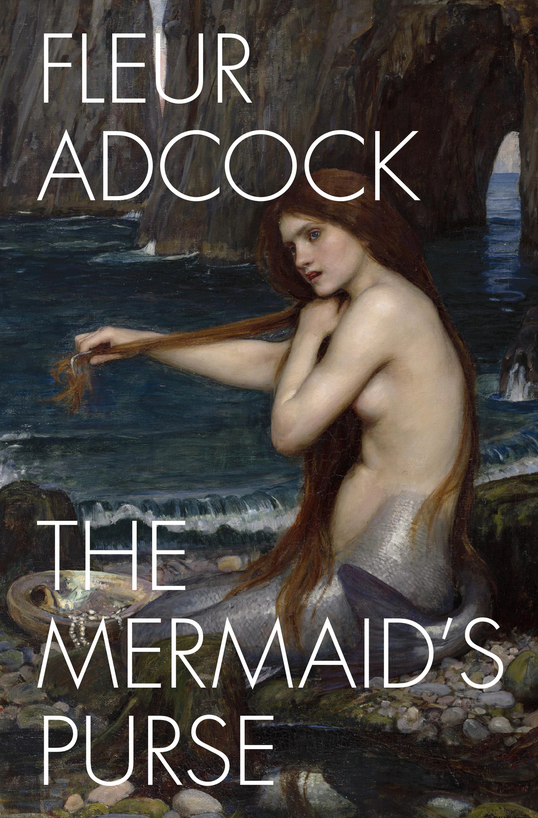
I reread Fleur Adcock’s The Mermaid’s Purse at Sandy Bay and this morning I was picturing myself back under the tree’s shade with the tide coming in, and the sun shining bright. I was back in the beach scene and back in the scenes of Fleur’s glorious poetry. Here is a sample from my review for for Kete Books:
The Mermaid’s Purse moves between places with vital attachments (New Zealand and Britain) and, in doing so, moves through the remembered, the felt, the imagined. I sit and read the collection, cover to cover, on holiday beside the dazzling ocean and white Northland sand. I am reading ‘Island Bay’, a poem near the start of the book and keep moving between the dazzle of Adcock’s lines and the dazzle of the sea. Here are the first two stanzas:
Bright specks of neverlastingness
float at me out of the blue air,
perhaps constructed by my retina
which these days constructs so much else,
or by the air itself, the limpid sky,
the sea drenched in its turquoise liquors
Both lucid and luminous, this exquisite poem sets the mind travelling. I’m reminded these poems were written in an old age. “Neverlasting” is the word that unthreads you. It leads to the infinite sky, and then to the inability of the ocean and life itself to stay still or the same, to old age.
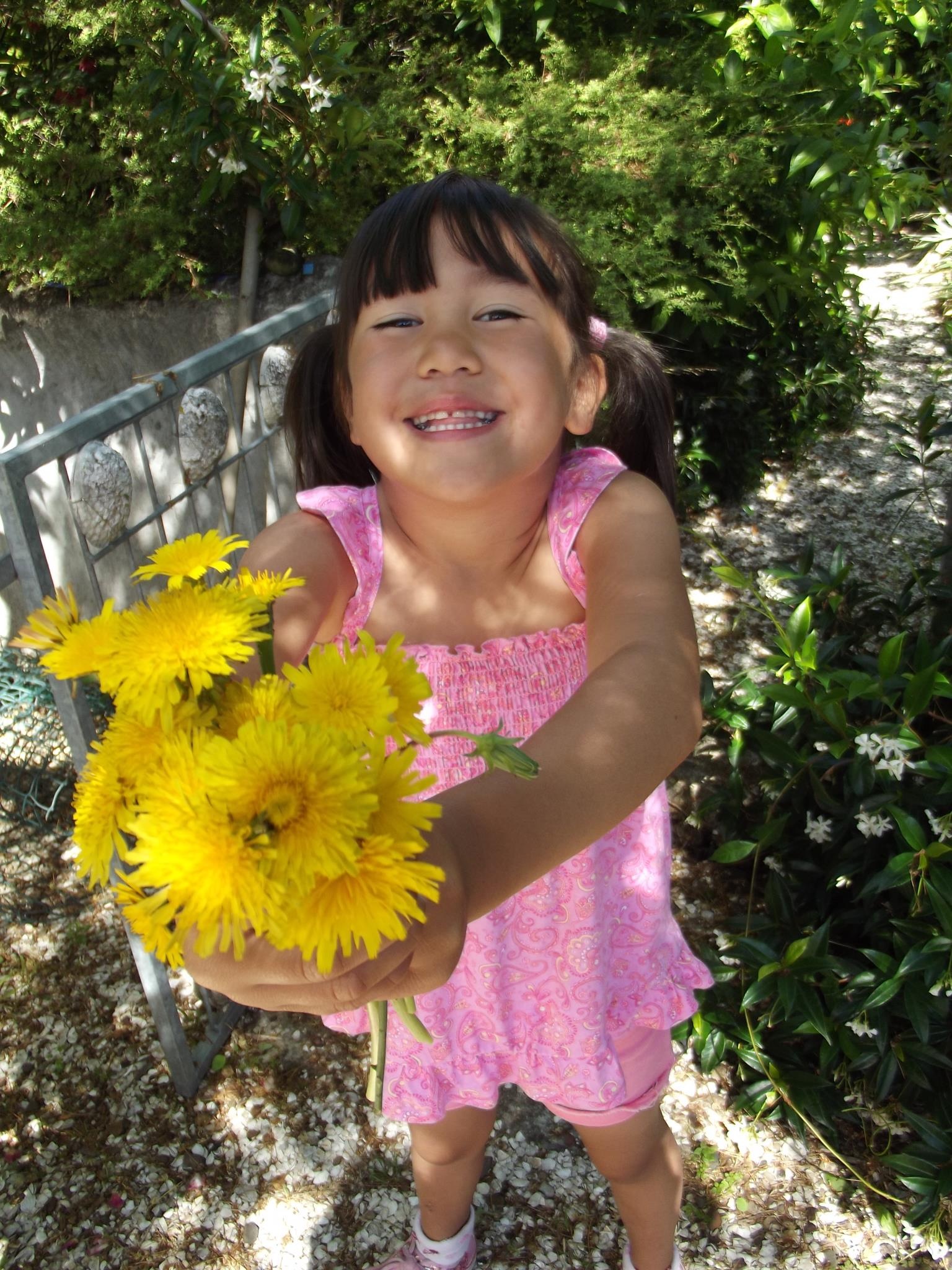
1. A photograph: The photo is of Sepela – exactly 10 years ago, a week after the big earthquake when we escaped to Hinemoana’s who lived in Kapiti then.
Is writing a pain or a joy, a mix of both, or something altogether different for you?
A mix, for sure. Often, I don’t feel like writing – unless I have an experience (internal or out in the world) that I feel the need to write about immediately. At times like that, I feel a sense of urgency, sometimes verging on desperation, to stop whatever I’m doing and write. I have pulled the car over on a busy motorway and searched for a piece of paper to scribble it down . I’m not great at the discipline of writing every day.
Name a poet who has particularly influenced your writing or who supports you.
I don’t read her so much these days, but I love Sharon Olds. She helped me to write more openly – to be honest and vulnerable.
Was your shortlisted collection shaped by particular experiences or feelings?
Colonisation, racism, illness, a bit of Covid – all the relaxing stuff.
Did you make any unexpected discoveries as you wrote?
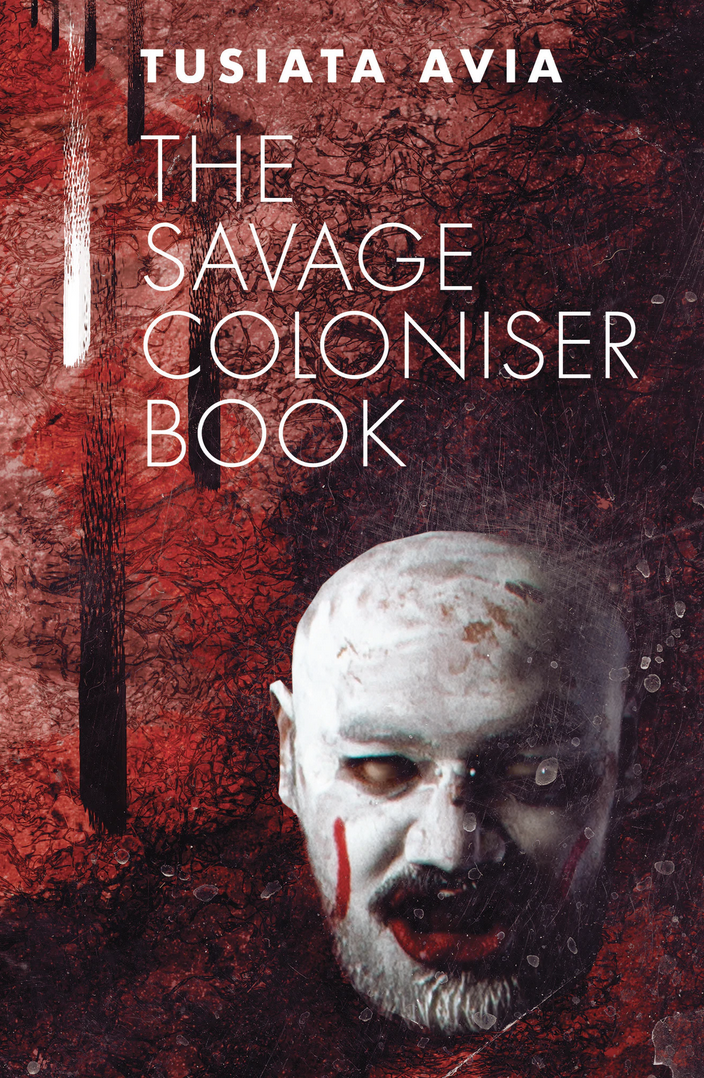
The whole book was unexpected. I was writing another book called Giving Birth To My Father, which took ages. After a while (quite close to my deadline) I realised it wasn’t ready for the outside world. The Savage Coloniser Book had to come together really quickly, if I wanted it published for 2020. I knew I had a few poems that were very ‘2020’ lying about. I wrote to those poems in a short amount of time.
Do you like to talk about your poems or would you rather let them speak for themselves? Is there one poem where an introduction (say at a poetry reading) would fascinate the audience/ reader? Offer different pathways through the poem?
During poetry readings/ performances I used to think the poem should speak for itself but many poems really need an introduction, particularly when people are not experiencing them on the page.
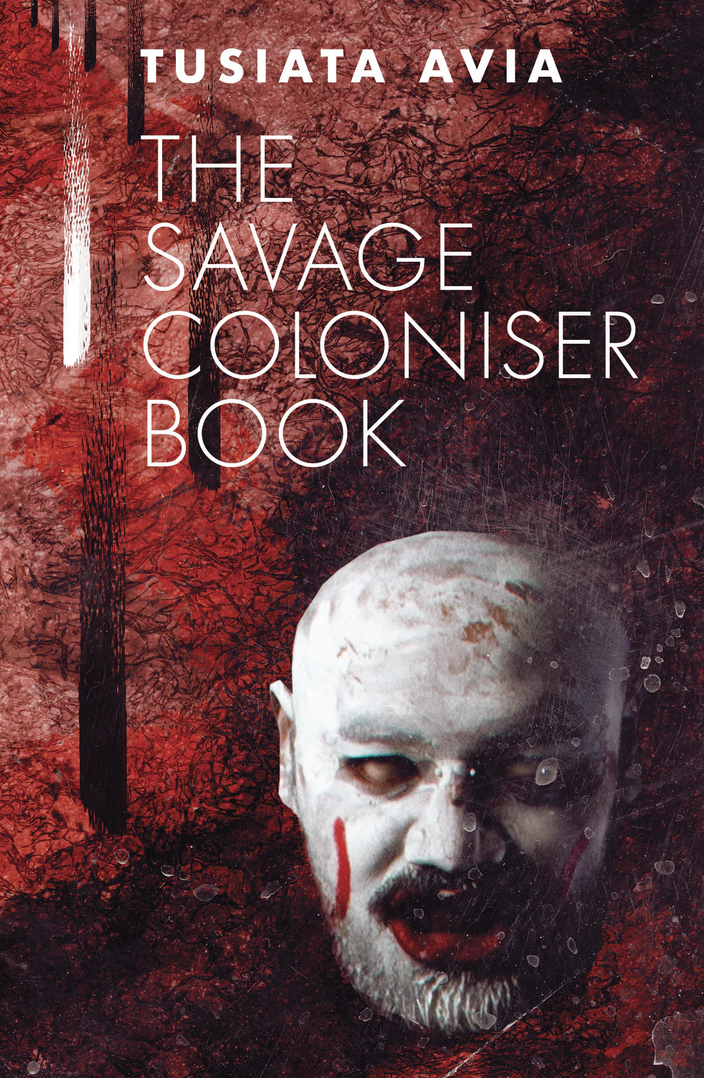
Tusiata Avia, The Savagae Coloniser Book, Victoria University Press, 2020
Tusiata Avia is an acclaimed poet, performer and children’s writer. Her previous poetry collections are Wild Dogs Under My Skirt (2004; also staged as a theatre show, most recently Off-Broadway, winning the 2019 Outstanding Production of the Year), Bloodclot (2009) and the Ockham-shortlisted Fale Aitu | Spirit House (2016). Tusiata has held the Fulbright Pacific Writer’s Fellowship at the University of Hawai‘i in 2005 and the Ursula Bethell Writer in Residence at University of Canterbury in 2010. She was the 2013 recipient of the Janet Frame Literary Trust Award, and in 2020 was appointed a Member of the New Zealand Order of Merit for services to poetry and the arts.
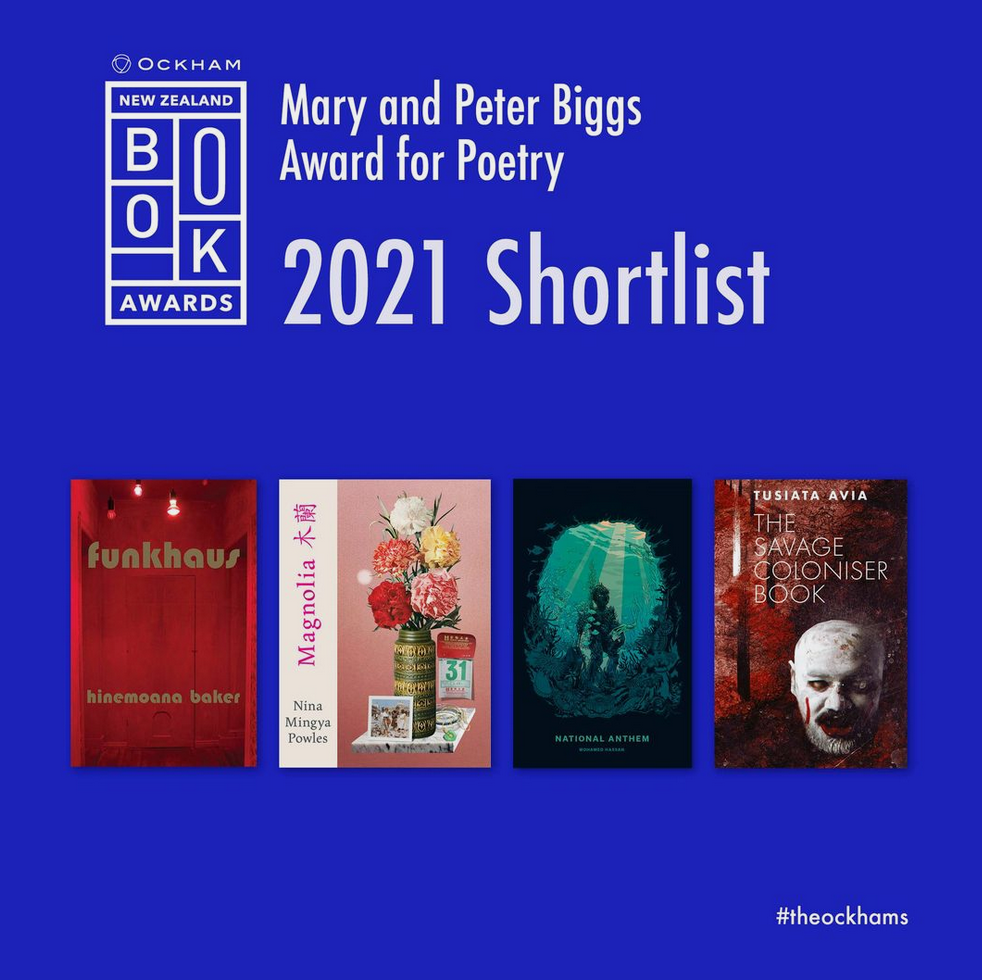
“Poetry collections published in Aotearoa in 2020 show a wealth of exceptional and original work. It’s an exciting situation for New Zealand poetry. The four shortlisted collections are striking, all exhibiting an acute global consciousness in difficult times,” says Poetry category convenor of judges Dr Briar Wood.
I was so excited about the poetry longlist, I spent the last few months celebrating each poet on the blog. What sublime books – I knew I would have a flood of sad glad feelings this morning (more than on other occasions) because books that I have adored were always going to miss out. I simply adored the longlist. So I am sending a big poetry toast to the six that didn’t make it – your books will have life beyond awards.
I am also sending a big poetry toast to the four finalists: your books have touched me deeply. Each collection comes from the heart, from your personal experience, from your imaginings and your reckonings, from your musical fluencies. The Poetry Shelf reviews are testimony to my profound engagement with your poems and how they have stuck with me.
Over the next weeks I am posting features on the poets: first up, later this morning, Tusiata Avia.
Mary and Peter Biggs CNZM are long-time arts advocates and patrons – particularly of literature, theatre and music. They have funded the Biggs Family Prize in Poetry at Victoria University of Wellington’s International Institute of Modern Letters since 2006, along with the Alex Scobie Research Prize in Classical Studies, Latin and Greek. They have been consistent supporters of the International Festival of the Arts, the Auckland Writers Festival, Wellington’s Circa Theatre, the New Zealand Arts Foundation, Featherston Booktown, Read NZ Te Pou Muramura (formerly the New Zealand Book Council), the New Zealand Symphony Orchestra, the Featherston Sculpture Trust and the Kokomai Arts Festival in the Wairarapa. Peter was Chair of Creative New Zealand from 1999 to 2006. He led the Cultural Philanthropy Taskforce in 2010 and the New Zealand Professional Orchestra Sector Review in 2012. Peter was appointed a Companion of the New Zealand Order of Merit for arts governance and philanthropy in 2013.
鸣 (míng), the cry of animals and insects, rhymes with tooth, which rhymes with precipice, which rhymes with the first part of my Chinese name.
I am full of nouns and verbs; I don’t know how to live any other way. I am a tooth-like thing. I am half sun half moon, and the scissors used to cut away the steamed lotus leaves. I am honey strokes spreading over the tiles.
Certain languages contain more kinds of rain than others, and I have eaten them all.
Nina will read from Magnolia 木蘭 and copies will be for sale.
For every copy of Magnolia 木蘭 you buy at the launch you’ll also receive an extra special gift (while stock lasts): a gorgeous risograph print of ‘Last eclipse’, one of the poems in the collection, which Nina has printed herself.
About the book:
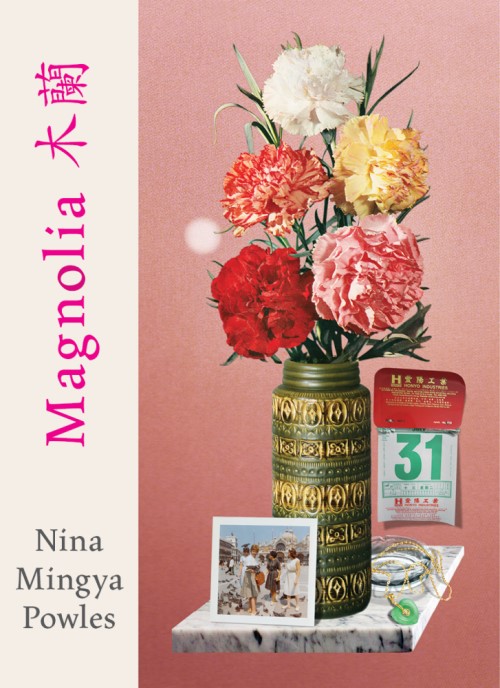
Shanghai, Aotearoa, Malaysia, London—all are places poet Nina Mingya Powles calls home and not-home; from each she can be homesick for another. A gorgeous bittersweet longing and hunger runs through the poems in this new collection from one of our most exciting poetic voices.
In Magnolia 木蘭 Powles explores her experience of being mixed-race and trying to find her way through multiple languages: English, Mandarin, Hakka, Māori. Powles uses every sense to take us on a journey through cities, food and even time, weaving her story with the stories of women from history, myth and film.
The gorgeous cover features an artwork by Kerry Ann Lee.
Magnolia 木蘭 is longlisted for the Ockham New Zealand Book Awards for the Mary and Peter Biggs Award for Poetry, and the UK edition was shortlisted for the Forward Prize for best first collection.
About the author:
Nina Mingya Powles is a poet, zinemaker and non-fiction writer of Malaysian-Chinese and Pākehā heritage, currently living in London. She is the author of a food memoir, Tiny Moons: A Year of Eating in Shanghai (The Emma Press, 2020), poetry box-set Luminescent (Seraph Press, 2017), and several poetry chapbooks and zines, including Girls of the Drift (Seraph Press, 2014). In 2018 she was one of three winners of the inaugural Women Poets’ Prize, and in 2019 won the Nan Shepherd Prize for Nature Writing. Nina has an MA in creative writing from Victoria University of Wellington and won the 2015 Biggs Family Prize for Poetry. She is the founding editor of Bitter Melon 苦瓜, a risograph press that publishes limited-edition poetry pamphlets by Asian writers. Her collection of essays, Small Bodies of Water, is forthcoming from Canongate Books in 2021.
Titus Books is pre-selling three new poetry collections, by Richard von Sturmer, Chris Holdaway and Scott Hamilton, to help cover the costs involved in producing them.
This is in a sense a traditional subscription style of publishing, advance selling the books, and also a new crowdfunding style, we will send out to contributors copies of the books when they are published and thank people inside the books by printing their names (if they would like that). We will also include a gift publication made especially to accompany this series.
If you would like to be involved – all contributions gratefully received – please follow this link
There is more information about the books on the page, including the book titles (as of yet without covers), and some options to get involved.
Proximity to the library is having one’s hand on the pulse of the universe. It’s turning to see a dear friend in a room absolutely rotten with strangers. It’s looking down on a familiar city from a great height, sweat cooling on your back, and it’s still, so still, that you think you’ve missed the apocalypse. It’s the streetlight blinking when you walk below it, a small owl calling from the bush beyond the fence. It’s that barometric lift of understanding when thoughts move like weather, like an emotion. It’s the feeling of extreme up-closeness that comes from finding out more, and then more again, about the person you love. The secret dimness of the backstage. The treasure at the core of the cave. It’s the feeling I had as a child reading The Borrowers, imagining the whole world in cross-sectioned miniature—that’s how I see the library—like a dollhouse, hinged open at its heart, tiny readers bent over tiny books. Being inside the library is like flying inside a cloud—shut off from the outside, riding out its knocks and bumps. Libraries feel magical, like mushrooms all connected underground, like hibernation, like glimpsing the glittering elbow of a gem poking out of dark rock. Libraries, like icebergs, balancing out the seen with the great unseen—all that knowledge tucked below the surface, keeping us all afloat. Libraries, like icebergs, disappearing.





 NZ Poetry Shelf