there is plenty to come plenty that awaits us plenty of reasons to slow down be here
~
crisp days clear the mind for reflection time lingers on the tip of the tongue trees store what they need swap out their wardrobes let the months play out their nature after the harvest we light a fire to stir anticipation brace for transformation and fortify ourselves with shades from the deepest water the forests the sun’s prismatic clockwork
~
coastline salt spit churned foam tickled tongues siren songs and tides sluice the shore when you’re pummelled by the roar of the ocean you forget that you have no sway over its force isn’t there a moon for that?
~
during the day we tend to earth that both feeds and rages at night we fold our comfort closer around us find a line to our ancestors in our steaming bowls embrace what settles in our bones on these slow nights
~
it must be the closeness of breath that keeps us lingering at the table to share words we’ve saved for one another they bind the sweetness of our time together and open us up to tenderness escort us into the soft parts of the night every sense is catalogued for good measure what will you remember about this year?
~
when we named the stars we placed faith in their brilliance even when we think our hearts are full we look up and see there is still so much more to embrace
Chris Tse
Chris Tse is New Zealand’s Poet Laureate for 2022-24. He is the author of three collections of poetry published by Auckland University Press: How to be Dead in a Year of Snakes (winner of the 2016 Jessie Mackay Award for Best First Book of Poetry), HE’S SO MASC, and Super Model Minority. He and Emma Barnes edited Out Here: An Anthology of Takatāpui and LGBTQIA+ Writers from Aotearoa (AUP, 2021).
Poems are arriving like confetti you sprinkle on poached egg like salt but poached eggs are off the menu unless they are boiled like leather.
You light yourself up like the Sky Tower, all resplendent in blue but you have no idea what the occasion is, so you invent The day of Underwater Dreams.
You can feel happiness as solid as a wooden kitchen table with six chairs and a bowl of ripe fruit.
Paula Green, Auckland Hospital, 2022
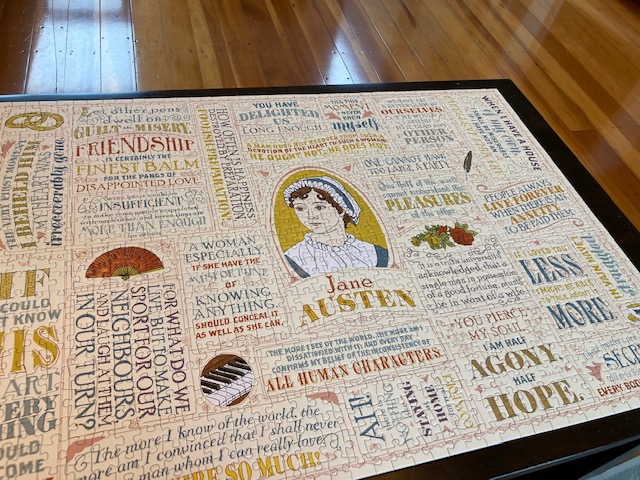
Poetry Shelf is taking a nap, not sure for how long, as I get through a bump on my long slow recovery road after my bone marrow transplant. When the blog and I wake up, I am hoping to post the clusters of town and city poems and a leisurely summer reading series celebrating local poetry, novels and nonfiction. Doing my blogs is neither work nor a chore but a crucial part of wellbeing. Writing has always been a process of love and happiness for me, since I was a wee tot.
I want to thank you for the care and kindness you have shown me this year: the cards and poems you sent me when I was in hospital, the warm emails, the willingness to join in my crazy blog ideas, the sharing of posts, the multiple engagements with poetry. It has felt like a vibrant and vital community that stretches and grows and connects.
I especially want to thank Catherine O’Loughlin at Penguin for guiding my two children’s books into the world so beautifully. They are special to me. And to Jenny Cooper and Kimberley Andrews for illustrating them so perfectly. I want to thank my health team at Auckland Hospital, the extraordinary doctors and nurses who work under such tough constraints but offer phenomenal care and attention, no matter what you are going through. Special thanks to Richard, Tom, Sarah, Rosie and Mia. My wonderful health psychologist Hannah has been equally important. A rejuvenating holiday bouquet for you all. To Linda Herrick for the thoughtful and empathetic interview she did with me for The Listener, to dear Anna Jackson for her love and friendship, to Eileen Merriman for our deep friendship and shared love of books and writing in every pocket of time, to Michele Leggott for understanding, to Carole Beu and the Women’s Bookshop and Jane Arthur and Good Books for keeping me supplied with my book and jigsaw orders. To my dear family, especially Michael, Georgia and Estelle, who have been my rocks.
I thank publishers in Aotearoa who enrich our lives with extraordinary books, who send me extraordinary books to read and review. And to the authors who write these extraordinary books, the booksellers that sell them and the reviewers that review them.
Finally I want to thank all the poets who have contributed poems to Poetry Shelf. My blog would be nothing without your sublime presence.
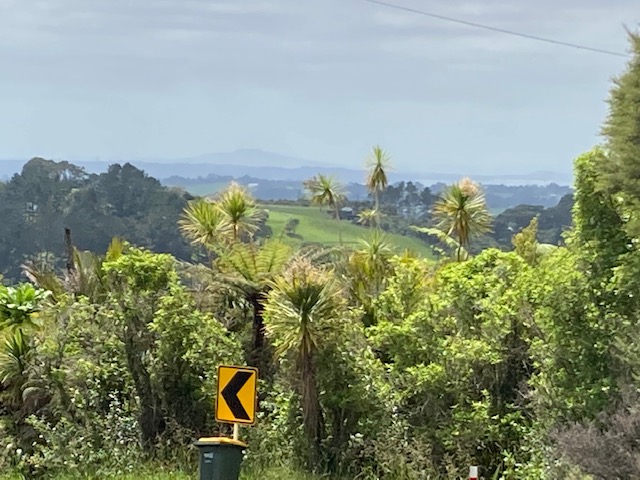
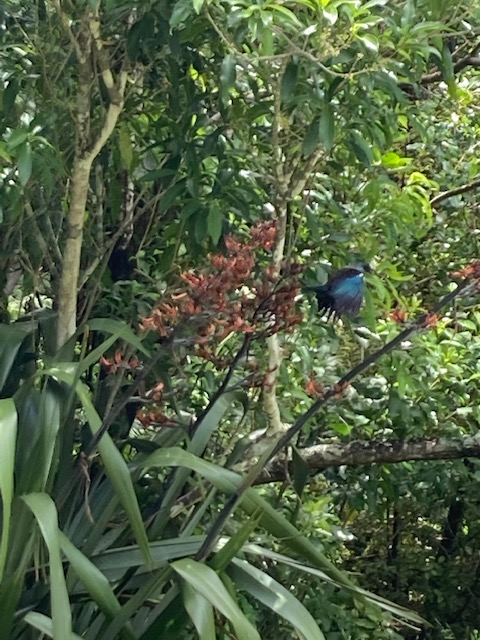
It’s been a tough year for so many of us. I have switched the news off for awhile so I fill with warmth and peace and all things good. Having a major health hurdle is tough but it is also a wonderful way of assessing what is important. I keep pathways to joy in my pocket for when I need one: my special notebook to write in, a jigsaw, a Spotify playlist especially Georgia’s, a children’s picture book, a fruit salad, a children’s poem idea, my hospital poem sequence, a blog post to write. I favour what I can do, not what I can’t do. I favour what is helpful. I learn to say no and ignore pushy demands. I breathe in the bush and birds and west coast air. I walk up the country lanes and feel such calm and gratitude.
spend long enough with static and it resembles the speech of dispirited bees:
a reminder of our erstwhile industry, bright and abuzz in our work shirts, our capitalist fatigue.
beehives and hold times are two things you can’t kick. a honeyed voice tells me
I’m twelfth in the queue; their lines overwhelmed by the tide of our need.
I set down the phone, let it roll through its repertoire of 2000s hits.
the tinny music loops back like memory, bearing our better days
the way a shell bears the sea like a trauma: give it your ear and exhale.
Anuja Mitra
Anuja Mitra lives in Auckland. Her poetry has appeared in places like Landfall, Poetry NZ, takahē, Sweet Mammalian and Starling, with essays and fiction in Cordite and recent anthologies.
After her dice roll, she pushes her wheelbarrow across the stiff cardboard, lands on an already owned street that’s as bare as a honey puff pussy.
At least she doesn’t have to pay double yet, she tells the banker and hands rent over. In her peripheral, Queens, Explorers, Warriors all laugh like a stack
of Guess Who? faces but when she looks directly at the money it sits in a static smirk. Not one to mix her games, she focuses hard. Every time
she tries to hook the $, she loses it, and to be honest, is sick of the arcade crane game of it all. So, she’s drawing a metal cart around town, hungry
for a quick fix and follows the carrot ‘til she’s collected enough faces to throw at the banker. Eventually, she’ll get to the red plastic tower
and walk up to the rooftop, screaming into a box of Roses filled with scrunched foil wrappers; a city at night lit by mouths unable to stop.
She wheels her cart around the whole board, rolling back on the same street where the landlord has already built a city that prices them out
of the neighbourhood and invites them over for dinner, making them pay to use the cutlery.
Amber Esau
Amber Esau is a Sā-māo-rish (Ngāpuhi / Manase) writer of things from Tāmaki Makaurau, with a Gemini Sun / Virgo Moon. She is a poet, storyteller, Amateur Astrologer, and professional bots. Always vibing at a languid pace, her work has been published both in print and online.
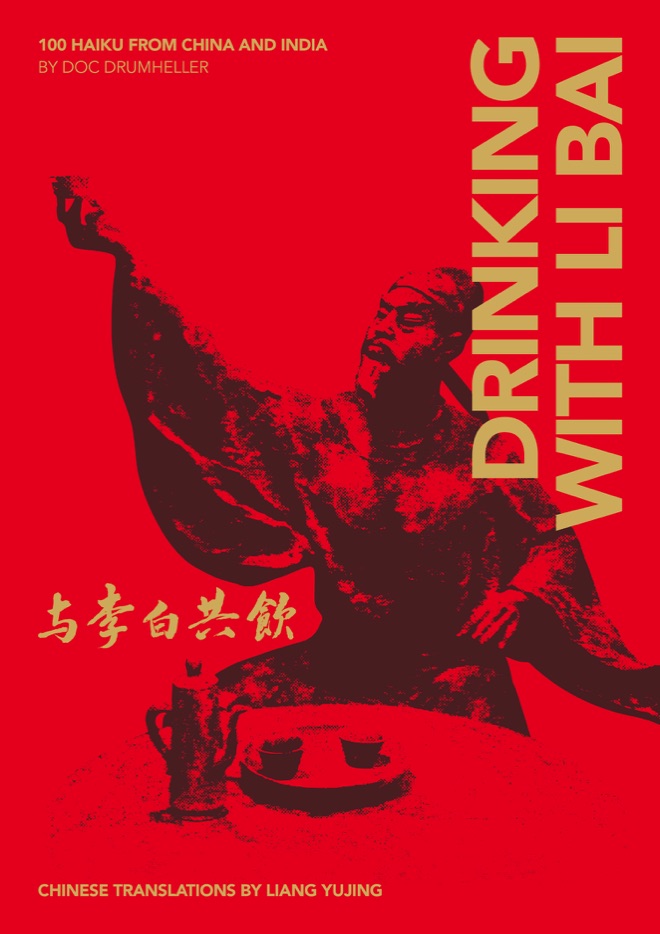
Drinking with Li Bai: 100 haiku from China and India, Doc Drumheller, trans Liang Yujing, Cold Hub Press, 2022
silk and poetry in the local dialect both mean the same thing
Doc Drumheller
This gorgeous collection, Drinking with Li Bai, is like a pocket guide book. Or an exquisite stand-in for taking travel photographs. Or sending memento postcards home. Doc Drumheller has written a sequence of haiku that capture moments, views, experience as he travels through India and China; visiting Enshi, Guangzhou, Guizhou, Suiyang, Shengze, Shanghai, and Beijing in China, and Odisha, Bhubaneswar, Kolkata, New Delhi, Varanasi, Agra, Bodh Gaya, and Allahabad in India.
Haiku is such a divisive genre among poets, yet a good haiku is a poetry treat. Haiku offer sweet morsels that delight the senses, that deliver visual impact, that place little poetic frames on the world, that favour economy, that open out onto richness of effect.
There are haiku rules teachers insisted on in school, that are still observed but often played with. Doc has generally followed the traditional rules: three lines, no title and a syllabic pattern (5 – 7 – 5). The haiku are translated by Liang Yujing with Chinese calligraphy by Dr Gong Qin. Many of the poems have been published in online and print journals, with a number appearing in Best NZ Poems.
climbing the Great Wall you must go further to see how far you can go
Doc Drumheller
Nature is a traditional haiku theme, and Doc celebrates the beauty of the natural world but also draws in people, things, actions, anecdotes, cityscapes, philosophy. The poems thread surprise, fascinations, questions, a personal presence.
Drinking with Li Bai, is a treat of a book, especially if you like to imbibe little poetry morsels across a week.
view from the turret All Along the Watchtower playing in my mind
Doc Drumheller
ancient turtle shell a man builds himself a home inside the fossil
Doc Drumheller
Doc Drumheller was born in Charleston, South Carolina and has lived in New Zealand for more than half his life. He has worked in award- winning theatre and music groups and has published eleven collections of poetry. His poems have been translated into more than twenty languages, and he has performed in Cuba, Lithuania, Italy, Hungary, Bulgaria, Romania, Japan, India, China, Nicaragua, USA, Mexico, El Salvador, and widely throughout New Zealand. On his travels Doc Drumheller has represented the Waimakariri District as a Cultural Ambassador to Enshi in a Sister City Cultural Exchange. He was appointed New Zealand Director of the Silk Road Poetry Project, and has represented New Zealand at international poetry festivals in China and India. He lives in Oxford, where he edits and publishes the literary journal Catalyst. Haiku from this collection were selected for Ōrongohau Best New Zealand Poems in 2018 and 2020. Election Day of the Dead, Seventy Haiku from the Americas by Doc Drumheller was published by Cold Hub Press in 2020.
Liang Yujing is a Chinese poet, translator and scholar who writes in both English and Chinese. He was born in Changde and studied for his BA and MA in Wuhan. From 2014 to 2020, he lived in New Zealand and completed his PhD in Chinese literature at Victoria University of Wellington.
— maybe even with your telescopic reach – the ring
the one that went missing
six months ago and further back, a silver watch,
the keys to the studio in the woods, the house
lost in the floods, the man I loved who disappeared,
and then there’s my mother, red rooster in her arms,
wandering through the magnetic fields.
Oh, wild heart, Oh item #410096
I am charged with the certain kind of longing that
goes beyond The Department of Loss, beyond the prayers
of Saint Anthony, even beyond that man I
mentioned earlier, who held me with such force
before spinning off elsewhere.
Item #410096 also known as the magnetic pen, let us write
a treatise on retrieval, repatriation and recovery,
let us travel to the North pole,
the South pole, let us seek out all missing items
and persons,
restore them to this brave, rotating world.
Frankie McMillan
Frankie McMillan is a poet and short fiction writer. In 2016 her collection, My Mother and the Hungarians and other small fictions(Canterbury University Press) was long-listed for the Ockham New Zealand Book Awards. In 2019 The Father of Octopus Wrestling and other small fictions ( CUP) was listed by Spinoff as one of the ten best New Zealand fiction books of 2019. In the same year it was shortlisted for the NZSA Heritage awards.
In 2013 and 2015 she was the winner of the New Zealand Flash Fiction Day competition. She has won numerous awards and creative writing residencies including the Ursula Bethell residency in Creative Writing at the University of Canterbury (2014) the Michael King writing residency at the University of Auckland ( 2017) and the NZSA Peter and Dianne Beatson Fellowship (2019). Her latest book, The Wandering Nature of Us Girls ( CUP) was launched in August, 2022.
We crafted our boats with sugar cane sticks • we clinked silvery anklets • we sang giggling x-rated lyrics we laughed at our own silly antics • we were daring we were betrothed at thirteen • we were betrothed at three we met our husbands once • we tied a sari around our waist we tied our hair into a bun • we painted a red sun on our foreheads • we were beautiful • we were dutiful • we said goodbye to our bha • we left our village our dev • we travelled so far • we were children • we consoled the baby in our womb • we carried our child on our hip • we climbed aboard a ship • we spewed the journey • we chewed the paan • we heard the waves chant • we shed no tears • we are adventurers • we are seers • we saw further than the distance.
Vasanti Unka
Picture book creator Vasanti Unka is generally known for her quirky and colourful kids books for kids for which she was awarded an Arts Foundation Laurette for illustration (2021). Born in Pukekohe – her parents arrived here from India in the 1940s and ’50s – Vasanti has been unpicking her heritage. A book she compiled, With a Suitcase of Saris: From India to Aotearoa, Stories of Pioneer Indian Women, is being used in the new NZ history curriculum. More recently she has been writing a bit of poetry and prose about being Indian in Aotearoa.
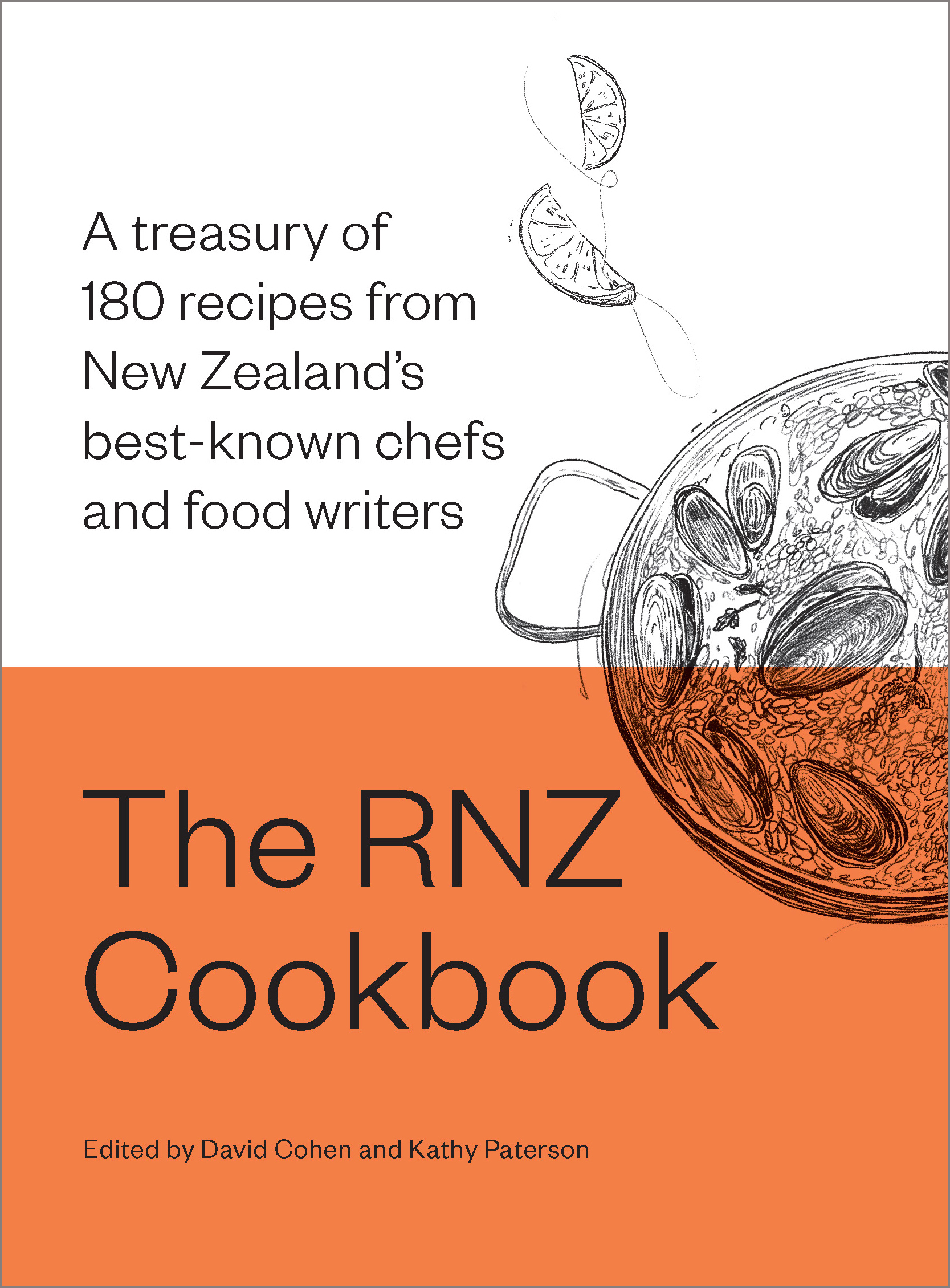
RNZ Cookbook, eds David Cohen and Kathy Paterson, Massey University Press, 2022
oven baked salmon
I like my fat cooking pot I like my fat wild heart
Paula Green from Cookhouse (AUP, 1997)
When my debut poetry collection came out, I was flicking through the NZ Listener and spotted a recipe for oven baked salmon on the food page. I earmarked it as I love salmon, but when I went back to cook it – I realised it was my poem from Cookhouse. (AUP, 1997). The page included a photo of my book and one by Marcella Hazan, one of my favourite Italian food writers. It was a sign that food and poetry go well together. I have often thought it would be great if NZ food magazines including a poem each month!
A couple of early reviewers criticised Cookhouse for its reliance on the domestic and the presence of food, but I decided the domestic and food will never be redundant in poetry or fiction! One of my favourite poets in Aotearoa, Ian Wedde, elevates his writing with a salt and pepper food presence. The sensory layers are so satisfying.
Celebration time! The sumptuous RNZ Cookbook, edited by David Cohen and Kathy Paterson, gets me musing about writing and reading poems and making food.
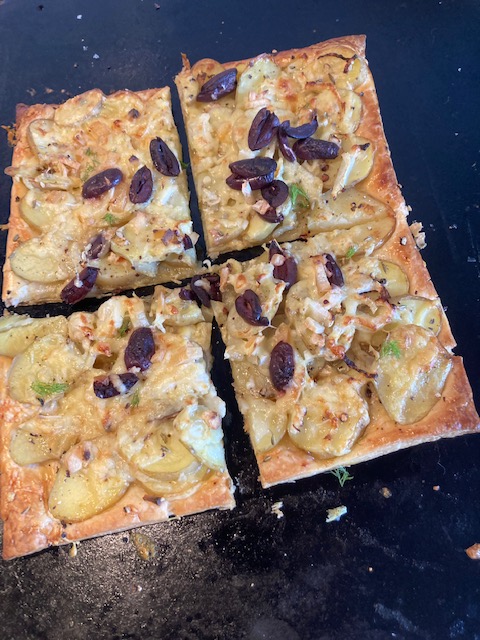
Lauraine Jacob’s Potato, fennel, feta, olive and lemon tart
I love listening to cooks, chefs and cookbook writers share recipes on RNZ. Food is body nourishment but it also becomes a cultural anchor, an inheritance, a way of bringing friends and family together, a way of healing, a portal to memory. Perhaps I could argue no ideas but in food, no feelings but in food, no epiphanies but in food.
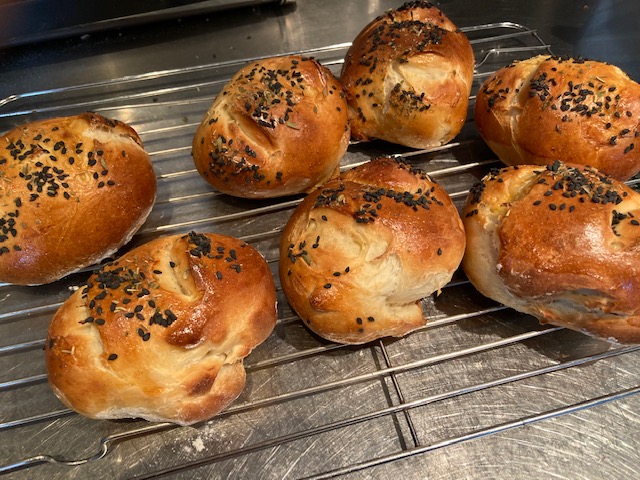
Jesse Mulligan, in the book’s foreword, said he listed ‘eating’ as one of his hobbies on a dating site. I get that – after five weeks in hospital and then not being able to manage domestic tasks until the last few weeks – I couldn’t believe how much I missed cooking (and even eating with normal tastebuds). To be cooking again, and making daily bread, along with reading and writing, is happiness.
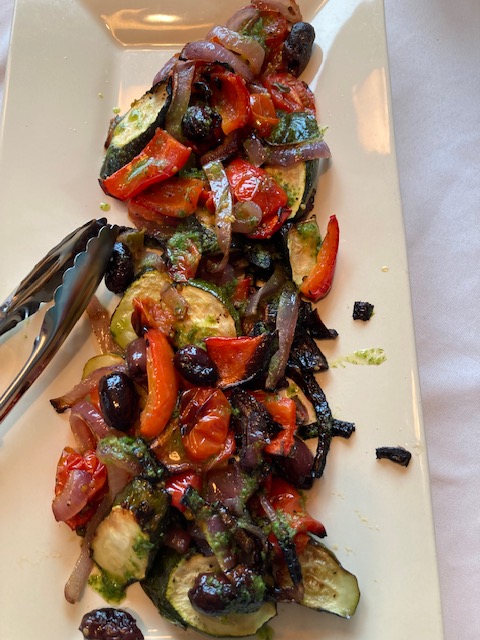
Nicola Galloway’s ‘Oven roasted ratatouille with basil oil’
The RNZ Cookbook, as it states on the cover, is “a treasury of 180 recipes from New Zealand’s best-known chefs and food writers”. The recipes are structured like the day runs on RNZ National. You begin with Morning Report, tune into Nine to Noon, Midday Report, Afternoons, World Watch, Checkpoint, Nights, Saturday Morning and Sunday Morning. The recipes move from breakfast through to morning tea, lunch, afternoon tea, dinner, desserts, weekend treats, essentials. RNZ has around 3000 recipes on their website – the editors, David Cohen and Kathy Paterson chose 180. Each recipe has been test and loved by the food writers and chefs.
There is also a timeline of the history of RNZ and one of the history of NZ food. Fascinating!
Allyson Grofton’s Ginger crispies
A portion of the royalties from the book go to Everybody Eats, a food charity founded by Nick Loosley in 2017. Everybody Eats is an award winning dining idea that aims to solve three problems : food wastage, food poverty and social isolation. Food to be thrown out is transformed into three course meals and diners pay a koha / what they can afford.
Each recipe mentions the recipe writer and the radio airing. The terrific design – I am talking layout and font – make this an easy and delightful recipe book to follow. I tend to use recipes as starting points and then add my own twists and biases. But to have a clear and accessible set of ingredients and instructions matter. Once I enter the cookbook zone I become a test kitchen, and cooking becomes discovery, a bit like poetry writing does!
peanut butter sandwiches
how we hold our babies close buttonholed for hours the sound of laughter that is a simmering horizon defines memory invention delight the plump toes were a stone’s throw from rhyme and song the lungs flung wild open I simmer alphabet soup simply floating a message
Paula Green from Cookhouse
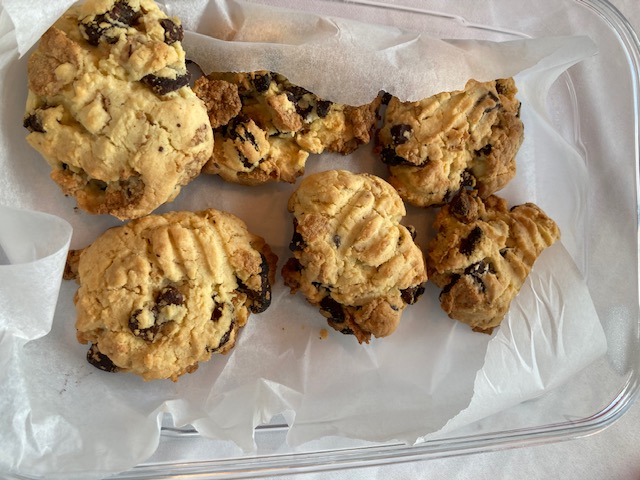
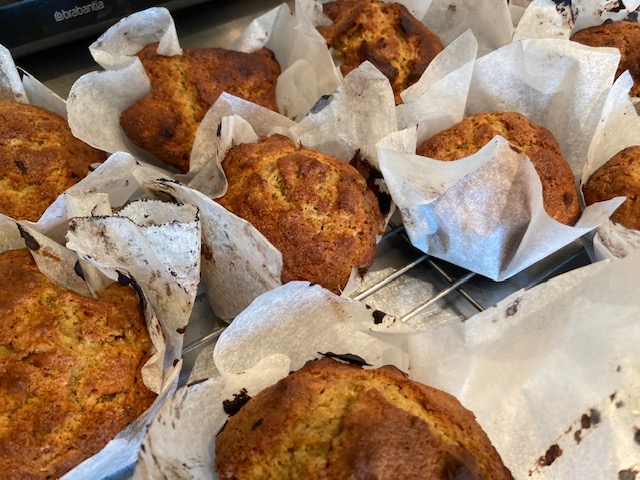
I now have a list of recipes I want to make, and a list of ingredients to add to my click n collect order. I have tried ‘Simply the best banana cake’ (Annabelle White) and it is excellent. Next time I will add chunks of dark chocolate. I have tried Allyson Grofton’s ‘Ginger crispies’, equally good. Sometimes I swap the ginger for Central Otago apricots and always include chunks of dark chocolate. Lauraine Jacob’s ‘Whole orange and date muffins’ are sublime. Next up to try is Dame Alison Holst’s ‘Spicy fruit loaf’. I loved Nicola Galloway’s ‘Oven roasted ratatouille with basil oil’, and am keen to try Melissa Hemsley’s ‘Chickpea wraps’, Niki Bezzant’s ‘Pea, mint and halloumi fritters with tomato and capsicum sauce’ and, for the first time in years, to make a quiche again, (Rosie Belton’s ‘Zucchini quiche’). Plus I think I will have Al Brown, Lucie Corry, Julie Buiso, Nadia Lim and Peter Gordon seasons. Big fan of their recipe books.
This is a book to cover in the floury stains of living. It is a treasury indeed! And it’s bravo Massey University Press, and Kathy and David.
pasta primavera
summer peaks interpret the time of our lives when zucchinis eggplants red peppers
stew a flurry of kiss and tell or simmer rivers stones mountains coastlines
David Cohen is a Wellington journalist whose work appears frequently in New Zealand media. Overseas, he has been published in The Spectator, the Daily Telegraph and the New York Times, among others. He has reviewed restaurants in Ireland and Italy, attended cooking schools in South Africa, and written widely about the food scene in Aotearoa. A writer by day, fledgling chef by night, he has a longstanding personal passion for Persian cuisine. In addition to his own previously published titles — there have been six — he has co-authored a cookbook, Ima Cuisine, with Auckland restaurateur Yael Shochat. He moonlights as a senior producer on Morning Report.
Kathy Paterson is a writer, recipe developer, food stylist and photographer. A plentiful herb garden and a trial-and-error vegetable garden give her the starting place for her recipes, along with her love of the classics with a modern twist. Her latest projects include the successful cookbook Meat & Three, a book showcasing New Zealand food and encouraging readers to cook with premium meat and seasonal vegetables, along with taking the lead on Cosy, a Food Writers New Zealand digital publication produced during the first lockdown in New Zealand, with all the proceeds going to city missions and food banks through the organisation Meat the Need.
I borrowed an extra duvet from your bed last midnight Creeping through the darkened house to execute the crime that it felt like Even though you didn’t need it You weren’t in the bed
I can’t stand the sight of your naked mattress Rearranged the pillows in memory of your dear head The print on your coverlet is brighter than mine, still hopeful So, I left it where it lay this morning And wondered what you would say if it was still there and you came back.
Bee Trudgeon
Bee Trudgeon (She/Her) is a writer, rocker, stroller, strummer, mama, storyteller, dancer, perpetual student, and Porirua Children’s Librarian Kaitiaki Pukapuka Tamariki. Her journalism has been published in RipItUp, The Sapling, Gecko Press Curiously Good Book Club,NZ Poetry Shelf, and in the Free Range Press Radical Futures series volume Death and Dying in New Zealand. Her poetry has been published in Kiss Me Hardy 2, and the Amanda Palmer fan anthology Poems for the Ride. You can read more of her work on the Patreon page of her alter ego, Grace Beaster – where she posts a poem a week year-round, and a poem a day each April.

 NZ Poetry Shelf