Category Archives: Uncategorized

A week of Poems: Amy Leigh Wick’s ‘I, Melchoir’


I, Melchior


To be honest, I didn’t know Baz or Casper

before we took the trip.  We studied

in different cities and my focus was on the history of stars

while Casper predicted movement. Neither of us

know what Baz studied exactly, but it was good

having him around.


Many nights over the small flame of our fire

we guessed at why the dream chose us,

and most days I wondered if I was a fool

to leave my life’s work for a single light.


Traveling west we saw the far reaches

of an empire whose gold leafed crown

would wrap around the head of every

nation if it could.  I didn’t mind the welcome

given to us by its governors and princes,

the cold limoncello and soft cheeses, the grapes

brought to our mouths by slender bangled wrists;


But there was something about that king—rouged

and fat, chewing a leg of meat, feeding us like we

were to be eaten next, asking exactly who it was

we were off to see—that reminded me not to be a man

given to appetite. I closed my eyes to the women

and remembered there was somewhere

I was supposed to be going.


The last days of travel were quiet, thirsty days,

full of dust and flies.  Nights we slept close in the dark,

because Baz insisted we not light any fires.  We argued

about whether we were on course and what we were

looking for in the first place until we found ourselves


under the star, at the door of a house.

It was nothing really.  A poor place and the girl

who answered the door was about fourteen, with a naked baby

looking out at us from behind her skirts where he stood.


Casper shoved me and I almost spoke, but didn’t.

Baz knelt, and that decided it. I lowered myself to my knees

right in the doorway, and as I did I felt something

no book has ever been able to explain.  Some strange peace,

the sound of beating wings filled the air and the child laughed.


We unloaded our treasures and as we did his mother’s

face was wet with tears.  She didn’t look at the spices,

she wasn’t marveling at the cost. Her head was tilted,

her mouth slightly open as if dreams she’d had

were playing out before her.  It was enough,

her silent grace, the child’s laugh–to answer at least

the only question worth asking.  We left at dusk

into a different world than we had come from.


The first sleep in the desert brought us the same nightmare;

a slaughter of children and the rouged king’s laughter

heard above the moan of young mothers.  We parted ways

in the dark, with a vow to never look for each other again

for fear of killing the King we’d found.


Did we find what we were looking for, or were we meant

to find something that would take all of history to unravel?

I think about Baz, face to the ground in that doorway,

when a star falls suddenly from the sky and wind blows out the last embers of fire.


©Amy Leigh Wicks


A week of poems: Tim Upperton’s ‘On the eve of my 53rd birthday’


On the eve of my 53rd birthday

After Gregory Corso


Once I was very small but then I grew up

and other things were small and nothing hurt

like it did when I was sixteen, and again

at twenty-one. Fifty-fucking-three!

The poems I wrote and the poems I shouldn’t

have written but they’re done now and in books

nobody, absolutely nobody,

ever reads. There was some craziness,

and sometimes I was alone and other times

I was not alone, and alone was better

but I was lonely. To be honest,

the craziness didn’t amount to much.

The confessional stopped working about

the time I had things to confess, and now —

now I’d have to spend the rest of my life

in there and still never get to the end

of it, fuck it, I may as well carry on.

My hair was long and straight but went springy

in my thirties then straight again but not

as straight as before. Now it’s mostly grey

but I don’t really care about it.

I let it grow and grow and then I cut

it all off. I imagine it growing

when I’m lifeless in my coffin, masses

of it, which is unpleasant to think of

and anyway not yet. I want more life

in front of me than I have behind me,

but that’s not about to happen. I want

a bell down there, in the wormy darkness,

like in the Edgar Allan Poe story,

or a buzzer, a buzzer I can press

and somebody to listen just in case.


©Tim Upperton


A week of poems: Sugar Magnolia Wilson’s ‘Town’


Town


In the small town with

the grey clouds like

quiet dogs


on the veranda with our

feet up watching ghosts

in the old corner garden

where the oleander dips deep


I am myself and not myself

again and again and again

until you find me through

the small water in my wrist


the channel where the darkest

fish run to the lake in my palm


It is raining.


You hold my arm there, on

the Formica-topped table

with more gravity than a

metal earth


softer than a soft sea.


I am yours driving down and

diving


homing around and around

and back again.


©Sugar Magnolia Wilson


A week of poems: Elizabeth Smither’s ‘Drycleaners: London and Paris’


Drycleaners: London and Paris


A little girl like a shepherdess receives

my knit top with a tomato stain

and returns the docket. Tuesday.


On Tuesday it’s hanging on a hanger

the spot shrunk but still visible.

I can’t complain to a shepherdess


who has lost one stain but carries its ghost

in her demeanour like a lost lamb.

I take it to another drycleaner.


In Paris the spot is onion soup.

Briskly it is frowned over: one week

to remove it, Madame. Not sooner.


It will take a special discovery of benzene

an accident like Tarte Tatin

and rows of girls in chemises


sweating over garments in poor ventilation.

No wonder we should sniff at improvements

in Paris and failure in London.


©Elizabeth Smither


A week of poems: Bill Manhire’s ‘Mrs Zeus’


Mrs Zeus

In her dream she lived in a high apartment
with a few small children. She looked down at the rain.
Gulls fought over bread, over the alphabet.
Her new husband walked to work every day.
Lucky man – he hated driving.
She had only married him to change her name.
Mrs Acorn! She would always be first in the queue.


© Bill Manhire 2016


To celebrate the year’s end: a week of poems on Poetry Shelf

I have had a fabulous year on both my blogs – even in a year when I was on a blog budget with my head down writing and researching  a big book.

My time in the archives researching our early women poets has been utterly addictive. Such discoveries, such a joy.

This year has seen a feast of New Zealand poetry from small presses and big presses and everything in between.

Even though next year is another blog budget year, I have a few new things I want to add with a little help. This blog wouldn’t work without you reading it, sharing it, contributing and picking up on books to read and events to attend.

So a very big thank you! And happy summer days. I intend delving into the blog’s annual list and tracking down a few books that caught my attention.

Fabulous @RadioNZ interview: Kathryn Ryan with Word Up winner Ruby Esther


Kathryn Ryan talks to young Auckland comic, Ruby Esther who won the Word Up competition with her spoken word piece, ‘I Normally Write Funny Poems’.

You can hear the winning poem here.

You can hear the interview here.

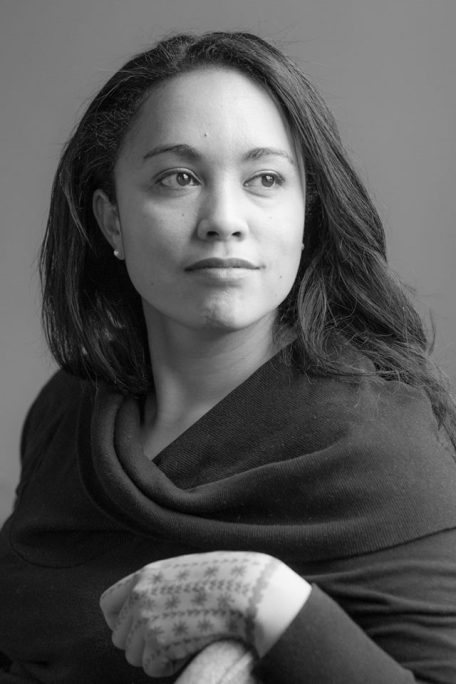
‘I keep my own hours ‘: Courtney Sina Meredith is back from Iowa with a new poem

14707033_10157570511925307_686770299160142700_o.jpg

Photo credit: Thomas Langdon


I keep my own hours

I write on the side

I take it easy on myself

I make excuses

I follow the rules

The law of nature

The loss of appetite

I come undone

Just like you

I sit in the long grass

I take my time

I take notes

In lectures

At readings

In lieu of feeling

I take notes

I cite wars

Just like you

I open my arms

I follow through

I know the script

We are reading from

I sit by the river

I pick every petal

The river loves me

The river doesn’t love me

Just like you


© Courtney Sina Meredith 2016


Courtney Sina Meredith is just back from her stint as a writer-in-residence for the prestigious International Writing Progamme’s Fall Residency at the University of Iowa.

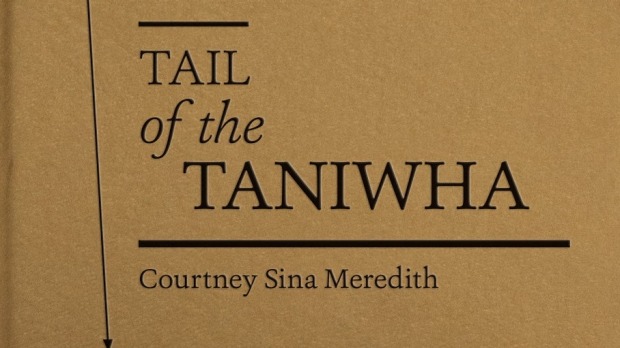
Her terrific Tale of the Taniwha is long-listed in the fiction section of The Ockham New Zealand Book Awards this year. In my SST review I sang the book’s  praises:

‘Writing becomes a way of self-recognition for Meredith.  It is song, idea, heart, family. The stories come out of a Pasifika heritage, a female heritage, and that matters. This book, marvellous and memorable, affected me as both a writer and a person. It offers me points of self-recognition. With this book, Meredith joins our very best writers.’

The sun is shining, the wind is blustering and I felt in the mood for a new CSM poem and Courtney obliged with this bitter sweet gem. I adore it. Thank you!

1472076053148.jpg

Becoming Invisible: An Interview with Mary Ruefle in The Paris Review

When I spoke with Mary Ruefle on the phone recently, she’d just moved into a new house and had spent the morning putting screws into the back of a mirror. “I had my toolbox out and one of the screws was deficient,” she told me, “so I had to find another and it was just endless … You need two people for this sort of thing, but I did it myself.” It’s a statement akin to many in her new collection, My Private Property, a mélange of essays, stories, and prose poems, in which small objects often become vehicles for profound reflection. Ruefle, best known for her poetry, begins much of her work this way—she muses on ordinary things like keys or clouds, yellow scarves or golf pencils, until those descriptions unfurl and beget larger, existential meditations on sadness and boredom, on language and lullabies and autonomy in old age. Our conversation was like that, too, always unraveling toward some arresting observation.

To work with Ruefle is to enjoy the pleasures of another age; she rarely uses a computer. I mailed her the transcript of our interview, and she returned it with scrawls of red ink and typewriter marks. The last page had been touched by a lit cigarette, leaving a small orbicular burn in the right margin with a stale, nimbus-like ring around it—punctuating, with great finality, the end of our conversation.

INTERVIEWER

In your poem “A Half-Sketched Head,” you wrote, “If we were thermometers, no one would want to be thirty; everyone would want to be seventy-eight.” My Private Property returns to this theme of getting older and embracing old age. Take “Pause,” your essay on menopause. You write about a feeling most women experience as they age, the feeling of becoming invisible, of becoming more and more like a ghost because we’re no longer noticed in the same way we once were. But you settle on this, that “being invisible is the biggest secret on earth, the most wondrous gift that anyone could ever have given you.” What do you mean?

RUEFLE

Well, thematically, aging and death become one in the same for writers, and very often you lose young readership because you’re no longer interested in the things young people are interested in. The time for exuberance, energy, endless curiosity, endless activity within a body of work, that drops away and everything becomes bittersweet. But this becoming invisible—all women talk about it. There’s a period of transition that’s so disorienting that you’re confused and horrified by it, you can’t get a grip on it, but it does pass. You endure it, and you are patient, and it falls away. And then you come into a new kind of autonomy that you simply didn’t have when you were young. You didn’t have it when your parents were alive, you didn’t have it back when you were once a woman to be seen. It’s total autonomy and freedom, and you become a much stronger person. You’re not answerable to anyone anymore. For me, it was a journey of shedding the sense of needing to please someone—parents, children, partners.

Full interview here.

The Pantograph Punch: Sarah Jane Barnett remembers ten moments in Aotearoa NZ Literature 2016

DSCN6046


Sarah Jane Barnett remembers ten moments in Aotearoa NZ Literature 2016, and some of them make her shudder.

During 2016 many things happened: Atholl Anderson, Marilyn Duckworth, and David Eggleton won the Prime Ministers’ Award for Literary Achievement; Jenny Bornholdt finally released a selected works after nine collections and nearly thirty years of publishing her work; there was New Zealand’s first residency at a hotel. None of these made my ten moments of 2016 – a list that I’ve resisted calling ‘top’ – because that’s how strange and outstanding this year has been.

For Sarah’s list of ten moments see here.