Category Archives: Uncategorized

Poetry Shelf audio spot: Tracey Slaughter reads ‘She is currently living’


Screen Shot 2019-07-28 at 11.50.07 AM


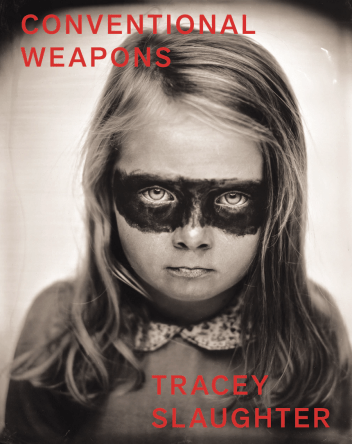
‘She is currently living’ appears in Conventional Weapons, Victoria University Press, 2019


Conventional Weapons is Tracey’s first full poetry collection but she has been publishing poetry for over two decades. She was the featured poet in Poetry NZ 25 (2002) and has published Her body rises: stories & poems (2005). She has received multiple awards including the international Bridport Prize in 2014, a 2007 New Zealand Book Month Award, and Katherine Mansfield Awards in 2004 and 2001. She also won the 2015 Landfall Essay Competition, and was the recipient of the 2010 Louis Johnson New Writers Bursary.


Poetry Shelf reviews Conventional Weapons.

Victoria University Press author page


Poetry Shelf in conversation with Amy Leigh Wicks

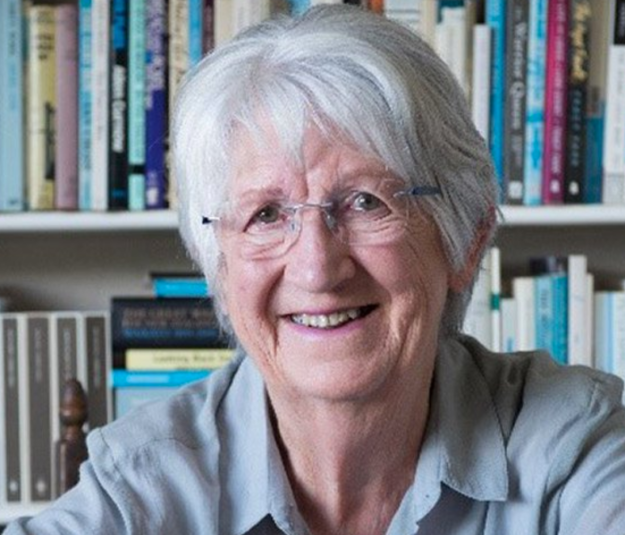
c2c29528-aa4b-47c3-8776-b016ad9931d9.jpg


Who doesn’t hope

for a fishing net

to come heavy

from the water with

an old locked box

caught in the net?


from ‘Loretta’


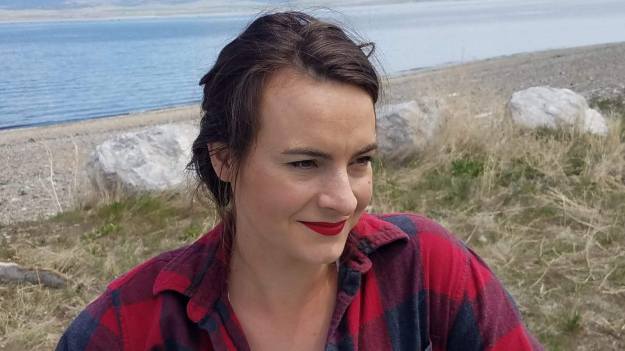
Amy Leigh Wicks holds a PhD from the International Institute of Modern Letters at Victoria University. Originally from New York, her debut collection Orange Juice and Rooftops appeared in 2009 while her poetry has also appeared on The Best American Poetry blog and in several local journals. She lives in Kaikōura with her husband.

Amy Leigh’s new collection The Dangerous Country of Love and Marriage is an intricate weave of themes, motifs, forms and sound effects that offers much for the reader. Strangeness and discomfort sit alongside beauty and soul searching as a woman writes between her birthplace and her new home. The enigmatic gaps in the narration are counterbalanced by sumptuous detail, exquisite images, tiny admissions; the melodic lines build both the music of place and the music of character. As much as it is a physical world marked by mountains, oceans, anchors and salt, it is an abstract world marked by conversations with God. It is a collection that has stuck with me.


1560378285137


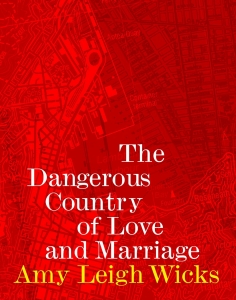
Amy Leigh Wicks, The Dangerous Country of Love and Marriage, Auckland University Press, 2019


Paula:  When did you first start reading and writing poetry?

Amy Leigh:  I remember coming across a box in my grandparent’s attic when I was about seven.  The box was filled with mostly handwritten poems by my Grandma.  They mostly rhymed, and her writing was in cursive, so I couldn’t make out all the words. I felt I had found a treasure box.  Later, I locked myself in Grandpa’s office and emerged however many hours later with a poem I’d written that I gave to Grandma.  She cried a little when I read it aloud to her, and took me out for an ice-cream sundae, which was as good as winning the lottery as far as I was concerned.


Paula: Oh what a wonderful memory. Were there any poetry turning points and/or epiphanies between that young girl writing and your recent collection?

Amy Leigh: A whole sky full of stars map the journey between little Amy Leigh writing and this collection.  The epiphanies and turning points are bright pinpricks against a darker subconscious, and the constellations that I see, clear as Orion, are comprised of poems, lectures, exhibitions, drawings on napkins.  Reading Nikki Giovanni’s poem Ego Tripping in high school alongside Shakespeare’s sonnets; sitting in Lorene Taurerewa’s Brooklyn studio as she described walking to school beside the barefoot James K. Baxter in Whanganui; working on sestinas and villanelles with locals in Kaikōura after the 7.8 earthquake: these are some of the influences that shape the way I read and the way I write.


The house is quiet and then the sound of bees

gather at my head. Will you let me be swallowed

by this? Another wave, another scalloped

rim of water on top of quiet water.


from ‘Impasse’


Paula: Your new collection weaves multiple themes and poetic effects. I view it as both a long narrative poem and a sequence of intensely connected pieces. What do you like your poetry to do?

Amy Leigh: When selecting poems for this collection, I wanted the reader to be able to let the book fall open and read a single poem without feeling they’d missed something vital. I also wanted a cover-to-cover reading to feel like one unfolding narrative that moved forward in time and backwards through memory in order to recover things that may have been lost along the way.


When the roof is pried from

the house and I am a sardine

(blinkless before you)


what will you say to me?

I see your hills, and yes,

every night a different

sun leaves slamming the door,

rattling the handle behind it.


from ‘Psalm III’


Paula: At times it felt like poetry as prayer. Did it ever feel like that to you?

Amy Leigh: Very much.  The sestinas offer a sort of liturgical reprieve, and Epiphany deals directly with the uncertainty and catharsis of prayer—‘it was just me, alone with the bruise/ of a bad decade, finally asking toward the sky/ for a little help, shuddering ugly tears until/ I was dry in the silence of an answer I’m still/learning to understand.’


expatriate


it is like heaven

here and every

where else too

but some sad

-ness hangs in

the air and I do

not know if I

carried it or of

it carries me


Paula: I am drawn to the way the collection layers the strange, unknowable and the unsettling within the context of a marriage and multiple homes. Does it make a difference where you are when you write?

Amy Leigh: Yes, I believe it does.  I’ll write where I am, regardless of the environment, but Kapiti Island at sunset in Plimmerton, wooden tables cluttered with tea cups at writing group in Kaikōura—these things affect my writing the way altitude, rainfall, and sunlight affect the flavour profile of a coffee bean.


Where else is there to go once I’ve got

paper, a new pencil with a green eraser

and half a peanut butter and jam sandwich? If

I could erase one year of my life

what would fill the hole? (..)


from ‘August’


Paula: How much of yourself do you let into the sequence and how much do you hold at arm’s length? In some ways I see the poems as both losing and finding things (including self).

Amy Leigh: While the poems in this collection are based on happenings in my life, the only confessional elements of the work that I’ve retained, are those elements that feel necessary to the advance the poem, or the collection. I have kept and discarded facts intentionally while putting this book together, in an attempt to perform the artist’s task as Louise Gluck describes, which ‘involves the transformation of the actual to the true.’


Paula: I have many favourites (‘Psalm II’, ‘Psalm III’, ‘Water Song’, Psalm X’, ‘Log No. 4’) but which poem particularly resonates for you? In either subject matter or resolution?

Amy Leigh: It depends on the day for me. Usually my favourite poem is the one I’ve just finished writing, until a bit of time goes by and I can look at it more objectively and less like an offspring of mine that needs nurturing. At the moment I’m fond of ‘Remnant’.  Just a little poem, but it makes me smile to be sharing a personal revelation that I find a little embarrassing in such a public way.


Remnant


Once I said, I want

to be a lawyer, a doctor,

and a ballerina—


I woke twenty years later

writing these poems.


Paula: Are there any poetry books that you have read in the past year or so that have particularly mattered?

Amy Leigh:  I’m reading Sugar Magnolia Wilson’s Because a Woman’s Heart is Like a Needle at the Bottom of the Ocean at the moment.  I met her at a reading in Wellington recently, and I felt as if someone had filled the room up with champagne while she read her work and we were all floating in it. Her voice and her words had this incredibly soft effervescent quality. Then when I held the book in my hands and let it fall open (which is what I like to do first before I begin reading a collection from start to finish) I opened to Full moon celebrations and I thought, this is really something.  To feel such resonance and joy at reading a stranger’s words is an incredible thing.


Paula: What do you love to do when you are not writing?

Amy Leigh: I love to dance and cook, and paint, although not usually at the same time. I also love to curl up with a stack of books on a rainy day, but if I’m not careful, before long I end picking up my pen and notebook.


Auckland University Press page


Poetry Shelf noticeboard: Stephanie Burt in conversation with Valerie Duff-Strautmann

Listen here


STEPHANIE BURT IS MANY things: poetry co-editor at The Nation, transgender activist, Guggenheim Fellowship recipient, the author of many books on literary criticism, which include, but aren’t limited to, Close Calls with Nonsense and The Poem Is You. Burt has a new book out called Don’t Read Poetry — not the title you might expect from someone (poet, literary critic, Harvard professor) who has devoted her life’s work to reading and writing poetry and reading and writing about poetry. The book is for those who are already reading poetry as well as for potential readers of the genre, but she is particularly interested in the latter — those who have avoided poetry or decided they hate it after being instructed to like a particular kind of poem. Burt is interested in having readers come to poems as “fan favorites” rather than as works in a professional hierarchy. Don’t Read Poetry might as easily have been called Read Many Poems, since Burt gives her readers a broad selection, helping them find a poetic niche or find their way back to poetry, perhaps after a long estrangement.

Don’t Read Poetry is divided into basic categories (Feelings, Characters, Forms, Difficulty, Wisdom, Community) so the reader can make sense of various poems’ raison d’être; ultimately, the book flows like a mixtape with the categories as organizing principles, reliant on each poem’s authenticity and voice. Burt’s intentions are clear from her introductory comments: “This book […] gives not just ways to read poems but reasons to read them, and ways to connect the poets and poems of the past, from Sappho and Li Bai to Wordsworth to some poems being written right now.”

We discussed Don’t Read Poetry over coffee in Belmont, Massachusetts, where we both live.

Poetry Shelf noitceboard: Lani Wendt Young’s NZBC talk

Screen Shot 2019-08-06 at 8.42.47 AM.png
Beloved Samoan author Lani Wendt Young presents an evocative talk on reading and writing in the digital age. Brought to you by NZBC.

About this Event

Join us for Stories from the Wild: Reading and Writing in the Digital Age, a brave and personal talk on the growth of Pasifika literature and how digital technologies are disrupting traditional publishing and offering new opportunities for both readers and writers.

Held in Wellington High School’s character auditorium, Stories from the Wild: Reading and Writing in the Digital Age will be delivered with Lani Wendt Young’s distinctive honesty, humour and passion.

Transport to the event is available via the number 3 bus, which stops outside the school on Taranaki Street. Follow signs from Taranaki street to the auditorium.

Parking is available in the both the Massey University and Wellington High School car parks – entrances on Taranaki street.

The auditorium has wheelchair access and gender-neutral bathrooms.

We look forward to seeing you there!

“To delve into what it means to be a reader in the digital age, we must first talk about what it was like before.


Poetry Shelf noticeboard: Eyes write: Poetry and New Zealand art

Screen Shot 2019-08-06 at 8.40.27 AM.png

Celebrating 100 years of the Alexander Turnbull Library.

  • Date: Thursday, 8 August, 2019
  • Time: 12:15pm to 1:00pm
  • Cost: Free event. Booking is not required. Koha from non-members appreciated
  • Location: Te Ahumairangi (ground floor), National Library, corner Molesworth and Aitken Streets, Thorndon
  • Contact Details: ATLOutreach@dia.govt.nz

Find out about ekphrastic poetry — poetry inspired by NZ works of art

Therese Lloyd is researching an unusual anthology project. She is interested in New Zealand poetry that is inspired by New Zealand works of art – a genre known as ‘ekphrastic poetry’.

This lunchtime talk will demonstrate a unique relationship between poets and visual artists in this country. A notable example is the collaborative work of poet Bill Manhire and artist Ralph Hotere.

About the speaker

Dr Therese Lloyd is the author of three poetry collections. Her first ‘many things happened’ was a hand-sewn chapbook published by Pania Press in 2007. ‘Other animals’ (VUP, 2013) was written during her year as Schaeffer Fellow at the Iowa Writer’s Workshop, and her latest collection ‘The Facts’ (VUP, 2018) was shortlisted for the 2019 Ockham NZ Book Awards.

Lloyd has a PhD from the IIML and was the 2018 Writer-in-Residence at Waikato University.


Happy 30th Birthday to the Women’s Bookshop

Screen Shot 2019-08-05 at 4.05.47 PM.png


A toast to everything

you have done to bring

women’s writing under a warm

spotlight in your shop

and through your events,

we offer heartfelt thanks

and wish you all

the best for a terrific celebration.


Poetry Shelf Monday poem: Sudha Rao’s ‘Manuhiri’

check layout 22/ 7


Manuhiri

(Visitor)

1

Her grandmother told her she was a child of Manu,

manushi, daughter of humanity, blessed

to be a visitor when she crossed the sea.


The wooden gate is a threshold with arms outstretched

in protection, the slow wash of green waters rhythm.

Rising notes of another tongue is the wailing of her mother tongue.


Her back, a billowing canvas is taking shape –

her grandmother’s tapping, tapping the geo-graphy of her

in colours of the monsoon rain.


She is dusk, light with all the distance around her.

She crosses the threshold and offers her grandmother’s verses,

a garland of old earth sounds for the new.


2

Blissful waters surround pain washed up over and over again.

She sits among silent voices, bodies twitching to utter

shame for carrying skin, coloured by others.

What’s a brown skinned woman to do

at the gates of a marae? The solidarity of colour

bears differentiation.

He opened to a stance defying rule, he said I am

connected to islands by water, I am connected to you

by colonisation.

The gates opened enough for her to raise her head.


3

Nga Mihi

Korihi Te manu, takiri mai i Te ata 

Ka ao, ka ao, ka awatea

Tihei Mauri ora

Kua tau tenei manu hei manu, hei manuhiri, hei manu hari 

Ko te takahanga waewae, ko te rere o te kupu

Ka tangi te ngakau, he roimata aroha

Ki te manawhenua, no koutou tonu te whenua nei.

He awe ko toku mama, he awe ko toku papa 

Ma te huruhuru te manu ka rere 

Ka rere i te ao, ka rere i te po, ka rere ki toku whenua ake 

Ma Te ahi ka te manu ka ora. 

Tena koutou katoa.


4

When the kuia holds her hand, a sacred place ignites.

You are a seed of the old banyan tree swept

from your grandmother’s lap.

Transplanted here, I see birds’ nests, singing insects and shoots bearing the weight

of you. I see strong branches making light of your path –

see how they are dropping roots –

she feels the earth quiver under her feet.


5

Across the table, she hears raging clouds roving

to make wave upon wave to become sea overhead. White peaks roughed up on waters

below are screeching

gulls. How can she say that she is a visitor

on a  warm beach with sand beads

sketching a canvas stretched in her head?


6

She is a mirror of herself.

She is not a mirror of herself.

She is a scooped grain of memory,

of a love-song for a life lived

between her worlds.


1  The mihi for Manuhiri was prepared for me by Matt Gifford. It is made of two parts – the first is Māori proverb, the second part of the speech is an introduction of me to the hosts at the marae. The translation is as follows:


Nga Mihi (speech)

Part One – Maori proverb

Korihi Te manu, takiri mai i Te ata

Ka ao, Ka ao, ka awatea

Tihei Mauri ora

The bird sings, the morning has dawned

The day has broken

Ah! There is life.

Part Two – my speech introducing myself Matt references me as bird

Kua tau tenei manu hei manu, hei manuhiri, hei manu hari

Ko te takahanga waewae, ko te rere o te kupu

Ka tangi te ngakau, he roimata aroha

Ki te manawhenua, no koutou tonu te whenua nei.

This manu (bird) has descended as a manu (bird), as a visitor, as a dancing visitor

Through its dancing feet and its flowing words

Its heart cries, the tears of love

For you the home people, this is your land.

He awe ko toku mama, He awe ko toku papa

Ma te huruhuru te manu ka rere

Ka rere i te ao, ka rere i te po, Ka rere ki toku whenua ake

Ma Te ahi ka te manu ka ora.

My mother is a feather, my father is a feather

And it’s by their feathers this manu (bird) takes flight

Taking flight to the day, and flight to the night, From its own home land

Where the home fire burns, and gives this manu (bird) life.


Originally from South India, Sudha Rao lives in Wellington and has had a long standing involvement with the arts, primarily as a dancer. In 2017, Sudha graduated with a Masters in Creative Writing from the International Institute of Modern Letters, Victoria University, Wellington. Since 2012, Sudha’s poems have appeared in various journals and anthologies. These include two editions of Blackmail Press (2012 and 2014); an anthology of New Zealand writing, Sunset at the Estuary (2015) and in the UK anthology Poets’ quest for God (2016);  Landfall, Otago University, Dunedin (2018),and an anthology of migrant voices called More of us published in March 2019. In 2014, one Sudha’s poems was on the Bridport Poetry Competition’s shortlist. Excerpts of her prose work, has appeared in Turbine (2018) which comprised part of her MA thesis Margam and other excerpts were read in two sessions on national radio RNZ (2018). Sudha is part of a collective of Wellington women poets called Meow Gurrrls, who regularly post poems on YouTube


.

Poetry Shelf noticeboard: Lounge #69

LOUNGE #69 Wednesday 14 August

Old Government House Lounge, UoA City Campus, Princes St and Waterloo Quadrant, 5.30-7 pm

Free entry. Food and drinks for sale in the Buttery.   ALL WELCOME


MC Michele Leggott

Owen Connors
Irene Corbett
Cian Dennan
Murray Edmond
Tim Heath
Simone Kaho
Anne Kennedy
Anna Livesey
Alys Longley
Erena Shingade


Poetry Shelf review: Gail Ingram’s Contents Under Pressure

cv_contents_under_pressure

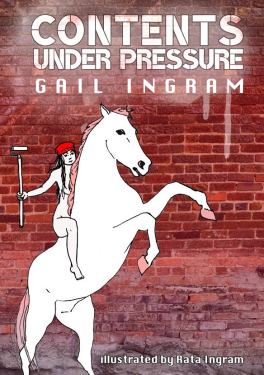
Gail Ingram, Contents Under Pressure, Pūkeko Publications, 2019


Gail Ingram has published poetry and flash fiction both in New Zealand and internationally. She lives in Christchurch where she is part of a writing/ critiquing group of poets. Contents Under Pressure is her debut poetry collection and includes illustrations by her daughter, Rata Ingram.

Contents Under Pressure is in debt to a city; the poems navigate post-earthquake Christchurch. When I first held the book and flicked through the pages, I was reminded of flicking through a book to watch the drawings on the bottom corners move. Flick the pages of this book and it is poetry in disrupted movement: you get spiky angles, walls of text, bold against light, steps against missing bits, changing fonts.

The title is perfect: everything is under pressure – the fractured city and the contents of the book. This is the story of a city filtered through that of a mother / graffiti artist and her son, and both have different ways of coping with a city in pieces.

The opening poem ‘Definition: mother / graffiti / artist’ introduces just that: a mother who goes tagging in the city that continues to break. At times the pages of the book stand in for the tagged walls:


she sprays

airport walls in zen

tangles so strangers

trace poke-leaves

in sesquipedalian mazes


from ‘From below, the graffiti artist is’


I love this book because it shakes up what poetry can do while simultaneously bringing us in close, so searingly close, to human trauma.

An early poem returns us to solid ground: the mother and her sons are looking at a photo of the family tobogganing at Round Hill. It is a white hot shard in the collection that makes the rest of the poetry even more poignant:


Mum took the photo. I’ve got this picture of Dad resting his

arm across her shoulders —

Yeah, like a security blanket.

Yeah.

But now when I look at it, I don’t see us. I don’t know who

that family is, but …

I know the mountains —

The mountains are capable of moving.


from ‘She overhears the boys talking about the photo in the hall’


The portrait of the woman feels like a woman behaving out of character in order to relocate herself (her new character) in the new and shattered terrain. She leaves her familiar/unfamiliar daylight routines. She becomes someone other in the pitch dark night. At times the writing is in shards and spiky while at times it is lyrical:


She hasn’t gone out into the ink

of the night street yet. Here,

she exists, safe as a thief

in the stoma of their sheets

before she will slink through the open window,

creep along the dark passages of local streets,

and tap her own tune

on the city’s leaping drum.


from ‘The graffiti artist waits for the world to sleep’


The graffiti artist shows us the power of art to make both public and personal both ideas and feelings. And we can engage with this. We can be moved and we can be challenged. In ‘The graffiti artist as a teenager’, her art teacher had showed the class the ‘Cubist strokes of “Guernica””. She is learning what art can do:


At fourteen she learned the power of dots. That a

cluster could create a river pebble’s shadow, a

crease in a smile or the trail of cupped hooves on

farm soil. Forty pencils pattering in the class, and

the hexagon-window left free, high in the streaked

pupil, made the picture come alive as if it was her

paper skin under the shrapnel of sharp lead. (…)


There are many threads to track through the book. Equally captivating is the thread of the son thrown off kilter, with drugs, anxiety, physic textbooks. In ‘Expedition to the New World’ the mother and son are traipsing through the vegetable aisles where the poem’s punning supermarket title confirms everything is made strange and off-centre:


(…)  She can’t find what they need. He

brushes past tins of spaghetti. Root-like tendrils on the

labels seem to take an interest in his passing, as though to

grasp for arm or ankle. He half-stumbles into the bags of

stalky cereal and utters a guttural sound, an earthquake

rumble that shudders up through his body to settle there.


On the back of the book Sue Wootton, Bernadette Hall and Bryan Walpert underline what a gift this book is. I agree. The poetry represents the way the shattering of familiar terrain shakes up everything: family, body, heart, faith, everyday routines, solid attachments. It shakes you as you read. It is intimate and it is wide reaching. It also shows the way art, language and a deep love of family carry you as you discover ways to resettle. A gift of a book.


Pūkeko Publications page


Poetry Shelf noticeboard: The Public History Talks – Fiona Kidman on This Mortal Boy

Screen Shot 2019-08-02 at 8.54.18 AM.png


The Public History Talks are hosted by the Ministry for Culture & Heritage History Group at the National Library of New Zealand. They are usually held on the first Wednesday of the month from March to November.

Talks in this series are usually recorded and available online

  • Date: Wednesday, 7 August, 2019
  • Time: 12:10pm to 1:00pm
  • Cost: Free. You don’t need to book.
  • Location: Taiwhanaga Kahau — Auditorium (lower ground floor), Corner Molesworth and Aitken Streets, Wellington. Entrance on Aitken Street.
  • Contact Details: ATLOutreach@dia.govt.nz

Please join us to hear Dame Fiona Kidman discuss the writing of her award-winning book ‘This Mortal Boy’.

Albert Black, born in Belfast, was eighteen when he arrived in New Zealand as an assisted work immigrant, in 1953. Although his life in New Zealand started well, he was found guilty of murder after an altercation in an Auckland cafe, two years later. He was hanged in December 1955.

In writing the novel ‘This Mortal Boy’ (Vintage, 2018), Fiona Kidman explores the story behind the headlines and asks whether Black might have been found guilty of manslaughter rather than murder.

The 1950s were a time of social upheaval in New Zealand, and form a background to the events she describes. Central to this talk will be the methods of research employed and the boundaries between fact and fiction.

These free public history talks are a collaboration between the National Library of New Zealand and Manatū Taonga Ministry for Culture and Heritage. They are usually held on the first Wednesday of the month March to November.

Most talks are recorded. You can listen to them at New Zealand History

About the speaker

Dame Fiona is a Wellington writer. Over the years she has been a librarian, radio producer and screenwriter.

She has written more than thirty books, including novels, short fiction, memoir and poetry. Her latest novel ‘This Mortal Boy’ was awarded the Acorn Foundation’s Prize for Fiction at the Ockham Book Awards 2019. She has a DNZM, OBE and two French honours, including the French Legion of Honour.