Is love in the blessing of language? Is love in the plummet of sleep in dances of dreams in flight of ancestral songs? Does love leap out of your skin in the first flush of touch? Or is love in the land, that great keeper of exits and entrances.
Is there love in some kind of justice? Or is love in the universe of your eyes?
Jenny Powell
Jenny Powell’s latest poetry collection, Biology Field Trip a different way of seeing has been published by Cold Hub Press. She is currently studying English at the University of Otago.
The light lengthens on the carpet, a sure symptom of afternoon. I haven’t left the house today because there’s only one reason to do that, and I’ve already got goat cheese. A half moon is only a quarter of the moon. This sky should win trophies. I look at other people, their energy, and think they must have been raised by marmots. I know for the sake of social cohesion we must try to live togetherly, like Bronze Age women and men, but it’s been a long week, and, anyway, petrol prices have gone up again.
Erik Kennedy
I love Erik Kennedy’s 2022 collectionAnother Beautiful Day Indoors. It’s a banger – witty and bleak, smart and uplifting. I have been reading and re-reading it the last few months. You should read it too.
Anyway here is the title poem (one of my faves), and the response I was inspired to write which itself turned into a poem:
Rank Outsider after Erik Kennedy’s ‘Another Beautiful Day Indoors’
I haven’t left the house today yet someone asked me why I’m so good at jigsaws and I said I really love a puzzle but really poems remain a mystery although this one held a mirror and really it’s just an immune response and I already have my clot of blue vein though really the moon is running late and the marmots are all deeply asleep and really everyone is better at a distance but I tell them really it’s because petrol is still too expensive so here I am alone indoors, a sure symptom of a beautiful day
Melinda Szymanik
Melinda Szymanik is a Tāmaki Makaurau based writer of children’s fiction, including picture books, short stories and novels, some of which have won awards. Occasionally her work turns out to be a poem and she has learned not to fight this as they can be dirty brawlers. Her adult poems have appeared in Poetry Aotearoa Yearbook,NZ Poetry Shelf, takahē and Roi Fainéant Press.
Erik Kennedy is the author of the poetry collections Sick Power Trip (2025), Another Beautiful Day Indoors (2022), and There’s No Place Like the Internet in Springtime(2018), all with Te Herenga Waka University Press, and he co-edited No Other Place to Stand, a book of climate change poetry from Aotearoa and the Pacific (Auckland University Press, 2022). He is the poetry editor of takahē and an adjunct fellow in English at the University of Canterbury. Originally from New Jersey, he lives in Ōtautahi Christchurch.
Megan Kitching is an Ōtepoti Dunedin poet. Her debut collection At the Point of Seeing (Otago University Press, 2023) won the Jessie Mackay Prize for Poetry in the 2024 Mātātuhi Foundation Best First Book Awards and was awarded Best International First Collection in the UK Poet Laureate’s The Laurel Prize 2024. In 2021, Megan was the inaugural Caselberg Trust Elizabeth Brooke-Carr Emerging Writer in residence.
Tuesday: Poetry Shelf Playing Favourites: Serie Barford picks Albert Wendt
Wednesday: Poetry Shelf Playing Favourites – Philippa Werry chooses Bill Manhire
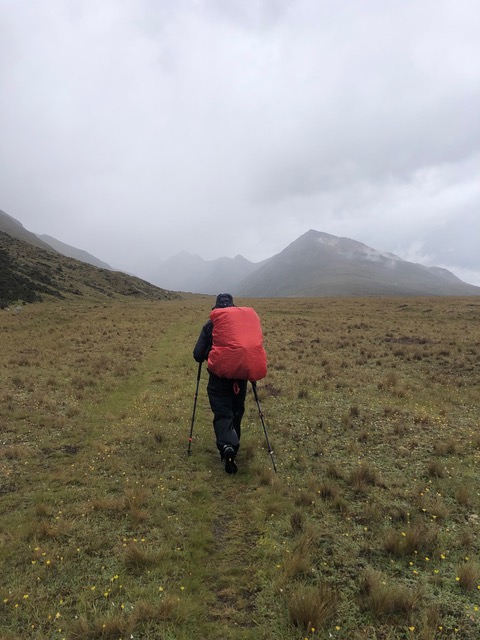
Thursday: Poetry Shelf Te Araroa Dispatch 3 – poems and images by Jillian Sullivan
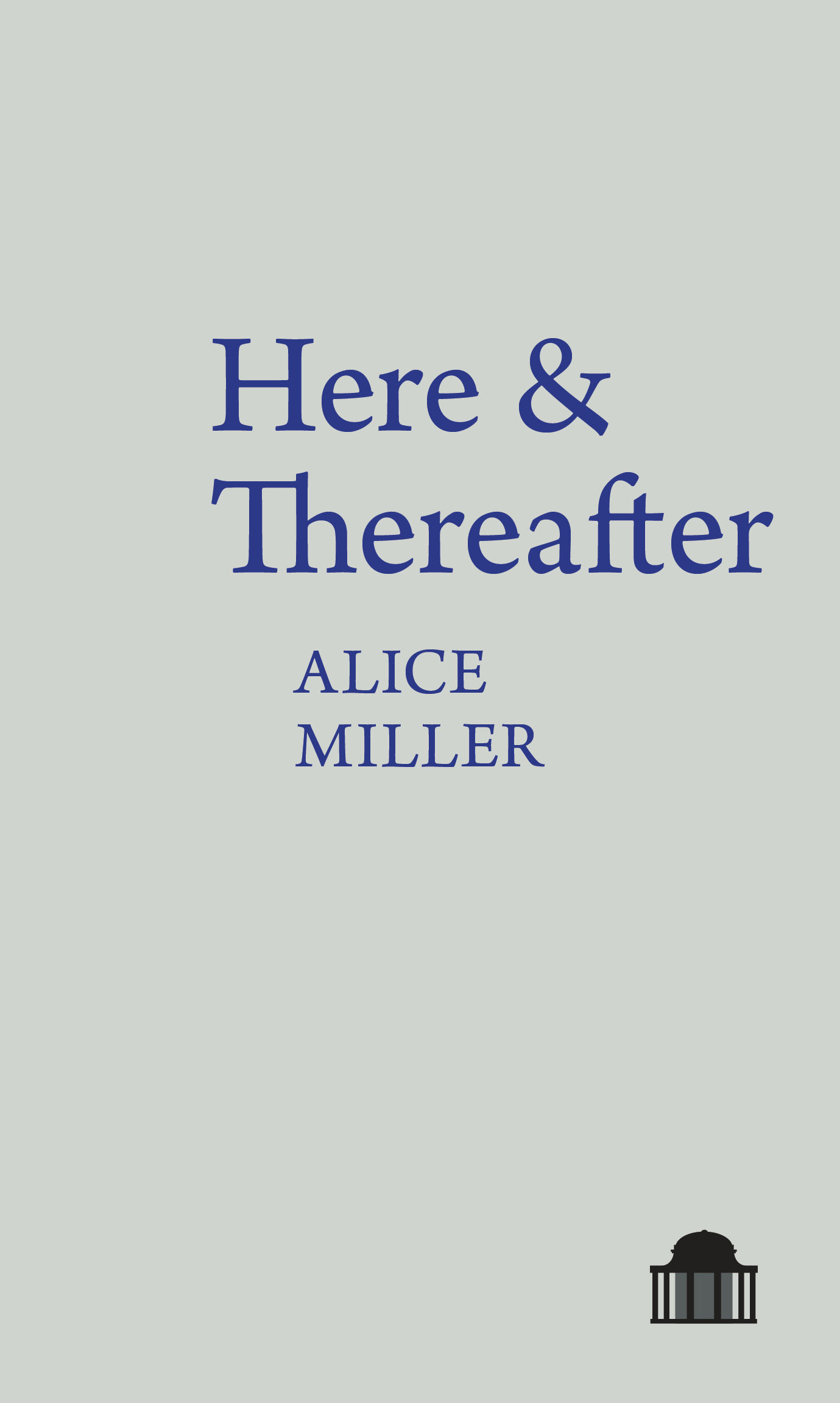
Friday: Poetry Shelf conversation and reading – Here & Thereafter by Alice Miller
This week I have ended up with a lot of unanswered emails – I aim to get to them over the coming week. Thanks for getting in touch! You are welcome to send me review copies but I can never promise to review them all. Send to: PO Box 58 Waitākere 0816.
If you have a poem that fits my ongoing series Speaking Out To For With – do send – political gets personal, personal gets political, poetry speaks out and sideways and whether quietly or loudly. paulajoygreen@gmail.com
And do send poetry news!
Wanted to add so much more here but after a week of storm power cuts in ten minutes we have scheduled cut for the day!!
Here & Thereafter, Alice Miller Liverpool University Press, 2026
When we’re young we know poems matter, later we still know but have to admit there’s no way they can. After all, much more than sandcastles are vanishing. With these odds, one part must keep singing and it’s that proof we keep.
Alice Miller from ‘Old Romantic’
Paula: Often when I read a new poetry collection, it shifts and resettles what poetry can be and do, refreshes the light and dark of the world. Your new collection is an incredible conduit for light and dark. What was tough and what was illuminating as the book came into being?
Alice: Thank you. It feels quite mad writing poems when the world’s perched on the brink of apocalypse and we’re only coming up with more alarming ways to tip ourselves over the edge. But with poems, I still want to multiply the world, to blast it open, to see a thousand places at once. The machinery of poems—the page, the line break, the stanza break—are all so exciting. What lightness is acceptable in such darkness? I don’t know the answer, but this book certainly grapples with that question.
I left the death certificate of my grandmother in our mailbox for days, as if to invite
her back to Berlin where she was born, as if she might like to have come last night
to the Akademie der Künste for the talk by Claudia Rankine
about the new words we’re not allowed to say.
from ‘Future Proof’
Paula: I also embraced the collection as an echo chamber. I was drawn to the movement between past and present, especially the past and present of Anna, your German Jewish grandmother, especially on the brink of WWII, and especially as we face multiple brinks and unfoldings of war in 2026. How did contemporary circumstances affect you as you wrote?
Alice: Yes, there are very noisy echoes between past and present here. The month before my son was born, Russia invaded Ukraine and troops were shooting at a nuclear power plant a thousand miles from where we live in Berlin. And I realised, oh right. I’d thought my family stories were these dramatic war stories (and they are, about the Holocaust, WWII bombings in London, the creation of the atom bomb), but I also saw how much they’re just stories from a continual flow of conflict. As I was writing about my grandmother fleeing Germany in the 1930s, the German Government was supporting Israel to carry out a genocide in Gaza, and we were all forbidden from saying the word “genocide” in public. As if our silence could erase the fact that it was occurring.
I don’t think we can stay here. Anna left to get as far as she could from Europe and now we see it again. But what use leaving for those who can’t? What use speech?
Out on the Strip, a woman sings, glint of gold at her wrist. Moon’s own slice of sky. Ragged waves pull at sand, again, and again.
from ‘Gaza’
Paula: I love how you return to the mantra, the personal is political, and flip it so acutely to the political is personal. I get to think and feel your poems. Your poetry is intimate at the level of self and family stories and equally vital in a wider more global reach. How important is it to both speak out and challenge and to share an intimate self?
Alice: I’m so glad that works. It was important to me that this book did that, or at least tried to. I found the balance really difficult.
Paula: I love Bill Manhire’s endorsement: “There aren’t many historians who sing, but singing is exactly what Alice does in this new book”. You sing so much into being, into remembering, into imagining: the horrors and catastrophes, a newborn baby, forgotten stories, home, most especially home. Your book is still singing in me. Are there other poets or whose poetry books who sing in you?
Alice: Definitely. I love Diane Seuss’ Modern Poetry, which I recommend to anyone who’s lost their faith in poems (it happens to us all sometimes). We were lucky enough to see Anne Carson read recently, and she’s such an extraordinary writer—and performer, too. I keep going back to Jericho Brown’s The Tradition and the ways he plays with form. I’ve also been reading Vicente Huidobro’s fragmentary, urgent Arctic Poems, translated by Tony Frazer. Closer to home, I definitely need to catch up, but I’m a fan of recent (recent to me!) books by Rebecca Hawkes and Erik Kennedy.
Paula: I picture us in a cafe drinking coffee and sharing favourite lines from the collection, lines that stop me in my reading tracks. Like: “how the poet knows how / to keep the whole world from spilling into her”. And like: “always the river / stepped in up to my neck, soaking me in time”. And this: “and how tremendous we are / when we go back home / if only we can remember / which song home is”. Can you share a couple of favourite lines?
Alice: I love this idea. I tried to add to this, but I find every line insists on clinging to the next! But I like your collection of lines very much. Thanks, Paula.
In the dream my friends were all suddenly architects. It had something to do with holding things up. A bridge had collapsed, and everyone I knew was talking about how they would fix it, or else how they wished they’d never studied architecture and instead become an actor. There were lemurs on the fallen bridge; fur-covered creatures leaping between weeds that now were building their green shots through the broken concrete.
from ‘Bridges’
a reading
‘Everyone’s Here, Stranger’
‘Unpromised Lands’
‘Now and Never’
‘Relief’
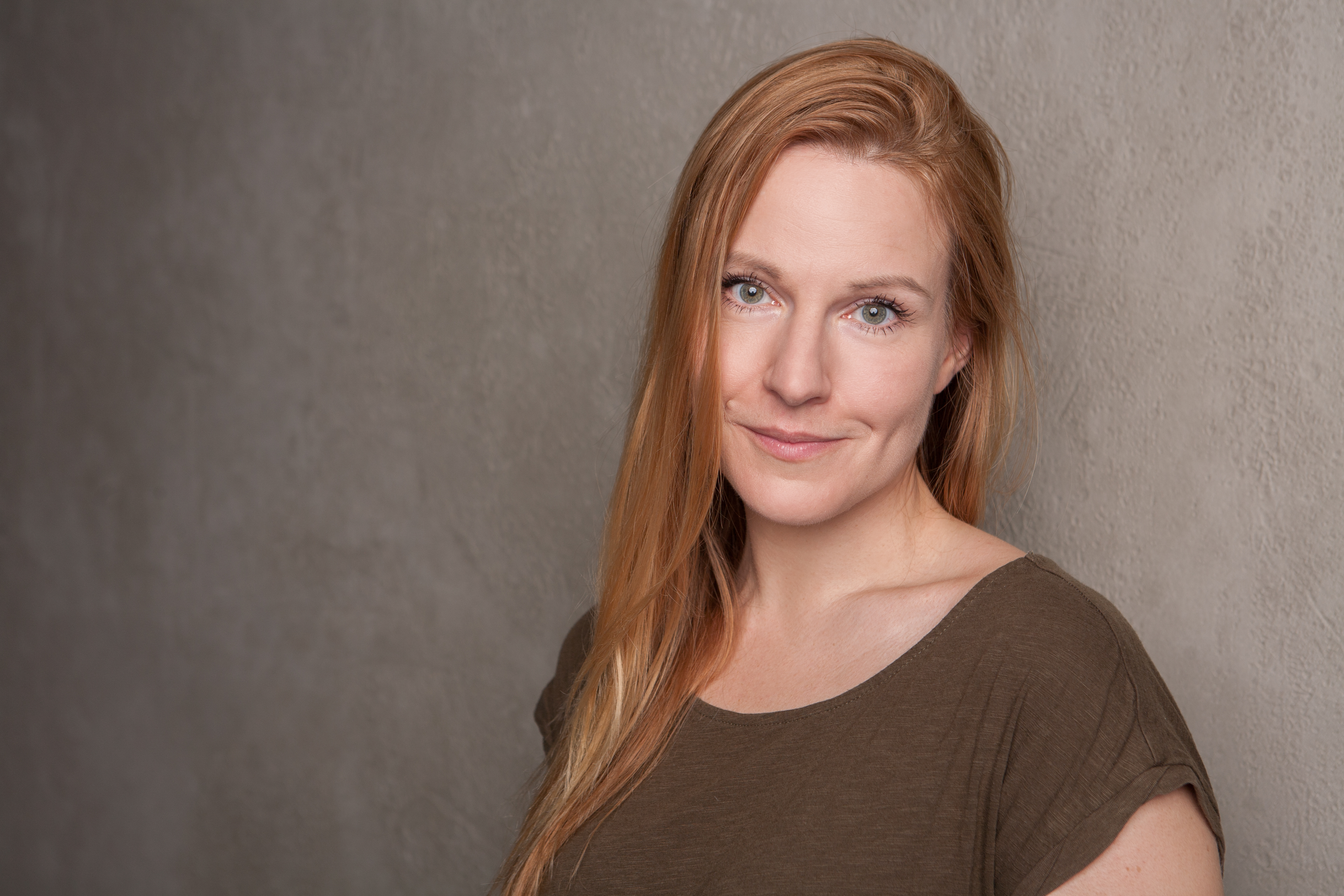
Alice Miller’s fourth poetry collection is Here & Thereafter (Pavilion, 2026). She is also the author of a novel, More Miracle than Bird (Tin House). Alice lives in Berlin, but she and her family are planning to return to Aotearoa in 2027.
Join us to celebrate the publication of Watching Television in a Love Motel, an unforgettable first book of poetry by Haro Lee. The book will be launched by Jenna Todd.
Friday 17 July, 6pm Upstairs at Time Out Bookstore: 432 Mount Eden Road, Mount Eden, Auckland Free event — all welcome!
In this unforgettable first book of poetry by Haro Lee, television – like love – binds us and liberates us; inspires, infuriates and illuminates us.
Watching Television in a Love Motel is a poetic chronicle of Haro’s time in Aotearoa, South Korea and the United States of America. In four parts – ‘Daytime Television’, ‘Primetime Television’, ‘Late Night Television’, and ‘Graveyard Slot’ – she looks at her past, family and self with the help of the unwavering cultural force that is TV. Big subjects are caught in its glow: God, drugs, love, anti-motherhood, intergenerational trauma, loneliness, failure, and 3am existential anxiety.
The final section is a love letter to a dying neighbourhood in Seoul. Set against the heartache of a rapidly developing nation, this is the story of one girl and her life with a beloved grandmother.
Haro Lee was born in the Year of the Rat in Tāmaki Makaurau. Her work has been published in The Spinoff, Michigan Quarterly Review and Poetry Northwest, among others. Watching Television in a Love Motel is her first book.
Join us and Time Out Bookstore on Tuesday 7 July at 6pm to celebrate the publication of AUP New Poets 12, with Anuja Mitra, Loretta Riach and Zephyr Zhang, with Anne Kennedy, our marvellous New Poets editor, who will launch the book.
The book isn’t officially out until 9 July, so come along to Time Out and get a special early copy, and hear these talented poets read from their collections. This event is the first in Time Out’s Winter Poetry series, so mark your diaries for all three events this July and August.
AUP New Poets 12 brings together three careful observers of the everyday and the ineffable. Anuja Mitra, Loretta Riach and Zephyr Zhang tell of wandering through cities, ghostworking from office cubicles and sweating through heat waves and tax season; of grappling with questions of alienation, belonging, lust and grief.
Though irreverence and a generational malaise might hover at the poems’ edges, tenderness forms their centre, as when Zhang encounters a house on the back of a truck in the small hours of the morning:
I would say look! how lucky we are to know that magic still happens if we stay awake to see it
With humour, vulnerability and flair, these collections navigate being young in precarious times – and mark the arrival of three confident new voices in New Zealand poetry.
photo credit: Liz Sullivan all other photos: Jillian Sullivan
Leaving Martin’s Hut
I’d already learnt two lessons – that water is the one thing
you cannot lose. And that joy is not hand painted in nature
just for you. It doesn’t speak out from trees, moss, sky.
It’s not something you harvest by walking by. Not a given.
That moment you laid down his head. Such deaths
do not transfigure in forest light. There is only mud and
the sucking sound of each footstep in mud and the wet silt
smell of mud. No panacea for the upside down of grief.
Nothing means anything here, nothing cares you are there, you
almost don’t care you are there so debilitated by wet earth.
Whatever you came looking for does not arise nor descend, nor bathe
your eyes. Beauty is not an answer.
If there is an answer. There are only the trees,
their roots in clods and moisture, living on.
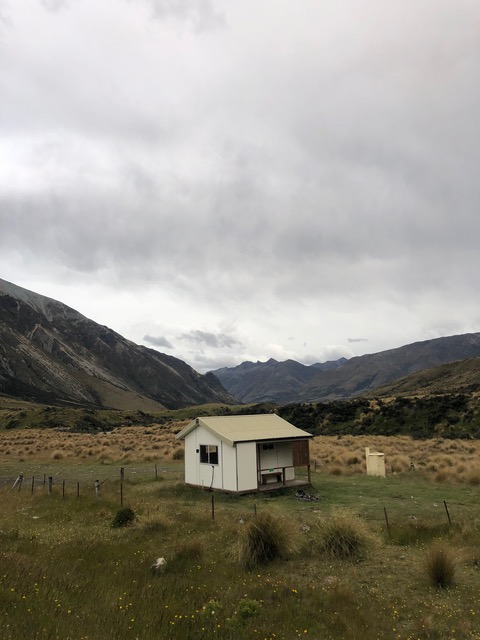
Boundary Hut, Mavora Lakes
A way station here, six left early. In the rain, another tramper approaches. She eats with us, shows us the food she packs: Nutella,
corn chips (squashed), couscous, oreos (dipped in Nutella). “Where is home?” I ask. She thinks. “Seattle’s my built home, Utah where I was born. Now,
I don’t know where I’ll live.” “When I hitched to the supermarket,” I tell her, “I felt like an alien in the aisles, my big pack, clumping boots.” “And I don’t smell
good,” she says. “And I shop like a child: candy, candy, chocolate, noodles. But it’s a simple life. Walk, eat, filter water, try to sleep, walk, eat. Maybe get to
talk to someone. Walk, eat. When I planned the trip it seemed daunting. But on it, it’s a small thing. Just walking.”
Pass Burn
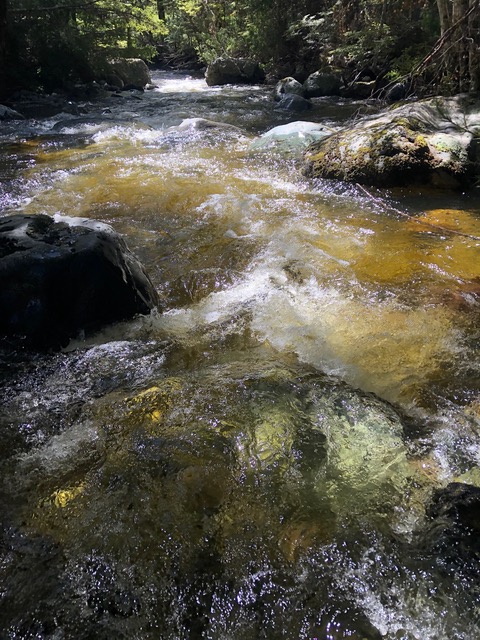
Some streams are built of gravel, fine stones a boot can safely weigh upon, and others you come across in a gully consist of boulders like the hind quarters of a slumbering elephant. Pass Burn,
unpassable just the day before, writhes before us; the final crossing to Greenstone Hut. This bronze-hued water curving and breaking; jade green, yellow, tawny, white frothed, entrancing
if you didn’t have to slide down the bank and enter it, arms linked behind packs, legs almost trembling with the fizz and surge. You slide each foot along the stream bed as if it is unrelated to the wildness your knees and thighs encounter. Halfway,
it seems we will make it. Like the young people we met on the track, who, when we asked how the crossing was, called back, “It’s fine. It’s fine. You’ll be ok!”
Leaving, again.
It’s still raining, the rivers on high water alert. I’m grounded, read Whatsapp,
South Island section, those anxious for news: “How is the river level?” “How is the track?”
“Can anyone offer me a sitting-room floor?” I’m steeped
in grandchildren, lucky to rest in warm shelter. The reek of my wet socks
quelled by appliances. From Twizel, ’ll forge onwards, grateful then for any
lift from a stranger, a floor during rain. I cannot comprehend it yet, this final
cutting loose – first my home, then family, all backstops gone. The question why
am I walking this trail invokes another question – how can I ever
return?
Things they carry
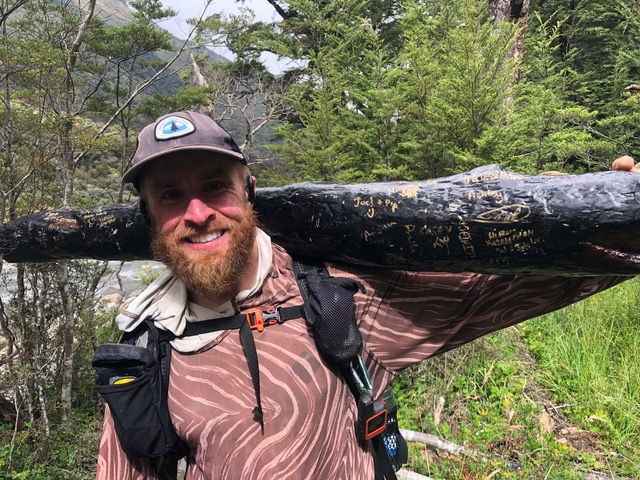
Sean carries an 11-kilogram log on his shoulders. It’s glossy black with silver names. He’s raising money for Make a Wish. I ask him if the log helps him. “Sometimes, in the wind it holds me in place. I can’t imagine walking without it. I love it,” he says.
The French woman carrying her mountain bike on her shoulders up to Stag Saddle tells me it’s the worst decision she ever made. Riding down the ridges on the other side, towards the lake, she will forget that.
One young woman collected bones on the way, attached them to her pack. A Czech Republic man fastened his microcloth blazened I am William on his pack.
I missed the woman carrying the abandoned kitten, Tomo in his coolie hat, the man raising funds carrying two golf bags full of clubs on his shoulders (“I saw him cross a river like that,” a tramper tells me. “It didn’t look easy.”
And then there are those who carry what’s incomprehensible, invisible, unspoken.
Comyns Hut
At Comyns Hut there is a rat, so the hut book warns, and the app.
I don’t take the last top bunk in a room of strangers, (southbounders)
their robust togetherness sharpens my sense of loneliness. Fatigue.
I’m slow to raise the tent, and after those river crossings, too tired to collect water,
too sore to walk to the long drop, too self-conscious to talk to anyone. Grief
gets away on you when the lid of wonder falls. I boil half my water for cooking,
lie back on my mat. When its dark, I’ll pee outside. Always a solution to
practical matters. For loneliness, much more is required. I have only the
consolation of the sleeping bag, of horizontal rest. May the earth
hold me, infuse me, somehow give me strength to move on from here.
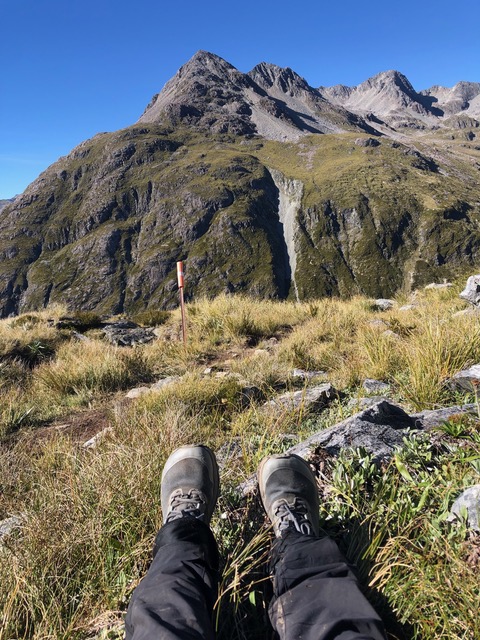
Leading up
The path was always leading, it was the only imperative.
The day thankfully blue-skied, thankfully no wind, not even
searing with heat, just that direction, which climbed into the mineral air.
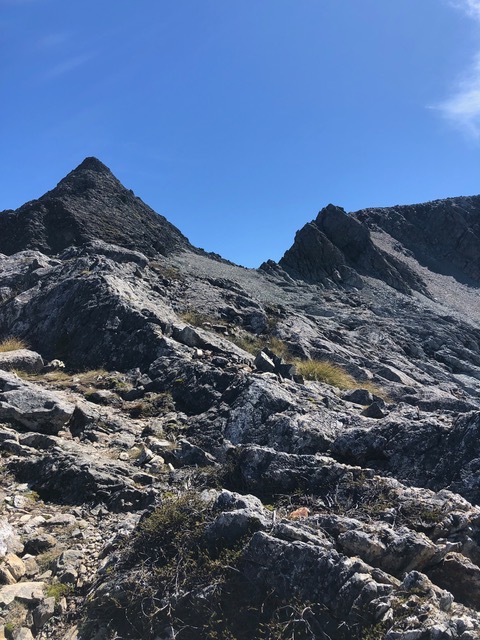
Surely, sometimes, I thought, or said out loud, I won’t have to go up there?
That craggy summit, that narrow lifting path? I shook with obedience,
I was my own cavalry galloping onside, bellowing orders, ready
to rescue; that grey button always an option, like surrender. Oh, but one
foot after another, even when the track disappeared, even when my knees
flamed behind the bone. What was that impulse anyway, to keep
going? Love of shelter at the end of day, love of comfort? Oh,
mattress, I honour you. A tap for water, a level surface to cook.
All this, and something like curiosity, always wanting an
answer to what the track did next.
Waiau Pass
It’s a white Christmas on my tent, as if the sky condensed to frost (waking in the night to pull on hat, jacket, socks) all the while black granite up ahead. Like some execution you’re being led to, but willingly. You won’t rescind, no community or graffiti will save you, you’re walking right up to it, eyes wide. Besides, there are others, younger, clambering up to the pass. They’re not thinking trial, it could even be a mall for them – turquoise lake, stone, sky, so you pretend to be like them (but not as agile) pretend pretend If you fall backwards right now you will die. But you have a choice not to.
Jillian Sullivan
Jillian Sullivan lives in the Ida Valley, Central Otago. Her thirteen published books include creative non-fiction, novels, short stories and poetry. Her latest book is Map for the Heart- Ida Valley Essays, Otago University Press.