
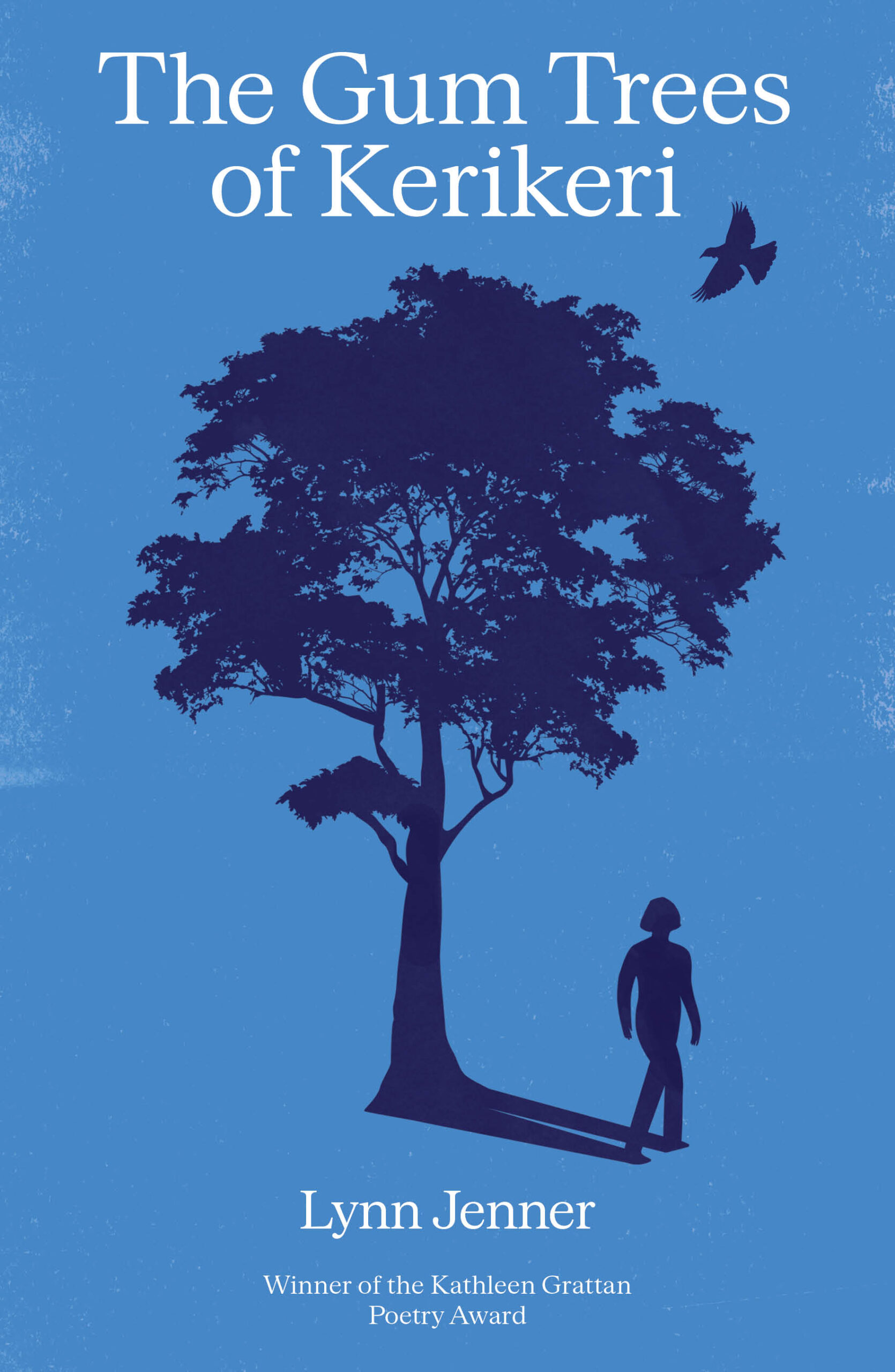
The Gum Trees of Kerikeri, Lynn Jenner
Otago University Press, 2026
41.
Our talk has no official beginning, no structure and no
official end: it starts when the first person says what has
been on her mind; that could be the problem of finding a
parking place at the supermarket at New Year, or it could
be that she has planned a trip and her husband doesn’t
want to go; no-one is criticised or blamed, including the
husband: our conversation is a river with eddies and
currents. We have children who fight with us as though
we were the enemy; men who have taken themselves off
to other countries and left us with mortgages; we have
diseases with scary names: this is deep water but we are
not scared of deep water. We make gardens, we paint, we
write songs and poems, we record stories from the past
and we create adventures for ourselves so that our spirit
won’t slowly die: there are cool shady pools in this river.
We are not optimistic for the earth and its people, but we
think the best idea is to be as optimistic as possible in our
personal lives. Someone always says that and although
we all look a bit shifty and our eyes slide away, we nod.
Lynn Jenner
Poems in The Gum Trees of Kerikeri are disarmingly matter-of-fact given their subject matter: existential crises, climate catastrophe, war, alongside the things that make life worth living: rivers, trees, the sweet taste of fruit. They offer daily optimism while also asking the hard global questions: Is this the age of the death of the planet? Do you see deliverance and redemption anywhere? Is this the Promised Land? And most chillingly, given that the collection was written before the current war in the Middle East, are we there yet?
Referencing the work of philosphers, writers and artists, Jenner doesn’t provide solutions, rather different ways of looking. She draws connections betweeen disparate thoughts leading to a sense of gentle yet rigorous reflection. In one poem, she tells us Ursula Le Guin searched near the end of her life ‘for a way to resist the unfolding political and environmental catastrophes of these days.’ This quotation perhaps summarises the collection’s raison d’etre. Yet this is not a pessimistic book. It is a journey of enquiry in a life filled with everyday joy and confusion. Each poem feels satisfying yet curious: a small offering of humanity with a grounding effect at a time of crisis.
Janet Newman
Janet Newman is a poet, editor and farmer from Horowhenua. She holds a PhD from Massey University for her thesis: ‘Imagining Ecologies: Traditions of Ecopoetry in Aotearoa New Zealand.’ Her collection Unseasoned Campaigner (OUP, 2021) won the 2022 NZSA Heritage Book Award for Poetry. She is an editor of Koe: An Aotearoa ecopoetry anthology (OUP, 2024).
Lynn Jenner is the author of Peat (OUP, 2019), a collection of essays and glossaries which consider the construction of the Kāpiti Expressway in the light of aesthetic and ecological ideas drawn from the writings of Charles Brasch. Lynn’s first book Dear Sweet Harry (AUP, 2010) won the NZSA Jessie Mackay Best First Book of Poetry prize and her second book Lost and Gone Away was shortlisted in the Non-Fiction category of the Ockham New Zealand Book Awards. Lynn lives in Waipapa, near Kerikeri.
Otago University Press page


Pingback: Poetry Shelf weekend reading, listening and invitations | NZ Poetry Shelf