Category Archives: NZ Poets

Poem Friday – Carolyn McCurdie’s ‘A Potato Sonnet: Jersey Bennes for Christmas’ – each word gleams in the light bright space of the page


A Potato Sonnet: Jersey Bennes for Christmas


They gleam in the black

crumbled earth;


steady, as if candles

glow through layers of silk,


underpin the season’s quick

shifts of tinselled light


and the brisk heel-tap, chatter

of crowds in the street.


This is old, wondrous

as moon-rise,


mundane

as the maternal voice


that calls, come in

to the table.


© Carolyn McCurdie Bones in the Octagon  Mākaro Press 2015


Author Bio:  Carolyn McCurdie is a Dunedin writer. She won the Lilian Ida Smith Award in 1998 for short stories and a collection of stories — Albatross was published in 2014 by e-book publisher Rosa Mira Books. A children’s novel, The Unquiet, was published in 2006 by Longacre Press. She was the winner of the 2013 NZ Poetry Society International Poetry Competition and her first poetry collection, Bones in the Octagon, was published in 2015 by Mākaro Press as part of their Hoopla series. Carolyn is active in Dunedin’s live poetry scene, where she is a member of the Octagon Poets Collective.

Paula’s note: The potato is comfort food, but this particular potato hooks you to the extended  family table where the sun is blazing down and family stories circulate. Christmas. Ah. Reading the poem, each word gleams in the light bright space of the page along with the deep pit of personal memory. Each word is so perfectly placed for ear and eye. This is the first poem I read in Carolyn’s debut collection (the title lured me in — especially the idea of a sonnet meeting up with potatoes). There is a quietness, an attentiveness, delicious overlaps of meaning and propulsion. I can’t wait to settle back into the book and discover more.


Mākaro Press author page


Other books in 2015 Hoopla series:

Mr Clean & the Junkie by Jennifer Compton (I reviewed this here)
Native Bird by Bryan Walpert

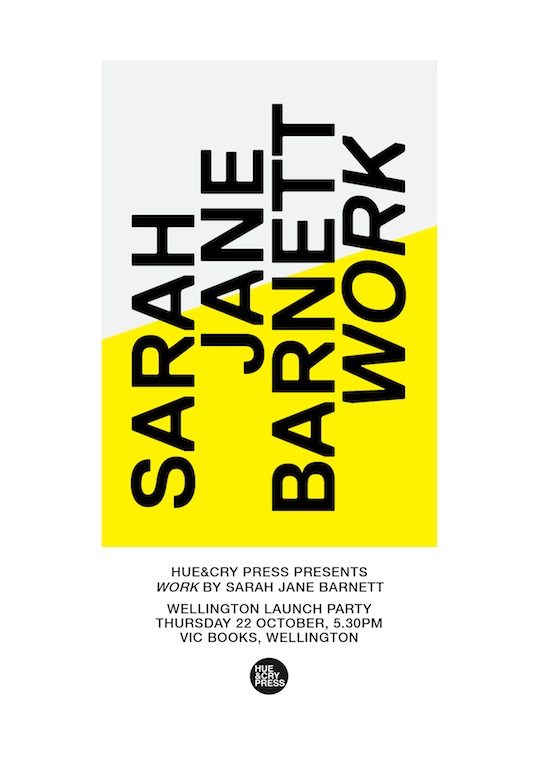
Poetry Shelf interviews Sarah Jane Barnett — writing is an act of contemplation for me

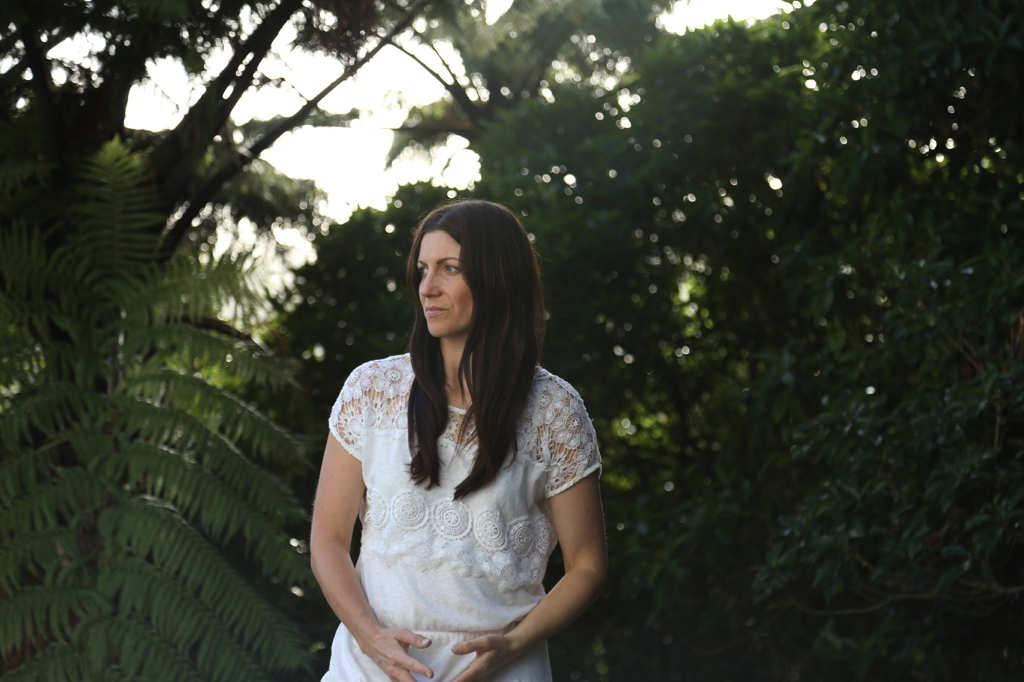
WORK_author_photo

Photo credit: Matt Bialostocki


Sarah Jane Barnett has an MA in Creative Writing from Victoria University and a PhD from Massey University. Her poetry has been published in New Zealand, Australia, and the US, and anthologised in Best New Zealand Poems, Dear Heart: 150 New Zealand Love Poems (Godwit), and Essential New Zealand Poems: Facing the Empty Page (Random House). Her debut collection A Man Runs into a Woman (Hue & Cry Press, 2012) was a finalist in the 2013 New Zealand Post Book Awards. Sarah was the recipient of the Louis Johnson New Writers’ Bursary and the Estate Phoebe Maunsell Scholarship. Her second collection WORK has just been launched by Hue & Cry Press. Sarah teaches creative writing at Massey University.

To coincide with the arrival of WORK, Sarah agreed to do an interview with Poetry Shelf.


Did your childhood shape you as a poet? Did you write as a child?

I’ve written for my whole life, in one way or another. I remember entering a poetry competition as a kid, and at primary school we’d illustrate poems. I also remember going for walks as a kid and making up silly poems in my head. I never thought I’d be a writer, though. My undergrad is in Fine Arts and then I studied Museum Studies, so I spent many years working in the public sector and writing on the side. I couldn’t look at my writing full on, in case it was truly awful (and some of it was). It was as though I was teaching myself to write behind my own back!

Something changed around the time I wrote the death row poems for my first collection. There was an inescapable humanity about the material. I had to fully engage with the work in order to respect the stories of the inmates and their victims. After that I quit my job and did a PhD at Massey. Now I’m overqualified so there’s no going back.


Your new collection, Work, lifted me off the page into realms of delicious contemplation – particularly in view of character and narrative. It grew in me. You say ‘these poems are works of fiction that draw on real people’ and that you ‘worked hard to be faithful to the facts while also allowing room for the poem.’ That poetic room is a fertile space (I want to write about it in my new book!) engendering countless fascinating relations. Were you aiming for particular kinds of poetic activity?

I like that you’ve used the word contemplation, because writing is an act of contemplation for me, and I hope my poems spark contemplation in a reader. I’m not sure that’s the same as ‘poetic activity.’ I know that I wanted the poems to be realistic, so set in the real world, with the sun rising at a real time and the flora and fauna being factual to a real landscape that any reader could visit. That was my way of honouring the people whose stories I drew from, and the landscapes they dwelt in, by making them as round and beautiful and burnished as I could.

But I also wanted the poem to be more than that – for it to be a fictional construction that explored what it is to be human. For each poem to be knowing that it was this imagined thing, created from language. In that sense each poem’s ‘realness’ is in being a poem. The main character in ‘Addis Ababa’ is a translator for this reason. Not only is it a nice metaphor for how he ‘translates’ his life from one country to another, but it was a way for me to explore how different languages, in his case Amharic and English, shape experience. It also points to how the poet ‘translates’ the world into poetry. I’m not sure where this preoccupation comes from, but I’m intrigued by the liminal space between fact and fiction (and, for that matter, poetry and prose). We all have stories that we tell ourselves in the on-going narrative of our life and identity. I think there’s value in questioning those stories.


I also loved ‘Glaciers’ and its multiple levels, overlaps and smudgings. It is a mysterious poem, a haunting poem – yet it embraces something utterly fundamental. Notions of family. I loved the different reactions that the poem drew from me; I was moved, perplexed and delighted in the myriad cryptic hinges. As I read the poem, and navigated the potent maternal traces, I wondered how being a mother affects your writing. Does it?

On a very practical level I have less time to write. At the start it was very difficult as he was a baby and I was finishing my PhD. There were some black days during that time (which is partially what ‘Glaciers’ is about). That said, having Sam actually helped my writing. I’ve had to learn how to stop the critical voice that fuels procrastination because he’s only in childcare 24 hours a week. That’s all I get! There’s no time to do it later.

At the moment I use the Pomodoro technique to get started. I set a timer for 25 minutes and write without stopping or editing. Then I have a five minute break (I write at home so usually I make a coffee or do the vacuuming or hang out the washing – such glamour!). That’s one ‘pomodoro’ and you’re meant to do four in a row before taking a 30 minute break. By the time I’m into my third pomodoro I’m away and can generally write for four hours at a stretch. So having Sam has been good for developing a stable and on-going writing practice. Also, and I’m going to get soppy here, he’s the most joyous and glorious human. He’s totally and entirely himself without reservation. Being around him makes me brave, which makes my writing brave as well.


What writers have mattered to you? Some may have mattered as a reader and others may have been crucial in your development as a writer.

That’s such a hard question to answer. So many of my friends are writers, and talking to them often feels like one long amazing master class! I also have a super writer’s group which has been going since 2007 when we had a studio in an old zipper factory on Tennyson Street.

That said, WORK is dedicated to my doctoral supervisors Bryan Walpert and Jack Ross, and to my publisher Chloe Lane. So those three – they’re all writers alongside the other hats they wear – have been mentors to me in different but crucial ways. Bryan especially; he has mentored me for the last six years, first as a teacher at Massey, and then as an academic and a poet during my PhD. You need to be tough to work with Bryan. He knew I could go further with my work, but like most writers I had self doubt and a lack of clarity about what I wanted to say. He kept on pushing and pushing until I stepped up. He will hate me saying this because he dislikes gushiness and sentimentality, but he’s a brilliant mind and an outstanding teacher. I’ve learned more about poetry from him than anyone else. It’s also why I’ve continued to teach at Massey. I want to be able to do that for other writers.

In terms of poets, Robert Hass and Anne Kennedy have both had a huge influence on my work. I wrote my doctorate on Hass, and while I know he’s not to everyone’s taste, I’m still deeply moved by his work. I’m in a life long relationship with his first four collections! Anne Kennedy’s The Time of the Giants was one of those collections that shifted my world. She’s simply amazing. It was my first introduction to contemporary long form poetry and now I can’t stop.


Hue & Cry Press author page

Sarah’s blog

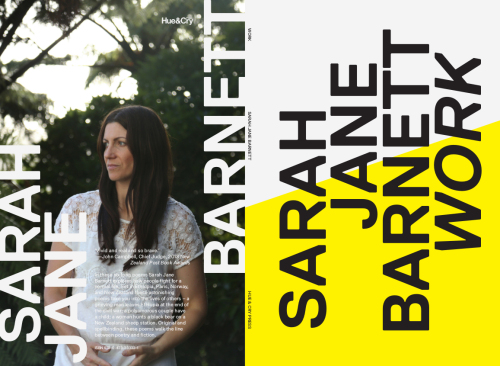
work_full-cover


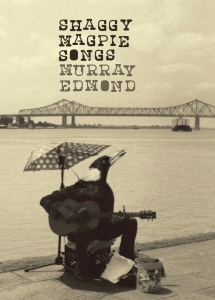
Poetry Shelf review: Murray Edmond’s Shaggy Magpie Songs – I pictured I was sitting in a dark room, listening to a bit of blues or folk or jazz, a spotlight picking up a pianist whose fingers were freewheeling,


1439758465392   1439758465392

Murray Edmond, Shaggy Magpie Songs Auckland University Press 2015


On the back of his new collection of poems, Murray Edmond writes, ‘Songs are poems that are incomplete without their music, so I think of these poems as all wanting to get off the page and start singing and dancing. The magpies of Aotearoa are silly (and slightly dangerous) birds who have given rise to the most profound line in the New Zealand poetry canon: Quardle oodle ardle wardle doodle …. I like to think the poems are the kind of songs that magpies might sing if they were into making up words: a little bubbly, a little bitter, a little absurd, and echoing with the sound of laughter: songs with shaggy tales to tell.’

Murray’s musings are the perfect gateway to a collection that relishes sound, a sense of humour and pocket-book anecdotes. Not far into the collection, I pictured I was sitting in a dark room, listening to a bit of blues or folk or jazz, a spotlight picking up a pianist whose fingers were freewheeling, bodies were swaying, feet tapping, voices saying, Yeah! Aah! Mmm! These poems make you move because these poems make music before they do anything else. Your ear picks out melody, aural chords, infectious rhythms and shifty rhyme, so often rhyme. Rhyme has multiple effects but initially it taps into that deep-buried allure that rhyme holds for the child. With Murray’s fingers flicking along the scale of rhyme though, rhyme is surprising, it makes you laugh out loud when it hits the mark, it drives the poem, it sidetracks the poem, it celebrates the utter joy of electric aural connections. The music is never constrained. Always on the move. Consonants shuffle to make little bridges for your ear. The rhythm, jaunty, jittery, smooth.


Here is one example from ‘The Poet Returns to New York’


Frank O’Hara strolls on by in pyjamas

a knowing smile disposes the inelegant aftermath of dramas

that might otherwise threaten to alarm us

because this morning there is nothing that can harm us

and Tennessee has bought us tickets to the Bahamas


Here is another sample from ‘Snap Snap’:


addicted to your pictures

a picture ain’t a fixture

conjure hocus-pocus

turn me soft like focus

nail me with a frame

sign me with a name


The collection is divided into four sections (Praise, Nonsense, Blues, Pop) with no Endnotes (the poem is the thing!) and there is much traffic between. Murray sings the praises of colleagues, fellow poets. Stories are delivered in pieces, sung into pieces with those melodic arches. There is almost a cheekiness in the loping, looping sounds. Splinters of nonsense might tilt the praise. Maybe there is autobiography skimming between the lines, hiding in the flicks of wit. Or a madcap flow of stream-of-consciousness. Or a keen mind jamming facts and fiction.


Some samples. This from ‘Tongatapu Dream Choruses”


thar she

blows

blow hole

blow mind

blow wind

blow whale

blow horn

blow me

down


from ‘National Standards’


Please step out of the poem slowly

stand by your word with hands on your head

the dogs will sniff you an officer will

frisk you please enjoy the experience


The collection is contoured in terms of pitch and tone. One of my favourite poems in the collection, ‘The Letter from Rilke,’ is like an onion. It is the poem that I keep returning to because each time I peel off a layer I get a different reaction. The visual and aural links are sumptuous (I have posted this poem). I am also drawn to ‘Kiss the Impossible Good Night,’ a poem for Kendrick Smithyman. After suggesting that the poem might work, a question is asked: ‘but can you/ get it to do anything? It is a poem with surreal kinks as you read, but it gets to the heart of writing. Murray’s poetry wears the look of play: a musician at play, a wordsmith at play, the wit of play, yet this playfulness belies the craft that steers the pen.


kiss

the impossible good night

before your very eyes

the poem appears


to work


it might work but can you

get it to do anything?)


If poets have recurring motifs, I claim the moon for Murray. His previous collection was entitled Fool Moon, and the moon features in a number of his poems. The motif is stamped here like a lunar signature — mysterious, mesmerising, moody, and is like a tether to poems of the past. Reading the new poems, through the folds and unfoldings, is to listen to different keys, yet whichever key you hit, these poems are sung into being out of a joy of words. Wonderful.


Auckland University Press page

Poetry Shelf interviews John Dennison — ‘it does seem to be a recurrent question in the collection—love’s strangeness’

John Dennison

Photo credit: Robert Cross


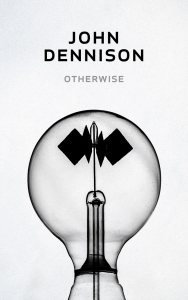
John Dennison was born in Sydney in 1978, and grew up in Tawa. He has lived and studied in Wellington, Dunedin, and St Andrews, Scotland, and now lives with his family here in Wellington, where he is a university chaplain. His poems have appeared in magazines in the UK, New Zealand and Australia, and were anthologised in Carcanet’s New Poetries V (2011). A first collection, Otherwise, was published by AUP and Carcanet earlier this year.

To celebrate the arrival of this terrific debut, John agreed to be interviewed. I reviewed Otherwise here.


Did your childhood shape you as a poet? What did you like to read? Did you write as a child? What else did you like to do?

Life was rich and full as a kid. We’d no TV, and I spent a good deal of time in books and up trees, or absorbed in endless audiobooks. That’s attuned my ear to some degree; I’ve also my mother’s knack for picking up other voices. Dad had a handful of poetry LPs in his collection—Eliot reading his Quartets, a record of Hopkins’s verse, one of American poet Carl Sandburg weirdly, wonderfully intoning. We worshipped at an open Brethren assembly in Porirua—a lively, community-oriented, rather tribal affair. I think it was partly the Church that attuned me critically to language, and taught me to take words and address seriously. At the same time, the Church attuned me to the culture around, to the market and to public cant; I’ve still got a well-developed, somewhat from-the-margins suspicion of life as it’s sold and told by the powers that be. Another formative aspect of my childhood: I was born with severe club feet. The deformities were corrected early on, when I was a baby, but it shaped me. I think the pre-verbal memory of that wounding and re-shaping, and my later memories of struggling with sports, with running, has had an effect in some way. Growing up has, in one sense, been a growing into–accepting–the woundedness of my earliest weeks. All of this enters the poetry in some way.


When you started writing poems as a young adult, were there any poets in particular that you were drawn to (poems/poets as surrogate mentors)?

Gregory O’Brien was my flesh-and-blood example of how to be a poet—he was a key figure in my apprenticeship. I took a writing paper with him. More than the workshop, to be accorded dignity and friendship by this older, much more dedicated writer—that was gold. I was stoked to meet Michael Symmons Roberts, a Manchester poet, in person recently—he’s been another important model, via his work. Baxter always hovered in the background—ready mythology.


Did university life transform your poetry writing? Theories? Peers? Discoveries? Sidetracks?

It’s interesting that this question irks me—I guess I chafe at the recognition that the university has become the dominant patron of poetry in NZ and beyond, and I feel uneasy at such patronage. For all that I love the community of scholarship, and serve that community as a chaplain, I do wonder whether it might not impoverish one’s poetry and poetics to turn habitually to the university. There really is, for instance, wonder and joy, contemplation and professing, which the modern university is pretty much deaf to. But yes, for me the university put poetry on the table every breakfast without apology or concern, and with the kind of seriousness a thoughty 19-year-old man is bound to fall for. Poetry was a subject of study before it was a practice, and learning to read slowly and in good faith—assuming everything on the page signifies—was good apprenticeship in the craft. That, and reading poets’ own accounts of making. I guess I learned the traditions, those at home and those abroad—it was important to do that.


Are there any critical books on poetry that have sustained or shifted your approach to writing a poem?

There’s a few. Those of any real use were written by poets. David Jones’s reflections on poetry and sacramental theology in Epoch and Artist was a timely discovery. More recently, Wendell Berry’s essay ‘On the use of old forms’ has helped me to understand what is at stake in choosing to work one or other received tradition and form—terza rima, or a Shakespearean sonnet, as opposed to free verse, say. He describes the way in which such forms enable you to live forwards into the poem, calling you into the possibilities of the language via rhymes, metre, etc. Berry’s been a real practical help. There’s Neruda’s manifesto ‘Toward an Impure Poetry’—I love his refusal to make poetry a religion, to give it some priestly function. Otherwise, I’ve pocketed a handful of dictums: Hopkins in a letter to Bridges, ‘Take breath and read it with the ears’; also, a phrase Seamus Heaney misattributes to Mandelstam, ‘The Incarnation sets the world free for play’. Stunning.


What poets have mattered to you over the past year?

Jorie Graham’s Sea Change has been a recent discovery – it’s difficult, unstable ground, one of the more moving mediations on climate change and the larger state of things I’ve read. Really good public poetry. And her use of negative prefixes has really stuck with me. She’s been important. I’m grateful for Cliff Fell’s poems. Fell sets up large pressure systems—essay poems—in which the lyric voice rises to break the surface tension of the larger flow. In its Dante-esque scope, in its prolonged and evident apprenticeship, and in its pitch and reach across the several keyboards of the language, his stuff is brilliant.


What New Zealand poets have you been drawn to over time?

Again, Baxter loomed large early on—my Father worked with Colin Durning, Baxter’s friend, and so James K. was part of the fabric of things. I love the work of Bethell—she’s been important. More recently, it’s been Curnow and O’Sullivan.


Any other areas you are drawn to read in?

Well, apart from essays in poetics, I’m often reading contemplative theology: Augustine’s Confessions, most recently. I love a good essay on any topic—love the essay form. I’ve been slowly working through Chaim Potok’s novels which have been utterly captivating—My Name is Asher Lev, a story about a gifted artist born into a community of New York Hasidic Jews. And then, I read a lot of kids’ picture books at the moment.
 

1423778022214-1 1423778022214-11423778022214-1


In my review of your debut collection, Otherwise, I identified one of the joys of the collection: ‘the way the poem grounds you in the marvellous detail of the here and now so you feel earthed, and then uplifts you to the transcendental possibilities of elsewhere.’ What are key things for you when you write a poem?

Mostly, poems begin with the musical suggestiveness of a line, or the emotional implications of an image, rather than in some premeditated transection of marvellous and the everyday. A poem is a thing made out of words pitched through some emotional acuity, in which language is pushed towards the condition of music and affective image. If there’s a trajectory I’m inclined to trace, that’s simply a piece with life more generally. It’s how I am. The coordinates you’ve remarked on—the marvellous of the here and now, transcendental possibilities—well, shoot, that’s the shape of things.


The poems are steeped in love. Did you set out to navigate love in poetic forms or is it a key and enduring ingredient in your ink?

No, nothing as confident as navigating love—gosh, I’m not sure how one could do that without stunning presumption. I just went fishing for poems. But it does seem to be a recurrent question in the collection—love’s strangeness, I hope, rather than the stuff that well-worn word normally conjures. I’m very interested in the way that the lyric, traditionally being concerned with a speaking ‘I’, can become a space of loving address. I’m not thinking of some poly-vocal instability, nor of self-esteeming self-talk; I’m thinking more of the kind of address you find in the Psalms – ‘why are you cast down within me, o my soul?’ It’s a kind of excoriating, unflinching yet loving address to the estranged self; I’m excited by finding ways to open the lyric up to that.


I mentioned the spiritual steppingstones in the collection (a particular path the reader can explore). Is poetry a vital means to explore your spirituality?

No, I’d not say that. At times the process of writing, with its emotional accuracies, serves as a mirror. You know, that moment when the finished thing speaks up and looks back and you say ‘gosh, is that who I am, is that what it is! Mercy!’ But no, poetry isn’t some kind of intuitive scripture; it’s not prayer. Prayer—that’s exploration. I’m very interested in prayer as a kind of activity which takes place in the middle voice (rather than the active or passive moods)—a kind of led, participation in an action one didn’t initiate. There is some kinship with the experience of writing a poem—negative capability, and so on. But there are important differences too.


Your critical book, Seamus Heaney and the Adequacy of Poetry, is forthcoming from Oxford University Press this year. What vital discoveries did you make about poetry as you wrote and researched this book?

The book is a critical history of Seamus Heaney’s prose poetics—the poetics which culminate in his brilliant volume of lectures, The Redress of Poetry. It’s the story of a young Catholic poet who abandons his childhood faith, transferring much of that religious impulse to poetry and a theory about poetry’s sufficiency in the face of history. It’s the story of a poet who believes his art has a restorative, morally pure function in the midst of the violence of public life—for Heaney, the Ulster Troubles. It’s also the story of the son of a cattle dealer from Co. Derry, who wins a scholarship to University and becomes one of the most lauded poets of his time—Harvard professorship, Nobel Prize, etc. So I learned a great deal about contemporary poetics and this post-Christian age. Personally, it helped me to sort out my own thinking on some key questions around poetry and life—for example, that I do not feel any need to ascribe to art some redemptive agency. Also, that I don’t believe a poem is morally pure or true by virtue of its self-verifying ‘rightness’—some poems are beautiful lies, and this problem should interest us.


What irks you in poetry?

Moral smugness; a lyric self-regard which cuts out the reader; despair as an existential pose; free-verse which is really prose with line-breaks; a lack of musicality; forms which are not needful.


What delights you?

An ear at work—alive to the mnemonic possibilities and serious play of language pushed towards a condition of music. A lyric voice which is undone in its moment of saying—the suspicion the poem has cost the poet something. A full keyboard of language and register in use (what could be more democratic?) Fully employed forms of which one becomes blithely unaware in their unfolding.


Some poets argue that there are no rules in poetry and all rules are to be broken. Do you agree? Do you have cardinal rules? Do you have rules you particularly like to break?

I guess I want to ask What is this talk of rules? A successful poem is not a matter of rule-keeping or breaking, but of faithfulness—trust in the possibilities of language and the various poetic traditions. Some forms have constraints, and I am very interested in the possibilities generated by working within and against these constraints. The question is not whether to use free-verse or strict forms, it’s about what’s needful, about the way each form sets up a micro-economy of agency and possibility within language. Free-verse, in an apparent paradox, foregrounds a kind of existential bind of constantly having to choose, having to assert control over language, to use it as a means of expression. In terza rima, on the other hand, one is constantly getting ahead of oneself (with the b-rhyme in the tercet) while glancing back from where you’ve been; it’s a promissory kind of form, constantly entrusting itself to unknown possibilities.


Finally if you were to be trapped for hours (in a waiting room, on a mountain, inside on a rainy day) what poetry book would you read?

Probably, right now, I’d take Thomas Merton’s Collected Poems, for its utter strangeness. It includes a very compelling and haunting sequence on the cargo cults in Papua New Guinea. I waded through it in my early twenties – probably due a revisit. And, given his surrealist edge, a waiting room inside a rainy mountain would be an ideal fit.


Auckland University Press page

Poem Friday: Murray Edmond’s ‘The Letter from Rilke — Like a boat under the milky moon you slip and sway upon the crest of the poem


The  Letter from Rilke


Did you get the moon?

(I ask) as you come in

in your hoodie with your tripod.

You laugh. Recall another evening.

When you did ‘get the moon.’

Nice to see the sky. Okay. True.

Clock ticks. One always looks

for a total time of ecstasy

called writing. Taking a photo

it’s all there – or it’s not.

But even to trace letters

has no immediacy. It’s

like the moon rising.

There. You said. Some trace

of old enormity beckons.

The jug is heating up.

Footsteps. Water pump. Floorboards

shaking. I peel off

the outer layer of my insistence.

There is a letter from Rilke

underneath. As if it were a

landscape on the skin. He writes

about how it is impossible for

anything to escape itself. The sea

burnished with the full moon

blue of hyacinths. When you

look into them.


© Murray Edmond Shaggy Magpie Songs Auckland University Press, 2015


Author Bio: Murray Edmond was born in Hamilton in 1949. He has published thirteen books of poems. Letters and Paragraphs (1987) and Fool Moon (2005) were New Zealand Book Awards finalists. His latest volume of poems is Shaggy Magpie Songs (2015) from Auckland University Press. A collection of fiction, Strait Men and Other Tales, will be published by Steele Roberts in October 2015. His collection of critical writings, Then It Was Now Again: Selected Critical Writing was published by Atuanui Press in 2014. A study of Noh theatre and the Western avant-garde, Noh Business, was published by Atelos Press in California in 2005 and the long poem A Piece of Work was published by Tinfish Press in Hawai’i in 2002. He co-edited the anthology Big Smoke: New Zealand Poems 1960–1975 (AUP, 2000); and is the editor of the peer-reviewed, online journal of poetics Ka Mate Ka Ora: A New Zealand Journal of Poetry and Poetics. Since the 1970s, Edmond has been active in experimental and innovative theatre companies and for over 25 years taught theatre and drama at The University of Auckland, retiring from his position as Associate Professor of Drama at the end of 2014. He works as the dramaturge for Indian Ink Theatre Company, whose latest play, Kiss the Fish, was awarded Best New Play of 2014 in the Chapman Tripp Awards.


Note from Paula: Reading a Murray Edmond poem is like entering a linguistic harbour – you are held by the sway and slip of words, the way that sharp sea air alerts your senses, rejuvenates skin and eye and ear. He is the master of word play but the coils and overlaps and skids never feel stuck in exercise mode. This word play is infectious. It nourishes the gap and supports the bridge. Beneath the surface there is always heart, and with that subterranean heart, these are poems that matter.

Moons are a favoured motif in this collection and others. Mysterious; a drawcard in the pitch black of night or a poem or a myth or mood. The first line startles in its punning sidetracks (‘Did you get the moon?’). The last lines startling in their pitch for beauty. In between, gossamer threads that make silvery links between things. Luminous. Eye catching. In the heart of the poem, a relationship. And then another. A letter read. Under the skin; a poet, a lover perhaps. Like a boat under the milky moon you slip and sway upon the crest of the poem. It haunts. Lines stick like glue (‘I peel off/ the outer layer of my insistence’ ‘As if it were a/ landscape on the skin’). Do you get the poem? Jammed packed as it is with light and dark, everyday detail (Floorboards/ shaking’).  The line that sends you between the lines (‘He writes/ about how it is impossible for/ anything to escape itself’). Get – arrivals. Glorious.


Auckland University Press page
NZ Book Council page

nzepc page


Poem Friday: Dinah Hawken’s ‘Stone’ – Its window catches any number of lights


Stone


Stony this, stony that. They are cold

today, these stones on the desk.

Stone cold. Stone blind. Stone deaf.

Heart, reception, stare, silence.

They remember the slingshot.


It is said he is a man to reckon with.

He hasn’t spoken to his son for years.

It is said that words will never hurt you.

‘To be hard in hard times,’ he announces,

‘we must build an expressway like an arrow


through the quiet heart

of your coastal town.’ Cold facts

say one thing, cold politics another.

We remember the ballistic missile.

The falling debris and the striking edge.


© Dinah Hawken Ocean and Stone Victoria University Press, 2015


Author bio: Dinah Hawken is one of New Zealand’s most critically acclaimed poets. Born in Hawera in 1943, she trained as a physiotherapist, psychotherapist and social worker in New Zealand and the United States. Most of the poems in her award-winning first collection It Has No Sound and Is Blue (1987) were written in New York in the mid-1980s while she was studying at Brooklyn College and working with the homeless and mentally ill. Her two most recent books, One Shapely Thing: Poems and Journals (2006) and The Leaf-Ride (2011), were both shortlisted for the New Zealand Book Awards. Dinah was named the 2007 winner of the biennial Lauris Edmond Award for Distinguished Contribution to Poetry in New Zealand. She lives in Paekakariki.


Note from Paula: This poem is in Dinah’s new collection just out from Victoria University Press. It is an utterly beautiful book in every detail (the feel of the pages, the choice of font, the simplicity of the cover and of course the billowing beauty of the poems themselves. I have been a Dinah-Hawken fan for a long time. I remember the pleasure of writing a long essay on Small Stories of Devotion as part of my Masters degree. There has been a sustaining chord between Dinah’s work and my writing since those far-off days. In part it is to do with the grace, the elegance, the economy, the lyricism. In part it is to do with the sumptuous view that settles as you open the window of the poem. In part it is the curious self that questions the world and the way we do things.

This poem is a thing of beauty, and it draws upon all the things I have detailed above. There is the lyricism that builds out of stress, meter and repetition (‘Stone cold. Stone blind. Stone deaf.’) There is the way a thing (stone) shakes with life and possibility. There is the way, with that small frame of the window ajar, we fall upon the beauty of an object (a stone) and then fall away to the hurt we inflict upon each other — at the level of the individual, the level of a town, the level of a nation. It really is the kind of poem that needs to speak for itself, to shimmer on the page in its own marvelous way. Its window catches any number of lights.


Victoria University Press page

NZ Book Council page

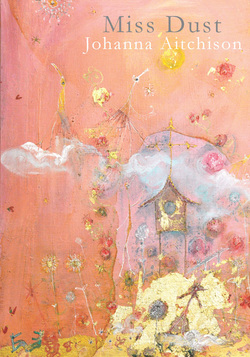
Poetry Shelf review: Johanna Aitchison’s Miss Dust – Simple, everyday cores of truth that have as much to do with how you feel the world as how you see the world

8507862    johanna-aitchison-for-web


Johanna is a poet who was living in Palmerston North (quite a hub of poetry activity!) but currently in Iowa. I haven’t read her debut chapbook from Pemmican Press, Oh My God I’m Flying (1991), but I really loved her second collection, Long Girl Ago (Victoria Press, 2007). The poems felt fresh, playful, finely crafted, and surprising in the little revelations, particularly in the poems that placed little frames on Japan. The book was shortlisted for best book of poetry the following year. Johanna’s new collection, Miss Dust, was recently released by Seraph Press. It is a collection in two parts with many bridges between, and the freshness, the economy and the diligent craft remain a vital feature.

What catches me with these new poems is the heightened degree of surprise. This is poetry tilted on its axis. The first section is devoted to a sequence that gives life to Miss Dust. When read together, the section forms a long narrative poem, or perhaps you could say, a long character poem in pieces. In trying to liken the startling effect of reading this life, I came up with a hybrid analogy: it is like an Eleanor Rigby portrait meets a Salvador Dali painting meets a dislocating dream state meets a short film by Alison Maclean meets Edward Lear meets a veiled memoir.

The idea of dust is ephemeral — it leaves traces and smears, it veils and it clouds. Perfect word for a character that hides behind tropes, white space and poetic jump cuts. The tropes are borderline surreal (‘The curtains of her house are ash’). At dinner with her online date, he ‘ordered for her the dark.’ Yet even though things are strange, it is the effect of the bridges and the gaps that augment the mood, the portrait, the arc of a life. Take ‘Miss Dust and the Affair.’ The little leaps from one thing to the next, from one action to the next, miss the gritty details that might pepper confession, exchanged story. The poem is mysterious and haunting, but if you lift out the stepping stones (that occur on other occasions throughout the book) you get a terrific story of love lost: affair kiss lips lines waves rocks cheeks. That story is the undercurrent of the poem, hiding in the dust. Miss Dust, herself, would sum up the undercurrent with two words (‘black heart’), words that crop up in a number of the poems.

The movement between things is also surprising or disconcerting in the poems and feeds into the crucial threads of loss and love and life. In ‘Miss Dust makes a promise to her black heart,’ every line seems to offer a new twist —  the way the dreaming mind takes the ordinary and then skews it to show a deep-seated feeling pulsing through.


Here is the cure: sitting

on someone else’s carpet,


she makes herself a promise,

with the help of a chisel


and a block of A4 refill.

She chips out a beach scene


three streets away, hammers in

stones that warm or cool


You can’t just read this poem and walk away. It holds you tight as Miss Dust walks into the beach scene and ‘lowers the plunger/ onto one more set of grounds.’ There is that jarring kink between the scene carved (hope, therapy, cure) that catapults the black heart to elsewhere and the chore of making coffee. For me, the word ‘grounds’ flicks and shifts. Yes, the coffee is ground (the daily chore/grind) but also, like the beach scene, ground is another place to lay down roots. To tend damaged roots. Soil, black like the black heart. A single word, and you can set up camp for hours.

I don’t know of a sequence in New Zealand poetry quite like this (maybe I got whiffs of the early surrealness of Gregory O’Brien). Reading and lingering in the half light of Miss Dust, is utterly moving as you fall between the gaps of her life.


The second half of the book is not Miss Dust but there is a similar degree of surprise, little echoes that seem familiar (the half house), the dislocating and then relocating pieces, the way nouns and verbs startle (‘I’m starting to skin your loneliness Miss Shoulder’). There is a stunning Japanese poem, ‘Jun,’ that pulls you back to the previous collection with its final, breathtaking stanza.


one of the saddest things i did in japan was to teach to jun’s photo

on his empty desk i asked the students to count the students

in the class the students said do we count jun


Johanna has delivered a new collection that never lets the dust settle (excuse the pun). Each poem reproduces a glorious jittery, shimmery movement between things, between actions and between things and actions. At the core of that movement: feeling. Yes, you enter a world that is, at times, a little like the bewildering jumps and turns of a dreamscape, but just as with the dream, you fall upon cores of truth. Simple, everyday cores of truth that have as much to do with how you feel the world as how you see the world. I loved this collection.


Seraph Press page

do like this poem by Ashleigh Young posted on The Spin Off’s Friday Poem

a regular feature at The Spin Off  … Friday is Poetry Day!

Ashleigh’s poem here