Category Archives: NZ Poets

Poem Friday: Erin Scudder’s ‘To Do in Malibu’ — that ultimate moment of pause, attentiveness, pleasure


11086660_10155353222895285_797228085_n


To Do in Malibu


Brush hair, brush teeth,

climb down the mind’s

soft-carpeted staircase

from sleep.


Iron the pink robe and put it on.


There are no wailing birds here –

only the sun hums

a mute, radiating

suggestion of song.


Open the vertical blinds by twirling

their thin ivory rotating wands.

Pay gentle attention

to their exhumation

of bladelike,

breathing,

slightest sound.


Polish the windows,

polish the floors,

open the patio’s sliding doors.


Polish toes with clear paint.


Stand still by the blue stone statue

in the southwest sandstone yard.


Stay still, allowing your mind

to follow the lead of the patio shadows.


Smile amenably into the weight

of the broad clean pool of hot.


Let everything be still.

Let everything be new.


© Erin Scudder


Author’s bio: Erin is the co-author of AUP New Poets 4 and the author (under numerous pseudonyms) of Psychedomus (Fitts & Holderness, 2011). Her poetry recently appeared in Truth or Beauty (Seraph Press, 2014), and has also appeared in various Asia Pacific journals. In 2015 she hopes to publish her first solo book of poems. She holds joint Canadian / New Zealand citizenship and currently lives in Melbourne.

Author’s note: My starting point for this poem was David Hockney’s Californian painting ‘American Collectors’ (Fred and Marcia Weisman). In the painting, a woman in a pink robe or mumu stands looking out at you, half-smiling, in the sun-washed yard of a modernist bungalow. The pink cloth, brushing slightly to the side, is wonderful. I love how just looking at the plain, minimal lines of this picture is relaxing. There are a few statues,  plants, and a man, also in the picture – placed here and there in an orderly but effortless kind of feng shui way. The woman’s look is very serene, very open and calm, but at the same time she has one arm crossing her body and lightly gripping the other arm – suggesting a shyness or self-consciousness. It’s as if she has an instinct towards neurosis but this is at play, is in a sort of dance, with a capacity for deep peace. I imagined her talking herself through the steps of her morning as though soothing herself, soothing her nerves, as you might soothe a child … as though she has had a trauma and needs to only do or notice one element at a time. I imagined a really nice, warm silence infusing this scene. She treats each small action and observation with reverence … I love the idea of ordinary household moments being realised as slow, sacred rituals. Her instructions to herself start out as a sort of coping mechanism but move her into meditative stillness.


Paula’s Note: This poem is as much about movement as it is about stillness. Stillness resides in the palm of its movement and movement resides in the palm of its stillness. An oxymoron, yes. It is as though you climb (ascend, scale)  your way through the poem which is, in turn, climbing through a moment, with steady rhythm, an immensely satisfying measure of beat. It is like reading a mantra (how to be, to be here now), because what this poem evokes more than anything is an occupation of time and place. The finely judged detail renders the moment luminous. It reminds me of a terrific scene in The Tavianni Brothers’ movie, Padre Padrone, when the father tells the son to bend his ear to the stream in order to absorb the world about him. I love the way this poem stalls in the everyday, as if to remind us of the way our eyes become immune to the familiar. I love too the pile up of strong, single-syllable words in the final line that reenact that ultimate moment of pause, attentiveness, pleasure, both in the poem and an external place of your own making.


This is a poetry collection I am so looking forward to …

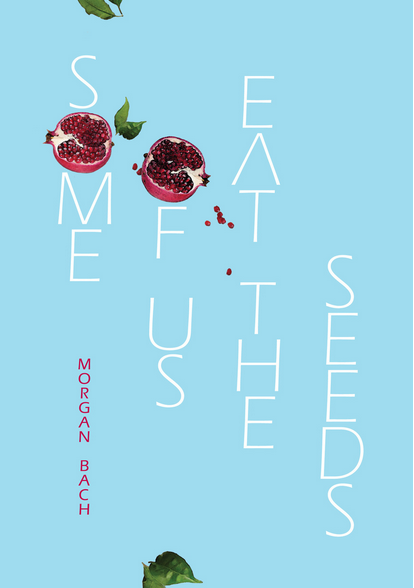
I can’t wait to read this new offering, a debut poetry collection by Morgan Bach, coming soon from Victoria University Press. What an adorable cover.

Morgan Bach’s author page is here.

Screen shot 2015-03-30 at 9.41.21 PM

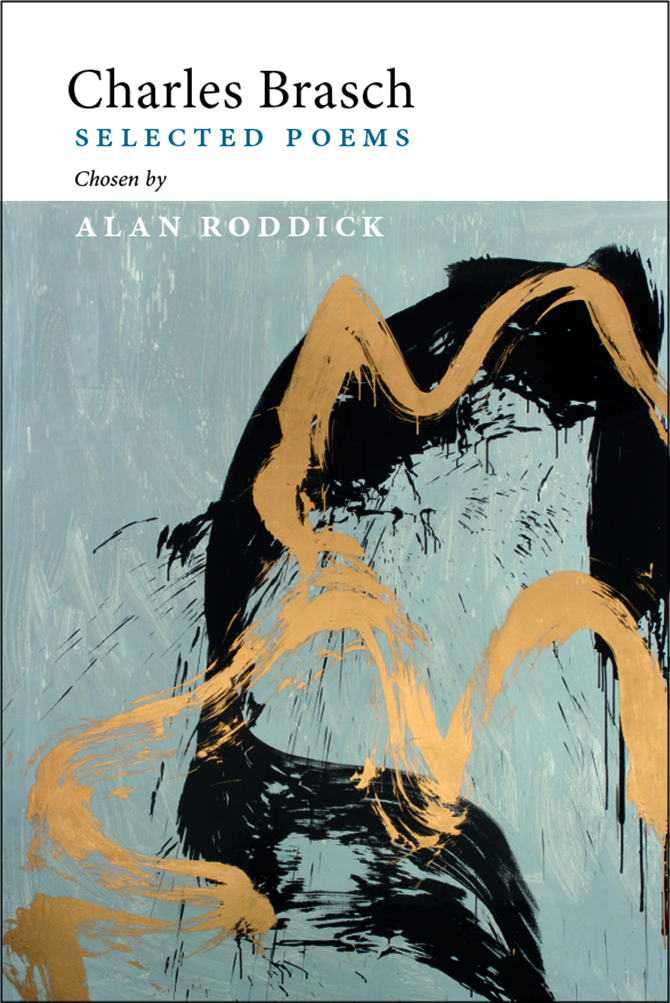
Charles Brasch: Selected Poems edited by Alan Roddick He is splitting his poems in ways that promote new revelations

3. S13-575c_CB_in_Downs   Roddick Brasch with rule

Charles Brasch: Selected Poems edited by Alan Roddick, Otago University Press, 2015


Poet and scholar, Alan Roddick previously edited Charles Brash’s posthumous collection, Home Ground (1974) and his Collected Poems (1984).  Charles published a number of collections in his lifetime, mentored younger poets and was the founder and initial editor of Landfall. With his books all out-of-print, this is a timely arrival. One of New Zealand’s most influential literary journals, Landfall has represented poetic trends over decades, and continues to endure with renewed vitality (currently edited by David Eggleton), but it is interesting to step aside from this legacy and explore Brasch’s own poetry. He was a contemporary of RK Mason and ARD Fairburn and was selected by Allen Curnow for A Book of New Zealand Verse in 1951. For many poets, this was a sign of having made it. For Brasch, it knocked back some of the self doubt and sent him traversing new poetic paths. It was indeed a turning point.

One fascination of a selected poems is the way they cover the arc of a poet’s life and, in particular, writing life; the way poems reflect interior changes, and the way a changing world rubs against the process of writing. Charles’s first collection, The Land and the People, was published in 1939 with looming threats of war and world instability. He wrote with an initial attachment to the Romantics but by the 1970s his poetry was freer. The language is less tied to loftiness, to the abstract, to tight rhythms. He writes in plainer language, everyday language, yet you still see resolute connections with the subject matter of his first book: the land and the people. In many ways, the poetic arc of Alan’s selection lays its roots in Brash’s attachment to home, and the poem becomes a frame or form for a navigation of this. A homage at times. A questioning of sorts. Charles held the war at arm’s length, he held the rumpus of the 1960s at arm’s length (you don’t see him in Big Smoke, the anthology that highlights the radical poetry of the 1960s and 1970s). In his last decade or so, he is not rupturing form and content across the page in ways that SHOUT and displace. He is splitting his poems in ways that promote new revelations, new confessions whilst always maintaining his private stance. Love is there; love is struggled with and acknowledged but it is never overt, never clear.

from ‘In Your Presence’


I practise to believe,

And work towards love.

How should I see

Until I study with your eye?


He is unafraid to bare the self portrait in ‘Cry Mercy’:


Getting older, I grow more personal,

Like more, dislike more

And more intensely than ever —

People, customs, the state,

The ghastly status quo,

And myself, black-hearted crow

In the canting off-white feathers.


I was interested to discover that he worked on one of his most famous poems, ‘The Islands’ (originally published in his second book in 1948) for twenty years until he felt like he got it right. This is the poem that contains one of the most often quoted lines in New Zealand poetry:

Everywhere in light and calm the murmuring

Shadow of departure; distance looks our way;

And none knows where he will lie down at night.


The poem that has always resonated the most strongly with me is the sequence ‘Home Ground’ (from his last book, bearing that title) and a substantial part of the sequence is reproduced here. The language is sumptuous yet affords a degree of plainness. Individual lines stall and haunt you (‘I tramp my streets into recognition’). It feels open. It feels like writing this poem mattered greatly to the poet because it draws upon what matters. And within that, as with much great poetry, there is space, silence, mystery.

Silence will not let him go

Entirely; allowed a few notes

At the edge of dusk

He will be recalled before long

And folded into rock

Reassumed by the living stream.


Otago University Press have produced a terrific anthology with care taken over internal design and the cover. There is room for the poems to breathe both in terms of font choice and white space on the page. Alan’s introduction is useful but I do think there was room for more discussion of the poetry itself despite the witty inference in Charles’s ‘Pistol Point’ that poems ought to speak for themselves (‘Poems ask their own questions’).  Selected Poems is a terrific introduction to Charles’s poetry; particularly to the way his poems shifted over time, on his own terms, and not at the behest of current poetic trends.


Endnote: I have a policy on this blog of using the first name of a poet. This is the first book I have reviewed by one of the key men poets who emerged in the mid-twentieth century in New Zealand, and it feels like I am transgressing a line by not using ‘Brasch.’ It feels like I have invited him into my kitchen to have a cup of tea informally. ‘Authority’ has sailed out the window.


Otago University Press page here

Gregory O’Brien’s terrific discussion with Kim Hill on the book here

NZ Book Council author page here


Friday Poem: Anna Jackson’s ‘Afraid of falls?’ — a pinhole in the dark expanse of memory to let the light of childhood through


SAM_0467 (2)  

Afraid of falls?

We spent our childhoods upright.  We rose asleep.
We rose silent, when our breaths were taken.
We sat on the mat, and were told to sit up.
There was so much to learn.
In the weekends, though, my brother
went into the bush behind the house
and he came back talking of the waterfalls.
Oh take me, take me to the waterfalls,
I promise not to fall.
Fruit fell.  Whole lawns were carpeted!
Fell, and rotted where it fell.
In the end, we rose apart.
But I remember the waterfalls,
and I remember how the world was so much with us.

© Anna Jackson I, Clodia, and Other Portraits Auckland University Press, 2014


Author’s bio:

Anna is the Programme Director in the English Department at Victoria University. She has published five poetry collections, including Thicket, which was shortlisted for the New Zealand Post Book Awards in 2011.

1415925155755   1415925155755

Author’s note:

When I was little I found it strange that you could “sit up” or “sit down” and the sitting would still be the same either way. I’ve also always loved Chris Price’s poem “Rose and Fell” and how its title makes such a strangeness of the phrase “rise and fall” by placing it in the past tense. So this is a meditation on rising and falling, and on childhood as a time before a fall, when instead of falling asleep you might rise asleep, and keep on rising.

We lived in Titirangi until I was seven, and my brother did go into the bush, and he did come back talking about the waterfalls.


Paula’s note:

This poem is like a little sonata pivoting upon the word, ‘fell.’ Then again, it is as though a word, ‘fall,’ is elbowing a pinhole in the dark expanse of memory to let the light of childhood through. Playfully. Childhood becomes a riff on falling (and rising), and there is a delicate, addictive humour in the overlaying words (‘oh take me, take me to the waterfalls,/ I promise not to fall’). The image of the childhood wonder is made more pungent by the carpet of rotting fruit, the stench of abundance and plenty (time, dreams, play).

The book that contains the poem, Anna’s latest, lifts from the previous collections. It is a book of portraits, and here, in this example, the portrait of a child(hood) might be invented, misremembered, once lived, fleetingly real, achingly so. It was no easy task picking a poem that stood out for me in this book (I am waiting to get a copy of Catallus so I can follow Anna’s reading map as I reread the poems to review). The lift and play of each line is glorious, the image equally so. I have donned the cotton dress of my younger self and the lift and fall moves beyond the gold nugget for ear and eye to that of elusive self. A little sonata that haunts and plays again.


Auckland University page

New Zealand Book Council page

Poetry Shelf interview


Submission Guidelines for Best NZ Poems 2015

Submission guidelines (see here for full page)

Submissions for Best New Zealand Poems 2015 are open from 1January 2015 and must be received by 15 December 2015.

What to submit

  • Only poems or books of poems by New Zealanders published within the calendar year of the current collection are eligible for consideration. (Unpublished poems may be submitted to our other annual online collection, Turbine.)
  • Poems or collections published in print or in online journals, and in local or international publications, are eligible provided the publication date falls within the calendar year.
  • While online journals are an acceptable publication source, blogs will generally not be eligible.
  • Publishers may submit books, magazines, journals or links to online journals that meet these criteria.
  • Individual poets may also submit published poems or books directly.
  • Please note the specific guidelines about electronic submissions under ‘How to Submit’ below.

When to submit

  • You may send submissions for Best New Zealand Poems 2014 at any time during the calendar year, provided they reach the IIML by 15 December 2015.
  • Receipt of email submissions will be acknowledged. Postal submissions will be acknowledged if an email address or SSAE is included with the submission.
  • Publishers and / or authors of selected poems will be contacted by February of the following year. For all accepted material, copyright remains with the author (or in some instances the original publisher) upon publication. Due to the volume of submissions, we are unable to
  • The editors are unable to engage in correspondence regarding individual submissions.

How to submit

Postal submissions should be directed to:

BNZP editor
c/o International Institute of Modern Letters
Victoria University
PO Box 600
Wellington
New Zealand

Email submissions of individual poems or a small selection of poems should be submitted, preferably as attachments, to: modernletters@vuw.ac.nz.

  • Please put ‘BNZP submission’ in the subject line.
  • Include contact details, preferably an email address, in the body of the email.
  • Include name and contact details on each page of your submission.
  • Mac users sending MS Word attachments should save them first in Rich Text Format and add a “.rtf” suffix to each filename.
  • We do not accept whole manuscripts in electronic form. Submissions of e-book-only publications should be made in the form of a printed pdf copy, and include a link to the publication site.

Whether posting or emailing, please include the following information with each individual submission:

The place and date of publication of each poem submitted (including web links if relevant).

Poetry Shelf interviews David Eggleton — Poetry is a kind of verbal tic; it runs in parallel with consciousness

 OLYMPUS DIGITAL CAMERA       $_35

Photo credit: F. J. Neuman

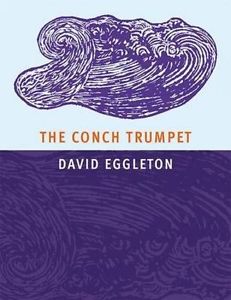
David Eggleton is a poet, reviewer and non fiction writer. His books include: Here on Earth: the Landscape in New Zealand Literature, (Craig Potton Publishing, 1999); Seasons: Four Essays on the New Zealand Year, (Craig Potton Publishing, 2001); Ready to Fly: the Story of New Zealand Rock Music, (Craig Potton Publishing, 2003); Into the Light: a History of New Zealand Photography, (Craig Potton Publishing, 2006); and Towards Aotearoa: A Short History of Twentieth Century New Zealand Art (Reed/Raupo, 2008). His poetry collections include: Rhyming Planet, (Steele Roberts, 2001); Fast Talker, (Auckland University Press, 2006); Time of the Icebergs, (Otago University Press, 2010); and The Conch Trumpet (Otago University Press, 2015). He is the current Editor of Landfall, and of Landfall Review Online. He lives in Dunedin.

To celebrate the arrival of his new poetry collection, The Conch Shell, David kindly agreed to answer some questions for Poetry Shelf.


‘Stone clacks on stone

so creek lizards slither,

runnels slip through claws,

each cloud’s a silver feather.’

from ‘Raukura’ in The Conch Trumpet


Did your childhood shape you as a poet? What did you like to read? Did you write as a child? What else did you like to do?

I had very little to do with books as a child, apart from prolonged weekly exposure to the King James Bible. However, it was a rich, sensual and even privileged environment, with wide exposure to a variety of cultures and a strong sense of the carnivalesque about everyday life. My father at that time was a soldier ant, when the last Pacific colonies were gaining independence, and then there were my mother’s ancestral voices and her extended family. This idyll was abruptly terminated when our family relocated permanently from Fiji to New Zealand. It was a bit like the post-Edenic Fall, though gradually I became aware of a different kind of richness, including eventually the world of the library.

In early adolescence my options veered between seminary school and reform school, though neither eventuated. I began to understand that truth, social truth at least, is not absolute but institutional and class-bound, and you need a ticket to get in — but if you are a poet you can construct your own truth. ‘I am the shadows my words cast’, as Octavio Paz wrote.

My early literary influences, besides the Bible, included Phantom comics, church music, gospel choirs and listening to pop music on the radio: an auditory riot. The Bible contained fascinating and troubling verses: ‘Eye for eye, tooth for tooth, hand for hand, foot for foot, burning for burning, wound for wound, stripe for stripe…’

Meantime, living in South Auckland there were not the quiescent, somnolent afternoons of lawn tennis such as you might have found in the leafy avenues of the inner suburbs, but rather the lingering smell of tanneries and abattoirs — offal being boiled down at the freezing works, corned beef being cooked for shipment to the Islands. This became partly associated in my mind with the lives of saints and martyrs I had already spent time reading about: believers being boiled in oil by non-believers, and so forth. There was also much bellowing in the streets and the roar of motorcycles.


When you started writing poems as a young adult, were there any poets in particular that you were drawn to (poems/poets as surrogate mentors)?

I got interested in writing at high school, my first published efforts appearing in the Aorere College literary magazine. Around the same time, I was discovering Dylan Thomas, Gerard Manley Hopkins, T. S. Eliot, Gunter Grass — some of these were on the school curriculum.

Then I got immersed in the American Beats and their ‘action writing’: Go! Howl! On the Road! I heeded the call; I dropped out of school and tried to get a job on a cargo ship. I wasn’t taken on, so I got a job in a South Auckland carpet warehouse instead. Kerouac’s road novels were a word-spattered canvas wide as America and seemed related to the Ab-Ex canvases of the artist Jackson Pollock, whose paintings I also got interested in.

Energised, I sought to emulate the yackety-yak spoken word rhythms of Jack Kerouac, the biting wisecracks of William Burroughs and the vatic yawp of Allen Ginsberg in my own screeds of verse. And then there was the one-man typographical liberation front of e.e. cummings: ‘anyone lived in a pretty how town and down they forgot as up they grew…’

I was pretty much unaware of New Zealand writing, apart from the plummy-voiced Bruce Mason, who had visited our school out in the sticks with his one-man theatrical show.


I remember when you were awarded London Time Out’s Street Entertainer of the Year in 1985. From that time you have gained a solid reputation as a performance poet. Do you still see yourself as a performance poet? Did the award alter the path of poet for you at all?

Well, 1985 was New Zealand’s special moment in the sun, with David Lange roaming the globe as a kind of No Nukes! ambassador, and Keri Hulme winning the Booker Prize. There was a big travelling Maori art exhibition, plus the Rainbow Warrior bombing, the Flying Nun catalogue. All that kind of created a climate where things New Zild were of interest in the UK, and I was able to get on and stay on the cabaret circuit at the time.

Performance for me became a poetry vehicle and there was a national consciousness locally it tapped into: grass roots, flax roots, ground up, underground, public assemblies to hear, watch, attend to, what poets and other performers were saying — and maybe have all this on at a variety night down at the community hall.

Things have changed, become more sophisticated, more ironic, more knowing. Perhaps there is less of a communal thing now and more of a tightly-organised, clearly-defined niche market, maybe even a gentrification of poetry scenes — where the confessional genre and the misery memoir have top billing, everyone competing to prove that they have the tiniest violin in the world and they know how to play it. I enjoyed, and still enjoy, the Dadaist nature of the wilder poetry performance. The novelist Henry James said about a poetry reading by Robert Browning that, if the audience didn’t understand his poems he seemed to understand them even less: ‘He reads them as if he hated them and would like to bite them to pieces.’ That sounds like my kind of event.


I love the way your poems absorb and replay the world in a dazzling eruption of detail, hallucinogenic at times. It is like standing in the street or bush just after it has rained. Luminous. Invigorating. Yet as much as each poem is an aural feast, there is an engagement with the world on multiple levels. What are key things for you when you write a poem?

Incantation, cadence, rhythm, pacing, matter more to me than formal metre stress and scansion. I like overgrown gardens and rainforest: that which is lush. I like absurdity and contradiction as closer to real experience rendered more accurately. In poetry, arguably, lexical meaning is less important than rhythm and emotionally-charged sound, which have their own echo-chamber allusiveness.

All that said, I also like psychedelic dream-fever imagery, and teasing evocations of mythical ancestors and invented traditions: invented traditions which engage with canonical poems, the poems which begin, as Yeats put it, in the foul rag and bone shop of the heart, but then become marble, monumental.

Poems are generated in many different ways, of course. Sometimes a poem might begin as a psychotherapeutic notion, as automatic writing, where as long as you keep writing you eventually find the solution to whatever it is that ails you, psychosomatically or existentially. Other poems may be less fluent; instead they are painstakingly assembled, built up like a movie in an editing suite from many separate images in order to create a mood, an atmosphere, a climate.

What one does not want is what Yeats (again!) described as ‘the stale odour of spilt poetry’: we want the fresh bouquet of wild flowers — or of hothouse blooms transfigured. Poetry remains in the service of the subversive. That’s its power. The magical thinking of the ancient gods has been replaced by a future of junk science, which explains that emotions are only neuropeptides attaching to receptors and stimulating an electrical charge on neurons. Easy-peasy. How might a poet extract a poem from this revised reality? That’s the challenge.


Do you see yourself as a political poet? Overtly so or in more subtle ways?

Poetry is politics by other means; anthologies prove this. But I think what you are getting at is the idea of poets on the barricades leading the revolution. OK, the revolution may not be televised, as Gil Scott-Heron prophesied in his debut album Small Talk at 125th and Lenox back in the 1970s, but these days it’s corporatised and monetised. As Arundhati Roy has pointed out, in the era of the free market, ‘free speech’ has become a valuable commodity, too valuable to be wasted on the underclass. Poetry must find ways to remain anarchic, not for sale. As the Zen poem has it: ‘Sitting quietly doing nothing/ Spring comes and the grass grows by itself.’

My favourite poets include the Nightingale and the Skylark: Keats and Shelley — not yet Pixar characters — and Shelley undoubtedly was a revolutionary bard who believed that poets are the unacknowledged legislators of the world. Likewise, William Blake was a revolutionary, but he wasn’t arrested and beheaded because they considered him mad. Nowadays we consider him a visionary.

I am inspired by the poetry of witness: that of Osip Mandelstam, Marina Tsvetaeva, Georg Trakl, John Clare, Pablo Neruda. These poets spoke truth to power and sometimes paid with their lives.

New Zealand is a relatively lucky country, but it also means, I think, that we have an obligation to speak out against injustice, though not necessarily through simple polemics. Poetry, said Auden, makes nothing happen — well, many poets would disagree. Poetry can help generate social earthquakes — or be part of them in subtle ways. Globalisation is all subtle interconnections.

One poem in my new book was inspired by the sight of a superyacht belonging to a Russian oligarch in Auckland’s Viaduct Basin, an impressive white vessel designed by Philippe Starck. I stayed on the wharf for a while, and revisited, watching the comings and goings on this superyacht, and then researched the background — or rather added to what I already knew. That’s the starting point for a poem, which is not so much about Putin’s Russia as about the approved neo-liberal narratives of today and the warped truths which seem to accompany unbridled power. Yet nothing is spelt out — the reader must surmise, or suspect.

Pablo Neruda said that a poem is a net, and in a net it’s not just the strings that count but also the air, or the ocean, that escapes through them. To which I might add about my poem that while ‘knowledge’ is steady and cumulative and a satisfying form of story-telling, ‘information’ is random and miscellaneous and frustrating. My poetry sometime plays around with these twinned perceptions. For, as Ralph Waldo Emerson wrote: ‘the poet knows he speaks adequately only when he speaks somewhat wildly, not with the intellect alone, but with the intellect inebriated by nectar.’

The fact is that the black rain of tragic images is unending. The poet must put out his bucket and collect enough, and then endeavour to make sense of them; find a way to transform the surplus into poetry. Mad Ireland hurt you into poetry said Auden of Yeats, rather contradicting his other statement that poetry makes nothing happen. The ambitious poet is a voyant, a seer still, despite the scoffers, disdainful of rolling up their sleeves, spitting on their hands and going to work. Delmore Schwarz was right: in dreams begin responsibilities.

From the frantic antics of the nuclear meltdown to the shirtfronting of the financial meltdown, there’s plenty happening politically that cries out for poems. Then, too, as New Zealanders we need to constantly catechise our past in poetry so as to attest to our grasp of identity. Because this collective past, the stuff of song, ballad and pontificating political speech, is only approximately remembered, or else only partly told. Different people will tell, for example, the story of the Treaty of Waitangi in skewed fashion, laying emphasis on different details, and carry this away as poetic myth. The poet of conscience searches out social stigmas, personal stigmas, linguistic stigmas — the difficult subjects — and finds new ways to address them.


Do you think we have a history of thinking and writing about the process of poetry? Any examples that sparked you? Have you done this?

Yes, of course we have a tradition of thinking about what poetry is. Manifestos, prefaces, books and essays by Allen Curnow, A.R.D. Fairburn, Alan Brunton, Riemke Ensing, Kendrick Smithyman, Ian Wedde, Bill Manhire, Murray Edmond, C.K. Stead and Robert Sullivan are amongst those I value most. A writer is a descendent of other writers. I’ve written a lot in response to reading other poets; that is, to specific instances, but not manifestos or generalising, barrow-pushing commentaries.

New Zealand has its own quirky bicultural literary history. There’s also a strong puritanical tradition, nowhere so pronounced, I think, as in the repressed verses of Charles Brasch. He reminds me of what Anthony Burgess once said about himself: that he was so much of a puritan that he couldn’t describe a kiss without blushing. That said, there’s a value in circumspection, in euphemism, in artful disguise: telling by other means.

Actually, I think that all the theorising stacks up to mere post-rationalisation, to temperaments attempting to influence posterity, whereas, as John Steinbeck put it: ‘Time is the only critic without ambition’. Instead, I would argue that we learn most by example — the example of careful noticers, and for me one of the influential is Katherine Mansfield, still one of our best, perhaps our best, echo-locators: ‘All that day the heat was terrible. The wind blew close to the ground, it rooted among the tussock grass, slithered along the road, so that the white pumice dust swirled in our faces.’ So much menace, so close to home.


What poets have mattered to you over the past year? Some may have mattered as a reader and others may have been crucial in your development as a writer.

It would take a book to answer this question adequately. I’ve read the work of around 1000 poets over the past year, and all of them mattered at the time of reading. To read a poem properly is to engage with it, alertly. Listing names and poems that grabbed me would be counter-productive, because each would require an explanation of the encounter: what the sense and what the sensibility? Deconstruction at warp speed cannot happen in this format.


What New Zealand poets are you drawn to now?

Currently my favourite New Zealand poet, in the terms of the poet I am thinking most about, is Robin Hyde, followed by Ursula Bethell and A.R.D. Fairburn. So many clues, or soundings, to where we are now lie in the inter-war years. Other than that, I pretty much read everybody.


Do you think your writing has changed over time?

My own feelings about this are, necessarily, extremely subjective, but I would advance a cautious perhaps. According to Heraclitus, everything flows and all movement is history. William Blake said that without contraries there is no progression. In short: change is the only constant in life; one writes not as one was, but as one is.

Certainly the cultural climate has changed, and my corporeal self has changed. The typical New Zealand afternoon of the recent past had all the excitement of a damp tea towel and all the urgency of a dripping tea urn, with somewhere the smell of scones burning. Somehow this no longer seems applicable. Along with Denis Glover though, I do not dream of Sussex downs or quaint old English towns — I think of what may yet be seen in Johnsonville and Geraldine.


You write in a variety of genres (poetry, short fiction, non-fiction, critical writing). Do they seep into each other? Does one have a particular grip on you as a writer?

All of my writing is really just personal essays by other means — that is, if you consider the personal essay a form of self-correction, a form of self-contestation, an interior monologue conducted in solitude in preparation for being presented in public. Otherwise, the prescriptions of each genre apply, distinctly.

However, in my view, literature is or should be a site of struggle, no matter what the genre. Each mode is always inherently in a state of primal conflict about purpose and meaning. Otherwise it is moribund, mere cliché-recycling.

There are elements of hybridity, the mongrel, in my writing. The mixed bag, the medley, the odd job lot, the tall order; that’s what I’ve ended up doing. To pluck out just one continuity: I have an overarching interest in the iconoclastic — how might we tear all these false idols down. And aren’t they all false anyway? So there you go; we’re always casting about for the new, the next, supreme fiction.


The detail you collect makes place so vital — and that place emerging is particular, local, recognisable. For me, the poems transcend poetic exercise or form as they establish contact with what it might or might not mean to be human. These poems tick with humanity. Is a sense of home an important factor as you write? Or connections with humanity?

The Rumanian philosopher E.M. Cioran wrote that you don’t inhabit a country, you inhabit a language, and as Caribbean poet Derek Walcott pointed out, when you inhabit a language you enter into a relationship with its imperial width. A language is not a place of contemplative retreat or escape; it’s a site of struggle. Struggle for control, or, to use Kendrick Smithyman’s formulation, ‘a way of saying’. So, it starts with the language, which works on homegrown imagery. As Ian Wedde once neatly put it, my poetry is preoccupied with ‘growth into location’. Not just that, but this regionalism reflects the society’s obsession with where it is: Anne French’s one big waka, Robert Sullivan’s hundred small waka.

This, in a way, is ‘small country syndrome’ and Dylan Thomas wrote something eloquently pertinent to this sense of us against the world in a letter to his wife: ‘the world is unbalanced unless, in the very centre of it, we little mutts stand together all the time in a hairy, golden, more-or-less unintelligible haze of daftness.’

By not living in exile, by living here, the whole past stays in the pulsating present. Wherever I turn, I see reminders of things past, of ghost trails, phantoms. As I write this, autumn rains are bashing at the windows in silver-grey lights as the furthermost fringe of Cyclone Pam brushes past. That’s what being here means to me. That and folk memories: cow cockies used to tighten Number 8 wire with a strainer until it literally sang when it was flicked. Now whole rugby stadiums hum that same tune.

This is a land of miraculous icons, a poet’s task is to discover and celebrate them before the local version of the Taliban, often in the form of a property developer, moves in and breaks them up.


What irks you in poetry?

I’m not sure that any poem irks me. Rather, the challenge is: what is the poet doing? Has it been achieved? Sometimes poems feel hollow, or are expressed in sentiments that have a breathy earnestness, yet you know that they know that you know they haven’t got there and earned it. Kate Clanchy wrote recently in the UK Poetry Review about a new collection of poems by Ruth Padel that some poems took your assent, your acquiescence, for granted because these were poems about ‘the Holocaust’. In fact, poems should take nothing for granted but must make their case through genuinely felt details, line by scrupulous line, even when about a supposedly sacrosanct subject. Even when a poem’s a failure, it remains interesting, through falling short.


What delights you?

The achievement, the mastery of the thing. Or else it falls away sharply to hit the ground with a thump. That said, value judgements are complex things, governed by notions of taste, knowledge of context, histories of contestation. A poem that appears to fly high to you — an ode to the west wind, a hymn at heaven’s gate — may not seem that way to another reader or listener.


Name three NZ poetry books that you have loved.

Just quickly. Runes (1977), by James K. Baxter. He was, at one time, both my spice paladin and my herb goblin. No Ordinary Sun (1977), by Hone Tuwhare. He could use his diaphragm like a sounding board, a sea chest. Inside Us the Dead (1976), by Albert Wendt. I was delighted by his witty reportage in the immediate post-colonial moment in the newly emergent Pasifika.


I love the title of your new collection (The Conch Shell). The blurb suggests that this collection ‘calls to the scattered tribes of contemporary New Zealand.’ What tribes do you belong to? What literary tribes? How does the word ‘contemporary’ modify things?

Yes, I’m blowing my own (conch) trumpet at sunrise. That title refers to tide-lines of life, to surf-like sounds, to gathering good vibrations, to gods of the sea who, clarion-like, lull the waves, and to the summer of shakes, the year of quakes. And so on, to the final burnout of the run-ragged consumer. The rest is the tribal outcast, and everything you cannot pin down, or ascribe a bar code to.

In fact, the word ‘tribe’ is fraught. I think James K. Baxter brought it into the literary realm. My own tribal background is distinctly heterogeneous rather than Fonterra-homogenous, but if I look around at my contemporaries, poets and otherwise, I see most of them making it up as they go along. A poem tests a proposition; it doesn’t always prove it.


These new poems offer shifting tones, preoccupations, rhythms. What discoveries did you make about poetry as you wrote? The world? Interior or external?

My poems like to dwell on the silver wake of a container ship, or the wet sand beneath the upturned hull of a dinghy, or the half-seen, the overheard. Poets re-arrange, but they have duties of care. X.J. Kennedy has pointed out that: ‘The world is full of poets with languid wrenches who don’t bother to take the last six turns on their bolts.’

It’s been five years since my last poetry collection Time of the Icebergs appeared, and one reason my collections have been regularly spaced that far apart is the need for more elbow-grease and line-tightening to get the burnish just so.

The poet’s mind, like anyone else’s is made up of reptilian substrate, limbic empathy and neo-cortical rationality. These shape your reveries and hopefully together lift them out of banality. Our ideas are dreams, styles, superstitions. We rationalise our temperaments, draw curtains over our windows, but poems carry an anarchic charge that reveals the force that through the green fuse drives the flower.

A poet is in the business of the unsayable being said, showing you fear in a handful of dust. A poet is amanuensis to the subconscious ceaselessly murmuring, and indeed to the planetary hum, the gravitational pull of the earth, the wobble of placental jellyfish in the womb — anything alive, mindless and gooey.


Is there a single poem or two in the collection that particularly resonates with you?

Every poem resonates on its own wavelength, but I found constructing an immediate elegiac response to my father’s death one of the most turbulent. A bit like getting to grips with a storm, with a howling wind that has shape and substance.


Returning to the notion of detail, I see the accumulation of things in your poems as an overlay of highways to elsewhere whether heart, issues, ideas, fancy, memory. Yet the things also pulsate as things in their own right. What draws you to ‘the thisness of things’ (the blurb)?

Things accumulate in my poems in almost haptic fashion, wrestled there like sculptural ingredients. They accumulate, as in the random haphazard assemblages of the Dadaist Kurt Schwitters, built out of found objects in the streets. Yes, I want to acknowledge the ‘thisness’ of things, but not in the sense of ‘property’. Rather, in the sense of: he who kisses the joy as it flies, lives in eternity’s sunrise.


Is doubt a key part of the writing process along with an elusive horizon of where you are satisfied with a poem?

I can’t get no satisfaction. Actually, poets need to be their own sophisticated antagonists. After all, why write? There’s always a struggle going on between self-revelation and self-concealment. Poetry is a kind of verbal tic; it runs in parallel with consciousness. To be conscious and verbal are vital signs, as Les Murray has pointed out. Then comes the self-questioning: are these fifty poems, fifty varieties of same-same? Is this what the thunder truly said? Is this poem really language dancing, and is it top of the poppermost — that is, is it the best you can do? All this nervous self-doubt surrounds the birth of a successful poem, I think.


The constant mantra to be a better writer is to write, write, write and read read read. You also need to live! What activities enrich your writing life?

Much time is taken up by arts-related stuff: gallery-going, movie-going, theatre-going, concert-going, poetry recitals, beer-sampling, weekend dabbling in arty-crafty matters. And then also I like to get out and about in the landscape: tramping through national parks, exploring West Coast walkways, cycling around Waiheke Island, or across the Mackenzie Country, climbing the lower slopes of the Southern Alps, and on and on. Typical Kiwi pastimes that keep one modestly prepared for the long sedentary hours ahead.


Some poets argue that there are no rules in poetry and all rules are to be broken. Do you agree? Do you have cardinal rules?

Poets are actually not their own creatures. They imitate their forebears. In her diaries, Susan Sontag wrote: ‘Poetry must be exact, intense, concrete, significant, honed, complex.’ She wrote this sentence as a high Modernist priestess when that kind of poetic faith was at its apogee, nevertheless I’d go along with that as an aspirational motto. Yeats again: ‘How but in custom and ceremony are beauty and innocence born?’

There are always rules. A poem — even one generated by a computer — follows rules. But these rules vary poem to poem, and the end result is not about the rules but about organic coherence and meaningfulness.

Here’s another Katherine Mansfield sentence (she’s endlessly quotable), and one William Burroughs would surely have applauded. The reasons why she wrote this don’t matter. What matters is the imagery and the pacing, the rhythm: ‘I took the revolver into the garden today and practised with it, how to load and unload and fire.’ A great New Zealand sentence.


Do you find social media an entertaining and useful tool or white noise?

Hyperreal, hyperventilating, hyper-opinionated, it’s the new centre of gravity — or else a black hole that will swallow the sun, and take all the time you have. I try to minimise my involvement. As for poetry, the internet works well as an events noticeboard, but actual poems feel anaemic on it, drained and destabilised, apt to float away into cyberspace, never to be seen again.


Finally if you were to be trapped for hours (in a waiting room, on a mountain, inside on a rainy day) what poetry book would you read?

Well, today, a big compendium that includes Auden’s ‘ 1 September 1939’, Owen’s ‘Dulce Et Decorum Est’ and ‘The Road to Mandalay’, ‘The Waste Land’, Christina Rossetti, and bits of Don Juan, the Sonnets of Shakespeare… ‘But I think my head is burning and in a way I’m yearning to be done with all this measuring of proof…’


Otago University Press page

New Zealand Book Council author page

New Zealand Electronic Poetry Centre page


Poem Friday: Leilani Tamu’s ‘Eyes Wide Shut’ — I love the mesh of surprise and political bite


Lani_bus_printsize

Photo credit: Janet Lilo


Mouths Wide Shut


it was while I was boarding

the early morning bus

with my mouth taped shut

that I came to understand


silence


her pale eyes watching me

she didn’t know what to do

or how to react


to the challenge

of my impertinent act

not golden but ashen

she seemed to be shaken


not wanting to deal

with my rage or passion

her mind was made up


who cared about the reason

why my mouth was taped

shut? her role was not

to question or get involved


let alone make a fuss

coz it’s not her problem

if someone wants to make

a statement on board

the public bus


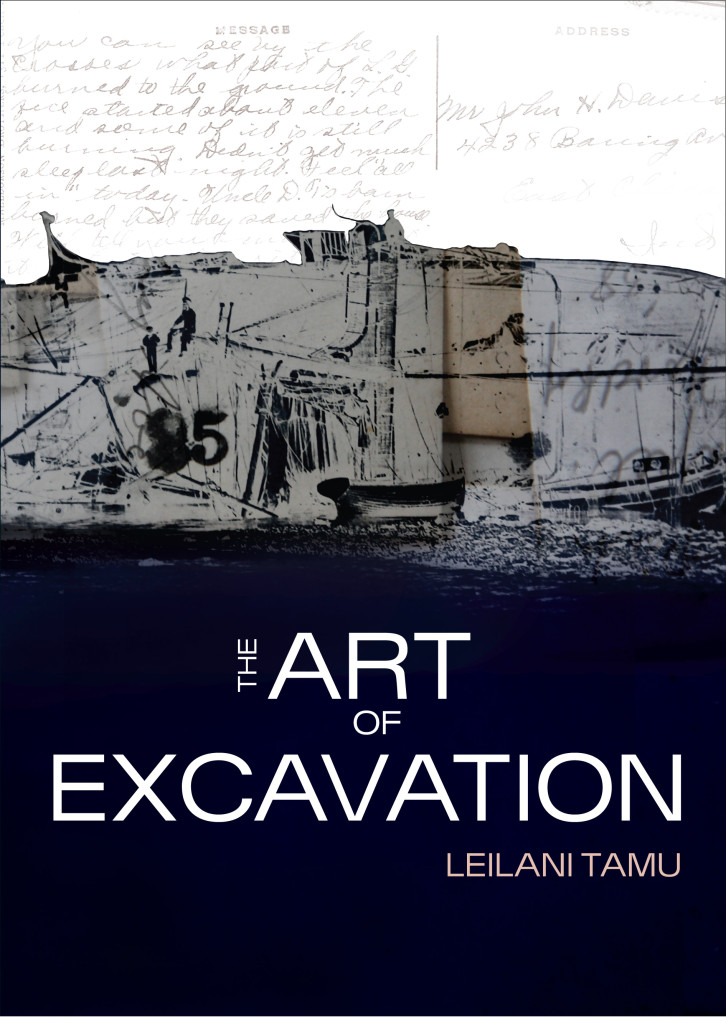
© Leilani Tamu, The Art of Excavation Anahera Press, 2014


Leilani’s note about the poem:

In 2012, I wrote an article for Metro magazine called ‘Mouths Wide Shut’ which tackled the issue of racism in New Zealand. The article focused on the implications, both personal and public, of choosing to remain silent, or do nothing, when confronted with racism. After writing the piece, I collaborated with artist Janet Lilo to stage a social / artistic intervention whereby Janet took photographs of me boarding a public bus in Auckland with my mouth covered with black duct tape. We rode the early morning bus from Avondale to Point Chevalier and during the trip not one person asked us what we were doing. People seemed to feel more comfortable ignoring us and most people looked uncomfortable. It was this experience and the subsequent photographs that inspired the poem.

The original article can be read online here

Author bio:

Leilani Tamu is a poet, social commentator, Pacific historian and former New Zealand diplomat. In 2013 she was the Fulbright / Creative New Zealand Writer in Residence at the University of Hawai’i in Mānoa. Leilani’s work has appeared in a diverse range of anthologies and her debut book of poetry The Art of Excavation was published in August 2014.


Paula’s note about the poem:

I had no idea about the genesis of the poem when I first read it but it really struck me. Stuck with me. I love the mesh of surprise and political bite. The title and the phrase, ‘mouth taped shut,’ were the initial hooks. It first brought to mind Rosa Parks refusing to give up her seat to a white man on a bus in 1955. Leilani’s title is an oxymoron yet it makes sense as the closed mouth of the title speaks volumes. It is a little cipher to carry through the poem. By being ‘sentenced’ to silence, willfully or otherwise, the taped mouth is both potent and resonant. It cuts into your state of ease. For me, it caught hold of centuries of thought, loose conversations, anecdotes and theory on women speaking and women silent, that reach back as far as Aristotle’s ‘A woman’s crown is her silence.’ The poem suggested to me that subject isn’t yet dead and there is still much to be said on the matter. Who is silence? Why is she silence? How is she silenced? Does it matter that she is a woman?

Yet this poem isn’t just issue based. It is vital, vibrant and rich with possibilities.

When I hit the word ‘silence’ in its own pillow of white space, I was tugged in a completely different direction. Now I was lead to the notion that you can observe and absorb and thus understand the world so much better if you are quiet (like the chatterer in the bush doesn’t get to experience the bush beyond the filter or screen of talk).

Then you reach the poem’s passenger and her distance. This returns you to the title and the poignant phrase. The passenger’s stance ignites thoughts on how we navigate difference and how difference is so often held at arm’s length because it is threatening, unfathomable, confusing. The notion that you can observe and absorb and thus understand the world so much better if you are quiet is tilted, flipped on its head. You get to observe, absorb and understand the world more through interrogation, through conversation. The poem is both the public bus and the public performance and it is over to us to draw close and raise questions. I love the way this poem is both understated and packs a punch. I have barely begun to pick at its threads.

Maybe you get to observe, absorb and understand the world  by both silence (observation) and engagement (questioning).


Anahera author page here

My review of The Art of Excavation here

Art_of_Excavation_cover-726x1024-1   Art_of_Excavation_cover-726x1024-1

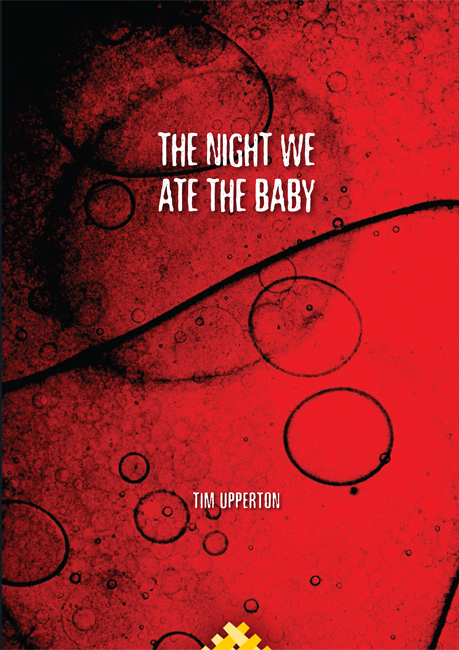
Tim Upperton’s The Night We Ate the Baby — You need to read the whole collection to get a sense of the tonal subtleties, the echoey anecdotes, the spade that digs open and the spade that buries.

Tim-FB 9780473288396-TU

Tim Upperton, The Night We Ate The Baby HauNui Press, 2014

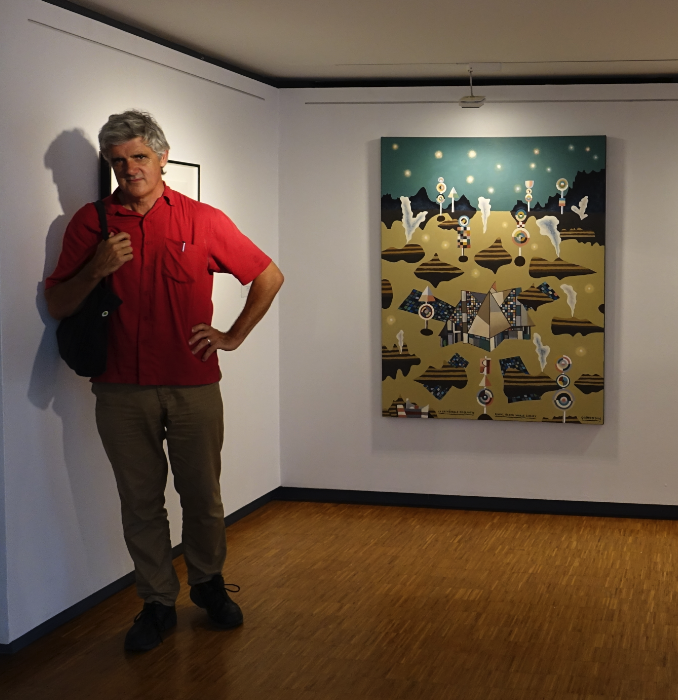
Tim Upperton’s debut poetry collection, A House on Fire, was published by Steele Roberts in 2009. Since then, his poetry has been published in numerous journals and he has won awards for a number of them. The poems for this new collection were written with the assistance of a Doctoral Scholarship from Massey University of New Zealand, so perhaps they form/formed part of his doctoral submission. Tim will be reading as part of the Haunui Press ‘Deep Friend Poetry Reading’ series at Vic Books on 26th March. Details here.

This latest book is unlike any other collection I have seen in New Zealand; chiefly in terms of the measure of discomfort. The forms are various, scooping an edgy wit into prose blocks, villanelle, triplets, couplets and freer patterns. Yet there is connective glue at work here, and that is what makes this collection stand out. I think it comes down to voice (whether or not it is the personal voice of the poet doesn’t really matter) because the voice steering the poems is sharp, forthright, witty, edgy, grumpy. It unsettles. It keeps you on your toes. On the back of the book, Ashleigh Young suggests that ‘[t]hese willfully, calmly disagreeable poems have tenderness and courage at their heart.’ I would agree. Therein lies the pleasure of reading these poems; there is more to the brittle edginess than meets the initial eye.

The first poem, ‘Avoid,’ very clearly announces that this is a poet who loves language, that is unafraid of rhyme and rhythm working arm in arm. The poem is a miniature explosion of sound effects — with sliding assonance, bounding consonants, near rhyme and sumptuous aural connections. It brought to mind the refrain in Don McGlashan’s song,  ‘Marvellous Year,’ and Bill Manhire’s glorious ‘1950s’ in the use of rhythm and rhyme, and aural trapeze work that is ear defying. Whereas Don’s song represents a potted portrait of the world in all its warts and glory (in a marvellous year), and Bill’s poem is a nostalgic recuperation of things, Tim sets up the collection’s  negative disposition and itemises things to avoid!


New Age mystics. Wave-particle physics.

Federico Garcia Lorca, that all-night talker.

The law. The rot inside the apple core.

All dawdlers. Power walkers. Tattoo

parlours. Death metal concerts.

Poetry readings that go on for hours.


The second poem, ‘Valediction,’ is a list poem steered by straightforward rhyme, and coupled with the incantatory joy of repetition you fall upon the humour. This is a lonesome poem, yet it is unbearably funny.


Goodbye, bagel, table for one.

Coffee, cigarette. Warmth of the sun.

Goodbye, sparrow. Goodbye, speckled hen.

Goodbye, tomorrow. Goodbye, remember when.


The third poem, Spring,’ (it would be so easy to work my way through the book, poem by poem but this trend is about to stop!) is not your usual homage to the season of daffodils and lambs. It is both refreshing and refreshed as the negative bite overturns such empathetic images. You board the slippery slope of the poem and run into the self-deprecating turn of the poet as he surveys the ruins of his touch (‘I ruin the jonquils, the daffodils. I ruin the I love you.’). Beneath this surface of ruination there is a white-hot core of intimacy and loss of intimacy. Unbearably moving. The final stanza holds its most potent kick until the oxymoron in the final line. Spring becomes the vehicle to hint at so much more:


Which is to say, I am terrified.

Meanwhile the grassy goodness, the lengthening day.

It’s not as if you died.

You come closer and closer away.


I  was really drawn to ‘The trouble with poetry’ (originally published in Sport). It felt like this  poem was a sleuth on the trail of another poem that would in turn become this poem; the Private Eye Poem collected all the necessary pieces (to tell the story in the manner of ‘a poet, not a novelist’). Like many of the poems in the book, it is as much about story as it is about language effects. There are characters and problems and turning points. The poems begins like this:


In the poem

which is like a house

the poet is looking

out a window.


The poem-houses in the book do look out into the world and what they gather in through their wide open and half-open windows are little anecdotes sometimes layered the one upon the other. They house jarring relations, spiky revelations. They are not-love poems as much as they are love poems. They house broken worlds, interior and external. ‘Late Valentine’ is like an ode to what is not:


I don’t sleep with you anymore,

and this makes the rain come

in the open window


The honeyed repetition of a villanelle renders the ‘hook’ in ‘The bare hook’ more damaging. Again there is discomfort, ache, and the oxymoronic kick of a last line (‘The way in is the way out.’) Here’s a sample:


The bare hook where you hung your coat

is a question mark. The answers never.

Don’t ask what this is all about.


You need to read the whole collection to get a sense of the tonal subtleties, the echoey anecdotes, the spade that digs open and the spade that buries — the language that takes to  limitless skies, and the forms that contain. This is a risky collection. It’s like a series of negative imprints that if you tilt to the left you get exquisite glimpses of fracture and repair.


from ‘Take care’

You are precious,

so carry yourself carefully

through this day,

don’t drop yourself because

you will smash

and fly apart in every direction,

and then,

and when that happens–

who will gather you,

who will pick you all up

I’d like to know?


Tim’s Blog

HauNui Press page


Poetry Shelf interviews Gregory O’Brien — The poem has to dive down into and surface from some essential state of being

Screen shot 2015-03-14 at 9.52.32 AM

Gregory O’Brien at Tjibaou Cultural Centre, Noumea, March 2015

Photo Credit: Elizabeth Thomson


Gregory O’Brien is the  2015 Stout Memorial Fellow at the Stout Research Centre, Victoria University, where he is currently working on a book about poetry, painting and the environment. His new collection of poems is Whale Years (Auckland University Press). He has published numerous books of fiction, non-fiction and poetry. Since 2011 he has contributed to the ongoing Kermadec art project, works from which are on show at the Tjibaou Cultural Centre, New Caledonia, until July.


The interview


‘Ocean sound, what is it

you listen for?’


Did your childhood shape you as a poet? What did you like to read? Did you write as a child?

As far as I can recall, I drew more than I painted. And I always gravitated towards illustrated books—Tove Jansson’s ‘Moomin’ books stand out, and I remember The Lord of the Rings, as much for its illuminated maps as for the words. I went through a phase of reading comics—Whizzer & Chips rather than Batman. I date my interest in the interplay of words and visual images to those early encounters.

I doodled at every available opportunity and I remember being hauled out of class and punished for drawing, rather well, a crouching deer on the inside cover of my maths book. I usually captioned my drawings—so maybe those captions could be thought of as my first writings. Occasionally I filled in speech- or thought-balloons above various life-forms.


When you started writing poems as a young adult, were there any poets in particular that you were drawn to (poems/poets as surrogate mentors)?

I can trace this pretty exactly, I think. Aged 14: Bob Dylan’s ‘Writings & Drawings’. Aged 15: Dylan Thomas. Aged 16: James K. Baxter and Flann O’Brien (I liked to pretend Flann was an actual relative. I even screen-printed his book-title AT SWIM-TWO-BIRDS on a singlet—an item I still have in my wee box of treasures.) Aged 17: John Cage (Silence, and A Year from Monday). By the age of 18, I was living in Dargaville, and it was as if everybody suddenly jumped on board the NZ Road Services bus or bandwagon—I was reading Kenneth Patchen, William Blake, Edith Sitwell, T. S. Eliot, Ezra Pound, e e cummings; also Allen Curnow, Janet Frame, Sam Hunt… I had known about Eileen Duggan for some years, because she was a relative, on my mother’s side. More than anything else, however, it was discovering Robin Dudding’s journal ISLANDS that turned my world around, that brought the whole business home…. Therein I discovered Ian Wedde, Bill Manhire, Elizabeth Smither, CK Stead…


Did university life transform your poetry writing? Theoretical impulses, research discoveries, peers?

I was six years out of school by the time I finished my BA, so my university life was mixed in, very much, with everything else that was going on: with 15 months in Dargaville, a year or so in Sydney… At university, I certainly wasn’t drawn to theory except in so far as I thought it was a grand imaginative game that might, periodically, yield unpredictable and outlandish results. I enjoyed the pottiness of Ezra Pound’s literary (rather than his political) theorising… An ABC of Reading is a great book. Probably the Zen-inclined John Cage and the Trappist Thomas Merton were the two non-fiction writers I held closest to me.


Reading your poetry makes me want to write. I love the way your poems delve deep into the world, surprisingly, thoughtfully yet never let go of the music of the line. Words overlap and loop and echo. There is an infectious joy of language at work. What are key things for you when you write a poem?

I listen to a lot of music. I want the poems to have something of the music that I love. I spend a lot of my time looking at art. And I want my poems to have something of the art that I love. There are aspects of composition, tone, rhythm and character which span all these different creative modes. Those are the key factors for me when I write… At a certain point, an appropriate form makes itself known…. The poem has to dive down into and surface from some essential state of being… There is certainly a joy in doing the things that you love; so there’s joy in the making and, preceding that, in the state of being that leads to the making….


Do you see yourself as a philosophical poet? Almost Zen-like at times?

My concept of philosophy is broad and shambolic enough to accommodate what I do as a writer. I’ve never read extensively in the field of Zen (apart from the books of John Cage and the writing of my friend Richard von Sturmer). I’ve read a little, and somewhat randomly, in the field of non-conformist Catholic thought: Simone Weill, Meister Eckhart, Merton, Baxter… These peregrinations may have affected me more than I realise or am prepared to say.


Do you think your writing has changed over time?

I guess writing has to evolve – otherwise it will become predictable and a total drag. I’m as entranced as I ever was with the process, the business, the labour of it. At the same time, I remain devoted to the finished form of it: The printed book, with its covers and half-title and title-page; and the shapes of words on the page and maybe illustrations. Poetry is an art that, if it’s working, is constantly reinventing itself.

I look back at my early poems and find fault. I find myself blaming an over-voracious intake of French Surrealism; too much Kenneth Patchen one year, too much Stevie Smith the next… Too much John Berryman! And, next year, not enough John Berryman! But the ship sails on, and finds new oceans to ply.


You write in a variety of genres (poetry, non-fiction, critical writing). Do they seep into each other? Your critical writing offers the reader a freshness of vision and appraisal – not just at the level of ideas but the way you present those ideas, lucidly, almost poetically. Does one genre have a particular grip on you as a writer?

I’m only starting to realise the inter-relatedness of these different genres. A few years back I started to explore poetry’s potential to carry information, also to elaborate upon a thought in a more detailed kind of way, ie. to have an almost essayistic function. So quite a few of my longer poems (some of the odes and, particularly, ‘Memory of a fish’ in my new book) are laden with facts, figures and reasonably clearly articulated information.

Needless to say poetry infuses the writing I produce in relation to the visual arts. I find looking at art exciting; it appeals to my poetic self. I don’t really have a critical self. I hope my non-fiction writing has a cadence, a music and a subconscious (rather than a conscious) purposefulness. Pondering my recent writings on artists such as Pat Hanly, Barry Brickell and Michael Hight, I remember in each case hearing a note—a song, almost—in my ear, and I was beholden to it.


Do you think we have a history of thinking and writing about the process of poetry? Any examples that sparked you?

James K. Baxter wrote wonderfully about writing poetry. Bill Manhire’s Doubtful Sounds is an immensely useful and energising book. 99 Ways Into New Zealand Poetry is terrific too. I refer back to my set of the journal ISLANDS and, yes, it seems to me we New Zealanders have been writing about the process as well as the product. Janet Frame’s oeuvre might be our greatest, most enduring instance of writing about writing, thinking about writing, writing about thinking, and thinking about thinking.


Your poetry discussions with Kim Hill are terrific. The entries points into a book are paramount; the way you delight in what a poem can do. What is important for you when you review a book?

I think a book has to become part of your life to really make an impression. It’s the same with music or visual arts. It can’t be a purely intellectual thing, it has to take you over, to some degree. It has to be disarming. Accordingly I tend not to discuss books that don’t ‘do it’ for me. Life’s too short. Fortunately, I have catholic tastes. There are things I enjoy very much in Kevin Ireland, as there are things I enjoy in Michele Leggott. I guess this makes me a lucky guy.


I agree wholeheartedly. I am not interesting in reviewing books on Poetry Shelf unless they have caught me, stalled me (for good reasons!).

What poets have mattered to you over the past year? Some may have mattered as a reader and others may have been crucial in your development as a writer?

Two years ago I went to Paris and met up with one of my all-time heroes, the French poet and art-writer Yves Bonnefoy. He turned 90 last year (Joyeux anniversaire, Yves!) During my recent travels around the Pacific (from New Caledonia to Chile), I’ve taken bilingual editions of Yves with me everywhere. I am interested in the way he has turned the creative conundrum of being an Art Writer and a Poet into something unified and compelling (channelling earlier French poet-art-writers from Baudelaire to Apollinaire, with a nod to Yves’s near-contemporaries, that wondrous group of wanna-be French-art-poets, John Ashbery and the New Yorkers). I also took the poems of Neruda and Borges with me everywhere I went.


What New Zealand poets are you drawn to now?

New Zealand poetry is interesting at the moment. It’s all over the place. As it should be. There are plenty of people I read voraciously. As well as the poets mentioned already: Anna Jackson, Vince O’Sullivan, you Paula, Lynn Davidson, Kate Camp, Geoff Cochrane… Last year I edited a weekly column for the Best American Poets website—that was a good chance to ‘play favourites’, as Kim Hill would say. (All those posts are archived here: http://blog.bestamericanpoetry.com/the_best_american_poetry/new-zealand/) There are some great first books appearing at the moment: Leilani Tamu’s The Art of Excavation; John Dennison’s Otherwise. This bodes very well indeed.


Name three NZ poetry books that you have loved recently.

I was rereading Riemke Ensing’s Topographies (with Nigel Brown’s illustrations) the other day; I found that book very inspiring when it appeared way back in 1984. Lately I’ve also been reading Bob Orr’s crystalline Odysseus in Woolloomooloo and Peter Bland’s Collected Poems… I could go on.


Your new collection, Whale Years, satisfies on so many levels. These new poems offer a glorious tribute to the sea; to the South Pacific routes you have travelled. What discoveries did you make about poetry as you wrote? The world? Interior or external?

The Kermadec voyage, and subsequent travels—most recently to New Caledonia—opened up a huge areas of subjective experience as well as of human and natural history. How do you write about that kind of space, that energy, that life-force? Wherever you travel, the air is different; the ‘night’ has a different character; the smells and textures of the vast Pacific vary from place to place. And people move differently wherever you go – they claim a different kind of space within the environment. My recent travels have been like a door opened on a new world. The last three years of my poetry-writing have been the most intense since I was in my early twenties.


That shows in this book Greg. I am looking forward to reviewing it because it touched a chord in so many ways. I love the idea that poems become little acts of homage. What difficulties did you have as traveller transforming ‘elsewhere’ into poetry? To what degree do you navigate poetry/other place as trespasser, tourist, interloper?

The artist Robin White likes to point out that there is only one ocean on earth. All our oceans are joined together—it’s the same body of water. So, if you take the sea to be your home (which, as Oceanians, believe it or not, we should do), then as long as you’re at sea you’re still, to some degree, in your home environment.

As a poet entering a new environment, I bring with me my responses, my eye, my mind and various kinds of baggage. I’m a curious person by nature so I always want to find new things—things I don’t know anything about. I like it when my preconceptions fall apart. I love being wrong about things; I enjoy the subsidence of the known world. I quote the great post-colonialist writer Wilson Harris in Whale Years: ‘If you can tilt the field then you will dislodge certain objects in the field and your own prepossessions may be dislodged as well.’

I feel that, as a poet, I am most in my element when I am sitting on the ground and learning new things. When the field of the known has been tilted. And filling my notebooks with various tracings of that new knowledge or sensation.


This is a good way to look poetry that takes hold of you; it ‘tilts’ you. I also loved the elasticity of your language – the way a single word ripples throughout a poem gleaning new connections and possibilities. Or the way words backtrack and loop. At times I felt a whiff of Bill Manhire, at others Gertrude Stein. Yet a poem by Gregory O’Brien is idiosyncratic. Are there poets you feel in debt to in terms of the use of language?

Strangely, I can’t read Gertrude Stein anymore. She is one of a very few writers I have been in love with and then the relationship has waned. Maybe, early on, she loosened up my use of language, the extent to which the rational mind is left to run things. There was a music I found in Stein, for sure. But this was something—increasingly—I found in more conventional writers like Wallace Stevens, Robert Creeley and, most recently, in Herman Melville. Moby Dick is a piece of great, symphonic, oceanic music. The novel (for want of a better term) is an incredible noise, a racket of spoken and sung sounds. Melville’s style reminds me of all the depth-finders, radars, monitors and gauges on the bridge of HMNZ Otago as we sailed north to Raoul Island in May 2011. All that information pinging and popping…


Is there a single poem or two in the collection that particularly resonates with you?

The long poem, ‘Memory of a fish’, is the piece that connects various experiences from the three year period in which the book was written, and brings them together—in an essayistic fashion, almost. I enjoy the ebb and flow of the triplets, and the world’s details tripping along them, like things washing ashore on Oneraki Beach… When I was writing that poem I felt I was living inside it, totally. And I haven’t quite climbed out of it yet, to be honest.


The book also demonstrates that eclectic field you plunge into as a reader with its preface quotes. What areas are you drawn into at the moment? Any astonishing finds?

The quotations at the beginning of the three sections of the book are constellations in the night sky above the poetry-ground. They mark points of reference, further co-ordinates, which have guided the writing: W. S. Graham’s ‘The stones roll out to shelter in the sea.’ The Flemish proverb: ‘Don’t let the herring swim over your head.’ Those are verbal artefacts I have carried around with me, much as you would pick up a shell or a colourful leaf. They were/are talismans. So I have stored them inside the book as well. Cherished things.


‘Constellation’ is perfect. I was thinking underground roots that nourish. Or one of any number of maps you can lay over the poems (the map of domestic intrusion, the map of childhood, the map of objects, the map of reading). But yes the process of writing has its constellation-guides as you venture into and from both dark and light.

Poetry finds its way into a number of your paintings (as it does with John Pule). There are a number of drawings included in the book that add a delicious visual layer. How do you negotiate the relationship between painting and poetry? Does one matter more? Do they feed off each other?

My notebooks contain a thick broth of visual and verbal ingredients. These materials arrive in my journal simultaneously. When writing or painting, I separate the words from the visual images and work on them more-or-less separately. When it comes to putting together a book, like Whale Years, these two disparate activities are reunited again. I’ve always loved illustrated books. (I think immediately of Bill Manhire’s The Elaboration, with pictures by Ralph Hotere; Blaise Cendrars’ long Trans-Siberian poem, illustrated by Sonia Delaunay; William Blake illustrating himself, and so on)


notes-on-the-raising-of-the-bones-of-pablo-neruda-at-isla-negra-gregory-obrien-and-john-reynolds-etching-2014

NOTES ON THE RAISING OF THE BONES OF PABLO NERUDA AT ISLA NEGRA by John Reynolds & Gregory O’Brien, etching, 2014

You have collaborated with a number of other artists and writers. What have been the joys and pitfalls of collaboration?

There are no pitfalls, as far as I can see. Somehow, I’ve found my way into a few collaborative circumstances and very much enjoyed the results. In the past year I’ve made etchings with my two painter-friends John Reynolds and John Pule. Like Charles Baudelaire and Frank O’Hara before me, I seem to have been lucky enough to fall in with a good crowd of painters (and also photographers—but that’s another story).


sailing-to-raoul-gregory-o_brien-and-john-pule-etching-aquatint-with-colour-roll-2011

SAILING TO RAOUL by John Pule & Gregory O’Brien, etching, 2012 (John titled this work, riffing off Yeats’s ‘Sailing to Byzantium’)


The constant mantra to be a better writer is to write, write, write and read read read. You also need to live! What activities enrich your writing life?

Certainly my recent travels around the Pacific have been hugely enriching. I’m not a proper swimmer, but since I was a child I have had a great passion for floating in, or being upon salt water. (My book News of the Swimmer Reaches Shore grew out of that propensity.) The everydayness of existence is the most enriching thing—as the poems of Horace and Neruda and Wedde keep reminding me. What a great and pleasant swarm of information and sensation we find ourselves amidst, every day of our lives.


Finally if you were to be trapped for hours (in a waiting room, on a mountain, inside on a rainy day) what poetry book would you read?

I keep coming back to the Collected Poems of James K. Baxter. Not because it’s the best book ever written but because of the simple fact that it occupies a huge and resonant place in my life.


Auckland University Press page

New Zealand Book  Council page

Arts Foundation page

The Kermadecs page

National Radio page (discussing poetry highlights of 2014 with Kim Hill)