

Category Archives: nz poetry review

Poetry Shelf review: Claire Orchard’s Cold Water Cure – This is the joy of poetry!

Cold_Water_Cure__43428.1448931921.220.220.jpg   Cold_Water_Cure__43428.1448931921.220.220.jpg   Cold_Water_Cure__43428.1448931921.220.220.jpg


Cold water cure Claire Orchard  Victoria University Press 2016

Lately I have been thinking about the bridges that occur between poem and reader. Some bridges are so surely established that the ensuing traffic is free flowing. Noisy. Exhilarating. On other occasions, the bridges falter and it is barely possible to cross.The poem remains at arm’s length. Reading can be viewed as a travel card of crossings, but it is also invigorated by countless sidetracks  and multiple rest stops.

Claire Orchard’s debut collection,  Cold water cure, affords rich crossings. It is a book in three parts with the long middle section, a  fitting centrepiece. The first section resembles a picnic spread where everyone brings a plate and it all seems to fit together perfectly. These opening poems bring family close to the surface of reading in ways that move you. Move you to laugh out loud, to wry grins, to feel something. Claire prunes the dross, and peels a poem back to the bare bones of incident. Then she adds a little kick, a curve, a tilt and the bare bones gleam so we take notice. This is the joy of poetry. The way it enables renewed attention to old things.

So many favourites in this first section but here are a few:


Egg

What people often don’t realise, my grandfather said abruptly,

while we were sitting on a bench at the playground,

is that parenting involves taking

a lot of split-second decisions.


This poem is a grandparent anecdote involving an egg. I had no idea where the poem was taking me and it made me laugh out loud, grin wryly and feel something. All in one little poem basket.

Several of the poems suggest that Claire was once a primary-school teacher. Very rarely do I come across poems written from the point-of a-view of a teacher. It sparked a whole train of thought. I taught in primary schools in my twenties (Auckland, Wellington, London), yet I have never written poetry about these experiences as though they are low-status material or too far back in time. Janet Charman wrote some tough poems about being a high-school teacher. Johanna Aitchison has written hilarious poems about teaching English as a second language. Claire’s poems catch a knife-edge delight I recognised.

Here is the ending of, ‘Sharpening,’ one of the teacher poems:


I ask these questions without thinking,

tearing open a band-aid.

He’s six, the number of perfection.


There are a few found poems in the bunch. Found poems work best when the poet considers how best to serve them. Sometimes found poems don’t shift beyond road sign or stolen conversation and the connection is one of indifference. Not here. I especially love the one that kick starts the collection with a recycled quote from Ali Williams during the All Blacks 2011 World Cup Campaign.


Hang on

I think we’re getting ahead of ourselves here.

Last time we got ahead of ourselves,

we shot ourselves in the foot

then we did it again a few years before that –

shot our other foot.

We’re just trying to leave our feet on.


I loved the poem that riffs stream-of-conscious like when the poet spots a young man wearing the exact same T-shirt at the next table (‘Don’t let me be misunderstood’). Equally funny is ‘Poetry master class.’ This is based on sharing a copy of the poems with a late arrival at Bill Manhire’s event at the Embassy Theatre. Just hilarious with an ending that nails it. Here is an early stanza:


She referred to the presiding poet as Bill and,

before he’d begun to address himself to the first poem,

had taken a pen and scored briskly through three of its lines.


Yes there is humour in the opening banquet but there are ample reasons to savour rest stops. The end lines. The shift of the eye. The look of the poem. The sound of the poem. Tropes that renovate things. This from ‘Legendary creature’:


Your many-winged laundry rack

resembles a pale, anorexic albatross

doubled over

in the boot of the car


The middle section constitutes the bulk of the book and sets up bridges like Russian dolls, chiefly between Claire and Darwin. Unlike most poetry collections, Claire has placed her detailed notes at the start of the book. A travel guide, if you like, that signposts the link between poem and original source. Many of the poems juxtapose the words of Darwin or those connected to him with the words of Claire. The poems thus promote conversation between then and now, him and us, this idea and that idea. His experience and her experience. It is quite the thing for poets to step back in time at the moment. To take a historical figure and see what happens when you transplant yourself or your subject or both.

Such transplantation raises questions about how we represent the past. How the past infects us and vice versa. What I loved about the Darwin poems is the way his ideas percolate in the gaps but he is placed in a context of living. The poems are infused with life.

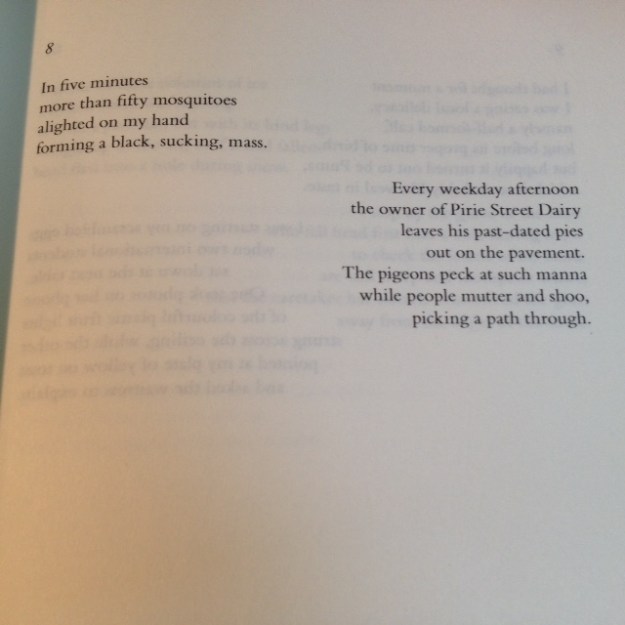
In ‘Voyages,’ Darwin’s voice sits on the left-hand side of the page, Claire on the other. I am itching to put Claire in quotation marks to stress her collision of selves. And then I think Darwin is equally unstable, and want to do the same for him. In the end, I leave them to float at will. A word from Darwin on the left prompts a personal anecdote, a musing, an image from Claire on the right. I keep looking at the page and reading the tiny stanzas and seeing them as two hand-prints. He and she. The connections are electric.
IMG_3202.JPG


Another poem, ‘Near Lima,’ provides new entries into the Darwin section.


Somewhere I read that, day to day, most of us

rarely raise our eyes more than fifteen degrees

above the horizon.


This is what the Darwin poems do. They lift us beyond the horizon line of fact, beyond the borrowed phrase or lines to reflect on how ideas rub against wife, child, animals, watches, ornaments, fish, ceremonies, death. So innovative. So stimulating.


The final section faltered for me. These poems venture out into the wider world, untethered by theme or style, which felt liberating. I am fascinated that I didn’t make it across the bridge for some of them. I don’t see these poems as failures. I see this as a failure on my part as reader. Sometimes it is like wine affected by mood, circumstances, company or context. One day a vintage hits your palate. The next day it misses. As a persistent reader of New Zealand poetry this interests me. Reading poetry is also susceptible to mood, the weather, what you have just read or done. I haven’t yet got what these poems are doing. I am planning a return visit.

I heard Claire read from ‘Voyages’ at the Lauris Edmond Poetry Prize in Wellington recently. What a treat. It could have been a disaster trying to read these two voices into audible life (do they need to be discrete?), but it was a highlight for me. Hearing the voice of the poet aloud, heightened the effect of her deft hand. I shivered with connections that I hadn’t spotted on the page. Some kind of spooky yet wonderful ventriloquism was taking place.


This book is a gift. It makes you laugh out loud. It rejuvenates. It challenges. I adore it.


Victoria University press page.
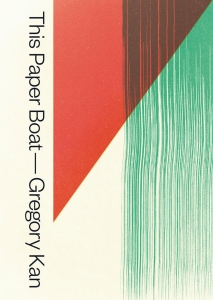


Poetry Shelf Review: Gregory Kan’s This Paper Boat floats on an ethereal current so that poetry finds its way back to us all


1455844200262     1455844200262

Gregory Kan This Paper Boat Auckland University Press 2016


Gregory Kan’s debut poetry collection, This Paper Boat, is a joy to read on so many levels.

Kan’s poetry has featured in a number of literary journals and an early version of the book was shortlisted for the Kathleen Grattan Poetry Prize in 2013. He lives in Auckland.

Paper Boat traces ghosts. We hold onto Kan’s coat tails as he tracks family and the spirit of poet, Robin Hyde (Iris Wilkinson). The gateway to family becomes the gateway to Iris and the gateway to Iris becomes the gateway to family. There is overlap between family and missing poet but there is also a deep channel. The channel of difficulty, hard knocks, the tough to decipher. There is the creek of foreignness. The abrasiveness of the world when the world is not singular.

Kan enters the thicket of memory as he sets out to recover the family stories. He shows the father as son fishing in the drains, the mother as daughter obedient at school. Yet while he fills his pockets with parental anecdotes, there is too, the poignant way his parents remain other, mysterious, a gap that can never be completely filled:


In the past when I thought about people my parents

were somehow

not among them. But some wound stayed


wide in all of us, and now I see in their faces

strange rivers and waterfalls, tilted over with broom.


The familial stands are immensely moving, but so too is the search for Iris. Kan untangles Iris in the traces she has left – in her poems, her writings, her letters. He stands outside the gate to Wellington house, listening hard, or beside the rock pool. There is something that sets hairs on end when you stand in the footsteps of ghosts, the exact stone, the exact spot, and at times it is though they become both audible and visible. Hyde’s poems in Houses by the Sea, are sumptuous in detail. I think of this as Kan muses on the rock-pool bounty. When he stands at her gate:


I have to hear you to keep you

here, and I have to keep you

here to keep coming back.


I think too of Michele Leggott’s plea at the back of DIA to listen hard to the lost matrix of women poets, the early poets. To find ways to bring them close.

Kan brings Iris (Robin) close. His traces. Iris becomes woman as much as she does poet and the channel of difficulty fills with her darknesses as much as it does Kan’s. There is an aching core of confinement: her pregnancy, her loss of the baby, her second pregnancy, her placement of the baby elsewhere, her mental illness. His confinement in a jungle. His great-aunt’s abandonment as a baby.


The strands of love, foreignness and of difficulty are amplified by the look of the book. The way you aren’t reading a singular river of text that conforms to some kind of pattern. A singular narrative. It is like static, like hiccups, like stutters across the width of reading. I love this. Forms change. Forms make much of the white space. A page looks beautiful, but the white space becomes a transmission point for the voices barely heard.

At one point the blocks of text resemble the silhouettes of photographs in a family album. At another point, poems masquerade as censored Facebook entries.Later still, a fable-like poem tumbles across pages in italics.

The writing is understated, graceful, fluent, visually alive.

I want to pick up Hyde again. I want to stand by that Wellington rock pool and see what I can hear. I have read this book three times and it won’t be the last.


In the final pages, as part a ritual for The Hungry Ghost Festival, Kan sends a paper boat down the river ‘to ensure// that the ghosts find their way/ back.’

The book with its heartfelt offerings is like a paper boat, floating on an ethereal current so that poetry finds its way back to us all (or Hyde, or family).


Auckland University Press page

A terrific interview with Sarah Jane Barnett

Sequence in Sport


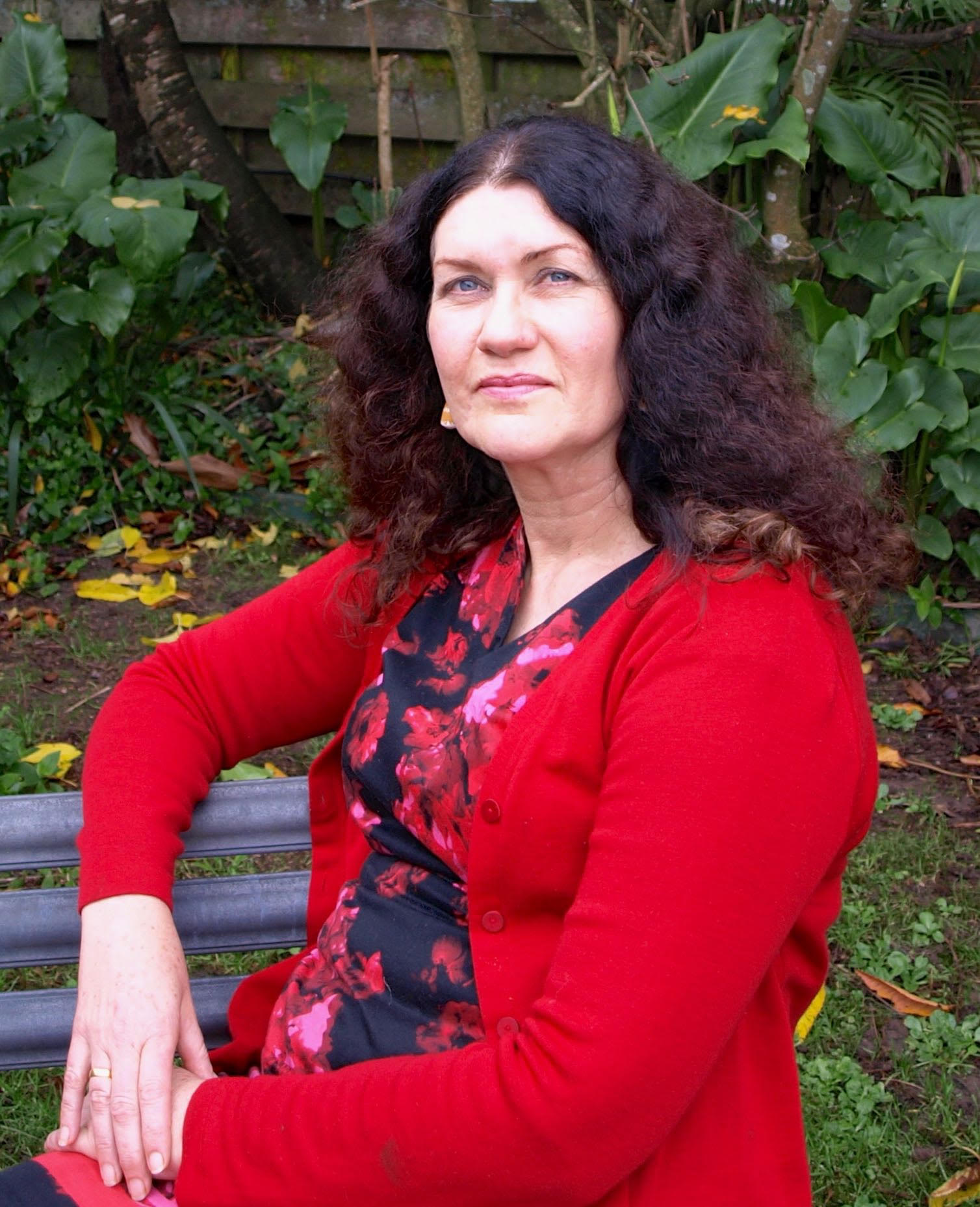
Poetry Shelf interviews Serie Barford: ‘Each poem or short story is a co-ordinate that can be located and mapped within one of seven embroidered panels’


OLYMPUS DIGITAL CAMERA

 
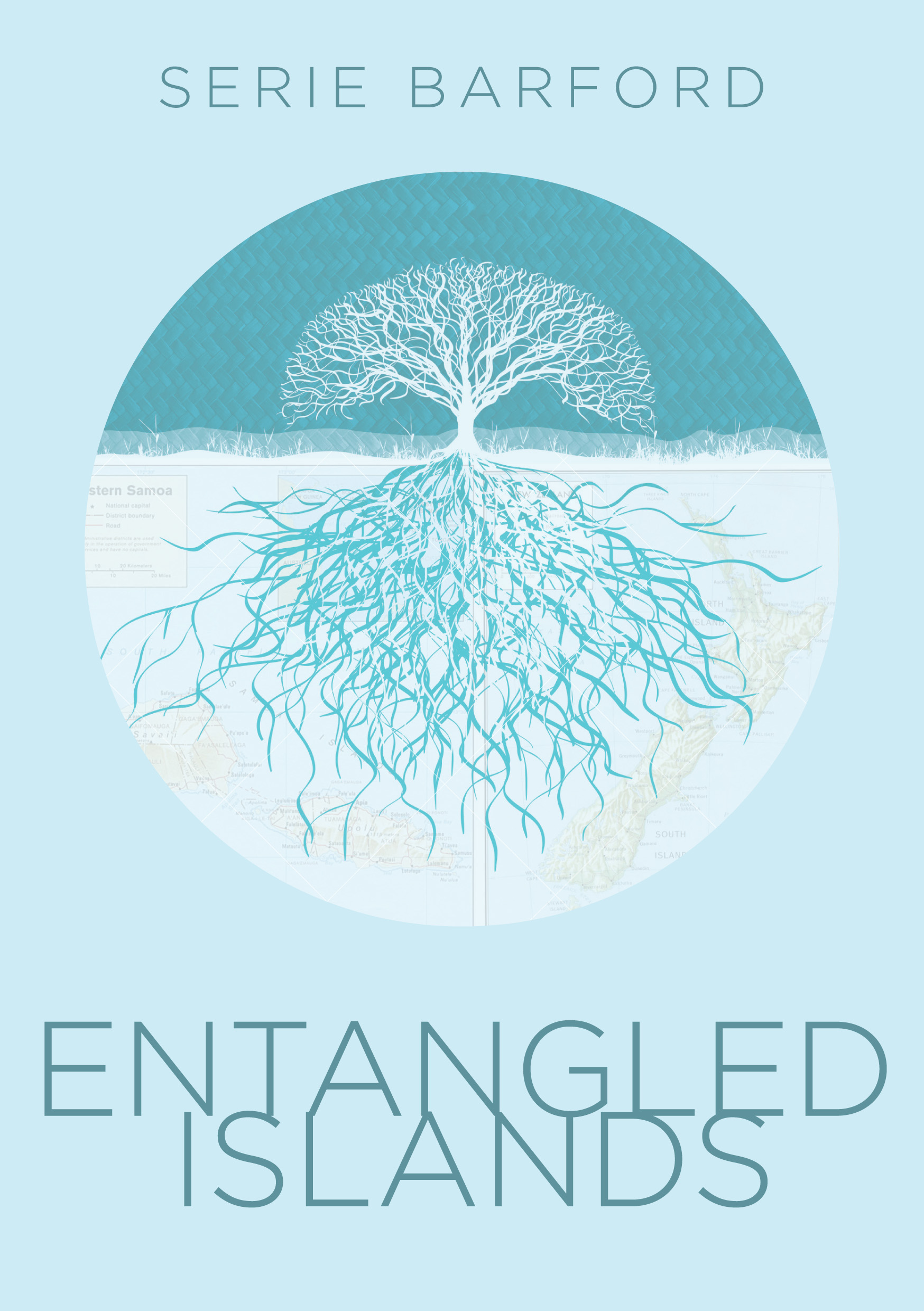
Serie Barford is of Samoan and European descent and lives in Aotearoa.  Her poetry and short stories have been published in literary online anthologies such as Snorkel, Trout, Blackmail Press, Cordite Poetry Review and Jacket and in recent print editions such as Maui Ola (AUP:2013), Pacific Identities and Wellbeing (Routledge 2013), Essential New Zealand Poems (Random House:2014) and Whispers and Vanities (Huia:2014).  Her third poetry collection, Tapa Talk, was published by Huia in 2007 and her fourth collection, Entangled Islands, was released by Anahera Press in December 2015.  Serie was the recipient of the 2011 Seresin Landfall Residency.

To celebrate the arrival of her new collection, Serie agreed to answers a few questions for Poetry Shelf.


Did you write as a child? What else did you like to do?

I clearly remember the first poem I wrote outside of a classroom setting. I was at primary school and had spent the night with my paternal grandmother. I wrote a poem about the rain and her flooded garden. Her spontaneous delight kick-started my love affair with poetry. A few weeks later I declared, “When I grow up I’m going to write books!”

I had a teacher who favoured Donald Grave’s writing principles. She facilitated a process that encouraged students to write authentically. We were allowed to go to sleep or write freely every Friday afternoon. Our journals were collected and locked in a cupboard when the bell rang. We were told “your words are safe with me.” The teacher scribbled personal responses to our ramblings. By the end of the year we were writing as quickly as we could to maximise our precious hour. She was a sympathetic audience and we trusted her with stories from our lives. Many years later I met this teacher again and told her how important the writing hour had been to the class. She laughed and said, “I just wanted peace and quiet on a Friday afternoon!”

Those Friday afternoon writing sessions were the closest school ever came to validating the storytelling environment of my home. I still like to write conversationally and shares stories as if they’re anecdotal recounts.

I also liked the family picnics, parties and meals that the maternal (Samoan) side of my family shared all the time. I still get a “buzz” when I walk into a crowded room and know that everyone present has a familial story that relates us by blood or association.

I started relating to other people’s poetry when I discovered a slim volume entitled Some Modern Poetry from Western Samoa in the Wesley bookshop in Apia in 1975. It was edited by Albert Wendt. I was hooked by the opening stanza of Rupert Petaia’s poem:

Kidnapped

I was six when

Mama was careless

she sent me to school

alone

five days a week


One day I was

kidnapped by a band

of Western philosophers

armed with glossy-pictured

textbooks and

registered reputations

‘Holder of B.A.

and M.A. degrees……..

These days I refer to Albert as my “literary papa’ and I still have this book on my bookshelf. It cost 50 sene (cents) at the time. I won a ‘Special Prize for English’ when I was in Form Five (Year 11) and was presented with a handsome edition of The Poems of John Keats. We didn’t study non-European poetry when I was at school and we weren’t rewarded for our scholastic achievements with “other voice” books. John Keats resides on a varnished shelf beside Whetu Moana, Mauri Ola and other books with a South Pacific focus.


What poets inspired you when you started writing poetry as an adult?

I wasn’t inspired by any of the poets I studied at varsity until I encountered their work years later in non-institutional settings. One day my Samoan grandmother asked me at the dinner table, “What did they teach you today?” I couldn’t say that the professor had talked about cocks and sexual desire and sexual politics because my maternal family hadn’t left their beloved homeland and made huge sacrifices so that I could study poetry about orgasms. We were studying Adrienne Rich’s Reforming the Crystal.
I am trying to imagine 
how it feels to you
to want a woman

trying to hallucinate 
desire
centered in a cock
focused like a burning-glass

desire without discrimination:
to want a woman like a fix
To put this in context, my grandmother was born in 1912, was a teenage bride and the blooded sheet from her wedding night was proudly paraded through the village by her mother the next morning. My grandmother was the daughter of a taupou (a ceremonial female village virgin) and had witnessed public deflowerings of taupou when she was a child. We talked openly about such matters. But the poetry and sexual politics I studied in Stage I English in 1979 was a world away from our dinner table and only increased my sense of isolation at university.

I was inspired and supported by poets I met at the Poetry Live evenings during the 1980s and early 1990s. This was the first time I’d heard Maori and Pasifika poets live. I listened to John Pule, David Eggleton, Robert Sullivan, Albert Livingstone Refiti, Michael O’Leary, Emily Karaka, Haare Williams and Apirana Taylor, as well as many other wonderful poets. Through them I learned to appreciate poets such as Hone Tuwhare, Alistair Te Ariki Campbell, Sam Hunt and James K. Baxter.

In 1984 I bought a couple of volumes of poetry while I was waiting for a bus in Los Angeles; Relearning the Alphabet by Denise Levertov and The Women and the Men by Nikki Giovanni. I read and reread their poems as I flew from LA to Alaska to Dusseldorf and felt inspired to write. I returned to Aotearoa-New Zealand a few weeks later with a clutch of poems that appeared in Plea to the Spanish Lady, the first of two experimental collections published by Hard Echo Press.

I only read “other voice” writers while I was struggling with identity issues but now that I have found my personal voice and tūrangawaewae (standing place) I have eclectic tastes, although I’m still drawn to to the works of Polynesian writers when I want to be nourished and swamped by a sense of familiarity and belonging.


Your poetry is so evocative. As reader, it is as though you can absorb a poem through senses, bite into flavor and smell the poem’s very essence. What kinds of things do you want your poetry to do?

I like my poetry to feel ‘alive’ and hope that it will continue to contribute to the canon of Pasifika literature and writing in general that is flowing from the South Pacific and connecting us to people around the world. I imagine the universe as an infinite tapa canvas with tusili’i (fine, wavy lines) connecting disparate beings and ecosystems. I’m fascinated by the Samoan concept of ‘Ia te’u le va’ – to take care of/cherish relationships across Spacetime. In ‘Connections’ a poem from Tapa Talk (Huia:2007) I wrote:


there’s no such thing as empty space

just distances between things


made meaningful by fine lines

connecting designs and beings

in the seen and unseen worlds


distances can be shortened

made intimate or dangerous


or lengthened

until the connections weakens

finally withers away

I want my writing to explore and express connections and disconnections by positioning myself and my audience within various communities of belonging, as if we are plotted on a sociogram. Each narrative maps my emotional, physical, intellectual and spiritual journey through Spacetime. By engaging with my journey the audience fixes itself upon my (metaphorical) tapa canvas. We are connected long enough to hongi. To mingle breath. To experience the human condition on the same page for a few seconds.


Entangled-Islands-Cover-hi-res   Entangled-Islands-Cover-hi-res


Your new collection, Entangled Islands, is like an album of anecdotes and occasions transcribed lyrically. It feels both political and personal. What was important to you as you wrote?

Entangled Islands is attentive to liminal zones and explores blurred boundaries where states of being and historical events co-exist with political and personal pou whenua – posts that mark territorial boundaries or places and events of significance.

I chose the motif of a fala su’i, a woven pandanus mat fringed with wool, to represent a Spacetime matrix. Each poem or short story is a co-ordinate that can be located and mapped within one of seven embroidered panels. Each panel is a chapter. Entangled Islands begins with the arrival of a life force and ends with a life force returning to its namesake – Sirius/Takurua. The audience traverses Spacetime with the me, the narrator, guiding them over trails and revealing pou whenua that stand upon the matrix mat demanding attention, understanding and empathy.

I have exercised a certain amount of poetic license because traditional fala su’i are fringed but not embroidered like the Cook Island tivaevae. However, descendants of Polynesian migrants are fusing tradition and innovation, and I was inspired by an embroidered fala su’i that was for sale at a festival. It was a syncretic creation and did not look out of place in cosmopolitan Aukilani (Auckland).

Entangled Islands explores and reinforces the concept of Ia teu le va. Albert Wendt describes the Va as the between-ness that relates or holds separate entities and things together in the unity-in-all; the space that is context, giving meaning to things.


I love the title. It can signify knots, webs, even braid. I got a sense of tangles that are personal and tangles that implicate communities, history, patches of the world. Tell me about the tangles you trace.

The introduction explains that “ ‘Entangled Islands’ was the first in a series of exhibitions held at the Auckland War Memorial Museum to mark the WWI centenary period. Damon Salesa’s speech on opening night referred to the colonial, genealogical and spatial entanglements that resulted from New Zealand’s occupation of Western Samoa … Our family history is entangled with colonial expansion, suppression, intermarriage, migration and migrants’ dreams of a better life for their children on the islands where they live.”


Anahera Press


Poetry Shelf review — Emma Neale’s Tender Machines takes you into a deep private space in her writing; in ways that sing and challenge, that move and muster every poetic muscle and tendon as you read

418MHC3lAEL._SX346_BO1,204,203,200_    418MHC3lAEL._SX346_BO1,204,203,200_


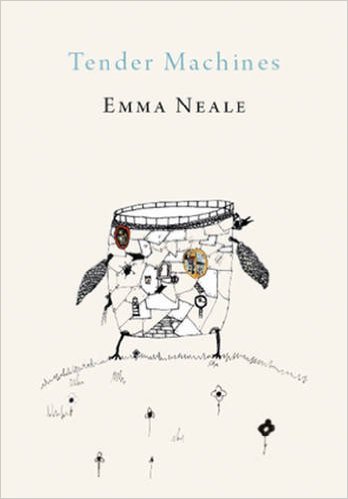
Emma Neale Tender Machines Otago University Press 2015

Emma Neale’s new poetry collection features a striking drawing by her son, Abe. Surprising, inventive, poetic even. The poetry is Emma’s best yet, dare I say it. To step off from the title, tenderness meets sharp edges meets exquisite moving parts, small yet perfectly formed. The collection holds you in the intimate embrace of home, yet takes you out into the wider allure of the wider world. Issues, ideas, preoccupations.

The first section, ‘Bad Housekeeping,’ is where poet tends hearth. Mostly, and movingly, Emma navigates her relations with her young son.  She is up against the elbows of insistence, demands, resistance. The mind of the mother is anchoring, roving, admitting. She is in the heart of a toddler tantrum and in the palm of world issues. These poems affect you. You can savour the poetic craft that is honey for the ear. Such musical harmonies and schisms. That is one joy of reading. You can enter the toughness and rewards of motherhood. It is as though maternal experience is the stock pot that is simmered and concentrated to a syrup that is both sweet and tart on the tongue.  The poems become the kind of poems you can hang stories upon; of this child and that child, of this moment of mothering and that. Poetry has the ability to bear story, experience, imaginings, ideas, music — all in its one tender machine (oxymoron and all). These remarkable poems do this. ‘Hard Task, Master’ is a miniature snapshot of the child — its ending breathtaking:


as he tries

to build and build

the deck of himself

against the hard, tall wall

of the world.


At times it is the concatenation of verb or noun on the line that catches you in a knot of maternal thought — son glued to mother, mother glued to son. As in ‘Towards a Theory of Aggression in Early Childhood Development’:


Hit, push, lash, scratch,

these cheeks, this jaw, this shoulder,

are these in truth our edges, outlines, will we cry

as he does, daily, nightly, sky-wrenching as sunrise

yet still hold him in our arms


There is poetic braveness here that doesn’t loiter in conventional maternal paradigms. This is a poet opening layers of skin to get to where it hurts, confuses, demands, yet never loses sight of the enduring bond. The love. This is from ‘Domestic’:


you’re our darling our treasure.


You fling a tea cup at the cat,

plump up her spine like a goose-down pillow,


jab your thumbs at your father’s face

as if to pull out its two blue plums


but ah, little fisty-kins, honeyghoul, thorny-pie,

grapple hook of your daddy’s flooded eye,


stitch by stitch hope’s small black sutures

sew love’s shadow behind you.


The rest of the collection represents a mind engaged with the world at large. There is a strong political vein that never relinquishes the notion that the personal is political and that, importantly, the political is personal. Big issues such as consumerism, the compromised state of the planet, greed, waste are there potency ingredient in the ink of the pen, yet Emma’s ideas find poetic life in a variety of ways. Always there is an attentiveness to sound, to the way the poems hit the ear before the eye/mind drifts elsewhere. Assonance is plentiful. Delicious. The musicality is a first port of admiration that sends you back to reread with ears on alert. One poem, overtly and self-reflexively, plays with musical effects, yet delivers a subterranean plea for the earth (‘”Properly Protecting the Most Pure Marine Ecosystem Left on Earth Was Not Consistent with the Government’s Economic Growth Objective”‘. Here is a sample:


The spring tries to write

its long lyric poem again:

grass blade rhymes wing tip;

leaf rim, gull keen;

salt foam, thought arc;

surf break, line break;

historical break, heart break;

riven river, toxic stream;

smoked ozone, glacial melt.


So many standout poems. I especially loved the way ‘Suburban Story’ moves. It begins with a ‘shopkeeper at my old corner store’ and then travels through a poignant catalogue of losses, minor and major. Again the exquisite ear at work, again the pulsating detail.

This is a collection of reflection, revelation, absorption. Emma wrote many of these poems during her tenure as The NZSA/Beaton Fellow, The Otago Robert Burns Fellow and The University of Otago/ Sir James Wallace Pah Homestead Writer in Residence. Such awards benefit the poet immeasurably with the gift of writing space and time. You can see it in the gold nuggets of this book. In another favourite poem, ‘Sleep-talking,’ the clogged channels of thought become poetry. Emma takes you into a deep private space in her writing; in ways that sing and challenge, that move and muster every poetic muscle and tendon as you read — in this poem and in the book as a whole.


Perhaps for the self to hold its own air

it must be played in the key of sleep:

the body an instrument that over time

we must keep pitched, soaked in night like a reed softened in water,

while dreams tune the mind’s strings with a touch that seems

as precise as if the musician’s ear cranes deep


Otago University Press page

RNZ review

Emma Neale on her title

From the book: ‘Origins‘ posted on Poetry Shelf

Poetry Shelf review: Murray Edmond’s Shaggy Magpie Songs – I pictured I was sitting in a dark room, listening to a bit of blues or folk or jazz, a spotlight picking up a pianist whose fingers were freewheeling,


1439758465392   1439758465392

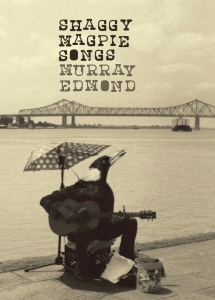
Murray Edmond, Shaggy Magpie Songs Auckland University Press 2015


On the back of his new collection of poems, Murray Edmond writes, ‘Songs are poems that are incomplete without their music, so I think of these poems as all wanting to get off the page and start singing and dancing. The magpies of Aotearoa are silly (and slightly dangerous) birds who have given rise to the most profound line in the New Zealand poetry canon: Quardle oodle ardle wardle doodle …. I like to think the poems are the kind of songs that magpies might sing if they were into making up words: a little bubbly, a little bitter, a little absurd, and echoing with the sound of laughter: songs with shaggy tales to tell.’

Murray’s musings are the perfect gateway to a collection that relishes sound, a sense of humour and pocket-book anecdotes. Not far into the collection, I pictured I was sitting in a dark room, listening to a bit of blues or folk or jazz, a spotlight picking up a pianist whose fingers were freewheeling, bodies were swaying, feet tapping, voices saying, Yeah! Aah! Mmm! These poems make you move because these poems make music before they do anything else. Your ear picks out melody, aural chords, infectious rhythms and shifty rhyme, so often rhyme. Rhyme has multiple effects but initially it taps into that deep-buried allure that rhyme holds for the child. With Murray’s fingers flicking along the scale of rhyme though, rhyme is surprising, it makes you laugh out loud when it hits the mark, it drives the poem, it sidetracks the poem, it celebrates the utter joy of electric aural connections. The music is never constrained. Always on the move. Consonants shuffle to make little bridges for your ear. The rhythm, jaunty, jittery, smooth.


Here is one example from ‘The Poet Returns to New York’


Frank O’Hara strolls on by in pyjamas

a knowing smile disposes the inelegant aftermath of dramas

that might otherwise threaten to alarm us

because this morning there is nothing that can harm us

and Tennessee has bought us tickets to the Bahamas


Here is another sample from ‘Snap Snap’:


addicted to your pictures

a picture ain’t a fixture

conjure hocus-pocus

turn me soft like focus

nail me with a frame

sign me with a name


The collection is divided into four sections (Praise, Nonsense, Blues, Pop) with no Endnotes (the poem is the thing!) and there is much traffic between. Murray sings the praises of colleagues, fellow poets. Stories are delivered in pieces, sung into pieces with those melodic arches. There is almost a cheekiness in the loping, looping sounds. Splinters of nonsense might tilt the praise. Maybe there is autobiography skimming between the lines, hiding in the flicks of wit. Or a madcap flow of stream-of-consciousness. Or a keen mind jamming facts and fiction.


Some samples. This from ‘Tongatapu Dream Choruses”


thar she

blows

blow hole

blow mind

blow wind

blow whale

blow horn

blow me

down


from ‘National Standards’


Please step out of the poem slowly

stand by your word with hands on your head

the dogs will sniff you an officer will

frisk you please enjoy the experience


The collection is contoured in terms of pitch and tone. One of my favourite poems in the collection, ‘The Letter from Rilke,’ is like an onion. It is the poem that I keep returning to because each time I peel off a layer I get a different reaction. The visual and aural links are sumptuous (I have posted this poem). I am also drawn to ‘Kiss the Impossible Good Night,’ a poem for Kendrick Smithyman. After suggesting that the poem might work, a question is asked: ‘but can you/ get it to do anything? It is a poem with surreal kinks as you read, but it gets to the heart of writing. Murray’s poetry wears the look of play: a musician at play, a wordsmith at play, the wit of play, yet this playfulness belies the craft that steers the pen.


kiss

the impossible good night

before your very eyes

the poem appears


to work


it might work but can you

get it to do anything?)


If poets have recurring motifs, I claim the moon for Murray. His previous collection was entitled Fool Moon, and the moon features in a number of his poems. The motif is stamped here like a lunar signature — mysterious, mesmerising, moody, and is like a tether to poems of the past. Reading the new poems, through the folds and unfoldings, is to listen to different keys, yet whichever key you hit, these poems are sung into being out of a joy of words. Wonderful.


Auckland University Press page

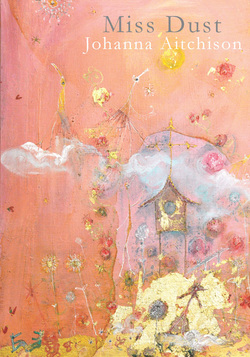
Poetry Shelf review: Johanna Aitchison’s Miss Dust – Simple, everyday cores of truth that have as much to do with how you feel the world as how you see the world

8507862    johanna-aitchison-for-web


Johanna is a poet who was living in Palmerston North (quite a hub of poetry activity!) but currently in Iowa. I haven’t read her debut chapbook from Pemmican Press, Oh My God I’m Flying (1991), but I really loved her second collection, Long Girl Ago (Victoria Press, 2007). The poems felt fresh, playful, finely crafted, and surprising in the little revelations, particularly in the poems that placed little frames on Japan. The book was shortlisted for best book of poetry the following year. Johanna’s new collection, Miss Dust, was recently released by Seraph Press. It is a collection in two parts with many bridges between, and the freshness, the economy and the diligent craft remain a vital feature.

What catches me with these new poems is the heightened degree of surprise. This is poetry tilted on its axis. The first section is devoted to a sequence that gives life to Miss Dust. When read together, the section forms a long narrative poem, or perhaps you could say, a long character poem in pieces. In trying to liken the startling effect of reading this life, I came up with a hybrid analogy: it is like an Eleanor Rigby portrait meets a Salvador Dali painting meets a dislocating dream state meets a short film by Alison Maclean meets Edward Lear meets a veiled memoir.

The idea of dust is ephemeral — it leaves traces and smears, it veils and it clouds. Perfect word for a character that hides behind tropes, white space and poetic jump cuts. The tropes are borderline surreal (‘The curtains of her house are ash’). At dinner with her online date, he ‘ordered for her the dark.’ Yet even though things are strange, it is the effect of the bridges and the gaps that augment the mood, the portrait, the arc of a life. Take ‘Miss Dust and the Affair.’ The little leaps from one thing to the next, from one action to the next, miss the gritty details that might pepper confession, exchanged story. The poem is mysterious and haunting, but if you lift out the stepping stones (that occur on other occasions throughout the book) you get a terrific story of love lost: affair kiss lips lines waves rocks cheeks. That story is the undercurrent of the poem, hiding in the dust. Miss Dust, herself, would sum up the undercurrent with two words (‘black heart’), words that crop up in a number of the poems.

The movement between things is also surprising or disconcerting in the poems and feeds into the crucial threads of loss and love and life. In ‘Miss Dust makes a promise to her black heart,’ every line seems to offer a new twist —  the way the dreaming mind takes the ordinary and then skews it to show a deep-seated feeling pulsing through.


Here is the cure: sitting

on someone else’s carpet,


she makes herself a promise,

with the help of a chisel


and a block of A4 refill.

She chips out a beach scene


three streets away, hammers in

stones that warm or cool


You can’t just read this poem and walk away. It holds you tight as Miss Dust walks into the beach scene and ‘lowers the plunger/ onto one more set of grounds.’ There is that jarring kink between the scene carved (hope, therapy, cure) that catapults the black heart to elsewhere and the chore of making coffee. For me, the word ‘grounds’ flicks and shifts. Yes, the coffee is ground (the daily chore/grind) but also, like the beach scene, ground is another place to lay down roots. To tend damaged roots. Soil, black like the black heart. A single word, and you can set up camp for hours.

I don’t know of a sequence in New Zealand poetry quite like this (maybe I got whiffs of the early surrealness of Gregory O’Brien). Reading and lingering in the half light of Miss Dust, is utterly moving as you fall between the gaps of her life.


The second half of the book is not Miss Dust but there is a similar degree of surprise, little echoes that seem familiar (the half house), the dislocating and then relocating pieces, the way nouns and verbs startle (‘I’m starting to skin your loneliness Miss Shoulder’). There is a stunning Japanese poem, ‘Jun,’ that pulls you back to the previous collection with its final, breathtaking stanza.


one of the saddest things i did in japan was to teach to jun’s photo

on his empty desk i asked the students to count the students

in the class the students said do we count jun


Johanna has delivered a new collection that never lets the dust settle (excuse the pun). Each poem reproduces a glorious jittery, shimmery movement between things, between actions and between things and actions. At the core of that movement: feeling. Yes, you enter a world that is, at times, a little like the bewildering jumps and turns of a dreamscape, but just as with the dream, you fall upon cores of truth. Simple, everyday cores of truth that have as much to do with how you feel the world as how you see the world. I loved this collection.


Seraph Press page

Poetry Shelf review: Jennifer Compton’s Mr Clean and The Junkie – a fabulous read – the kind of book you devour in one gulp


large_cleanjacket   large_cleanjacket   large_cleanjacket   large_cleanjacket

Jennifer Compton, Mr Clean & The Junkie Mākaro Press, 2015


Jennifer Compton’s new poetry collection, Mr Clean & The Junkie, is a fabulous read – the kind of book you devour in one gulp. It is a long narrative poem in four parts with a coda. Each section is written in couplets – shortish lines that deliver the perfect rhythm for the occasion. This is a 1970s love story set in Sydney (and briefly NZ), yet it is a love story with a difference. It reminded me a bit of Pirandello’s play Six Characters in Search of an Author, in that the stitching is on show — how you tell/show the story, along with the choices you make, is as much a part of the narrative as plot, characters and so. The difference here, though, it is like a poem in search of a character in search of a film director in search of character in search of a poem. Self-reflexive behaviour on the part of authors has been done to death in recent decades, so it has the potential to appear lack lustre. Not in this case. I loved the way the poetry is a series of smudges. A bit like the way life imitates cinema as much as cinema imitates life.

I spent ages on the first page. It got thoughts rolling. I loved the voice. I loved the intrusion of the director (we figure that out as we read) and I loved the way I kept putting the poem in the role of the camera (long shots to gain wider perspective or distance, tracking shots, surprising angles, refreshing views) or the editing suites with jump cuts and smooth transitions. Or sitting back and admiring the composition within the frame. Or tropes. The slow reveal.

The two main characters (My Clean and The Junkie) are definitely in search of flesh and blood, yet you can also see this as genre writing – a narrative poem that is part thriller, part whodunit, part crime writing. Then again it is part feminist critique and part postmodern explosion.


Here is a sample from the first page:


Our hero is discovered sleeping.

We find him as the camera finds him.


Our hero is dreaming of the white mouse

cleaning his whiskers in extreme close-up.


As he dreams we snoop about his habitat.

Everything is there for a reason and we will


see it from another angle before we reach The End.

I imagine ambient sound during the credit sequence.


The mouse begins to run the wheel because

the wheel is there under his paws.


The slow zoom out reveals the wheel is in a cage,

of course.


And fade to the floor-to-ceiling, slatted blinds,

chocked ajar,


looming over our man asleep on his futon.

What do they look like? Bars.


The writing is tight. The plot pulls you along at break-neck pace and then stops you in your tracks as the director’s voice pulls you out of plot and character with wry stumbling blocks.  Little flurries of sidetracks. Or how to proceed? The central idea’s beguiling (poem version of a film version of a love story), the dry humour infectious (after a curtain is pulled back to reveal a spectacular view of Sydney’s Harbour Bridge and Opera House: ‘If you’ve got it/ flaunt it.’). But there is poetry at work here. It is there in the cadence of each line, the end word and the rhythm. It is there in the use of tropes that arch across the length of the book in little delicious echoes. The caged mouse on the wheel stands in for the symbolic cage of the hero (his father’s expectations and life choices). Most of all, however, the poetry sparks and flicks in the white space; the bits that are left on the editor’s floor or the angles that the director chooses not to show. Things are hinted at. Significant events that give flesh to character are caught within a line or two. That white space, that economy, is what gives this long poem its magnetic pull.

The collection is released as part of Mākaro Press’s 2015 Hoopla series. The beautifully designed books share design features and size, and include a new poet, mid-career poet and late-career poet. The other poets this year are: Carolyn McCurdie (Bones in the Octagon) and Bryan Walpert (Native bird). Jennifer is an award-winning poet and playwright who has lived in Australia since the 1970s. She has won both The Kathleen Grattan Award for Poetry (This City, Otago University Press, 2011) and The Katherine Mansfield Award.

Reading Mr Clean and The Junkie is entertaining, diverting, challenging, laughter inducing. How wonderful that a poetry collection can do all of this. I loved it!

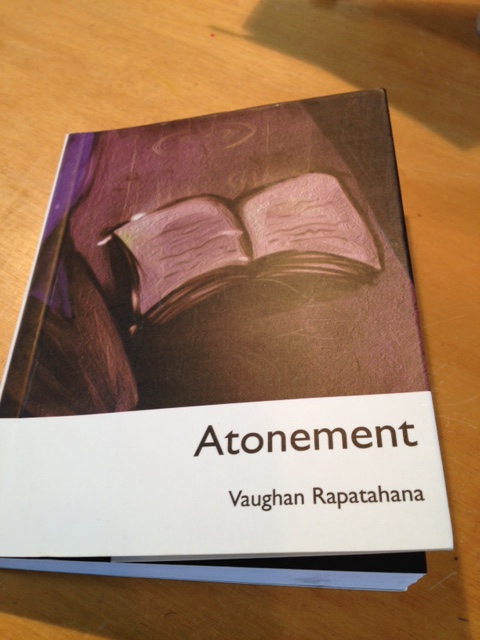
Poetry Postcards: Vaughan Rapatahana’s Atonement feels good snug in your palm


photo 1 photo 2


Atonement Vaughan Rapatahana, ASM/Flying Islands, Macau and MCCM Creations, Hong Kong 2015

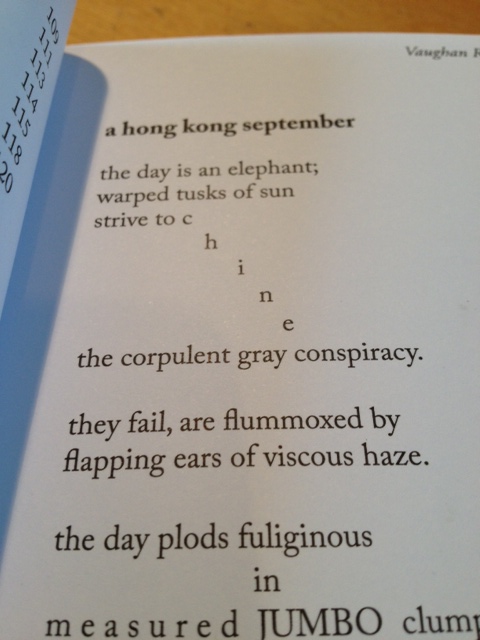
This is a gorgeous looking pocket book of poetry that feels good snug in your palm. It includes artwork by Pauline Canlas Wu and Darren Canlas Wu’s musical score of one of the poems. The poems serve disconnections and connections on people, place, politics, the weather, and love. There is a glorious marriage of lyricism, musing, image building that has anchors in numerous legacies (language poetry, myth, diverse lexicons). It is the language that prompts such evocative and delicious poetic sparks. Unlike many poets, Vaughan has not switched on the big-word filter — so the vocabulary is arcane and arching as much as it is everyday and accessible. I love that. It is like this palmful of poems is part rap, ragtime, jamming, spooling, riffs, sweet chords, minor keys, jump cuts, out-takes, in takes, double backs and so on. The playfulness is also there in the visual choices as words stutter and stretch and take diagonal turns. Whiffs of concrete poetry, language poetry abound, but you can’t simply reduce these poems to sumptuous word play. You might get led anywhere visually and aurally. An elephant trope replays Hong Kong. A Māori myth sets up shop in a Chinese context. Cantonese, Māori, and French interrupt and feed the English. You might feel like you are in the company of poetic cousins at times: Janet Charman, Jack Ross, Michele Leggott, Sam Sampson, Roger Horrocks, Leigh Davis, Steven Touissant. There are philosophical traces and political barbs. Musical hooks. Self confession. Concealment. This book is an utter delight.

Vaughan Rapatahana (Te Atiawa, Ngāti Te Whiti) lives in Hong Kong with homes in Philippines and New Zealand. This is his fourth collection of poetry. He has a Doctorate from the University of Auckland, has won several awards and has published in a variety of genres. He is the co-editor of Why English? Confronting the Hydra (Multilingual Matters, UK), a follow up to English Language as Hydra (2012).


Recordings of poems at the University of Auckland


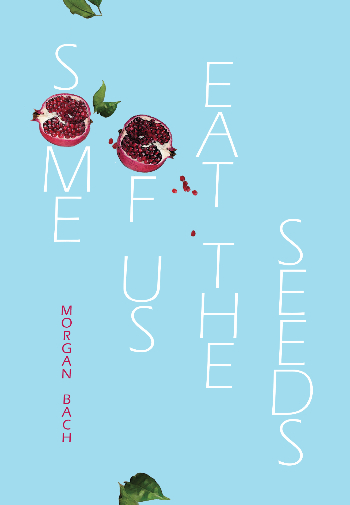
Morgan Bach’s Some of Us Eat the Seeds — sets every part of your readerly self on high alert

684a89cf-1c7b-4ee7-a686-f3e03271a543           image1


Morgan Bach Some of Us Eat the Seeds Victoria University Press, 2015

I agree with Bernadette Hall. Morgan Bach’s debut poetry collection is ‘both ordinary and extraordinary.’ Morgan is a graduate of the MA in Creative Writing at IIML where she was awarded the Biggs Family Prize in Poetry.

First up a stunning cover (cover design Rowan Heap) and a title that hooks. An allure of blue, the words a cascade downwards in white, the lush red pomegranates spilling their seeds. Gorgeous. The title resonant, already establishing a set of relations (‘us’).

What I especially love about this book is the way it plants anchors in the ground through an attachment to the real yet is unafraid to step into the smudged edges of the worlds that a mind both inhabits and produces. This is a book of collecting fruit, doing the high jump, cooking shows and vampire movies, but it is also a book of dread, heartache, anxiety, love, dreams, foreignness. The three sections are distinctive clusters (family, travel, adulthood), yet there is a satisfying drift of motifs and themes throughout the collection.

The opening poem, ‘What they made,’ is secured in self as it walks into physical detail (these feet, these eyes) and beyond that into a roving  ignition of ideas (by way of a trope: ‘A person// is a weak rope’). The opening question (‘What do I inherit?/ A split face// the eyes of one/ the sighs of another’) is particular apt in a book that faces memory, and in doing so represents myriad versions of self. The resulting poems are both invigorating and effervescent.

Take the title poem for example. The poem houses a jiggety mind at work, a mind walking (walking is a reoccurring device) into the fuzzy, elusive and utterly fascinating pull of memory, with its shifting and established myths, where ‘our country’ is not entirely accessible let alone knowable.

(..) The past is a tether

you don’t need to wear. Time has

its own ways of making people disappear.


Poems become frames for disappearances, for a vanishing (after terrific citations from Mary Ruefle and Adrienne Rich). You can link these unsettling and uncanny departures to memory, to the way things can not remain present reachable fathomable. The way in recuperation things change. Reading through the collection with this fertile knot is provocative yet nourishing. In anther poem, ‘His binding land,’ the disappearance is like a plot cog. A father walks away and off to ‘the paddock/ he called the back of beyond’ to lie ‘in the dew, unblinking/ as the morning changed/ with the cambered spring sun/ into full day.’ This little paternal disappearance resonates so beautifully and is a perfect example of how Morgan leaves a trail of physical traces to spark miniature narratives connections possibilities. Delicious. And then the end of the poem that is poignant, the language sweet in its simplicity: ‘When evening/ slid up and over, his wife/ walked out to find him.’

I posted ‘In pictures’ on Poetry Shelf awhile ago with a note from Morgan and a note from myself, and was surprised to learn the story of the deaths. Morgan’s father was the actor, John Bach, and the countless deaths she had witnessed were on stage. This constitutes another disappearance and is the hallmark of much poetry; what the poet chooses to reveal and conceal. and whether not  to use endnotes, can alter the navigation of a collection. Notes to the poem’s genesis can be fascinating and enlightening but I am equally happy to enter without guy ropes.

The first section, with its poems that draw upon family, family relations and childhood struck a chord with me. I stalled in this section. I got hooked and sent flying, hooked and sent flying. Here there is a richness of line, striking invention, a muscular layering. ‘The swimming pool’ evokes childhood to beautifully, through physical detail yes (Most of the day you’d lie/ on warm concrete/ beside the pool that was cold as needles’), but through so much more than this. The poem shows how childhood is also a state of mind to resist and adore.

I also loved the inventiveness of some of these poems, audacity even. In ‘Vampires,’ Morgan meshes together watching a British cooking show with family, choosing a vampire movie and walking through devastated Christchurch. The result, a sweet interplay of striking connections and overlap.


Here is a sampler of some of the lines that have stuck with me:

‘In that season life was ripe for the feast– plums and lemons, figs, apples; everything fell.’

‘We’re at the centre/ of what we know. We’re brains// and sight.’

‘I see myself alone on a swing/ and watching’

‘Forgive me then if I always// write about watching,/ it’s what a lonely child// does, even when she ventures/ over oceans.’


There is a strong sense of composition to the collection as a whole.  The middle section begins and ends with the cold, inventively, fascinatingly so. In the first poem, ‘Cold,’: ‘In that time we ate only the darkest snows/ and felled lights, brittle paintings.’ The poems travel, they take to the core people and places, otherness foreignness. This line stood out: ‘There are never the right postcards.’ And so it is as if the poems become surrogate postcards with willowy lines leading us to elsewhere. And always the roving mind, the courage to layer ideas alongside heart and acute observation: ‘Take as much time as you have, build the house in your head.’


The final section with its adult yearnings displacements recognitions  pulls uou from betrayals to desire, from love to heartache. I adore ‘This is how to write a love poem’; the way it is aware of its own making (could be old hat as self-reflexivity has been done to death, but here it is refreshed and vital. This is a cluster of love and not-love poems that burst at the seams with flavour impact  vulnerability.,

Reading Morgan’s debut is utterly rewarding as it sets every part of your readerly self on high alert, every bit paying attention to the pulse of the poem, each poem needing the grit of daily life, the surprise and flight of a daring mind, the traces of real life, the miniature stories, the lines that move in the ear so beautifully. Ordinary, extraordinary and yes, astonishing.


Within the next  week or so I will be posting an interview with Morgan.

VUP page here

‘In pictures’ on Poetry Shelf here

Posts about Morgan Bach in The Red Room