Category Archives: NZ poetry journal

Poetry NZ open for submissions

From editor Jack Ross:
From today (Sunday, May 1st: Mayday) onwards, Poetry NZ is open for submissions for the next yearbook. This will be appearing in Late February / early March next year, from our new publisher Massey University Press, and thereafter at the beginning of each year.

Submissions close on 31st July.

For further advice on how to submit, please look at this page on our website. Please note: no more than five poems at a time, of any length, on any theme, in any style. This editor has also written a few advisory comments of his own in this post, below.

As well as poetry, we’re also interested in essays and other prose comments on poetics and allied subjects. Remember, too, that all poems sent in for this issue are eligible to be considered for the Poetry NZ Poetry Prize, as mentioned in another post below.


See here for journal site

Submissions open for Sweet Mammalian

SUBMISSIONS

Send us your writing, be it a roar, purr, or pip-squeak.

Sweet Mammalian aims for diversity and inclusiveness—we want all different kinds of poetry, from all different kinds of writers. In order to make this possible we need your submissions, so send us your thrilling writing!

Submit up to 5 poems of any length. Please send your work in a word doc attachment to sweetmammalian@gmail.com and include a short bio note in the body of the email.

Submissions for Issue Four are open now. We’ll be accepting submissions until the end of August.

Go here

Ika Issue 4 – a feast indeed

Ika_web_1.jpg

With the latest issue, Ika is planting its feet firmly on the NZ writing landscape, as a journal to take notice of. Each issue tweaks the design a little. This one looks good. Poems luxuriate on the page. The art is honoured. The internal design is appealing to the eye.

Anne Kennedy, with her astute eye and ear, has assembled writing that matches the fresh appeal of the design. Like Sport, the journal acknowledges its links to its Creative Writing programme and allows established writers to rub shoulders with students. I applaud the celebration of Pacific writing. You will find art, poetry, fiction, an interview and nonfiction. A feast indeed.

Lovely launch at Auckland Central Library on Saturday with a fitting speech by Sue Orr, a handful of readings and  wow-factor song.


A taste of poetry:

Annaleese Jochems: She is a graduate of MIT and is now doing a Masters in writing at Victoria. Her poem is your entry into the book and it leaves you wanting more. Just what a new voice offers: surprising lines, audacity, elasticity.

I must go home for dinner,/ but I don’t want to go home/ where I play my unrequited/ love like a banjo


Poet and publisher Kiri Piahana-Wong has a suite of poems that I think are her best yet. How do you reproduce feeling in a poem in 2016? Kiri shows how: ‘A month later my chest/ still felt like a stone/ was inside it so I stayed/ there and I kept waiting’


Bill Manhire also has a suite of poems. The first poem, ‘We Work to be Winners’ got under my skin because I loved the surprising juxtapositions of one line alongside the next. It got me thinking about the origins of the poem. Sometimes if you know that, it changes the way you read the lines. In this case I began inventing origins as I waited in a festival queue. It felt like the poem had a fascinating backstory which could become a poem in its own right. It might be a found poem (but from where? that is what intrigues). It could be written from the point of view  of someone who writes a sentence in a diary each Thursday. Or the offbeat biography of a hippy from the 1970s. Get the journal and decide for yourself. First line: ‘I left the ashram running for my life.’

Craig Santos Perez: ‘Micronesians in Denial’ brings mouth-watering detail alongside history alongside political spikes. I also loved ‘Aunty of rainwater and Smoke’ – the title says it all. This is poetry song and poetry joy.

David Eggleton (winner of Poetry Category at NZ Book Awards last week) is hitting his poetry straps so to speak. You get two poems that are a linguistic explosion in the ear with musical chords sneaking in and rhythms pulling you along at breakneck speed. It is not just aural gold though because there is the visual weave that ignites all senses.

Awks: you winged Auk-thing, awkward, huddling;

you wraparound, myriad, amphibious,

stretchy try-hard, Polywoodish

juggernaut’ (from ‘Edgeland’)


I am flicking in and out of the journal waiting for a session at the festival and stumble upon these lines by Hera Lindsay Bird (she has a book out with VUP later this year!): ‘O Anna/ let us jettison the manky quilts/ of our foremothers’ Yep – it is a terrific poem.


Courtney Sina Meredith’s ‘of all the bricks we laid in our sleep’ stuck with me, haunted me as I drove home on Sunday with festival fatigue. this poem was like a haunting refrain. ‘and hear your soft waiata/ through the floorboards’


This stanza from Doug Poole‘s ‘The light I had hoped’ also got to me:

As a child I would lie awake listening to my grandmother slapping

clothes on her bedside chair, speaking aloud her thoughts of the day,

clicking rosary beads and whispering her prayers


This afternoon I fell upon  ‘Chasing Spirits’ by Kim M. Melhuish. A voice keeps asking ‘how’s this’ and the answers tumble like little poetry postcards perfectly formed:

two words

fishing for love

pink orchids

finger paint

the night ahead.


And then it was this delicious morsel from Vivienne Plumb from ‘Peach Tree’:

The cactus unfurls its one brilliant

blinding flower. Excuse me,

there is no poetic peach tree here.


AND I still have to read poems by these poets: Airini Beautrias, Bryan Walpert, Charlotte Steel, Elizabeth Morton, Gregory O’Brien, Makyla Curtis, Manisha Anjali, Ria Masae, Richard Von Sturmer, Sophie van Waardenberg.

I applaud everyone involved. This is a journal worth subscribing to.


Enquiries: ikajournal@gmail.com

submit at


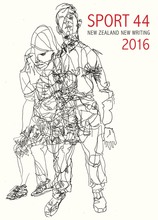
Reading Sport 44 on a wet Sunday keeps the blues away

Sport_44_Cover__64545.1456369674.220.220.jpg Sport_44_Cover__64545.1456369674.220.220Sport_44_Cover__64545.1456369674.220.220

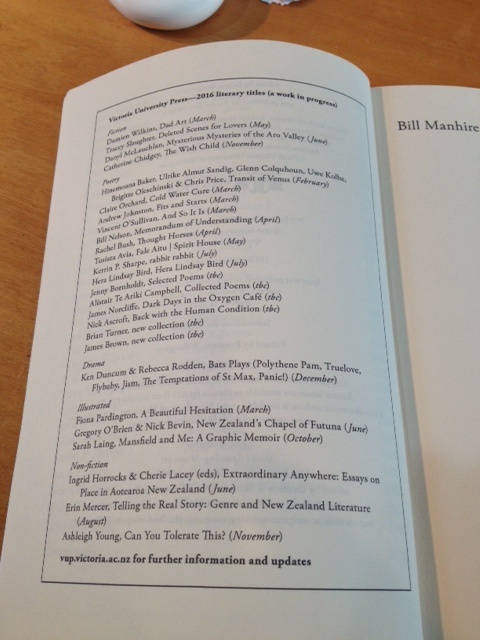
The new edition of Sport includes 8 essays along with the usual spread of poetry and fiction. At the start of the book is an impressive advertisement for Victoria University Press’s forthcoming publications. This Press is a consistent and exemplary supporter of New Zealand writing whether poetry, fiction or non-fiction.


Why I am singing VUP’s praises:

There are 15 poetry collections in the offing (okay some might not appear until next year, but still!). We are going to see books by Tusiata Avia and Hera Lindsay Bird over the next few months.

Sarah Laing‘s new book is out in October (Mansfield and me: A Graphic Memoir).

There are 4 works of fiction (Catherine Chidgey has a new novel out in November!)

And I am looking forward to the collection of essays Ingrid Horrocks co-edited having tasted some in Ruapehu and Ashleigh Young‘s essays (November).


Sport 44

some preliminary highlights:

Usually, I read all the poems first but this time I was in the mood for a bite of fiction so I dove straight into Kirsten McDougall‘s ‘A Visitation.’ The story responds to the collapse of the internet and the arrival of Clarice Lispector to make a batch of eggs to tempt an indifferent palate. I adored this story so much it made me want to take up writing short fiction. It is sweet writing; warm, witty, funny, thoughtful, polemical. I do hope there is a new collection in the pipelines. I read this on a plane with two hours sleep and it was such an uplift. ‘I saw anew the detritus in the house I had allowed to build up like a plaque to the heart.’

The journal always puts in me in touch with writers I am unfamiliar with. This time a glorious suite by Oscar Upperton: ‘The ship is a sort of dark undoing.’

And Philip Armstrong‘s utterly inventive narrative, ‘Life of Clay,’ which keeps you on your toes as you read: ‘I can tell you it began with nothing/ but the wide white bare and empty endless plain/ but there was something there already there.’

I have already posted some of Rachel Bush‘s poems here.  Movingly, achingly beautiful. Written when life has fingertips against death.

Jenny Bornholdt‘s exquisite haiku: ‘It is eight degrees/and the Thorndon outdoor pool/ is swimming with leaves.’

Ashleigh Young‘s ‘Process’ which is sad and happy and a little bit witty and a little bit true: ‘On this day our city is a perfect haircut, its losses gently layered/ and what is left, falling gracefully.’ Oh word shivers!

Tusiata Avia‘s ‘Gaza’ which brings heart and politics together and rips your easy Sunday slumbering with poetic teeth: ‘I cannot write a poem about Gaza because I cannot eat a whole desert.’

The stillness, the extraordinary image, the enigmatic bridge between title and poem in Louise Wallace‘s ‘The body began to balance itself’. You just have to read the whole thing!

Hannah Mettner‘s ‘The day Amy died’ that takes a moment that pricks with sharp detail and pricks even deeper when the moment is declared and time and noise go haywire.

Maria McMillan‘s ‘The Ski Flier’ is a whoosh of a poem that sucks you up into story and music and is so evocative: ‘And/ there is a moment when they pass,/ the snow and the ski flier,/ each taking on the character of the other.’

Harry Rickett‘s ’14A Esmonde Road’ exudes the mood of place, that historic property where Janet and Frank lived; and you can just feel the phantoms stalking the poem until you get to the perfect ending.

The first poem, ‘Falseweed,’ is by Bill Manhire and was published as a little pamphlet by Egg Box Publishing in Norwich. It has a different feel to some of Bill’s recent poems. The words are scattered like seeds on the expanse of white page. Or pebbles. But I like the idea of seed as they are so fertile. I can see the roots and buds bursting out. There is linguistic inventiveness that boosts both music and image, particularly in compound words:

leafcandle  pencilheart  wintertwig  scribblegrass  anchorwhite  tongue-true.

I felt like I was following a dandelion kiss and pausing to see where it landed. The poem is about childhood and writing and a mind floating, roaming. Words floating, roaming. It is beautiful and mesmerising: ‘I began to recall/ how the words came knocking.’ ‘Oh pencilheart –/ oh smudge of lead.’


And still much to read; more poems, more fiction and the bundle of essays. This is a terrific issue.

The VUP ad:

IMG_3295


Tastes of Ika 3 – Ika 4, a few days left for submissions

IMG_3027


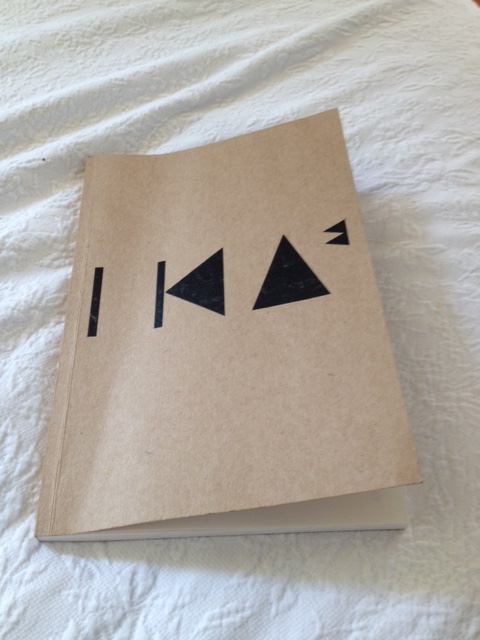
Ika 3 looks cool. It is the literature and arts journal from Manukau Institute of Technology and is edited by Anne Kennedy. Anne is a poet and novelist and she is about to head to Victoria University where she will be the 2016 Writer in Residence.

The internal design is fresh. The issue looks like it is wrapped in brown paper. It feels slightly rough to the hand. It features prose, poetry and art from students and staff, and stretches out to include work by well known writers from both here and overseas.

The mix is eclectic. There are appealing grades/gradients of lyricism and subject matter, but what makes this issue pop out from others is the political elbow that juts out, the raw angles, the Pacific Island presence. Compared with this journal, others seemed saturated in white. To have such diverse reading lines in to brown skinned voices makes this newish journal a vital presence within our writing/reading options.

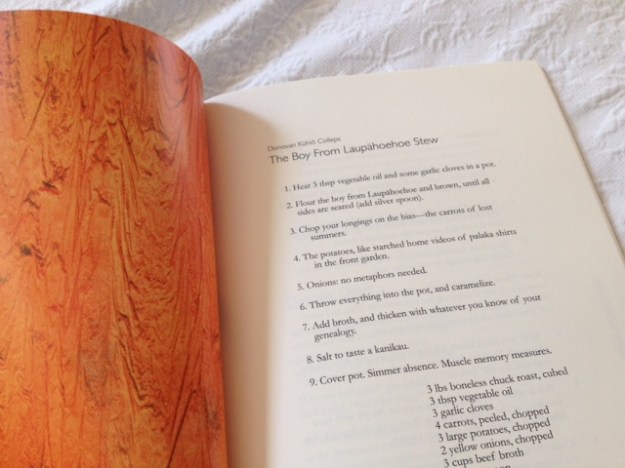
A bundle of poets made me snap to attention. I love the playfulness of Tusiata Avia’s ‘We are the diaspora of us all’ where play becomes play with a potent bite. I love the way Chris Tse’s ‘This house’ is inventive, detail rich, personal, kinetic and catches both heart and mind. Faith Wilson’s ‘Echo (bootleg remix)’ is a poem bisected in two and the interplay of dual voices is sharp, hard, heart hitting. You need to read again to find different paths. Donovan Kūhiō Colleps wraps place and moment so acutely in ‘Muscular Dreams,’ and I love the way lines coil and repeat. J A Vili’s ‘Mother’s Rope’ is spare, just a handful of words on the page, but it is the white hot core of the issue. Sophie Van Waarden’s ‘Water Girl’ confirms that this young poet writes with linguistic grace, verve and surprise and is an emerging poet to watch.

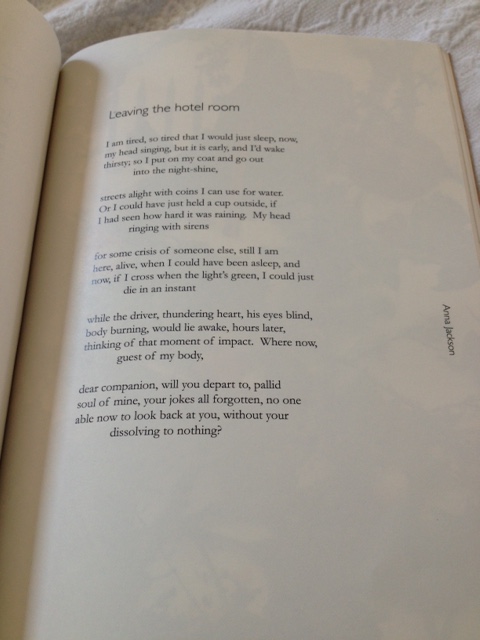
There is much more. See some treats below in the photos, including Anna Jackson’s surprising ‘Leaving the hotel room.’ This journal is worth a subscription! The art is mind catching as well as eye-catching. Again I come back to the words fresh and vital.


Work is about to start on the next issue. Submissions for Ika 4 are due by February 1st.

Submit here.

Submission details:

We invite submissions across Moananui for Ika 4 from emerging to established practitioners in the fields of writing (poetry, prose fiction, non-fiction), performance, and visual art.

Ika 4 will be published in print and accompanied by a website for moving image and performance, to be launched as part of the Auckland Writers Festival in May 2016.

Electronic documents are preferred, but printouts together with a self-addressed envelope may be mailed to: Ika Journal, Faculty of Creative Arts, Manukau Institute of Technology, Private Bag, 9400, South Auckland Mail Centre 224, New Zealand.

Video works must be in the form of mp4 files and can be submitted via private Vimeo / Youtube links.

The submission limits are: eight poems, eight images, three video/performances, 7,000 words of prose.

Inquiries to: ikajournal@gmail.com

Editor: Anne Kennedy
Arts Editor: Richard Orjis

IMG_3028

IMG_3029

IMG_3032

IMG_3030

Tuesday Poem draws a circle after five years of poems – and what of my blogs?

Screen shot 2015-12-16 at 9.24.31 AM

There are a number of unpaid people who work tirelessly and creatively to promote NZ books and authors.  I was sad to see the end of this wonderful project but completely understand that circles need to be drawn. Bravo on five wonderful years. We will miss you. Thanks Mary McCallum and the Tuesday Poem team.

Perhaps a fitting moment to salute Graham Beattie! Cheers for all your hard work! Wonderful!

Every December I face my blogs and question their survival – I assess the toll on me and my own writing. This year it seems worse as I need to protect time to write my big book in 2016/ 2017. Yet I can’t cope with the loss of the blogs. I see two black holes. Poetry gets so little attention in media in New Zealand whether for children and adults.

I can never review all the poetry books that come my way and that does not mean (as one anxious poet proposed) I do not love books I have not managed to feature. This is an anxiety for me at times.

To have so many poets respond to my recent letter to share  favourite reads, is a boost. It seems we have a vital poetry community that stretches beyond localised pockets.

On the one hand I want to reduce the time I spend on these blogs, but on the other hand I want to find ways to strengthen them. To widen the audience. To celebrate the length and breadth of poetry we produce. Hmm!


Poetry Shelf review: Six reasons to pick up Landfall 230


otago178401   otago178401

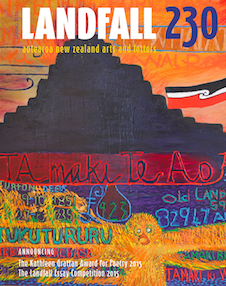
The latest issue of Landfall is a vibrant read. Edited by David Eggleton, it includes the results of the Kathleen Grattan Poetry Award with Emma Neale’s Judge’s report (Michael Harlow was the winner with Hannah Mettner, Elizabeth Morton, David Howard, Nick Ascroft, Alice Miller and Victoria Broome Highly Recommended).

The journal continues to showcase the strength of South Island writers, whilst casting a spotlight elsewhere. It is one of the few journals that include a healthy dose of poetry, fiction and nonfiction, along with book reviews, both in print and online. This eclectic reach is praiseworthy in view of our impoverished discussions of local books in print media.


Six high points in my reading so far:

One: This issue includes the results of The Landfall Essay Competition 2015, along with David Eggleton’s Judge’s comments. The top four are included in this issue.


The winner: Tracey Slaughter

Second: Phil Braithwaite

Third: Louise Wallace

Highly Commended: Therese Lloyd

Commended: Ludmila Sakowski and Bernie Coleman

The winning essay, ‘Ashdown Place,’ is astonishing. It utterly hits the mark for me. Memoir as essay, essay as memoir. It is a high-octane, detail compounding, breathtakingly rhythmed reading experience. It drenches you in time and place and then startles you in its revelations. This woman can write!


Two: Emily Karaka’s painting suite along with her eye-catching cover.

Three: Airini Beautrais’s longish poem, ‘Summer’ with its delicious lyrical narrative flow.

Four: Lynley Edmeades’s ‘Some Bodies Make Babies’ with its pitch perfect loop, simplicity and sharpness. A poet to watch.

Five: Hannah Mettner’s prose poem, ‘Reasons Ross Should Be Happy.’ Want to read more. Hits you on a number of writing levels. Do hope that shortlisted manuscript gets published!

Six: Jack Ross’s provocative nonfiction piece, ‘Is is Infrreal or is it Memorex?’ Jack juxtaposes quotes from Roberto Boleraño with a letter to Leicester outlining literary gossip (a scandalous poetry reading).


check out ‘catch and release: Poems from Manawatu’ edited by Helen Lehndorf

catch and release:  Poems from Manawatu’ is the first e-publication from City Libraries and Community Services.  As part of the experimental poetry programme KUPU – PoetryBeyondWords, the book is one of a series of initiatives designed to engage the community in poetry writing.  Around two hundred and fifty submissions of poetry and proverbs were received and we’re thrilled with the response.

One of the aims of KUPU is to provide an avenue for poets of all levels to develop their engagement activities with local audiences, and act as a stepping stone in artistic development.  The point of the ebook was to create a piece of work that the contributing poets could use to profile their poetry.  “It is challenging starting out” says Genny Vella, City Cultural Coordinator.  “Being able to include publications in personal profiles and biographies adds a little more weight to the body of work poets are able to call on to demonstrate their talent”.

Ten poems were selected from forty submissions.  The result is a lovely anthology of works by known and previously unpublished poets about Manawatu – the creative expression of heart and place.

read them here

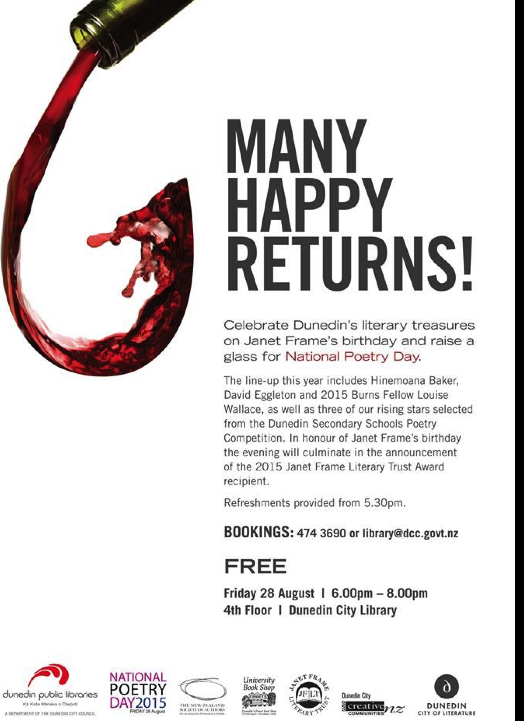
Many Happy Returns: Dunedin Celebrates NZ Poetry Day

National Poetry Day is also Janet Frame’s birthday, and here in Dunedin there will be a poetry feast at the Library: the winners of the Dunedin Secondary Schools Poetry competition will perform their winning poems along with performances by Landfall editor David Eggleton, 2015 Burns Fellow Louise Wallace and special guest Hinemoana Baker. Poet Diane Brown will MC.
6 – 7.45 pm, Friday 28 August, refreshments from 5.30 pm.

Screen shot 2015-07-30 at 9.27.09 AM

Starling: Showcasing New Zealand’s Best Young Writers – to be edited by Louise Wallace & Marty Smith

Starling takes flight

Showcasing New Zealand’s Best Young Writers

A new opportunity for young writers has emerged today. Starling (www.starlingmag.com) is an online literary journal that will be published twice yearly, accepting poetry and prose from only New Zealanders under 25 years of age.

The founder and editor is poet, Louise Wallace, author of two collections of poetry and the current Robert Burns Fellow at the University of Otago. The journal will be an opportunity for young writers to showcase their work in a professional environment to a national audience. “There is nothing quite like this out there at the moment in New Zealand – certainly not with the national focus we hope to cultivate,” Wallace says. “It can be difficult for young writers to find publication with our more established print journals when they are competing for space with writers who have twenty or thirty or forty year’s experience. Starling levels the playing field.”

Wallace is keen to convey that the quality of the work will still be there. “Just because a writer is under a certain age, does not mean the quality of the work is any less. The journal has a high standard for acceptance and we are committed to presenting our contributors and their work seriously – in that way the submissions we receive and the writing we publish will be the best of the best.”

Starling is also focused on a community approach. Each issue of the journal will open with new work from an established New Zealand writer and will close with an interview with a person of note from the literary industry. Wallace says there are a few things that are crucial to the journal’s success. “The first is obviously getting young writers to submit. But we also need support from readers. We have a selection of posters available on our website that people can download and put up out in the real world to encourage submissions, and the website also allows supporters to sign up for email updates. Without these people taking that extra step, there will be no community.”

Submissions are now open for Issue 1, with a deadline of 20 October 2015, the issue to be published January 2016.

Wallace is joined by Co-editor, Francis Cooke, and Schools Coordinator, Marty Smith, who like Wallace, are graduates of the International Institute of Modern Letters MA programme. Cooke’s short stories have been published in a number of national journals, and Smith’s first collection of poems, Horse with Hat, won the Jesse Mackay Award for Best First Book of Poetry at the 2014 NZ Post Book awards, and was a finalist in the poetry category. Smith is also a high school teacher, and will work with Wallace to deliver the journal as a resource for New Zealand teachers in the classroom.