

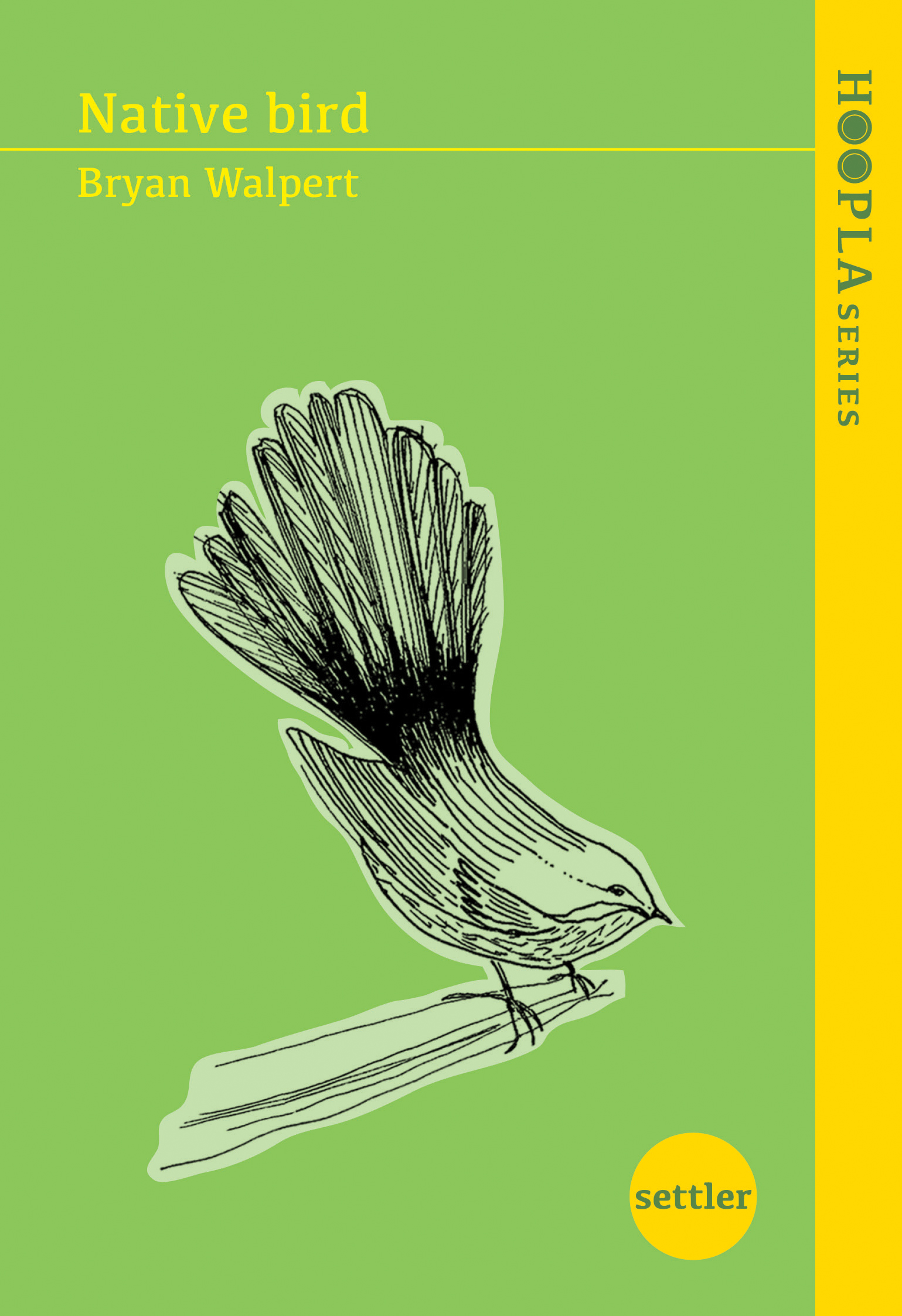
Bones in the Octagon by Carolyn McCurdie, Mākaro Press, 2015 (part of The Hoopla Series 2015, see below for other two titles)
Launch notes – Emma Neale
I’ve spoken in public before about first coming across Carolyn’s fantasy novel for children, The Unquiet, in manuscript form at Longacre Press. I felt then a sense of breathless disbelief that something so sharp and lucidly poetic, was just sitting there, looking like any other mild-mannered typescript in the unsolicited submissions pile. It should have been thrust into the air gleaming like the sword from the stone in myth. Hyperbole, you might think, but the novel went on to be named in the Storylines Trust list of ‘Notable Books of 2007’, and I still stand by my description of it as a novel that seems Frameian in its use of gentle abstraction, natural imagery, and its empathy for the child’s eye view. Carolyn’s use of imagery there lay potent clues for what she also does in her poetry.
Mākaro Press have done a gorgeous job of producing this first collection of her poems —her first poems, but her third book. (There is also an ebook of short stories called Albatross, published by Rosa Mira books.) I love the feel of the whole Hoopla series as tactile objects — the fact you can slip them into your bag or capacious coat pocket like a Swiss army knife — bristling with tools for the mind — and the fact that it comes with two free bookmarks — (i.e. the side flaps) — or wings, symbolically ready for launch.
When I first started reading Bones in the Octagon, very early on I wanted to pluck out the phrase ‘shy iridescence’ to characterise Carolyn’s poems. But increasingly that came to seem lazy, insipid, because while the poems might have a kind of chromatic shimmer of mood and topic, the dart and race of illumination, the voice is anything but reticent. It is often, I think, steely. There is an inner resilience here; a voice that holds its strong, pure note even when face to face with everything from physical drought to domestic violence, psychological abuse, suppression, bereavement, political corruption, dislocation, and deep dread. Resurgent, the voice always lifts. And throughout, even when confronting darkness, it somehow still hums with wonder.
Carolyn’s poems can reach back to the first footprints and hungers of human civilisation, feeling out for connection to our earliest selves; they can hone in on the present, with condemnations of political expediency and brutality; they can have the dreamlike urgency of premonition; the shiver of fable lodged deep as inherited instincts, bred in the bone. Some, like ‘Making up the spare beds for the Brothers Grimm’, contain a sense of threat and corrupted relationships that go right down to the roots of a primal terror — there are traces here of abuse, damage, disillusion. Yet the touch is so light and the poetic control impeccable.
Often the voice in the book seems to speak in the firm but whispered imperatives of a mentor, parent, even a spirit guide. (Here is just a small sample: don’t cross, cross now, go through, walk with me, pack no bags, don’t look back, stand by her, watch out, shush, look there, please leave, come in, measure, wait…and again wait…. and wait.) There’s the sense of a markswoman with her arrow pulled back, tense, taut, not even quivering — then thwish — the poem is released.
Carolyn’s range is wide: she draws on world myth, local human and zoological history, the urban present, the transcendent imagination of childhood, a feeling of secular prayer and benediction. ‘Verbal Thai Chi’ is another way to describe the atmosphere of her work. She catches the heady lift of music ‘the intoxication of song’ as she calls it; she has a long view, of gradations of deep time — yet she is also vividly alert to the smallest shift in interaction between people right now, in the living minute. (I’ll just say here, watch out for the eyebrows.)
Her language, in its crisp repetitions, might imitate a bird in flight; her use of line break and white space can capture the way a ‘silence is vibrant’ […] ‘As when you enter a room/and conversation stops’ ; the careful accretion of information builds like a web of narrative, every strand or line holding the whole design in place. There can be gentle, plangent word play which shows the way the subconscious can both pun and express loss, can show the past so indelibly written on the mind’s memory maps.
Throughout the book, there is an awareness of the atavistic, of someone listening in closely to the primitive within us, but with something like a physician’s training and carefulness. It made me think of the title of a Les Murray collection, Translations from the Natural World, but where Murray’s work sprawls and layers, Carolyn seems to have a porous sensitivity that she still manages to whittle down to a fine wire of narrative; to forge the line till it strikes a clear, ringing note.
I could say so much more about Carolyn’s work, but I want to close by saying that as in her poem ‘Hut’, her work has corners that shelter tenderness, and offer us refuge. To use her own lines to sum up the strongest qualities in her work, and to make a ‘virtual’ toast to Carolyn here: “Fire, music, you. Another sip.”
Become road
When the car stops we are beginning already to become road.
A little taken apart and buried, the way birds, leaves
become road. Become road beneath
the burying of cars. All become driven over,
all become under. Even weather is taken
a little apart and buried. That we have been hit tonight
is relief; we no longer need to wonder when. Pain becomes
a story we will tell you years from now.
Sound becomes the dream you’ll nurse us from.
For now we are a passenger belted in
to the happening, looking back
at our tame furred moon. On our way home
the night had been too pleasant: rows and rows
of blue glass jars like the BFG’s jars
of dreams: the night was too pleasant
for what we had done. As we cycled uphill
the person we once were was cycling downhill
and each exhalation pushed us further apart.
Before we got hit we saw the shadows of trees
become road. Then the trees. A woman walking
a dachshund through the trees become road.
We saw the dog’s eyes glinting in the road.
The shine of his leash, caught in the road.
We heard voices in the trees become road, and the sound
of someone’s phone ringing in the trees become road.
As traffic clears, the road softens and takes us
deep in its arms, which though hard, accommodate
everyone. Early morning, as the road begins
its upward surge we hear footsteps nearing
from somewhere inside the road, as if
we have been recognised.
© Ashleigh Young
Note from Paula: This was one of the poems that Ashleigh read out at the Auckland Writers Festival in the session for the Sarah Broom Poetry Award. Ashleigh was a finalist in the award along with Alice Miller (I was her stand in) and Diana Bridge (winner). This poem really struck a chord with me, clung to me like a poetry limpet as I left the room. Curiously, as I listened, it was a little hallucinogenic — time slowed down, the world stretched out to a state of dissolve and all that mattered was the elongated moment of the poem. Everything inside the poem seemed bright, shining, crystal clear yet simultaneously unreal, mysterious, out of reach. Disconcerting. Strange and estranging. The words so perfectly catching the momentum of anecdote yet lilting sideways, looping back like a Zen master as everything becomes road and time laps back upon itself (‘As we cycled uphill/ the person we once were were was cycling downhill’). Really, that state I had to snap out of as I sat on stage in front of the packed audience is the state embedded in the poem — when catastrophe strikes. The world stretches like chewing gum to become so real it is unreal. This is what poetry can do; it can take those unfathomable, unspeakable moments and cast them within a poetic frame that recasts you. You get to see and feel and shift a bit. Thank you Asheigh Young, thank you.
Sarah Broom Poetry Award judge’s comments (Vona Groarke) on Ashleigh here.

Wellington poet Diana Bridge was announced as the winner of the Sarah Broom Poetry Prize at the Auckland Writers Festival on Sunday 17 May.
Bridge has published five collections of poems, the latest of which, Aloe & other poems, came out in 2009. She was awarded the Lauris Edmond Memorial Award in 2010, for her distinguished contribution to New Zealand poetry, and her essay, “An attachment to China” won the 2014 Landfall essay competition.
The award-winning Irish poet Vona Groarke was guest judge for the prize in 2015. She describes Bridge’s poems as “colourful and playful, but also careful, thoughtful and wise.” “There is a kind of fierce beauty to this work, alongside its rigorous intellect and formal grace.” Bridge accepted the $12,000 award at the Sarah Broom Poetry Prize event.
“I am overwhelmed and proud to be the recipient of an award set up to honour the work of Sarah Broom”, she says.
“I like to think that a tiny particle of her courage served to stiffen my spine the day I chose the poems I sent off. For I picked poems not in the hope that they might just work in a New Zealand context, or in what I imagined might be the context of the competition. I chose the poems that mattered most to me.”
“So – in went the story of Arjuna, from the Hindu text, the Baghavad Gita; in went a poem that was a response to the whole – prolific – output of the formidable professor of poetry at Oxford, Geoffrey Hill; in went a poem called ‘The Henrys’ that tackles all those terrible medieval and Tudor executions we have been subjected to in print and on the screen in recent years.”
“I am excited that we are ready for poems that spring from anywhere on the globe.”
The prize, now in its second year, was established to celebrate the life and work of Sarah Broom (1972-2013), author of Tigers at Awhitu and Gleam.
Vienna-based Alice Miller and Wellington’s Ashleigh Young were also shortlisted.
Diana Bridge
Bridge, who has a Ph.D. in Chinese poetry, has worked on the China-based poems of Robin Hyde and published an essay, “O to be a dragon”, and a Translation Paper, “An Unexpected Legacy: Xie Tiao’s poems on things”. She is at present working on the translation of a selection of classical Chinese poems.
Vona Groarke writes: “Whether it is the violence of medieval history, the engagement with nature, or a re-imagining of Ovid that is the subject, Diana Bridge’s poetry has authority and elegance. Technically sophisticated, this work is complex but never obscure; lyrically charged but never sentimental. It is unflinching in its observational commitment, but also enjoys its ability to fashion unusual and arresting imagery. There is a kind of fierce beauty to this work, alongside its rigorous intellect and formal grace. In a description that rings true of much of her work, her poem ‘Prospero’s Stones’ notes, ‘driven phrases that lap /around each other’: this is a poetry that is linguistically alert, but that also remembers to ply sound and meaning into the kind of poetic weave that is colourful and playful, but also careful, thoughtful and wise.”
This is a terrific letter — open, honest, generous, thoughtful and it is the mark of the kind of writer Laurence is, the kind of woman she is. I was at her session, and yes, I felt uncomfortable at the point she got heckled. For the audience, for the other panelists and for Laurence herself. To be honest, I was sitting in the front row, and because I could almost reach out and touch the speakers, at times I almost started joining in! Truely, I had to stop myself and say, no I am NOT on this panel! That is a measure of the vitality of the conversation. Yes, there might be ways to improve as chair (I always feel this no matter what I do!) but this session sparked all kinds of thoughts in my head. All credit to the chair. I was also utterly impressed with Laurence’s level of engagement with the work. When someone takes time out to read your books and to think about your books it is incredibly moving (not all chairs do this!).
I think there are many ways to be a chair. We are all different as this glorious festival demonstrated. You had the nerves and infectious enthusiasm, that utter passion for poetry from John Campbell, and the ensuing poetry conversation with Carol Ann Duffy. A special occasion indeed. You had the measured way of Jim Mora that welcomed the general reader as much as the writer when he spoke with Tim Winton. Equally special. You had the sparkling reach of Noelle McCarthy in conversation with Helen Macdonald. Gold! All different, all producing different kinds of vital conversations. These are all professional talkers so does it make a difference when the chair is a writer?
I like the fact Laurence asks for help here. Perhaps the festivals could build a short list of experienced chairs willing to briefly mentor (answer the questions of) fledgling chairs. In a reply to my festival post Laurence poses some of the questions she might ask.
What about the heckler? I agree with the points below wholeheartedly, but I have been guilty of this to the point I ended up on the front page of the Sunday Star Times and was hounded by reporters. At the now infamous session that Kim Hill chaired where she was rude to the international panelists, and talked at length without allowing them to speak, I yelled at her from the back “We have come here to hear three fabulous writers speak, not three fabulous writers under attack.’ Etched in brain. The audience stood and clapped in unison. I felt like I was going to faint. You had to be in the room to understand what happened. Perhaps I am responsible for this new species of festival hecklers. I am the hugest fan of Kim’s radio show, her interviews are the best but I felt a line was being crossed. I guess Kim has never forgiven me. I was rude. Alice Sebold hugged me. There is always a price when you speak out publicly, even as a heckler.
It all comes back to that word that Eleanor Catton floats: kindness. We need kindness. We need critical debate. But we don’t need to knock the stuffing out of people. Read the article I posted before this one on reviewing books.
If I could, I would reach and give Laurence a hug. Thanks heavens someone did. I admire your courage enormously.
Paula Green
Hi Paula
You raised the issue of chairing in your blog and I’d like to reply. At the weekend I chaired a session ‘Art of the Novel’. Despite having been a writer on upwards of 50 panels, it was my first time as a chair for a group of novelists and the combination of my inexperience, nerves, and over-enthusiasm (and probably over-thinking) proved to be a a disaster. Twenty minutes into the session an audience member started heckling me. I couldn’t hear what he was saying but it was soon communicated that I was talking too much and interrupting.
As the Auckland festival becomes larger I can see problems concerning chairing increasing. Audience members clearly have little tolerance for poor chairs so dissatisfaction will increase.
There are some fantastic, skilled chairs out there (Fiona Farrell, Paula Green, Kate de Goldi, Jolisa Gracewood, Emily Perkins to name a few I have had the pleasure of meeting) and I was wondering if there might be value in including a back-stage, 40 minute chairing session at the start or end of each festival day for people like me who have not chaired a panel, or for people who feel a little rusty. I know we are sent notes on chairing (which I re-read, believe me) but it would have been fantastic for my nerves if I had been able to ask an experienced chair a couple of questions concerning problems I had. For example: reading the panelists works raised some complex ideas that I wished to discuss. How could I have communicated those questions, maintaining the complexity of the idea without the question becoming confused, and needing additional clarification or follow-up questions that interrupted the writer? I am sure, that with your experience, you would have ideas on how to tackle those problems.
So, would any of you be prepared to offer help in this way?
I don’t think heckling is the answer to shaking up a poor session. I think it creates a flee or fight response in the chair, makes the audience apprehensive (is it a one-off heckle, is the audience member nuts and will continue heckling, what impression is this making on the panelists), and the panelists uncomfortable (because they are usually nice, sympathetic people).
After my panel – when I had already got the message – a woman came up to me, grabbed my arm and snapped, “learn to button your lips.” It was a shit remark, coming at the end of a bad session, and surplus to requirements. Thank God for the kindness of Stephanie Johnson, Jill Rawnsley and Charlotte Henry.
Laurence Fearnley
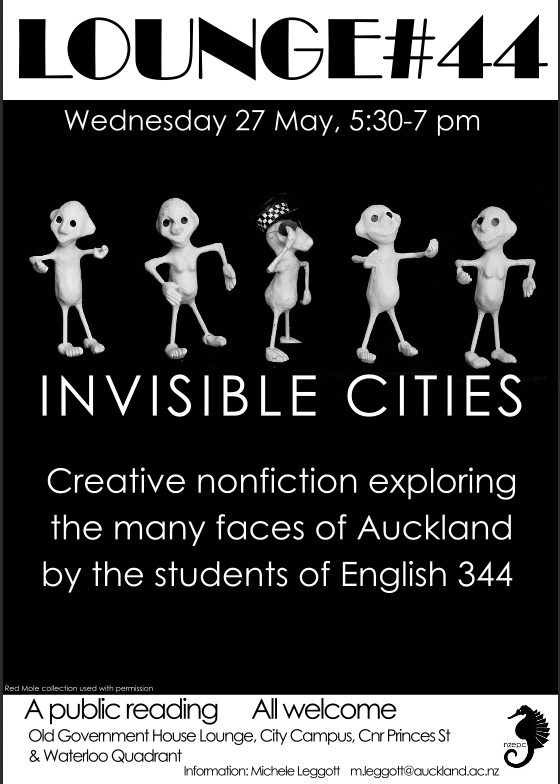
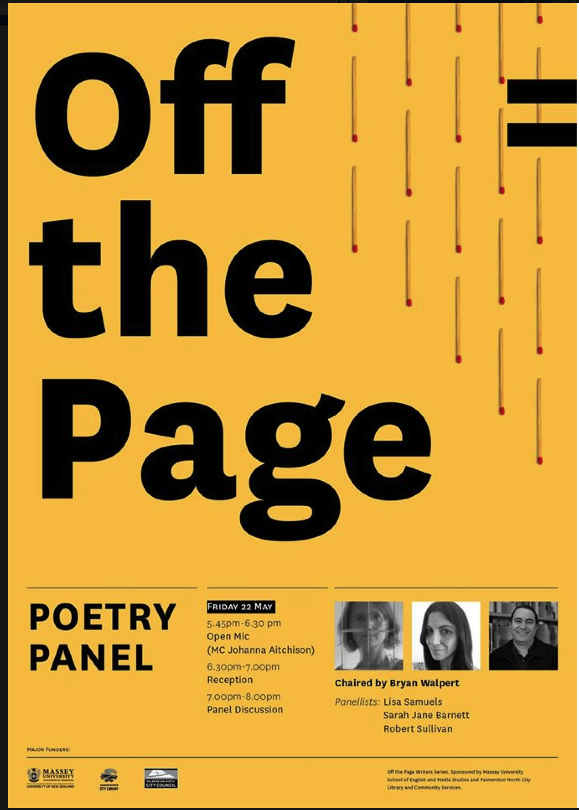
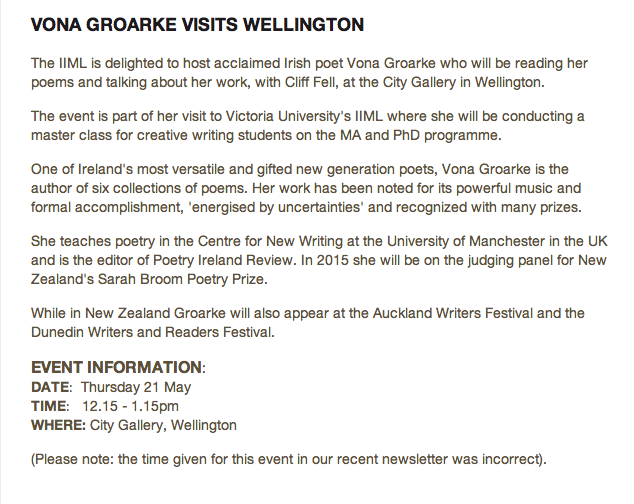
Would love to be in Wellington for this! Should I fly down for the day!
Tuesday 5th May 8pm, Thirsty Dog, Karangahape Road, Auckland
The Poetry Live team welcomes you to a special event: our 35th birthday. All through the month of May we will be holding special readings celebrating Poetry Live and this important milestone.
To kick things off on Tuesday 5th May we will have a mihi from MC Rachael; a short speech about Poetry Live from Judith McNeil; music by Otis Mace; poetry readings by former Poetry Live MCs Miriam Barr, Piet Nieuwland, and Christian Jensen; and a Poetry Live-themed open mic.
Guest musician: Otis Mace
Otis Mace is a Auckland based singer/songwriter/musician who performs crafty, irreverent, comic takes on life in Aotearoa. Love ballads, pop noir and surreal protest songs tangential to most mainstream music. A long-time supporter of the Poetry Live nights and wholehearted ranter ,reader and raconteur, come and see his seventh show as guest artist! Vivid stories introduce provocative and punchy pop gems. He has toured extensively and opened for diverse acts: Billy Bragg, The Violent Femmes, Screaming Blue Messiahs, D.O.A. Albums are on Powertool and Jayrem and Ode, and now OMM (Otis Mace Music).
Guest poets:
Miriam Barr
Miriam Barr first came to Poetry Live in 2001 as a 19 year-old who had never read her poems to anyone but a few friends and family members. She is now the current national coordinator of NZ’s National Poetry Day and her book Bullet Hole Riddle was published by Steele Roberts last year. Poetry Live has been her home away from home for over a decade. One night at Poetry Live in 2005 she met her husband, poet Daniel Larsen, and poet Shane Hollands, a meeting that would lead to the creation of performance poetry group The Literatti. For six years she served as an MC and saw Poetry Live through its last year at Grand Central in Ponsonby, the move to the Classic Studio on Queen St, a short stint at Te Karanga and the first years at the Thirsty Dog.
Piet Nieuwland
Piet Nieuwland started reading poetry in Kaikohe and made his first appearance at Poetry Live in 1984. He soon took on the role as MC and was included in the Globe Tapes. Since then he has read poetry in a wide variety of gatherings, meetings, hui, cafes, restaurants and bars throughout New Zealand and beyond, including Pecha kucha evenings. His poems have been published in Landfall, Live Lines, Mattoid, Takahe, Snafu, Take Flight, Tongue In Your Ear, Poetry NZ and in online journals including the Blue Note Review. He is currently involved in Poets Exposed readings in Whangarei and has just co-edited a chapbook compilation of Northland poetry titled Fast Fibres Poetry. Fast Fibres 2 is in preparation.
Christian Jensen
Christian is a former creative director of The Literatti, and was one of the organisers of the Metonymy Project, a collaborative project that sends a poet and a visual artist on a 6-week blind date, culminating in an exhibition. His work has been published in such places as Snorkel, The Hay(na)ku Anthology, Otoliths and the De-Formed Paper. His book, Zin Uru (Soapbox Press) was released in 2008. Christian was an MC at Poetry Live from 2006-2012.
Open Mic: This week we have a themed open mic. We welcome you to read poetry about Poetry Live. (General open mic will also run.) 5 min max as usual.
Koha entry
MC: Kiri
The judges are delighted to announce the three finalists for the Sarah Broom Poetry Prize 2015.
The prize attracted almost 200 entries from across the spectrum of New Zealand poets, from the new and emerging to the established and the iconic. The shortlist was chosen by the 2015 guest judge, Irish poet Vona Groarke.
The finalists are:
Diana Bridge: a Wellington-based poet, the author of five collections, including aloe & other poems (2009).
Alice Miller: a New Zealand poet based in Vienna, whose first book The Limits was published in 2012.
Ashleigh Young: a Wellington-based editor, essayist, and poet, whose first collection of poetry, Magnificent Moon, was published in 2012.
“The Sarah Broom Poetry Prize is about celebrating poetry,” says judging panel member Sarah Ross. “The diversity of the entries received, and the tonal and formal complexity of the best work, its deftness, its moments of insight, poignancy, and humour – all of this has made the judging process enormously rewarding. So too has working with the generous and perceptive Vona Groarke.”
The Sarah Broom Poetry Prize aims to make a substantial ongoing contribution to supporting poetry in New Zealand. The value of the prize is $12,000 in 2015.
The three finalists will read in a free session at the Auckland Writers Festival on Sunday 17 May from 1.30-2.30pm in the Upper NZI Room, Aotea Centre, Auckland. Vona Groarke will announce the winner at this event
Queries should be emailed to: enquiries@sarahbroom.co.nz
For photos or other details of finalists please email sarahceross@gmail.com
For more information about Sarah Broom or the Poetry Prize visit www.sarahbroom.co.nz
FINALIST DETAILS:
Photo credit: Simon Woolf
Diana Bridge has published five collections of poems, the latest of which, aloe & other poems, came out in 2009. She was awarded the Lauris Edmond Memorial Award in 2010, for her distinguished contribution to New Zealand poetry, and her essay, ‘An attachment to China’ won the 2014 Landfall essay competition. Diana is based in Wellington.
Vona Groarke writes: “Whether it is the violence of medieval history, the engagement with nature, or a re-imagining of Ovid that is the subject, Diana Bridge’s poetry has authority and elegance. Technically sophisticated, this work is complex but never obscure; lyrically charged but never sentimental. It is unflinching in its observational commitment, but also enjoys its ability to fashion unusual and arresting imagery. There is a kind of fierce beauty to this work, alongside its rigorous intellect and formal grace. In a description that rings true of much of her work, her poem ‘Prospero’s Stones’ notes, ‘driven phrases that lap /around each other’: this is a poetry that is linguistically alert, but that also remembers to ply sound and meaning into the kind of poetic weave that is colourful and playful, but also careful, thoughtful and wise.”
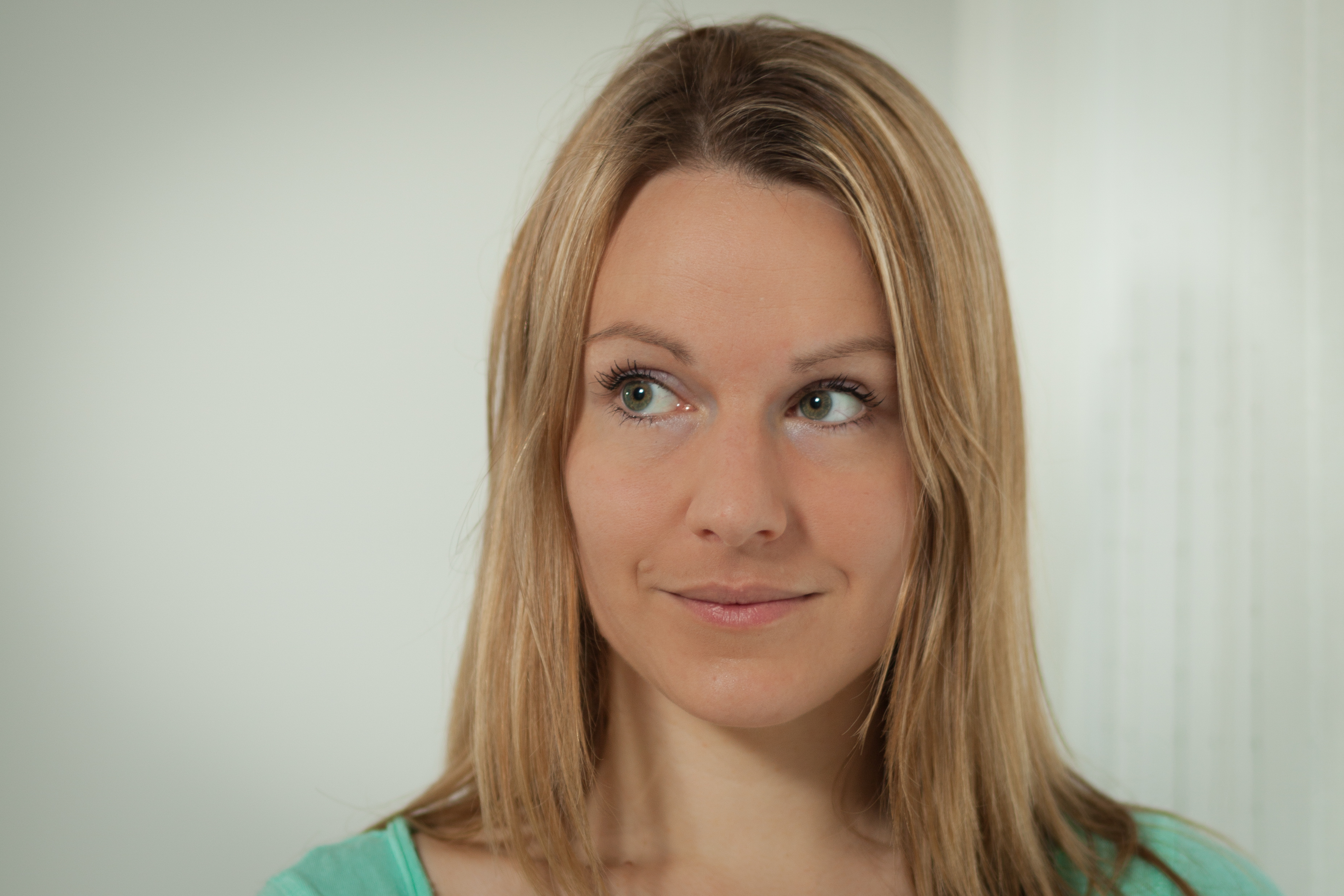
Photo Credit: Dylan Whiting
Alice Miller’s first book The Limits was published by Auckland University Press and Shearsman in 2014. She is a graduate of the International Institute of Modern Letters and the Iowa Writers’ Workshop. Last year she was a Grimshaw Sargeson Fellow, a Visiting Writer at Massey University, and a resident at the Michael King Centre. She is based in Vienna.
Vona Groarke writes: “The ‘I’ and ‘We’ of Alice Miller’s poetry are rarely familiar and never predictable. The same is true of her poems, which are fully-charged and teem with surprises of imagery, narrative and language. Nothing moves in a straight line in this work: instead, the poems tend to turn on small pockets of beguiling mystery. Characters emerge out of an apparent nowhere and do the darndest things before they slip off again, as if in secret, out of the sightline of the poem. It all makes for an intense and intensely involving experience: the lines are so well managed and the narrative so deftly and subtly manoeuvred as to leave one ruffled, but pleasantly so. What might seem like aphorism turns out to be a strange and complicated proposition, as in ‘Saving’ where, ‘some of the moments we cling to most / are the futures we never let happen’. This is work that turns on a sixpence, and that manages each of its fascinating turns with assurance and aplomb.”
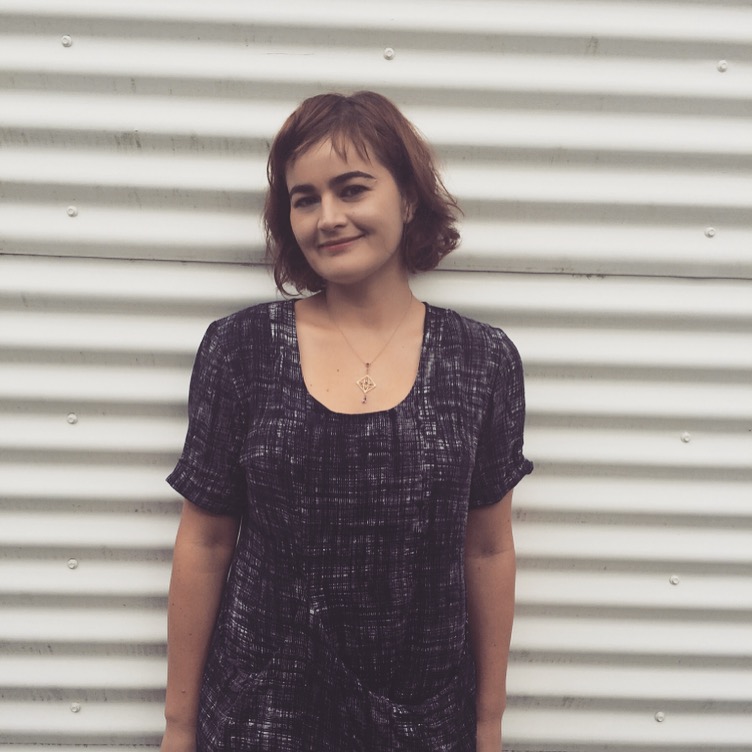
Ashleigh Young is an editor, essayist, and poet. Her first collection of poetry, Magnificent Moon, was published by Victoria University Press in 2012, and recent work appears in Sport, The Griffith Review, Five Dials, and Tell You What. She co-teaches a workshop in science writing at Victoria University with science writer Rebecca Priestley, and she blogs, mostly about cycling, at eyelashroaming.com. Ashleigh is based in Wellington.
Vona Groarke writes: “Ashleigh Young’s poems defy their tight spaces to offer expansive and resonant narratives. Hers is a poetic world that derives great charge and vigour from proper nouns – named people and places -and specific, beautifully delineated detail that, as in flash fiction, sparks an entire world to life. People talk to each other in these poems, and whole lives get encapsulated in the kind of language that is as exact as it is vivid, as careful as it concise. Take for instance, ‘Electrolarynx’ with its arresting line: ‘Then our silence made a condemned building of us all’, or the opening of ‘Become road’: ‘When the car stops we are beginning already to become road’. These are poems that begin with the familiar, and then carefully walk it to the edges of perception, where it catches the light in arresting, singular and finely memorable ways.”
 NZ Poetry Shelf