Category Archives: NZ poetry book

Poetry Shelf Review: Diane Brown’s Taking My Mother to the Opera – a rollercoasting, thought provoking, detail clinging, self catapulting, beautiful read

otago115898     otago115898

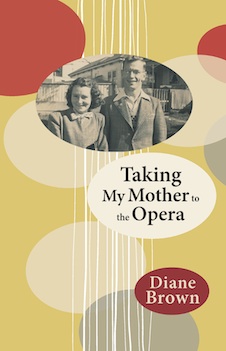
Diane Brown Taking My Mother to the Opera Otago University Press 2015

Otago University Press is producing beautifully designed poetry books with striking covers and internal designs that are both fresh and inviting. Diane Brown’s new book is no exception. The nifty look could be out of the fifties or sixties with its limited palette, the oval shapes and the time-pinning, parental photograph. Gorgeous. Being a child of the sixties, there is a nostalgic hue that draws me in. Plus the book is that rare poetry species – hard cover with a yellow ribbon. The book is about to be reprinted.

Diane’s new work could be flagged as narrative poetry, poetic narrative or as poetry as memoir. The writing is fluid, fluent, daring, exposing, moving. Diane steps back into her earlier self, the daughter-self, as she builds portraits of both her mother and father, and her shifting relations with them. Yet the adult writing self is never far away. The memoir is in debt to hand-me-down anecdotes, photograph albums and the potager plot of memory. We read of memory’s failings and fadings, in the light of mother, father and poet-daughter. Over lifetimes, memory has been weeded and fertilized to suit, unwittingly in the main. The poet is acutely aware of how tough and provisional a recuperation of the past is:


Too late to ask permission,

it’s up to me to tease out

some sort of narrative


from the missing story,

to add the words

I never thought to ask.


This memoir is like a poetic version of family archives; the hidden box where a cluster of things unlock family stories. What makes this family box retrieved from the dark so potent is the unsparing eye. Diane delves deep into parental enigmas. How can we ever know the adult? Stepping back into the shoes of the child, Diane steps back into things done and not-done, said and not-said, observed not-observed. Forbidden from the beach on Sundays, her mother is ‘alone in a studio/ in her velvet dress, blue/ possibly, with sunburst// embroidery, wishing/ she wasn’t.’ We get physical details, but then the melancholy arm’s length:


She’s maintained this one-way

conversation all her life, keeping


her own counsel, allowing

no disclosures, either of anger

or of love to husband and children.


Diane’s memoir, then, transcends the photograph album and exposes miniature wounds (the mother not at the school gate, the fact you cannot eat poems), mysteries (mother) and allegiances (with father). The poet has lifted veils and allowed space for rankles, reflections, sympathies. As detail and miniature stories accumulate, the memoir sharpens. It is as though we intrude on a personal endeavor to get to the truth of the past (for each participant). Lots of billowy white space to explore. Admissions. It is hard not to bring your own luggage to the scene.

The memoir is a sharply rendered portrait of time and place — haunting in the detail that drags me back to my childhood and adolescence. I loved that. Yet what makes this memoir stick is the complicated, heart-trembling knot that is on the one hand mother and on the other hand father. It carries you across generations to a time where parental expectations were different (as both mother/father and of daughter). It reminds you of the elusiveness of mother/father. We know what they shown us, less so what they have not. In the final part of the book, the parents age, become frail, face death. This introduces new questions, new writing drives, different parental versions:


I want to call him back,

have him describe changes


in the town and tell me

all the things I never thought

to ask. But too late,


he’s swimming downstream

with flowers in the current

and not looking back.


To enter so deeply into behind-the-curtains stories of family life is brave. That the family portrait depends on economy rather than over-statement heightens the emotional kick. You get the arc of the poet’s life where it intersects the parents, but there is so much that flickers in fleeting traces. Absence heightens the focus. As writer, daughter and mother, the book raised many issues for me, issues that I explored in great detail in my doctoral thesis, issues that I want to return to in my new book. For now, Diane’s new book is a beautiful read — a rollercoasting, thought provoking, detail clinging, self catapulting, beautiful read.


from ‘A Black and White Story’


Not the opera, Dad says,

we never went to the opera, but the flowers sound right.


Ive always bought your mother flowers, why wouldn’t I?

Best woman in the world.


Mum, who doesn’t believe in poetry

or any other form of declaration, mutters,

Actions not words, behind his back.


Not tuned in to cynicism, Dad refuses to hear. It doesn’t occur to him

his memory might be fading.


*


There may have been a time

when they attended Madame Butterfly,

Mum wearing her good dress,


the green tulle with a flared skirt; behind her ears, a dab of Evening in Paris, from the deep blue bottle.


Dad in white shirt and striped tie, heart soaring. There are no photos of this so perhaps I am spinning


the parent tale we all want to read at bedtime—love uncomplicated and just for you.


© Diane Brown 2015


Poetry Shelf, Poets’ Choice: Cilla McQueen and Brian Turner make some picks

418MHC3lAEL._SX346_BO1,204,203,200_

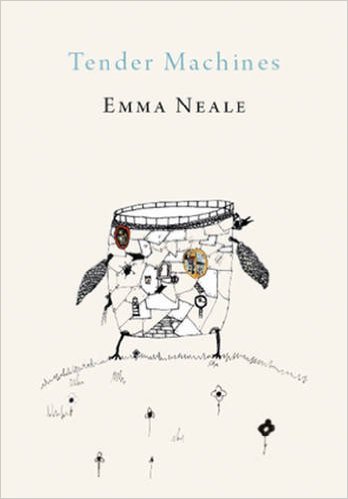
My pick is Emma Neale’s Tender Machines (OUP). Emma’s poetry is resonant on many levels and repays close reading. In her supple, expert language, she takes a loving look at the human condition in a collection which has depth, wisdom and insight.

Cilla McQueen


Being_Here_cover__66009.1423089464.140.215  Being_Here_cover__66009.1423089464.140.215   Being_Here_cover__66009.1423089464.140.215

Mostly I read poetry and non-fiction, and a lot of the latter is to to do with environmental issues in an effort to understand and do something about the disgusting rate at which we’re destroying the place. Recently I read Michael McCarthy‘s The Moth Snowstorm, which Helen Macdonald termed ‘a deeply affecting memoir and a heartbreaking account of ecological impoverishment’. I concur. Much of what McCarthy writes about mirrors what’s happened and continues to here, in NZ, and elsewhere.

Three of the volumes of poetry that I’ve read and liked most in the past year are Robin Robertson‘s The Wrecking Light, Vincent O’Sullivan‘s Being Here, and Emma Neale‘s Tender Machines. Robertson doesn’t pussy-foot around, covers a lot of ground, can be caustic, blunt, wry and shattering. O’Sullivan ranges widely both in tone and content. Apart from the wry and sly ways he approaches things I like the ways in which he highlights human absurdities. As I hear him, it’s not as if we’re too much troubled by human absurdity, it’s that we’re not troubled enough. In Emma Neale’s Tender Machines she grapples with long-standing human predicaments, the difficulties we have personally keeping a lot of the ‘ongoing human symphony’ playing while trying to work out how to silence our dreadful ‘inner racket’.

I’d like to be able to buy and read far more NZ poetry than I do these days. Back in the 1960s, when I began trying to write poems, it was possible to be familiar with nearly all of the volumes of poems by NZ writers. Not now; the result is great gaps in one’s reading. Does it matter? I don’t know.

Brian Turner

Poetry Shelf, Poet’s Choice: Rachel Bush makes her pick

c52510c0-ccf5-4568-88dc-14eed8f6eafe     c52510c0-ccf5-4568-88dc-14eed8f6eafe


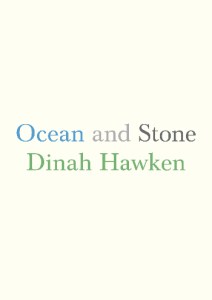
I was hooked by the couplet that begins the first poem in Ocean and Stone by Dinah Hawken (Victoria University Press 2015).

‘Here I am an old woman, sitting alone / on an outside chair in Maoriland,’ she writes. I am captivated by this concise and evocative sketch of herself. That word ‘Maoriland’ with all its nuances and baggage still turns over and over in my mind.

Dinah  writes beautifully about children, particularly in this book  about her grandchildren. There is none of the cuteness that can mar writing about little children. Hers are tiny in stature, but total and convincingly human beings.

She can be very funny, for instance when she writes about ‘the bloke’ who disrupts the lake and everyone peacefully round it by tuning a loud speed boat for hours on end. We all know him, alas.

She writes particularly well about the natural world. I find it difficult to say without sounding as though I am attributing to her some wise conventional pieties. And the very last thing she does is write things that sound good and ‘nice’. If I had to pick a favourite poem, today  I might choose ‘A screen is a screen’. Partly it’s a poem about climate change, but there is no hefty lecturing about it. The ubiquity of screens in our daily lives is countered with the strength and vitality of one bare tree, and with a the way a sense of community and family can  enrich our lives.

Rachel Bush

Poetry Shelf, Poet’s Choice: Emma Neale’s favourite poetry reads 2015


otago108004   7485719


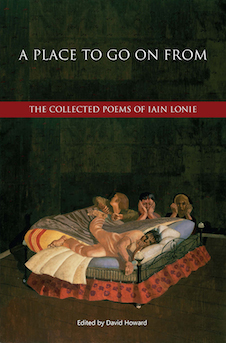
My poetry treasures for this year:  Some people say they’ve travelled, or fallen in love, or moved house, as the measure of a year’s alterations: for me, 2015 was the year I read Iain Lonie’s A Place to Go On From: The Collected Poems. The depth and frankness with which this plumbs love, grief and staring into the void is so unstinting that reading it has felt like a life event. As an act of scholarship from the editor David Howard and the author of the introduction Damian Love, it deserves to be celebrated.
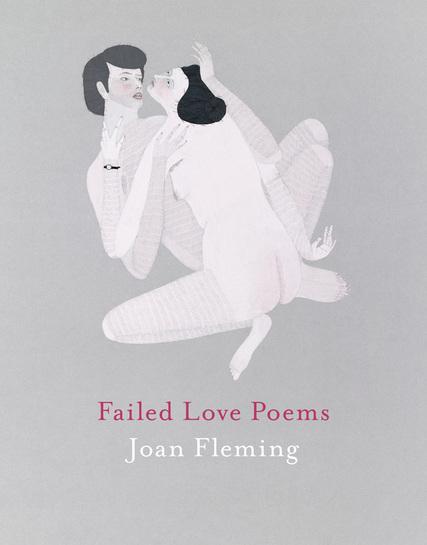
I also loved seeing the fresh direction Joan Fleming has gone in with Failed Love Poems and how quickly she takes up new role models (eg Mary Ruefle, erasure poetics) and rearranges and ‘re-aspirates’ these.

Because as a student I always used to write far too much and get reprimanded for exceeding the word limit, I have to add here Bones in the Octagon by Carolyn McCurdie – see particularly her poem about the Brothers Grimm – and oh please just one more to add – two Hungarian poets have dazzled me this year: Ágnes Nemes Nagy and Ferenc Juhász.

Emma Neale

Bones in the octagon front cover copy

Poetry Shelf review — Emma Neale’s Tender Machines takes you into a deep private space in her writing; in ways that sing and challenge, that move and muster every poetic muscle and tendon as you read

418MHC3lAEL._SX346_BO1,204,203,200_    418MHC3lAEL._SX346_BO1,204,203,200_


Emma Neale Tender Machines Otago University Press 2015

Emma Neale’s new poetry collection features a striking drawing by her son, Abe. Surprising, inventive, poetic even. The poetry is Emma’s best yet, dare I say it. To step off from the title, tenderness meets sharp edges meets exquisite moving parts, small yet perfectly formed. The collection holds you in the intimate embrace of home, yet takes you out into the wider allure of the wider world. Issues, ideas, preoccupations.

The first section, ‘Bad Housekeeping,’ is where poet tends hearth. Mostly, and movingly, Emma navigates her relations with her young son.  She is up against the elbows of insistence, demands, resistance. The mind of the mother is anchoring, roving, admitting. She is in the heart of a toddler tantrum and in the palm of world issues. These poems affect you. You can savour the poetic craft that is honey for the ear. Such musical harmonies and schisms. That is one joy of reading. You can enter the toughness and rewards of motherhood. It is as though maternal experience is the stock pot that is simmered and concentrated to a syrup that is both sweet and tart on the tongue.  The poems become the kind of poems you can hang stories upon; of this child and that child, of this moment of mothering and that. Poetry has the ability to bear story, experience, imaginings, ideas, music — all in its one tender machine (oxymoron and all). These remarkable poems do this. ‘Hard Task, Master’ is a miniature snapshot of the child — its ending breathtaking:


as he tries

to build and build

the deck of himself

against the hard, tall wall

of the world.


At times it is the concatenation of verb or noun on the line that catches you in a knot of maternal thought — son glued to mother, mother glued to son. As in ‘Towards a Theory of Aggression in Early Childhood Development’:


Hit, push, lash, scratch,

these cheeks, this jaw, this shoulder,

are these in truth our edges, outlines, will we cry

as he does, daily, nightly, sky-wrenching as sunrise

yet still hold him in our arms


There is poetic braveness here that doesn’t loiter in conventional maternal paradigms. This is a poet opening layers of skin to get to where it hurts, confuses, demands, yet never loses sight of the enduring bond. The love. This is from ‘Domestic’:


you’re our darling our treasure.


You fling a tea cup at the cat,

plump up her spine like a goose-down pillow,


jab your thumbs at your father’s face

as if to pull out its two blue plums


but ah, little fisty-kins, honeyghoul, thorny-pie,

grapple hook of your daddy’s flooded eye,


stitch by stitch hope’s small black sutures

sew love’s shadow behind you.


The rest of the collection represents a mind engaged with the world at large. There is a strong political vein that never relinquishes the notion that the personal is political and that, importantly, the political is personal. Big issues such as consumerism, the compromised state of the planet, greed, waste are there potency ingredient in the ink of the pen, yet Emma’s ideas find poetic life in a variety of ways. Always there is an attentiveness to sound, to the way the poems hit the ear before the eye/mind drifts elsewhere. Assonance is plentiful. Delicious. The musicality is a first port of admiration that sends you back to reread with ears on alert. One poem, overtly and self-reflexively, plays with musical effects, yet delivers a subterranean plea for the earth (‘”Properly Protecting the Most Pure Marine Ecosystem Left on Earth Was Not Consistent with the Government’s Economic Growth Objective”‘. Here is a sample:


The spring tries to write

its long lyric poem again:

grass blade rhymes wing tip;

leaf rim, gull keen;

salt foam, thought arc;

surf break, line break;

historical break, heart break;

riven river, toxic stream;

smoked ozone, glacial melt.


So many standout poems. I especially loved the way ‘Suburban Story’ moves. It begins with a ‘shopkeeper at my old corner store’ and then travels through a poignant catalogue of losses, minor and major. Again the exquisite ear at work, again the pulsating detail.

This is a collection of reflection, revelation, absorption. Emma wrote many of these poems during her tenure as The NZSA/Beaton Fellow, The Otago Robert Burns Fellow and The University of Otago/ Sir James Wallace Pah Homestead Writer in Residence. Such awards benefit the poet immeasurably with the gift of writing space and time. You can see it in the gold nuggets of this book. In another favourite poem, ‘Sleep-talking,’ the clogged channels of thought become poetry. Emma takes you into a deep private space in her writing; in ways that sing and challenge, that move and muster every poetic muscle and tendon as you read — in this poem and in the book as a whole.


Perhaps for the self to hold its own air

it must be played in the key of sleep:

the body an instrument that over time

we must keep pitched, soaked in night like a reed softened in water,

while dreams tune the mind’s strings with a touch that seems

as precise as if the musician’s ear cranes deep


Otago University Press page

RNZ review

Emma Neale on her title

From the book: ‘Origins‘ posted on Poetry Shelf

Serie Barford’s book launch

Screen shot 2015-11-07 at 7.35.41 AM

Kia ora koutou,

You are warmly invited to the launch of Serie Barford’s poetry and short story collection, Entangled Islands, published by Anahera Press, and held in conjunction with Poetry Live. With music by Brendan and Alison Turner, and readings from the book by Serie. MC-ed by Kiri Piahana-Wong. Entangled Islands will be launched by Karlo Mila. Food and drink available from the bar. Thanks to Creative New Zealand for supporting the publication of this book.

8 pm: Brendan and Alison Turner (folk/blues duo)
8.45 pm: Book launch
9.15 pm: Poetry Live resumes with open mic – all welcome to read

Poetry Shelf interviews Dinah Hawken — ‘any attempt to mirror the natural world is about relationship’

_MG_3288c52510c0-ccf5-4568-88dc-14eed8f6eafe


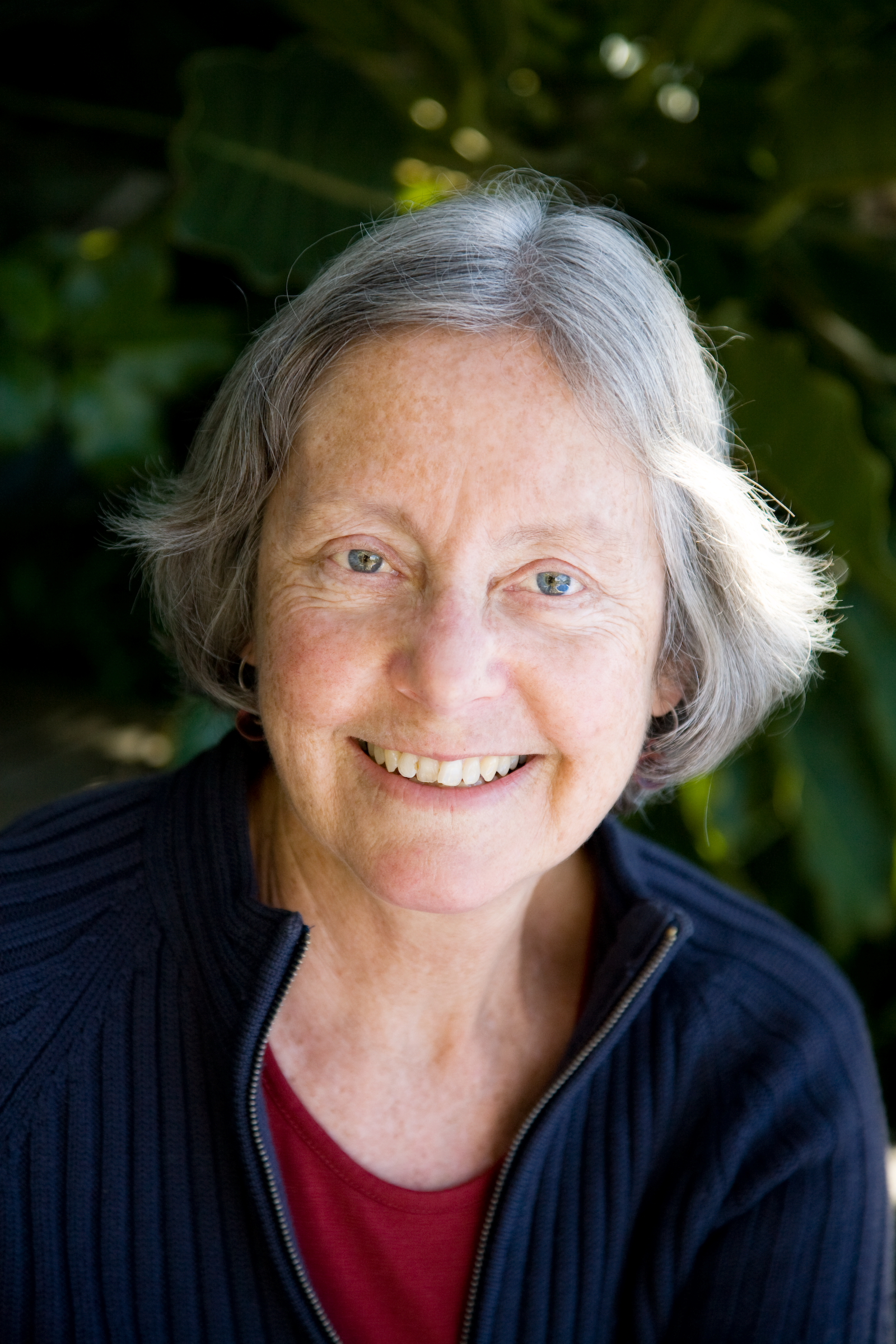
Dinah Hawken is one of New Zealand’s most critically acclaimed poets. Born in Hawera in 1943, she trained as a physiotherapist, psychotherapist and social worker in New Zealand and the United States. Most of the poems in her award-winning first collection It Has No Sound and Is Blue (1987) were written in New York in the mid-1980s while she was studying at Brooklyn College and working with the homeless and mentally ill. Her two most recent books, One Shapely Thing: Poems and Journals (2006) and The Leaf-Ride (2011), were both shortlisted for the New Zealand Book Awards. Dinah was named the 2007 winner of the biennial Lauris Edmond Award for Distinguished Contribution to Poetry in New Zealand. She lives in Paekakariki. Victoria University Press has just released a new collection of poems, Ocean and Stone.


Did your childhood shape you as a poet?

Yes I’m sure it did. One of my favourite memories as a child is my father reading A.A.Milne – the poems – to me when he came home from the farm. We didn’t have a lot of children’s books in those days (40’s and 50’s) and so he read them over and over again and we knew them by heart. Sometimes my younger brother and I would act a poem out: ‘Sir Hugh was singing hand on hip/when something sudden came along …’. What I loved, looking back, was the way my father and his voice changed when he read these poems. Suddenly he was a changed man, a more mysterious and musical man, and the poems had somehow changed him.

There was one poem that had a profound, perhaps lasting, effect on me psychologically. ‘The Dormouse and the Doctor’ – do you remember it? The dormouse was living happily ‘in a bed of dephiniums (blue) and geraniums (red)’ when the Dr came hurrying around and prescribed instead a bed of chrysanthemums (yellow and white). When ‘they took out their spades and dug up the bed/of delphiniums (blue) and geraniums (red),’ I was devastated at the injustice and imposition of it. They didn’t understand that ‘much the most answering things that he knew/were geraniums (red) and delphiniums (blue)’. I was worried by this story – the powerlessness of the small, the arrogance of grown ups – but at the same time I was impressed with the dormouse’s solution of imagination: ‘I’ll pretend the chrysanthemums turn to a bed/of delphiniums (blue) and geraniums(red).’ It made me determined to fight to remain myself, to hold onto my ideas and attractions even if I was misunderstood. Like the dormouse I was a dreamy child, but also an active one – a tomboy, keen on sports and outside a lot with bare feet. I thought of myself as a reader not a writer.


As a young adult, were there any poets in particular to which you were drawn?

When I went to Dunedin as a school leaver, to study Physiotherapy, James K. Baxter was living there and I went to some of his poetry readings and lectures. He was the first NZ poet I had ever heard or read and The Rock Woman (selected poems) was the first book of poetry (besides A Pageant of English Verse) that I had ever owned. I’ve just taken it off the shelf and it is one of the most worn books in my poetry collection. I felt the emotion and music in those poems, the power of ‘the best words in the best order’, and the sense of being understood as a human being who lives in this place, this landscape. Existential questions were in the air for me at 18 or 19 and one poem, ‘The Cold Hub’ gave me a strong sense of fellow-feeling and therefore consolation. Poetry as consolation became important for me.

The next year in Palmerston North was significant for me in terms of poetry too. I had a boyfriend who not only liked poetry (a rare find) but who really loved Baxter and who introduced me to e.e. cummings and Yevtushenko. Both mind-opening in their own ways. What’s more, in Palmerston North, I also made a close friend, Phillappa, a nurse, who read poetry and wrote it. She showed me it was possible even though I didn’t start writing seriously – though secretly – till I was in my late 30’s. She was the first person I showed my poems to at that time. And a couple of years later I applied for Bill Manhire’s undergraduate creative writing course.


Your new collection, Ocean and Stone, is one of your best yet. At times, the poems lead me to a place and point of contemplation (outside urban bedlam). The poems remind me of the way I go down to the beach in the morning and all is the same (sand sea sky), yet there is always a pull of shifting nuances. Do you ever see your poems as a way of translating relations with the natural world, both private and nourishing?

Yes I do. Moments and experiences in the natural world give me such pleasure and uplift that I do have an urge to record and share them even though words so often fail the actual experience. But the attempt feels important. And I’m glad you used the word ‘relations’ because any attempt to mirror the natural world is about relationship. I’m a person who wonders a lot and the world around me is one of the most ‘answering things’ that I know.


And wanders in that wondering. That’s what hooks me as a reader. I find your poems are often things of beauty, yet there is a political edge here. It is as though we can no long view the ocean, for example, solely through the exquisite lens of its moods and bounty. Do you see yourself as a political poet? Overtly so or in more subtle ways?

As time has gone on I realize that I am both a nature poet and a political poet though I don’t set out to be. And I hope not exclusively. A poem usually begins with a phrase, a word, an image or a feeling that has a grip on me in some way. It can be a light and friendly grip or an intense, even painful, grip. The poem develops from that and, because of my interests and preoccupations, political concerns or the landscape, often become a part.

In Ocean and stone there is a poem called ‘The uprising’ that was a commission for Lloyd Jones’s issue of the Griffith Review called Pacific Highways. I began the poem thinking about the Pacific, with no conscious intention of writing a political poem. But I’d just read a book about the state of the world’s oceans and the facts in that book, and my feelings in relation to them, naturally flowed into the poem.

But it’s a balancing act to write a political poem and I sense that many poets might disapprove of my attempts – on the grounds of didacticism, emotionality etc. I’m naturally a direct person and I’ve had to learn more indirect and layered ways of expressing myself in poetry. But I’m also willing to be direct about strong personal feelings – a political poem is also a personal poem.


No matter how many times you write a stone poem, Dinah, you have the ability to replenish the subject (I posted one of my favourites from your new collection here). Do you have other motifs to which you are drawn?

Isn’t it amazing how stirring a small stone, like a blank page, can be? I’ve just looked up that famous poem ‘Pebble’ by Zbigniew Herbert where he writes that the pebble ‘is a perfect creature/ equal to itself’ that ‘does not frighten anything away.’ That seems so true to me.

As far as other motifs go, I don’t know. Water, its fluency? Leaf, its green, its growth? ‘The child’? I find myself thinking a lot at the moment about ‘the stranger’.


Yes definitely water! And the child. The grandchildren poems add a different layer to the collection. They remind me of the way women are often keepers of the family archives (scrapbooks, photo albums, treasure boxes). Do  you feel these poems are as much a gift to the family as they are for the reader?

Definitely. I did write them as a kind of scrapbook, a record of my grandchildren’s early development, trying to ‘hold’ some of the delight and moments of discovery that babies and toddlers go through. I started, in my last book, with Elsa from new-born to 16 months and then carried on with Nate from about that age to two and a half. Such an extraordinary time, as a child meets the world. And as a parent you are often too busy to stand back and see it happening.

I’m about to put all the grandchildren poems together in a small volume for the family – and perhaps for other parents of small children as well.


The untitled fragments throughout the book (that ‘stem from the epigraph which is a found poem from The Unsettling of America by Wendell Berry’) are so fertile. I particularly loved: ‘a blank page has limits// and no limits.’ What kind of limits do you bump against as a writer?

I no longer have the external limits of time and stress and children and work that many younger writers have – I feel very lucky in that respect. I love writing without pressure – but on the other hand I do have the limits of older age; lack of energy, poorer memory, uncertain health. I find it harder to find words, I seem to have less access to dreams that were a great resource earlier in my life. Many of the poems in the second part of Ocean and Stone are about living with various kinds of decline.

There’s a difference between limits and limitations and so I also have to live within my inherent limitations as a writer. It seems important at this stage to try and see clearly what they are, whether they have any give in them, and to thrive within them. Limits and limitations have a bad name but I see them as the boundaries within which we can have the most ease and can be the most creative.


I love that dichotomy. Is doubt a key part of the writing process along with an elusive horizon of where you are satisfied with a poem?

Another way of considering the contradiction of ‘limits// and no limits’ is to think about faith and doubt in the writing process. They both seem to be essential: faith to believe that something can come from nothing; and doubt to be always willing to question what comes. When I began writing I would lurch, often painfully, between one and the other, now (fingers crossed) it’s more like quietly shifting weight. But you can’t write, can you, without doubt? You can only try to hold confidence and uncertainty in some kind of balance as you go.

I often have an intuitive idea of when a poem is finished in terms of content and length but the editing and re-arrangement inside it can go on for months. Leaving it for a good length of time helps me a lot – to free up and be less attached to what’s there. I don’t have poet friends, or a group, to share this process with at the moment but have in the past found feedback from others invaluable. It was great to have Fergus and Ashleigh at VUP look carefully at my manuscript for Ocean and Stone.


What poets have mattered to you over the last year?

The two most important books for me in the last year or so – both as a reader and a writer – are The Great Enigma by Tomas Transtromer and Faithful and Virtuous Night by Louise Glück. I’ve been attached to Louise Glück’s poetry in the past and was thrilled to discover this one (Carcanet 2014) and find it so impressive. Without your question I mightn’t have noticed that these two books, though different, have the same attraction for me. Both poets use accessible language and strong short sentences developing a narrative that is clear but at the same time mysterious. I love that. They have quite different tones; Glück’s intense, sometimes threatening, Transtromer’s lighter, more surprising. I was strongly aware of Transtromer while writing the first sequence in my book ‘The lake, the bloke and the bike’ but I’m not sure if, or how, his poems might have influenced mine.


What activities enrich your writing life?

Almost everything I do has the potential I expect, but when I think of Ocean and Stone, I see how it reflects a number of my non-writing activities. For example, babysitting grandchildren, gardening, friends, walking on the beach, Tai Chi Chuan. The last sequence in Ocean and Stone , though triggered by the McCahon painting, has a number of the names of Tai Chi postures in it and I wanted the poem to be a kind of Tai Chi sequence even if the reader doesn’t recognize it at all.

There’s no doubt that I’m a poet whose material comes from her own world but in Ocean and Stone I enjoyed very much re-telling the Sumerian myths, forgetting myself, and entering stories from another time and place. Yet stories that have relevance still.


Victoria University Press page

NZ Book Council page

Back home and I discover Bernadette Hall receives Prime Minister’s Award for Poetry – I am doing a little poetry jig of joy


img_1396

I have been a fan of Bernadette Hall’s poetry for a long time so was delighted to see she has received this honour. I missed the initial release when I was walking the beauty of Stewart Island. This is well deserved. A little dance of poetry joy ensues! Reading a book by Bernadette is poetry pleasure. Utterly satisfying for ear, eye, heart and mind.

You can see the full achievements of Bernadette as both poet and teacher here on the Creative NZ press release here.

My review of Bernadette’s most recent collection Life & Customs here.

Bernadette talks to Poetry Shelf here.


Victoria University Press page

New Zealand Book Council page

New Zealand Electronic Poetry Centre page

Canterbury University Press page

Best NZ Poems edited by Bernadette Hall here

My review of The Lustre Jug in The NZ Herald

Poem Friday – Carolyn McCurdie’s ‘A Potato Sonnet: Jersey Bennes for Christmas’ – each word gleams in the light bright space of the page


A Potato Sonnet: Jersey Bennes for Christmas


They gleam in the black

crumbled earth;


steady, as if candles

glow through layers of silk,


underpin the season’s quick

shifts of tinselled light


and the brisk heel-tap, chatter

of crowds in the street.


This is old, wondrous

as moon-rise,


mundane

as the maternal voice


that calls, come in

to the table.


© Carolyn McCurdie Bones in the Octagon  Mākaro Press 2015


Author Bio:  Carolyn McCurdie is a Dunedin writer. She won the Lilian Ida Smith Award in 1998 for short stories and a collection of stories — Albatross was published in 2014 by e-book publisher Rosa Mira Books. A children’s novel, The Unquiet, was published in 2006 by Longacre Press. She was the winner of the 2013 NZ Poetry Society International Poetry Competition and her first poetry collection, Bones in the Octagon, was published in 2015 by Mākaro Press as part of their Hoopla series. Carolyn is active in Dunedin’s live poetry scene, where she is a member of the Octagon Poets Collective.

Paula’s note: The potato is comfort food, but this particular potato hooks you to the extended  family table where the sun is blazing down and family stories circulate. Christmas. Ah. Reading the poem, each word gleams in the light bright space of the page along with the deep pit of personal memory. Each word is so perfectly placed for ear and eye. This is the first poem I read in Carolyn’s debut collection (the title lured me in — especially the idea of a sonnet meeting up with potatoes). There is a quietness, an attentiveness, delicious overlaps of meaning and propulsion. I can’t wait to settle back into the book and discover more.


Mākaro Press author page


Other books in 2015 Hoopla series:

Mr Clean & the Junkie by Jennifer Compton (I reviewed this here)
Native Bird by Bryan Walpert

Poetry Shelf interviews Sarah Jane Barnett — writing is an act of contemplation for me

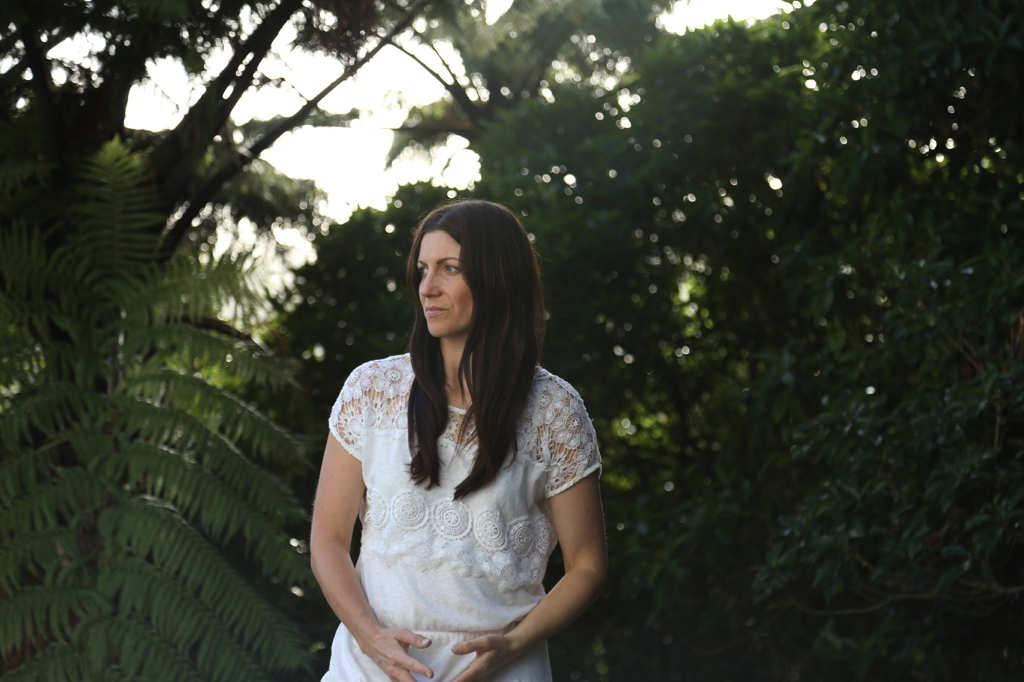
WORK_author_photo

Photo credit: Matt Bialostocki


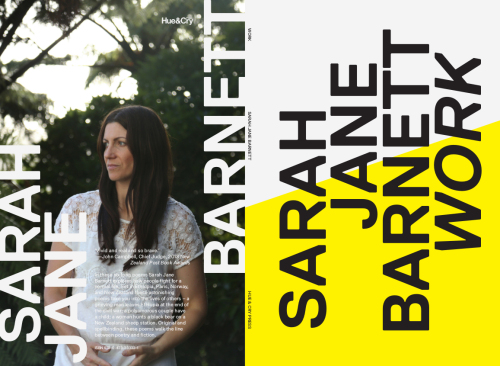
Sarah Jane Barnett has an MA in Creative Writing from Victoria University and a PhD from Massey University. Her poetry has been published in New Zealand, Australia, and the US, and anthologised in Best New Zealand Poems, Dear Heart: 150 New Zealand Love Poems (Godwit), and Essential New Zealand Poems: Facing the Empty Page (Random House). Her debut collection A Man Runs into a Woman (Hue & Cry Press, 2012) was a finalist in the 2013 New Zealand Post Book Awards. Sarah was the recipient of the Louis Johnson New Writers’ Bursary and the Estate Phoebe Maunsell Scholarship. Her second collection WORK has just been launched by Hue & Cry Press. Sarah teaches creative writing at Massey University.

To coincide with the arrival of WORK, Sarah agreed to do an interview with Poetry Shelf.


Did your childhood shape you as a poet? Did you write as a child?

I’ve written for my whole life, in one way or another. I remember entering a poetry competition as a kid, and at primary school we’d illustrate poems. I also remember going for walks as a kid and making up silly poems in my head. I never thought I’d be a writer, though. My undergrad is in Fine Arts and then I studied Museum Studies, so I spent many years working in the public sector and writing on the side. I couldn’t look at my writing full on, in case it was truly awful (and some of it was). It was as though I was teaching myself to write behind my own back!

Something changed around the time I wrote the death row poems for my first collection. There was an inescapable humanity about the material. I had to fully engage with the work in order to respect the stories of the inmates and their victims. After that I quit my job and did a PhD at Massey. Now I’m overqualified so there’s no going back.


Your new collection, Work, lifted me off the page into realms of delicious contemplation – particularly in view of character and narrative. It grew in me. You say ‘these poems are works of fiction that draw on real people’ and that you ‘worked hard to be faithful to the facts while also allowing room for the poem.’ That poetic room is a fertile space (I want to write about it in my new book!) engendering countless fascinating relations. Were you aiming for particular kinds of poetic activity?

I like that you’ve used the word contemplation, because writing is an act of contemplation for me, and I hope my poems spark contemplation in a reader. I’m not sure that’s the same as ‘poetic activity.’ I know that I wanted the poems to be realistic, so set in the real world, with the sun rising at a real time and the flora and fauna being factual to a real landscape that any reader could visit. That was my way of honouring the people whose stories I drew from, and the landscapes they dwelt in, by making them as round and beautiful and burnished as I could.

But I also wanted the poem to be more than that – for it to be a fictional construction that explored what it is to be human. For each poem to be knowing that it was this imagined thing, created from language. In that sense each poem’s ‘realness’ is in being a poem. The main character in ‘Addis Ababa’ is a translator for this reason. Not only is it a nice metaphor for how he ‘translates’ his life from one country to another, but it was a way for me to explore how different languages, in his case Amharic and English, shape experience. It also points to how the poet ‘translates’ the world into poetry. I’m not sure where this preoccupation comes from, but I’m intrigued by the liminal space between fact and fiction (and, for that matter, poetry and prose). We all have stories that we tell ourselves in the on-going narrative of our life and identity. I think there’s value in questioning those stories.


I also loved ‘Glaciers’ and its multiple levels, overlaps and smudgings. It is a mysterious poem, a haunting poem – yet it embraces something utterly fundamental. Notions of family. I loved the different reactions that the poem drew from me; I was moved, perplexed and delighted in the myriad cryptic hinges. As I read the poem, and navigated the potent maternal traces, I wondered how being a mother affects your writing. Does it?

On a very practical level I have less time to write. At the start it was very difficult as he was a baby and I was finishing my PhD. There were some black days during that time (which is partially what ‘Glaciers’ is about). That said, having Sam actually helped my writing. I’ve had to learn how to stop the critical voice that fuels procrastination because he’s only in childcare 24 hours a week. That’s all I get! There’s no time to do it later.

At the moment I use the Pomodoro technique to get started. I set a timer for 25 minutes and write without stopping or editing. Then I have a five minute break (I write at home so usually I make a coffee or do the vacuuming or hang out the washing – such glamour!). That’s one ‘pomodoro’ and you’re meant to do four in a row before taking a 30 minute break. By the time I’m into my third pomodoro I’m away and can generally write for four hours at a stretch. So having Sam has been good for developing a stable and on-going writing practice. Also, and I’m going to get soppy here, he’s the most joyous and glorious human. He’s totally and entirely himself without reservation. Being around him makes me brave, which makes my writing brave as well.


What writers have mattered to you? Some may have mattered as a reader and others may have been crucial in your development as a writer.

That’s such a hard question to answer. So many of my friends are writers, and talking to them often feels like one long amazing master class! I also have a super writer’s group which has been going since 2007 when we had a studio in an old zipper factory on Tennyson Street.

That said, WORK is dedicated to my doctoral supervisors Bryan Walpert and Jack Ross, and to my publisher Chloe Lane. So those three – they’re all writers alongside the other hats they wear – have been mentors to me in different but crucial ways. Bryan especially; he has mentored me for the last six years, first as a teacher at Massey, and then as an academic and a poet during my PhD. You need to be tough to work with Bryan. He knew I could go further with my work, but like most writers I had self doubt and a lack of clarity about what I wanted to say. He kept on pushing and pushing until I stepped up. He will hate me saying this because he dislikes gushiness and sentimentality, but he’s a brilliant mind and an outstanding teacher. I’ve learned more about poetry from him than anyone else. It’s also why I’ve continued to teach at Massey. I want to be able to do that for other writers.

In terms of poets, Robert Hass and Anne Kennedy have both had a huge influence on my work. I wrote my doctorate on Hass, and while I know he’s not to everyone’s taste, I’m still deeply moved by his work. I’m in a life long relationship with his first four collections! Anne Kennedy’s The Time of the Giants was one of those collections that shifted my world. She’s simply amazing. It was my first introduction to contemporary long form poetry and now I can’t stop.


Hue & Cry Press author page

Sarah’s blog

work_full-cover