Category Archives: NZ poetry book

2 excellent poetry interviews @RNZ: Kim and Harry, Jesse and Jane


DSCN9476.jpg


Good to see poetry getting attention on Radio NZ. These two interviews, both warm and scintillating, are really worth listening to, especially on a cold rainy Sunday.


Jesse Mulligan and Jane Arthur talk about winning the Sarah Broom Poetry Prize 2018, writing poetry and founding a literary website for children. Jane blew my socks with her speech and poems at the award event at AWF – I posted both a few days ago.


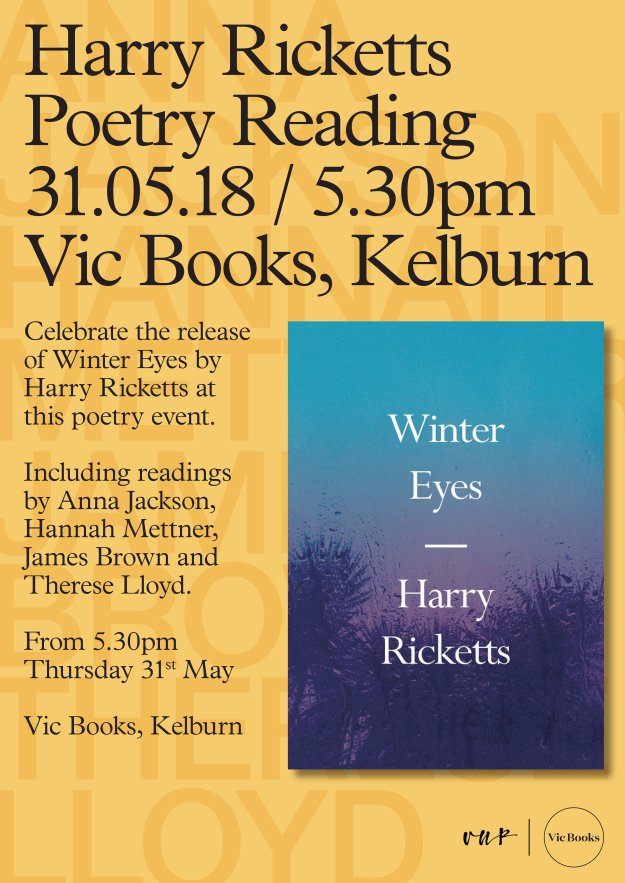
Kim Hill and Harry Ricketts talk about his new book Winter Eyes – a book I think is his best yet. Harry and I are in the midst of a slowly unfolding email conversation that I will post soon.


Thank you!


Poetry Shelf in conversation with Helen Heath


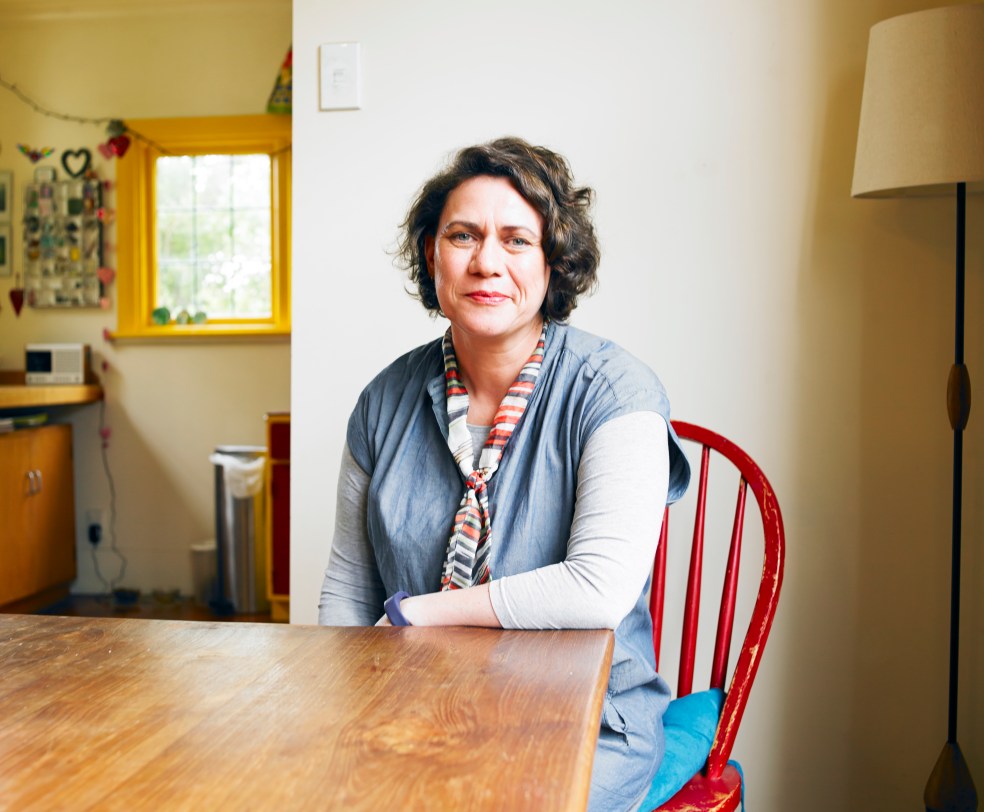
Helen Heath by Victoria Birkinshaw 2018.jpg

Photo Credit: Victoria Birkinshaw


Helen Heath’s debut collection, Graft, won the NZSA Jessie Mackay Best First Book for Poetry Award. It was also shortlisted for the Royal Society of New Zealand Science Book Prize (the first poetry or fiction shortlisted). Helen has a PhD in Creative Writing from Victoria University of Wellington’s IIML. Her new collection, Are Friends Electric, is a poetic smorgasbord that offers diverse and satisfying engagements. To celebrate the new book, Helen and I embarked on an unfolding email conversation.
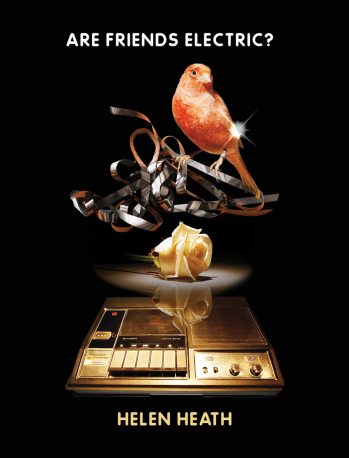
 

Are-Friends-Electric__83457.1522198652.jpg


The large electric that is you

is like the help that is you and

the mouth and the associated

kiss. The source is kind, simply

loved. Turning, my bird, turning

to view a scratched course.


from ‘Greg and the bird’


A slowly unfolding email  conversation


Paula:  The first poem, ‘Reproach’, starts with the word ‘you’. It is like an open invitation to enter the book. The next word jump cuts to ‘poet’ and from there to a reading hunger:


You. Poet. You’re hungry to be read


It is the best opening, the most audacious opening, to a book I have read in ages. Then as the poem curves and folds you end up at the footnote and the origins of the poem’s found text. I am reminded of the unreliability of language to represent reality. Tell me about the challenges you lay in the opening line and your experiences with Plato’s Phaedrus.


Helen: Thank you, I’m so glad you think so. The opening line is a response to the feeling of despondency I sometimes get when writing: ‘What’s the point?! Who even reads this?! This will all get lost and forgotten in time!!’ There is a famous passage in Plato’s dialogue Phaedrus where Plato recounts Socrates rejecting the invention of writing, believing it will strip our ability to remember and thereby an essential part of our humanity. Of course, the irony is that we know this because Plato wrote it down. Writing was an early technology and a similar argument is often put forward against various kinds of modern technology, such as smartphones or the internet, claiming they harm the development of memory or social skills.

Nicholas Carr wrote a now famous article in The Atlantic in 2008: ‘Is Google Making Us Stupid? What the Internet is doing to our brains’, which he developed into his book The Shallows. Giovanni Tiso wrote a thoughtful response to it on his blog. Technology can’t be separated from culture, it’s a cultural artifact, like language. “We shape our tools and, thereafter, our tools shape us.” — John Culkin (1967). This all circles back to the anxieties of the opening line and, as you rightly point out, the unreliability of language to represent reality. The poem attempts to wrap up anxieties surrounding the fallibility of language and writing with central themes of the collection.


Paula: Fascinating. The act of writing is itself a way of remembering and negotiating what is hard, elusive, necessary, puzzling. The list could go on! There are a number of found poems in the collection that stage you as first reader then writer. What attracts you to them?

Helen: It became impossible to separate the research from the writing in this collection. This book can almost be seen as a journal of reading and cultural responses. I was writing my way through some big ideas, trying to come to some kind of personal understanding. ‘Thought in motion’ is a phrase that comes to mind.

The other aspect of the found poems is the concept of literary and cultural intertextuality and how that can be seen as an analogue translation of hypertext and the internet as form. I am interested in poems that weave connected and reoccurring themes and ideas through their collections. In this book the poems reference other texts, popular culture, and each other, and (I hope) build up the reader’s understanding of the collection’s thesis incrementally.


Paula:


I am a woman and

this is a bridge,

despite our vast differences

we are very much in love.

One of the most difficult

parts of being in love

with a public object

is that he and I can never


be truly intimate.


from ‘The objects of her desire’


Movement can be such a strength in a poem. A poem as ideas in motion is in such contrast to personal poetry. Yet what I love in your poems is the shifting voice, the conversational tones. Do the found poems also stage forms of ventriloquism?

Helen:  Yes, definitely. I went to a Masterclass with Kei Miller when he visited Wellington in 2014, many of his poems are based on research and I asked him what techniques he used to keep his poetry from getting bogged down in facts and getting stale. He said he tries to focus on voice in his work. I started experimenting with persona poems and found this shape-shifting quite addictive.

I see myself working in a feminist tradition ­­­– the use of persona and alternative memories plays an important role in feminist revisionist mythology. In addition, a modern, post-positivist, scientific approach acknowledges the difficulty, if not the impossibility, of removing the personal from narratives of knowledge; it acknowledges the importance of multiple voices and experiences. I wanted to reflect that in my work.


Paula:


(..) The city is constantly

under construction, so many empty spaces,

so many car parks, you can get lost

in your home town without familiar landmarks.

My google glass app returns the lost buildings

but they jiggle on my hand-held screen.


from ‘Run rabbit’


I also see a common thread of seeing, strolling, collecting, as though this is poet as bricoleur, as though the book is a cabinet of curious things? How does that resonate with you?

Helen:  Yes, I think that is a good description, especially of the first half of the collection. Although, I hope this ‘cabinet of curiosities’ builds into a narrative for the whole book.


Paula:

I ask if you would like a body.

You say, ‘No I’m beyond bodies now,

I’m ready to be fluid, spilling out all over.

I’m ready to spread myself so thin that I’m

a membrane over the world.’ I’m not ready.

I take off my socks and shoes and walk

over a patch of grass very slowly.


from ‘Spilling out all over’


You move into poems that link grief with the effect of technology upon our bodies. Again there is a carousel of voices that may or may not be invented or borrowed but they make you feel something. What was driving you as you wrote these poems?

Helen:  My brother-in-law was dying of cancer while I wrote the collection and that had a profound impact on my work. I was watching my sister and her children go through this devastating loss while I was researching new technologies. The voices aren’t their voices directly, they are invented, but they are deeply influenced by this experience.


Paula: That’s interesting. The way writing can absorb things so it is there hiding in the ink. Were you bringing yourself in close as you wrote or keeping at a little more distance?

 Helen:  The first half of the collection is probably more curious and observational. The second half, while still observed (yet invented) is definitely more personal to me. The collection attempts to zoom in from observer to participant as you read through it.

Paula:  Yes I got that shift. And in a way the second half reflects and refracts back on the first. Did you need a particular place to write the poems?

Helen: I guess it was a particular headspace rather than a physical space. I was deeply immersed in the research and the writing, it was all consuming. Physically, I wrote wherever I could: at home, at varsity, on retreat, on the train, in bed…

Paula: The book is so complex, and satisfies so many layers for the reader, what did it do for you as writer?

 Helen: Haha, it completely did my head in!


Paula: Were there any poetry books you read as you were writing this that tilted things for you? Or simply filled you were awe or admiration?

Helen: I was reading everything I could of Jo Shapcott, Jorie Graham and Deryn Rees-Jones. Jo Shapcott doesn’t write about technology but she is what I would describe as a science poet who creates poems as thought experiments and deeply considers embodiment. I stumbled across Fleur Adcock’s 1971 speculative poem ‘Gas’ for the first time while writing this book, I found it disturbing and exciting. Similarly I was thrilled by Welsh poet Deryn Rees-Jones’ book length poem Quiver (2004) – a speculative murder mystery involving a clone – it’s fantastic.


Paula: Is there a poem that particularly works for you?

Helen:  I’m going to cheat and name three for different reasons. The poem that is the most personal is ‘A rise of starlings’, which is for my sister. I feel my heart crack open when I read it. ‘The Anthropocene’ is a poem, or lyric essay, which I think works because of the way it circles around a subject, attempting and failing to nail it neatly. Finally, I kind of love ‘Greg and the bird’ because it is the whole book scrambled then distilled into one poem that is meaningful and meaningless at the same time.

Paula: Yes, and all three are quite different.  Perhaps the connective tissue is what I might call a humane fluency.  ‘A rise of starlings’, for example, is mesmerising – both still yet full of movement. It is a poem that catches in your throat as you read.


Orion loosens his belt

in our own night sky. You

have drawn new maps

across the darkness, through

wild celestial fields, tracing

messages to me in particles

of dust and light.


from ‘A rise of starlings’


This was such a pleasure Helen, talking poetry, thank you.


Victoria University Press page

Helen Heath website

New Zealand Book Council author page


Poetry Shelf audio spot: award winner Hannah Mettner reads ‘Cat Chakra Alignments’


fullsizerender


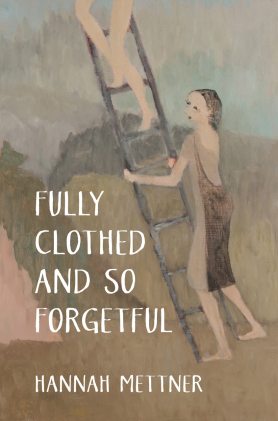
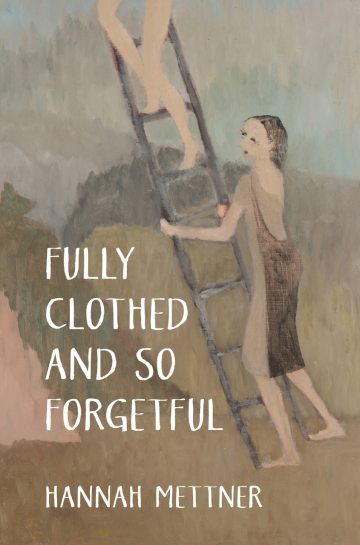
Hannah Mettner, ‘Cat Chakra Alignments’, Fully Clothed and So Forgetful, Victoria University Press, 2017 


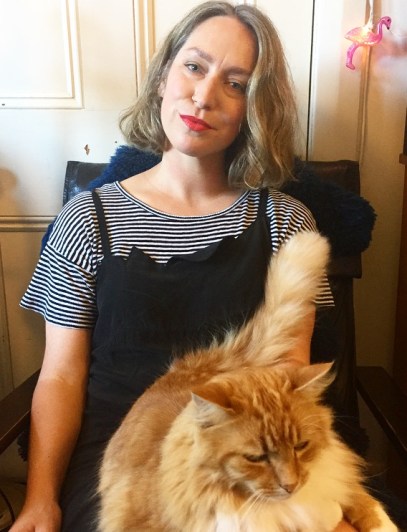
Hannah Mettner is a poet, librarian and mum in Wellington. She co-edits Sweet Mammalian, an online poetry journal, with Morgan Bach and Sugar Magnolia Wilson. Her first collection, Fully Clothed and So Forgetful was published by Victoria University Press in 2017, and won the Jessie Mackay award for the best first book in poetry.


Victoria University Press page


Fully_Clothed_and_So_Forgetful__32303.1486956777


Celebrating Elizabeth Smither’s Best Book of Poetry Award


dsc_0067.jpg


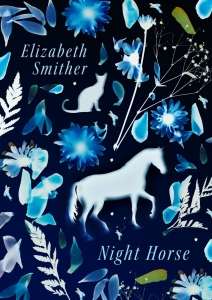
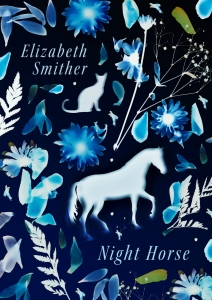
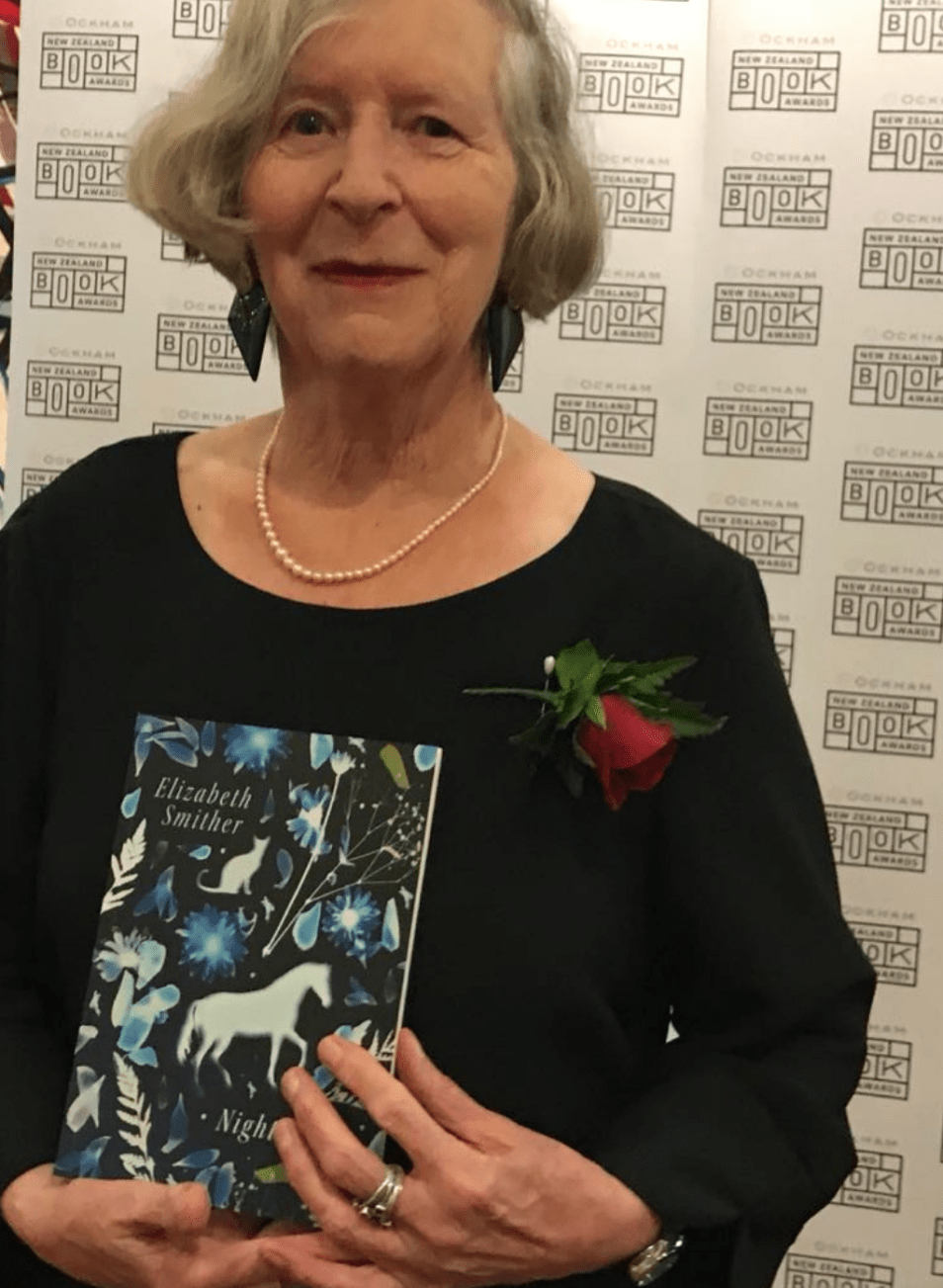
Elizabeth Smither, Night Horse – winner of the Best Poetry Book Award at the Ockham NZ Book Awards 2018


Paula: Your new collection is a delight to read and offers so many poetic treats. I was thinking as I read that your poems are like little jackets that can be worn inside out and outside in. In stillness there is movement and in movement there is stillness; in musicality there is plainness and in plainness there is musicality. In the strange there is the ordinary and in the ordinary there is the strange. What do you like your poems to do?

Elizabeth: I want them to do everything. Everything at once. I want them to feel and think (and feel the thinking in them as you read). I want them to be quick, in the old sense of the word: the opposite of dead. I want them to not know something and try to find it out – I would never write a poem with prior knowledge – I think ignorance can be bliss or at least start the motor. And as I write more I find out more and more about musicality. Isn’t one of the loveliest moments in music when harmony breaks through discord as though it is earned and you know that discord, instead of being a thicket or a dark wood, is part of it?


Paula: I especially love the ongoing friendship and granddaughter poems, but I particularly love the first poem, ‘My mother’s house.’ Kate Camp and I heard you read this at the National Library’s Circle of Laureates and were so moved and uplifted that we asked for copies! Unseen, you are observing your mother move through the house from the street (you gave us this introduction) and see her in shifting lights. The moment is extraordinary; are we are at our truest self when we are not observed? There is the characteristic Smither movement through the poem, slow and attentive, to the point of tilt or surprise. The final lines reverberate and alter the pitch of looking: ‘but she who made it/who would soon walk into the last room/of her life and go to sleep in it.’  Do you have a poem or two in the collection that particularly resonate with you?

Elizabeth: I’m fond of ‘The tablecloth’ after I observed my friend, Clay, scrubbing at a corner of a white damask tablecloth in the laundry after a dinner party. It reminded me of the old-fashioned way of washing linen in a river. It’s both a doll-sized tablecloth and something almost as large as the tablecloth for a royal banquet around which staff walk, measuring the placement of cutlery and the distance between each chair. ‘Ukulele for a dying child’ tumbles all over itself in an incoherent manner because the subject is so serious and no poet can do it justice. The grandmother poems will probably be ongoing because it is such an intense experience: something between a hovering angel and a lioness. Going back to your remark about ‘My mother’s house’ I agree with the truth that is available in our unobserved moments. Perhaps there is a balance between our social and our private moments which might comprise something Keats called ‘soul-making’.

from our interview


Tenderness


                           I


A tree in the centre of a corn field

the corn rising in its ranks like braided hair

to meet the lowest branches


a tree that has replaced at least twenty

corn stalks with their divided leaves

twenty golden cobs sweetly surrendered


for this lovely grace: leaf sweep touching

leaf sweep, the whole field given by

this rising trunk, a focus


the pattern drawn from the edge of the field

to the centre where the tree

delivers a blessing.


II


The forest planation blankets hills.

Neat-ankled, swift-running

the dark pines descend


except on one little hilltop a ride

of grass begins and runs

with the trees which seem to bend


tenderly towards it: a bed from which

a child has risen and begun walking

the solicitousness of pine branches over grass.


©Elizabeth Smither from Night Horse


1497223465774-1.jpg    1497223465774-1.jpg


Paula: Have you seen a festival poetry session (anywhere) that has blown you off your seat (or had some other significant impact)?

Elizabeth: Margaret Atwood and Hans Magnus Enzensberger at the Aldeburgh festival. I read first and sat down between them, shivering.

Paula: If you could curate a dream poetry session at The Auckland Writers Festival which poets would be there and who would mc or chair it?

Elizabeth: I  think I’d do a Dead Poets session. Keats and Shelley, Robert Lowell, William Empson, John Crowe Ransom, Tomas Tranströmer, Szymborska, of course… the possibilities are endless. It might have something of the bitchy tone of ‘The Real Housewives of Melbourne’.  To chair it one of the Paulas: Green or Morris.


from Poetry Shelf  ’12 Questions for the Ockham New Zealand Book Award Poetry finalists’


Elizabeth will appear at the Auckland Writers Festival 

Sunday May 20  1.30 – 2.20 Disappearances  (4 readings) Limelight Room, Aotea Centre


Auckland University Press Night Horse page and author page

Booksellers review by Emma Shi

Radio NZ National review by Harry Ricketts with Kathryn Ryan


Award night


Screen Shot 2018-05-16 at 8.35.48 AM.png

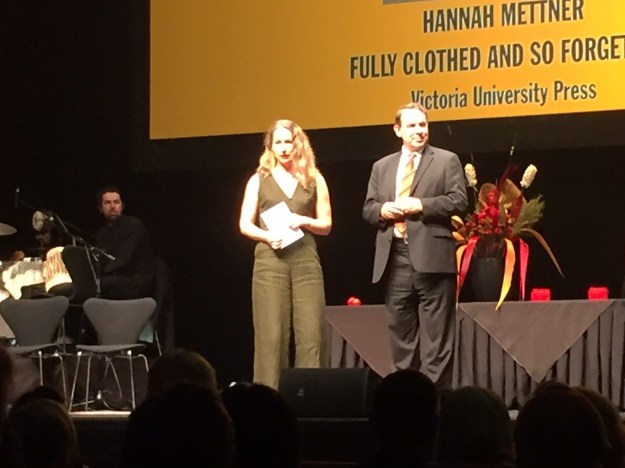
Celebrating Hannah Mettner’s Best First Book of Poetry Award

fullsizerender.jpg

Hannah Mettner, Fully Clothed and So Forgetful – winner of the Best First Book Award at the Ockham NZ Book Awards 2018


We believe in the steps.

We tell our children and then our

grandchildren about the cool

pond at the top where sun-

carp clean our feet and where

we can sleep. The steps are one of

the beautiful mysteries of

life, like how did we get here,

fully clothed and so forgetful?


from ‘Higher ground’


Paula: ‘Fully Clothed and So Forgetful gave me goose bumps as I read and took me beyond words to that state where you stand somewhere wild and beautiful and just stall beyond language to absorb the world. My initial reaction is simply to tell the reader to read the book. But then I start accumulating a list of what I think the poetry is doing: the poems are inventive, unpredictable, melodic, on the move, strange, love-soaked.’

Hannah: The key thing that matters to me in a poem (whether one I’m writing or reading) is that it gets me in the gut. I get very frustrated by poetry that feels empty, or emotionally disengaged or distant, or is teasing the reader or holding them at arm’s length. I just find it boring, I mean, I know that different poems and poets have all sorts of intellectual fare to offer, but I want to be emotionally moved by a poem, and nothing less.

from our interview


My children are abducted by 17th-century French courtesans

In the rose garden near the big house
where somebody famous was either
born, or not, all the ladies spread their
pinks out in the sun. Pretty young ladies
with expensive, dewy faces who want
my children for their photogenic walls.
They look as though they’re picnicking
with their floral bubbles and their green
men but their stiletto fingers give them
away. And my children were just feeding
ducks, but where have they gone?! Quick
say the birds Find them Find them, gobbling
their trails of bread. The ladies strengthen
in the light and their prickles rise and my
nose is so full of their French scent that
I start to sneeze. The ladies wilt a little in
revulsion. Their corals and blushes and rouges
are falling brown, then grey; old ladies with
shallow bones and prickles blunted with
age. And where are your children they
want to know and I want to know too.
I’ve looked everywhere. There’s a low
graze of desperation in my throat, which
stings as I call their names. I uproot one
of the ladies and use her to beat back a
path through the others, until they look
almost young again in the freshness
of their bruises. When I get back to the
pond most of the spinsters have frosted
in the ground. The children are there
wearing new fur coats. One is putting logs
on a fire, while the other pulls dinner
from the snow.

©Hannah Mettner, from Fully clothed and so forgetful (Victoria University Press, 2017)


Author note: This is the poem that helped me realise that there was a way to integrate the emotional authenticity that I want my poems to convey (in this case the fear of ‘losing my children’) with something less literal. For me, this meant that rather than merely ‘stating facts’ in a pleasant or interesting way with line breaks, I was able to tease out multiple concepts and feelings simultaneously in an environment less concretely related to the real world. So, this poem deals with my fear of losing my children after the breakup of my relationship with their father, but holds with that the fear of a potential ‘stepmother’, and the fear of them doing fine without me, but because none of this takes place in a recognisable world (rosebushes don’t usually turn into young women), I felt freer to say all that.


Fully_Clothed_and_So_Forgetful__32303.1486956777.jpg


Victoria University Press page

Radio NZ  National: Harry Ricketts reviews the book with Kathryn Ryan


Award night:


IMG_2312.JPG

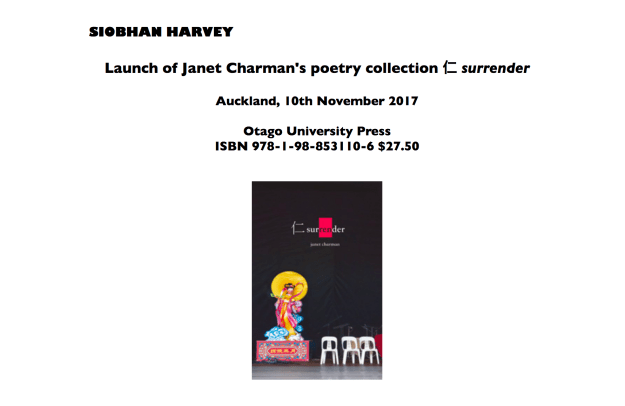
Read Siobhan Harvey’s launch speech for Janet Charman’s 仁 surrender


Read it here at Communion Arts Journal


Screen Shot 2018-05-07 at 8.43.39 AM.png


Some poems from the Ockham NZ poetry finalists: Sue Wootton’s ‘Wild’


Wild


Measure my wild. Down to my last leaf,

my furled, my desiccated. This deciduousness,

this bloom. Calculate my xylem levels.

My spore count, fungal, scarlet

in a bluebell glade. Whoosh,

where the foliage closes on a great cat.

Test me: how many tigers in my jungle,

how many lions at roam? Map my rivers,

deltas, estuaries. Mollusc, whelk, worm.

Monitor my silt. Do I have spoonbills, 

high-stepping and watchful over the darting fish?

Rainfall on pines. Dappled sunlight

in my dells. Under moss, the fallen log, under

the log the hibernating hedgehog. Late my dates,

or soon? Return of the albatross, godwits

gathering. What clouds me, shifts,

but: indigo thunder-stack, pink wisp. Count the mice.

What will survive me, O my cockroaches, O my lice?

Scaffold me with metal, cage me in glass, tube me,

needle me, fill me, flush me. Saline solution:

the ocean. Oxygen therapy: the sky.

Mineral deficiency: socks off. Soil. Dark

rot, eye-less wriggle, while the roots seek, seek.

Un-diagnosable, that ticklish insect.

Mountain peak speak only snow, and thus

I am diminished; thus I rest in my pulse. Sweet

heart. Monitor my yearn, and treat it with trees.

Un-pane me. Wilden my outlook.

Membrane animal, skin mammal under the osmosis moon.

Allow my tides. All this to say, in love we nest, and on Earth.


©Sue Wootton from The Yield


Sue Wootton lives in Dunedin where she writes fiction and poetry and, as a PhD candidate at the University of Otago, is researching the importance of literature to health and wellbeing. Her debut novel, Strip (Mākaro Press), was longlisted for the fiction prize in the 2017 Ockham NZ Book Awards, and her most recent publication, The Yield (Otago University Press) is shortlisted in the 2018 poetry category of the awards. She is the selecting editor for the Otago Daily Times Weekend Poem column and edits the weekly Health Humanities blog Corpus: Conversations about Medicine and Life, found at corpus.nz

The poem “Wild” was awarded 2nd place in the International Hippocrates Prize for Poetry and Medicine in 2013. Sue’s website is suewootton.com

Monday Poem by Bernadette Hall


from a sonnet sequence called  Fancy Dancing


vii.

Drowning is painless, or so they say, when we die

we’ll look as though we’re sleeping. How many thousands

and thousands are sleeping now in the swollen waters

of the Mediterranean? It’s enough to break your heart.

Maggie dropped in for a drink after work

the other day. Tears in the street. I’ve given her

our mother’s lovely little blue Limoges plate.

We talked about the grandfather we’d never met,

Alexander, thrown out of the family for some reason

we are left to imagine. I found him earlier this year,

lying all on his own in an unmarked grave  in Ashburton.

You can drown in loneliness, it seems, just like in water.

We’ll put up a stone with his name on it, such a small gesture.


©Bernadette Hall


Bernadette Hall lives in a renovated bach at Amberley Beach in the Hurunui, North Canterbury. She has published ten collections of poetry, the most recent being Life & Customs (VUP 2013) and Maukatere, floating mountain (Seraph Press 2016). In 2015 shereceived the Prime Minister’s Award for Literary Achievement in Poetry. In 2016 she was invested as a Member of the New Zealand Order of Merit for services to literature.  In 2017 she joined with three other Christchurch writers to inaugurate He Kōrero Pukapuka, a book club which meets weekly at the Christchurch Men’s Prison.


An invitation from Landing Press for poetry by migrants and those with refugee backgrounds

If you know someone that might be interested – please share. I know there are some creative writing groups that might take this up but don’t know how to contact them – Paula


Hi there,

I am writing to you on behalf of Landing Press based in Wellington.

We are working on a collection of poems by migrants and refugee-background individuals living in New Zealand and want to invite you/your organisation to send us poems. And please help us spread the word about this great opportunity.

The only requirement is that the poems must be written by migrants or refugees, whether they have lived in New Zealand for a month or fifty years.


·         You can send up to 3 poems.

·         Email them to landingpresspoems@gmail.com. Include your name and phone number.

·         Or you can post them to 97 Tireti Road, Porirua 5022. Include your name and postal address. (Keep a copy of your poem).

·         Send us your poems by Monday, 16th July.


A selection of poems will be published later in the year as a companion to a book of poetry on the themes of migrants and refugees, written by Adrienne Jansen and Carina Gallegos. Both books will be published by Landing Press. All writers whose work is included in the selection will receive a copy of the book.

Landing Press is a very small press, but we have a big vision. We believe that poetry is a powerful way in which our many voices can be heard. 

Feel free to get in touch if you have any questions.


Kind regards

Devinda Senanayake


For Landing Press