When I look again, now closer to that line of debris
fluorescent seaweed are strands of thin balloons
blues and yellows simply twisted and segmented
overlapping scuttlers
a carrier crab with an urchin settled on its carapace
an offering or mardi-gras hat
People have written cryptograms with sticks
just under the surface of the water
tic-tac-toe and boxes made of scallop shell
preserved in the stillness of it all
The sand path around the cliffside grows thin
and I walk like there’s less gravity
in a jacket that rustles and clinks
pockets full of the clarity I’m bootlegging
Lily Holloway
Lily Holloway (she/they) has been published in Starling, Scum, The Pantograph Punch, Landfall and other various nooks and crannies (see a full list at lilyholloway.co.nz/cv). She is an executive editor of Interesting Journal and has a chapbook forthcoming in AUPNew Poets 8. Lily is based in Tāmaki Makaurau, is a hopeless romantic and probably wants to be your penpal! You can follow her on Twitter @milfs4minecraft.
Home is a state of mind, it’s where you lay your roots down, where you trace your roots, feed yourself, friends and family, bake your bread and make kombucha, where you stand and sleep and dream, it’s a physical place, a small house with wooden floors and comfortable couches, a garden with kūmara almost ready to harvest, shelves overflowing with books, my family tree, my family treasures, my thoughts of life and my thoughts of death, a series of relationships, myself as mother, partner, writer, home is my reluctance to drive beyond the rural letterbox, it’s contentment as I write the next blog, the next poem, sort the kitchen cupboards, light the fire, conserve the water, feel the preciousness of each day.
The poems I have selected are not so much about home but have a home presence that leads in multiple directions. Once again I am grateful to publishers and poets who are supporting my season of themes.
The poems
all of us
once upon a time
all of us here
were one of them there.
maybe
in another skin
in a life before.
maybe
only a few weeks ago.
land of the long white cloud,
land of no borders,
floating
adrift
near the end of the world,
near the end of the sea.
we came
and stayed
and with our accents
call
this place
home.
carina gallegos
from All of Us, Landing Press, 2018
there’s always things to come back to the kitchen for
a bowl of plain steamed rice
a piece of bitter dark chocolate
a slice of crisp peeled pear
a mother or father who understands
the kitchen is the centre of the universe
children who sail out on long elliptical orbits
and always come back, sometimes like comets, sometimes like moons
Alison Wong
from Cup, Steele Roberts, 2005, picked by Frankie McMillan
What’s the pH balance of yin + yang?
lake / river / liquid / beverage / additional charges or income / (of clothes) classifier for number of washes / hai bian / shang hai / shui guo / zhong guo / Sway by Bic Runga / three drop radicals on my guitar / liquid cement / tai chi at Buckland’s Beach / put your facemask on and listen to the rain on a UE speaker /
It’s not outlandish to say I was raised by the water. Aotearoa is a land mapped in blue pen, each land mass a riverbed. Originally swampland, the water gurgles from kitchen taps and runs silent cartographies underneath cities of concrete.
I was raised by my mama, raised with the treasures of every good cross-pollinated pantry. We have rice porridge for breakfast and mee hoon kueh when I plead. My siblings and I vie for iced jewel biscuits kept out of our reach, packed tightly into red-lidded jars on the highest shelf of our pantry. We stretch torso to tiptoe to reach them, knocking the jars off their perch with our fingertips. The dried goods we ignore on the levels below are the real jewels in the cabinet. From behind the creaky door comes the festivities of Lunar Celebrations: dried mushrooms, dried shrimp, vermicelli noodles, black fungus, herbal remedies, that good luck moss you eat on New Year’s.
Chinese cooking is a testament to soaking. Benches overflow with an array of colanders, damp towels cover small white bowls of noodles, rehydrating. We wash rice in liquid choreography: Pour. Swirl. Measure by the pinky. Drain.
My mum is from Ma Lai Xi Ya, her mum’s mum from Fujian, China. I google map the curve of a bordering coast, trace a line through the wet season pavements of Kuala Lumpur and end up with fingerprints all the way to Oceania. From my house you can see the windmills of Makara, jutting out like acupuncture needles. The sea rushes the wind like nature’s boxing lessons.
We fly back to Malaysia every couple years, past the sea-lapsed boundaries of other countries. In Singapore I am offered moist towelettes on the plane. In KL, where two rivers meet by the oil of Petronas, I shower in buckets of cold water and reunite with faulty flushing.
The first ethnic Chinese came to New Zealand during the 1850’s, following flakes of fortune. They came for the gold rush, fishing for luck on the unturned beds of rivers. Wisps of fortune lay in thousand year old rocks worn down to alluvial alchemy. Chinese last names carried through the cold water creeks. They died in sea-burials.
Tones and tombs. You made your river, now lie in it. Yǐn shuǐ sī yuán. To think of water and remember its source; to remember where one’s happiness comes from; to not forget one’s roots or heritage.
Oriental Bay is the closest beach to us in Wellington City. On weekends, we drive out for picnics, happy to migrate our schedules. The beach was named by George Dupper in the late 1840’s after the boat he arrived on. Fresh off the Bay. Oriental Parade is famous for 22,000 tonnes of imported sand. In my house we are displaced soil in torrential rain. I search ancestry on Wikipedia, then look for my own last name.
Think of water and remember its source. Where do our pipelines go? When do our bodies enter the main frame? Oriental, noun. Characteristic of Asia, particularly the East. Rugs, countries, bamboo leaves. A person of East Asian descent (offensive). A beach with fake grains. Imported goods and exported gooseberries. The fruits of our labour, measured and drained.
I think tourists find the green unsettling. It never stops pouring.
Year of the money. Year of the pig. Year of the scapegoat, the migrants, the rats on the ship. Labour. Lei. Qi Guai. Guai Lo. I google the wind howls around a shipwreck. I google microtraumas until my eyes bleed transparent. I google:
why do chinese people love hot water
can chinese people swim
why are there so many chinese in auckland
chinese people population
chinese people opinion
Ink blue motions stencil sight lines into the harbour of my eyes. I rub at ink sticks until the ocean turns to soot. The rising shadows of New World Power loom from water’s depths. We float currency back to motherlands in a trickle down economy. What’s the pH balance of yin + yang?
I was raised with the dawn promise of an unpolluted skyline, pools in cyan-printed eyes, long white dreams of the colony. My body the cycle of a washing machine, bleached into safety. I was raised in a world full of oysters, one lofty pearl held between the whiskered snout of a dragon. But you can’t feng shui the comments on Stuff articles.
Feng shui just means wind water. It’s not scary. Duān wǔ jié is the annual dragon boat festival. I throw zongzi in the river to protect Qu Yuan’s body. Remember how you moved across the world to know you had been here already? My mum says she caught sight of the harbour and it’s why she will never leave. I watch her from the doorway, her frame hunched across the sink. She belongs here. The soft light of morning streams through the window, catching glints on small rice bowls. I can hear a pot of water boiling. She soaks bones for breakfast, then asks if I’m hungry.
Vanessa Mei Crofskey
from A Clear Dawn: New Asian Voices from Aotearoa New Zealand, eds Paula Morris and Alison Wong, Auckland University Press, 2021
blue beat
Every morning he milked the cow.
It was the chime that woke me and my sister,
metal against metal,
the fall of the empty milk-bucket’s handle
as he put it down to open the gate
right beside our sleep-out.
At the end of the day, in socks,
the cold, clear smell of fresh air
still on him, was his way
of arriving back;
the glass of water he gulped,
the hanky dragged from his pocket,
how he leaned back with a grunt
against the nearest doorpost
to rub and scratch the itch,
or ache, between his shoulders. Once,
seeing me poring over a map of the world
trying to find Luxemburg,
he teased, saying something
about how I couldn’t wait to leave.
None of us knowing then
that he would be the first to go,
leaving us
long before we could ever leave him.
Kay McKenzie Cooke
from Born to a Red-Headed Woman, published by Otago University Press, 2014
We used some
concrete blocks
the hollow kind
that let the grass
grow through
to make a carport
then took a few
out back to
plant a herb garden
parsley thyme
used to step out
mid-dish to snip off
fronds till
it all went to seed
now my mother’s not
been out the
back door in
more than a year
they’ve grown into
massive aberrant
plants to match
the trampolines
around the flats
on either side
Jack Ross
Bliss
If I were to describe this moment
I may write
bliss
If bliss meant quiet, companionship
you in the garden, me hanging washing
the fresh scent of rain on the air
the murmur of voices inside
You and me
not far away
bliss
Rose Peoples
Reasons you should retire to the
small town the poet grew up in
Because you have a Grahame Sydney book on your coffee table. Because you are public figure reinventing yourself as a public figure – in Central Otago. Because you can buy advertising space cheap and write a column about local issues. Because you know how moorpark apricots ripen from the inside and look deceptively green. Because it’s a gold rush a boomer boom town. Because you are a big fan of Muldoon flooding the gorge for the generation of electricity – when the river rose it formed little islands possums, skinks and insects clung to power poles to escape drowning. Because you fell in love when you were sixteen with the dusty curtains in the high school hall – immense as the horizon holding the town in.
Ella Borrie
from Stasis 2020, picked by Aimee-Jane Anderson-O’Connnor
In my mother’s house
Everything is always evening:
curios in candlelight, blowpipes,
riding crops, cabinets of Caligari.
Children used to giggle in the rhododendrons;
dragons wander up to the door.
There were nightingales.
The ghosts hunch, passing the port,
rehash old scandals, broken trysts,
all those garden parties long ago.
Harry Ricketts
from Just Then, Victoria University Press, 2012
Hunting my father’s voice, County Down
It begins with the medieval
throat clearing of crows
high over Scrabo tower. You
were the boy your mother
forgot to drown and still
you holler for help
So here’s a bloody conundrum
shot to blazes and back
and your brother Jimmy
in a slow swim to save you
Dad, the land is full of boulders
an apron of stones
to feed a nanny goat
chalk a plenty to soften your voice
All those stories, enough
to hang a man, come Easter
All that dreaming
the time it took
to dig breath for the fire
the knot and bog
of the back parlour where Jimmy
washed roosters
and sister Maureen, her hair
lovely enough to stop your throat
Frankie McMillan
appeared on a Phantom Poetry Billsticker 2015
SH5
From Bluff Hill we can see the ships come in. Past the buoys stitched crooked like Orion’s belt. My school is art deco seashell and lavender climb. Girls press their hands to the frames and breathe on the glass. There’s this one boy who got peach fuzz before the rest of them. His voice cracks seismic and we all swarm. I practice my California accent down the landline and my mother laughs behind the door. We pass him around like chapstick. Hickies like blossoms on his neck, like rose-purple flags planted behind pine trees and beach grass. There are socials. Socials with glow sticks and apple juice in cardboard cartons. We all look at him. We look at him, through him, to see each other. A postcard is no place to be a teenager. The sea air is too thick. Rusts my bicycle in the garage. Rusts the door hinges. Stings in the back of my eyes.
Our town’s like honey. You get knee deep. Arataki. Manuka. Clover. Sweet. Council flat, Sky TV, pyramid scheme, boxed wine, sun-freckled early twenties. Ultra-scan, veganism, Mum’s club with the girls who went to your kindy. His sisters, their perfume vanilla and daisies, their babies fat and milky. We could have built a vege garden. I could have kept a shotgun under the mattress.
Most of us. Most of us leave. We carve the initials of our high school sweethearts into lumps of driftwood and throw them out to sea. To big cities where no one knows us, where the cops drive with their windows up and their sleeves rolled down. We learn to sleep through the traffic. We keep on leaving till we find a way to go. We leave so one day we can maybe come back.
Aimee-Jane Anderson-O’Connor
from Starling 6
The Shed
It was a shed before it was home to Tongan relatives. The inside smelled like Dad’s work gloves, musk and dirt. Dust caught in cobwebs draped over muddy tools. Overgrown insects nested between the spades and hoes. Wonky stacks of building stuff lay against the walls,window frames, doors, planks with flaking paint and nails poking out. Dad would be busy in the humming dark behind the shed, shovelling smelly things in the compost.
He’d reach the bottom of the pit in one spadeful, burying green- oaty food waste and feathering rich crumbly compost over the top with delicate shakes. I liked the slicing sound of the spade when he dug deep. The mouldy compost frame kept everything together for so many years. To Dad’s left there was the chicken coop, with a motley crew of chickens and a duck. He’d built a pirate-rigging treehouse in the trees above. To his right the long brown garden where everything he planted thrived, giant broccoli and gleaming silverbeet. Runner beans grew up a chicken-wire frame separating the veggie plot from the pet cemetery at the back where flowers grew amongst wooden crosses with cats’ names scrawled on them.
There was a flurry of bush between us and neighbours. One bush grew glowing green seed-capsules we wore as earrings, there was a sticky bamboo hedge and the rotten log sat solidly in a gap. The bush was thick enough for birds to nest in, dark patches in the twigs that cried in spring. Sometimes we’d hear strangled shrieks and sprint to retrieve dying bodies from cats’ mouths; saving lives for a few moments. Dad said we’re allowed to pick flowers to put on graves but otherwise it’s a waste.
Aimee-Jane Anderson-O’Connor was awarded the 2018 Charles Brasch Young Writers’ Essay Competition, and the 2017 Monash Prize for Emerging Writers. Her work has appeared in Starling, Mayhem, Brief, Poetry New Zealand, Landfall, Turbine, Flash Frontier, Mimicry, Min-a-rets, Sweet Mammalian, Sport and Verge. She is Poetry New Zealand‘s 2021 Featured Poet. She writes thanks to the support of some of the best people on this great watery rock.
Ella Borrie is a Te Whanganui-a-Tara based poet from Otago. She co-edited Antics 2015 and her work appears in Mimicry, Starling and Turbine | Kapohau. The title of this poem is inspired by Louise Wallace’s poem ‘How to leave the small town you were born in’.
Kay McKenzie Cooke’s fourth poetry collection was published by The Cuba Press in June 2020 and is titled Upturned. She lives and writes in Ootepoti / Dunedin.
Vanessa Crofskey is an artist and writer currently based in Pōneke Wellington. She was a staff writer for online arts and culture journal The Pantograph Punch and has a collection of poems out in AUP New Poets Volume 6.
carina gallegos, originally from Costa Rica, has worked in journalism and development studies, and with refugee communities since 2011. She published poems in All of Us (Landing Press, 2018) with Adrienne Jansen. She lives in Wellington with her family and refers to New Zealand as ‘home’.
Simone Kaho is a digital strategist, author, performance poet and director. Her debut poetry collection Lucky Punch was published in 2016. She has a master’s degree in poetry from Victoria University’s International Institute of Modern Letters (IIML). She’s the Director of the E-Tangata web series ‘Conversations’ and a journalist for Tagata Pasifika. In 2021 Simone was awarded the Emerging Pasifika Writer residency at the IIML.
Vana Manasiadis is Greek-New Zealand poet and translator born in Te Whanganui-a-Tara and based in Tāmaki Makaurau after many years living in Kirihi Greece. She is 2021 Ursula Bethell Writer-in-Residence at Te Whare Wanaga o Waitaha Canterbury University. Her most recent book was The Grief Almanac: A Sequel.
Frankie McMillan is a poet and short story writer who spends her time between Ōtautahi/ Christchurch and Golden Bay. Her poetry collection, There are no horses in heaven was published by Canterbury University Press. Recent work appears in Best Microfictions 2021 (Pelekinesis) Best Small Fictions 2021 ( Sonder Press), the New Zealand Year Book of Poetry ( Massey University) New World Writing and Atticus Review.
Emma Neale is a writer and editor. Her most recent collection is To the Occupant. In 2020 she received the Lauris Edmond Memorial Award for a Distinguished Contribution to New Zealand Poetry.
Rose Peoples is from Te Awakairangi/Lower Hutt. She is a student at Victoria University and, having finished her law degree last year, decided that the logical next step was to embark upon a Masters in Literature. She is a bookseller at Good Books. Her work has previously appeared in Cordite, Mimicry and Starling.
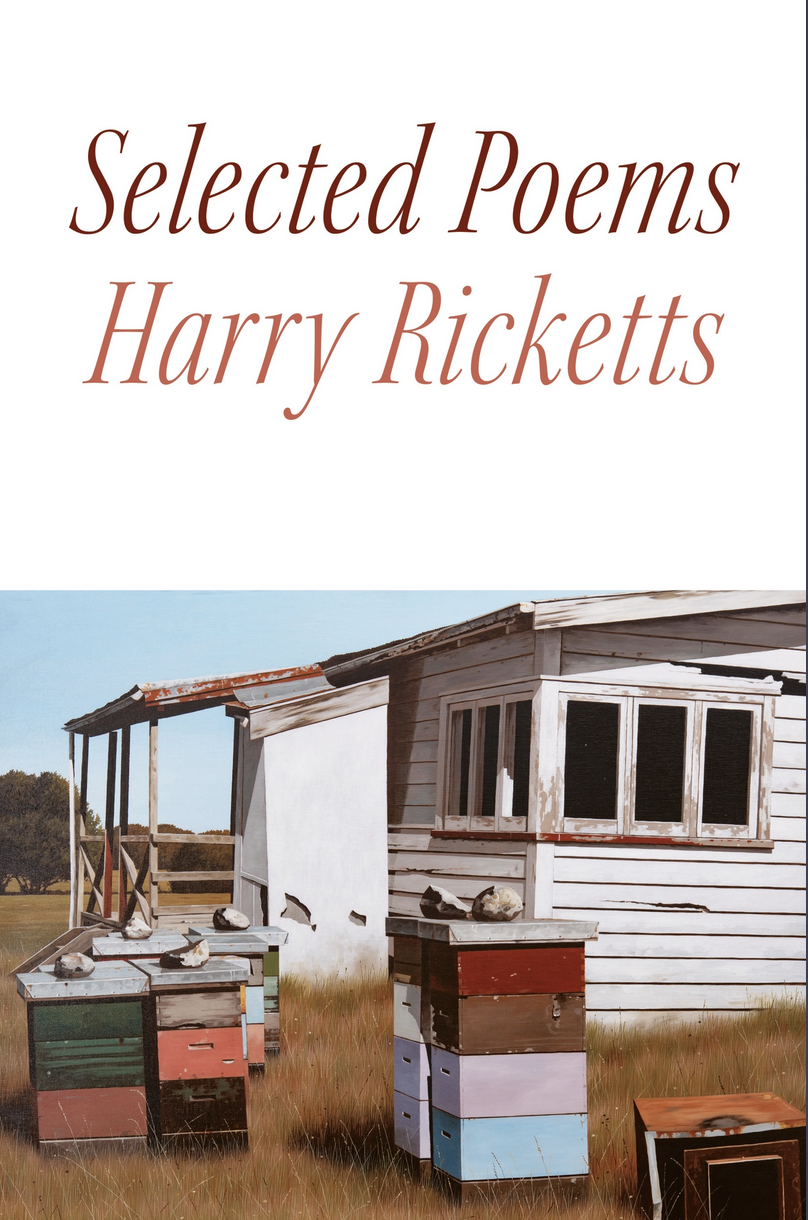
Harry Ricketts teaches English Literature and creative writing at Victoria University of Wellington Te Herenga Waka. His latest collection Selected Poems was published by Victoria University Press, 2021.
Jack Ross‘s most recent poetry collection, The Oceanic Feeling, was published by Salt & Greyboy Press in early 2021. He blogs on the imaginary museum, here[http://mairangibay.blogspot.com/].
Alison Wong is the coeditor of A Clear Dawn: New Asian Voices from Aotearoa New Zealand (AUP, 2021), the first anthology of creative writing by Asian New Zealanders. Alison’s novel, As the Earth Turns Silver (Penguin/Picador, 2009) won the NZ Post Book Award for fiction and her poetry collection Cup (Steele Roberts, 2006) was shortlisted for the Jessie Mackay Award for best first book of poetry. She was a poetry judge at the 2018 Ockham New Zealand Book Awards.
Vaughan Rapatahana offers a commentary on his old schoolmate David Eggleton, along with a close look at David’s recent poem, ‘Are Friends Electric’. Terrific piece which you can read in full at Jacket 2. Here is a taster:
‘I have known David ever since we both went to the same South Auckland, New Zealand, schools waaaaay back in the 1960s. Indeed, we were in the same classes at Aorere College, Mangere, where David had a definite proclivity for compiling vocabulary. I recall once presenting him with the triad “copious, abundant, plethora,” which he noted was good, nodding enthusiastically.
Eggleton loves words, most especially esoteric, arcane, and interesting lexis, which he crafts into his cadenced poetry with considerable care. His poems are vital verbal extravaganza and this — along with his indomitable delivery style, itself rhythmically syncopated — are hallmarks of his work as a poet, given that he is also a writer across several other genres such as art criticism, literary reviews, and editing, and holds other roles, such as a recording artist. His poems abound with layers of colourful imagery, often adumbated, so that their overall patina is distinctive: one can often recognise his distinctive work even if his name does not appear on the page.’
Harry Ricketts reads ‘Prep School Days’ and ‘The Writing Life’ from Selected Poems, Victoria University Press, 2021
Harry Ricketts teaches English literature and creative writing at Victoria University of Wellington. He is a literary scholar, biographer, essayist, reviewer, editor and poet. His publications include the internationally acclaimed The Unforgiving Minute: A Life of Rudyard Kipling (1999) and Strange Meetings: The Lives of the Poets of the Great War (2010). His previous collection of poetry is Winter Eyes (2018).
‘Selected Poems showcases the work of one of our beloved poets. His poetry embraces humour, the necessity of books and reading, the ability of poetry to dance from melancholy to exquisite sheen, from plain speech to elegant soundings, to the whip and caress of life. This is an anthology to treasure.’ Paula Green, Kete Books
What a delight to see Selected Poems from James Brown arrive in 2020 (Victoria University Press). Like a number of poetry books out in the first year of COVID, I am not sure it got the attention it deserved (see below for some reviews and poem links). James’s debut collection, the terrific Go Round Power Please (1995), won the Jessie Mackay Best First Book Award for Poetry, and like so many recipients of this award, he has published a number of further collections and has gathered a significant fan club. Me included. Pick up a James Brown collection and expect to laugh out loud and feel a heart twinge in the same glorious reading breath. He has edited Sport (1993 – 2000), an issue of Best New Zealand Poems (2008) and The Nature of things: Poems from the New Zealand Landscape (Craig Potton, 2005). He teaches creative writing at the International institute of Modern Letters.
The interview
Paula: Reading your Selected Poems has been like catching up with old friends. I have loved moving through samples from your terrific debut collection Go Round Power Please (1995) through Lemon (1999), Favourite Monsters (2002), The Year of theBicycle (2006), Warm Auditorium (2012) to the most recent Floods Another Chamber (2017). Plus the nonfiction booklet Instructions for Poetry Readings (2005). I kept wanting to tap someone on the shoulder and say, hey listen to this!
What were the delights and challenges in making the book?
James: It was mostly a challenge. I was hellish busy at the time and it was difficult to immerse myself in the process, which probably wouldn’t have made that much difference to the end result, but would’ve been more fun for me. Nothing like a good wallow in your own missteps. There were a few delights. ‘University Open Day’. And, much to my surprise, I was pleased with Warm Auditorium and Floods Another Chamber, which I’d kind of turned on. I was disappointed by ‘The Language of the Future’, which is a flagship poem in Lemon.
People kept saying Vet was the best.
It had the cow with the glass panel.
Actually, the panel wasn’t that interesting,
sort of dark and red. The cow
was eating hay in a small concrete room.
Mostly it just ate. but now and then
it would look sadly round at everyone,
and that’s when I got to thinking
about Philosophy.
The department wasn’t easy to find.
It turned out to be a single office
down a badly lit corridor.
A faded note on the door said
‘Back in 10’. And so
my education began.
from ‘University Open Day’
The process confirmed for me that what I enjoy most about poetry is writing it. And I’m happy for that process to take forever. I even updated a stanza about the Palmerston North Panthers stockcar team in ‘I Come from Palmerston North’. My past self would’ve written poems and sent them to literary outlets and they wouldn’t have become quite real until they were published. My present self is content with the writing.
Paula: I feel the same way. Patricia Grace said a similar thing at AWF this year. It is the writing that matters. In your first collection you were a whizz at similes. I liken them to picnic clearings. I just wanted to let them reverberate visually, semantically, surprisingly. And then they become less and less of a feature in your writing. Do you think your poetry has changed over the decades?
Now the light breaks
across his shoulders like
pieces of some great glass elevator
he may have been waiting for
for years.
from ‘Creation’
James: It surprises me to hear that because I’ve never thought of myself as a simile poet – in fact, quite the opposite. So much so that when I do drop one in I feel all pleased and writerly, like wow, a simile, I’m a proper writer. I’m sometimes a bit suspicious of similes because you can link almost anything to an abstraction. The poem ‘Their Feelings’ you published plays on that: feelings can be like anything. I once wrote a long poem called ‘Small Obligations’ (Sport 9) that was an endless list of similes which all joined to each other. It’s a catastrophic failure. Hera could probably make the idea work.
What was the question? Has my poetry changed? Some earlier poems were obsessed with notions of representation – postmodern stuff I’d studied at uni. Compiling the Selected, I was shocked to see how often self-referential moments appear in my poems. Power relations – how power doesn’t always flow in clichéd, expected directions – were another early interest. I’m still fascinated by power, but less so about representation.
I’ve always loved narrative and I think I’ve got better at it. A lot of my poems are little stories. Stuff happens.
Humour is also an important part of my poetry. There are so many things jokes can teach writers. I worry my poetry has become less funny. Maybe I’ve become sadder.
But my poems don’t always reflect my feelings or attitudes. People always assume poems are autobiographical, but mine are a mixture of my life, other people’s lives, and pure invention. My relationship poems often involve fictional characters, but try convincing people of that. More of my later poems are autobiographical – and I worry they’re the worse for it.
Paula: I find humour is a constant. So many times I laugh out loud. As Bill Manhire says, you are adept at being funny and serious in the one poem (take ‘Willie’s First English Book’ for instance). So many examples – loved ‘Loneliness’ in which the speaker spots Elvis walking across the quad; ‘Identifying New Zealand Birdsong’ with not a bird to be heard; or the wicked lesson with wine gums in ‘Capitalism Explained’. And I laughed out loud at the small poem ‘Flying Fuck’.
James: Thank you, it’s nice you see the humour as a constant. I worry it’s diminished. I’ve sometimes purposely structured poems as jokes (eg, ‘Maintenance’). ‘Willie’s First English Book’ is actually a found poem, and I’ve transcribed the 100 Mahi from two of William Colenso’s books, and think they’d make a great little book of found prose poems. ‘Flying Fuck’ struck a chord with people. One good thing about writing different styles of poems, which I do, is that some throwaway experiment or off-quilter gag might become someone’s favourite poem!
Paula: I love Emma Barnes’s recent debut I Am in Bed with You that is funny, serious and surreal in equal measures. And Erik Kennedy. Any New Zealand poets who make you laugh?
James: Ha – I took a simile of Erik Kennedy’s and built a poem called Liking Similes around it. At first, I found his simile ‘Here, the cicadas sing like Christian women’s choirs / in a disused cotton mill’ slightly ridiculous, so I decided to unpack it, to try to make it work, and by the time I got to the end of the poem, it did! Now I can’t hear cicadas without thinking of Christian women’s choirs in a disused cotton mill. Very annoying.
I can reel off some overseas poets who’ve make me laugh recently: Louis Jenkins (Where Your House is Now), Miles Burrows (Waiting for the Nightingale), Kimmy Walters (Killers), and Joe Dunthorne (O Positive).
Ashleigh Young’s poems are very funny! Bill Manhire’s latest book Wow. Hinemoana Baker’s funkhaus juggles humour and seriousness without dropping either. That’s a sign of a good, funny poem: if I read it and think it’s hilarious, then I read it again another time and think it’s actually really sad or serious. Nick Ascroft. Tayi Tibble. Sam Duckor-Jones. Am eagerly awaiting Rangikura and Party Legend (love the title poem!) to arrive in my letterbox.
The sun was clouded
—but it wasn’t gonna rain.
The sky was the colour of water
far off.
from ‘Statement After the Fact’
Paula: I like the continuing presence of rain and birdsong – little anchors no matter what else the poem is doing. Any motifs that persist?
James: Rain is probably ubiquitous in poetry. I like weather generally. As I am a carless person, I have to deal with it directly. Cars maybe – because I’m not a fan of them. Water is probably a big recurring element. Light, for sure. But these are hardly exceptional to me. I’m not that conscious of my motifs. Each poem has its own world that requires its own details. As I become an older poet, ahem, I’ve become aware of maybe writing a poem similar to one I’ve already written, which is maybe why I like to take on different characters and forms.
The day I stopped writing poetry
I felt strangely serene.
Back when I started, I had no idea
what I was trying to do: get something out, perhaps,
and I suppose ‘art’ had something
to do with it. There’s a tempting simplicity
about poetry; you don’t necessarily need
the room, the desk, the glowing typewriter
—a scrap of paper and pencil will suffice.
Some of my tidier lines often came to me
on the bus or while I was just lumping along;
they’d be dancing or singing away in my head
while I grinned helplessly at the passing world
until I could arrange to meet them somewhere.
from ‘The Day I Stopped Writing Poetry’
Paula: I also like the way the making of poetry is not kept hidden. I just love ‘The Day I stopped Writing Poetry’. I got curious. What do poems need? Any rules? Anything?
James: Hmmm. Poems have no rules, and yet they set up their own rules, usually really quickly – as in the first few lines. Things like tone, layout, punctuation. It’s quite hard for a poem to deviate too far from its initial ‘rules’, and if it does, it either feels wrong or abrupt shifts in register become one of its rules.
What do poems need? Can I take that back to the source and answer what do poets need? An ear for the intricate registers of language. The ability to read and be moved by poetry. If you don’t like reading poetry, how can you write it? So writing poetry is as much about being able to hear as it is about making yourself heard. Some poets perhaps focus too much on the latter …
Paula: Sometimes you question whether a particular poem is actually a poem. I so know that feeling even though I am trying not to follow in a long line of self-doubting women. Is it a playful choice suggesting poetry can be anything or perhaps a signpost to doubt?
James: The Guardian once posed this question to readers:
Can anyone
tell me if this
is a poem
or not?
My answer is, yes (it has line-breaks), but it’s not a particularly good one. The line between poetry and prose is blurred, and some of my efforts certainly lean more toward prose. It’s not possible to say whether something is or isn’t a poem. Sometimes I read prose poems and think they’re actually prose, whereas sometimes I read prose (eg, Willie’s First English Book) and hear poetry. Lots of odd books get called poetry simply because publishers are unsure how to categorise them. Kenneth Goldsmith’s, for example. Finally, there’s just good writing and bad writing, by which I mean writing you like and writing you don’t like and the vast continuum between those poles.
‘Son,’ he kept saying, ‘son’. Then he turned to me to see
how I was doing. I was concentrating on the fogged up world
out the fogged up window, but his wet, hopeless face
somehow found a way through and got deep inside me, and,
try as I might, I have never been able to shake it out
my whole life long.
from ‘The End of the Runway’
Paula: I was really affected by the poems that get personal but are all quite different. Take ‘The Bicycle’ for example, a poem that highlights a beloved childhood gift. Am I imagining this but did you once compare writing a poem to riding a bicycle? I love the poignant scene of parents tending to a wet toddler in ‘Feeding the Ducks’. Oh and the glorious comic / raw-edged thread in ‘Family Planning’. And more than anything, the heart ripping ‘The End of the Runway’. OMG this poem tore. I have no idea what the personal – fiction mix is but it is a little beauty.
Do you have no-go zones when it comes to personal subject matter? Confession?
James: I have compared riding up a hill to writing poetry – the link being suffering. There are lots of things I wouldn’t write about. I feel it’s unfair to write about friends and family in ways that might hurt them. Well, I might write a poem, but I wouldn’t publish it. I’ve certainly got poems I think are good that I’ll never publish.
As said, my poetry is less autobiographical than people think. ‘The Bicycle’, for example, is based on experience, but isn’t entirely true. I did not love my bicycle as a kid, but I had one I really liked as an adult. The feelings in ‘The End of the Runway’ are genuine, but many of the details I use to generate them are imagined.
My new book that VUP are publishing next year is anchored around three long, confessional poems. They were hard for me to write. I’d tried to write about one incident on and off for years. I’m very reliant on VUP as to whether they’re successful as poems because for me writing them was really a kind of therapy.
Paula: Anne French likens you to a bricoleur and I can see why. Under your guidance a poem can hold many things. I wonder how it could possibly work and then the poem becomes an effervescent tablet on the tongue. Are you still drawn to this?
James: Do you mean am I still drawn to bricolage? Well, I think the English language is a bricolage. Sometimes I set out to hijack certain registers – like the official names of Barbie dolls in ‘Ken, Barbie, and Me’. ‘Alt. Country’ mimics the ‘straight talkin’ voice of Americana music. Perhaps my poems are bricolages because my own voice is an assemblage of different language registers – song lyrics, advertising speak, clichés, and very occasionally an original turn of phrase.
Paula: Perhaps the funniest piece was the booklet, Instructions for Poetry Readings. I kept thinking of excruciating occasions where a poet hogs everyone else’s time, or has no idea what they are going to read so have to shuffle through pages and books, or spends twenty times longer on an intro than the poem itself. What prompted you to write this booklet?
James: I wrote it at a time when I was going to a lot of poetry readings. They are, as I’m sure you know, strangely ritualistic events. No matter where you are in the country, they follow similar formats, and the characters you meet are strangely familiar. The haiku writer, the political poet, the lustful poet, the poems about cats. You encounter the same highs and lows, so I thought it was about time someone wrote a booklet outlining how everyone ought to behave. So I created a pseudonym, Dr Ernest M. Bluespire (after the James Tate poem ‘Teaching the Ape to Write Poems’), and Fergus published it as a chapbook. Some people thought the author was Steve Braunias because the publisher we concocted was Braunias University Press. I somehow forgot to put any of this in the Notes in the Selected Poems.
I’m actually a big fan of poetry readings and those who organise them.
Paula: Have you been to memorable poetry readings (in a good way)? I am thinking of Bill Manhire at Going West (sublime!). Tusiata Avia (I just get split into heart atoms). Listening to Emma Neale (the music mesmerising).
James: They start to blur now. Bill Manhire is always worth crossing the road for. I was transfixed by Mary Ruefle’s reading; it was like an incantation. James Fenton was great. Robert Hass. Dinah Hawken brings a quiet power to her readings. Tusiata Avia is a great performer of her poems. I’m not usually a fan of performance poetry. The poetry needs to stand on its own.
Paula: Oh envious of hearing Mary. This feels like an impossible question but any poems in the selection that have really hit the mark for you over the decades?
Paula: Are you a voracious reader? Any poetry books that have affected you in the last few years?
James: I dunno about voracious. Actual Air by David Berman really affected me. It took me a month to read it. Pins by Natalie Morrison. There’s a new poetry book by Tim Grgec called All Tito’s Children that has the most beautiful, effortless writing.
Paula: Ah Pins is sublime. When you first started writing?
James: Do you mean influences when I first started writing? Bill Manhire and Jenny Bornholdt. Charles Simic. Lots of people.
Paula: Any books in other genres you have loved in the past year?
James: A couple of novels I’ve liked: Elif Batuman (The Idiot) and, less so, Jenny Offill (Weather). I reread John Steinbeck’s novella ‘The Pearl’ over the weekend, and thought it a masterful piece of storytelling. The tension! Also The Things They Carried by Tim O’Brien. And I’m a secret member of the South Wellington Branch of the Magnus Mill’s Fan Club.
Paula: If you were able to curate a poetry reading inviting poets from any time or place who would you line up?
James: Joe Dunthorne, Emily Dickinson, Philip Larkin, Jorie Graham, Alice Oswald, Gertrude Stein. Which is why I’d never be allowed to curate a poetry reading.
Paula: Oh i would go to that one in a flash! There is more to life than poetry. What else gives you comfort, stimulation, mind and heart boosts?
James: I still get out for a mountain-bike ride once a week, though in the last few years I’ve exchanged mountain-biking at weekends for walking with friends. I listen to a lot of music and odd audio. I read, but not enough. I find reading hard to do around other things because for me it’s immersive. I work from home so spend my days by myself, which I don’t mind, but it does mean I get out of practice speaking.
Paula: Of all writing forms poetry is least likely to put food in the cupboards, pay a mortgage (as you muse on in poems). It is scantly reviewed, is side-staged at festivals, sells less. Yet on the other hand I find our poetry communities are thriving. Exciting. Any thoughts on life as a poet in 2021?
James: The Wellington poetry communities (and I love that there are a number of them) are abuzz with activity. Anyone who writes poetry for fame and/or fortune has taken a wrong turn. So poets need jobs. But poetry is easier to fit around a job than longer forms of writing. Yes, you might work on a poem for years, but they sometimes arrive in your head almost fully formed. Mostly though, poetry is hard work. I suspect life as a poet in 2021 isn’t that different from life as a poet in 1991 (when I was finding my feet), except for rent. New Zealand’s investor-encouraging property market and extortionist rents are probably impacting on reading and writing by forcing people to work longer hours. A lot of New Zealand’s problems go back to land in the end.
Their feelings are like a mosquito sliding its proboscis into a freckle. Their feelings are like light through blinds in an 80s music video. Their feelings are like techno under aurora in Norway. Their feelings are like swimming in sunlit sea and seeing a shadow. Their feelings are like when they’ve taken bath salts that turn out to be bath salts, and they end up in A&E and their mothers have flown in from Hamilton and are holding their hands and crying, but all they can think about is how their lives have become a TV hospital soap which they could have been written out of or out of which they could have been written. Their feelings are like a Mindful Self Compassion course when someone asks where the hyphen goes in the title and the convenor says ‘Anywhere’ and the person says ‘I don’t think this is what I am looking for.’
James Brown
James Brown’sSelected Poems was published by VUP in 2020. He is working on a new book.
Min-a-rets 10, Compound Press, editor Sarah Jane Barnett
Poetry Shelf has put me in the sublime position of receiving pretty much every poetry book and journal published in Aotearoa NZ – but I never have enough time or energy to review everything. Yes I only review books I love, but I don’t get a chance to feature all of them. There is always a hopeful pile of books and journals that have enchanted me but that I have not yet shared. I guess it is even worse this year as I have cleared space for my own writing in the mornings and I don’t want to encroach upon that. I am really grateful that most poets don’t badger me and expect superhuman efforts on a blog that runs on the currency of love and my fluctuating energy levels. I have decided to make little returns to that hopeful stack and, every now and then, share something that you might want track it down.
I sometimes pick a poetry book hoping it will offer the right dose of rescue remedy – a mix of poetic inspiration along with heart and mind sustenance. My return to Min-a-rets10 did exactly that. Poet Sarah Jane Barnett has edited an issue that is supremely satisfying. In her introduction she expresses anxiety at not being ‘cool’ or young enough to edit a journal that is to date cutting edge, experimental, younger rather older. But once she had read the 100 or so submissions, her fears were allayed. I totally agree with her summation of the Min-a-ret gathering:
In the end I had nothing to worry about. The poems I’ve selected are beautiful, painful, challenging, thought-provoking, heartbreaking and funny. They reminded me that good poems shine no matter their genre or when they were written. They make life feel intense and bright. While this issue includes mid-career poets, there’s definitely a new generation stepping forward, and I have admiration for their commitment to craft, and to sharing an authentic experience—to not conforming. That’s cool.
10 poets with art by Toyah Webb. A slender hand-bound object published by Compound Press. Within a handful of pages, the poetry prompts such diverse reactions, it is like the very best reading vacation. I laughed out loud, I stalled and mused, I felt my heart crack. Above all I felt inspired to write. That exquisite moment when you read the poetry of others that is so good you feel compelled to write a poem.
essa may ranapiri has written a counting poem from tahi to iwa, with deep-rooted personal threads that underline there are myriad ways to count self and the world and experience. Memory. Then the honeyed currents of Elizabeth Welsh’s mother poem that free floats because motherhood cannot be limited. And yes Erik Kennedy made me laugh inside and then laugh out loud as the ending took me by surprise. Aimee-Jane Anderson-O’Connor transports me from the optician leaning in to staring at strangers to probability to ‘wow’. I am so loving the little leaps that intensify the scene.
Oh the aural genius of a Louise Wallace poem, especially when she pivots upon the word ‘trying’.
Or Joan Fleming’s line ‘Some confessions stick like stove filth’. Or Travis Tate: ‘Love is the sky, pitched black, radiant dot / of white to guide young hearts to this spot’. Or Eliana Gray’s: ‘We can’t save the people we love from drowning when it / happens on sand’.
Two list poems from Jackson Nieuwland, a witty serious funny precursor to their sublime award-winning collection I am a human being (Compound Press). And finally the laugh-out loud glorious prose poem by Rachel O’Neill where reason becomes raisin: ‘If only there was one good raisin left in the world, you think.’
Read this body-jolting issue and you will surely be inspired to get a subscription.
Jordan Hamel is a Pōneke-based writer, poet and performer. He was the 2018 New Zealand Poetry Slam champion and represented NZ at the World Poetry Slam Champs in the US in 2019. He is the co-editor of Stasis Journal and co-editor of a forthcoming NZ Climate Change Poetry Anthology from Auckland University Press. He is a 2021 Michael King Writer-in-Residence and has words published in The Spinoff, Newsroom, Poetry New Zealand, Sport, Turbine, Landfall, and elsewhere.
Poetry is a way of bridging the faraway and the close at hand. A poem can make the achingly distant comfortingly close. Poetry can be a satisfying form of travel, whether to the other side of the world, to the past or to imagined realms. Reading poems that offer the faraway as some kind of presence, I feel such a range of emotions. Moved, yes. Goose bumps on the skin, yes. Boosted, yes. This is such a fertile theme, I keep picturing a whole book moving in marvellous directions.
I am grateful to all the poets and publishers who continue to support my season of themes.
The Poems
Remembering
if you can you can try to recall
the sun across the roof and you
knee-deep in childhood playing
near the fence with the storm
of daisies still impressionable
in the way of dreams still
believing leaves had voices
and you might then remember
curtains drowned in burnished light
how at night the sky emptied
into a field of stars leaching out
the guilt you’d soon forget unlike
the woman you called Nana who kept
knitting you hats while you kept not
writing back and maybe then you’d know
the injustices you had no part in
the lady who bought your house how
she ravaged your kingdom while
you were away oh these memories
spiralling into memories into
nothing this helter skelter art of
remembering this bending
over backwards running out of light
Anuja Mitra
from Mayhem Literary Journal, Issue 6 (2018)
Drifting North
Acknowledgement to David Eggleton
She said we discussed post
structuralism in a post modern
context. She said in order
to remember such crucial
poetic phrases she had bought
a small exercise book in which
to record them.
It was, she said, a book
of semantic importance.
She said we considered
the deception of disjointed
parody and the fragmentation
of shallow consumer culture.
I can only remember
a girl
in her pale blue cardigan
drifting north
in a zither of light.
Jenny Powell
from Four French Horns, HeadworX, 2004
apricot nails
I want to paint my nails apricot as an homage to call me by your name and the fake italian summer I had last year —
fake because I didn’t cycle beside slow streams or in slow towns
Instead I lay on a 70 euro pinstripe lounger and couldn’t see the water only other tourists
And the apricots I ate came from peach spritzes at sea salt restaurants and clouded supermarket jars
But all the shops are shut and the closest nail colour I have is dark red
I want to be somewhere in northern italy with light green water and deep green conversations
I want to pick fresh apricots from drooping branches and kiss a boy I shouldn’t on cobblestone paths against cobblestone walls
I want to lick a love heart on to his shoulder so that when he gets on a train my hands shake like a thunderstorm
and I can’t cycle home past the fields we held each other in and mum has to pick me up from the station
I want to walk down a staircase with winter at the bottom waiting to sweep me into snow
I want the phone to ring when the sky is white and hear an apricot voice ripe and ready to be plucked from the tree
he’ll say how are you and I’ll slowly leak
Rhegan Tu’akoi
from Stasis 5 May 2020, picked by Aimee-Jane Anderson-O’Connor
Wearing Katherine Mansfield’s Shawl
Seventy years on, shut
in a cardboard box in the basement
of City Hall, you might think
the shawl would have lost
its force to charm, the airy fragrance
of its wearer departed, threads
stripped bare as bones,
yet here it is, another short story:
it felt like love at the Hôtel
d’Adhémar the moment you placed
the silk skein around my shoulders,
the dim red and rusty green fabric
and a fringe gliding like fingertips
over my arm, a draught of bitter
scent – Katherine’s illness,
Virginia’s sarcasm – and
yes, a trace of wild gorse
flowers and New Zealand, not
to mention the drift of her skin
and yours during the photograph,
the stately walk through the town.
Fiona Kidman
from Where Your Left Hand Rests, Godwit, Random House, 2010
Sparks
On the occasion of the Sew Hoy 150th Year Family Reunion, September 2019
Here in this earth you once made a start
home treasure watered with sweat, new seeds
a fire you can light and which gives off sparks
the gleam of gold glowing in darkness
an open door, warm tea, friendships in need
here on this earth you once made a start
sometimes you imagined you left your heart
elsewhere, a woman’s voice and paddies of green
a fire which was lit, remembering its sparks
but even halfway round the world, shoots start
old songs grow distant, sink into bones unseen
here in this earth you can make a new start
with stone and wood you made your mark
built houses of diplomacy and meaning
a new fire was lit, with many sparks
flame to flame, hand to hand, heart to heart
150 years, sixteen harvests of seed
here, in this earth, you once made a start
A fire was once lit. We all are its sparks.
Renee Liang
Heavy Lifting
Once, I climbed a tree
too tall for climbing
and threw my voice out
into the world. I screamed.
I hollered. I snapped
innocent branches. i took the view
as a vivid but painful truth gifted
to me, but did not think to lay down
my own sight in recompense.
All I wanted was someone to say
they could hear me, but the tree said
that in order to be heard I must
first let silence do the heavy lifting
and clear my mind of any
questions and anxieties
such as contemplating whether
I am the favourite son. If I am not,
I am open to being a favourite uncle
or an ex-lover whose hands still cover
the former half’s eyes. I’ll probably never
have children of my own to disappoint
so I’ll settle for being famous instead
with my mouth forced open on TV like
a Venus fly-trap lip-synching for its life.
The first and last of everything
are always connected by
the dotted line of choice.
If there is an order to such things,
then surely I should resist it.
Chris Tse
from he’s so MASC, Auckland University Press, 2018
My city
drawing blank amber cartridges in windows
from which we see children hanging, high fires
of warehouse colours, a reimagining, my city fluttering
far and further away with flags netted
and ziplining west to east, knotted
and raining sunshine,
paving cinder-block-lit-tinder music in alleys
where we visit for the first time, signal murals
to leapfrog smoke, a wandering, my city gathering
close and closer together a wilderness
of voices shifting over each other
and the orchestra,
constructing silver half-heresies in storefronts
to catch seconds of ourselves, herald nighttimes
from singing corners, a remembering, my city resounding
in and out the shout of light on water
and people on water, the work of day
and each other,
my city in the near distance fooling me
into letting my words down, my city visible
a hundred years from tomorrow,
coming out of my ears and
forgiving me,
until i am disappeared someways and no longer
finding me to you
Pippi Jean
Looming
I call it my looming
dread, like the mornings I wake
crying quietly at the grey
in my room, like whispering to my sleeping
mother – do I have to
like the short cuts I can’t take
like the standing outside not breathing
like my hand on the doorknob
counting to twenty and twenty
and twenty.
Tusiata Avia
from Wild Dogs Under My Skirt, Victoria University Press, 2004
mothering daughter
I am coming home to myself
while watching
my mother going away from herself.
Every move you make
an effort
so much slower now, mother
like your body is trying to keep pace
with your mind
everything about you reads as
tired
but sometimes I read as
giving up
FUCK THIS! silently salts my tongue
a tight fist slamming the steering wheel
gas under my foot
tears choking my ears
smoke swallowing my chest.
I am a mother:
Mothering her son,
a motherless daughter mothering her mother.
It’s hard somedays not to be swallowed.
Grace Iwshita-Taylor
from full broken bloom, ala press, 2017
Memoir II
Preparing for death is a wicker basket.
Elderly women know the road.
One grandmother worked in munitions, brown
bonnet, red stripe rampant. the other, a washerwoman:
letters from the Front would surface, tattered.
You must take the journey, ready or not.
The old, old stream of refugees: prams
of books and carts with parrots.
Meanwhile the speeches, speeches: interminable.
When the blood in your ears has time to dry: silence.
The angel will tie a golden ribbon to the basket’s rim.
You will disappear, then reappear, quite weightless.
Jeffrey Paparoa Holman
from Blood Ties: New and Selected Poems 1963- 2016, Canterbury University Press, 2017
fever
moving away from the orchard plots,
laundry lines that sag under the macrocarpa.
moving away from the crystalline skies,
the salt-struck grasses, the train carts
and the underpasses. i astral travel
with a flannel on my head, drink litres
of holy water, chicken broth. i vomit
words into the plastic bucket, brush
the acid from my teeth. i move away,
over tussock country, along the desert
road. i chew the pillowcase. i cling
my body to the bunk. the streets
unfurl. slick with gum and cigarettes.
somebody is yelling my name. i quiver
like a sparrow. hello hello, says the
paramedic. but i am moving away from
the city lights, the steel towers.
and i shed my skin on a motorway
and i float up into the sky.
Elizabeth Morton
from This Is Your Real Name, Otago University Press, 2019
Black Stump Story
After a number of numberless days
we took the wrong turning
and so began a slow descent
past churches and farmhouses
past mortgages and maraes
only our dust followed us
the thin cabbage trees were standing
in the swamp like illustrations
brown cows and black and white and red
the concrete pub the carved virgin
road like a beach and beach like a road
two toothless tokers in a windowless Toyota
nice of you to come no one comes
down here bro – so near and
yet so far – it takes hours
not worth your while –
turned the car and headed back
shaggy dogs with shaggy tales
Murray Edmond
from Fool Moon, Auckland University Press, 2004
The Poets
Tusiata Avia is an internationally acclaimed poet, performer and children’s author. She has published 4 collections of poetry, 3 children’s books and her play ‘Wild Dogs Under My Skirt’ had its off-Broadway debut in NYC, where it took out The Fringe Encore Series 2019 Outstanding Production of the Year. Most recently Tusiata was awarded a 2020 Arts Foundation Laureate and a Member of the New Zealand Order of Merit for services to poetry and the arts. Tusiata’s most recent collection The Savage ColoniserBook won The Ockham NZ Book Award for Best Poetry Book 2021.
Murray Edmond, b. Kirikiriroa 1949, lives in Glen Eden. 14 books of poetry (Shaggy Magpie Songs, 2015, and Back Before You Know, 2019 most recent); book of novellas (Strait Men and Other Tales, 2015); Then It Was Now Again: Selected Critical Writing (2014); editor, Ka Mate Ka Ora; dramaturge for Indian Ink Theatre. Forthcoming: Time to Make a Song and Dance: Cultural Revolt in Auckland in the 1960s, from Atuanui Press in May, 2021.
Jeffrey Paparoa Holman is a Christchurch poet and non-fiction writer. A poetry collection, Blood Ties: selected poems, 1963-2016 was published by Canterbury University Press in 2017. A memoir, Now When It Rains came out from Steele Roberts in 2018. He makes his living as a stay-at-home puppy wrangler for Hari, a Jack Russell-Fox Terrier cross. Hari ensures that little writing takes place, while psychogeography and excavating parks happen daily. Recent work has appeared in Poetry New Zealand Yearbook 2021, an essay on prison reform, and poetry; also, an inclusion in The Cuba Press anthology, More Favourable Waters – Aotearoa Poets respond to Dante’s Purgatory.
Grace Iwashita-Taylor, breathing bloodlines of Samoa, England and Japan. An artist of upu/words led her to the world of performing arts. Dedicated to carving, elevating and holding spaces for storytellers of Te Moana nui a Kiwa. Recipient of the CNZ Emerging Pacific Artist 2014 and the Auckland Mayoral Writers Grant 2016. Highlights include holding the visiting international writer in residence at the University of Hawaii 2018, Co-Founder of the first youth poetry slam in Aoteroa, Rising Voices (2011 – 2016) and the South Auckland Poets Collective and published collections Afakasi Speaks (2013) & Full Broken Bloom (2017) with ala press. Writer of MY OWN DARLING commissioned by Auckland Theatre Company (2015, 2017, 2019) and Curator of UPU (Auckland Arts Festival 2020).
Pippi Jean is eighteen and just moved to Wellington for her first year at Victoria University. Her most recent works can be found in Landfall, Starling, Takahe, Mayhem, and Poetry New Zealand Yearbook among others.
Fiona Kidman has written more than 30 books and won a number of prizes, including the Jann Medlicott Acorn Fiction Prize for This Mortal Boy. Her most recent book is All the way to summer:stories of love and longing. She has published six books of poems.In 2006, she was the Katherine Mansfield Fellow in Menton. The poem ‘Wearing Katherine Mansfield’s shawl ‘is based on an event during that time. Her home is in Wellington, overlooking Cook Strait.
Renee Liang is a second-generation Chinese New Zealander whose parents immigrated in the 1970s from Hong Kong. Renee explores the migrant experience; she wrote, produced and nationally toured eight plays; made operas, musicals and community arts programmes; her poems, essays and short stories are studied from primary to tertiary level. In recent years she has been reclaiming her proud Cantonese heritage in her work. Renee was made MNZM in 2018 for Services to the Arts.
Anuja Mitra lives in Auckland. Her writing has appeared in Takahe, Mayhem, Cordite Poetry Review, Starling, Sweet Mammalian, Poetry Shelf and The Three Lamps, and will appear in the AUP anthology A Clear Dawn: New Asian Voices from Aotearoa New Zealand. She has also written theatre and poetry reviews for Tearaway, Theatre Scenes, Minarets and the New Zealand Poetry Society. She is co-founder of the online arts magazine Oscen.
Elizabeth Morton is a teller of poems and tall tales. She has two collections of poetry – Wolf (Mākaro Press, 2017) and This is your real name (Otago University Press, 2020). She has an MLitt in creative writing from the University of Glasgow, and is completing an MSc in applied neuroscience at King’s College London. She likes to write about broken things, and things with teeth.
Jenny Powell is a Dunedin poet and performer. Her work has been part of various journals and collaborations. She has a deep interest in music and used to be a french horn player.
Chris Tse is the author of two poetry collections published by Auckland University Press – How to be Dead in a Year of Snakes (winner of Best First Book of Poetry at the 2016 Ockham New Zealand Book Awards) and HE’S SO MASC – and is co-editor of the forthcoming Out Here: An Anthology of Takatāpui and LGBTQIA+ Writers From Aotearoa.
Rhegan Tu‘akoi is a Tongan/Pākehā living in Pōneke. She is a Master’s student at Victoria and her words have appeared in Turbine | Kapohau, Mayhem and Sweet Mammalian. She has also been published in the first issue of Tupuranga Journal
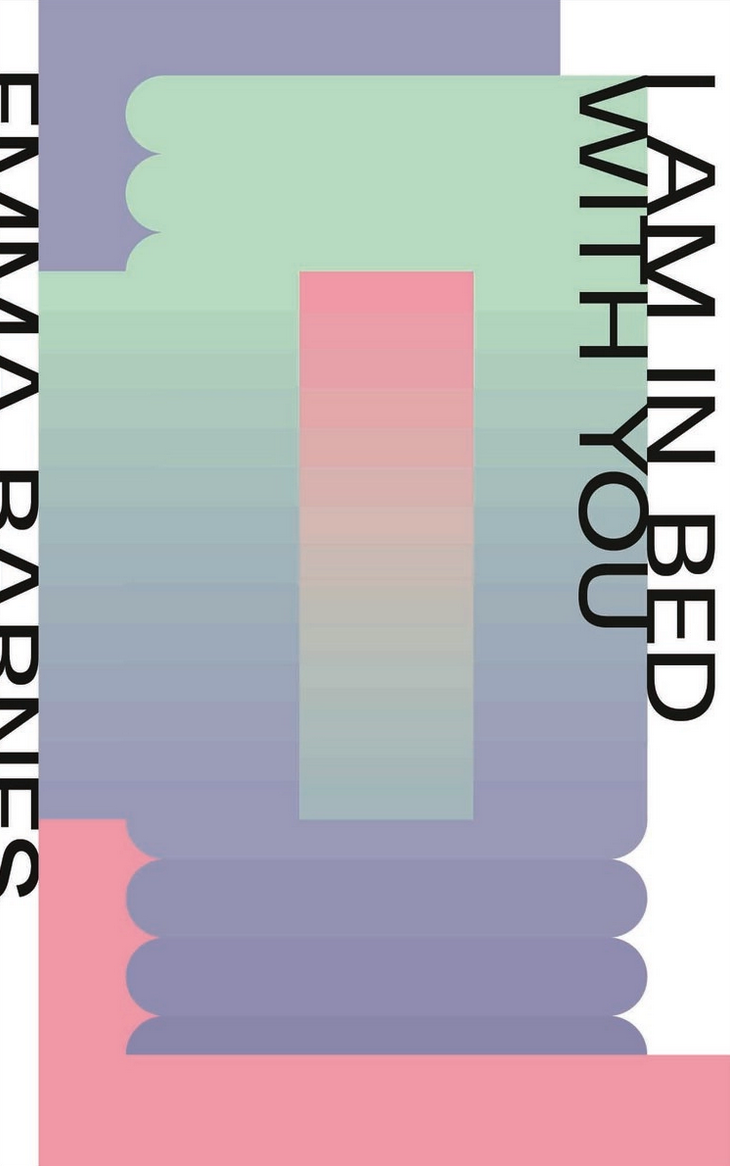
I Am in Bed with You, Emma Barnes, Auckland University Press, 2021
I am in bed with you. The room varies. But I’m always on the
left. I am pulling the pieces of myself into myself. In the winter
I left myself behind in the 90s. I’m coming back now. You
can see the light touching me. I can see layers of tissue finally
making a body. And once I have a body I have a head. And in
my head are these thoughts. I can’t tell you what it is like with
words. You can hold my hand and feel my pulse, but I was in
1994. I didn’t like
it there. When I am getting through days I don’t even know I
am making it. I am the legume in that story about royalty. And
then on the other side I open up like a lake into a river. I can
survey the lean fields of my insides as if I am owner of all
those glistening blades. In 1994 I was fourteen. I buried some-
thing back there. I buried it alive in a biscuit tin. This winter
makes choices I’d have made differently. Your mother cooked
a roast chicken every
Saturday unless a larger animal had died. (…)
from ‘I am in bed with you’
Emma Barnes’s debut collection I Am in Bed with You is a sublime read. Their poems hit such pitch-perfect notes any attempt to share my reading engagements will fall short. It’s like when someone asks why you like this painting or this song or this poem and all you can say I love it. Get the book. Find your own engagements.
And yet.
And yet this book haunts me to the degree I want to talk about it with you. There are three sections: ‘This is a creation myth’, ‘Sigourney Weaver in your dreams’ and ‘The Run-Around’.
There is a moving acknowledgements page. I love this page. In fact I am loving this choice in a number of recent publications – tributes paid to the communities and individuals that a book is in debt to. Emma begins by saying: ‘The most important thank you for any Pākehā writer is to mihi the mana whenua of Aotearoa for their generosity in the face of continued acts non-consent and disrespect by us, their Treaty partners. I am truly privileged to be a treaty partner, to have this place to stand and to receive repeated gifts and offerings of manaakitanga.’
Emma thanks a high-school teacher and her publisher Sam Elworthy (Auckland University Press) who prompted her ‘to transform reluctance into curiosity’. I love this too. A publisher who is nurturing all manner of vital poetry collections and connections into the world (think A Clear Dawn, AUP New Poets 8). And of course friends and family. Taking time to offer such a heartfelt mihi matters.
Emma’s collection refreshes a joy in sentences. This is a book where sentences are the exquisite building blocks of poetry. Crafted with an ear attuned to sound, rhythm and chords, and an eye for movement that may startle, dazzle, draw you in closer.
The opening poem in the opening section is akin to a creation myth; an original origin story: inventive funny fabulous. The poems that follow resemble creation episodes; the speaker is vulnerable and bold in their self exposures, in the creating and making of self, dismissed body, gendered self, self expectation. The mother is missing, longed for or discounted. Being woman being man being another is faced. The sentences are off-real surreal cloaked hyper-real skating and free-sliding from feeling to nothing to question to admission to nothing to strange detail to wounding edge to invisibility to laugh out loud. To being unbearably moved.
Sigourney Weaver tells me that desire has a hard edge. The end. The
limit it enforces by virtue of its own inevitability. She’s been reading
the internet again. Sigourney Weaver says that our bodies are wishes
made from DNA and that time and time again we defeat ourselves with
our limited thinking. Always imagining edges. The edge of desire
is only there because we out it there. And we put it there because we
can’t make sense of a world where we could desire and act in equal
measure. Trust Sigourney Weaver to get me tied up in knots without any
rope. Not even the tiniest string around my finger. I like a boundary,
Sigourney Weaver. I like clear statements. I like small words. (…)
from ‘Sigourney Weaver confronts the limits of desire’
The middle section of poems stars Sigourney Weaver. If you want to hang out with a famous film star you can do it in a sequence of poems and then you get to choose how things will pan out. The speaker is hanging out with Sigourney in Aro Valley. They rent movies, kiss, take ecstasy, kiss, have an android baby. It is wickedly funny, so so funny, with a twist of weird and strange and creepy. Sigourney buys a place, a van, becomes a citizen, and in all the curious surreal twists – exhilarating, hilarious, uplifting – your heart is consistently tugged. Look to the weird and you find the ordinary: house-moving cartons, dresses and pigtails, ballgowns, mint-flavoured life savers. This sweetly crafted sequence also finds sustenance in the joy of the sentence.
The final section’s refrain is love. Love poems that are like prismatic love songs with shifting chords and rhythms, the ‘you’ elusive and on the move. In the other sections poems are given breathing-space as they break apart into stanzas. Here the poems appear as dense paragraphs – framed by the white space of breath yes – but catching love’s intensity, love as unfathomable, physical, intimate, complicated, hard to say. Again there is a glorious sway between the weird and the surreal and a familiar heart-grasp of relationships, aloneness, closeness. You can’t breathe as you read, as you feel.
Emma has produced a collection unlike any other I know with its unifying addiction to the sentence, and motifs that go deeper than surface beacons: think age, body expectations, gender, the making of self, the lasting effects of childhood, experiences that bite, disappearing acts, love, desire, more love, more desire. You will meet dreams and demons and epiphanies. Writing is musing, reflecting back, side-drifting, inventing, confessing. You will revel in the joy (and pain) of writing, and yes writing becomes, and yes writing is a form of becoming. Extraordinary.
Emma Barnes studied at the University of Canterbury and lives in Aro Valley, Wellington. Their poetry has been widely published for more than a decade in journals including Landfall, Turbine | Kapohau, Cordite and Best New Zealand Poems. They are currently co-editing with Chris Tse an anthology of LGBTQIA+ and takatāpui writing from Aotearoa New Zealand for Auckland University Press.



 NZ Poetry Shelf