
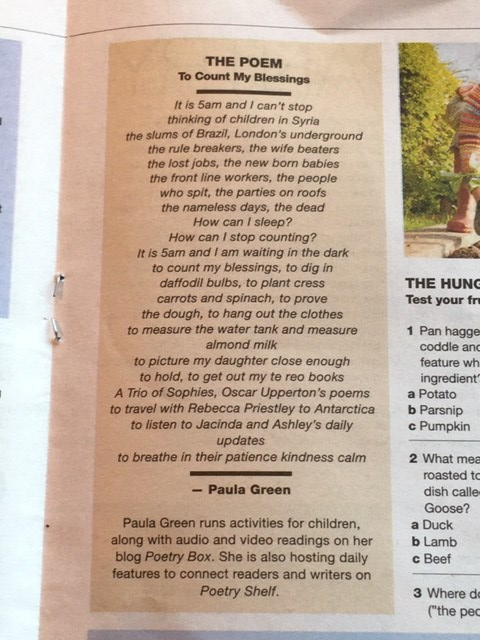
Very happy the Herald will be posting a poem of mine for awhile. I am not sure if they are poems. They need a new word. Lockdown writings. Maybe it is a nocturnal diary. They arrive in the middle of the night and spin in my head during the day and then hit paper. Karyn Hay talked about writing in her contribution to the comfort reading list I posted on Friday 17th April. I so identified with it. There is no model at work here. There are different urgencies and stasis, multiple ways of connecting. But I do feel an urgent need to write before the sun comes up. Some of us are writing and some of us aren’t, some of us are reading and some of us aren’t, some of us are baking bread and some of us aren’t, and I think the last thing we need is pressure to do anything that does not aid our well being.
My poem has lost all the spacing between sections and I don’t care. I do care that after almost giving up hope the cress and the spinach have poked through the earth. And peas. And something else, the rain washed my writing away. Now I wait for other little miracles as I do what I can.
Thanks Herald !
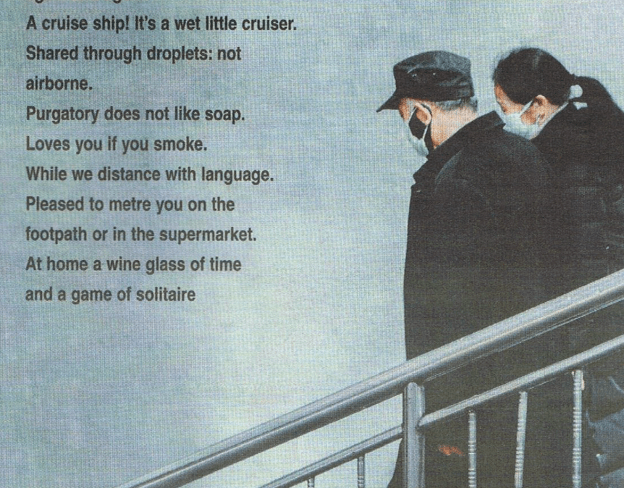
an extract from
Purgatory Doesn’t Say Do I Stop OR DO I Go
(after ‘The Entrance to Purgatory’
by Ian Lonie)
Purgatory begins slowly, slowly.
We watch and wait for information
There is Purgatory One:
Then Purgatory Two.
And Spain was Purgatory Three.
Oh Purgatory, Purgatory we
cannot believe this.
Now here from behind a
desk as far as we thought
we could be (but there is
no escape).
Like a wartime announcement
Purgatory within the borders of our
own hills and valleys and cities;
streets and parks, the beaches,
the theatres, the meeting places.
Benita H. Kape
You can read the whole poem at The Gisborne Herald
Benita H. Kape is Gisborne (Tairawhiti) poet with an interest in Haiku. As well as The Gisborne Herald my work has appeared in NZ Poetry ‘a fine line’: Kokaho, a NZ Haiku and short form journal, and in online websites including NZEPC: OBAN 06 and FUGACITY 05; Also Simply Haiku (a Haiku Journal). In 2003 I was invited by American academic William J Higginson to participate in a Kasen Renku, “On The Road To Basra” protesting the Iraq war. Again with haiku in 2002 I was awarded an honourable mention in Manichi Daily News a long running Japanese newspaper. My work has also appeared in Manifesto Aotearoa: 101 Political Poems and again in USA in Whitmanthology: On Loss and Grief. A short story appeared in New Women’s Fiction 3.
In truth, a purgatory of sorts began for my family and myself in April last year when my second daughter was diagnosed with meningitis. We lost her twice but she fought so strongly and came back to us; deaf in one ear, and with amputations to parts of some fingers and toes, she still suffers pain and some scarring but remains so uncomplaining and her same sweet self.
As Sandra came out of two weeks of comma and delirium I was admitted to hospital for a stent. A second small stent was found at the time and successfully dealt to but while doing the larger stent the inserting wires broke, not once but twice, necessitating a 4 hour emergency operation. At one time Sandra and I were in the same hospital ward.
One continues to write poetry even in such times. I included here the first poem I wrote when I returned home; Blue Moon.
Blue Moon
There are reasons singing is good for you.
I sing because it makes me feel good.
This is a story about
an ultra-sound; ordered
due to some post-op complication.
I went into the ultra-sound singing Blue Moon.
Don’t ask me why.
Halfway thru the ultra-sound
I thought why am I doing this
so I ceased singing at such
a strange time.
And then a voice; from where
I couldn’t say; not above, so
it wasn’t God. (And I wasn’t
that far gone though I sure
could have been – long story.)
The voice said “Don’t stop;
we were enjoying that.” (Truth being;
so was I, both the effort and sound.)
So I went back to the ward singing.
Now I read that singing
is good for the heart.
I’ll keep singing:
not the cure
but a remarkable tool.
Benita H. Kape (c) 12.6.2019
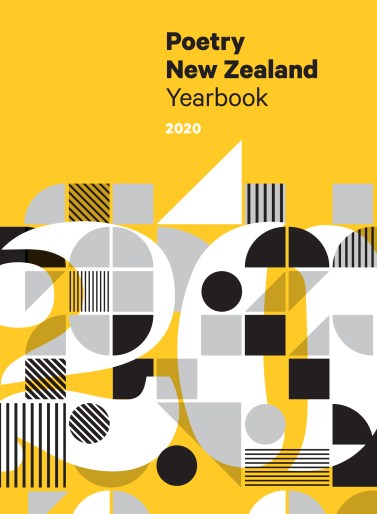
Poetry New Zealand Yearbook 2020 edited by Johanna Emeney (MUP)
Johanna Emeney works at Massey University as a teacher of creative writing and has published several poetry collections.
Many many years ago my first poetry collection Cookhouse (AUP) appeared in the world and it was a big thing for me. I was at the stove with my baby in my arms, when the phone rang, and I dropped something all over the floor. It was Alistair Paterson, then editor of Poetry NZ, wanting to know if I would be the feature poet. The tap was running, the mess was growing, the pot was bubbling, my baby was crying, but somehow I spoke about poetry and agreed to my face on the cover and poems inside. It felt important.
I have only sent poems to journals a couple of times since then as I find it a distraction, but I love reading NZ literary journals. We have so many good ones from the enduring magnificence of Sport and Landfall to the zesty appeal of Mimicry and Min-a-rets.
Poetry NZ has had a number of editors, and is New Zealand’s longest running literary magazine. Poet Louis Johnson founded it in 1951 and edited it until 1964 (as the New Zealand Poetry Yearbook). Various others have taken turns at the helm – most notably Alistair Paterson from 1993 to 2014. In 2014 Jack Ross took it back to its roots and renamed it Poetry New Zealand Yearbook. This year Johanna Emeney stepped in as guest editor while Tracey Slaughter takes over the role from 2021.
Each issue includes essays, reviews, critical commentary, poetry and a featured poet.
For me Poetry New Zealand 2020 is a breath of fresh air. It opens its arms wide and every page resonates so beautifully. It showcases the idea that poetry is an open home. The poems behave on the page in a galaxy of ways, sparking and connecting multiple communities. I feel so satisfyingly refreshed having read this, warmed though, restored.
I am at the point in lockdown where I drift about the house from one thing to next in an unsettled state. I alight on this and land on that. So Poetry NZ 2020 is the perfect resting spot. I want to sing its praises to the moon and back, but I am tired, have barely slept and words are like elusive butterflies.
Johanna Emeney’s introduction is genius: ‘It is wonderful to be chosen by poems, and the very opposite of trying to chose poems.’ And later: ‘A poem choose you the minute it takes you by surprise. To be clear this cannot be any old surprise.’ And later: ‘poems that choose you are like mille-feuilles— thoughtfully assembled and subtly layered.’
I love the way Johanna has treated the issue like we often shape our own collections – in little clusters of poems that talk to each other: ‘Into the water’, ‘Encounter’, ‘Other side up’, ‘Remember to understand love’. It is an issue lovingly shaped – I am in love with individual poems but I am also mesmerised by the ensuing conversation, the diverse and distinctive voices.
The essay section is equally strong. You get an essay by Mike Hanne on six NZ doctor poets, Maria Yeonhee Ji’s ‘The hard and the holy: Poetry for times of trauma and crisis’. You also get Sarah Laing’s genius comic strip ‘Jealous of Youth’ written after going to the extraordinary Show Ponies poetry event in Wellington last year. And Roger Steele’s musings on publishing poetry. To finish Helen Rickerby’s thoughts on boundaries between essays and poetry. Restorative, inspiring.
77 pages of reviews cover a wide range of publishers (Cold Hub Press, VUP, Mākaro Press, Otago University Press, Cuba Press, Compound Press, Titus Books, Waikato Press, Hicksville Press and a diverse cohort of reviewers. With our review pages more and more under threat – this review section is to be celebrated.
The opening highlight is the featured poet (a tradition I am pleased to see upheld). Like Johanna I first heard essa may ranapiri read at a Starling event at the Wellington Writers Festival, and they blew my socks off (as did many of the other Starlings). essa is a poet writing on their toes, in their heart, stretching out here, gathering there, scoring the line in shifting tones and keys. So good to have this group of new poems to savour after the pleasures of their debut collection ransack. I particularly enjoyed the conversation between essa and Johanna – I felt like I was sitting in a cafe (wistful thinking slipping though?) sipping a short black and eavesdropping on poetry and writing and life. Tip: ‘That a lot of poems are trying to figure something out. If you already know it, then you don’t need to write the poem.’
I have invited a handful of the poets to read a poem they have in the issue so you can get a taste while in lockdown and then hunt down your own copy of this vital literary journal. Perhaps this time to support our excellent literary journals and take out a few subscriptions. Start here!
a n a u d i o g a t h e r i n g
First up the Poetry New Zealand Poetry Prize and the Poetry New Zealand Student Poetry Competition.

Lynn Davidson (First Prize)
Lynn reads ‘For my parents’
Lynn Davidson is a New Zealand writer living in Edinburgh. Her latest poetry collection Islander is published by Shearsman Books in the UK and Victoria University Press in New Zealand. She had a Hawthornden Fellowship in 2013 and a Bothy Project Residency at Inshriach Bothy in the Cairngorms in 2016. Lynn has a doctorate in creative writing, teaches creative writing, and is a member of 12, an Edinburgh-based feminist poetry collective. Her website
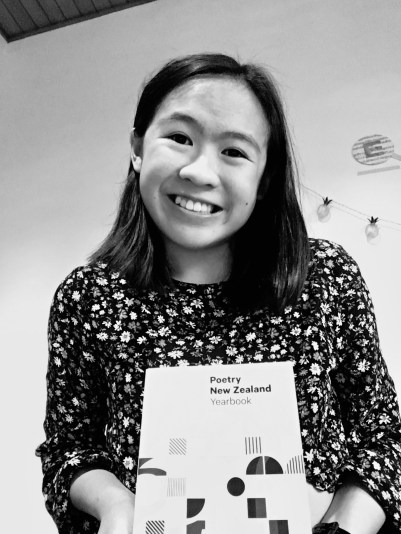
E Wen Wong (First Prize Y12)
E Wen reads ‘Boston Building Blocks’
E Wen Wong is in her final year at Burnside High School, where she is Head Girl for 2020. Last year, her poem ‘Boston Building Blocks’ won first prize in the Year 12 category of the Poetry New Zealand Student Yearbook Competition.
Chris Tse
Chris reads ‘Brightest first’
Chris Tse is the author of How to be Dead in a Year of Snakes and HE’S SO MASC. He is a regular contributor to Capital Magazine’s Re-Verse column and a book reviewer on Radio New Zealand. Chris is currently co-editing an anthology of LGBTQIA+ Aotearoa New Zealand writers.

Fardowsa Mohamed
Fardowsa reads ‘Tuesday’
Fardowsa Mohamed is a poet and medical doctor from Auckland, New Zealand. Her work has appeared in Poetry New Zealand, Sport Magazine, Landfall and others. She is currently working on her first collection of poetry.
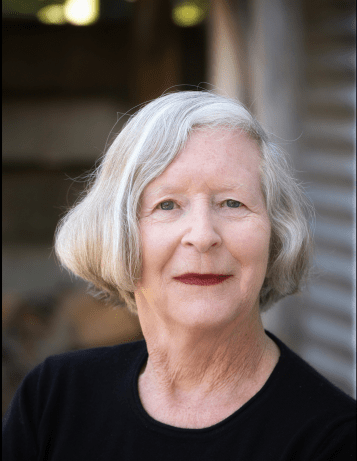
Photo credit: Jane Dove Juneau
Elizabeth Smither
Elizabeth reads ‘Cilla, writing’
Elizabeth Smither, an award-winning poet and fiction writer, has published eighteen collections of poetry, six novels and five short-story collections, as well as journals, essays, criticism. She was the Te Mata Poet Laureate (2001–03), was awarded an Hon D Litt from the University of Auckland and made a Member of the New Zealand Order of Merit in 2004, and was awarded the Prime Minister’s Award for Literary Achievement in Poetry in 2008. She was also awarded the 2014 Janet Frame Memorial Award for Literature and the 2016 Sarah Broom Poetry Prize. Her most recent collection of poems, Night Horse (Auckland University Press, 2017), won the Ockham New Zealand Book Award for Poetry in 2018.

Anuja Mitra
Anuja reads ‘Waiting Room’
Anuja Mitra lives in Auckland and is co-founder of the online arts magazine Oscen. Her writing can be found in Starling, Sweet Mammalian, Mayhem, Poetry NZ and other journals, though possibly her finest work remains unfinished in the notes app of her phone.

Semira Davis
Semira reads ‘Punkrock_lord & the maps to i_am_105mm’
Semira Davis is a writer whose poetry also appears in Landfall, Takahe, Ika, Blackmail Press, Ramona, Catalyst and Mayhem. In 2019 they were a recipient of the NZSA Mentorship and runner-up in the Kathleen Grattan Poetry Award.

Photo credit: Miriam Berkley
Johanna Aitchison
Johanna reads ‘The girl with the coke can’
Johanna Aitchison was the 2019 Mark Strand Scholar at the Sewanee Writers’ Conference in Tennessee, and her work has appeared, most recently, in the Poetry New Zealand Yearbook 2020, NZ Poetry Shelf, and Best Small Fictions 2019.
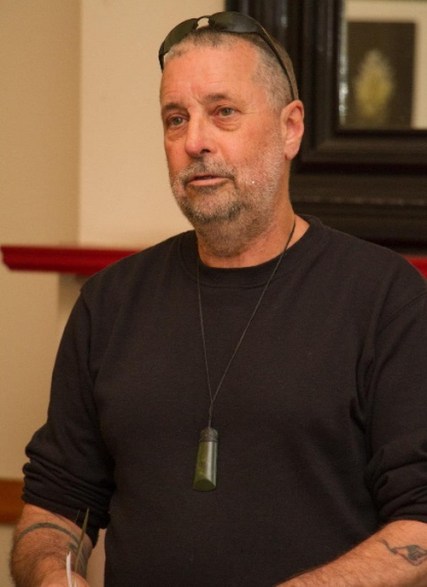
Vaughan Rapatahana
Vaughan Rapatahana reads ‘mō ō tautahi’
Vaughan Rapatahana (Te Ātiawa) commutes between homes in Hong Kong, Philippines and Aotearoa New Zealand. He is widely published across several genre in both his main languages, te reo Māori and English and his work has been translated into Bahasa Malaysia, Italian, French, Mandarin and Cantonese.
Five books published during 2019 – in Aotearoa New Zealand, India, United Kingdom. Includes his latest poetry collection ngā whakamatuatanga/interludes published by Cyberwit, Allahabad, India. Participated in World Poetry Recital Night, Kuala Lumpur, September 2019. Participated in Poetry International, the Southbank Centre, London, U.K. in October 2019 – in the launch of Poems from the Edge of Extinction and in Incendiary Art: the power of disruptive poetry. Interviewed by The Guardian newspaper whilst in London.
His poem tahi kupu anake included in the presentation by Tove Skutnabb-Kangas to the United Nations Forum on Minority Issues in Geneva in November 2019. Interviewed on Radio NZ by Kim Hill in November 2019.

Emma Harris
Emma Harris reads ‘Ward’
Emma Harris lives in Dunedin with her husband and two children. She teaches English and is an assistant principal at Columba College. Her poetry has previously been published in Southern Ocean Review, Blackmail Press, English in Aotearoa and Poetry New Zealand.

Dani Yourukova
Dani reads ‘I don’t know how to talk to you so I wrote it for me’
Dani is a Wellington poet, and one of the Plague Writers (a Masters student) at Victoria’s IIML this year. They’ve been published in Mayhem, Aotearotica, Takahe, Poetry New Zealand Yearbook 2020 and others. They’re currently working on their first collection of poetry.
Poetry New Zealand Yearbook site
What He Did
Write 500 words ☐
Write a poem ☐
Write a poem for Paula ☐
Write any poem ☐
Write anything ☐
Write a word (for Paula?) ☐
Write a word ☐
Dishes ☑
Date pudding ☑
Dishes ☑
And it was evening, and it was morning, one day.
Email Paula ☐
Reply to Paula ☐
Dishes ☑
Feel guilty for lack of productivity ☑
Dishes ☑
And it was evening, and it was morning, a second day.
Do taxes ☐
Dishes ☑
Feel guilty for date pudding ☑
Dishes ☑
And it was evening, and it was morning, a third day.
Exercise 30 min ☐
Exercise 15 min ☐
Go outside ☐
Feel guilty for feeling guilty ☑
Reject a negative thought ☐
Avoid crowds ☑
Reject a negative thought ☑
And it was evening, and it was morning, a fourth day.
Get enough sleep ☐
Clean teeth evening ☐ morning ☐
Have a shower ☐
Dishes ☑
Feel guilty for lack of personal hygiene ☐
Dishes ☑
Clean teeth muthafucka you can’t go to the dentist in the apocalypse!!!
And God said, “Let the waters swarm a swarming of living creatures.” And God created the great sea monsters, 15,000 virus species with which the waters swarmed, and God saw that it was good. And God said, “Fill the waters of the seas,” and they did, between 10,000 and 200,000 of them in every drop of seawater.
And it was evening ☑, and it was morning ☑, a fifth day.
1000 words translation/2000 words editing ☐
500 words translation/1000 words editing ☐
200 words translation ☐
100 words translation ☐
0-50 words translation ☐
1 hr work ☐
Write a word ☐
Dishes ☑
Feel guilty for not writing a word ☑
Dishes ☑
And behold, it was very good, and it was evening, and it was morning, a sixth day.
Apply for wage subsidy ☑
DO TAXES ☐
Dishes ☑
Feel guilty for living in NZ ☑
Dishes ☑
Now the viruses of the heavens and the earth were completed and all their hosts. And God completed on the seventh day His work what he did, and He abstained on the seventh day from all His work what he did because there was no more work and He was out of it.
Eat enough calories ☑☑☑☑☑☑☑☑☑☑☑☑☑☑☑☑☑☑☑☑☑☑☑☑☑☑☑☑☑☑☑☑☑☑☑☑
Timtams?
Ice cream? Milo?
Tiramisu?????
Dishes ☑
Feel guilty for having a functional government ☑
Dishes ☑
And behold, God had created a universe so it did not matter that He was out of work because He had His universal income. There was evening, and there was morning, a 16th day.
Dishes ☑
Feel guilty for being alive ☑
Dishes ☑
God was never bothered again. There was evening, and there was morning, a 26th day.
Charlotte Simmonds
Charlotte Simmonds is a writer, editor and translator indoors, Wellington.
Vaughan Rapatahana (Te Ātiawa) commutes between homes in Hong Kong, Philippines and Aotearoa New Zealand. He is widely published across several genre in both his main languages, te reo Māori and English and his work has been translated into Bahasa Malaysia, Italian, French, Mandarin and Cantonese.
Five books published during 2019 – in Aotearoa New Zealand, India, United Kingdom. Includes his latest poetry collection ngā whakamatuatanga/interludes published by Cyberwit, Allahabad, India. Participated in World Poetry Recital Night, Kuala Lumpur, September 2019. Participated in Poetry International, the Southbank Centre, London, U.K. in October 2019 – in the launch of Poems from the Edge of Extinction and in Incendiary Art: the power of disruptive poetry. Interviewed by The Guardian newspaper whilst in London.
His poem tahi kupu anake included in the presentation by Tove Skutnabb-Kangas to the United Nations Forum on Minority Issues in Geneva in November 2019. Interviewed on Radio NZ by Kim Hill in November 2019.
Loose leaf
hard to tell if the rain
enhances or limits contagion
its voice in the night
calms the anxious world
the dog involves himself
in a tighter knot of sleep
surprising how the mind
almost emptied of hope
is also empty of fear
unless concern for everyone
not just one
is not love but fear
dawn and birds return
and the dog wakes expectantly
my neighbour over the fence
lets me know how they’re doing
nothing dramatic
but nothing as usual either
and in the bare streets
maybe hope too will return
Mourning the normal world
a café table
or on the back porch at home
a hug from a friend
or seated alone
leafing through new books
just bought from Unity
a grandchild conversing
earnestly with the dog
frisbee or touch in the park
with brothers and their sons
wives of both generations
shaking their heads
at immemorial
masculine folly
a cousin from the UK
staying for a week or a month
vegetables exchanged
garden to garden
shared home baking
and home preserves
Upside
yet the wind still
dries the washing on the line
and the sky intermittently blue
over Taranaki
encourages us
grizzling into the garden
voices on the other side
of fences are reassuring too
already halfway
through Zola’s Earth
which took some exhuming
from dust on the shelf
the message is it’s really
the planet and our attention to it
that matters
and like frost on winter stubble
or deceased parents
spared all this by chronology
we are useful
and expendable
Black hat
the virus rode in
from points north
on a sickly horse
it was worse
than politics
or target practice
it stole conversation
and book shops
and football
it stole lives too
each of them
irreplaceable
days like a tide
receded after it
leaving sadness bare
explaining to
children and old
folks was difficult
something we’d
done or not done
something shameful
Tony Beyer
Tony Beyer writes in Taranaki. His recent work can be found online in Hamilton Stone Review, Mudlark and Otoliths; and is forthcoming in print in Kokako and Landfall.
If we’re lucky we have time
to divide batter into bowls and drop a different colour into each, then tip the mixtures
into a tin and use a knife to drag pink through blue and yellow through green knowing
in this, at least, there’s no getting it wrong
to lie on the driveway, arms angelic, and be tickled with chalk tracing our edges
to say, This is how big you are – enormous! – look at how much space is yours
to adopt kittens and not be annoyed when they pad across our faces overnight because
really we aren’t sleeping
to read little and slowly, attention brittle and bracketed
to turn the spare bedroom into a quarantine zone for when he comes home
from the COVID ward with symptoms and should no longer touch us
to count the hairs that come away between my fingers
to order three plain grey T-shirts because the world has sold out of scrubs
to answer teenagers’ emails which begin, As you know these are uncertain times and
I’m truly sorry I haven’t submitted my essay yet, and end, I hope you don’t get sick
to hear fear in his language that reminds me of his dearness
to sing Twinkle Twinkle Little Star or The Barrel as our hands turn into volcanoes –
Look at my lava!
to spray all the handles with Ajax and feel like an Ancient Greek propitiating Apollo
to ward off the plague
to find glitter on my cheek three months after New Year’s Eve
to smile at the three-year-old announcing, The kitten’s pooing in her glitter tray again
to imagine holding a social proximity party at which everyone must be within 1.5 metres
of more than one other person
to consider how to get our wills witnessed from a safe distance
to listen to a kids’ podcast about why leaves fall off trees; when the days get too dark it is
right to let go of what allows you to grow
to decide
to hibernate
Amy Brown
Amy Brown is a poet, novelist and teacher. In 2012 she completed a PhD in creative writing at the University of Melbourne. She is the author of The Propoganda Girl (VUP, 2018), which was shortlisted in the 2009 NZ Book Awards, and The Odour of Sanctity (VUP, 2013), a contemporary epic poem. She is also the author of Pony Tales, a series of children’s novels. Amy’s most recent collection, neon daze, was published by Victoria University Press in 2019.
My review of neon daze
The Spin Off – ‘Turning on the Light Ladder: Amy Brown on motherhood and writing neon daze
Radio NZ – Harry Ricketts reviews neon daze
Poetry Shelf – excerpt from neon daze
Victoria University Press author page
My lights, for Paul
April 8, 2020
All summer long I go on
till every gap is gone,
winding and twisting
wires of lights,
higher and higher
I’m not worrying, I’m looking up
breathless
making more and more:
red bobbles on a plastic buoy
blue glass balls on a round ball valve
a warm white pyramid, tipped with gold
changing colours
on fluorescent globes
I covered it all in lights
right up to the top spike
of the monkey puzzle,
twenty foot high, dazzling out
in black space beside
a five-by-five foot glowing ball
of cats’ eyes, shining greenly
into the velvet dark
and in behind, the port lights
on the estuary
and still my wish is not bright enough
Paul is struggling to stand
the moon, strangely yellow too,
stops to pose above my lights,
pooling moonlight onto the sea
it’s all set up in front of the seat
where Paul can sit
and smoke and see them glow
the tiny red tips on the sea glass globe
are fading now, tail lights going away
Paul says he’s here to play pool,
not look at my lights
he sits smoking and staring at them
shining out of the softest night
he says,
I’d like to see them go in a line down the lawn
and into infinity
Marty Smith

Photo credit: Florence Charvin
Marty reads ‘My lights, for Paul’
Poet Marty Smith is in lockdown in Hawkes Bay. She plays pool every Friday night (not now) with Paul and a small hard core group. When the competition begins again, it will be renamed as the Davis Cup. For Paul Davis, the best pool player of all.
Self-Isolation : the Hermit-Poet copes.
Being an Isolate Hermit, but not ill, is as awful as being under mild house arrest, kept in by a distant flood or too much sun, or just disliking the season or the times : that is, not very.
Guthlac of Crowland retreated to an island in the fens for twenty years. Wulfric of Haselbury shut himself inside some big rocks at Haselbury Plunkett. Julian of Norwich spent most of her life in a tiny wee cell stuck on her local church, watching Jesus bleed above her head while the population dropped dead of the plague outside.
There is a lesson here : that With Purpose, Away from the World, Much May Be Done.
Guthlac , who would not go to the shops for fear of (mostly moral) infection, ate clags of barley- bread and drank mud-water, and saw Demons with shaggy ears, horses’ teeth, throats vomiting fire and scabby legs, who would never stop shreiking. With much self-scourging, however, his soul was made safe, and his time passed usefully, and he now has his statue at Crowland Abbey (second tier up the old nave). When Guthlac died, honey poured out of his mouth and he flew away on a beam of sunshine with some Angels and became a Saint. How good is that ?
Wulfric (29 years a Hermit) had cold baths and wore a hairy shirt with chain-mail on top, and gnawed turnips and clover. His isolation focused his mind so well that he became an expert weather-forecaster and doctor, and told King Henry by cosmic vibes that he (the King) was soon going to die of food poisoning, which he did. One-nil to the Isolate ! (also now a Saint).
Julian of Norwich, of course, is perhaps the finest example of Retreat & Thrive. She wrote. Lord, did she wrote. While most of us might take up knitting or play Scrabble, Julian established direct communication with God, who Revealed Things to her via (note well, you isolates) the pure and specialised air of her cell, which was subsequently filled instead with crowns of thorns, submarine journeys, lots of blood and three different versions of Heaven. Julian now has a splendid swing-bridge named after her near Norwich Railway Station, something more than any of us can probably hope for.
These are more secular times, and we have, mostly, other gods. Yesterday, I got stuck into several of mine. I began a 2000-piece jigsaw of ‘Hunters in the Snow’ ; wrote a poem about a ruffled swan on a flooded pond near Stanton-under-Bardon ; listened to the audiobook of ‘The Hobbit’ ; made scones (and ate them) ; and read some more chapters of ‘Anna Karenina’ (who has time for that in their healthy days ?). Today the sun is out, and I am going to really really concentrate under the plastic tiki on the wall with some mud-water, and have a vision of Beowulf, who will tell me about some brilliantly exciting and murderous adventures (which I will write down ; pen and paper are well ready) and come back tomorrow, shaggy ears and all, and tell more. Like Julian’s ‘Revelations of Divine Love’, I’m hoping there will be a Short Text, followed by a Long Text, followed by general fame and a literary Sainthood.
Cheer up, folks : we have nothing to lose but our ordinariness !
John Gallas. NZ poet published by Carcanet. 20 collections including The Song Atlas, Star City, The Little Sublime Comedy and 52 Euros. The Extasie (60 love poems) and Rhapsodies 1831 (translation of French poet Petrus Borel) to be published January and March 2021. Presently living in Leicestershire. Librettist, St Magnus Festival Orkney poet, Saxon Ship Project poet, Fellow of the English Association, tramper, biker and merry ruralist. Presently working on two sets of poem-prints (’18 Paper Resurrections’ and ‘Wasted by Whitemen’). ‘Unscythed’ written in Sefton, near Rangiora : home of bro.
 NZ Poetry Shelf