
Nick Ascroft, Moral Sloth Victoria University Press, 2019
A heater heats
a Rita Angus, seen
through the steam from the langoustine
with mangosteen.
from ‘A Writer Wrongs’
‘Nick Ascroft’s Moral Sloth is among other things a virtuoso display of formal skills. He does a particularly classy line in sonnets. He can rhyme as tellingly as Alexander Pope or the Byron of Don Juan – and can match those poets in quickness of thought and even (it seems to me) outstrip them in richness of diction.’—Bill Manhire
Nick Ascroft’s latest poetry collection arrived at the end of last year – it had multiple effects upon me at the time and I was dead keen to do an interview with Nick – we started a conversation but then Covid 19 sidetracked everything. I return to the book and here I am again finding sweet rhyme comfort, linguistic agility, biting self exposure, equally biting wit, the humour, the poetic stretching out. Months ago I mentioned ‘a world gone mad’ in a question to Nick. That feels at odds now. Jarring in fact. This is a world off kilter trying to find equilibrium, solutions, ways forward. So many people working hard to care for so many other people. So much risk tasking. Yes there is madness on the ground and in certain leaderships. But there are also multiple comforts. When everything has spun and has seemed impossible to do – poetry has continued to hold my attention. Nick’s book has done just that.
Automating word noise from the stroller,
my son defines the wind in onomatopoeia:
‘Zheesh!’
Then he spies the moon, our little naked analogue,
and tells the secret of its abased name.
‘Zig zig zig,’ the bridging cicada agrees.
from ‘Naked Analogue’
Paula: Name three or four poetry books that mattered at different points in your life.
Nick: Sure. I think the ones I remember are the ones that brought me back in shock to the reminder that I love poetry. That it isn’t all just the same bag of grey Countdown sausages. Early on that’s easy. All poems seem great. But the more you read (and write) the harder it is to be impressed. These days I really enjoy certain books of poetry, but few actually get me excited. I am a cold-blooded egg, it must be said. But films, fiction, music are more likely to have me jazzed. I think Eunoia by Christian Bök of Canada was so shockingly good and novel and funny and well-executed that I ate it like a pavlova. All at once. For those who haven’t read it, the author set himself the task of writing five sections based on the five vowels with each section only using words that contained only that section’s vowel, so in the ‘E’ section words like ‘be’, ‘teehee’, ‘letter’ or ‘fecklessness’ could (and must) appear. This may sound like a pure exercise, but the result is just beautiful. Chapter I begins: ‘Writing is inhibiting. Sighing I sit, scribbling in ink this pidgin script. I sing with nihilistic witticism, disciplining signs with trifling gimmicks – impish hijinks which highlight stick sigils. Isn’t it glib? Isn’t it chic? …’ I could go on. The book is from 2001 but I got to it a few years later.
The other that comes to mind is In a Slant Light by Cilla McQueen from I think 2016. I’ve gushed about this elsewhere so I’ll hold back, but I was really captured by this one. It seemed the greatest use of Cilla’s talents to tell her own fascinating life story. I was struck both by the telling and the life in art. It felt empowering. Both those are single poem as whole book numbers. So to give a third I’ll say Byron’s Don Juan, which I finally got to two years ago. I really do prefer to read rhyming poetry, and no one has as much fun with it as Byron in the Don Juan cantos. More than that it showed me what a poet can be at their best. His use of persona and sensationalism and other needlessly frowned upon things, employed without giving a shit, and better still, sometimes pretending to give a shit. It inspired ‘The Plotz’ in Moral Sloth.
How loose and gauche.
How loose it goes;
my purple tongue
speaks weeks of prose.
from ‘Kay? Syrah? Shiraz?’
Paula: I am a big fan of In a Slant Light too – I had really wanted sessions at festivals featuring Cilla and using her poetry / autobiography as a starting point – but wasn’t to be!
I love your linguistic playfulness. Any poets you admire who also do this?
Nick: I am not quite sure what my linguistic playfulness is. It’s one of those things reviewers say of me and I feel my hackles and feckles rising. ‘Nick Ascroft, he plays with words.’ Plays?! PLAYS!? How dare you! I am not playing with language. I am working with it. This is high blinking art. But I do, I play with words. A play on words usually means delivering a pun right? Or some other rhetorical devices like zeugma (‘We stir: I my tea, and he in his grave’). I’m not sure how often I do such things. Not a lot I suspect.
So I presume the playing that is perceived relates more to my attitude to language. My attitude is: I like all the words. Any word can appear in a poem, it just needs a hospitable sentence that restricts its meaning in the right way. In the most delightful way ideally, to jack Mary Poppins. I find words joyous. Some chap smarter than me once said my work made him think of the ‘gay science’, that is the joyful spirit of Provencal troubadours as prized by Nietzsche or some such. So while my subject matter is often bleak, there is a joyfulness in the deployment of words that must come across as playful. I don’t know. Never try and analyse one’s own thing I say. That way boring pastiche lies.
But to the actual question, who else has a playfulness I admire? I think I see it in all the writers I like. David Eggleton’s parroting of the culture back at it relies on his repackaging of the phrases, buzzwords and clichés currently on the world’s lips. He seems to be both mocking the world and celebrating it. On the radio the other day he read a poem full of Z words. Love it. Richard Reeve too is playful, and what I like best is that he’s playful while being vicious, pointed, serious. The Irish and British poets of the last 30 years are lexically obsessed. Don Paterson can be my random exemplar.
Paula: I love play because there are implications of risk tasking, discovery, the unexpected, surprise, less obligation to rules and limits, you can obey rules, reinvent them, abandon them. I am wondering if play can be serious!
I also love the way you move from infectious wit to an intense moment (love, for example). What matters when you write a poem?
Nick: What matters to me is that the idea and its phrasing are entertaining to me. I want to express whatever ideas I’m peddling in a way that gets them across. I want to be generous. That doesn’t always happen, because I also love obfuscation and nonsense. To me poetry is art with language, and language is a wonderful mess of things. I can’t sum up all poems, so I’ll try to think about what matters in particular instances. When I write a sonnet what matters is that I obey the rules: 14 × 5 iambs and a rhyme scheme. I want the rhymes to be novel, enjoyable in themselves while the poem works quietly around them. If a poem has jokes, they have to actually make me giggle. I have to laugh at my own jokes like an ass. I have a real problem with weakly jokey poems. And so a fear that I am writing them. It’s good fear.
Paula: I found myself laughing, feeling both comfort and discomfort, being moved in complex ways as I read you book. What hooks you in the poetry of others?
Nick: Many things. Too many things. But ultimately, invention. What comes to mind is the surreal brilliance in the similes of Hera Lindsay Bird. As most people likely to read this are writers themselves, I’m sure you will be familiar with the experience of reading a line and thinking, I never could have written that. That has a brilliance I will never attain. It’s bittersweet. And that’s how I feel about HLB. The intricacy of those similes. The sheer invention. Now I see everyone copying the style, the surreal and intricate and somehow true HLB simile. I don’t say that sneeringly. They are infectious. I feel the same way of Richard Reeve’s ease of invention, and his accuracy at depicting things. At the moment he is writing a poem about rain that I have seen the first few sections of and its makes you see the truths of rain anew. It makes you care about rain. I could never come up with those lines.
Not one to plotz, I’m private, careful, flaccid.
How did I change? One moment I wear blouses,
vinyl shoes, I’m pulverised on acid,
the next I’m at the bank discussing houses
or circling with a whiteboard marker ‘hazard
class’, a tucked-in shirt with belted trousers.
I want to understand, to tweeze this tuft.
Did I grow up? Or was my brightness snuffed?
from ‘The Plotz’
Paula: I saw Hera in a simile battle with USA poet Patricia Lockwood at the Wellington Writers Festival a couple of years ago. Each trying to out do the other, so the session was was like a gigantic poem. At the time it felt like there was a global wave of simile battles, every which way you looked.
Sometimes you get quite personal. There is a little confession in ‘The Plotz’: ‘I’m private, careful, flaccid.’ Do you have lines you don’t cross? How do you feel about breaking down the privacy?
Nick: The whole of ‘The Plotz’ is uncomfortable confession … sprinkled with self-mythologising. This is not my natural mode, but something I have occasionally indulged in. And that’s how I always saw it, indulgence. Confession and making poems only about oneself were things I thought tired and distasteful. I have completely 180-ed on that. I admire the bravery of confession in other poets these days. It’s only in saying our oddest truths that others can recognise them and feel liberated by it being said elsewhere.
I can think of two lines I am uncomfortable crossing. The first relates to poems of fatherhood. I had a motto going in to the whole breeding business that ‘you become what you hate’. Constant gushing on Facebook: check. Dad dancing: check. I read Amy Brown’s brilliant evocation of those early hellish weeks of infancy, and in a similar vein Chris Stewart in the recent AUP New Poets 6. In the recognition of experience I really value these poems. I remember reading Graham Lindsay’s Lazy Wind Poems a decade ago and really enjoying it, but having a sense that his baby had poisoned his mind. He was now obsessed with this tot and it was suckling on his poetry like a parasite. I was afraid to become that thing. A dad poet fixated on his offspring. It’s a foolish fear and a few of the better poems in Moral Sloth relate to dadhood. But I remain uncomfortable with it. Perhaps it’s in the way ‘dad’ is used as a modifier to denote uncool or hopeless: ‘dad jokes’, ‘dadbod’, ‘dad pants’ (I made that up, but you can imagine what it might mean and it is not flattering).
My other discomfort is naming names. All of my best confessional anecdotes involve other people. I’ll shame myself happily – and certain others who it is humorous to shame – but not everyone.
And hello, I am a beaver.
To you my sincerest, I am a starfish
with an old-fashioned disposition.
Ever yours, a beetle, one of many, writing,
amid a rainstorm, of commas, to an eagle.
from ‘Good Day, I Am a Horse’
Paula: Are you drawn to particular things, subjects?
Nick: Moral philosophy. The human condition. Sanctimony. Hubris. My own pratfalls. Funny cats.
Paula: What attracts you to rhyme (I love your rhyme!)?
Nick: I enjoy rhyme more than anything in poetry. For a while that felt enormously unfashionable. It was OK to like the rhymesters of the past with a knowing wince, but rhyme’s time had passed. Or so we thought. People at NASA have a saying: ‘Space is hard’. Meaning it is always likely any mission will crash and burn and only the most meticulous planning will give you a hope in hell. No. Rhyme is hard. It crashes and burns by its very nature. It’s a real craft I think that takes some years of apprenticeship. I am still learning. It has to seem both obvious and invisible, blunt but subtle. That’s more in the lead up, perhaps, but the rhyme words themselves delight me. I recently rhymed ‘triplex’ and ‘shipwrecks’. Giddy. A good near-rhyme can be so rewarding too, for instance in ‘Art Is Weak’ the rhyme of ‘horsemen’ with ‘porcelain’. But I like metrical rhyming poetry ultimately for the puzzle. It’s like a crossword or Sudoku. You labour away at it trying to make it complete, and acceptable. But unlike a puzzle there is no final answer and always room for improvement. At one point in Moral Sloth there are 242 lines of iambic pentameter in a row (including a few sonnets and the 18 stanzas of ottava rima of ‘The Plotz’). I really worry this is off-putting. But it’s what I write.
A certain governmental agency
provisioning the arts suggested in
the aftermath that those invested in
opposing such disgusting vagrancy
of moral intellect should hashtag works
of art or prose on Twitter: ‘#CreateAroha’.
from The Mosque Attacks’
Paula: What good is poetry in a world gone mad?
Nick: The world hasn’t gone mad of course. It remains mad. I am not optimistic that poetry will help. It summons some of the forces in the world perhaps. There are forces for order, forces for chaos, forces that are just like fingers on the inside of a balloon trying to poke outwards, such as comfort. As to good – and evil – these are such important girders of the human world that shape much of how we live our lives and who we feel it’s okay to look down on, but they are ultimately make-believe. That’s a meaningless thing to say as I’m speaking from within that make-believe world where good and evil are as real as music (also doesn’t exist) or mathematics (I’m on the fence). So the good of poetry? And its good to a mad world, where the word ‘good’ is some fantastical fudge? I am the wrong choice to pontificate on such a thing. I admire people who push the great worth of poetry to society, being someone who writes the darn-goshed stuff, and I also admire those who scoff and suggest poetry is the most worthless garbage.
My only sermon on this front is that if poetry is lowly garbage, which very few read, it has a secret strength. Poets can say anything. We can say the things others would rightly shy away from. There is no personal consequence. We’re already the lowest of the low. And we will never derive a living income from poetry, so the biggest risk is a few sales off a small total. We can say ugly truths and scary falsehoods. An example. I was going to cut a poem from Moral Sloth called ‘The Mosque Attacks’ for two very good reasons. The first being that the mosque attacks in Christchurch are still fresh, still appalling, still punch-to-the-gut sickening to even think about, and the response to them still complex and, to many, problematic. My poem is not even about the attacks. It’s about a Creative New Zealand tweet. The poem, a sonnet, tries to untangle my dislike of CNZ’s post-attacks call to hashtag works on social media with #CreateAroha. The upshot being that it was feelgood vomit. So yes, the first reason to cut, is that my rhymey poem is petty in the face of real tragedy. You all think: and you needed a second reason, man? The second reason was not to bite the hand that feeds. Why attack Creative New Zealand? They are my only chance to make a little money. I thought it absurd I would even consider putting the poem in the collection. I’d shown it to my email poet-circle. That was enough. But those readers didn’t blink or scold me. So I slipped it in the manuscript. I presumed Ashleigh Young would say, this is a bit on the nose, Nick. Nothing. Then I had to cut poems to get down to a slick 80 pages. Surely it would be cut now. I left it. And I left it because poetry sashays under the radar. It can waltz its way through the sacred and taboo. Poetry can say unwise things. This is the good of poetry. More people will read this interview than that poem.
Paula: If you were running this interview and wanted to take a swerve what would you ask yourself?
Nick: I’ve thought about this too much, but the question I would suggest is ‘Has success changed you?’ In fact, it would almost be great if you deleted your question and just asked this, so that people might pause and think, but he’s not successful at all is he? Why’s she asking that? Weird.
The reason I’d like the question is that success as a poet is a funny thing. No it really isn’t, actually. If one is celebrated, studied, one’s books sell in large numbers, one wins prizes, awards, fellowships, is asked to panel-beat festivals around the world, and one’s surname becomes sufficient identification, etc. etc., then one is successful. I nearly almost have a couple of those things. But I decided recently that I would think of myself as successful. Everyone can see someone more successful than themselves. So why not? Some people enjoy my poetry, and some people publish it. I’ll take that. And yes, success has changed me. I am much much worse.
Paula: Love the question. Might try it on someone else. It’s the stranger coming up to you and saying they liked your book. That’s something I rate. Everything else feels like white noise.
Is there a poem that particularly worked for you?
Nick: Difficult. They all worked enough to be included and all carried their flaws. I like ‘The Plotz’ the most, but a few lines bug me, and I’ll likely be rewriting it until I die. ‘I Coo Haiku High, Eh’, which squashes eight haiku into a sonnet, pleases me very much but it’s a bit of a grand folly. The one I wrote for my father’s funeral ‘A Good Heart’ using Dad’s stock phrases is special to me but similarly is a bit too personal to transcend that. I’ll choose ‘What to Avoid Calling My Next Poetry Collection’, simply because it involved the most work. It was much longer and continuously growing. Ashleigh helped me cull it back to something tighter and more manageable. One of the lines is entirely hers. Is it poetry? I’m not sure that it is. But meh.
What to Avoid calling the Next Collection
You’re Going to Need a Big Old Dictionary
What to Expectorate When Your Expectorating
Fanny Pack of Wolves
Words Good
Dry, Slow, Grinding, Unremitting, Desolate, Endless
Dwang Nibbler
Full Metal Jean Shorts
You Don’t Have Time for This
Treat Your Own Neck
Fey Canoes
Your Haircut Looks Like a Pauper’s Grave
Your Pauper’s Grave Is a Bit Ooh-Look-at-Me
Unstapleshuttable
People Who Bought This Also Bought Pornography
Smellybutton
I Preferred His Early Funny Poems
Just Thoughts Really
Limericks for Pubic Baldness
Charge Conjugation Parity Symmetry Violation for Dummies
Hang on, Nobody Wang Chung a Second
Impervious to Criticism
Found Poems of Financial Regulation
Away with Words
Fighting Fire with Fire Extinguishers
There Was an Old Lady from Lucknow
Most Eligible Lecturer
You People
Once Were Wordier
Cry Me ¡Arriba!
What to Ejaculate When You’re Ejaculating
Suckle on My Verse Teats
Emilio Estevez
10 Child Abduction Fails #3 Is Hilarious
Your Feet Honk Like Tofurkey
Wheeeeeeeee!
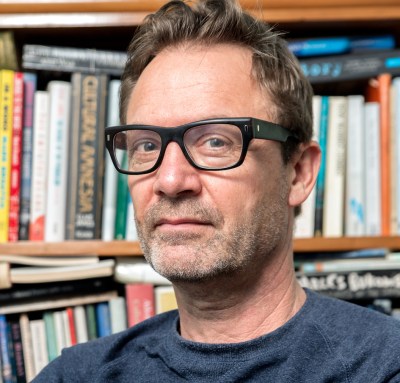
Nick Ascroft was born in Oamaru. His previous poetry collections are From the Author Of (2000), Nonsense (2003), and Back with the Human Condition (2016); in 2018 Boatwhistle published his Dandy Bogan: Selected Poems. He has edited Landfall, Glottis and Takahē and was all-too briefly the Burns Fellow at the University of Otago. He is also a non-fiction author, writing on music and football. Nick is an editor by trade, a linguist by training and a competitive Scrabble player by choice.
Victoria University Press author page







 NZ Poetry Shelf