Category Archives: NZ poetry

Donations are now being sought for IIML’s National School’s Poetry Award 2015.

Donations are now being sought for IIML’s National School’s Poetry Award 2015.

Set up by Bill Manhire in 2003, this award is a golden opportunity for secondary-school students keen on creative writing.

As Tim Fraser, Hutt International Boys’ School, 2013 runner-up says: ‘The National School’s Poetry Award was something I never thought I could place in but I did it, ever hopeful. Getting in the top ten has much improved my confidence in my own skills. I will definitely continue to create poetry and certainly this Award has been a booster towards my belief in my abilities.’

Margie McLaren, who teaches at Baradene College, is also convinced: ‘The main benefit is the new confidence instilled in the students about the value of poetry in a utilitarian world which does not always attach the significance to poetry that it deserves . . . The Award is an affirmation of the many benefits of working with and celebrating language, and the special ways in which poetry can reflect human experience. The opportunity of entering for the Award has been a very positive and rewarding experience.’

You can donate here.

Puna Wai Kōrero: An Anthology of Māori Poetry in English — I flipped a question that I carried with me through my doctoral thesis

1411441130757

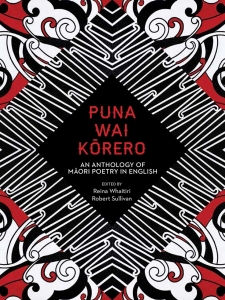
Puna Wai Kōrero: An Anthology of Māori Poetry in English editors Robert Sullivan and Reina Whaitiri (Auckland University Press, 2014)

I am curious as to how many Māori poets we can name beyond a handful, beyond the much loved Hone Tuwhare. Open a New Zealand literary journal and do we still fall upon a Pākehā bias? The arrival of Puna Wai Kōrero: An Anthology of Māori Poetry in English (2014) presents us with a selection of writing that celebrates a wide and vibrant field. The editors, Robert Sullivan and Reina Whaitiri have brought a glorious range of voices into the spotlight.

Robert, of Ngāpuhi/Irish descent, is a poet and anthologist, and is currently Head of the Creative Writing Programme at Manukau Institute of Technology. Reina, of Māori/ Pākehā descent, is also a poet and an anthologist, and has taught English at the Universities of Auckland and Hawai’i. Along with Albert Wendt, Robert and Reina edited Whetu Moana (AUP, 2003) and Mauri Ola (AUP, 2010).

Puna Wai Korero is a moving feast. The poets selected come from a variety of locations, circumstances, backgrounds, writing preferences. The choices of style, tone, subject matter and poetic techniques are eclectic. There is humour, inward reflection, love and loss. There are poems of the marae and poems of elsewhere. There are mothers, fathers, sons and daughters. There is politics on the quiet and politics loud and clear. There is grief. There is home. There are familiar voices, there are those that are not. There are writers known for their fiction.

Through all this, I flipped a question that I carried with me through my doctoral thesis (does it make a difference if the pen is held by a woman?) to ask: Does it make a difference if the pen is held by a Māori. Do some writers deliberately and gloriously foster a Māori voice (perhaps, where the poet stands and writes from, how the poet stands and writes from, how the oratory traditions of the marae inflect the poetry, how genealogy inflects the poem and so on). I spent seven years hauling my question through politics, law, history, psychology, familial relations, art, literature, history, patriarchy within an Italian context and the Italian language. Over the past months, I have held a book that drew me in close to all of these things within the miniature frame of a poem and within the context of Aotearoa. You can view the poems within whatever cultural luggage you bring to them (a Western paradigm of how to write a poem and how to break a poem, both cemented by tradition and innovation). Or you can step out of that luggage and approach these poems afresh, and in doing so open out the ways in which we can make and read and hear poetry.

This was the first joy of reading this anthology — navigating the burgeoning questions for which I felt inept at answering.

The second joy, the equally sustaining joy, was the discovery of new writers along with a return to those well loved (whenever I visit secondary schools I share my James K Baxter/Hone Tuwhare anecdotes that kickstarted me on the path of poetry in 1972). A wee taste of what I have loved: a tingle in reading Hilary Baxter’s ‘Reminiscence,’ the heart and gap in all of Hinemoana Baker’s poems, the sharp kick of Arapera Hineira Blank’s ‘After watching father re-uniting with sons in prison,’ the utter joy of Bub Bridger’s ‘Wild daisies,’ the force of Ben Brown’s ‘I am the Māori Jesus,’ the insistent catch of Marewa Glover’s ‘Pounamu,’ the evocative laying of roots in Katerina Mataira’s ‘Restoring the ancestral home,’ the pocket narrative in Trixie Te Arama Menzies’s ‘Watercress,’ the piquant detail of Paula Morris’s ‘English grandmother,’ the subtle shifts in Kiri Piahana-Wng’s ‘Four paintings,’ the verve and aural steps of Vaughan Rapatahana’s ‘Aotearoa blues, baby’ (I want to hear him read this!), the sumptuous detail in Reihana Robinson’s “God of ugly things,’ the poetic and political and personal stretch of Alice Te Punga Somerville’s ‘mad ave,’ all of JC Sturm (especially ‘At times I grieve for you’), Robert Sullivan (especially ‘Voice carried my family, their names and stories’), Apirana Taylor (especially ‘Te ihi’ and ‘Haka’) and Hone Tuwhare (especially, most utterly especially ‘Rain’).

This is a book of returns, to be kept on every shelf. Bravissimo!

NZ Flash Fiction Day takes me back to a missing book: the deadline looms

cropped-web_banner_990px-2


Years and years ago I bought an anthology called Sudden Fiction and I loved the way the writing fell on the page in bright drops. Were the miniature pieces agonised over and crafted to a sweet and shiny essence or were they a quick and vital shedding of narrative (stream-of-conscious-like)? Tiny. Surprising. Saporous. I don’t remember such details and I can’t find my weather-beaten copy but I do remember the way the anthology sparked my attention.*

Nowadays, look each way and you find Flash Fiction.

Poet Michelle Elvy is a key supporter and writer of Flash Fiction in NZ. Many other NZ poets move between poetry and the lure of flash-fiction territory: Frankie McMillan, Owen Marshall, Mary McCallum, Rachel Fenton, Caoillin Hughes, Elizabeth Welsh, Gail Ingram, James Norcliffe.


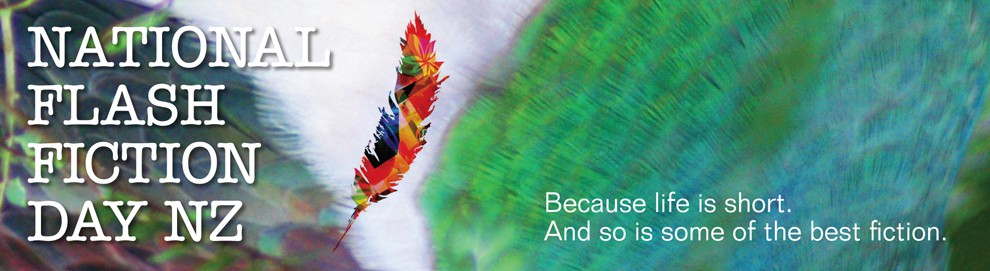
National Flash Fiction Day is New Zealand’s celebration of the shortest form of fiction writing, on the shortest day of the year.

The 2015 NFFD competition opens Feb 1 – April 30. See the competition page for information and guidelines.

The 2012, 2013 and 2014 competitions were great successes with 300 entries each year. You can find the winners from previous years by clicking on the tabs at the top of the page.

In past years, National Flash Fiction Day has been celebrated with prize-giving ceremonies and presentations by the judges as well as readings in various hotbeds of flash all across Aotearoa.

Events will be posted on the website as they are put together this year.


website here

contact: nationalflash@gmail.com


*Ha! I went online and discovered this:  ‘Here Are 70 of the very best short-short stories of recent years including contributions from such contemporary writers as Raymond Carver, Leonard Michaels and John Updike; a few Modern Masters as Hemingway and Cheever; and an assortment of talented new young writers. Sudden Fiction brilliantly captures the tremendous popularity of this new and distinctly American form.’ The book was published in 1983 so I was living in London. Maybe I left it there. I am sure there were women in it! But I can’t recall.


Poem Friday: Erin Scudder’s ‘To Do in Malibu’ — that ultimate moment of pause, attentiveness, pleasure


11086660_10155353222895285_797228085_n


To Do in Malibu


Brush hair, brush teeth,

climb down the mind’s

soft-carpeted staircase

from sleep.


Iron the pink robe and put it on.


There are no wailing birds here –

only the sun hums

a mute, radiating

suggestion of song.


Open the vertical blinds by twirling

their thin ivory rotating wands.

Pay gentle attention

to their exhumation

of bladelike,

breathing,

slightest sound.


Polish the windows,

polish the floors,

open the patio’s sliding doors.


Polish toes with clear paint.


Stand still by the blue stone statue

in the southwest sandstone yard.


Stay still, allowing your mind

to follow the lead of the patio shadows.


Smile amenably into the weight

of the broad clean pool of hot.


Let everything be still.

Let everything be new.


© Erin Scudder


Author’s bio: Erin is the co-author of AUP New Poets 4 and the author (under numerous pseudonyms) of Psychedomus (Fitts & Holderness, 2011). Her poetry recently appeared in Truth or Beauty (Seraph Press, 2014), and has also appeared in various Asia Pacific journals. In 2015 she hopes to publish her first solo book of poems. She holds joint Canadian / New Zealand citizenship and currently lives in Melbourne.

Author’s note: My starting point for this poem was David Hockney’s Californian painting ‘American Collectors’ (Fred and Marcia Weisman). In the painting, a woman in a pink robe or mumu stands looking out at you, half-smiling, in the sun-washed yard of a modernist bungalow. The pink cloth, brushing slightly to the side, is wonderful. I love how just looking at the plain, minimal lines of this picture is relaxing. There are a few statues,  plants, and a man, also in the picture – placed here and there in an orderly but effortless kind of feng shui way. The woman’s look is very serene, very open and calm, but at the same time she has one arm crossing her body and lightly gripping the other arm – suggesting a shyness or self-consciousness. It’s as if she has an instinct towards neurosis but this is at play, is in a sort of dance, with a capacity for deep peace. I imagined her talking herself through the steps of her morning as though soothing herself, soothing her nerves, as you might soothe a child … as though she has had a trauma and needs to only do or notice one element at a time. I imagined a really nice, warm silence infusing this scene. She treats each small action and observation with reverence … I love the idea of ordinary household moments being realised as slow, sacred rituals. Her instructions to herself start out as a sort of coping mechanism but move her into meditative stillness.


Paula’s Note: This poem is as much about movement as it is about stillness. Stillness resides in the palm of its movement and movement resides in the palm of its stillness. An oxymoron, yes. It is as though you climb (ascend, scale)  your way through the poem which is, in turn, climbing through a moment, with steady rhythm, an immensely satisfying measure of beat. It is like reading a mantra (how to be, to be here now), because what this poem evokes more than anything is an occupation of time and place. The finely judged detail renders the moment luminous. It reminds me of a terrific scene in The Tavianni Brothers’ movie, Padre Padrone, when the father tells the son to bend his ear to the stream in order to absorb the world about him. I love the way this poem stalls in the everyday, as if to remind us of the way our eyes become immune to the familiar. I love too the pile up of strong, single-syllable words in the final line that reenact that ultimate moment of pause, attentiveness, pleasure, both in the poem and an external place of your own making.


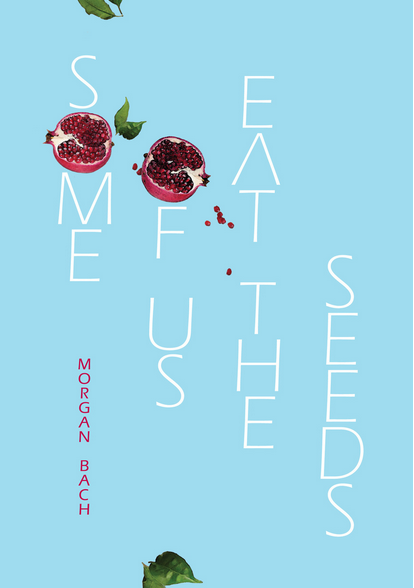
This is a poetry collection I am so looking forward to …

I can’t wait to read this new offering, a debut poetry collection by Morgan Bach, coming soon from Victoria University Press. What an adorable cover.

Morgan Bach’s author page is here.

Screen shot 2015-03-30 at 9.41.21 PM

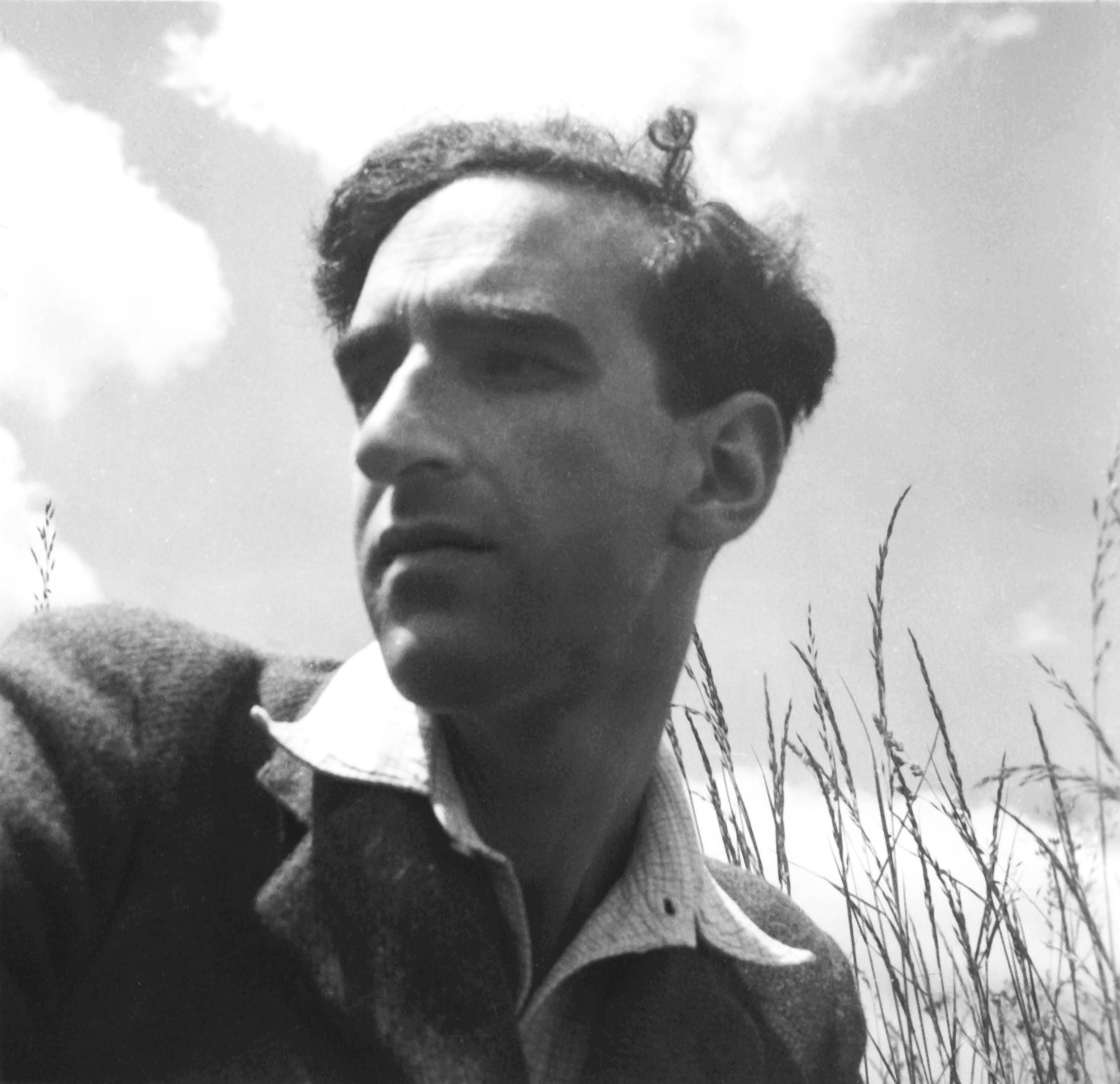
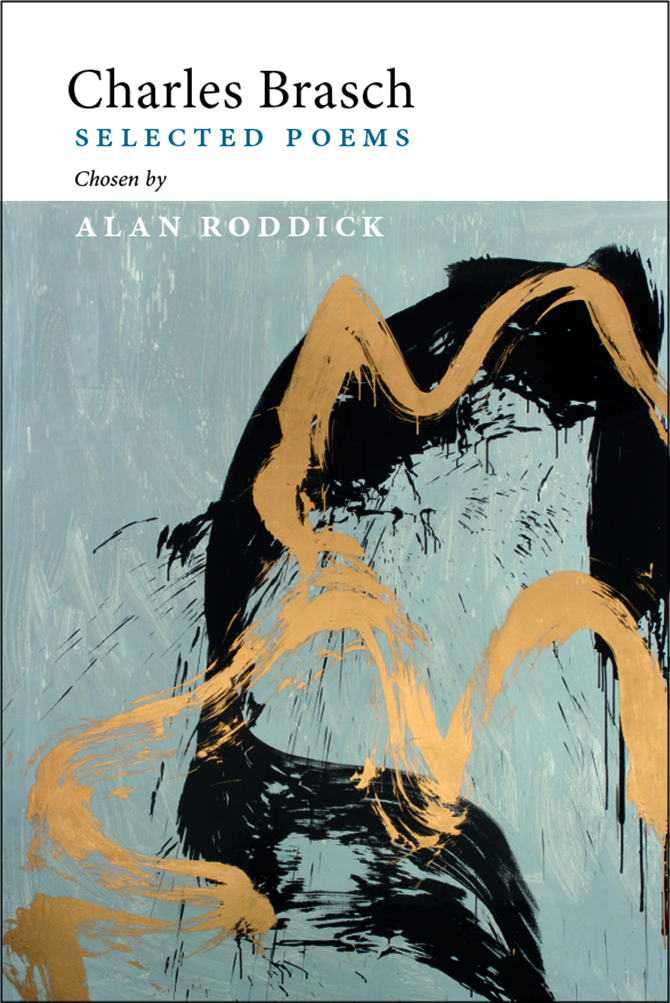
Charles Brasch: Selected Poems edited by Alan Roddick He is splitting his poems in ways that promote new revelations

3. S13-575c_CB_in_Downs   Roddick Brasch with rule

Charles Brasch: Selected Poems edited by Alan Roddick, Otago University Press, 2015


Poet and scholar, Alan Roddick previously edited Charles Brash’s posthumous collection, Home Ground (1974) and his Collected Poems (1984).  Charles published a number of collections in his lifetime, mentored younger poets and was the founder and initial editor of Landfall. With his books all out-of-print, this is a timely arrival. One of New Zealand’s most influential literary journals, Landfall has represented poetic trends over decades, and continues to endure with renewed vitality (currently edited by David Eggleton), but it is interesting to step aside from this legacy and explore Brasch’s own poetry. He was a contemporary of RK Mason and ARD Fairburn and was selected by Allen Curnow for A Book of New Zealand Verse in 1951. For many poets, this was a sign of having made it. For Brasch, it knocked back some of the self doubt and sent him traversing new poetic paths. It was indeed a turning point.

One fascination of a selected poems is the way they cover the arc of a poet’s life and, in particular, writing life; the way poems reflect interior changes, and the way a changing world rubs against the process of writing. Charles’s first collection, The Land and the People, was published in 1939 with looming threats of war and world instability. He wrote with an initial attachment to the Romantics but by the 1970s his poetry was freer. The language is less tied to loftiness, to the abstract, to tight rhythms. He writes in plainer language, everyday language, yet you still see resolute connections with the subject matter of his first book: the land and the people. In many ways, the poetic arc of Alan’s selection lays its roots in Brash’s attachment to home, and the poem becomes a frame or form for a navigation of this. A homage at times. A questioning of sorts. Charles held the war at arm’s length, he held the rumpus of the 1960s at arm’s length (you don’t see him in Big Smoke, the anthology that highlights the radical poetry of the 1960s and 1970s). In his last decade or so, he is not rupturing form and content across the page in ways that SHOUT and displace. He is splitting his poems in ways that promote new revelations, new confessions whilst always maintaining his private stance. Love is there; love is struggled with and acknowledged but it is never overt, never clear.

from ‘In Your Presence’


I practise to believe,

And work towards love.

How should I see

Until I study with your eye?


He is unafraid to bare the self portrait in ‘Cry Mercy’:


Getting older, I grow more personal,

Like more, dislike more

And more intensely than ever —

People, customs, the state,

The ghastly status quo,

And myself, black-hearted crow

In the canting off-white feathers.


I was interested to discover that he worked on one of his most famous poems, ‘The Islands’ (originally published in his second book in 1948) for twenty years until he felt like he got it right. This is the poem that contains one of the most often quoted lines in New Zealand poetry:

Everywhere in light and calm the murmuring

Shadow of departure; distance looks our way;

And none knows where he will lie down at night.


The poem that has always resonated the most strongly with me is the sequence ‘Home Ground’ (from his last book, bearing that title) and a substantial part of the sequence is reproduced here. The language is sumptuous yet affords a degree of plainness. Individual lines stall and haunt you (‘I tramp my streets into recognition’). It feels open. It feels like writing this poem mattered greatly to the poet because it draws upon what matters. And within that, as with much great poetry, there is space, silence, mystery.

Silence will not let him go

Entirely; allowed a few notes

At the edge of dusk

He will be recalled before long

And folded into rock

Reassumed by the living stream.


Otago University Press have produced a terrific anthology with care taken over internal design and the cover. There is room for the poems to breathe both in terms of font choice and white space on the page. Alan’s introduction is useful but I do think there was room for more discussion of the poetry itself despite the witty inference in Charles’s ‘Pistol Point’ that poems ought to speak for themselves (‘Poems ask their own questions’).  Selected Poems is a terrific introduction to Charles’s poetry; particularly to the way his poems shifted over time, on his own terms, and not at the behest of current poetic trends.


Endnote: I have a policy on this blog of using the first name of a poet. This is the first book I have reviewed by one of the key men poets who emerged in the mid-twentieth century in New Zealand, and it feels like I am transgressing a line by not using ‘Brasch.’ It feels like I have invited him into my kitchen to have a cup of tea informally. ‘Authority’ has sailed out the window.


Otago University Press page here

Gregory O’Brien’s terrific discussion with Kim Hill on the book here

NZ Book Council author page here